The Samurai Aviator
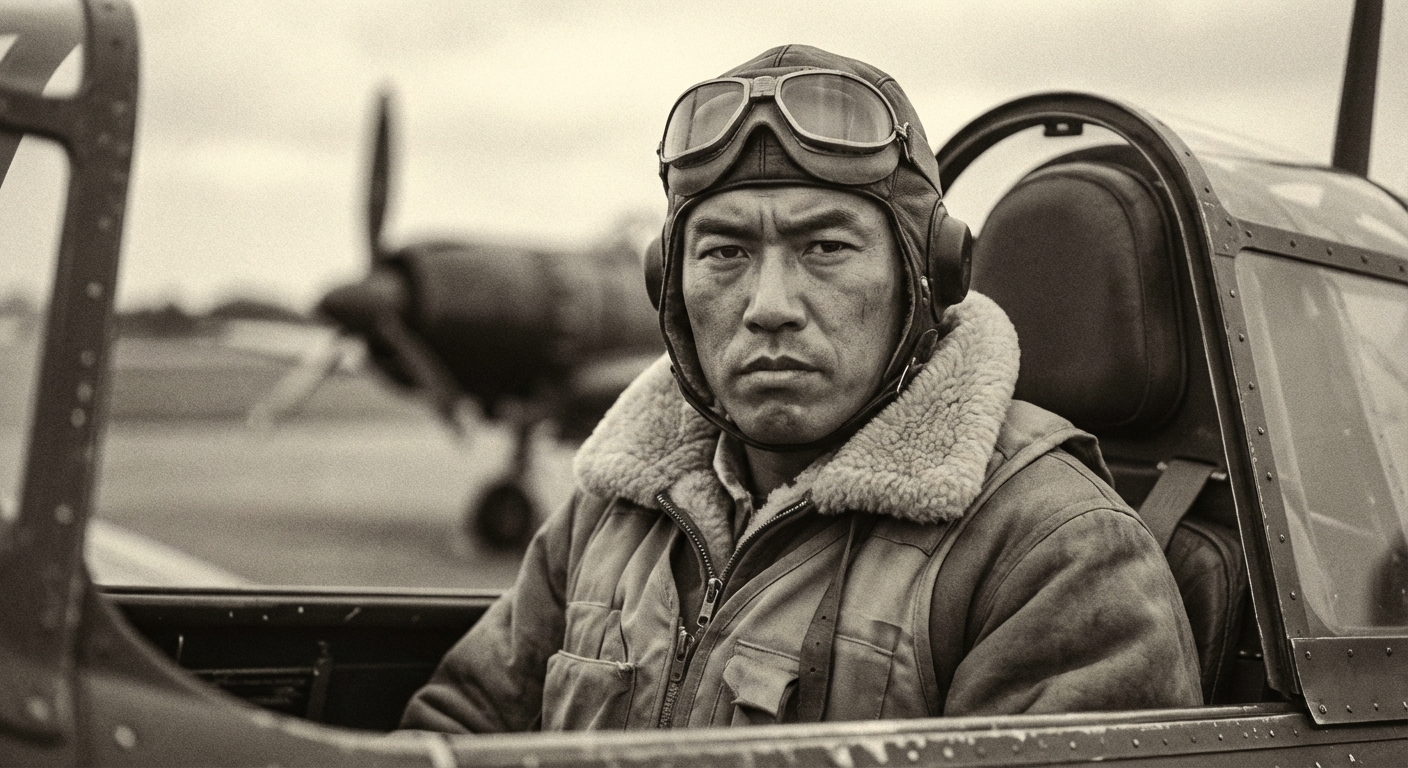
Saburo Sakai was born into a warrior tradition. His family traced its roots to the samurai class, and when the young Sakai enlisted in the Imperial Japanese Navy at sixteen — after being turned away by the army, who considered him too small — he brought that tradition into the cockpit of the most feared fighter in the Pacific theater. What followed was one of the most extraordinary combat careers in the history of aerial warfare.
Sakai completed flight training in 1937, one of only 70 pilots accepted from 1,500 applicants in his class. He flew in the Second Sino-Japanese War, where he developed the discipline and situational awareness that would define his combat style. Unlike many pilots of his era, Sakai was almost obsessively methodical. He analyzed every engagement, studied every mistake, and refused to waste ammunition — or risk. He believed that the pilot who survived and continued fighting was worth more than the pilot who died gloriously. Survival was itself a form of service.
Across the Pacific — China, Philippines, Guadalcanal
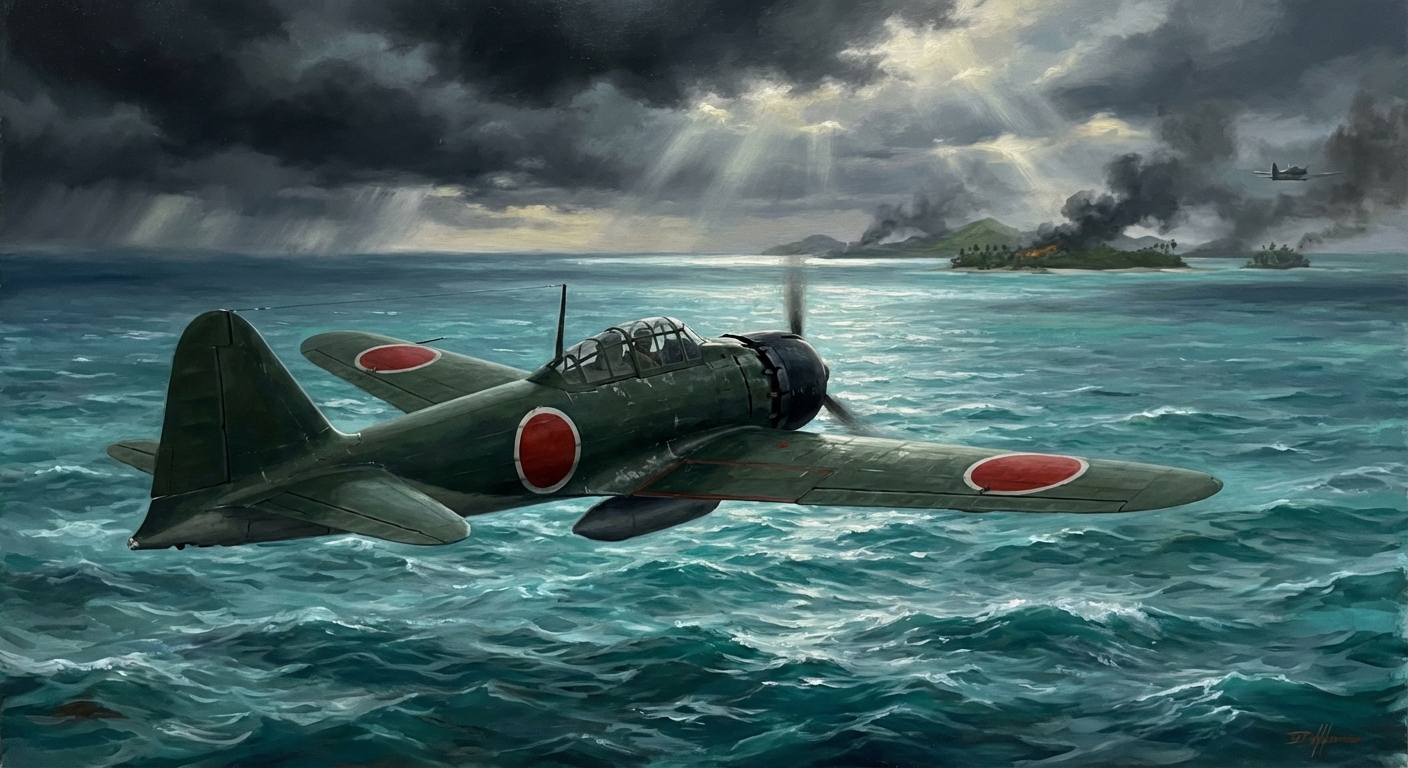
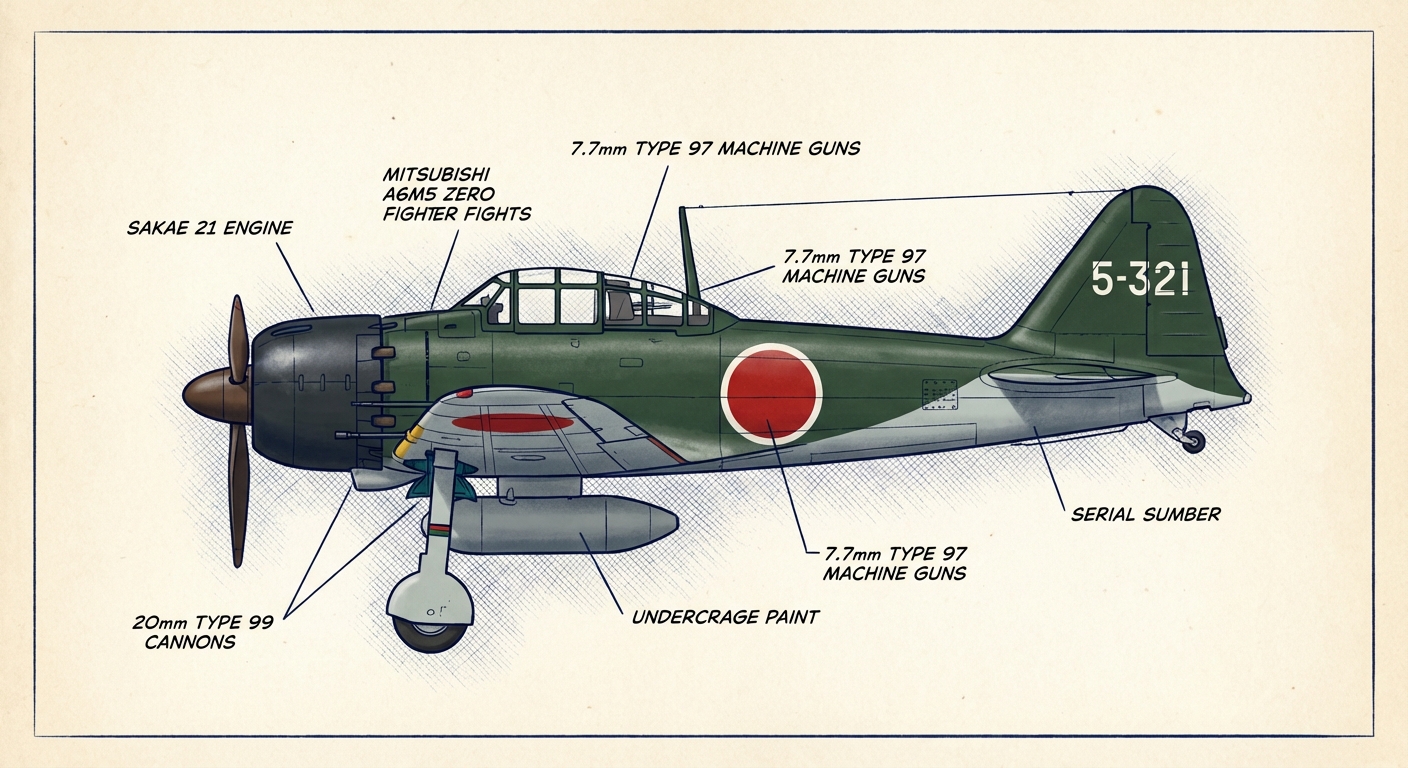
When war exploded across the Pacific in December 1941, Sakai was already a veteran. He flew from Formosa in the opening raids against the Philippines, tangling with American P-40s and B-17s, and from the Dutch East Indies against Dutch and Australian aircraft. The Zero was dominant everywhere it went. Its extraordinary range allowed it to strike at distances that Allied commanders considered impossible, and its agility in a turning fight was unmatched by anything the Allies could deploy in the first year of the war.
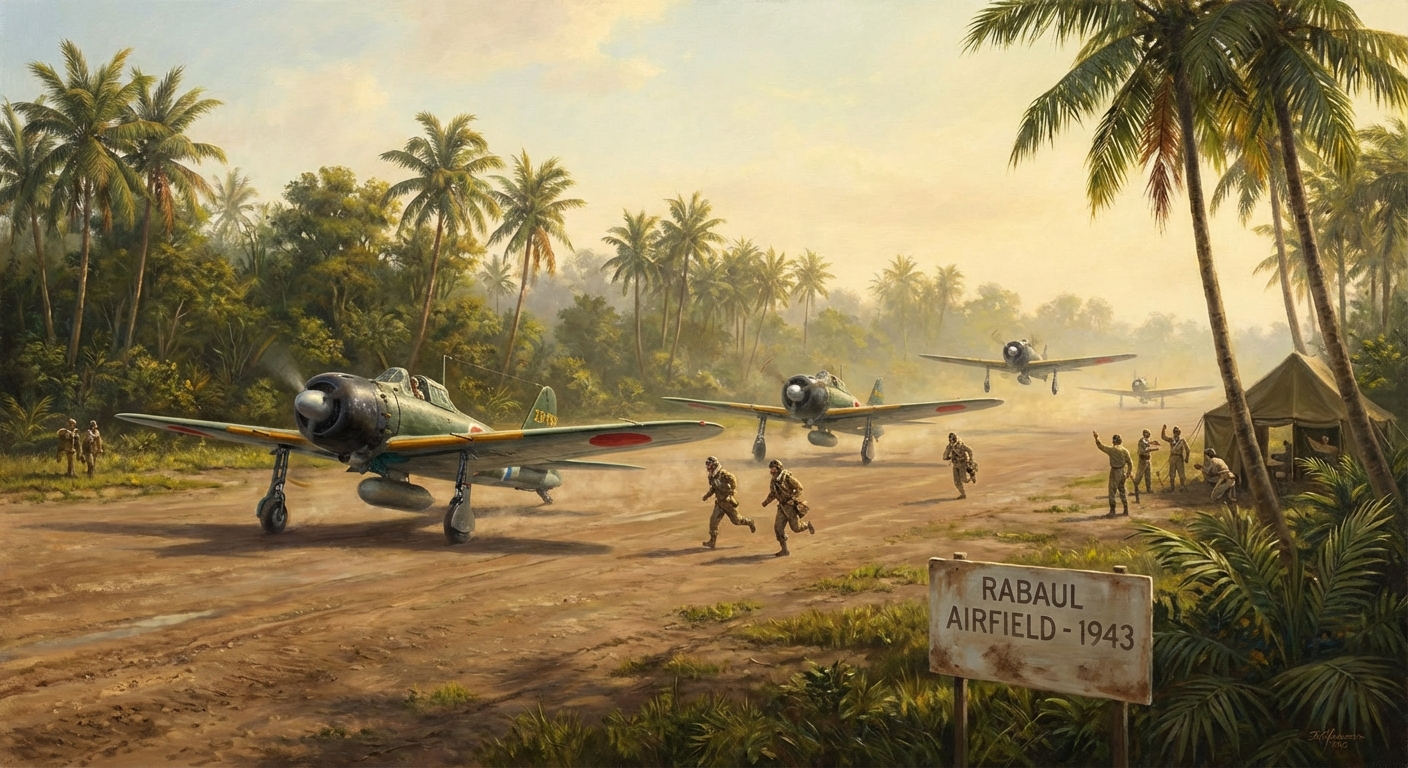
By the summer of 1942, Sakai was flying out of Rabaul and Lae, operating across the Solomons chain. He had accumulated enough victories to be the most celebrated naval aviator in Japan short of the highest brass. He was careful, precise, deadly. He later wrote that his rule in combat was never to fire unless he was certain of a kill — a discipline that explained much of his survival and his kill count simultaneously.
Guadalcanal — The Bullet, August 7, 1942
On the morning of August 7, 1942, the United States Marines landed on Guadalcanal. It was the beginning of the campaign that would mark the turning point of the Pacific war. Sakai was scrambled from Rabaul with the first reaction force — a 560-mile flight just to reach the combat zone, then combat, then 560 miles back. A mission of this length at the edge of the Zero's range left no margin for anything.
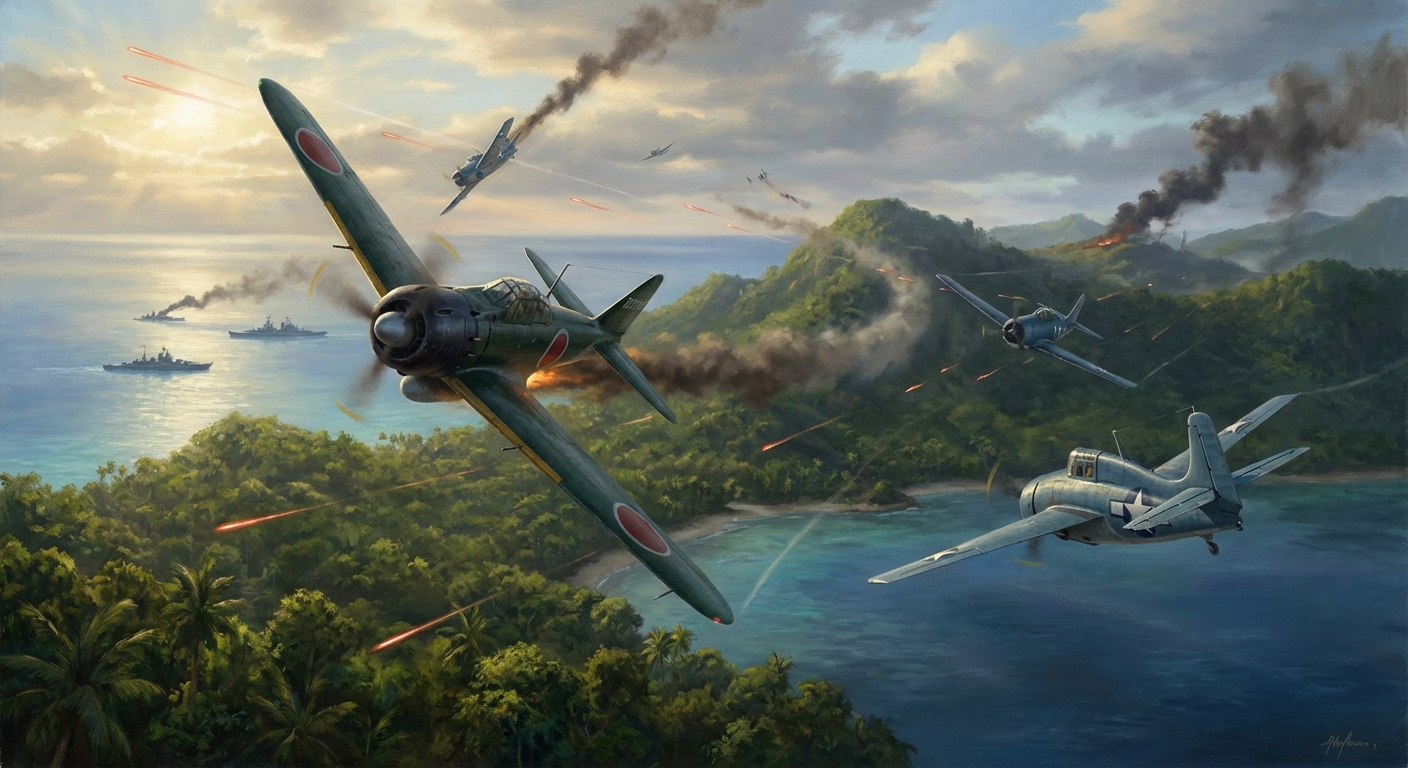
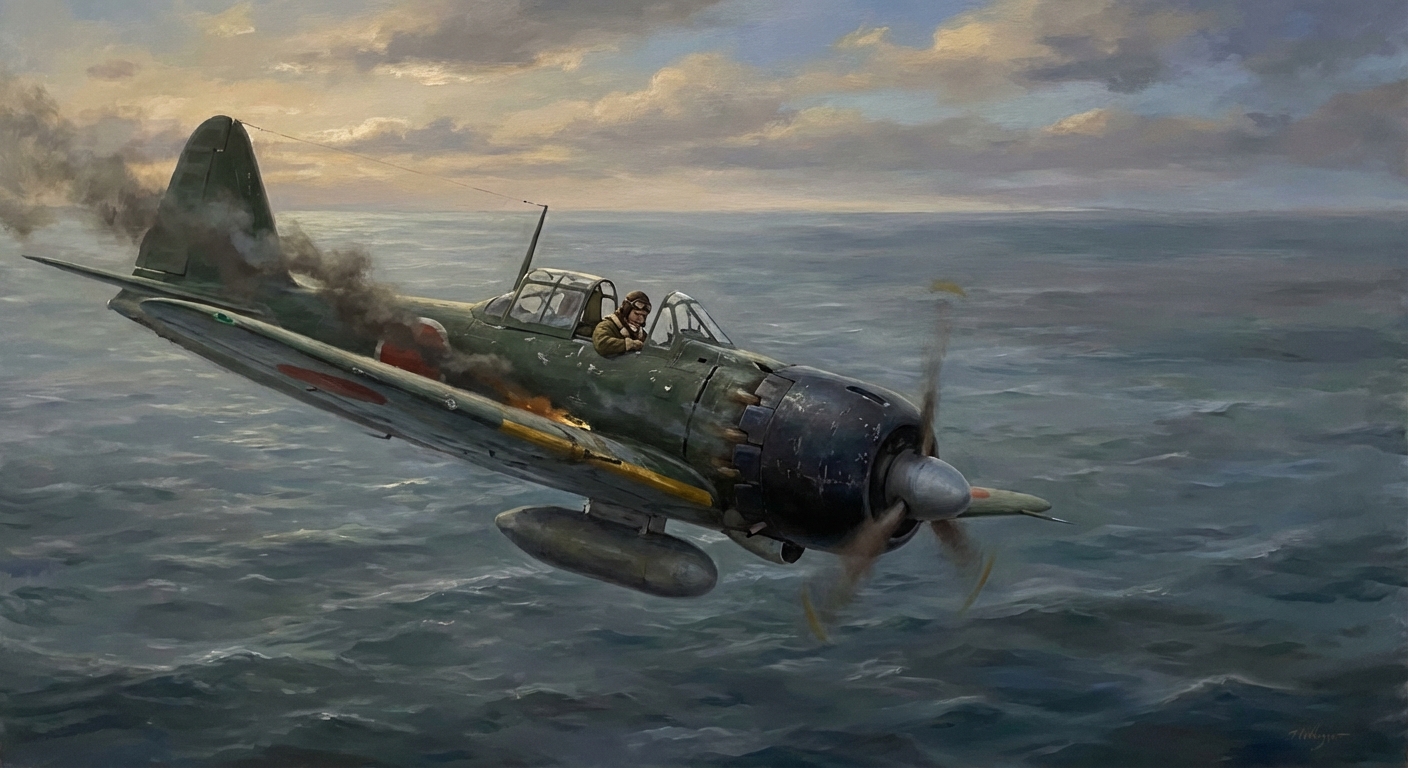
During the fight over the beachhead, Sakai spotted what he took to be a formation of TBF Avenger torpedo bombers and dove to attack. They were not Avengers. They were SBD Dauntless dive bombers, with rear gunners who could fire accurately. The gunners opened up on Sakai from close range. A .30-caliber bullet struck him in the head, entering above his right eye and exiting from behind, destroying his right eye and tearing through the vision center of his brain.
The impact hurled him into semiconsciousness. When he regained awareness, he was in an inverted dive, blood flooding his cockpit, his right hand paralyzed, his vision narrowed to a grey tunnel through his left eye. He did not know how far he had fallen. He did not know if the war was still happening around him. He knew only that he was alive and that Rabaul was somewhere to the northwest.
560 Miles Home — Half-Dead, Half-Blind
What followed was one of the most astonishing feats of human endurance in the history of aviation. Sakai flew 560 miles back to Rabaul — four and a half hours — through the agony of a cranial wound, with his right arm barely functional, with his vision reduced to a single blurry field, fighting to remain conscious against the grey that kept pulling at the edges of his sight. He vomited repeatedly. He blacked out and came back. He flew by instruments he could barely read. He found Rabaul. He landed.
When the ground crew opened his cockpit, they found a man so covered in blood that they initially couldn't identify him. He was rushed into surgery. The doctors saved his life. They could not save his eye. Saburo Sakai was blind in the right eye — for a fighter pilot, for any pilot, a career-ending injury. He was invalided to Japan, treated, and eventually assigned as a flight instructor. The assumption was that he would never fight again.
Return to Combat — One-Eyed Ace
Sakai had other ideas. He spent two years in recovery and training, learning to judge distances with a single eye, compensating for lost depth perception through techniques he developed himself. In 1944, with the war turning decisively against Japan and experienced pilots increasingly scarce, he convinced the Navy to let him fly combat again. He was assigned to the 343rd Air Group, equipped with the new Kawanishi N1K Shiden — the “George” — which was the first Japanese fighter that could seriously contest American F6F Hellcats and F4U Corsairs.
He flew combat over Iwo Jima and survived the war. On the last day of the war — August 15, 1945, hours before the Emperor's surrender broadcast — he shot down a B-29 over Tokyo in one of the war's final aerial engagements. He was half-blind. He was still the most dangerous man in the sky over Japan.
After the war, Sakai became an outspoken advocate for peace between Japan and the United States, forming friendships with American veterans he had once fought and befriending the families of pilots he had killed. He wrote extensively about his experiences, met with former enemies, and spent decades arguing that the waste of war served no honorable purpose. He died in 2000, at a dinner with Japanese Navy veterans and American fighter pilots who had been his enemies. He collapsed at the table, mid-conversation. He was eighty-four years old.