Conflict directory
STORIES
Real combat stories across the ages, now grouped by conflict so the archive is easier to scan. Existing story URLs stay the same; the old page 2 and page 3 archives remain available as fallback links.
25 stories
Featured / Newest
Recently built feature stories and major pages to open first.
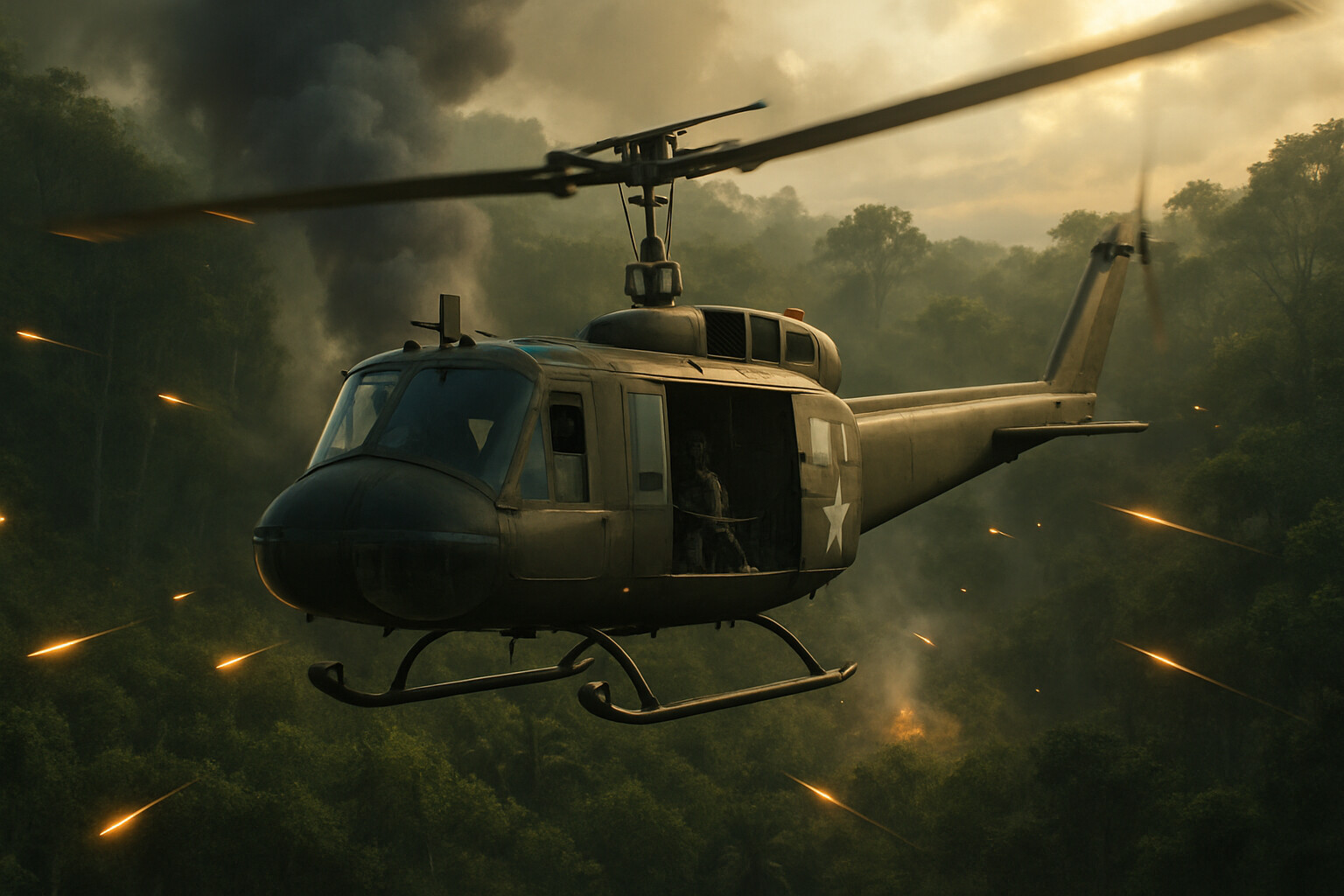
Into the Fire: Ed Freeman's Flight to Save X-Ray
On November 14, 1965, Captain Ed Freeman repeatedly flew his UH-1 Huey into the deadly landing zone at Ia Drang Valley, delivering critical ammunition and evacuating wounded soldiers under intense enemy fire.
November 14, 1965 • Ia Drang Valley, South Vietnam
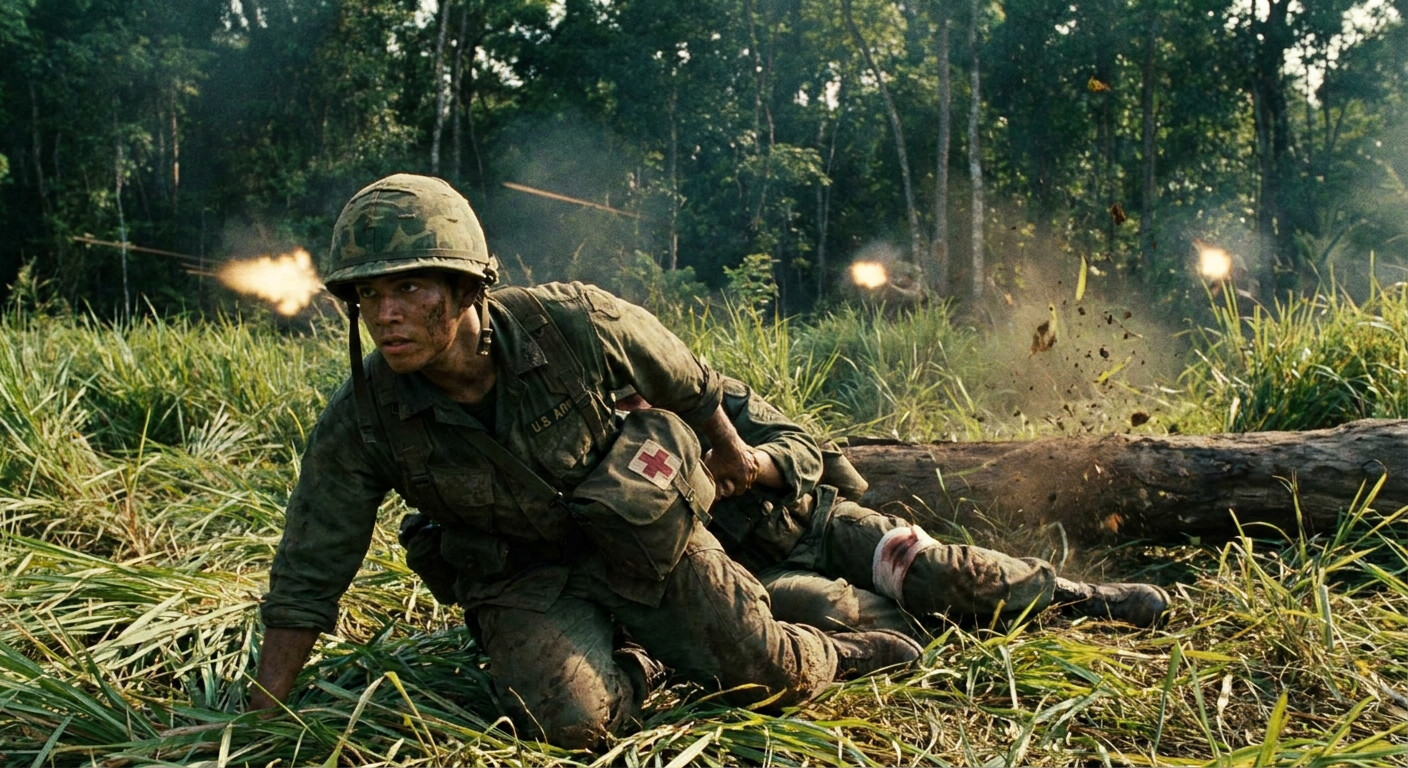
The Medic Who Wouldn't Leave: Alfred Rascon's March Through Fire
In March 1966, Army medic Alfred Rascon repeatedly exposed himself to enemy fire to save wounded paratroopers in Vietnam, using his body as a shield and refusing evacuation despite multiple wounds.
March 16, 1966 • Republic of Vietnam
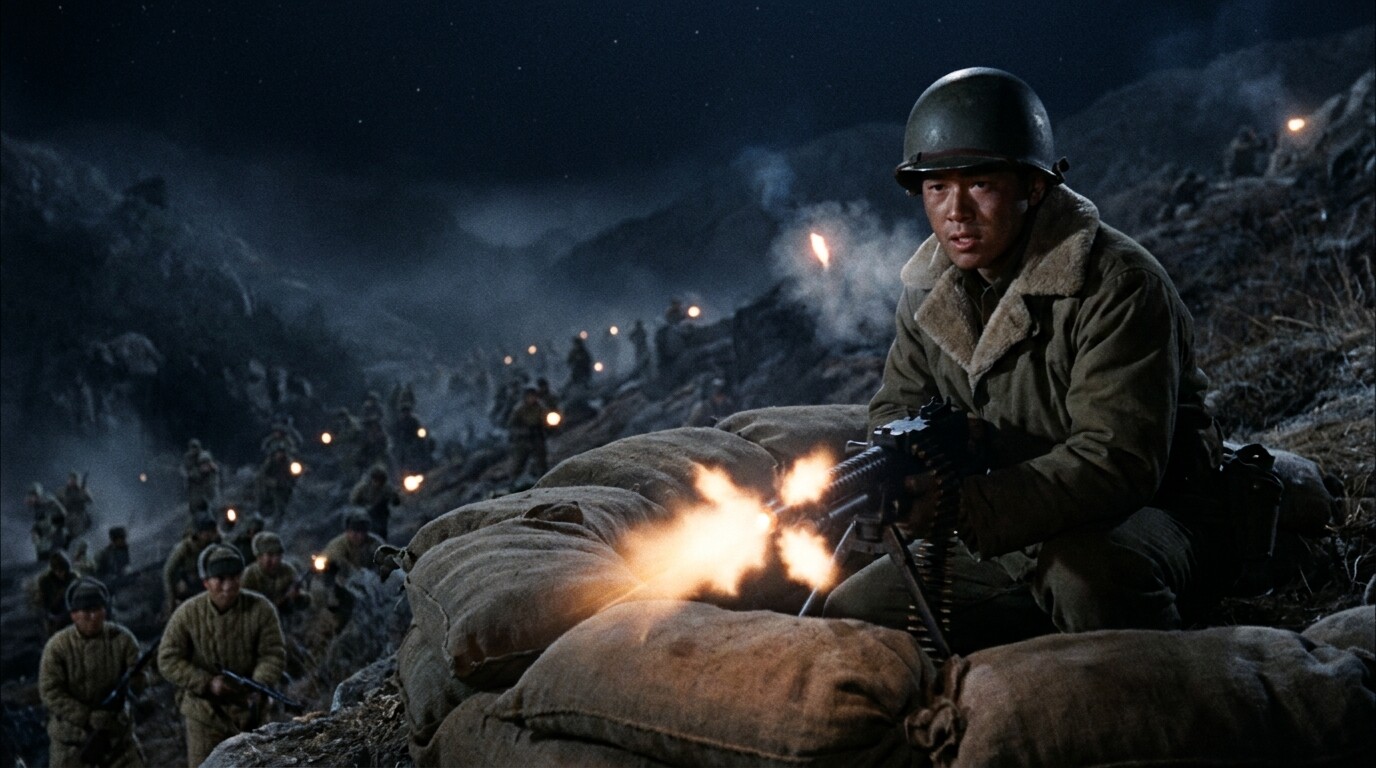
The Night at Taejon-ni: Hiroshi Miyamura's Stand
On a bitter Korean night in April 1951, Corporal Hiroshi Miyamura held his machine gun position against overwhelming Chinese assault, covered his squad's withdrawal, and was captured after hours of desperate fighting.
April 24-25, 1951 • near Taejon-ni, Korea
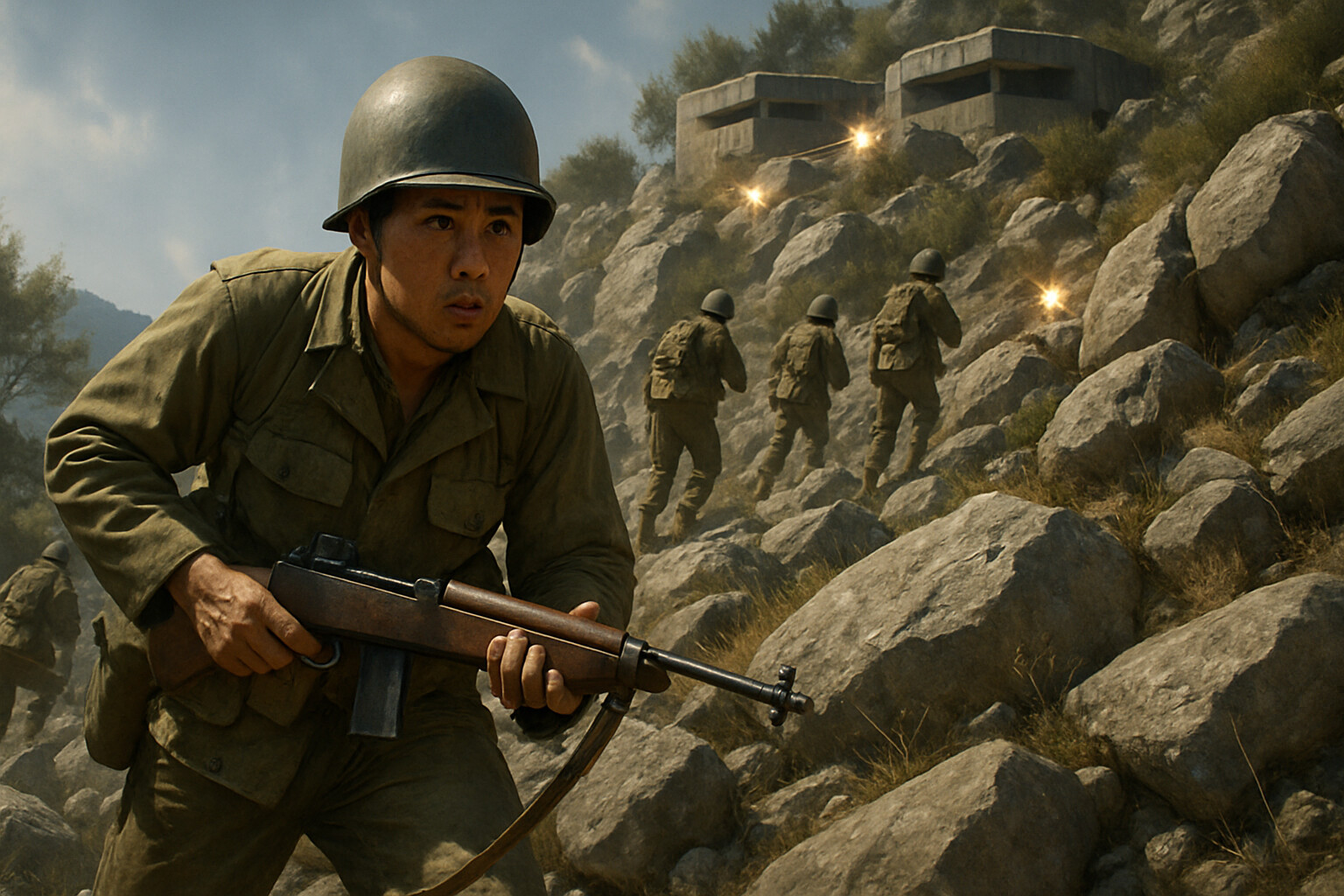
Against All Odds: Lieutenant Inouye's Final Assault
On April 21, 1945, Second Lieutenant Daniel Inouye of the 442nd Regimental Combat Team led a devastating assault on German machine-gun positions near San Terenzo, Italy, continuing to fight with a grenade in his severed right hand.
April 21, 1945 • near San Terenzo, Italy
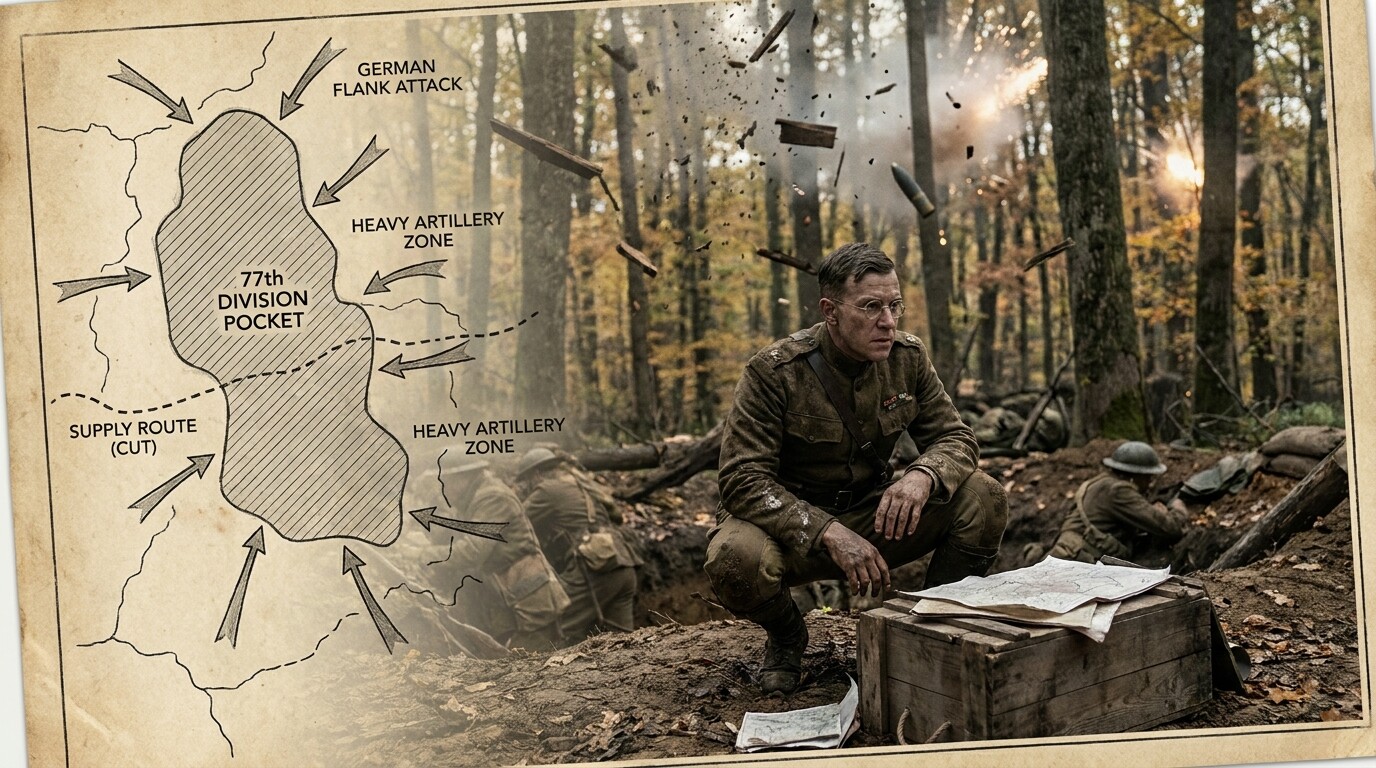
The Lost Battalion: Command Under Fire
Major Charles Whittlesey led 550 men into the Argonne Forest in October 1918, only to find themselves surrounded, starving, and under constant bombardment—including friendly fire. For five days, he refused German surrender demands while his force dwindled to fewer than 200 survivors.
October 1918 • Argonne Forest, France
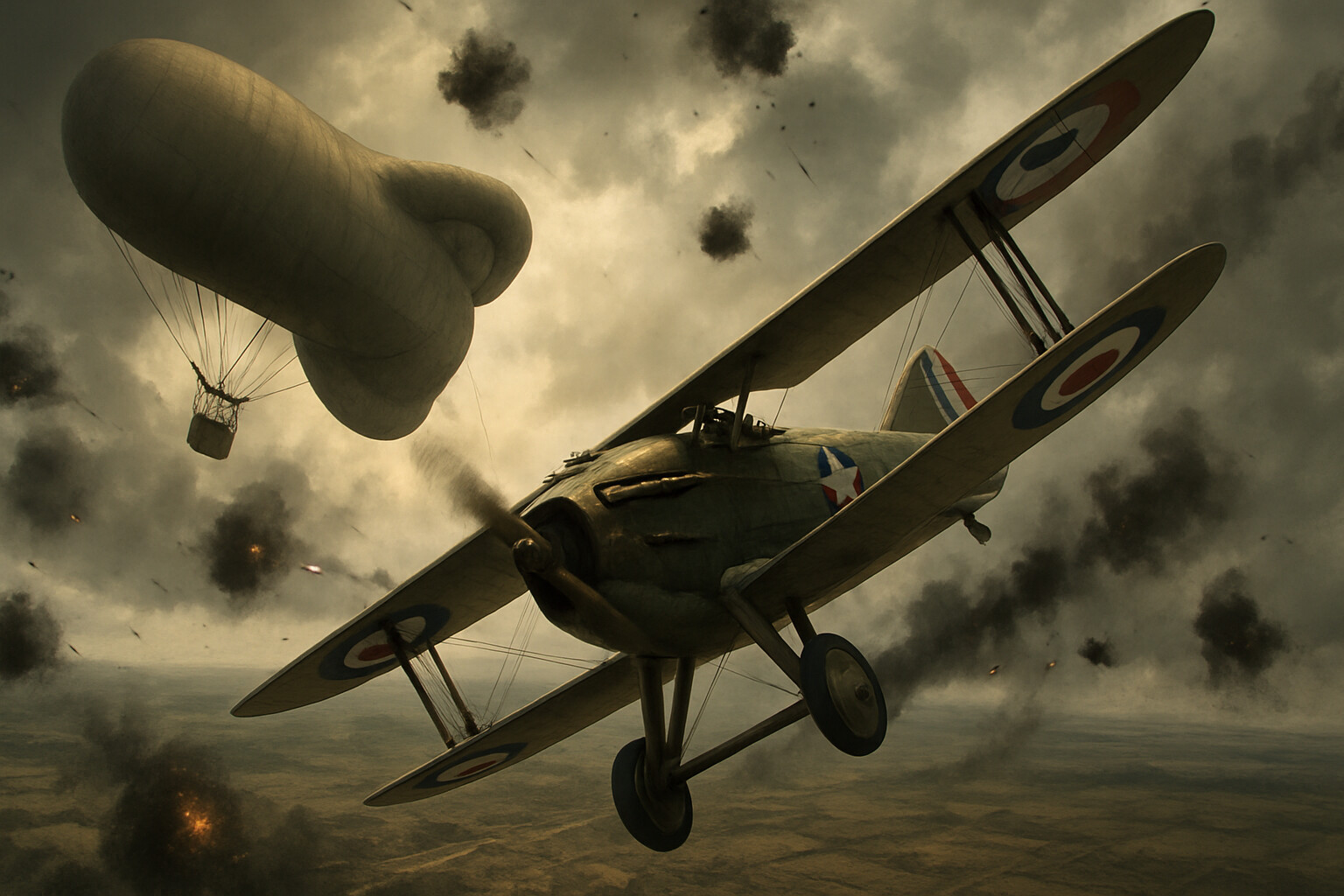
The Balloon Buster: Frank Luke's War Against the Eyes of Germany
Second Lieutenant Frank Luke Jr. became America's most aggressive balloon-hunting ace in September 1918, destroying German observation balloons defended by fighters and ground fire before his death in aerial combat over France.
September 1918 • France
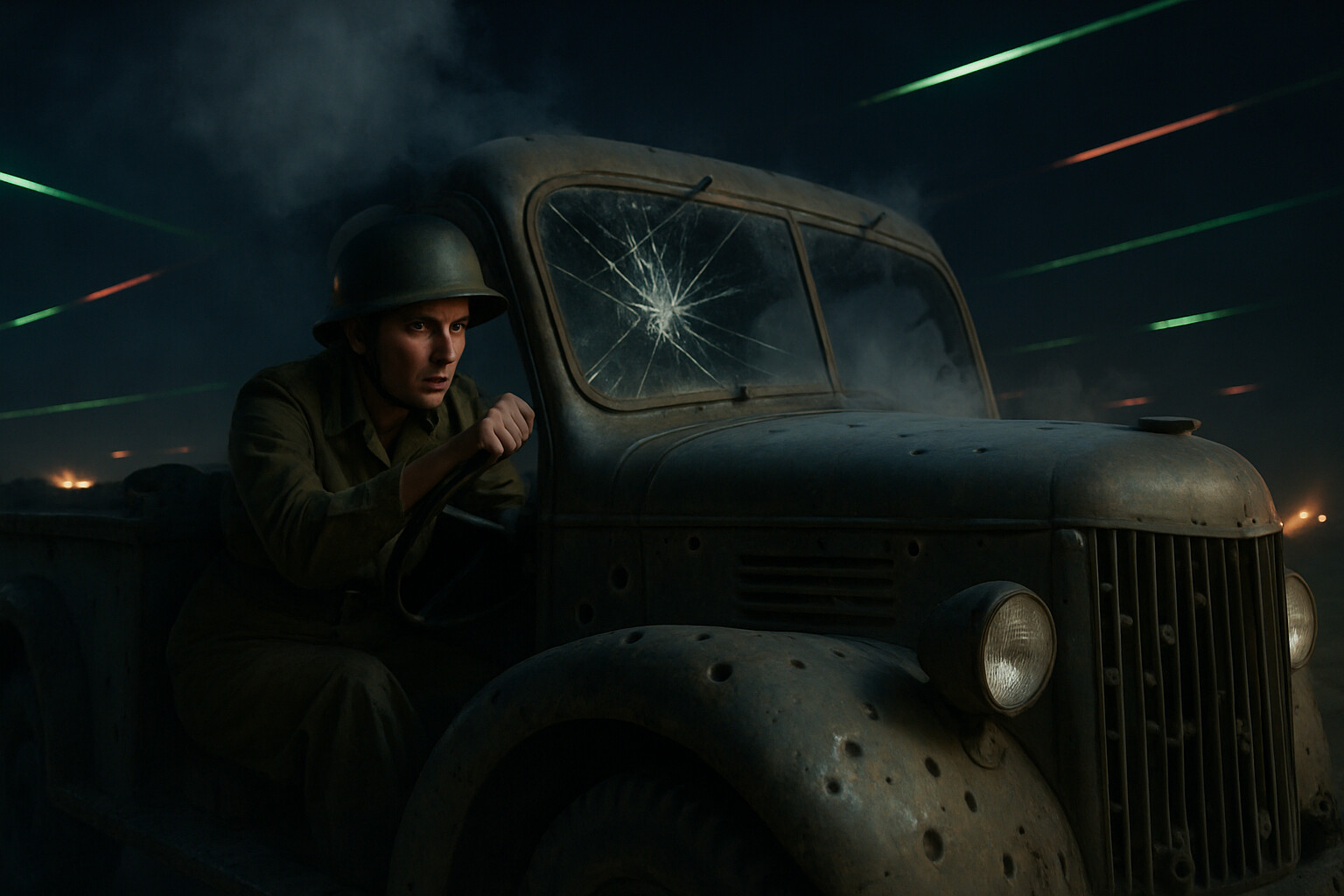
Through Fire and Steel: Susan Travers and the Breakout from Bir Hakeim
In June 1942, Susan Travers became the only woman to serve in the French Foreign Legion when she drove through enemy fire during the desperate breakout from the besieged fortress of Bir Hakeim. Her actions helped save the Free French garrison from annihilation in the Libyan desert.
May-June 1942 • Bir Hakeim, Libya
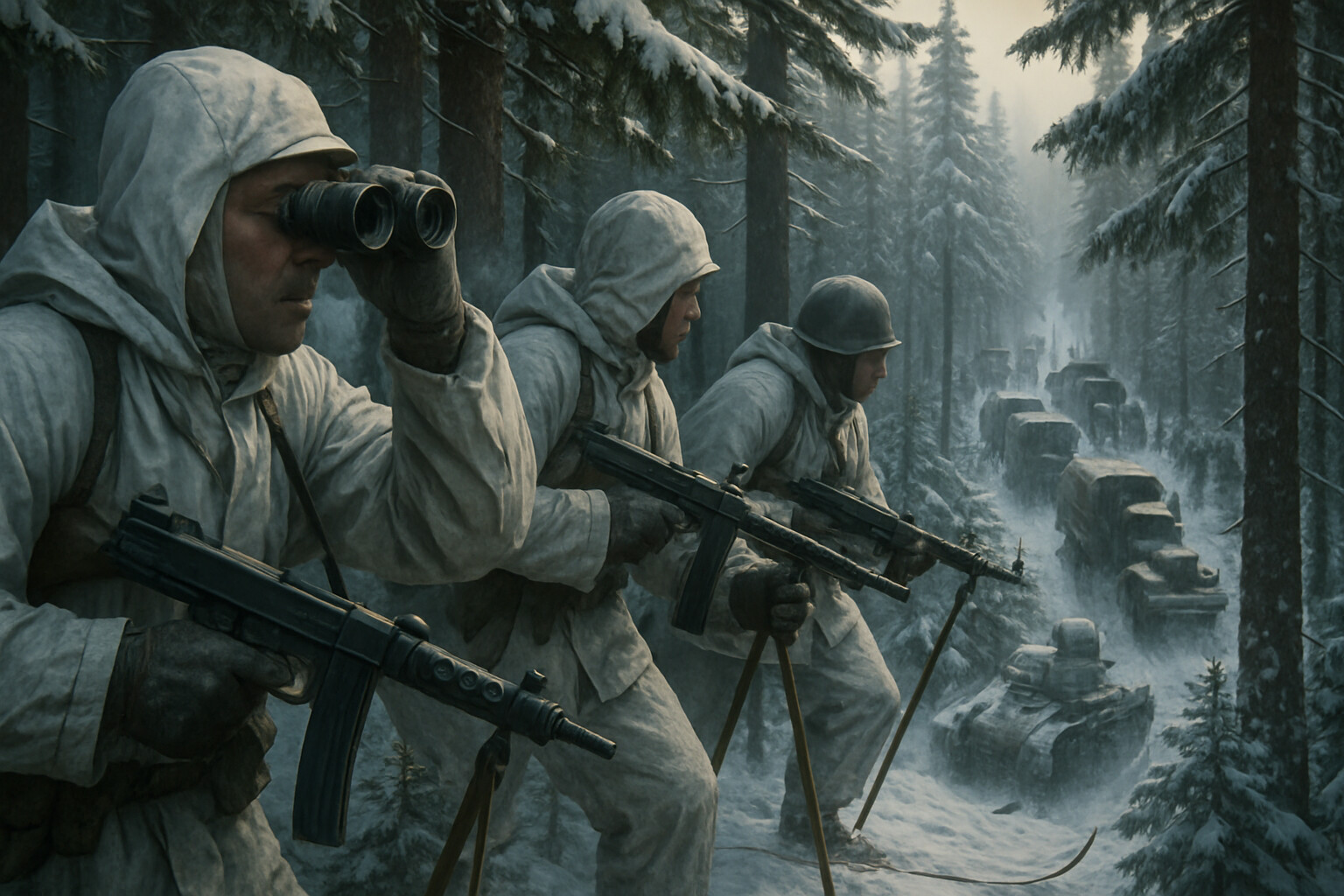
The Motti Master: Finnish Ski Troops and the Art of Forest Warfare
Finnish ski troops developed devastating motti tactics during the Winter War, cutting Soviet columns into isolated pockets in the frozen forest. These ghost-like attacks transformed Finland's winter landscape into a tactical laboratory for asymmetric warfare.
1939-1940 • Finland
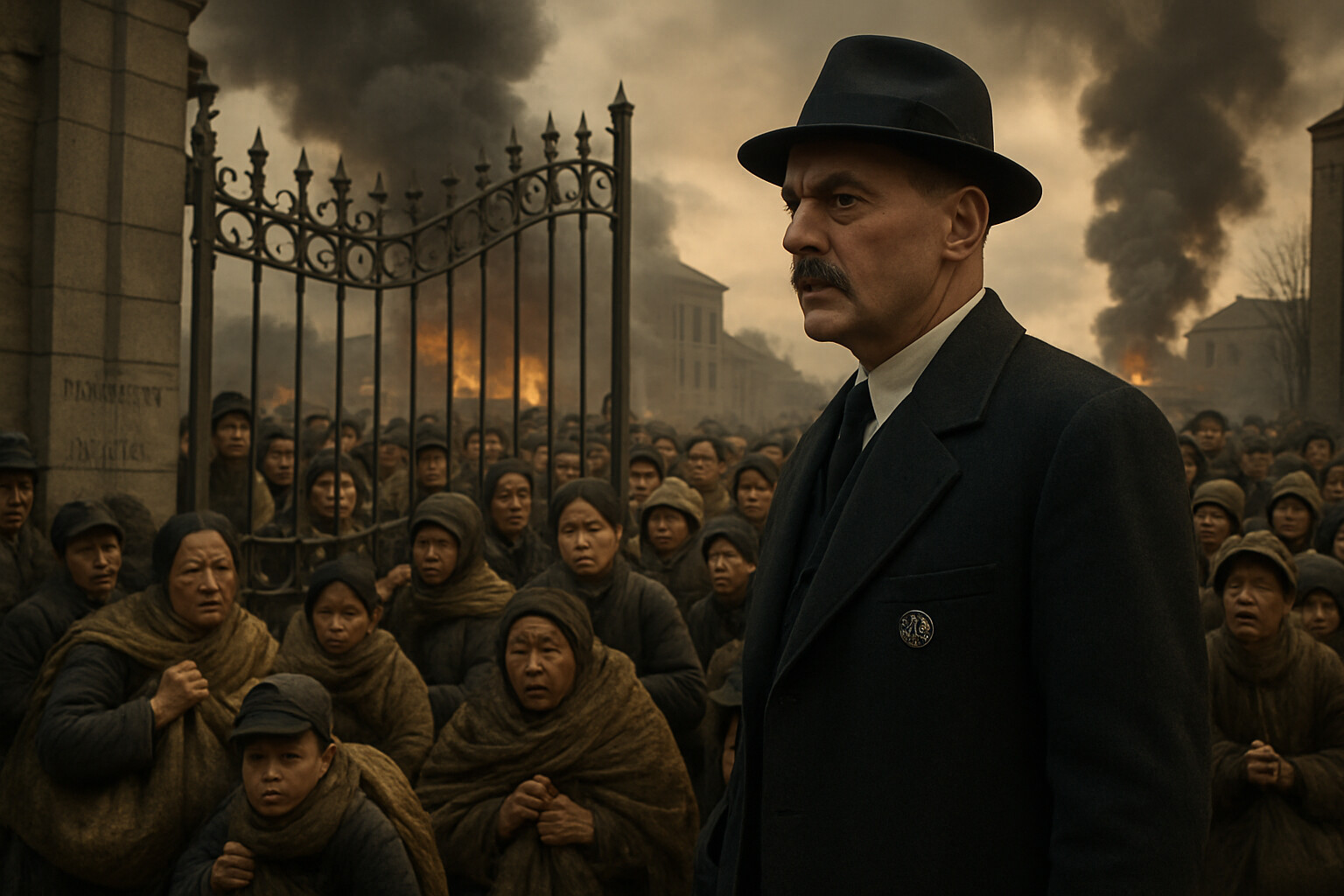
The Nazi Who Saved Nanking: John Rabe's Impossible Choice
A German businessman and Nazi Party member organized an international safety zone that sheltered over 200,000 Chinese civilians during the brutal fall of Nanking in 1937-1938.
1937-1938 • Nanking / Nanjing, China
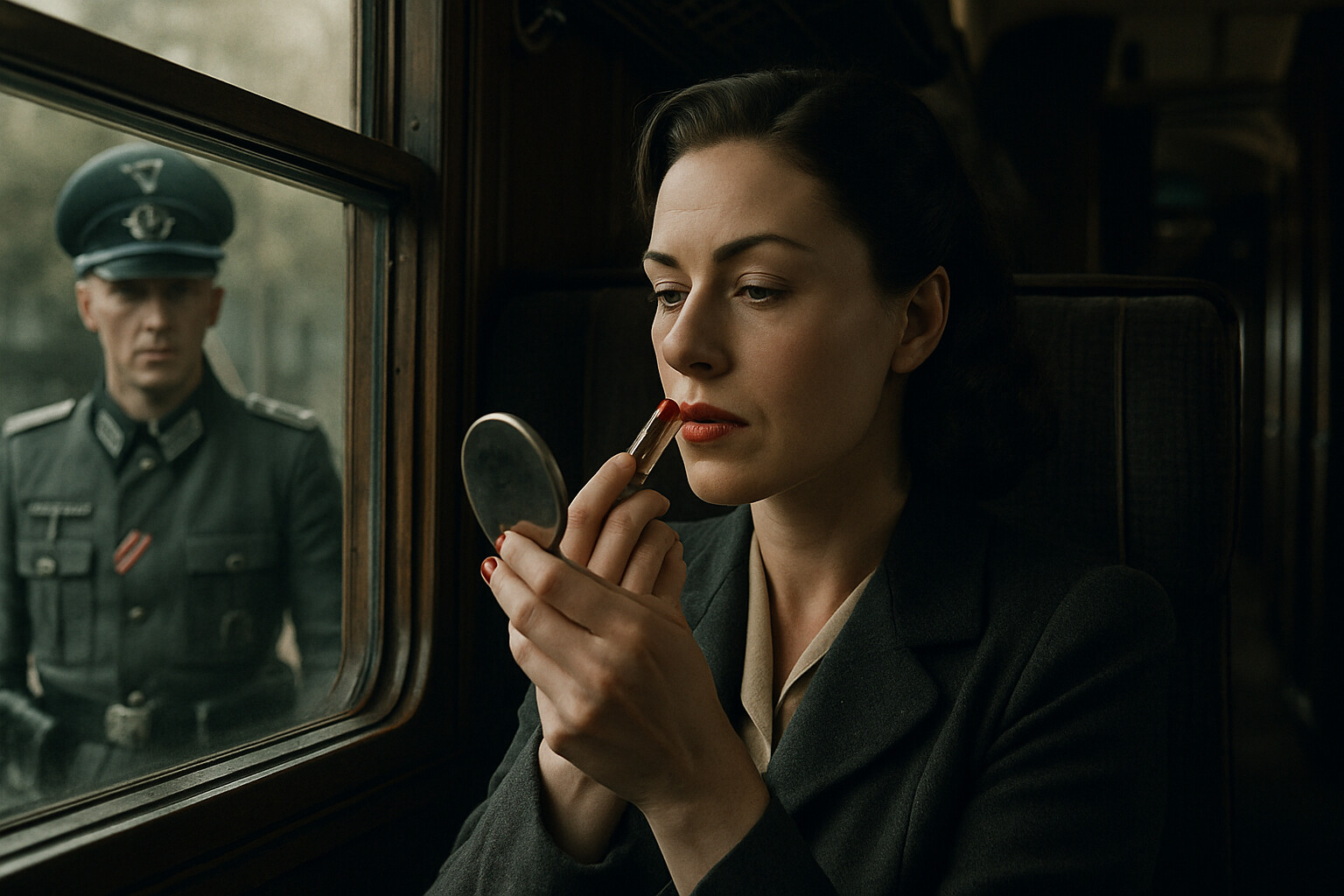
The White Mouse: Nancy Wake's War Against the Reich
Australian socialite Nancy Wake became one of the Gestapo's most wanted fugitives, escaping occupied France only to parachute back as an SOE agent to arm and organize thousands of Maquis resistance fighters.
1940-1944 • Occupied France
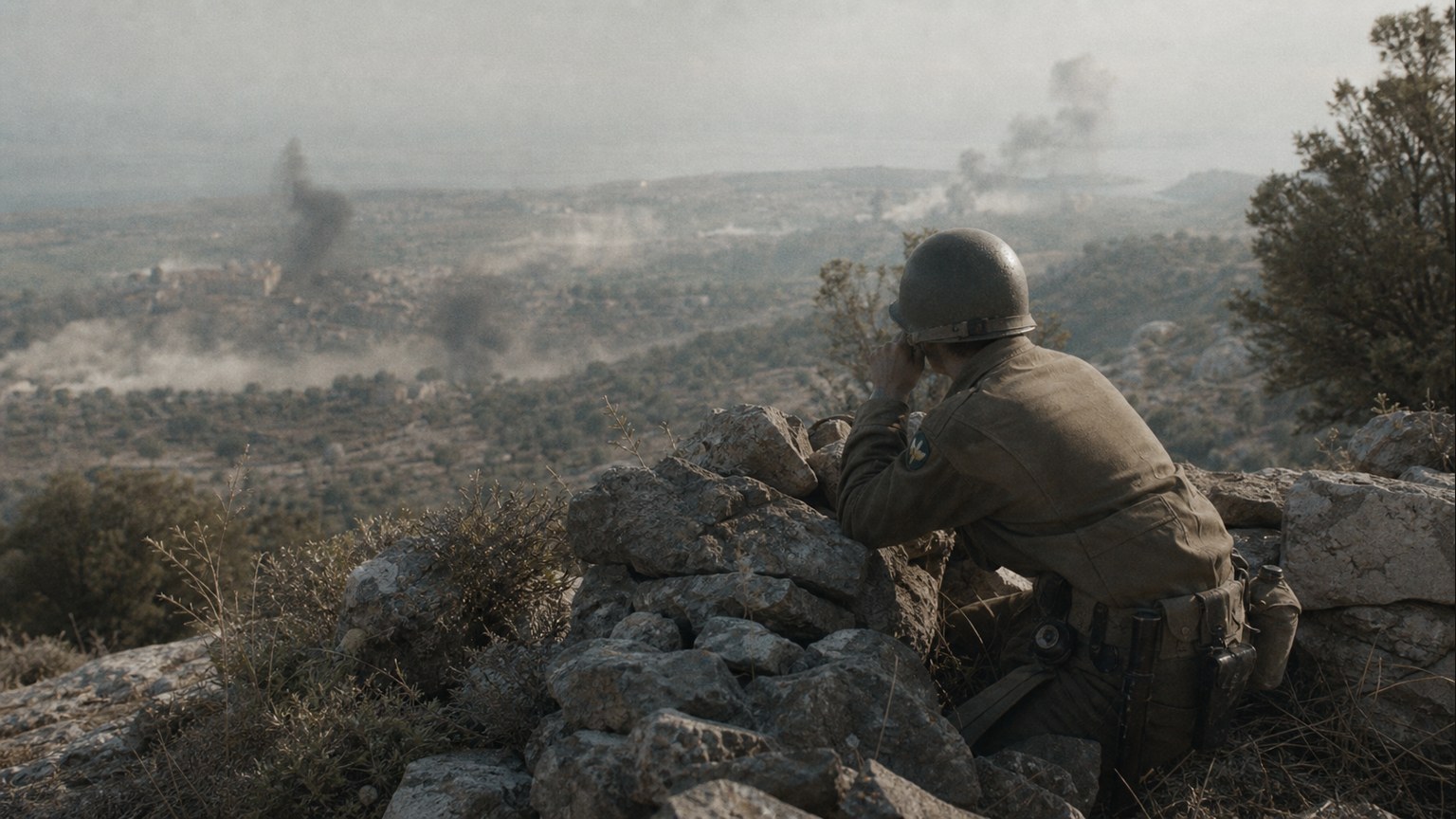
The Broken Warrior: Ernest Childers and the Hill at Oliveto
Second Lieutenant Ernest Childers, a Creek Nation soldier with the 45th Infantry Division, led a desperate assault on German positions near Oliveto, Italy, despite fighting on a broken foot. His one-man charge against enemy machine guns helped break German resistance in the Italian mountains.
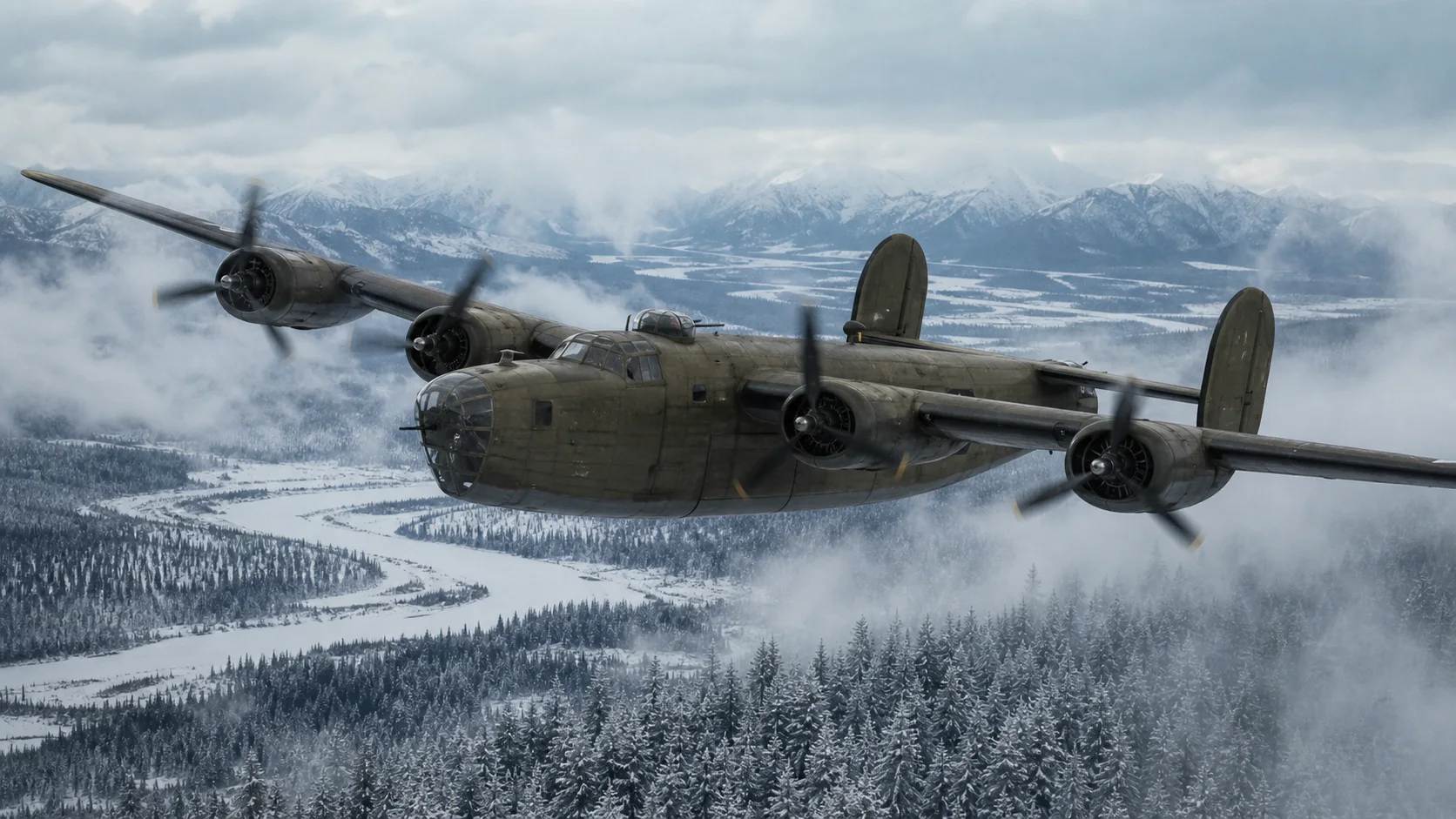
Lost in the Alaskan Wilderness — Lt. Leon Crane
The sole survivor of a B-24 crash endured nearly three months below zero in Alaska.
Dec 1943 • Yukon-Charley region • Forgotten Survival
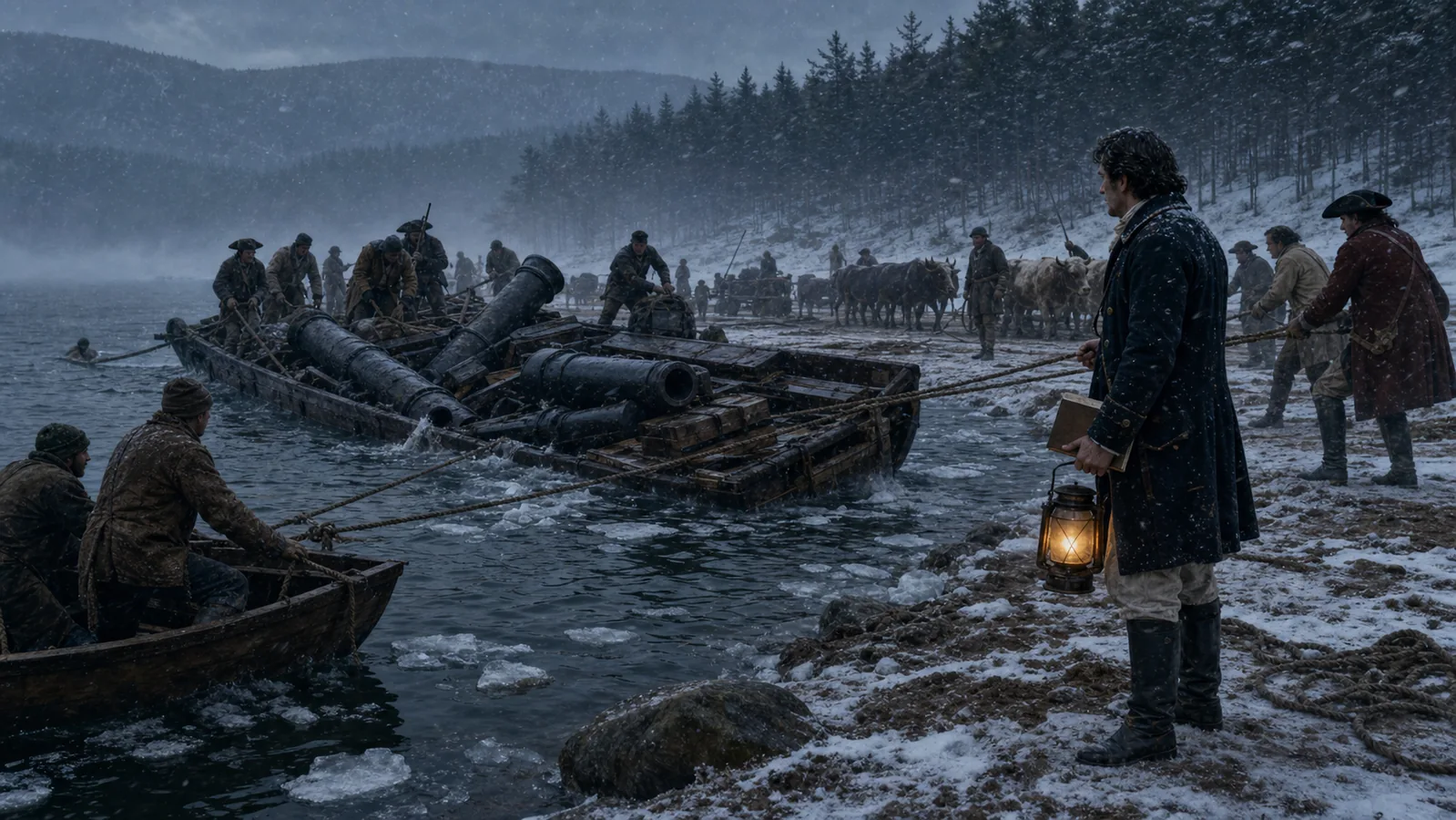
Henry Knox — Noble Train of Artillery
Fifty-nine guns, 119,000 pounds, and the winter haul that broke Boston.
1775-1776 • Ticonderoga to Cambridge • 300 miles
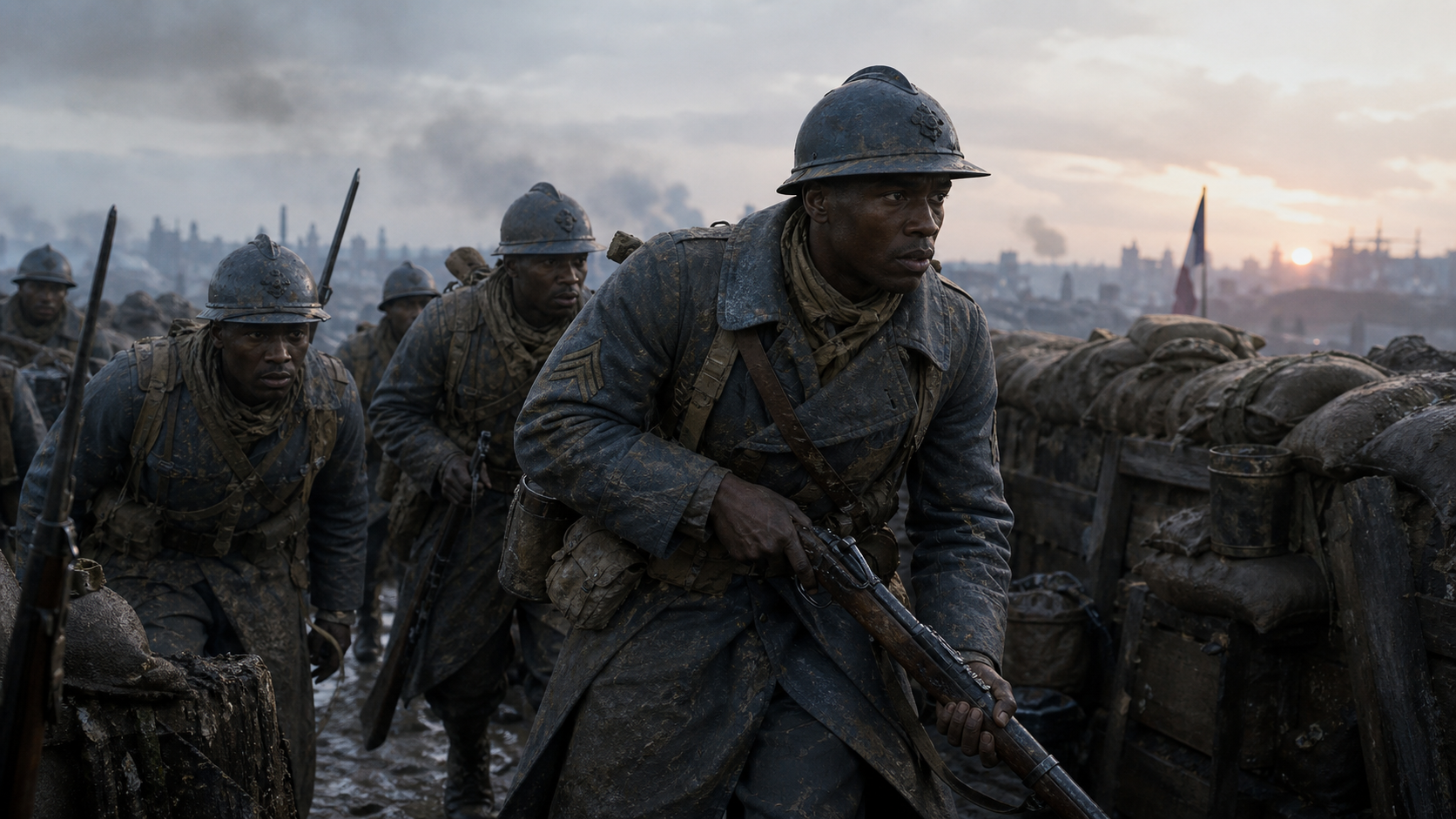
Harlem Hellfighters
The 369th went to war for a country that doubted them
World War I - 369th Infantry Regiment
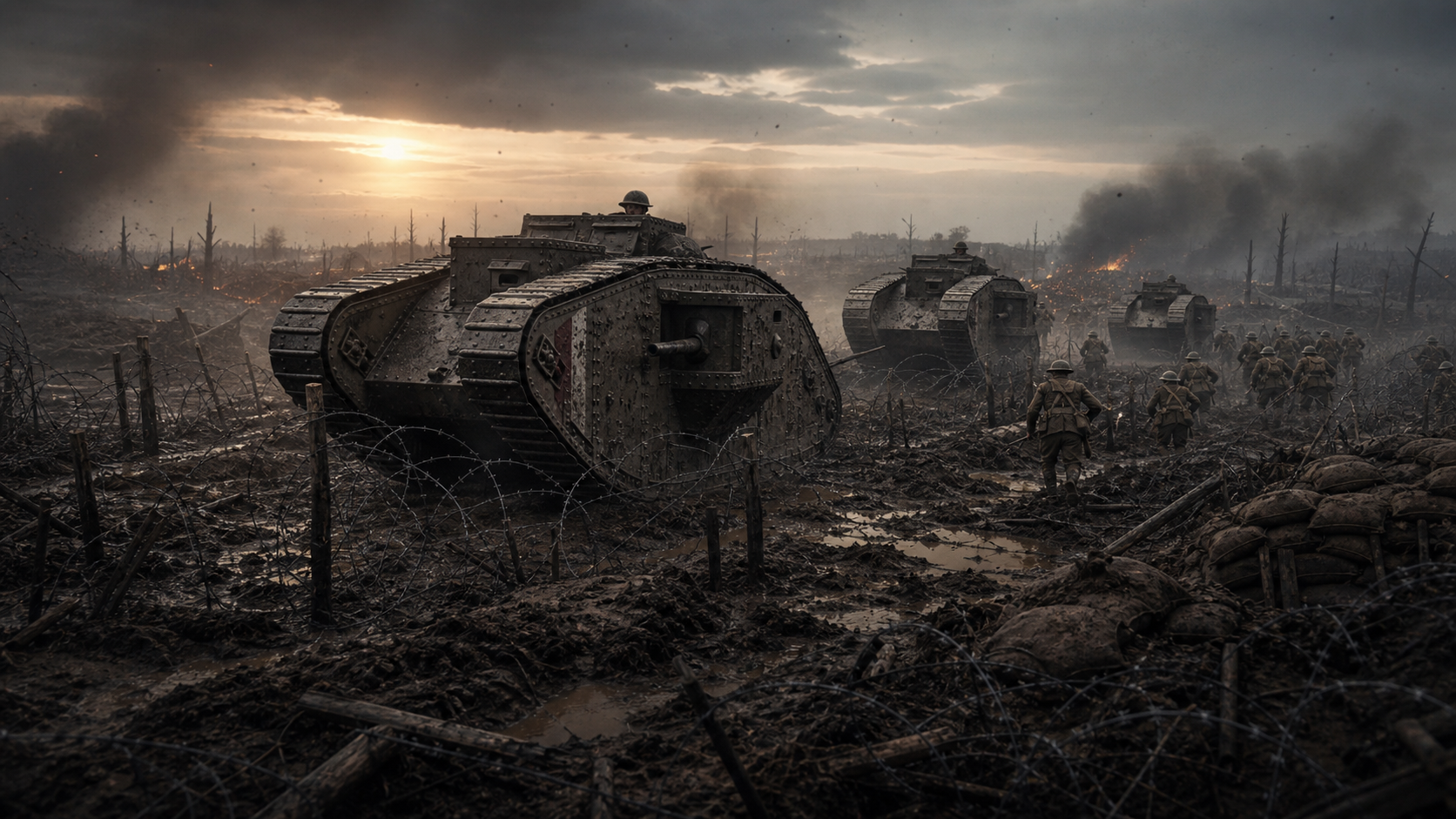
Cambrai Tanks
The morning the wire failed
World War I - Armor - November 1917
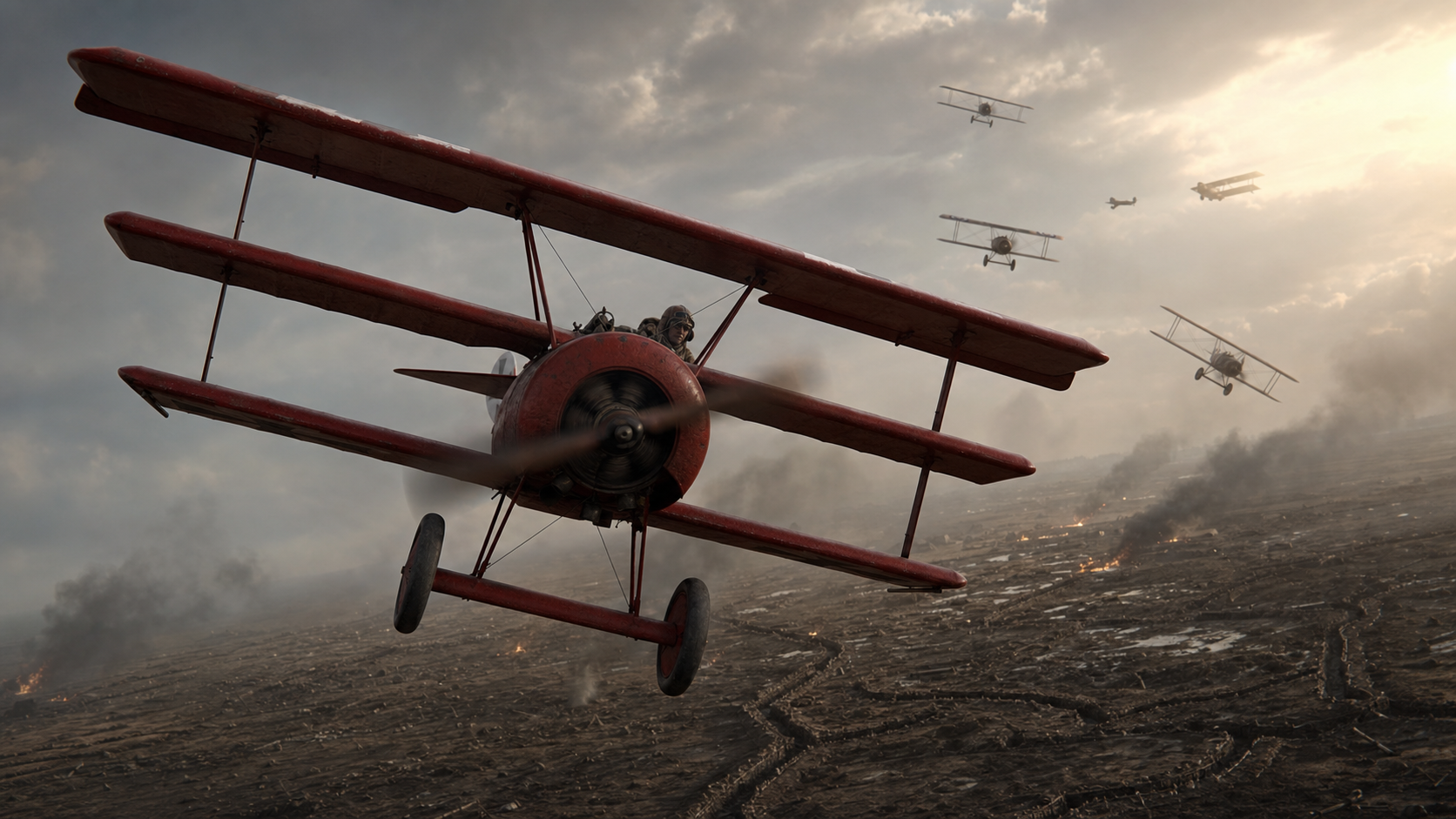
The Red Baron
Myth, machinery, and the air war's most famous ace
World War I - Air War - 1914-1918
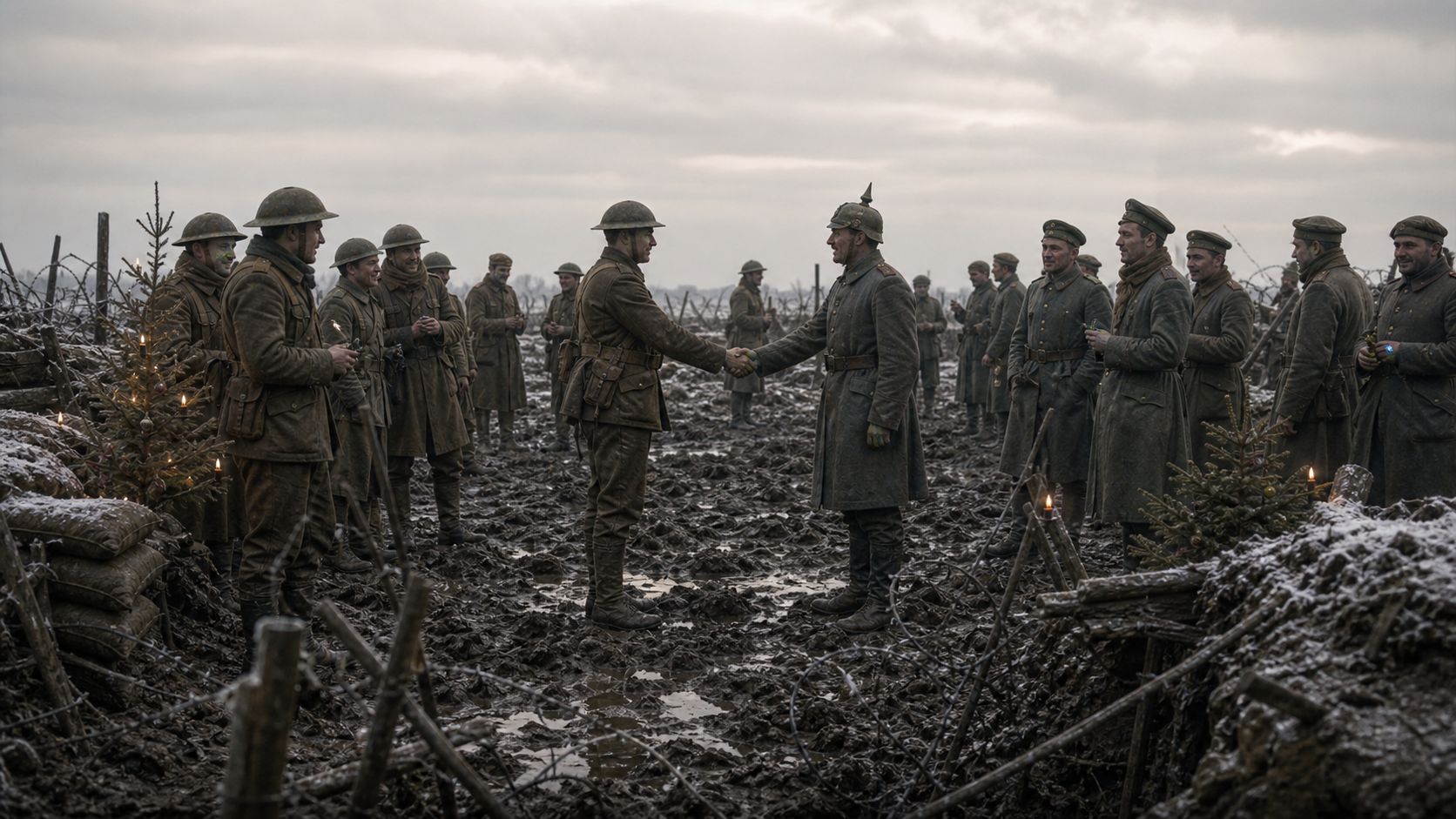
The Christmas Truce
Songs, burials, handshakes, and a fragile pause in no man's land
December 1914 - Western Front
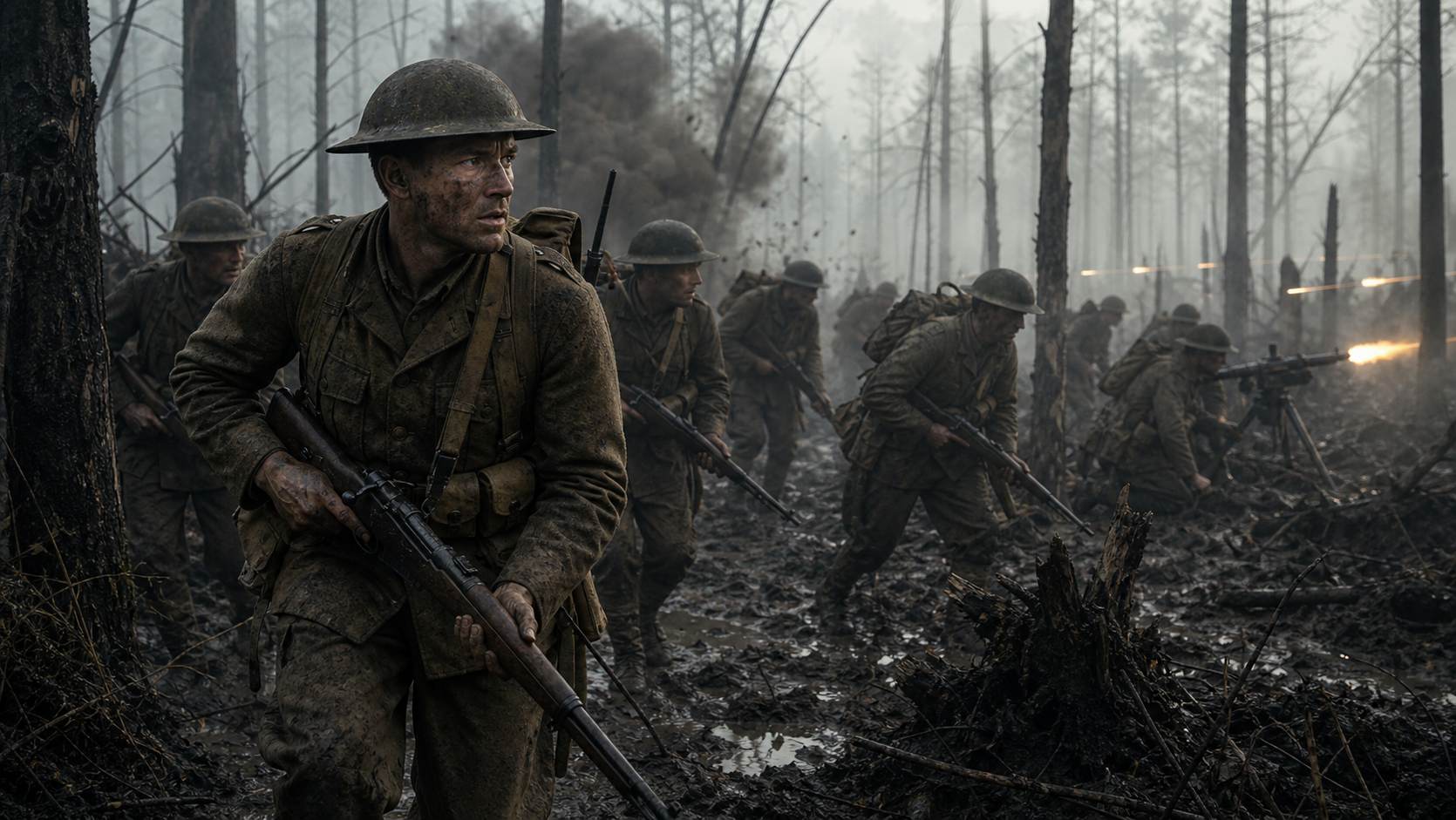
Alvin York
The Argonne machine-gun fight near Chatel-Chehery
October 8, 1918 - Meuse-Argonne Offensive
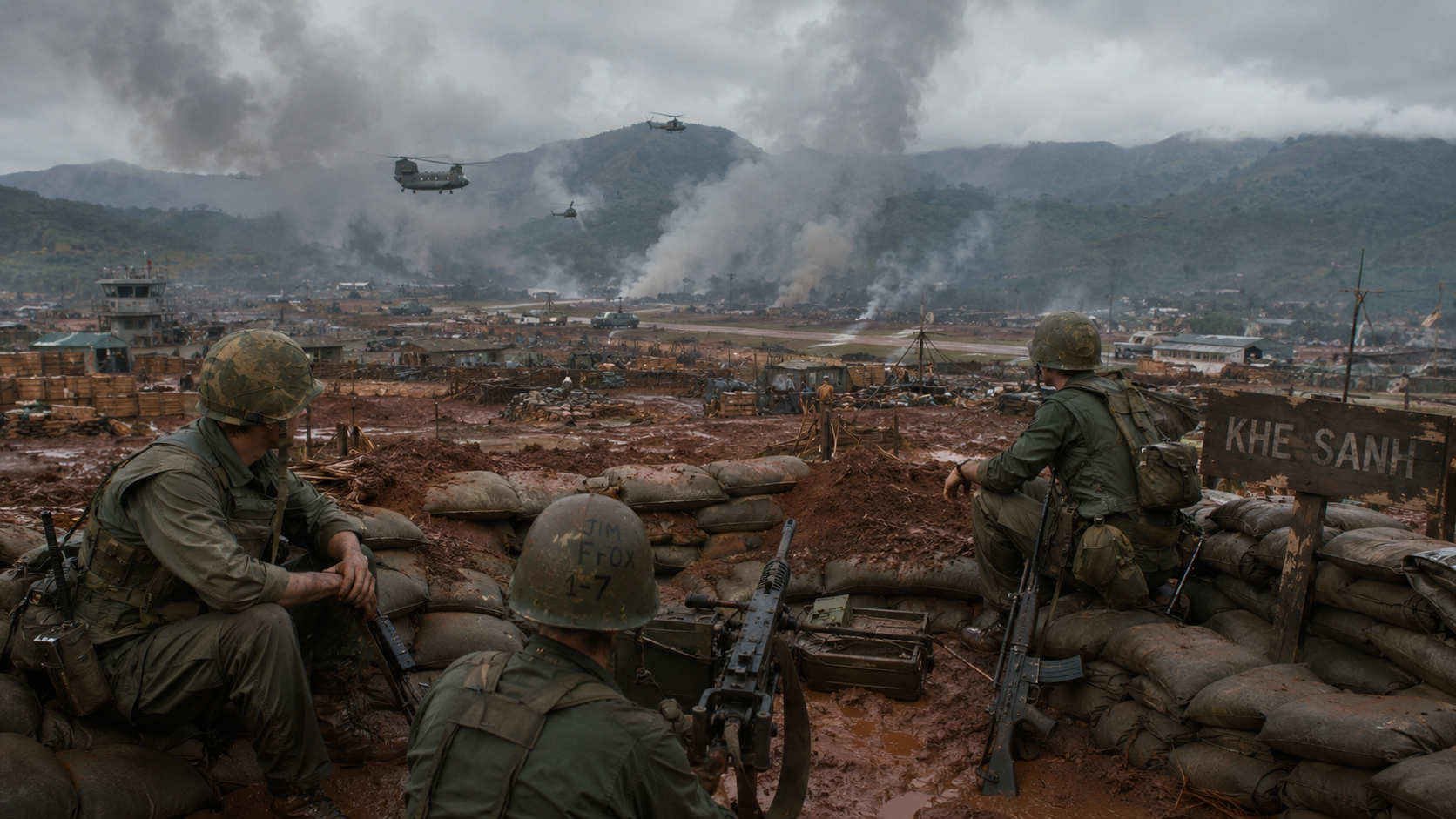
Khe Sanh
Marines, air supply, Operation Niagara, and the shadow of Dien Bien Phu
January 21-April 8, 1968 - Quang Tri Province
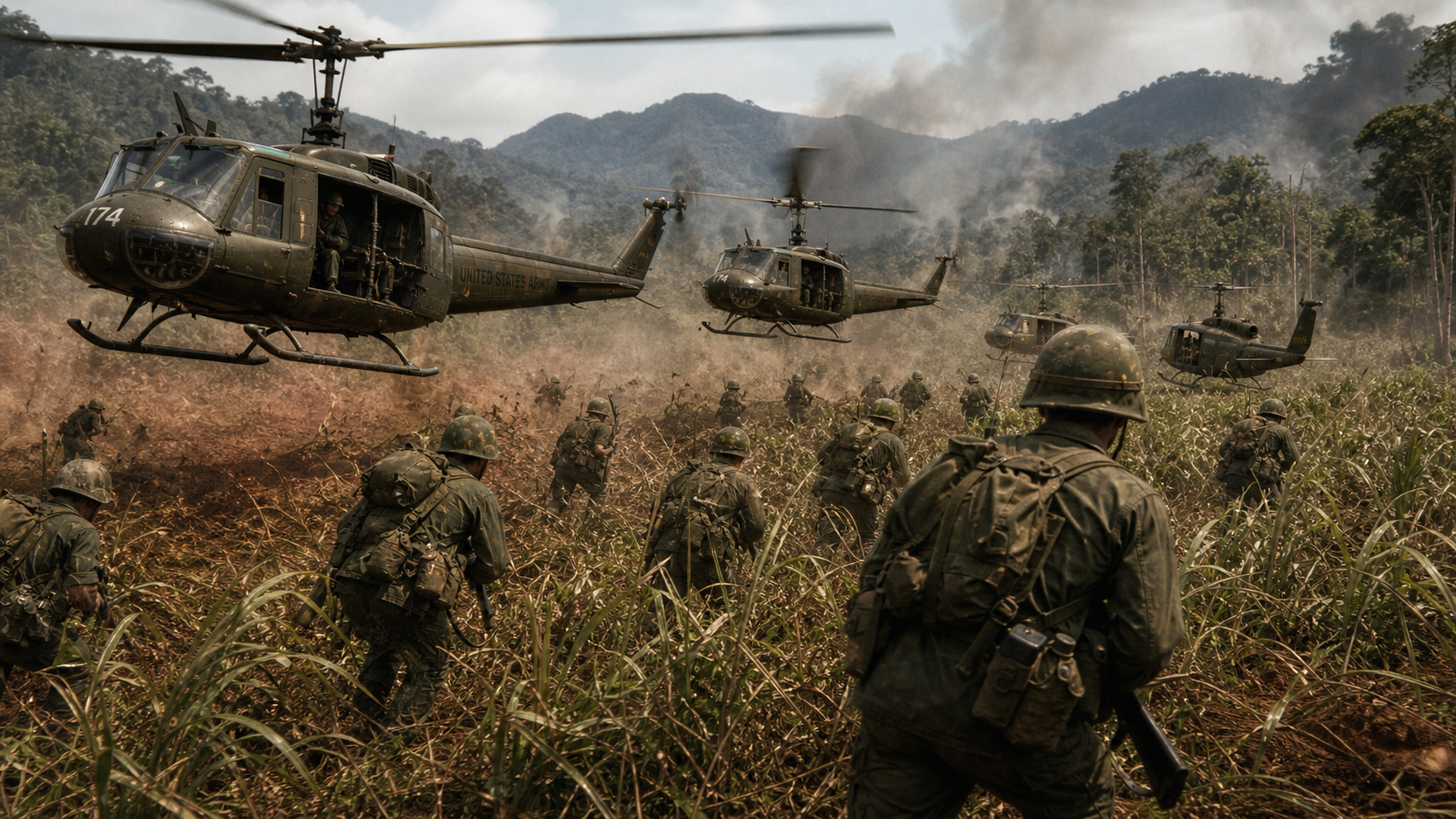
LZ X-Ray
Hal Moore, Hueys, and the first major U.S. Army clash with PAVN regulars
November 14-16, 1965 - Ia Drang Valley
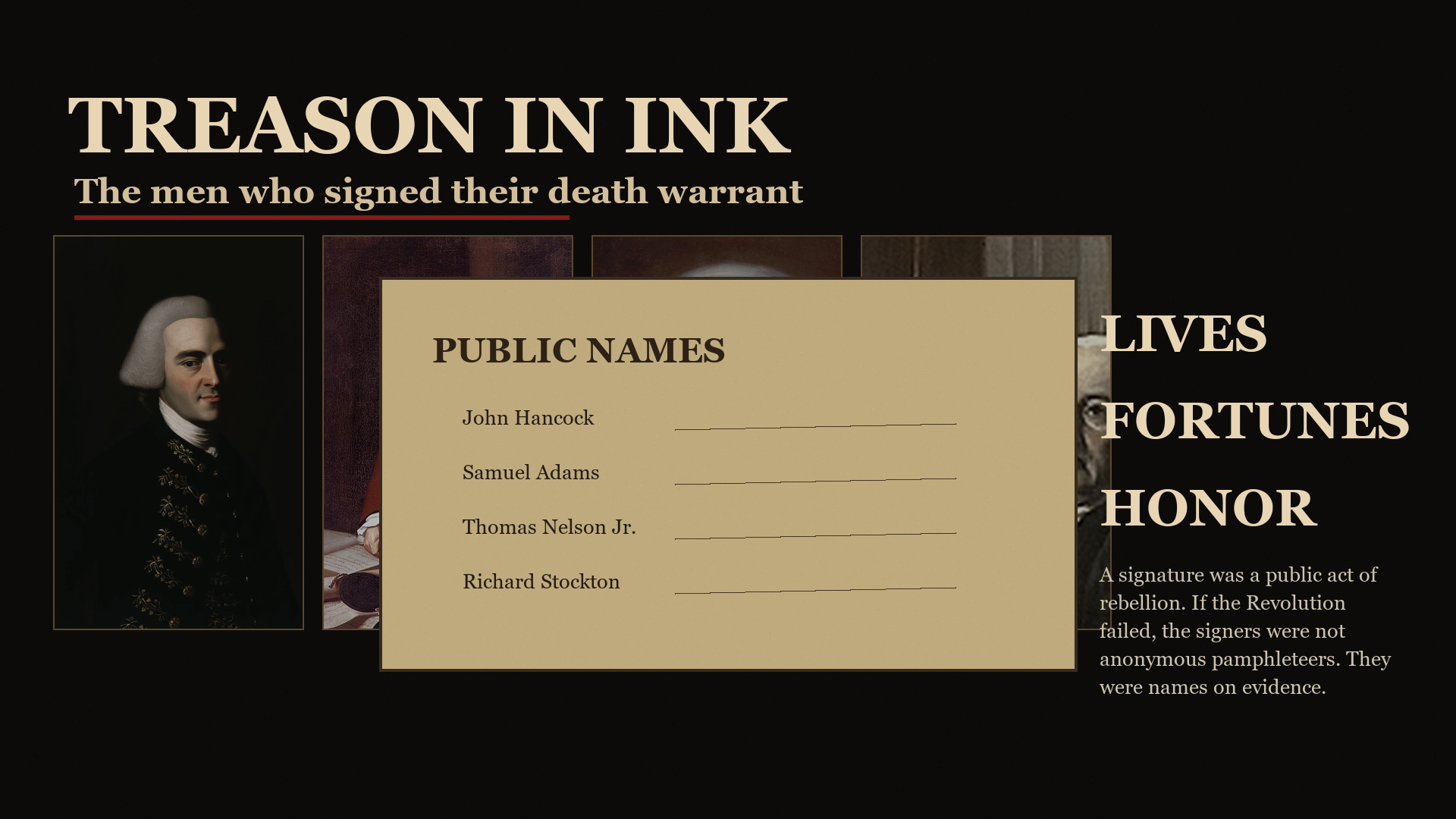
Treason in Ink — The Declaration Signers
Fifty-six public names placed under British law's death sentence.
July 1776 • Philadelphia — Lives, fortunes, sacred honor
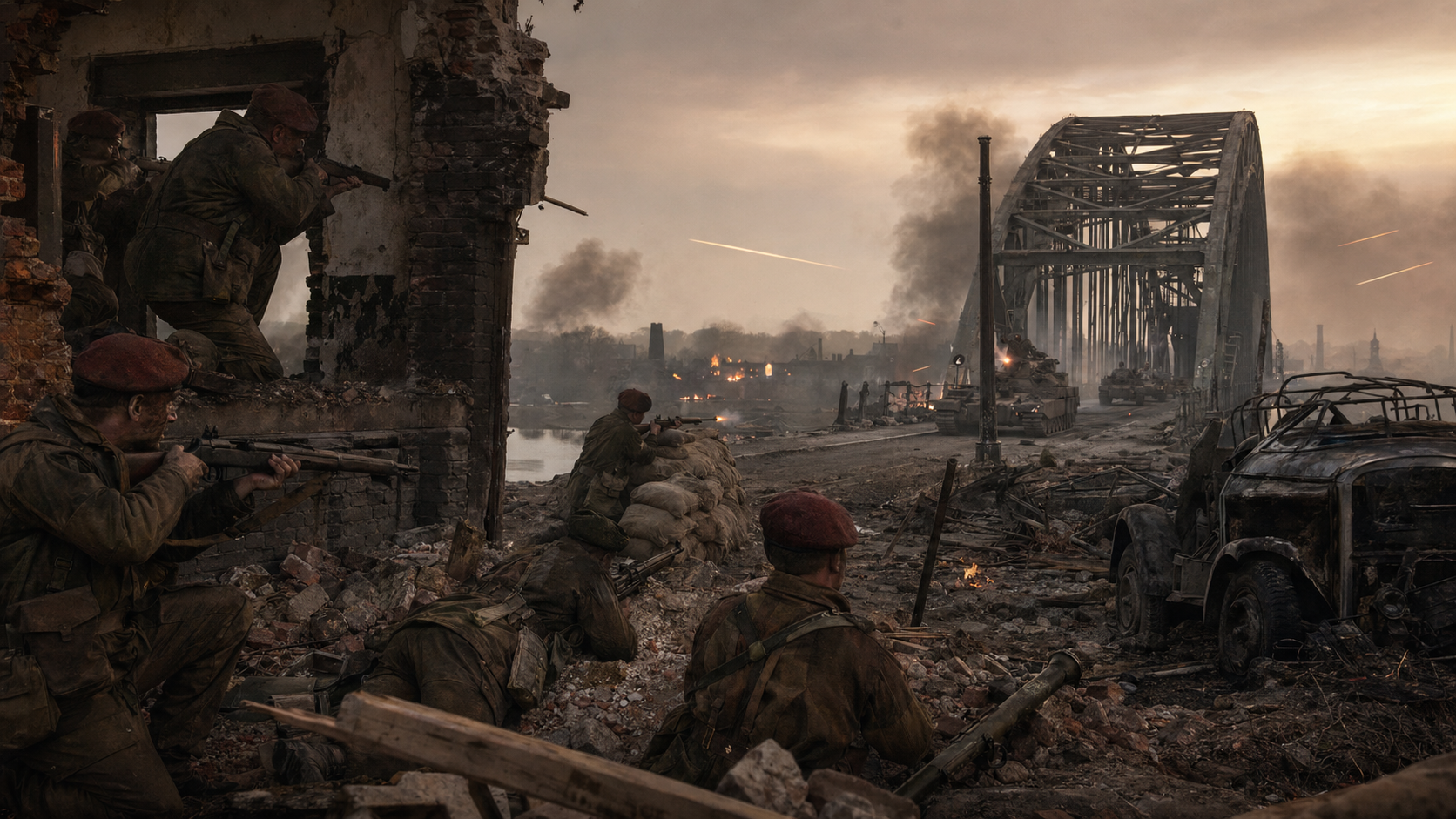
Arnhem
Lt. Col. John Frost - the bridge too far
September 17-21, 1944 - Netherlands
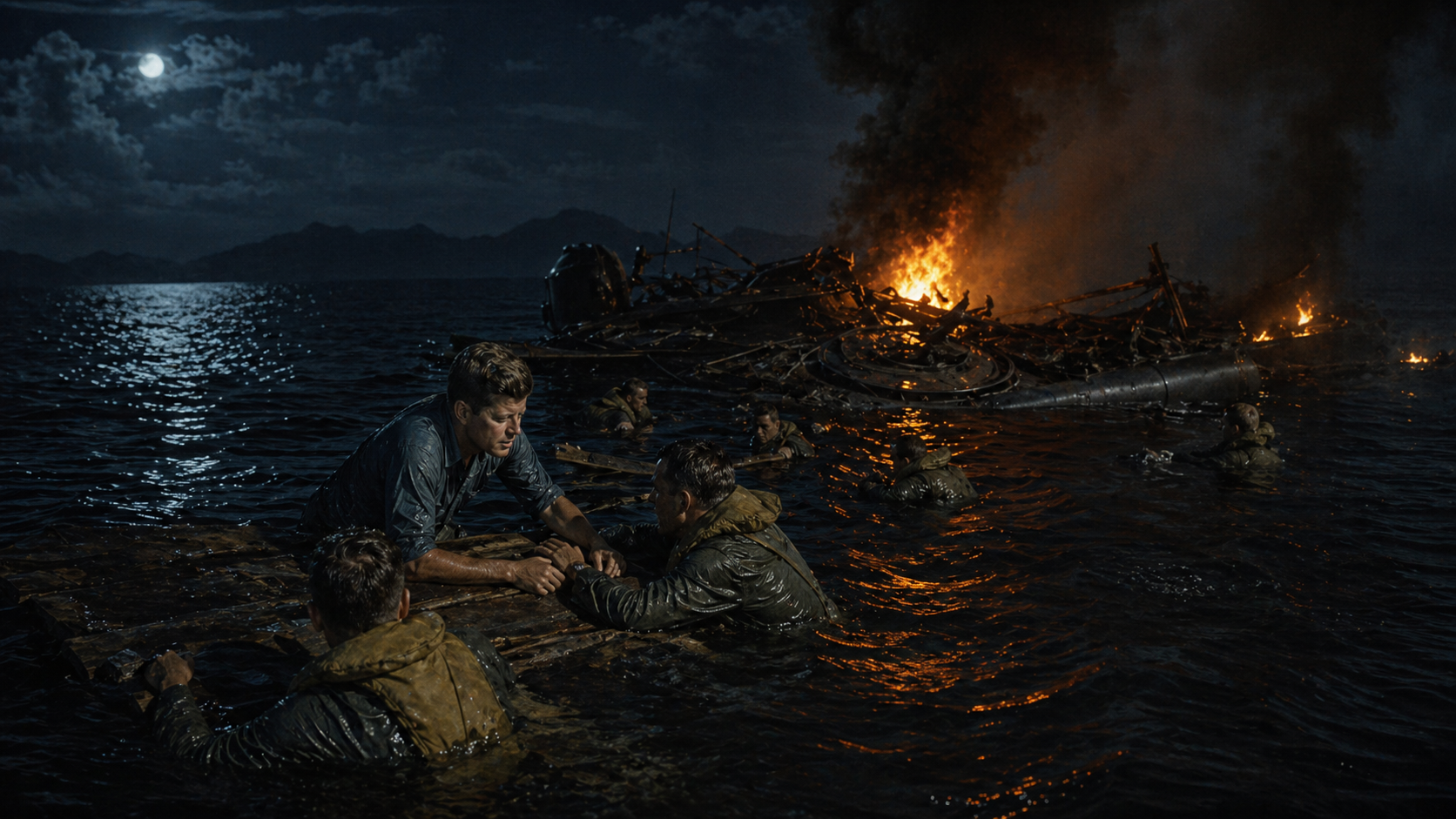
PT-109
Lt. John F. Kennedy - Blackett Strait survival story
August 2-8, 1943 - Solomon Islands
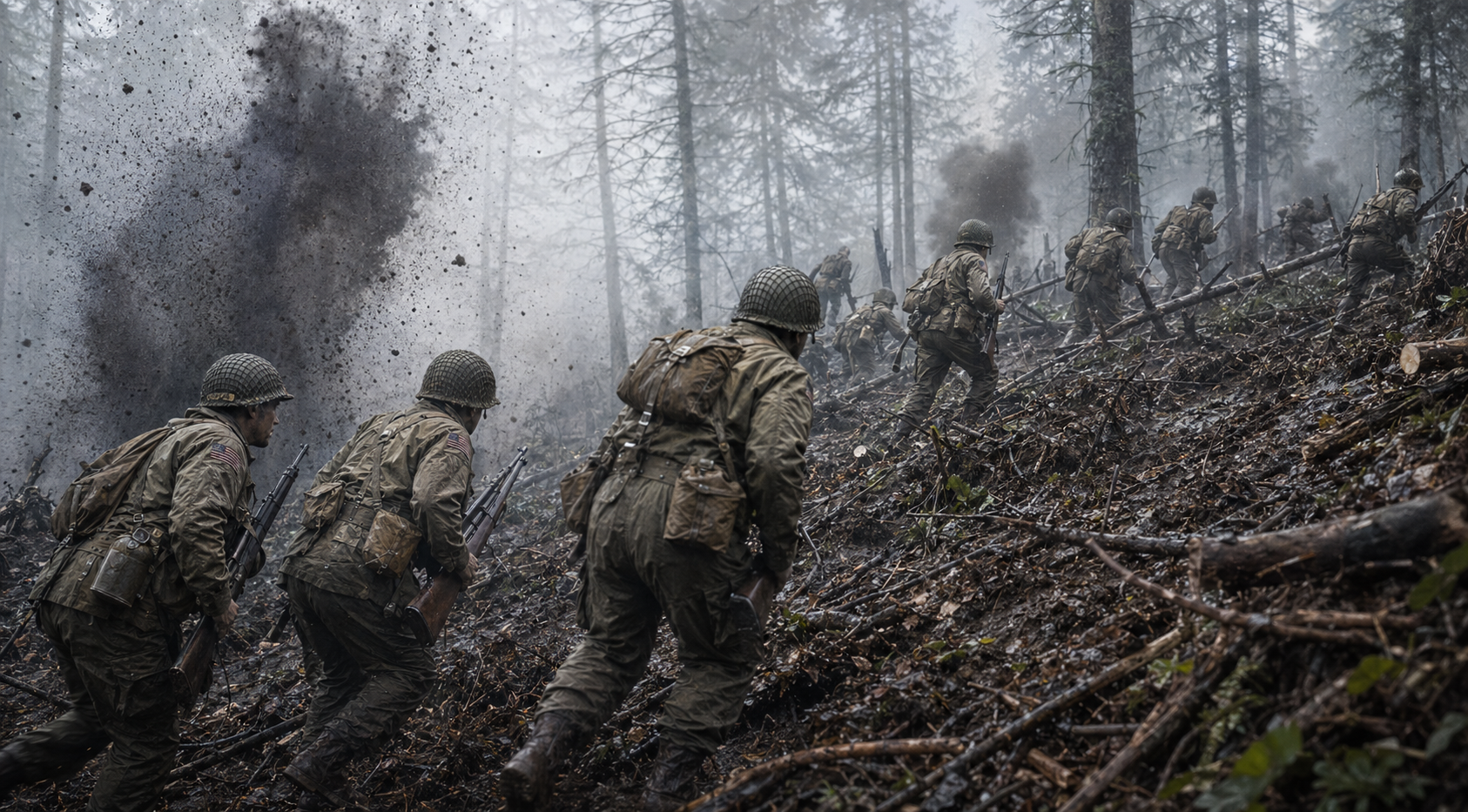
The Lost Battalion
1st Battalion, 141st Infantry - rescued by the 442nd
October 1944 - Vosges Mountains, France
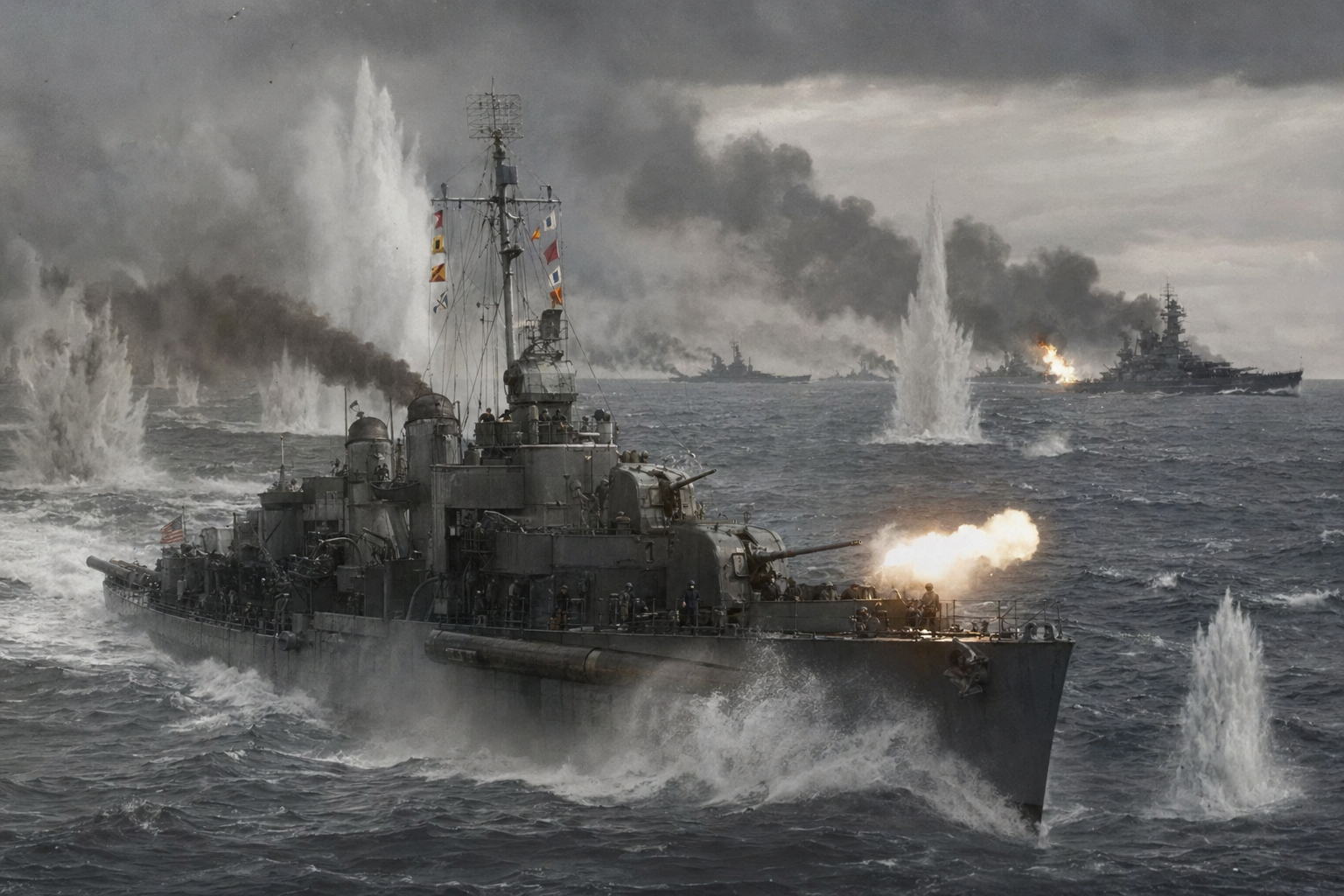
Against Battleships
USS Johnston DD-557 - Commander Ernest E. Evans
October 25, 1944 - Battle off Samar
17 stories
World War I
Trench warfare, machine guns, artillery, tanks, raids, pilots, and the soldiers who fought in the first industrial world war.
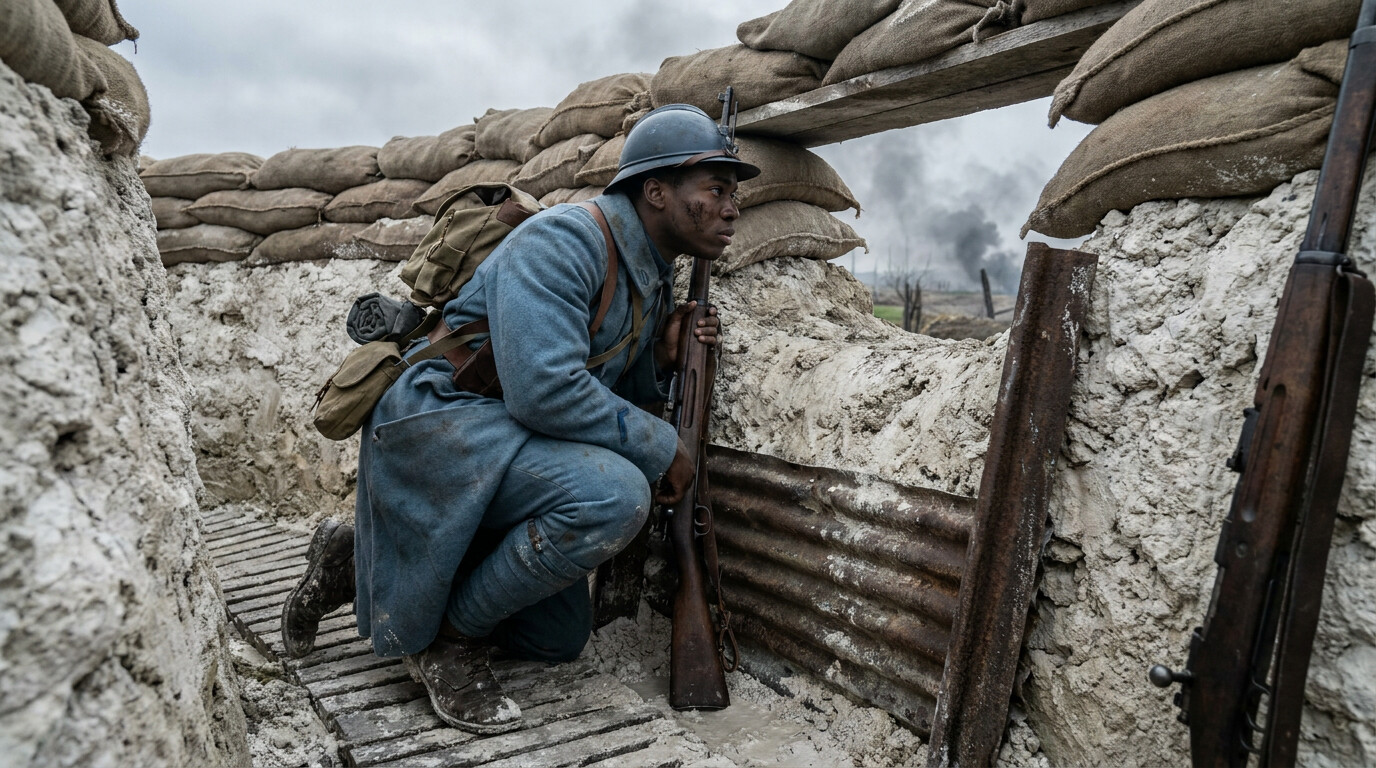
The Man Who Flew for Everyone Else
Eugene Bullard crossed the Atlantic as a teenager to find the equality America denied him, fought in the trenches at Verdun with the French Foreign Legion, and became the first Black military pilot in history flying for France. When the United States entered the war, the Army Air Service rejected him on racial grounds. France awarded him the Croix de Guerre. His own country took decades to acknowledge what he had done.
1914-1917 • Verdun and the Western Front, France
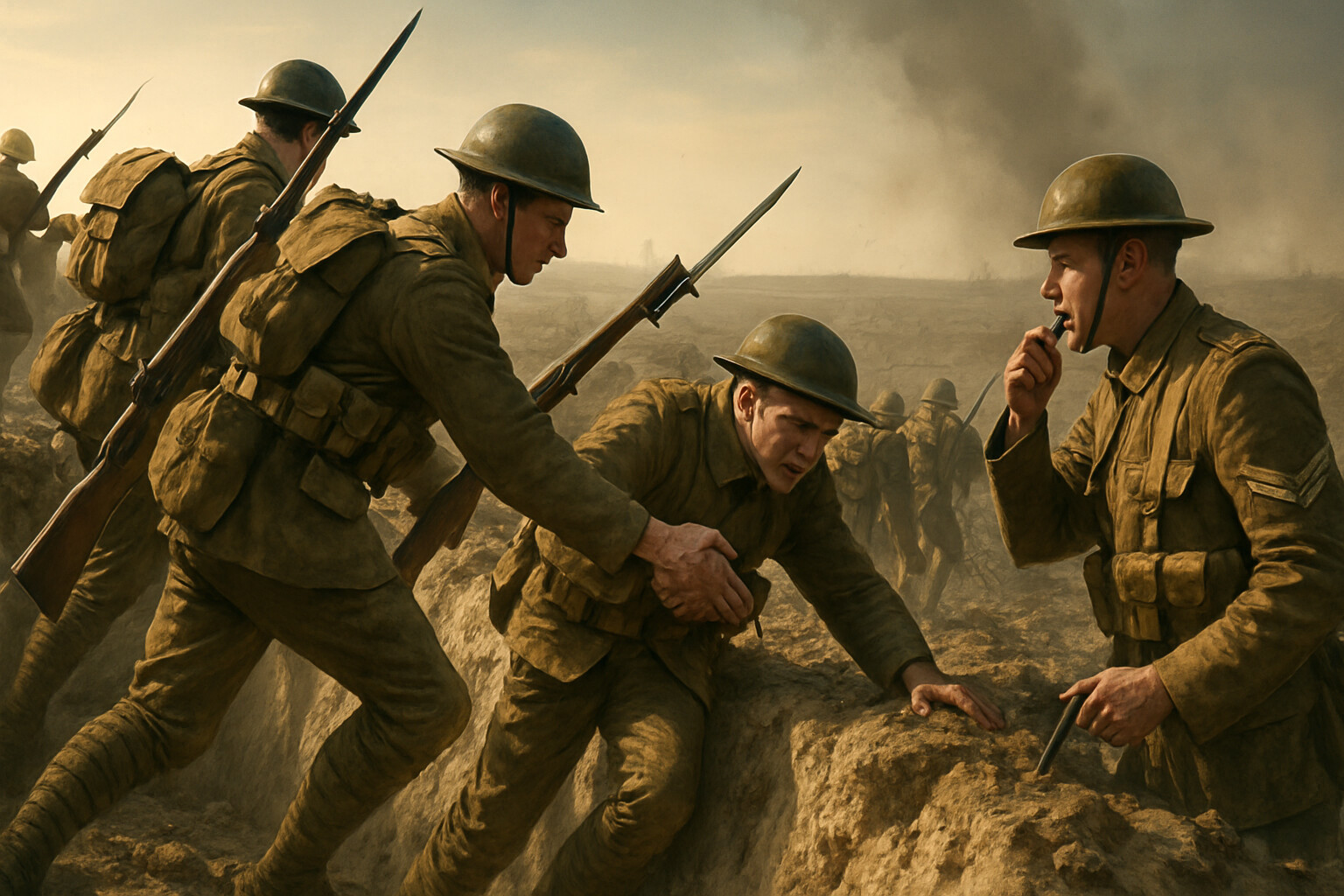
The Weight of Command: Haig, the Somme, and the Bloodiest Day in British Military History
On 1 July 1916, British and Allied forces launched the Battle of the Somme along a fourteen-mile front in northern France. What followed was the single bloodiest day in the history of the British Army—nearly 57,000 casualties before nightfall—and a reckoning with the brutal arithmetic of industrial warfare that has defined the conflict's legacy for a century.
1916 • The Somme, France
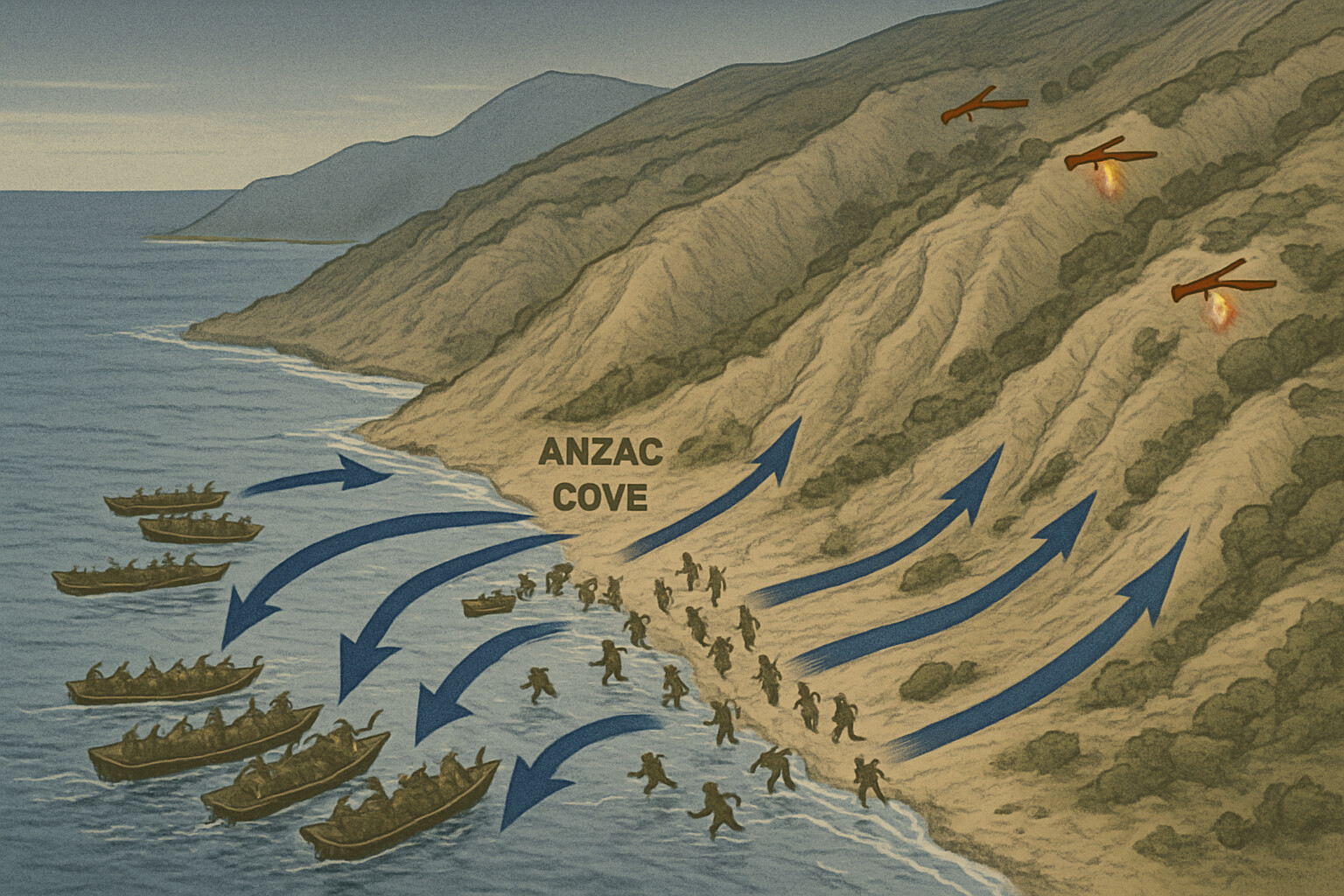
The Cliffs That Would Not Fall: Hamilton, Gallipoli, and the Campaign That Changed an Empire
In the spring and summer of 1915, General Sir Ian Hamilton led a combined British and ANZAC force onto the shores of the Gallipoli Peninsula in an attempt to knock the Ottoman Empire from the war and open a supply route to Russia. What began as a bold strategic stroke collapsed into eight months of trench warfare on vertical ground, at an appalling cost in lives on both sides. The campaign's failure was produced by a combination of inadequate resources, improvised planning, difficult terrain, and resolute Ottoman defense—and it left a mark on the national memories of Australia, New Zealand, Turkey, and Britain that has not faded in more than a century.
1915 • Gallipoli Peninsula, Turkey
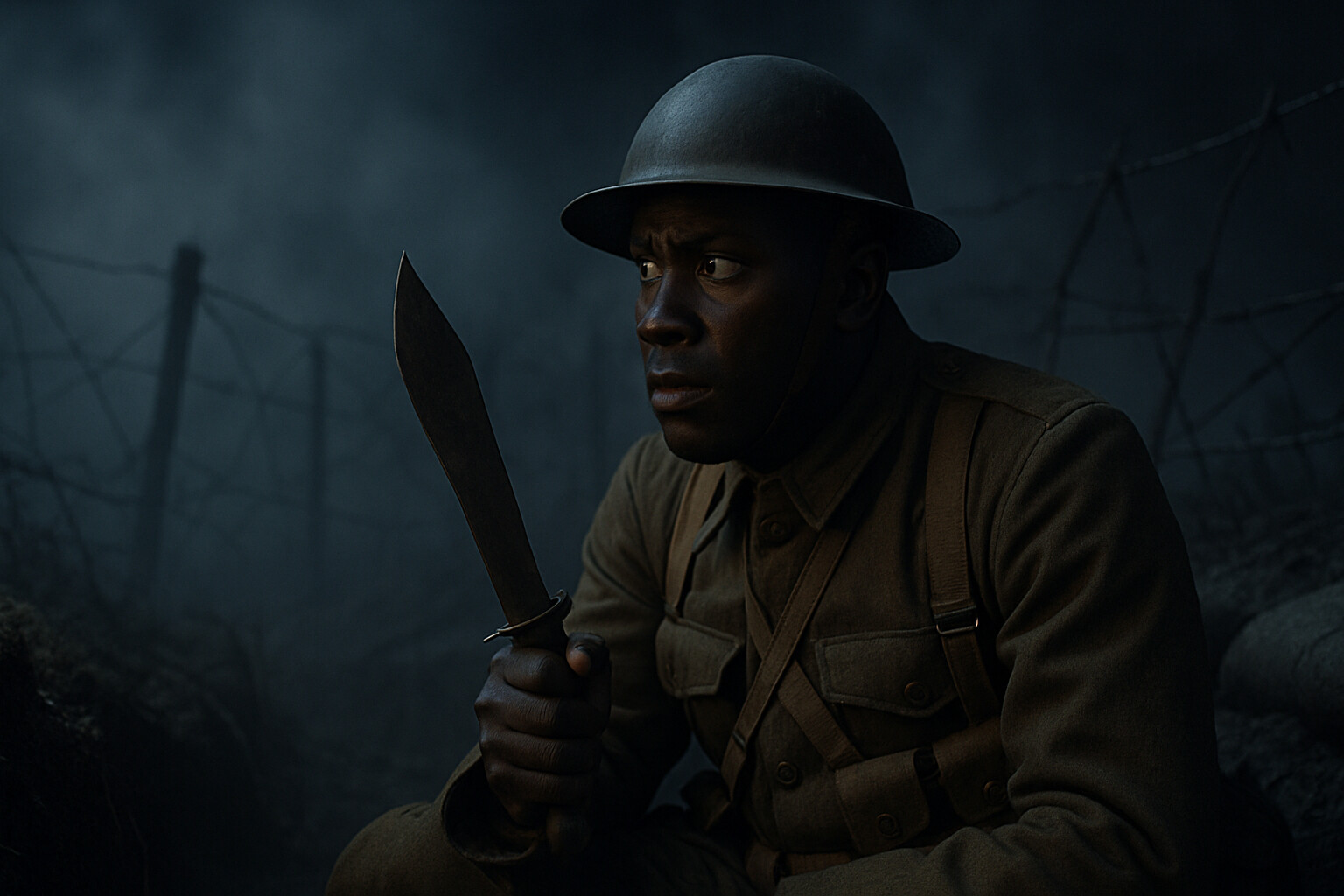
The Bolo Knife Fight: Henry Johnson's Stand in the Argonne
Private Henry Johnson of the 369th Infantry Regiment fought off a German raiding party in the Argonne Forest with rifle, grenades, and finally a bolo knife, becoming one of the first Americans to receive the French Croix de Guerre.
May 15, 1918 • Argonne Forest, France
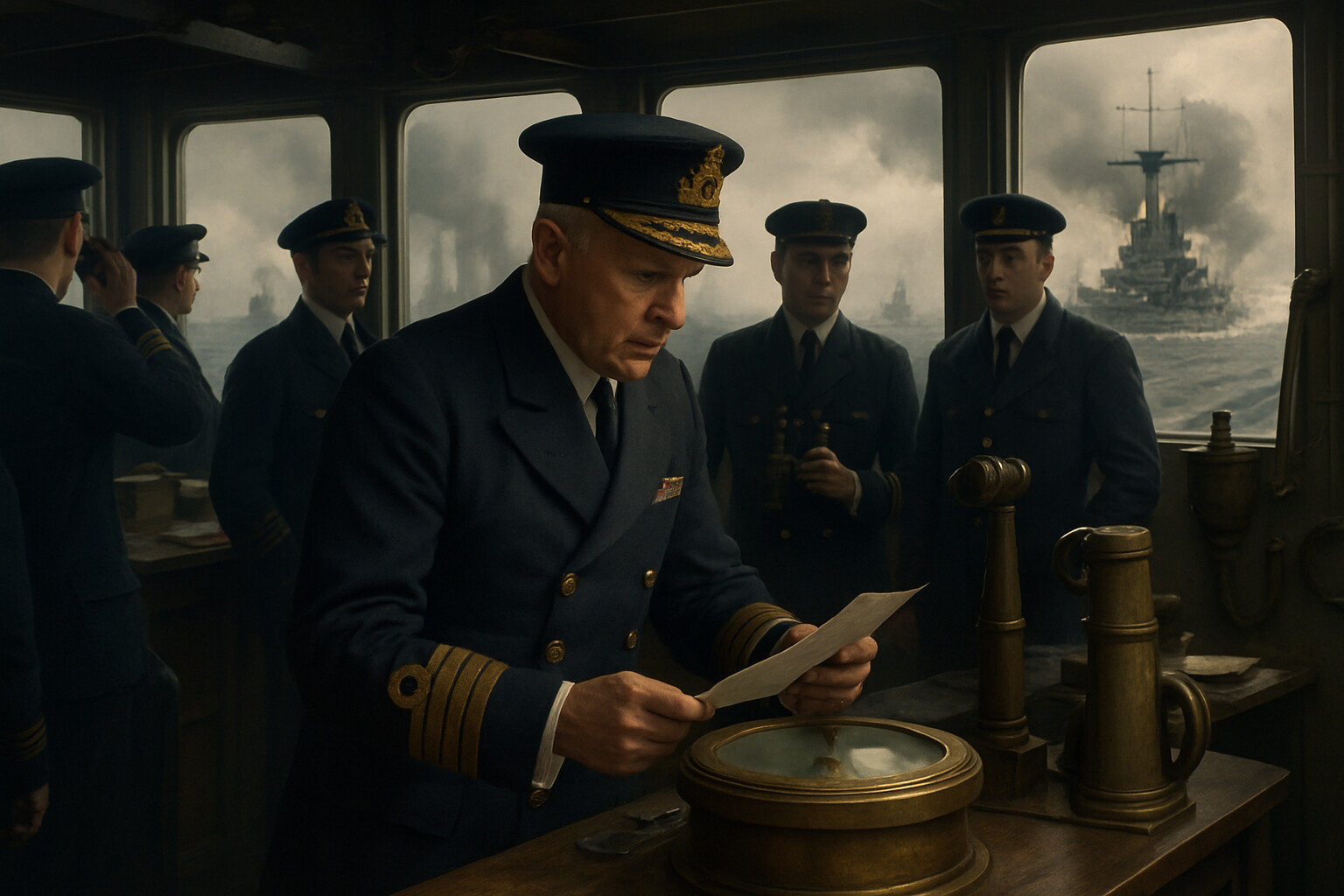
The Weight of Command: Jellicoe and the Fleet at Jutland
On 31 May 1916, Admiral Sir John Jellicoe commanded the largest concentration of naval firepower in history as the British Grand Fleet closed with the German High Seas Fleet in the North Sea haze and gun smoke off Jutland. His decisions over the next several hours would determine whether Britain kept command of the seas — or surrendered it. The battle produced no annihilation and no simple verdict, only a strategic outcome that took years to fully read.
1916 • North Sea, off Jutland
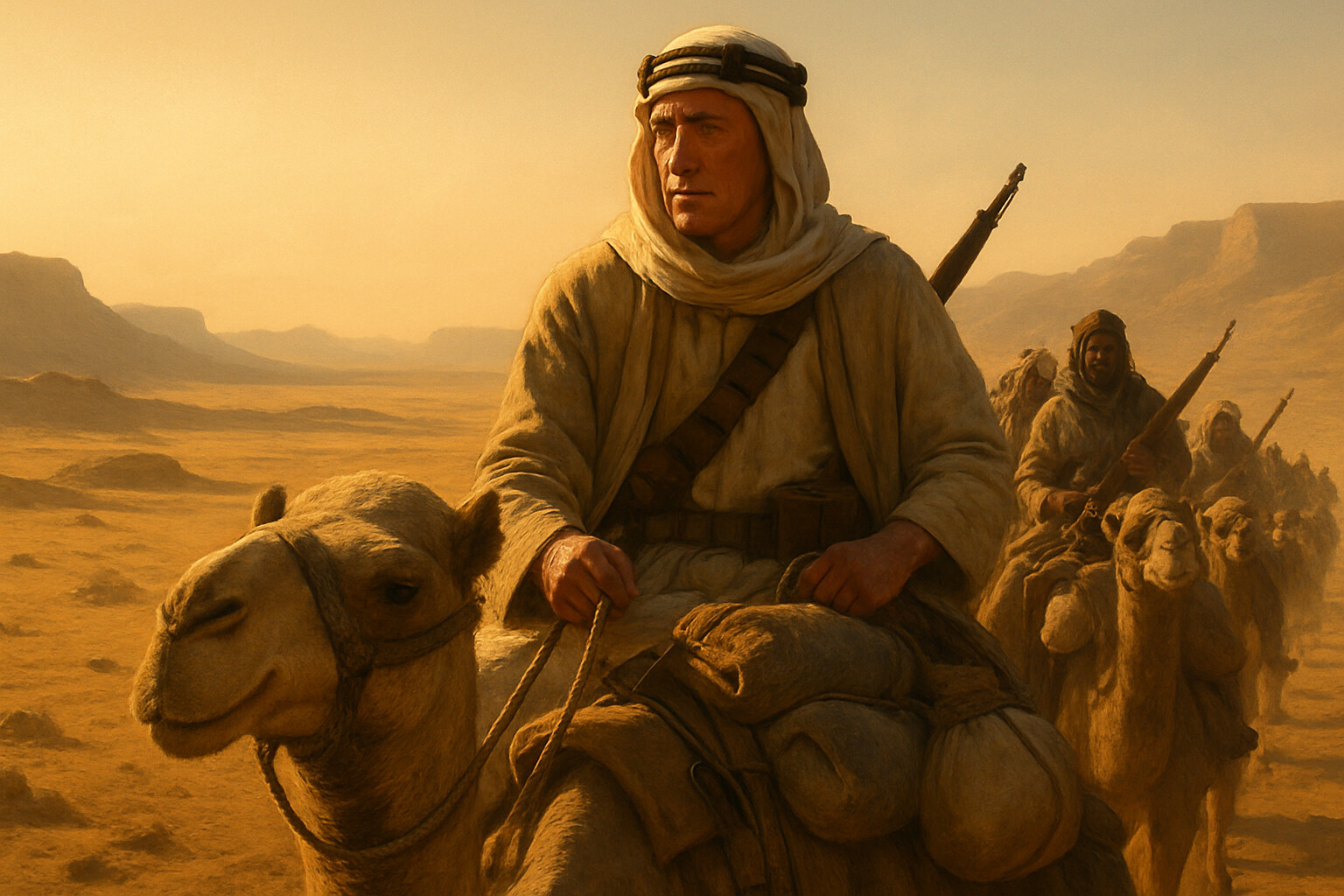
The Desert at Their Backs: Lawrence and the Fall of Aqaba
In the summer of 1917, British liaison officer T.E. Lawrence joined Arab Revolt forces on a six-week desert march through terrain considered impassable, then struck the Red Sea port of Aqaba from its undefended landward side. The capture of Aqaba on July 6, 1917 opened a new front against Ottoman power and gave General Allenby's Palestinian campaign a forward base on its eastern flank. The operation remains one of the more unusual achievements of the First World War: a mounted, largely tribal force that used the desert itself as its principal weapon.
1917 • Aqaba, Arabia
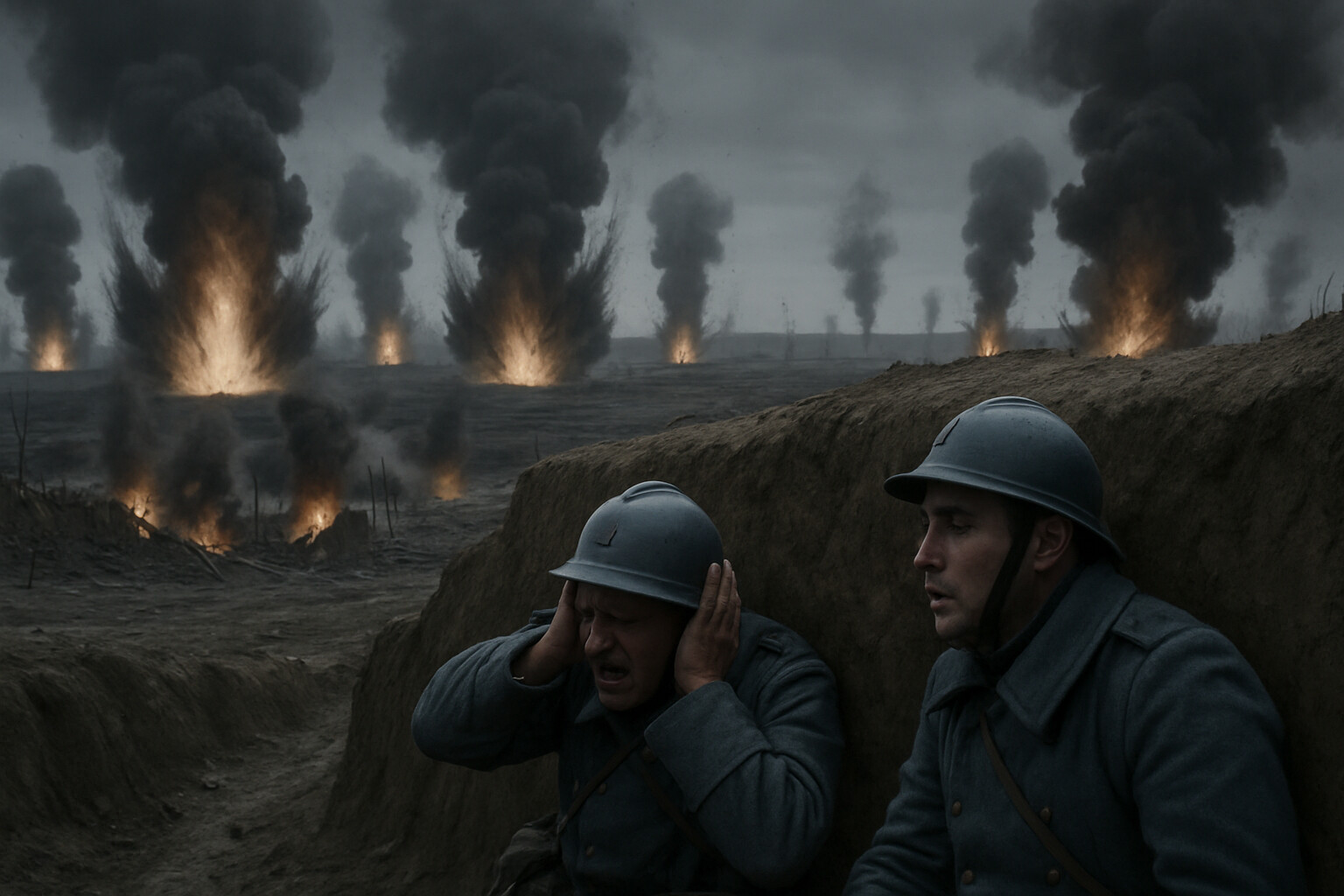
The Mill on the Meuse: Pétain and the Defense of Verdun, 1916
In February 1916, Germany launched the heaviest artillery assault yet seen in the war against the French fortresses at Verdun, intending to force France to exhaust itself defending a position it could not abandon. General Philippe Pétain took command of the shattered defense, reorganized the sole surviving supply route, rotated his divisions systematically to prevent collapse, and held Verdun for ten months at a cost that scarred both nations for a generation. This is the story of how France endured.
1916 • Verdun, France
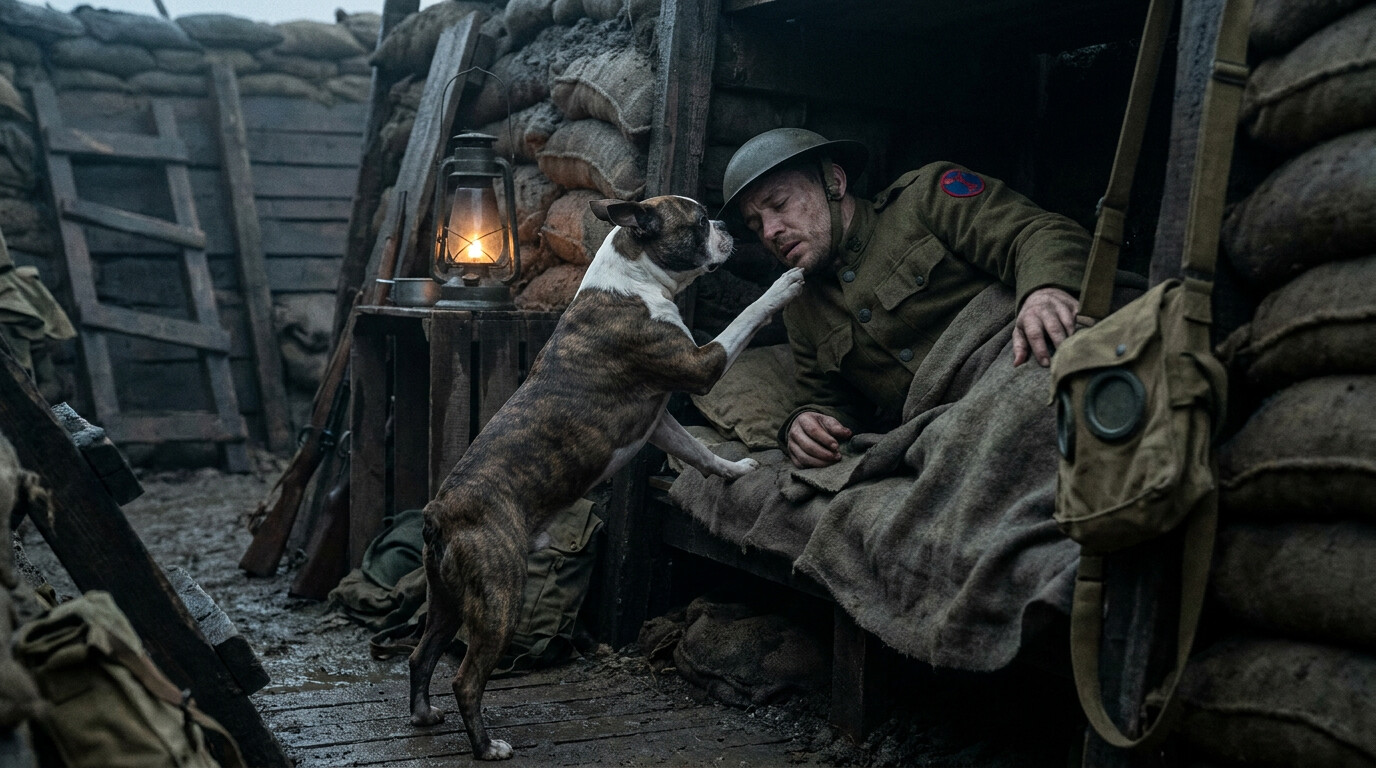
The Dog Who Stayed: Sergeant Stubby and the Trenches of the Western Front
A stray mixed-breed dog appeared at Yale Field in New Haven in the summer of 1917, attached himself to the men of the 102nd Infantry Regiment, 26th Division, and shipped to France with them. He served approximately eighteen months in the trenches of the Western Front, and the soldiers around him credited him with warning them of gas attacks before human senses could detect the agents. His story sits at the intersection of documented military record and cherished American tradition, and sorting what is verified from what is remembered is part of understanding why this animal still matters.
1917-1918 • Western Front, France
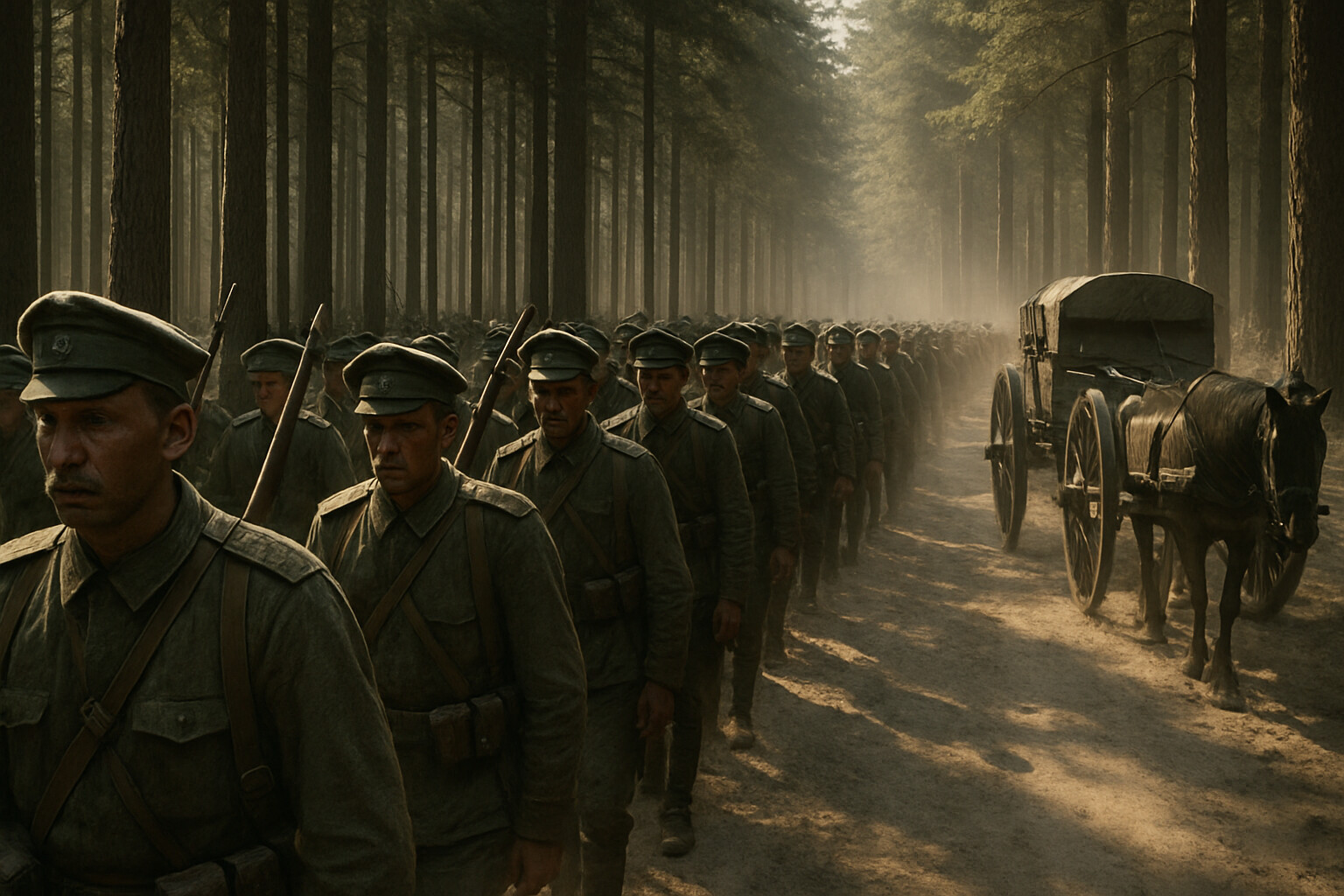
The Trap at Tannenberg: How Germany Destroyed an Army in Eight Days
In late August 1914, Germany's Eighth Army surrounded and annihilated Russia's Second Army in the forests and lakes of East Prussia—one of the most complete battlefield destructions in modern military history. Using intercepted radio transmissions and a rail network that could move divisions faster than horses could march, commanders Paul von Hindenburg and Erich Ludendorff turned a desperate defensive situation into a catastrophic encirclement that shaped the Eastern Front for years. The victory owed as much to German staff culture and structural advantage as to any individual commander's genius.
1914 • East Prussia
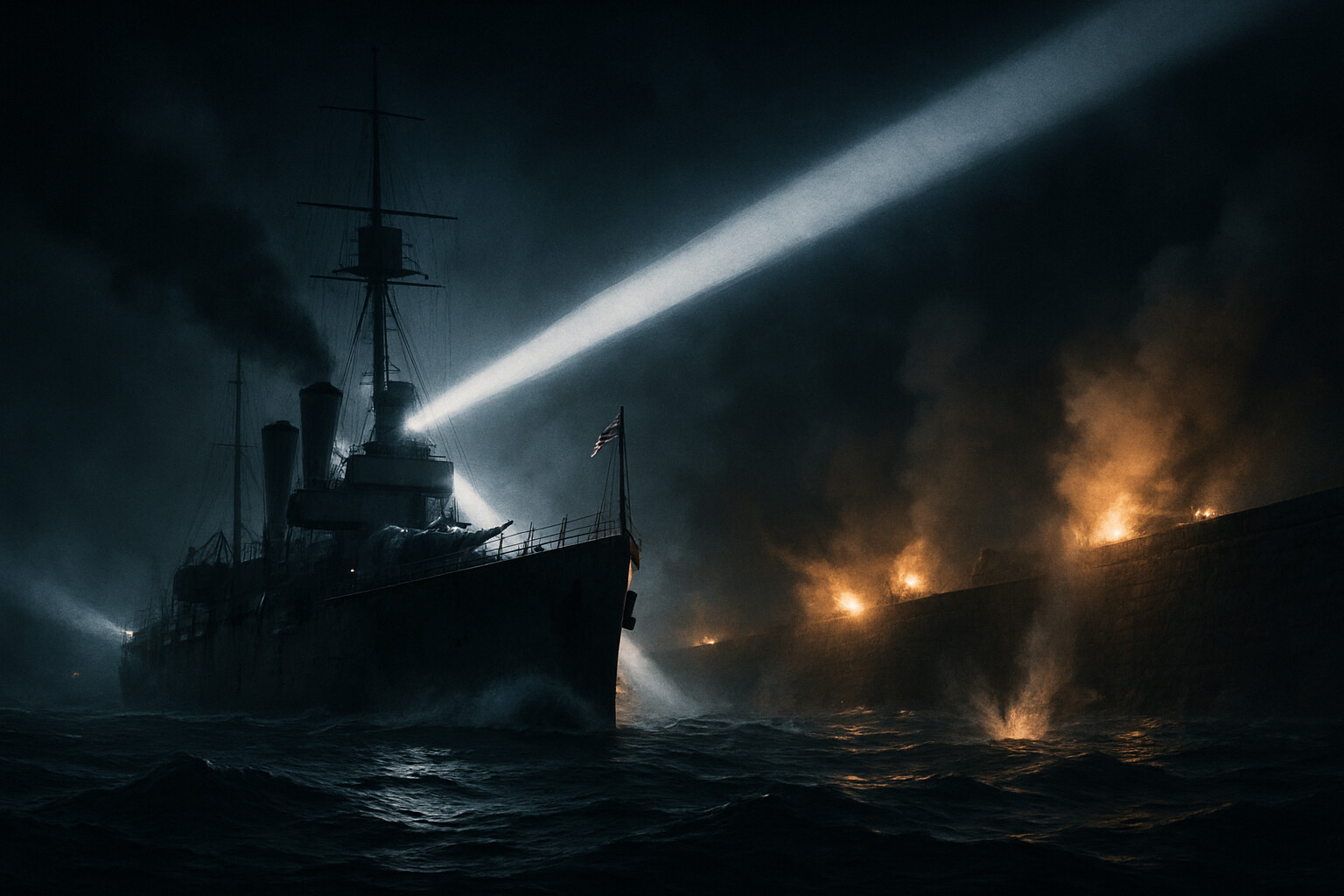
St. George's Day: The Raid on Zeebrugge
On the night of 22–23 April 1918, Vice-Admiral Roger Keyes led a Royal Navy and Royal Marines assault on the German-held port of Zeebrugge, Belgium, attempting to seal the U-boat harbor with blockships. The raid was one of the most audacious amphibious operations of the First World War, resulted in eight Victoria Crosses across the Zeebrugge and Ostend operations, and tested human courage against prepared defenses in conditions of near-total exposure. The canal was partially obstructed but not permanently closed; German engineers restored submarine access within weeks.
1918 • Zeebrugge, Belgium
The Lost Battalion: Command Under Fire
Major Charles Whittlesey led 550 men into the Argonne Forest in October 1918, only to find themselves surrounded, starving, and under constant bombardment—including friendly fire. For five days, he refused German surrender demands while his force dwindled to fewer than 200 survivors.
October 1918 • Argonne Forest, France
The Balloon Buster: Frank Luke's War Against the Eyes of Germany
Second Lieutenant Frank Luke Jr. became America's most aggressive balloon-hunting ace in September 1918, destroying German observation balloons defended by fighters and ground fire before his death in aerial combat over France.
September 1918 • France
Harlem Hellfighters
The 369th went to war for a country that doubted them
World War I - 369th Infantry Regiment
Cambrai Tanks
The morning the wire failed
World War I - Armor - November 1917
The Red Baron
Myth, machinery, and the air war's most famous ace
World War I - Air War - 1914-1918
The Christmas Truce
Songs, burials, handshakes, and a fragile pause in no man's land
December 1914 - Western Front
Alvin York
The Argonne machine-gun fight near Chatel-Chehery
October 8, 1918 - Meuse-Argonne Offensive
53 stories
World War II
Pacific, Europe, resistance, air raids, armor, infantry, snipers, and survival stories.
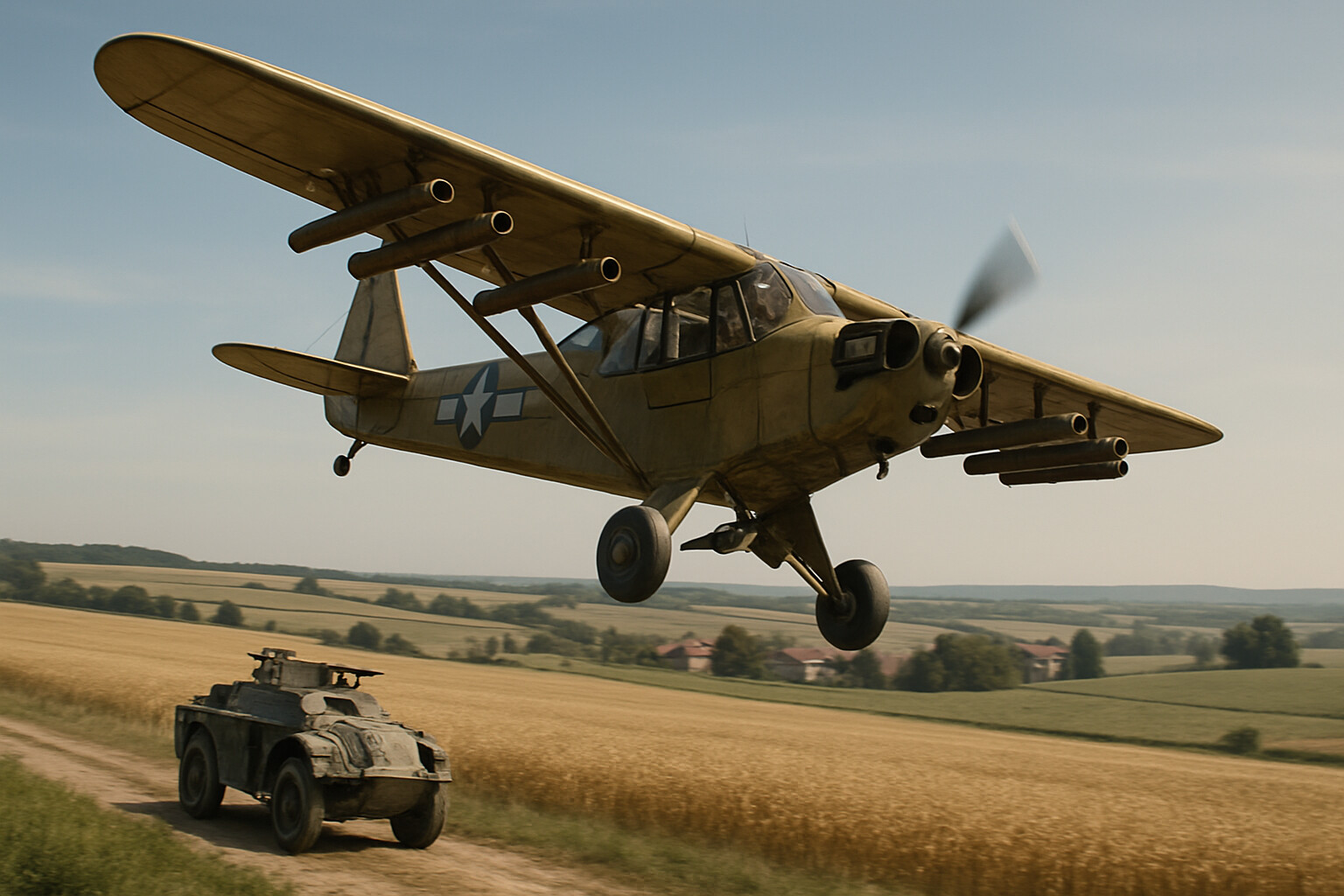
Wings of Steel: The Bazooka Cub That Hunted Panzers
Major Charles Carpenter bolted bazookas to his unarmed Piper Cub observation plane and turned it into a tank hunter during the Battle of Arracourt, creating one of World War II's most unconventional aerial weapons.
September 1944 • Arracourt, France
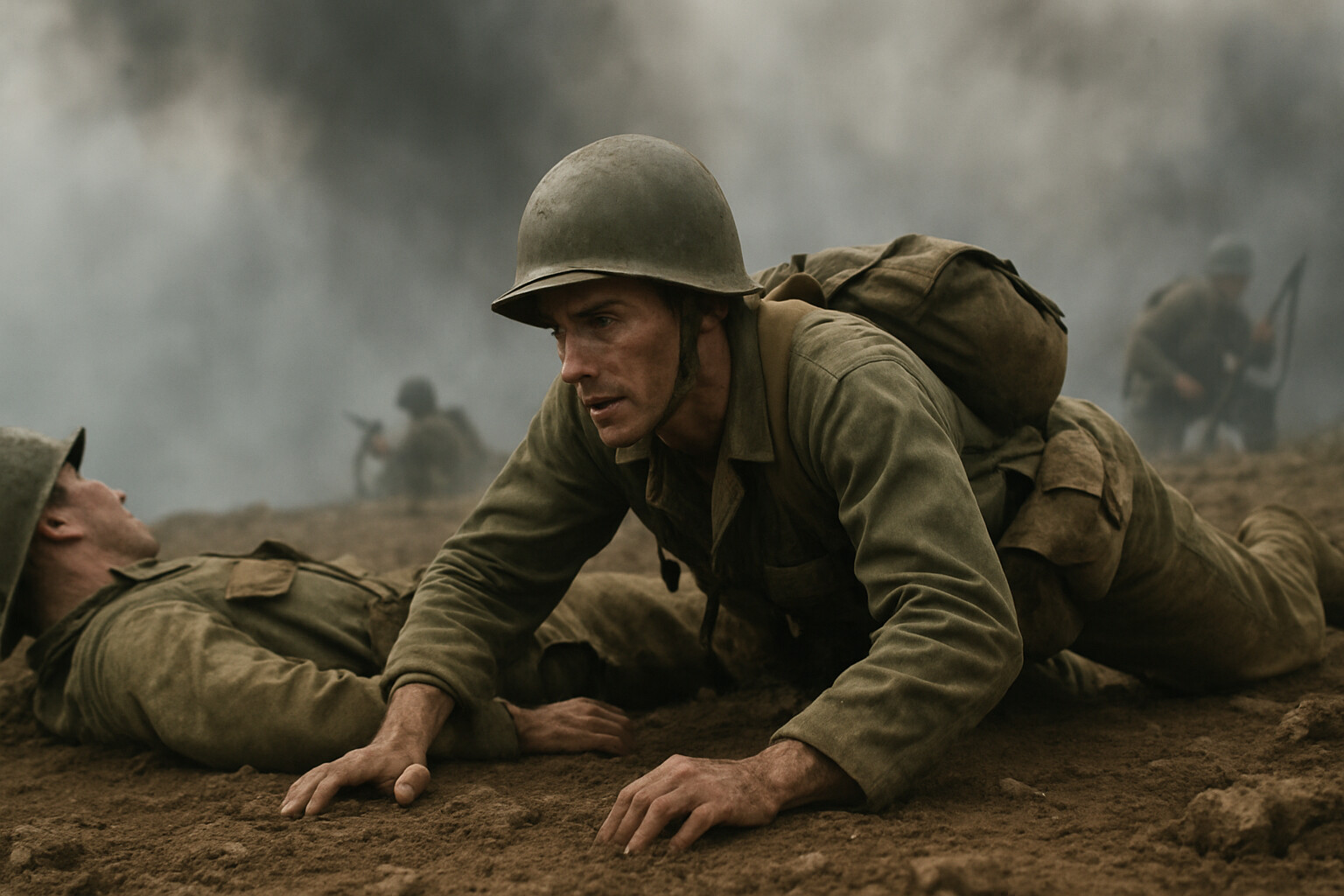
The Medic Who Saved Seventy-Five: Desmond Doss and the Maeda Escarpment
In May 1945, conscientious objector Corporal Desmond Doss repeatedly exposed himself to enemy fire atop Okinawa's Maeda Escarpment, lowering wounded soldiers down a 400-foot cliff face one by one. Refusing to carry a weapon, the Seventh-day Adventist medic saved dozens of lives during one of the Pacific War's bloodiest battles.
April-May 1945 • Okinawa
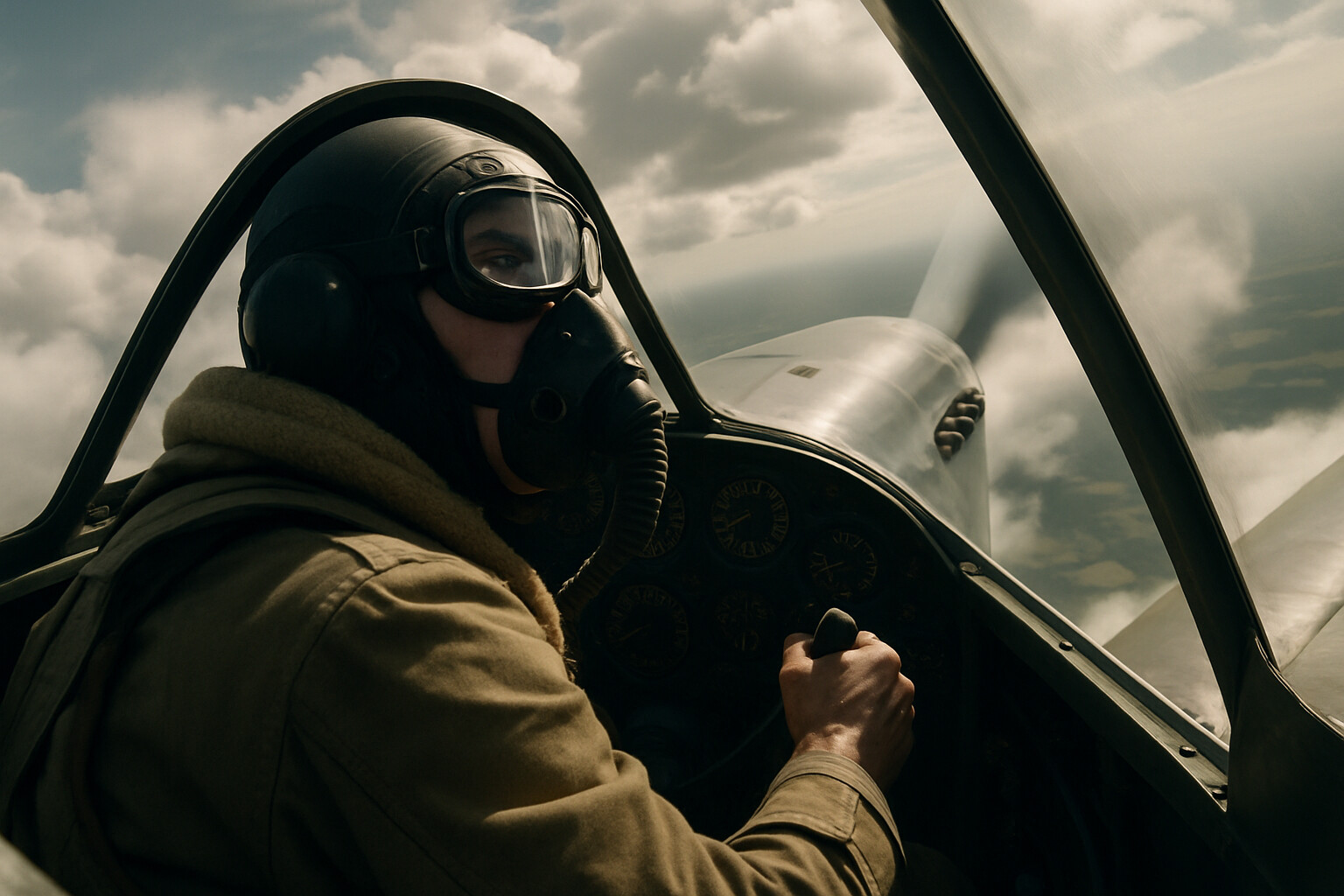
Iron Legs, Open Sky: Douglas Bader and the Battle He Was Never Supposed to Fight
In 1931, a young RAF pilot lost both legs in a low-flying accident and was invalided out of the service. Nine years later, Douglas Bader strapped on his prosthetic limbs, climbed into a Spitfire, and flew into the Battle of Britain. What followed was one of the most contested and consequential careers in RAF history.
1940-1941 • Britain and occupied Europe
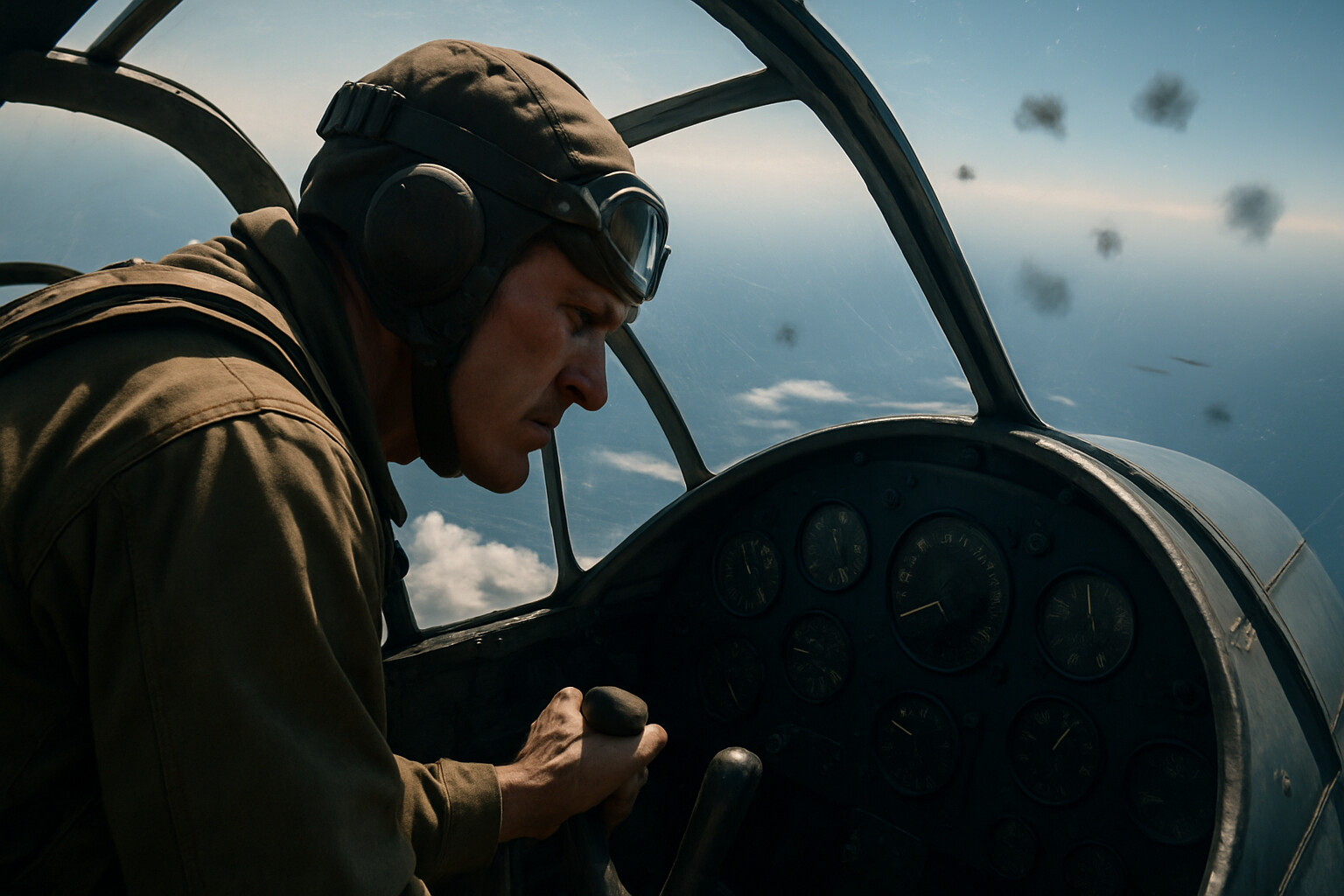
Five Minutes Over Midway: How Nimitz's Gamble Broke the Japanese Empire
In June 1942, Admiral Chester Nimitz staked the entire U.S. Pacific Fleet on stolen intelligence and sent his outnumbered carriers to intercept Japan's most powerful naval striking force. What followed—a compressed series of dive-bomber attacks on the morning of June 4—sank four Japanese fleet carriers and permanently reversed the strategic balance of the Pacific War.
1942 • Midway Atoll, Pacific
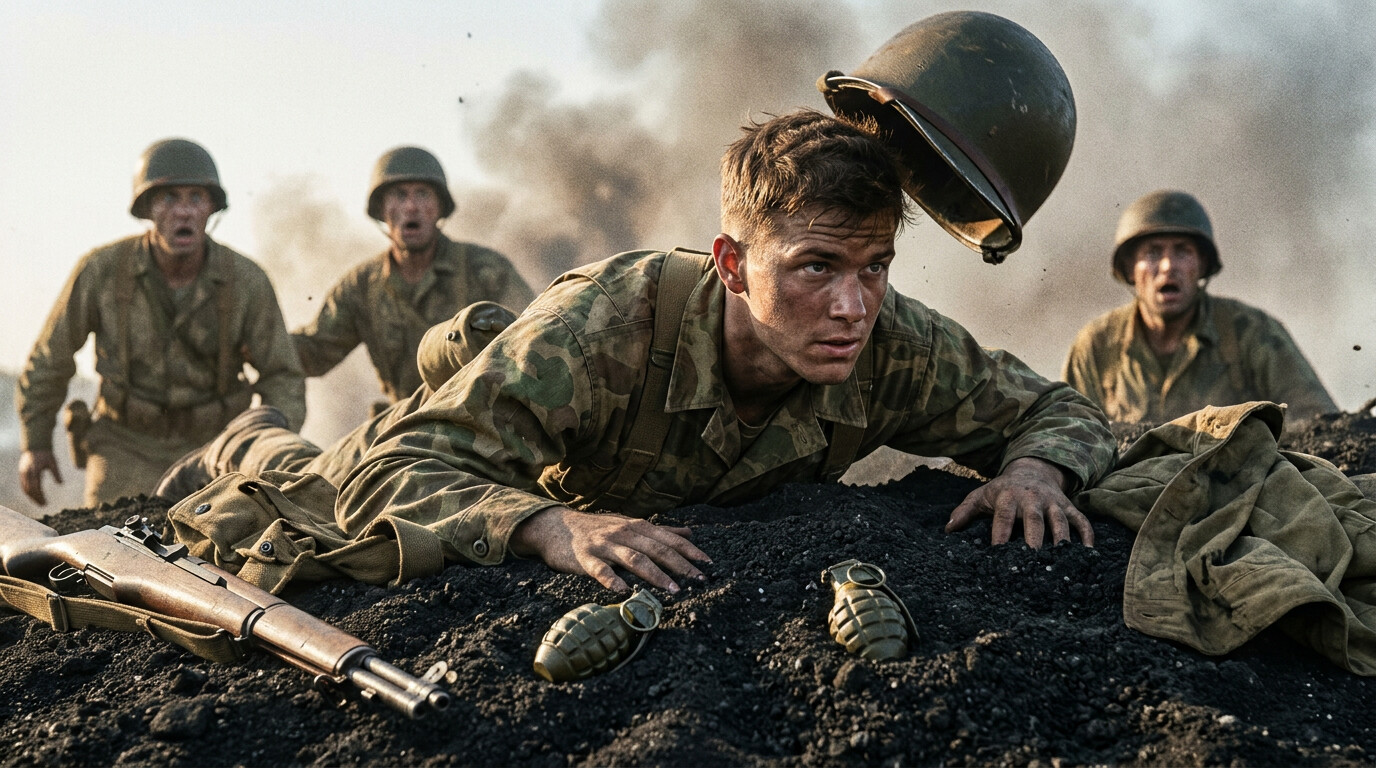
The Youngest Hero: Jack Lucas's Stand at Iwo Jima
At seventeen, Private First Class Jack Lucas threw himself on two Japanese grenades to save his squad on Iwo Jima, becoming the youngest Marine to earn the Medal of Honor in World War II.
February 20, 1945 • Iwo Jima
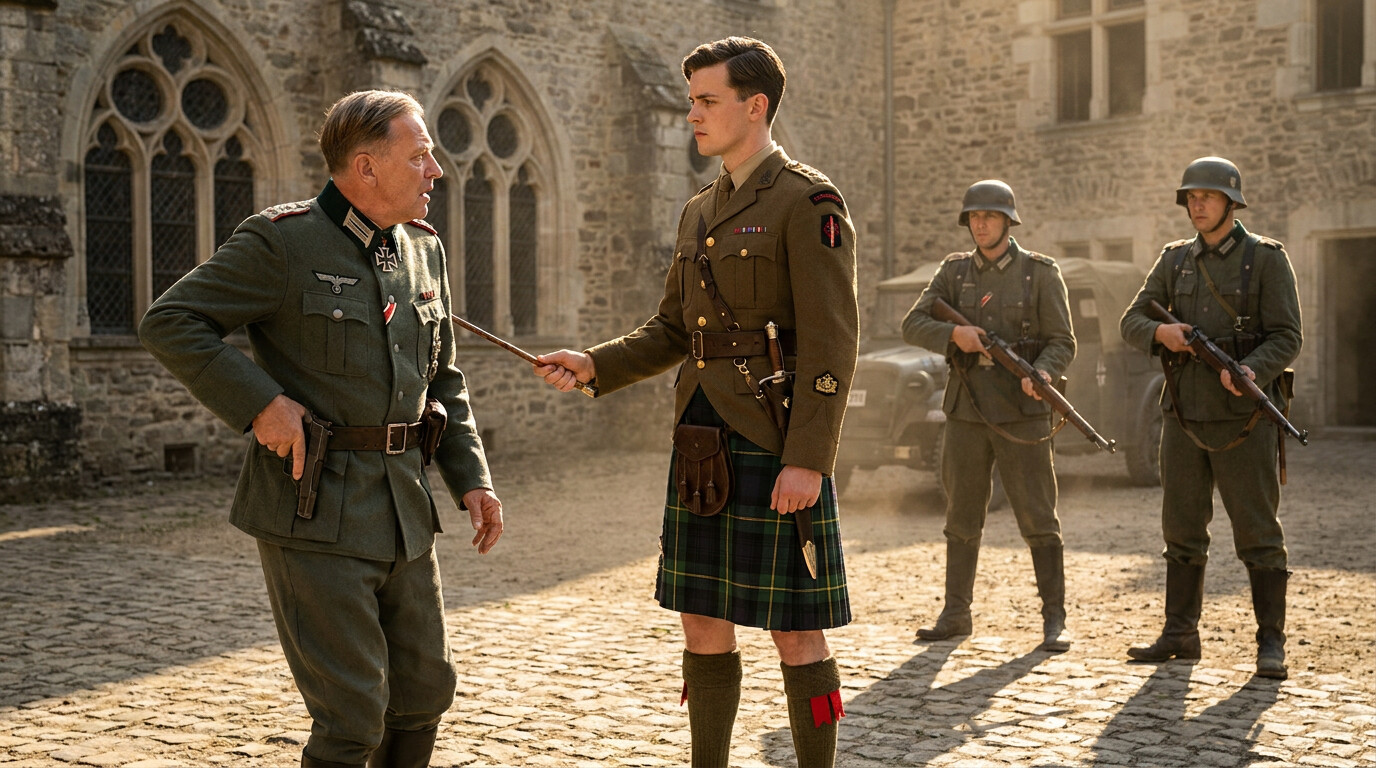
The Kilted Commando: Major Tommy Macpherson's Audacious Bluff
Major Tommy Macpherson of the Special Operations Executive operated behind German lines in occupied France wearing a kilt, bluffing entire garrisons into surrender and delaying crucial reinforcements rushing toward the Normandy beaches in the critical days after D-Day.
1944 • Occupied France
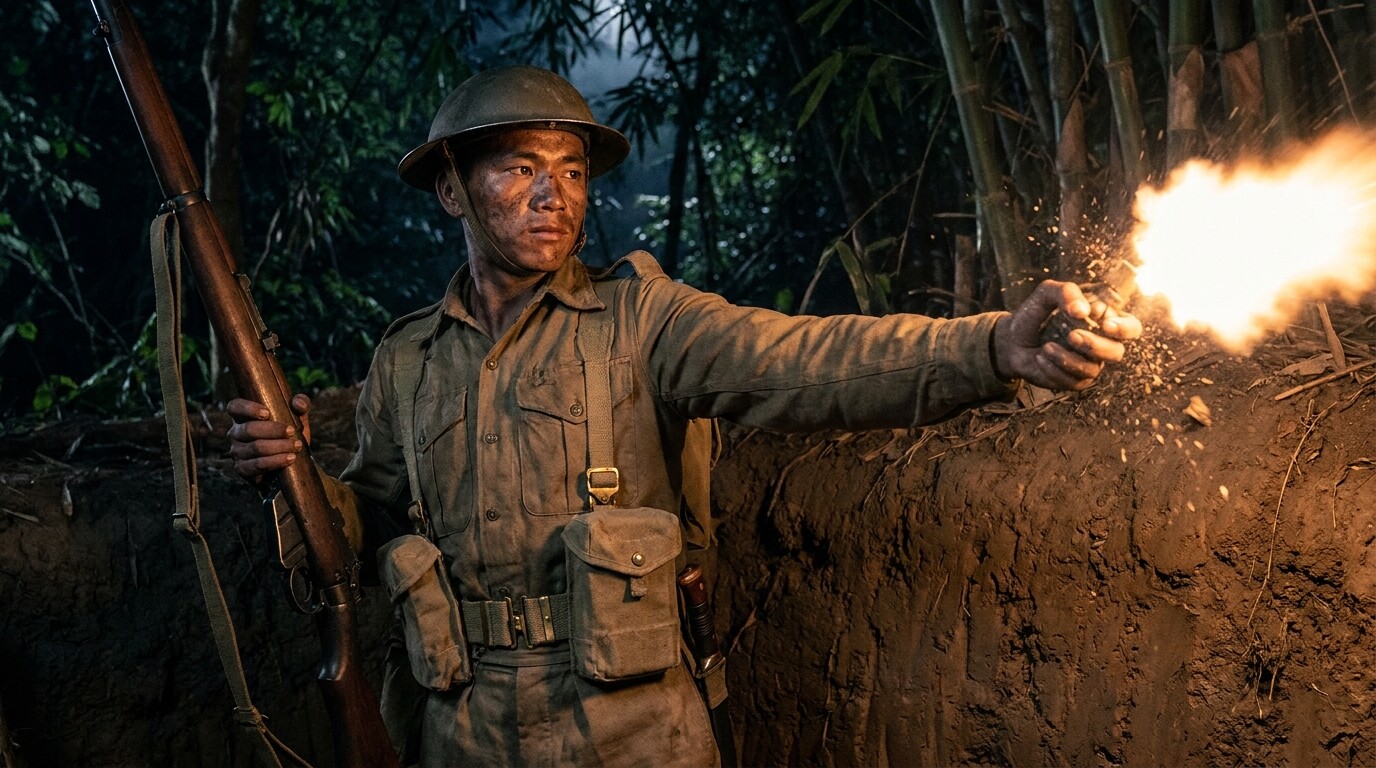
The Last Stand of Lachhiman Gurung
In May 1945, a lone Gurkha rifleman held his post through the night after a grenade shattered his right hand, killing 31 Japanese attackers in the final phase of the Burma Campaign.
May 1945 • Taungdaw, Burma
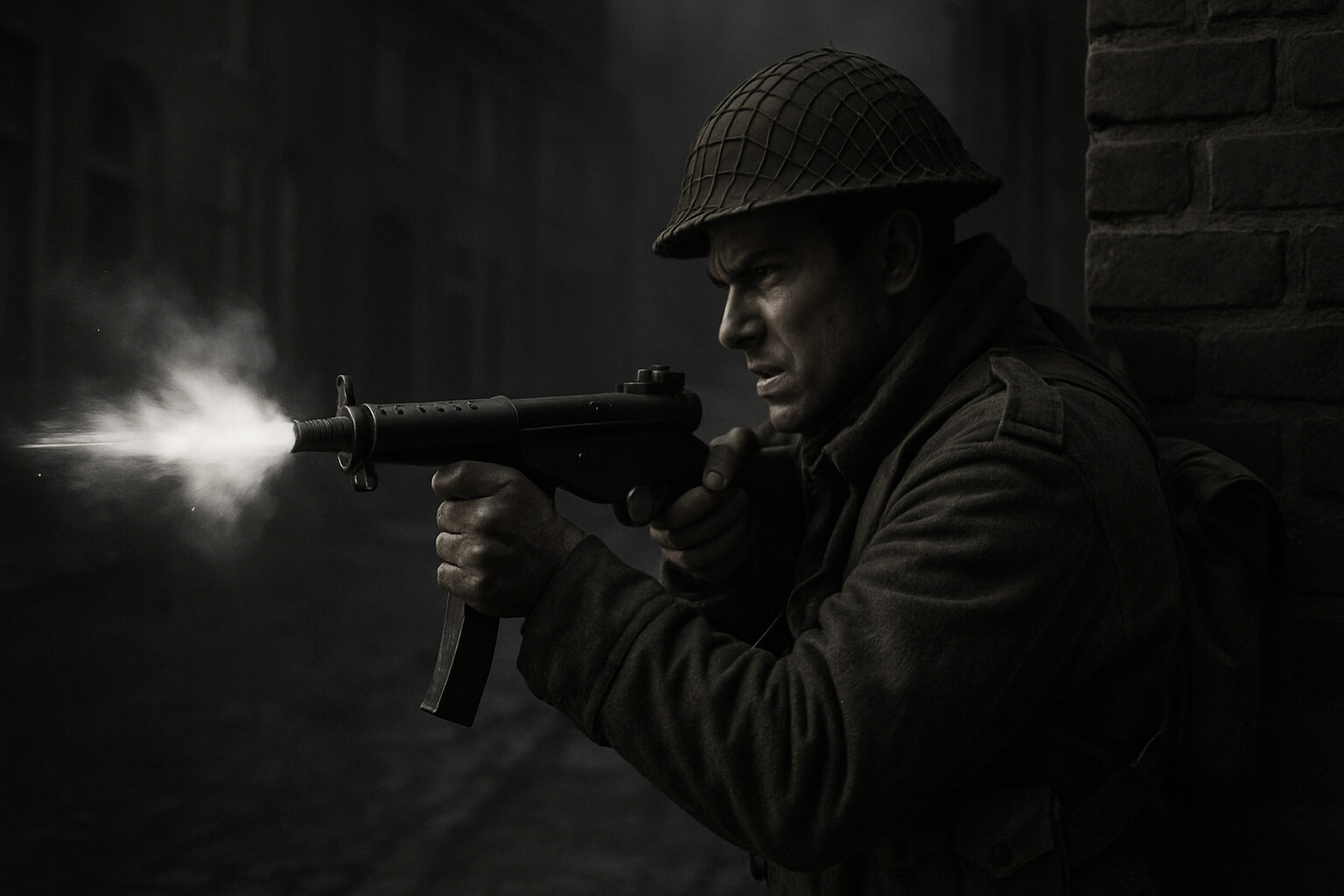
One Man's War: Leo Major's Night in Zwolle
In April 1945, Canadian Private Leo Major entered the German-held Dutch city of Zwolle alone after losing his partner, then used movement, fire, and deception to convince the defenders they faced a major attack.
April 1945 • Zwolle, Netherlands
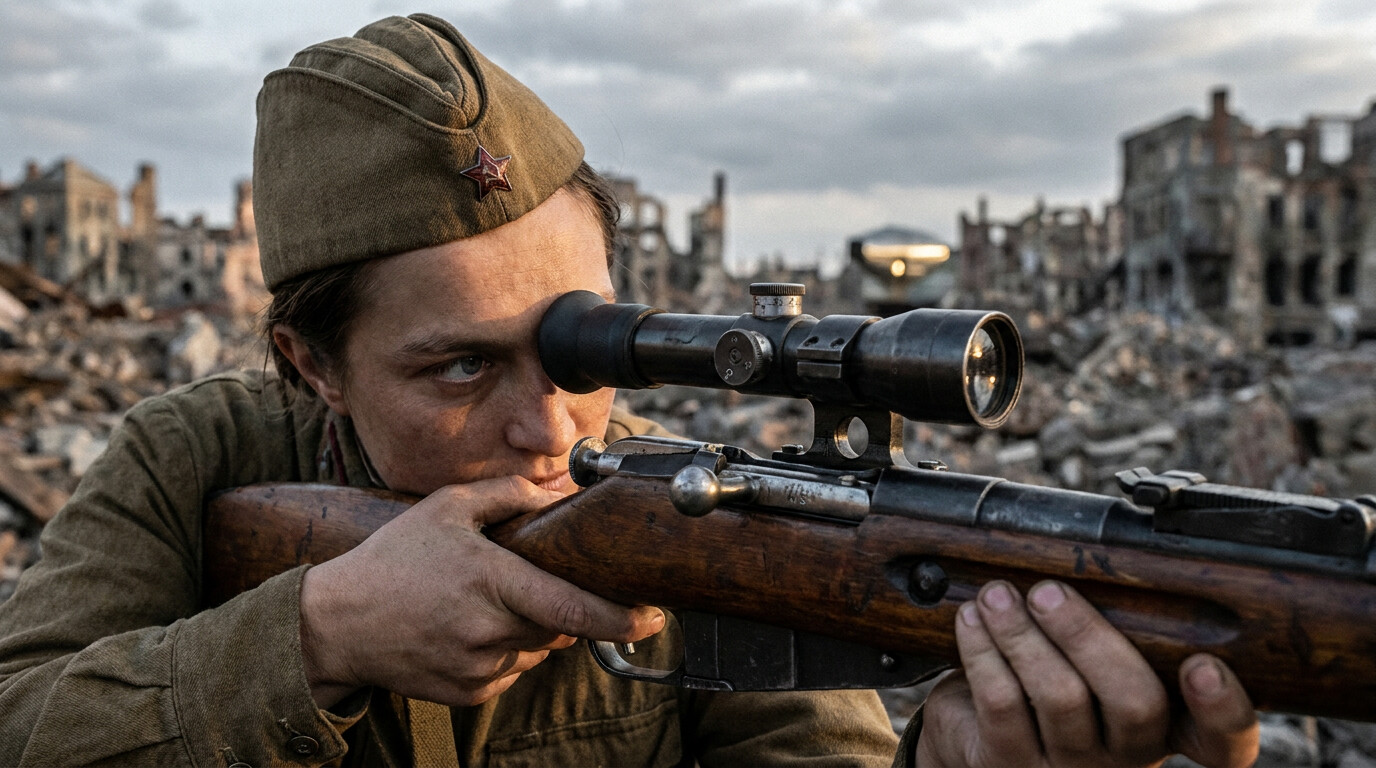
The White Death's Shadow: Lyudmila Pavlichenko's War
Senior Sergeant Lyudmila Pavlichenko became the deadliest female sniper in history with 309 confirmed kills during the brutal sieges of Odessa and Sevastopol. Her precision rifle became a weapon of terror for German and Romanian forces before the Soviet Union pulled her from combat to become a propaganda symbol.
1941-1942 • Odessa and Sevastopol, USSR
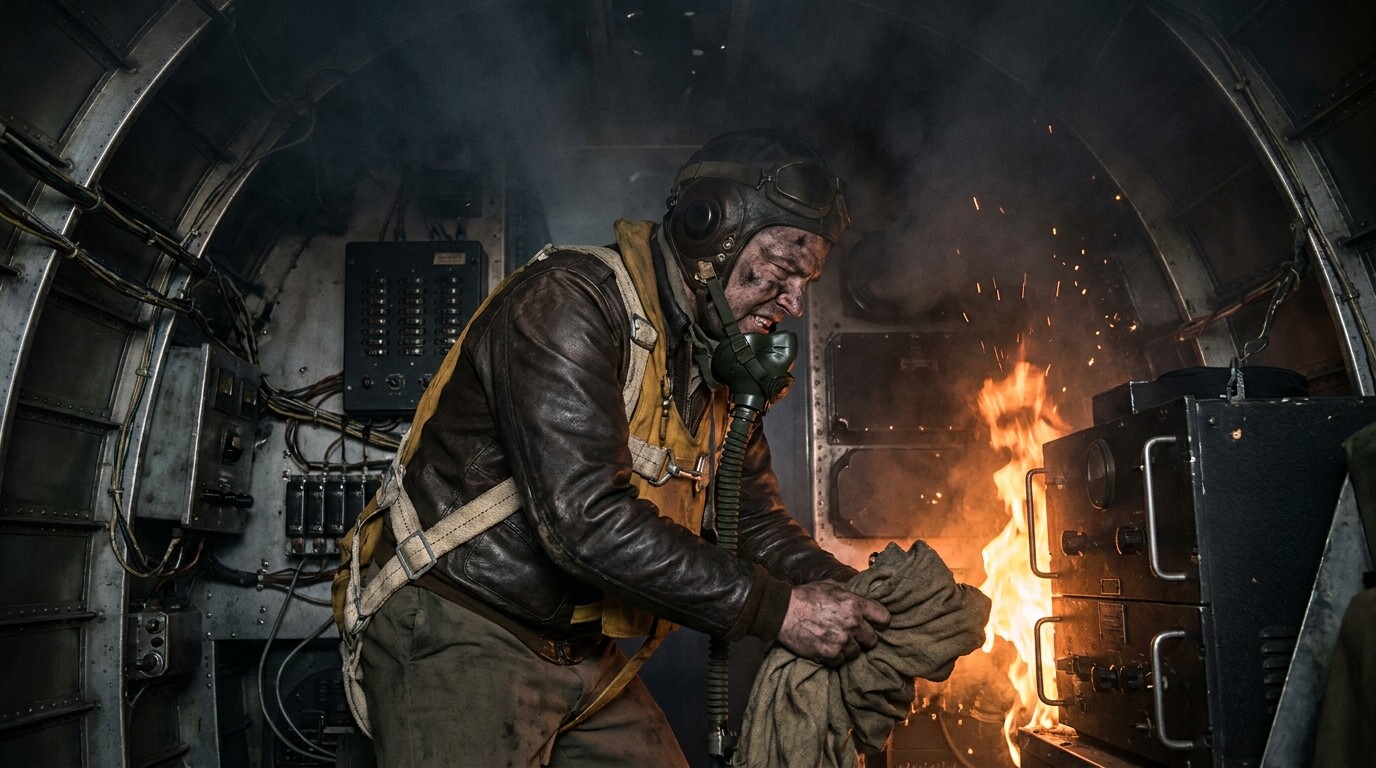
The Sergeant Who Fought Fire and Death at 25,000 Feet
Staff Sergeant Maynard Smith became the first airman to receive the Medal of Honor when he fought flames, treated wounded crewmen, and manned guns aboard a blazing B-17 Flying Fortress over Nazi-occupied France in 1943.
May 1, 1943 • Over Saint-Nazaire, France
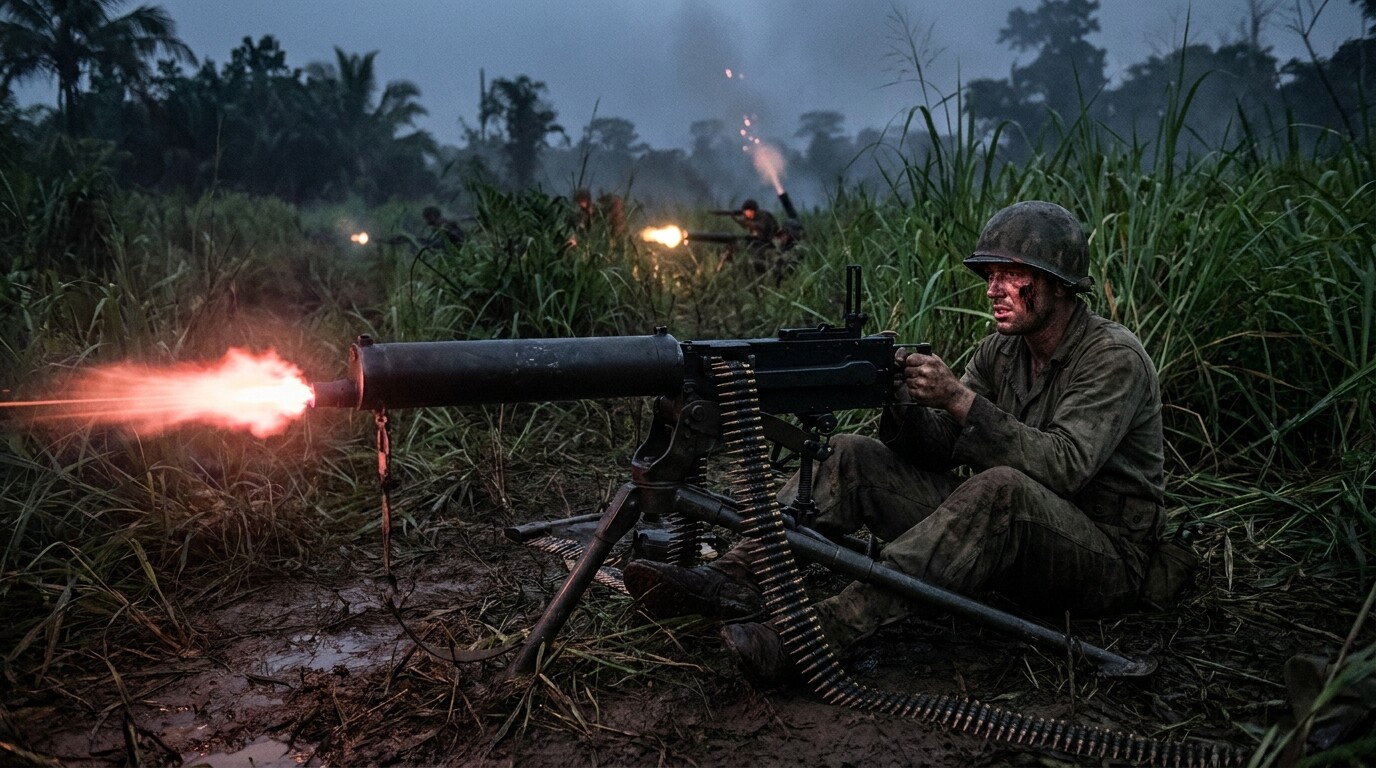
One Man, Four Machine Guns: Mitchell Paige's Stand at Henderson Field
On October 26, 1942, Platoon Sergeant Mitchell Paige manned four machine guns alone across a ridge line on Guadalcanal, holding back massive Japanese attacks until dawn reinforcements arrived at Henderson Field.
October 26, 1942 • Guadalcanal, Solomon Islands
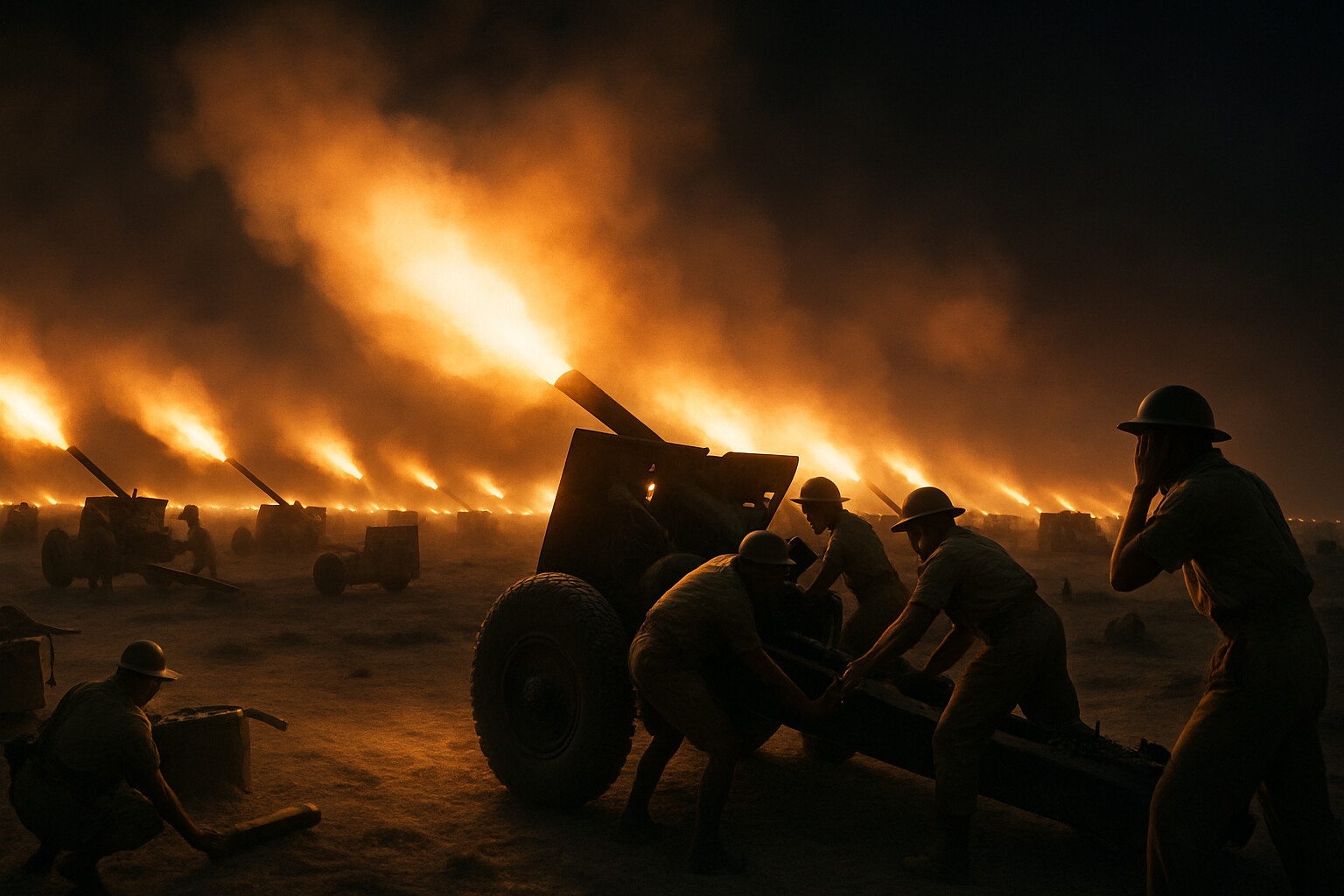
The Hinge of Fate: Montgomery and the Eighth Army at El Alamein
In the autumn of 1942, British General Bernard Montgomery launched a meticulously planned offensive against Erwin Rommel's Panzerarmee Afrika at El Alamein, Egypt. Twelve days of grinding attritional combat, sustained artillery fire, and relentless infantry pressure broke the Axis line and sent Rommel's force into a retreat from which it never recovered. The Second Battle of El Alamein was the decisive turning point of the North African campaign and, by Churchill's own measured assessment, the end of the beginning.
1942 • El Alamein, Egypt
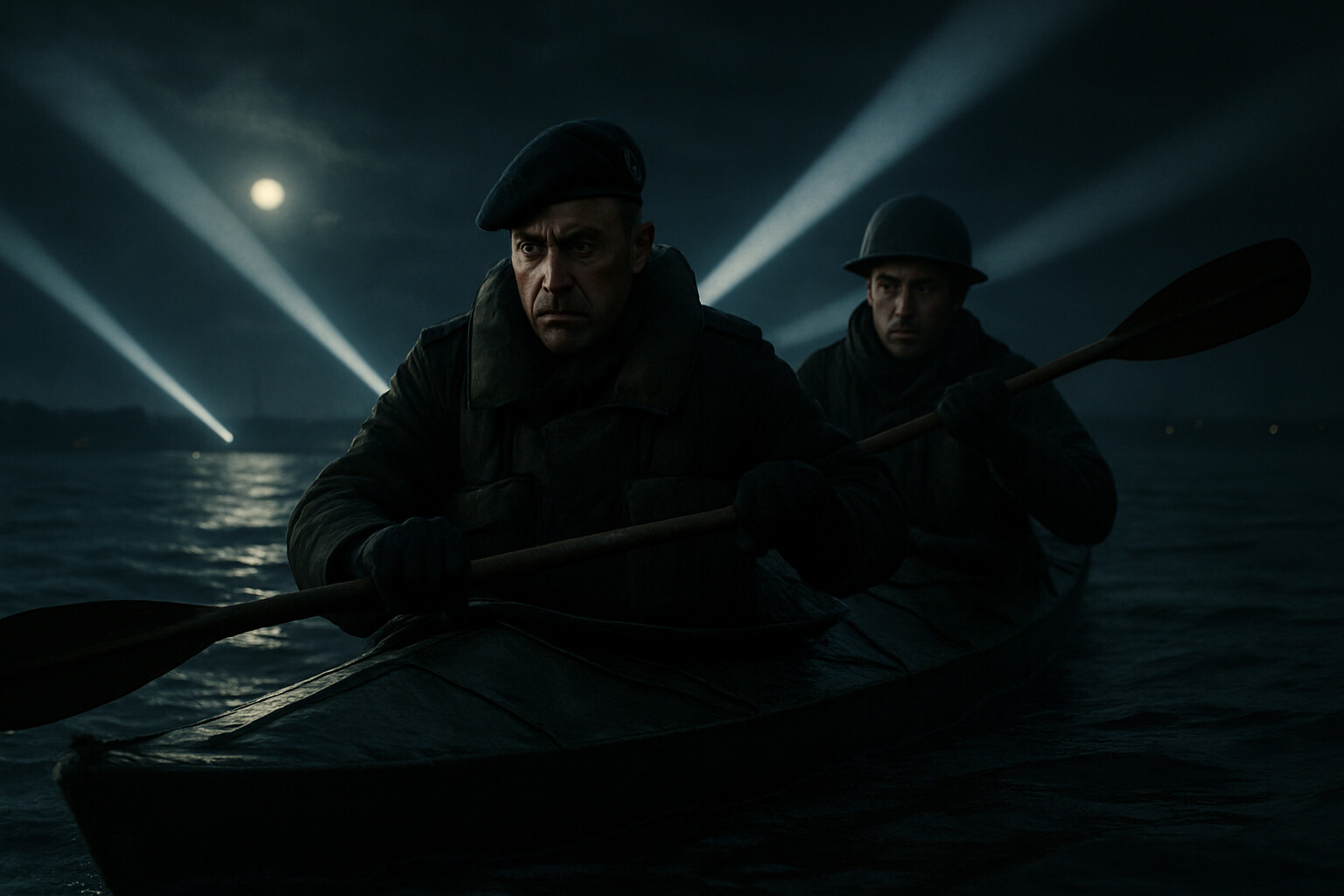
The Cockleshell Heroes: Operation Frankton's Fatal Mission
Ten Royal Marines paddled collapsible canoes 60 miles up the Gironde estuary to mine German blockade runners in Bordeaux harbor. Only two would return alive from this December 1942 mission that changed Allied naval strategy.
December 1942 • Gironde estuary, Bordeaux, France
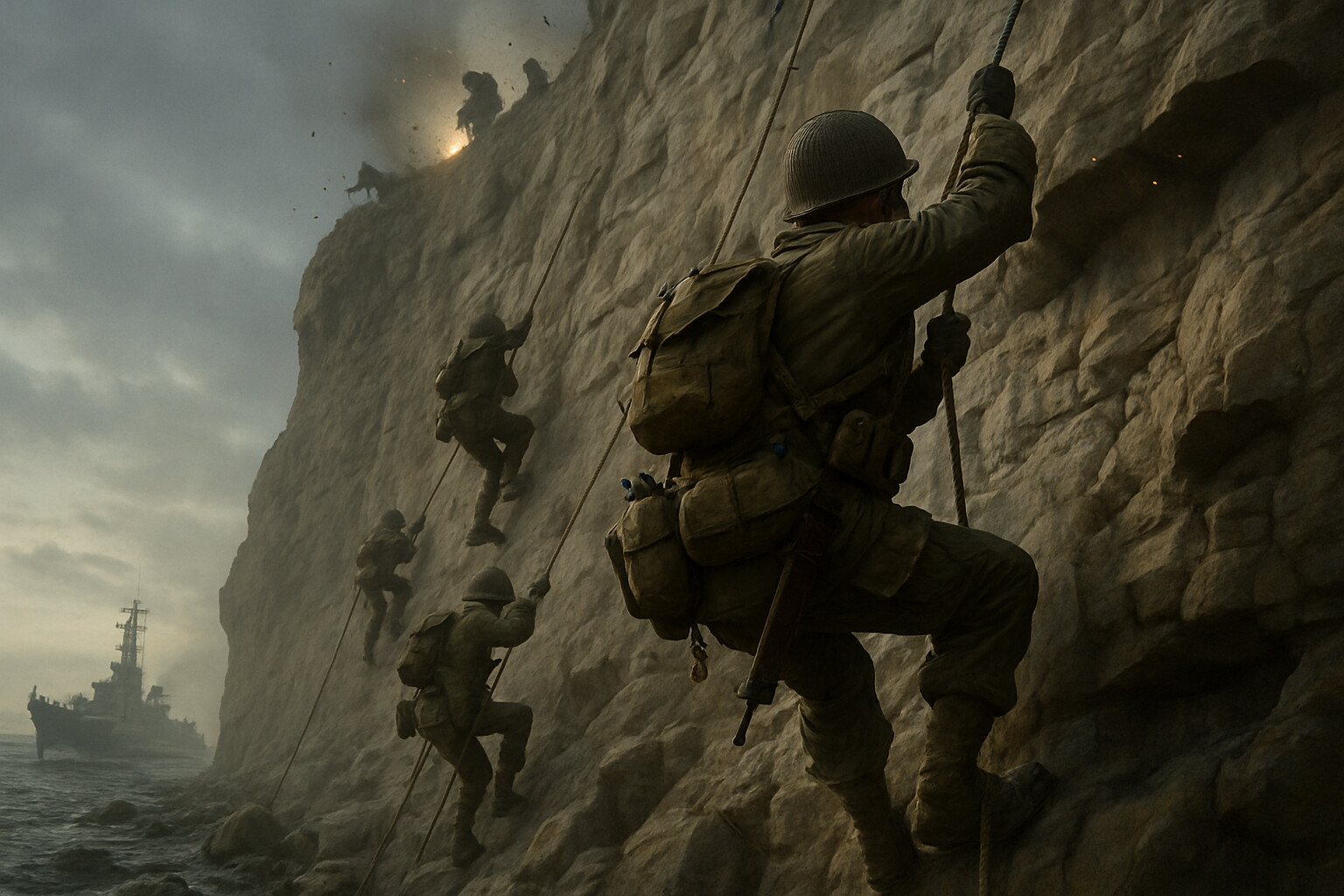
The Cliffs at Pointe du Hoc: Rudder's Rangers and the Assault That Had to Succeed
On the morning of June 6, 1944, Lieutenant Colonel James Earl Rudder led three companies of the 2nd Ranger Battalion in a near-vertical assault on the cliffs of Pointe du Hoc, Normandy—a German coastal fortification believed to house artillery capable of destroying Allied forces on both Omaha and Utah beaches. What followed was one of the most demanding small-unit actions of the Second World War: a fought climb, a desperate inland search, and a two-day siege against counterattacking German forces that left fewer than half the Rangers standing.
1944 • Normandy, France
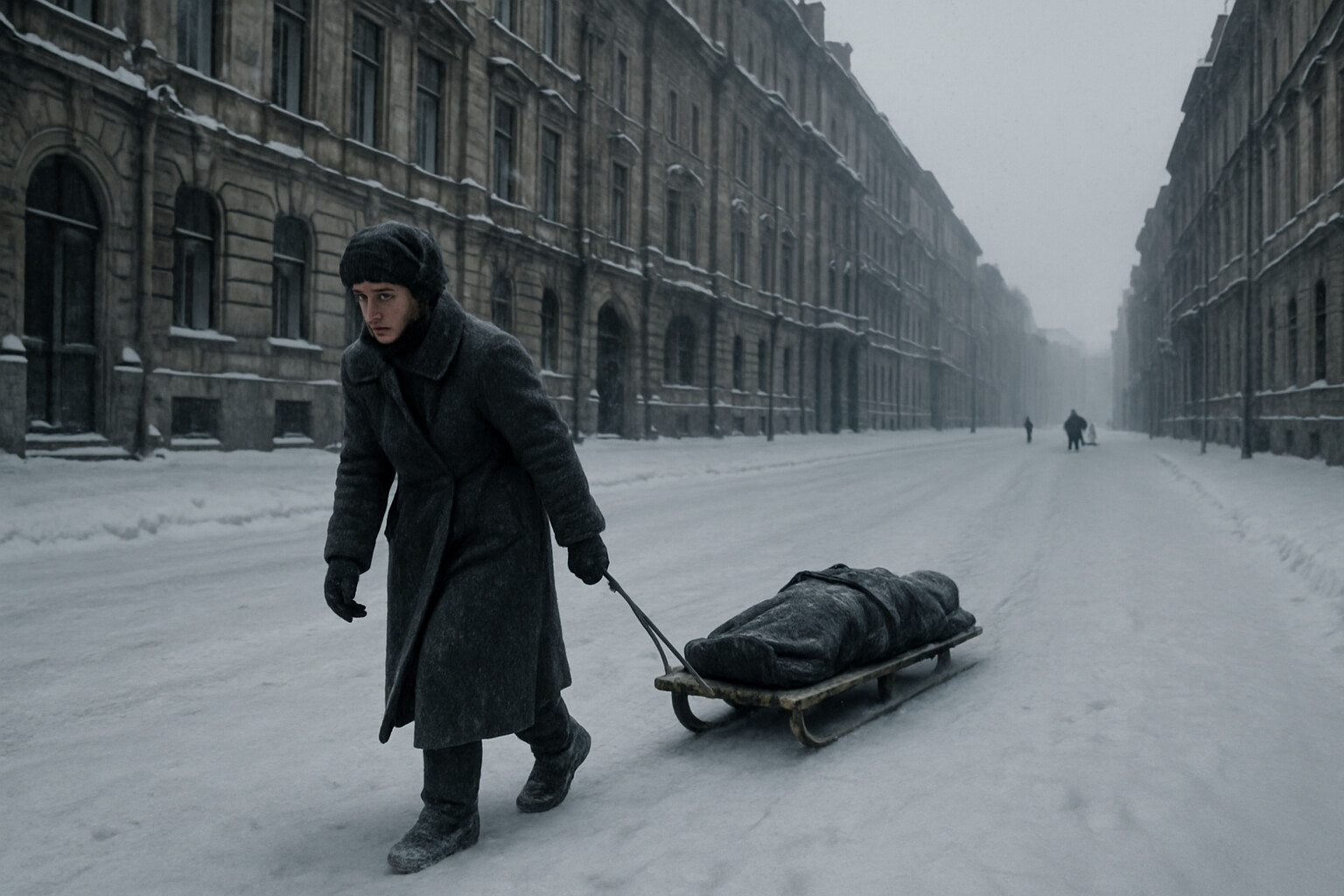
The City That Would Not Die: Leningrad, 1941–1944
For eight hundred and seventy-two days, the city of Leningrad endured German encirclement, relentless artillery bombardment, and a famine that killed hundreds of thousands of civilians. Neither the Wehrmacht nor starvation broke it. This is the story of a city under siege, the soldiers who defended it, and the people who refused to surrender.
1941-1944 • Leningrad, Soviet Union
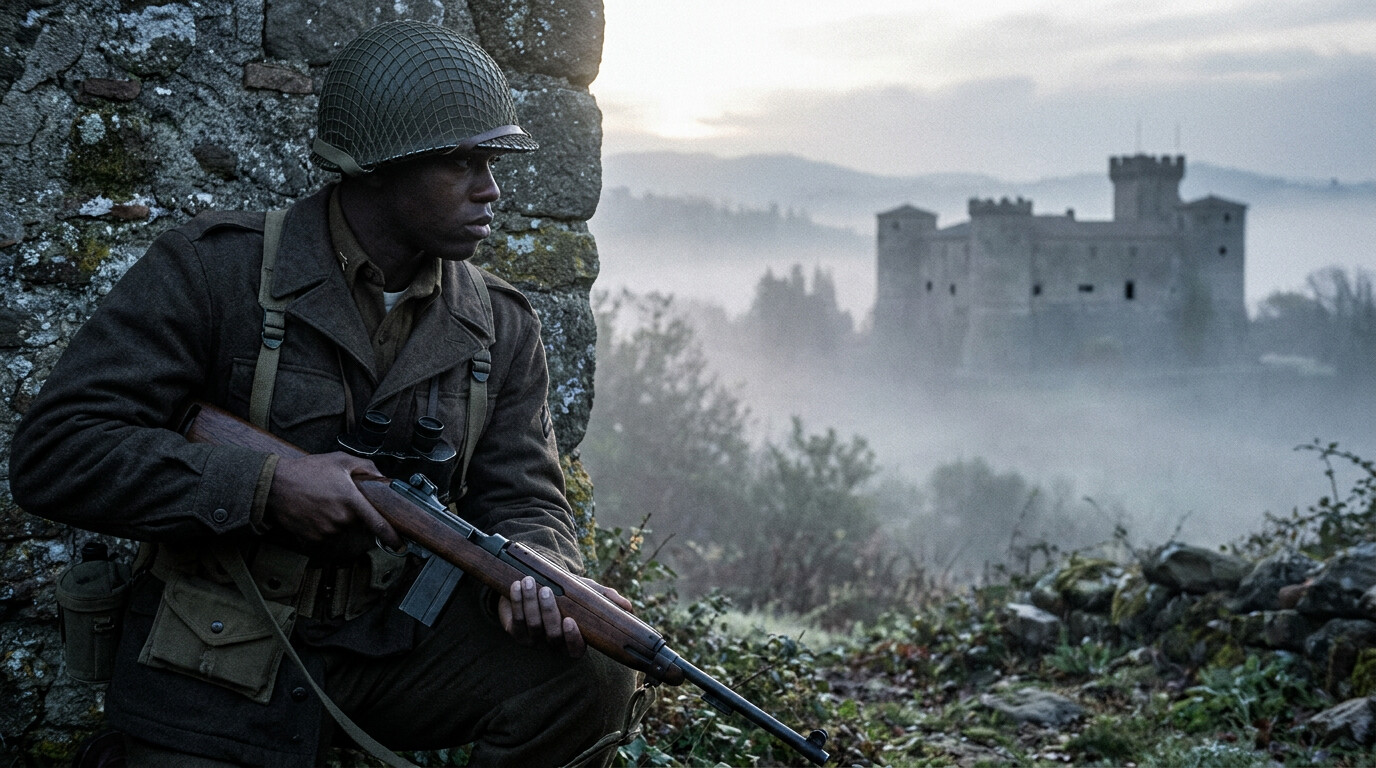
The Last Stand at Castle Aghinolfi: Vernon Baker's Heroic Assault
In April 1945, Second Lieutenant Vernon Baker led a desperate assault on German positions near Viareggio, Italy, single-handedly destroying three machine gun nests and an observation post. Decades later, he became the last surviving Black World War II Medal of Honor recipient.
April 1945 • Viareggio, Italy
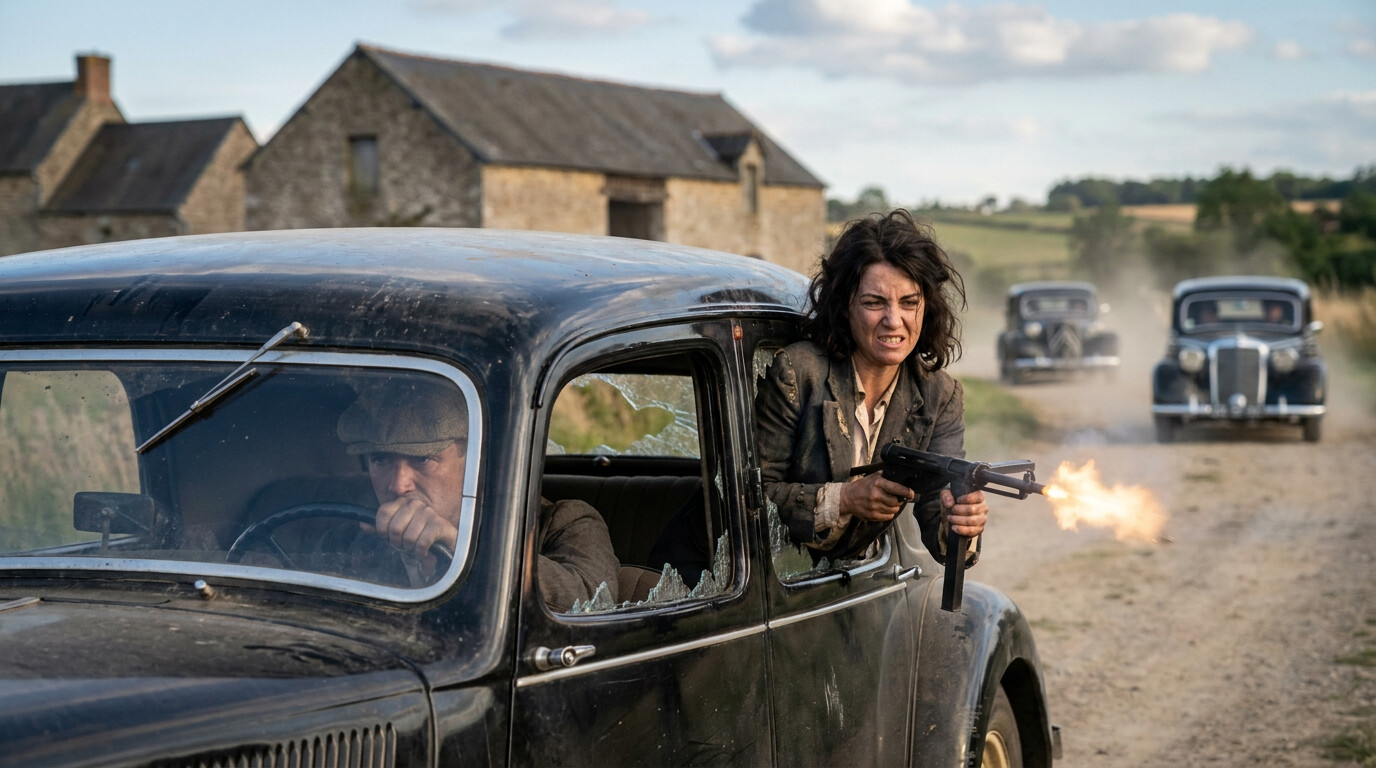
The Last Stand of Violette Szabo
In June 1944, SOE agent Violette Szabo fought a desperate running gun battle through the French countryside after her sabotage mission went wrong. Captured by the SS, she endured months of interrogation without breaking before her execution at Ravensbrück.
1944 • Occupied France
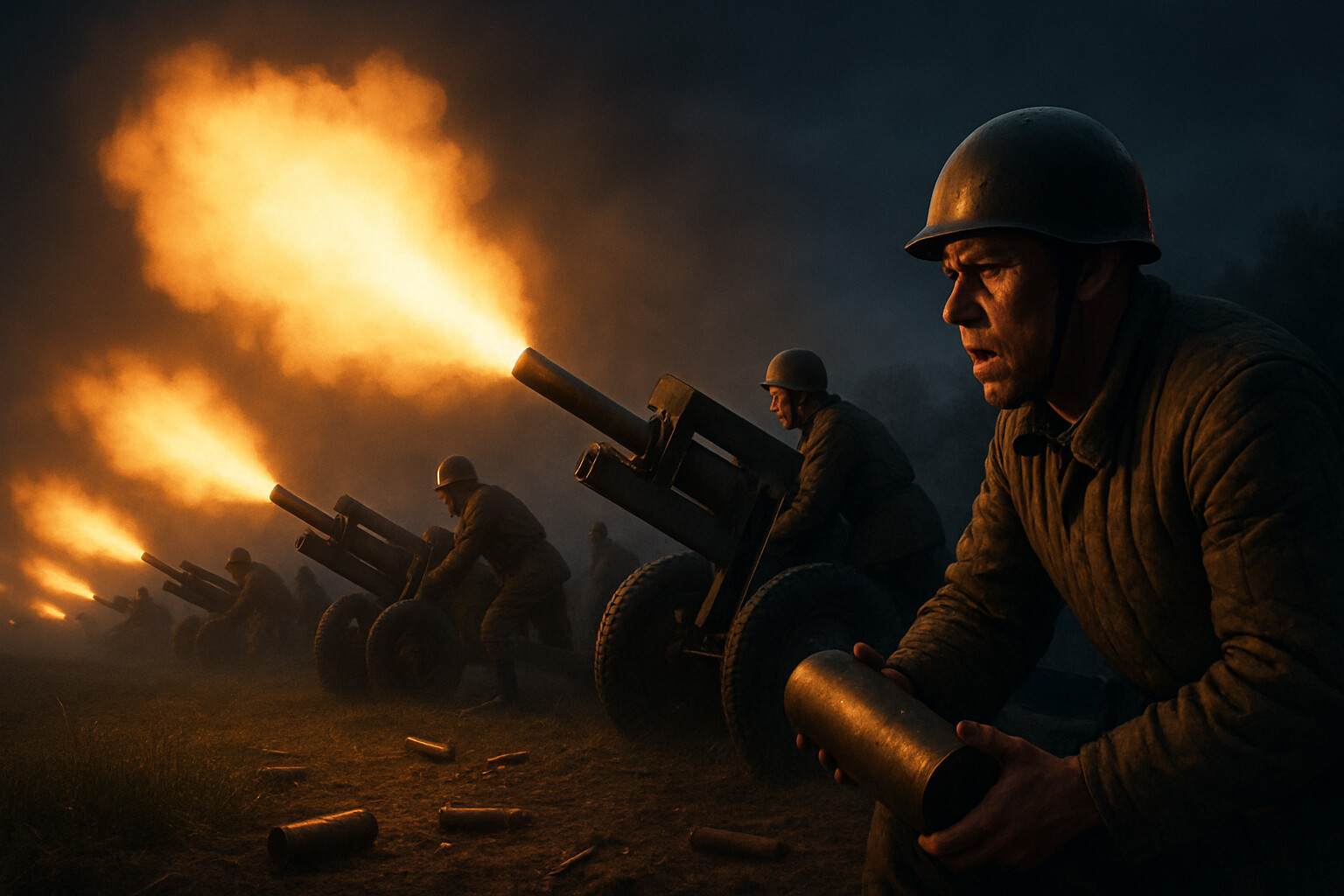
The Bulge That Broke the Wehrmacht: Zhukov and the Battle of Kursk
In the summer of 1943, the German Army staked its last major strategic offensive in the East on a massive armored assault against a Soviet salient at Kursk. Marshal Georgy Zhukov had anticipated the blow, helped shape an unprecedented defense in depth, and then coordinated counteroffensives that shattered German offensive capacity on the Eastern Front. The engagements at Prokhorovka and across the salient — their true scale and cost only partially visible until post-Soviet archival research — mark the moment the operational initiative in the East passed permanently to the Red Army.
1943 • Kursk, Soviet Union
Against All Odds: Lieutenant Inouye's Final Assault
On April 21, 1945, Second Lieutenant Daniel Inouye of the 442nd Regimental Combat Team led a devastating assault on German machine-gun positions near San Terenzo, Italy, continuing to fight with a grenade in his severed right hand.
April 21, 1945 • near San Terenzo, Italy
Through Fire and Steel: Susan Travers and the Breakout from Bir Hakeim
In June 1942, Susan Travers became the only woman to serve in the French Foreign Legion when she drove through enemy fire during the desperate breakout from the besieged fortress of Bir Hakeim. Her actions helped save the Free French garrison from annihilation in the Libyan desert.
May-June 1942 • Bir Hakeim, Libya
The Motti Master: Finnish Ski Troops and the Art of Forest Warfare
Finnish ski troops developed devastating motti tactics during the Winter War, cutting Soviet columns into isolated pockets in the frozen forest. These ghost-like attacks transformed Finland's winter landscape into a tactical laboratory for asymmetric warfare.
1939-1940 • Finland
The Nazi Who Saved Nanking: John Rabe's Impossible Choice
A German businessman and Nazi Party member organized an international safety zone that sheltered over 200,000 Chinese civilians during the brutal fall of Nanking in 1937-1938.
1937-1938 • Nanking / Nanjing, China
The White Mouse: Nancy Wake's War Against the Reich
Australian socialite Nancy Wake became one of the Gestapo's most wanted fugitives, escaping occupied France only to parachute back as an SOE agent to arm and organize thousands of Maquis resistance fighters.
1940-1944 • Occupied France
The Broken Warrior — Ernest Childers
Despite a broken instep, Childers led an assault up an Italian hill and cleared enemy positions.
September 1943 • Oliveto, Italy • 45th Infantry Division
Lost in the Alaskan Wilderness — Lt. Leon Crane
The sole survivor of a B-24 crash endured nearly three months below zero in Alaska.
Dec 1943 • Yukon-Charley region • Forgotten Survival
Arnhem
Lt. Col. John Frost - the bridge too far
September 17-21, 1944 - Netherlands
PT-109
Lt. John F. Kennedy - Blackett Strait survival story
August 2-8, 1943 - Solomon Islands
The Lost Battalion
1st Battalion, 141st Infantry - rescued by the 442nd
October 1944 - Vosges Mountains, France
Against Battleships
USS Johnston DD-557 - Commander Ernest E. Evans
October 25, 1944 - Battle off Samar
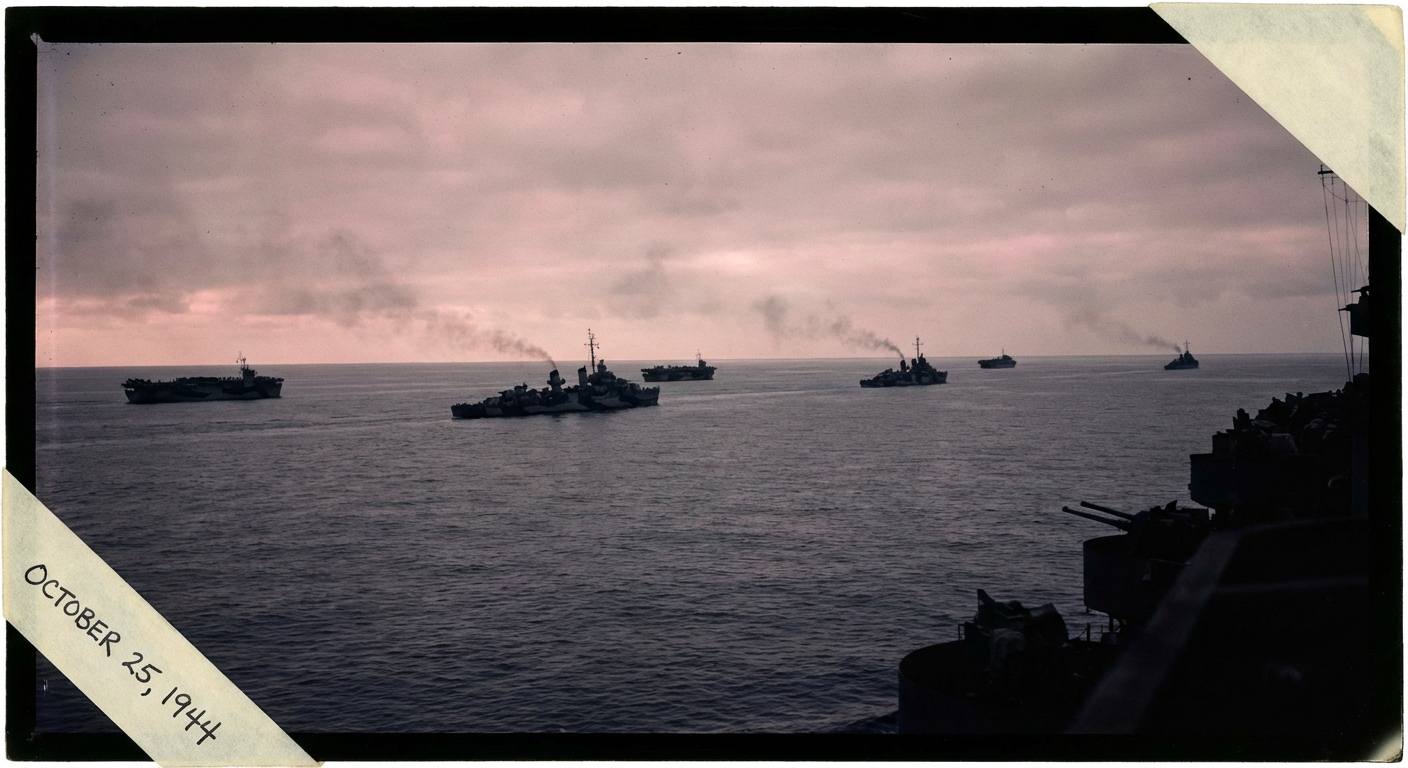
Battle Off Samar
Destroyers vs. Battleships
Leyte Gulf • Impossible Odds • US Navy
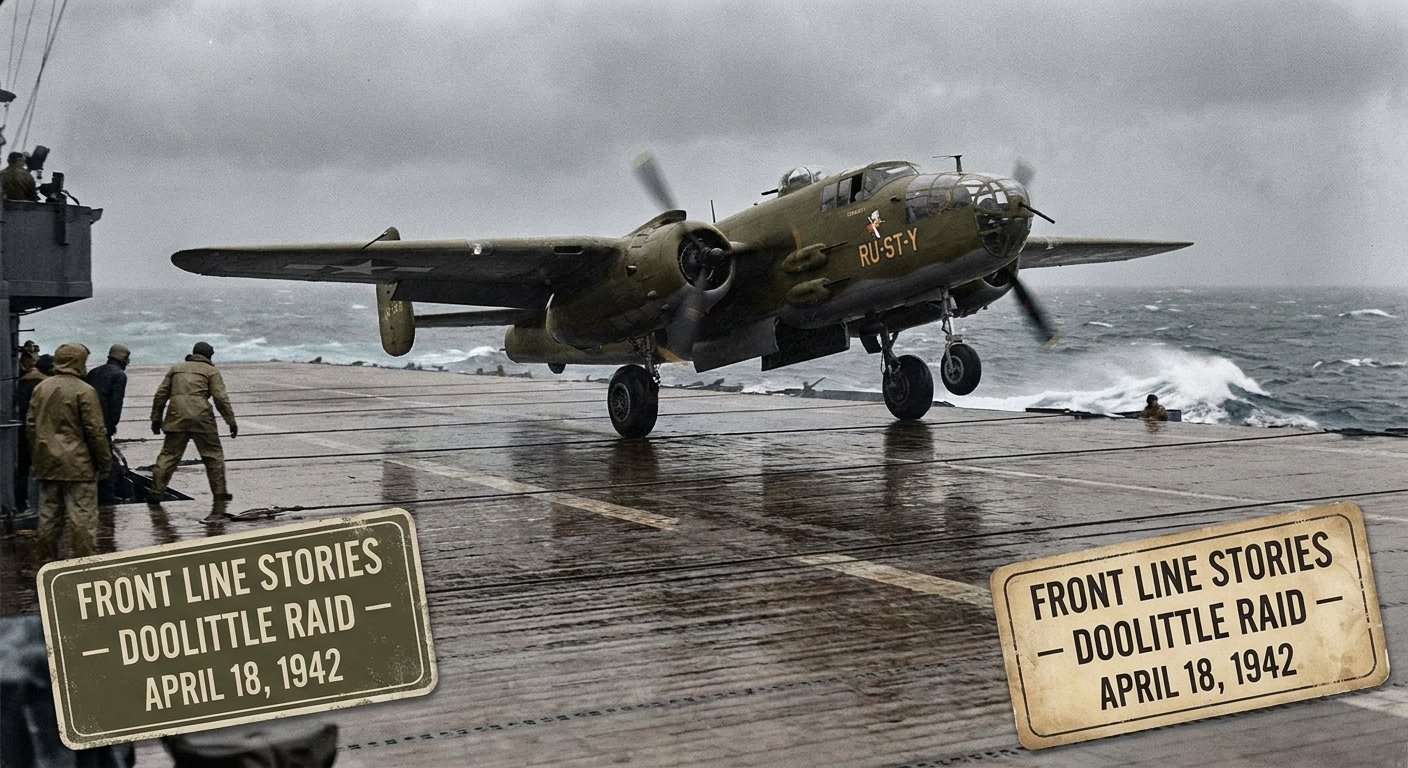
The Doolittle Raid
B-25s Off the Deck
Apr 18, 1942 • USS Hornet to Tokyo
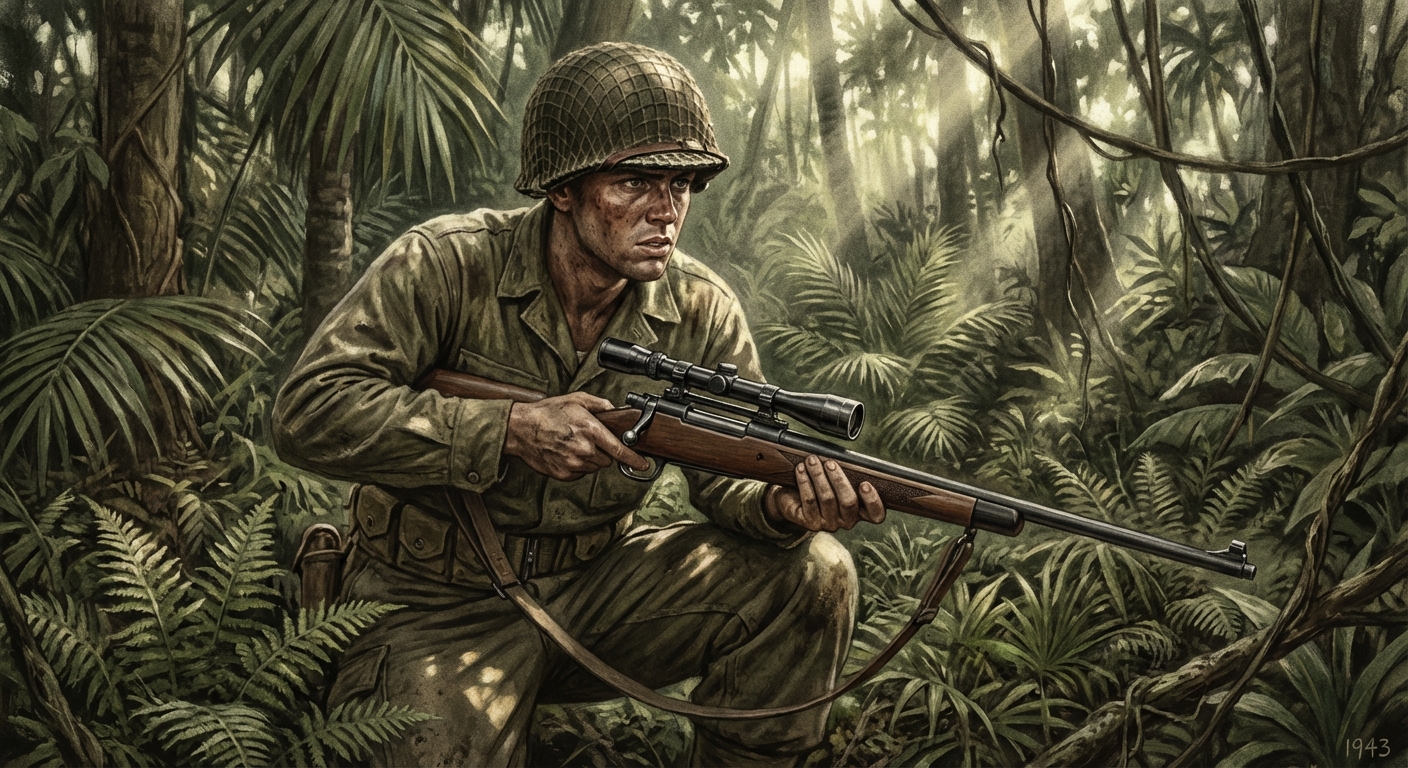
Shots Fired in Anger — The Mail-Order Sniper
2Lt John George — 132nd Infantry, Americal Division
Jan 1943 • Guadalcanal — 11 snipers killed in 4 days
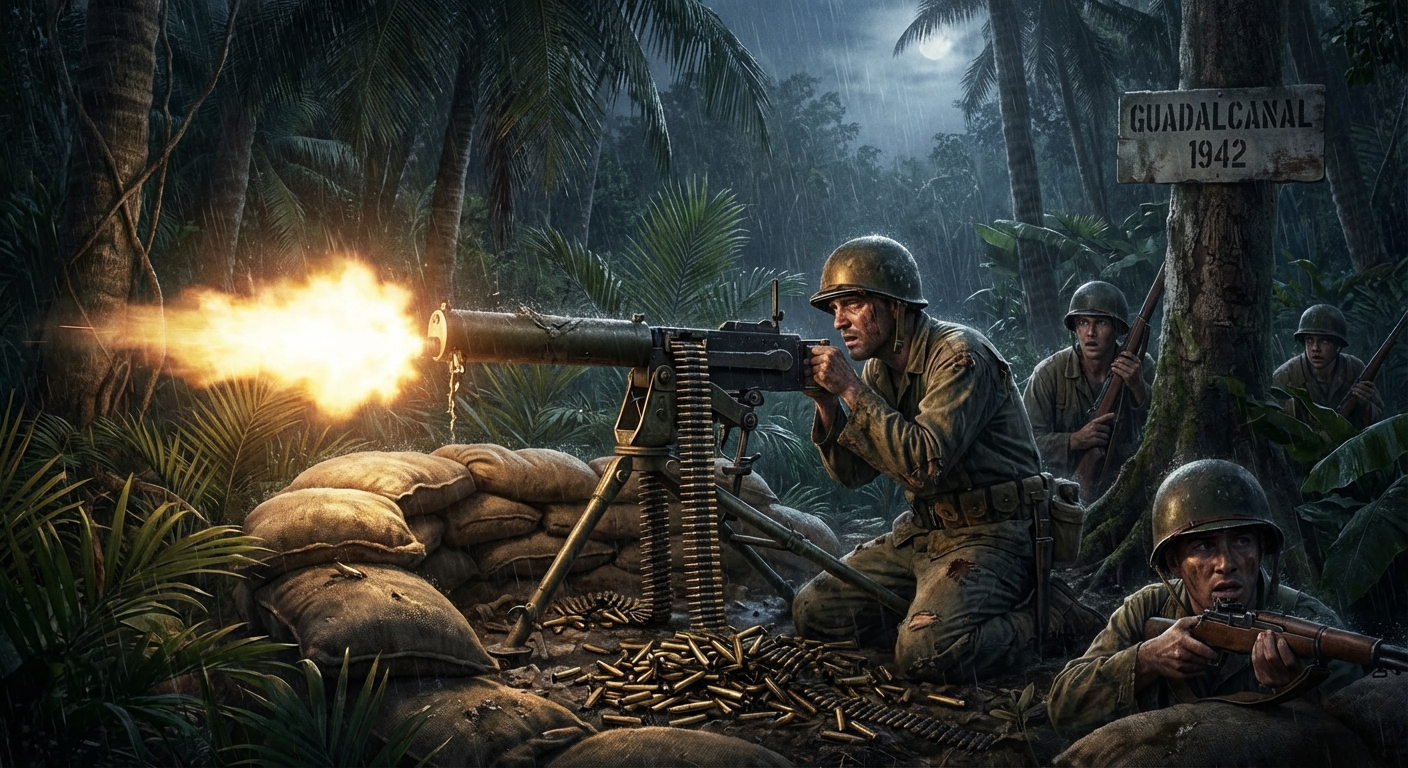
Manila John — The Machine Gunner Who Held the Line
GySgt John Basilone — 1st Bn, 7th Marines
Oct 24-25, 1942 • Guadalcanal / Feb 19, 1945 • Iwo Jima (KIA)
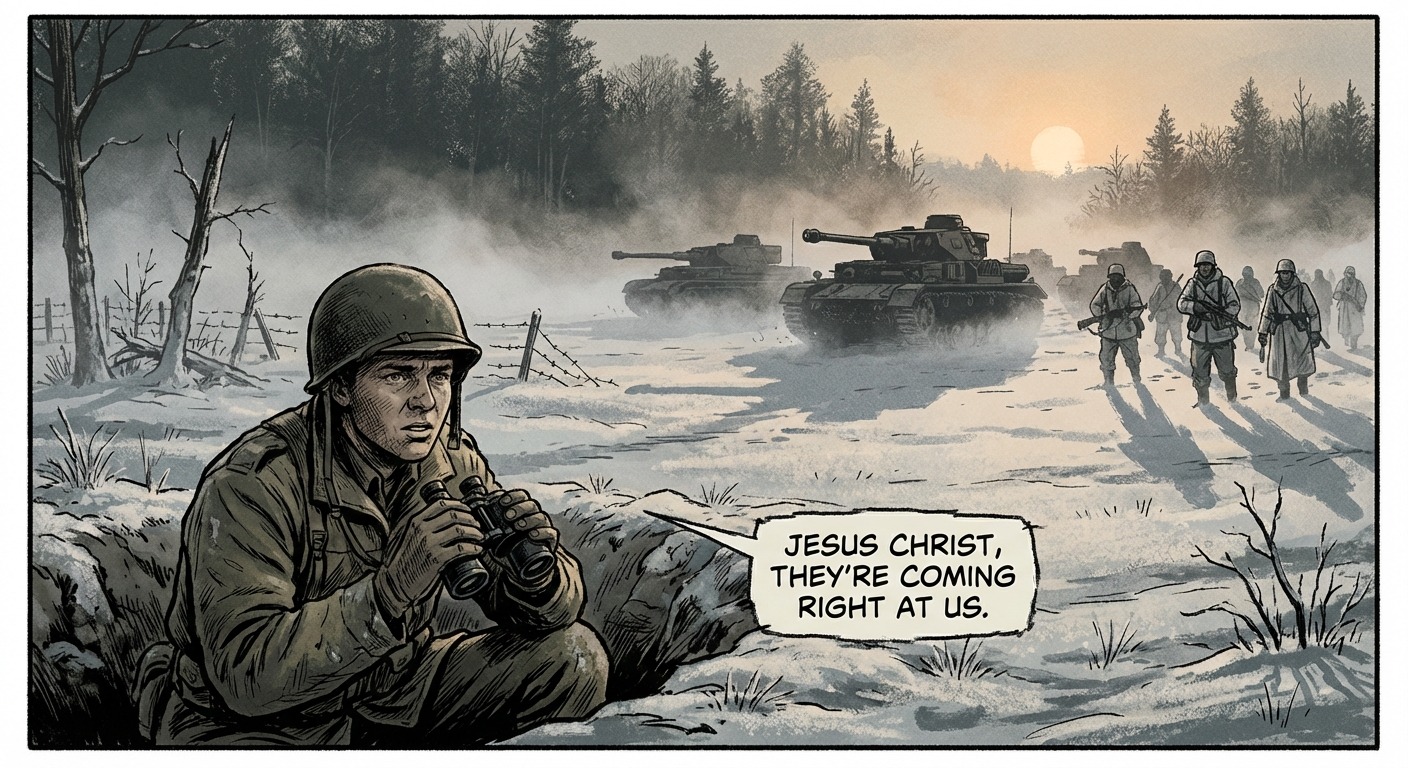
The Stand at Holtzwihr: Murphy's Impossible Hour
Lieutenant Audie Murphy ? 15th Infantry
Jan 26, 1945 • Holtzwihr, France
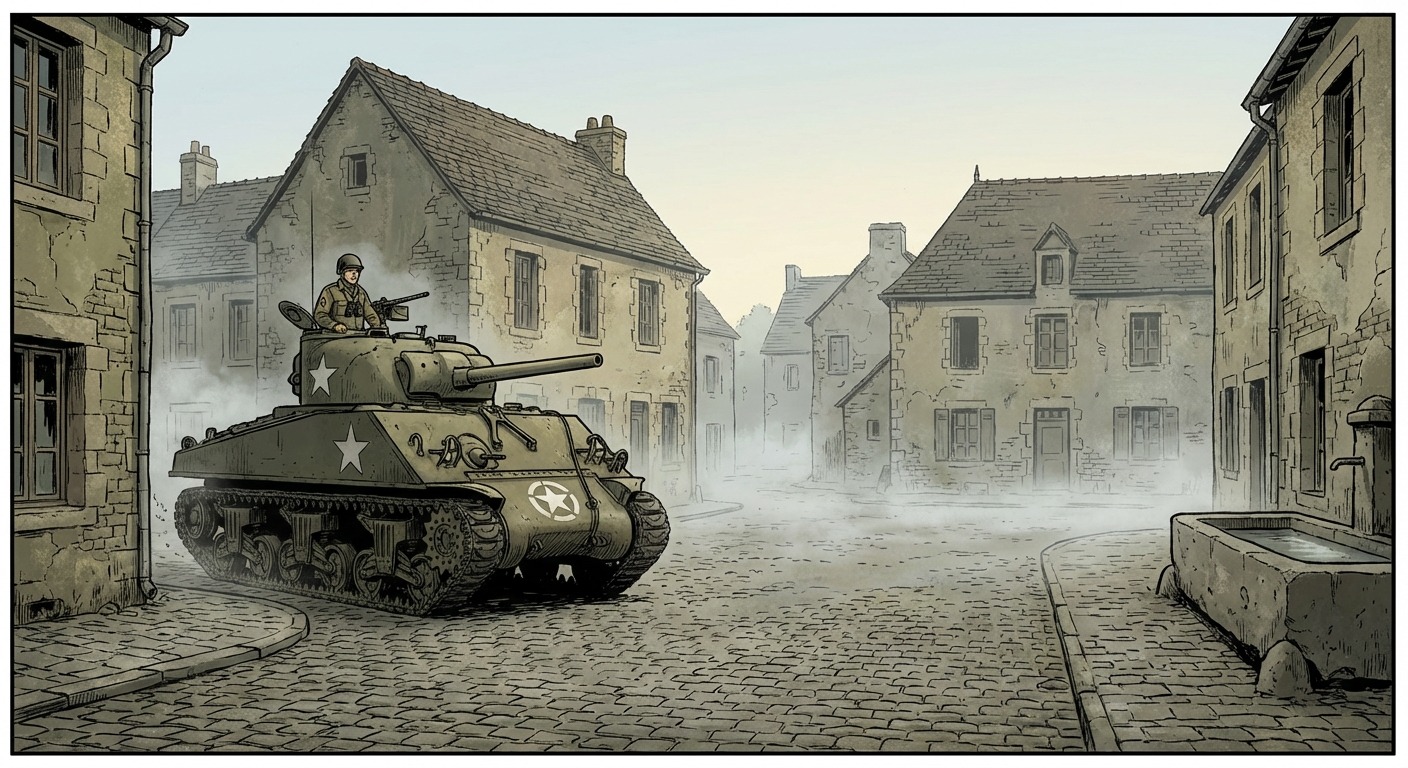
The Last Stand of Joe Sadowski
Sgt Joe Sadowski ? 37th Tank Battalion, 4th Armored
Sep 14, 1944 • Valhey, France
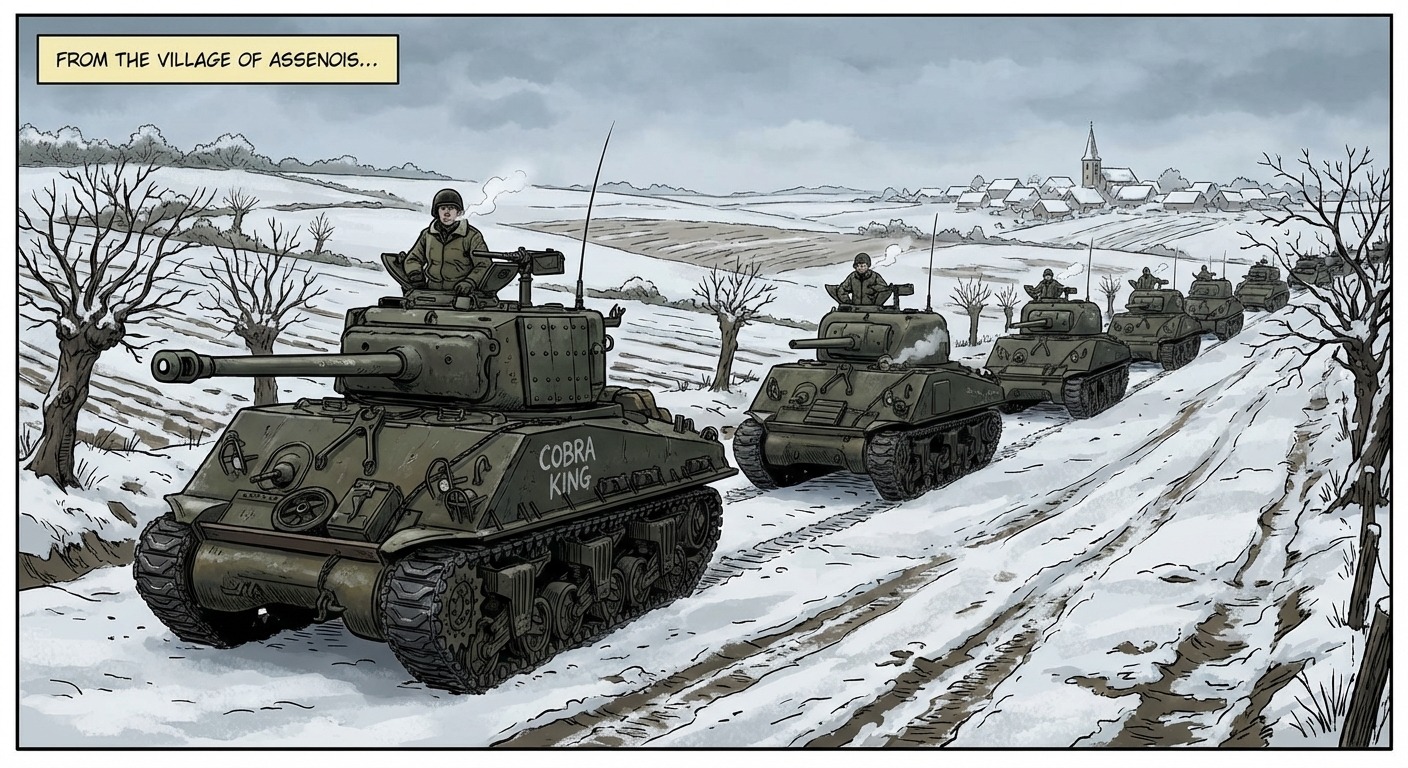
Cobra King: The Tank That Broke the Siege
Lt Boggess & LtCol Abrams ? 37th Tank Bn, 4th Armored
Dec 26, 1944 • Bastogne, Belgium
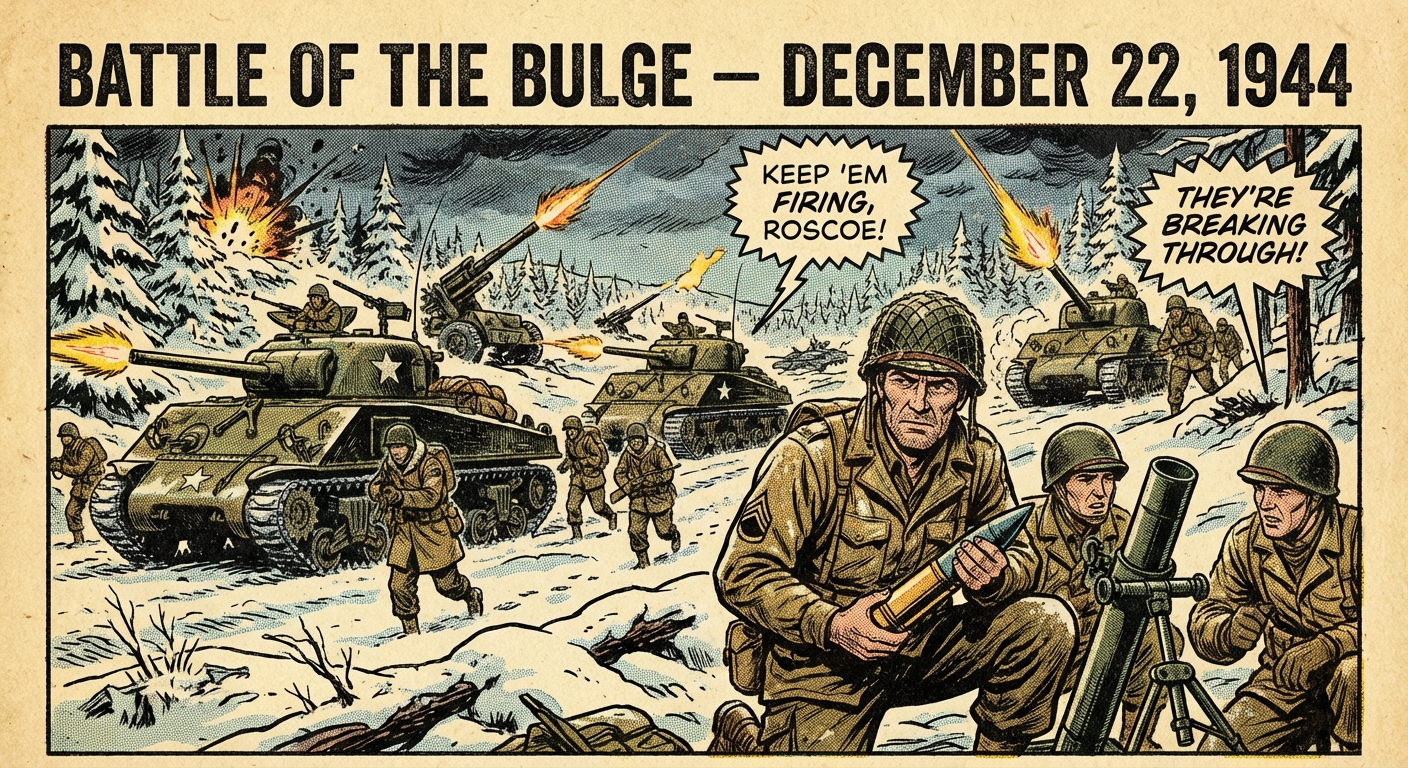
The Mortar Man of Burnon
TSgt Roscoe V. Albertson ? CCB, 4th Armored Division
Dec 22, 1944 • Burnon, Belgium
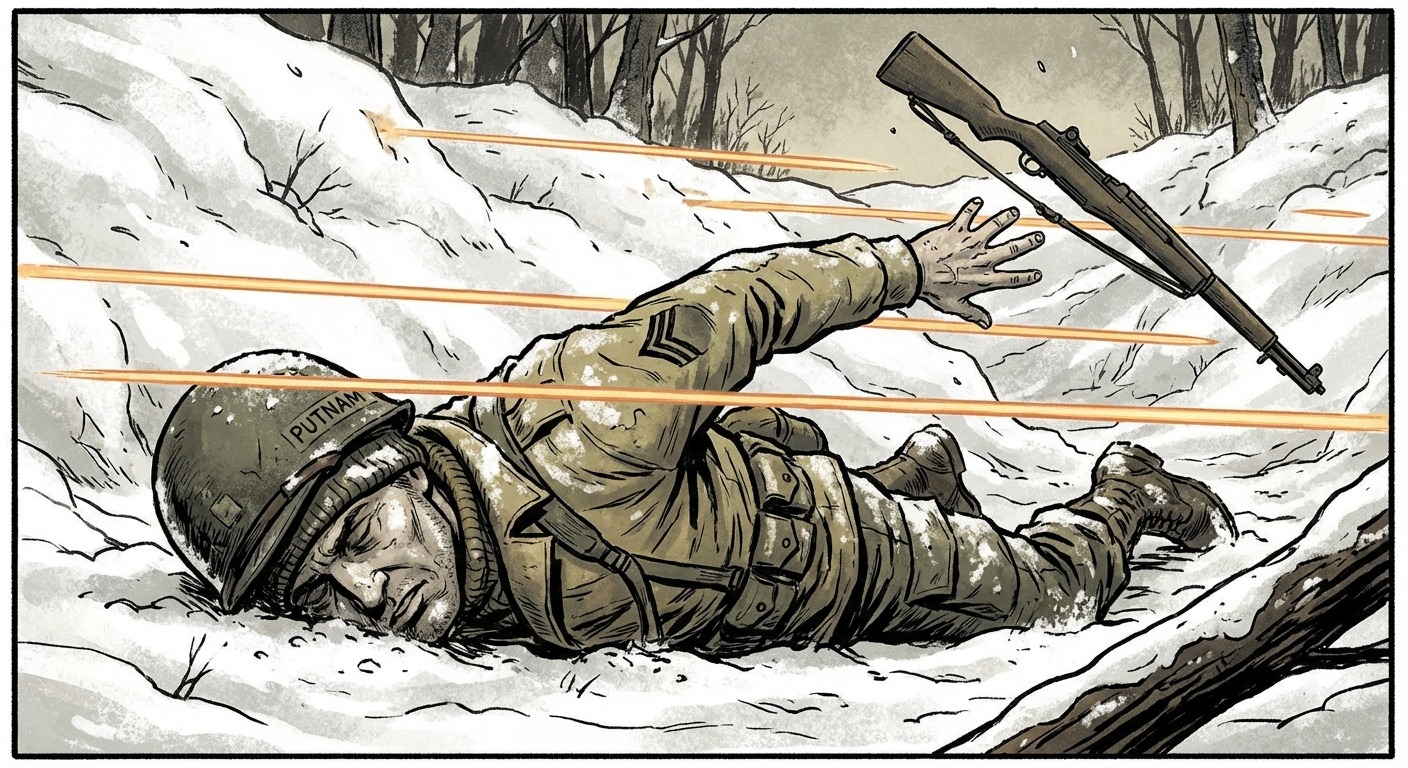
Death's Deception on Christmas Day
Pfc Roscoe Putnam ? 318th Infantry Regiment
Dec 25, 1944 • Chaumont, Belgium
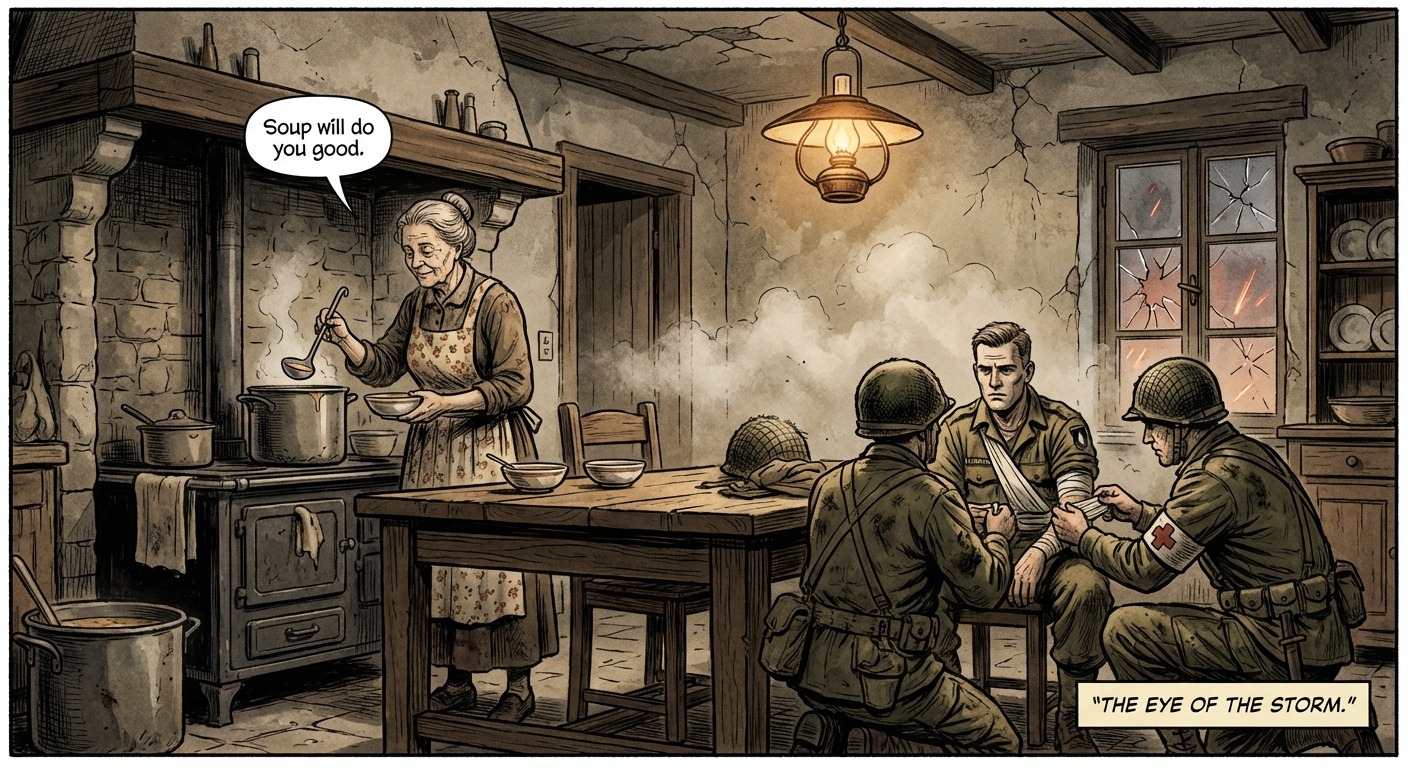
The Eyes of Patton
Pvt John DiBattista ? 25th Cavalry Recon, 4th Armored
Dec 22, 1944 • Burnon, Belgium
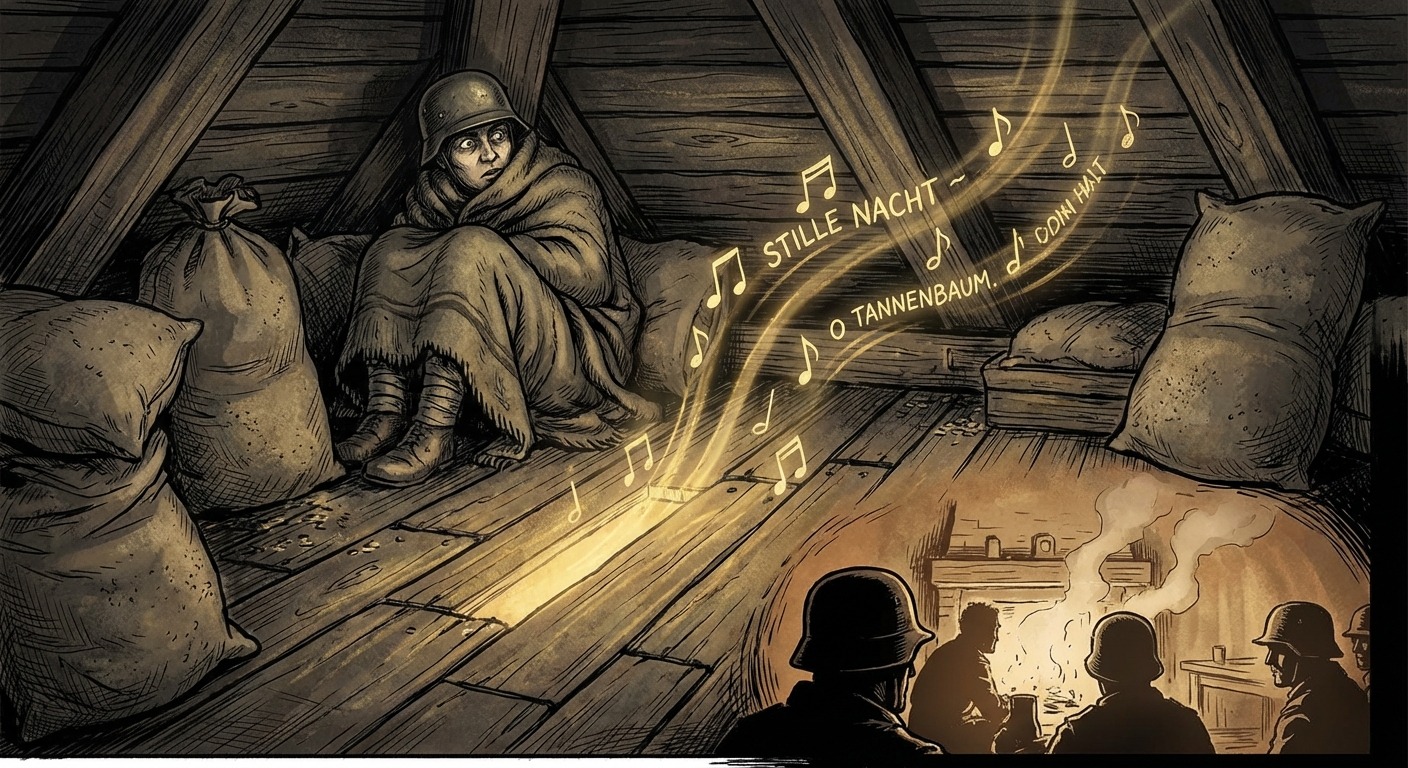
The Christmas Tanker of Chaumont
Pvt Bruce Fenchel ? 8th Tank Battalion, 4th Armored
Dec 22-25, 1944 • Chaumont, Belgium
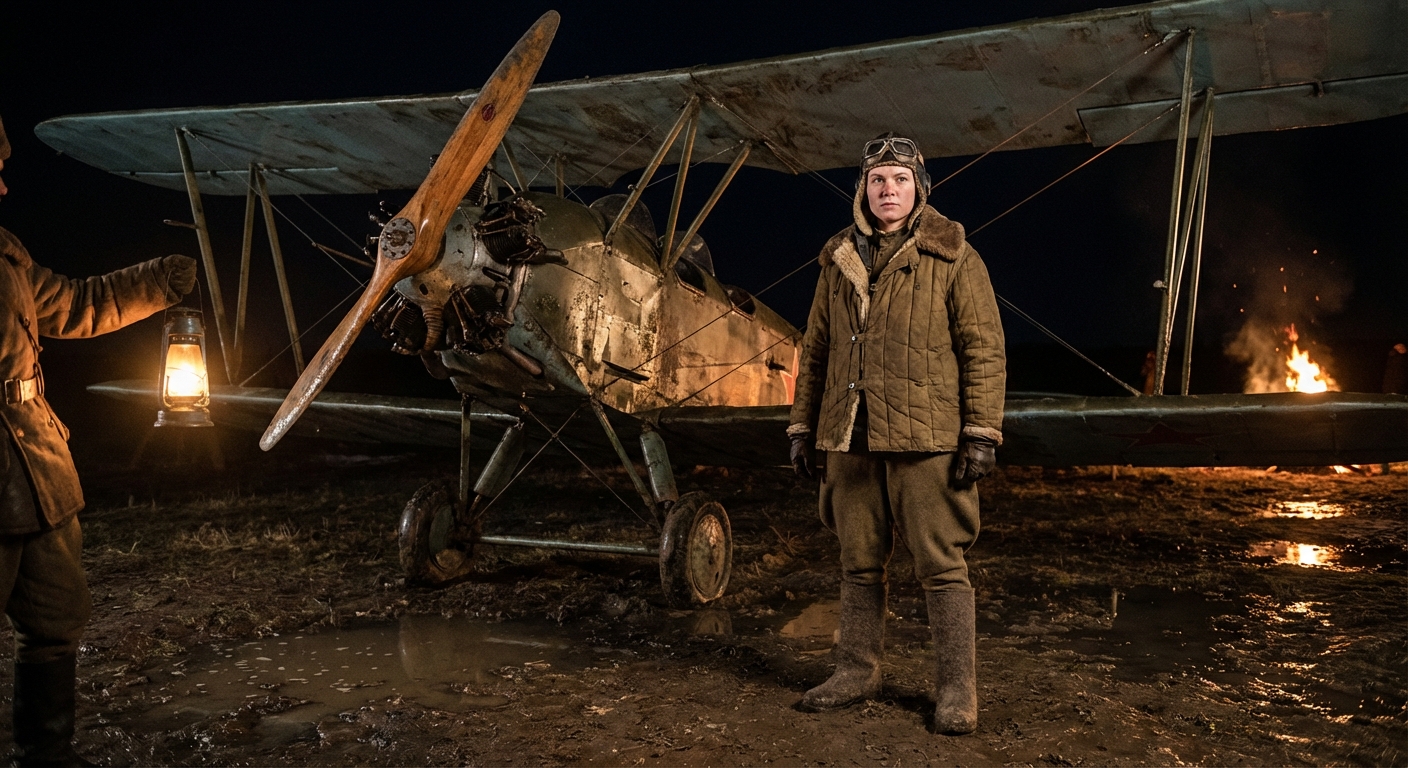
Night Witches
Soviet Women Bomber Pilots
Po-2 Biplanes • Whisper Raids • 1942-1945
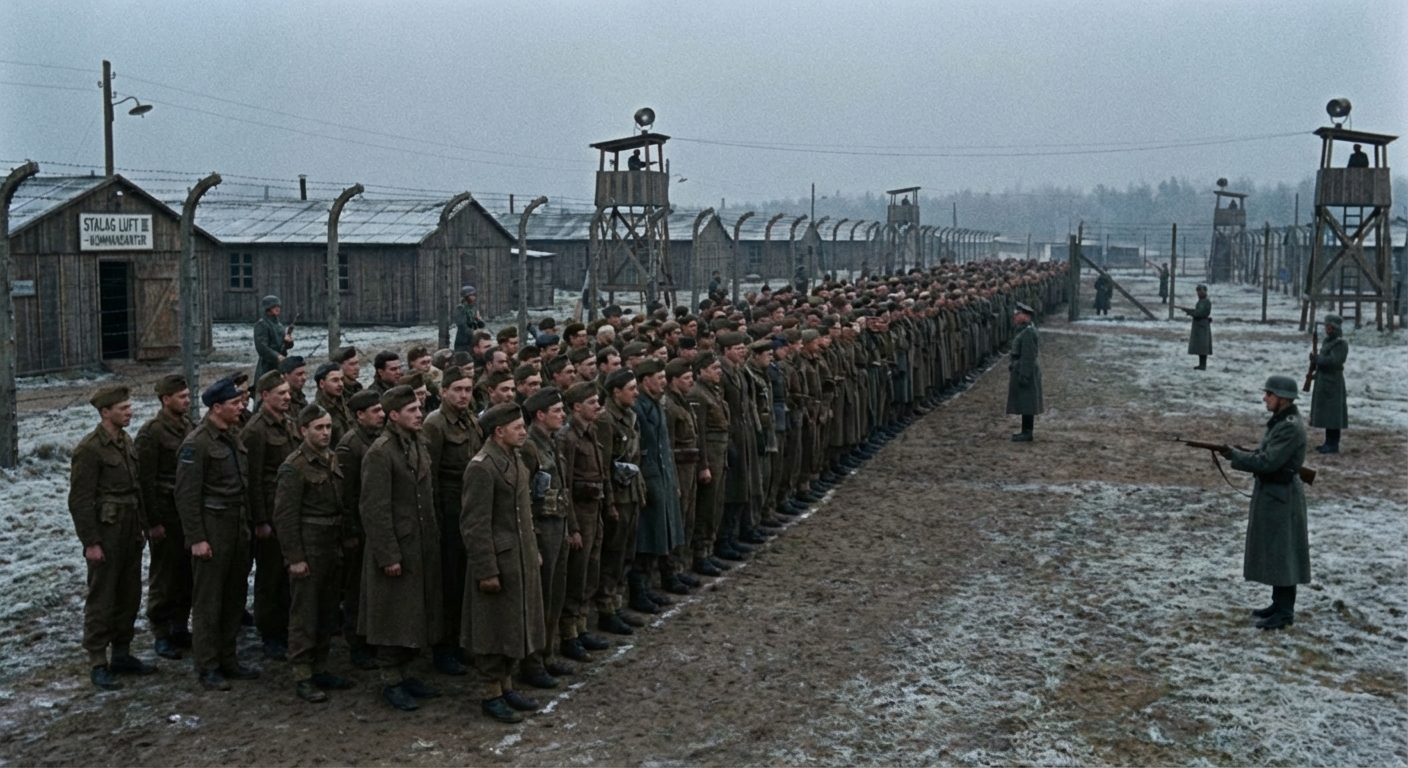
The Great Escape
76 Men Out. 50 Murdered.
POW Tunnels • Forged Papers • WWII Germany
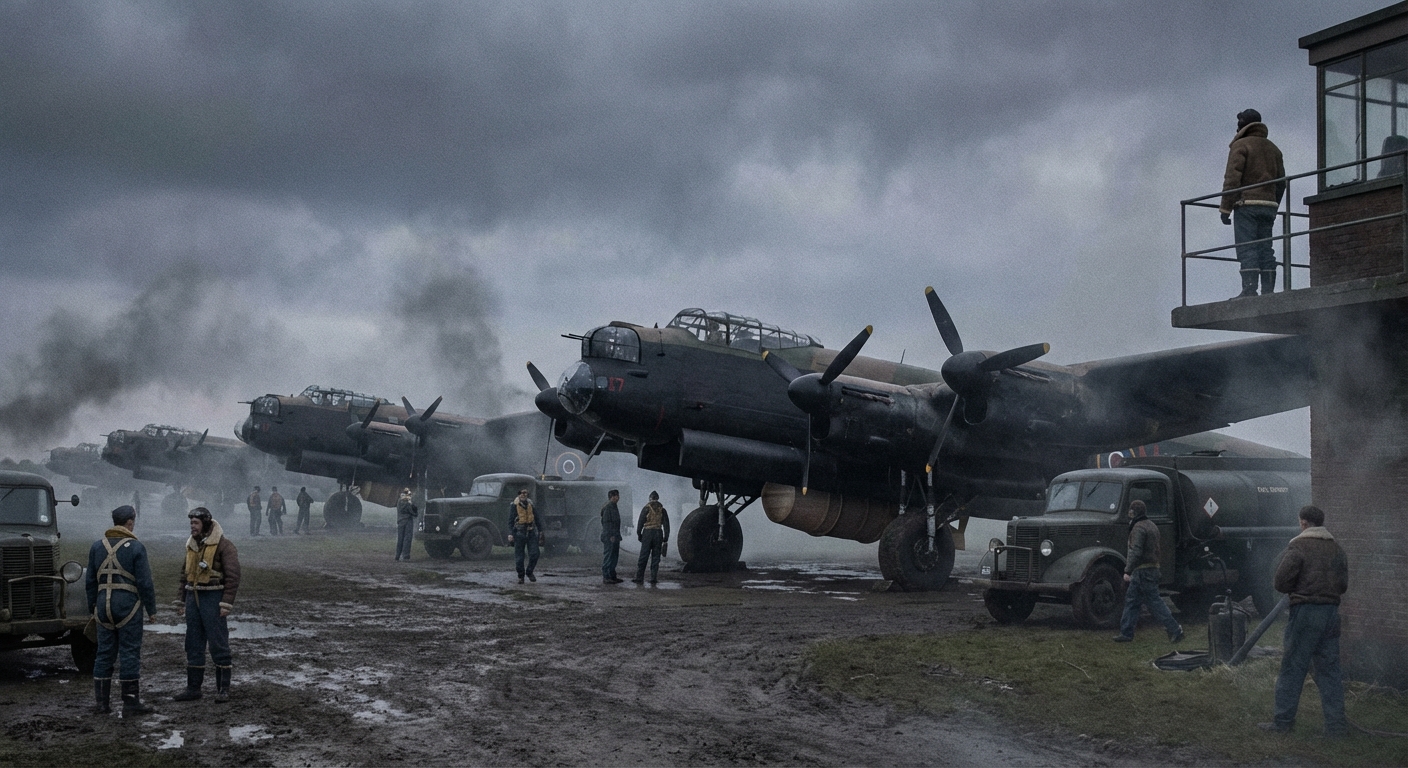
The Dam Busters Raid
Bouncing Bombs at Midnight
RAF • May 1943 • Ruhr Valley
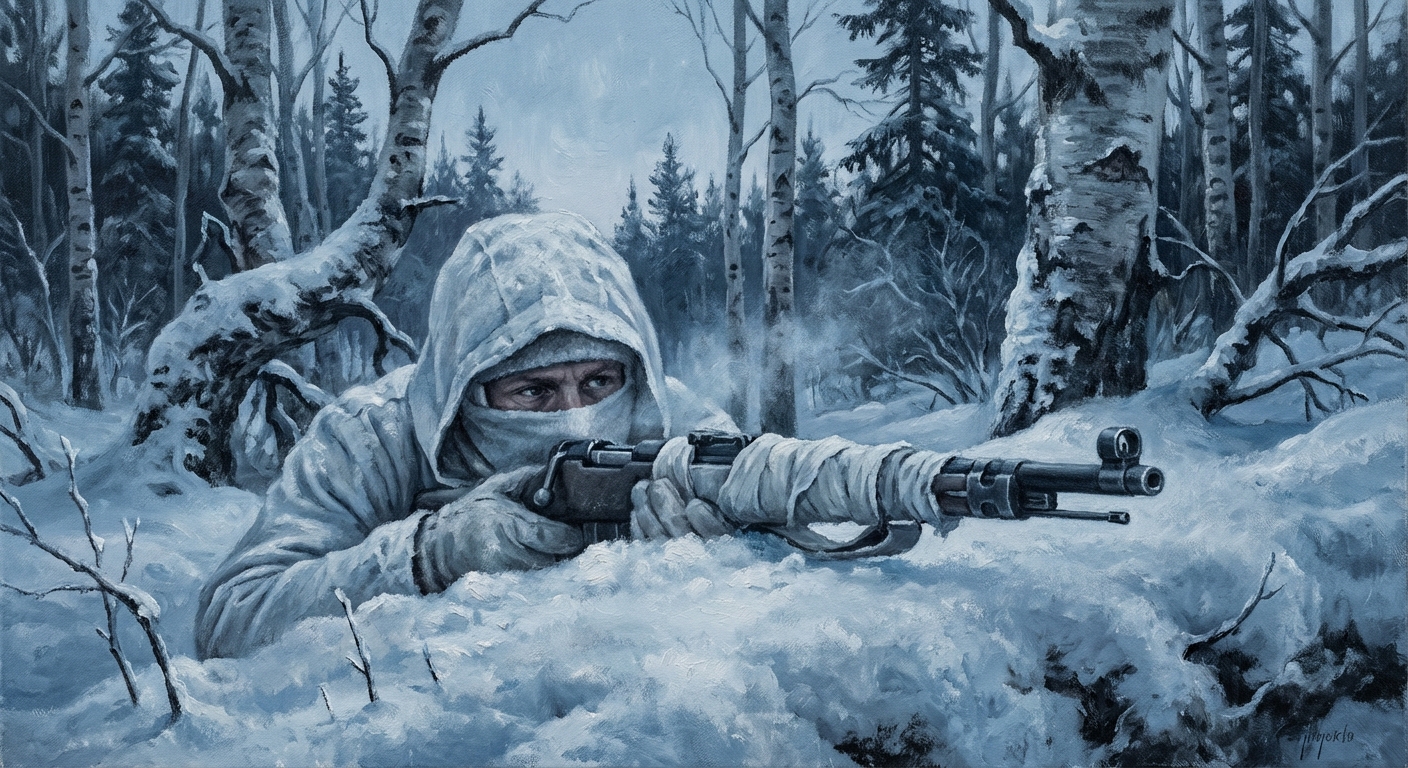
The White Death — Simo Häyhä
505 Kills in 100 Days — Iron Sights, No Scope
1939–1940 • Deadliest Sniper in History
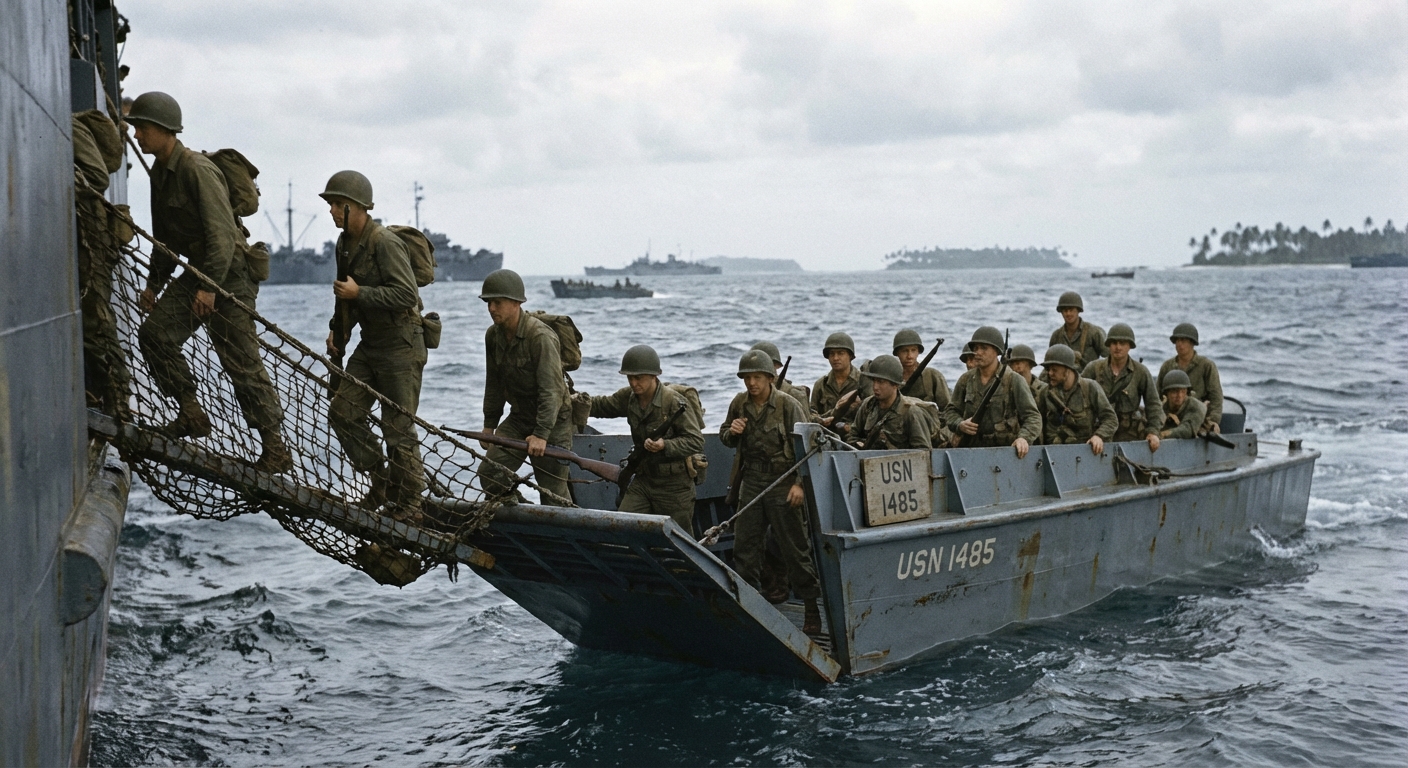
Eugene Sledge at Peleliu
Hell in the Pacific
USMC • Coral Ridges • No Glory
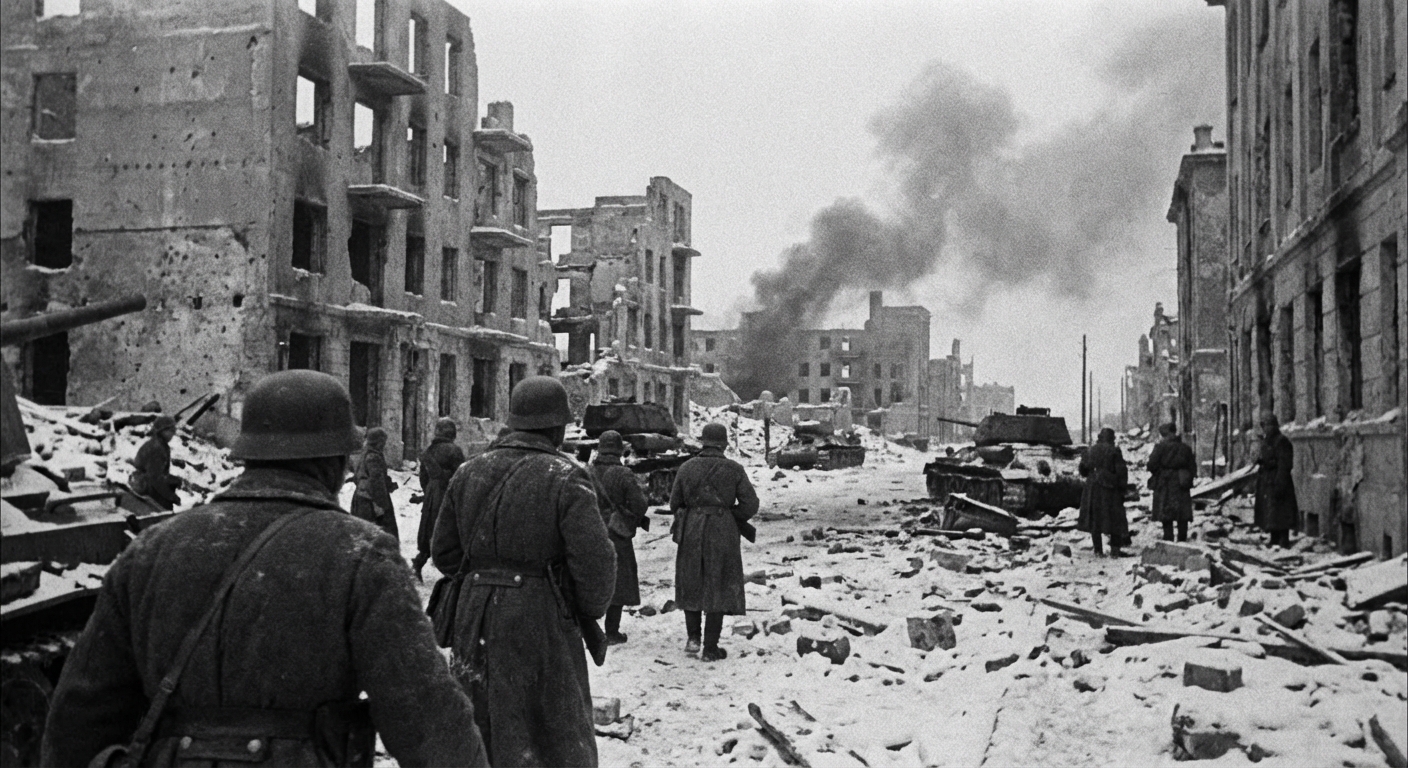
Vasily Zaitsev
Sniper in the Ruins
Red Army • Urban Hell • Legend
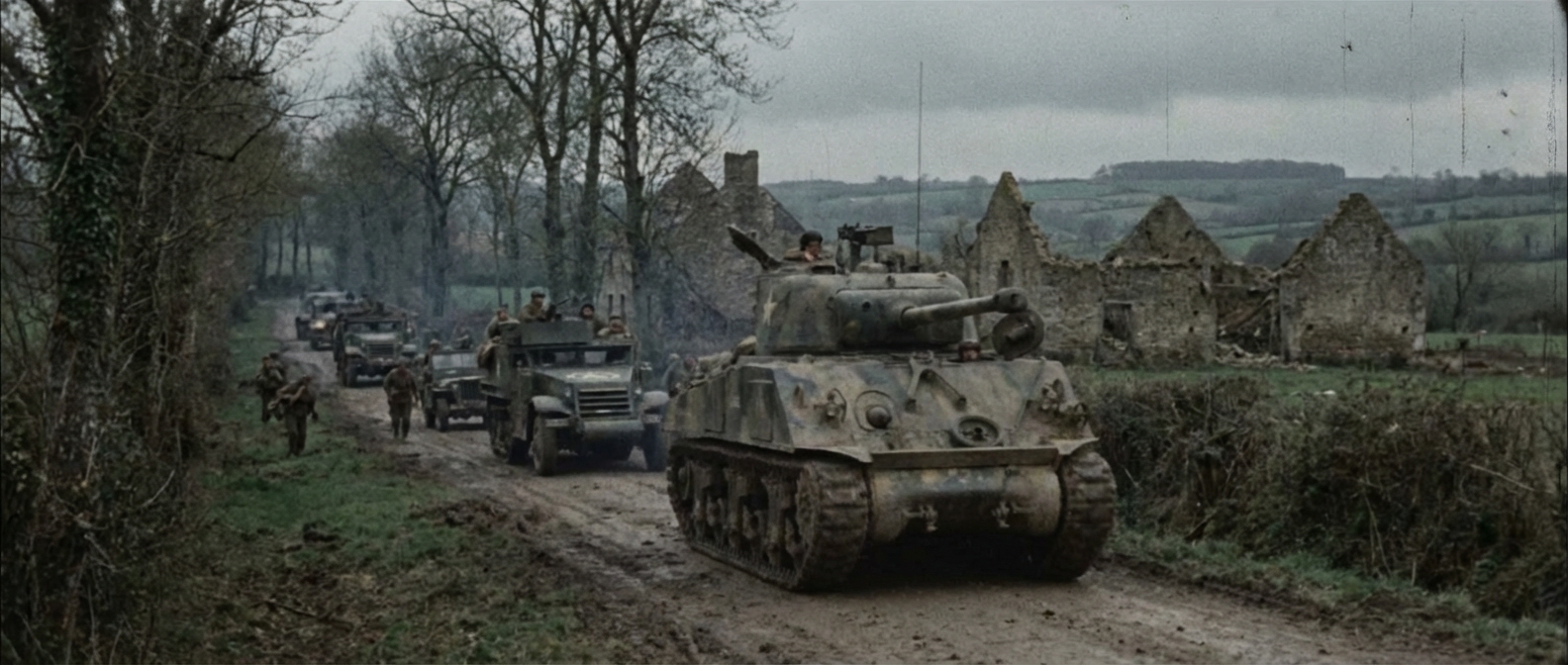
Lafayette G. Pool
America's Deadliest Tank Commander
3rd Armored • Sherman • France 1944
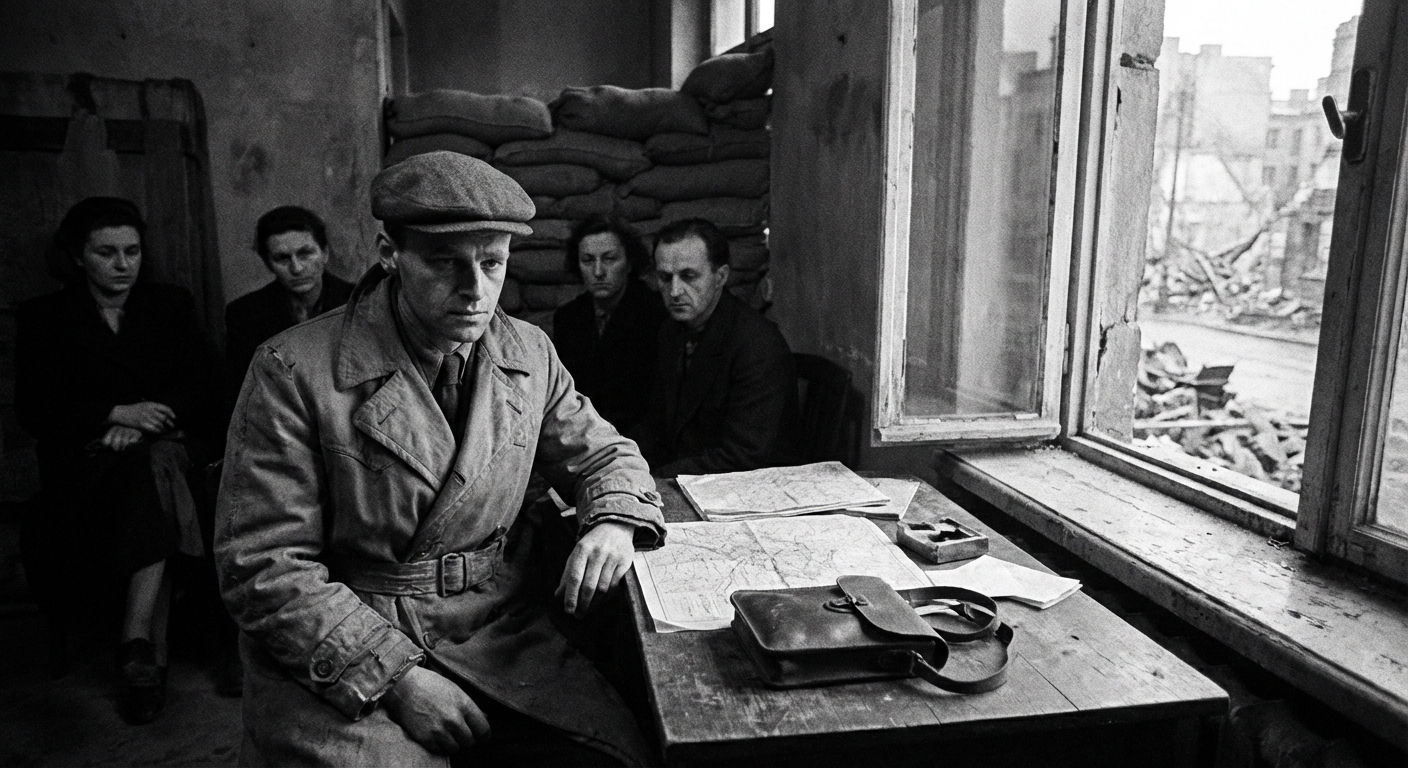
Witold Pilecki
The Man Who Volunteered
Polish Underground • Intelligence • Escape
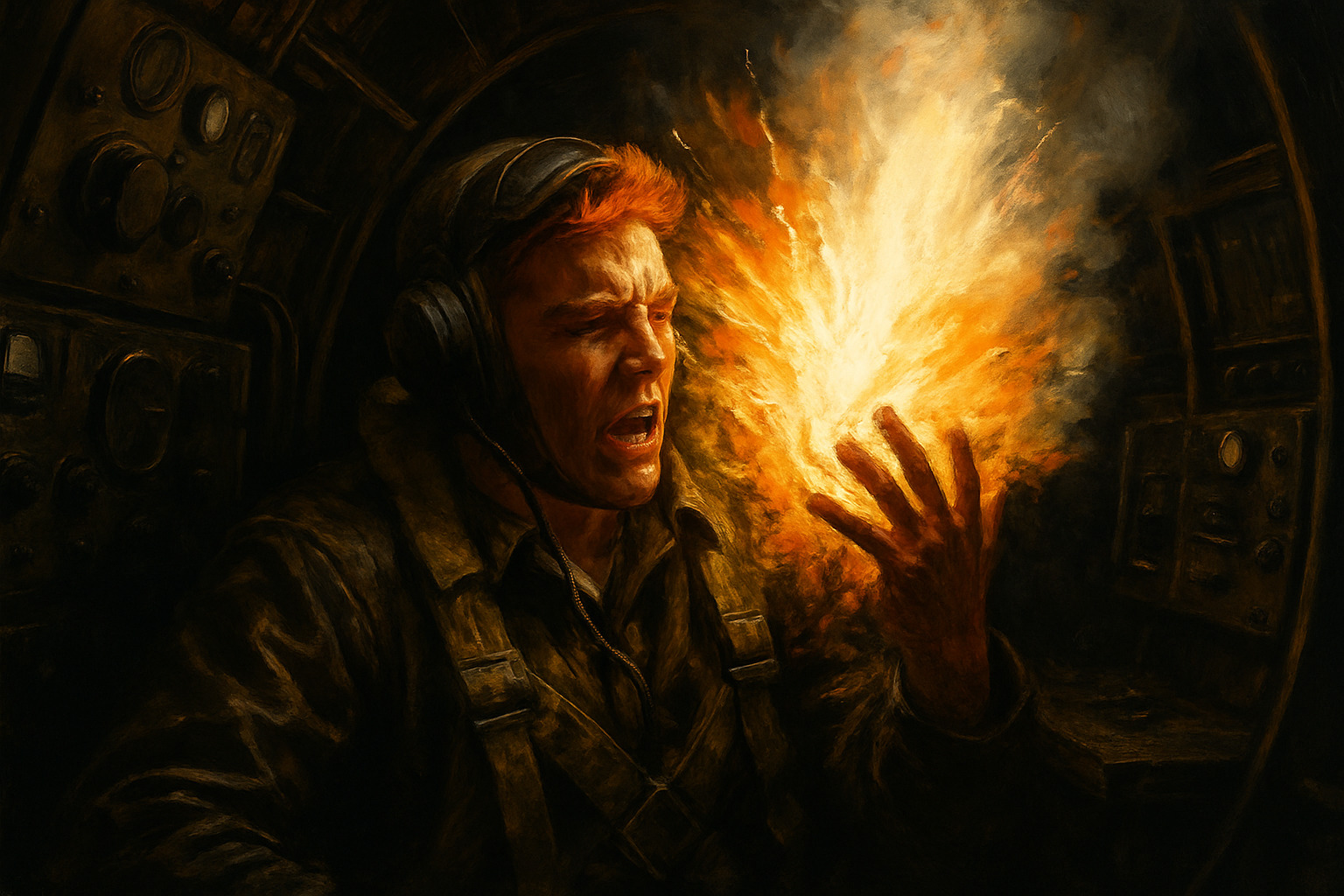
The Burning Angel of Koriyama
Red Erwin carries a burning phosphorus canister through a B-29.
April 12, 1945 Koriyama Raid
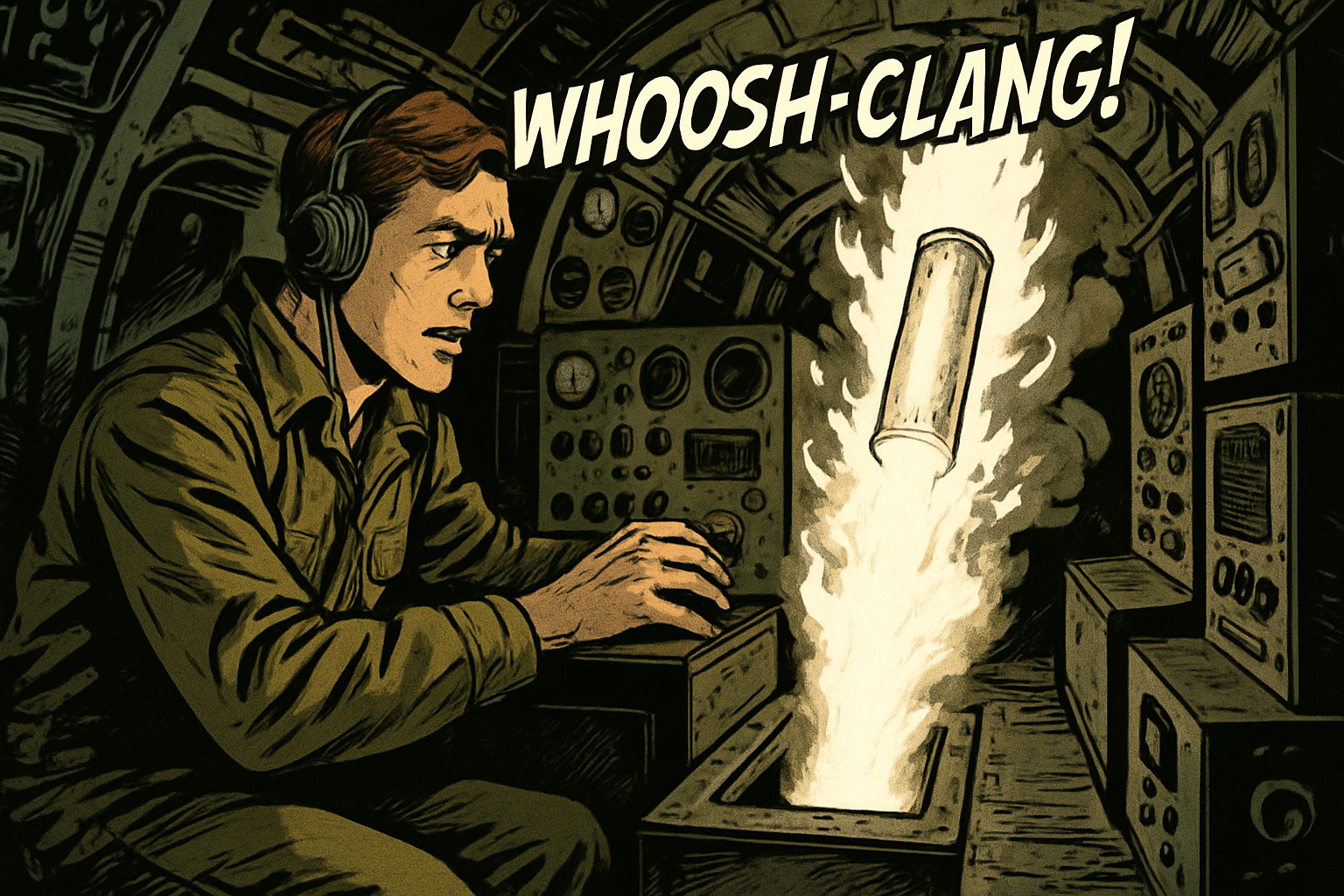
The Human Torch of the Pacific
Henry E. Erwin saves his B-29 crew while blinded and burning.
April 12, 1945 20th Air Force
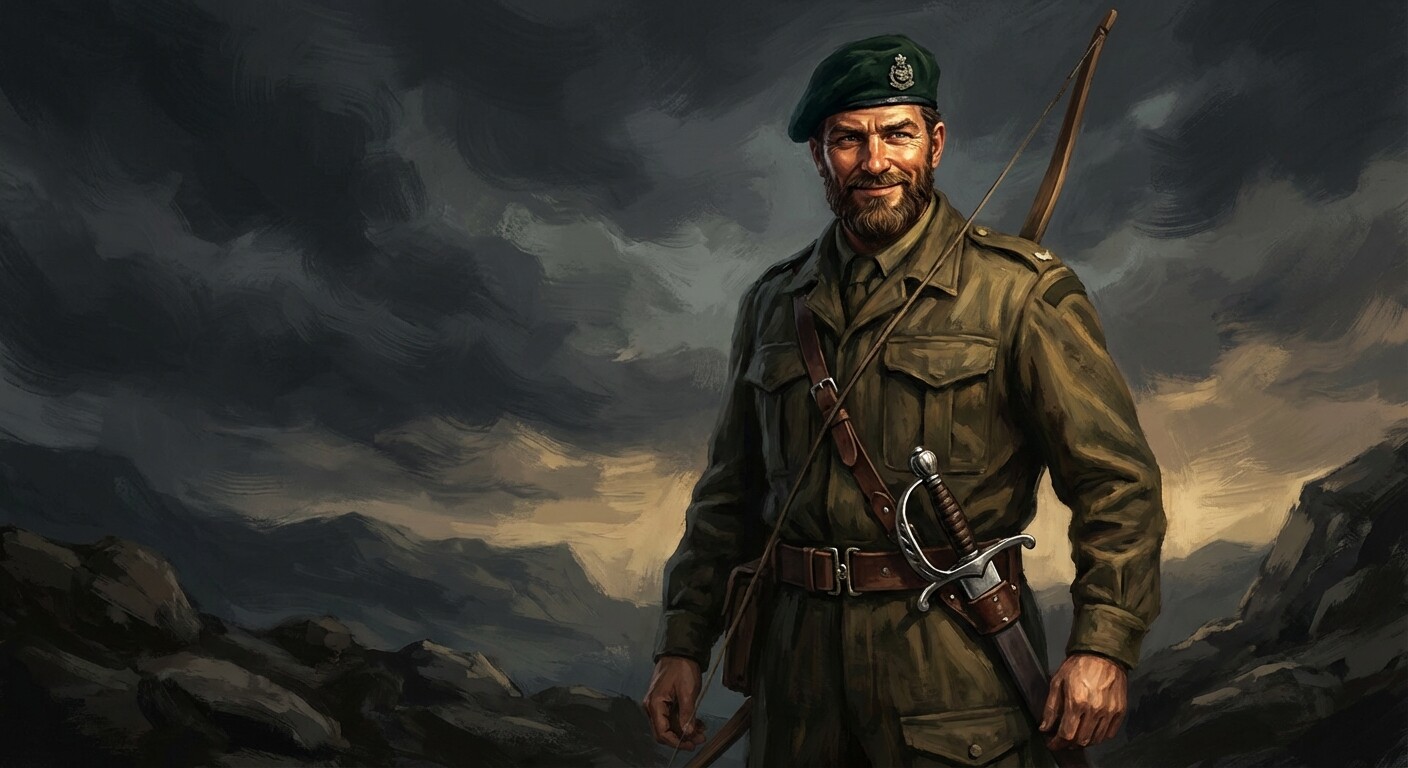
Mad Jack Churchill
The officer who went to World War II with a longbow, sword, and bagpipes.
1940-1945 British Commandos
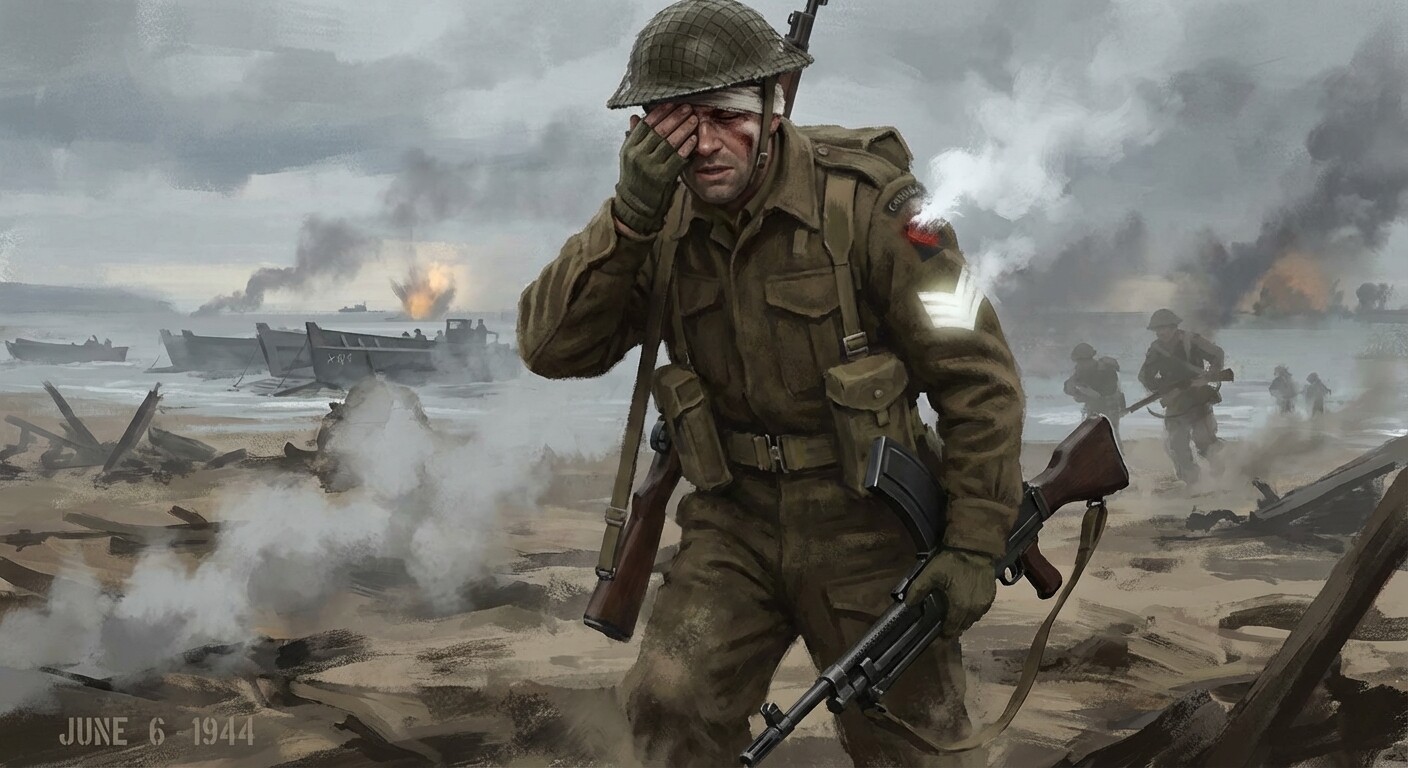
The One-Eyed Ghost
Lo Major loses an eye, refuses evacuation, and later helps liberate Zwolle.
1944-1945 Netherlands
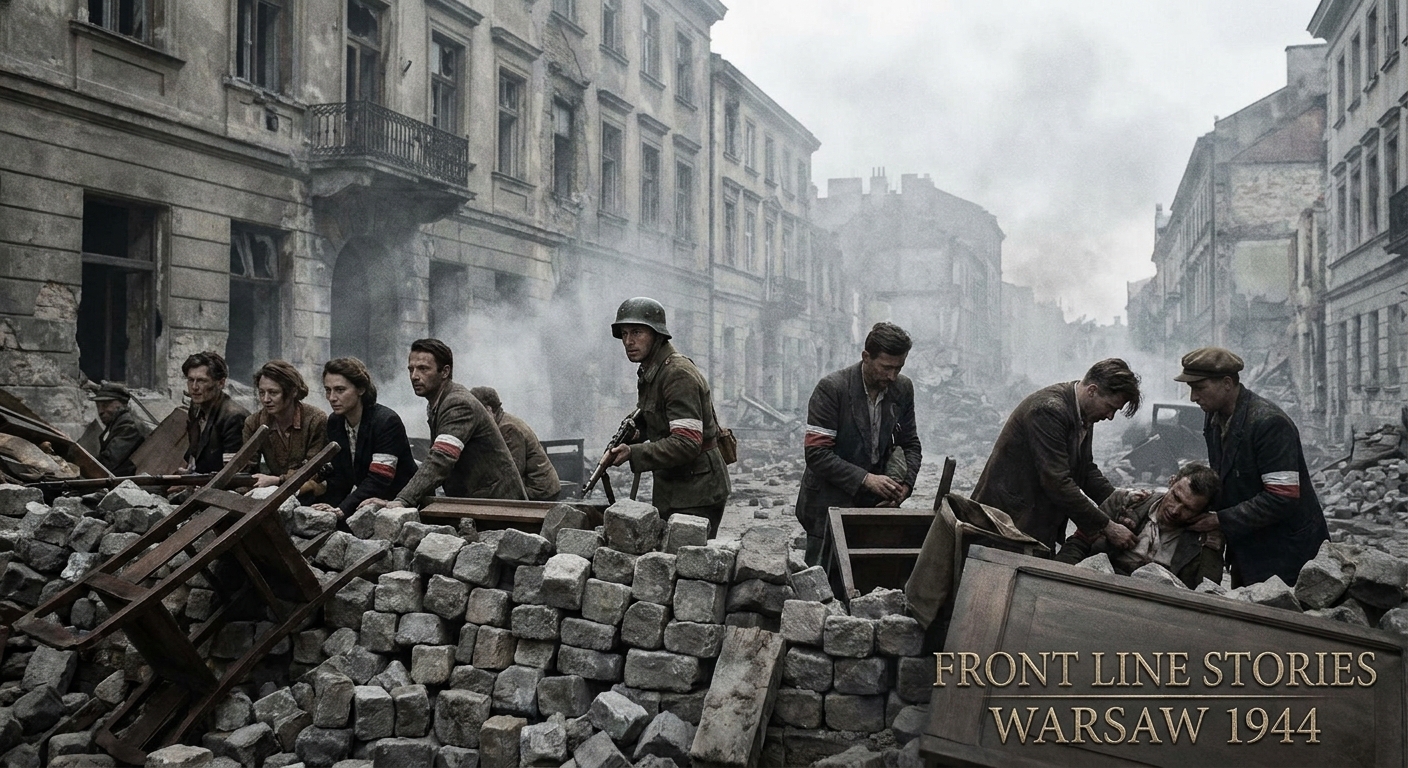
The Warsaw Uprising
A City Fights Alone
Aug-Oct 1944 • Warsaw, Poland
7 stories
Vietnam War
Air mobility, siege warfare, jungle terrain, and the changing shape of the war.
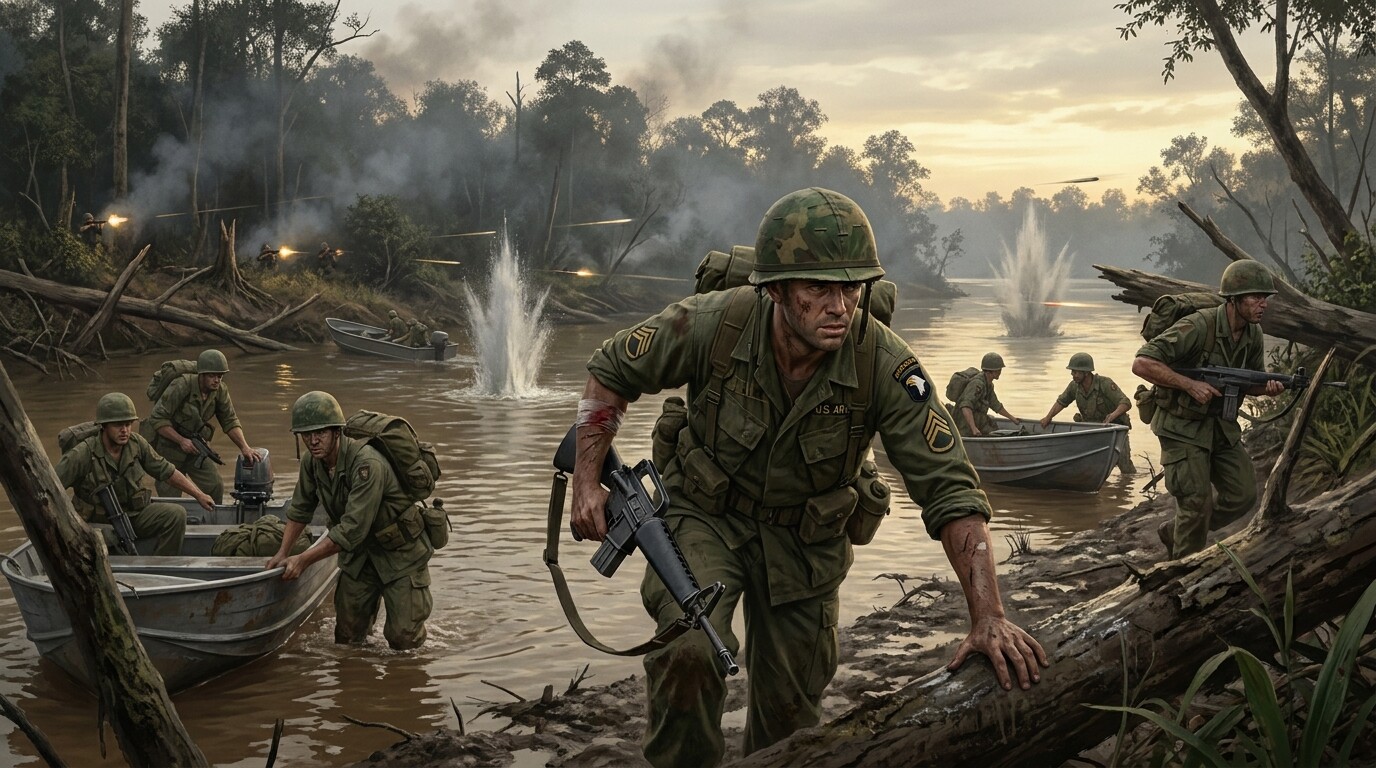
The Man Who Would Not Stop: Staff Sergeant Joe Hooper at Hue, 1968
On February 21, 1968, Staff Sergeant Joe Hooper of the 101st Airborne Division led his squad through a day of sustained close combat along a waterway south of Hue during the Tet Offensive. Wounded early and repeatedly, he cleared fortified enemy positions, carried casualties from exposed ground to safety, and continued the assault until his platoon's objectives were taken — an action for which he received the Medal of Honor.
February 21, 1968 • Near Hue, South Vietnam
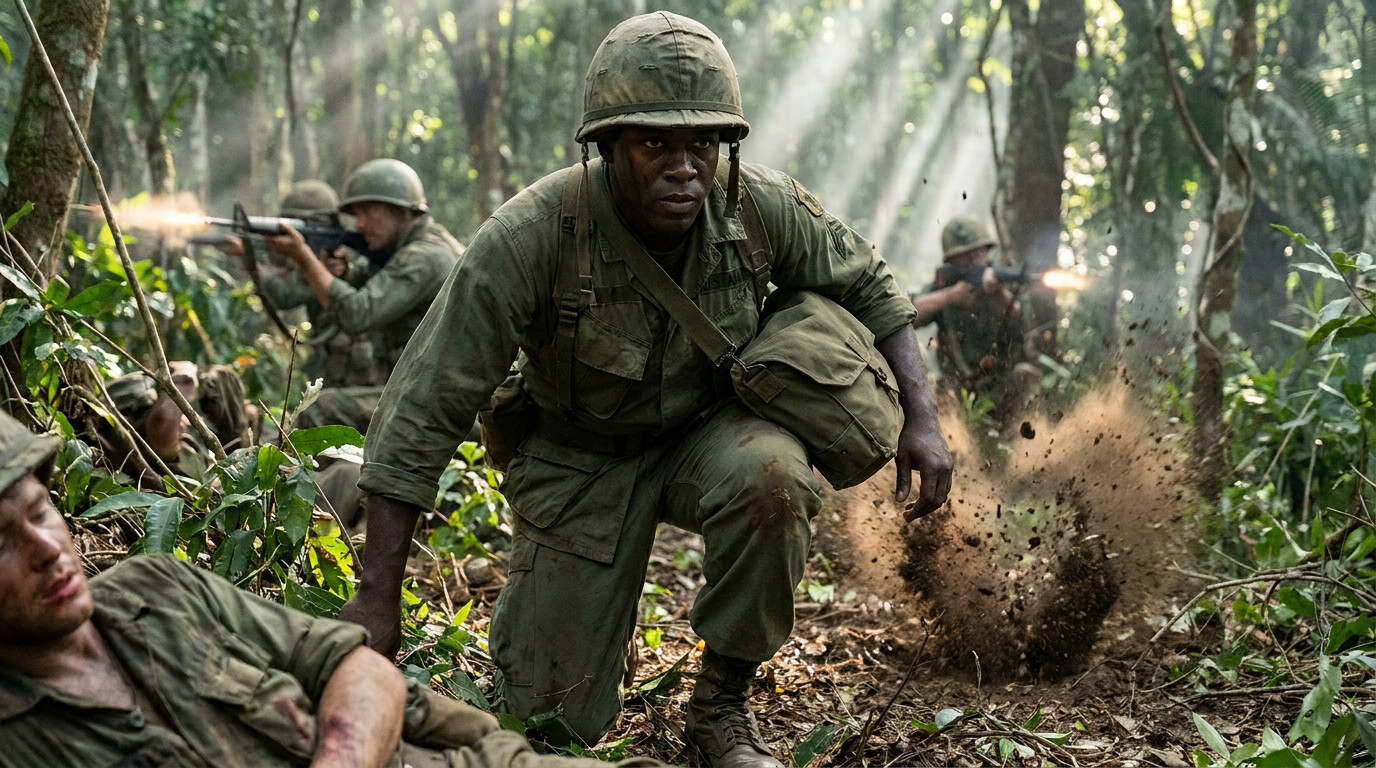
One Medic, One Ridge, One Day: Lawrence Joel and the Battle of War Zone D
On November 8, 1965, Army medic Specialist Five Lawrence Joel moved through sustained enemy fire for more than twenty-four hours to treat the wounded of his shattered company in the jungles of War Zone D, South Vietnam. Wounded twice himself, Joel refused evacuation and kept working until the fight was done. His actions earned him the Medal of Honor, making him the first living Black American to receive the nation's highest military decoration since the Spanish-American War era of 1898.
November 8, 1965 • War Zone D, South Vietnam
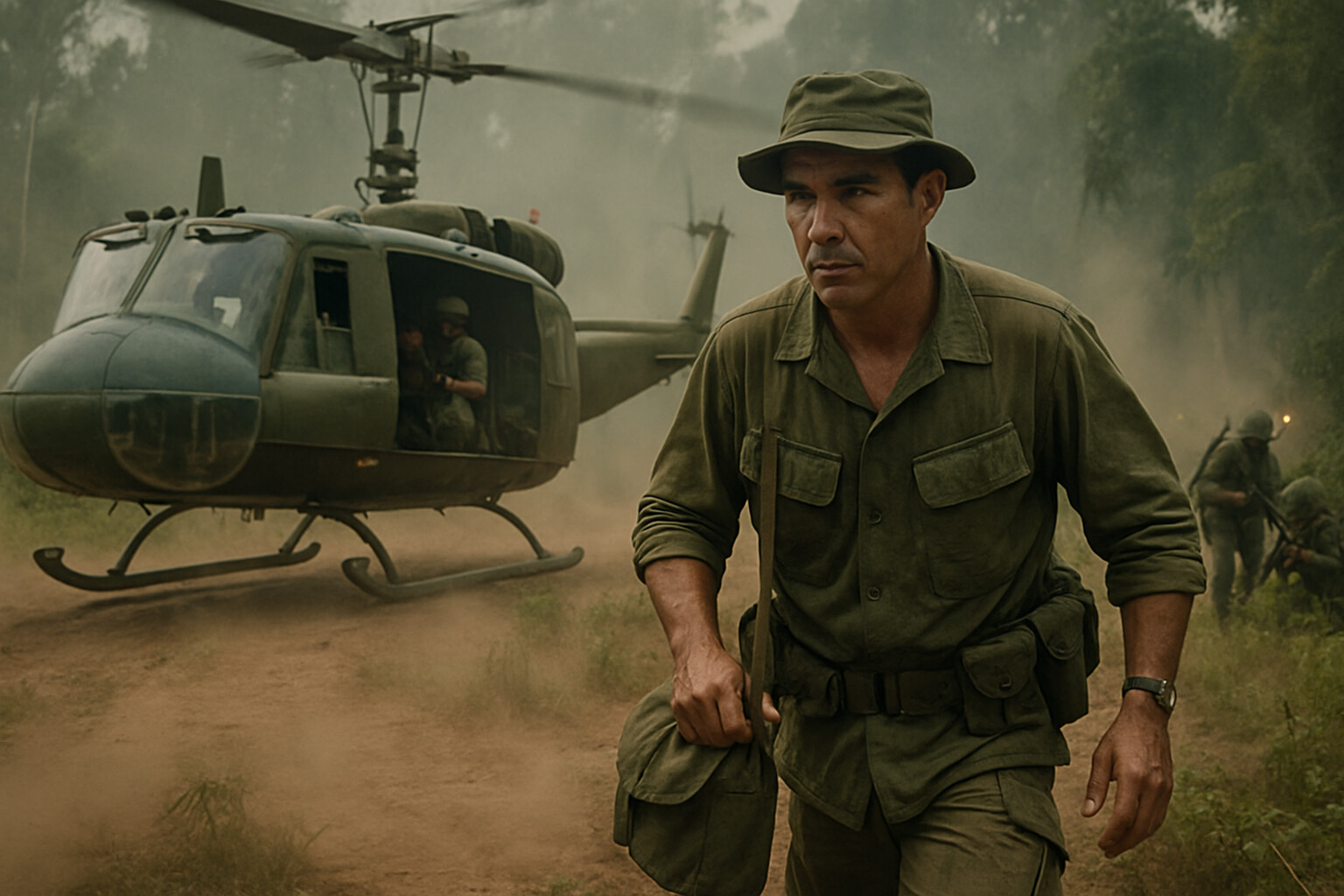
Into the Fire: Roy Benavidez's Six-Hour Battle for Survival
On May 2, 1968, Staff Sergeant Roy Benavidez volunteered to board a rescue helicopter into intense enemy fire to save a surrounded Special Forces team. Despite multiple wounds, he fought for six hours to evacuate casualties and secure classified material.
May 2, 1968 • west of Loc Ninh, South Vietnam
Into the Fire: Ed Freeman's Flight to Save X-Ray
On November 14, 1965, Captain Ed Freeman repeatedly flew his UH-1 Huey into the deadly landing zone at Ia Drang Valley, delivering critical ammunition and evacuating wounded soldiers under intense enemy fire.
November 14, 1965 • Ia Drang Valley, South Vietnam
The Medic Who Wouldn't Leave: Alfred Rascon's March Through Fire
In March 1966, Army medic Alfred Rascon repeatedly exposed himself to enemy fire to save wounded paratroopers in Vietnam, using his body as a shield and refusing evacuation despite multiple wounds.
March 16, 1966 • Republic of Vietnam
Khe Sanh
Marines, air supply, Operation Niagara, and the shadow of Dien Bien Phu
January 21-April 8, 1968 - Quang Tri Province
LZ X-Ray
Hal Moore, Hueys, and the first major U.S. Army clash with PAVN regulars
November 14-16, 1965 - Ia Drang Valley
9 stories
Revolutionary War
Founders, spies, river crossings, militia warfare, and the public risk of rebellion.
The Old Waggoner's Trap: Daniel Morgan and the Battle of Cowpens
On January 17, 1781, Continental Brigadier-General Daniel Morgan turned a cattle pasture in the South Carolina backcountry into a killing ground for Banastre Tarleton's feared British Legion. Using militia psychology and double envelopment, Morgan produced one of the most tactically complete American victories of the Revolutionary War.
1781 • Cowpens, South Carolina
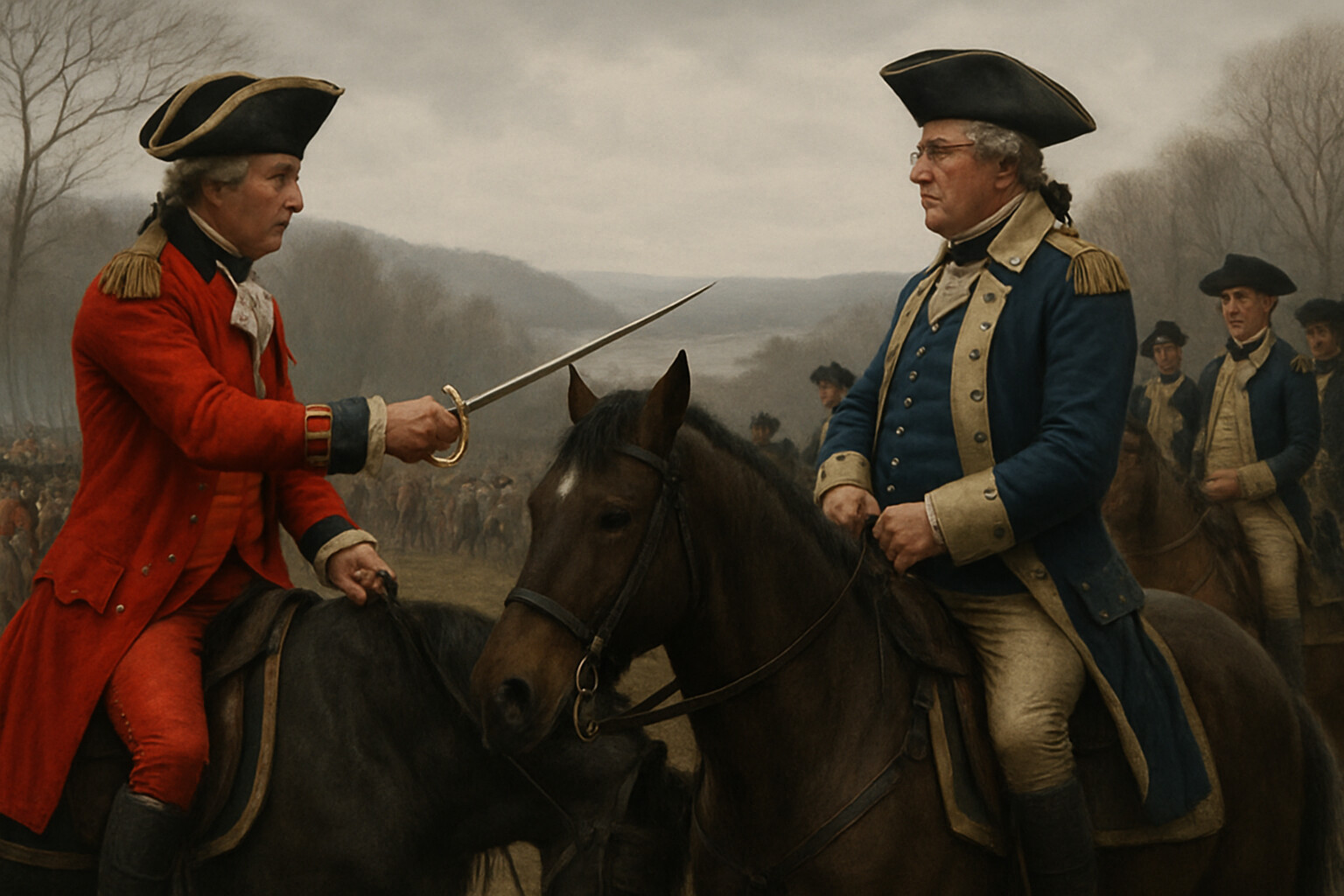
The Autumn Trap: Saratoga and the Decision That Changed the Revolution
In the autumn of 1777, Major-General Horatio Gates commanded a growing Continental Army along fortified bluffs above the Hudson River, drawing a British invasion force deeper into a position it could not escape. The twin battles of Saratoga—Freeman's Farm on September 19 and Bemis Heights on October 7—ended with the surrender of an entire British army under Lieutenant-General John Burgoyne, a catastrophe that convinced France to enter the war as an open American ally and fundamentally altered the course of the Revolution.
1777 • Saratoga, New York
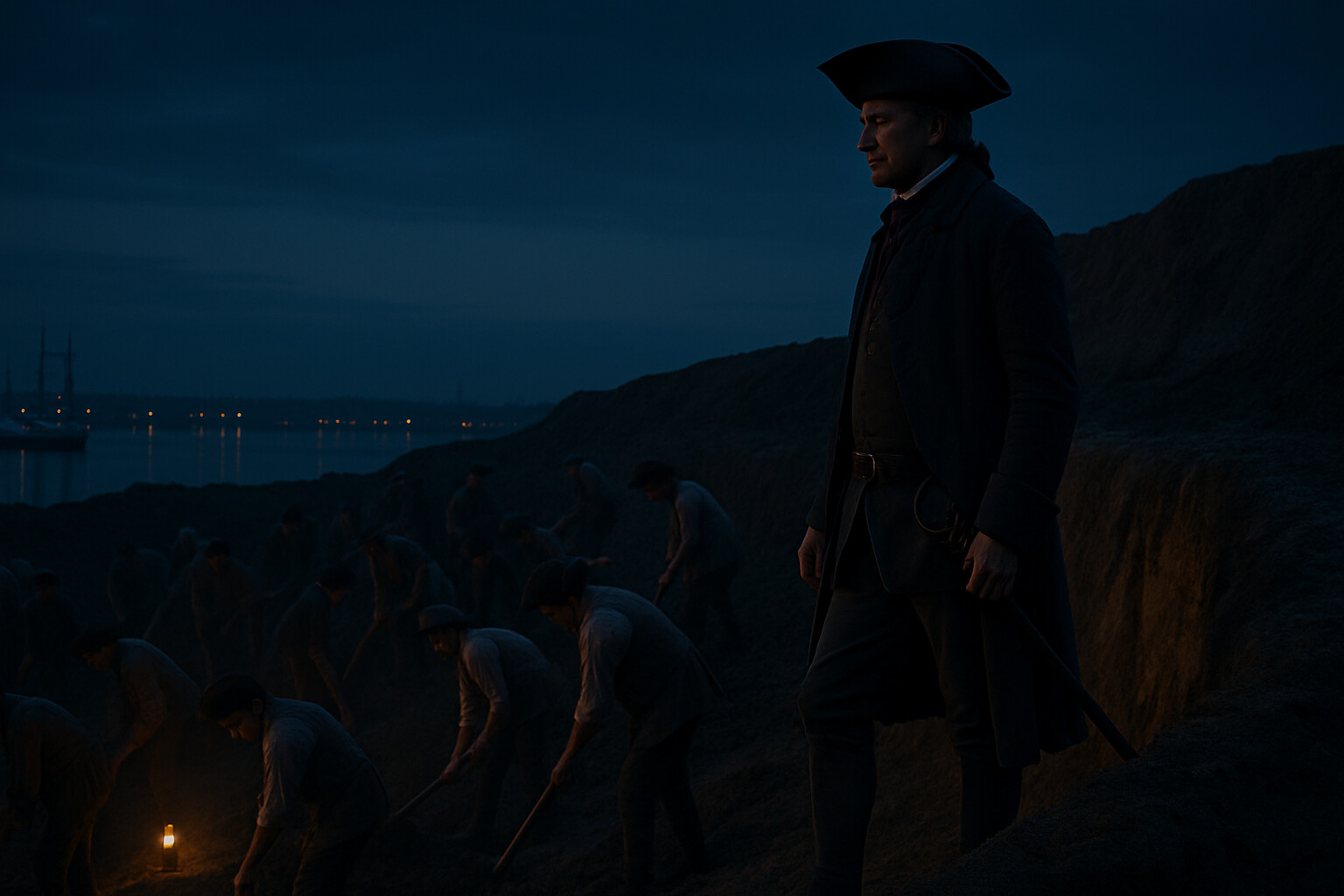
Hold Until the Last: William Prescott and the Redoubt on Breed's Hill
On June 17, 1775, Colonel William Prescott led a force of Massachusetts militia in fortifying and defending a position on the Charlestown peninsula against three determined assaults by British regulars. Outgunned, undersupplied, and ultimately out of powder, the colonists inflicted losses on the Crown's forces that shocked the British command and forced a hard reassessment of the war they had assumed would be brief. The battle that history misnamed Bunker Hill became the first clear measure of what the rebellion was willing to cost.
1775 • Charlestown, Massachusetts
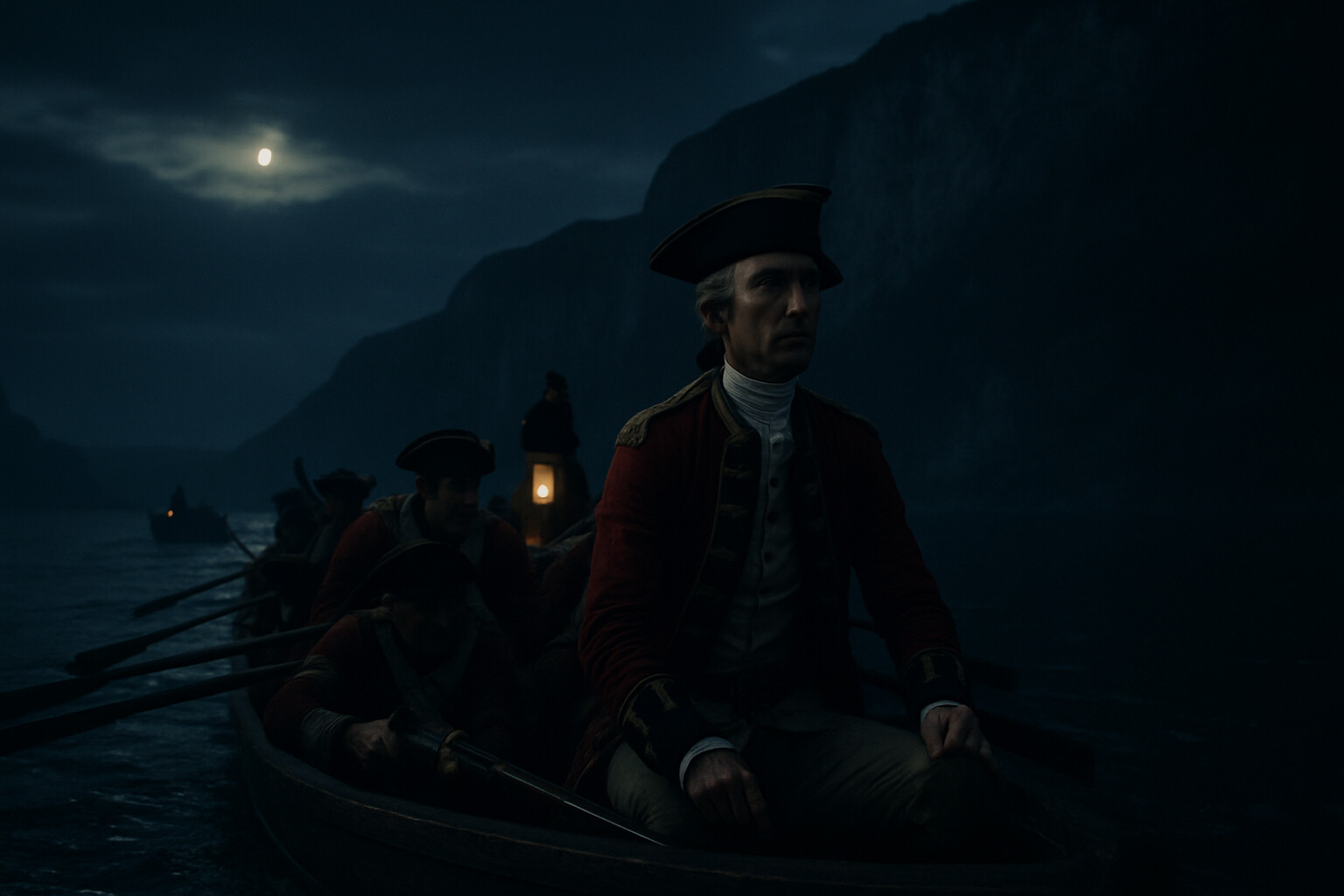
The Cliffs at Midnight: Wolfe and the Battle for Quebec
In the early hours of September 13, 1759, British Major-General James Wolfe led his army up the treacherous cliffs west of Quebec in a night operation with no guarantee of success. What followed on the Plains of Abraham lasted barely fifteen minutes of open fighting—but decided the fate of a continent. Neither commander survived to hear the terms of surrender.
1759 • Quebec, New France
Henry Knox — Noble Train of Artillery
Fifty-nine guns, 119,000 pounds, and the winter haul that broke Boston.
1775-1776 • Ticonderoga to Cambridge • 300 miles
Treason in Ink — The Declaration Signers
Fifty-six public names placed under British law's death sentence.
July 1776 • Philadelphia — Lives, fortunes, sacred honor
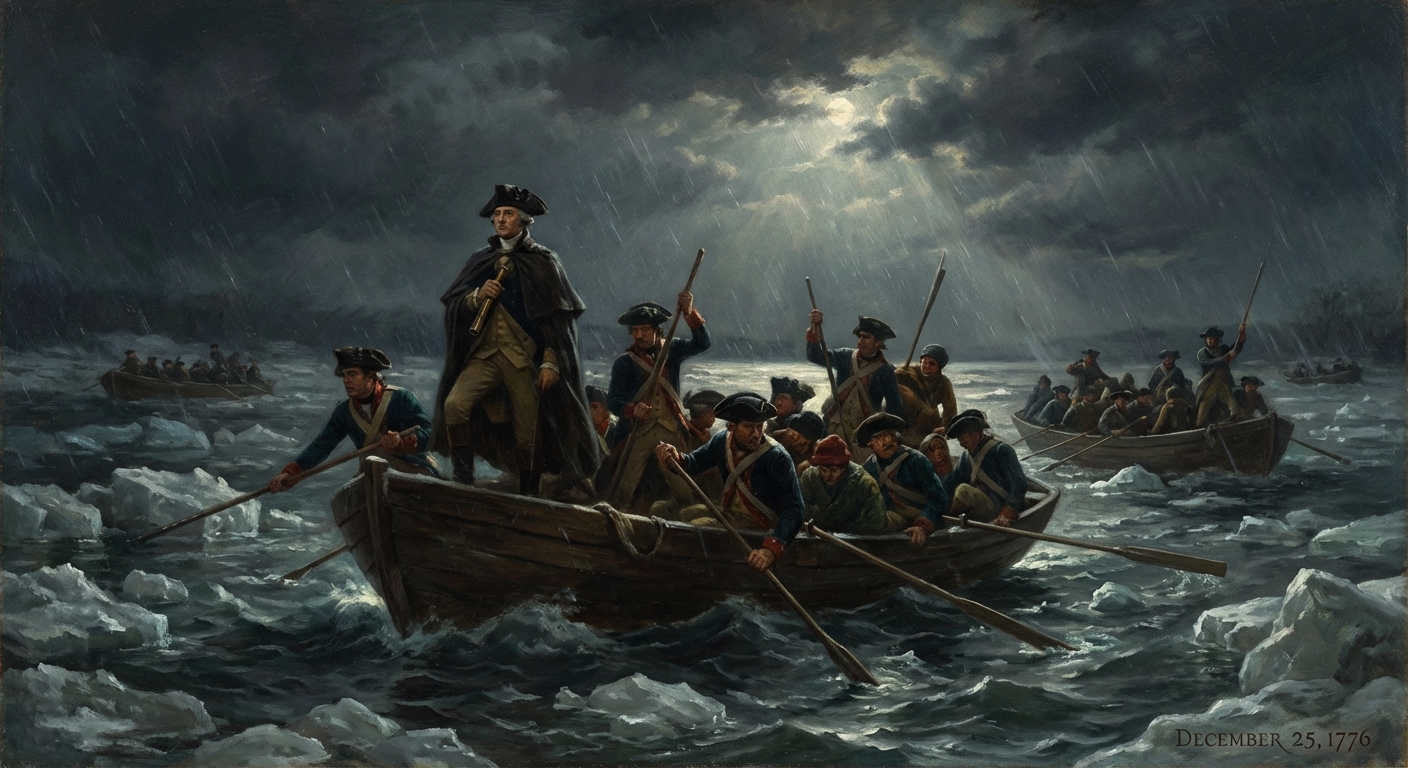
The Crossing — Washington's Gamble at Trenton
Gen. George Washington — Continental Army
Dec 25-26, 1776 • 0 KIA, 900 Hessians captured
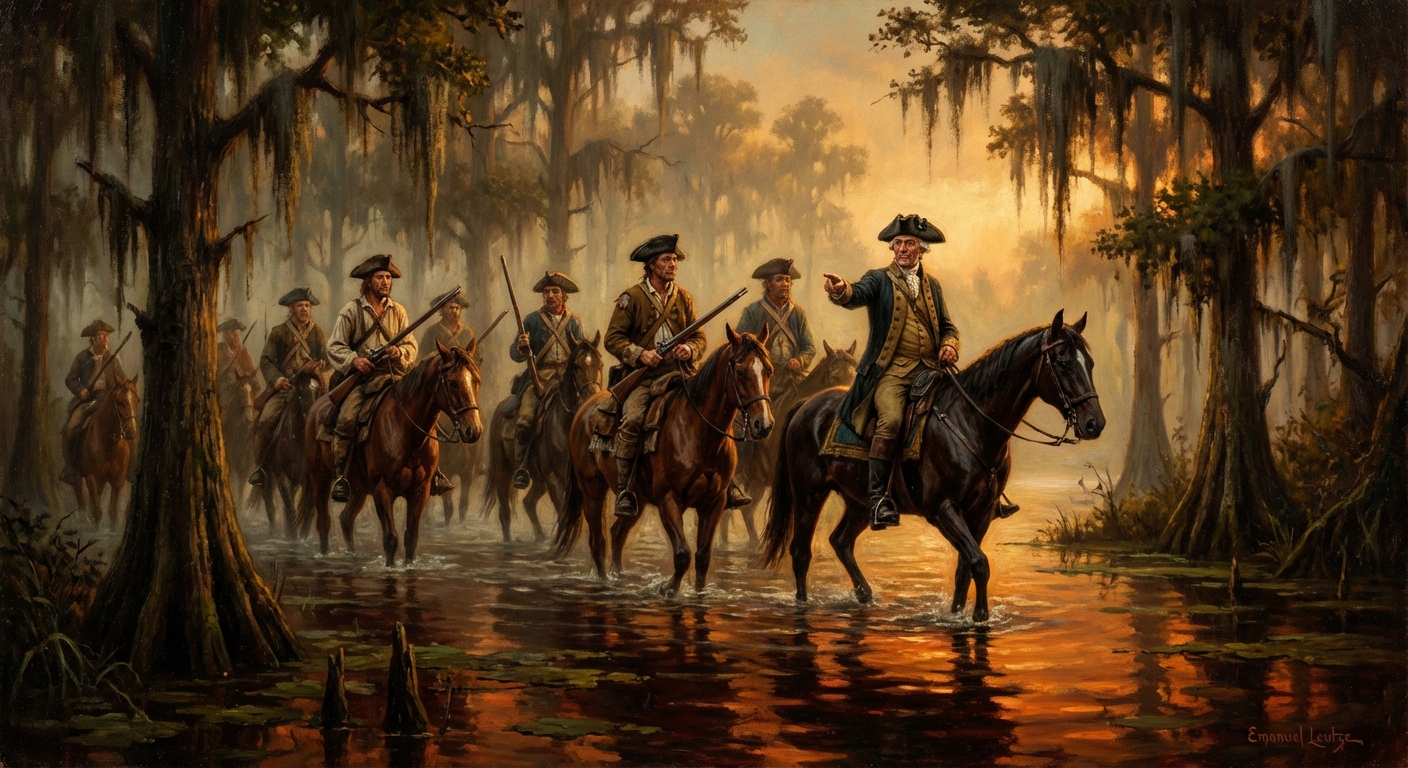
The Swamp Fox — Francis Marion
BGen Francis Marion — South Carolina Militia
1780–1782 • South Carolina — Father of American Rangers
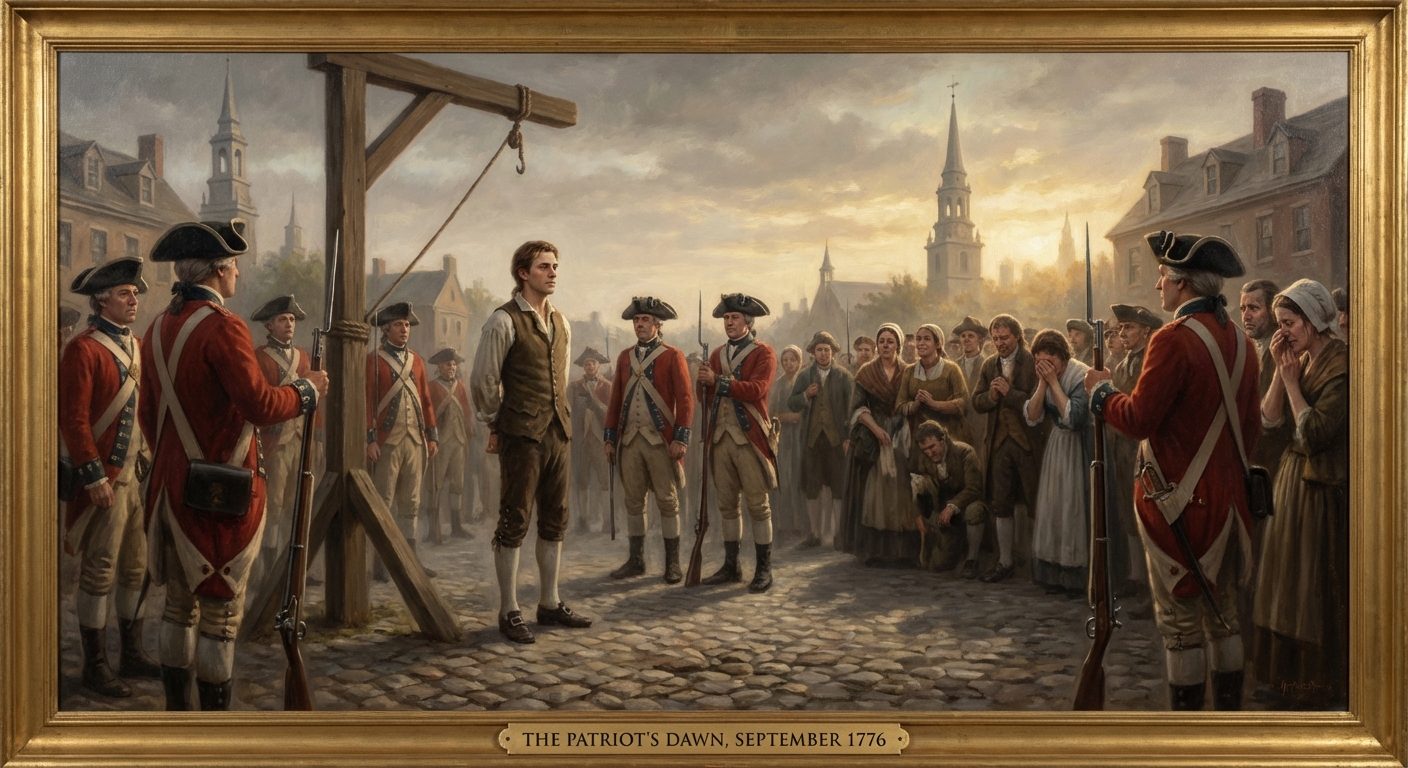
One Life to Lose — Nathan Hale
America's First Spy — The Only Volunteer
Sep 22, 1776 • Age 21 • Executed by British
60 stories
Ancient, Medieval & Early Modern
Classical last stands, medieval sieges, steppe conquest, and the great early-modern battles of the gunpowder age.
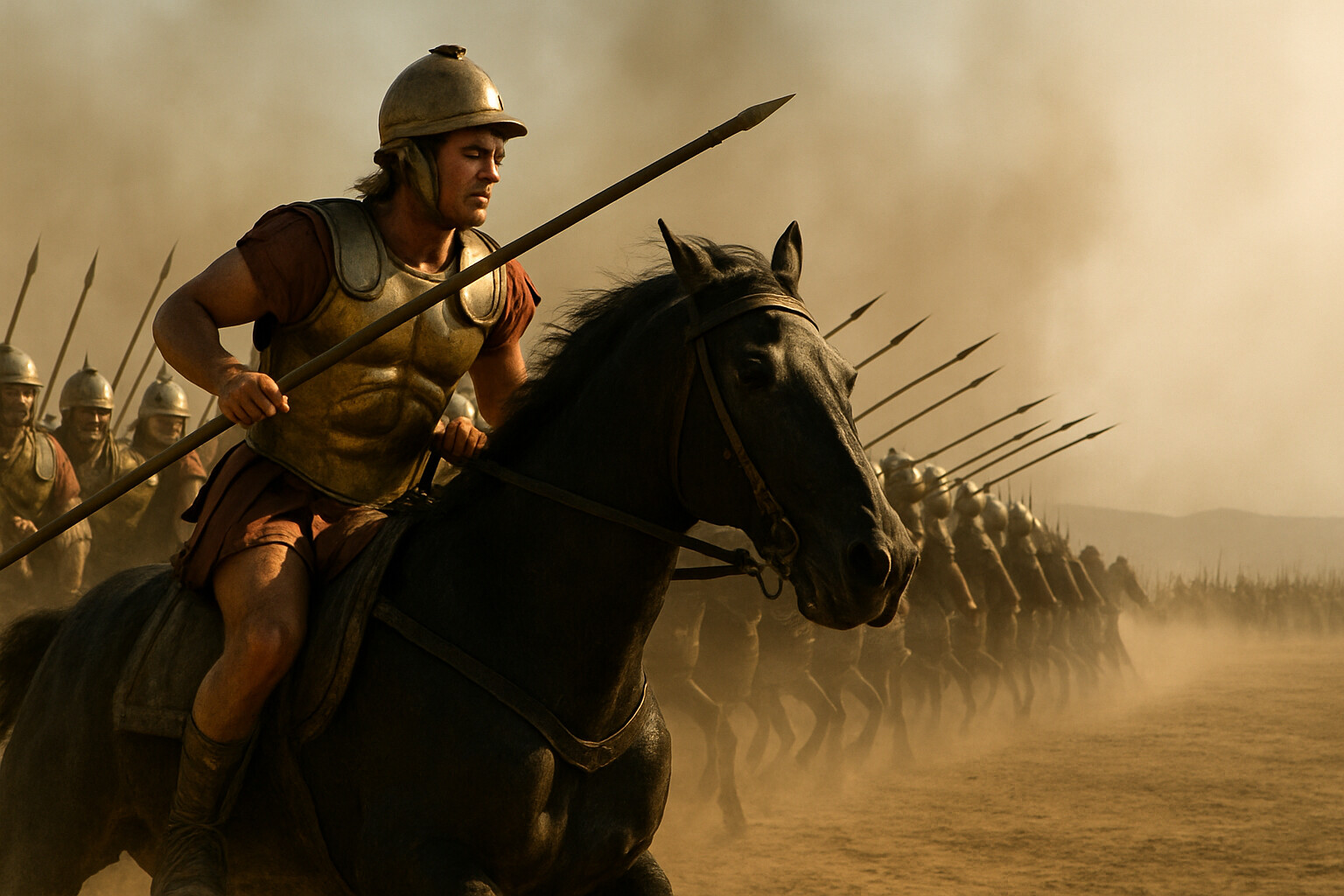
The Gap in the Line: Alexander at Gaugamela
On 1 October 331 BC, Alexander III of Macedon faced an enormous Persian army on a flat, prepared plain near Gaugamela. Rather than be enveloped by superior numbers, he advanced obliquely toward a seam in the Persian line, then drove his Companion cavalry directly at King Darius III—forcing the collapse of the Achaemenid Empire's last coherent field army.
331 BC • Gaugamela (near Mosul, Iraq)
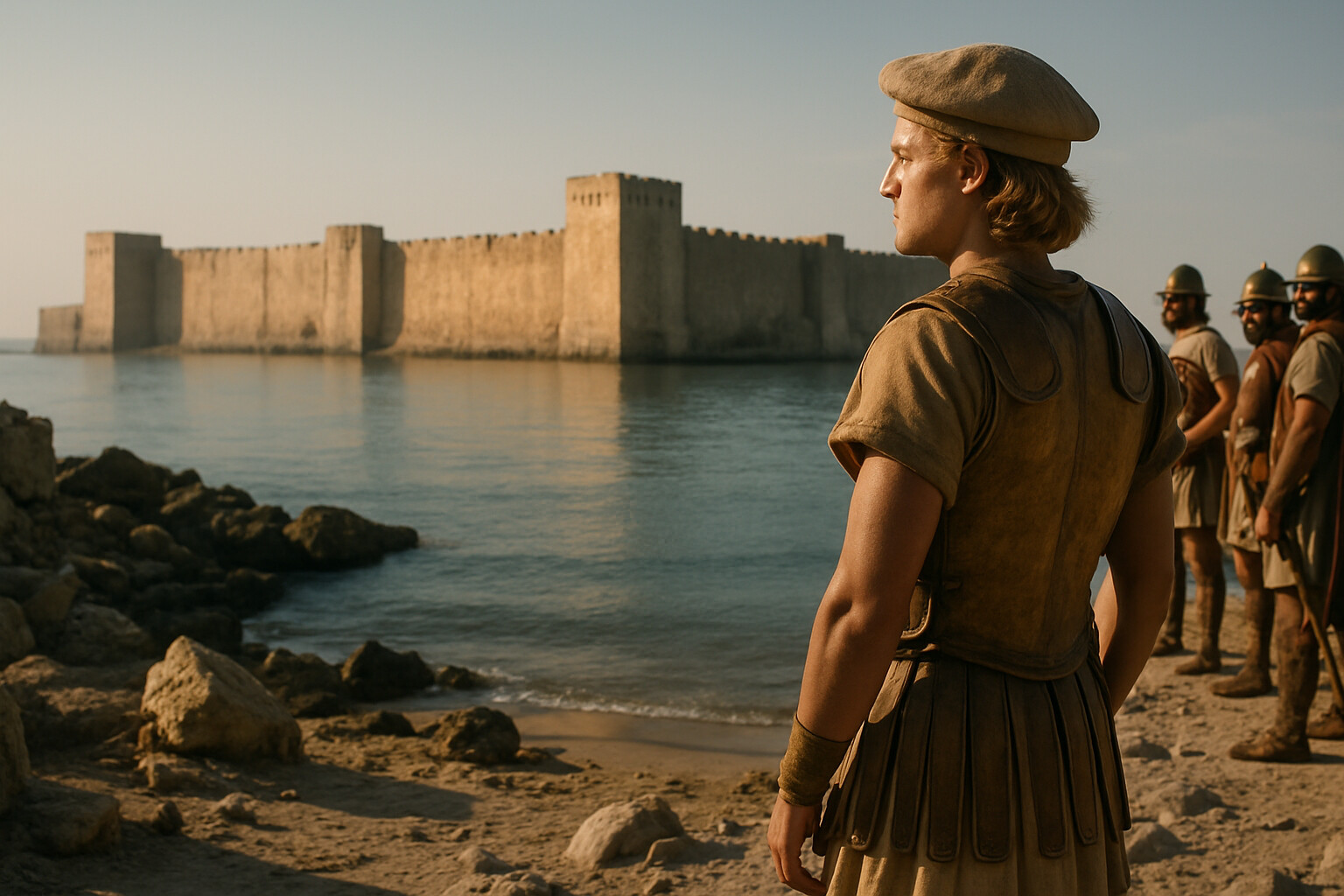
Sea Made Stone: Alexander's Causeway at Tyre
In 332 BC, the island city of Tyre refused to open its gates to Alexander the Great, calculating that the sea would protect it. Alexander responded by ordering his engineers to fill the sea itself—building a stone causeway directly to the city's walls across a channel nearly a kilometer wide. What followed was a seven-month siege combining unprecedented engineering, naval warfare, and coordinated assault that ended in the destruction of one of the ancient Mediterranean's greatest trading cities—and permanently altered the coastline of what is now Lebanon.
332 BC • Tyre, Phoenicia (Lebanon)
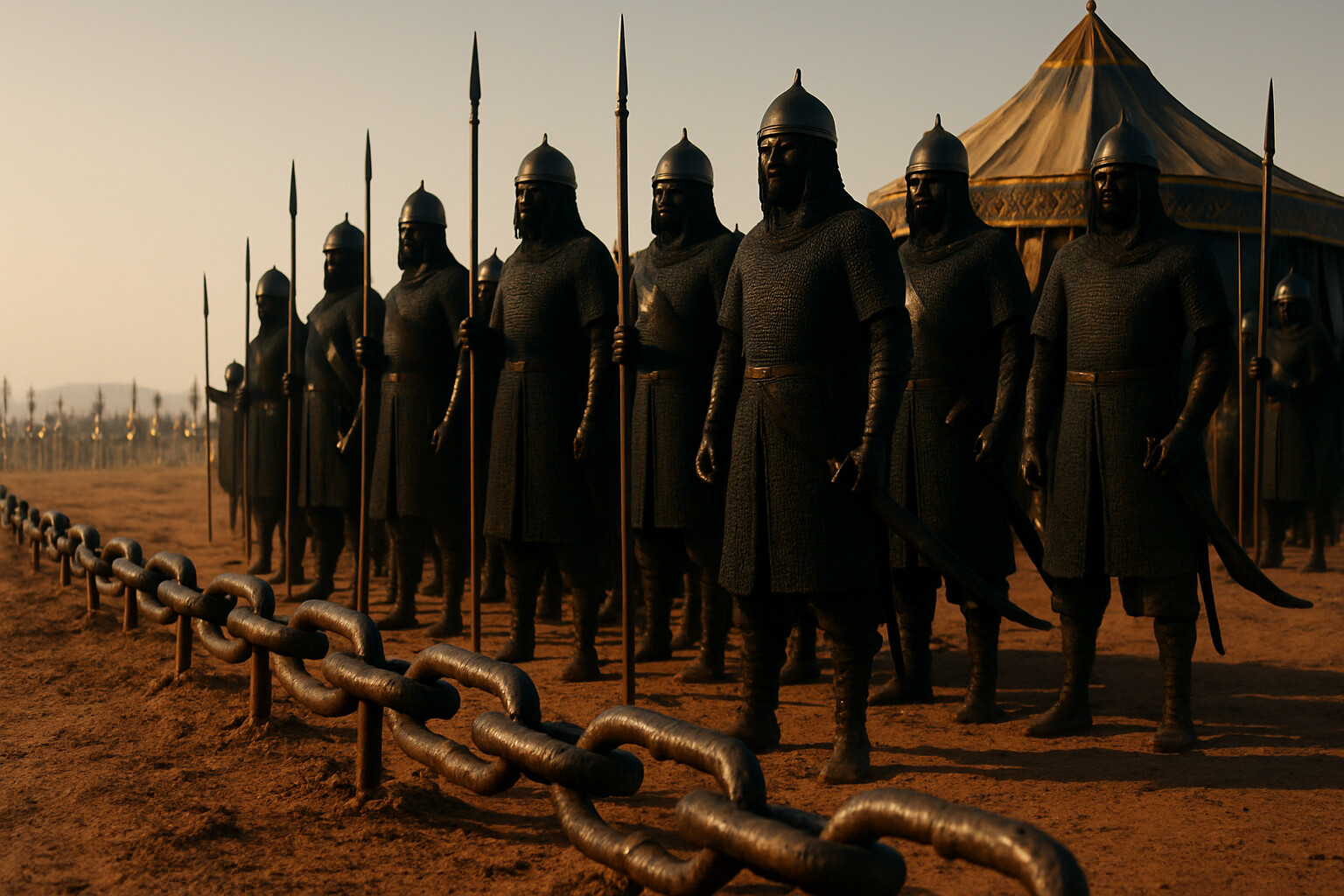
The Breaking of the Crescent: Alfonso VIII and the Battle of Las Navas de Tolosa
In July 1212, King Alfonso VIII of Castile led a coalition of Christian Iberian kingdoms and crusading volunteers through the mountain passes of Andalusia and shattered the Almohad Caliphate's army at Las Navas de Tolosa. The victory ended Almohad military dominance in Iberia and accelerated the Reconquista by generations, setting in motion the conquests of Córdoba, Seville, and Jaén within four decades. It remains one of the most consequential field battles of medieval Europe.
1212 • Las Navas de Tolosa, Spain
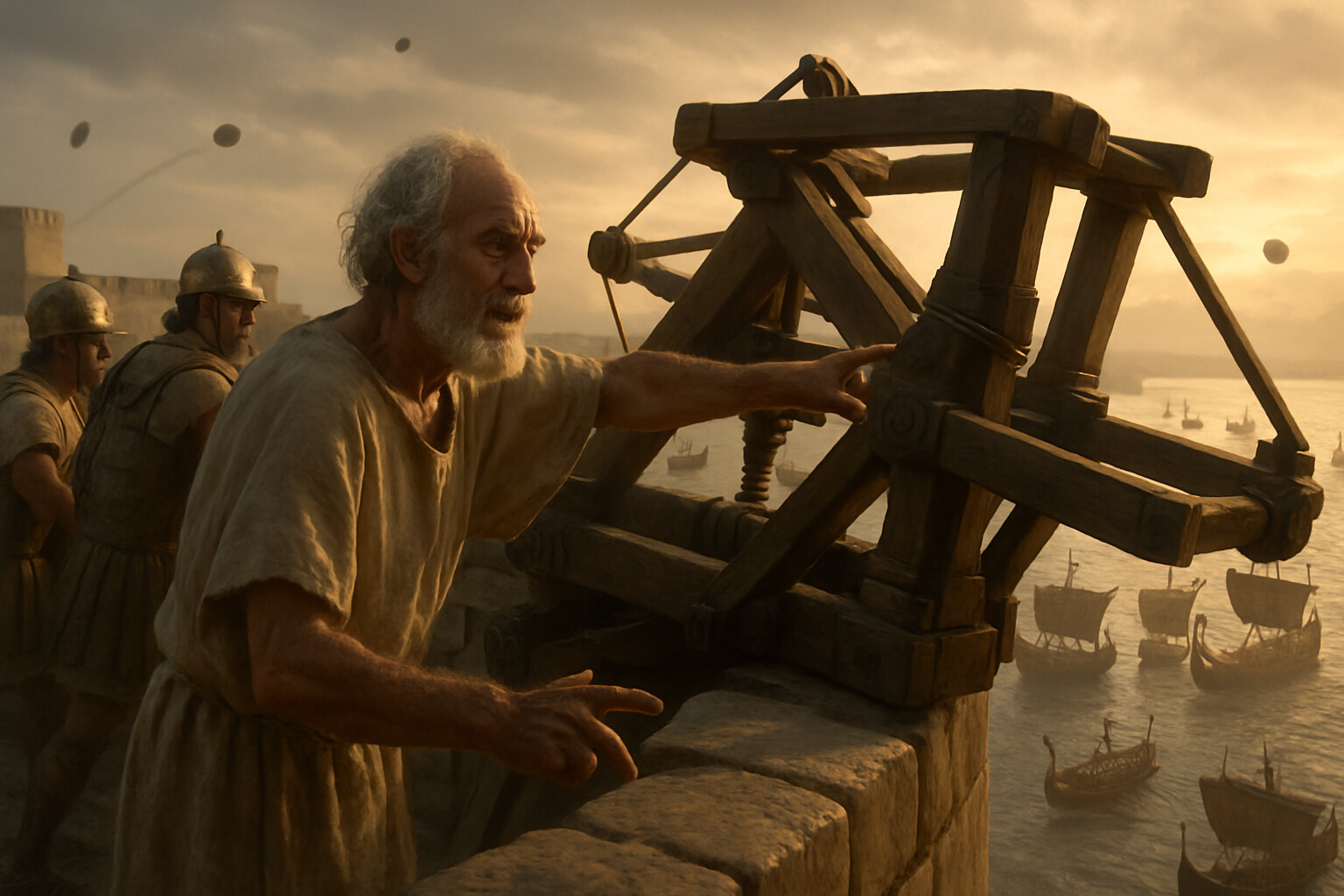
The Machines of Syracuse: How Archimedes Held Rome at Bay
When Rome's legions and fleet besieged Syracuse in 213 BC, the city's survival rested on the engineering capabilities of one man. Archimedes designed catapults, cranes, and artillery systems that paralyzed the most powerful military force in the western Mediterranean for nearly two years—and left Roman soldiers wary of every shadow on the city's walls. The siege fell not to Roman assault but to plague, blockade, and a moment of inattention at a festival gate.
213-212 BC • Syracuse, Sicily
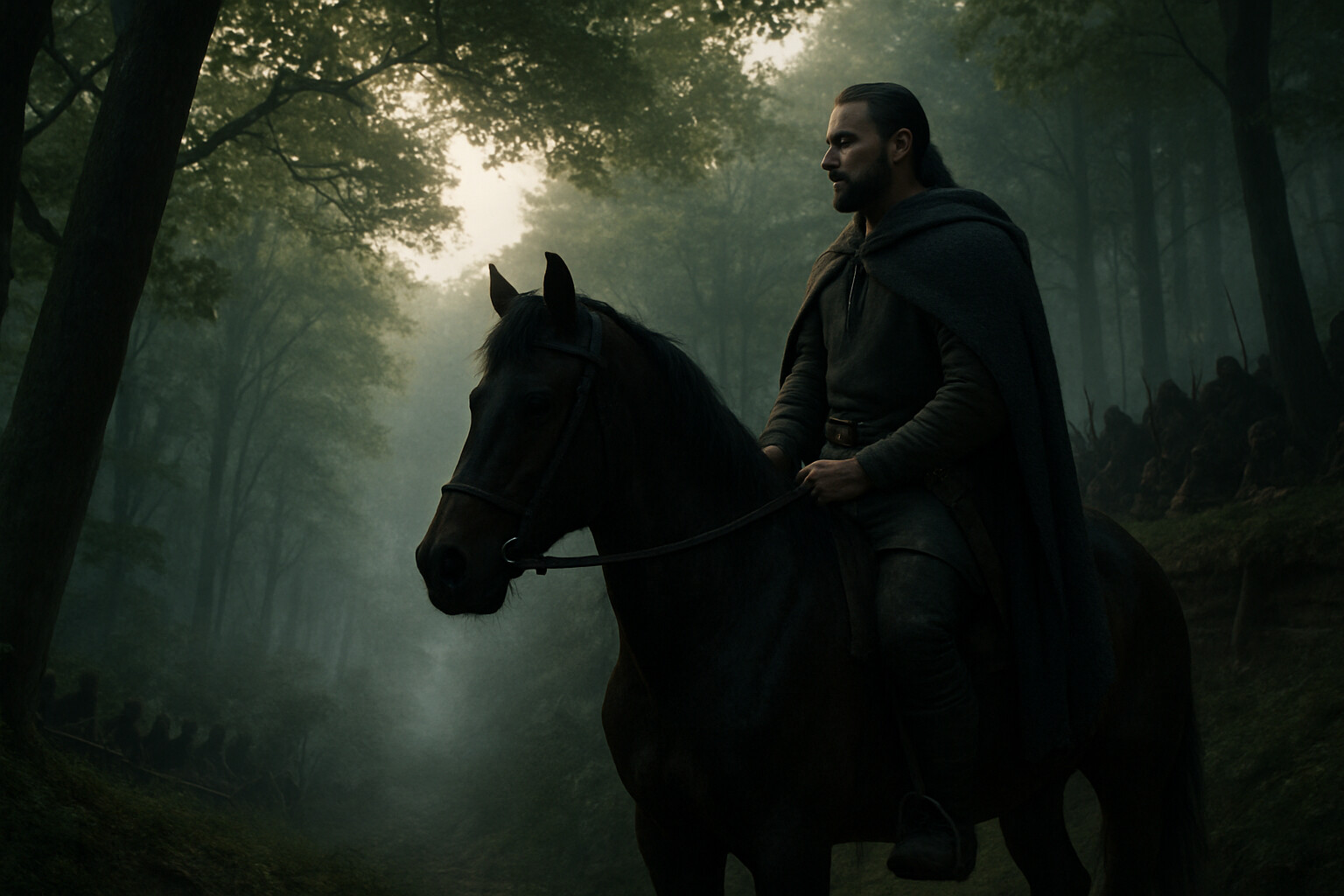
The Forest Closes: Arminius and the Destruction of Three Roman Legions
In September of 9 AD, a Germanic chieftain named Arminius — trained by Rome, decorated by Rome, and trusted by Rome — guided three Roman legions and their auxiliaries into a narrow forest corridor and destroyed them over three days of relentless ambush. The annihilation of Legio XVII, XVIII, and XIX in the Teutoburg Forest killed an estimated fifteen to twenty thousand Roman soldiers and ended Roman expansion east of the Rhine permanently.
September, 9 AD • Teutoburg Forest, Germania
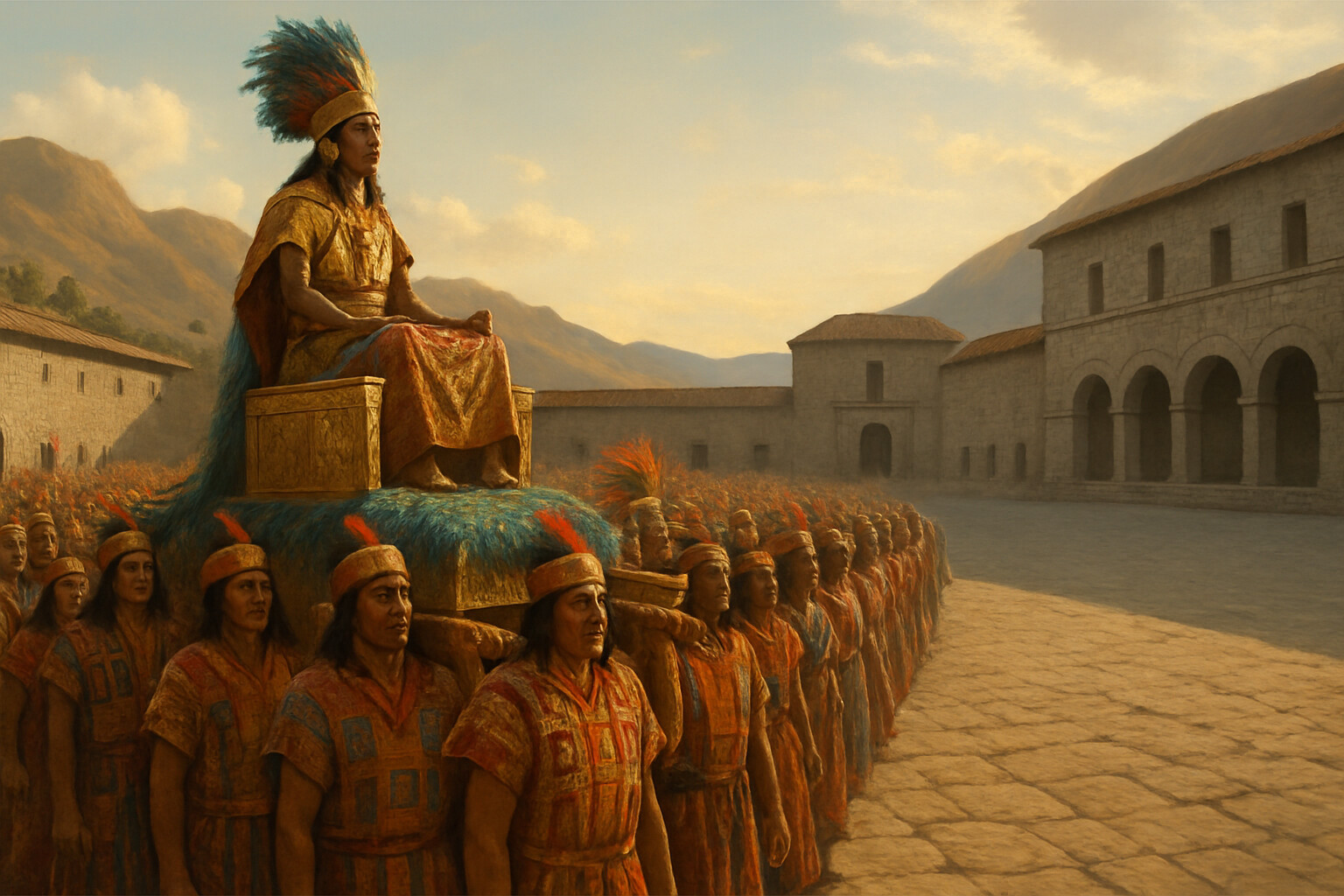
The Trap at Cajamarca: How 168 Men Seized an Empire
On the afternoon of November 16, 1532, Francisco Pizarro led fewer than 170 Spanish soldiers and horsemen into the highland city of Cajamarca, Peru, and sprung an ambush that captured the Inca emperor Atahualpa in the midst of an army estimated in the thousands. The encounter lasted perhaps two hours and shattered the political structure of the largest empire in the Americas. It remains one of the most consequential single engagements in the history of conquest.
1532 • Cajamarca, Peru
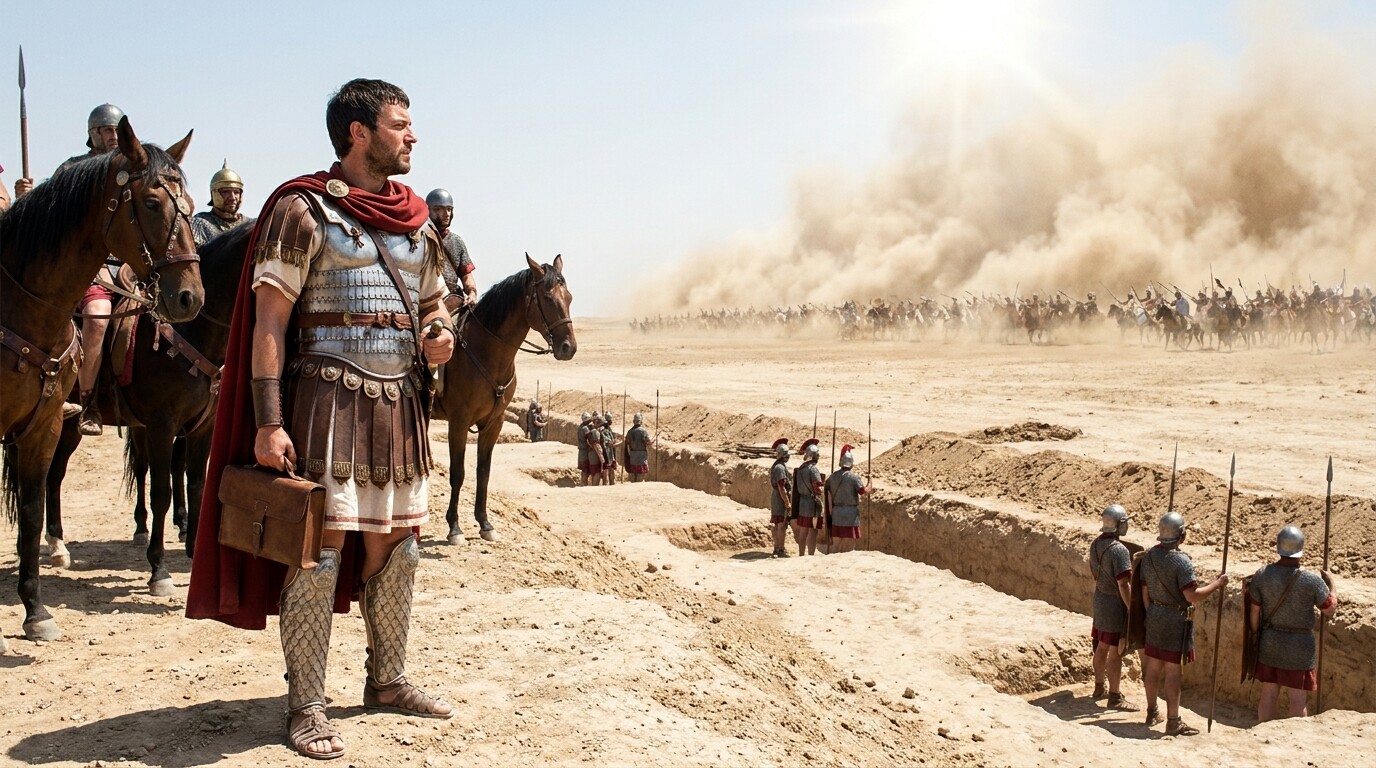
The Last Roman: Belisarius and the Reconquest of the West
Between 530 and 540 AD, the Byzantine general Belisarius executed a series of campaigns that astonished his contemporaries: he defeated a Persian army roughly twice his size at Dara, dismantled the Vandal kingdom of North Africa in a single season, and marched through Italy to retake Rome itself. Commanding forces that were almost always outnumbered, he relied on tactical ingenuity, disciplined cavalry, and a professional army that had no real precedent in the Latin West. The reconquest reshaped the Mediterranean world for a generation, even as its durability proved limited.
530-540 AD • Dara, North Africa, and Italy
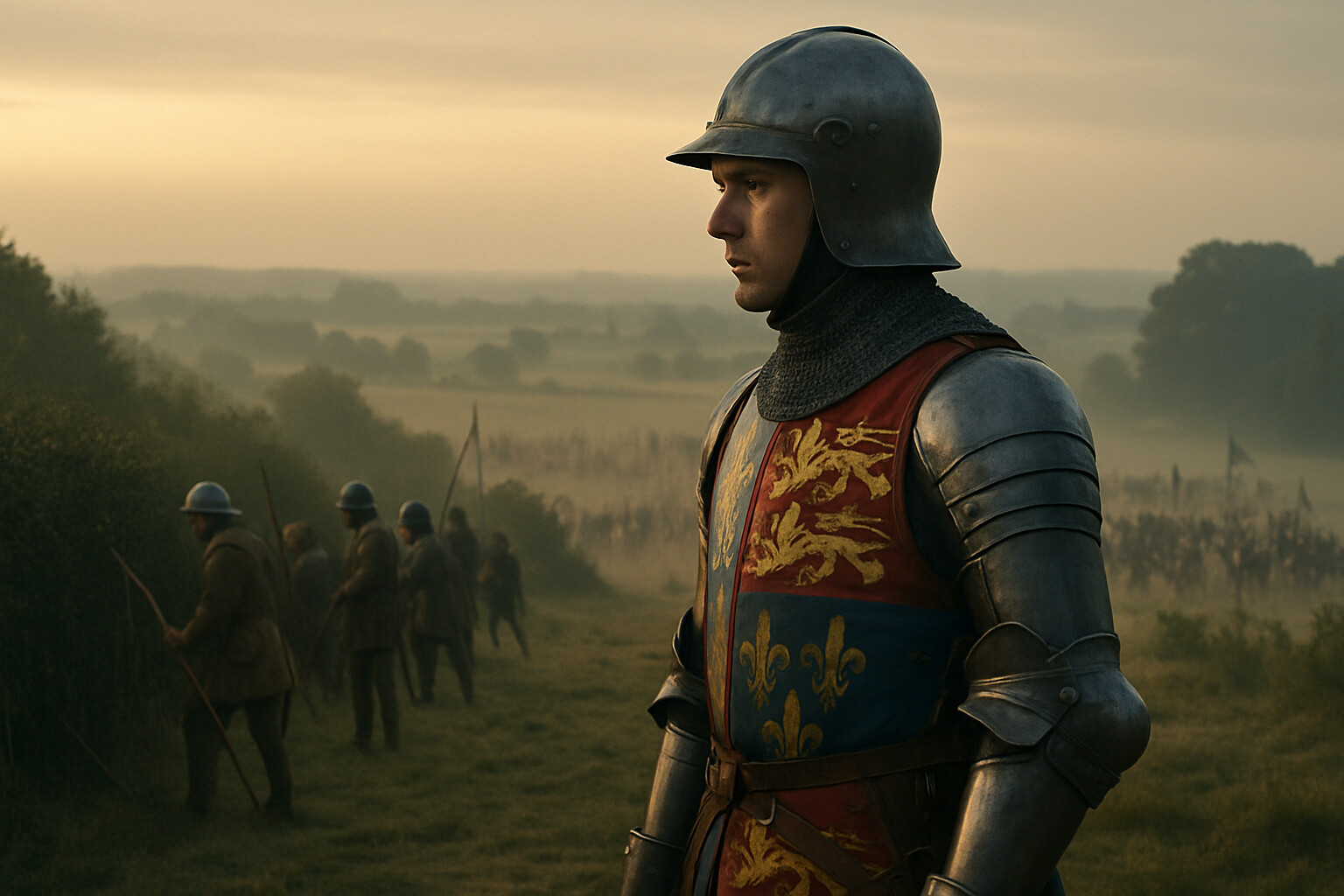
The Prince and the King: Poitiers, 1356
On 19 September 1356, Edward the Black Prince led an outnumbered Anglo-Gascon army in a defensive battle south of Poitiers that ended with the capture of the King of France. The engagement reshaped the Hundred Years' War and cemented the tactical reputation of English longbowmen against armored cavalry.
1356 • Poitiers, France
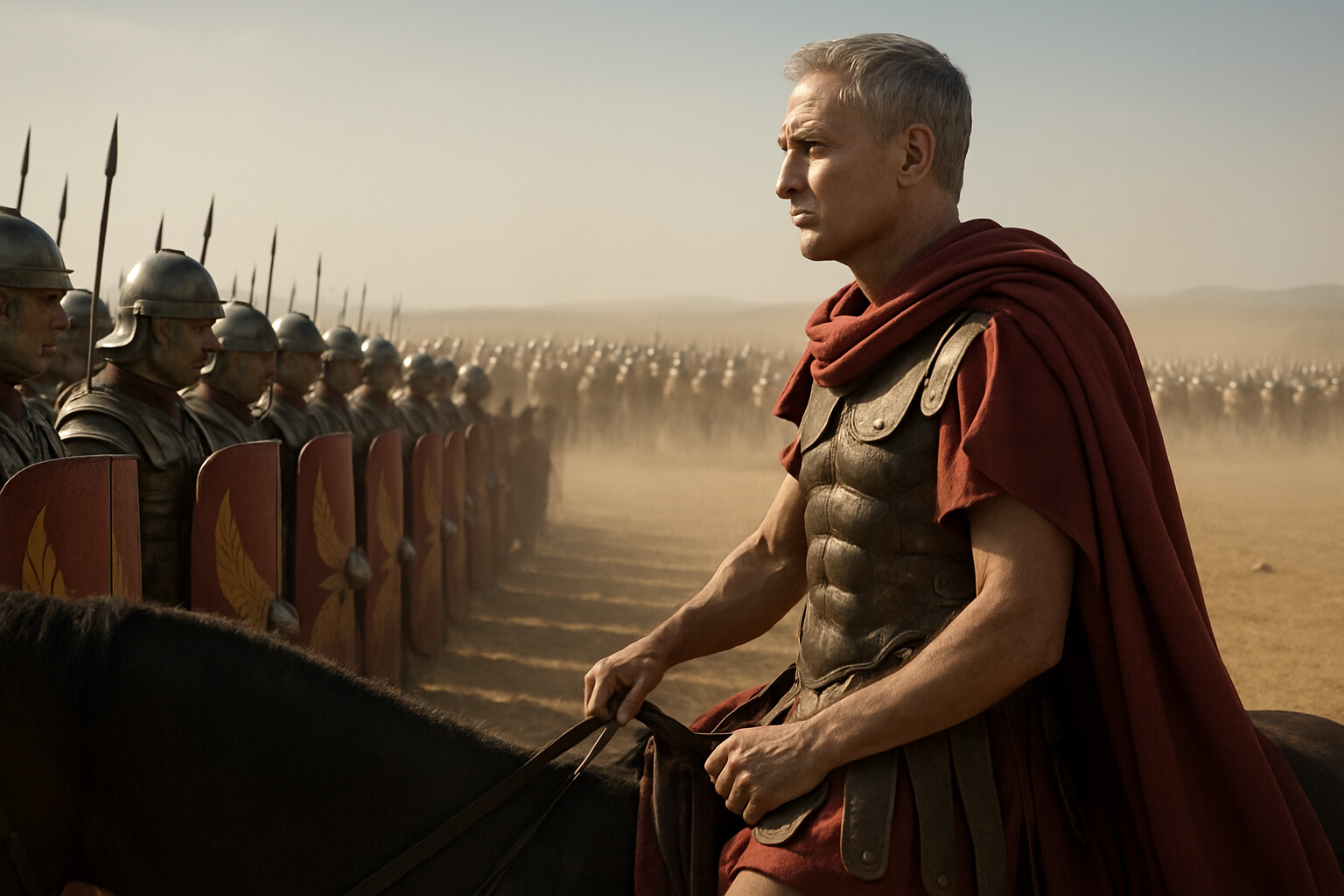
The Hidden Line: Caesar's Gamble at Pharsalus
On August 9, 48 BC, Julius Caesar faced Pompey the Great on a plain in Thessaly with roughly half the manpower. When Pompey's superior cavalry threatened to roll up Caesar's right flank and end the civil war in a single afternoon, a concealed line of veteran infantry stepped out of the dust and broke the assault. What happened next decided who would rule Rome.
48 BC • Pharsalus, Greece
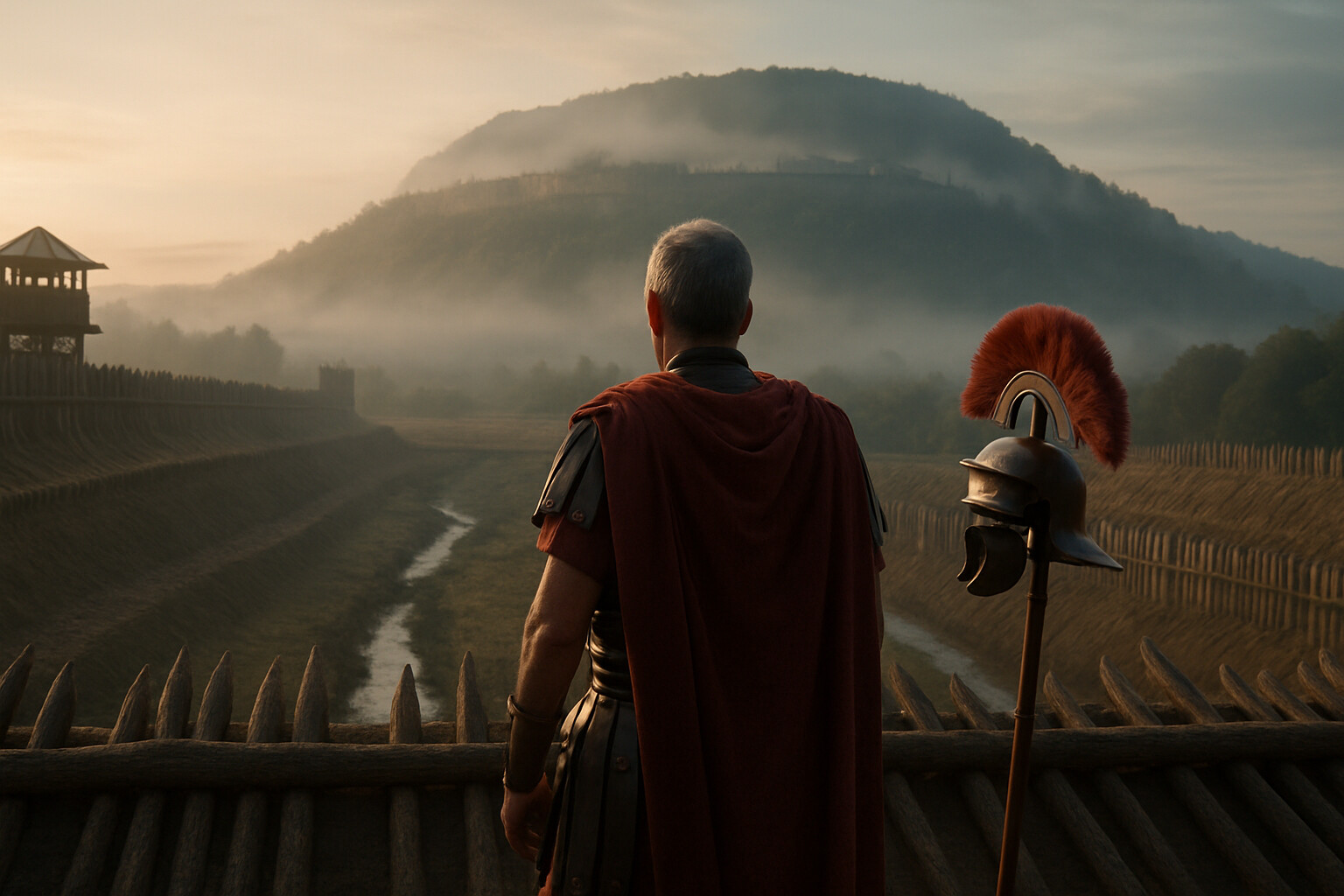
The Iron Ring: Caesar's Double Siege at Alesia
In 52 BC, Julius Caesar trapped the Gallic chieftain Vercingetorix inside the hilltop stronghold of Alesia and then faced a relief army estimated in the hundreds of thousands. His answer was to build two walls at once — one to hold the garrison in, one to hold the relief force out — and fight on both fronts simultaneously. The outcome settled the fate of Gaul for four centuries.
52 BC • Alesia, Gaul (modern France)
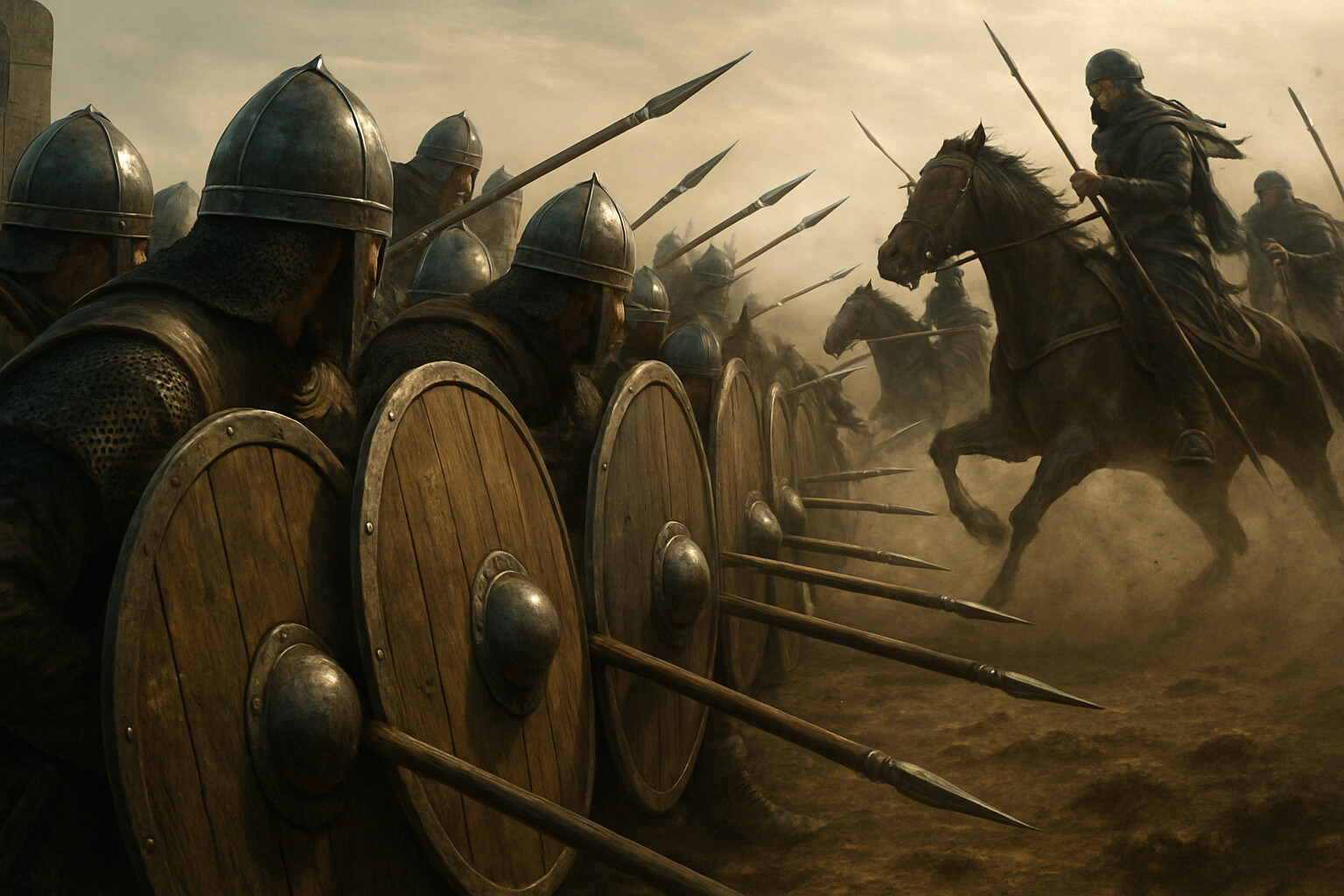
The Wall That Would Not Break: Charles Martel at Tours-Poitiers, 732
In October 732, a Frankish force under Charles Martel met a large Umayyad raiding army near Tours in central Francia. Over several days of confrontation, Martel's disciplined infantry held firm against repeated cavalry charges and ultimately forced the Umayyad withdrawal, halting the deepest penetration of Islamic forces into Western Europe. The battle's outcome shaped the political and religious geography of the continent for centuries.
732 • Tours-Poitiers, Francia
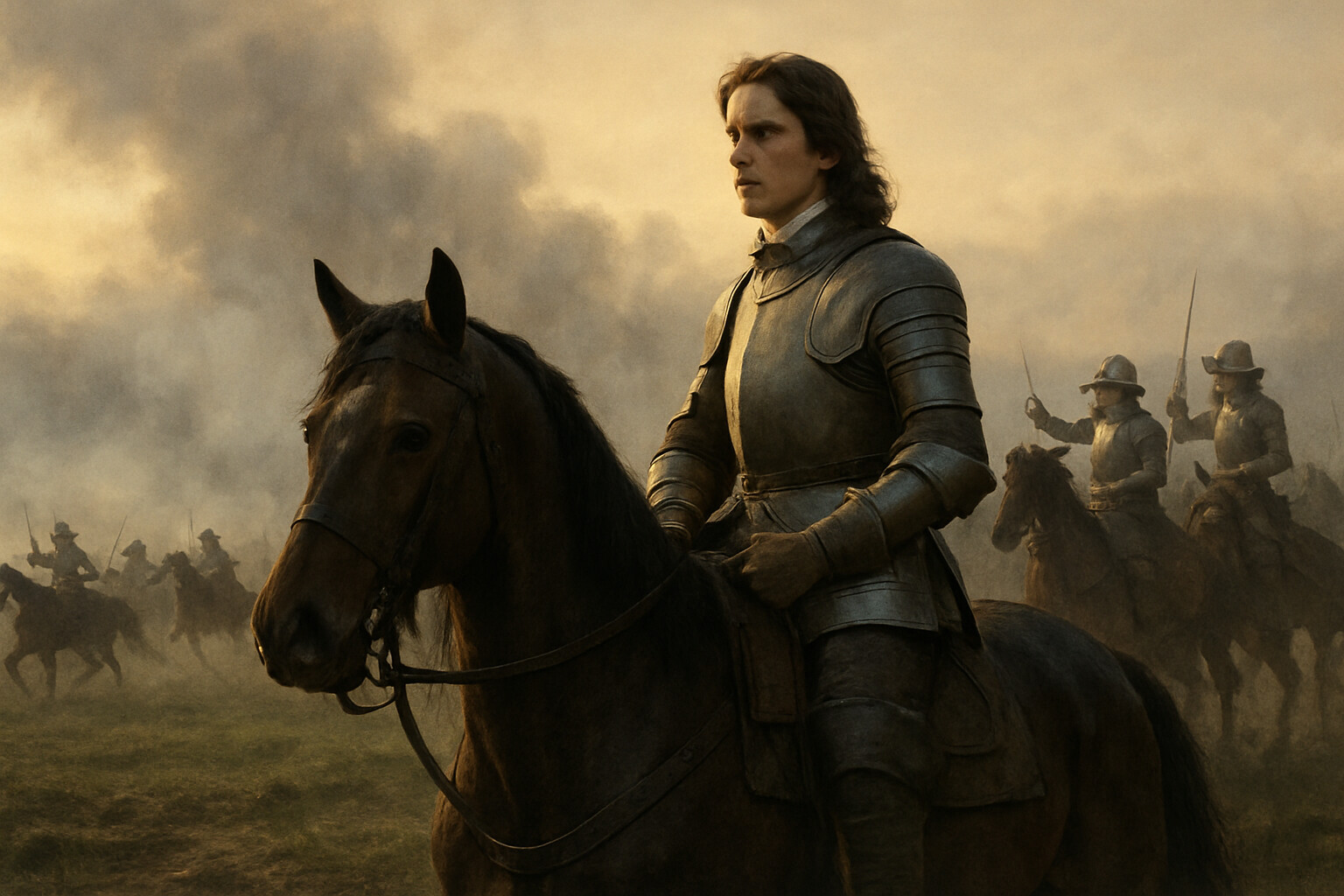
The Day the Tercios Broke: Condé at Rocroi, 1643
On May 19, 1643, a twenty-one-year-old French duke named Louis II de Bourbon led the royal army at Rocroi in the Ardennes and shattered the Spanish tercios—infantry formations that had dominated European warfare for more than a century. The battle did not end the Thirty Years' War, but it announced, at great cost, that the era of unchallenged Spanish military supremacy on the continent was over.
1643 • Rocroi, France
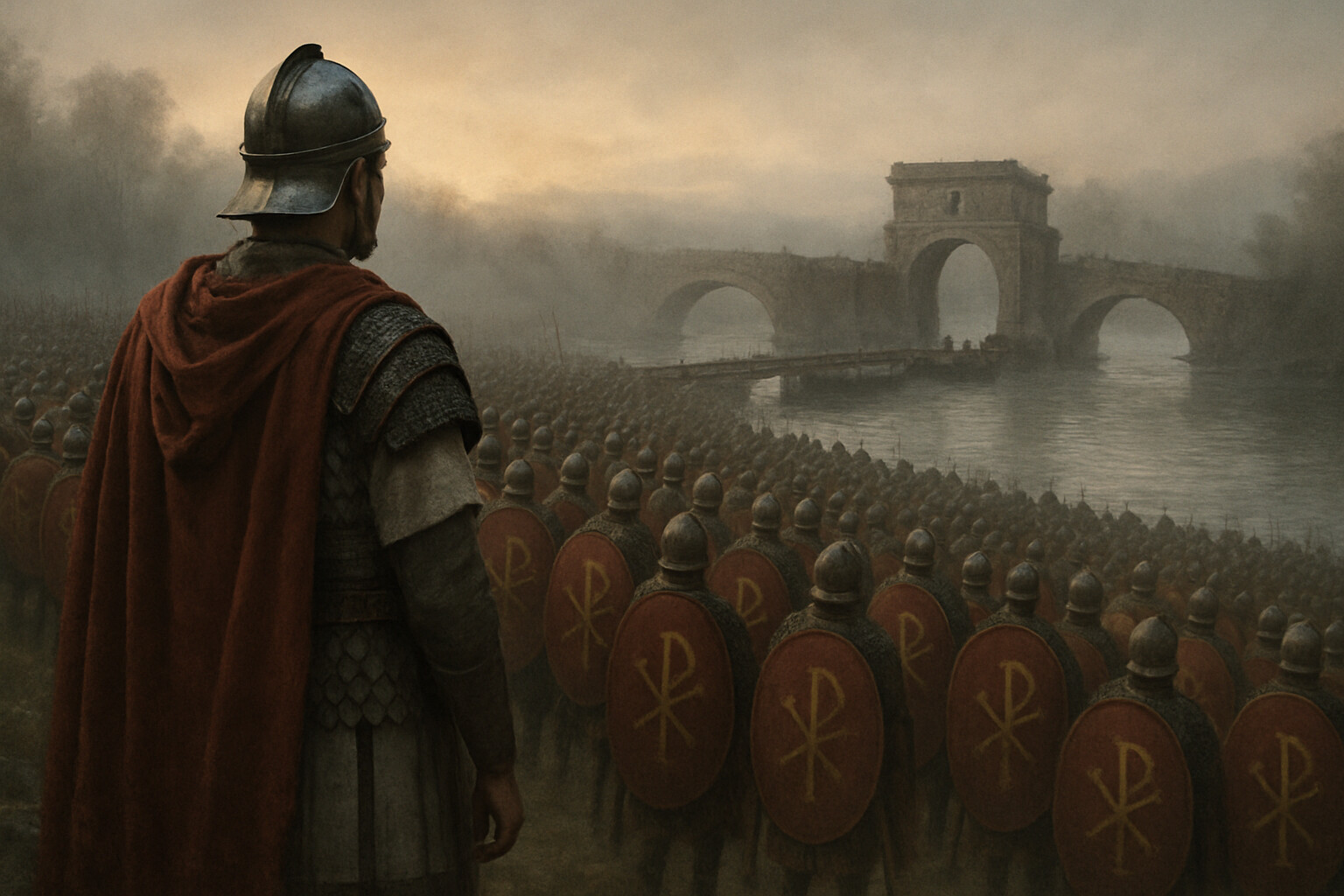
Under the Sign: Constantine at the Milvian Bridge
In October 312 AD, the Roman claimant Constantine marched his Western field army to the gates of Rome and shattered the forces of his rival Maxentius at the Milvian Bridge. The battle's outcome turned on tactical skill, the terrain's unforgiving geometry, and a symbol Constantine had ordered marked on his soldiers' shields — a symbol whose exact nature remains one of antiquity's most debated questions.
312 AD • Milvian Bridge, Rome
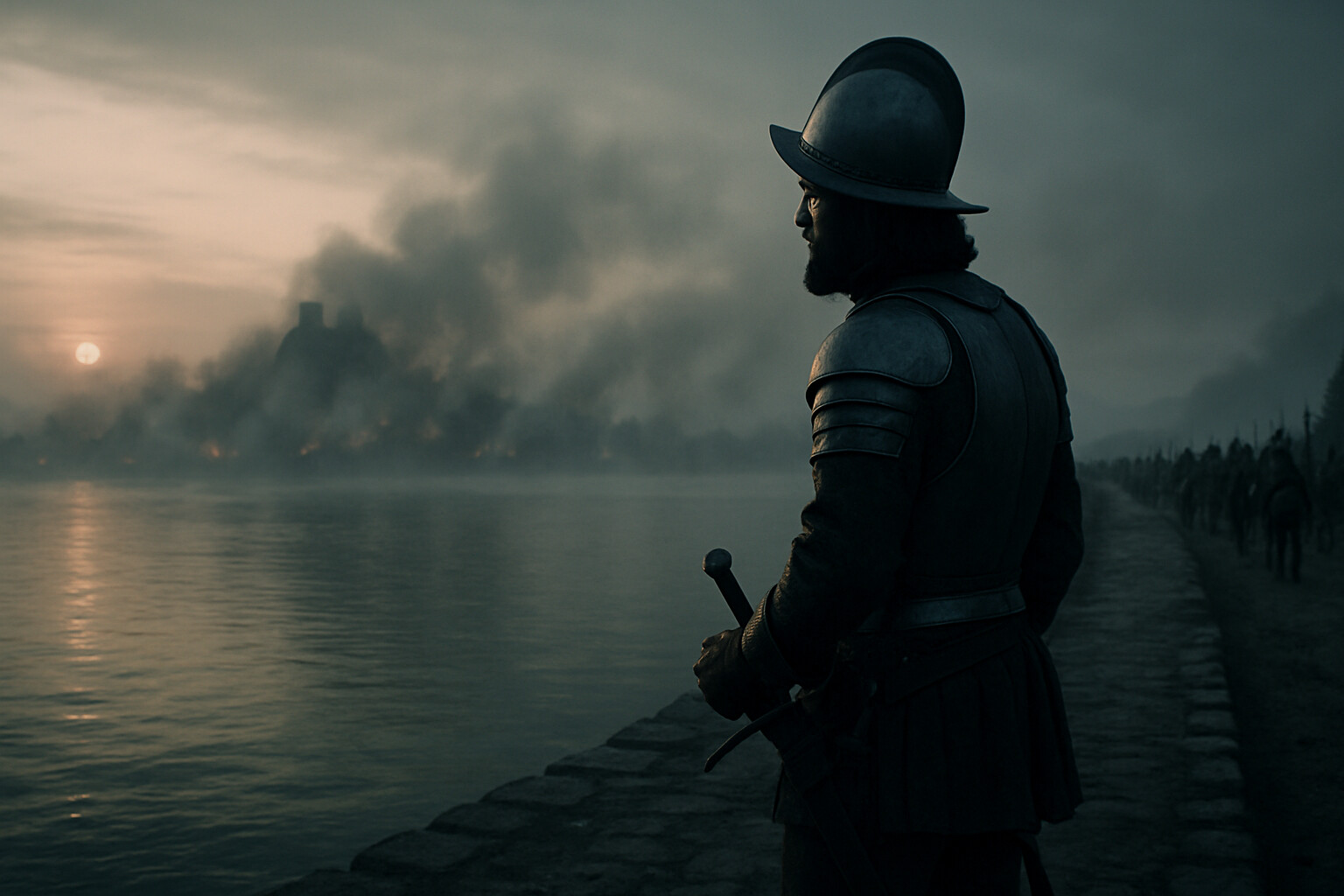
The Siege of the World: Cortés and the Fall of Tenochtitlan
In the summer of 1521, Hernán Cortés led a combined force of Spanish soldiers and tens of thousands of Tlaxcalan and other indigenous allies in a methodical, brutal siege of Tenochtitlan — the island capital of the Aztec Empire. Over seventy-five days of canal fighting, starvation, and street-by-street destruction, one of the largest cities in the world was reduced to rubble, and the Aztec Empire ceased to exist as an independent power.
1521 • Tenochtitlan, Mexico
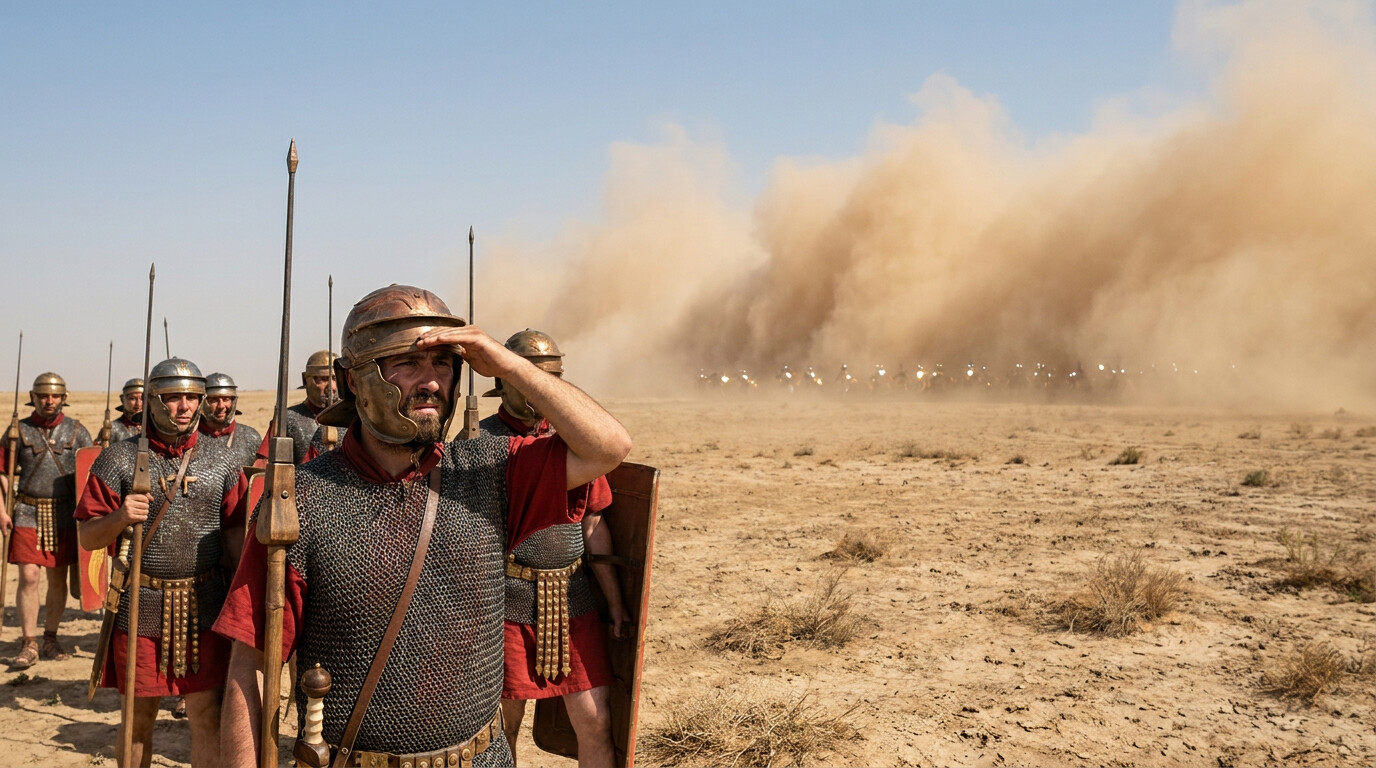
The Sands That Swallowed Rome: Crassus at Carrhae
In 53 BC, Roman Triumvir Marcus Licinius Crassus led seven legions into the Mesopotamian desert seeking a conquest to match his rivals Caesar and Pompey. What he found was a Parthian force of horse archers and armored cavalry that exploited every structural weakness of the Roman formation on open ground, destroying his army in one of the most complete military defeats in Roman Republican history. The battle's consequences echoed for a generation: three legionary eagles lost to Parthia, the First Triumvirate destabilized, and the limits of heavy infantry doctrine exposed in terms Rome took decades to answer.
53 BC • Carrhae, Mesopotamia
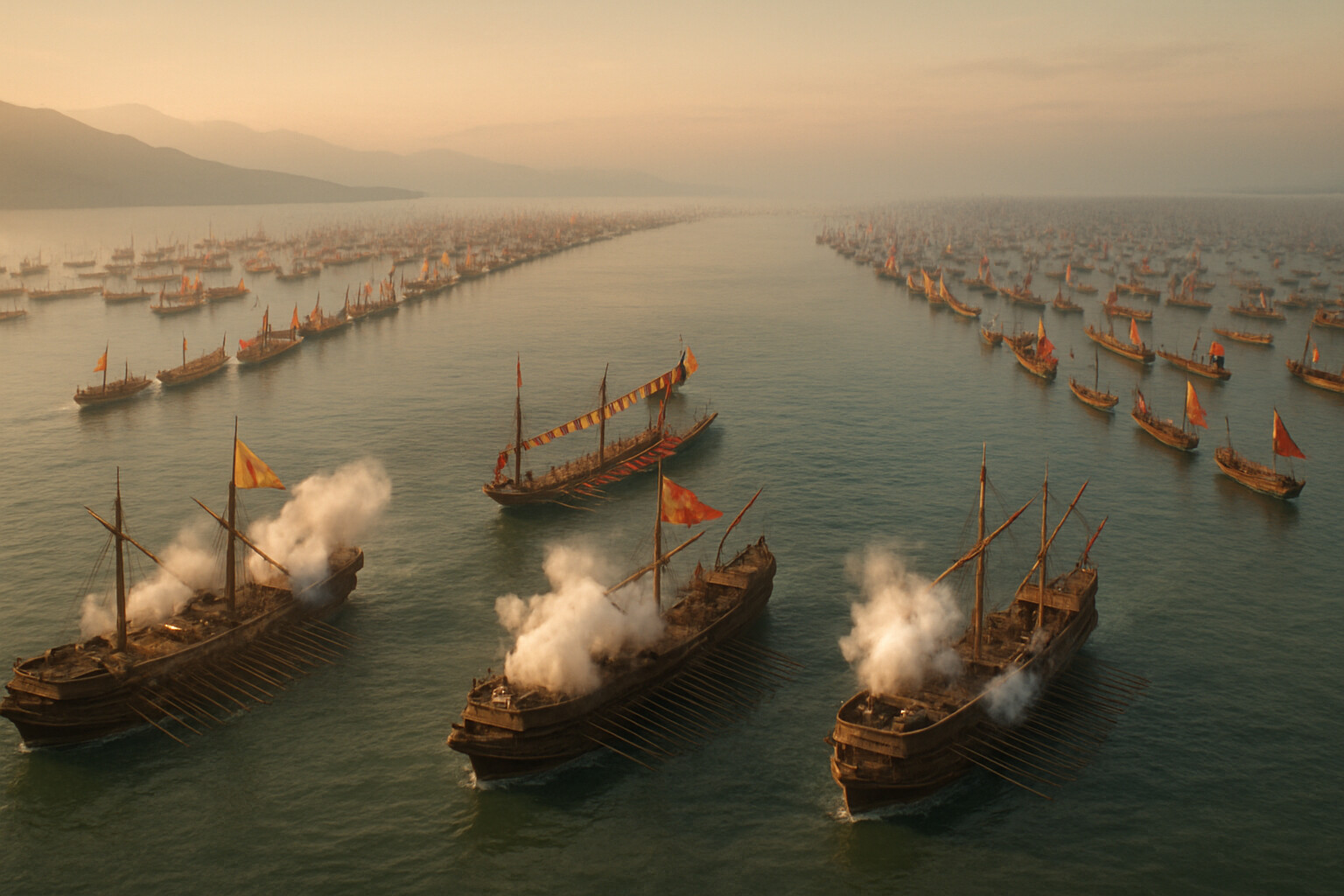
The Line of Fire: Don Juan of Austria and the Last Crusade at Sea
On October 7, 1571, the largest naval battle since antiquity unfolded in the Gulf of Patras when a Christian coalition fleet under the twenty-four-year-old Don Juan of Austria met the Ottoman navy in several hours of savage close-quarters fighting. The outcome destroyed Ottoman naval power in the Mediterranean as a fighting force, though the strategic and territorial consequences fell short of the military victory's scale. This is the story of the battle, the man who led it, and what the record actually shows.
1571 • Gulf of Patras, Greece
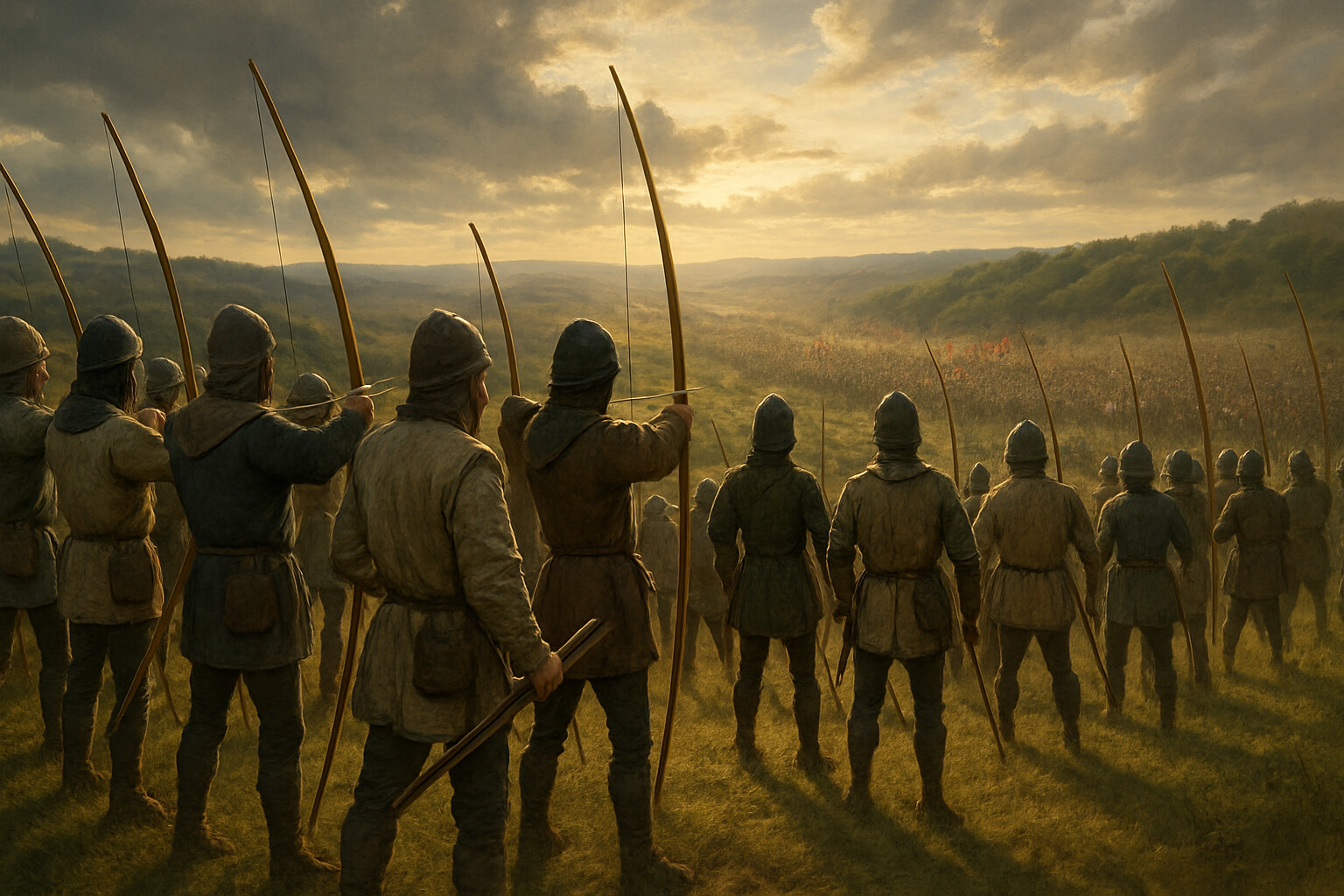
The Storm from the Ridge: Edward III and the Longbowmen of Crécy
On the evening of 26 August 1346, an English army under King Edward III anchored its flanks on a hillside near the village of Crécy-en-Ponthieu and waited. What followed was one of the most consequential engagements of the medieval period: wave after wave of French cavalry, the finest armored horsemen in Europe, broke and died against massed English arrow fire on a slope they could not cross.
1346 • Crecy, France
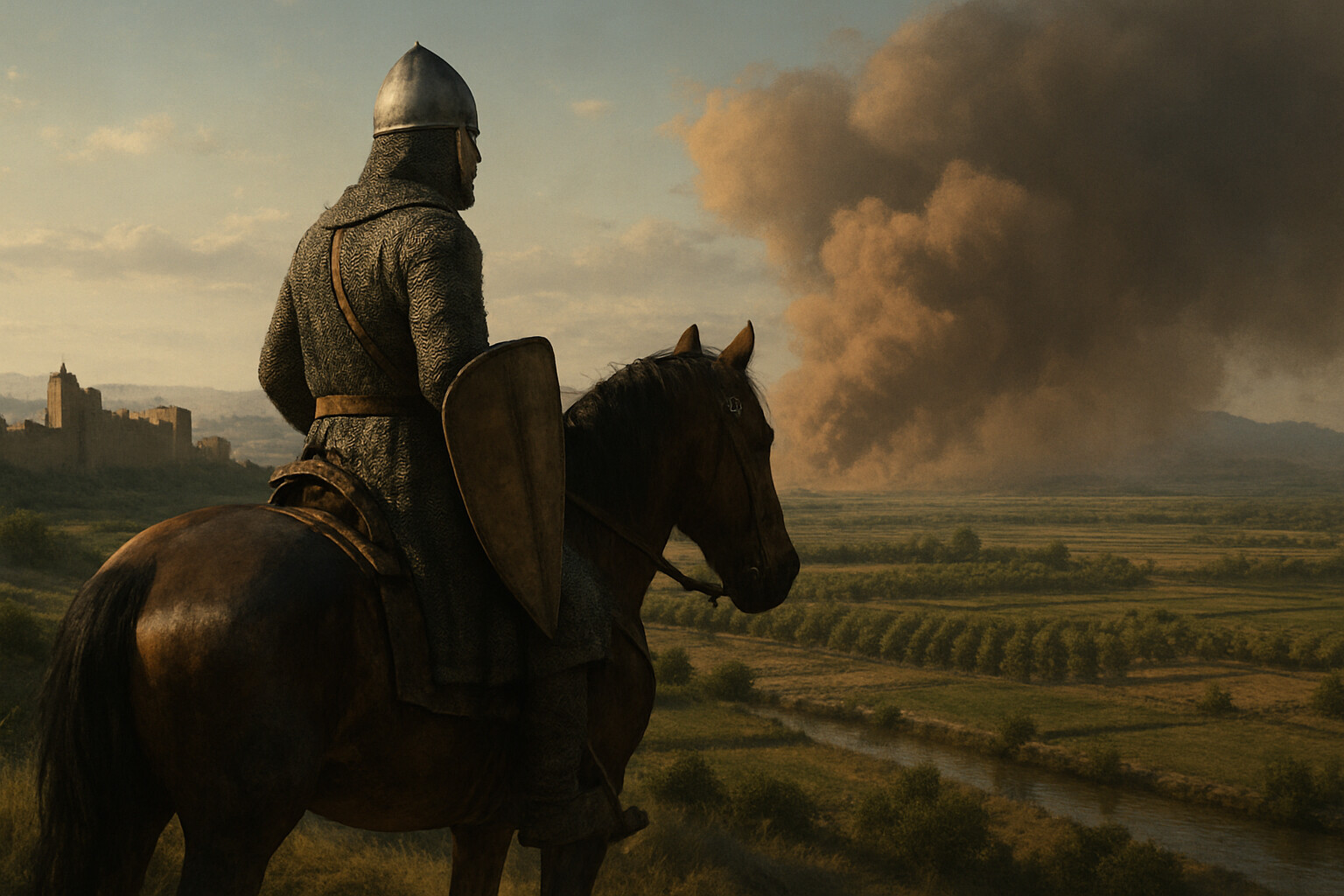
Lord of Valencia: The Long Exile and Final Conquest of El Cid
Exiled twice by a king he had served faithfully, Rodrigo Díaz de Vivar — El Cid — built an army of Christian and Moorish soldiers and seized the wealthiest city on the Iberian Peninsula. For five years he held Valencia against everything the Almoravid Empire could throw at it, dying in his city with the walls still standing.
1094 • Valencia, Spain
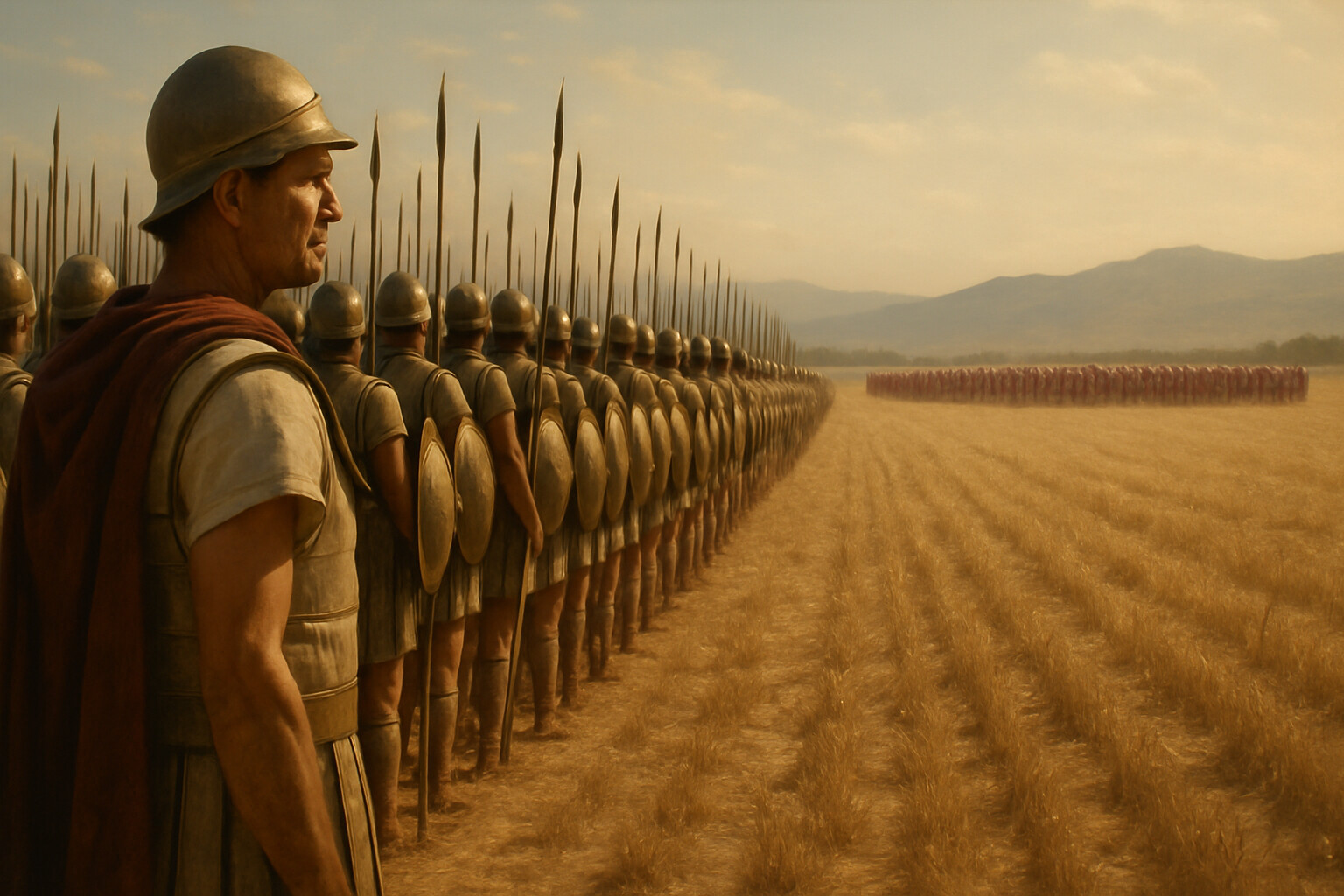
The Left Wing: How Epaminondas Shattered Spartan Supremacy at Leuctra
In the summer of 371 BC, Theban general Epaminondas deployed an oblique attack with a left wing stacked fifty shields deep, smashing the Spartan right and killing their king. The Battle of Leuctra ended nearly two centuries of Spartan military dominance in a single afternoon and demonstrated tactical principles that influenced commanders for generations.
371 BC • Leuctra, Boeotia, Greece
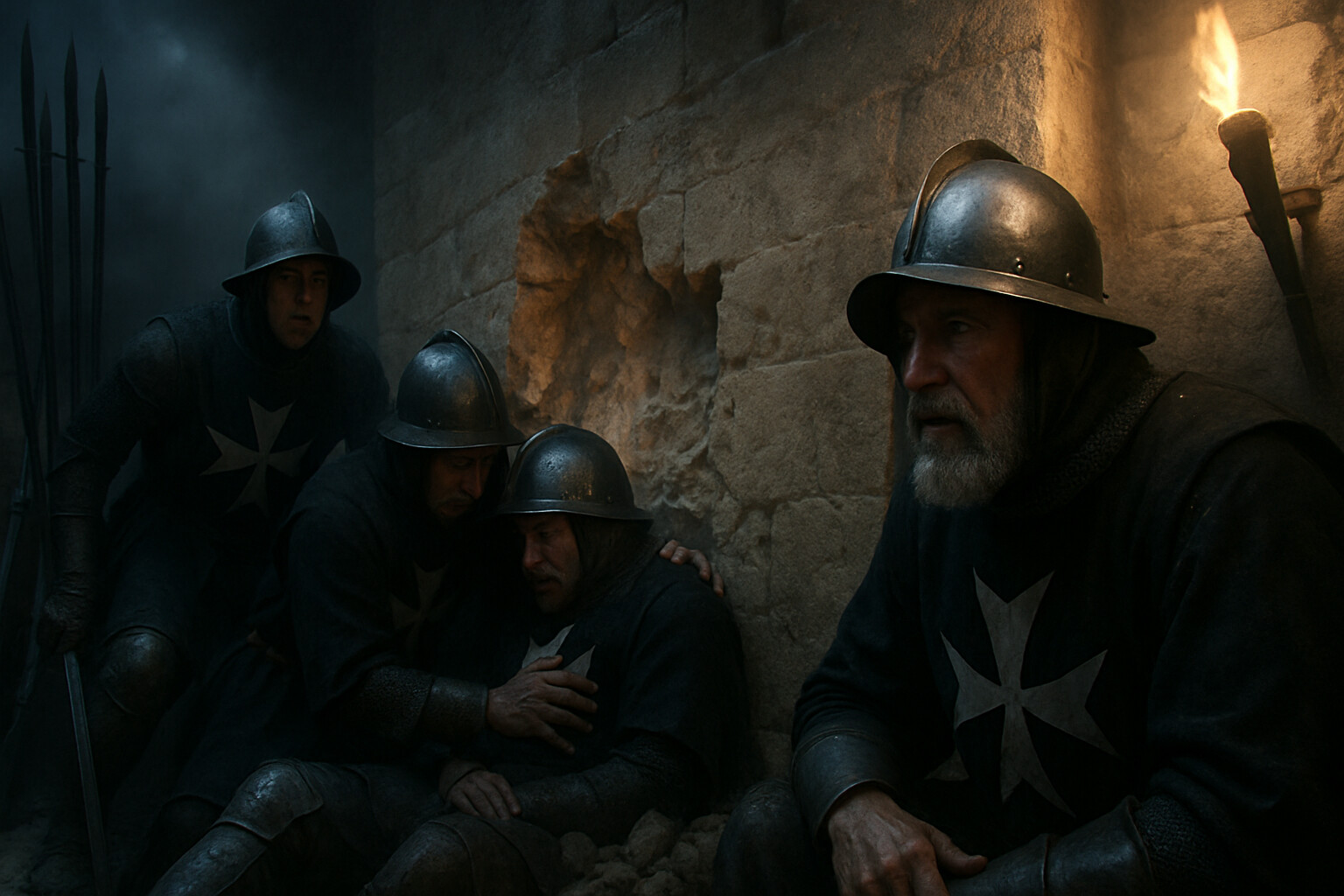
The Wall That Would Not Fall: Jean de Valette and the Great Siege of Malta, 1565
In the summer of 1565, Ottoman Sultan Suleiman the Magnificent dispatched one of the largest expeditionary forces of the sixteenth century to crush the Knights Hospitaller and seize the island of Malta. Grand Master Jean Parisot de Valette, then approximately seventy years old, led a few hundred knights and thousands of Maltese soldiers and civilians through nearly four months of siege, bombardment, and assault. Their resistance became one of the most studied defensive actions of the early modern era.
1565 • Malta
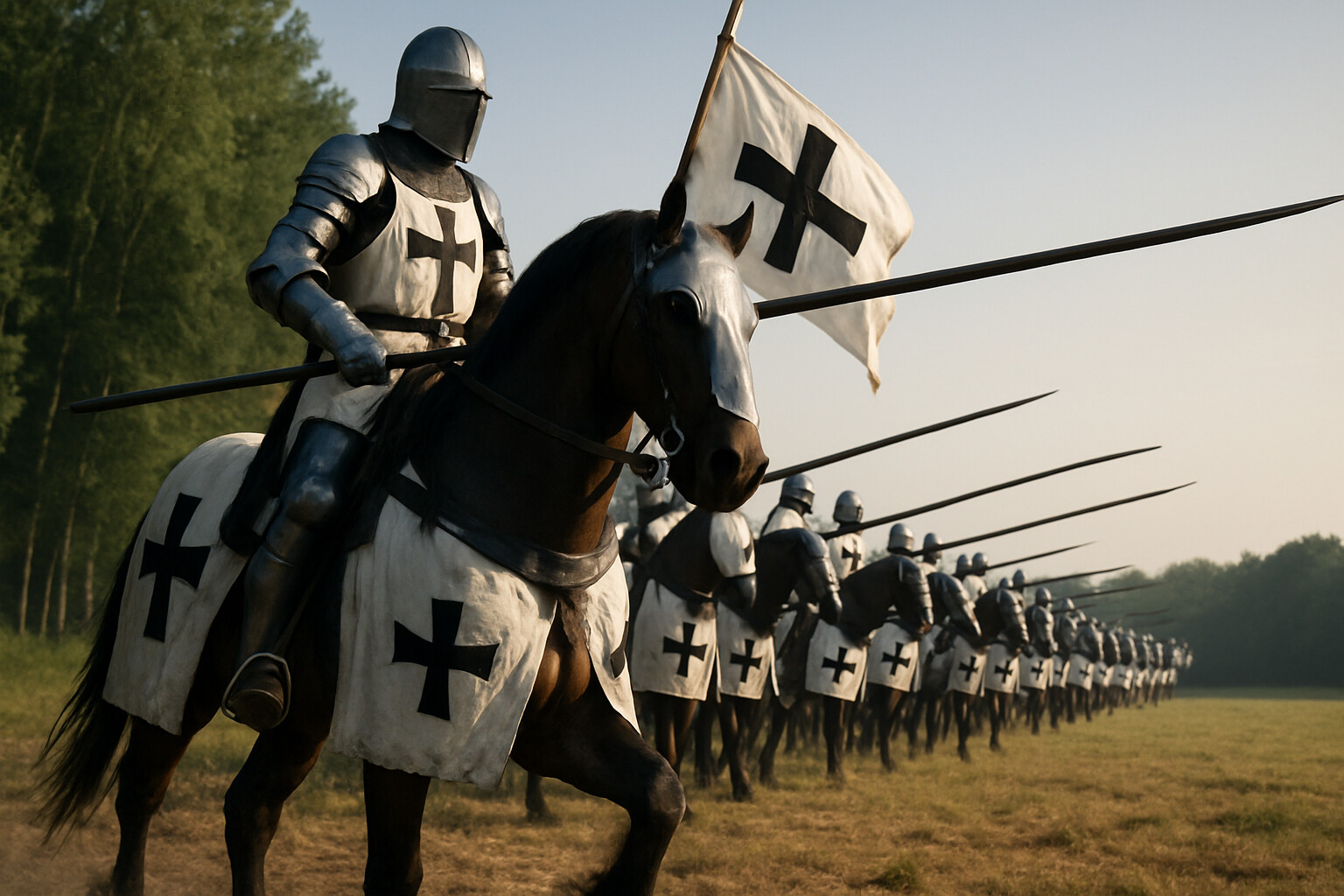
The Field Between the Villages: Grunwald, 1410
On 15 July 1410, a combined Polish-Lithuanian army under King Władysław II Jagiełło met the Teutonic Order on a field in Prussia and shattered it. The Battle of Grunwald was one of the largest pitched engagements of medieval Europe, ending the Order's era of expansion and reshaping the political geography of the Baltic world for generations.
1410 • Grunwald/Tannenberg
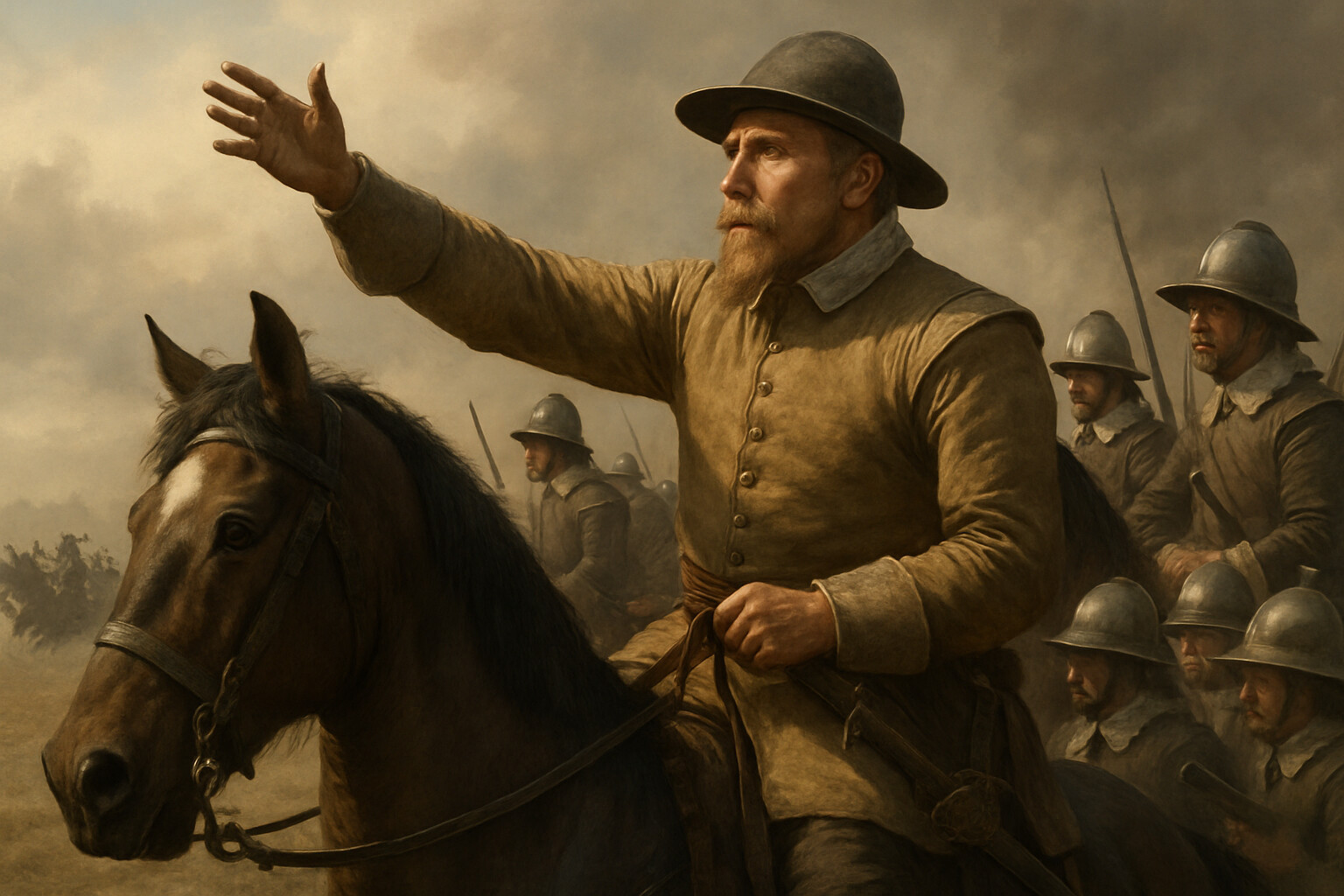
The Lion Strikes: Gustavus Adolphus and the Battle of Breitenfeld
On September 17, 1631, the Swedish king Gustavus Adolphus led a combined Protestant force against the Imperial army of Count Tilly at Breitenfeld, north of Leipzig. When his Saxon allies collapsed and fled, Gustavus refused to break — instead exploiting speed, firepower, and tactical discipline to destroy the army that had dominated the battlefields of Protestant Europe for a decade. It was the first major Protestant victory of the Thirty Years' War.
1631 • Breitenfeld, Saxony
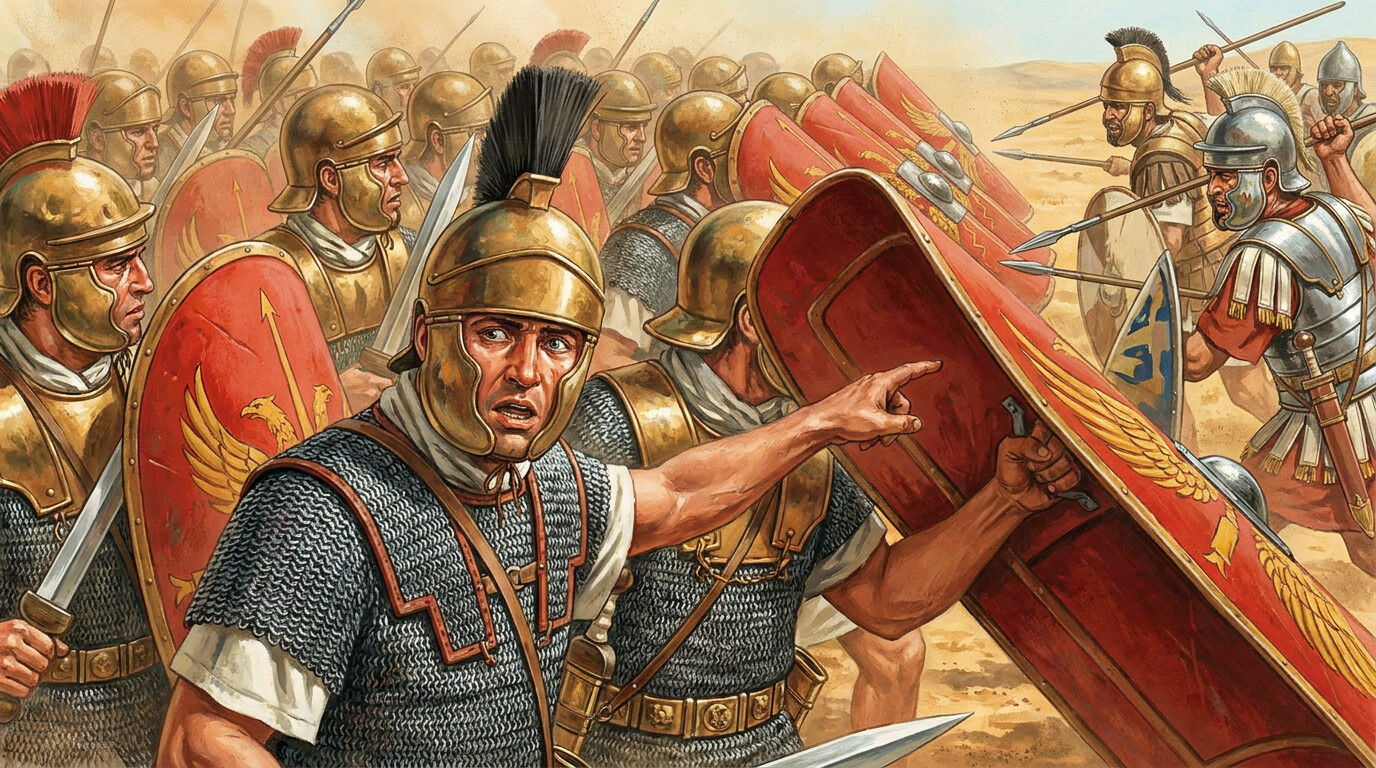
The Crescent That Closed: Hannibal at Cannae, 216 BC
On August 2, 216 BC, Carthaginian general Hannibal Barca faced the largest army Rome had ever fielded—and destroyed it in a single afternoon. By deliberately inviting a Roman breakthrough at his weakest point, he sprang a double envelopment that killed between 47,000 and 70,000 men and reshaped the practice of war for two millennia.
216 BC • Cannae, Apulia, Italy
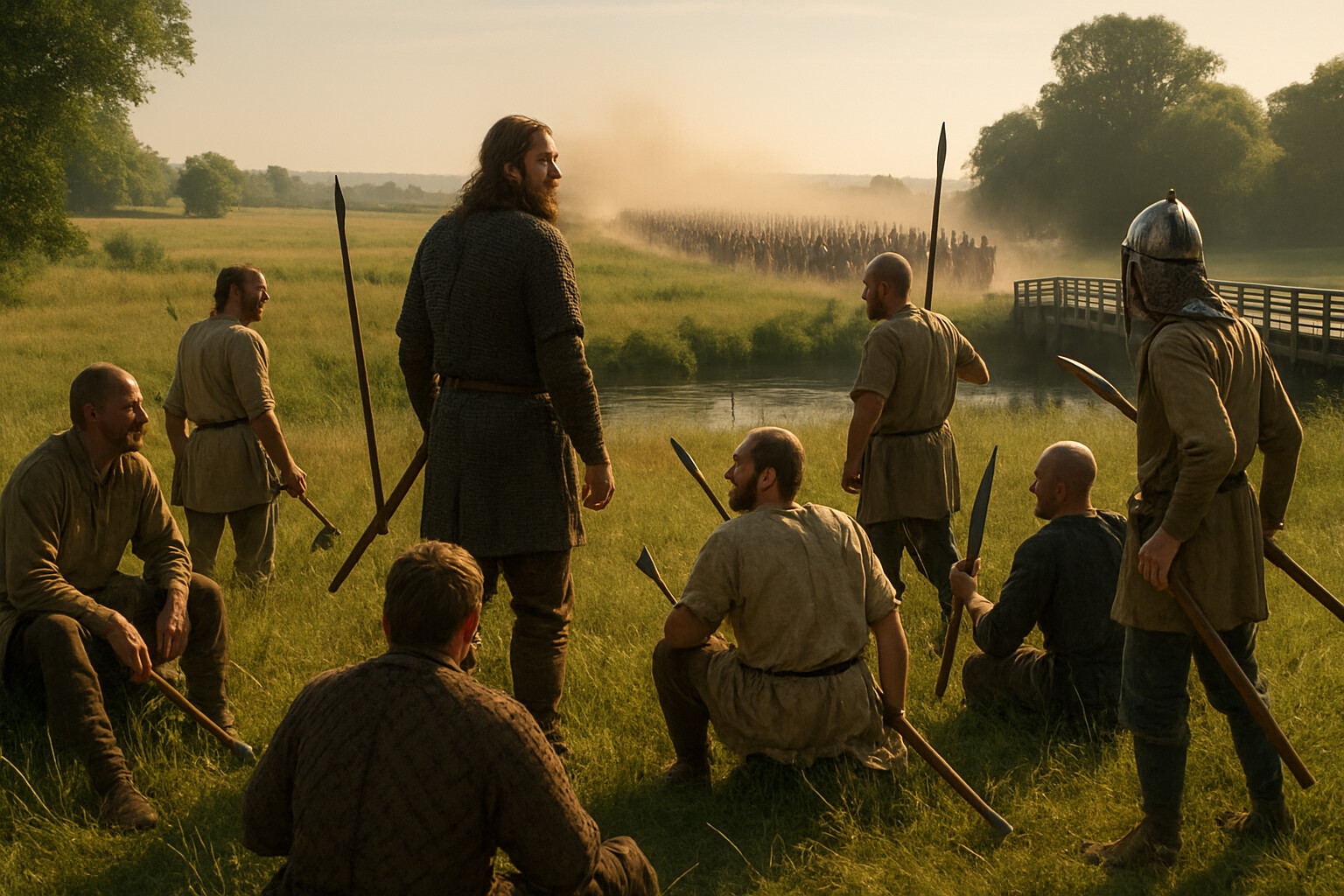
Six Feet of English Ground: Harald Hardrada at Stamford Bridge
In September 1066, the Norwegian king Harald Hardrada led one of the largest Norse fleets ever assembled against England, only to be caught unprepared at Stamford Bridge by a forced march that covered nearly 190 miles in four days. The battle on 25 September destroyed the Norse army and killed Hardrada, ending three centuries of Viking military pressure on England — but left Harold of England's forces exhausted on the eve of William's Norman invasion.
1066 • Stamford Bridge, England
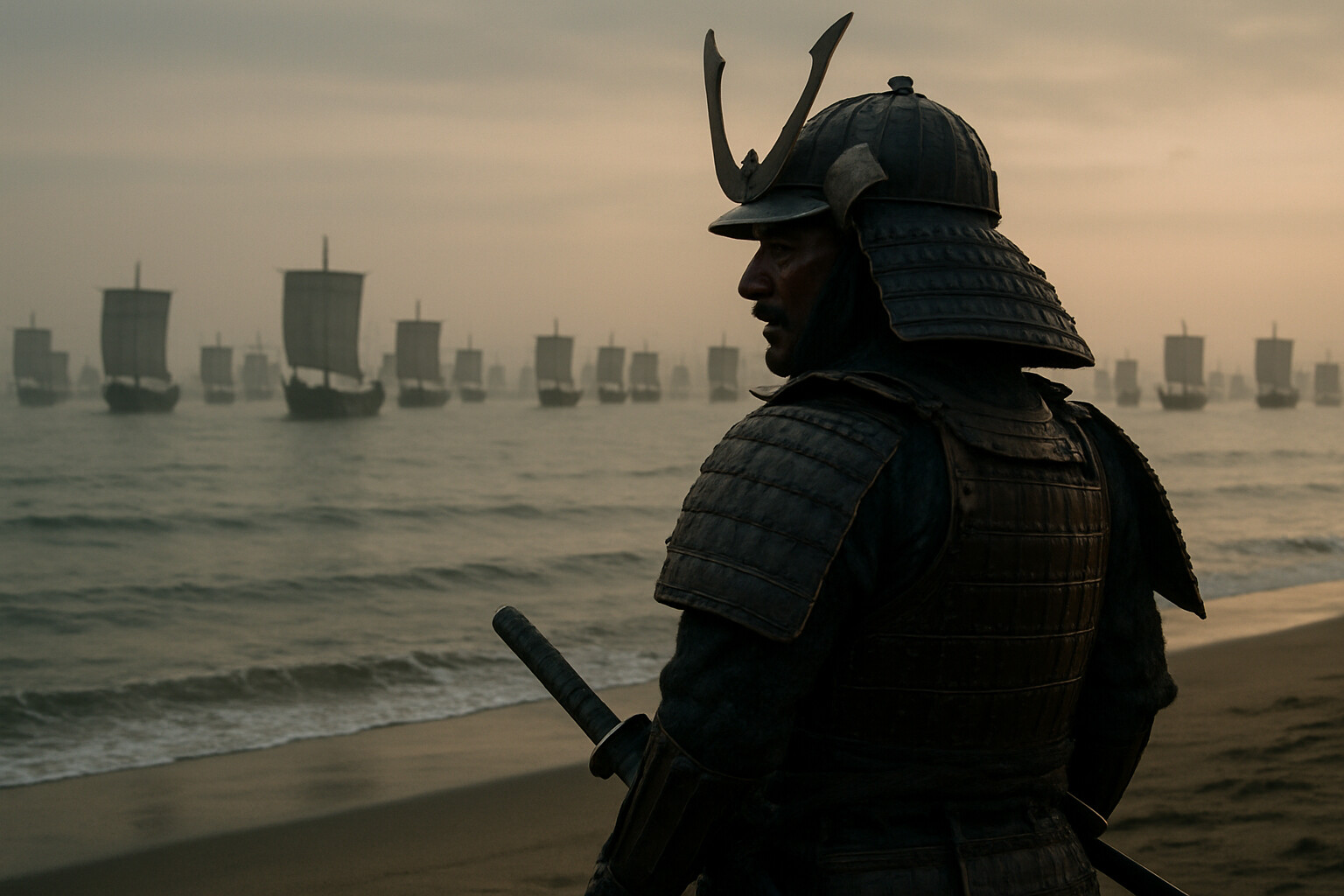
The Wind That Saved Japan: Hojo Tokimune and the Samurai at Hakata Bay
Twice in seven years, the Mongol Empire launched the largest naval invasions the medieval world had yet seen against Japan. Twice, the samurai of Kyushu fought to hold the beaches of Hakata Bay against overwhelming numbers, unfamiliar weapons, and coordinated tactics unlike anything in Japanese experience. Behind the defense stood Hojo Tokimune, the young regent who refused to yield — and whose stone wall ensured that when the storms came, they found an enemy already failing.
1274 and 1281 • Hakata Bay, Japan
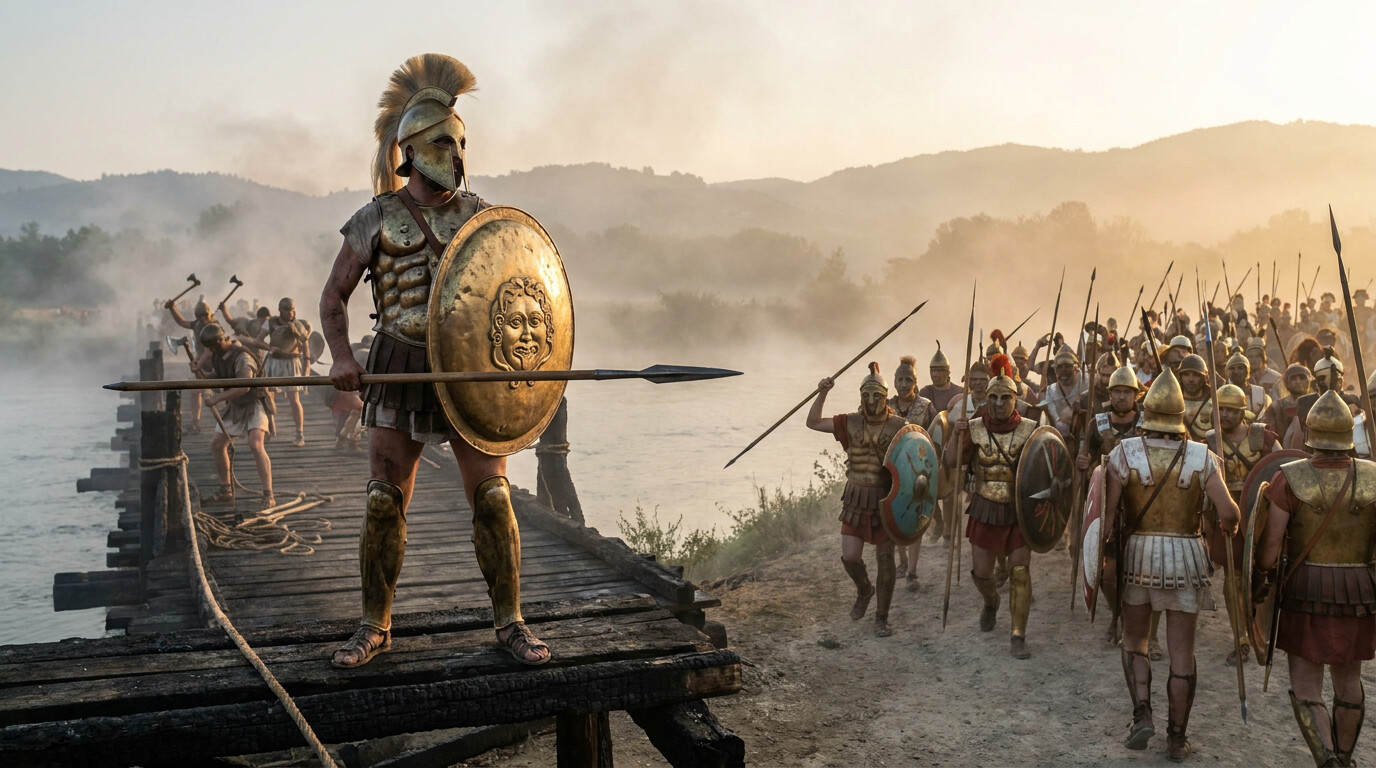
One Man, One Bridge: Horatius at the Pons Sublicius
In approximately 509 BC, a Roman officer named Horatius Cocles stood at the far end of the Pons Sublicius — the only wooden bridge across the Tiber — and held the advance of an Etruscan army while his countrymen destroyed the structure behind him. The story, preserved primarily through Livy and Dionysius of Halicarnassus and written roughly five centuries after the events described, sits at the boundary between verifiable history and Roman national myth, but its tactical logic, its human scale, and its endurance across twenty-five centuries demand serious attention.
circa 509 BC • Pons Sublicius, Rome
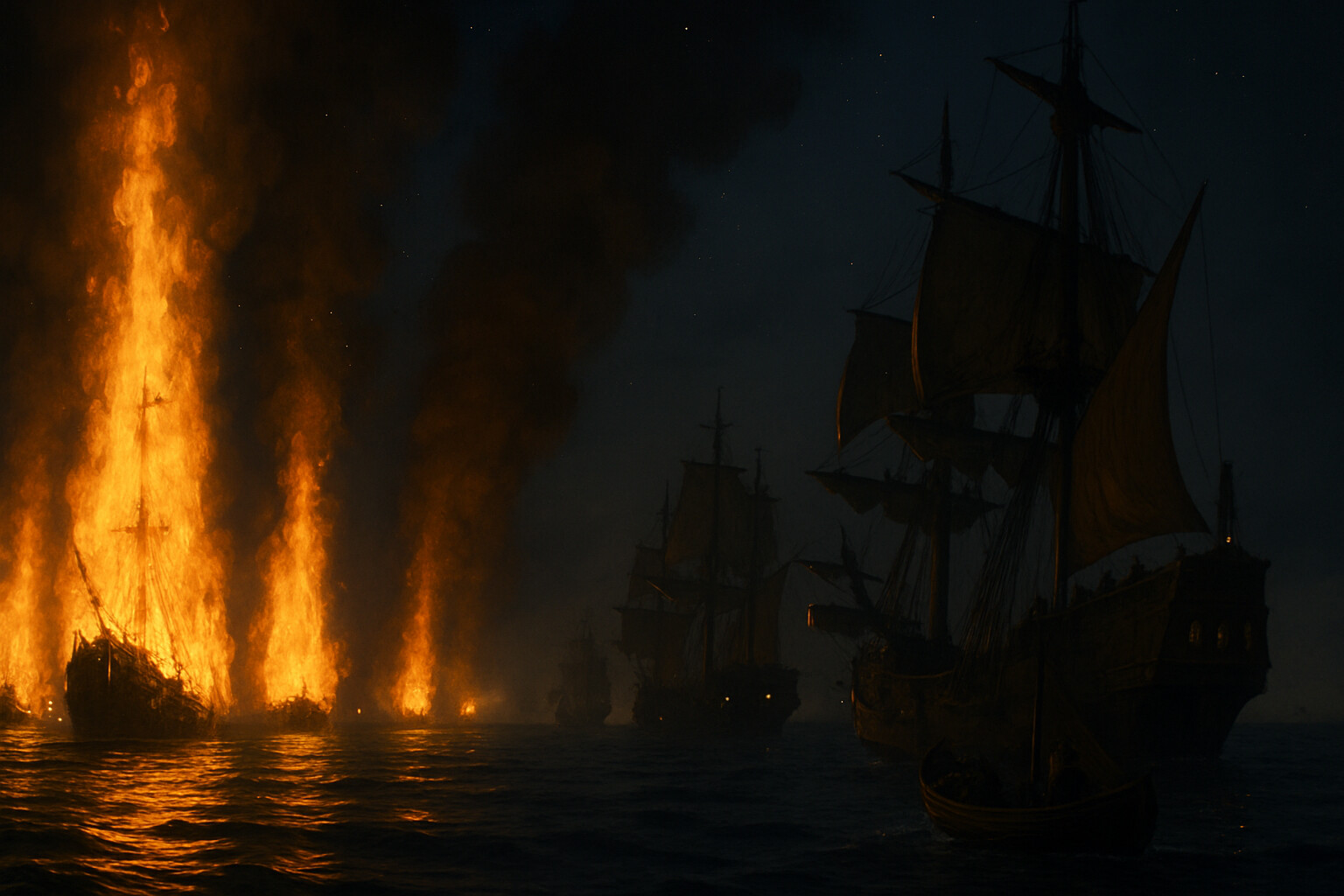
Fire on the Channel: Lord Howard and the Breaking of the Armada
In the summer of 1588, Lord High Admiral Charles Howard led the English fleet in a running battle up the English Channel against the greatest naval force Spain had ever assembled. Through skilled seamanship, sustained gunnery, and a devastating fireship attack at Calais, Howard's fleet broke the Armada's formation and opened the way for the decisive engagement at Gravelines. Atlantic storms completed the destruction — and with it, Philip II's plan to invade England.
1588 • English Channel
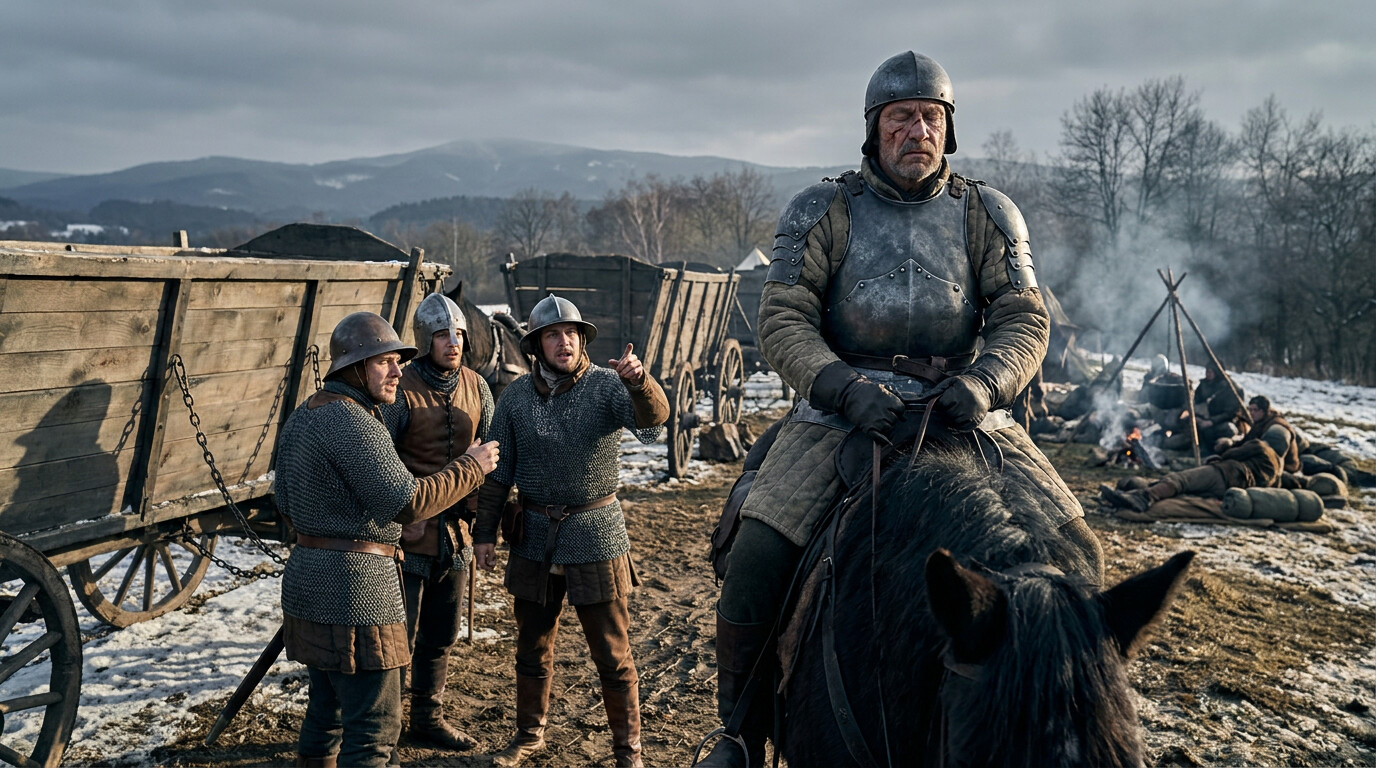
The Blind General: Jan Žižka and the Wars That Could Not Stop Him
Jan Žižka of Trocnov led Hussite peasant armies across Bohemia between 1420 and 1424, defeating crusading armies that vastly outnumbered him using armored war wagons, disciplined infantry, and combined-arms tactics. He lost his remaining eye to a projectile at the siege of Rabi in 1421 yet continued to direct campaigns by dictating orders and riding with his troops until his death from plague in 1424—undefeated in every battle he commanded.
1420-1424 • Bohemia
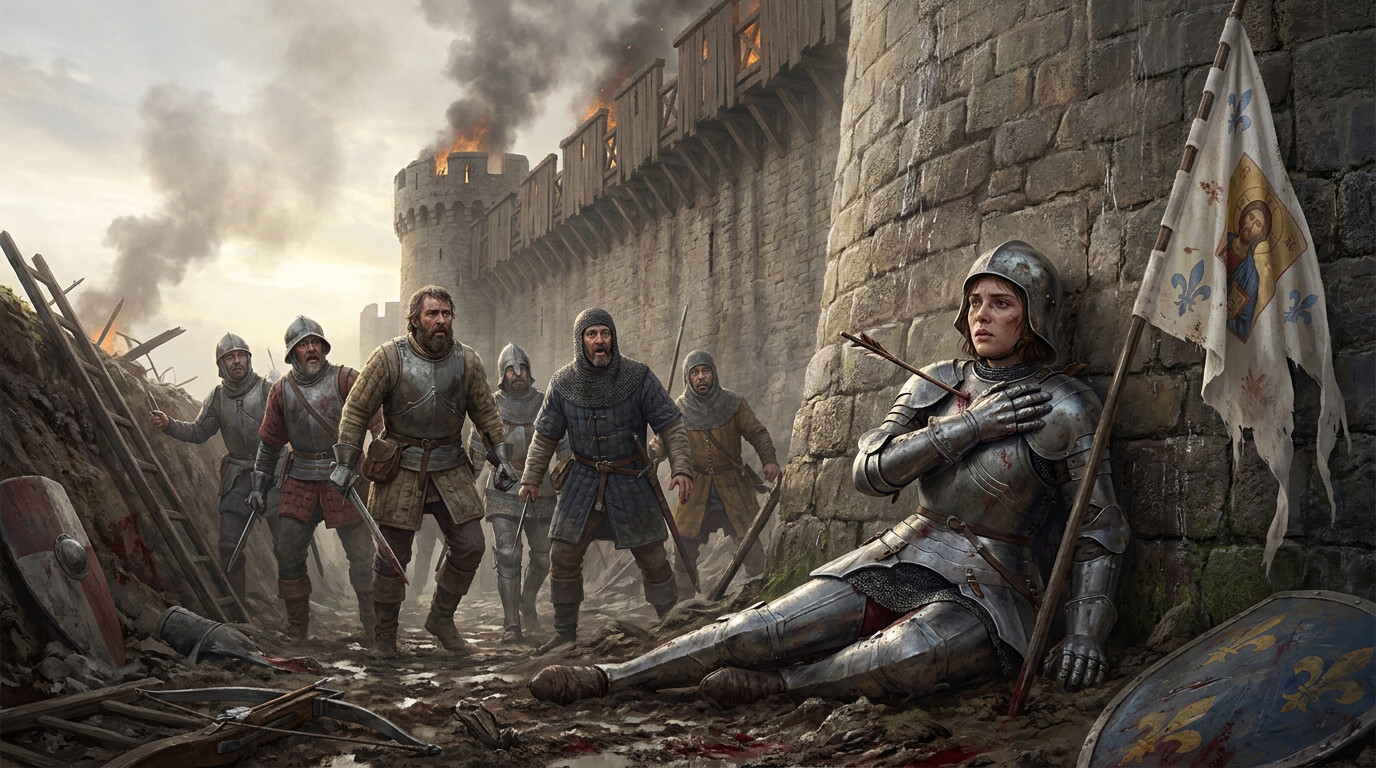
The Maid at the Wall: Joan of Arc and the Relief of Orléans, 1429
In the spring of 1429, a seventeen-year-old peasant girl from Lorraine arrived at a demoralized French army besieged inside the city of Orléans and, within nine days of active combat operations, forced the English to abandon a siege they had held for seven months. Her campaign at Orléans did not end the Hundred Years War, but it turned its direction—permanently.
April-May 1429 • Orleans, France
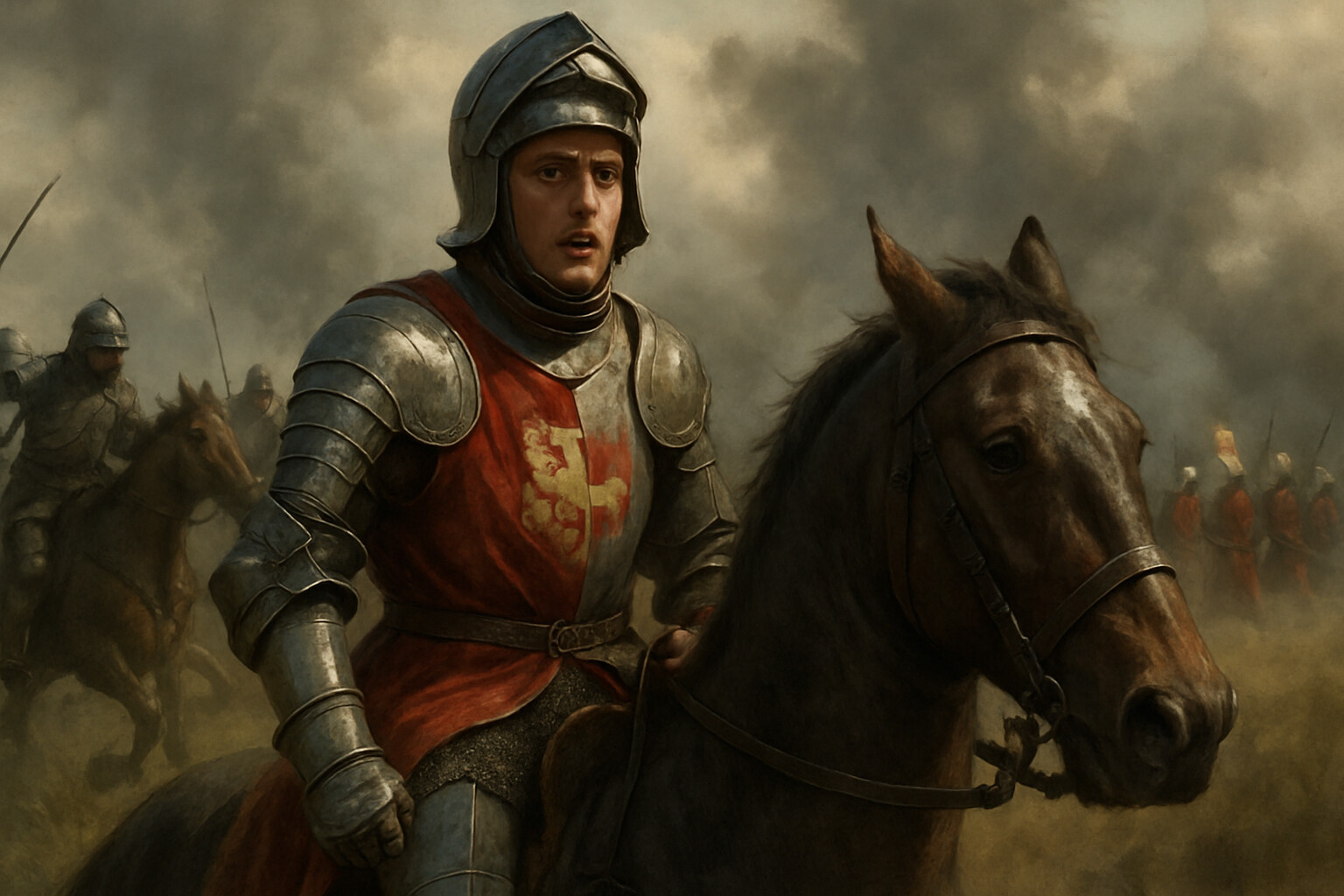
The Last Charge of the Jagiellonian: Louis II and the Ruin of Mohács
On 29 August 1526, a twenty-year-old king led the assembled strength of medieval Hungary against Suleiman the Magnificent's Ottoman army on the plain of Mohács. In under two hours the Hungarian army was shattered and Louis II was dead—leaving the heart of Europe open to Ottoman expansion for a century and a half.
1526 • Mohacs, Hungary
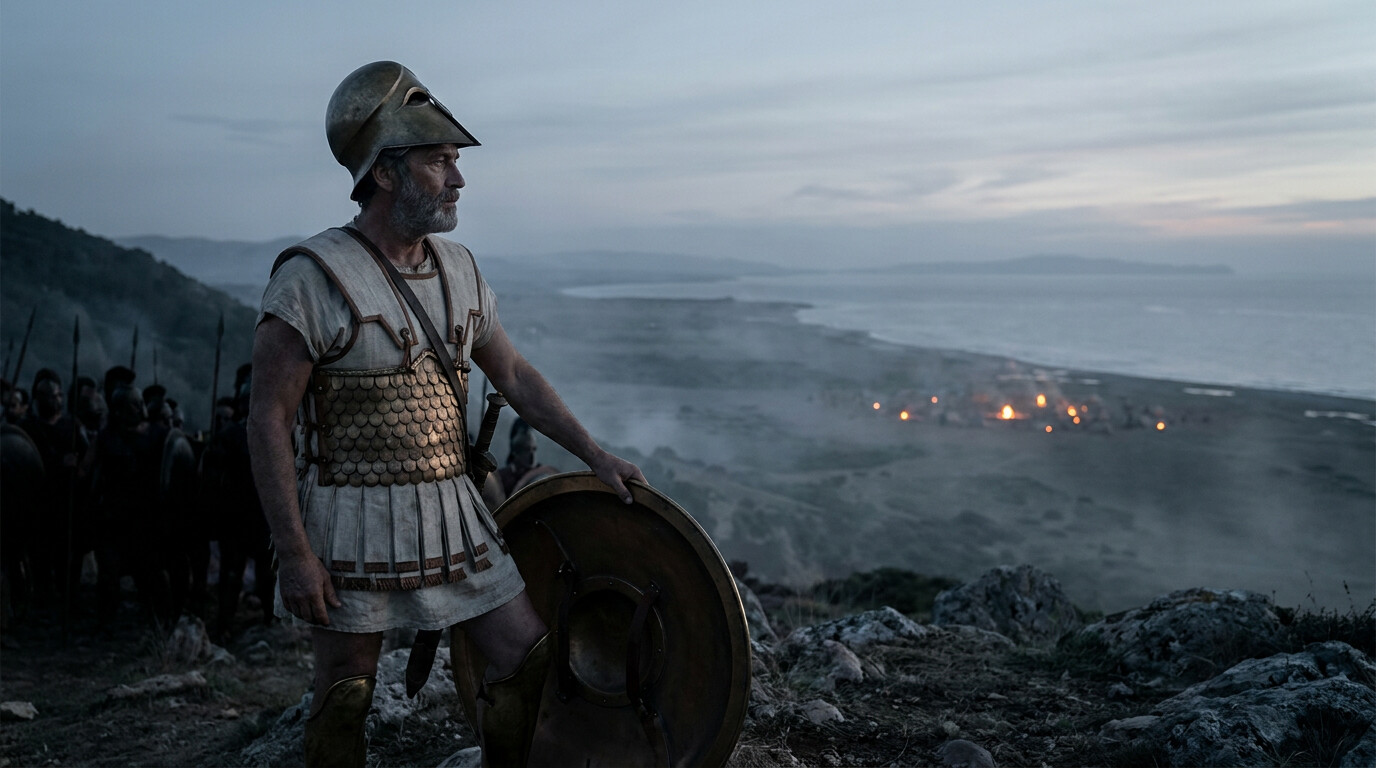
The Long Run at Marathon
In September 490 BC, Athenian Strategos Miltiades led a force of fewer than eleven thousand Athenian and Plataean hoplites in a daring charge against a Persian invasion army on the plain of Marathon. The battle's outcome halted the first major Persian attempt to subjugate mainland Greece and secured Athenian independence for a generation.
490 BC • Marathon, Attica, Greece
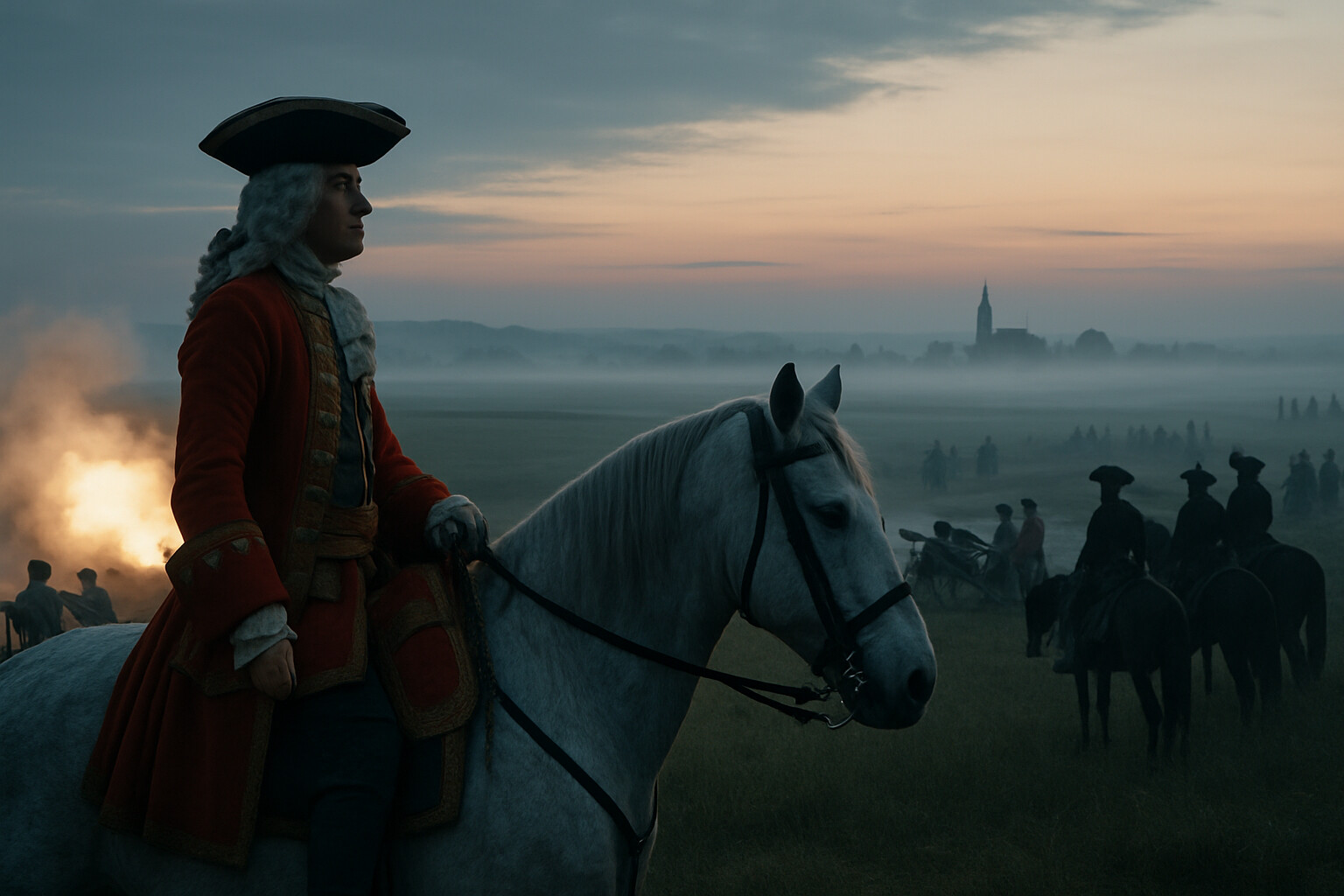
The March That Broke an Empire: Marlborough at Blenheim, 1704
In the summer of 1704, John Churchill, Duke of Marlborough, led an Allied army on a secret march of nearly 400 kilometers from the Low Countries to the Danube River, then shattered a combined French and Bavarian force at Blindheim—Blenheim—on August 13, saving Vienna and reshaping the course of the War of the Spanish Succession. It was the most decisive British land victory in more than a century, built on deception, logistical precision, and an attack through the center of an enemy whose own defensive choices had become its fatal weakness.
1704 • Blenheim, Bavaria
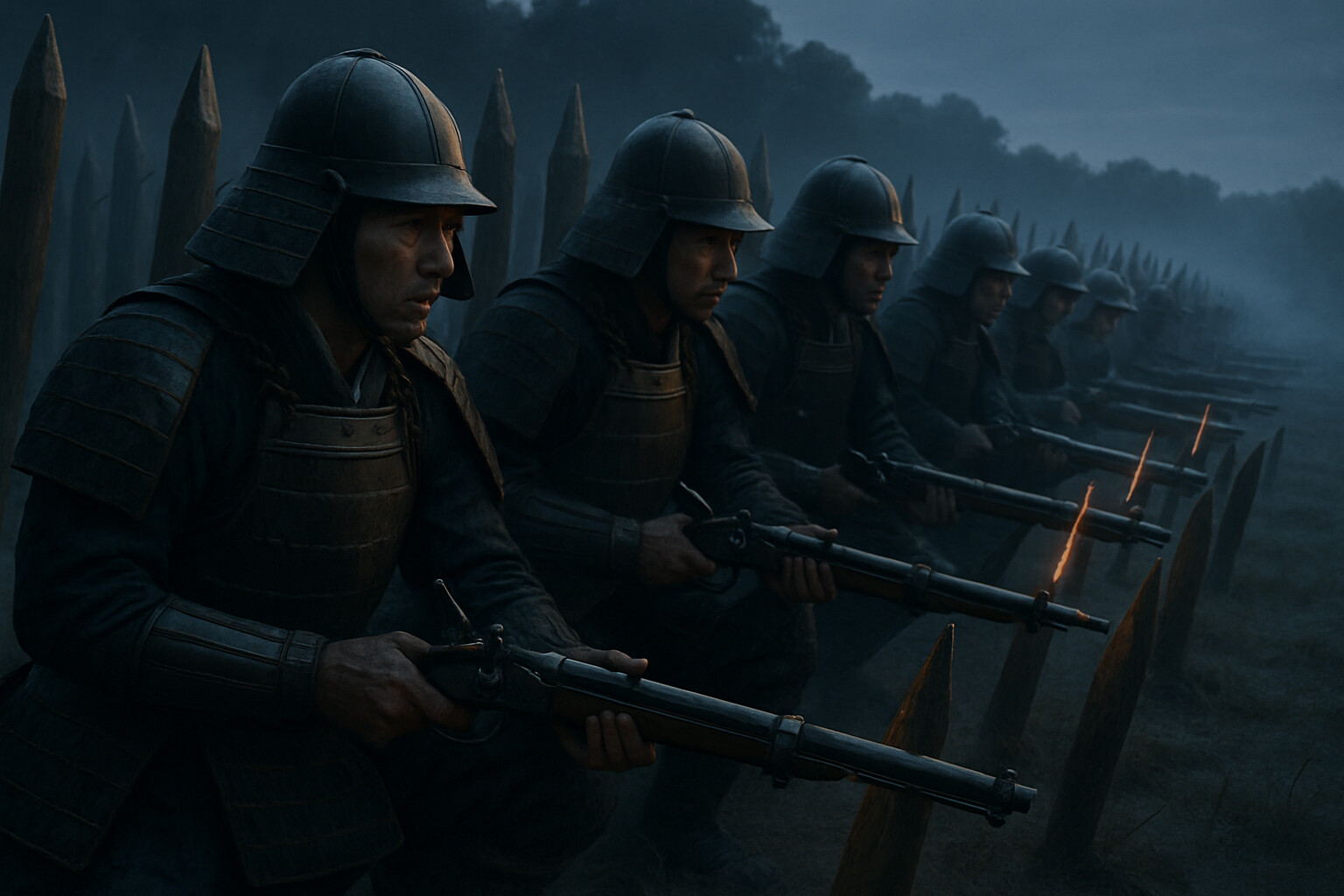
The Smoke Line at Nagashino: How Nobunaga Broke the Thundering Horse
On May 21, 1575 (traditional Japanese calendar), Oda Nobunaga deployed massed arquebusiers behind wooden palisades at Nagashino and used a rotating system of sequential fire to break the mounted charges of the Takeda clan—one of the most celebrated cavalry forces in Japanese history. The battle did not simply end a campaign; it punctuated a transformation already underway in Japanese warfare, demonstrating that disciplined gunpowder technology, when paired with field fortification, could neutralize the speed and shock of mounted samurai. Its legacy shaped the armies that completed Japan's unification.
1575 • Nagashino, Japan
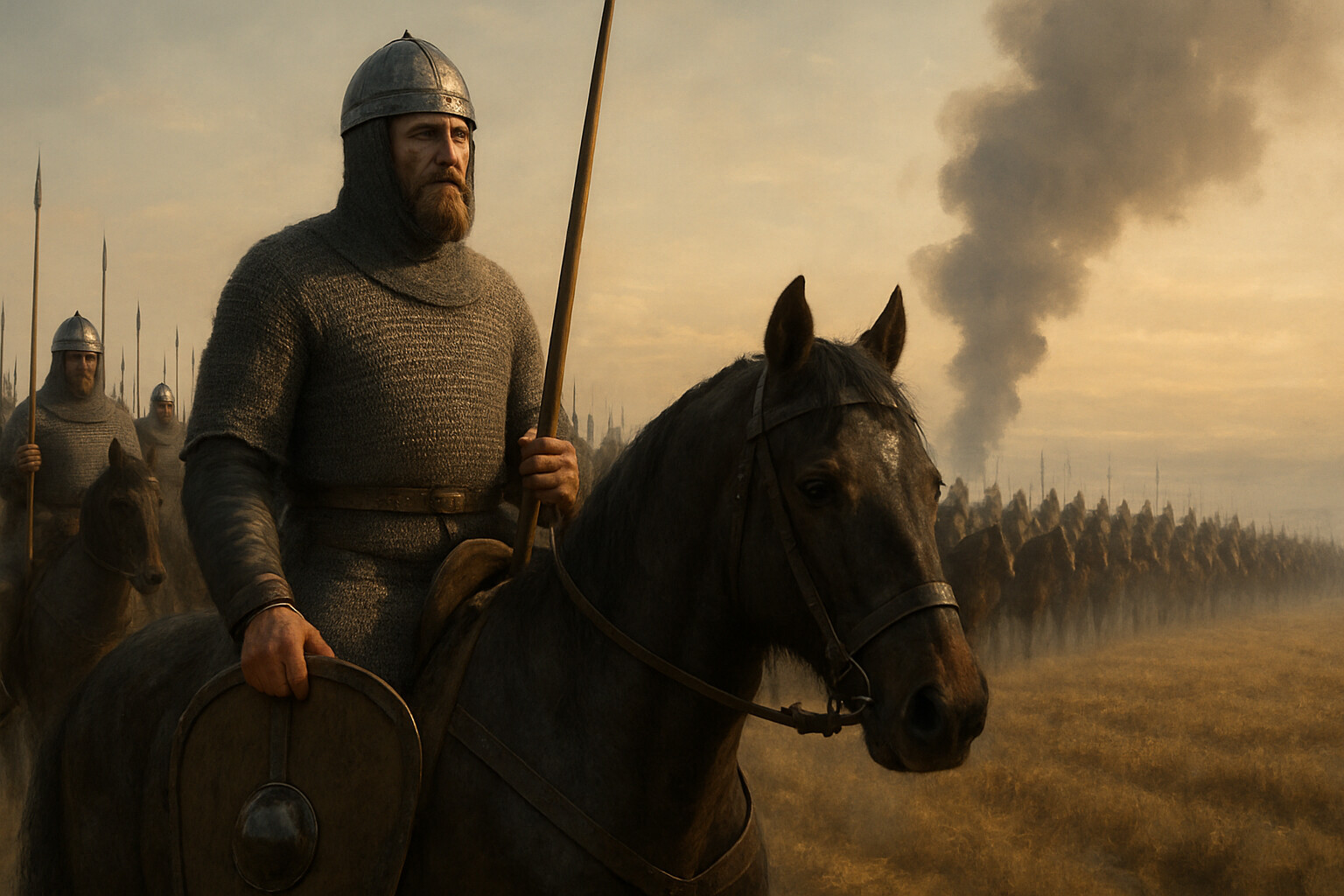
The Last Raid: Otto the Great and the Reckoning at Lechfeld
In August 955, King Otto I of the Germans led an armored cavalry force onto the plain south of Augsburg and shattered the Magyar army that had terrorized Europe for nearly a century. The Battle of Lechfeld was not simply a military victory—it was the end of an era of fear, the moment when nomadic raiders from the eastern steppe met an army that had learned, at enormous cost, how to fight them.
955 • Lechfeld, near Augsburg
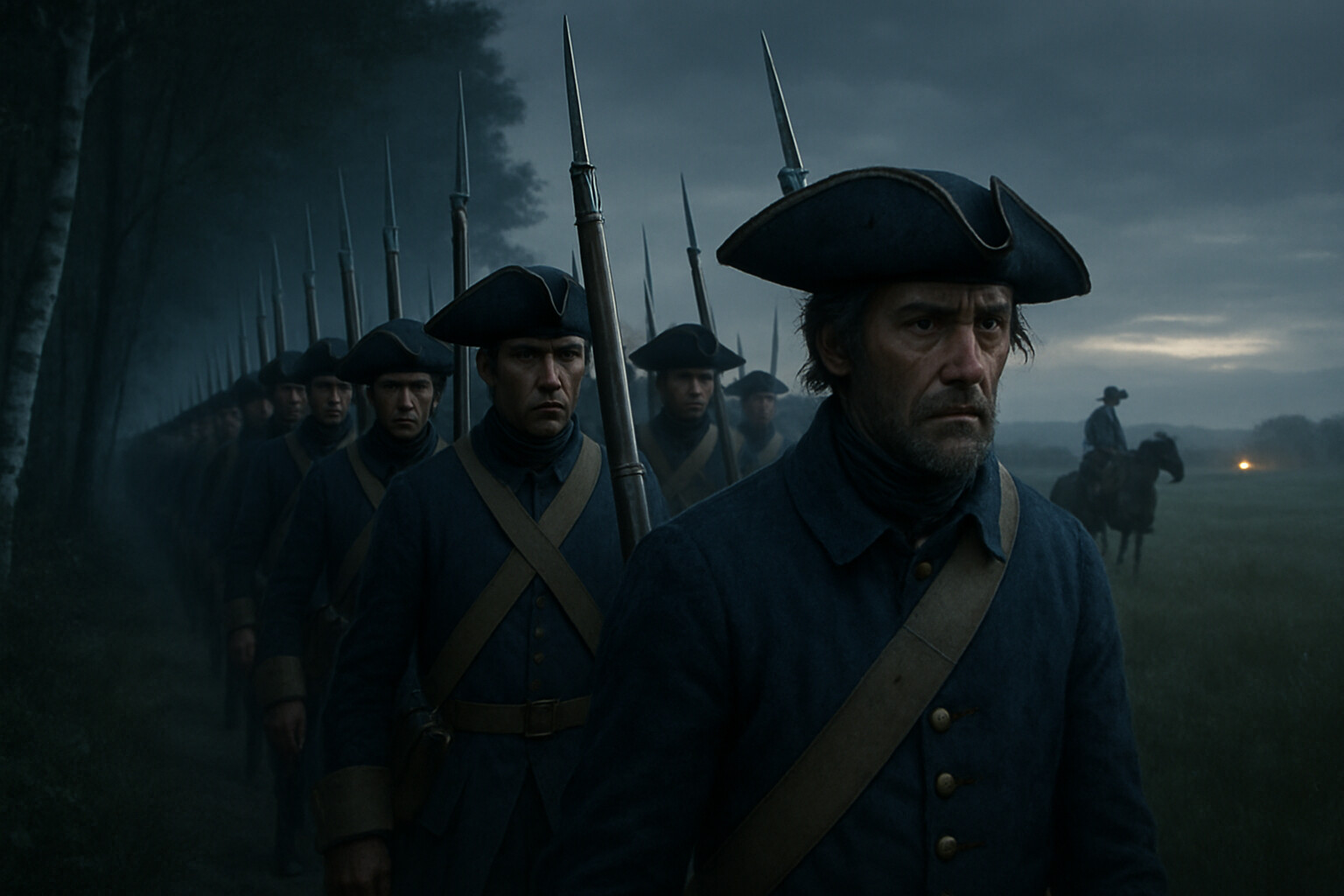
The Day the Tsar Broke the Swedes: Poltava, 1709
On 8 July 1709, Peter the Great's rebuilt Russian army met Charles XII's battered, undersupplied Swedish force outside Poltava in present-day Ukraine. What followed was not merely a battle but a verdict: within four hours, Sweden's age of Baltic empire was broken, and Russia had demonstrated it could fight and win on European terms.
1709 • Poltava, Ukraine
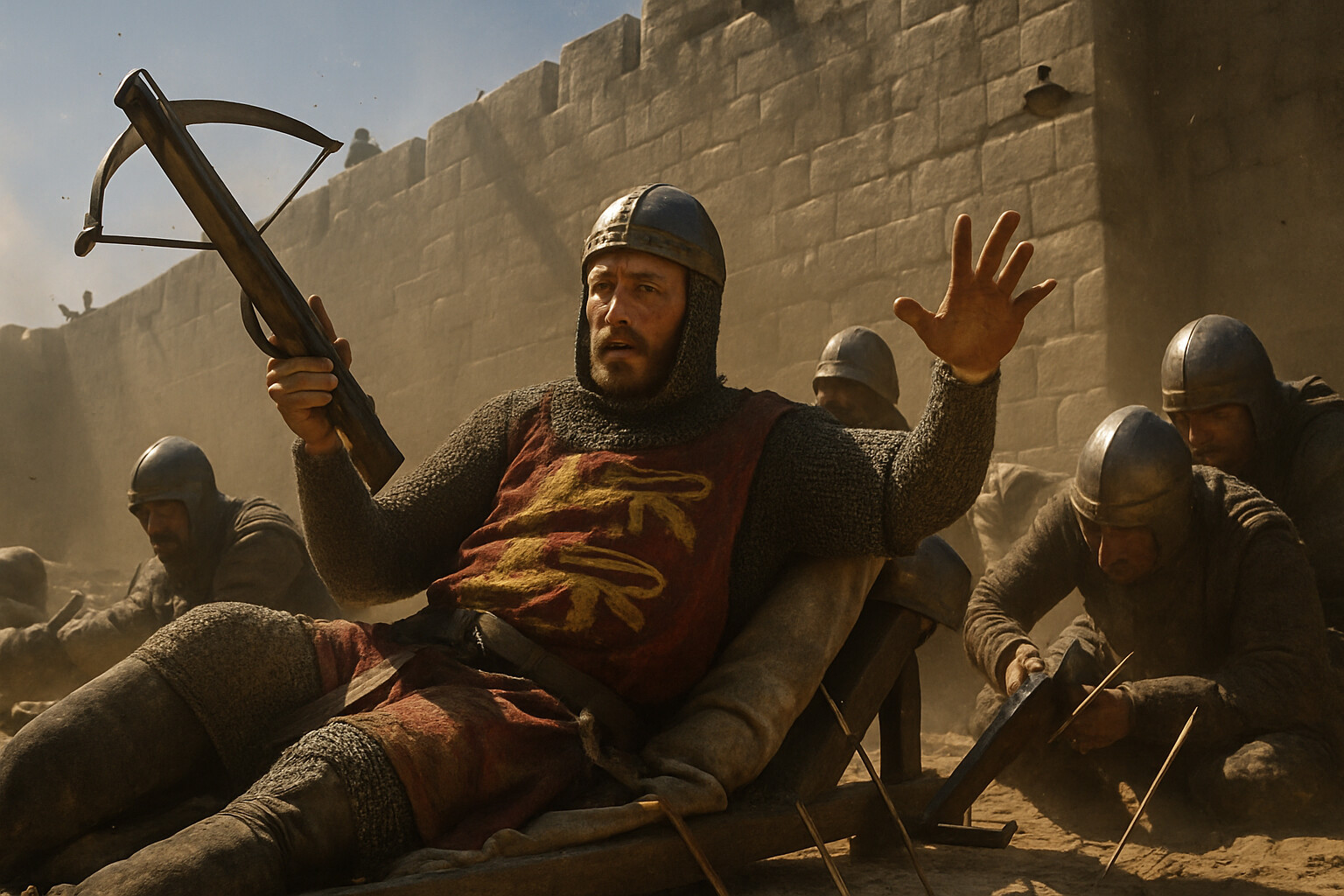
The Lion at the Gate: Richard I and the Fall of Acre
In the summer of 1191, King Richard I of England arrived at the walls of Acre after a two-year stalemate had pushed the Crusader besieging army to the edge of collapse. Within weeks of his landing, the city fell — not through a single dramatic assault, but through siege engineering, naval dominance, relentless pressure, and Richard's ability to impose operational order on a fractured coalition. The fall of Acre opened the Third Crusade's road toward Jerusalem, and its full cost — including the massacre of the garrison's prisoners — remains part of the record.
1189-1191 • Acre, Holy Land
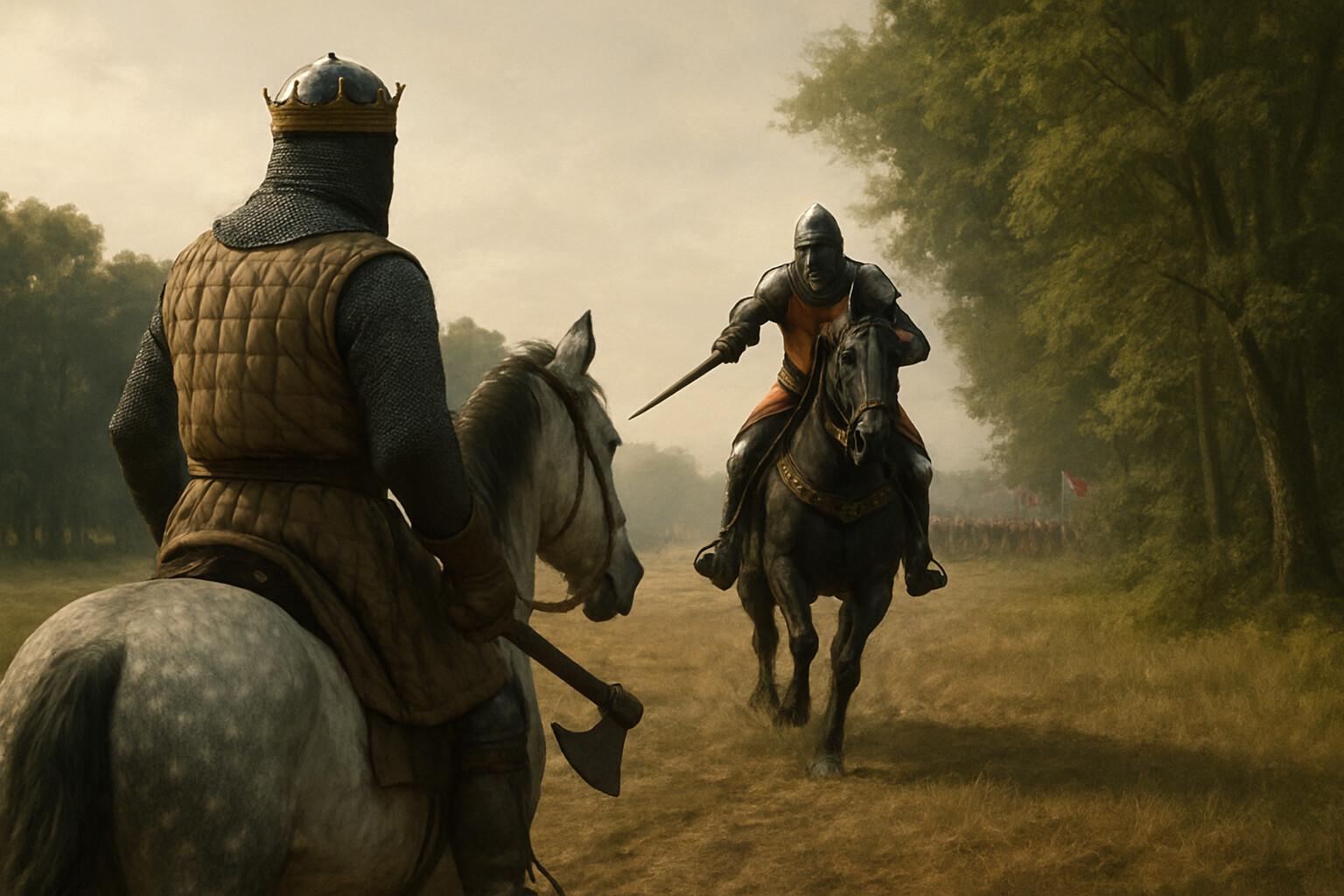
The King at the Burn: Robert the Bruce and the Battle of Bannockburn
On the eve of the largest battle of the First War of Scottish Independence, Robert the Bruce killed an English knight in single combat before the eyes of both armies. The following day, he broke Edward II's relief force on the boggy ground south of Stirling, securing Scotland's de facto independence in a single morning's fighting. Bannockburn did not end the war, but it made Scottish conquest too costly for England to sustain.
June 23-24, 1314 • Bannockburn, Scotland
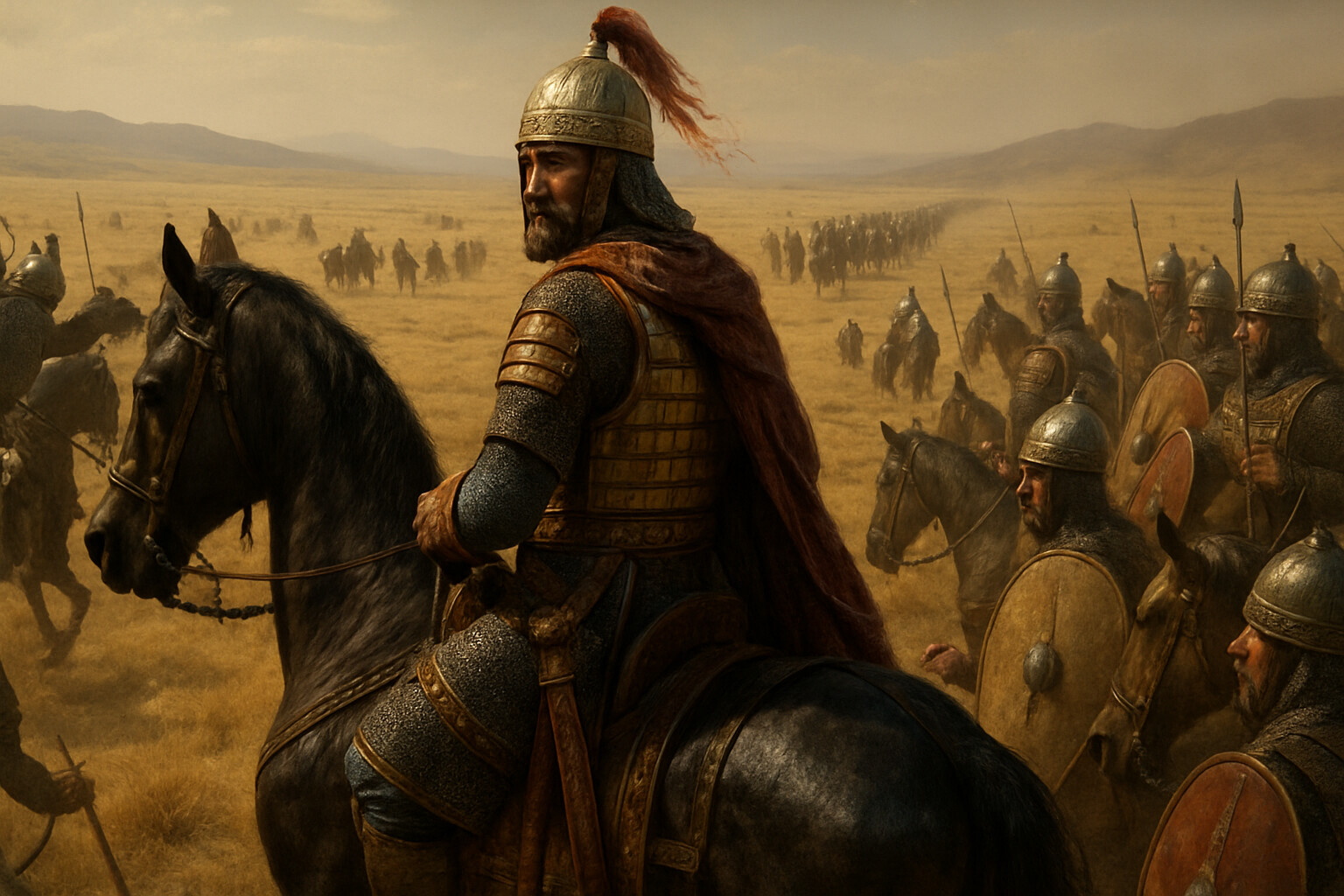
The Broken Center: Romanos IV Diogenes and the Disaster at Manzikert
On August 26, 1071, Byzantine Emperor Romanos IV Diogenes led the most powerful army the empire had assembled in a generation against the Seljuk sultan Alp Arslan near the Armenian fortress town of Manzikert. What followed was not simply a battlefield defeat — it was a catastrophic unraveling driven by tactical isolation, the withdrawal of a rival commander's rearguard, and the relentless pressure of Seljuk horse archers who refused to stand and fight. The disaster at Manzikert cracked open Anatolia and set the Byzantine Empire on a course from which it would never fully recover.
1071 • Manzikert, Armenia
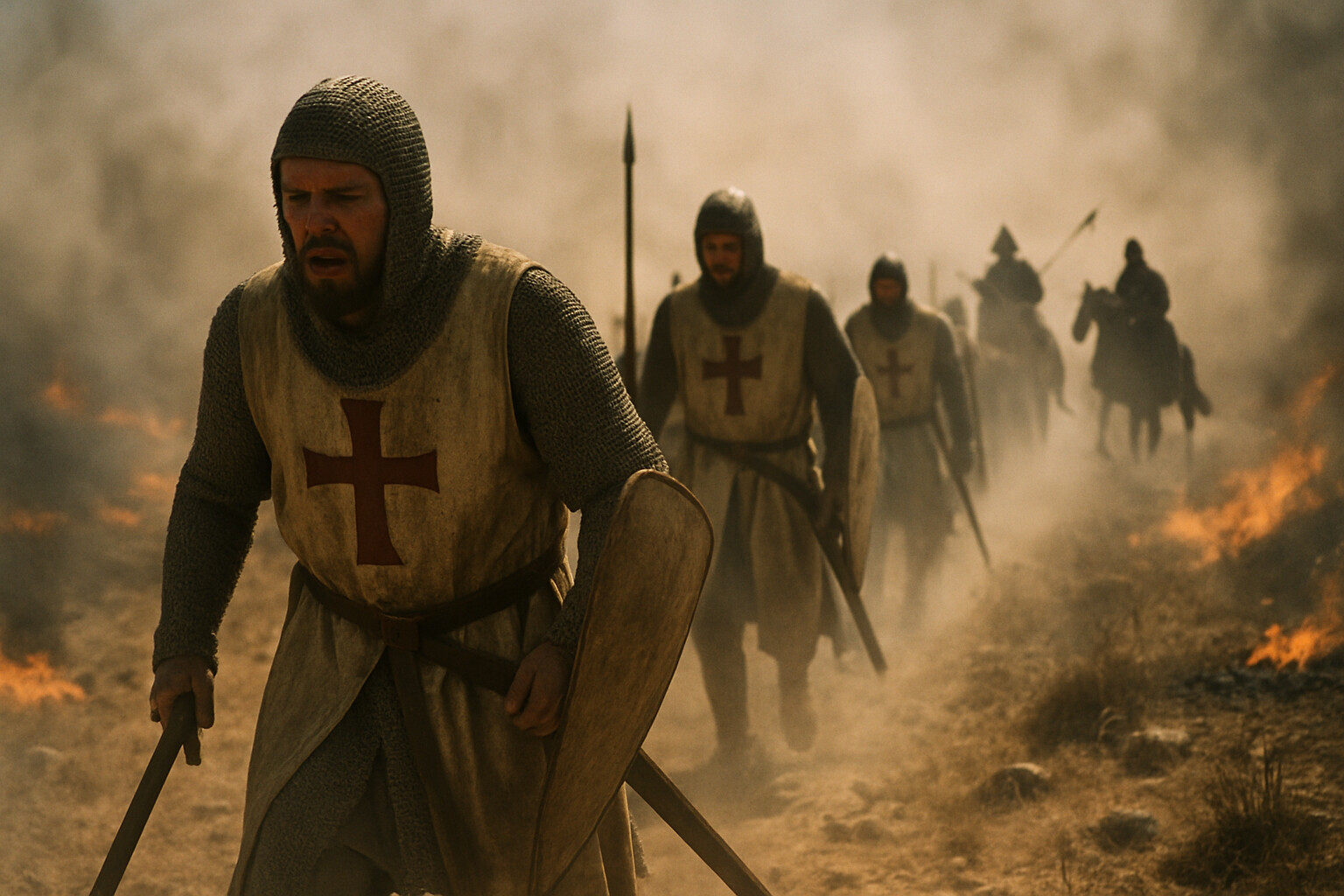
The Broken Crescent: Saladin and the Destruction of the Crusader Kingdom at Hattin
In July 1187, Sultan Saladin maneuvered the combined military strength of the Crusader Kingdom of Jerusalem onto a waterless plateau above the Sea of Galilee and destroyed it. The Battle of Hattin was not simply a military victory; it was the strategic dismemberment of a kingdom, accomplished through patience, geographic mastery, and the deliberate use of thirst as a weapon.
1187 • Horns of Hattin, Galilee
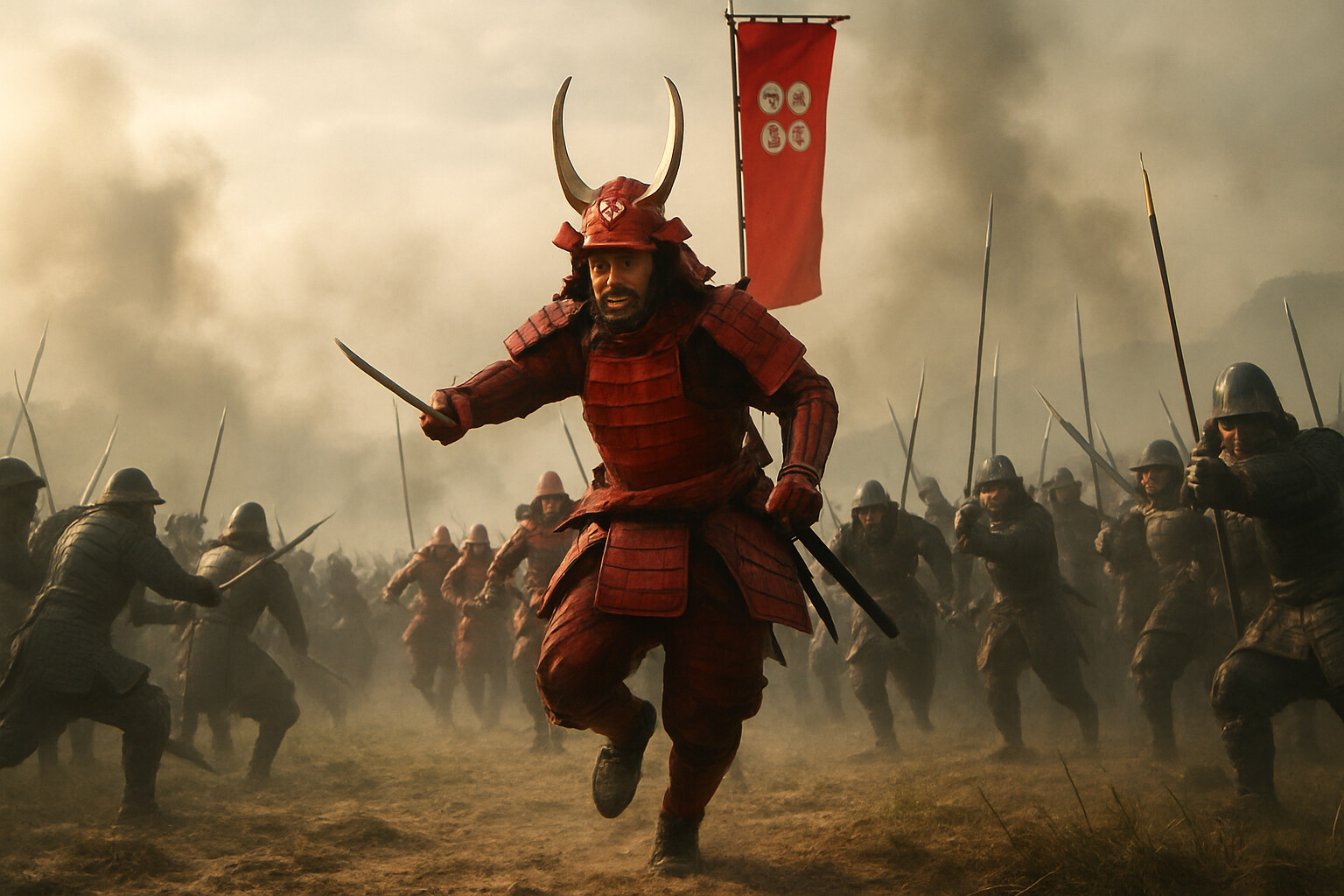
The Tiger of Osaka: Sanada Yukimura's Last Stand
In the winter of 1614 and the summer of 1615, Sanada Yukimura led the defense of Osaka Castle against the overwhelming armies of Tokugawa Ieyasu, constructing a fortified outwork that became the most costly position on the battlefield. His final charge at the Battle of Tennoji on June 3, 1615, ended his life but cemented his reputation as the finest warrior of the Sengoku era—a distinction preserved in chronicle tradition attributed to the enemies who fought and killed him, though the precise source of that attribution requires specialist verification before it can be treated as historical record.
1614-1615 • Osaka, Japan
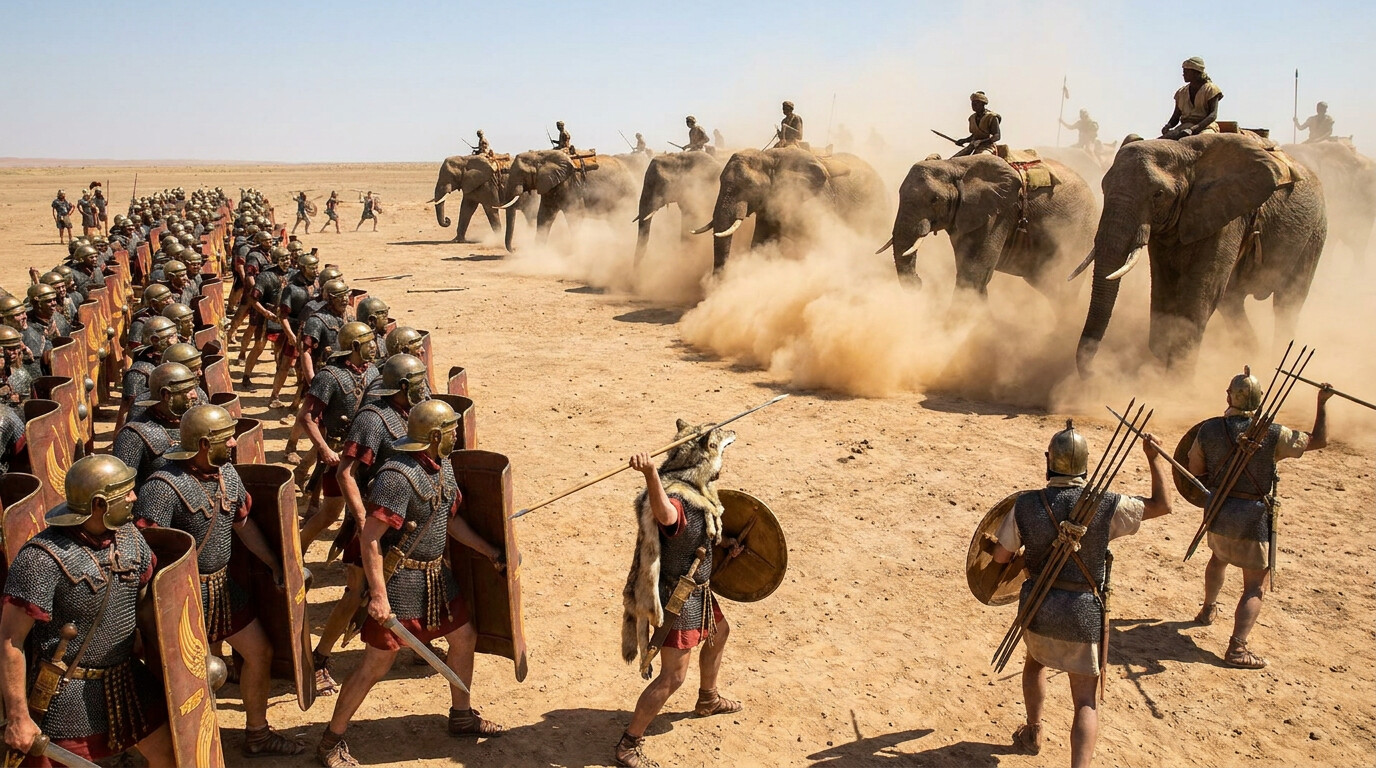
The General Who Learned from His Enemy: Scipio Africanus at Zama
In 202 BC, Roman Consul Publius Cornelius Scipio met Carthaginian general Hannibal Barca on the plains near Zama in North Africa — the first and only time the two commanders faced each other directly. Scipio, who had spent years studying Hannibal's methods and had already reversed those methods against Carthaginian forces in Spain, employed a combination of structural innovation, disciplined infantry, and coordinated cavalry to defeat the general who had threatened Rome for over a decade. The Battle of Zama ended the Second Punic War and stripped Carthage of its power to contest Roman dominance of the Mediterranean.
202 BC • Zama, North Africa
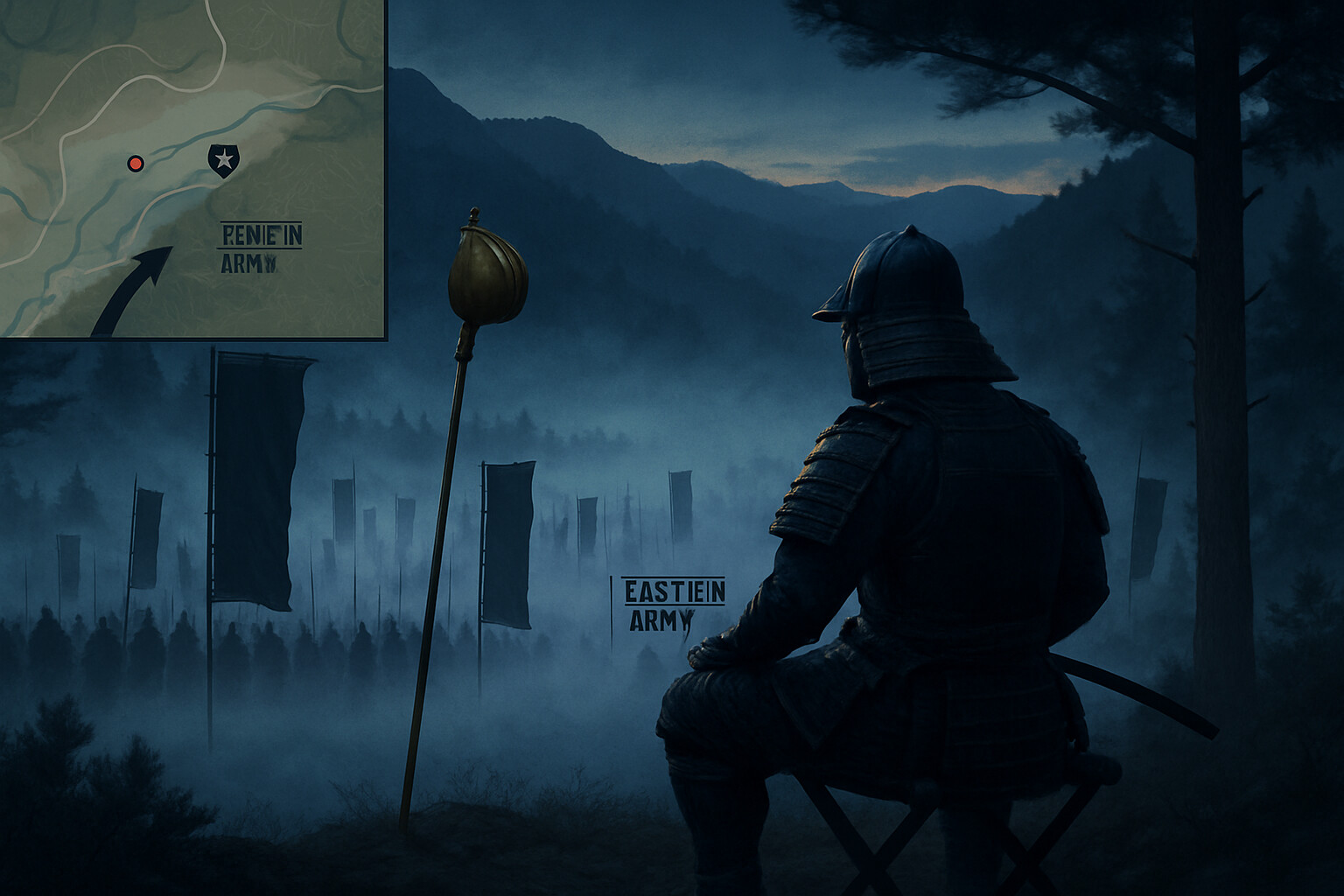
The Fog at Sekigahara: How One Morning Made a Shogun
On the morning of October 21, 1600, Tokugawa Ieyasu committed roughly 75,000 soldiers to a mountain valley in central Japan and gambled his life, his clan, and the future of the country on a single day's battle. What followed—shaped by a calculated betrayal, close-range arquebus fire, and the collapse of an army that outnumbered his own—would close the Sengoku period and open 265 years of Tokugawa rule.
1600 • Sekigahara, Japan
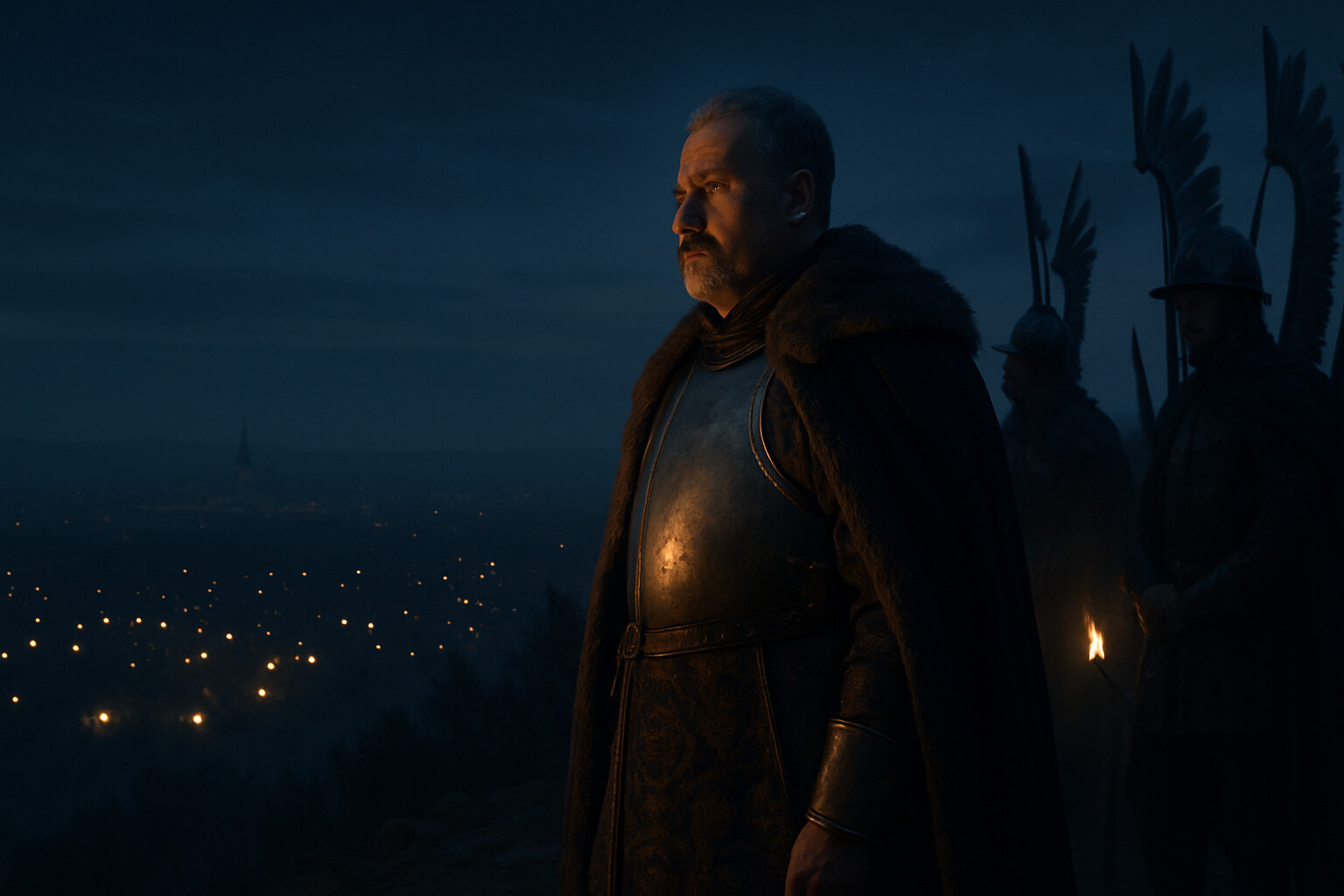
The Winged Charge: Jan III Sobieski and the Relief of Vienna, 1683
On September 12, 1683, Polish King Jan III Sobieski led the largest cavalry charge of the era down the slopes of the Kahlenberg outside Vienna, shattering an Ottoman siege army and ending the empire's sustained bid to push into Central Europe. The battle combined Polish winged hussars, German and Austrian imperial troops, and the coordinated generalship of a multi-national coalition into a single violent afternoon that historians across four countries have studied for more than three centuries.
1683 • Vienna, Austria
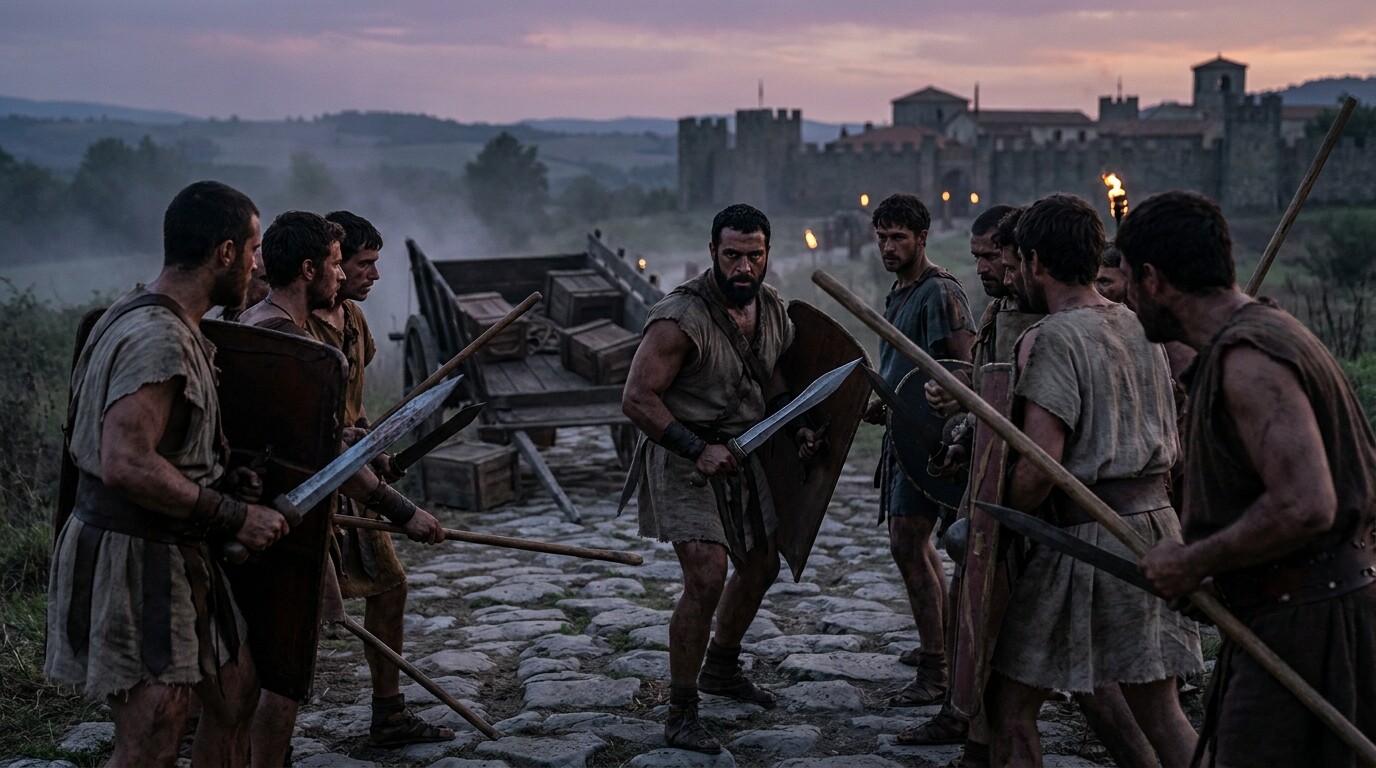
The Hammer of Capua: Spartacus and the War Rome Could Not Ignore
In 73 BC, a Thracian gladiator named Spartacus led fewer than a hundred men out of a gladiatorial school at Capua and ignited the most dangerous slave revolt in Roman history. Over two years, his army defeated multiple Roman forces in the field before Marcus Licinius Crassus sealed the peninsula with engineering, crushed the rebellion, and left six thousand crucified survivors along the Appian Way. The Third Servile War forced Rome to reckon with the scale of the threat it had built into its own economy.
73-71 BC • Italy
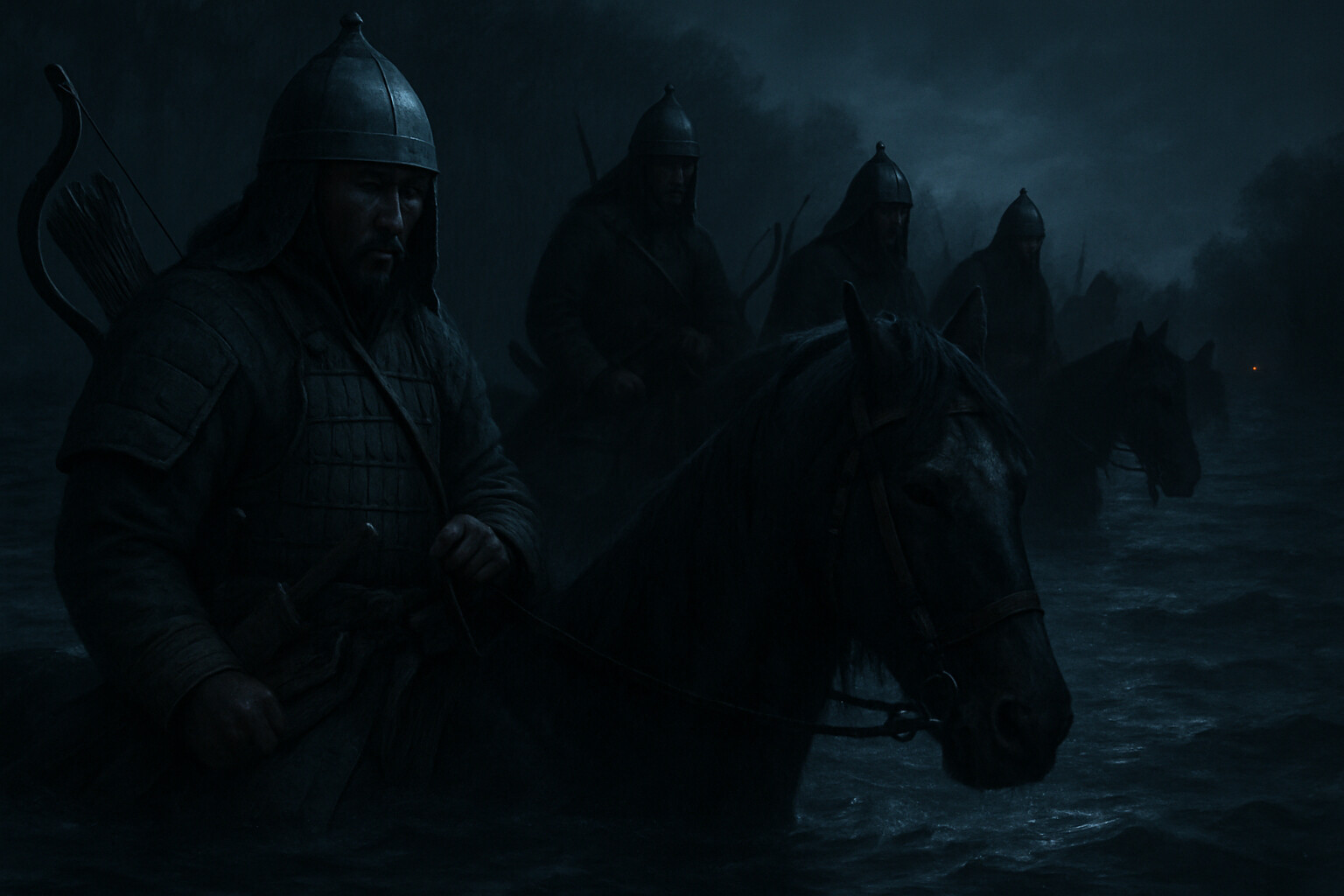
The Two-Headed Arrow: Subutai's Campaign to Shatter Europe, 1241
In the spring of 1241, Mongol general Subutai orchestrated one of the most sophisticated military campaigns in medieval history, splitting his forces across hundreds of miles to destroy Polish and Hungarian armies at Legnica and Mohi within days of each other. The coordinated strikes, executed without electronic communications and timed to prevent any European reinforcement, revealed a strategic architecture that European commanders could not comprehend and could not survive. The campaign left Central Europe devastated and remains one of the most studied operational designs of the medieval world.
1241 • Hungary and Poland
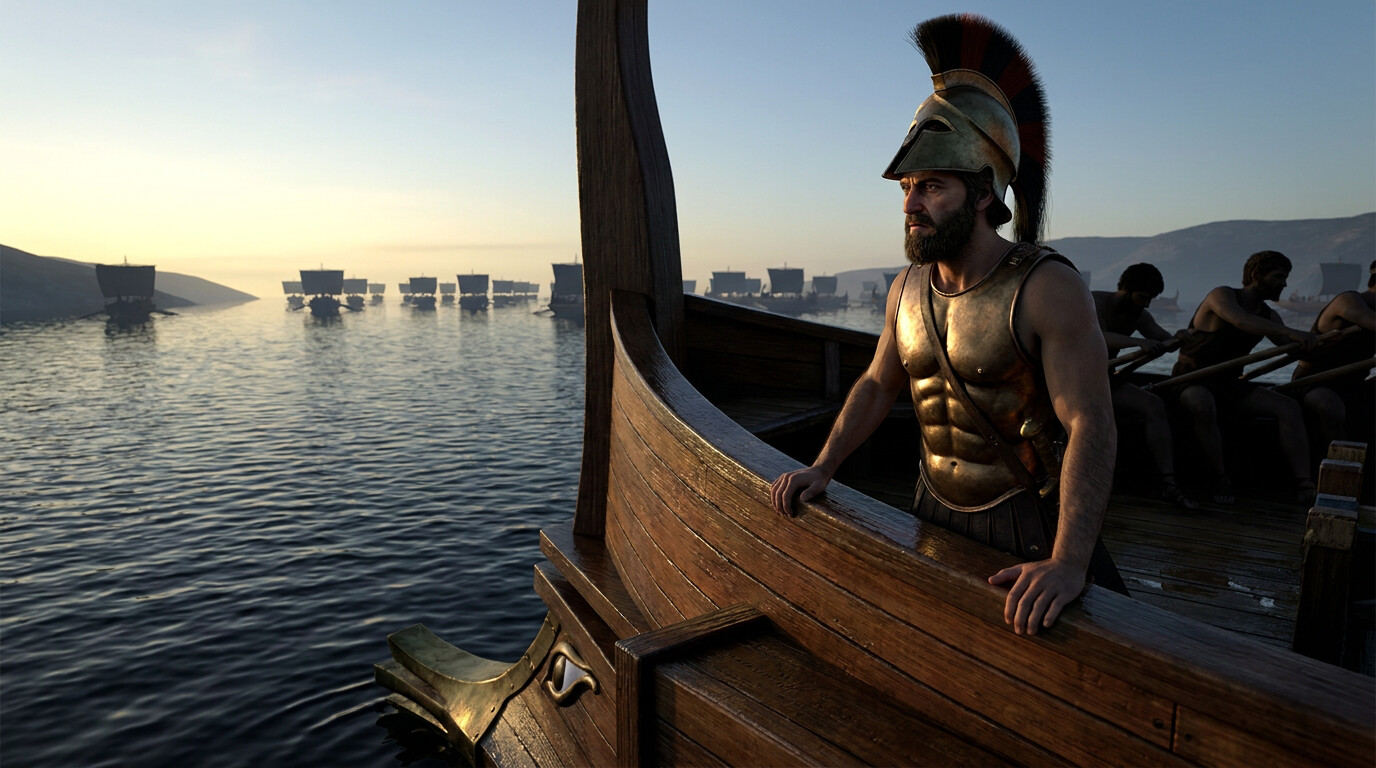
The Narrows: How Themistocles Broke the Persian Fleet at Salamis
In September 480 BC, Athenian strategos Themistocles engineered one of history's most consequential naval deceptions, luring the massive Persian fleet of Xerxes I into the narrow strait of Salamis where Greek triremes turned numerical disadvantage into decisive strategic victory. The battle ended the Persian naval threat in the Aegean and, combined with the land victory at Plataea the following year, preserved the independence of the Greek city-states.
480 BC • Salamis Strait, Greece
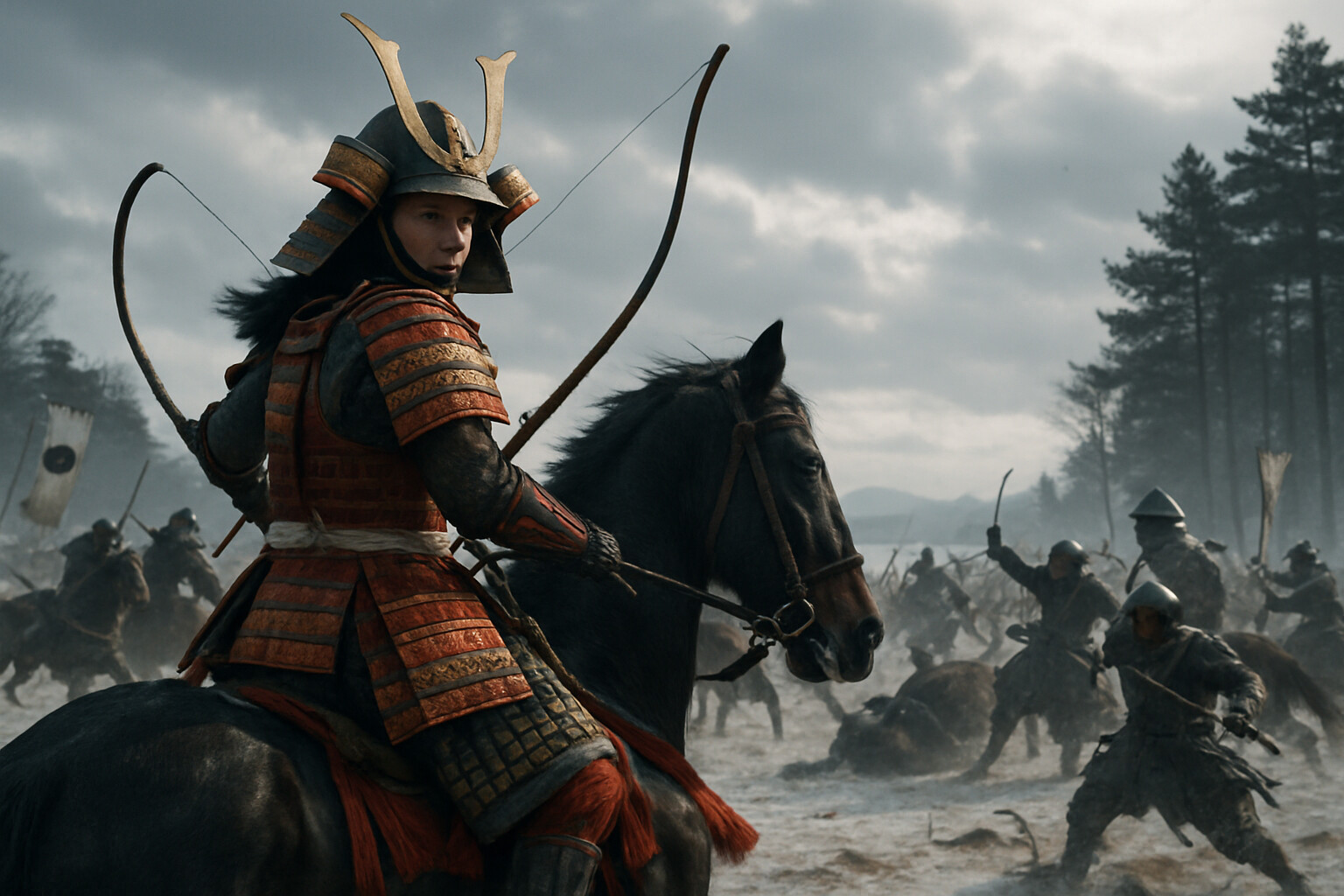
The Last Ride at Awazu: Tomoe Gozen and the End of Yoshinaka's War
In the winter of 1184, as Minamoto no Yoshinaka's forces collapsed around Lake Biwa, a woman warrior named Tomoe Gozen fought through the chaos of his final stand. Her name survived the centuries. The full truth of what she was, and what she did at Awazu, is harder to hold than a sword.
1184 • Awazu, Japan
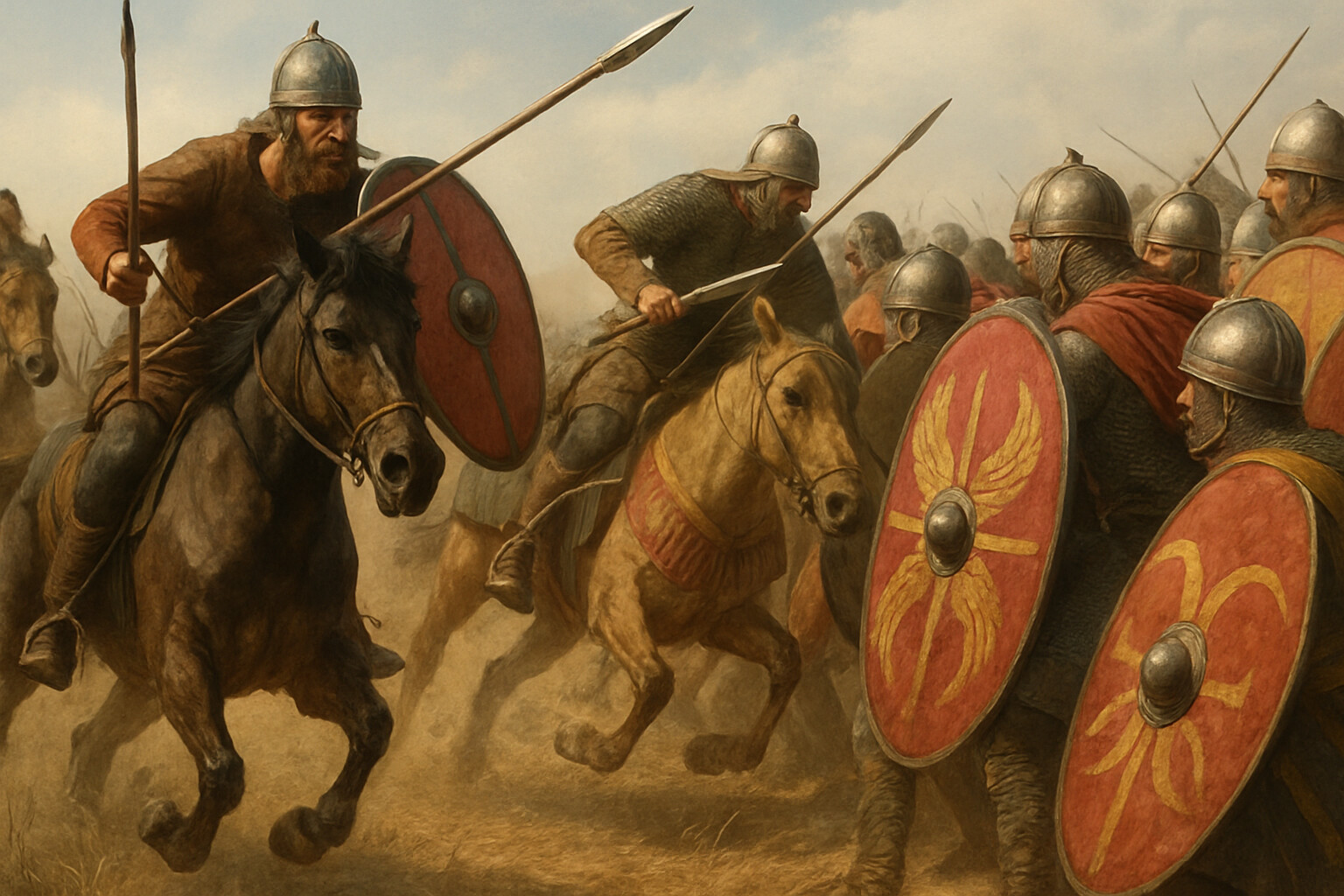
The Day the Eagles Fell: Valens and the Disaster at Adrianople
On August 9, 378 AD, the Eastern Roman Emperor Valens led his field army into battle against Gothic forces near Adrianople. What began as a calculated imperial offensive collapsed into catastrophic rout when Gothic cavalry returned unexpectedly and enveloped the Roman infantry. Valens was killed, along with roughly two-thirds of his army — a defeat that forced Rome to reckon with the limits of the military system it had relied on for centuries.
378 AD • Adrianople (Edirne, Turkey)
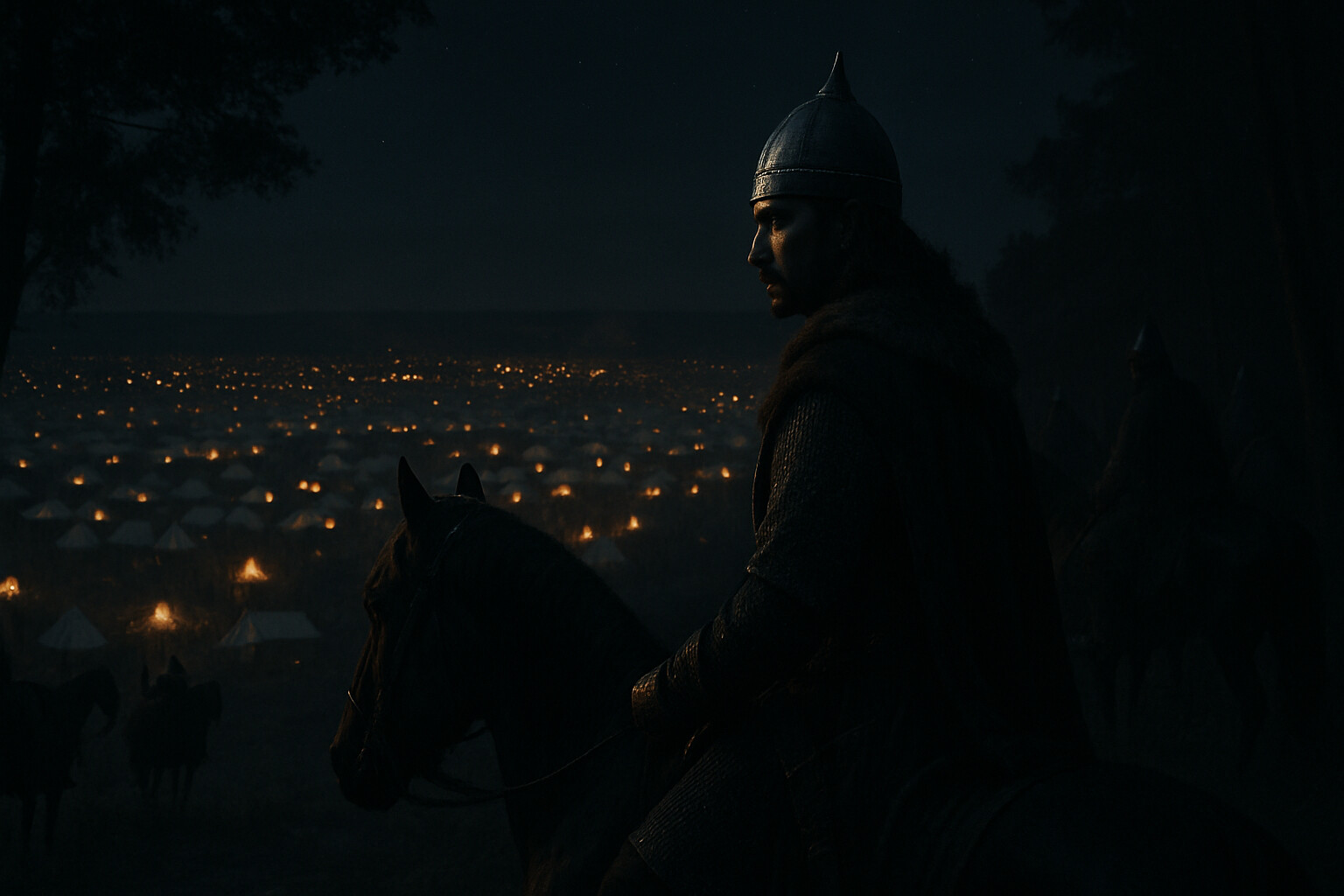
The Prince Who Came by Night: Vlad III and the Raid on Mehmed's Camp
In June 1462, Voivode Vlad III of Wallachia led a night assault into the heart of a massive Ottoman army, seeking to kill Sultan Mehmed II and break an invasion that outnumbered his forces by a catastrophic margin. The raid failed to reach the sultan. What followed — the withdrawal, the abandoned capital, and the field of impaled prisoners left outside Târgoviște — became one of the most psychologically calculated sequences of warfare in the medieval Balkans, documented across Byzantine, Ottoman, and Western sources.
1462 • Targoviste, Wallachia
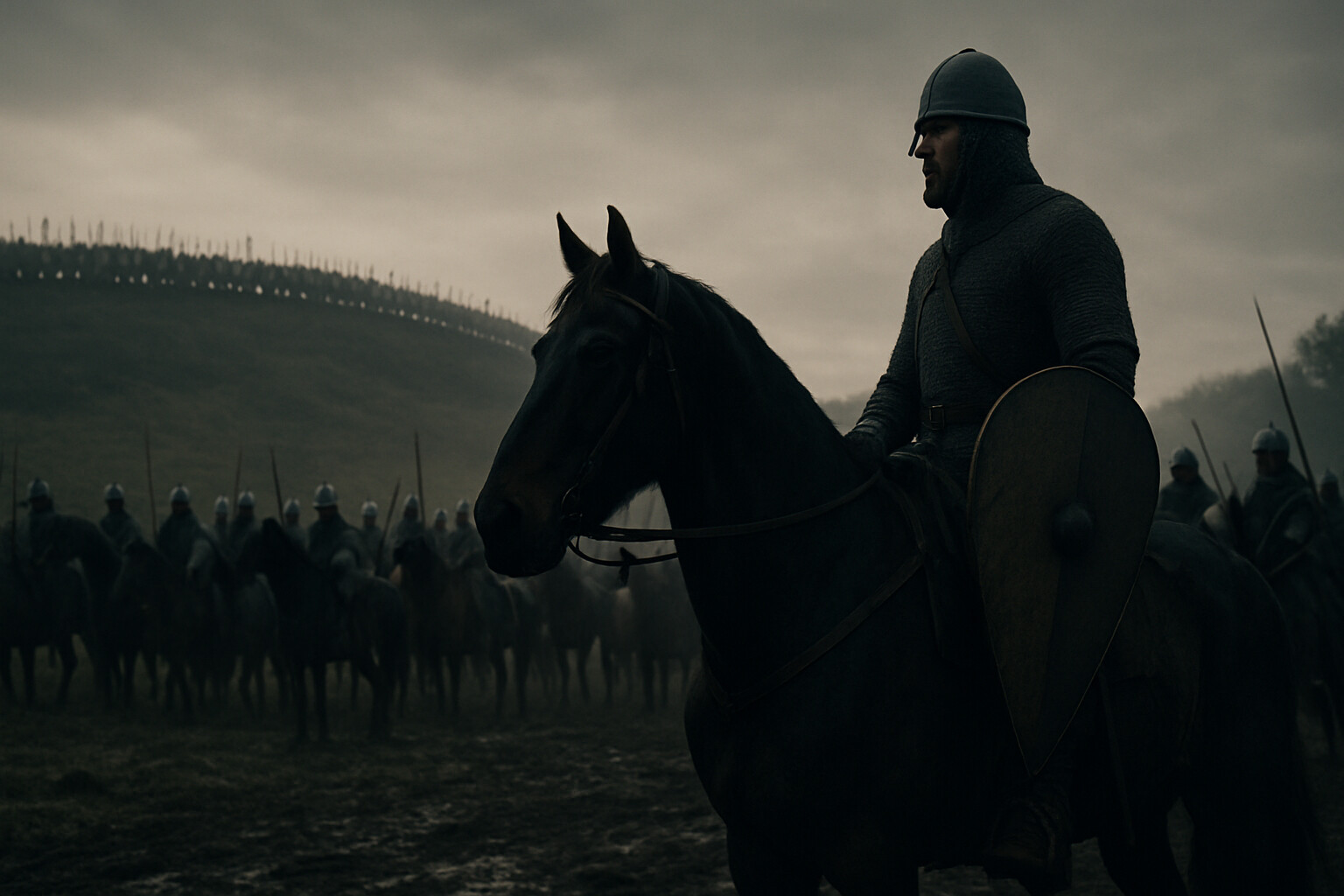
The Hill That Broke a Kingdom: William at Hastings, 14 October 1066
On a ridge above the English coast on 14 October 1066, Duke William of Normandy led a combined-arms assault that shattered the Anglo-Saxon shield wall through disciplined archery, infantry pressure, cavalry charges, and the exploitation of a broken pursuit. The battle lasted roughly nine hours and ended not only King Harold II's reign but the entire political world of Anglo-Saxon England, reshaping the language, law, land, and ruling class of a kingdom.
1066 • Hastings, England
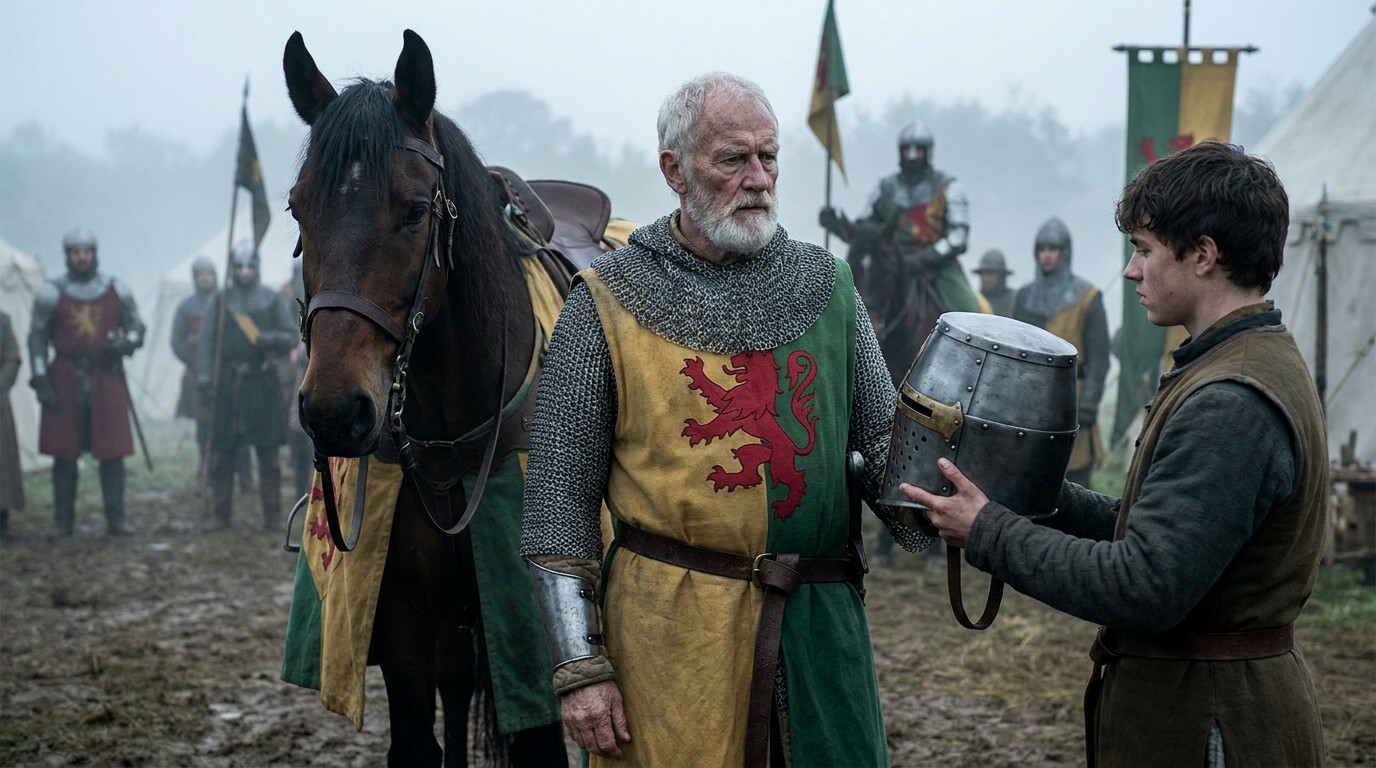
The Last Charge of the Greatest Knight: William Marshal at Lincoln, 1217
Born landless and nearly executed as a child hostage, William Marshal rose through tournament circuits and four decades of royal service to become regent of England. At approximately seventy years old, he led the cavalry charge that broke the French-backed baronial occupation of Lincoln and preserved the Plantagenet crown for the boy-king Henry III.
1147-1219 • England and France
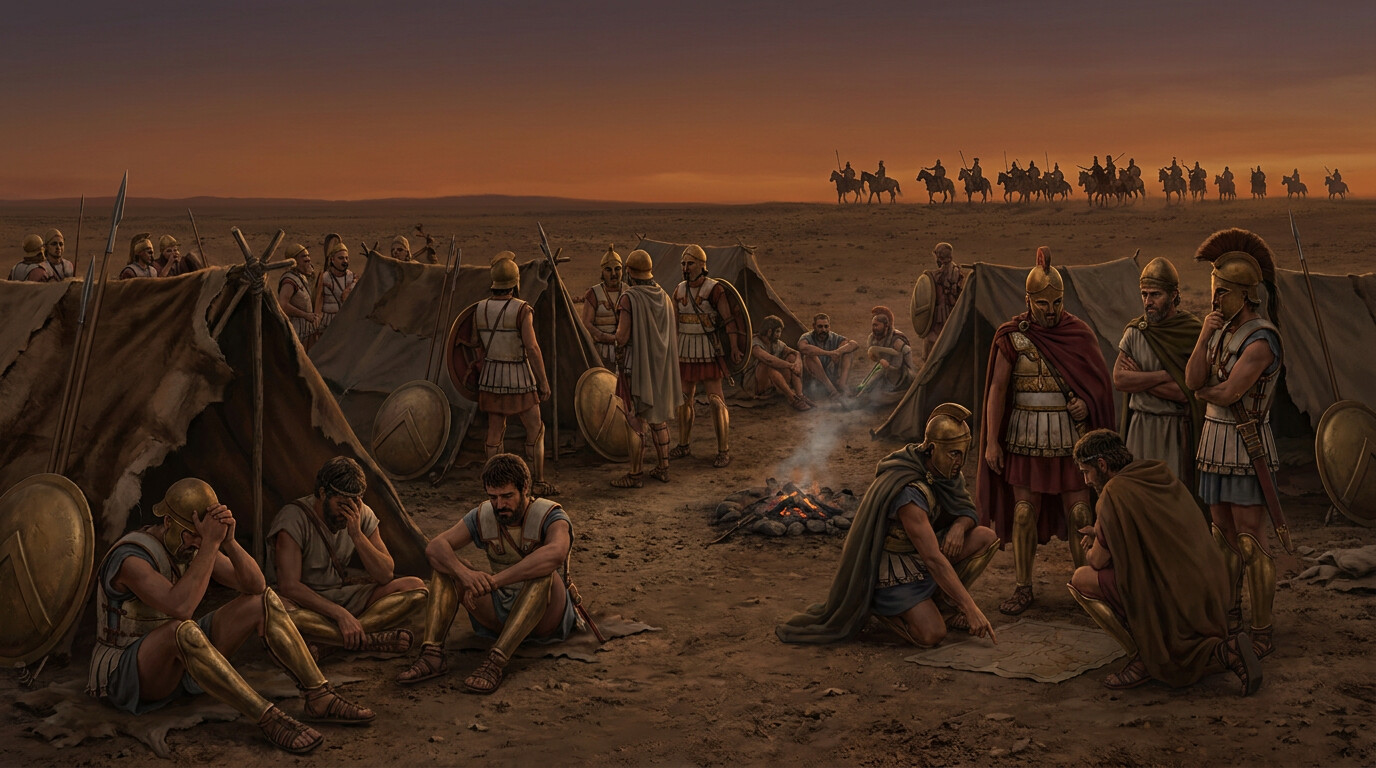
The Long Way Home: Xenophon and the March of the Ten Thousand
In 401 BC, ten thousand Greek mercenaries found themselves stranded deep in the Persian Empire after their employer, Cyrus the Younger, was killed at the Battle of Cunaxa. Leaderless, surrounded, and more than a thousand miles from the nearest Greek-held coast, they elected new commanders — among them a young Athenian named Xenophon — and began one of the most consequential fighting retreats in military history. What they left behind was not only footprints, but a firsthand account that has shaped military thinking for twenty-four centuries.
401 BC • Persia to the Black Sea
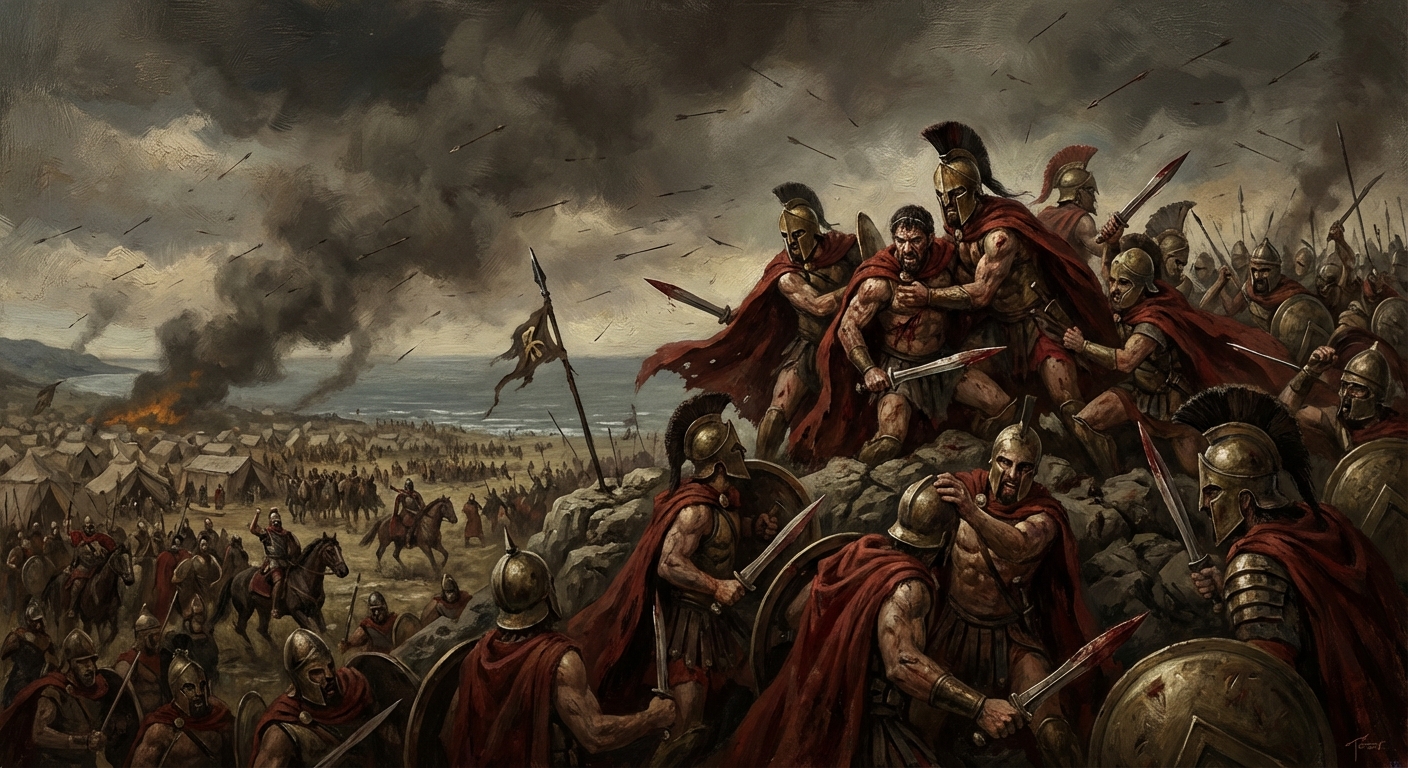
The Hot Gates — 300 Spartans at Thermopylae
King Leonidas — 7,000 Greeks vs. 100,000+ Persians
480 BC • Last Stand • ~20,000 Persian KIA
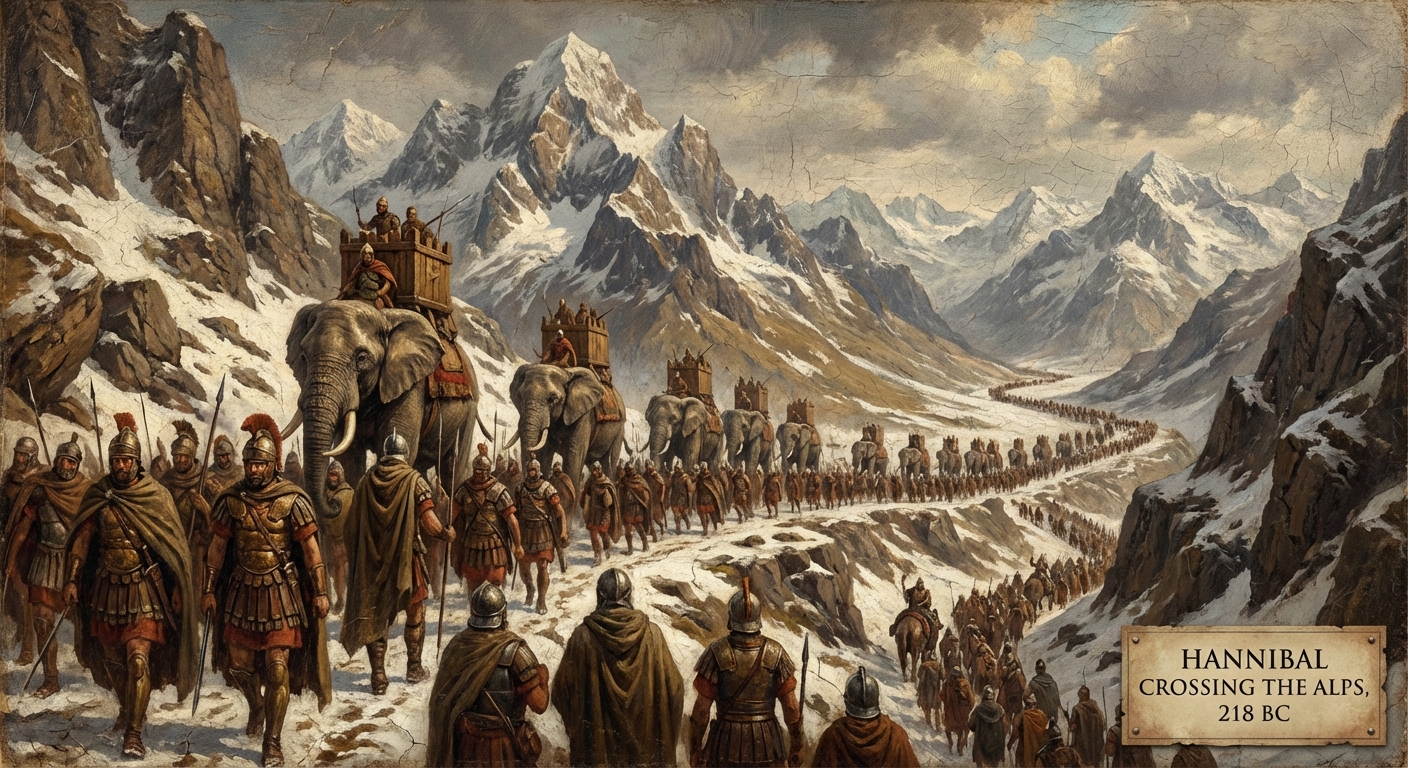
Crossing the Alps — Hannibal Barca
37 War Elephants Over the Alps — 218 BC
218 BC • Lost 20,000 Men Crossing • Defeated Rome for 15 Years
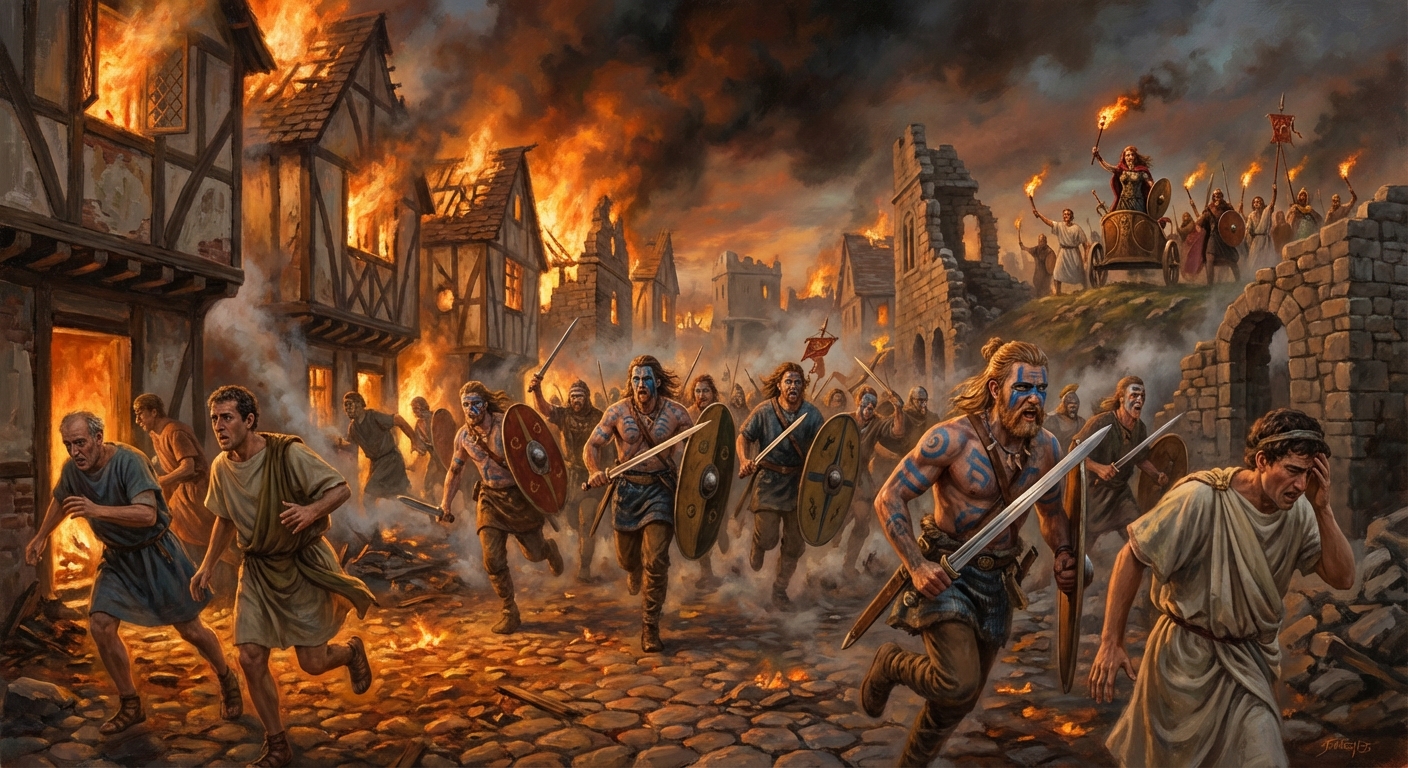
The Fire of Boudicca — Queen of the Iceni
Burned London to the Ground — 80,000 Romans Killed
60-61 AD • 100,000 Celtic Warriors • Never Captured
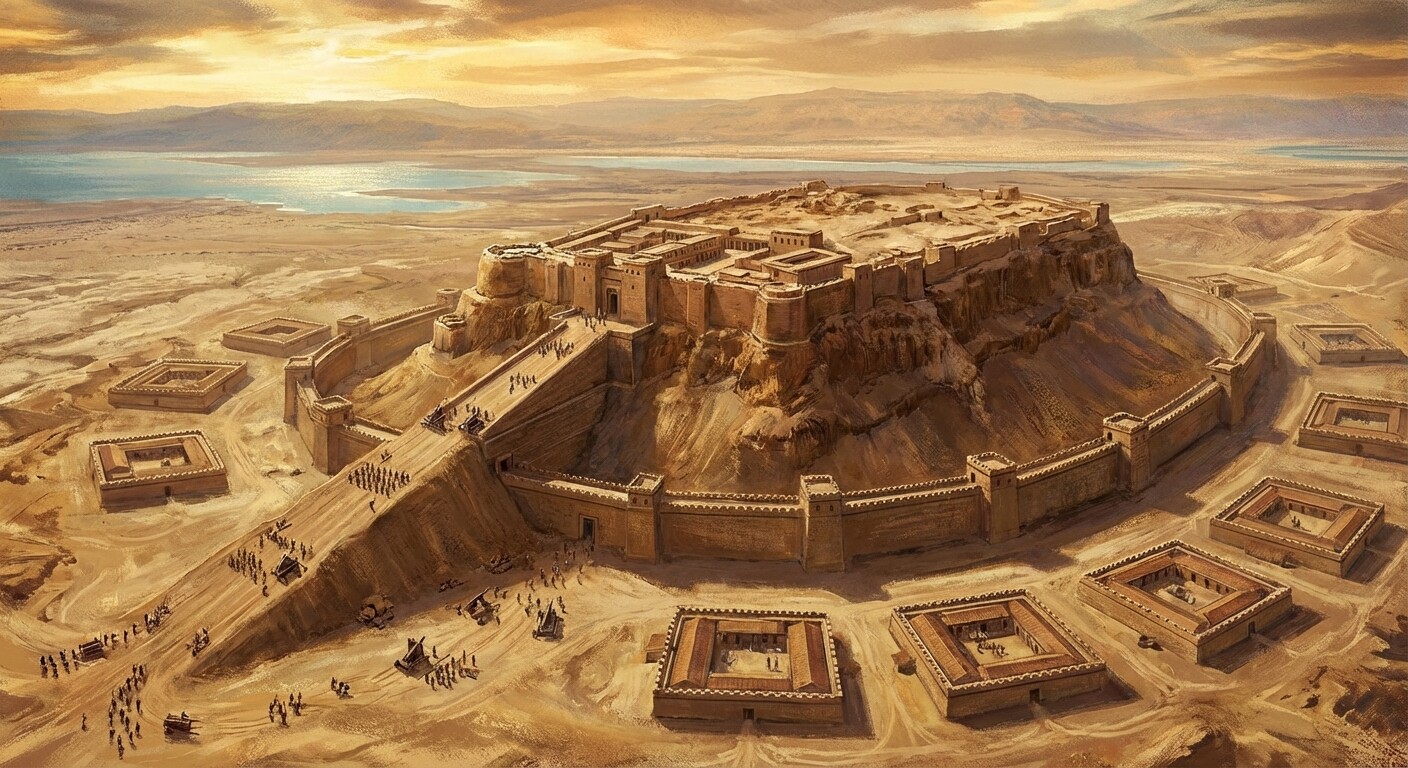
Masada
A desert fortress, a Roman siege ramp, and a last stand above the Dead Sea.
73-74 AD Judea
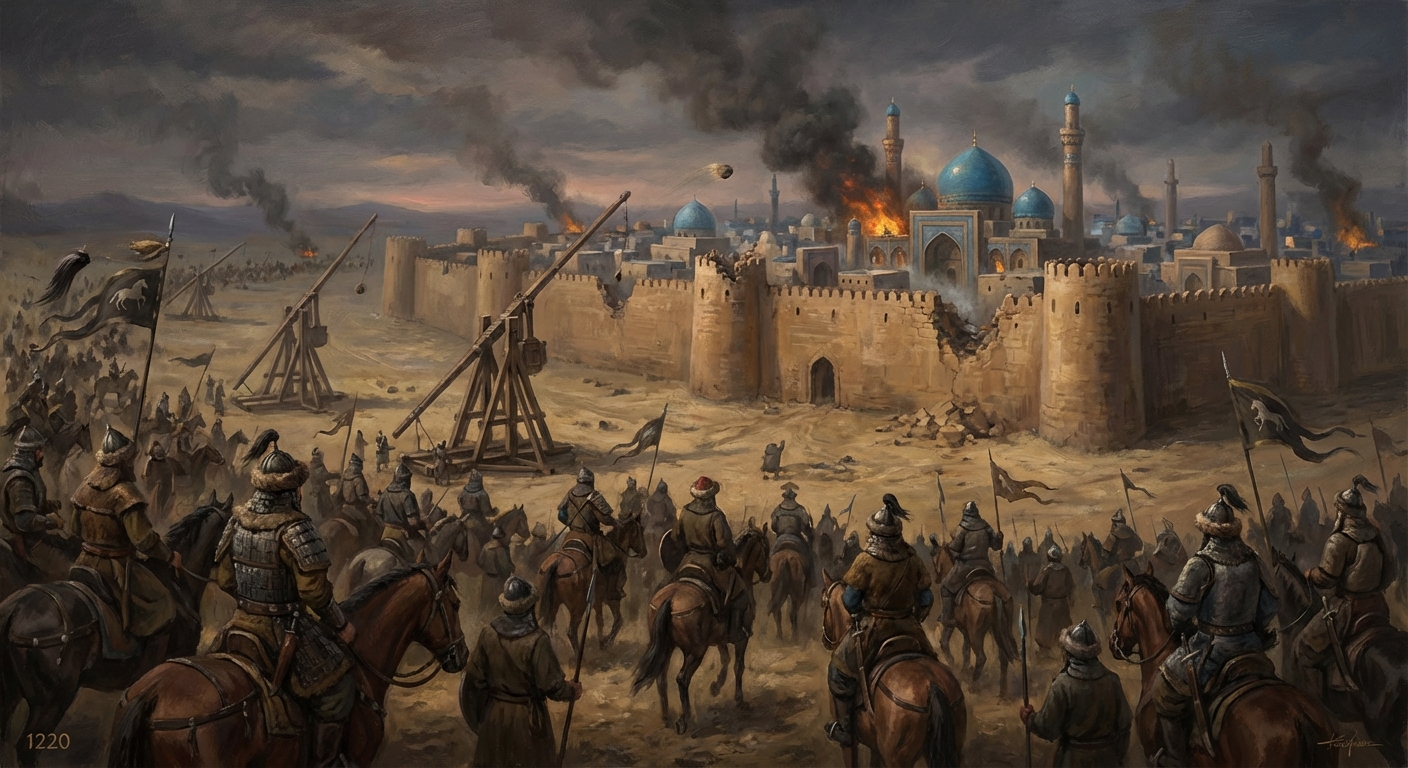
The Wrath of Khan — Khwarezmia Erased
They Killed His Ambassadors — He Killed Their Empire
1219–1221 • 1-2 Million Dead • Empire Annihilated
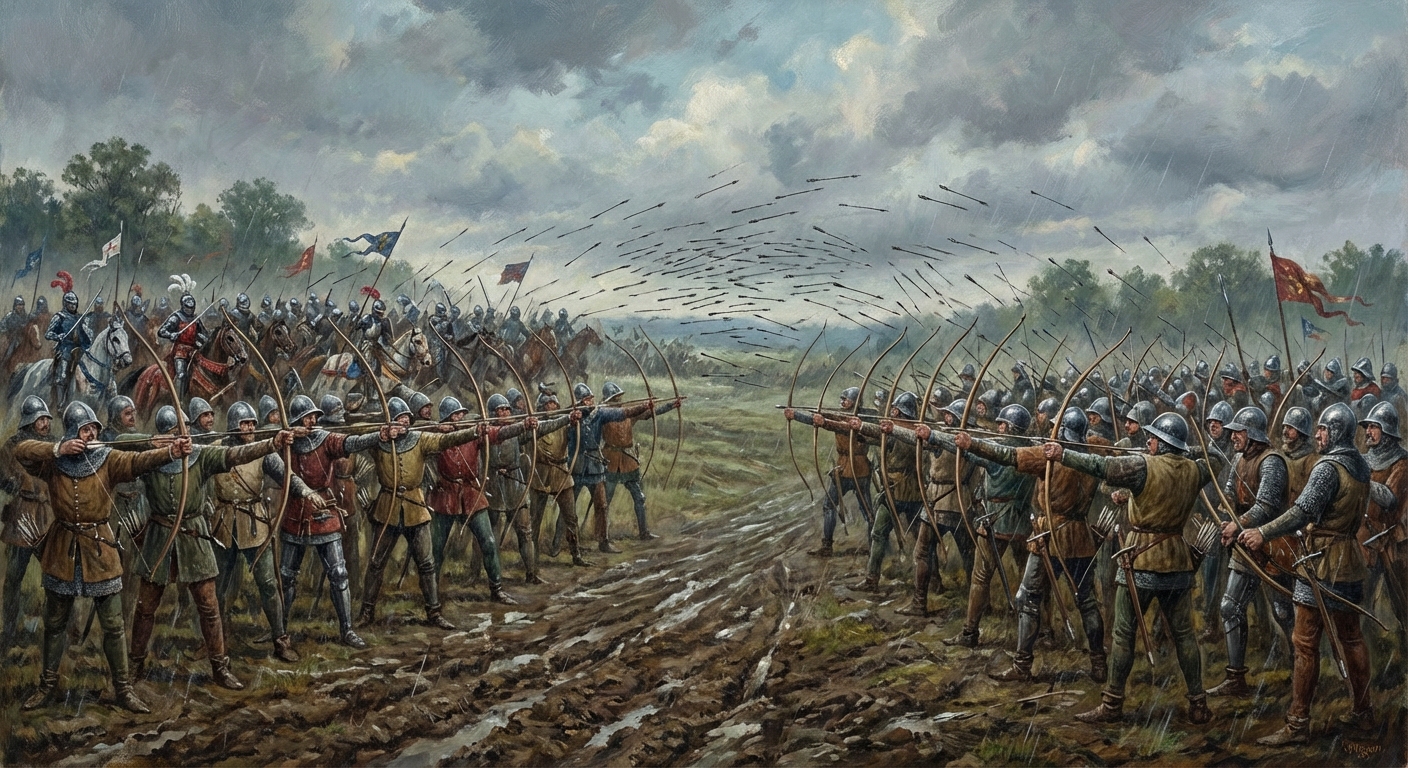
The Mud & the Arrows — Agincourt, 1415
King Henry V — 5,000 Longbowmen vs 15,000 Knights
Oct 25, 1415 • St. Crispin's Day — 6,000 French KIA
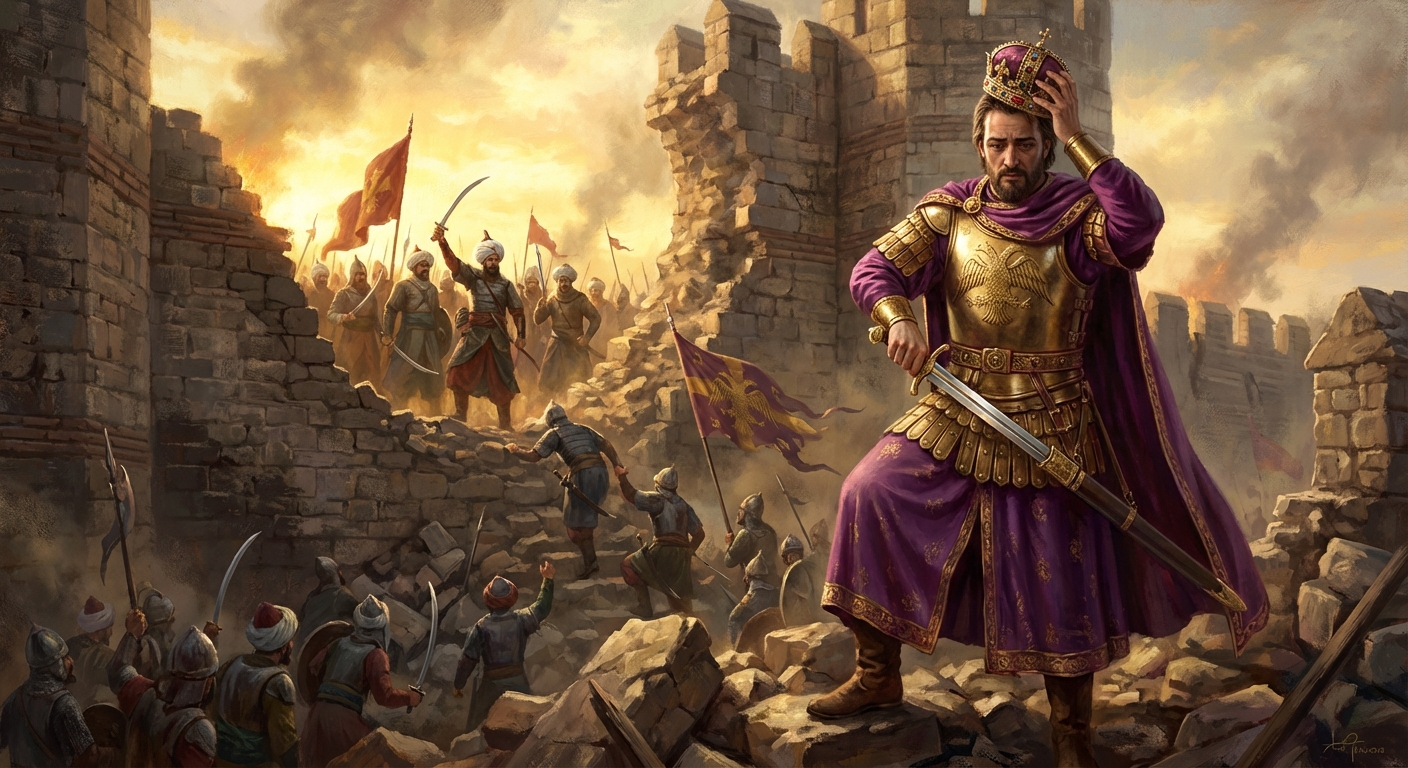
The Last Roman — Constantinople, 1453
Emperor Constantine XI — 7,000 vs 80,000 — The 27-ft Cannon
May 29, 1453 • 53-Day Siege • End of the Roman Empire
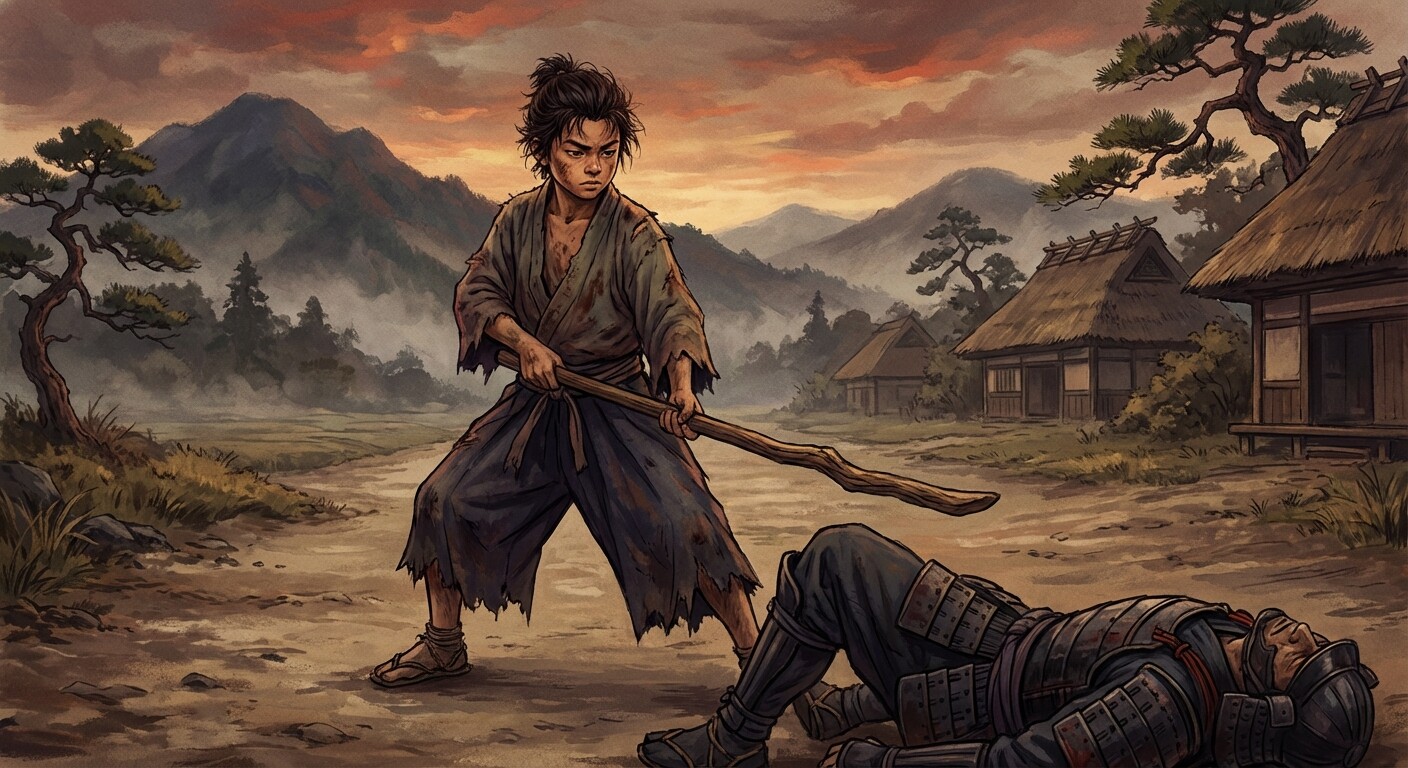
The Sword Saint
Miyamoto Musashi, undefeated duelist and author of The Book of Five Rings.
1584-1645 Japan
15 stories
19th Century / Colonial Wars
Imperial frontiers, doomed charges, outposts, and early modern legend-making.
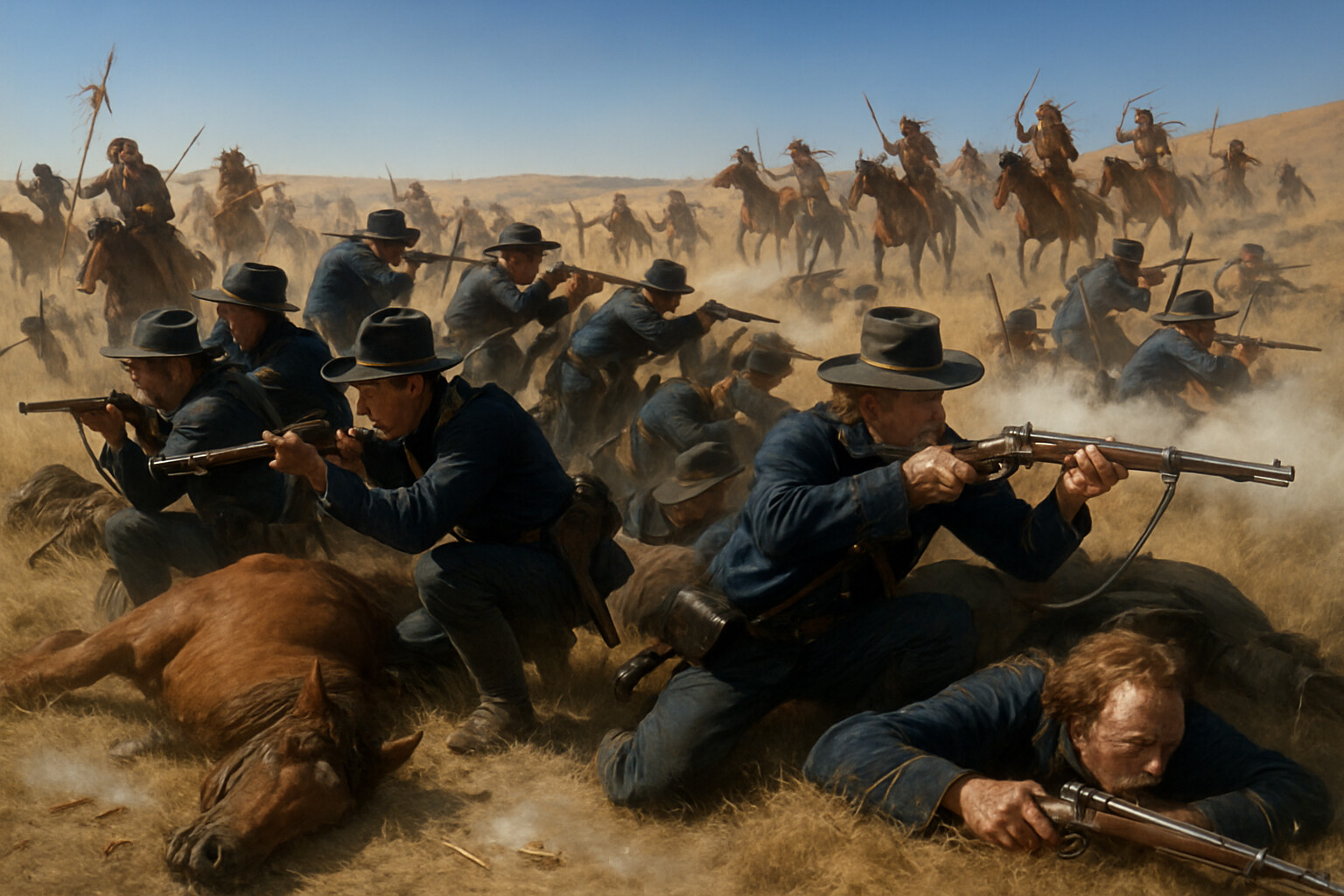
No Quarter on the Greasy Grass: The Last Ride of the 7th Cavalry
On June 25–26, 1876, Lieutenant Colonel George Armstrong Custer led five companies of the 7th U.S. Cavalry into a massive Lakota and Cheyenne encampment on the Little Bighorn River and was annihilated. The defeat—the worst suffered by the U.S. Army against Native forces in the western campaigns—killed Custer and every man in his immediate command and reverberated through American military and political life for generations.
1876 • Little Bighorn, Montana
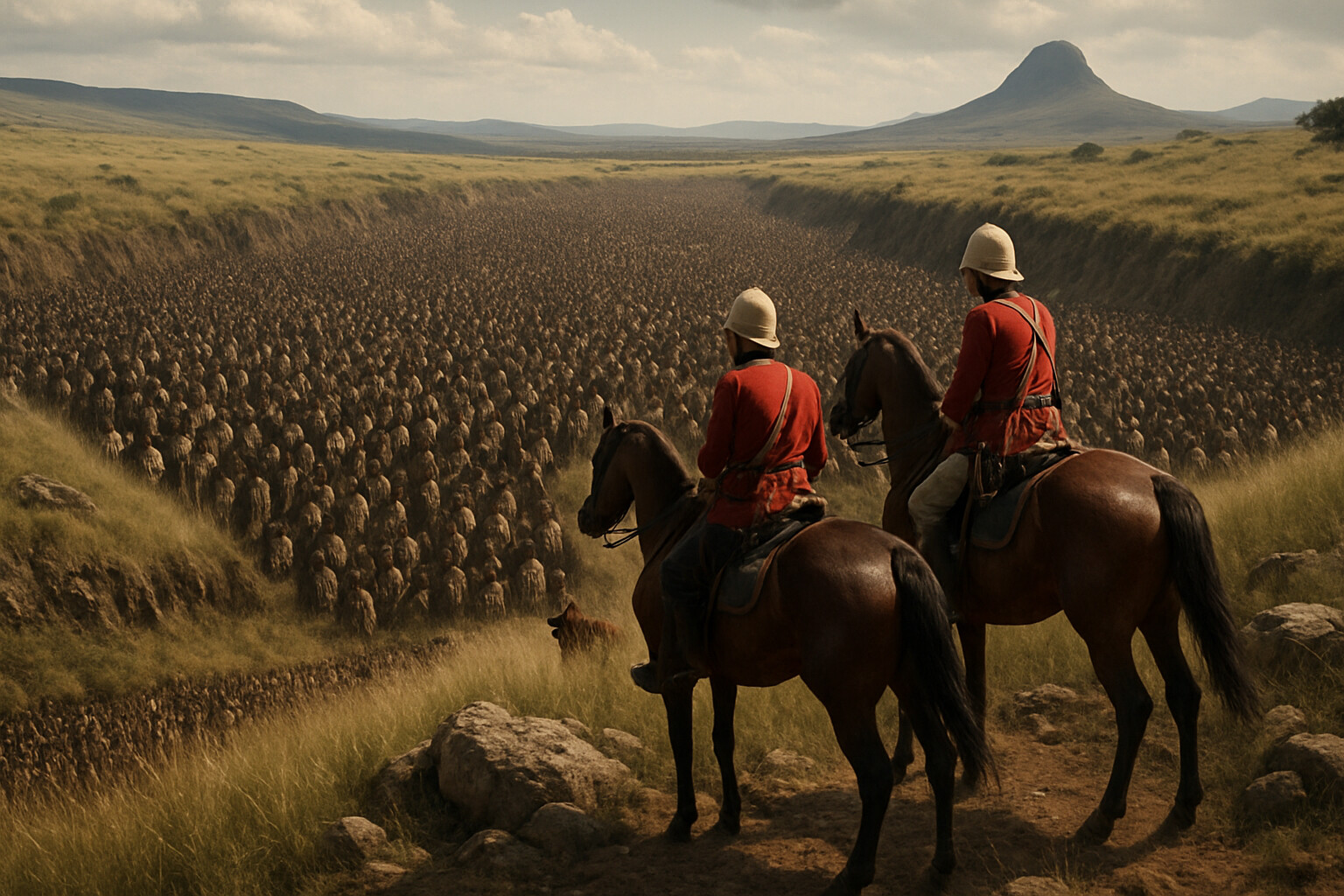
The Camp That Could Not Hold: Isandlwana, 22 January 1879
On the morning of 22 January 1879, a Zulu army of roughly 20,000 warriors descended on the main British camp at Isandlwana, overwhelming a garrison of approximately 1,700 men and erasing the central column of Lord Chelmsford's invasion force in a matter of hours. The defeat remains the largest single loss of British troops to an African enemy in the Victorian era. Its causes — overconfidence, poor intelligence, a camp left unentrenched, and a column divided on faulty information — have been debated by military historians ever since.
1879 • Isandlwana, Zululand
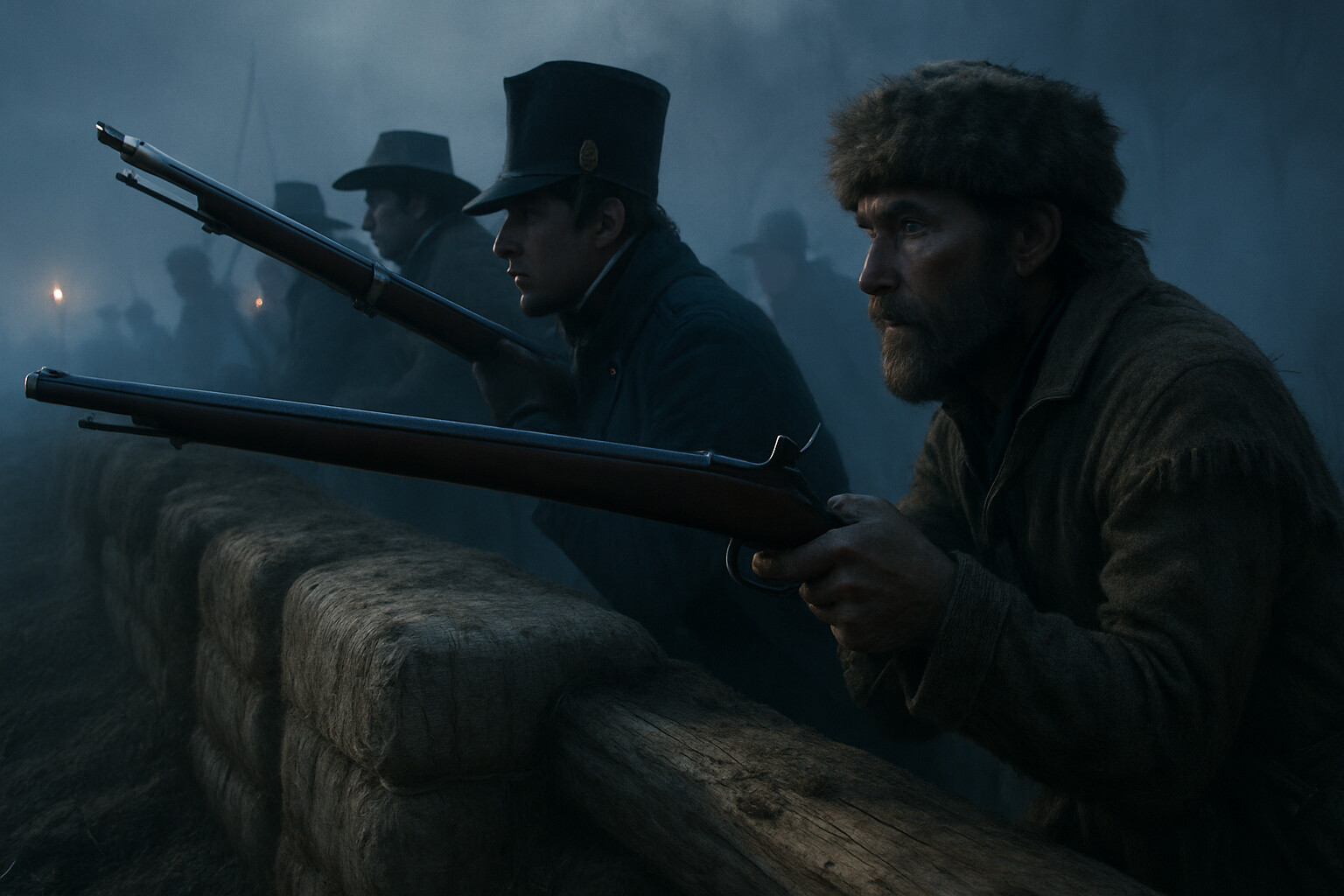
The Line That Held: Andrew Jackson and the Defense of New Orleans
On January 8, 1815, Major-General Andrew Jackson's improvised force of regulars, militia, free Black soldiers, Choctaw scouts, and Baratarian privateers held a mud-and-cypress earthwork below New Orleans against a disciplined British assault that brought roughly 8,000 veterans of the Peninsular War across open ground. The British column broke in under an hour. It was one of the most lopsided defensive victories in American military history—and it came two weeks after the war was already over on paper.
1815 • New Orleans, Louisiana
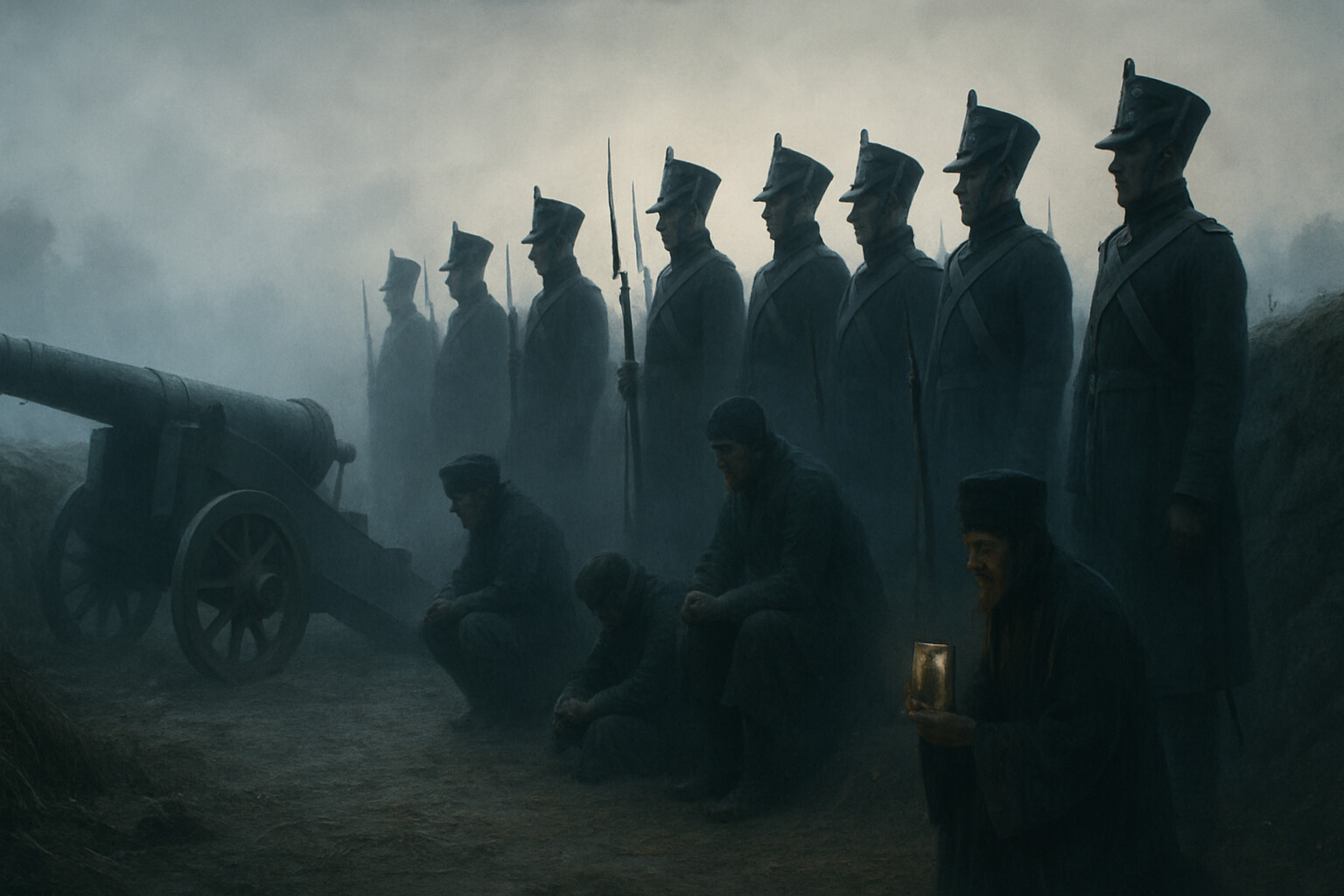
The Weight of Moscow: Kutuzov and the Killing Ground at Borodino
On September 7, 1812, the Imperial Russian Army and Napoleon's Grande Armée collided at Borodino in the bloodiest single day of the Napoleonic Wars. Russian Field Marshal Mikhail Kutuzov chose to stand, absorb a catastrophic assault, and then—controversially—withdraw, leaving Moscow open but preserving the army that would ultimately destroy France's invasion.
1812 • Borodino, Russia
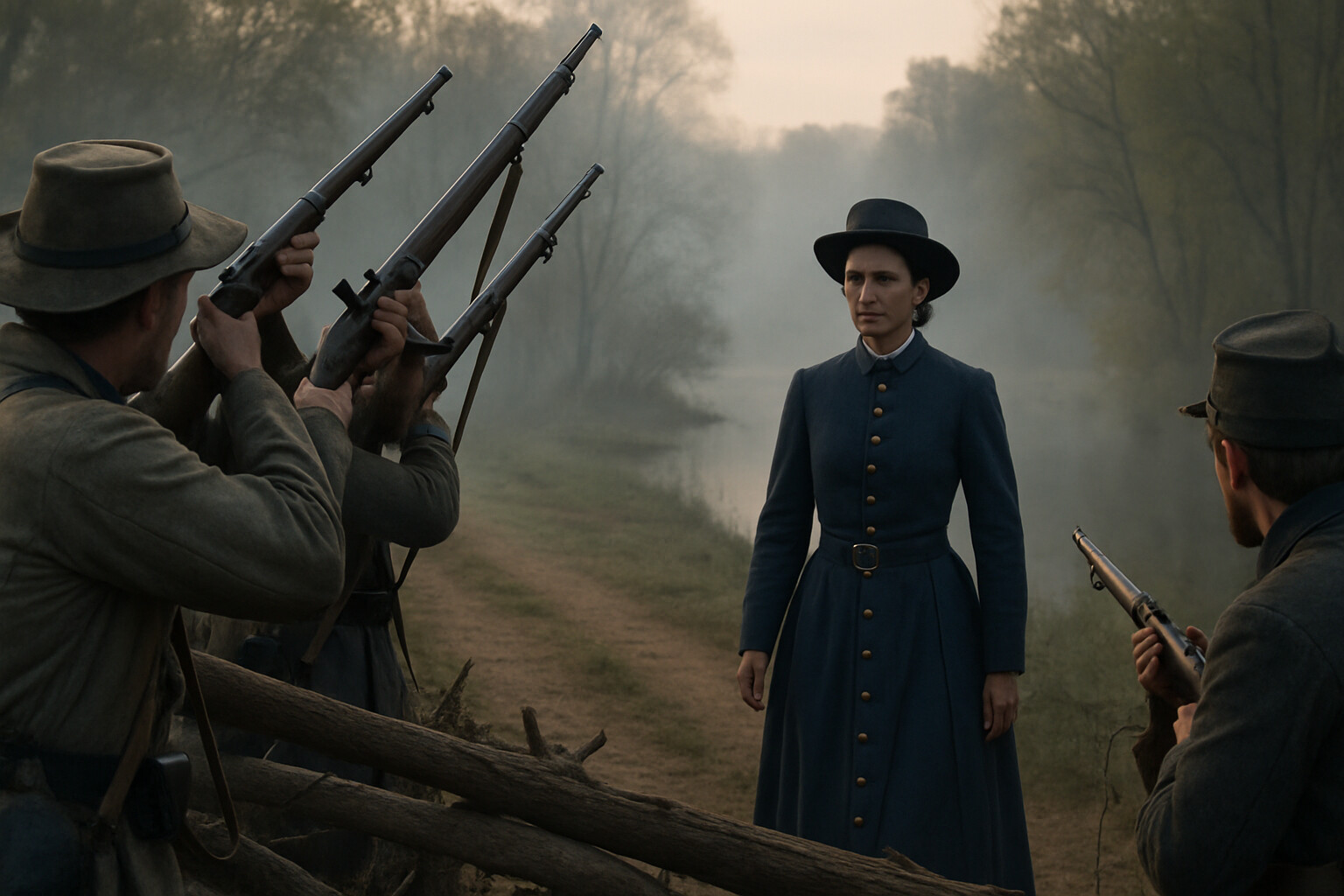
The Woman Who Crossed Enemy Lines: Dr. Mary Edwards Walker's Civil War
Dr. Mary Edwards Walker served as a Union Army surgeon, crossed Confederate lines to treat civilians, and survived capture to become the only woman awarded the Medal of Honor. Her service challenged gender roles and medical practice on Civil War battlefields.
1861-1865 • Eastern and Western Theater
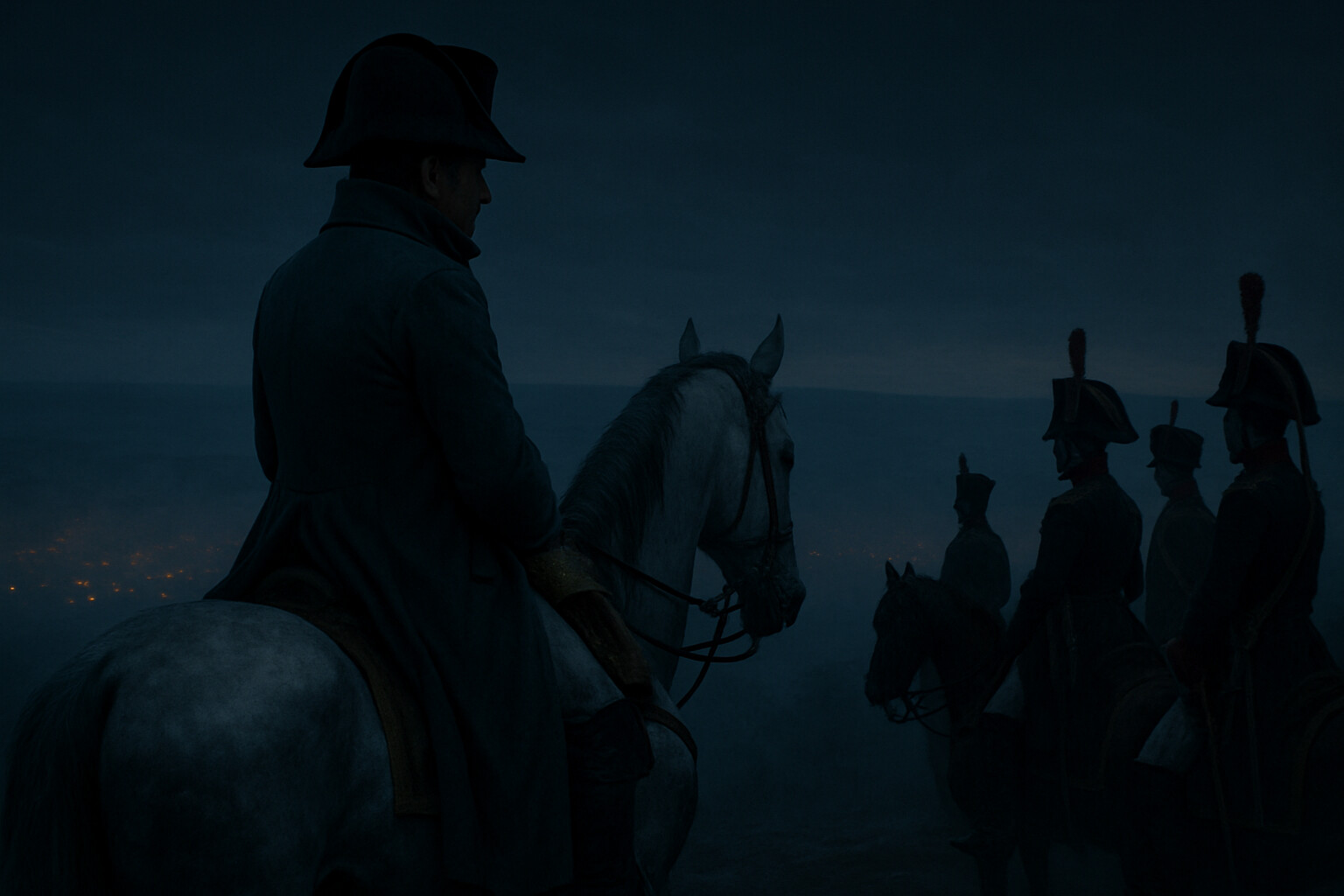
The Sun of Austerlitz: How Napoleon Dismantled an Empire in a Single Morning
On December 2, 1805, Napoleon Bonaparte orchestrated the most celebrated tactical victory of the Napoleonic Wars, deliberately withdrawing from the commanding Pratzen Heights to draw the Austro-Russian army into a flanking movement, then striking the exposed center with concentrated force. In less than nine hours of fighting, he shattered the combined armies of two empires and ended the War of the Third Coalition. The battle endures as a case study in deliberate deception, terrain exploitation, and the integration of combined arms at the operational level.
1805 • Austerlitz, Moravia
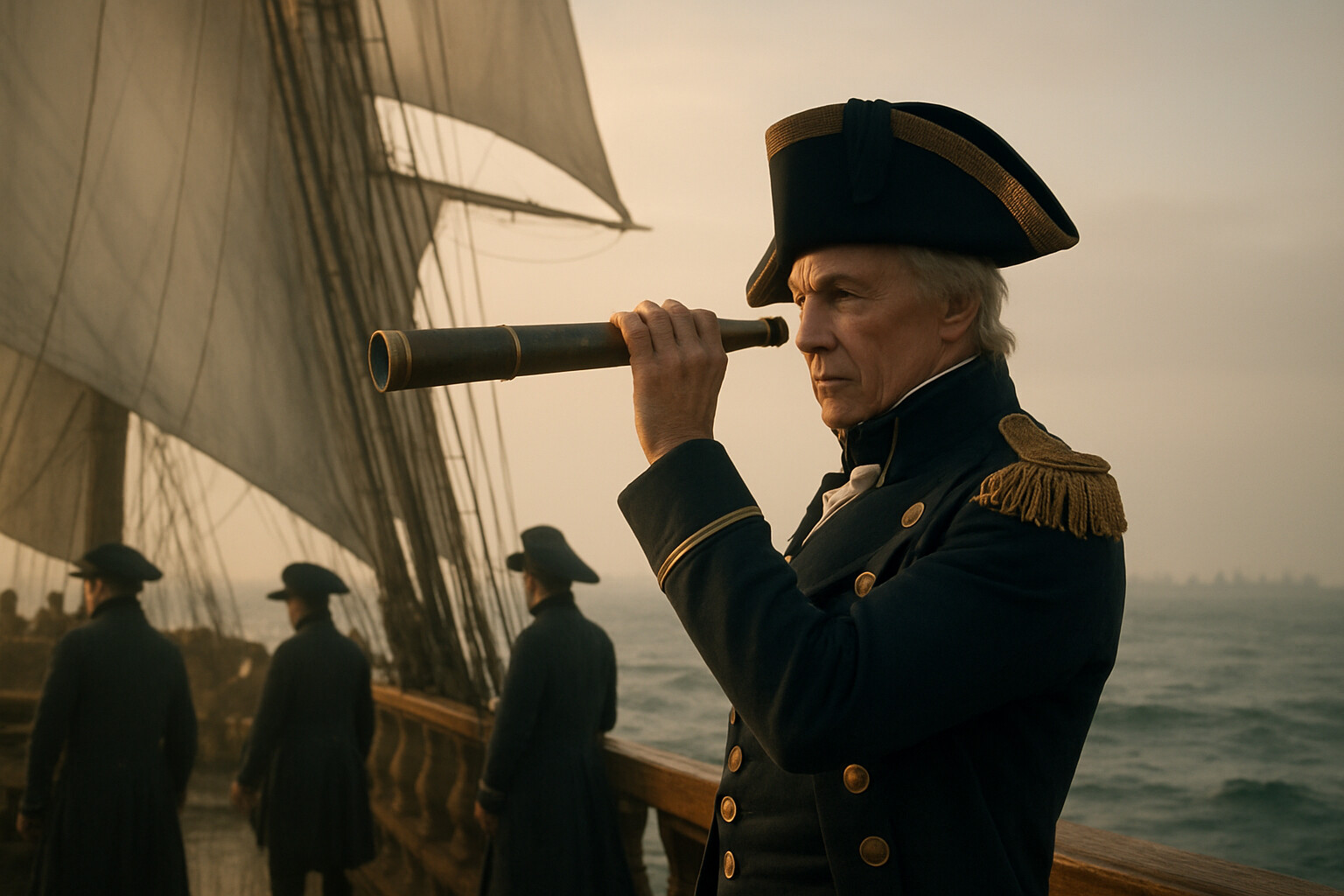
The Line That Broke the World: Nelson at Trafalgar
On 21 October 1805, Vice-Admiral Horatio Nelson led the British fleet in a bold perpendicular attack against a Franco-Spanish combined force off Cape Trafalgar, Spain. The battle shattered Napoleon's naval power and secured British command of the seas for a century. Nelson did not live to hear the full extent of his victory.
1805 • Cape Trafalgar, Spain
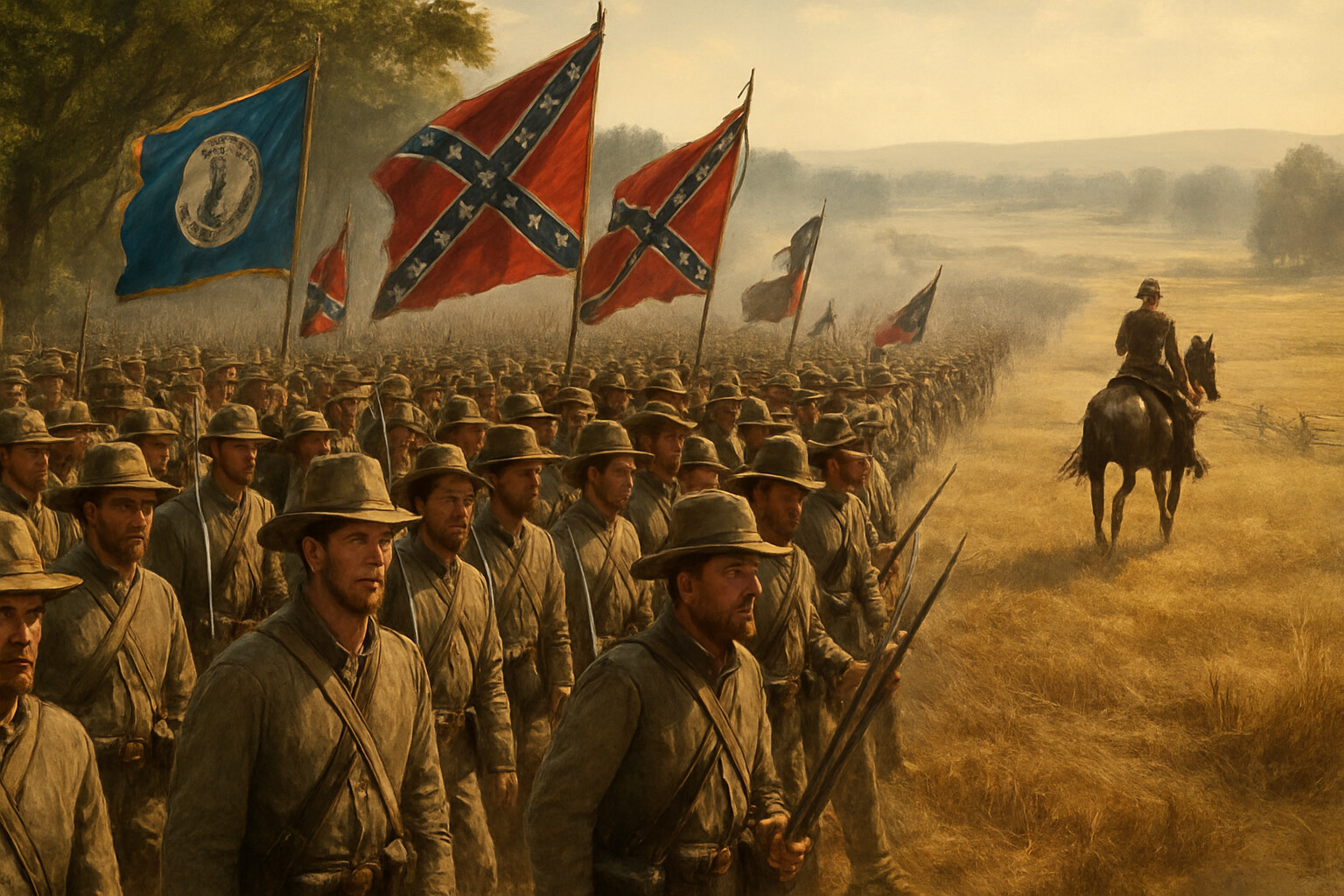
The High-Water Mark: Pickett's Charge at Gettysburg, July 3, 1863
On the afternoon of July 3, 1863, roughly twelve thousand Confederate soldiers stepped out of the tree line on Seminary Ridge and walked nearly a mile across open ground into massed Union artillery and rifle fire. The assault—commanded by Generals Longstreet, Pettigrew, and Trimble, and forever linked to George Pickett's name—broke apart on Cemetery Ridge in less than an hour and marked the farthest permanent advance of Confederate arms into Northern territory. It is remembered as the high-water mark of the Confederacy.
1863 • Gettysburg, Pennsylvania
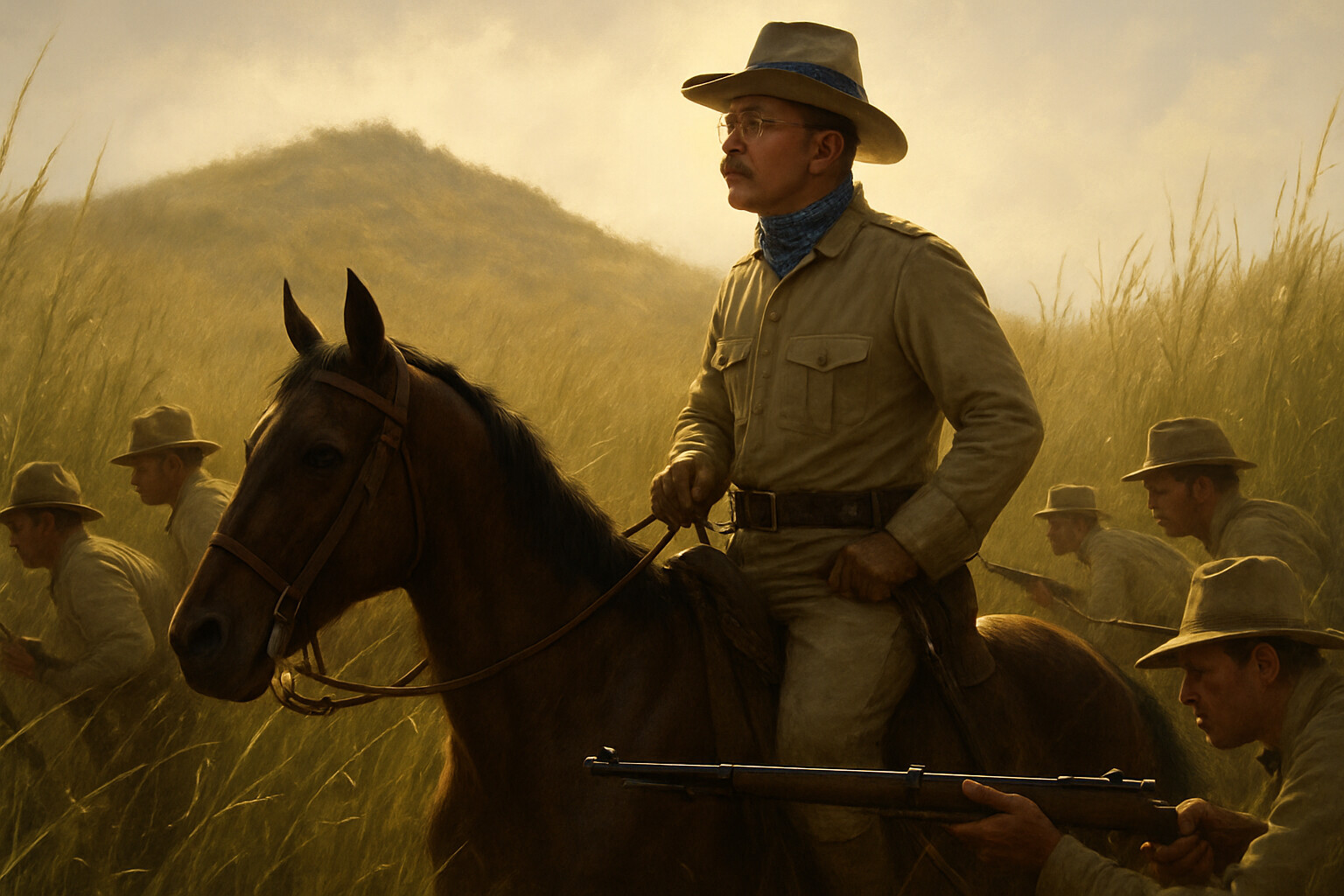
Up the Heights: Roosevelt, the Rough Riders, and the Charge That Decided Cuba
On July 1, 1898, Lieutenant Colonel Theodore Roosevelt led the 1st U.S. Volunteer Cavalry—the Rough Riders—up Kettle Hill above Santiago de Cuba, alongside Regular Army regiments including the Buffalo Soldiers of the 9th and 10th Cavalry. The assault became the war's decisive land engagement and the defining moment of Roosevelt's public life. This is the story of that hill, the men who took it, and what it cost.
1898 • San Juan Heights, Cuba
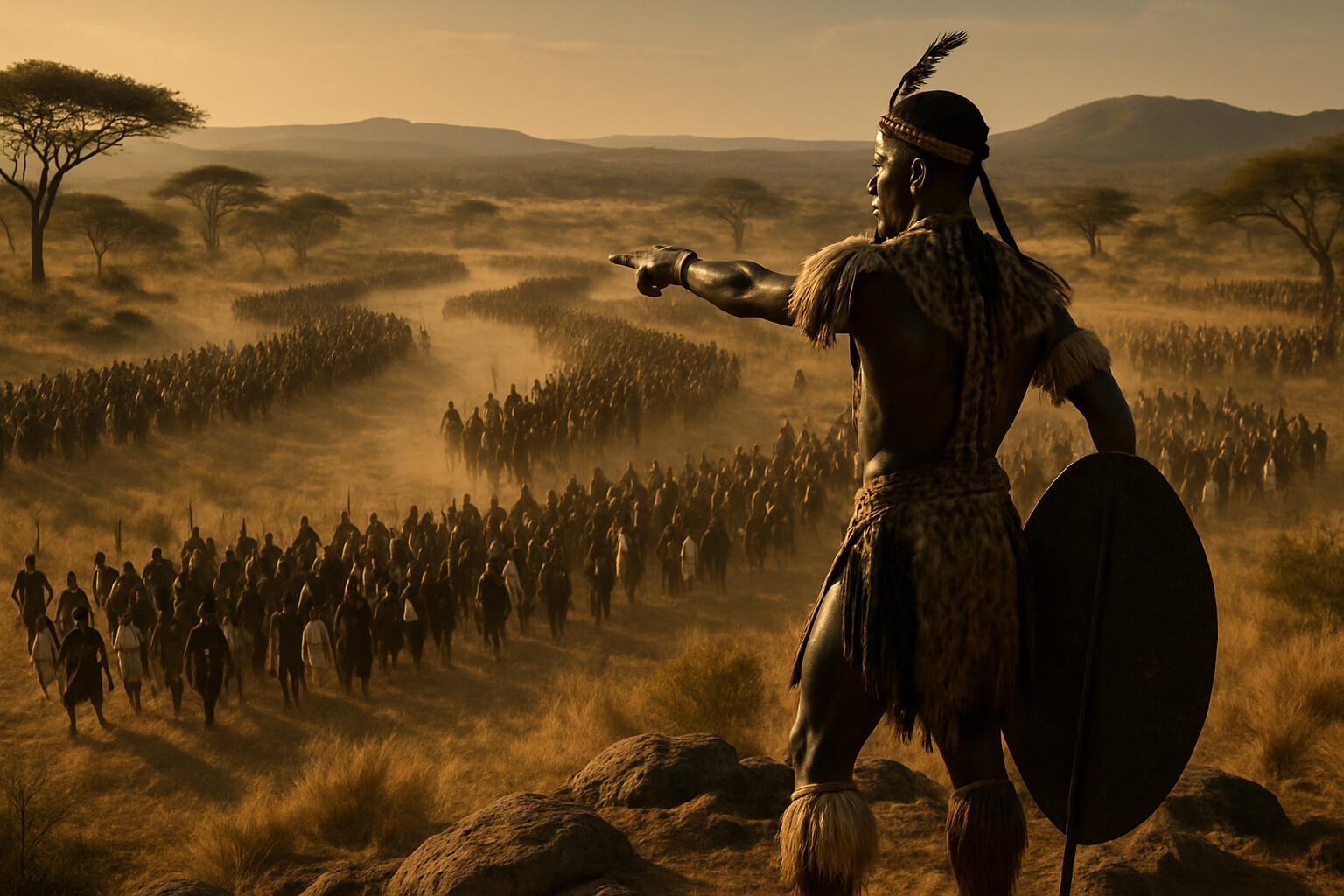
The Blade That Built an Empire: Shaka and the Revolution of Zulu War
Between 1816 and 1828, Shaka kaSenzangakhona transformed a small chieftaincy in southeastern Africa into one of the most formidable military powers the continent had seen. Through tactical innovation—a shortened stabbing spear, a disciplined close-combat doctrine, and a battlefield formation that enveloped enemies like the horns of a charging bull—he reshaped the political geography of the region in little more than a decade. His rise created a kingdom, displaced tens of thousands of people in the upheaval scholars call the Mfecane, and left a military legacy that European armies would eventually face with rifles and rockets and still struggle to contain.
1816-1828 • Southern Africa
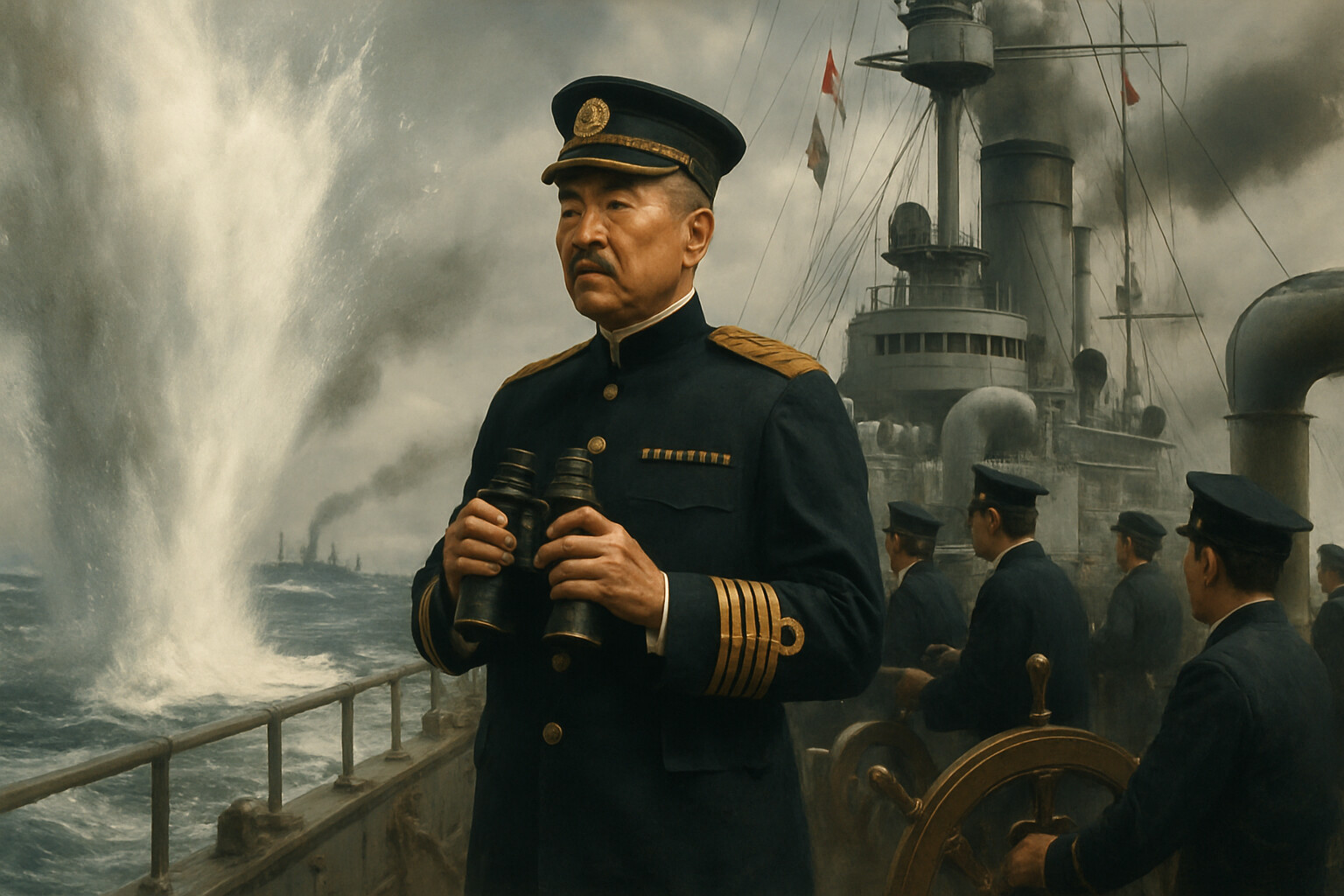
The Crossing at Tsushima: How Togo Turned the T and Ended an Empire's Hope
On May 27–28, 1905, Admiral Heihachiro Togo led the Imperial Japanese Combined Fleet against Russia's Second Pacific Squadron in the Tsushima Strait, executing one of the most decisive naval engagements in modern history. Through a fleet course reversal that placed his battle line perpendicular to the Russian column—the maneuver known as crossing the T—Togo concentrated overwhelming firepower on the leading Russian ships, destroying or capturing nearly the entire fleet. The battle ended Russia's naval capacity in the Pacific and announced Japan's arrival as a major world power.
1905 • Tsushima Strait
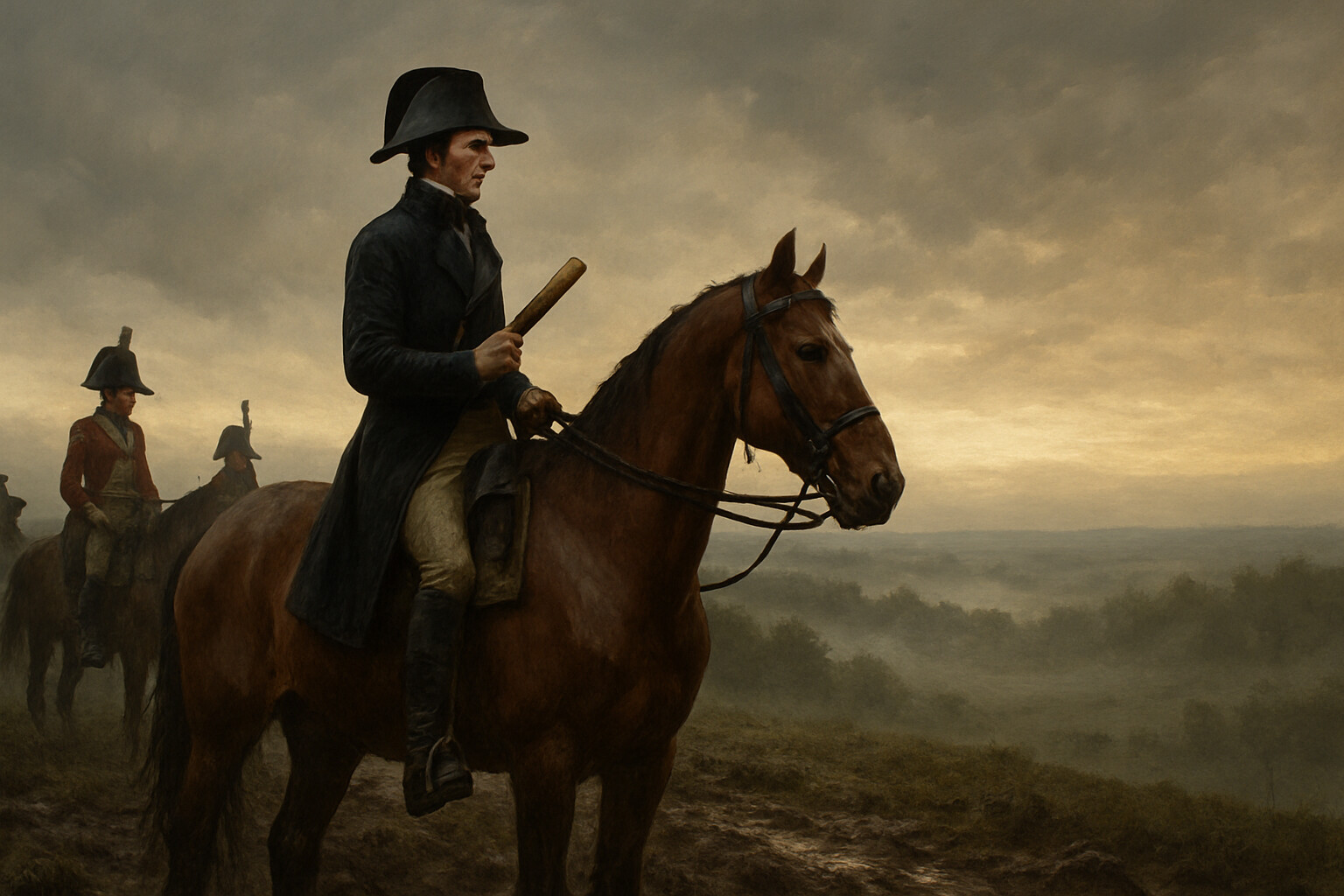
The Ridge That Would Not Break: Wellington and the Squares of Waterloo
On 18 June 1815, the Duke of Wellington's Anglo-Allied army held a muddy ridge south of Brussels against the full weight of Napoleon Bonaparte's last army. Through repeated cavalry charges, murderous artillery fire, and a final assault by the Imperial Guard, Wellington's infantry formed squares and refused to yield—buying time until Prussian forces arrived to seal Napoleon's fate.
1815 • Waterloo, Belgium
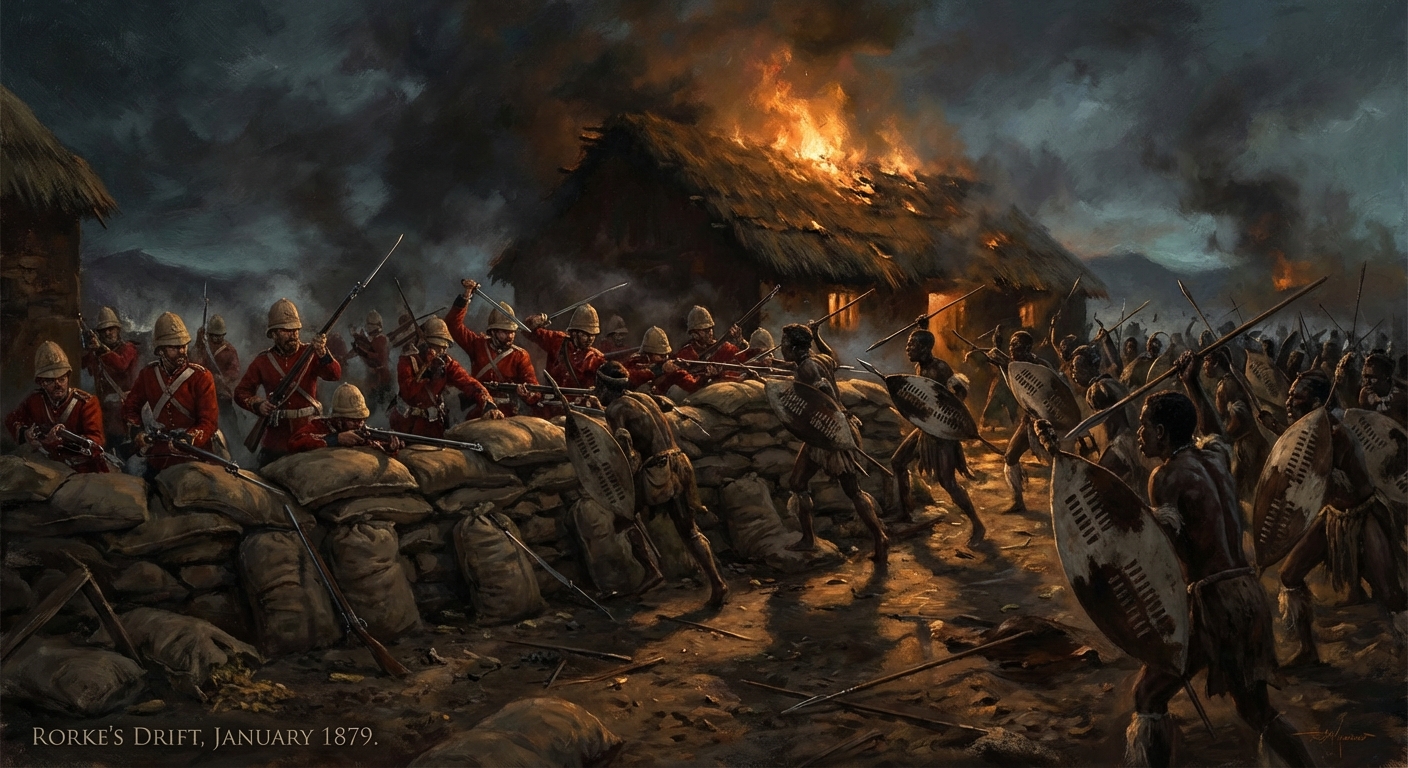
The Wall of Fire — Rorke's Drift
150 vs 4,000 — 11 Victoria Crosses
Jan 22–23, 1879 • 12 Hours Through the Night
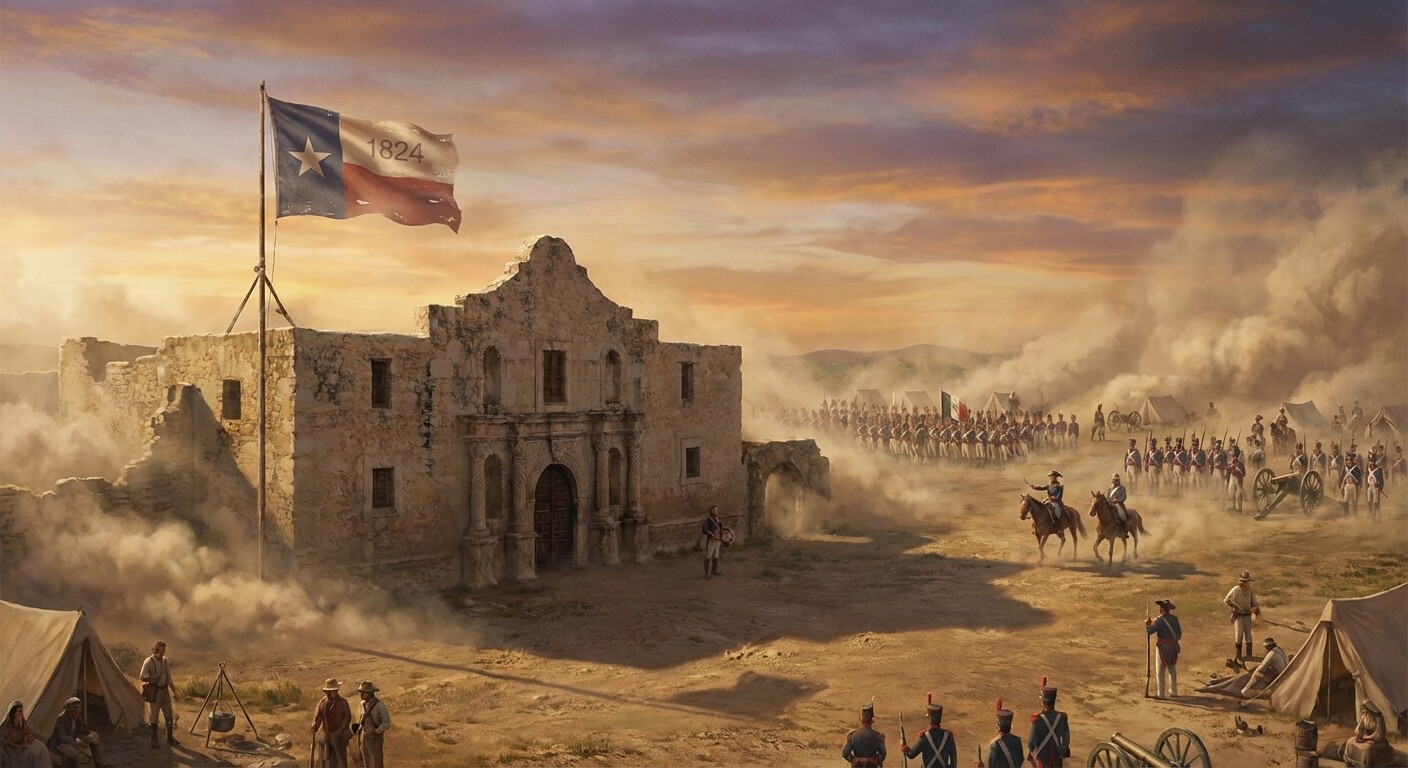
Remember the Alamo
Travis, Bowie, Crockett, and the 13-day siege that became a rallying cry.
1836 San Antonio de Bxar
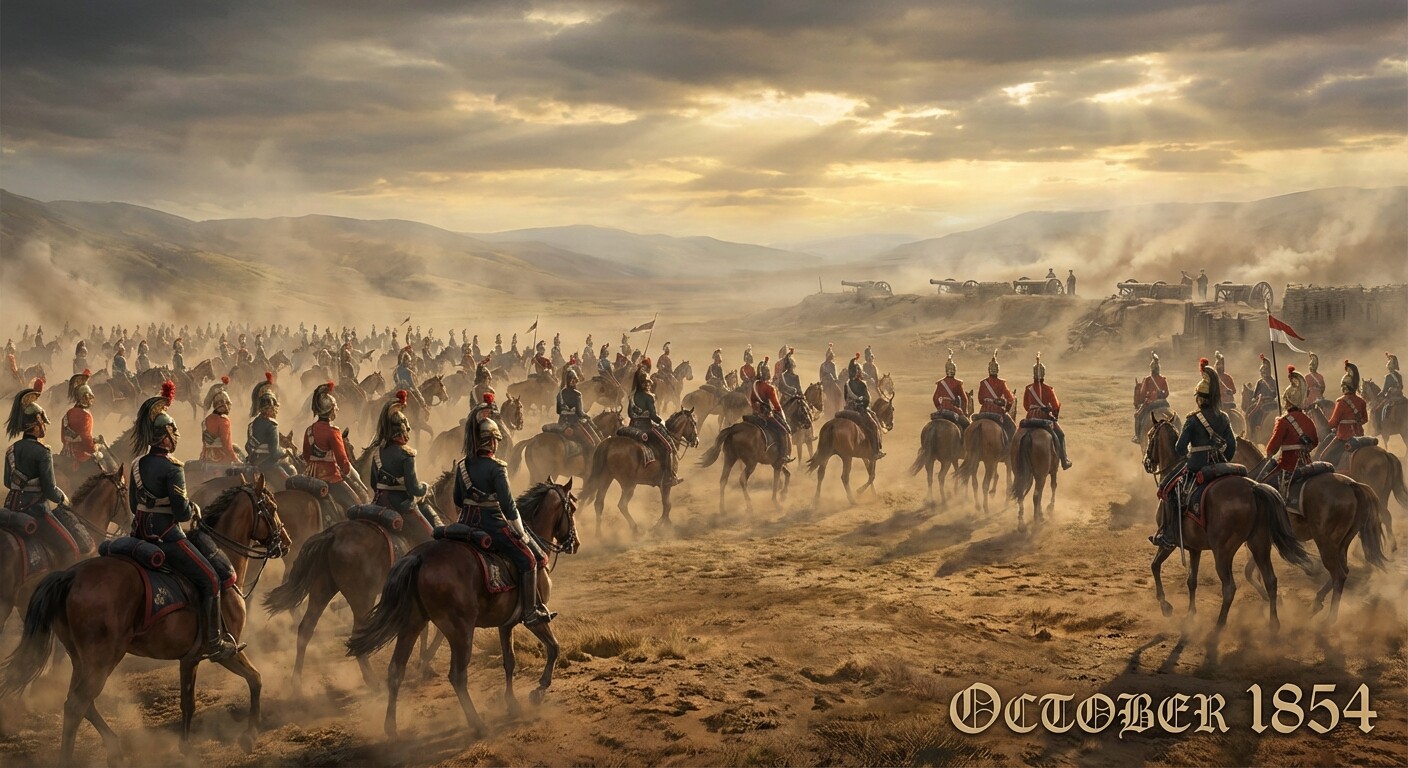
Into the Valley
A misread order sends British light cavalry into Russian guns.
Oct 25, 1854 Balaclava
10 stories
Cold War & Modern
Post-1945 combat stories, rescue raids, peacekeeping sieges, and Korea.
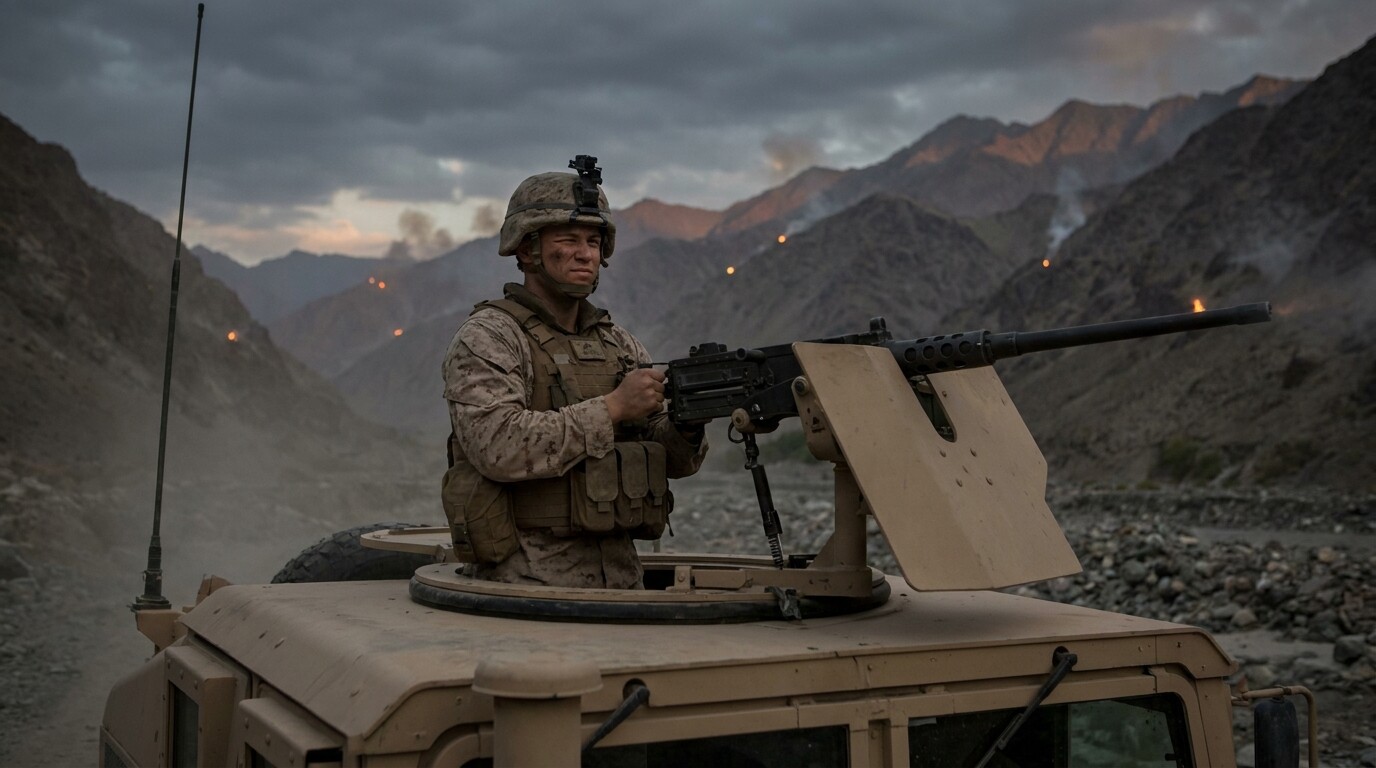
Five Runs Into Hell: Corporal Dakota Meyer and the Battle of Ganjgal
On September 8, 2009, Corporal Dakota Meyer drove a gun truck into an active ambush kill zone in Afghanistan's Ganjgal Valley five separate times to pull wounded Marines and soldiers to safety and recover the bodies of his fallen teammates. His actions that morning earned him the Medal of Honor—the first awarded to a living Marine since the Vietnam War.
September 8, 2009 • Ganjgal Valley, Kunar Province, Afghanistan
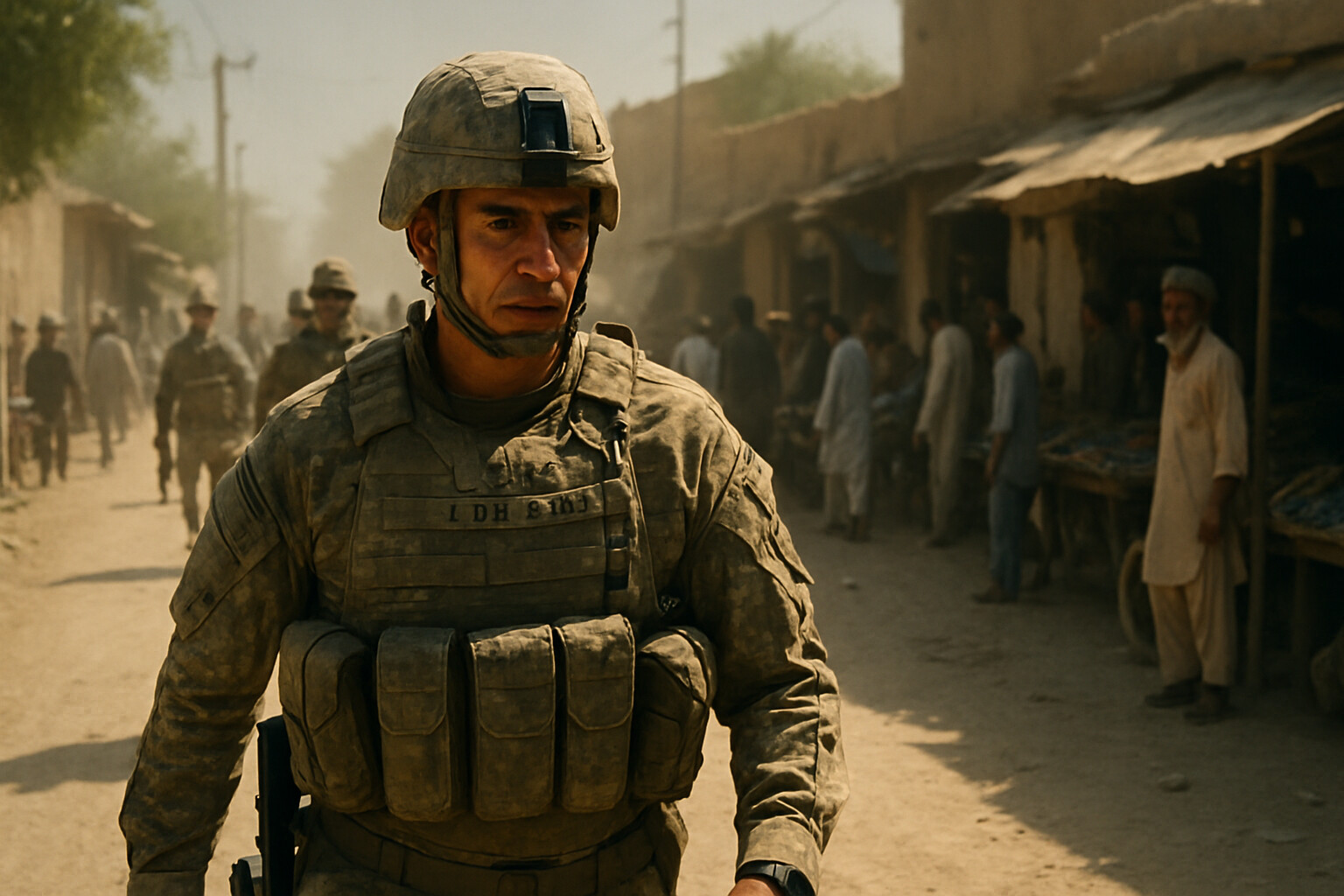
The Distance Between: Captain Florent Groberg and the Bomber in Asadabad
On August 8, 2012, U.S. Army Captain Florent Groberg spotted a suicide bomber closing on a coalition patrol in Asadabad, Kunar Province, Afghanistan. He grabbed the man and drove him away from the formation, absorbing a significant portion of the blast. Four members of the formation were killed. Groberg survived after more than thirty surgeries and was awarded the Medal of Honor on November 12, 2015.
August 8, 2012 • Asadabad, Kunar Province, Afghanistan
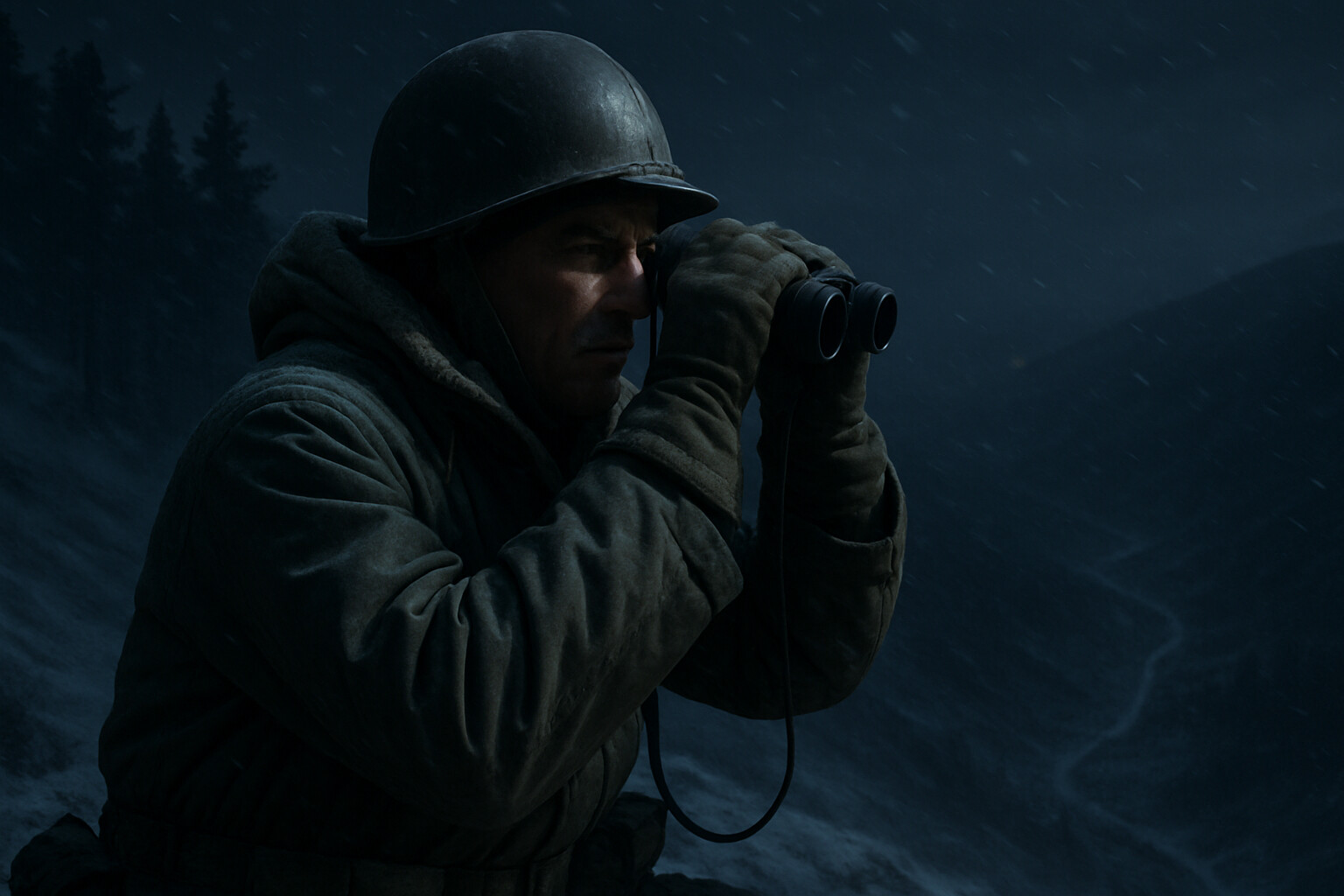
Five Nights at Toktong Pass
In late November 1950, Captain William Barber led Fox Company, 2nd Battalion, 7th Marines into the frozen mountains above Chosin Reservoir and held a critical mountain pass against relentless Chinese assaults for five consecutive nights. His company's stand kept the only road open for roughly 8,000 Marines fighting their way south from Yudam-ni. Barber was awarded the Medal of Honor for the action.
November 28 - December 2, 1950 • Toktong Pass, Chosin Reservoir, Korea
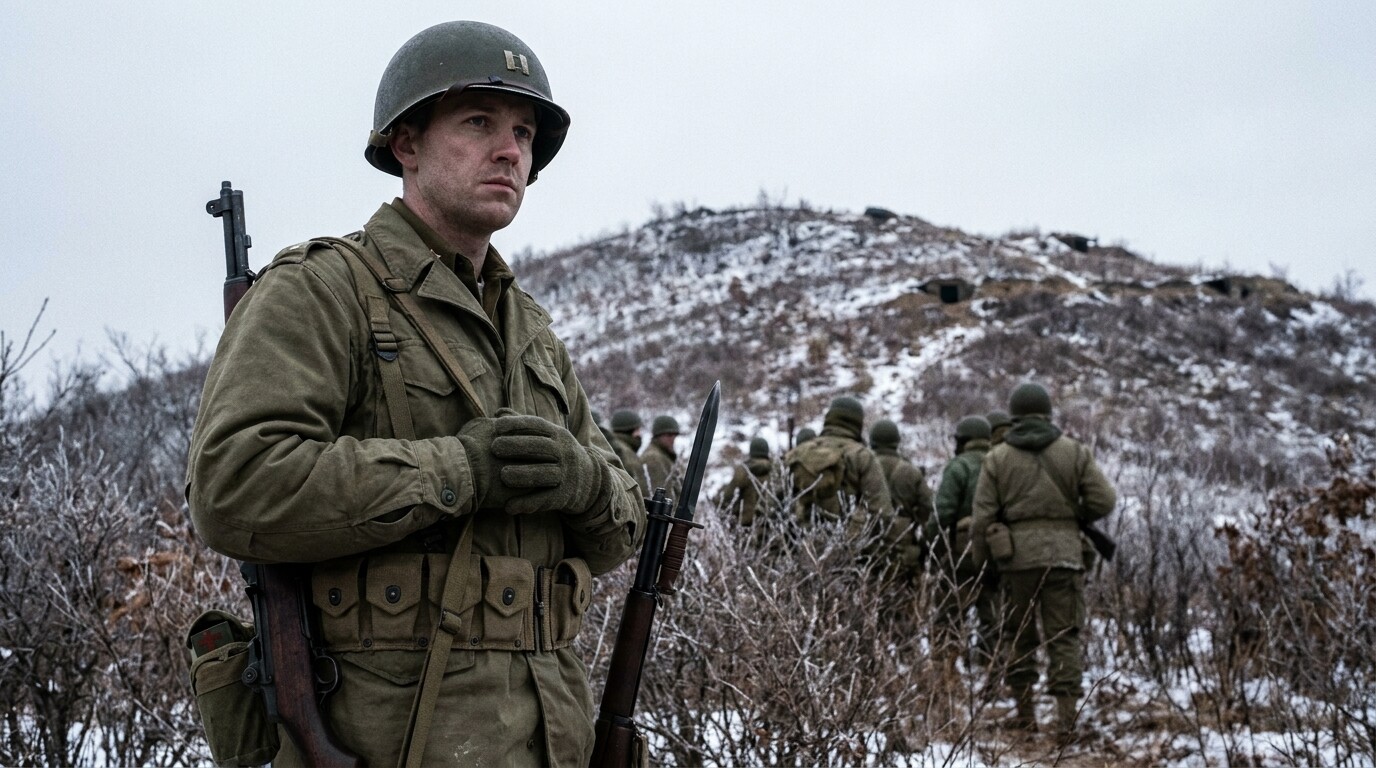
Steel and Screaming: The Last Bayonet Charge
On February 7, 1951, Captain Lewis Millett led Easy Company, 27th Infantry Wolfhounds up a fortified Korean hill in what the U.S. Army recognizes as the last major American bayonet charge. Fixing bayonets and closing at speed through enemy fire, Millett's men swept a Chinese-held position at close quarters. The action earned Millett the Medal of Honor and placed Hill 180 at the end of a long tradition of American infantry close combat.
February 7, 1951 • Hill 180, near Soam-Ni, Korea
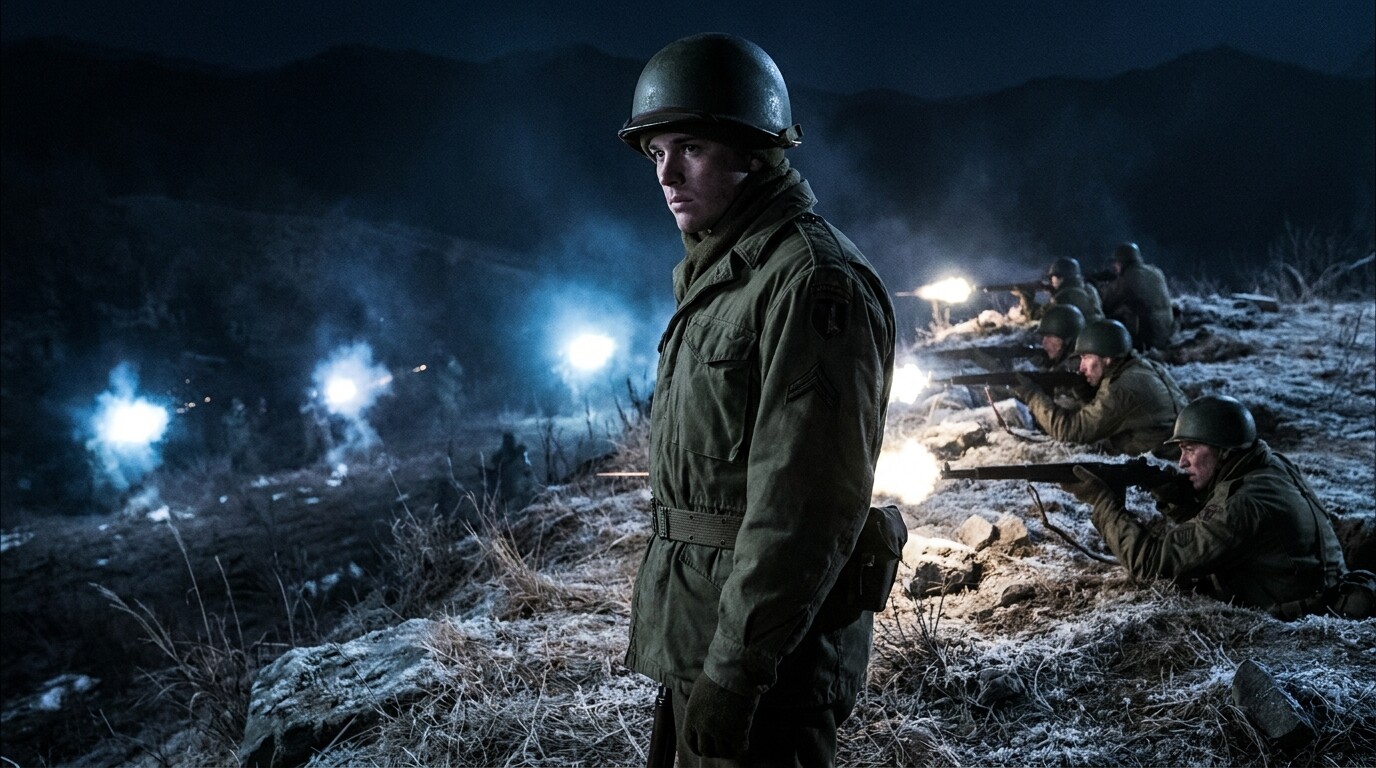
The Hill That Would Not Be Given: Ralph Puckett and the Rangers of Hill 205
On the night of November 25–26, 1950, First Lieutenant Ralph Puckett led the 8th Army Ranger Company onto an exposed hill near Unsan, North Korea, hours before the Chinese People's Volunteer Army launched its massive second-phase offensive. Through six assaults across the night, Puckett repeatedly moved to the forward edge of the perimeter to draw enemy fire and expose attacking positions for his men. Wounded multiple times, he refused evacuation until his Rangers carried him from the hill. More than seven decades later, President Biden presented him with the Medal of Honor.
November 25-26, 1950 • Hill 205, near Unsan, Korea
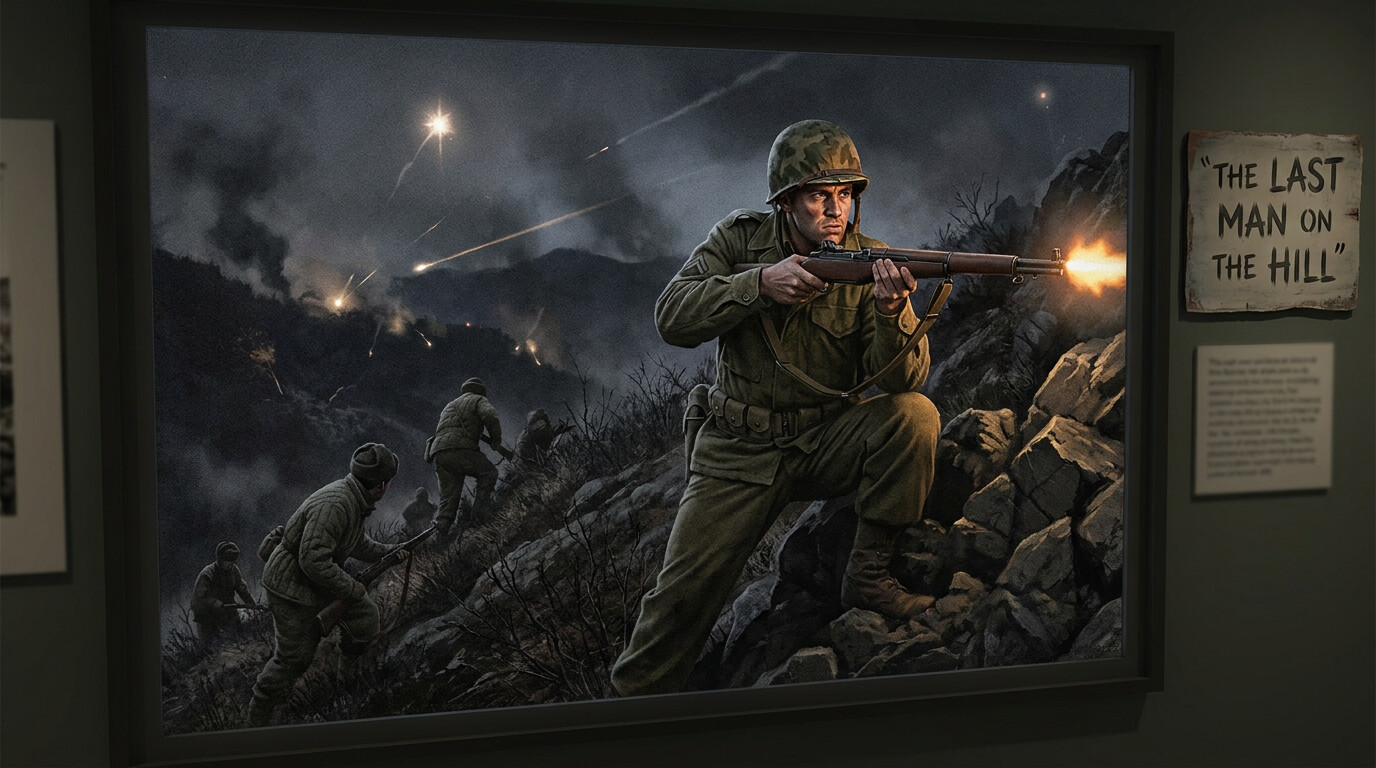
The Last Man on the Hill: Tibor Rubin's War Without End
Hungarian Holocaust survivor Corporal Tibor Rubin held a critical hill position alone through a night assault during the Pusan Perimeter fighting in 1950, then endured nearly three years as a prisoner of war — sustaining fellow American captives by stealing food from enemy stockpiles at the risk of his life. His Medal of Honor, awarded in 2005, came more than half a century after the actions it recognized.
1950-1953 • Korea
The Night at Taejon-ni: Hiroshi Miyamura's Stand
On a bitter Korean night in April 1951, Corporal Hiroshi Miyamura held his machine gun position against overwhelming Chinese assault, covered his squad's withdrawal, and was captured after hours of desperate fighting.
April 24-25, 1951 • near Taejon-ni, Korea
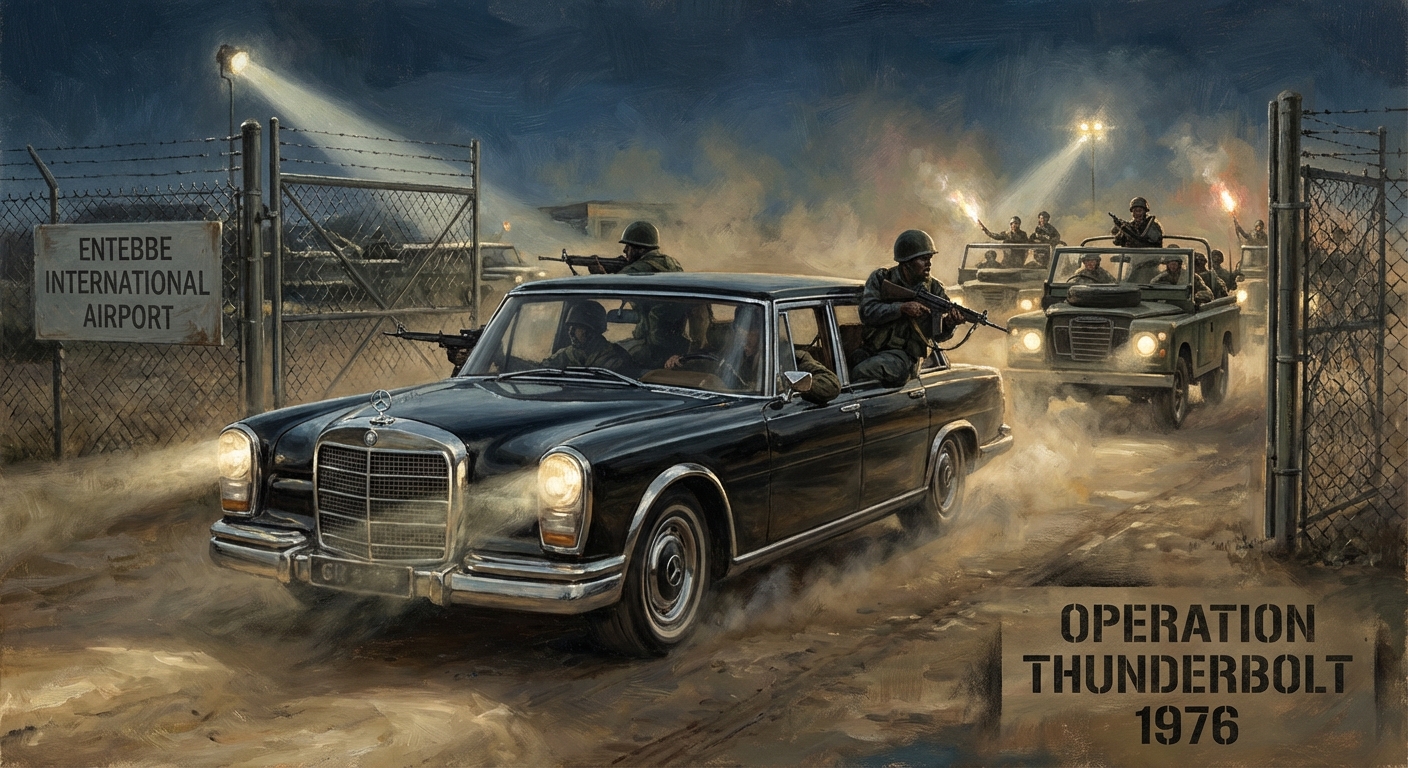
90 Minutes at Entebbe — Operation Thunderbolt
2,500 Miles — 102 Hostages Rescued
July 4, 1976 • Yonatan Netanyahu KIA
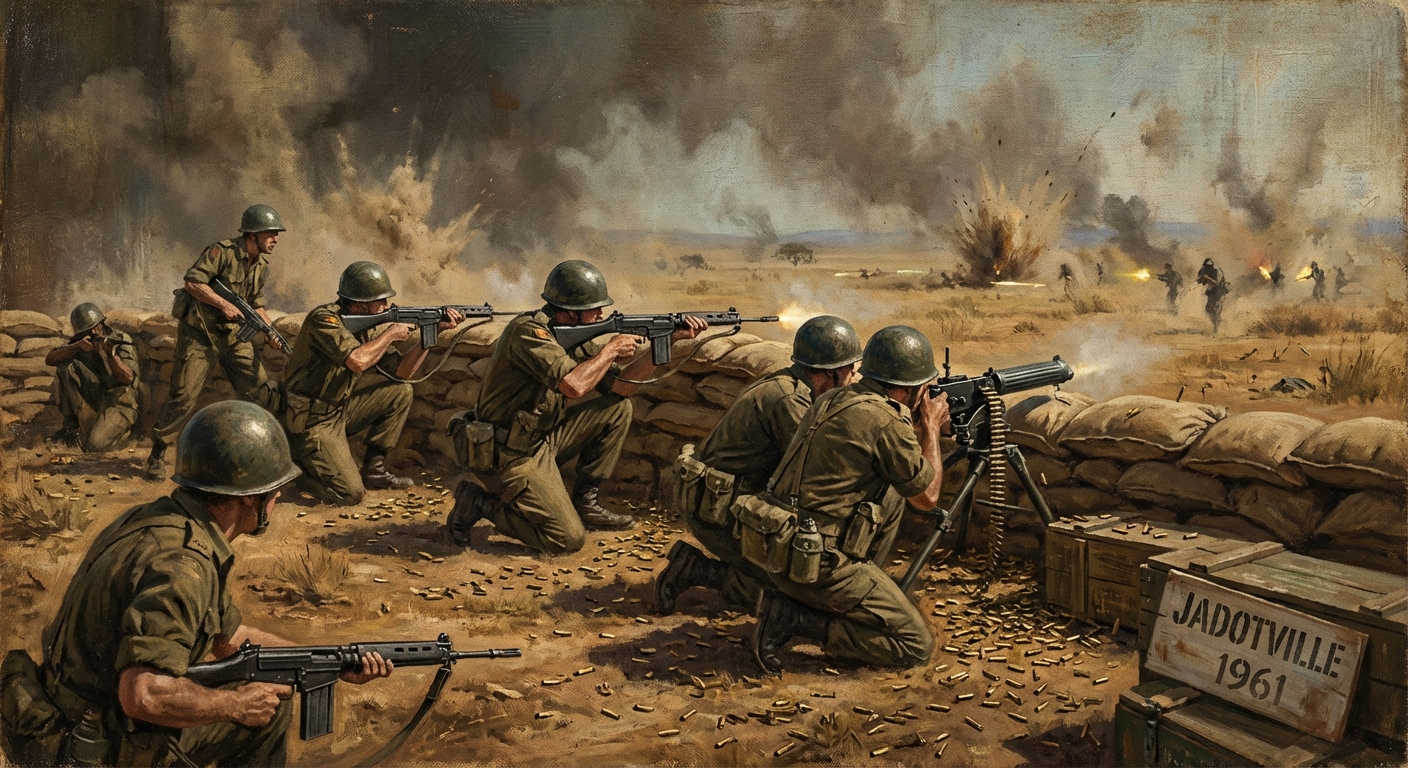
The Siege of Jadotville — The Forgotten Heroes
155 Irish vs 3,000 — Zero KIA — Denied Honor for 55 Years
Sep 1961 • Congo • Finally Honored 2016
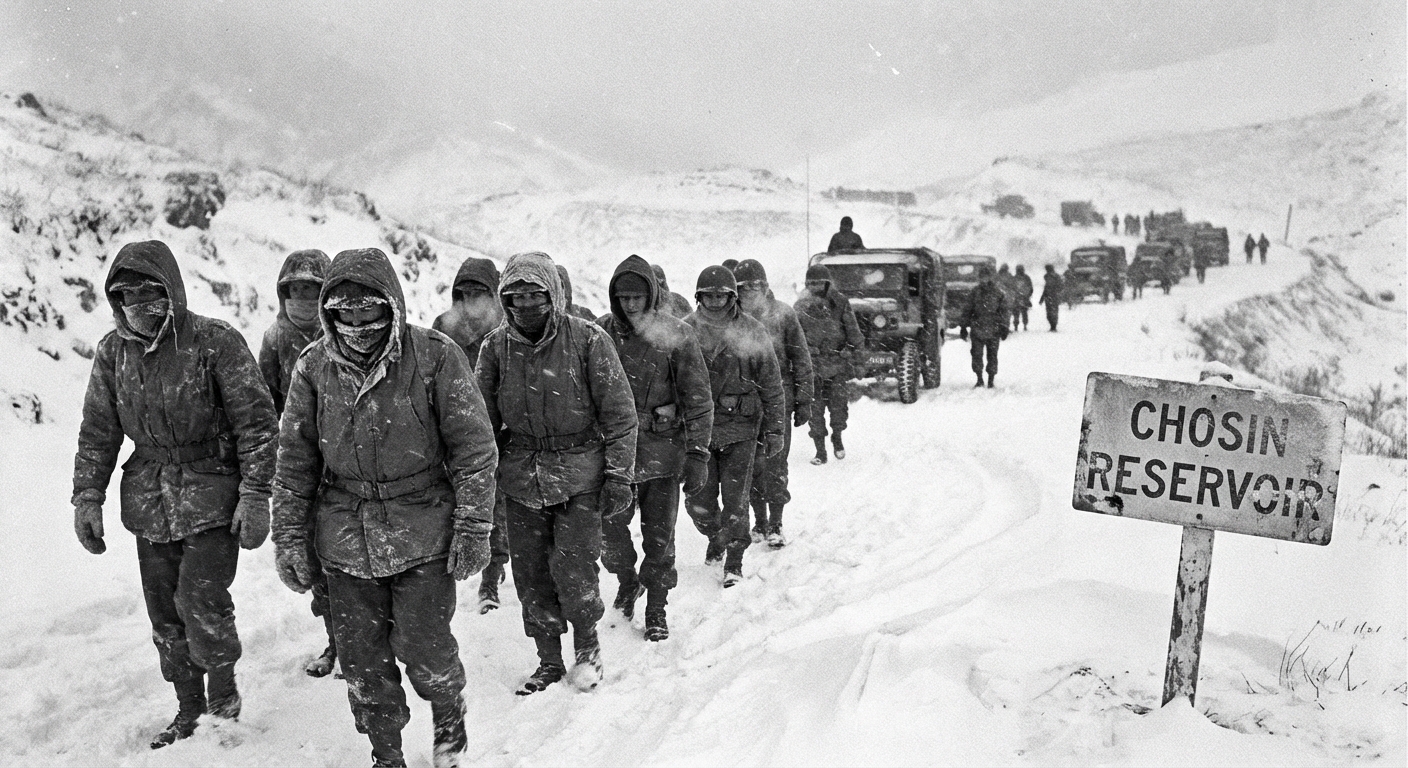
Chosin Reservoir Breakout
Frozen Hell
Korea • -35°F • Surrounded
8 stories
Shadow War
Spies, deception, resistance networks, covert raids, and intelligence operations.
The White Mouse: Nancy Wake's War Against the Reich
Australian socialite Nancy Wake became one of the Gestapo's most wanted fugitives, escaping occupied France only to parachute back as an SOE agent to arm and organize thousands of Maquis resistance fighters.
1940-1944 • Occupied France
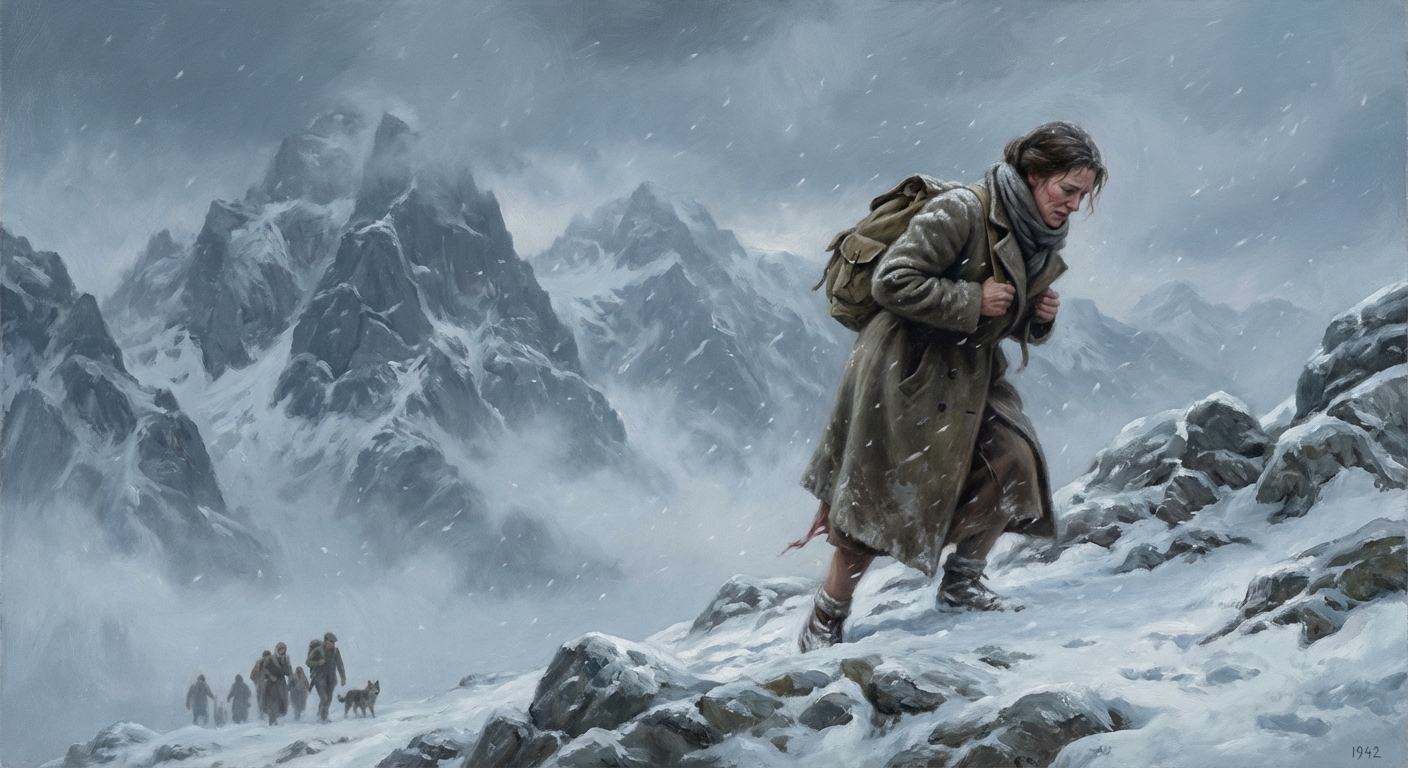
The Limping Lady — Virginia Hall
One Leg, Zero Fear — Most Dangerous Allied Spy
1941–1945 • SOE / OSS / CIA
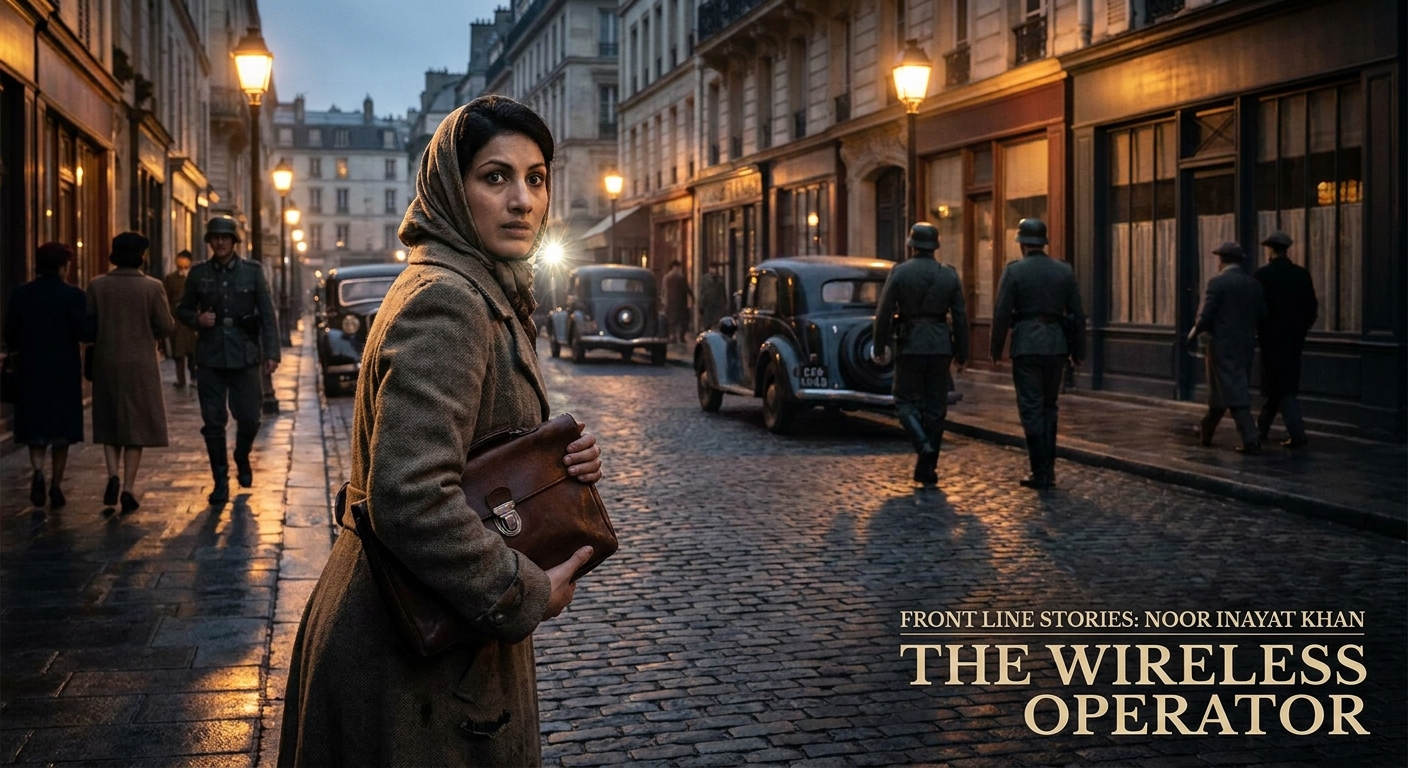
Noor Inayat Khan
Wireless Under Occupation
1943-1944 • Paris • SOE network
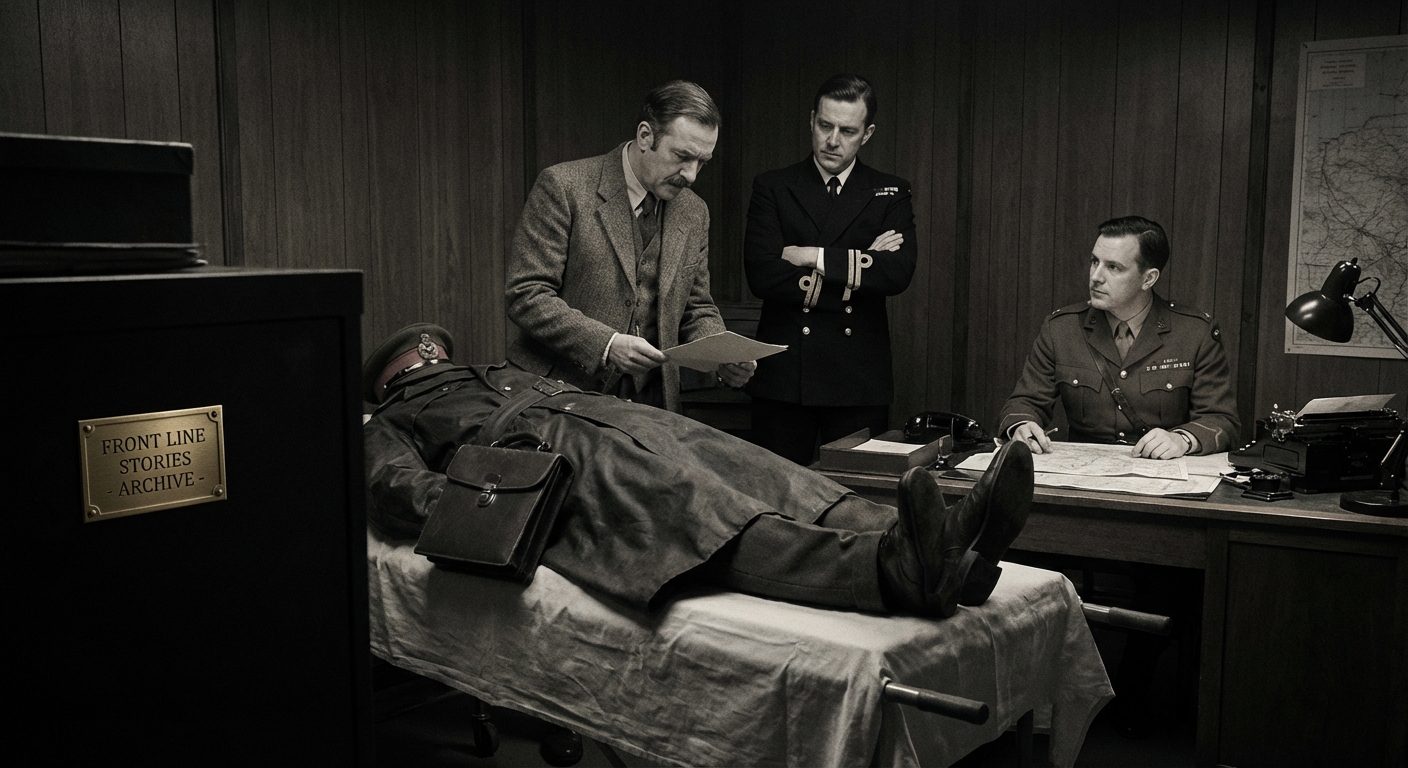
Operation Mincemeat
A corpse, a briefcase, and the road to Sicily
British Intelligence • Strategic Deception • WWII
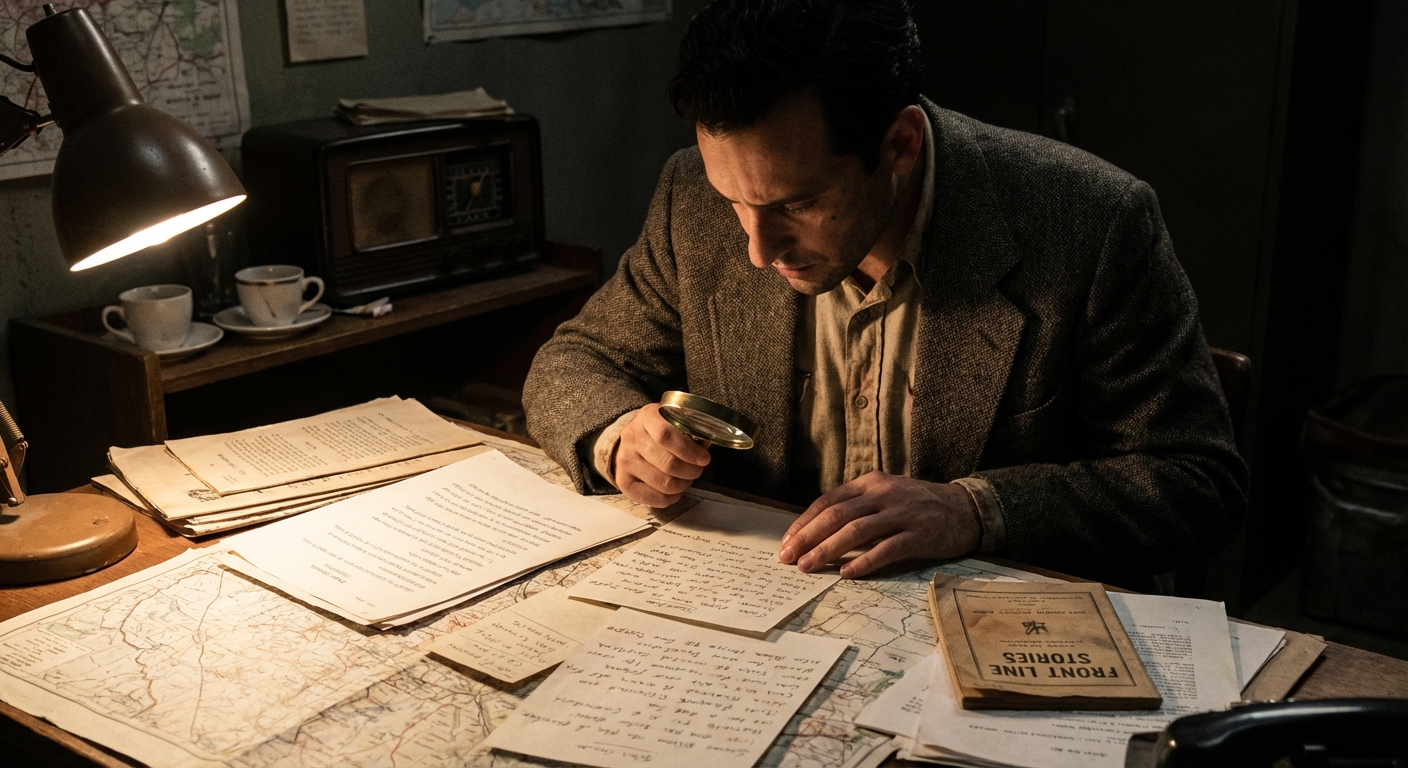
Garbo
The man who invented an army of spies
Juan Pujol García • Fortitude • WWII
Witold Pilecki
The Man Who Volunteered
Polish Underground • Intelligence • Escape
One Life to Lose — Nathan Hale
America's First Spy — The Only Volunteer
Sep 22, 1776 • Age 21 • Executed by British
The Warsaw Uprising
A City Fights Alone
Aug-Oct 1944 • Warsaw, Poland