The dust rose in columns before the shouting did.
On the flat grain plain of Apulia, in the late-summer heat of a Roman morning in 216 BC, somewhere between 50,000 and 86,000 Roman and allied soldiers shook out into battle formation along the southern bank of the Aufidus River. The numbers alone were meant to settle the question. Rome had been losing—disastrously, humiliatingly—to a Carthaginian army that should not have existed on Italian soil. Twice in two years the Romans had sent consular armies north to stop Hannibal Barca, and twice those armies had been shattered. At the Trebia River in 218 BC, Roman legions walked into an ambush in frozen fog. At Lake Trasimene in 217 BC, an entire army died on a narrow lakeshore, cut off from retreat, killed in a slaughter so complete that, according to later accounts, soldiers fighting for their lives did not hear the earthquake that shook central Italy that same morning.
Now Rome had resolved to stop being clever and simply be overwhelming. The Senate authorized an unprecedented eight legions—two consuls, each commanding the largest force Rome had ever assembled for a single engagement. The Roman way of war was built on this moment: mass, discipline, and the irresistible pressure of the heavy infantry line. If you could not outmaneuver an enemy, you could outweigh him. You formed up, you pressed forward, and you ground through whatever stood in front of you.
Hannibal knew this. He was counting on it.
---
**The Man Before the Field**
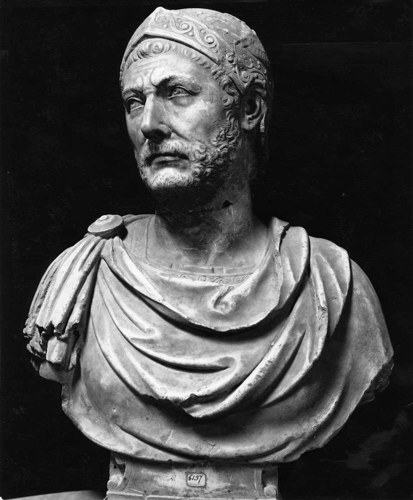
Hannibal Barca was approximately thirty years old in the summer of 216 BC—a detail worth holding onto, because the mind tends to age the architects of catastrophe. He had been campaigning nearly without rest since he assumed command of Carthaginian forces in Iberia around 221 BC, following the assassination of his brother-in-law Hasdrubal the Fair. His father, Hamilcar Barca, had forged Carthaginian power in Iberia after the humiliation of the First Punic War. Family tradition—recorded in outline by Polybius, the most rigorous ancient source for this period—held that Hamilcar brought the young Hannibal to a sacrificial altar and made him swear eternal enmity to Rome. Whether that scene occurred as described, or whether it was shaped in the retelling across generations, cannot be verified. What the record makes clear is that Hannibal spent his adult life making the oath, whatever its form, operational.
In the autumn of 218 BC, he led his army—infantry, cavalry, and war elephants—across the Pyrenees, through southern Gaul, and over the Alps at the onset of winter. The crossing nearly destroyed his force. Ancient sources disagree sharply on the size of the army that descended into Italy: Polybius gives figures suggesting roughly 20,000 infantry and 6,000 cavalry survived the passage; other ancient accounts run higher. Livy's numbers are generally considered less reliable on specifics. What is not disputed is that the force that emerged onto the Po plain was battered, cold, and outnumbered—and that it proceeded to win every significant engagement for the next three years.
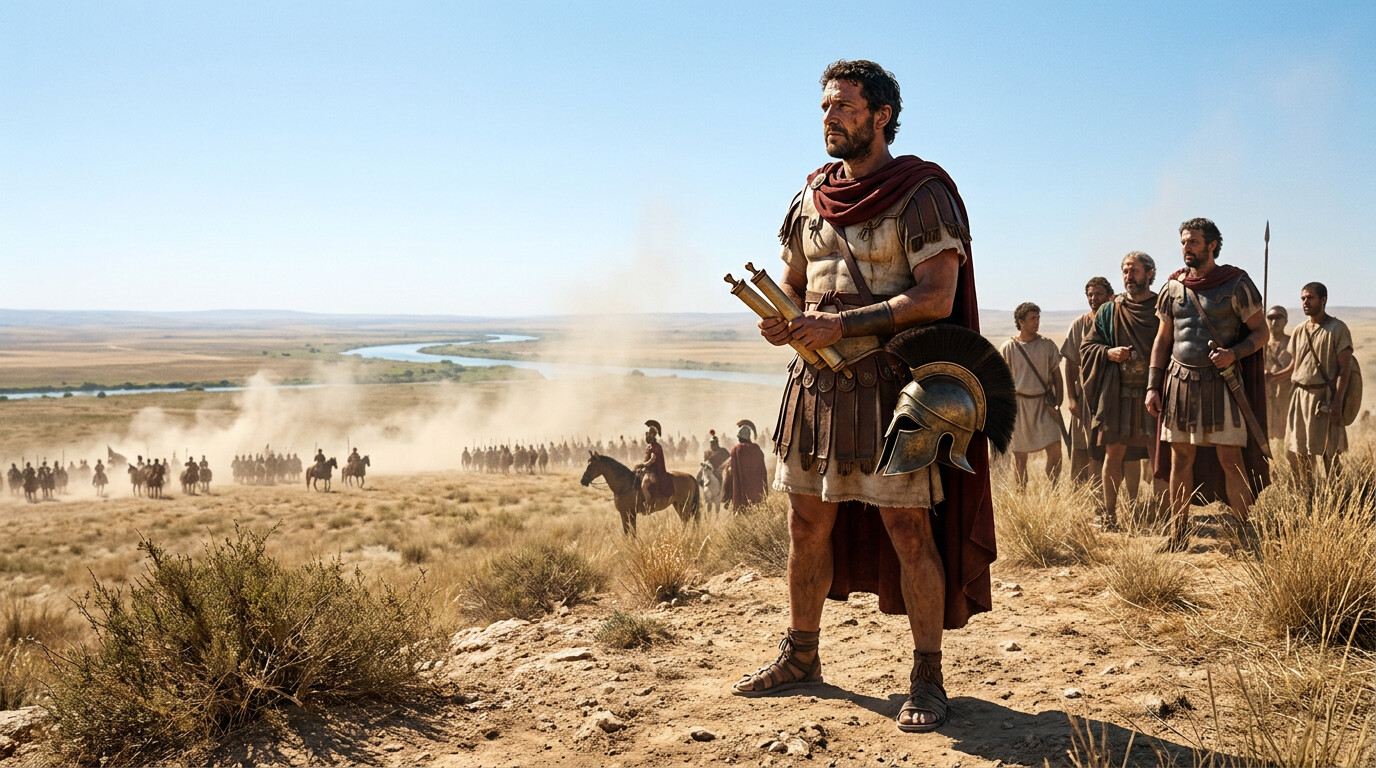
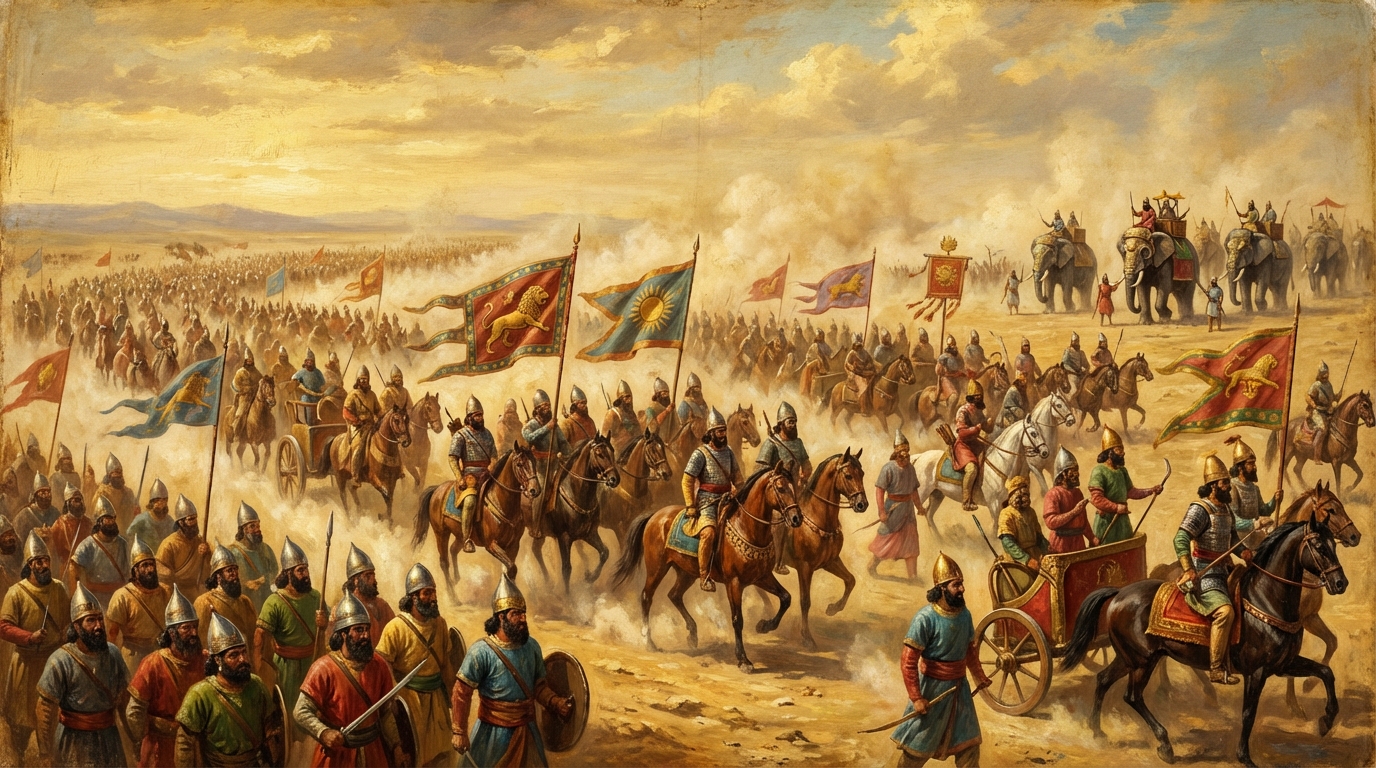
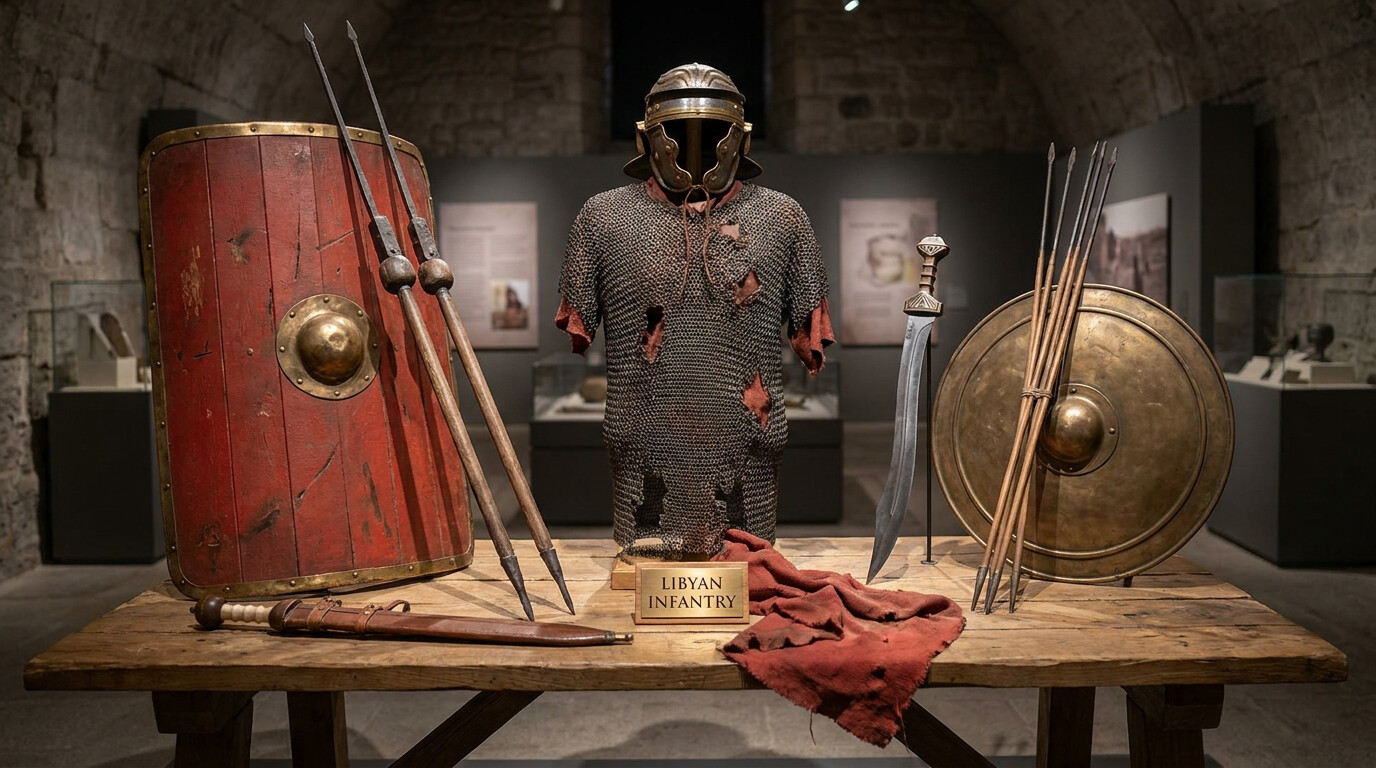
By the time both armies converged on Cannae in August 216 BC, Hannibal had been living in enemy territory for more than two years, resupplying from captured stores and recruiting from among Rome's Gallic and Italian enemies. His army was multinational in a way that had no Roman parallel: Iberian infantry with their curved falcata swords and oval shields; Libyan heavy infantry equipped—after the Trebia and Trasimene—with captured Roman armor and weapons; Numidian cavalry from North Africa, perhaps the finest light horse in the ancient Mediterranean world; Gallic warriors from the Po Valley; and the Iberian and Gallic heavy cavalry on the left wing under a commander identified in Polybius as Hasdrubal—not to be confused with Hannibal's brother of the same name, who remained in Iberia.
This army was smaller than its Roman opponent, probably substantially so, though ancient strength figures must always be treated with caution. Polybius gives Hannibal approximately 40,000 infantry and 10,000 cavalry; the Roman force is recorded at around 80,000 infantry and 6,000 cavalry, though some modern historians argue for somewhat lower Roman numbers. The cavalry imbalance was the pivot on which everything turned.
---
**The Ground**
Cannae sits in Apulia, in the heel of the Italian peninsula, on the right bank of the Aufidus River—the modern Ofanto—where the river bends before running southeast to the Adriatic coast roughly a dozen kilometers away. The terrain in summer is flat, open, and searingly hot. There is little cover and fewer angles. A general who fights on this ground accepts that the engagement will be decided by soldiers, not by topography.
Hannibal positioned his army on the south bank, which placed the Aufidus to his right. Livy records that the morning wind—the Volturnus, a seasonal wind in the region—blew from the southwest, into Roman faces. Modern historians treat this detail with some caution, as it appears in Livy but not in Polybius; its tactical significance remains debated. The Romans, under consuls Lucius Aemilius Paullus and Gaius Terentius Varro—who held operational command on the day of battle, per the standard account—deployed with their right flank anchored toward the river and their cavalry on the wings. They massed their infantry in the center, deeper than usual, reducing the individual space per man and concentrating pressure. The intent was unmistakable: punch through the Carthaginian center, split the enemy army, and destroy it piecemeal.
Hannibal read that intent and designed a battlefield to receive it.
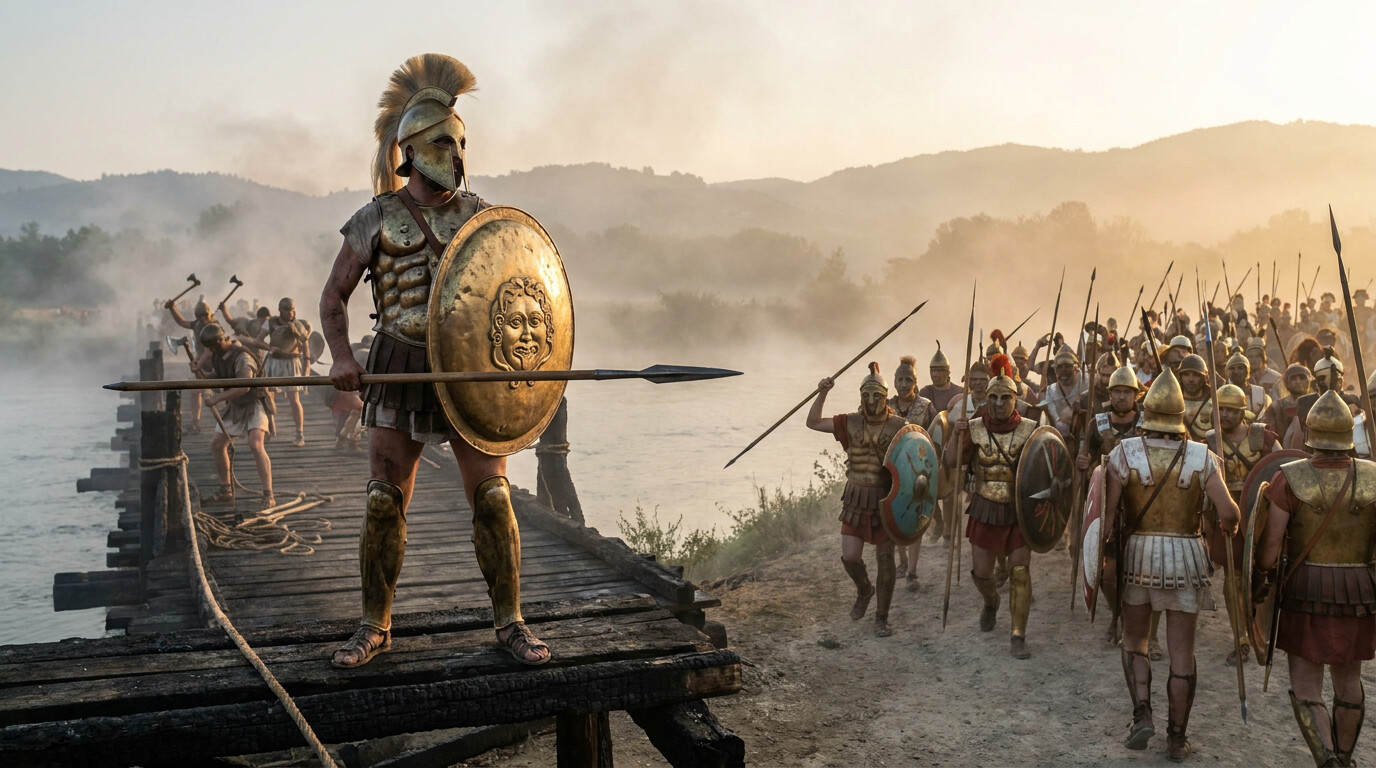
He deployed his line in a convex arc bulging toward the Romans—a crescent with its point aimed at the enemy. On the flanks of that crescent he placed his best infantry: the Libyan heavy infantry, veteran fighters now wearing the armor and carrying the weapons of the Roman soldiers they had killed at the Trebia and Trasimene. In the center of the crescent, at its most exposed and forward-protruding point, he placed his Gallic and Iberian infantry—reliable fighters, but not his strongest. On his left wing, he positioned the heavy Iberian and Gallic cavalry under Hasdrubal, facing Rome's allied cavalry on the opposite flank near the river. On his right, the Numidian cavalry faced Rome's Italian allied horsemen.
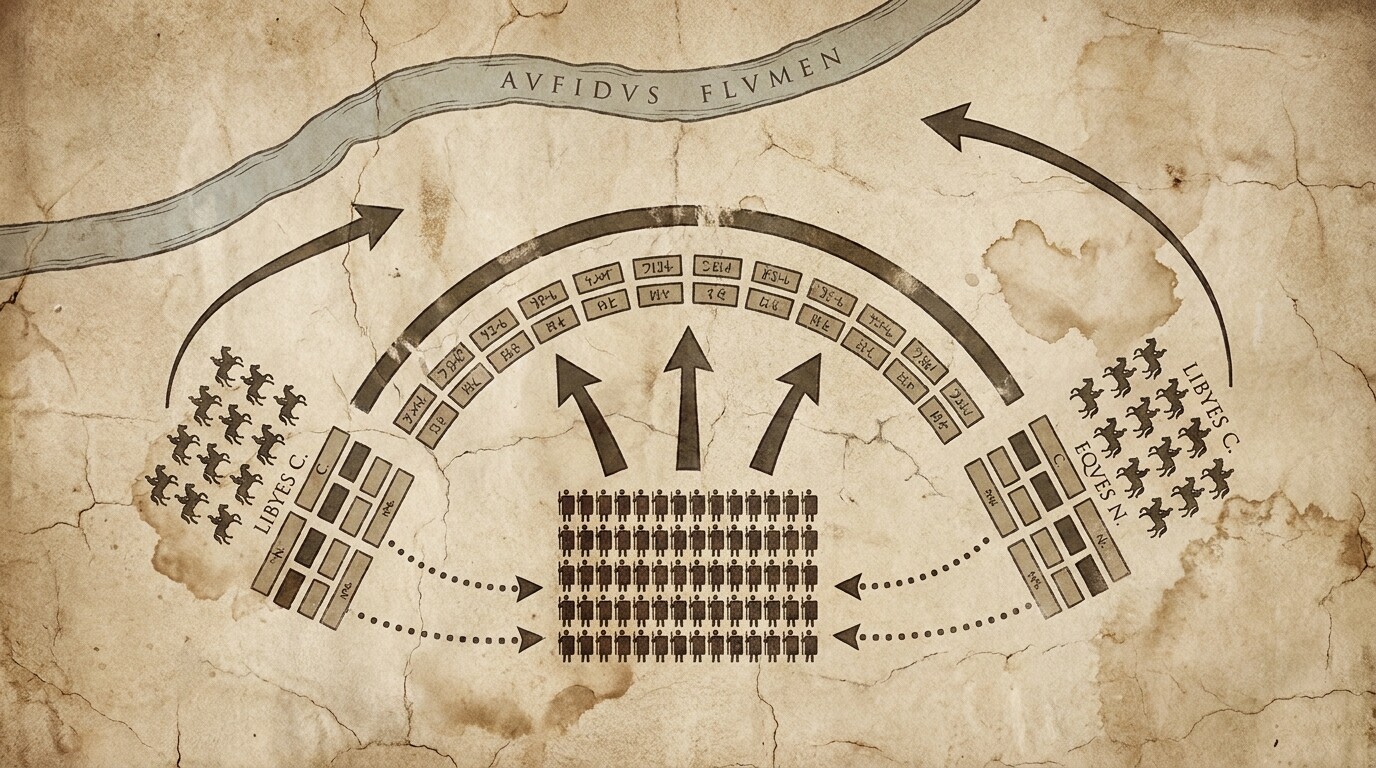
The plan, reconstructed from Polybius and analyzed by students of tactics from ancient Rome through the twentieth century, required the center to absorb the Roman advance without breaking—and then to give ground in a controlled, deliberate retreat, pulling the Roman mass inward while the flanks held firm and the cavalry on the left executed a decisive sweep.
---
**The Mechanics of a Trap**
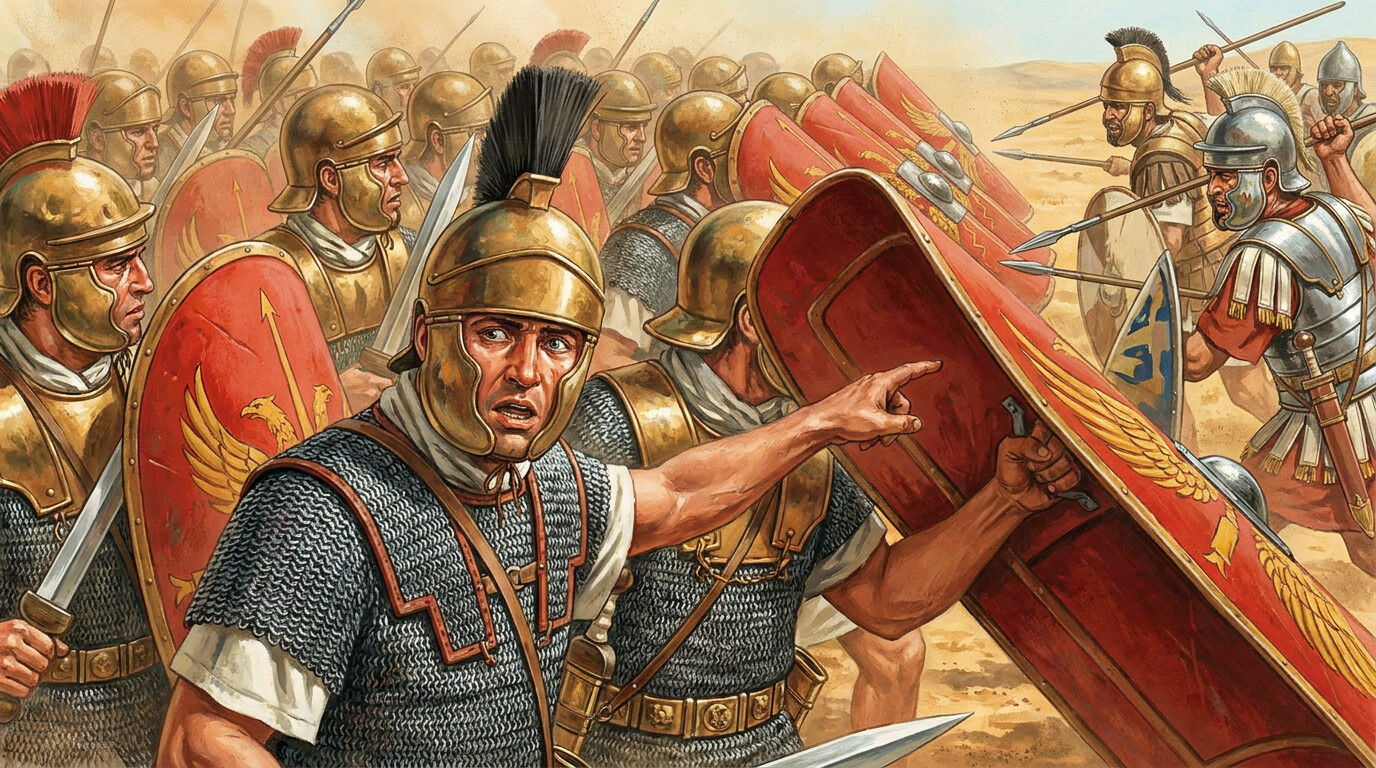
To understand what happened at Cannae, it helps to understand what it felt like to fight in an ancient infantry engagement. These were not the fluid, fast-moving combats of cavalry or the long-distance attrition of archery. They were close. Close enough to feel the physical pressure of the bodies pressing behind the man trying to kill you. A Roman legionary in the heavy infantry line—a hastatus or princeps—carried a scutum, the large curved rectangular shield, a pilum in each hand, and a gladius at his hip. The pilum was the opening weapon: a heavy javelin with a soft iron shank designed to punch through a shield and bend on impact, making the shield difficult to use and impossible to throw back. At close range, the Roman soldier discarded the pilum, drew the gladius, and fought in the press.
The Roman system depended on momentum, depth, and unit cohesion. A soldier advancing with thousands of men at his back and sides did not need exceptional individual courage—the mass of the formation carried him. The problem was that mass, at Cannae, was precisely the weapon Hannibal intended to use against its owners.
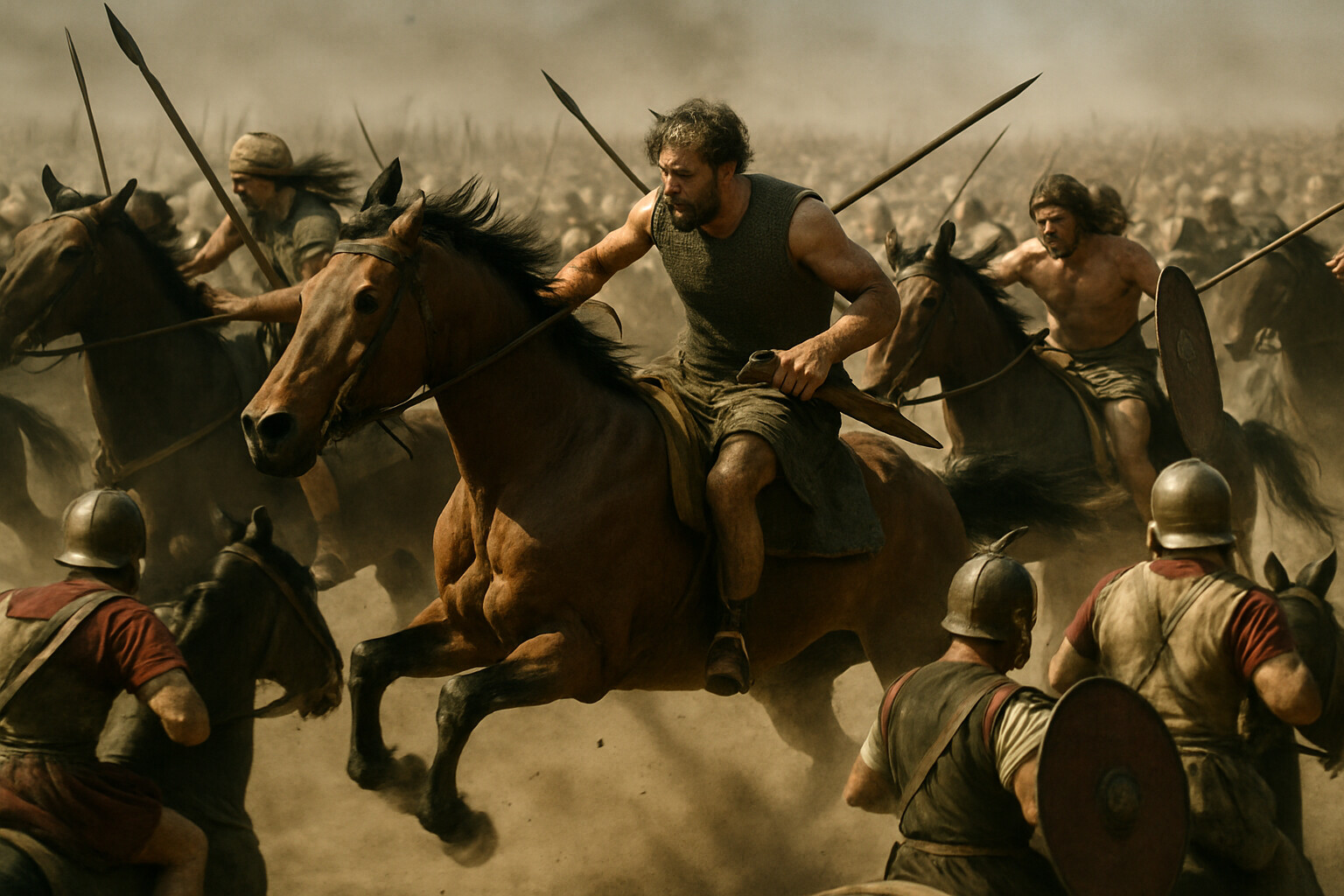
As the battle opened, Hasdrubal's heavy cavalry on the Carthaginian left smashed into the Roman cavalry on the right flank with a violence that ancient sources describe as overwhelming and fast. The Roman allied horse on that wing—outnumbered and facing heavier riders in a confined space near the river—broke. Polybius, who interviewed survivors and accessed official records, emphasizes the speed and completeness of this rout. Hasdrubal did not pursue the fleeing Romans far. He wheeled his cavalry across the rear of the Roman infantry—a maneuver requiring discipline and coordination that is difficult to execute under battlefield conditions—and drove into the back of the Italian allied cavalry on the opposite Roman wing, who were still engaged with the Numidians in front. Caught between the Numidians and Hasdrubal's cavalry behind, the Italian horse disintegrated.
The Roman cavalry was gone from the field. Hasdrubal's riders moved again.
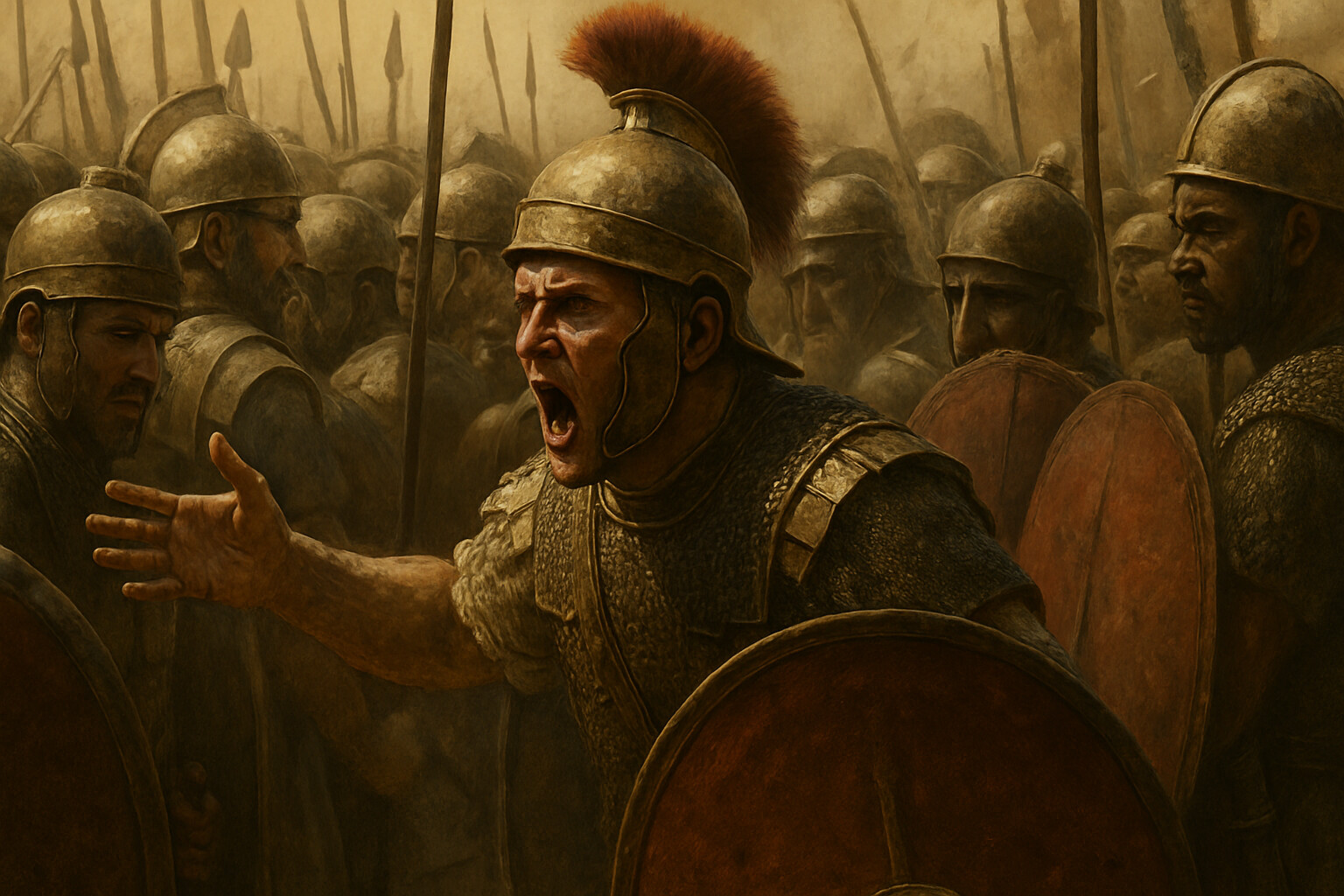
In the center, the crescent had been absorbing punishment. The Gallic and Iberian infantry in Hannibal's arc had held their initial position, then begun to fall back—not in a rout, but in a structured withdrawal that drew the Roman mass forward and inward. This is the detail that strains credibility when read on a page and that reveals the extraordinary discipline of Hannibal's polyglot army: under the pressure of the largest Roman infantry force ever assembled, the Carthaginian center retreated in formation rather than dissolving. The convex arc inverted. What had bulged toward Rome now curved inward, creating a pocket.
The Romans pressed harder. The men in the middle of the Roman formation—packed tighter than usual by the tactical decision to concentrate depth—found themselves pushing into a closing space. The pressure from behind made it difficult to stop, difficult to turn, difficult to recognize what was happening around them until the shape of the battle had already changed. The Libyan infantry on Hannibal's flanks, who had held their positions while the center retreated, now turned inward and began to close on the compressed Roman mass from both sides. Hasdrubal's cavalry, having finished the work on the Roman wings, sealed the trap from the rear.
The Romans were surrounded.
---
**The Killing**
What followed was not a battle in any conventional sense. It was a process of compression and slaughter carried out over several hours—ancient sources vary on the precise duration—on a shrinking piece of ground. The Roman soldiers in the outer layers could fight, but the soldiers packed inside them could barely raise their weapons. The formation, which had been a source of power, became a mechanism of death: men pressed so tightly together by the weight of their comrades behind them that they could not lift their shields or draw their swords fully.
Polybius, writing perhaps fifty years after the event based on accounts from participants and official sources, gives the Roman dead at approximately 70,000. Livy's figures are similar. Modern historians, working with demographic estimates and the logistical capacity of the armies, sometimes argue for somewhat lower figures—perhaps 47,000 to 50,000 Roman and allied dead—while acknowledging that even the lower estimates represent one of the largest single-day combat losses in recorded history. Among the dead: Lucius Aemilius Paullus, one of the two commanding consuls. Approximately eighty senators, a number that represented a significant fraction of the Roman Senate. Quaestors, aediles, tribunes, and officers at every level.
Gaius Terentius Varro, the other consul, survived and reached Venusia with a remnant of cavalry. Rome did not punish him. The Senate, according to Livy, thanked him for not despairing of the republic—an act of institutional composure under catastrophic pressure that speaks clearly about Roman political culture.
Hannibal's losses are recorded at approximately 5,700 to 8,000 killed, the majority Gauls. The Gallic and Iberian infantry who held the center and absorbed the Roman pressure paid the heaviest price on the Carthaginian side. Their discipline in that retreat—holding formation under the forward pressure of a Roman army that outnumbered them—was the act on which the entire battle depended, and they died in significant numbers performing it.
---
**What Made It Possible**
The Battle of Cannae has been analyzed, diagrammed, wargamed, and debated by military professionals for more than two millennia. The Schlieffen Plan—Germany's strategic framework entering the First World War—was explicitly conceived as a Cannae at the operational level, an attempt to replicate the double envelopment at national scale. Every serious military academy in the Western world has studied the battle. The question that drives that study is not whether the envelopment worked—the result is beyond dispute—but how Hannibal made it work given the difficulties involved.
Several factors stand out.
First, the cavalry imbalance. Hannibal brought approximately 10,000 horsemen to a battle where Rome had perhaps 6,000. More important than the numbers was mission clarity: Hasdrubal's heavy cavalry on the left was designed to win its engagement quickly and then sweep the rear. It did. Without that sweep, the Numidians alone could not have eliminated the Italian allied cavalry fast enough to allow Hasdrubal to close the pocket.
Second, the depth decision. The Roman commanders chose to mass their infantry in an unusually deep, compressed formation—reducing frontage, concentrating power—in direct response to previous defeats and in the belief that sheer mass would overcome Carthaginian resistance. That decision turned a Roman strength into a vulnerability. A formation that cannot maneuver cannot respond to encirclement.
Third, and most difficult to quantify: the discipline of the Carthaginian center. An ordered retreat under pressure—what the sources describe the Gallic and Iberian infantry executing as the Roman line advanced—is among the most demanding maneuvers in infantry combat. Units tend to rout rather than withdraw cleanly. The fact that Hannibal's multilingual, multiethnic infantry held the inversion without collapsing argues for careful preparation, leadership at the unit level, and a tactical plan communicated to subordinate commanders before the battle. The ancient sources do not preserve those orders or briefings, so the precise mechanism by which Hannibal prepared his officers remains a gap in the record.
Fourth: the terrain. The flat Apulian plain gave Hasdrubal's cavalry the space to sweep across the Roman rear. In broken ground, that maneuver might have taken too long or been interrupted. Hannibal chose, or accepted, ground that made the sweep executable.
---
**The Aftermath and What Rome Did With It**
The news reached Rome in stages, each report worse than the last. Polybius and Livy both describe a city under severe collective strain: crowds at the gates waiting for survivors, the Senate in continuous session. The treasury was nearly empty. Rome had lost, in three battles over three years, a significant portion of its military-age male population and a devastating share of its senatorial and equestrian leadership.
And yet Rome did not negotiate.
This is the central paradox of the aftermath. Hannibal had won the greatest tactical victory of his career—perhaps of the ancient world—and it did not produce the political result he needed. His apparent assumption was that a defeat on this scale would fracture the Latin and Italian confederation that gave Rome its manpower base. Several southern Italian cities and regions did defect to Carthage after Cannae, including Capua, the second-largest city in Italy. But the Latin communities nearest to Rome held. Rome mobilized new legions from freedmen and from the youngest eligible age classes. The Senate voted against ransoming prisoners—Polybius records the Carthaginian embassy arriving to negotiate and being refused, a decision that reinforced Roman solidarity and denied Hannibal a diplomatic dividend.
Hannibal remained in Italy for more than a decade after Cannae, fighting, raiding, and winning tactical engagements he could not convert into strategic result. The Carthaginian home government never provided him the reinforcements and resources he needed to lay siege to Rome itself. His brother Hasdrubal Barca eventually led a relief force out of Iberia, crossed the Alps, and was defeated and killed at the Metaurus River in 207 BC—his head, by Roman account, thrown into Hannibal's camp to inform him that the relief had failed.
Hannibal withdrew to Africa in 203 BC when Scipio Africanus invaded the Carthaginian heartland. At Zama in 202 BC, Scipio—who had studied Cannae carefully and designed his formation to counter the Carthaginian envelopment—defeated Hannibal in the field. It was the only major defeat of Hannibal's military career.
In the following decades, Hannibal served as a magistrate in Carthage, was forced into exile under Roman political pressure, and moved between the courts of Hellenistic kings. He died—probably in 183 BC, at a location the ancient sources associate with Libyssa in Bithynia—by poison, according to those sources, to avoid capture by Rome. He was approximately sixty-four years old. The precise location of his death is not established beyond reasonable dispute.
---
**The Record and Its Limits**
The primary ancient sources for Cannae are Polybius (Histories, Book III) and Livy (Ab Urbe Condita, Book XXII). Polybius is generally considered the more rigorous: a Greek historian who lived in Rome in the mid-second century BC, had personal access to participants and their descendants, and wrote with explicit concern for factual accuracy and cause-and-effect analysis. His account of the battle's tactical mechanics is detailed, internally consistent, and has held up well against archaeological and geographical investigation of the Cannae site.
Liby is more literary and more willing to include dramatic detail that may reflect later elaboration. His casualty figures and some narrative details—including the specific account of the Volturnus wind—are treated with more caution by modern historians. Neither source provides a verbatim record of orders, speeches, or tactical briefings; both write from after the fact with sources that were themselves filtered through memory and tradition.
Modern scholarly treatments—including Goldsworthy's The Fall of Carthage (2003), Lazenby's Hannibal's War (1978), Daly's Cannae: The Experience of Battle in the Second Punic War (2002), and Sabin's Lost Battles (2007)—have substantially refined understanding of the engagement without resolving every uncertainty. The exact Roman strength at Cannae, the precise formation of each army, and the sequence and timing of the cavalry actions remain subjects of scholarly discussion. The numbers of dead—variously given between approximately 47,000 and 70,000 Romans and allies—cannot be verified archaeologically with precision, though excavations at the Cannae site have recovered weapons and human remains consistent with a massive engagement.
The exact position of Hannibal's command post during the battle is not established by the sources. That he was present on the field is not in doubt; where he stood and what he could observe in real time is inference.
---
**Why Cannae Endures**
Military history accumulates a great many decisive battles, and most of them matter primarily within their own wars. Cannae matters differently. It has been incorporated into the tactical doctrine and professional education of armies that had no connection to Carthage, Rome, or the ancient Mediterranean—because what Hannibal achieved on that Apulian plain in the summer of 216 BC was not merely a victory but a demonstration of a principle: that an enemy's strength, improperly handled, can become the mechanism of his own destruction.
The double envelopment—the encircling battle—became a template for generations of commanders who never read Polybius but absorbed the lesson through the chain of military thought that runs from Cannae through Scipio, through Caesar, through Frederick the Great, through Clausewitz's era, through Schlieffen, and into the armored operations of the Second World War. The Red Army studied it. The United States Army studied it. In 1991, the Coalition ground campaign in Kuwait—the flanking operation that encircled Iraqi forces in the desert—was described by commentators and some participants in the explicit language of Cannae.
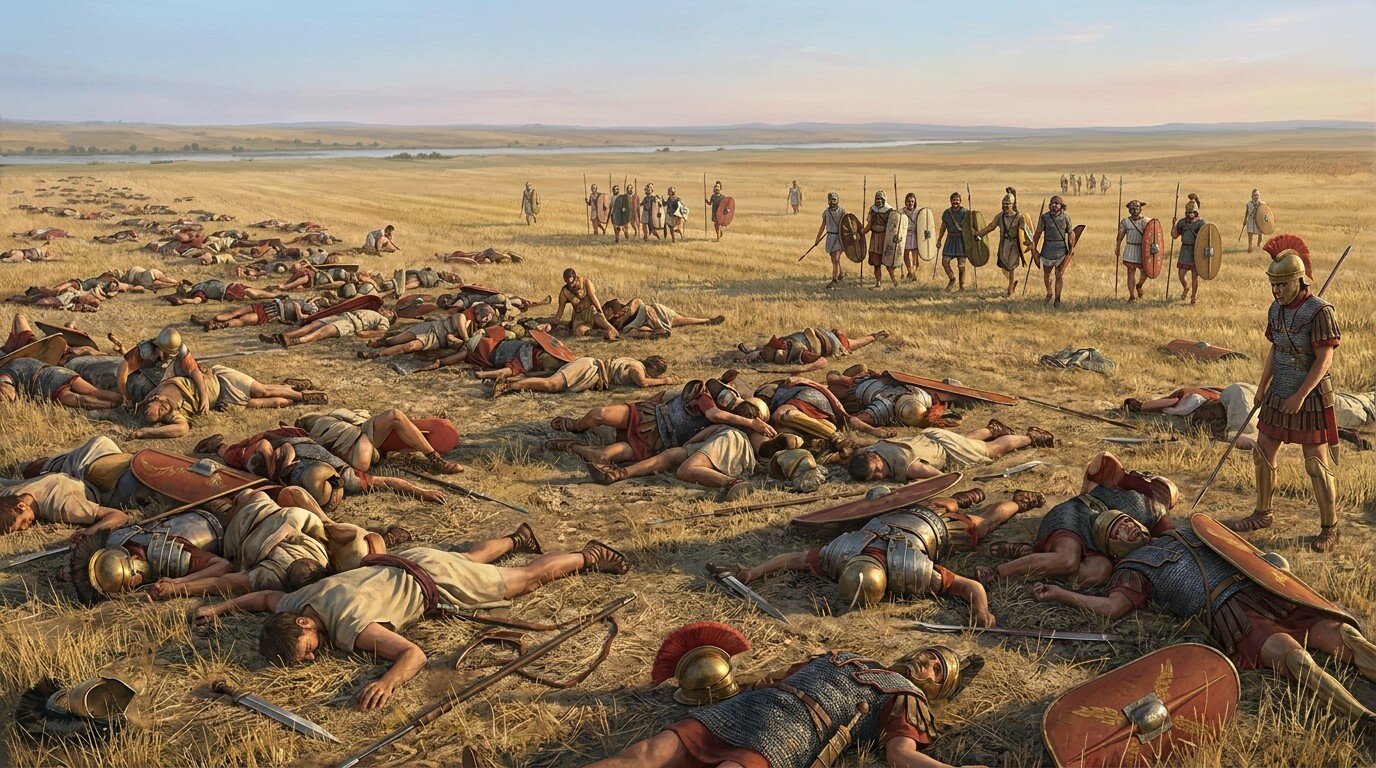
None of that erases the cost. Somewhere between 47,000 and 70,000 men died in an afternoon on a flat plain in southern Italy. They died pressed together, unable to move, unable to fight effectively, unable to understand what was happening to the formation around them until it was too late to matter. The officers who might have recognized the trap were themselves caught in the press or already dead. The weight of the men behind continued to push forward, into the closing walls.
Hannibal walked that field afterward. Ancient sources record that the ring of Lucius Aemilius Paullus, recovered from among the dead, was brought to him as evidence of the scope of the Roman loss. Livy reports that he wept at the sight of the slaughter. Whether that account reflects what he actually did or what later writers shaped him into doing cannot be confirmed; it appears in Livy but not in Polybius, and modern historians treat it as probable literary tradition rather than documented fact.
What the record does confirm is this: no battle before or since has produced so much from the deliberate inversion of a seeming strength into a fatal weakness—and the men who died there, Roman and Carthaginian both, paid in full for the demonstration.
The crescent had closed.