The sea smelled wrong.
Even before the scouts reached the shore, word had moved through the samurai camps on Kyushu like smoke through dry grass. The bay at Hakata was filled with ships. Not a handful, not a squadron — the horizon itself had changed. The armada of Kublai Khan had arrived.
The year was 1274. The man who would have to decide what Japan did next was twenty-three years old.
---
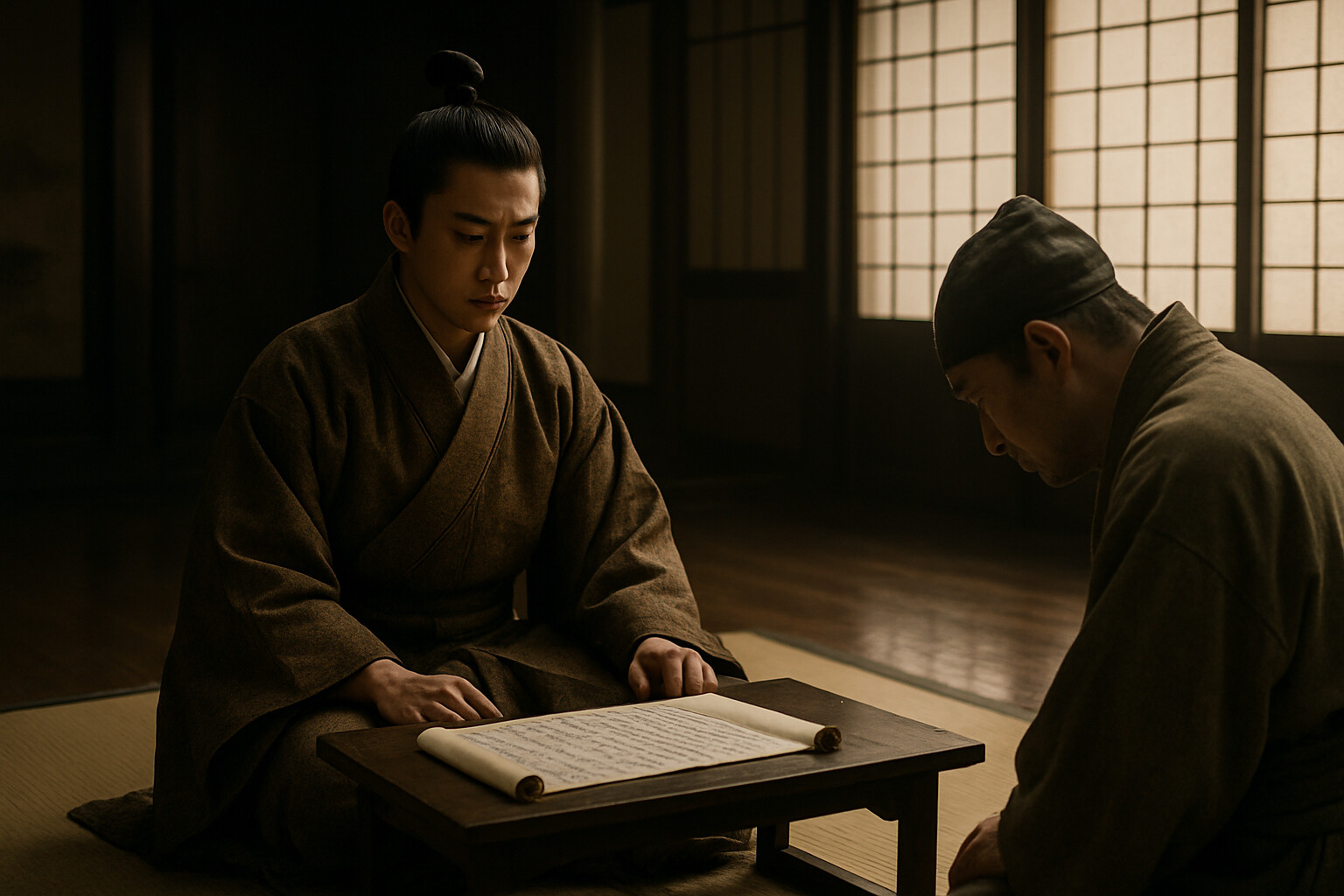
Hojo Tokimune had been governing Japan in all but name since he assumed the position of shikken — regent of the Kamakura shogunate — in 1268. The title was indirect by design. Japan's emperor still sat in Kyoto, and the Kamakura shogun nominally led the warrior class. But actual power in thirteenth-century Japan concentrated in the Hojo regency, and Tokimune was the Hojo. He was, by any functional measure, the man responsible for whether Japan survived.
He had been managing Kublai Khan's ambitions for six years before the first fleet appeared. The Great Khan had dispatched diplomatic missions to Japan in 1268, 1271, 1272, 1273, and 1274 — each carrying some variant of the same demand: submit, acknowledge Mongol supremacy, send tribute, or face the consequences. Tokimune rejected every one. Some accounts go further: Japanese chronicles report that the final envoys were executed on his order, a grave violation of diplomatic custom that made war functionally inevitable. That claim is preserved in Japanese sources but is not confirmed by all scholarly analyses of the period, and should be treated as probable rather than certain.
What is certain is that Tokimune understood the stakes. The Mongols had already destroyed the Jin dynasty, subjugated Korea, sacked Baghdad, and driven deep into Eastern Europe. They were not a regional power pressing territorial claims. They were the largest land empire in human history, now reaching across the sea. When Tokimune refused to submit, he was refusing on behalf of a Japan that had no practical experience of large-scale naval invasion, no standing national army in the modern sense, and a warrior culture built around individual combat and personal honor — not the mass-formation tactics, explosive projectiles, and coordinated naval assault that the Mongols had spent decades perfecting.
What those six years of diplomatic refusal bought was time. Tokimune ordered defensive preparations on Kyushu, the southernmost of Japan's main islands and the logical landing point for any force crossing from Korea. He directed the samurai clans of Kyushu to prepare. He placed the defense of the western coast in the hands of local lords who knew the terrain. When the fleet appeared in Hakata Bay on the nineteenth day of the tenth month of 1274 — approximately early November by the Western calendar — those preparations were incomplete. But they existed.
---
The geography of Hakata Bay shapes everything that happened there.
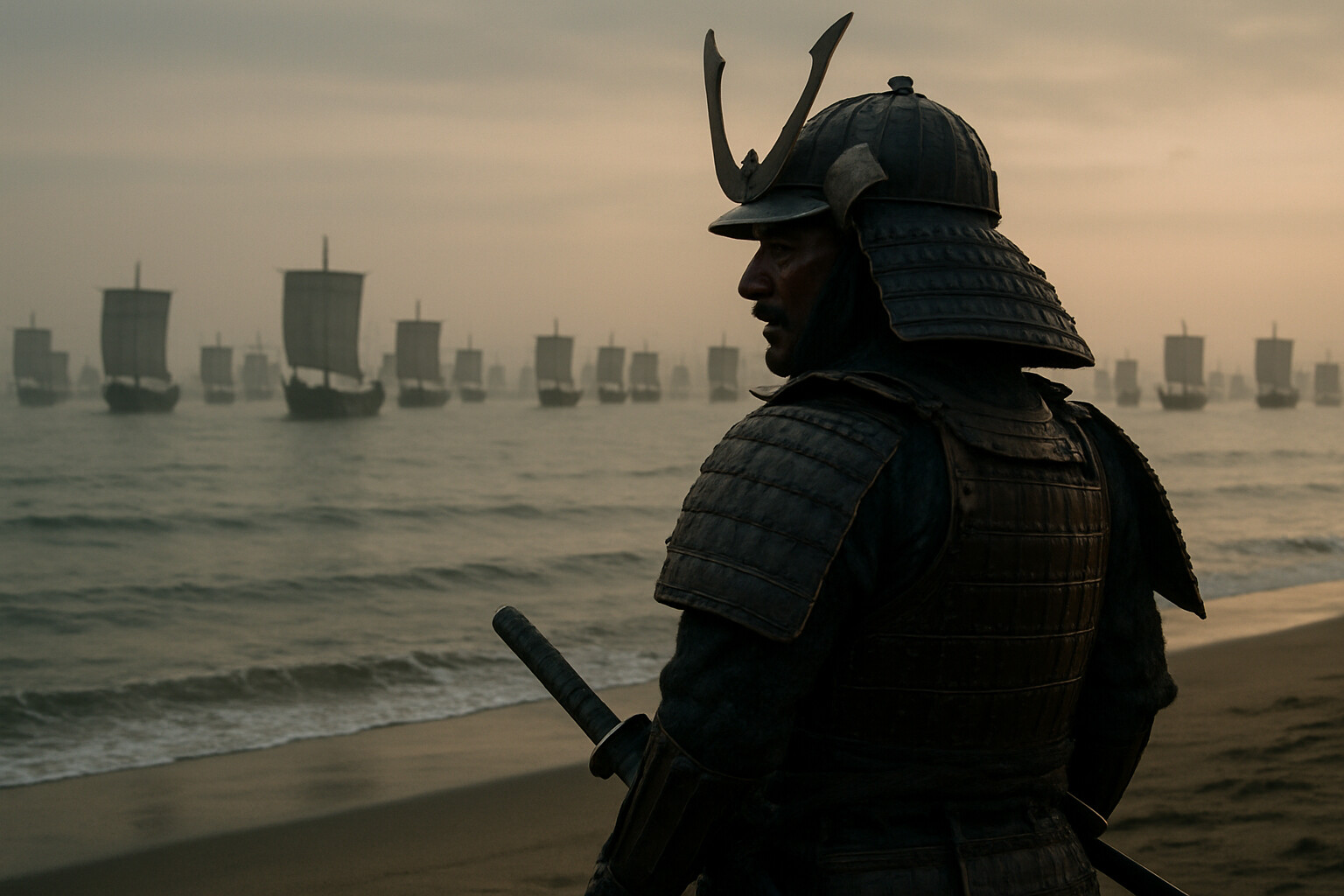
The bay is a broad, shallow crescent on the northern coast of Kyushu, roughly eighteen kilometers wide, near what is now the city of Fukuoka. The shoreline is relatively flat, with sandy beaches backed by low ground and agricultural land. It offered the Mongol commanders a practical landing zone — deep enough for large vessels to approach, open enough for a mass disembarkation. For the Japanese defenders, that same openness was a liability. There was no cliff face to hold, no narrow pass that a small force could seal. The beach was the battlefield, and the beach was wide.
Behind the beaches, several small islands and sandbars offered partial cover for defenders and obstacles for attacking vessels, but the fundamental tactical problem for the Japanese was straightforward: stop a much larger force from establishing a beachhead, or fight them in the open once they had.
The Mongol and allied Korean and Chinese force of 1274 is estimated by most modern historians at between 25,000 and 40,000 soldiers carried in approximately 900 vessels. These numbers derive from Japanese and Korean sources and should be understood as approximate. The composition included Mongol cavalry and infantry, Chinese infantry and technical troops, and Korean sailors and soldiers serving under the authority of the recently conquered Goryeo kingdom. Whatever the exact figures, the force substantially outnumbered what Kyushu could field.
The Japanese force defending Hakata Bay in 1274 is not precisely documented. Estimates range from roughly 6,000 to 10,000 samurai and supporting fighters, drawn from the major clans of Kyushu — the Shoni, Otomo, Shimazu, and others — answering the directive of the Kamakura government. They were not a unified standing army. They were a coalition of warrior houses, each with its own traditions, equipment, and loyalties, assembled in common cause against an enemy unlike any Japan had faced before.
---
The samurai who arrived at Hakata Bay in 1274 came equipped for the kind of warfare they had always known.
The dominant ranged weapon of the Japanese warrior class was the yumi — the asymmetric Japanese composite bow, built from laminated bamboo, wood, and rattan. Unusually long, typically exceeding two meters, it was designed with its grip positioned below center, which allowed it to be used effectively from horseback without the upper limb striking the horse. A combat-ready war bow could drive an arrow through light armor at moderate range. Japanese archery in the samurai tradition emphasized individual accuracy and ceremonial protocol. Archers might announce their names and lineage before loosing a first shaft. The opening exchanges of a battle were shaped by this kind of formal long-range archery — a convention that assumed an opponent who shared the same expectations.
For close combat, samurai carried the tachi — a curved single-edged sword worn suspended from the belt with the edge downward, optimized for drawing and cutting from horseback. The tachi of the thirteenth century was a weapon of genuine sophistication, its blade produced by a process that concentrated hard steel at the cutting edge while leaving tougher, more flexible steel at the core. The polearm naginata — a curved blade mounted on a long shaft — was also in common use, effective against cavalry and foot soldiers. Samurai armor of the period, the oyoroi style, was constructed from small lacquered iron and leather scales laced together into panels. It provided real protection and was designed for mounted archery, but it was heavy, absorbed water readily, and was not built for the tight mass-formation fighting the Mongols employed.
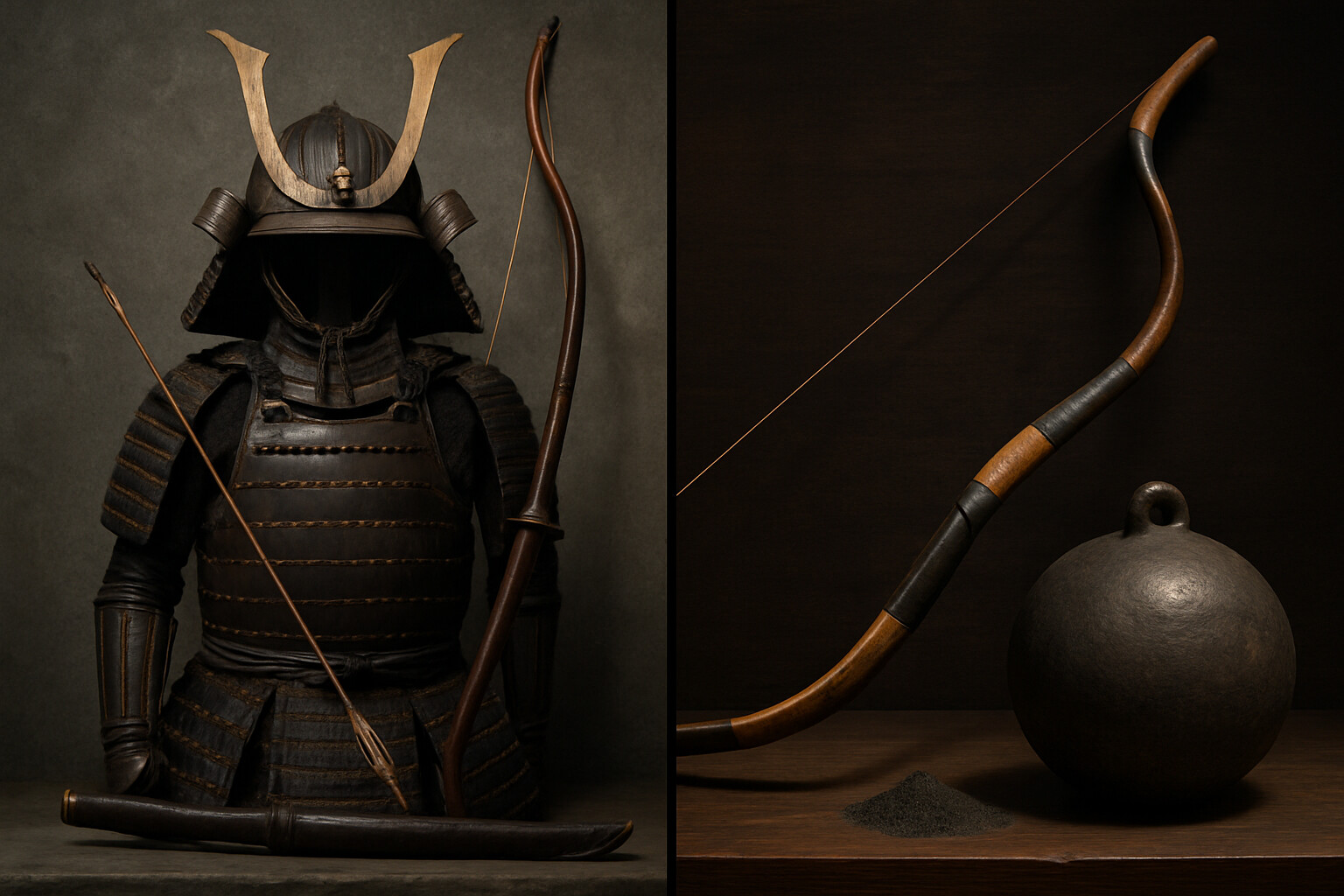
The Mongol force brought a fundamentally different philosophy of war.
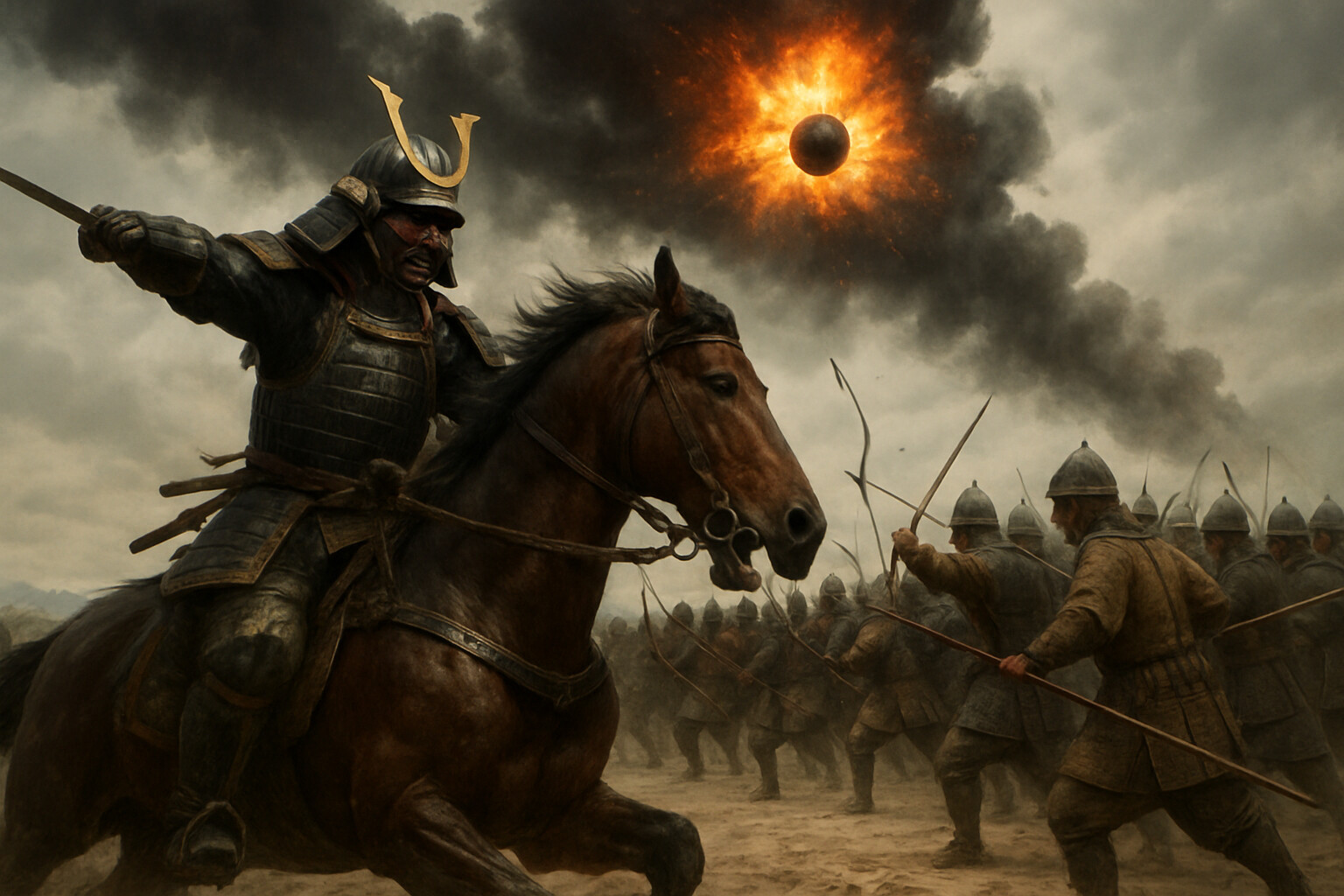
Mongol and Chinese infantry fought in dense coordinated formations, advancing and withdrawing on command. Their archers operated collectively, releasing massed volleys on signal rather than individual aimed shots. They carried shorter composite bows suited to close-order fighting on foot as well as horseback. But the weapon that most shocked the Japanese defenders was something they had no preparation for: explosive projectiles. Chinese military technology under Mongol direction included cast-iron shells filled with gunpowder, launched by catapult or thrown by hand, that detonated with fire, shrapnel, and a concussive blast. Japanese sources describe these weapons with evident alarm. The noise and the fire were psychologically as well as physically disorienting. Horses panicked. Warriors trained to advance under arrow fire had no frame of reference for explosions.
Some Japanese accounts also report that Mongol forces used poisoned arrows, though this claim is difficult to verify from surviving sources and should be held as uncertain.
---
The fighting at Hakata Bay in 1274 unfolded in a pattern that frustrated the Japanese from the first moments.
Japanese warrior culture prescribed a particular opening to battle: individual champions would ride forward, announce their names and lineage, and challenge opponents of equivalent status to single combat. Honor was attached to this sequence. The Mongols observed no such convention. Their system had conquered most of the known world by advancing en masse, absorbing the enemy's initial gestures, and overwhelming fixed positions with combined arms. When samurai rode forward to announce themselves, the Mongol archers loosed collective volleys. When individual swordsmen closed for personal combat, they found themselves surrounded by infantry acting in coordination.
The Japanese did not break and run. The accounts preserved in the Hachiman Gudokun and the Moko Shurai Ekotoba — an illustrated scroll commissioned after the invasions — document fierce fighting along the beaches and at the approaches to Hakata town. The defenders inflicted casualties and contested every advance. But the weight of the Mongol landing force gradually pushed them back from the waterline. By the afternoon, Japanese accounts indicate the defenders had withdrawn toward Dazaifu, the ancient administrative center of Kyushu several kilometers inland, regrouping to contest any further advance.
The Moko Shurai Ekotoba, commissioned by the samurai Takezaki Suenaga to document his own service, provides some of the most specific surviving visual evidence of the fighting. The scrolls depict mounted samurai engaging Mongol infantry, explosive projectiles bursting in the air near horses and riders, and Mongol archers operating in formation. They were created decades after the events and were produced to support Suenaga's petition for rewards from the Kamakura government — one man's account shaped by personal interest. They are nonetheless among the most detailed pictorial records of the fighting that survive, and scholars treat them as genuine evidence despite the self-promotional context.
Then, that night, the storm came.
The commanders of the Mongol fleet made a decision — whether from caution, deteriorating weather, or disagreement among themselves is not recorded with certainty — to re-embark the troops and anchor offshore rather than remain on the beach. Korean sources suggest the fleet commanders were concerned about a prolonged campaign with supply constraints; Japanese sources emphasize the storm. The reasoning is not documented precisely enough to settle the question. What is documented is what happened next.
A severe storm — its exact classification and intensity cannot be established from the available historical record — struck the anchored fleet during the night. Chinese, Korean, and later Mongol records acknowledge significant losses of ships and men. Japanese historiography of the period claims the storm destroyed a major portion of the fleet and killed thousands. Modern scholarly estimates are more cautious, suggesting the storm damaged the fleet seriously enough to force withdrawal, while noting that precise casualty figures remain uncertain. The surviving fleet withdrew toward Korea. Japan had not been conquered.
In Kamakura, Tokimune received the news. The situation had not resolved. The Mongol Empire still existed. Kublai Khan still controlled Korea. The sea between Japan and the continent was still crossable. The pattern of his subsequent decisions confirms that Tokimune grasped this: 1274 was a warning, not an ending.
---
The seven years between the first and second invasions were among the most consequential in Japanese administrative history.
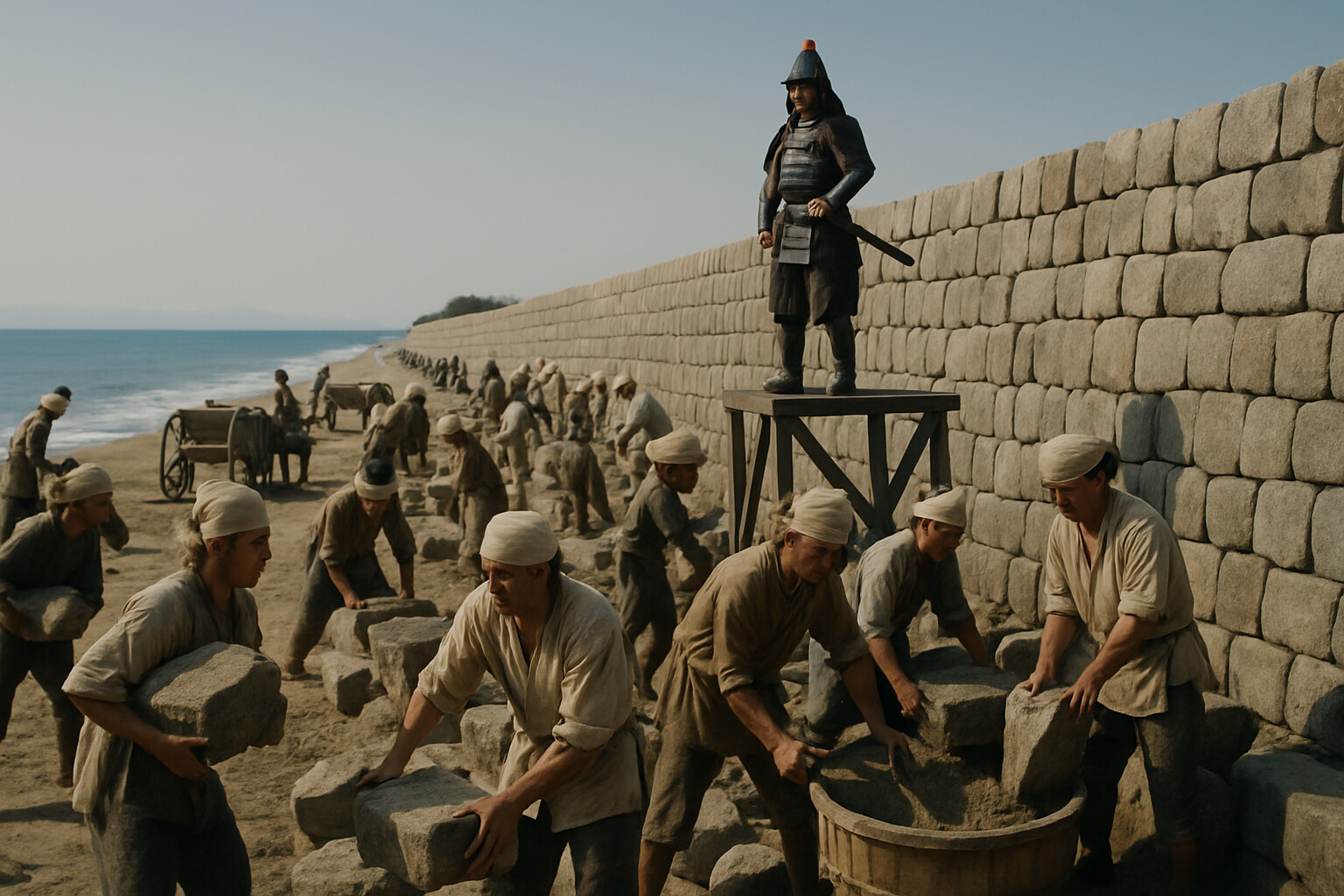
Tokimune directed an intensive program of defensive construction the scale of which Japan had not attempted before. The most significant undertaking was the Genko Borui — a stone defensive wall along the coastline of Hakata Bay. The wall ran for approximately twenty kilometers along the back edge of the beach, standing roughly two meters high and built of stone blocks. It was not a fortification in the sense of a castle or tower. It was a barrier designed to break up cavalry charges, slow infantry advances, and give Japanese defenders a fixed position from which to shoot and fight. Portions of the wall still exist and have been archaeologically excavated, confirming its construction and general dimensions. It is one of the most tangible physical legacies of Tokimune's governance.
Building it required the mobilization of labor, materials, and administrative authority across Kyushu. Sections were assigned to different warrior clans and provincial lords. The work proceeded over several years and was still being completed as intelligence of the second expedition arrived. Whether the full twenty-kilometer length was finished before the 1281 fleet appeared is a question that archaeological and construction records have not fully resolved.
Tokimune also worked to maintain the coalition of samurai lords on Kyushu — a persistent political challenge, because Japan's warrior class was not a unified national army but a network of independent houses whose cooperation required constant management. Clans that had fought at Hakata Bay in 1274 expected recognition and reward in the traditional form: redistributed enemy land and goods. A defensive war against foreign invaders produced none of those. Tokimune had to find other means of sustaining loyalty, and the Kamakura government records from the 1270s document a sustained series of petitions, grants, and negotiations with the Kyushu lords.
He also made preparations of a more aggressive kind. Japanese sources indicate that after 1274, Tokimune ordered the construction of attack vessels and considered striking Korean ports to disrupt any assembling second armada. Whether those preparations were sufficient to actually threaten the Mongol staging areas is debatable, but they reflect an understanding that passive defense alone would not guarantee survival.
The second armada, when it came, was larger than anything the first expedition had attempted.
---
In 1281, Kublai Khan launched two coordinated fleets against Japan.
The Eastern Route Army, sailing from Korea, carried approximately 40,000 soldiers in around 900 vessels — roughly comparable to the entire 1274 expedition. The Jiangnan Army, assembled from the former Song Chinese territories the Mongols had recently conquered, carried an estimated 100,000 soldiers in approximately 3,500 vessels. The total force, if these estimates are accepted, represented something in the range of 140,000 men — among the largest amphibious operations in the history of the medieval world. These figures appear in both Chinese and Japanese sources and are broadly accepted by modern scholars, though exact numbers remain subject to ongoing historiographical debate.
The Eastern Route Army arrived at Hakata Bay in the fifth month of 1281 — early summer by the Western calendar — and encountered the wall Tokimune had built.
The difference was immediate. Where in 1274 the Mongol landing force had pushed the defenders back from the beaches by weight of numbers and tactical advantage, in 1281 the wall anchored the Japanese defense. Troops who reached the shoreline found that advancing further required breaching or climbing a stone barrier while Japanese archers and infantry contested every meter. The Eastern Route Army fought for weeks along the wall and on the beaches without breaking through. Amphibious assaults against nearby islands and coastal positions — particularly at Shiga Island, which controlled access to Hakata Bay — were repulsed repeatedly.
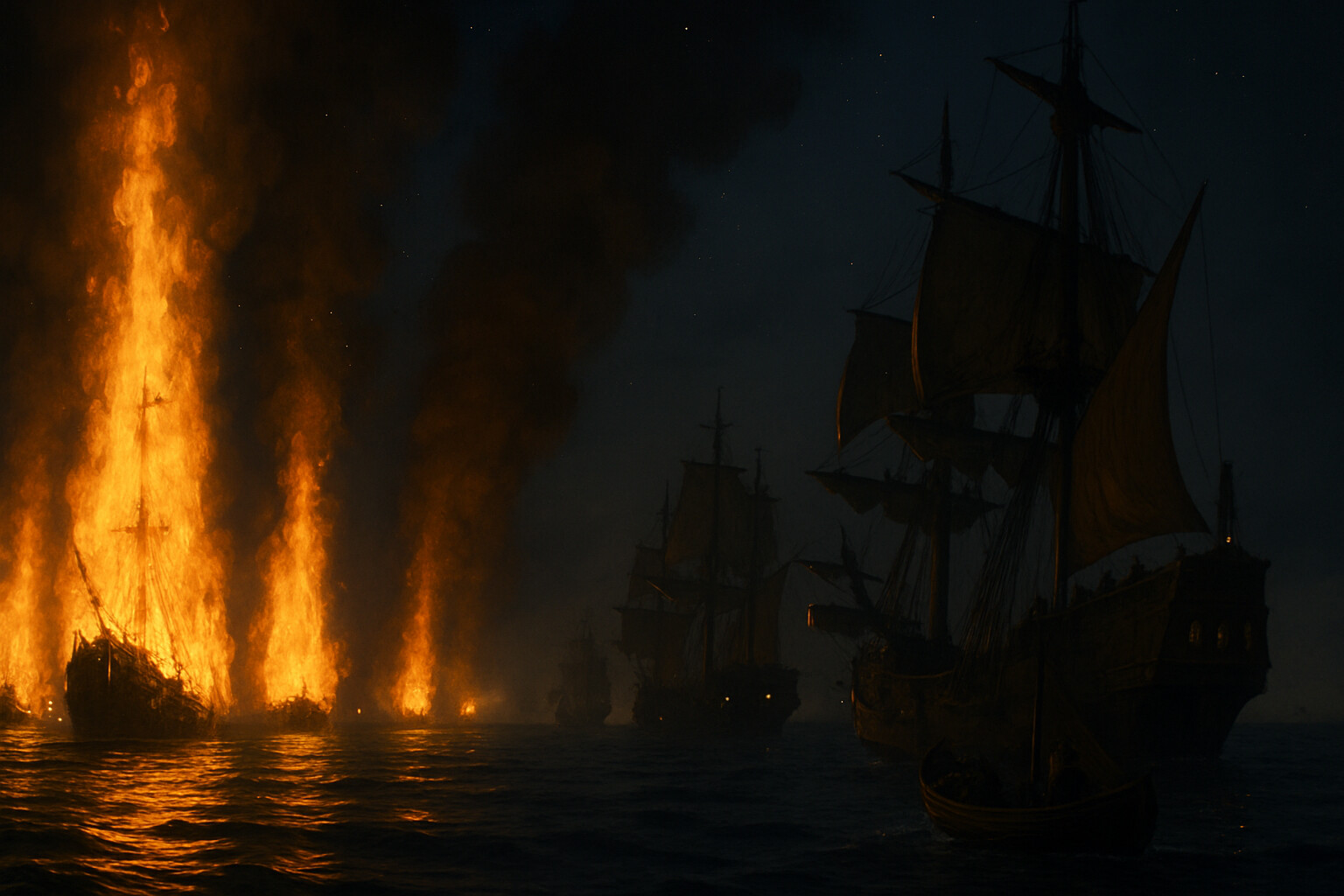
The defenders were fighting differently too. The shock of 1274 had informed tactics in 1281. Japanese commanders made more deliberate use of the wall as a positional anchor, used small boats for harassing raids against the anchored fleet at night, and coordinated their response more systematically across the Kyushu clans. The night raids — attacking anchored vessels under darkness, setting fires, and withdrawing before the enemy could organize — appear in multiple sources and suggest an adaptive tactical response to the challenge of fighting a superior naval force. The specifics of how those raids were organized and executed involve reconstruction from general accounts rather than detailed tactical records.
The Jiangnan Army, delayed by logistical and organizational difficulties, did not arrive on schedule. The Eastern Route commanders waited at Iki Island and in Hakata Bay through the summer, their troops confined largely to ships or contested beachheads, supplies deteriorating, disease increasing. When the Jiangnan Army finally arrived and the combined force concentrated near Takashima Island in the seventh month, the decision about where and how to land for a decisive assault was still being debated.
On the twenty-third day of the seventh month of 1281 — approximately mid-August by the Western calendar — the storms came again.
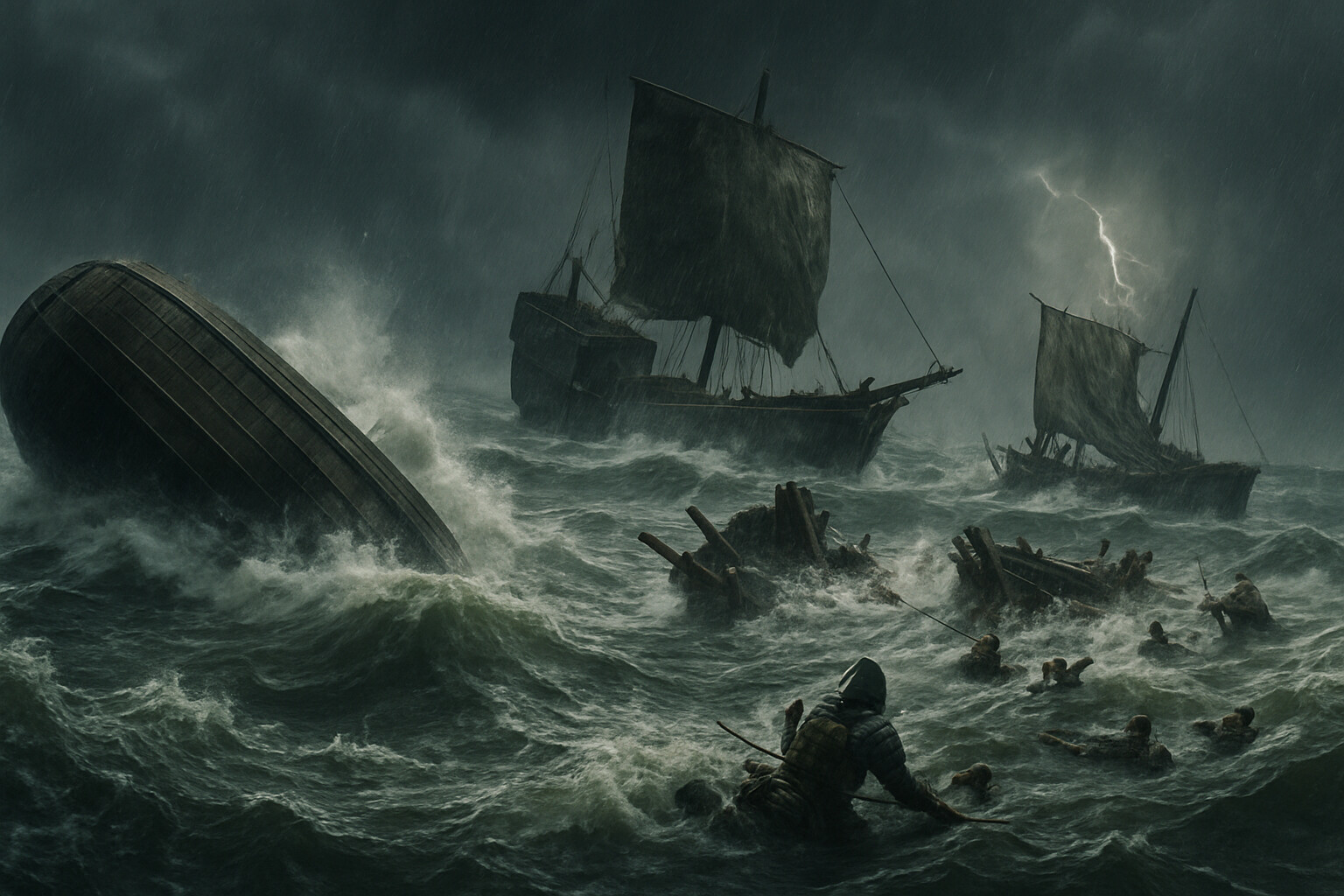
The scale of what struck the fleet was, by all accounts, far more severe than 1274. The timing, the season, and the described effects are consistent with a mature typhoon making landfall on northern Kyushu, though the historical record does not provide the kind of meteorological data needed to classify it with certainty. Chinese accounts preserved in the Yuan Shi — the official history of the Yuan dynasty compiled in the following century — describe catastrophic losses. Ships were driven onto rocks, capsized, and swamped. Men who reached shore were reportedly killed by Japanese forces on the beaches. The Yuan Shi acknowledges that approximately 60 to 70 percent of the Jiangnan Army was lost — a figure whose precision should be treated cautiously, but whose general magnitude is consistent across multiple independent sources.
The remnants of the fleet that could still sail retreated. Those that could not were stranded. Japan, for the second time, had survived.
---
The word the Japanese gave to those storms — kamikaze, divine wind — entered the language as something more than a weather description.
The concept was not invented after the fact. Shinto religious thought already contained the idea of divine forces acting in the world through natural phenomena. The storms of 1274 and 1281 fit within an existing framework of meaning that saw Japan as a land under the protection of the gods. The reinforcement of that belief by two dramatic and historically unprecedented events gave it a permanence in Japanese religious and political culture that lasted for centuries. The kamikaze became central to Japanese national identity — a conviction that the islands were protected by supernatural forces, that Japan could not ultimately be conquered.
The long-term effects of that belief are complex and sometimes dark. In 1944 and 1945, the Imperial Japanese Navy invoked the same concept when it named its suicide aircraft units kamikaze — deliberately reaching back six and a half centuries to the storms at Hakata Bay to frame desperate tactical sacrifice as divine mission. The connection between the medieval storms and the twentieth-century pilots is a direct historical line, not a metaphor.
Hojo Tokimune did not live to see the third Mongol expedition that Kublai Khan reportedly planned. He died in 1284, at the age of thirty-three. Traditional Japanese accounts describe him as having taken Buddhist vows before his death; the documentation for that detail varies and should not be presented as settled fact. His teacher in Zen Buddhism was the Chinese monk Mugaku Sogen, who came to Japan in 1279 and became the founding abbot of Engakuji temple in Kamakura when Tokimune established it in 1282 — a founding that is documented. Later accounts frame that founding as an explicit memorial for the dead on both sides of the fighting, including the Mongol soldiers; that framing belongs to the tradition of Tokimune's memory rather than the documented record and should be held accordingly.
A well-known anecdote preserved in Zen Buddhist literature describes Tokimune telling Mugaku Sogen that cowardice was his greatest fault, and asking how to address it. Mugaku reportedly demanded that Tokimune show him where that cowardice was — and when Tokimune could not produce it, the exchange was said to mark a moment of enlightenment. This story is widely cited in accounts of Tokimune's character. It appears in Zen teaching literature associated with Mugaku's tradition, where its value is pedagogical. It cannot be verified as a literal historical event in the way that administrative records can, and belongs to the tradition of his memory rather than documented biography.
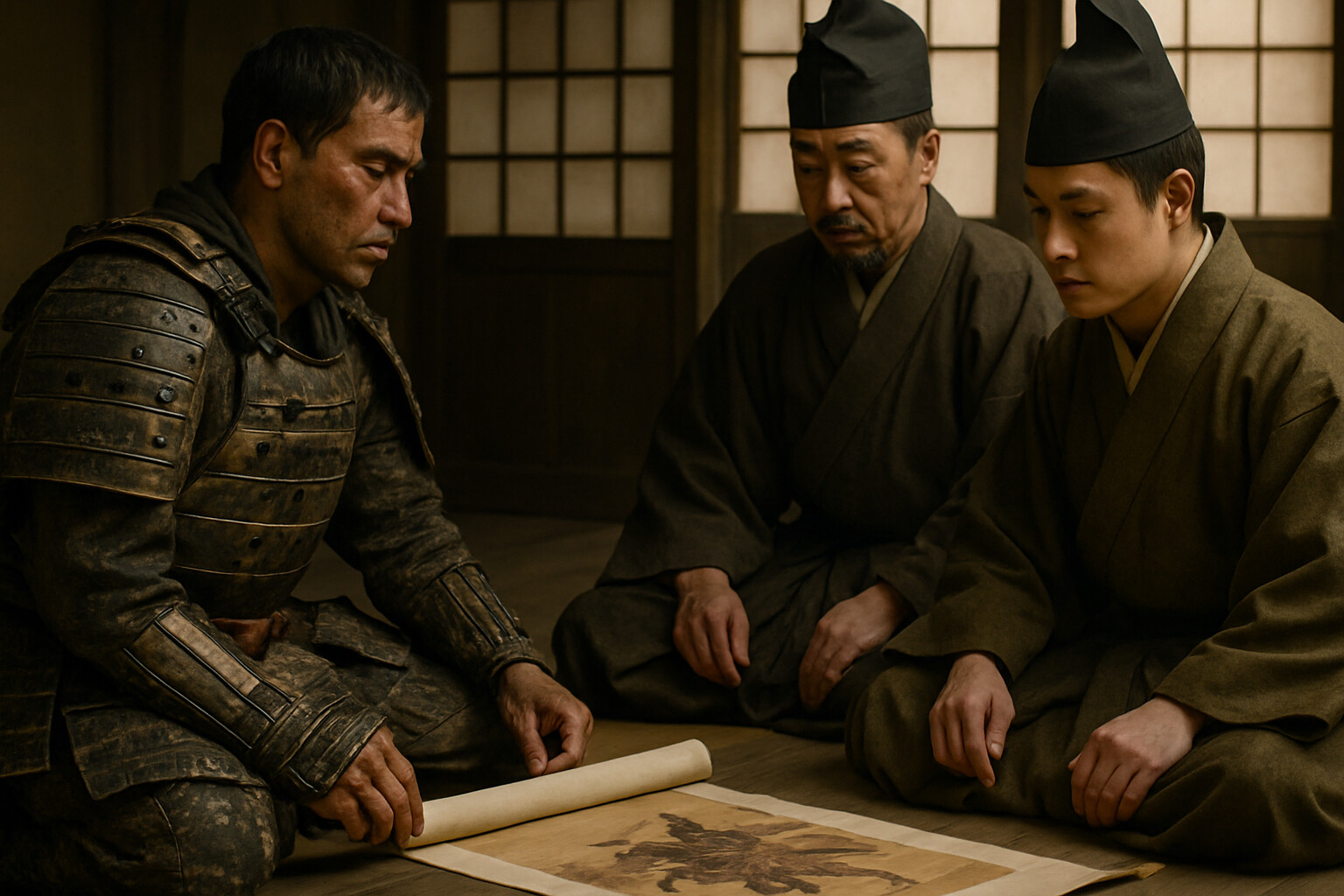
What is documented is that he governed Japan under extreme external pressure for sixteen years. He made the decisions that organized the defense. He directed the construction of the wall that made the 1281 defense tenable. He maintained the administrative coherence of the Kamakura government through an existential crisis. He did not command armies personally in the field — the shikken was an administrative and political figure, not a battlefield commander. The military leadership at Hakata Bay belonged to the Shoni, Otomo, Shimazu, and the other great Kyushu clans who brought their warriors to the shore. But the strategic decisions, the resource allocation, the refusal to submit in the first place — those were Tokimune's.
---
Kublai Khan died in 1294 without having conquered Japan. A third expedition was planned after 1281 but never launched; the reasons include the logistical exhaustion of the two failed attempts, continued resistance in other theaters, and eventually Khan's death. What was actually organized versus what remained at the proposal stage is not fully resolved in the sources available, and would benefit from a focused review of Yuan dynasty records.
The Mongol invasions left several legacies that shaped Japan for decades.
The most immediate was economic strain. The samurai clans who had fought at Hakata Bay expected compensation for their service in the traditional form of land and goods seized from the enemy. A defensive war against a foreign invasion produced none of those. The Kamakura government had no conquered Mongol territory to redistribute. The failure to compensate warriors adequately contributed to the erosion of loyalty to the Hojo regency in the generations after Tokimune's death, and historians have traced a line of institutional stress from the aftermath of 1281 to the eventual collapse of the Kamakura shogunate in 1333.
The wall Tokimune built along Hakata Bay — sections of which are preserved near what is now Fukuoka — is visible evidence of the emergency. Archaeological excavations have confirmed its construction and provided physical artifacts of the conflict: iron arrowheads, weapon remnants, and ship timbers recovered from the bay. Work near Takashima Island beginning around 2011 yielded extraordinarily preserved remains of the Mongol fleet, including intact weapons, armor pieces, ship fittings, and personal effects of soldiers — an underwater archive of the disaster that befell Kublai Khan's armada. Some tetsuhao shells recovered from the seafloor still contained gunpowder residue, providing physical confirmation of the explosive weapons described in the battle scrolls. Those materials continue to be studied and are among the most significant physical evidence of the invasions.
The samurai at Hakata Bay were not fighting for an abstract nation. They were fighting for the land, the clans, the lords to whom they owed allegiance, and the religious and cultural world that made their lives meaningful. The young men who died on those beaches in 1274 and 1281 left no individual accounts that survive. Most of their names are unknown except to specialists working from clan records. Takezaki Suenaga, whose petition scrolls survive, is one of very few individual fighters visible to us across seven and a half centuries. His scrolls show a man on horseback, surrounded by bursting projectiles, pressing forward. Whether he was typical of the men around him or exceptional, the record does not say.
What the record says is that the beaches held.
Tokimune made the decision not to yield when yielding was the path of least immediate resistance. He sustained that refusal over years of diplomatic pressure and military preparation. He built the wall. He kept the clans together. And when the storms came — as storms come in the East China Sea every autumn — they found an enemy fleet that had already spent weeks failing to break through Japanese defenses, anchored in shallow water without the ability to maneuver, and an enemy force exhausted by a campaign that had not gone as planned.
The wind did not save Japan by itself. The samurai on the beach made the wind matter.