The sentries on the Janiculum saw the dust first.
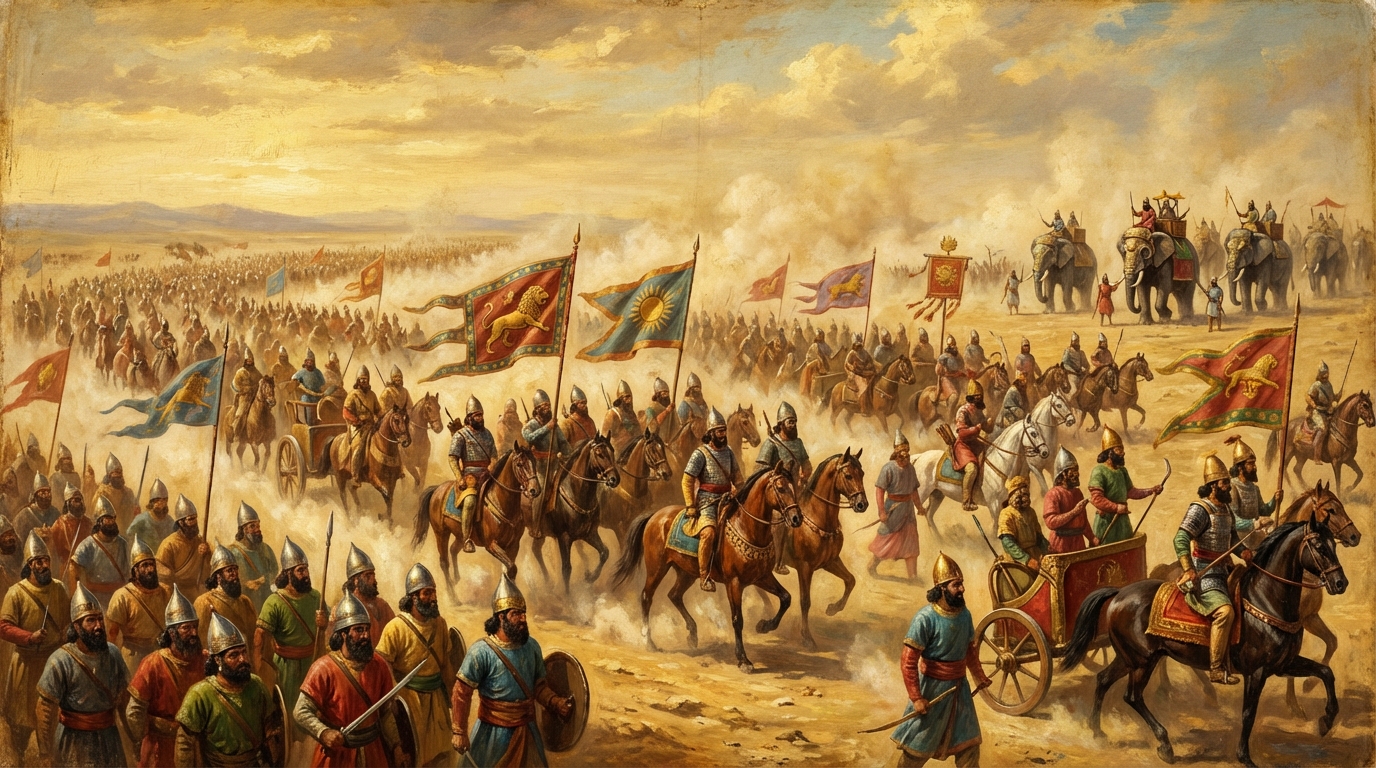
It rose from the direction of the Etruscan camp — not the scattered haze of a foraging party or a cavalry screen, but the consolidated plume of an army in motion, shields up and battle standards forward. The watchers had only moments. They ran. Behind them, already cresting the ridge, came the forward ranks of Lars Porsena's host: Etruscan warriors in bronze and linen, allied infantry from the hill towns of Etruria, and the fast-moving cavalry that had already broken the Roman outpost line. The Janiculum — the fortified height on the western bank of the Tiber — was lost.
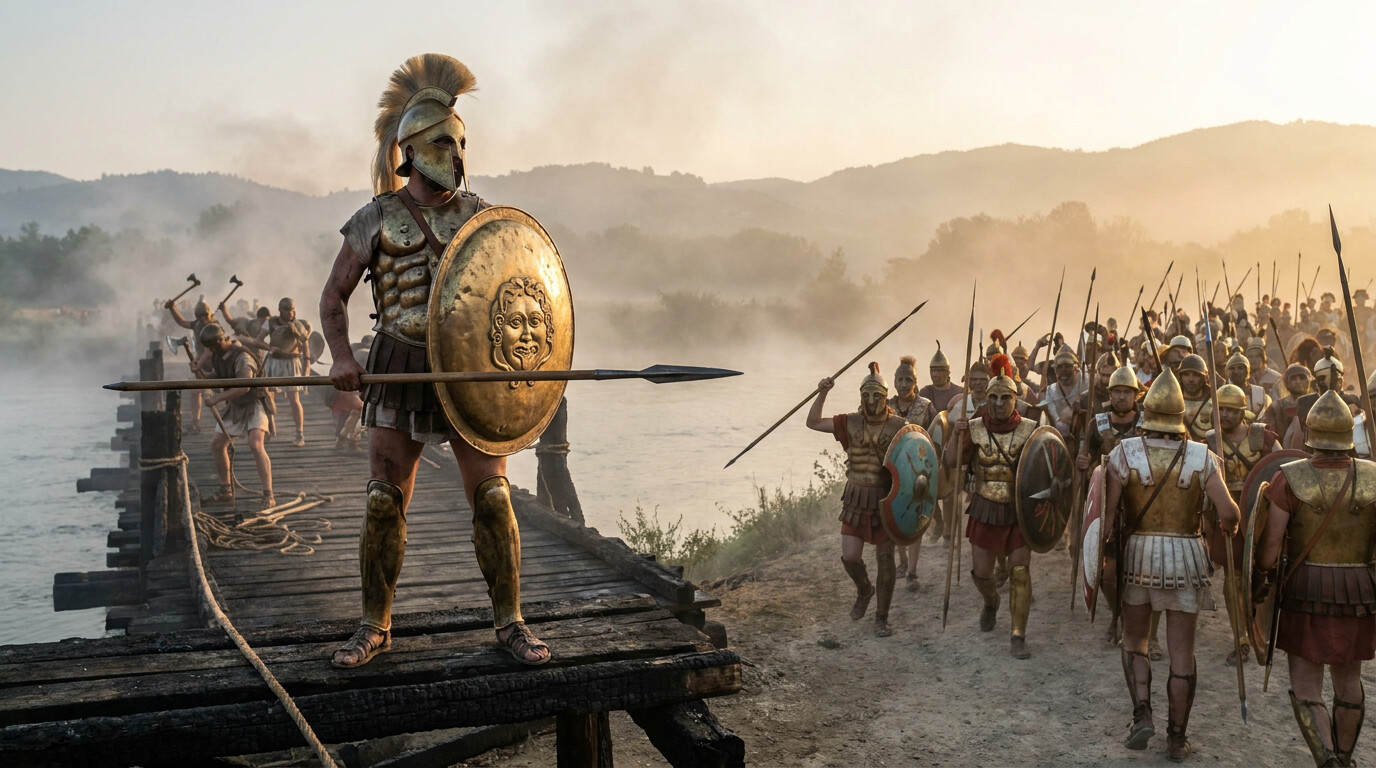
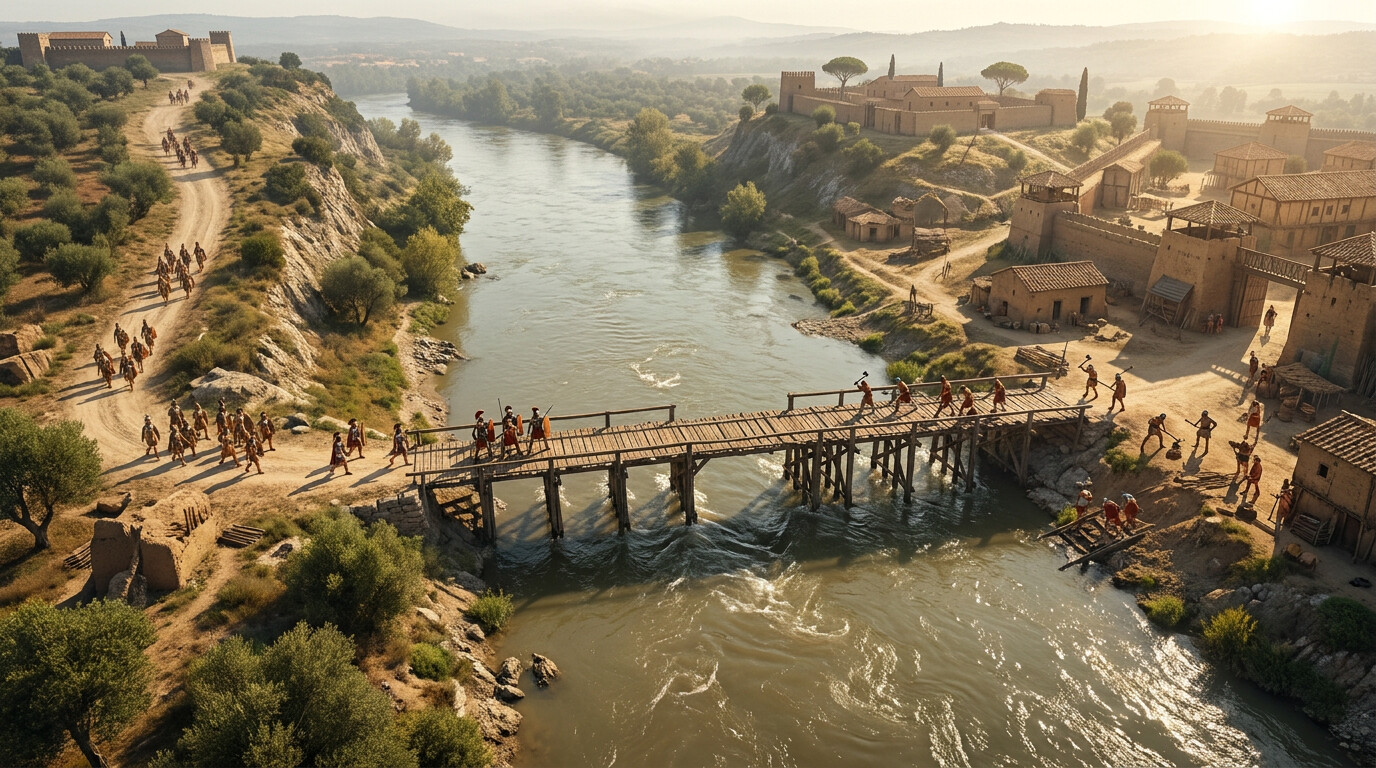
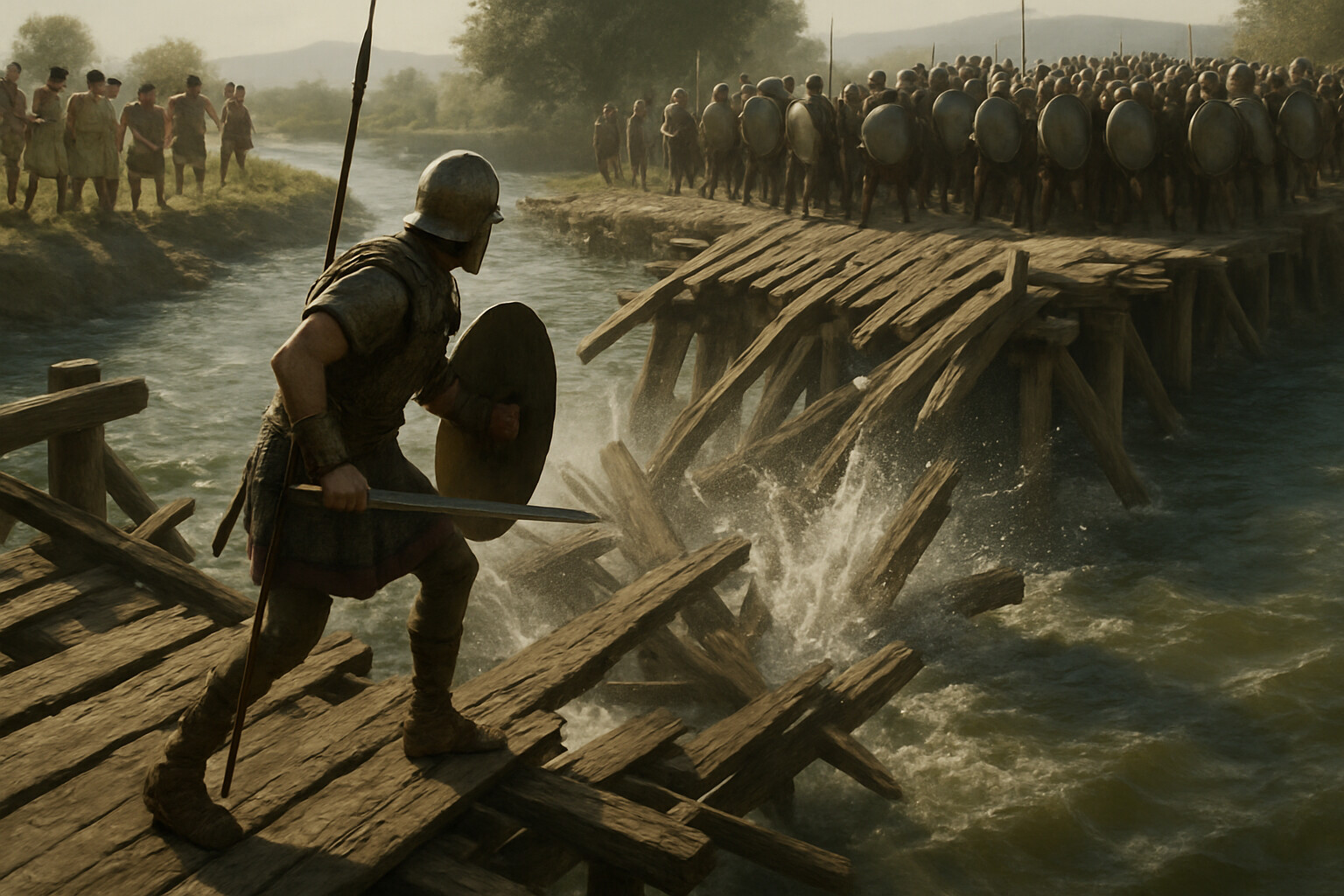
Between that army and the city of Rome stood a single structure: the Pons Sublicius, a wooden bridge of ancient timbers spanning the Tiber at the foot of the Aventine Hill. At the far end of that bridge — the Etruscan end, the wrong end — stood a Roman officer who apparently decided that the bridge was worth holding until it no longer existed.
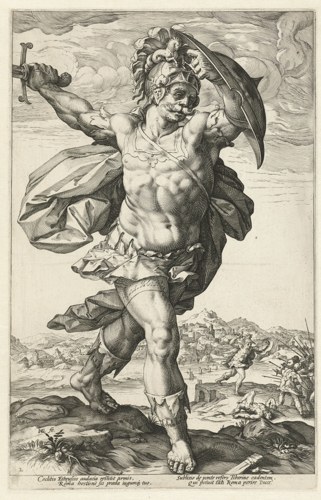
His name, as Roman tradition recorded it, was Publius Horatius Cocles. What happened next became one of the most famous individual stands in the ancient world.
---
To understand what Horatius faced, and why the bridge mattered so completely, it is necessary to understand Rome in 509 BC — or more precisely, Rome at whatever year this crisis actually occurred, which ancient sources place at approximately that date with varying levels of precision.
Rome in the late sixth century BC was not yet the dominant power of the Italian peninsula. It was a substantial city-state in Latium, controlling territory along the lower Tiber, but it operated in a world of competing regional powers. The Etruscans, to the north and west, had long exercised cultural and political influence over Rome. According to Roman tradition, the city had spent its last several decades under Etruscan kings — the Tarquin dynasty — and the expulsion of the last Tarquin king, Tarquinius Superbus, and the establishment of the Republic was the founding political act of the Roman state. The expulsion is traditionally dated to 509 BC, though modern historians debate the precise chronology and the degree to which later Roman authors retroactively shaped the narrative of early Republican history.
Lars Porsena was the king of Clusium, one of the most powerful cities in the Etruscan federation. Ancient sources, including Livy and Dionysius of Halicarnassus, agree that he led a military campaign against Rome in this period, though they disagree on its outcome and on whether Porsena was acting to restore Tarquinius Superbus to power, to expand his own territory, or for some combination of political and territorial reasons. Some later Roman sources, most notably Tacitus, mention in passing that Porsena actually captured Rome — a detail that directly contradicts the dominant tradition of successful Roman resistance. This discrepancy is significant: it suggests that the victorious narrative may have been partially constructed after the fact, with Horatius and other figures of this period serving as foundational myths for the new Republic's self-image.
None of this renders Horatius purely fictional. A Roman aristocratic clan named the Horatii is historically attested. A soldier named Horatius bearing the cognomen Cocles — meaning approximately "one-eyed" or "monocular," from the Latin oculus — is the kind of specific, unglamorous physical detail that tends to survive in genuine oral tradition rather than emerging from pure invention. The Pons Sublicius was a real structure. The Tiber was a real military obstacle. The tactical logic of holding a bridge while it is destroyed behind you is real, and has been repeated in military history from antiquity through the modern era. What cannot be verified with confidence is the specific sequence of events, the number of men involved, the identity of any companions, or the precise details of what Horatius did after the bridge fell.
The story is told here as it has been transmitted, with those distinctions maintained throughout.
---
The Pons Sublicius deserves its own paragraph, because it was not simply a bridge. It was the bridge — Rome's only crossing of the Tiber for much of this period, and one so ancient that Roman religious tradition associated it with the earliest foundations of the city. Its name likely derives from the Latin word for wooden piles or stakes. Its construction was entirely of timber, without iron fastenings, according to later sources who explained this as a religious requirement: the bridge had to be capable of rapid destruction if the city was threatened. Whether this no-iron tradition reflects genuine archaic practice or a later rationalization of the bridge's wooden design is debated, but the practical implication is clear. A wooden bridge built without metal fasteners can be dismantled quickly by men with axes.
This was not a coincidence. It was engineering for emergencies.
The bridge crossed the Tiber approximately where the modern Ponte Palatino stands today, connecting the western bank — where the Janiculum Hill rises — with the eastern bank and the city proper. The Tiber at this location in the archaic period was wider and more variable than the heavily engineered river modern visitors see in Rome. It was a real barrier, prone to flooding, carrying a substantial current, and not crossable in armor without serious risk. For an army, the bridge was the only viable rapid crossing. Lose the bridge, and Lars Porsena's army would face either a contested river crossing under fire or a long delay to construct new means of passage — time the Romans could use to fortify, resupply, and call for allies.
Hold the bridge, and Rome falls within hours.
Destroy the bridge, and the city gets another chance.
The calculus was that simple. The execution was considerably more difficult.
---
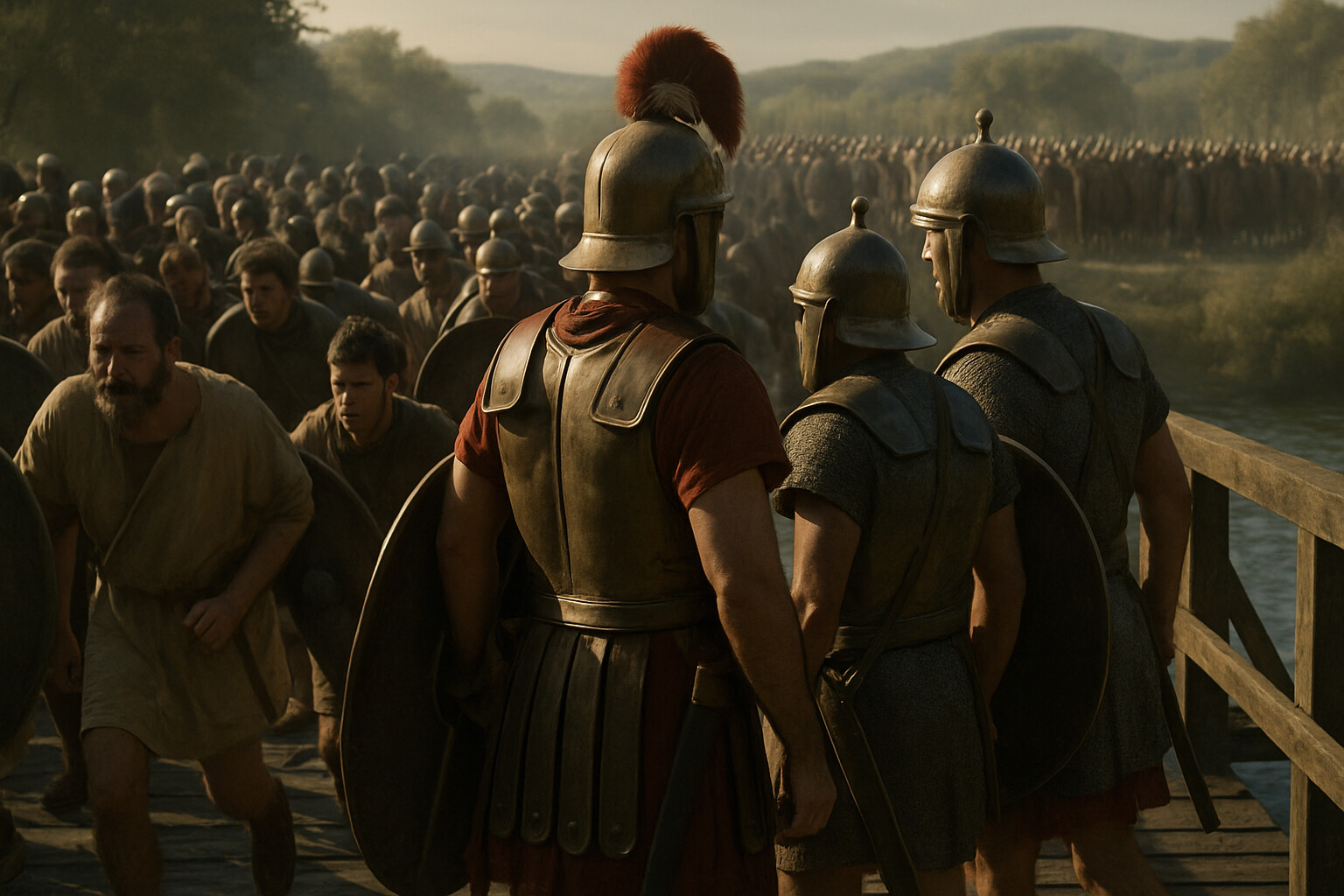
When the alarm came from the Janiculum, Roman tradition holds that there was a moment of near-disaster. The collapse of the outpost line was sudden enough that the retreating Roman soldiers and allied Latin infantry fell back toward the bridge in disorder, pressing toward safety rather than toward defense. An army in retrograde, pushed by cavalry and fast-moving infantry, does not naturally stop and form a rearguard. The instinct is to get across the bridge, get behind the walls, and regroup.
If the entire Roman force simply fled across the Pons Sublicius, there would be no time to destroy it. Porsena's vanguard would be on the bridge before Roman engineers could begin cutting the supports. The bridge would be taken intact, and the Etruscan army would pour into the city.
Horatius, according to Livy's account, recognized this and acted. The words Livy attributes to him are literary constructions set down centuries after the fact and cannot be treated as verbatim record, but the action described is consistent with sound military thinking under extreme pressure: seize the near end of the bridge, hold it with the fewest men necessary to create a credible defensive point, buy time for the engineers.
Two companions are named in the tradition: Spurius Lartius and Titus Herminius. Both are identified as Roman aristocrats — men of standing, experienced soldiers. The choice, if it was a deliberate choice, of exactly three men to hold a bridge approach makes tactical sense. The bridge's width meant the enemy could not bring their numerical advantage to bear. Three men with shields locked could physically block the approach. More men at the chokepoint would not help; fewer might not hold.
The actual width of the Pons Sublicius in 509 BC is not recorded in any surviving source. Archaeological evidence for the bridge itself is limited. Ancient wooden bridges of this period and region were typically built to allow the passage of a cart, implying a width of roughly three to four meters — wide enough for a small group of determined men to hold, narrow enough to negate the advantage of an army. That figure is an inference from comparable construction, not a documented measurement.
The three men took position.
---
What it felt like to stand at that end of the bridge can be reconstructed only in outline. The equipment tells part of the story.
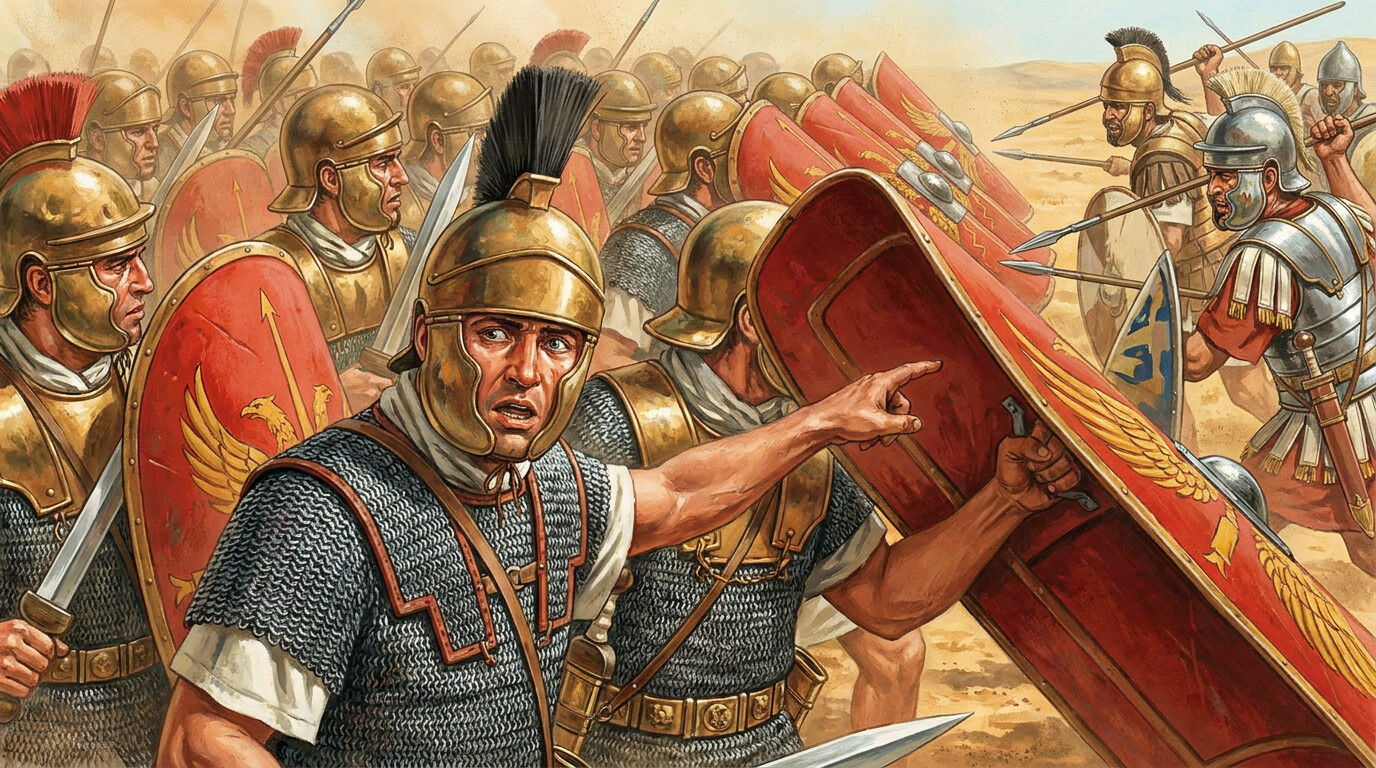
Roman infantry of the early Republic — circa 509 BC — was almost certainly not yet equipped with the manipular legion system that would become the signature Roman military formation of later centuries. That system was a product of organizational evolution spanning the fifth and fourth centuries BC. What Horatius and his contemporaries likely used was the hoplite phalanx, the same formation that dominated Greek warfare of the same period, which Rome had adopted through cultural contact with Greek colonies of southern Italy and through shared military practice across the Mediterranean world.
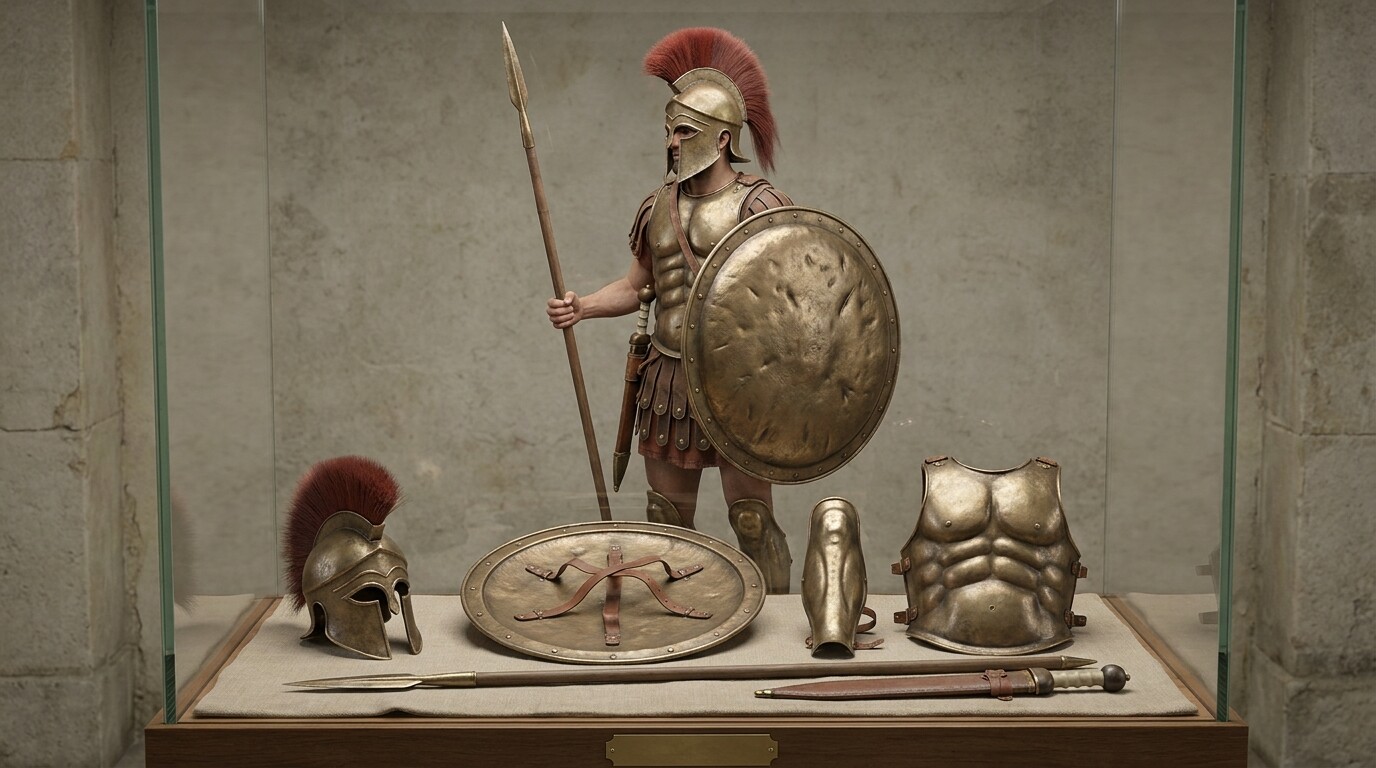
A Roman hoplite of this period would have carried a large round or oval shield — the aspis or hoplon in Greek nomenclature, likely called a clipeus in Latin — of approximately one meter in diameter, constructed of layered wood and leather, faced with bronze, weighing between seven and nine kilograms. This shield was not a passive barrier. Held at the proper angle, it deflected spear thrusts, absorbed arrow impacts, and, in a phalanx formation, overlapped with the shield of the man to the left to create a continuous wall of bronze-faced wood. A man standing alone, or with two companions, could use the same shield to fill a narrow approach and deny a wider force the space to flank him.
The primary offensive weapon was the thrusting spear — called the hasta in Latin, the dory in Greek — of approximately two to two and a half meters, with an iron head and a bronze butt-spike. It was a weapon designed for disciplined formation fighting, for the controlled thrust into the gap between enemy shields, but it also worked in the hands of a skilled individual fighter in a confined space where the enemy could only come at him in ones and twos. A secondary weapon, likely a short iron sword, would have been available for close-range fighting if the spear was lost or broken.
The body armor of an early Republican Roman hoplite typically included a bronze helmet — likely the Corinthian or Chalcidian type, shaped to enclose most of the head and face — bronze greaves protecting the lower legs, and a breastplate of either bronze or layered linen reinforced with metal scales or plates. The linen composite, sometimes called a linothorax, was less expensive than a bronze muscle cuirass but experimental archaeology has demonstrated it was surprisingly effective at stopping spear points. Total armor weight for a fully equipped hoplite was in the range of fifteen to twenty-five kilograms depending on the quality and completeness of the equipment.
This weight matters later.
The men facing Horatius at the far end of the bridge were Etruscan warriors and their allies, equipped in broadly similar fashion. Etruscan military equipment of this period was heavily influenced by Greek models — the Etruscans were enthusiastic importers and adapters of Greek material culture — and archaeological finds from Etruscan tombs and sanctuaries show bronze helmets, hoplon-style shields, spears, and iron swords closely parallel to those used in Greek and Roman warfare. Their allied infantry likely varied in equipment quality, but the fundamental weapons on both sides were the same: spear, shield, bronze, and iron.
The Etruscan cavalry was a different matter. Cavalry of this period was typically equipped with lighter armor, javelins for throwing, and a thrusting spear or sword for close combat. On a bridge approach, cavalry was nearly useless — horses will not charge a solid shield wall at the end of a narrow crossing — but the threat of cavalry on open ground beyond the bridge, and the possibility of javelins thrown from a distance, would have been a constant constraint on any Roman sortie.
Horatius and his companions, if the tradition is accurate, faced the forward edge of a force large enough to have overrun the Janiculum and scattered the Roman outpost garrison.
---
Behind them, the sound would have been continuous and urgent: the ring of iron tools on wood, the crack and groan of timbers being levered apart, men shouting instructions over the noise of the work. Roman soldiers and engineers were dismantling the Pons Sublicius from the Roman end, working toward the Etruscan side, racing against whatever time Horatius and his two companions could buy.
Livy's account describes a series of individual combats at the bridge entrance — the kind of champion fighting that featured prominently in both Greek and Roman literary tradition and may reflect genuine martial practice in this period, when warriors sometimes stepped forward from the line before a general engagement. Whether the encounter involved sustained formation fighting or a sequence of individual challenges cannot be determined from the available sources. What the tradition consistently reports is that the three Romans held the approach for long enough.
At some point — and here Livy and Dionysius diverge in detail — Horatius sent his two companions back across the bridge. The tradition offers slightly different explanations: Lartius and Herminius may have withdrawn when the bridge was nearly down, leaving Horatius as the final rearguard; or Horatius may have sent them back earlier to ensure at least two men survived to report. In both versions the result is the same: Horatius alone at the Etruscan end of a bridge being destroyed behind him.
The enemy pressed forward.
The bridge came apart.
The timbers gave way.
---
What Horatius did next is the part of the story that carries the most physical weight — literally.
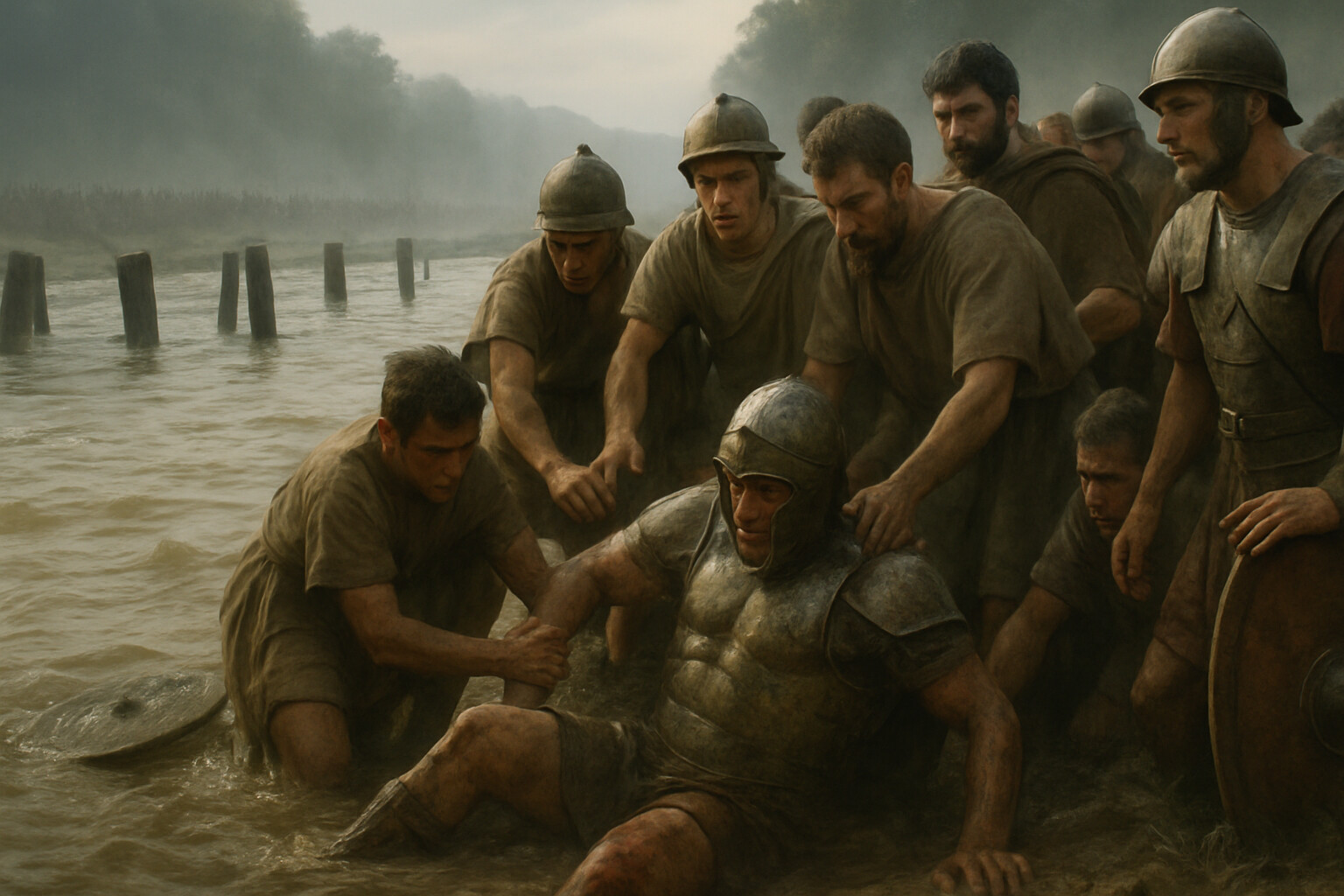
According to both Livy and Dionysius of Halicarnassus, Horatius jumped into the Tiber in full armor and swam to the Roman bank. This is the detail modern readers most often dismiss as impossible, and it is worth examining carefully before reaching that conclusion.
The Tiber at the location of the Pons Sublicius was, in the archaic period, a substantial river — the river has been significantly narrowed and embanked by modern engineering, so the ancient crossing may have been sixty to eighty meters wide, though that figure is an approximation based on general geographical knowledge rather than a documented measurement. The current varied by season; after heavy rainfall or Apennine snowmelt it could run fast and cold.
Swimming the Tiber in a full hoplite panoply was not something a man could accomplish by conventional swimming strokes. The combined weight of bronze and iron equipment — fifteen to twenty-five kilograms — would drag a swimmer down if distributed as dead weight. But bronze is less dense than iron, and the large wooden shield, if retained, provided substantial buoyancy. Ancient soldiers are documented in other sources as using their shields to aid river crossings. A strong swimmer, benefiting from the shield's buoyancy and possibly assisted by a current carrying him toward the Roman bank, might survive such a crossing under favorable conditions — wounded and exhausted, but alive.
None of this proves the crossing happened as described. It establishes that the physical possibility is less remote than it might initially appear to a reader imagining a man attempting to swim in solid plate armor. Whether Horatius actually crossed in this manner, under what exact conditions, and how severely he was wounded beforehand, cannot be verified. The wound itself is reported by both Livy and Dionysius but with differing details; neither account can be confirmed.
What is documented is that the bridge came down before the Etruscan army could cross it, and that Rome was not sacked at this juncture. Whether the bridge defense was the decisive factor, or one factor among several including Porsena's own calculations about the cost and risk of a direct assault on a defended city, cannot be determined from the historical record.
---
The immediate aftermath of the bridge crisis is as murky as the event itself.
Lars Porsena did not abandon his campaign after losing the bridge crossing. Roman tradition describes a siege or blockade of Rome, with the city under considerable hardship. Two other stories from the same campaign — Mucius Scaevola, who reportedly entered the Etruscan camp to assassinate Porsena and demonstrated his resolve by thrusting his right hand into a fire when captured; and Cloelia, a Roman woman held as a hostage who escaped by swimming the Tiber — cluster around the same events and suggest a period of sustained crisis in which individual acts of courage or diplomacy were culturally remembered as significant. The Tacitus reference to Rome actually falling to Porsena stands as a troubling counterpoint to all of these victorious narratives, and it has never been fully reconciled with the dominant tradition.
What the Roman sources agree on is that the crisis eventually resolved with Rome maintaining its independence. The terms of any settlement, and the degree to which that outcome was military, diplomatic, or the result of Porsena's own strategic priorities shifting elsewhere, are not clearly established in surviving sources.
For Horatius specifically, the tradition reports civic honors: a statue in the Comitium — Rome's central public assembly space — and the grant of as much land as he could plow in a single day. These honors, if genuine, place Horatius in a small category of Romans publicly recognized for individual military service in the early Republic. Pliny the Elder mentions that a statue identified as Horatius stood in the Comitium in his own time, centuries later, which suggests the tradition was old enough to have generated a physical monument. The land grant formula also appears in other early Roman hero narratives, which raises the question of whether it is a genuine historical record or a literary convention applied to multiple figures. No formal Roman military decoration equivalent to a modern medal of valor is attested for Horatius in the surviving sources; what he received, according to the tradition, was public honor expressed through monuments and land.
---
The sources for this story require honest accounting, because the gap between what was written down and when it was written down is enormous.
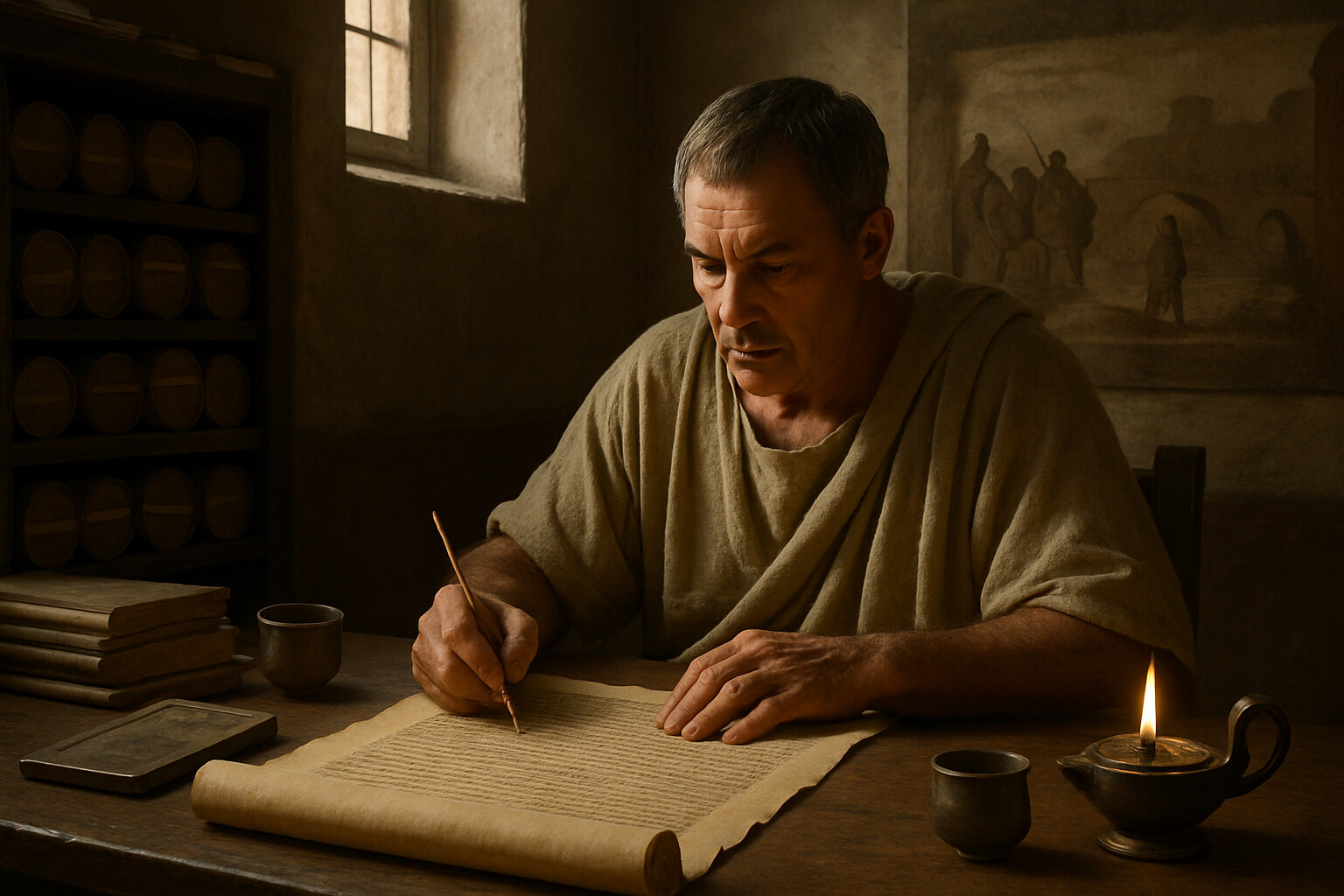
Titus Livius — Livy — wrote his monumental history of Rome, Ab Urbe Condita, in the late first century BC and early first century AD, approximately five hundred years after the events described. Livy was a careful and talented historian by ancient standards, but he was also working from sources that were themselves many generations removed from 509 BC, and he was writing during the reign of Augustus, in a period when Roman national identity and the myths of early Republican virtue were politically important narratives. He was explicit about the difficulty of writing early Roman history and acknowledged that records from Rome's earliest period were incomplete, partly because Gallic raiders burned Rome in 390 BC and destroyed much of whatever written record had existed. Livy is the fullest ancient source for the Horatius story and is used here as the primary narrative framework, with that caveat fully in force.
Dionysius of Halicarnassus, a Greek historian writing in Rome at approximately the same time as Livy, provides a parallel account of early Roman history in his Roman Antiquities. His version of the Horatius story differs in some details from Livy's — the wounds, the specifics of the companions' withdrawal — and represents an independent ancient account, though both authors likely drew on overlapping earlier sources. Where Dionysius and Livy agree, the tradition is stronger; where they diverge, the uncertainty is greater.
Tacitus's passing reference to Rome being captured by Porsena — in the Histories, not in a sustained account of the period — contradicts the dominant tradition and has not been adequately explained by ancient or modern scholars.
Pliny the Elder references the Horatius statue in the Comitium. No statue or base inscription definitively identified as Horatius has been found in excavations of the area, though the Comitium has yielded archaic-period artifacts consistent with early Republican Rome.
Macaulay's Lays of Ancient Rome, published in 1842, is the most widely read modern treatment of the Horatius story. It is explicitly literary verse, drawing on Livy and Dionysius but adding dramatic embellishment and invented speech that belong to Victorian poetry, not ancient record. It has been enormously influential in shaping popular understanding of the story and is not a historical source.
Modern scholarly treatments, including T.J. Cornell's The Beginnings of Rome (1995) and Gary Forsythe's A Critical History of Early Rome (2005), treat the Horatius story as a tradition of uncertain historicity that may preserve a genuine memory of a real crisis at the Pons Sublicius, embedded within narrative material that reflects Roman myth-making about the founding generation of the Republic. Neither scholar argues for taking the story at face value as detailed military history. Neither dismisses it entirely as pure fiction. The honest position lies between: a real crisis, a real bridge, a real moment of danger — possibly with a real man named Horatius at the center of it — surrounded by a tradition that has been shaped, polished, and moralized over five centuries of Roman telling and retelling.
---
The bridge itself has never been conclusively located through archaeology, though investigations along the Tiber embankments near the Aventine Hill have occasionally identified ancient wooden pile structures that may be associated with it. The Tiber's modern engineering — the embankment walls constructed in the 1870s and 1880s dramatically narrowed the river's channel and altered its character — means that much of what might have survived from archaic Rome lies beneath meters of later construction and silt. The precise location of the Pons Sublicius remains a subject of ongoing scholarly discussion.
---
Why does this story survive? Why, of all the individual moments of violence and courage and catastrophe that must have occurred in Rome's first centuries, does Horatius at the bridge remain — transmitted through Livy, taught in schools across the British Empire through Macaulay's verses, still referenced in military doctrine and popular culture two and a half millennia later?
Part of the answer is tactical. The story of three men holding a bridge approach while engineers destroy it is not merely plausible — it is a template. The tactical logic of using a narrow chokepoint to negate numerical disadvantage, of buying time through defensive sacrifice, appears independently across military history. The same principle is visible at Thermopylae in the same century. It appears at Roncesvalles in 778, at Stamford Bridge in 1066, at every river crossing where a small rearguard has bought time for a larger force to escape or regroup. The story endures in part because it describes something that actually works — a genuine military principle, demonstrated in its most compressed form.
Part of the answer is moral. The early Roman Republic, in Livy's telling, was defined by its citizen-soldiers: men of property and standing who fought not as mercenaries or conscripts but as stakeholders in their own community. Horatius, in this framework, embodied that ideal — a man who risked his life because the survival of the bridge meant the survival of the city, and the city was the source of everything he was. This was the kind of story the Republic wanted to tell about itself, especially in the Augustan period when Roman identity was being consciously reconstructed.
And part of the answer is simply human scale. The story is not about legions or campaigns or geopolitical realignment. It is about three men on a bridge — specifically, eventually, one man on a bridge — doing something that anyone can visualize and almost no one would do. The compression of a civilizational crisis into the width of a bridge and the space of a few minutes makes it legible in a way that most ancient military history is not.
Horatius Cocles stands at the bridge not because the story is certainly true in every detail. He stands there because the story is true in the way that matters most for how communities remember who they are and what they value. Whether or not every timber and every spear thrust happened exactly as Livy described, the tradition has preserved something real: the idea that a city's survival can sometimes come down to whether one person at the critical moment decides to stop and hold.
The dust settled over the Janiculum. The Tiber ran on, carrying whatever was in it — timber, armor, or a single struggling man — toward the sea. Rome endured. And the story of why, at least in one version the city chose to keep, begins with an officer who turned around and walked back toward the Etruscan end of the bridge.
He held it until it fell.
Then he let the river decide the rest.