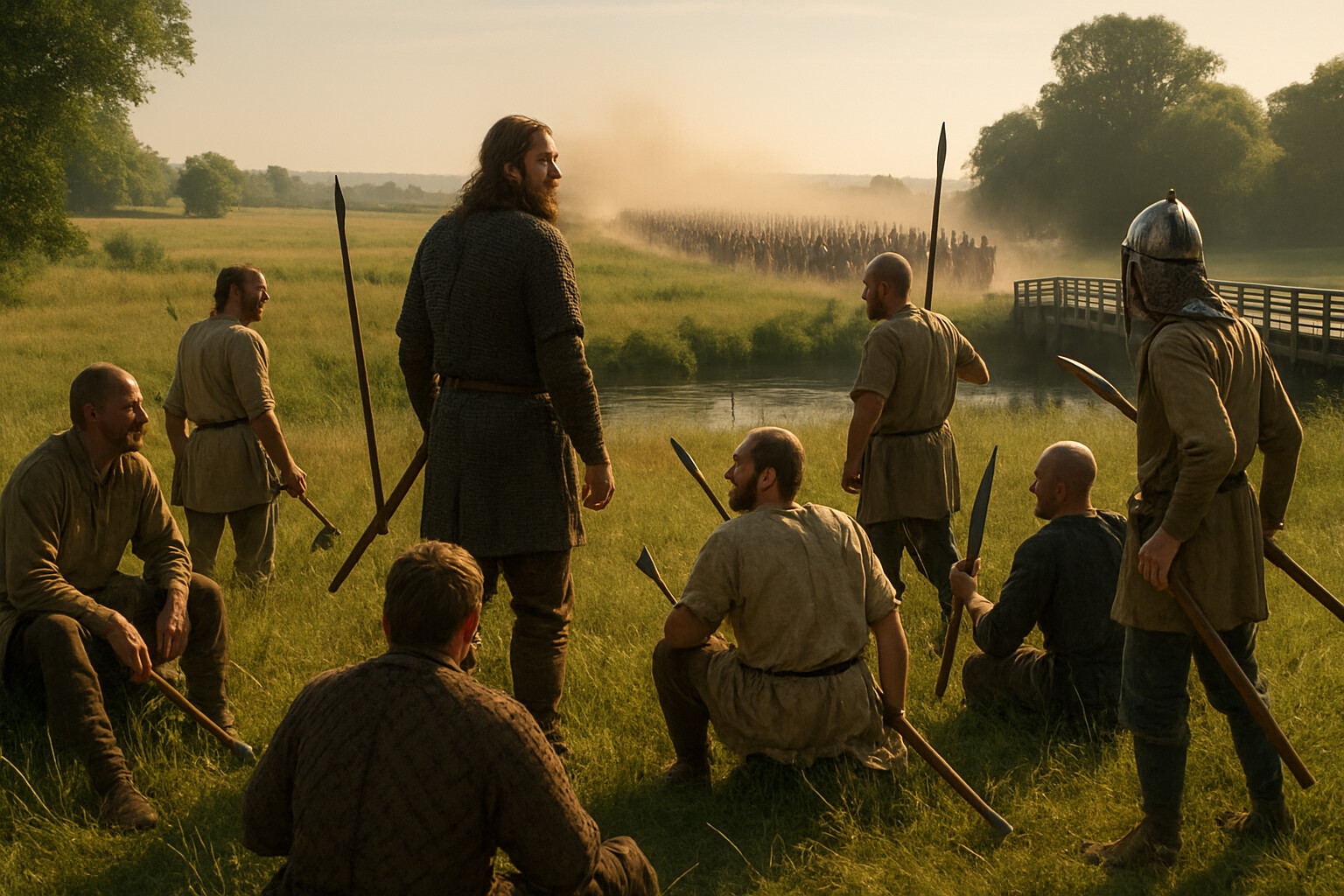
The morning of 25 September 1066 was warm for late September in Yorkshire. The River Derwent ran low and unhurried through the flat plain near the village of Stamford Bridge, and the Norse army that had crossed it was scattered across the meadows on the east bank, resting, foraging, and waiting for hostages that would never come. Helmets were off. Many men had left their mail coats on the ships, nine miles away at Riccall. They did not expect a fight.
Then the dust came.
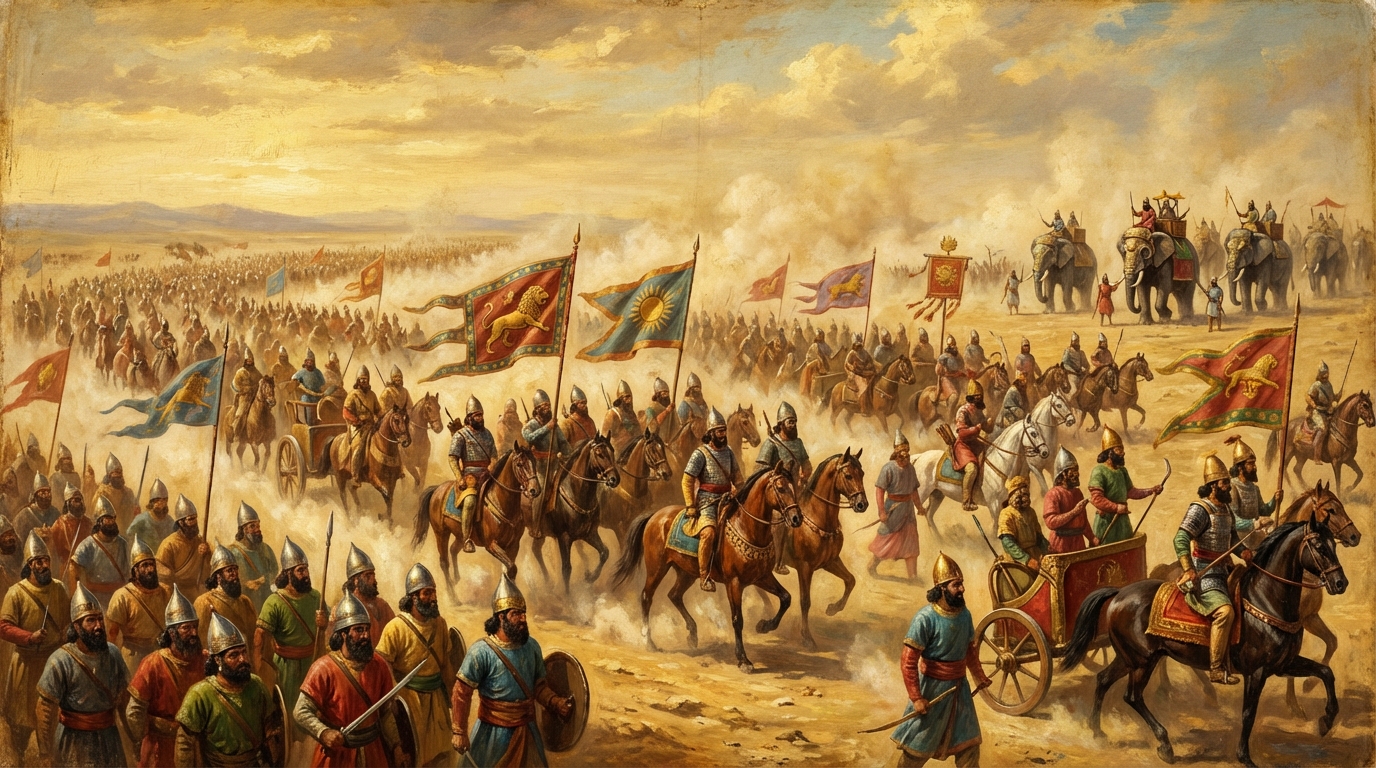
A mounted force appeared from the west, moving fast along the old Roman road from York. As it drew closer, the glint of armor was unmistakable — thousands of men, in full war gear, flying the banners of Wessex. The English had arrived. Not a parley party. Not a county levy. The full royal army, and at its head, Harold Godwinson, King of England, who had just covered nearly 185 miles in four days and had nothing left to say.
---
To understand how Harald Hardrada came to be standing in a Yorkshire meadow with his helmet off, you have to understand what he was — and what he believed he was owed.
Harald Sigurdsson, known to history as Hardrada — a nickname meaning roughly "hard ruler" or "stern in counsel" — was by 1066 the most experienced warrior-king in the known world. He was around fifty years old, reportedly of exceptional height for the era, and had spent the better part of three decades fighting from Constantinople to the Caspian Sea. He had served as a commander of the Varangian Guard for the Byzantine Emperor, led campaigns in Bulgaria, Sicily, and North Africa, accumulated extraordinary personal wealth, and returned to Scandinavia in 1045 to reclaim his place in Norwegian politics. By 1047 he was sole king of Norway, and he spent the following two decades in a grinding, ultimately inconclusive war with Denmark before a peace settlement in the early 1060s freed him to look elsewhere.
Elsewhere, in 1066, meant England.
Hardrada's legal claim to England rested on a dynastic agreement from the 1030s — specifically a pact between Magnus of Norway and Harthacnut of Denmark and England, by which each pledged that if one died without heirs, the other would inherit his kingdoms. When Harthacnut died in 1042, Magnus claimed England on that basis but never enforced it. Harald inherited the claim when he succeeded Magnus. By any modern legal standard the claim was weak; by eleventh-century standards it was one of three serious claims on the English throne in 1066, alongside Harold Godwinson's and William of Normandy's. Hardrada appears to have believed, or at least argued, that his military record and the scale of his fleet made the claim enforceable.
He was wrong — but the error was not obvious when he sailed.
---
The Norse fleet that assembled in the summer of 1066 was enormous by contemporary standards. The primary narrative sources — the Anglo-Saxon Chronicle, the later Norse kings' sagas collected in Snorri Sturluson's Heimskringla, and the accounts used by John of Worcester and Orderic Vitalis — give wildly varying fleet sizes, from around 200 ships to as many as 500. Modern historians generally accept something in the range of 200 to 300 vessels, implying a fighting force of roughly 7,000 to 15,000 men. Precise numbers are irrecoverable. What is clear is that the army was large enough to terrify the north of England.
With Hardrada sailed Tostig Godwinson — Harold of England's own brother — who had been exiled from his earldom of Northumbria in 1065 following a revolt by his own subjects. Tostig had spent much of 1066 in frantic diplomatic activity, attempting to secure military backing from Harald of Denmark, from William of Normandy, and eventually from Hardrada himself. His local knowledge of northern England and his connections in the region were assets to the Norse king, though how much real military value Tostig added is difficult to assess from surviving sources.
The fleet crossed the North Sea and entered the Humber estuary in mid-September 1066. They raided up the Ouse, clashed with a local English force at Fulford Gate on 20 September, and destroyed it. The battle of Fulford was decisive in the short term: the northern earls Edwin and Morcar, commanding the available English forces in Yorkshire, were defeated with significant losses. York, the principal city of northern England, offered terms almost immediately.
---
Fulford gave Hardrada everything he had come for — at first glance. The north had submitted. Hostages were to be gathered from the surrounding country and presented at Stamford Bridge on 25 September. By any reasonable military logic, his confidence was justified. His army had just broken the English defenders of the north. His ships were secured at Riccall on the Ouse. He controlled York.
What no one in his camp appears to have known was the speed of Harold Godwinson's response.
Harold had been on the south coast all summer, watching for William's Norman fleet and keeping his army in the field — an expensive and logistically difficult undertaking that had strained his resources and required him to disband the fyrd in early September when provisions ran short. He learned of the Norse landing and the fall of Fulford sometime around 18 to 20 September, possibly while still in or near London. The exact date and location when he received the news are debated among historians. What the Anglo-Saxon Chronicle documents is that he moved with extraordinary speed.
Harold called his huscarls — the professional household troops who formed the core of his army — and marched north. He reached Tadcaster, just southwest of York, on the evening of 24 September, having covered approximately 185 to 190 miles from London in roughly four days. This rate of march, sustained with a substantial armed force, is one of the most remarkable operational movements in medieval English military history. Contemporaries noticed it. Later analysts have debated whether the pace indicates Harold had remounts available, or whether he moved with a smaller mounted vanguard while the main force caught up; the mechanics are uncertain, but the speed is not.
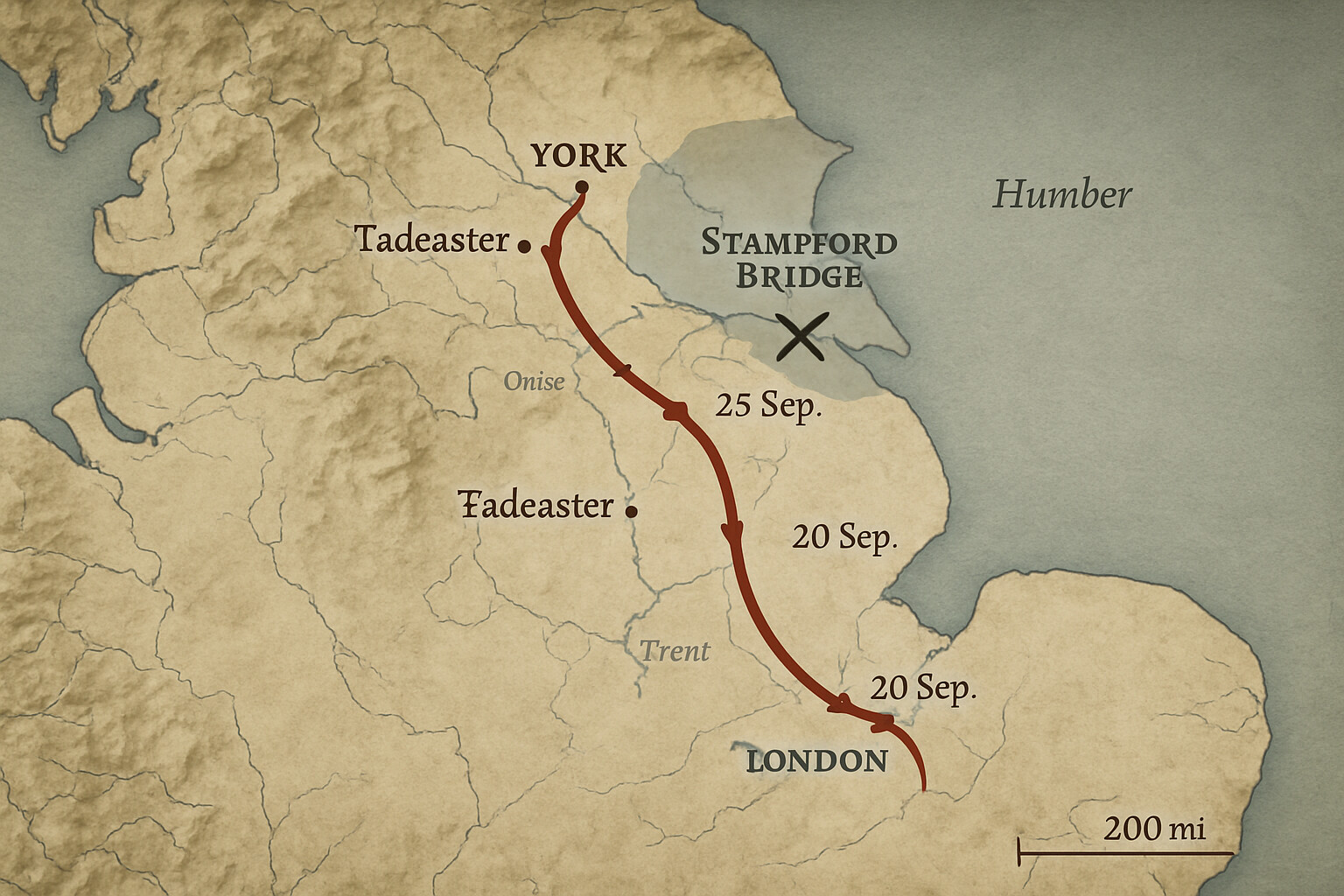
He paused at Tadcaster barely long enough to rest. The following morning, 25 September, he moved through York — which the Norse had not garrisoned, a significant oversight — and east along the road to Stamford Bridge.
---
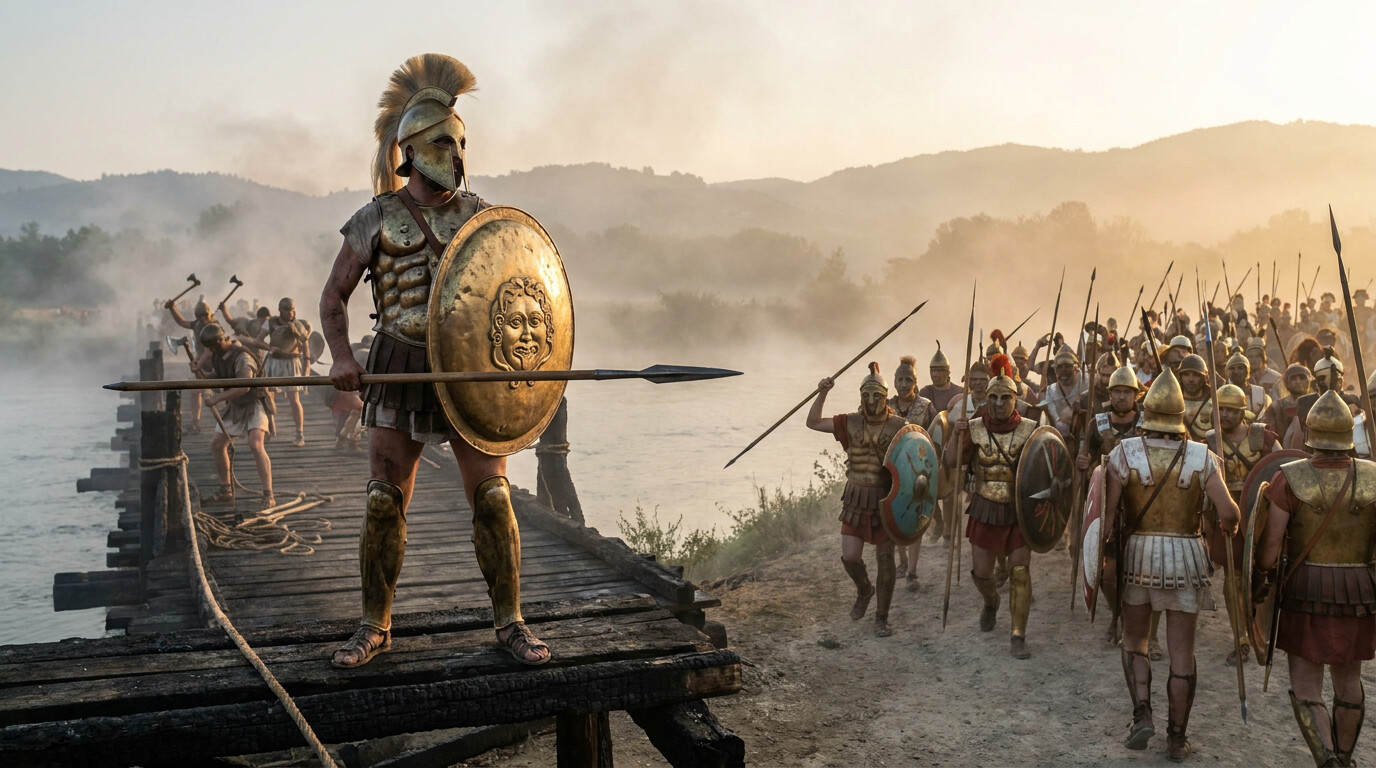
The bridge at Stamford, in 1066, was a wooden structure crossing the Derwent where the York-Beverley road ran. It was a significant crossing point, which is why Hardrada had chosen it as the assembly point for hostage-taking. The river at this point was not wide but was deep enough in season to be a serious obstacle; the bridge was the easiest crossing for miles.
On the morning of 25 September, the Norse army was on both sides of the river but concentrated mainly on the east bank. Having beaten the northern English forces five days earlier, they had no reason to expect an attack. The sagas describe men in shirt-sleeves in the unseasonable warmth, weapons and armor set aside or left behind. This is consistent with what the chroniclers record of what followed — the Norse were genuinely surprised and scrambled to organize.
The Anglo-Saxon Chronicle records, and later tradition elaborates, the story of a lone Norse warrior holding the bridge single-handed while Hardrada's men formed up. According to this account, one uncommonly large Norwegian held off a number of English attackers until he was killed — by a spear thrust from below, through the planking of the bridge, in one version of the story. Historians treat this episode with caution. It may reflect a real delay at the crossing; it may be an oral tradition that accumulated detail over time; it may be largely legendary. It is not established fact. What the sources agree on is that the English crossing was contested and took time.
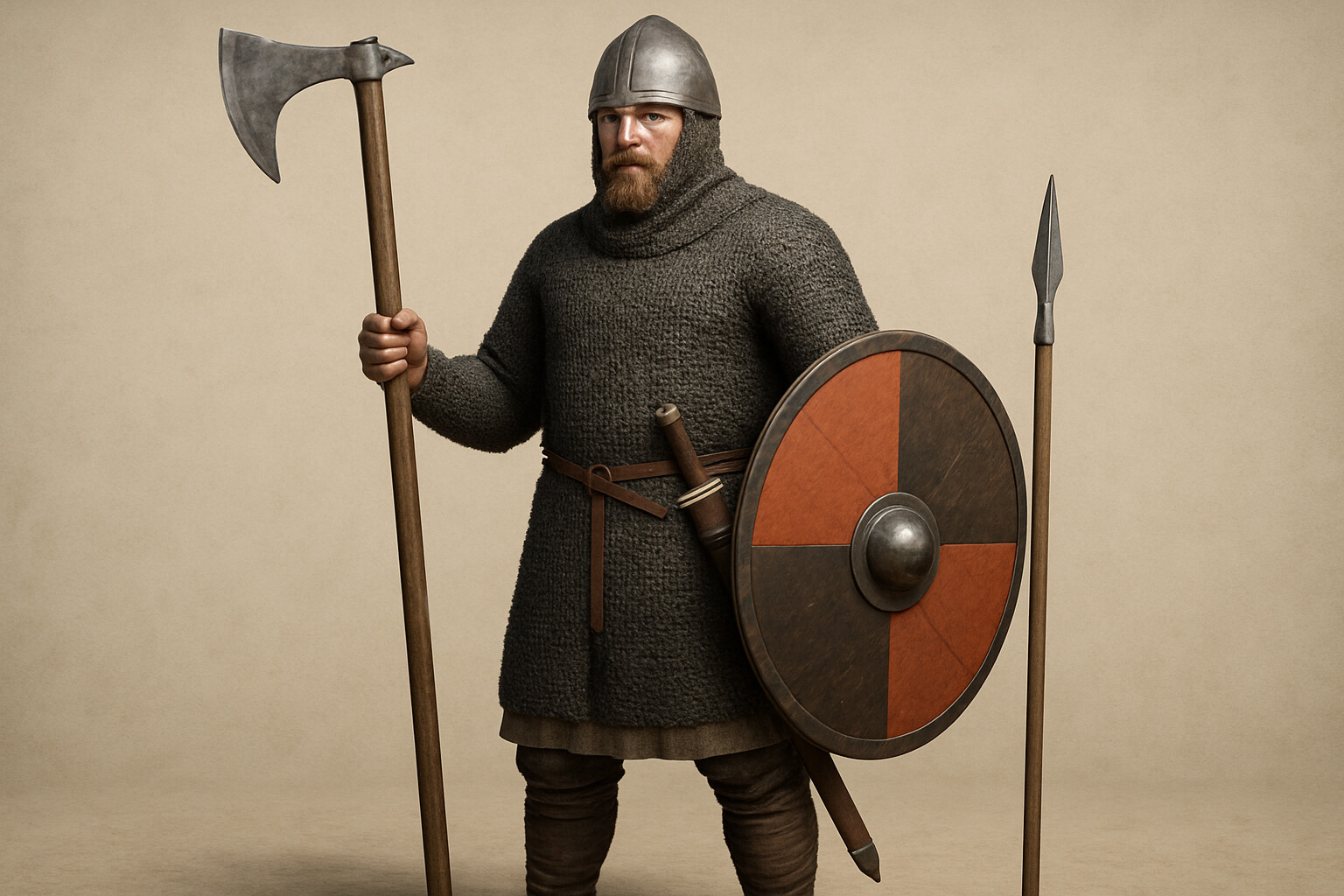
The time mattered. It gave Hardrada's forces on the east bank a chance to form something resembling a defensive position — a shield wall, the standard formation of both Norse and Anglo-Saxon armies. Men sent for their mail coats and weapons, closed ranks, locked shields rim to rim, and lowered spears. Those who had armor put it on; many did not. The formation was undoubtedly ragged and incomplete compared to what Hardrada could have mustered with hours of warning rather than minutes.
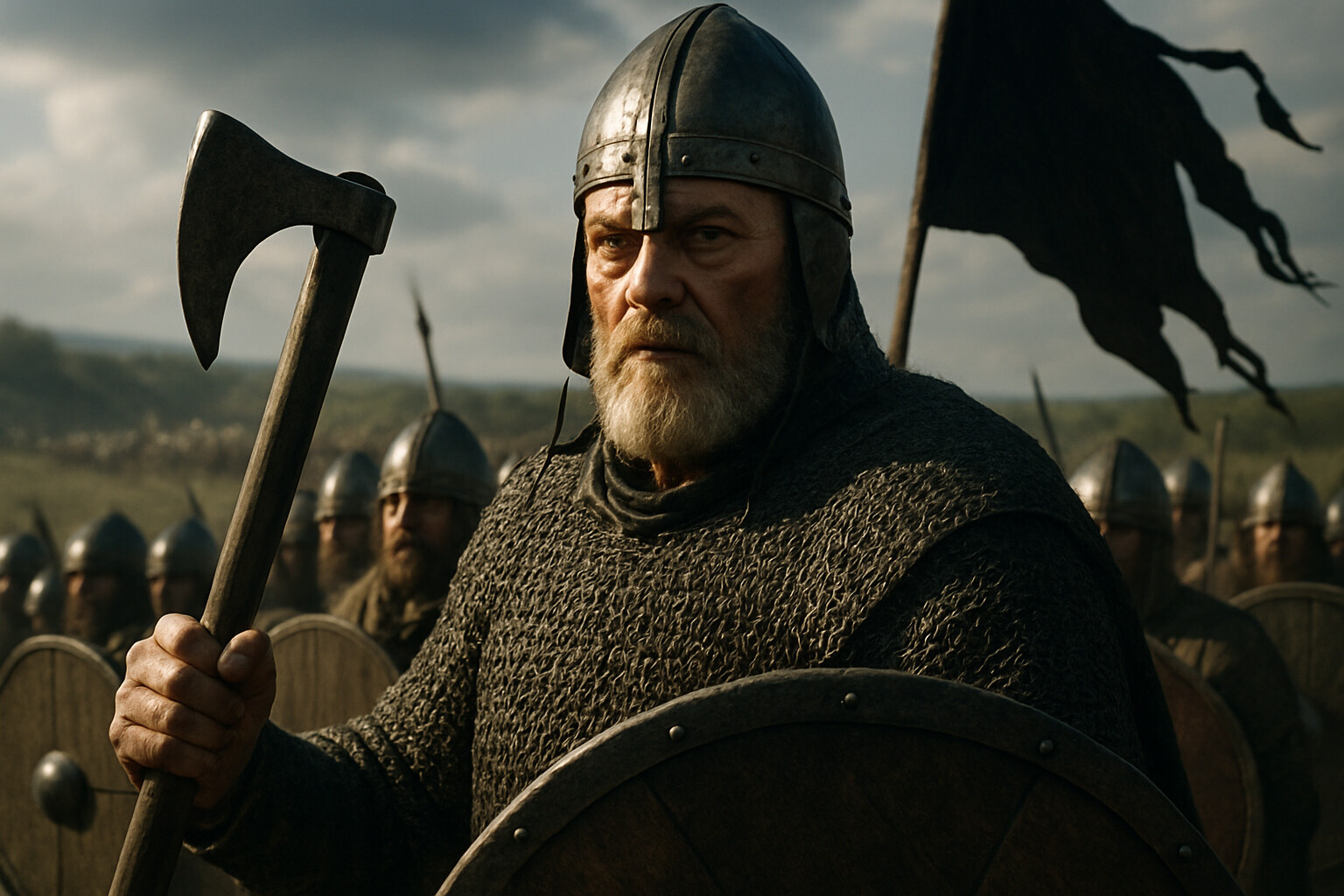
Harald Hardrada himself, in this moment, was doing what Norse warrior-kings were expected to do: leading from the front, in his place in the line, conspicuous. His banner — known in the sagas as Landøyðan, the Land-Waster — was raised behind him.
---
Before the battle was fully joined, several sources including the Heimskringla record a parley between Harold of England and his brother Tostig. In this account, Harold offered Tostig his earldom back if he would come to terms; Tostig asked what Harald Hardrada would receive. Harold's reply — that Hardrada would receive six feet of English ground, or perhaps a little more given that he was taller than most men — is among the most quoted lines from 1066. It is vivid and apt. It is also transmitted through sources written decades after the event, filtered through oral tradition and Norse saga convention. It may reflect a genuine exchange, or it may be a remark that attached itself to the story over time. No contemporary written record confirms it. Readers should treat it as tradition, not documented fact.
Whatever passed or did not pass at that parley, the battle followed.
---
The fighting at Stamford Bridge on 25 September 1066 was, by the evidence of contemporary and near-contemporary sources, extraordinarily violent and one-sided in its outcome. The English had the advantages of surprise, superior numbers on the day, fresher armor on more men, and the momentum of a king who had marched two hundred miles to end a threat. The Norse had experienced warriors and a famous fighting tradition — but they were caught off-balance, partially unarmored, and on unfamiliar ground.
Shield wall engagements of this period were not the rapid, fluid battles of later cavalry-dominated warfare. Two shield walls meeting was a contest of grinding pressure — pushing, stabbing over and under shields, attrition in the front rank, the stronger or better-supported line eventually breaking through or wearing down the other. The key weapons were the spear, for reach and for probing gaps in the enemy formation, and the axe — particularly the long-hafted Dane axe, which could shatter shields and cleave armor with a full swing but required room and left its wielder briefly exposed on the follow-through. Swords were secondary weapons for most warriors, used when the lines came too close for spear work. Archers and javelin-throwers worked the flanks and rear when the formation permitted.
The Norse at Stamford Bridge had the weapons but not the formation. Their shield wall was built under pressure, with gaps and uncertainties that a properly prepared army would not have had.
Harald Hardrada fell during the fighting, killed by an arrow in the throat according to the Heimskringla and corroborating saga accounts. The throat wound appears consistently enough across sources that historians generally accept it as likely, though the precise manner of any individual's death in a shield wall engagement is difficult to confirm at this distance. That he died at Stamford Bridge is not in doubt — the sources are unanimous. A king who fell in battle was customarily stripped of his weapons and armor; nothing of Hardrada's personal equipment is known to have survived.
With Hardrada dead and the line buckling, the battle became a rout. Tostig Godwinson was also killed, according to all relevant sources, before the fighting ended. The Norse survivors fled back toward the river and their ships at Riccall. The pursuit was merciless in the way that medieval pursuits characteristically were — exhausted, encumbered men running from mounted pursuers and fresh infantry do not survive in large numbers. Many Norse warriors drowned in the Derwent. The carnage at and after Stamford Bridge was such that, according to the later tradition recorded in the Heimskringla, the survivors needed only twenty-four ships to carry the remnant home — compared to the hundreds that had arrived.
That figure of twenty-four ships is taken from the sagas and cannot be independently verified. It is a useful indicator of the scale of loss rather than a precise count. The direction of all the evidence is unambiguous: the Norse army was shattered.
---
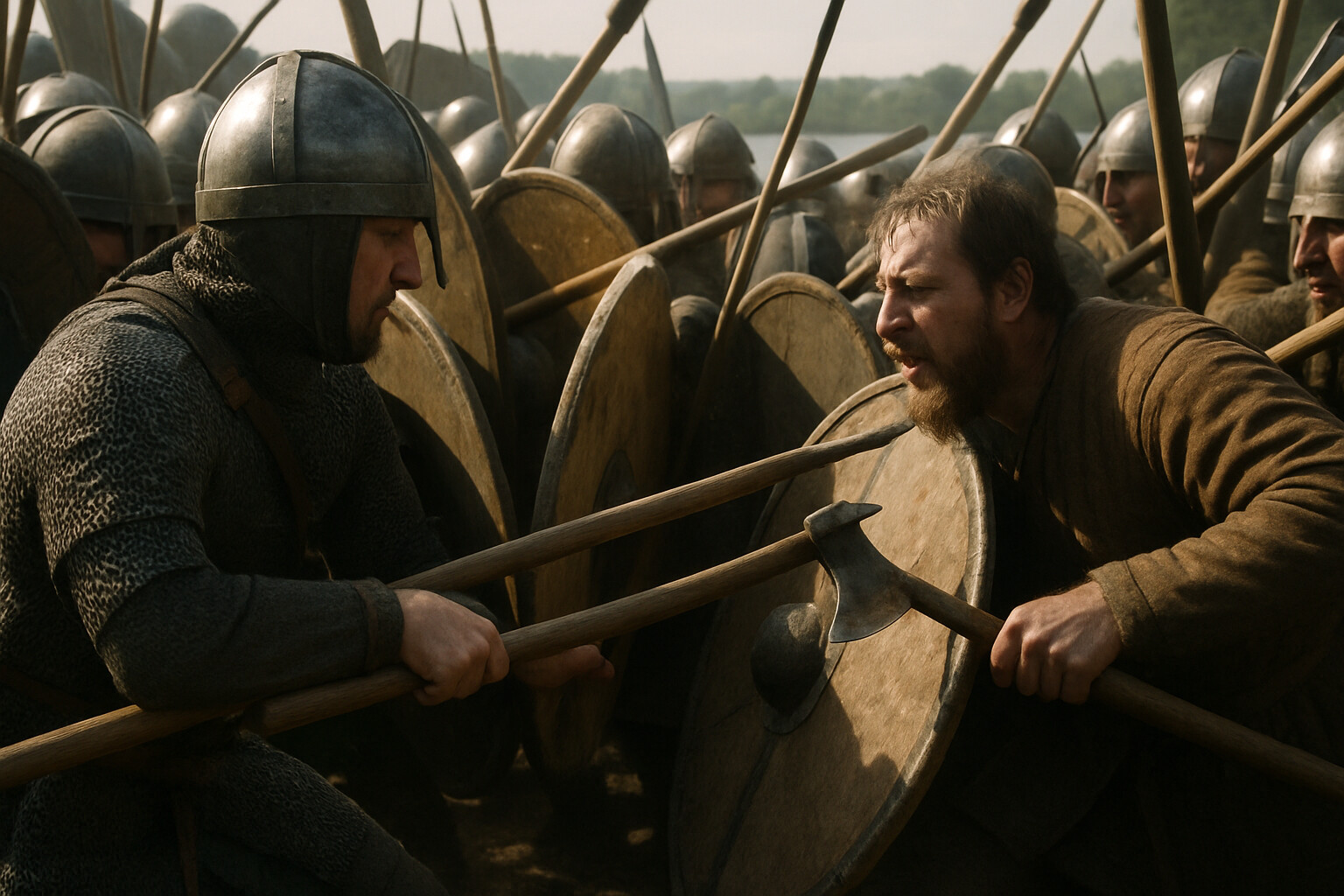
Harold Godwinson allowed the Norse survivors to depart under a sworn agreement not to attack England again. Olaf Haraldsson, Hardrada's son, who had remained with the fleet at Riccall and was not present at the battle, was among those who took this oath and carried the remnant of the army back to Norway. He later ruled Norway as Olaf III. The agreement was honored.
Harold's victory was complete, professional, and ruthless. It demonstrated everything that was impressive about him as a military commander: speed of decision, logistics under pressure, tactical aggression at the moment of contact. He had, in less than a week, received news of an invasion, mobilized his army, marched nearly 190 miles, and destroyed the most feared warrior-king of the Norse world.
He had approximately three days to enjoy it.
---
On or around 1 October 1066 — the precise date is disputed; news may have arrived during or immediately after the post-battle celebrations in York — Harold received word that William of Normandy had landed at Pevensey, on the Sussex coast, on 28 September. The south was open.
What followed has been debated by historians for nearly a thousand years, and it remains genuinely uncertain. Harold had options: remain in the north to rest and resupply, wait for the fyrd to reassemble in full strength, or march south immediately to catch William before the Normans could consolidate. He chose speed again — the approach that had just worked brilliantly.
Whether this was sound strategy or a costly error has never been fully resolved. The men who had marched to Stamford Bridge and fought there were not the same men, physiologically, as they needed to be when they faced Norman cavalry and archers three weeks later on Senlac Ridge. Harold's huscarls were among the best infantry in Europe; many of them died at Hastings, and the line they held broke after hours of fighting, late in the day, under conditions that may have reflected cumulative fatigue as much as tactical failure.
This is inference, as historians rightly note. Battles turn on many things. What is not inference is the sequence: Stamford Bridge on 25 September; word of William's landing; a forced march south; Hastings on 14 October. Harold died at Hastings. England fell to William.
---
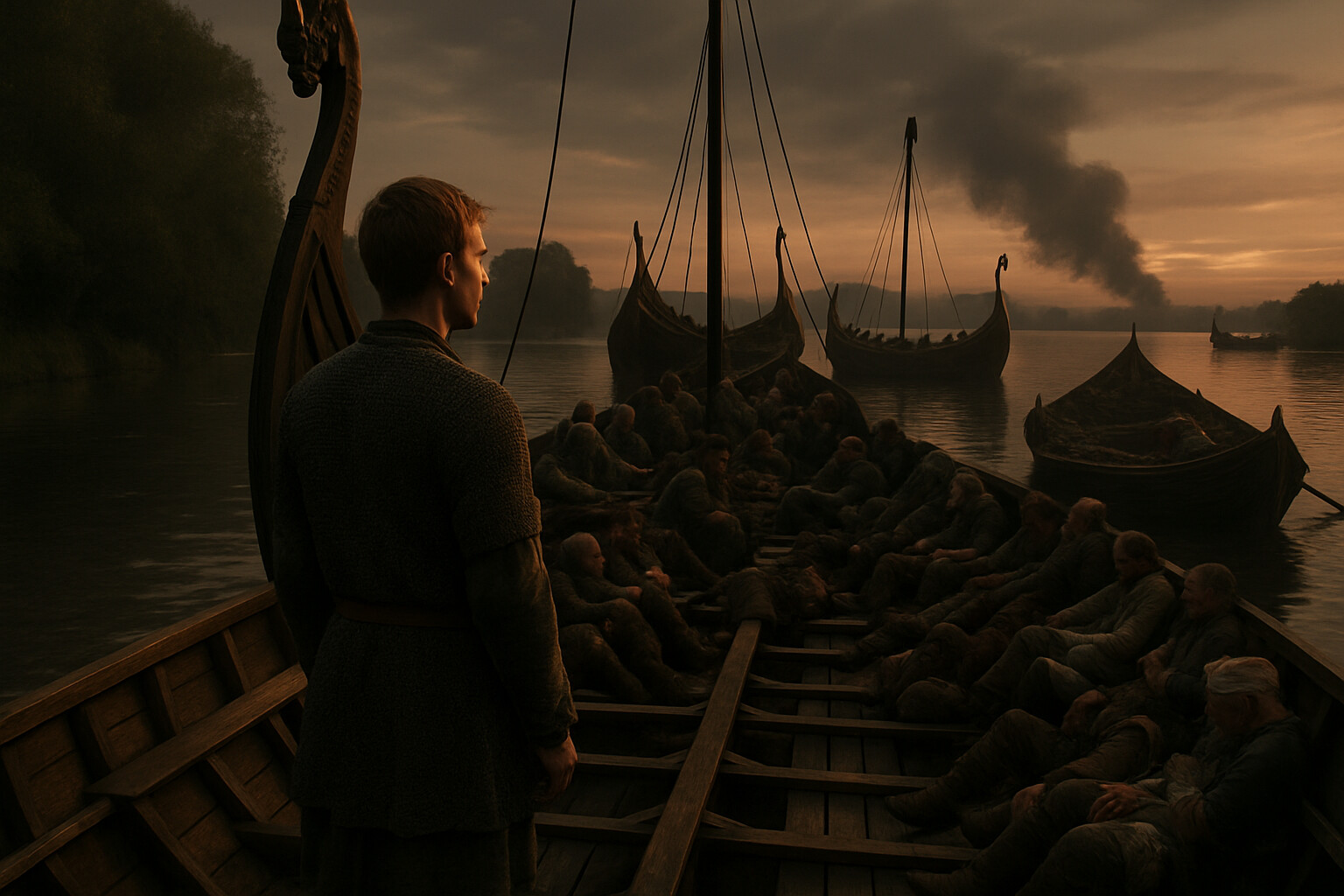
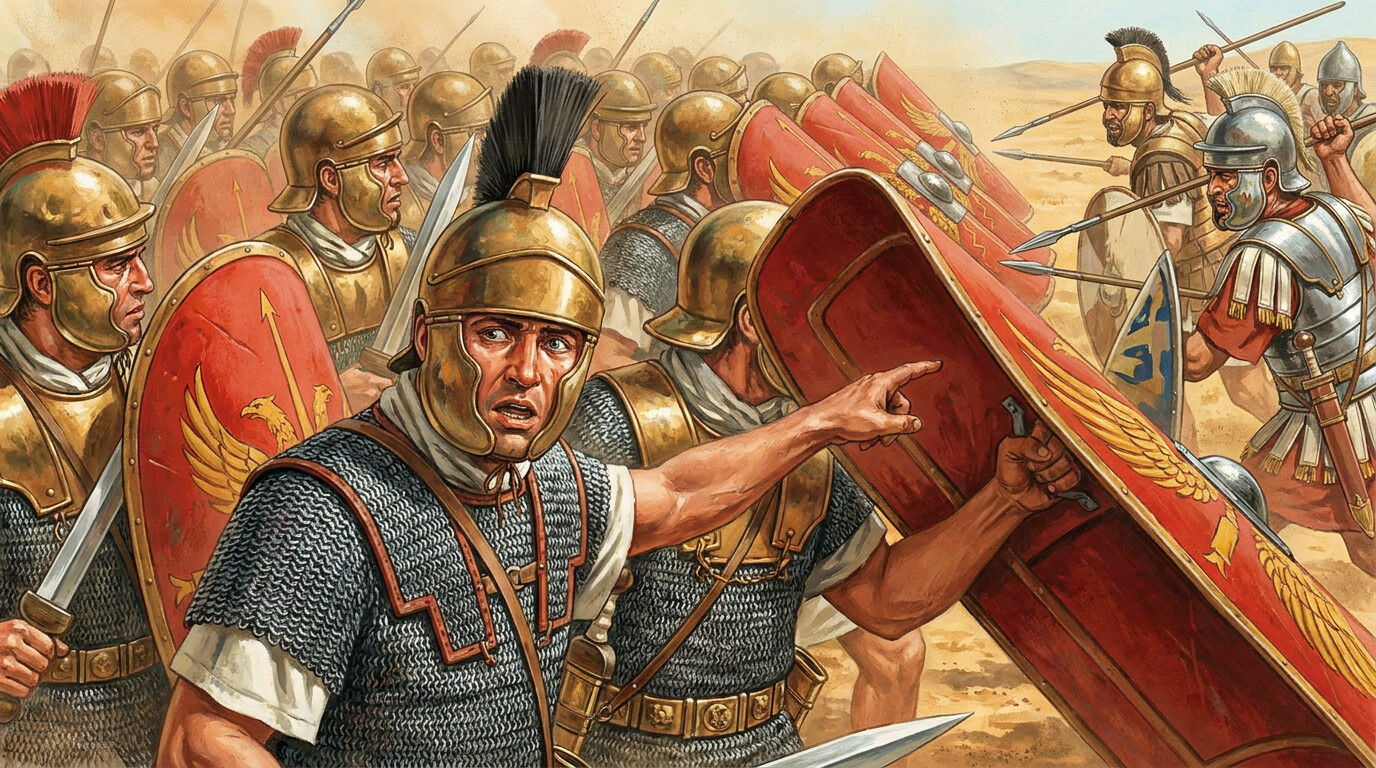
The weapons the men carried at Stamford Bridge belonged to a world at the end of one era and the edge of another. Both armies relied on the Dane axe — the long-handled, broad-bladed weapon that had been the signature of serious Norse warriors for two centuries. In skilled hands it could strike through shield wood, split iron ring-mail, and dismember. Its disadvantage was the follow-through: a full swing left the wielder exposed for a beat. In a tight shield wall, men learned to use it with controlled, economical strokes rather than the sweeping blows of saga verse. The weapon required physical strength and space, and it was most effective in single combat or a broken fight rather than a grinding wall-to-wall press.
Spears were the backbone of both armies. The typical Norse and English spear of this period had a socket-headed iron point — often leaf-shaped, capable of punching through ring-mail at close range — on a wooden shaft of ash or similar hardwood around six to seven feet in length. In a shield wall, spearmen could stab over the top or under the bottom of opposing shields, making the spear more versatile in formation fighting than the axe. The sword — increasingly homogenous iron-and-steel blades by the mid-eleventh century — was the side-arm of warriors who could afford one: shorter than a spear, faster in close work, most effective when the formation broke and the fighting went individual.
The shield walls of both armies were made up of men in varying degrees of armor. Huscarls and professional warriors typically wore ring-mail hauberks — coats of interlocked iron rings reaching to the mid-thigh or knee — and iron helmets of the conical nasal type. The nasal bar provided face protection but left the eyes, throat, and lower face exposed. Less wealthy or less prepared warriors wore padded leather or quilted linen, which offered some protection against cuts and glancing blows but not against a direct spear thrust or axe stroke.
The Norse at Stamford Bridge, partially unarmored and surprised, were far more vulnerable than they should have been. The English, who had marched in full gear, had the advantage not just of surprise and numbers but of metal.
---
The broader historical significance of Stamford Bridge is not always given the weight it deserves, because the story of 1066 is so dominated by what came after it. But Stamford Bridge was not simply a prelude to Hastings. It was the end of something.
Viking military expeditions against England had been a structural feature of English life for nearly three centuries, since the first raids on the Northumbrian coast in the 790s. The Norse had not merely raided; they had settled Northumbria, East Anglia, and the Five Boroughs of the Midlands — the Danelaw — giving large parts of England a mixed Norse-English culture that persisted in place names, legal customs, and family structures long after political Viking power ended. Danish kings had ruled all of England between 1016 and 1042. Hardrada's invasion in 1066 was, in a meaningful sense, one more cycle in a very old pattern: a Scandinavian king with a dynastic claim, a large fleet, and the will to enforce it.
Stamford Bridge closed that pattern. Not because subsequent Scandinavian rulers lacked interest in England — they did not — but because no subsequent attempt came close to the scale or credibility of Hardrada's. The Norman Conquest that followed fundamentally reorganized English power in ways that made a Scandinavian reconquest progressively less feasible. But the battle itself, on its own terms, destroyed the most capable Norse army England had faced in a generation and killed its irreplaceable leader. There was no one after Hardrada with his combination of resources, claim, and military reputation to mount an equivalent challenge.
Harald Hardrada was, by any measure, a remarkable figure. He had commanded professional soldiers across four decades and two continents. He had survived court intrigue in Byzantium, combat in the Mediterranean, and political warfare in Scandinavia. Several occasional verses attributed to him survive in the saga tradition — the lausavísur — though their authenticity cannot be fully verified. He was also a man who made a significant strategic miscalculation in 1066, underestimating his opponent and relaxing his force at the wrong moment in the wrong place.
The sagas, written in Iceland roughly 150 to 200 years after the events, present Hardrada as sensing, in some accounts, that the approaching English force was larger than expected and the odds unfavorable. These introspective moments are a standard device of Norse saga literature and cannot be taken as historical record. What can be said is that experienced commanders make errors, that surprise is a force multiplier of enormous power, and that on 25 September 1066, Harold Godwinson achieved complete surprise against a man who had spent his life trying to deny it to others.
---
The site of the battle today is the village of Stamford Bridge in the East Riding of Yorkshire, roughly eight miles east of York. The current bridge crosses the Derwent near the presumed site of the original wooden crossing. A memorial stone and commemorative markers acknowledge the battle. The meadows on the east bank of the river, where the Norse army formed its final shield wall, are farmland.
Archaeological evidence for the battle remains limited. Metal detector surveys and occasional finds have turned up material from the general area, but no defined battlefield archaeology of the scale found at some other medieval sites has been published for Stamford Bridge. Given the scale of the fighting and the numbers reportedly killed, the absence of a well-documented find-site is a research gap that specialists have noted.
The primary written sources are imperfect in the way that nearly all medieval sources are imperfect. The Anglo-Saxon Chronicle exists in multiple manuscript versions that sometimes differ in detail. Snorri Sturluson's Heimskringla, probably composed around 1230, is vivid and detailed but was written roughly 165 years after the events it describes, drawing on earlier skaldic verse and oral tradition whose reliability is difficult to calibrate. John of Worcester, writing in the early twelfth century, provides additional detail that may come from sources no longer extant or may reflect later elaboration. No participant left a first-hand written account. Historians working on Stamford Bridge are, inevitably, working with partial evidence, and any narrative of the battle — including this one — involves reconstruction from incomplete material.
What the sources agree on: the battle happened on 25 September 1066; Harald Hardrada and Tostig Godwinson were killed; the Norse army was decisively defeated; the survivors sailed home with far fewer ships than they had arrived with; Harold of England marched south and died at Hastings on 14 October.
On those fundamentals, the record is clear.
---
Harald Hardrada was buried, according to later tradition, at Nidaros in Norway — what is today Trondheim. The sources for his burial location are not contemporary and should be treated as tradition. Nothing that can be confirmed as his personal equipment survives in any identified collection.
His epithet — Hardrada — was not necessarily how he thought of himself or how contemporaries addressed him in life. Nicknames in the Norse world were often applied or sharpened in hindsight, in the literature that processed and memorialized great men. Whether the nickname captures him accurately or represents a later simplification of a complex king is a question historians continue to discuss.
What is not in question is his place in the sequence of 1066. He came to England as one of three men who believed they had a claim to its throne. He was the first to move, the first to win a battle on English soil that year, and the first to die. His defeat made Harold's return south possible — and Harold's exhausted army at Senlac made William's victory at Hastings possible — and William's victory remade England so completely that within a generation the country's ruling class spoke a different language, held land under a different legal framework, and worshipped in churches being rebuilt in a continental architectural style.
None of that was caused by Stamford Bridge alone. History does not work in single causes. But Stamford Bridge was part of the hinge — a place where several futures collapsed into one, on a warm September morning when the dust rose on the road from York and a great king's army was caught without its armor.