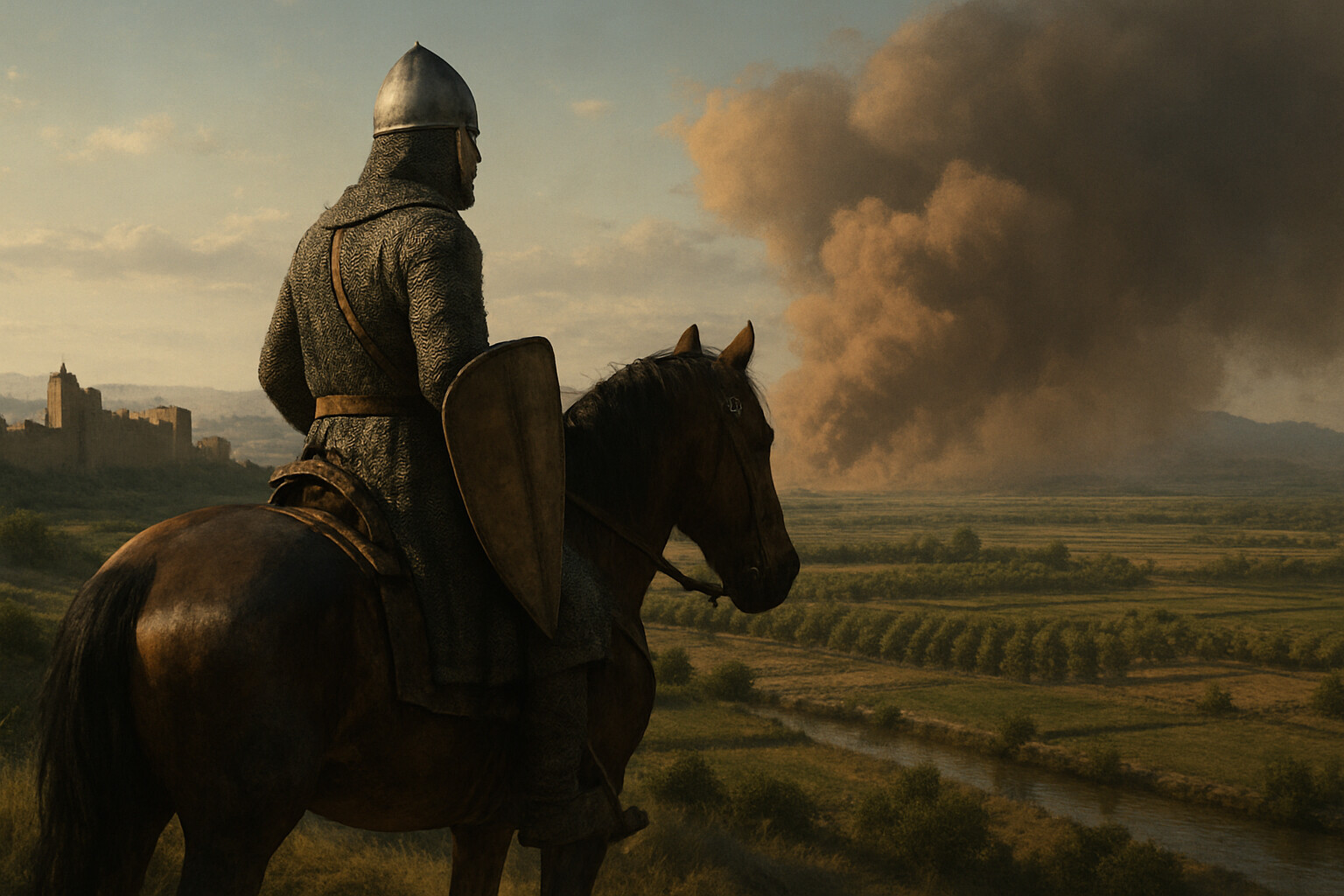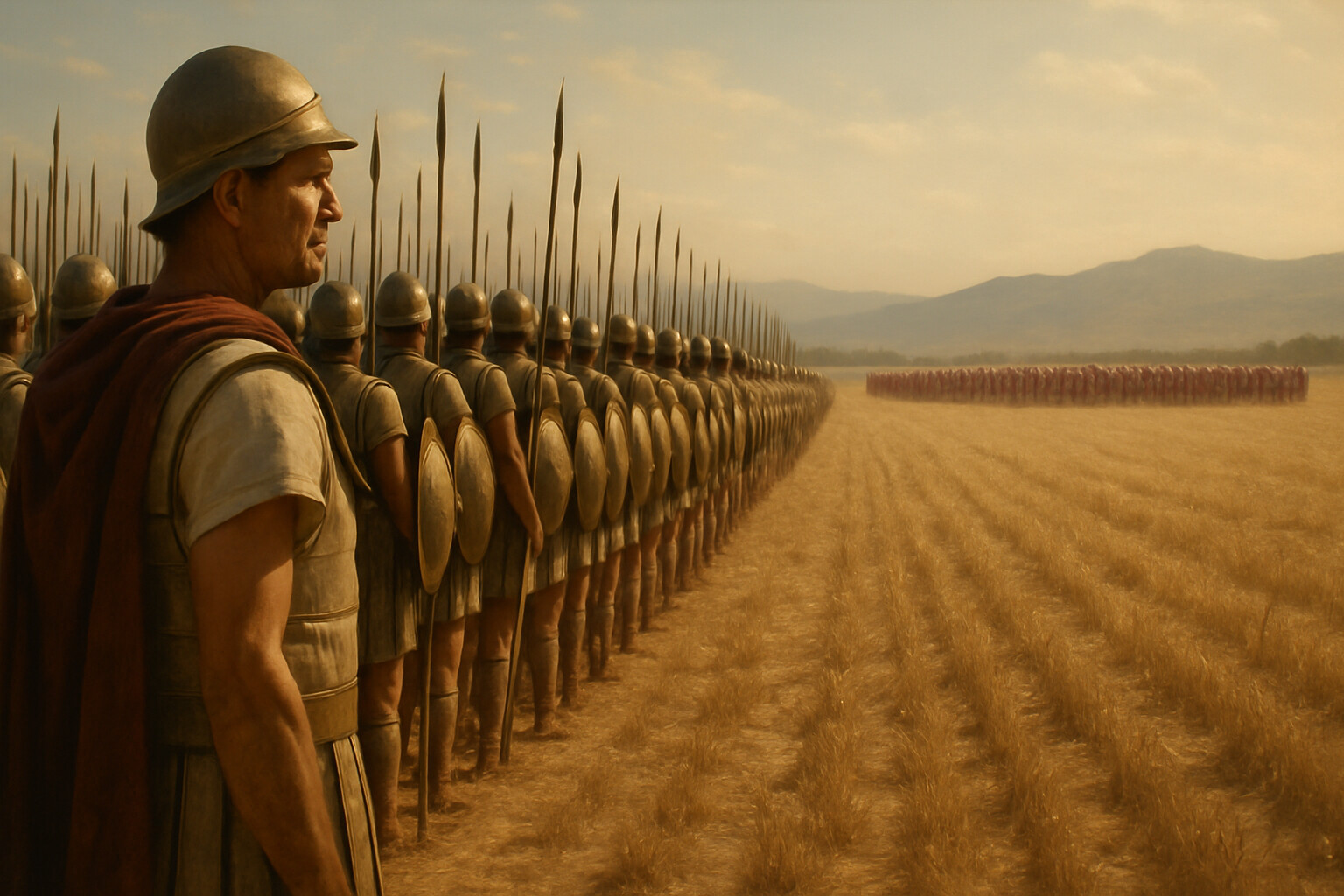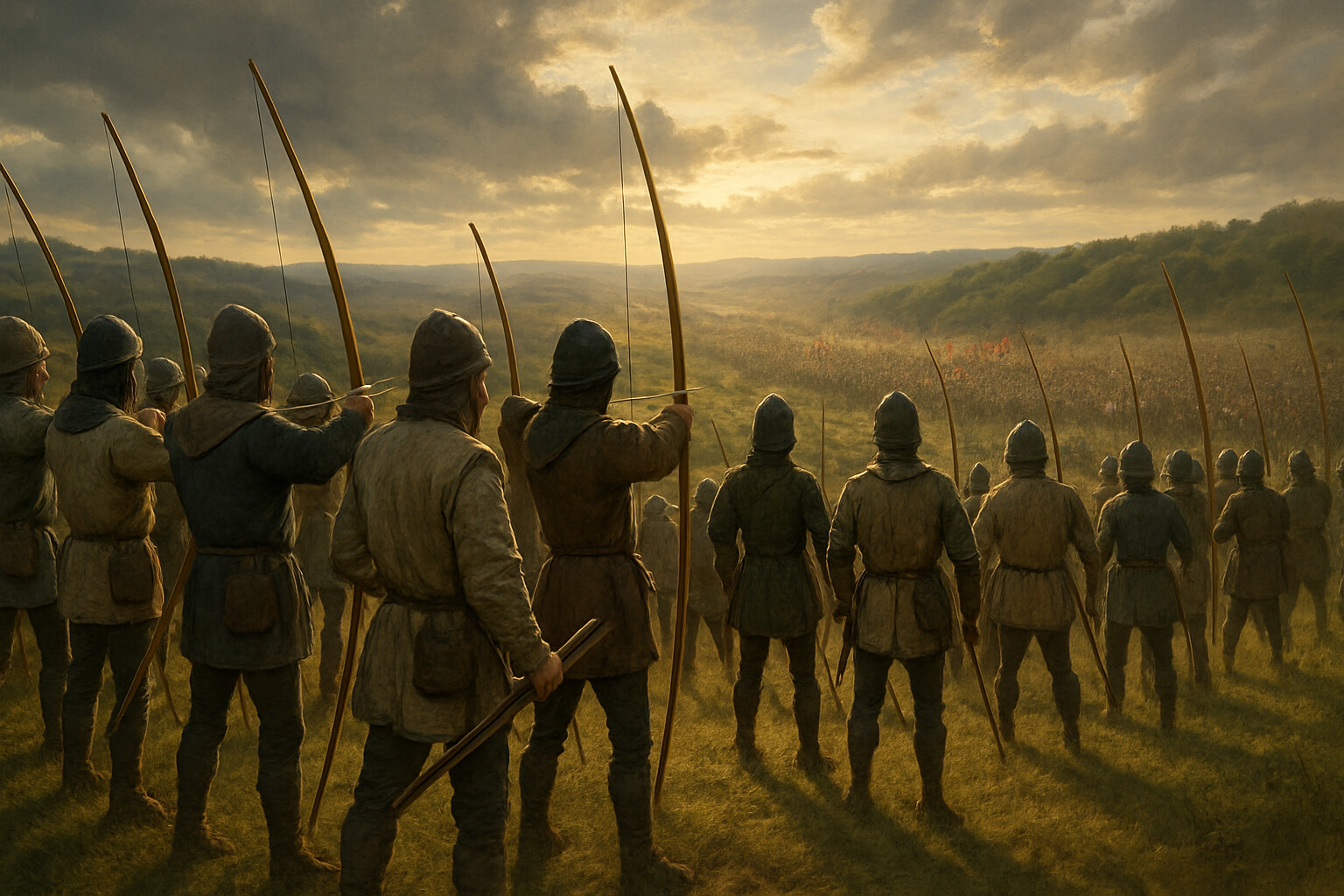
The sun was already dropping toward the Somme valley when the French army came into view.
From his position on the ridge above Crécy-en-Ponthieu, King Edward III of England could see what was coming: a mass of mounted men stretching back along the road to Abbeville as far as the eye could follow. Banners caught the late afternoon light — the fleurs-de-lis of France, the heraldic devices of Bohemia, Flanders, Majorca, the assembled nobility of Europe riding under King Philip VI to destroy the English army that had been raiding through Normandy for six weeks. Genoese crossbowmen walked at the front, thousands of them, tired from the day's march, advancing into the westering sun.
Edward had chosen this ground with care. His men had been standing in their positions since morning. They were hungry, but they were ready.
The archers nocked their first arrows and waited.
---
To understand what happened at Crécy on 26 August 1346, it helps to understand what Edward III was attempting — and how improbable it was that he was standing on that ridge at all.
Edward had landed at Saint-Vaast-la-Hougue on the Cotentin Peninsula of Normandy on 12 July 1346 with an army estimated by modern historians at between 12,000 and 15,000 men, though exact numbers remain debated. The force included English and Welsh longbowmen, dismounted men-at-arms, hobelars (light cavalry), and a small contingent of gunpowder artillery — among the earliest battlefield deployments of cannon in Western Europe. His stated aims were multiple and not all transparently military: the campaign pressed his claim to the French throne, relieved pressure on his Flemish allies, answered a French naval raid on Portsmouth, and demonstrated to his nobles and the English public that the war was winnable.
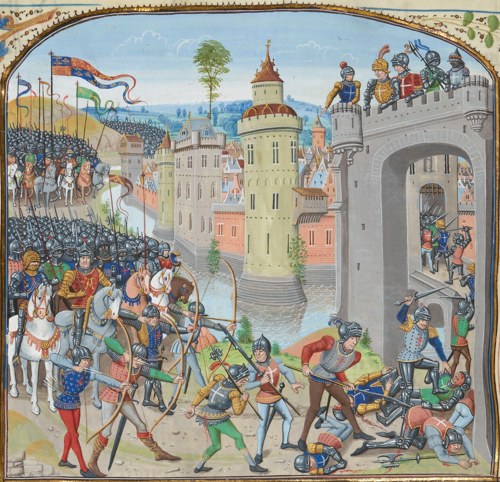
What followed was a chevauchée — a deliberate raid in force designed to burn, plunder, and demonstrate the impotence of French royal power in its own territory. The English army moved down the Cotentin, sacked Carentan and Saint-Lô, then turned toward Caen, one of the great cities of Normandy. Caen fell on 26 July after sharp street fighting. The army drove east and north, crossing the Seine below Paris after being refused at bridge after bridge held by French forces. Philip VI mobilized the arrière-ban — the full feudal levy of France — and pursued Edward northward. Edward needed to reach Flanders, where he had allies and supply routes. Between him and safety lay the Somme.
The Somme crossing very nearly ended the campaign before it reached its climax. French forces controlled most of the usable fords and bridges, and for several days in late August Edward's army searched for a crossing point. On 24 August they found one at Blanchetaque, a tidal ford north of Abbeville. The crossing was forced under fire against a French force defending the northern bank — a genuinely dangerous engagement that modern historians confirm from multiple sources. The English got across. Philip's main army, closing from the south, arrived at Abbeville to find them already gone.
Edward turned to fight. He had been raiding for six weeks, his men were loaded with plunder, and he was in territory of a kind he could claim: Ponthieu was an English possession, part of his grandmother Eleanor's inheritance. He chose a ridge on the edge of the forest of Crécy-en-Ponthieu and arranged his army to receive battle.
---
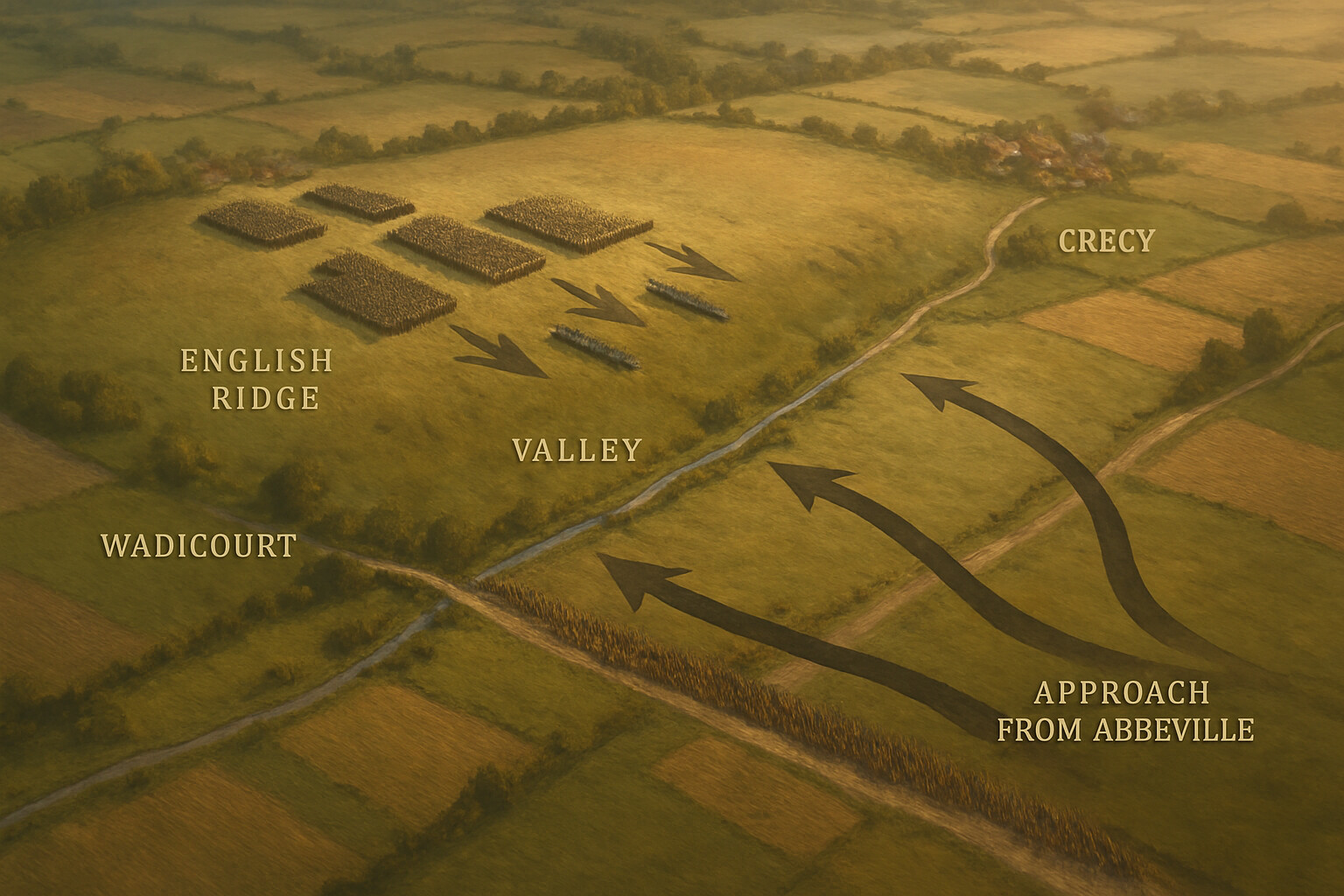
The position Edward selected was not dramatic in the way of a mountain pass or a river crossing, but it was shrewdly chosen. The English line ran along a gentle ridge between the village of Crécy on the right and the forest of Crécy on the left, with the village of Wadicourt anchoring the far left flank. The front faced roughly south and southwest, so that an attacker advancing from the direction of Abbeville would be climbing uphill into the late afternoon sun. A small stream, the Maye, crossed the valley below. The ground had been recently rained upon. It was soft.
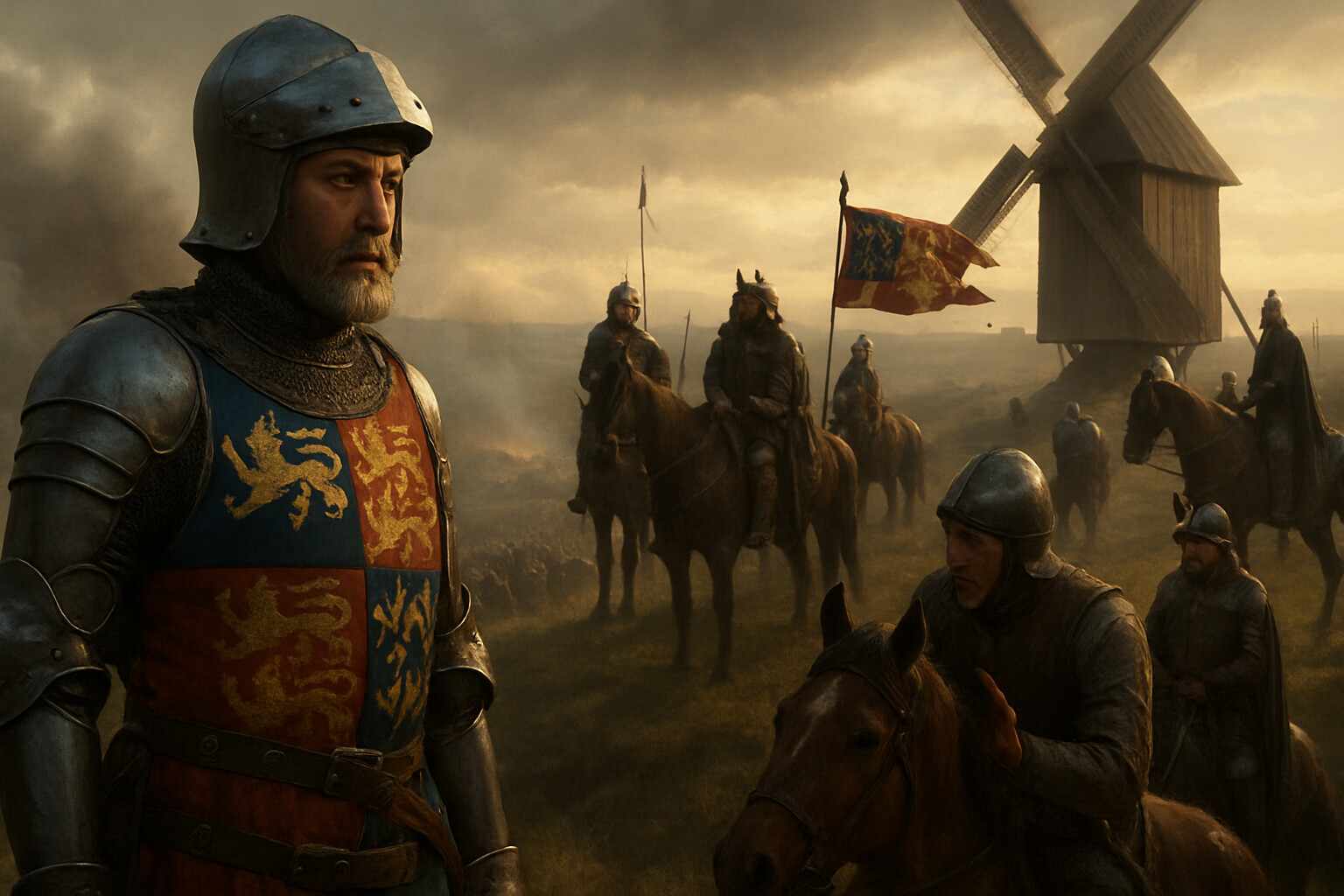
Edward organized his force into three divisions, called battles in the terminology of the time. The first, the forward battle, was placed on the forward right slope and given nominally to his sixteen-year-old son Edward of Woodstock, Prince of Wales. The practical management of that division fell to the Earls of Warwick and Oxford, experienced soldiers who would handle tactical decisions in the fighting. The second battle, under the Earl of Northampton, held the left. Edward himself commanded the third battle, held in reserve on the reverse slope near a windmill that gave him an elevated view of the valley.
The archers were deployed on the flanks of each battle, not in a single line but in echelons projecting forward from the main infantry mass. Some accounts describe them as arranged in a harrow or chevron formation, though the precise geometry remains a matter of scholarly interpretation. What the sources agree on is that the archers occupied the flanks, held clear fields of fire down the slope, and had been preparing their ground. Stakes had been driven into the earth before the archers' positions as a precaution against cavalry. Whether pits or small trenches were also dug is plausible and sometimes cited, but is not conclusively confirmed by all sources.
The English men-at-arms were dismounted and placed in the center. This was deliberate doctrine, not necessity. Edward's army had been fighting on foot in the center since at least the early Scottish campaigns, where dismounted men-at-arms proved more effective against pike formations than cavalry. The horses were moved to the rear. The knights would fight shoulder to shoulder with ordinary soldiers, and the archers would do the killing at range.
In the French army across the valley, no such doctrine existed.
---
The English war bow of the period was not the weapon of romantic legend it has sometimes become in popular retelling. The historical record is sufficient without embellishment.
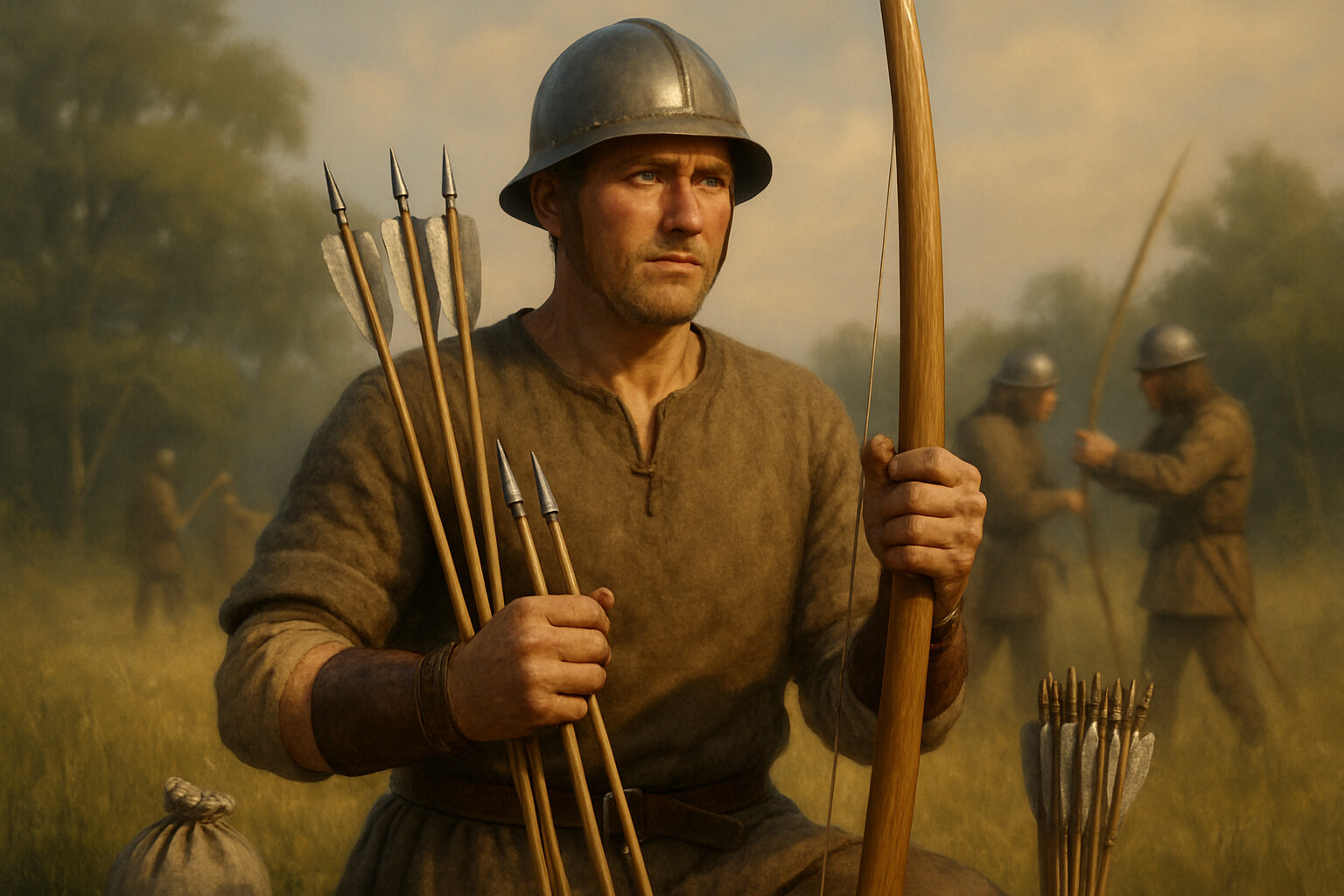
Modern reconstructions and the physical evidence of the Mary Rose bows — recovered from Henry VIII's warship that sank in 1545 — indicate that war bows of the fourteenth century had draw weights in the range of 100 to 185 pounds at a 30-inch draw. Those figures seem almost impossible to a modern reader, but skeletal analysis of archers recovered from the Mary Rose shows pronounced asymmetric bone development consistent with drawing extreme weights from youth. The bows were typically of yew, though other woods were used when yew was scarce, and stood roughly six feet in length. The arrows — called livery arrows, supplied in bulk by the crown — were approximately 30 to 32 inches long, fitted with iron bodkin points or broadheads depending on the intended target.
At Crécy, the archers were shooting at armored cavalry. Against the plate armor of 1346, which was still developing as a technology, bodkin-tipped arrows could penetrate at closer ranges. But the greater killing effect of massed arrow fire was not always direct penetration of a man's armor. Horses were far less thoroughly protected than their riders. An arrow striking a horse's neck, flank, or legs at 150 to 250 yards could bring the animal down, throw the rider, and create the pile-up that turned a cavalry charge into a catastrophe. A trained English archer in battle conditions could loose approximately ten aimed arrows per minute — some analyses suggest higher rates for short periods, though ten per minute is the figure most commonly cited in modern reconstruction studies. At Crécy, the English may have had somewhere between 5,000 and 7,000 archers, though the source figures vary. Even at the lower estimate and a conservative rate of fire, the weight of arrows descending on the slope was beyond the capacity of any advancing force to simply absorb.
The French cavalry rode destriers — large, expensive warhorses bred for power and weight. The horses presented a larger target than their riders, and a far more vulnerable one.
---
Philip VI arrived before Crécy with his pursuing army in the late afternoon of 26 August. The size of the French force is the most contentious figure in the battle's historiography. Medieval chroniclers offered numbers ranging from 20,000 to well over 100,000 — figures that no modern historian accepts. Current scholarly estimates place the French army at perhaps 20,000 to 30,000 total, of whom several thousand were mounted men-at-arms from the high nobility. They also had between 6,000 and 15,000 Genoese crossbowmen, though these figures too remain uncertain.
Philip's marshals reportedly advised him to halt for the night, to let the tired Genoese rest and organize the army properly before attacking in the morning. The Genoese had been marching all day. The sun was in their faces. The English were uphill and prepared. Whether Philip ordered an advance regardless, or whether he could not control the press of mounted noblemen behind him who were impatient for battle, is not clearly established by the sources — the account comes primarily from Froissart, who was writing decades after the fact. The distinction matters less than the result: the Genoese crossbowmen began moving toward the English line.
Some accounts record that a brief rainstorm had passed over the valley shortly before the battle opened. If so, the Genoese crossbow cords — which lose power when wet — would have been affected. English archers, who could unstring their bows during a shower and keep spare strings dry against their bodies, would have been less exposed to the same problem. This detail has passed into historical tradition and is plausible in practical terms, but it cannot be confirmed from the primary sources with certainty.
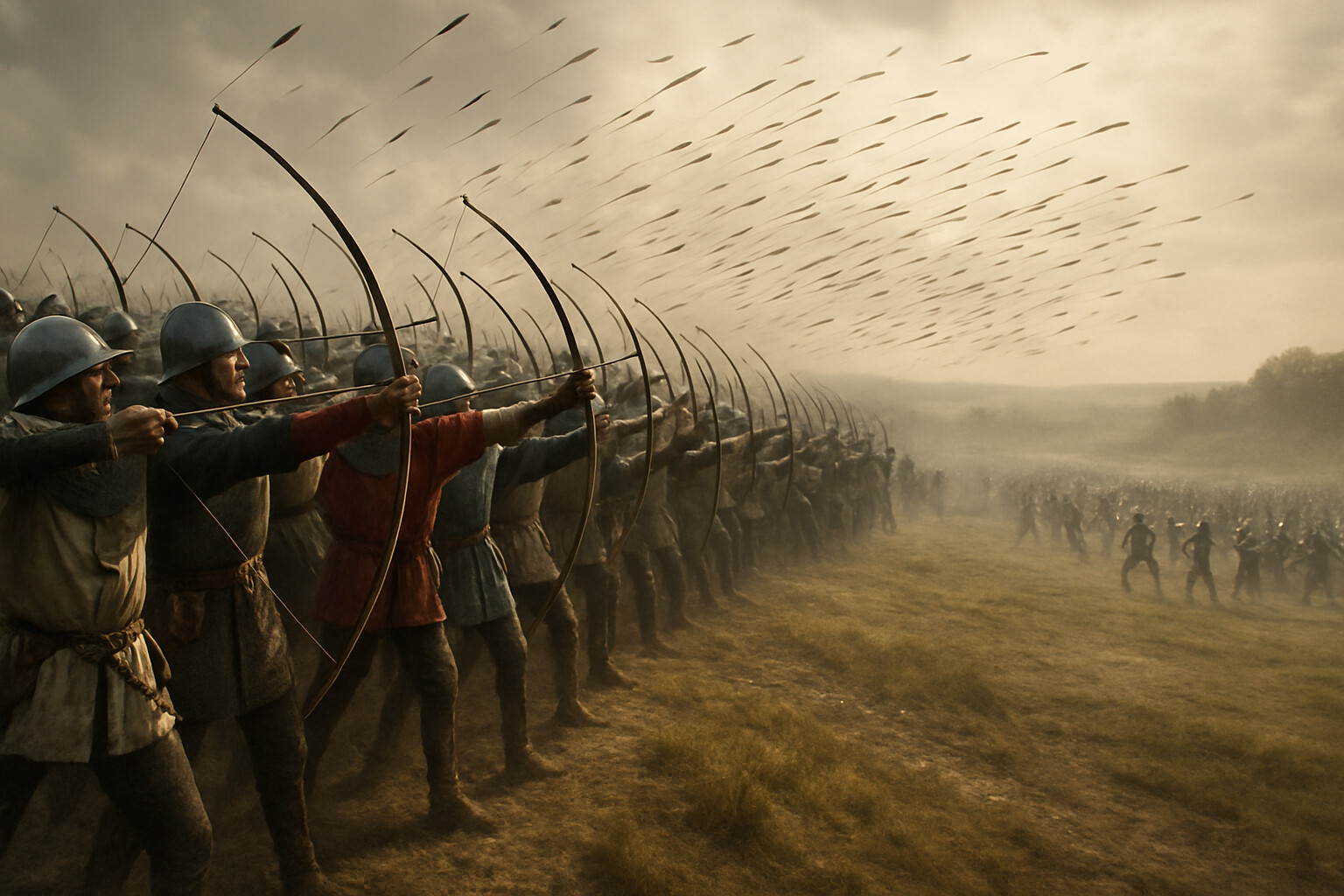
The Genoese advanced. They were reported to have loosed three volleys, or perhaps made three forward movements accompanied by shouts meant to unsettle the English. Their bolts fell short or caused little effect. Then the English archers opened fire.
Froissart, writing with characteristic vividness, described the arrows falling like snow. The Genoese, struck by a volume of fire they could not answer in kind — a crossbowman could loose two or three bolts per minute against an English archer's ten — began to give way. They turned and fled back up toward the French line.
Philip's cavalry, pushing forward, rode through them.
---
This is the moment that defines Crécy in the historical imagination, and it deserves to be stated carefully: the French men-at-arms, mounted on warhorses, armored in the best plate and mail their wealth could provide, charged uphill through ground softened by rain, through the bodies and the retreating mass of the Genoese, into the arrows.
They came in waves. The exact number of charges is uncertain — Froissart counted fifteen distinct assaults, a figure that modern historians treat as approximate rather than precise. What is clear from multiple sources is that the charges continued long past any rational tactical accounting, because French chivalric culture made retreat a form of dishonor that many of those nobles found genuinely unthinkable. They rode forward because riding forward was what they were.
The arrow storm met them on the slope.
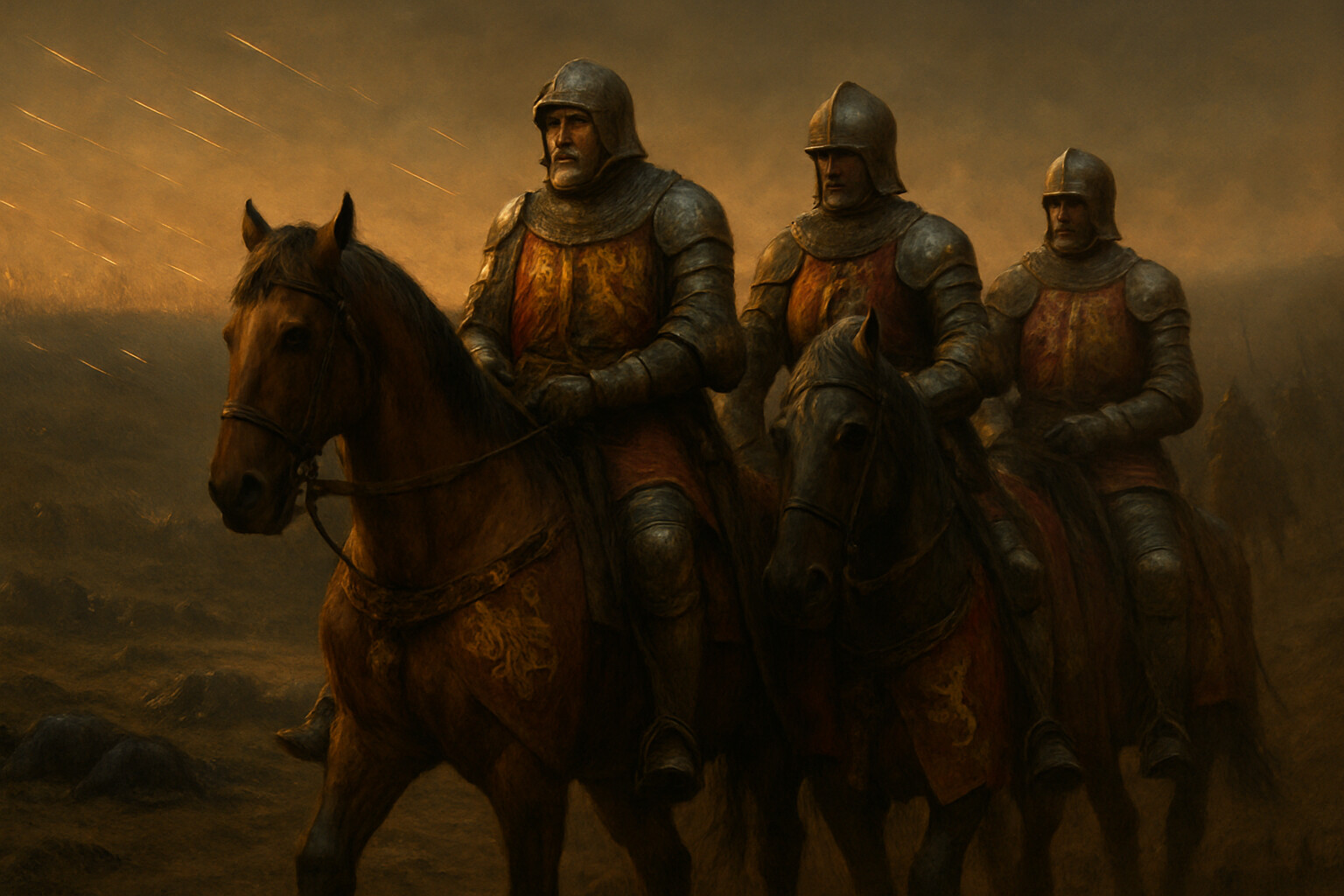
Horses fell. Riders were thrown onto soft ground that held men in heavy armor. Riderless horses ran back into the advancing press. Horses struck in the flank or neck went sideways and brought others down. The slope became a churning mass of fallen men and animals, and still the archers shot, because they had arrows and targets and a position they never lost.
Some charges reached the English men-at-arms in the center. There was close fighting — serious, dangerous fighting — and at one point the Prince of Wales's division was hard-pressed. A message was sent to Edward III requesting reinforcement. According to Froissart, the king asked whether his son was dead or so badly wounded he could not continue. When told the prince was alive and under severe pressure, he declined to send the reserve. The prince's division held. This exchange is drawn entirely from Froissart and has the texture of a vivid oral account shaped in the retelling; it is consistent with what the outcome suggests about Edward's command decisions, but it should be read as reported tradition rather than verified record.
In the darkness of that August evening, King John of Bohemia — nearly or entirely blind, his sight gone to disease over the preceding years — is said to have asked his knights to lead him into the fighting so that he could strike a blow. His knights tied their horses' reins to his and rode forward together. They were found the next morning, dead, still linked. This account appears in Froissart and in other chronicle sources, and is widely accepted by historians as substantially rooted in fact, though the specific detail of knotted reins may be an embellishment added in the retelling.
Edward III is said to have honored John of Bohemia after the battle, adopting his crest — three ostrich feathers — and the motto Ich dien, meaning I serve. This tradition is widely repeated and accepted by most historians as plausible. The earliest textual sources connecting the story specifically to Crécy, however, postdate the battle by some decades, and the tradition should be noted as such rather than presented as confirmed fact.
By the time full darkness fell, the French assault had exhausted itself. Philip VI had been wounded by an arrow — an account found in Froissart and other near-contemporary sources — and was persuaded to leave the field. His army dissolved into the night.
---
The dead lay on the slope and in the valley below in numbers that shocked experienced men.
The morning after the battle, heralds moved through the fallen identifying the noble dead by their heraldry and blazons. Among the confirmed dead: John I, King of Bohemia; Louis I, Count of Flanders; Rudolf, Duke of Lorraine; Louis II, Count of Blois; and a list of lesser lords that runs to more than a dozen major nobles. Modern historians, working from heralds' records and chronicle accounts, estimate French noble casualties at around 1,500 men-at-arms killed, with total French dead considerably higher. English casualties are recorded across the sources as very light, though no reliable figures have been established.
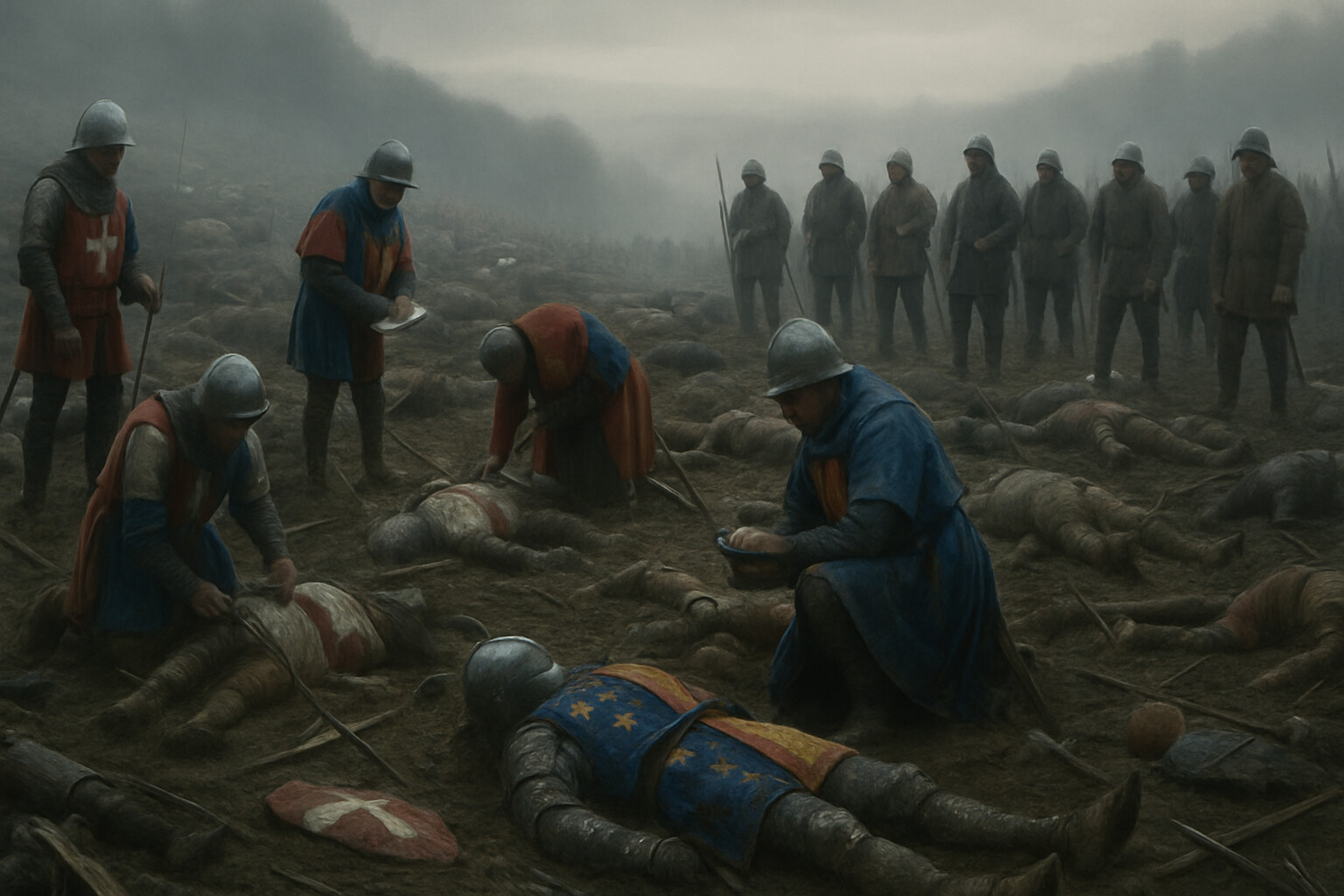
The asymmetry was startling. In the context of medieval pitched battles between comparable forces, where losses on both sides tended toward something closer to parity, the disparity demanded explanation. Contemporaries settled quickly on the same answers that historians have not substantially revised: the English position, the English archers, and the tactical discipline of fighting dismounted in the center.
Edward did not press his advantage southward. He moved his army north toward the coast, laid siege to Calais, and spent nearly a year reducing that port city before returning to England. Calais would remain in English hands until 1558. But it was Crécy, not the siege, that fixed itself in the memory of both kingdoms.
---
The sources for Crécy are richer than for most battles of the period and more complicated than they appear.
Jean Froissart's Chronicles are the most famous account of the battle and the most colorful. Froissart was born around 1337, making him approximately nine years old when the battle was fought. His account was written decades later, drawing on interviews with participants — including, he claims, English knights and veterans — as well as earlier written sources. He is vivid, often specific, and frequently unreliable on numbers and sequence. His account is indispensable; it is not a transcript.
Giovanni Villani was a Florentine merchant-chronicler who died in 1348, during the Black Death. He had commercial interests and informants in France, and his account, written close to the event, is considered by some historians to be more reliable than Froissart on certain specifics, particularly regarding the Genoese crossbowmen.
The Acta Bellicosa Edwardi Tertii — sometimes called the Historia Roffensis after one of its manuscript locations — is a near-contemporary English account that provides organizational detail on the English army. Other near-contemporary sources include the Grandes Chroniques de France, the chronicle of Geoffrey le Baker, and papal correspondence that establishes the casualty figures among the French nobility with reasonable confidence, since Rome had reason to track the deaths of Christian monarchs and major nobles.
Modern scholarship on Crécy is substantial. Jonathan Sumption's multi-volume history of the Hundred Years' War is the current standard narrative account and treats the battle with characteristic sourced precision. Andrew Ayton and Philip Preston edited a scholarly volume dedicated entirely to Crécy that examines the sources and the archaeology with academic rigor. Clifford Rogers's work on English military strategy and the longbow's effectiveness has clarified several debates about arrow penetration and rate of fire. These works do not resolve every disagreement — the exact size of the forces, the precise deployment of the archers, the number of charges, the role of the cannon — but they establish a framework within which the core of the story is documented well enough to stand.
The cannon deserve a note. Geoffrey le Baker and other sources mention English artillery pieces at Crécy. The evidence suggests Edward's army deployed a small number of early gunpowder weapons — likely small bombards firing stone balls or bolts. Their tactical effect in terms of casualties was probably minimal. Their noise, however, was genuinely novel and may have contributed to the disorder among the Genoese and their horses at the opening of the battle. This is among the earliest documented uses of gunpowder weapons on a Western European battlefield, confirmed by multiple sources, and its significance should be noted without being overstated.
---
Edward III was thirty-three years old at Crécy. He had taken personal control of his kingdom at eighteen by arresting Roger Mortimer, his mother's lover and the effective regent, in a night coup at Nottingham Castle in 1330. He had fought two grueling campaigns in Scotland. He had won a major naval victory at Sluys in 1340, where the French fleet was virtually annihilated. For more than a decade he had been refining a military system — the combination of dismounted men-at-arms and massed archers — through campaigns that gave him confidence in its capabilities.
At Crécy he was not experimenting. He was deploying a system he understood, on ground he had chosen, against an enemy whose tactical culture he had studied. His decision to withhold the reserve and let his son's division fight through its crisis — if the accounts are accurate — reflects the judgment of a commander who could hold the operational picture steady while the fighting in front of him reached its worst.
The victory at Crécy did not win the Hundred Years' War — that conflict would grind on for more than a century after Edward died. It did not permanently break French power. But it established several things with lasting consequence. It demonstrated that massed archery combined with dismounted men-at-arms could defeat a conventional feudal cavalry force of superior numbers in open battle. It made England a military power that France could not dismiss. And it shaped the conduct of warfare in Western Europe for the next seventy years, directly influencing the battles of Poitiers in 1356 and Agincourt in 1415, where English and Welsh archers again stopped French cavalry that had not absorbed the tactical lesson of the slope above Crécy.
It also killed the flower of French chivalry in a single August afternoon. That loss was felt in ways that went beyond the battlefield. The French nobility's appetite for exactly the kind of charge that Crécy had punished did not immediately disappear — Poitiers and Agincourt would prove that — but the defeat of August 1346 marked the beginning of a slow, painful reckoning with what armored cavalry could and could not do in the face of disciplined missile troops.
---
The ridge at Crécy-en-Ponthieu still exists. The forest of Crécy is still there. A memorial marks the approximate position where Edward III is said to have stood near the windmill, watching. The ground slopes gently south toward where the Genoese and then the cavalry would have come.
On a quiet evening, the valley is ordinary. Farmland. A modest stream. A rise of ground a person in good health could walk up in three minutes.
In the late afternoon of 26 August 1346, it was enough. The English archers had good ground, a clear field of fire, and ten arrows per minute for every man who rode toward them.
The French cavalry came uphill into the setting sun. The arrows fell like snow. By nightfall, the slope held the dead of a generation of French nobility, and every commander in Europe who could read a battlefield knew that something had changed.