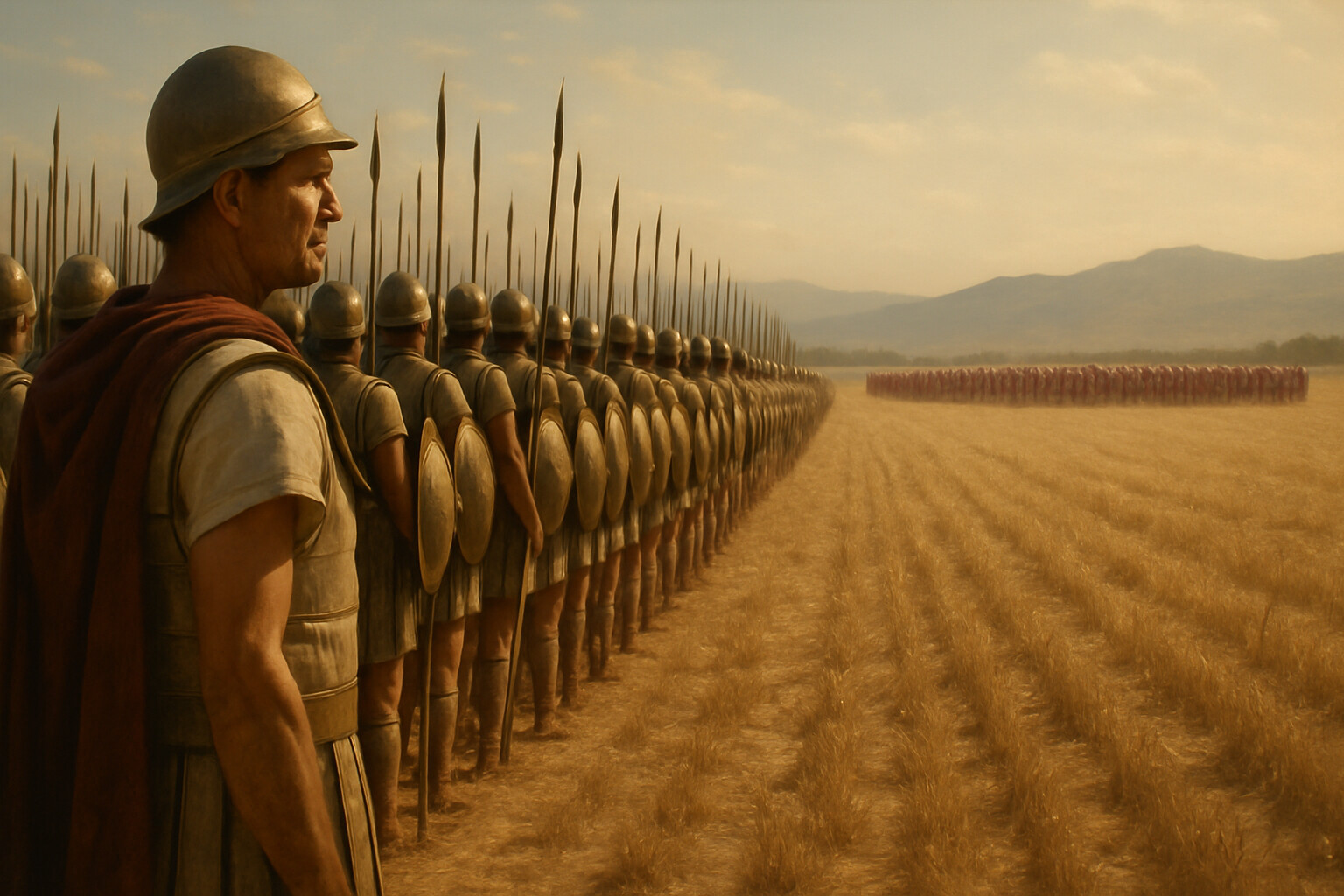
The plain at Leuctra was not a place anyone would have chosen to die. Ordinary farmland in the southern corner of Boeotia, roughly flat, bounded by low hills, unremarkable in every way except for what happened there in the high summer of 371 BC. Two armies faced each other across a few hundred meters of grain stubble: a Spartan force that had not lost a pitched land battle in living memory, and a Theban army that most of Greece expected to be destroyed before the afternoon was out.
Epaminondas stood somewhere on the Theban left, watching the Spartan formation take shape opposite him. He had spent years thinking about this problem. The Spartans were genuinely formidable — not because of myth, though myth had accreted around them like barnacles on a hull, but because of real institutional competence built over generations. Their training was relentless, their cohesion under pressure was exceptional, and their ability to function as a single killing instrument at close quarters had been proven on nearly every contested field in Greece. Epaminondas intended to break them. He had a specific, geometric idea about how to do it.
What he had designed was not simply courage. It was engineering applied to human bodies.
---
To understand what Leuctra was, you have to understand what Greece was before it.
For roughly two centuries before 371 BC, Spartan military power had functioned as an almost unchallenged fact of the Greek world. The Spartans won at Plataea in 479 BC against the Persians. They ground Athens into submission in the Peloponnesian War, which ended in 404 BC. In 394 BC they defeated a combined Argive-Corinthian-Boeotian-Athenian coalition at Nemea. They were routed at sea at Cnidus the same year but absorbed the loss, because sea battles were not what Sparta was. On land, in a hoplite formation, facing hoplites, they had not been beaten in any major engagement that anyone then alive could remember.
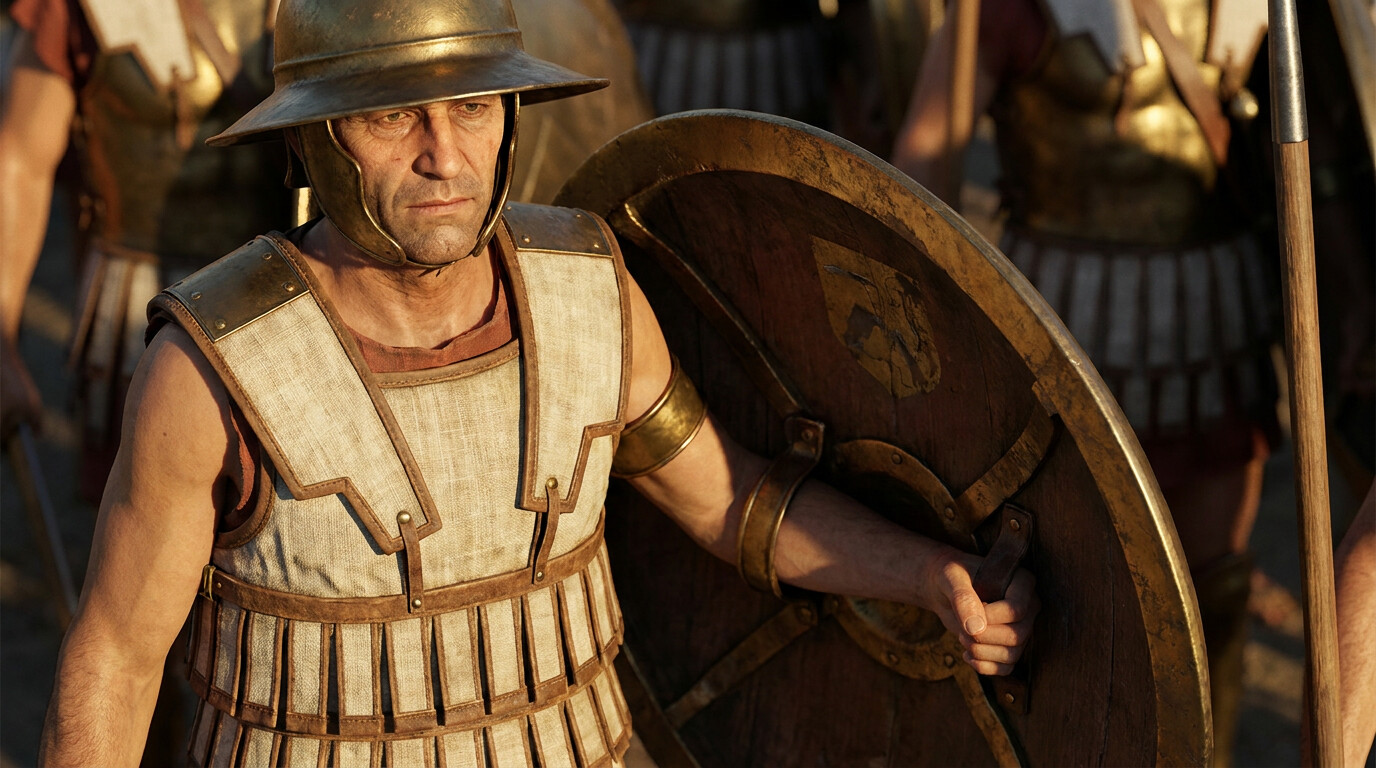
The Spartans achieved this not through overwhelming numbers but through the quality and cohesion of their citizen warriors, the Spartiates. A Spartiate underwent the agoge — the communal training system that began at age seven and continued through adolescence and early manhood — and emerged as something close to a full-time professional soldier in a world where most armies were made of farmers who picked up their shields twice a year. By 371 BC, the Spartiates were few: probably around 1,000 to 1,500 full citizens of fighting age, a number that had been declining for decades due to battlefield losses, the earthquake of 464 BC, and the demographic pressure of land consolidation. But those who remained were, in terms of individual military training, among the most skilled infantry in the ancient world.
Boeotia — the region around Thebes — had long existed in Sparta's shadow. The Theban submission to Persia during Xerxes's invasion in 480 BC, a decision later called medism and used against Thebes as a lasting stigma, had weakened Theban prestige for generations. Sparta installed a garrison on the Theban acropolis, the Cadmeia, in 382 BC — a deliberate humiliation that occupied the city for three years until Theban democrats killed the puppet rulers and expelled the garrison in 379 BC. The episode did not make Thebes powerful immediately, but it opened a period of focused military reform.
The men who drove that reform were Epaminondas and Pelopidas. They were not simply soldiers who got lucky. They were, by the evidence of their results and the testimony of sources including Plutarch, Diodorus Siculus, and Xenophon — who disliked Thebes and is therefore a reluctant witness — genuinely original military thinkers working within the constraints and conventions of hoplite warfare.
Epaminondas was born in Thebes around 418 BC, though ancient sources give slightly varying dates and the exact year is uncertain. He came from a distinguished but not wealthy Theban family. Later ancient biographical tradition — primarily Plutarch and Cornelius Nepos — describes him as educated in Pythagorean philosophy under a philosopher named Lysis of Tarentum, and as ascetic and intellectually serious in ways that made him an anomaly among the Theban elite. These biographical details come from later literary tradition and cannot be fully verified, but they were consistently recorded within a few centuries of his life and reflect how antiquity understood his reputation: as a thinker first. What is documented in military terms is that by the late 370s BC, he and Pelopidas had been systematically training the Theban army, refining its formations, and developing the instrument that would be his at Leuctra.
The Sacred Band — Hieros Lochos in Greek — was a corps of three hundred men. Plutarch, in his Life of Pelopidas, describes it as organized in pairs of lovers, on the theory that men would fight harder and die before showing cowardice in front of someone they loved than in front of a stranger. Whether the Sacred Band was organized precisely this way from its founding, and whether Plutarch's account — written roughly five centuries after the events — accurately preserves earlier tradition, are questions scholars continue to debate. What is not seriously disputed is that the Sacred Band existed as a distinct elite unit within the Theban army by the 370s BC, that it numbered three hundred, and that it functioned as a specialized striking force under Pelopidas. It had already demonstrated its quality at the Battle of Tegyra in 375 BC, where it routed a Spartan force — a genuine shock result that began eroding the psychological aura of Spartan invincibility before Leuctra finished the job.
---
The immediate context of Leuctra was a collapsed peace conference. In the summer of 371 BC, representatives of Greek states had gathered at Sparta to ratify a general peace — the Common Peace, or Koine Eirene. Thebes, led by Epaminondas at the conference, refused to sign on behalf of all of Boeotia rather than Thebes alone, insisting on Boeotian federal unity. The Spartans, under King Agesilaus II, responded by excluding Thebes from the peace. This was, in effect, a declaration that Sparta would enforce Thebes's subordination by arms.
King Cleombrotus I, who had been leading a Spartan army in the region, received orders to march against Thebes. He advanced through Phocis, crossed the mountains into Boeotia by a route that avoided the main roads — moving faster than expected — and encamped on the plain near Leuctra, roughly forty kilometers southwest of Thebes. The Theban federal army followed and took position across the plain.
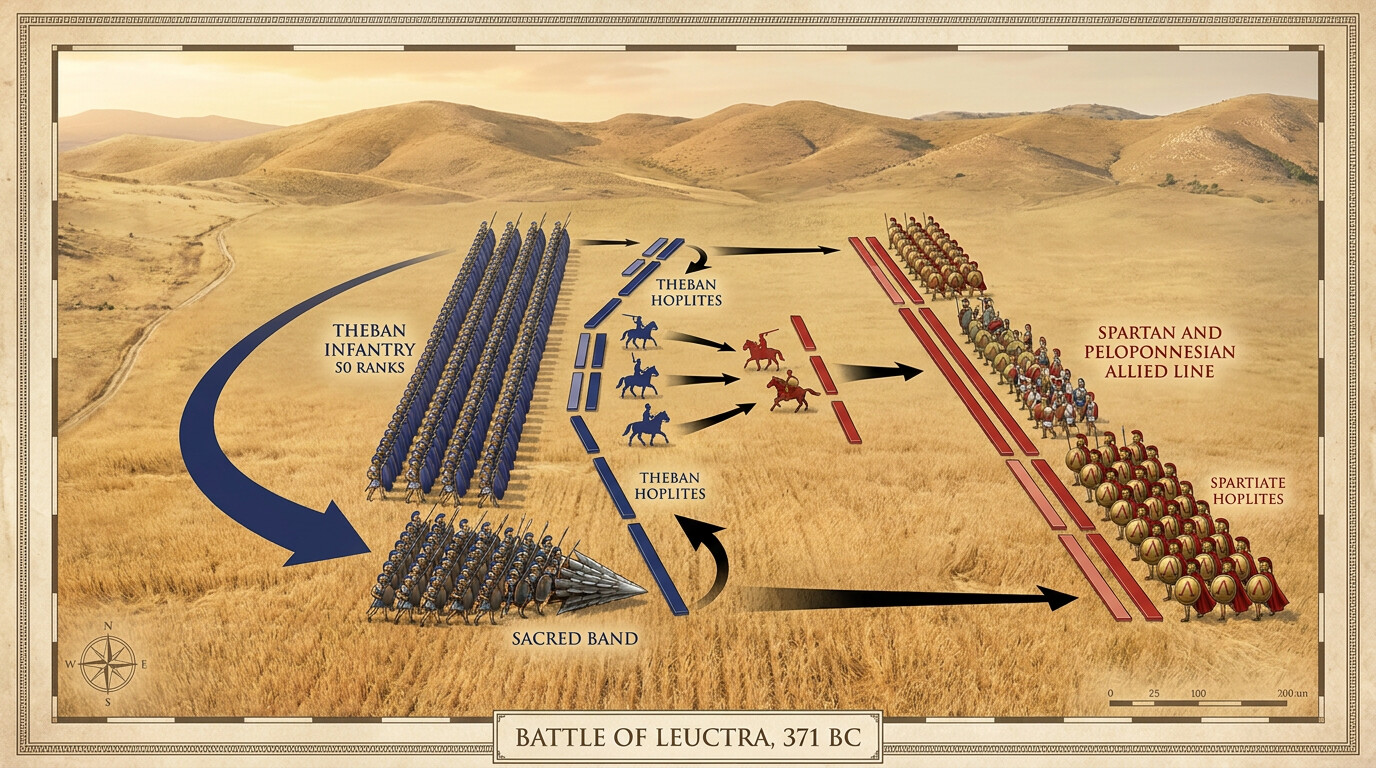
The ancient sources — primarily Xenophon's Hellenica, Diodorus Siculus's Library of History, and Plutarch's Lives — give varying numbers for the two forces. Xenophon, the most nearly contemporary account, is also the most conservative and in some respects the most difficult, because his hostility to Thebes produces notably sparse detail on Theban tactics. Diodorus and Plutarch write later and with more explicit tactical description. The scholarly consensus, drawing across these sources, suggests the Spartan-allied force numbered roughly 10,000 infantry and perhaps 1,000 cavalry against a Theban-Boeotian force of perhaps 6,000 to 7,000 infantry and 1,500 cavalry. The Spartan side held a significant numerical advantage. The Spartiate hoplites themselves — the full citizen warriors, the cream of the Lacedaemonian force — formed the Spartan right wing, as convention dictated, with allied Peloponnesian hoplites extending the line to the left.
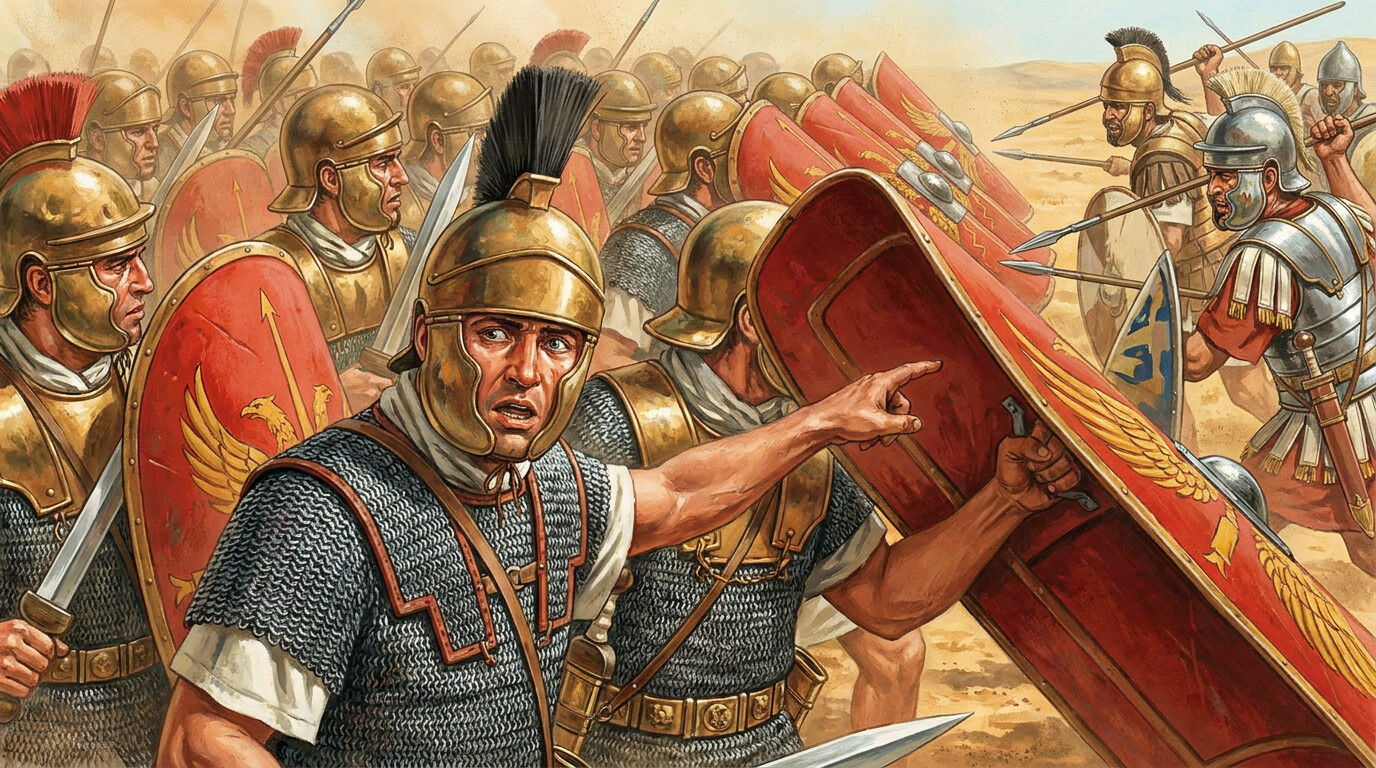
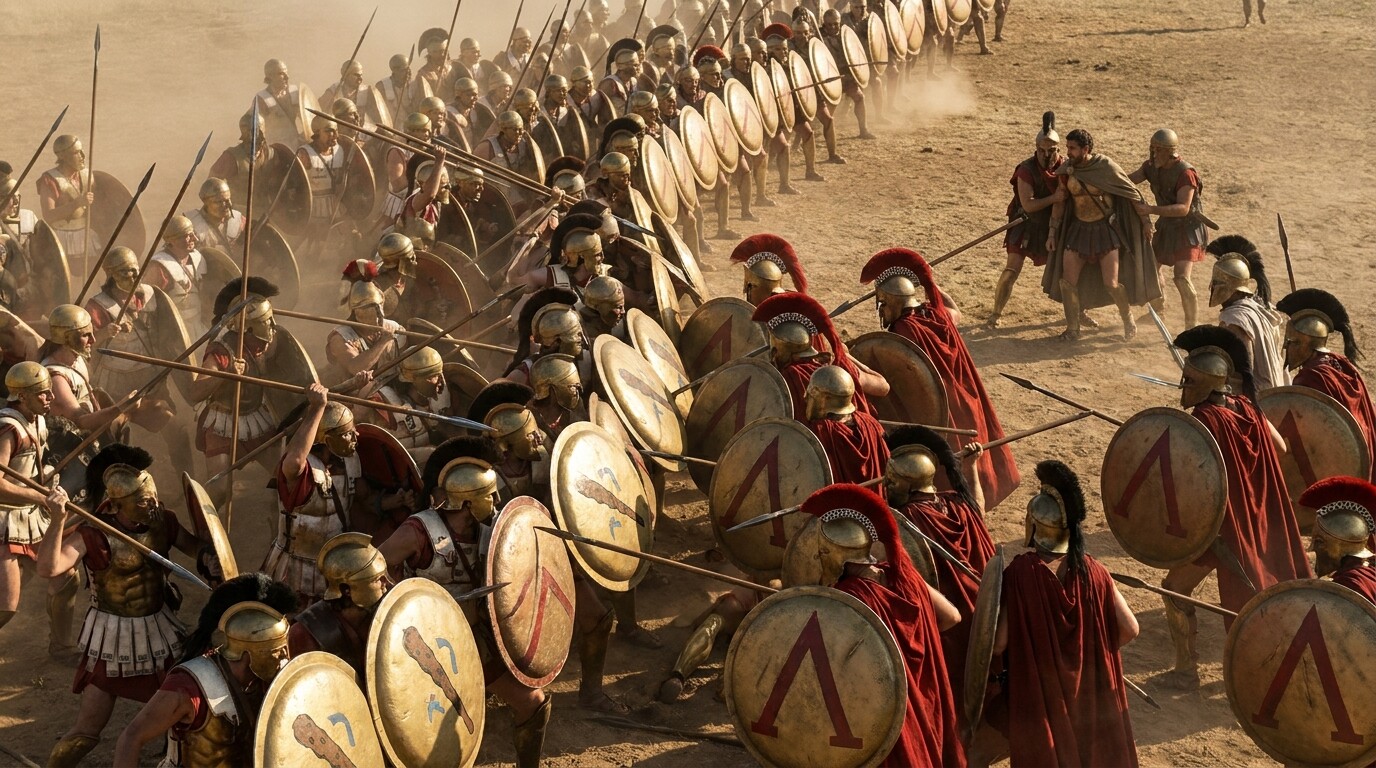
Conventional Greek hoplite battle in this period operated on recognizable, almost ritualized geometry. Two phalanxes — dense rectangular formations of armored infantrymen carrying large round shields, called hopla or aspis, and thrusting spears called dory — would advance across relatively flat ground, crash together, and push. The front ranks stabbed with spears; when spears broke, men drew short swords, the xiphos. The formation that held its cohesion and kept pushing won. The one that broke fled, and flight was usually when most casualties occurred, as the victors pursued. Depth mattered in this pushing contest: more ranks meant more weight, more pressure from behind. Conventional depth was twelve ranks, sometimes eight, sometimes sixteen. The Theban army had sometimes deployed at greater-than-conventional depth in the 370s, and the engagements at Tegyra and elsewhere suggest that Pelopidas and Epaminondas had been experimenting with concentrated depth on a single part of the line.
At Leuctra, Epaminondas took the experiment to its logical extreme.
---
The plain presented itself to both armies in roughly the same way: relatively flat ground that favored the side willing to advance and make contact. The Spartans deployed in their conventional formation with Cleombrotus and the Spartiates on the right — the position of honor, where commanders placed their best troops, because the rightward drift of formations meant the right flank tended to get into contact first and most decisively. Peloponnesian allies extended the line to the left. The Spartan cavalry, which Xenophon notes was in poor condition in this period, deployed in front of the infantry in the customary position.
Epaminondas made several coordinated decisions that the ancient sources identify as the tactical innovations of Leuctra. It is worth being careful here about what the sources actually say versus what later interpretation has layered on top.
First: he concentrated his best troops on his left wing, opposite the Spartan right, opposite Cleombrotus and the Spartiates. He stacked the Theban contingent to extraordinary depth. The ancient sources give the figure as fifty ranks. This number comes primarily from Diodorus Siculus and is generally accepted by most modern scholars as at least approximately accurate, though some historians note it may be a round or slightly exaggerated figure. Even if the actual number was somewhat less — forty ranks, perhaps — the principle was the same and without precedent at this scale in Greek hoplite history. The Sacred Band under Pelopidas formed the cutting edge of this mass.
Second: he refused his right wing — the weaker, allied Boeotian contingents on the Theban side — ordering them to hold back and avoid engagement if possible. This oblique approach meant the Theban right would not simply clash with the Spartan left and collapse, which it likely would have done on conventional terms. It would hang back, angling the Theban approach so the massive left wing made contact while the weak right remained out of reach.
Third: the Theban cavalry attacked and drove off the Spartan cavalry early in the action. Xenophon notes that Spartan cavalry in this period was of poor quality — wealthier Spartans sent horses and hired substitutes to ride them, producing undertrained riders on horses they did not know. The Theban cavalry, better prepared and fighting on home ground, routed the Spartan horse and drove them back into the Spartan infantry, causing disruption in the Spartan ranks before the main collision. This is documented in Xenophon and is not a matter of serious scholarly dispute.
And then the Theban left moved forward.
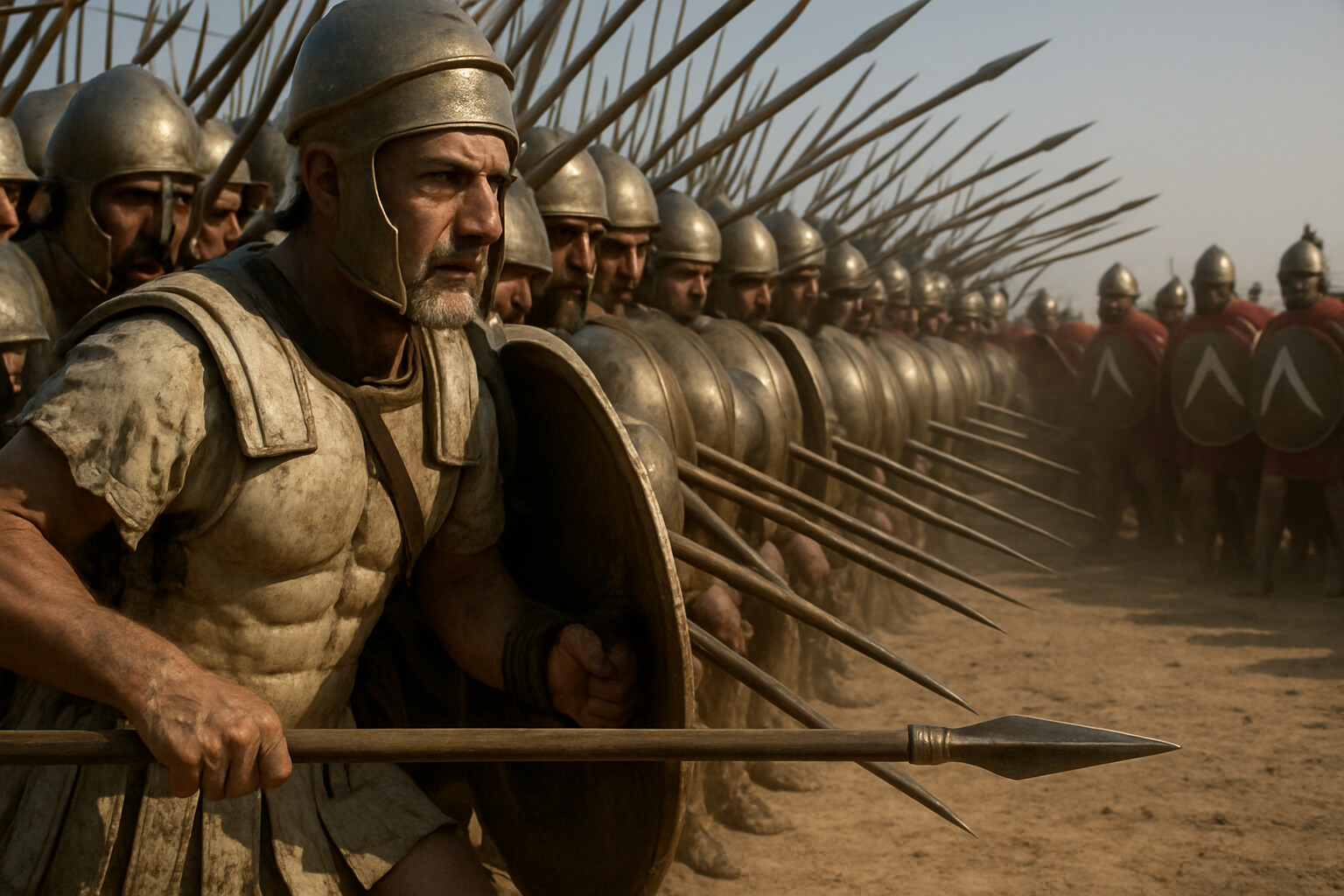
Fifty ranks deep means what, in physical terms? A standard hoplite carried a spear — the dory — roughly 2 to 2.5 meters long, and a round shield roughly 90 centimeters in diameter weighing perhaps 7 to 8 kilograms. A file of men fifty deep, each transferring the pressure of the men behind him forward into the backs of those in front, each adding his weight and his legs and his training to the collective push — such a formation was not a line of fighters so much as a moving wall, a directed mass of human energy with spear-points at its front. The Spartiate formation, twelve ranks deep by convention, was not designed to absorb a collision from something approaching five times its depth. The physics were unforgiving.
Cleombrotus and the Spartiates had fought all their lives and trained to hold under worse circumstances than most Greek armies would ever face. According to Plutarch — though this detail is not confirmed in Xenophon's more contemporary account and should be read as tradition rather than established fact — the Spartans attempted to extend and wheel to meet the incoming column, and the disruption caused by the cavalry rout complicated or prevented this maneuver. Whether it was attempted and failed, or was simply impossible given the speed of the Theban approach and the disorder in the Spartan ranks, cannot be confirmed from surviving sources. What Xenophon does document — as a hostile witness giving Thebes the minimum credit — is that the Spartans were beaten, that Cleombrotus was mortally wounded, and that he was carried off the field and died shortly afterward.
The Spartiates around Cleombrotus fought hard. The sources agree on that. They managed to carry their king off the field before he died, which in Spartan terms indicated some degree of cohesion in the immediate guard. But they could not hold against the weight of the column. The Spartan right broke. When the right broke, the allied center and left — already uncommitted, watching the disaster unfold — needed no further persuasion. The Peloponnesian allies fell back toward the Spartan camp. The Theban cavalry, having already routed the Spartan horse, harassed the withdrawal.
The battle was over quickly. The decisive engagement of a hoplite collision is typically resolved rapidly once formations make full contact. The physical duration of the decisive exchange may have been thirty minutes or less, though the total action — including cavalry skirmish and pursuit — lasted considerably longer. No ancient source gives a precise time figure; the estimate is inferred from the nature of hoplite battle.
---
The cost, when counting was done, was devastating for Sparta — not in absolute numbers but in the numbers that mattered.
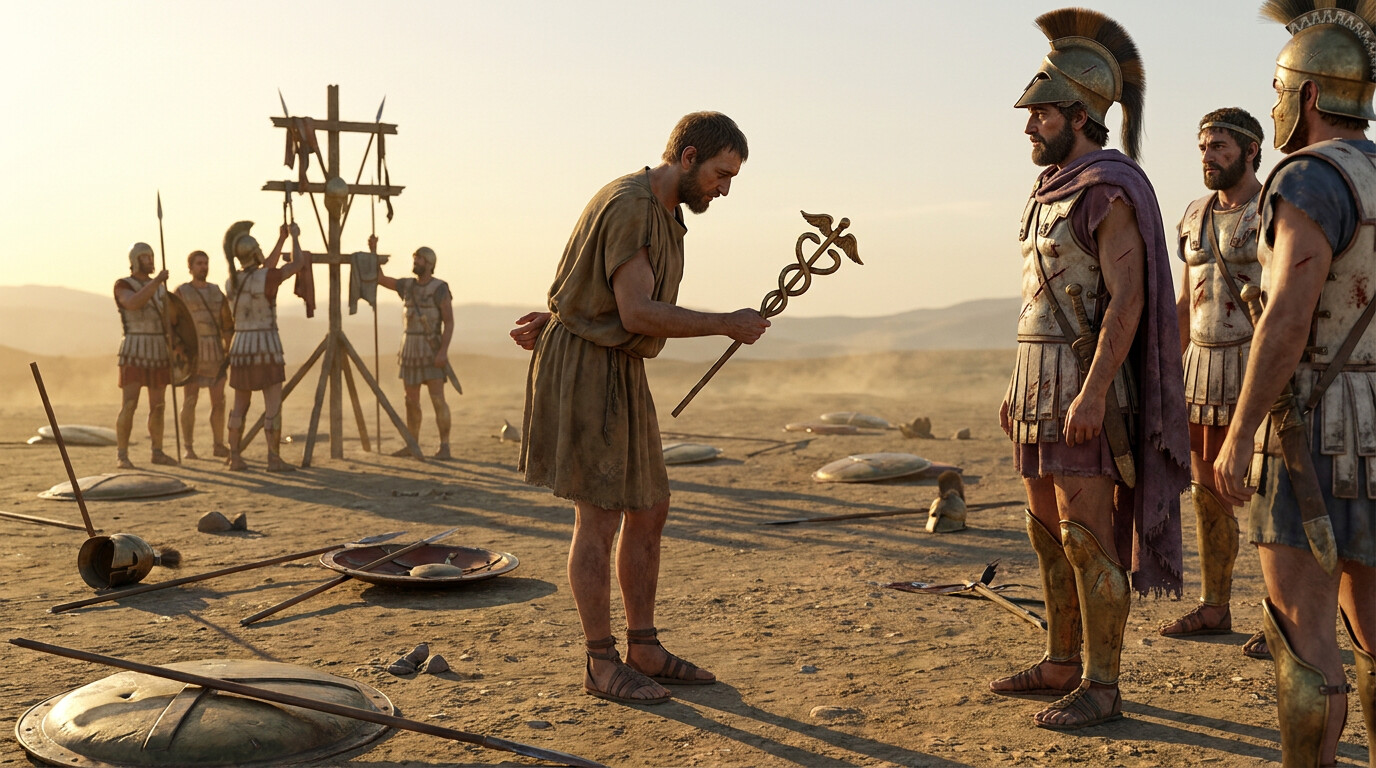
Xenophon gives the Spartan dead as four hundred Spartiates out of roughly seven hundred present. Plutarch and Diodorus both give casualty figures consistent with Xenophon's range, though exact numbers vary slightly by source. At minimum, Cleombrotus was dead. What the total meant required no exaggeration. There were perhaps 1,000 to 1,500 Spartiates of military age in all of Lacedaemon in 371 BC — the citizen warrior class was already in demographic decline. To lose 400 of them in a single afternoon was to lose somewhere between a quarter and a third of the entire remaining Spartiate military class in one battle. It was not simply a defeat. It was a wound from which Spartan military primacy never recovered.
Theban losses are not given precisely in the surviving sources. Diodorus records a total of around 300 Boeotian dead, but this figure is contested, and the sources are inconsistent enough that a definitive Theban casualty count cannot be stated with confidence.
The field itself provided one of the most striking markers in ancient military memory. Epaminondas reportedly ordered a trophy — a tropaion, the traditional Greek battlefield marker made from captured enemy arms hung on a wooden frame — erected at the point where the Spartan line broke. Ancient sources also describe a broader monument erected by the Thebans to commemorate the battle. The physical evidence from the site is limited, and scholarly discussion of the exact location and form of the Leuctra monuments continues.
---
The aftermath moved faster than anyone anticipated.
The Spartan survivors sent a herald to Thebes, as convention required, to request the return of their dead — an implicit acknowledgment of defeat. In Greek practice, the side that asked for its dead conceded the field. Epaminondas permitted it. The request itself was confirmation, in the clearest diplomatic language the ancient world possessed, that the Spartans knew they had lost.
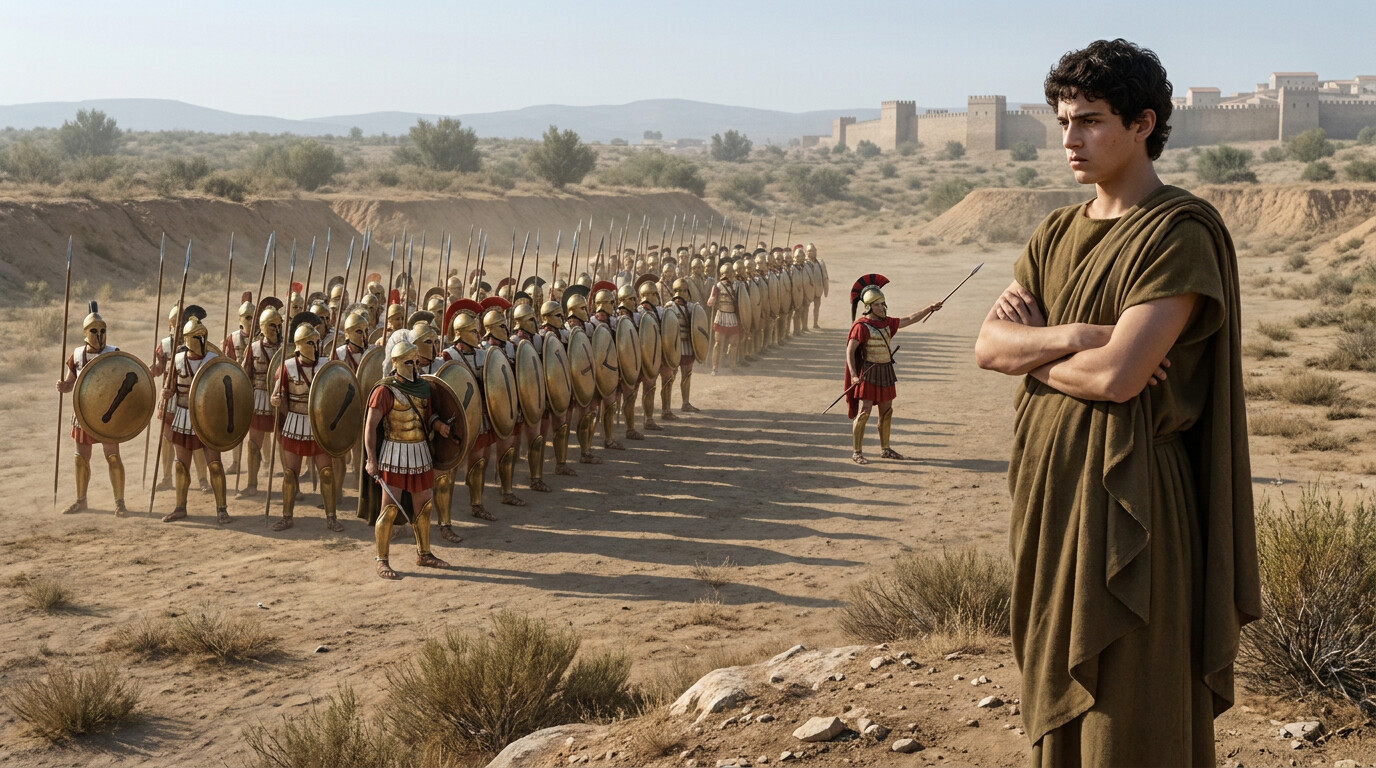
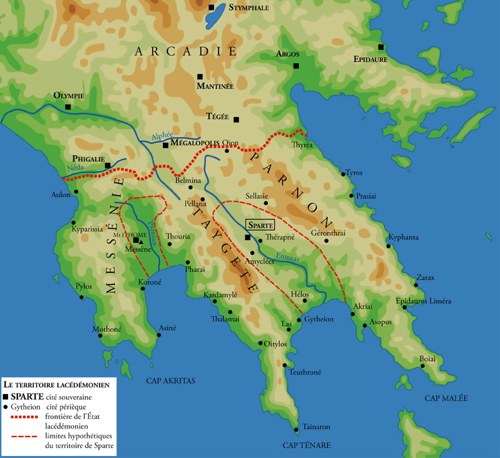
The reaction across Greece was extraordinary. Xenophon, hostile to Thebes, nonetheless recorded that news of Leuctra arrived in Sparta during a festival and was absorbed in public silence — the ephors ordered the festival to continue, which later tradition read as Spartan stoicism. But the political consequences did not take silence for an answer. Spartan allies in the Peloponnese began testing the bonds of their subordination. The Arcadian cities moved toward federation. Mantinea refounded itself. Messenia — whose helot population had been enslaved by Sparta for centuries and whose labor underpinned the Spartan economic system — was eventually freed after Epaminondas led further campaigns into the Peloponnese in 370 and 369 BC. The city of Messene was founded on the slopes of Mount Ithome. The helots, who outnumbered Spartan citizens by perhaps seven to one or more, were no longer to be the foundation of Spartan power.
Epaminondas led multiple subsequent campaigns into the Peloponnese, supporting the foundation of Messene and Megalopolis — a new Arcadian federal capital — as deliberate strategic counterweights to Sparta. He fought at the Second Battle of Mantinea in 362 BC, where Thebes again defeated a Spartan-led coalition. He was mortally wounded there, struck by a spear. Later ancient sources — Diodorus, Plutarch, and Cornelius Nepos — record a deathbed scene in which he asked whether his shield had been recovered from the field and whether Thebes had won before he died. These details belong to later literary tradition, recorded within a few generations of the events but not verifiable as a factual account of his final moments. They reflect how antiquity understood his character: the philosophically grounded general whose city mattered more than his survival.
No formal decoration in any sense comparable to a modern military award was given to Epaminondas after Leuctra. The Greeks did not maintain a system of individual campaign medals. Honors took the form of public recognition, statues, or in rare cases communal dining rights and similar civic privileges. The nature and form of any specific honors granted to Epaminondas beyond his continued command authority are not documented in detail in surviving primary sources.
---
The tactical legacy of Leuctra is what makes it, in the judgment of military historians from Plutarch's time to today, one of the most consequential battles in ancient military history — not simply as a Greek conflict, but as a demonstration of principles that recurred in different forms across centuries.
Epaminondas had done something that sounds simple in retrospect and was nearly unimaginable in its context: he had rejected the symmetrical logic of hoplite battle. Conventional Greek battle treated the formation as essentially linear, two rectangular blocks that pushed against each other along their whole width. The right wing was the place of honor because experienced commanders put their best men there, but that preference had never been used to concentrate force so radically that it unbalanced the entire geometry of the engagement. Epaminondas looked at the Spartan disposition and understood that if he could destroy the Spartan right — Cleombrotus and the Spartiates — before the rest of the battle was decided, the rest of the battle would not need to be decided. He was not trying to win a pushing contest along a line. He was trying to destroy the enemy's command and its best formation before they could recover.
The concept of the refused flank — holding back one part of your line while concentrating everything on the decisive point — appears in later military thought across different periods and cultures. Whether Epaminondas developed it independently or built on earlier Theban tactical experiments, particularly at Delium in 424 BC where the Theban right was stacked to an unusual depth, is a question historians including Victor Davis Hanson and John Buckler have examined at length. The depth at Delium was greater than conventional for its time; the depth at Leuctra was unprecedented again, and was combined with the deliberate refusal of the opposite wing in a way that Delium was not. The complete combination — extraordinary depth on the decisive wing, refused opposite flank, cavalry engagement to disrupt the enemy before the infantry collision — was new.
Philip II of Macedon, father of Alexander the Great, was taken as a hostage to Thebes as a young man in roughly 368 BC and held there for approximately three years. He was in Thebes during the immediate aftermath of Leuctra and the campaigns that followed, and he observed the Theban military system at close range. Whether he studied directly under Epaminondas or absorbed what he could in proximity to the Theban military establishment, Diodorus notes the connection. Philip's later development of the Macedonian oblique attack — with the Companion cavalry delivering the decisive blow — bears clear conceptual relationship to what Epaminondas demonstrated. Military historians differ on how direct the transmission was, but the chronological and geographic connection is documented and not seriously disputed.
Theban supremacy itself was brief. Without Epaminondas — who died at Mantinea in 362 BC — Thebes produced no comparable military leader, and Macedon under Philip was within a generation converting what Thebes had demonstrated into a larger, more systematic military machine. The Sacred Band was destroyed to the last man at the Battle of Chaeronea in 338 BC, against Philip's army. Plutarch records that when Philip surveyed the dead of the Sacred Band lying where they fell, all facing the enemy, he wept and condemned anyone who thought these men had done or suffered anything shameful. The attribution of this response to Philip comes from Plutarch and carries the caveats appropriate to any ancient literary tradition, but the detail that the Sacred Band died in place, in formation, is consistent with what the unit was and with what the battle's outcome required of them.
Epaminondas never saw Chaeronea. He died on a Boeotian-allied battlefield having done what he set out to do: broken the assumption of Spartan invincibility and given his city a generation of security and regional leadership. The plain at Leuctra — that ordinary, flat farmland in southern Boeotia — was where the breaking happened. On a summer afternoon in 371 BC, a column of Theban shields fifty deep came out of the left and struck the Spartan line at its strongest point, and the strongest point gave way.