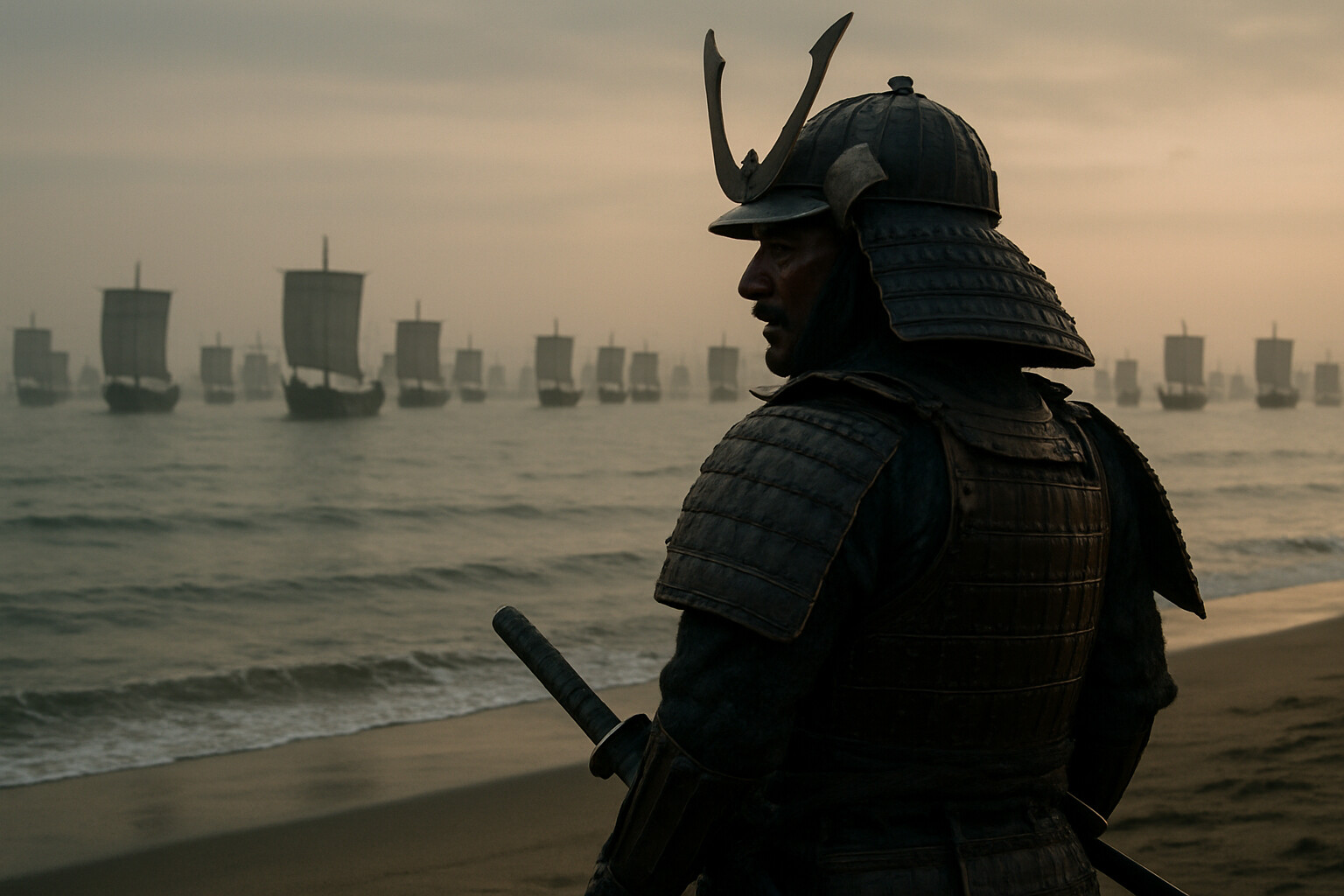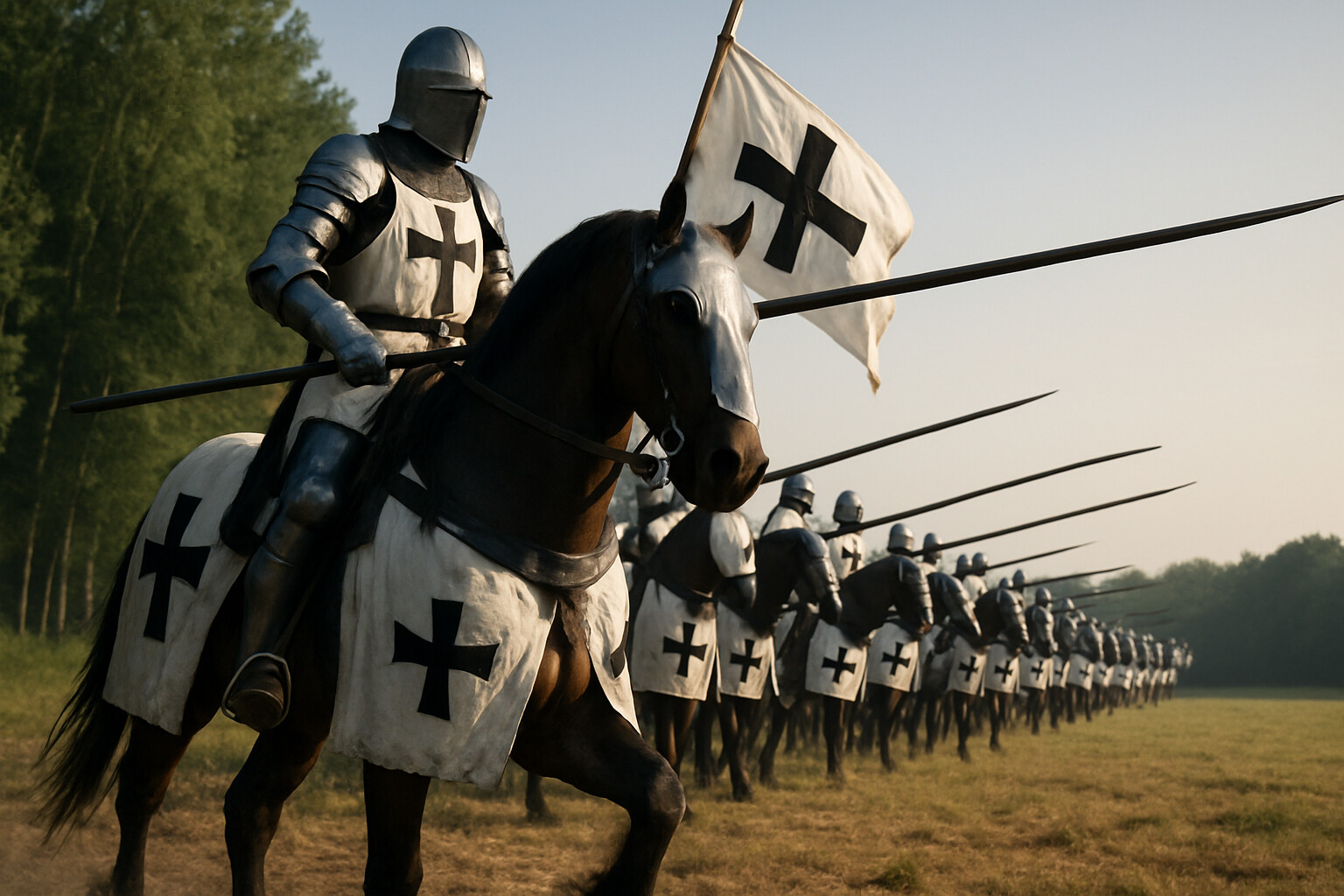
The morning fog had not fully lifted when the first Teutonic crossbow bolts began to fall.
It was 15 July 1410. The summer sun climbed over the hills between the villages of Grunwald, Tannenberg, and Łodwigowo in the Prussian borderland. Below it, across a rolling field of rye and trampled grain, stood the largest concentration of military force assembled in central Europe that century. On one side, the Knights of the Teutonic Order — heavy cavalry, crossbowmen, artillery, and infantry — deployed in disciplined ranks behind their Grand Master. On the other, a vast and heterogeneous host under the Polish king Władysław II Jagiełło: Polish knights, Lithuanian and Ruthenian cavalry, Tatar horsemen, Czech and Moravian mercenaries, Moldavian contingents, and warriors drawn from across a newly unified dynastic realm stretching from the Baltic to the Black Sea.
Neither side had chosen this ground by accident. Neither would leave it unchanged.
---
To understand what happened at Grunwald, it is necessary to understand what the Teutonic Order was — and what it had become.
The Order of the Hospital of Saint Mary of the Germans in Jerusalem — the Teutonic Knights — had been founded during the Third Crusade in the late twelfth century as a military religious order, sworn to the defense of Christian holy places and the care of the sick. In the Holy Land they were soldiers and hospitallers. In Europe, they found a different purpose. In 1226, Polish Duke Konrad I of Masovia invited the Order into the Chełmno Land to help pacify and Christianize the pagan Baltic Prussians. What followed was a fifty-year conquest. By the late thirteenth century, the Teutonic Order had annihilated or absorbed the indigenous Prussian population, constructed a network of powerful stone castles along the Vistula and Nogat rivers, and established a sovereign state — the Ordensstaat — that answered not to any king but to the Pope and the Holy Roman Emperor, and in practice to neither.
From their headquarters at Marienburg (present-day Malbork in Poland), one of the largest Gothic brick fortresses ever built, the Grand Masters administered a territory that by the early fifteenth century encompassed modern northern Poland, Kaliningrad, and Lithuania's western coast. The Order was wealthy. It controlled the amber trade of the Baltic, taxed the cities of Danzig (Gdańsk) and Elbing (Elbląg), and recruited knights from across the German lands and beyond. It was, by any measure, a military and administrative institution of the first order.
But the Order faced a problem it could not solve diplomatically. Its founding justification — the forcible conversion of the pagan Balts — had collapsed. In 1386, the Grand Duchy of Lithuania, the last major pagan state in Europe, entered a dynastic union with the Kingdom of Poland when its Grand Duke Jogaila married the Polish queen Jadwiga of the Piast dynasty, accepted Christian baptism, and took the Polish name Władysław II Jagiełło. At a stroke, the Order lost its crusading rationale. The Lithuanians were now — at least nominally — Christian. The Teutonic Knights disputed the sincerity of that conversion and continued raiding into Lithuanian territory, but their diplomatic position grew increasingly untenable.
The union of Poland and Lithuania created a political entity of enormous potential. Poland was a prosperous, cultured kingdom with a powerful nobility and a tradition of law. Lithuania was a vast, militarily capable grand duchy whose territory stretched deep into former Kievan Rus'. Together, ruled by Jagiełło and his cousin Vytautas — Grand Duke of Lithuania, known in Polish sources as Witold — the two states represented a counterweight to Teutonic power the Order could not absorb.
Tension had been building for years. Competing territorial claims over Samogitia, a coastal strip the Order held but Lithuania claimed, provided the immediate flashpoint. In 1409, Grand Master Ulrich von Jungingen declared war. A brief autumn campaign accomplished little. Both sides spent the winter preparing for the decisive confrontation everyone knew was coming.
Jagiełło was a careful man. He had spent the winter of 1409–1410 planning the campaign with Vytautas in painstaking detail — a level of strategic coordination unusual for the period. The two agreed on a plan of concentration: rather than advancing separately and allowing the Order to defeat each force in turn, they would unite their armies at a pre-arranged point and advance on Marienburg. The force they assembled was, by contemporary standards, immense. Modern historians, working from chronicles, muster rolls, and comparative analysis, have offered widely varying estimates — some as high as 39,000 combatants on the Polish-Lithuanian side and 27,000 on the Teutonic side — though these figures remain debated and should not be treated as established counts. What is not in dispute is that this was among the largest pitched battles of the medieval period in Europe.
On 9 July, Jagiełło's Polish forces crossed the Vistula at Czerwińsk and united with Vytautas's Lithuanian and Ruthenian cavalry. The combined host, carrying banners from dozens of lands, moved northeast toward the heart of Prussian territory.
Von Jungingen had options. He could defend Marienburg. He could refuse a pitched battle and wait the allies out. Instead, he chose to fight. The reasons are not fully documented, but the Order's military culture — built on offensive crusading warfare, on the prestige of the mounted knight, on the institutional memory of decades of successful violence — likely made standing and fighting the psychologically and politically necessary choice. Jungingen moved to intercept.
---
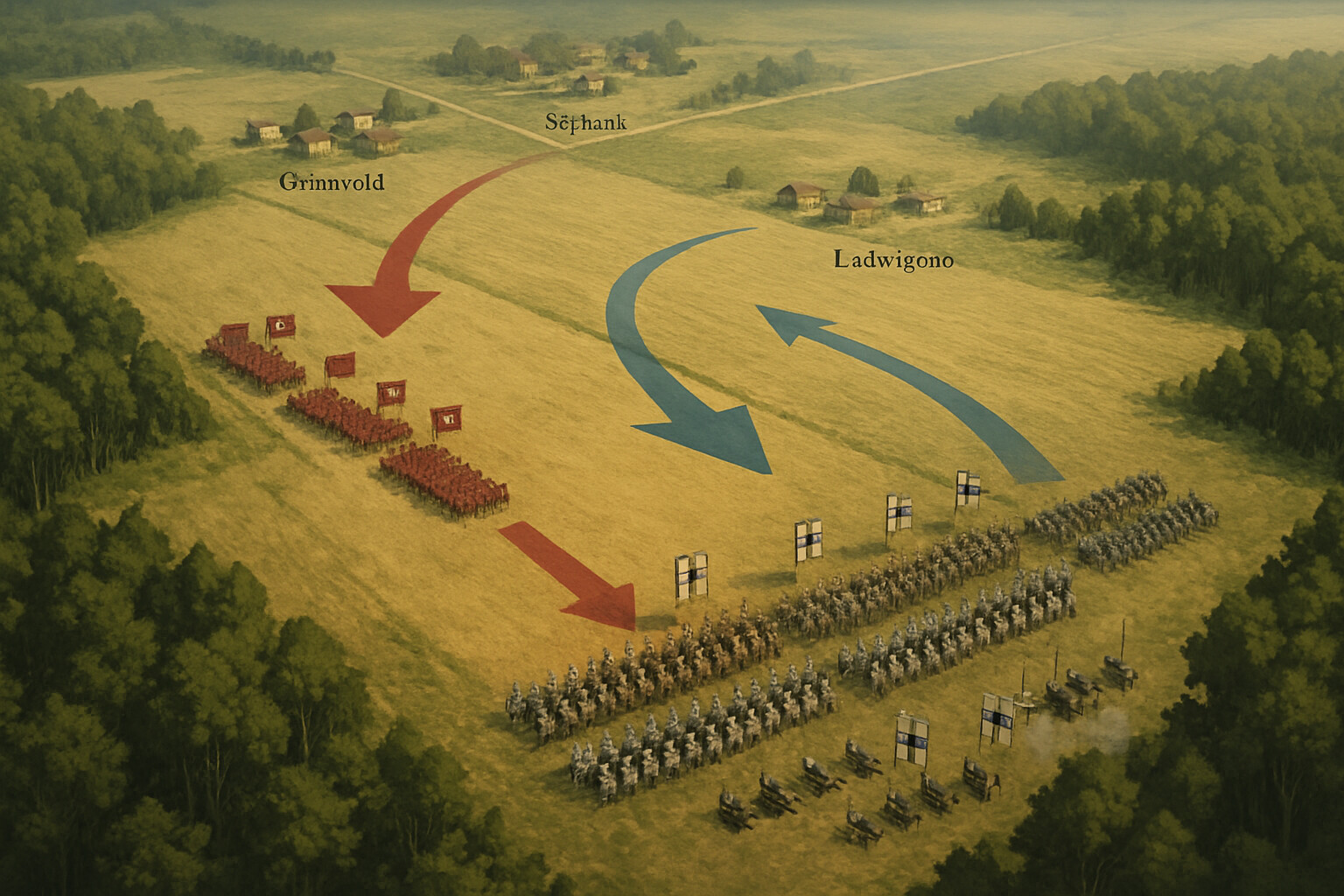
The field on which the armies met was not large by later standards, but adequate for the medieval way of battle. The terrain between Grunwald, Tannenberg, and Łodwigowo was gently rolling, covered in summer fields and patches of wood. Forest and marshy ground on both flanks constrained the frontages of each army and prevented easy envelopment. Contemporary accounts suggest the day was clear — a reconstruction consistent with the season and general sources, though no meteorological record survives to confirm it.
Jagiełło drew his forces into three great divisions. On the left, facing the Order's right, stood the Polish banners: heavy cavalry of the Polish nobility, supported by infantry and mercenary contingents. In the center, more mixed forces held the line between the wings. On the right, facing the Order's left, stood the Lithuanian and allied cavalry under Vytautas's direct command, including substantial contingents of Tatar horsemen and light cavalry from the eastern steppes.
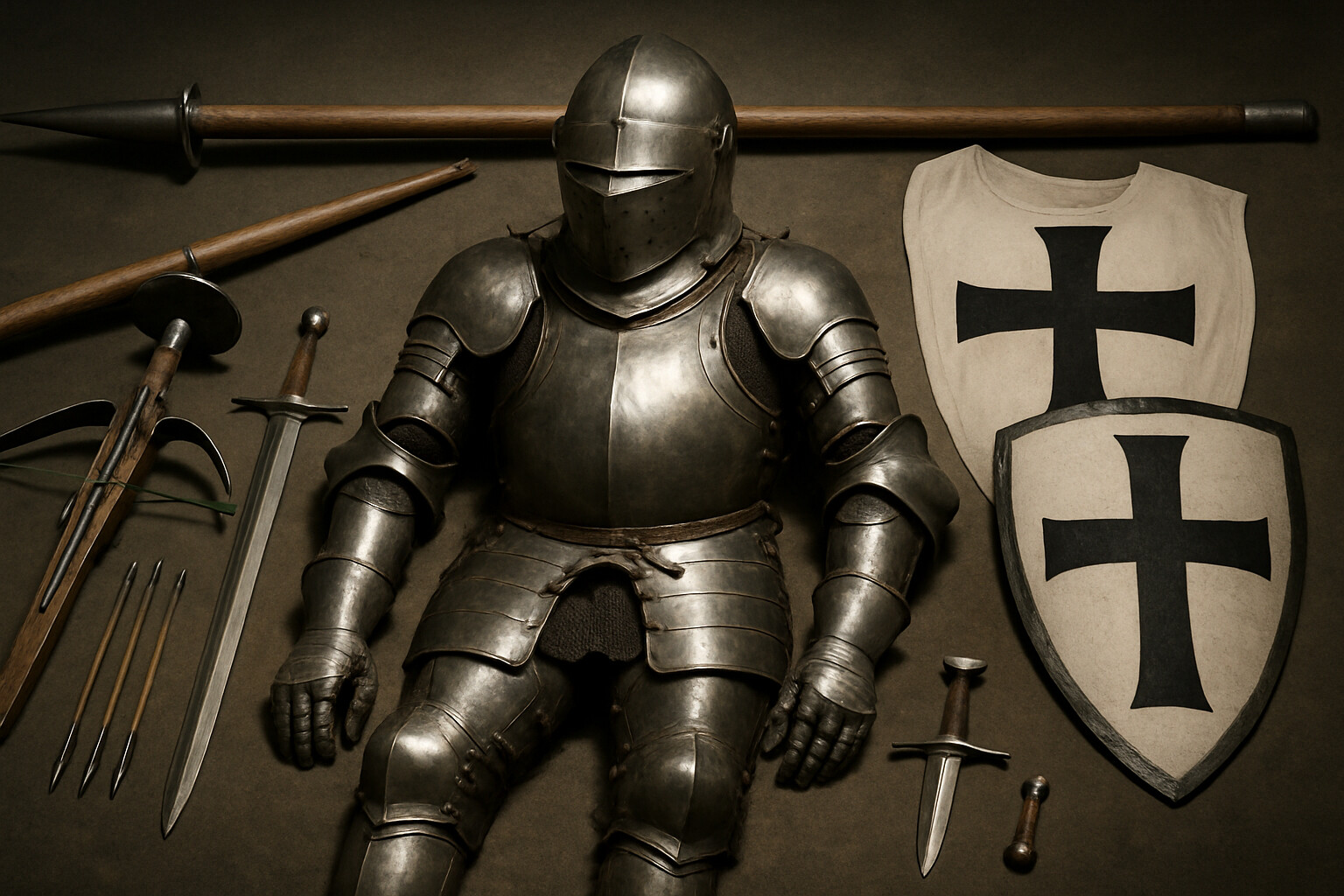
Von Jungingen deployed his Knights in the traditional Teutonic formation: heavy cavalry in the van, supported by infantry and, critically, field artillery. The Order had brought gunpowder weapons to Grunwald — light bombards — a detail that marks this battle as a transitional moment between the purely medieval and the early modern. The artillery opened the action, firing into the advancing allied formations. Its effect was limited. The guns of 1410 were slow to load, inaccurate, and more psychologically alarming than physically decisive. Against cavalry advancing at pace, they could not be repositioned in time to deliver repeated fire.
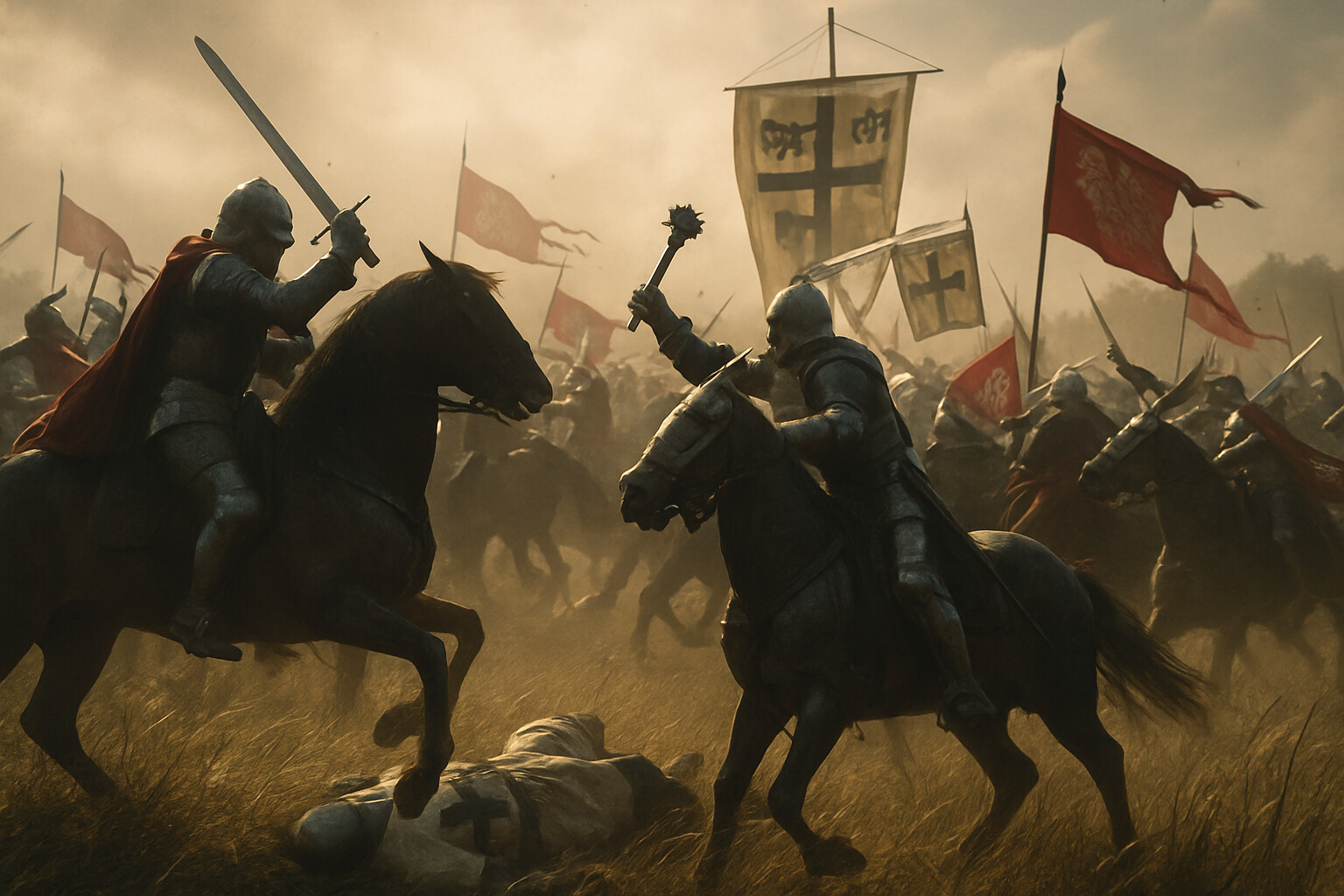
Jagiełło did not order an immediate advance. According to Jan Długosz, whose chronicle — written decades after the battle but drawing on participants' testimony and documents — remains the most detailed near-primary account we possess, the Polish-Lithuanian army waited. Jagiełło attended Mass. He heard two. The delay reportedly frustrated some of his commanders. Whether it was a conscious attempt to allow the enemy to advance first, a calculation about the moment of contact, or an expression of genuine piety is not recoverable from the sources. Długosz presents it as the latter, though his work openly favors Jagiełło and the Polish cause, and his characterizations of the king's motivations must be read accordingly.
Von Jungingen, unwilling to wait indefinitely on the open field, sent heralds forward with a calculated provocation: two swords, delivered to Jagiełło and Vytautas, to arm them for the battle. This gesture — a formal challenge, a taunt, a piece of military theater — is documented in Długosz and in other sources, though the precise form and intent of the episode have been debated by historians. Whether it was intended to provoke an immediate advance or simply to demonstrate contempt, the battle was about to begin.
The Teutonic left advanced against the Lithuanian right. What followed on that flank has been one of the most debated tactical questions in Polish and Lithuanian historiography for six centuries.
Vytautas's Lithuanians attacked, fought for a time, and then broke. Large portions of the Lithuanian cavalry retreated from the field — in some accounts, fled outright. The Teutonic Knights on that flank pursued, some covering considerable distances. The Order's right wing broke formation to give chase.
Here interpretation diverges sharply, and no consensus has been reached. Traditional Polish and Lithuanian historiography, following Długosz and amplified by later national memory, held that the Lithuanian retreat was a deliberate feint — a tactical maneuver designed to draw the Teutonic cavalry out of position and expose their flank. The Lithuanians, on this reading, were executing a sophisticated steppe cavalry technique, the feigned flight, drawn from the Mongol and Turkic repertoire that had shaped eastern European warfare for two centuries. The Tatar contingents in Jagiełło's army would certainly have been familiar with the practice.
The contrary view, held by many modern historians, is that the Lithuanian flight was at least partly genuine — that Vytautas's lighter, less heavily armored cavalry broke under pressure from the Teutonic charge, and that some units continued running for miles and did not return to the battlefield at all. On this reading, the battle was preserved not by design but by the solidity of the Polish division and Jagiełło's management of the center, and by the disorder the pursuit had imposed on the Teutonic right wing. Both interpretations are presented here because neither can be ruled out with current evidence. The question is genuinely open.
What is agreed is the outcome. The pursuing Teutonic cavalry returned to find the Polish banners still holding, fighting hard, and in places pressing the Order's center back. Some Lithuanian and Ruthenian units did return to the field; whether by prior plan or by rally is unclear. The critical moment came when Jagiełło committed his reserve — fresh Polish cavalry — into the struggling center just as the Teutonic lines began to give.
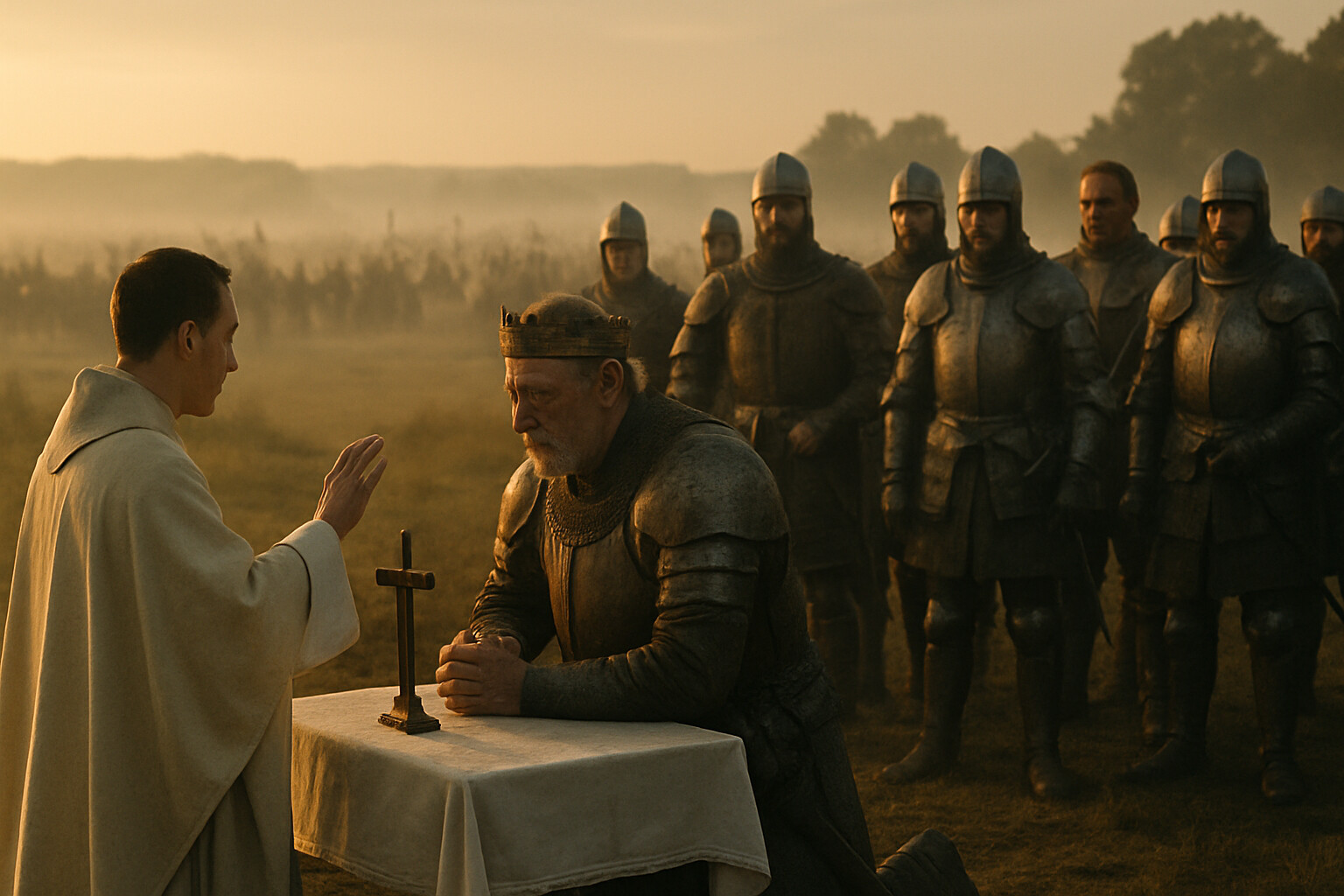
Von Jungingen then led a counterattack into the Polish flank. He had identified what appeared to be a weak point or gap in the Polish lines and drove toward it personally with a force of heavy cavalry. Długosz describes the Grand Master's banner advancing, the Teutonic knights crashing into the Polish flank, and the fierce close-quarters fighting that followed. Jagiełło was near enough to the fighting at this moment that, according to Długosz, at least one Teutonic knight charged directly at the king. This detail is attested only in Długosz and may reflect literary convention as much as documented fact. What the sources agree on is that Jungingen's counterattack was beaten off and that the Grand Master did not survive the battle. His body was found on the field afterward.
The collapse of the Teutonic formation, once it began, was rapid. The Order's knights who did not break and run were surrounded and killed or captured. Among the dead were von Jungingen, Grand Marshal Friedrich von Wallenrode, and Grand Komtur Kuno von Lichtenstein, along with many of the Komturs and castellans who had administered the Order's territories. The loss of so much experienced leadership in a single afternoon was, for the Order, very nearly unrecoverable.
Flight was attempted by many surviving knights. The pursuit was aggressive. Allied cavalry followed the broken Teutonic force across several miles of Prussian countryside. The Order's camp was overrun; its treasury, baggage, and supplies fell to the victors. Prisoners were taken and ransoms negotiated. Battle accounts from this period routinely record that men who might have been taken alive were killed in the aftermath's violence, and Grunwald was unlikely to have been different.
Exact casualties are unknown and remain disputed. Medieval armies did not maintain the administrative records modern historians require, and Długosz's figures are regarded by most scholars as exaggerated. The Order lost, at minimum, its Grand Master and most of its senior leadership. Casualty estimates for the Teutonic side range widely depending on how one counts those killed in pursuit and in the aftermath. The Polish-Lithuanian side also sustained heavy losses, though it held the field.
---
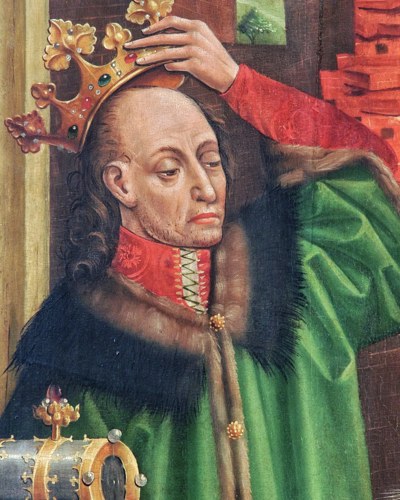
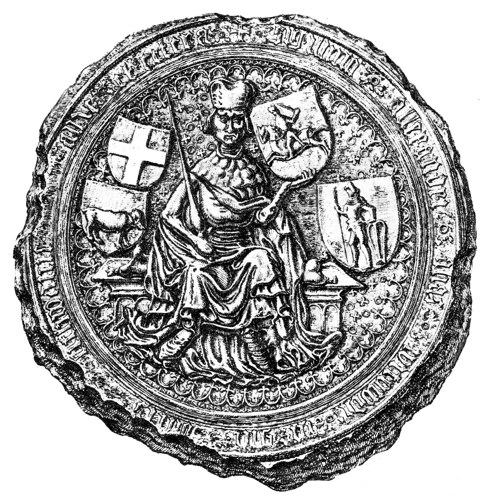
Władysław II Jagiełło was not a young man in 1410. Born sometime around 1352 or 1362 — the date is genuinely uncertain in the sources, and no scholarly consensus has resolved it — he was at the very least in his late forties, and may have been closer to sixty. He had come to power as the pagan Grand Duke of Lithuania through a combination of dynastic violence, political skill, and the capacity to survive. His marriage to Jadwiga in 1386 and his conversion to Christianity had been a transaction as much as a spiritual event, though later Polish tradition — and Długosz in particular — framed it in purely pious terms.
The union he had forged between Poland and Lithuania was not seamless. Vytautas, his cousin and the effective ruler of Lithuania in everything but formal title, maintained his own ambitions and his own court. The two men had fought each other in the past. By 1410 they had reached a working partnership, but it was a partnership of mutual interest rather than sentiment. Jagiełło's management of the two-headed command structure at Grunwald — keeping both the Polish and Lithuanian contingents committed to a shared strategic goal while navigating the competing interests of dozens of great nobles on both sides — was a significant political achievement in itself.
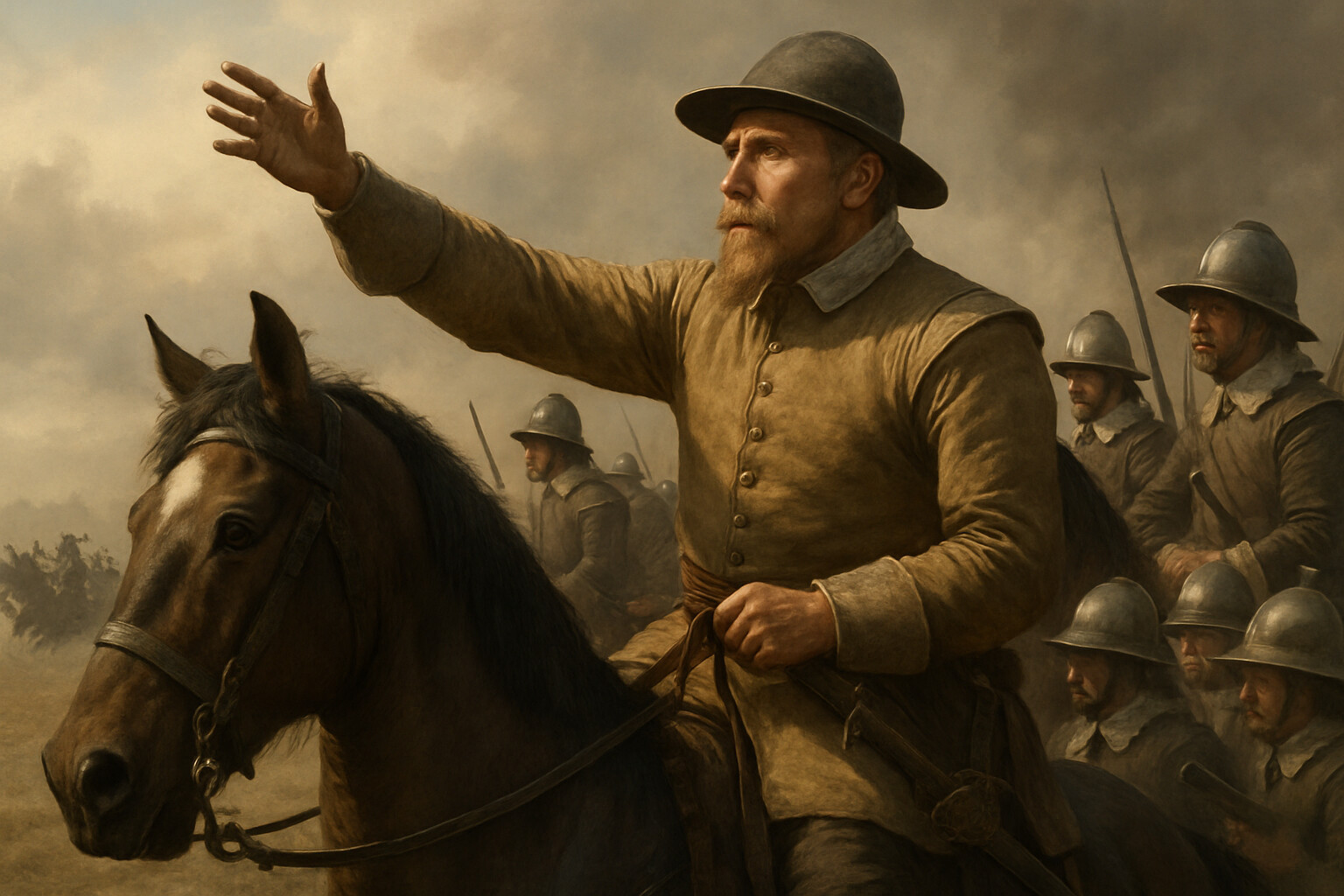
As a battlefield commander, Jagiełło has been assessed variously. Some historians credit him with the patience and timing that proved decisive: the deliberate delay before battle, the withholding of the reserve, the commitment of fresh cavalry at the critical moment. Others have argued that Vytautas was the operational driver and that Jagiełło's role was primarily symbolic and administrative. The precise sequence of command decisions is not fully recoverable from the sources, and Długosz — writing as a partisan of the Polish crown — assigned credit accordingly. What is clear is that Jagiełło was present, that he maintained command coherence under pressure, and that when the Teutonic knights broke, it was under his banner that the victorious army stood.
---
The weapons of Grunwald were medieval and, in one dimension, transitional.
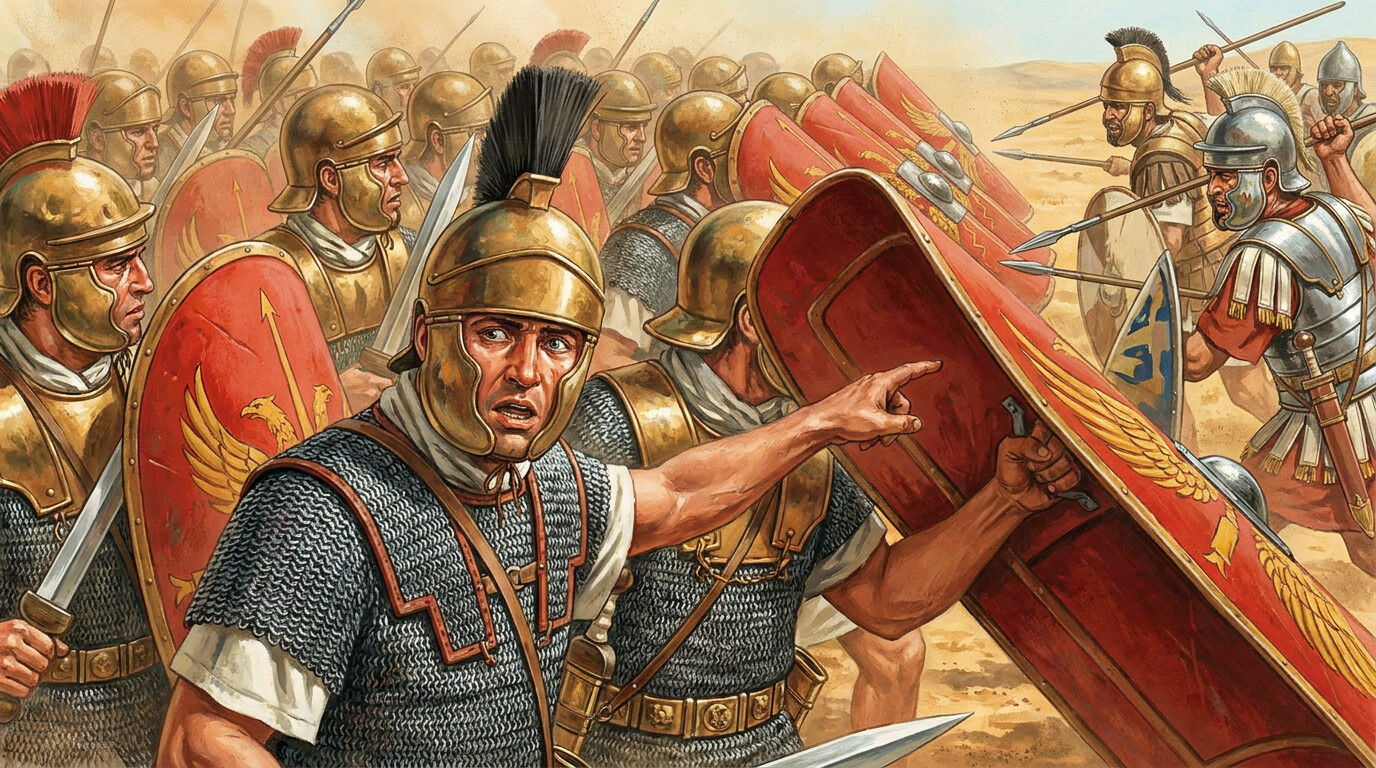
The primary arm of the heavy cavalry on both sides was the lance — a weapon that had defined European shock warfare since the eleventh century. Held horizontally under the arm against a padded rest and couched at the charge, it carried the combined weight and momentum of horse and rider to a single point of impact. At full gallop, a massed lance charge by heavy cavalry was among the most physically and psychologically overwhelming forces a man on foot or on a lighter horse could face. The sound alone — the drumming of hooves, the creak and clatter of armor, the lowering of dozens of lance points in unison — was part of the tactical effect.
But lances broke or were dropped in the initial collision. After the charge, the battle became a melee of swords, maces, war axes, and daggers. The sword of the Teutonic knight was typically a single-handed weapon broad enough to cut but rigid enough to thrust, and the increasing prevalence of plate armor by 1410 was shifting tactical preference toward thrusting weapons and the rondel dagger — a stiff, narrow-bladed instrument designed to find gaps in plate at close grappling range. Maces and war hammers, which could crush or concuss through plate without needing to penetrate it, were also common across both armies.
The Polish-Lithuanian force had a different armament profile. The Polish heavy cavalry was equipped comparably to the Teutonic knights: full or partial plate, lances, and swords. But Vytautas's Lithuanian and Ruthenian cavalry included lighter horsemen with different traditions — recurve bows, lighter lances, and the mobility-based tactics of the steppe frontier. The Tatar contingents were horse archers by training, capable of shooting from the saddle at a rate of fire the Teutonic crossbow could not approach. Whether their archery was tactically significant at Grunwald or marginal to the battle's outcome is not clearly established in surviving sources.
The Teutonic Order fielded crossbowmen in significant numbers. The crossbow of 1410 — by this period typically a steel-prod weapon — could shoot a heavy bolt with force sufficient to penetrate plate armor at moderate range. Its disadvantage was a slow rate of fire: an experienced crossbowman could manage perhaps two shots per minute, while a mounted horse archer could loose many times faster. The crossbow's role at Grunwald was therefore primarily harassing rather than battle-decisive, and once the cavalry charges began in earnest its utility in the general melee was sharply reduced.
The artillery the Order deployed represented the future, but only its earliest edge. Gunpowder had been entering European warfare since the early fourteenth century, and by 1410 the Teutonic Order — wealthy, administratively sophisticated, connected to the latest military technology of the German lands — had acquired and deployed field artillery pieces. These were most likely small bombards: short, thick-walled tubes firing stone balls, slow to load and poor in accuracy by any later standard. At Grunwald they appear to have fired on the advancing allied cavalry in the battle's opening phase without decisive result, before the speed of the cavalry advance and the disorder of melee made further use impractical. Their tactical contribution was marginal. Their historical significance lies in what their presence signals: the Teutonic Order was technologically current, and the era of the purely hand-weapon medieval battle was already passing. The precise number of pieces, their caliber, and their crew strengths are not documented in surviving Order records with enough specificity to assess their role precisely.
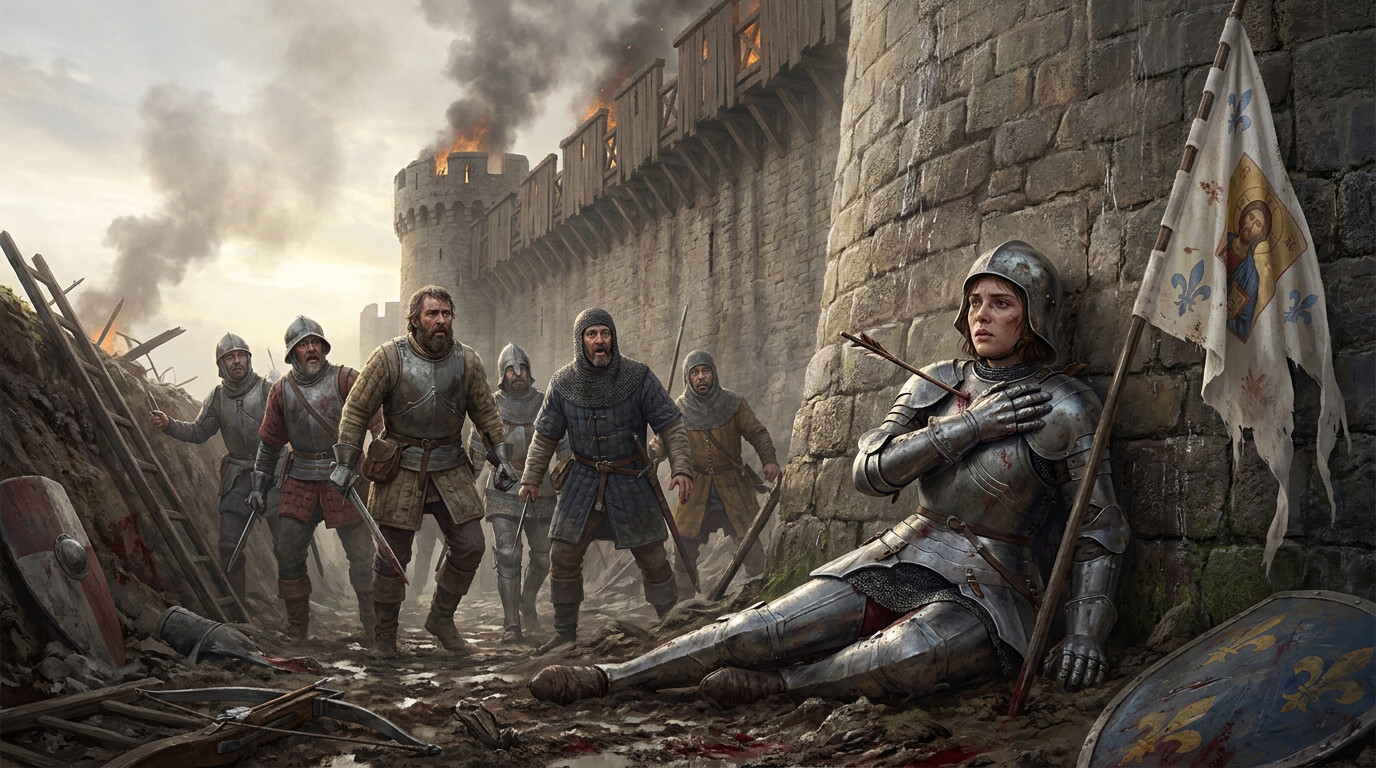
Armor at Grunwald was the product of decades of development. The Teutonic knight of 1410 wore a composite system: a foundation of mail covered by plates of iron or steel protecting the chest, back, arms, legs, and feet. The helmet was likely a visored bascinet — a close-fitting steel skull with a hinged face guard — paired with a mail aventail protecting the neck and lower face. Articulated gauntlets covered the hands. The total weight of a fully armored knight's kit was substantial but distributed across the body; a fit man could move and fight in it, though endurance under sustained exertion was limited. The Polish knights wore comparable armor. Lithuanian and steppe cavalry wore progressively less, trading protection for mobility.
---
After the battle, Jagiełło's army moved on Marienburg. The fortress — the seat of Teutonic power, its archives, its treasury, the administrative heart of the Ordensstaat — lay apparently defenseless. The Grand Master was dead. The army that might have defended it had been shattered at Grunwald.
And yet Marienburg did not fall.
Heinrich von Plauen, the Komtur of Schwetz (Świecie), had not been at Grunwald. On learning of the disaster, he rode for Marienburg, organized its garrison, and held it. The siege Jagiełło mounted in August 1410 lasted nearly two months without success. The fortress's massive walls, its water defenses, its stockpiled supplies, and von Plauen's determined leadership proved sufficient. In September, Jagiełło withdrew.
The failure to take Marienburg is one of the most debated questions of the campaign's aftermath. Scholars have attributed it to logistical exhaustion — the allied army had outrun its supply lines. To epidemic sickness in the camp. To the speed of Jagiełło's advance after the battle, which gave von Plauen time to organize. To the limitations of a medieval army facing a major fortified position without adequate siege artillery. The full explanation is probably some combination of all these factors, and no single source documents their relative weight.
The Peace of Thorn (Toruń) in February 1411 ended the immediate war. Its terms were, by the scale of the Grunwald victory, surprisingly limited. The Teutonic Order surrendered Samogitia to Lithuania and Dobrzyń Land to Poland, paid a substantial ransom for prisoners, and agreed to other concessions. But it kept Marienburg. It kept most of its territory. It survived as a political entity.
The reasons for the modest peace terms continue to be discussed. Jagiełło's own dynastic vulnerabilities — the need to consolidate the Polish-Lithuanian union, to manage restive Polish nobility, to maintain Vytautas's cooperation — may have counseled moderation. The failure to take Marienburg was almost certainly decisive. Without the Order's capital, unconditional terms were not available.
The Teutonic Order would survive Grunwald by over a century in its Prussian form. But it never fully recovered. The loss of Grand Master Jungingen and so many senior knights stripped the Order of its most experienced leadership. The financial burden of ransoms and reparations strained its economy. Its credibility as an invincible military power was broken. Within a generation, the Thirteen Years' War (1454–1466) would further erode Teutonic power, and the Second Peace of Thorn would strip the Order of western Prussia entirely, making the Polish king the Order's feudal overlord in what remained.
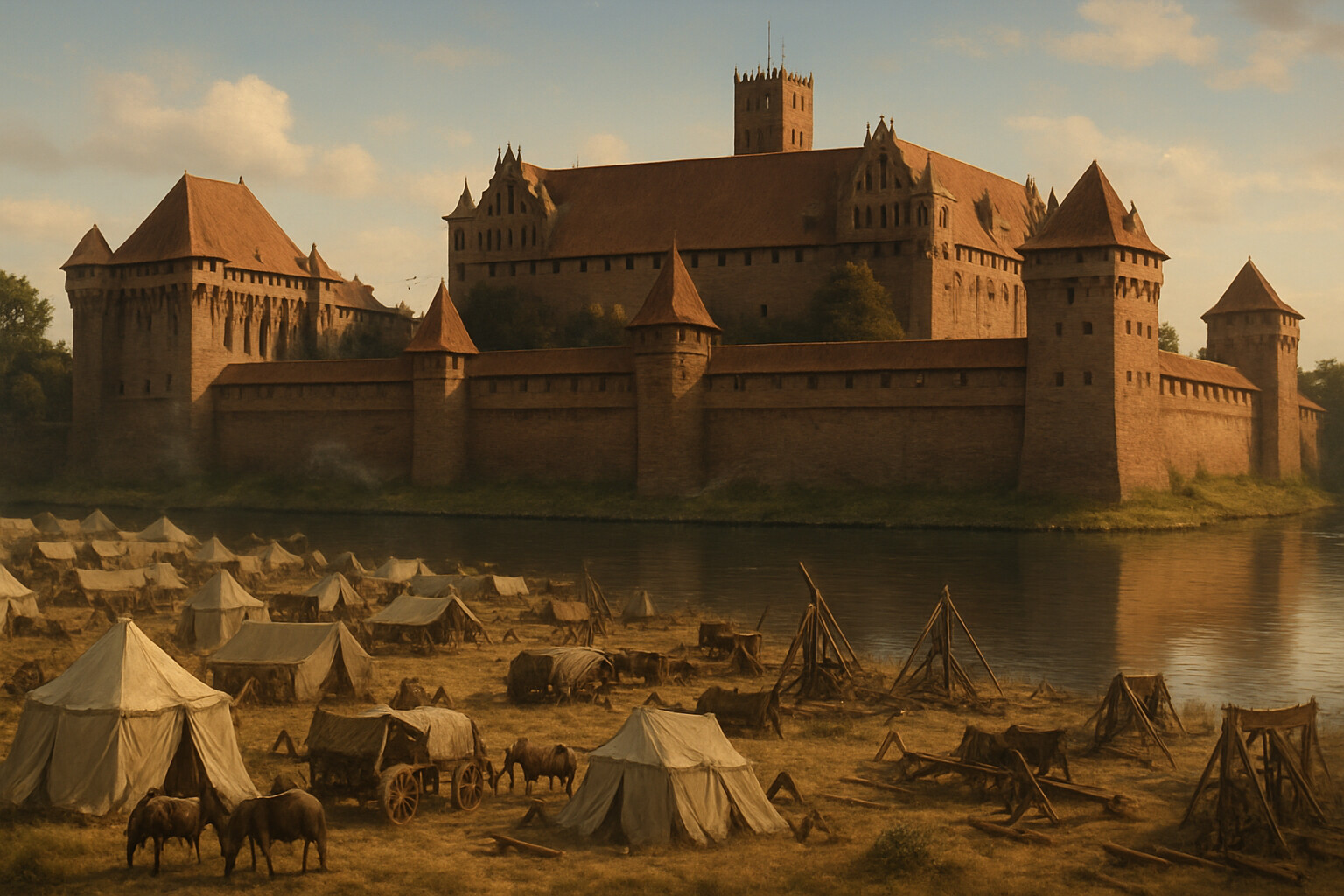
Grunwald, in this longer view, was not the single blow that ended Teutonic power. It was the blow that broke the Order's capacity to recover and expand. The trajectory set on 15 July 1410 ran, over the following decades, to the dissolution of the Order's Prussian state.
---
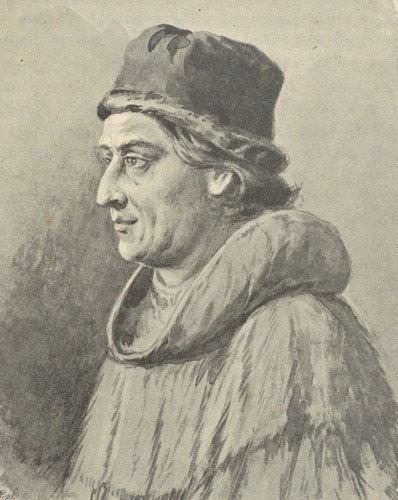
The historical record of Grunwald rests primarily on Jan Długosz's Annales seu cronicae incliti Regni Poloniae, completed in the later fifteenth century. Długosz was a Polish cleric and historian of exceptional diligence who had access to participants, documents, and institutional memory of the battle that no later writer could replicate. His account is detailed, vivid, and openly partisan toward the Polish crown and Catholic orthodoxy. He attributes Lithuanian failings, praises Polish valor, and frames the battle as divine judgment on the Order. Scholars use his work as an indispensable near-primary source while remaining alert to its biases.
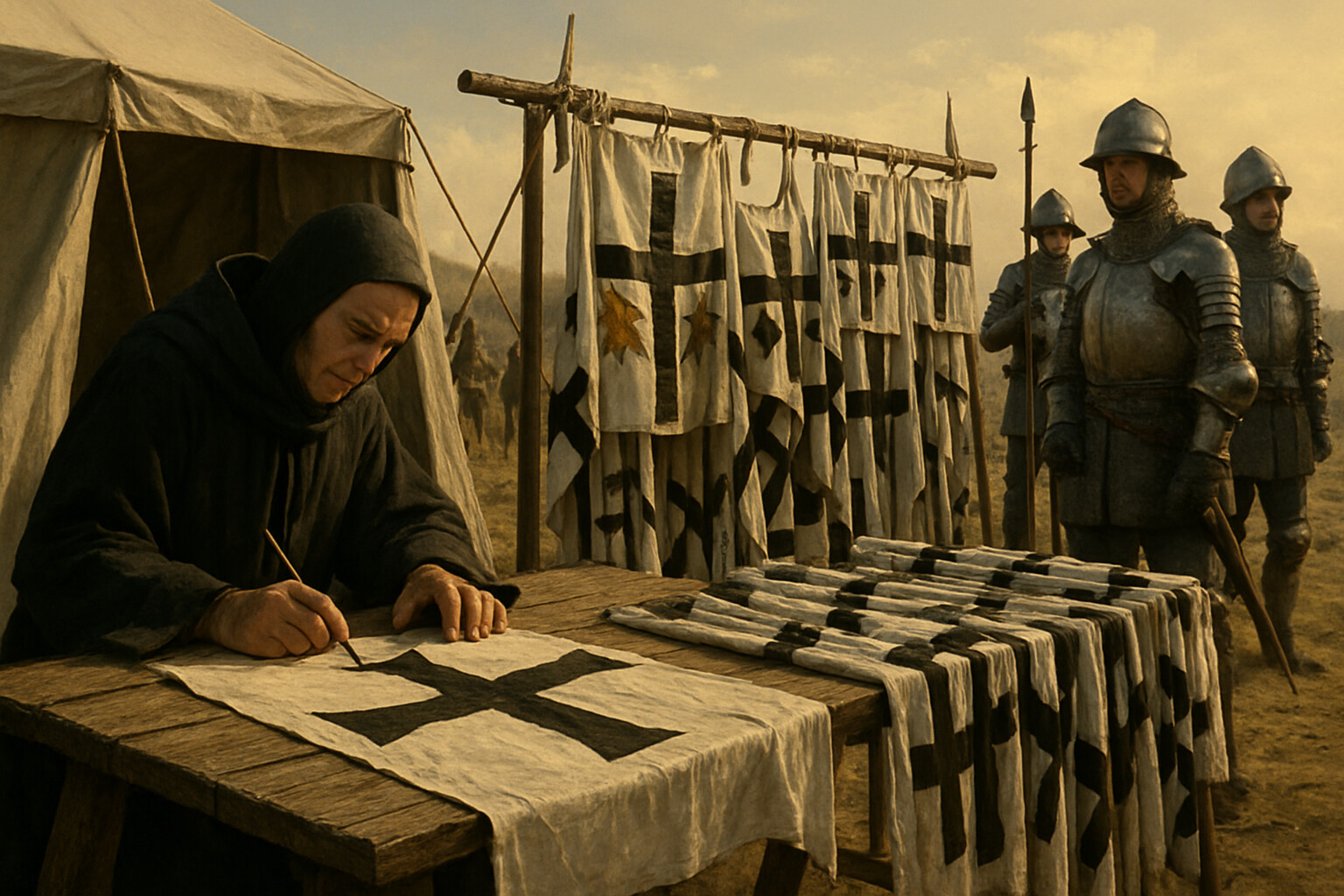
Other sources include letters, chronicles, and administrative documents from the Teutonic Order's own archives — many of which survived at Marienburg — as well as accounts from the German chronicle tradition and later humanist histories. The Banderia Prutenorum, a Polish manuscript listing and depicting the captured Teutonic banner standards, provides concrete evidence about the units present on the Order's side.
Modern historiography of Grunwald is extensive. Polish, Lithuanian, German, and international scholars have revisited the battle's tactics, its numbers, its aftermath, and its meaning across the twentieth and twenty-first centuries. The work of Stefan Kuczyński, Sven Ekdahl, and others has significantly refined understanding of the battle's course, the size of the armies, and the disputed question of the Lithuanian retreat. Much remains uncertain: exact casualty figures, the precise sequence of tactical events, and the detailed command decisions of both sides are unlikely ever to be fully reconstructed.
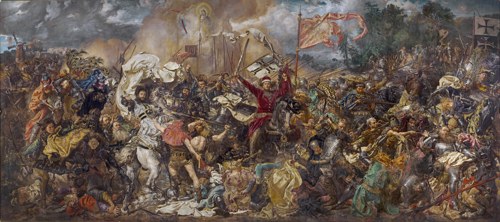
Grunwald acquired a second life in the nineteenth and twentieth centuries as a symbol of national identity — for Poles and Lithuanians alike, a founding moment of resistance against external domination, resurrected at periods of national stress. Jan Matejko's monumental 1878 painting The Battle of Grunwald became one of the most recognized historical images in Polish culture. During the Nazi occupation of Poland (1939–1945), the painting was specifically targeted for destruction by German authorities, who understood its symbolic power. It survived, hidden, and was returned to the National Museum in Warsaw after the war.
The battlefield itself, near the village of Stębark — the Polish name for what German sources call Tannenberg — in the Warmia-Masuria region of modern Poland, is the site of a major memorial and museum. Annual commemorative events draw participants from Poland, Lithuania, and beyond. Archaeological investigations have been conducted at various times, including survey work in the twenty-first century, though the precise positions of the armies and the locations of mass graves remain subjects of ongoing research.
The name itself carries freight. German historiography referred to the battle as Tannenberg, and the Teutonic perspective dominated German memory for centuries. In 1914, German forces commanded by Hindenburg and Ludendorff defeated a Russian army in East Prussia and named their victory the Second Battle of Tannenberg — a deliberate invocation of 1410, a symbolic reversal. The choice of name was a political act: the actual 1914 fighting took place nowhere near the 1410 site, and Tannenberg was selected precisely for what it meant, not where it was.
For Polish memory, Grunwald remained Grunwald. For Lithuanian memory, it was the Battle of Žalgiris — the same field, differently named, equally claimed.
On 15 July 1410, under the summer sky of Prussia, an army of many peoples fighting under one command broke what had seemed an unbreakable order. The field between the villages was theirs. The banners were taken. The Grand Master fell. What followed in the decades and centuries after was complicated, contested, and often painful — as history always is. But on that day, the arc of power in the Baltic world bent, slowly and irreversibly, in a new direction.