The dispatch arrived at Pacific Fleet headquarters in Pearl Harbor like most dispatches did: typed, decoded, and laid on a desk. But the intelligence inside it was unlike anything that had crossed an American admiral's desk in years. The Imperial Japanese Navy's Combined Fleet—the force that had shattered Battleship Row six months earlier—was preparing to move again. And if the men in a basement signals room in Hawaii were reading the enemy's encrypted traffic correctly, they knew not just the general direction of the blow, but its timing, its composition, and its destination.
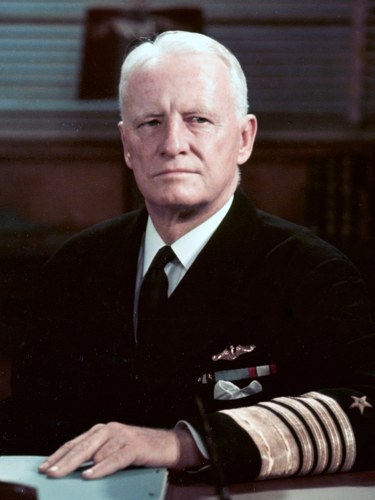
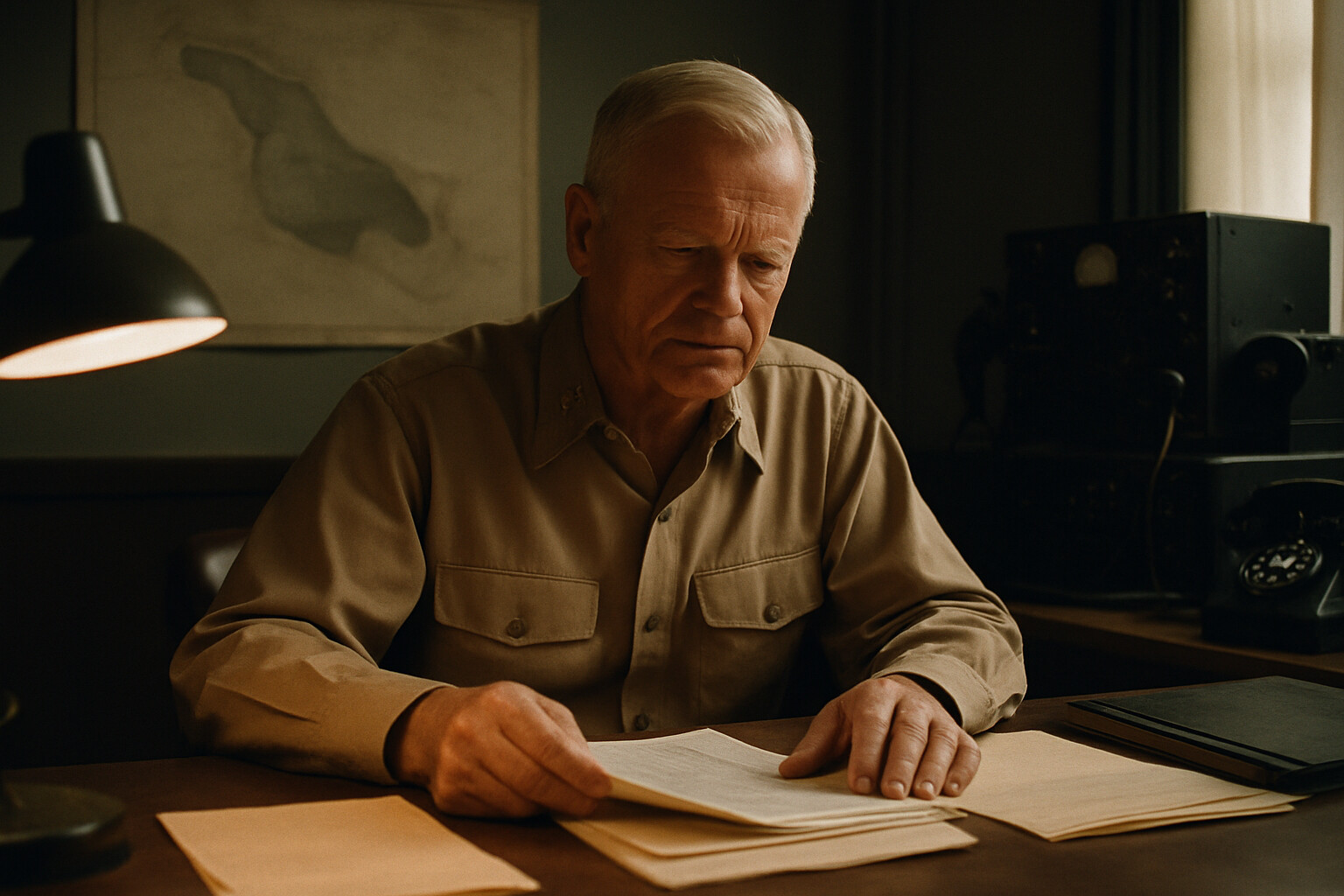
Admiral Chester W. Nimitz read what his intelligence officers had produced and made a decision that carried the weight of a career, a fleet, and a war.
He would go out to meet the Japanese fleet.
---
To understand the audacity of that choice, you have to understand the arithmetic of June 1942.
The United States Navy had entered the war on the morning of December 7, 1941, with its battleship force in ruins at Pearl Harbor. The Japanese strike had sunk or damaged eight battleships, killed more than 2,400 Americans, and—in a single Sunday morning—destroyed the strategic calculus the Navy had built around capital ship warfare for two decades. Nimitz, appointed to command the Pacific Fleet on December 31, 1941, inherited wreckage and shock in roughly equal measure.
By spring of 1942, the Japanese military had compounded the initial catastrophe with a string of conquests that moved faster than Allied planners had thought possible. The Philippines fell. Wake Island fell. Guam fell. Singapore—the supposedly impregnable British bastion—surrendered 80,000 troops to a Japanese force that had driven down the Malay Peninsula largely on bicycles. In the Dutch East Indies, at Java Sea, and in the waters around the Philippines, Allied naval forces had been pounded and scattered. Japan's carrier strike force, the Kido Butai—its six fleet carriers, fast battleships, heavy cruisers, and dozens of destroyers—had operated from the Indian Ocean to the central Pacific almost without serious opposition. Japanese military planners had begun to speak of a "victory disease," a national confidence so complete it was hardening into strategic carelessness.
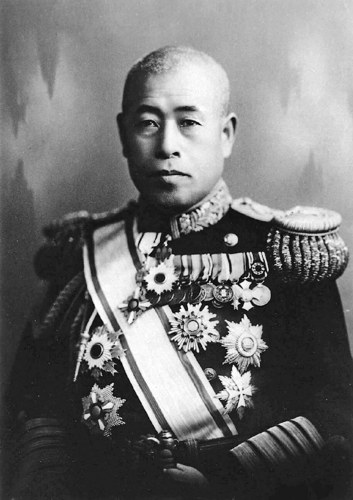
That overconfidence had a name and a plan attached to it by May 1942: Operation MI. Admiral Isoroku Yamamoto, commander of the Combined Fleet, intended to seize Midway Atoll, a tiny American-held island roughly 1,300 miles northwest of Pearl Harbor. The reasons were strategic and psychological in equal measure. Capturing Midway would eliminate a forward American air base and listening post. More important, it would force the U.S. Pacific Fleet—specifically its aircraft carriers—into a decisive battle. Yamamoto believed his numerical and material superiority would make that battle quick and fatal for the Americans. With the U.S. carrier force destroyed, Japan could consolidate its Pacific perimeter and negotiate terms from a position of permanent strength.
On paper, the force Yamamoto assembled was overwhelming. The Kido Butai's carrier striking force under Vice Admiral Chuichi Nagumo included four of the six fleet carriers that had attacked Pearl Harbor: Akagi, Kaga, Soryu, and Hiryu. Together they carried approximately 248 aircraft. Supporting elements included fast battleships, heavy cruisers, destroyers, submarines, and a separate invasion force of troop transports. A diversionary operation against the Aleutian Islands in Alaska was timed to draw American attention north. Yamamoto himself commanded a massive Main Body force from the super-battleship Yamato, the largest warship afloat, waiting in reserve. The total Japanese force committed to the Midway operation numbered more than 200 ships.
Nimitz could deploy three carriers: Enterprise, Hornet, and the badly damaged Yorktown, which had absorbed severe bomb damage at the Battle of the Coral Sea in May and was expected by some estimates to require weeks of repair. He had no operational battleships. What he had, in a concrete bunker beneath the Pearl Harbor Navy Yard, was something Yamamoto did not know about.
---
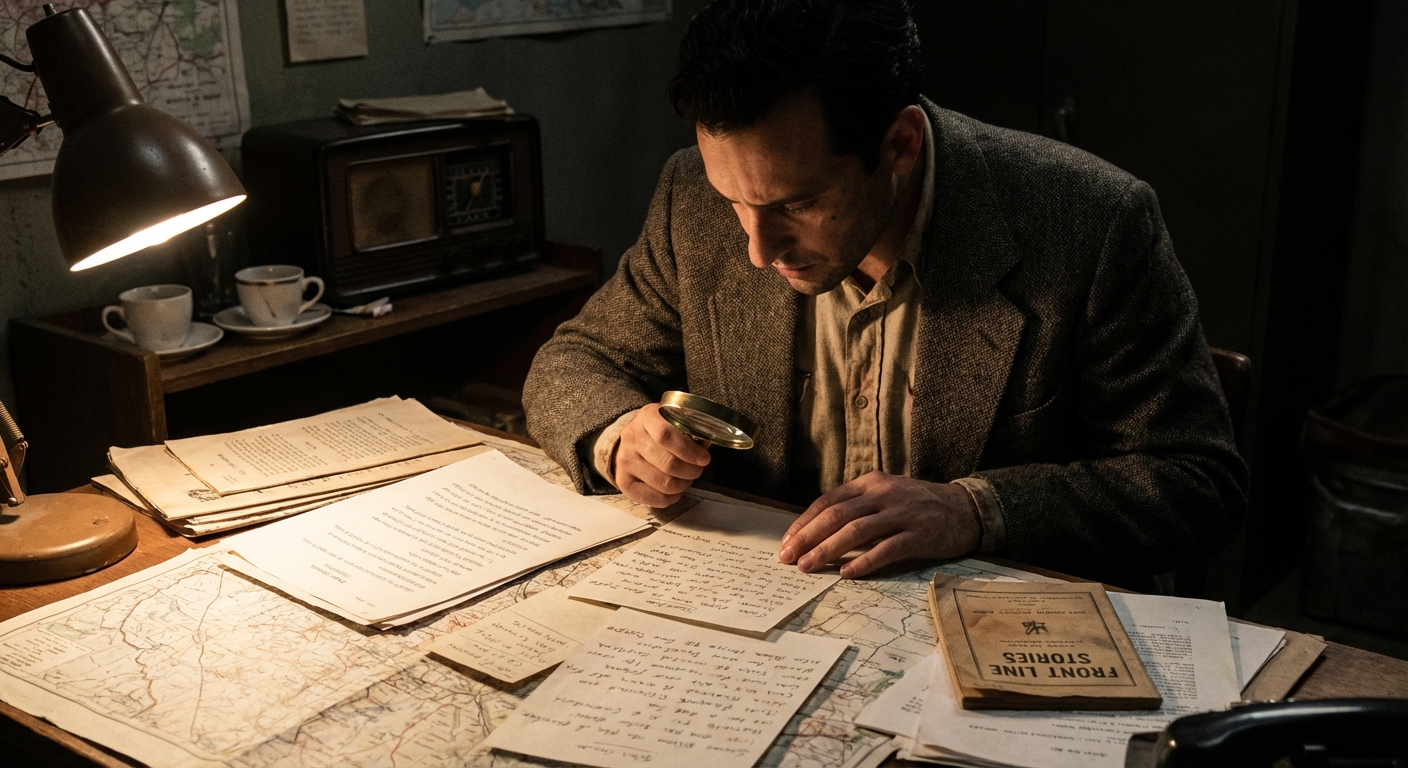
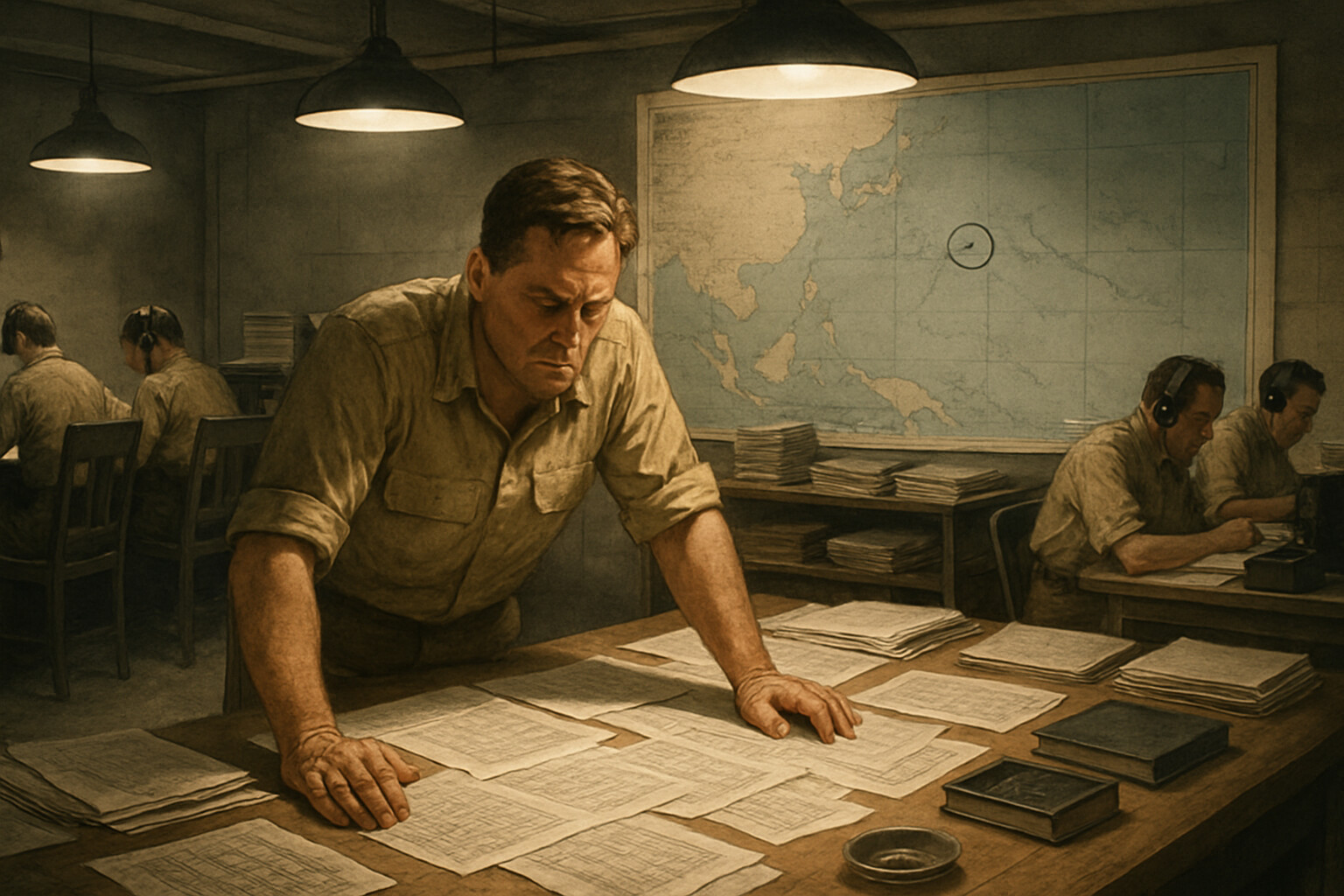
Station Hypo was not a glamorous place. It was a basement signals intelligence unit, formally known as Fleet Radio Unit Pacific, commanded by Commander Joseph J. Rochefort—a cryptanalyst of extraordinary intuition who was known to pace the unit's floor in a bathrobe and carpet slippers during long analytical sessions. Rochefort and his team of linguists, mathematicians, and communications analysts had been attacking Japan's main naval code, designated JN-25 by American analysts, for months. By spring of 1942 they were reading enough of the encrypted traffic to reconstruct the broad outlines of Japanese intentions even where gaps remained in the decryption.
The critical intelligence breakthrough at Midway was not a single moment of revelation. It was accumulated inference: route indicators, logistical messages, references to a target designated "AF" in Japanese naval communications. Rochefort's team assessed that AF was Midway. To confirm the identification, Midway was instructed to transmit an uncoded message reporting a failure in its freshwater distillation plant. Within days, Japanese signals traffic carried a report that AF was experiencing a water shortage. The identification was confirmed.
Armed with Rochefort's analysis—including estimated timing of the Japanese attack and the order of battle for Nagumo's carrier force—Nimitz made his decisions. He would not be surprised. He would position his three carriers northwest of Midway, beyond the range of Japanese search aircraft, and strike Nagumo's carriers while the Japanese were focused on attacking the island. The element of surprise, which Yamamoto had counted on, would belong to the Americans instead.
Yorktown was the pivot of the gamble. The carrier limped into Pearl Harbor on May 27 with damage that some engineers estimated could take months to repair. According to multiple historical accounts, Nimitz personally assessed the damage, conferred with his repair teams, and ordered the work completed in 72 hours. It was not a complete repair—it was a battlefield patch, performed by approximately 1,400 workers around the clock, enough to make the ship fight-capable if not fully restored. On May 30, Yorktown sortied. Japanese intelligence assessments, based partly on their submarine picket line reports, calculated that the Americans had at most two operational carriers and that Yorktown had been sunk. They were wrong on both counts.
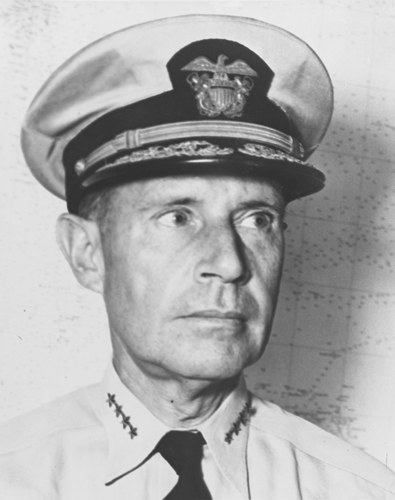
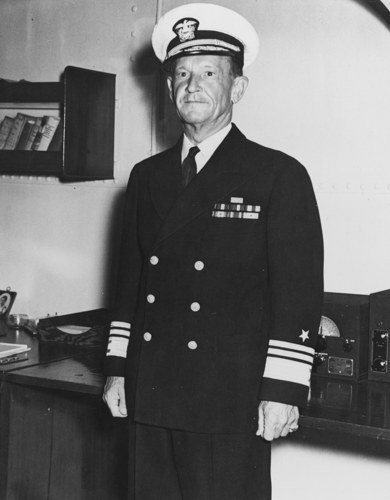
The American carriers, organized as Task Force 16 under Rear Admiral Raymond Spruance (Enterprise and Hornet) and Task Force 17 under Rear Admiral Frank Jack Fletcher (Yorktown, the senior officer present afloat), took up a position designated Point Luck, roughly 350 miles northeast of Midway, on June 2. They waited.
---
The battle opened, as Rochefort's analysis had predicted, on the morning of June 4, 1942.
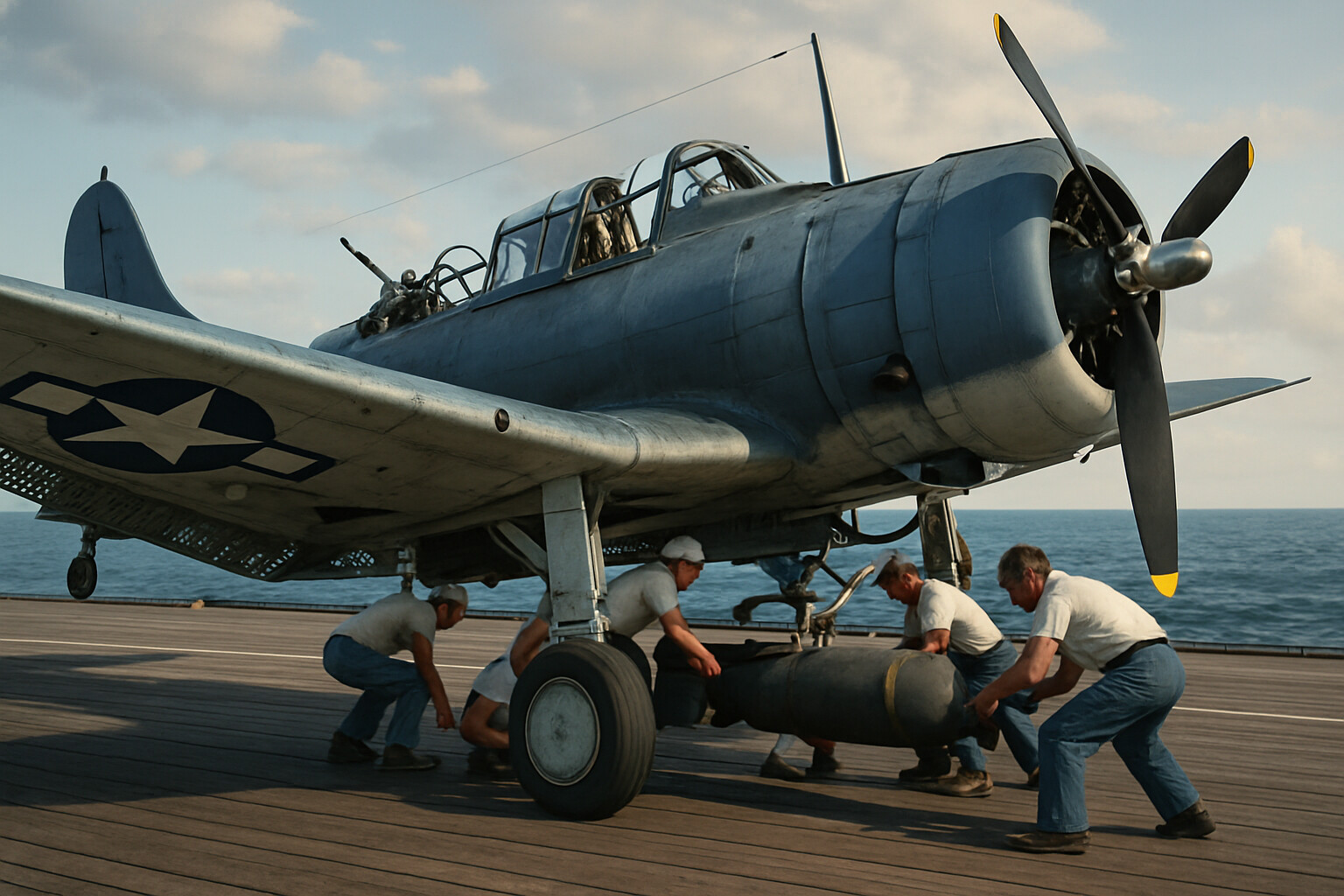
At approximately 4:30 a.m., Nagumo launched the first strike wave against Midway: 108 aircraft—Nakajima B5N Kate torpedo bombers configured as level bombers, Aichi D3A Val dive-bombers, and Zero fighters for escort. The strike hit Midway's installations hard, damaging fuel storage, the seaplane hangar, and other facilities, but the island's defenses remained operational and its runways were not destroyed. The strike commander signaled Nagumo that a second attack on the island would be needed.
Midway struck back almost immediately. American air forces based on the island—including Marine Corps Brewster Buffalos, Grumman Wildcats, Army Air Forces B-17 Flying Fortresses and B-26 Marauders, Navy Consolidated PBY Catalinas, Marine SBD Dauntless dive-bombers, and Marine Vought SB2U Vindicators—launched repeated attacks against Nagumo's carrier force through the morning. The results were catastrophic for the American attackers and negligible against the Japanese carriers. Zeros tore through the slower American aircraft. Of the aircraft that attacked from Midway in the first hours, the majority were shot down without scoring a hit. The American crews flew into coordinated anti-aircraft fire and fighter screens with no tactical answer against the defenses arrayed against them.
Aboard Akagi, the decision that would doom Nagumo's force was taking shape—though the exact sequence and timing of that decision has been substantially revised by Japanese-source research. Faced with the need for a second strike on Midway and the confusing appearance of American surface ships to the northeast—a sighting report arrived mid-morning indicating ships in that direction—Nagumo made a sequence of command decisions whose precise mechanics historians have debated at length. He ordered reserve aircraft, which had been armed with torpedoes and armor-piercing bombs for an anti-ship mission, to be rearmed with conventional bombs for a second land strike on Midway. The rearming process was underway when additional intelligence clarified that the American ships included a carrier.
Nagumo reversed course. He ordered the aircraft rearmed again with anti-ship weapons. The hangar and flight decks of his carriers were now crowded with aircraft, fuel lines, and munitions in various stages of preparation. He also had to recover the first strike wave returning from Midway. The carriers turned into the wind. The window of maximum vulnerability was opening.
Note on the rearming sequence: Jonathan Parshall and Anthony Tully's Shattered Sword (2005), drawing on Japanese records, offers a more nuanced account than earlier histories. The traditional narrative—in which bombs caught aircraft fully spotted on deck and ready for a devastating counterstrike—is contested. Their analysis indicates that rearming was still underway and fewer aircraft were immediately ready for launch than older accounts suggested. The fires that destroyed the carriers were fed primarily by ordnance and fuel distributed through the hangars and preparation areas by the rearming process itself, not by a deck full of aircraft moments from launching. The outcome was the same. The mechanism was more complex.
The Americans had been launching their own attack since mid-morning, and it was going badly. The carriers' torpedo bomber squadrons—Torpedo Squadron 8 from Hornet, Torpedo Squadron 6 from Enterprise, and Torpedo Squadron 3 from Yorktown—flew in three separate, uncoordinated attacks against Nagumo's carriers. All three squadrons flew the Douglas TBD Devastator, an aircraft that had been modern in 1937 and was dangerously outclassed by 1942. The Devastator had to fly slow and low to drop its Mark 13 aerial torpedo—a weapon that was itself unreliable, prone to running at incorrect depths and to failing to detonate on oblique hits. Against the Zero combat air patrol and the anti-aircraft fire defending Nagumo's carriers, the torpedo bomber attacks were slaughter.
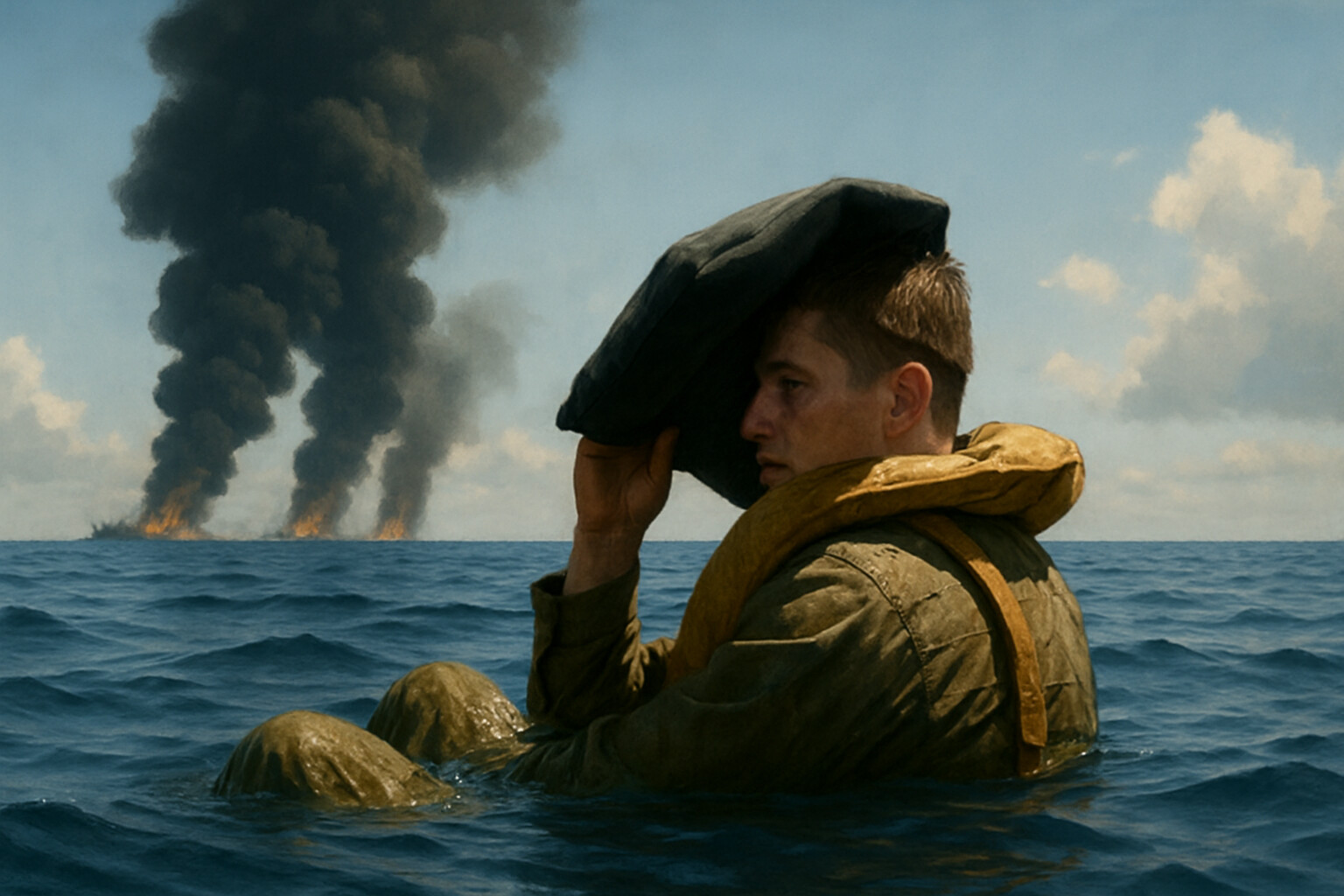
Torpedo Squadron 8, Lieutenant Commander John C. Waldron commanding, reached the Japanese fleet without fighter escort and attacked at low altitude. All fifteen aircraft were shot down. One man survived: Ensign George Gay, who spent hours in the water using a seat cushion to conceal himself from Japanese search aircraft, watching the battle unfold around him. His account of those hours is an important firsthand source, though it carries the limitations of any single observer's memory under extreme stress. Torpedo Squadron 6 attacked and lost ten of fourteen aircraft. Torpedo Squadron 3 attacked and lost ten of twelve. In exchange for approximately 35 torpedo bombers and more than 40 American aircrew killed or missing, the torpedo squadrons scored zero confirmed torpedo hits.
Before his squadron launched, Waldron had written a personal message acknowledging the likelihood of combat and affirming his readiness. The existence of this message is documented in multiple historical accounts; the exact wording varies by source and the original document should be located before any version is quoted verbatim.
But in dying, the torpedo squadrons accomplished something they could not have planned. The Zeros that tore through them were drawn down to low altitude in the pursuit. The combat air patrol that should have been stacked at multiple altitudes to defend against threats from above was concentrated at wave-top height, fast, low on fuel, and poorly positioned. The carriers' decks and hangars were in states of maximum disorder. The moment had arrived.
---
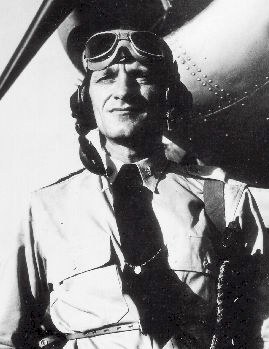
High above, in three squadrons of Douglas SBD Dauntless dive-bombers from Enterprise and Yorktown, the Americans were still trying to find the Japanese fleet. The navigation had gone wrong in significant portions. Hornet's dive-bombers, VB-8 and VS-8 under Commander Stanhope Ring, flew the wrong heading and never found the Japanese carriers at all. Enterprise's dive-bombers, VB-6 and VS-6 under Commander Wade McClusky, had been airborne so long searching for the enemy that many aircraft were burning through their fuel reserves.
McClusky made a command decision that Nimitz would specifically commend in his after-action assessment. Rather than returning to the carrier, McClusky extended the search. He spotted the wake of a Japanese destroyer—identified in standard histories as Arashi, which had been depth-charging an American submarine and was racing at high speed to rejoin the main fleet—and followed it northeast toward the carriers. Parshall and Tully's research using Japanese records confirms the destroyer identification as Arashi.
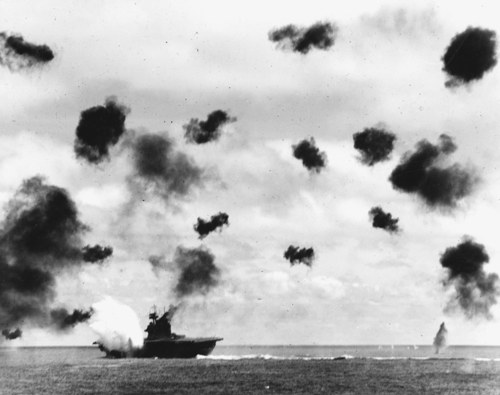
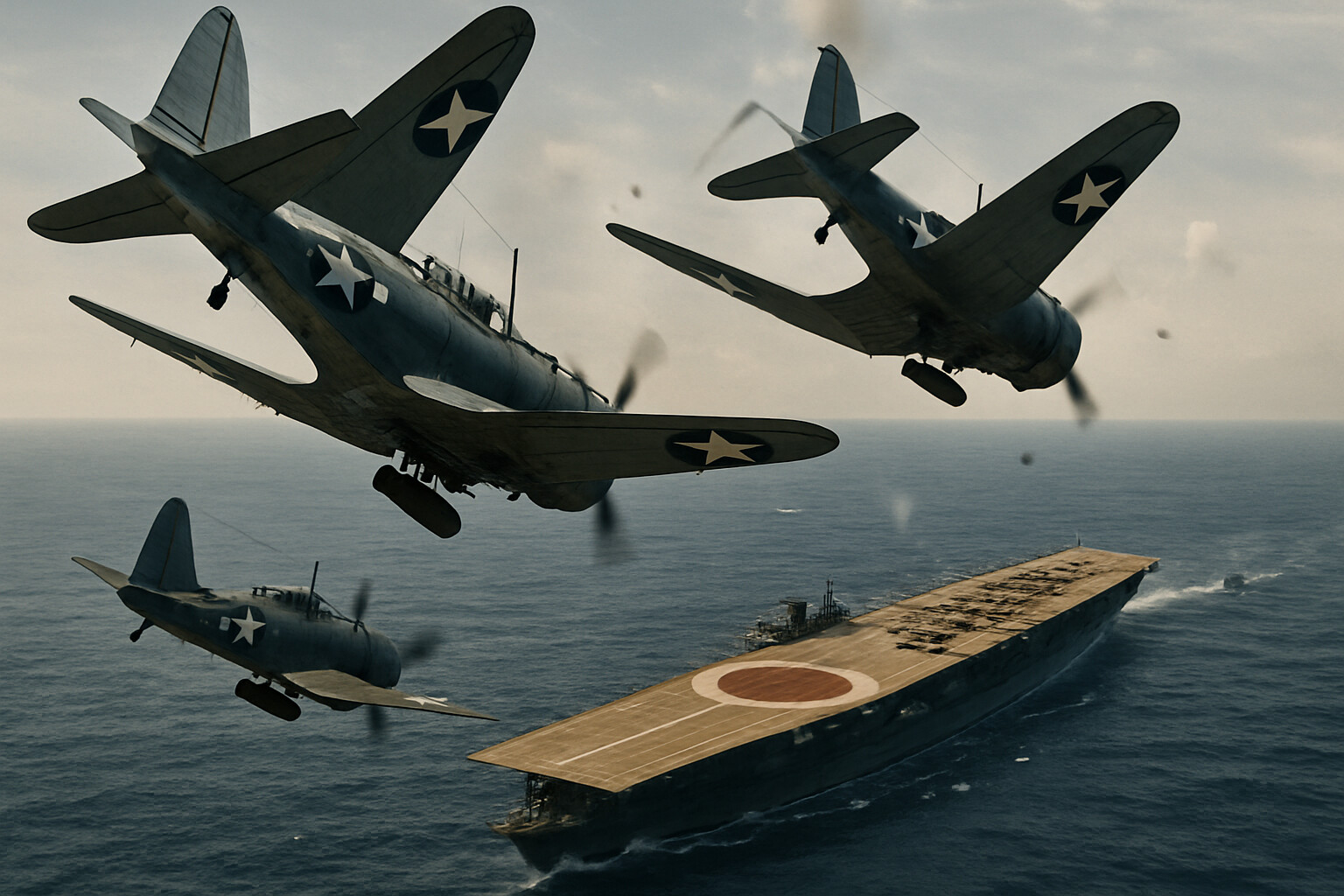
At approximately 10:20 a.m. on June 4, McClusky's pilots, and simultaneously Yorktown's dive-bomber squadron VB-3 under Lieutenant Commander Maxwell Leslie, arrived above Nagumo's carriers. They looked down on Akagi, Kaga, Soryu, and Hiryu, their fight decks and hangars in the disordered state the rearming process had created, their fighter cover low and scattered.
The attack that followed lasted perhaps five minutes at its decisive peak—though the full sequence of attacks that morning extended somewhat longer. The five-minute figure refers to the concentrated hits on the first three carriers, not the complete engagement.
McClusky split his force: VB-6 against Kaga, VS-6 against Akagi. Leslie's VB-3 attacked Soryu. The SBDs rolled into near-vertical dives from above 14,000 feet, each pilot holding the target centered through anti-aircraft fire and releasing low—typically between 1,500 and 2,000 feet—before pulling out hard.
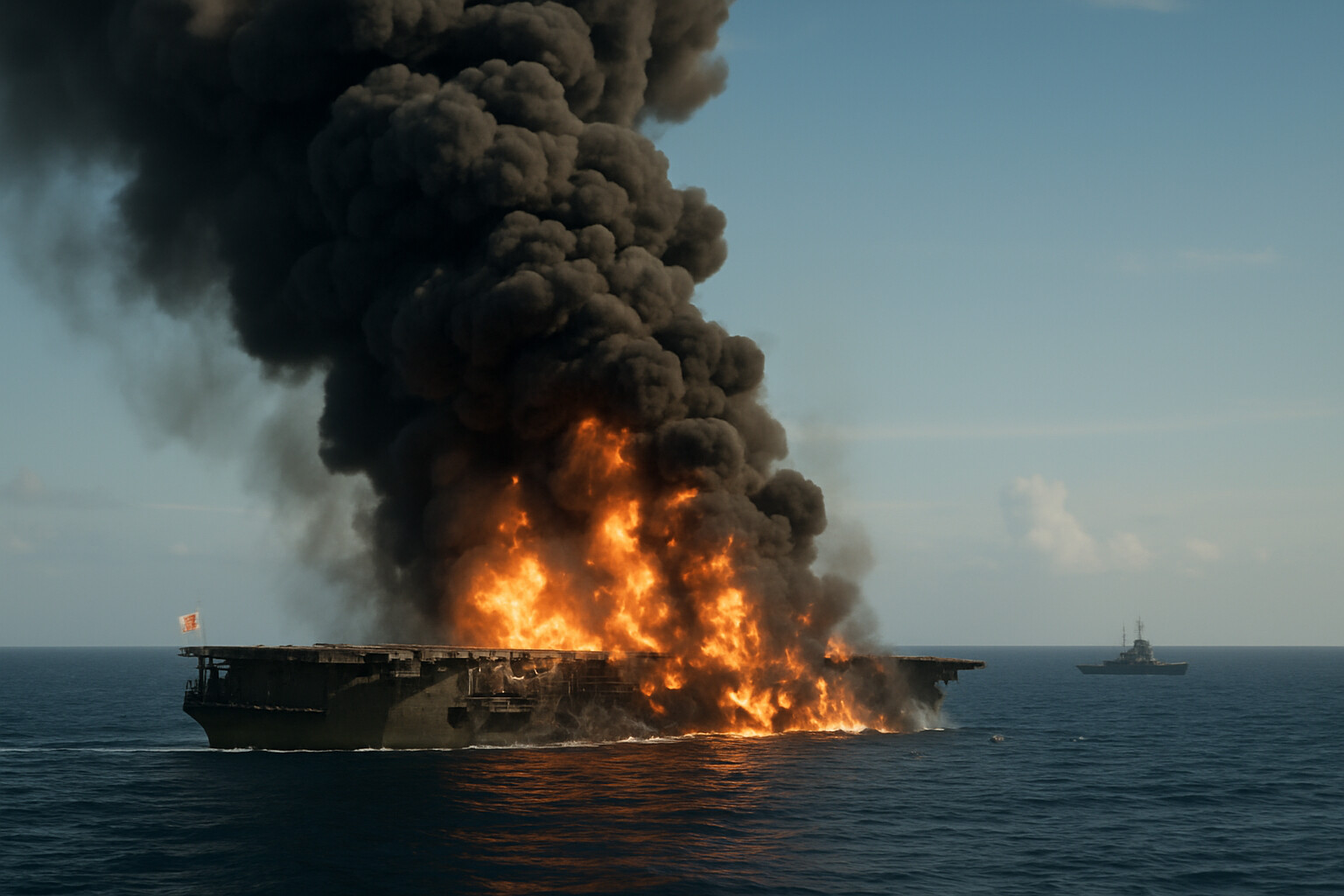
Kaga took multiple bomb hits. Fires reached her fueled and armed aircraft. Secondary explosions cascaded through the ship. Akagi, Nagumo's flagship, also took bomb hits—one on the flight deck among the parked aircraft, one in the hangar. Fires found the accumulated ordnance and fuel from the rearming process and could not be contained. Soryu took three hits and was ablaze within minutes. The exact number of hits on each carrier varies between American and Japanese sources; the figures most commonly cited in major scholarly histories are four hits on Kaga, two on Akagi, and three on Soryu, but these should be verified against current scholarship before treating them as settled.
Hiryu, the fourth carrier, escaped the initial attack—she was some distance away from the others—and would strike back hard, badly damaging Yorktown in two separate attacks later that afternoon before Dauntlesses from Enterprise found and fatally hit her as well.
By the end of June 4, all four Japanese fleet carriers were mortally wounded. Soryu sank that afternoon. Kaga sank that afternoon. Akagi, abandoned after flooding efforts failed to contain the fires, was scuttled by Japanese destroyers in the early hours of June 5. Hiryu sank before dawn on June 5. The most powerful carrier striking force in the world had been reduced to wreckage in a single day.
Yorktown, struck by Hiryu's aircraft in two attacks, was abandoned that afternoon and taken under tow the following day. She was hit by torpedoes from the Japanese submarine I-168 on June 6 and sank on June 7. The destroyer USS Hammann, which had been alongside assisting salvage operations, was also sunk in the same attack. American losses at Midway included approximately 147 aircraft and 307 men. Japanese losses were approximately 3,057 men killed, four fleet carriers sunk, one heavy cruiser sunk, and approximately 248 aircraft destroyed with many of their experienced crews.
The heavy cruiser Mikuma was sunk on June 6 by carrier aircraft after a collision with the cruiser Mogami during evasive maneuvering forced both ships to slow within range of American air strikes.
---
Nimitz was not on the flight deck of any carrier. He was not in the cockpit of any dive-bomber. He was at Pearl Harbor, receiving reports and managing an unfolding battle across hundreds of miles of ocean with the communications technology of 1942—delayed messages, incomplete picture, and extended periods of uncertainty about what was actually happening to his ships and his men.
The decisions Nimitz had already made were what determined the outcome. The decision to trust Rochefort's intelligence over the more cautious assessments being circulated in Washington. The decision to push Yorktown to sea on a 72-hour repair schedule rather than wait for a complete overhaul. The decision to position his carriers at Point Luck, outside Japanese search range but within striking distance of Midway. The decision to assign the steady, technically precise Spruance—who had commanded cruiser escorts for carrier groups but had not previously led a carrier task force in action—to Task Force 16 when Vice Admiral William Halsey was hospitalized with a severe dermatitis condition. The decision to authorize Fletcher and Spruance to strike when the Japanese carriers were located, and to trust his task force commanders to execute without micromanagement from Pearl Harbor.
Those decisions were the architecture of the battle. The men in the air built everything on top of them—and paid for much of it with their lives.
The torpedo bomber crews flew into walls of fire knowing their aircraft were outclassed and their weapons were questionable. They knew the odds. Waldron's Torpedo Squadron 8 had no fighter escort. The squadron flew anyway, attacking in the face of total destruction, and achieved nothing tactically measurable in the moment of their deaths. What they achieved was positional: they drew the defensive screen down to low altitude, fixed Nagumo's attention, and contributed to the geometry of confusion that McClusky's and Leslie's aircraft fell into from the sky.
War is rarely that clean in its causality. The torpedo bombers' sacrifice and the dive-bombers' success were connected, but not in a way anyone planned. The American attack was poorly coordinated, navigationally flawed in significant portions, and achieved its decisive results through a few minutes of directed effort in conditions partly created by the chaos that preceded it rather than through a scripted combined-arms sequence. The outcome looked inevitable only in retrospect.
---
The Douglas SBD Dauntless that delivered the blow deserves a careful look, because the aircraft itself reflects the contingent nature of the American victory.
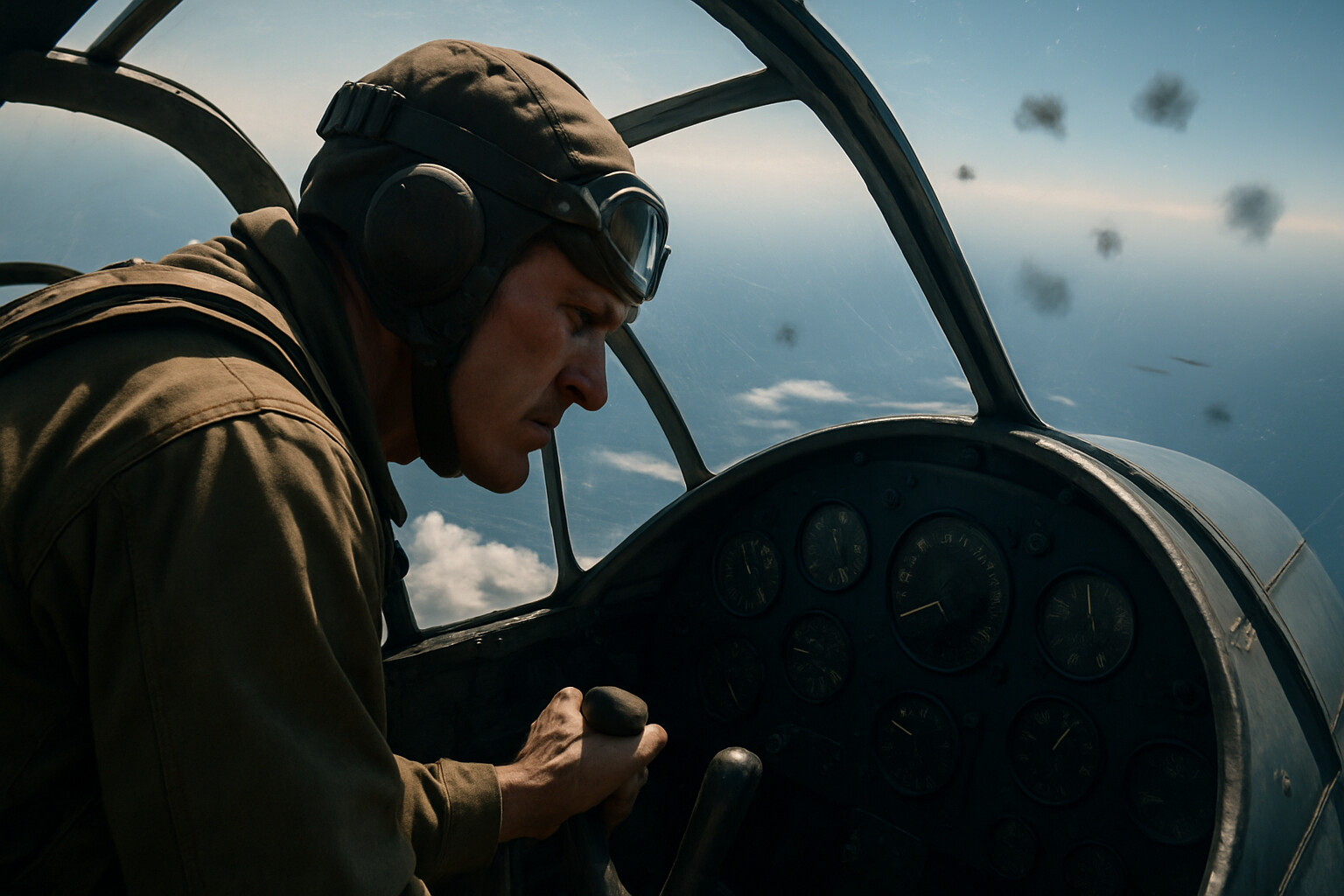
The SBD—Scout Bomber Douglas—was not a cutting-edge weapon in June 1942. It was a monoplane dive-bomber that had been in fleet service since 1940, slower than the fighters it might encounter and vulnerable to interception if caught without altitude. It carried a pilot and a rear gunner who operated a pair of .30-caliber machine guns against fighter attack from behind. The pilot had two fixed .50-caliber machine guns in the cowling and a single bomb on a swing-out crutch under the fuselage—the crutch swinging the bomb clear of the propeller arc before release at the bottom of a steep dive. In a proper attack, the pilot would push over into a near-vertical dive, hold the target centered through a telescopic sight, release at low altitude, and pull out hard before hitting the water.
Against a maneuvering warship in open ocean, a dive-bomber attack was demanding and often inaccurate. Against a carrier unable to maneuver freely because it was operating aircraft, the geometry shifted. Lieutenant Richard Best of VB-6, who attacked Akagi after most of his squadron had already committed against Kaga, is credited in historical accounts with a hit on the flight deck that detonated among armed and fueled aircraft on or near the center elevator. Attribution of specific hits to specific pilots varies somewhat by source and should be verified against official after-action records; the broader sequence—that Best attacked Akagi while McClusky's primary force struck Kaga—is documented in multiple histories. In conditions of accumulated ordnance and fuel below decks, a single bomb in the right place was enough to start fires that Japanese damage control teams could not contain.
The SBD would go on to sink more Japanese shipping than any other Allied aircraft type in the Pacific War. At Midway, its accuracy—achieved by men who had trained intensively in dive-bombing—met the conditions created by intelligence, positioning, command decision, and the deaths of the torpedo squadrons.
---
The human cost extended beyond the aircraft shot down on June 4.
John C. Waldron, commanding officer of Torpedo Squadron 8, was killed. So were all but one of his pilots and aircrew. Maxwell Leslie of VB-3 survived—his aircraft was damaged and low on fuel after the attack, he ditched near Yorktown, and was recovered. Wade McClusky was struck by cannon fragments during his dive, hitting him in the shoulder and arm, but he pulled out, returned to Enterprise, and landed safely. His wounds were serious enough to hospitalize him. He received the Navy Cross.
Aboard Yorktown, Hiryu's two strike waves left the carrier burning, listing, and eventually abandoned. The patch crews who had worked around the clock at Pearl Harbor had given the Navy a ship that fought its last battle and then kept floating long enough that salvage seemed possible—before I-168 ended that argument on June 7.
On the Japanese side, the human cost was staggering and strategically irreplaceable. The four carriers lost at Midway represented years of construction, but the loss that cut deepest was the aircrew. Japan's naval aviation establishment had spent years building a corps of highly skilled carrier pilots. Estimates of Japanese naval aviators killed at Midway vary by source and definition—figures around 110 appear in several histories, though this should be verified against current scholarship—but whatever the precise number, the loss carried strategic weight disproportionate to its size. Japan's pilot training pipeline could not quickly replace experienced fleet aviators. The American pilot training system, already expanding rapidly in 1942, would eventually produce carrier aviators in industrial quantities. Japan's never would.
Chuichi Nagumo survived the battle, transferring his flag from the burning Akagi to the cruiser Nagara and then to the destroyer Nowaki as June 4 collapsed into catastrophe around him. He commanded again—at the Battle of the Philippine Sea in 1944 and during the defense of Saipan, where he died by his own hand as American forces closed in, on July 6, 1944. Isoroku Yamamoto, who designed the Midway operation and whose carriers it destroyed, survived the battle but not the war: American codebreakers intercepted his travel schedule in April 1943, and P-38 Lightning fighters shot down his transport aircraft over Bougainville on April 18, 1943.
---
Nimitz released his after-action report with characteristic precision. He recommended Spruance—whose handling of Task Force 16 and whose decision to launch his strike at long range on the morning of June 4 had been critical—for promotion. Spruance would rise to full admiral and command at other decisive Pacific engagements.
The codebreaking operation that made the battle possible was protected ferociously in the aftermath. Rochefort's contribution was acknowledged within the Navy but deliberately suppressed publicly for decades. He was controversially denied the Distinguished Service Medal for which he had been recommended—the result of internal Navy politics involving Washington-based intelligence rivals disputing credit for the Midway intelligence work. He received the Legion of Merit instead, a lower decoration. The Distinguished Service Medal was awarded to him posthumously on May 30, 1985, forty-three years after the battle and five years after his death. The correction was formal and arrived too late.
The signals intelligence success at Midway was not publicly confirmed for years. Naval officials worked carefully to prevent any suggestion that American cryptanalysis had foreknowledge of the Japanese plan, including managing press coverage of a Chicago Tribune story on June 7, 1942, which described the Japanese order of battle in terms that implied foreknowledge. The full record of how that potential compromise was handled internally remains incomplete; portions of the classified response may not be fully available in declassified archives. Japan continued using JN-25 with modifications rather than replacing it entirely, and the American intelligence advantage persisted.
---
The historiography of Midway has been contested territory for decades. The basic facts—the carrier losses, the approximate timing, the course of the battle—are well established in the work of historians including Gordon Prange, whose Miracle at Midway (1982) drew on extensive interviews with Japanese and American participants and primary documents, and Walter Lord, whose Incredible Victory (1967) built on firsthand American accounts. Jonathan Parshall and Anthony Tully's Shattered Sword (2005) used Japanese records to significantly revise the understanding of events aboard Nagumo's carriers, particularly the rearming decisions and the state of Japanese preparations at the moment of the dive-bomber attack. Their work challenged the simpler narrative in which bombs caught Japanese aircraft fully spotted on deck and ready for a counterstrike; their analysis indicated the situation was more complex, with rearming still underway and the fires fed primarily by ordnance and fuel distributed through the carriers' hangars rather than by a poised deck strike. This revision makes the Japanese commanders slightly less reckless and the American success slightly more contingent on timing and circumstance than the heroic version of the story admits.
The complexity does not diminish the outcome. Four carriers burned and sank. What Shattered Sword corrected was the mechanism—and in doing so, made the battle a more accurate story.
Midway has been called the turning point of the Pacific War in virtually every account written since 1942. The claim holds in a structural sense: Japan never again mounted a strategic offensive operation with carriers as its central instrument. The initiative in the Pacific passed to the United States within months of the battle and never returned to Japan. The island campaigns that would eventually bring American bombers within range of the Japanese home islands were built on the foundation of Midway's outcome.
But turning points require everything that came before and after them. Midway was decisive because of the industrial capacity America was already mobilizing, the carrier aviation doctrine American officers had been developing for years, the training programs that produced men capable of the flying McClusky's and Leslie's squadrons demonstrated, and the sacrifice of men like Waldron's crew who flew into near-certain destruction because the mission required it. The battle was not won in a single moment. It was won across months of intelligence work, weeks of frantic repair and preparation, and minutes of controlled violence delivered by men who understood the odds.
Chester Nimitz, in his communications after the battle, wrote in language consistent with his character: measured, focused on operational execution, acknowledging the roles of his subordinates and his intelligence officers. He was precise about the role of foreknowledge in the outcome. The man who had walked the wreckage at Pearl Harbor and assumed command of a fleet in shock had in six months rebuilt enough capability and confidence to stake everything on a calculated ambush—and the ambush had worked beyond any reasonable expectation.
At Midway Atoll today, the lagoon is a wildlife refuge. Laysan albatross nest on the same coral sand where Marine defenders once watched the Japanese attack approach from the northwest. The atoll is maintained as a national monument rather than a military installation, remote and largely unchanged in its physical dimensions. The battle's traces are primarily in the historical record: the ships lie in thousands of feet of water, the aircraft scattered across the seafloor.
What the battle left on the surface of history is larger than any physical wreckage. It left the knowledge that intelligence, correctly applied, can multiply force beyond what weapons alone provide. It left the understanding that the courage of men in obsolete aircraft attacking against impossible odds can, in some circumstances, create the conditions for other men's success. It left the example of a commander—Nimitz—who trusted his analysts, trusted his subordinates, accepted enormous risk on the basis of incomplete information, and put the right forces in the right place before the enemy knew they were there.
Five minutes of dive-bombing. Months of work to make those five minutes possible. A Pacific war that turned on the difference between four Japanese carriers burning and those same carriers launching against an unprepared American fleet.
The margin was that thin. The preparation was that deep.