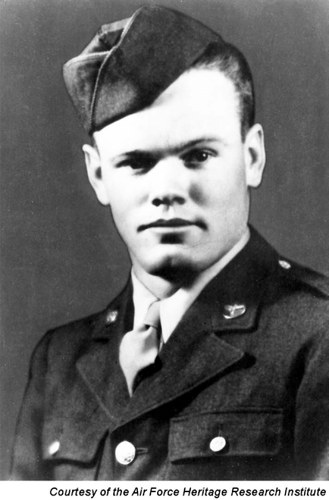
The morning of April 12, 1945 dawned clear over the Mariana Islands, perfect flying weather for another bombing mission against the Japanese mainland. Staff Sergeant Henry Eugene Erwin Sr., known to his crewmates as 'Red' for his distinctive auburn hair, performed his pre-flight checks on the radio equipment aboard the B-29 Superfortress *City of Los Angeles*. At twenty-three, the Alabama native had already flown eleven combat missions as radio operator with the 52nd Bombardment Squadron, 29th Bombardment Group.
The target was Koriyama, a strategic rail junction in central Honshu that served as a vital link in Japan's transportation network. As the formation of silver bombers climbed to altitude, Erwin settled into his position in the forward section of the aircraft, surrounded by the maze of radio equipment that kept the crew connected to their base and each other.
Hours later, as they approached the target area, the lead aircraft began dropping phosphorus smoke bombs to mark the target for the following bombers. These M47A2 white phosphorus markers burned at temperatures exceeding 1,100 degrees Fahrenheit, creating dense white smoke visible from miles away. From his position in *City of Los Angeles*, Erwin prepared to release their marker.

Interior of B-29 bomber showing Red Erwin at his radio operator position as the phosphorus bomb bounces back up through the launch chute
The phosphorus bomb dropped through the chute as designed, but something went catastrophically wrong. Instead of clearing the aircraft cleanly, the canister struck an obstruction and bounced back up through the launch tube like a deadly pinball. The white-hot cylinder tumbled back into the aircraft and landed directly at Erwin's feet, immediately igniting his flight suit and filling the forward section with choking, toxic smoke.
Smoke bomb's back in the plane!" someone shouted over the intercom, but the words were nearly lost in the chaos erupting inside the bomber.
The phosphorus burned through Erwin's clothing in seconds, the chemical fire eating into his flesh like acid. The intense heat and smoke immediately blinded him, and toxic fumes began filling the aircraft's forward compartment. The bomber's nose pitched down as the pilots, unable to see their instruments through the dense white smoke, began losing control of the aircraft.

Erwin engulfed in white phosphorus flames, reaching down to grab the burning canister with his bare hands
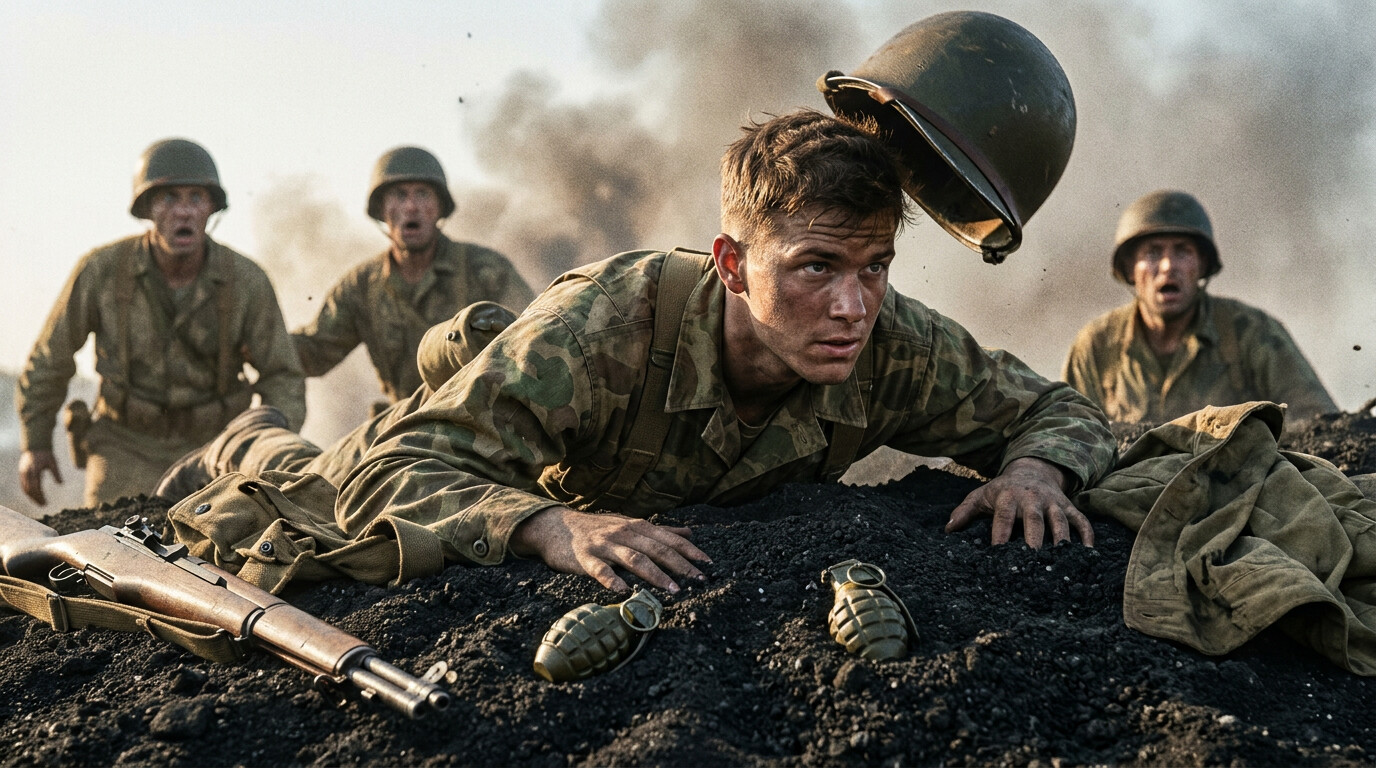
In that moment of absolute terror, with twelve lives hanging in the balance at 20,000 feet above enemy territory, Erwin made a decision that defied human instinct. Despite being engulfed in flames and completely blind, he reached down and grabbed the burning phosphorus canister with his bare hands.
The white-hot metal seared through his palms instantly, but Erwin cradled the deadly cylinder against his chest like a football and began staggering toward the cockpit. He navigated by memory through the narrow fuselage, past the navigator's station where Lieutenant Eugene Strouse watched in horror, unable to help without risking the entire crew.
Get it out! Get it out!" someone screamed, but Erwin was already moving, his body a human torch carrying death away from his crewmates.

Erwin staggering through the narrow B-29 fuselage, cradling the burning phosphorus bomb against his chest, completely blind
Blind and burning, he stumbled into the cockpit where pilots Major Eugene Strouse and Captain Percival Hanson were fighting to maintain control through the smoke. Without a word, Erwin lurched toward the co-pilot's window. The slipstream at 200 miles per hour would make opening the window nearly impossible, but somehow he managed to crank it open.
With his last conscious effort, Erwin hurled the burning canister out into the Pacific sky. The deadly phosphorus bomb tumbled away into the blue, its white smoke trail marking its descent toward the ocean below.
Erwin collapsed immediately, his body ravaged by third-degree burns covering most of his torso, arms, and face. The crew expected him to die within minutes. His flesh was charred black in places, his hands were burned to the bone, and his face was so swollen his eyes were sealed shut.

Erwin in the cockpit, pilots fighting to see through smoke, as he struggles to open the copilot window
Red's down!" the navigator called over the intercom. "We need to get him to a hospital now!"
Pilot Eugene Strouse, his vision clearing as the smoke dissipated, took manual control of the bomber and immediately turned for Iwo Jima, the closest friendly airfield. The twenty-minute flight seemed to last hours as the crew did what they could for their radio operator, knowing that his selfless act had saved all their lives.
When they landed at Iwo Jima, medics rushed Erwin to the base hospital where doctors gave him virtually no chance of survival. Burns covered ninety percent of his body, and the phosphorus had penetrated deep into his tissue, continuing to burn from within. Yet somehow, incredibly, Red Erwin refused to die.

Erwin throwing the burning phosphorus bomb out the open cockpit window with his last strength as he collapses
Word of his heroic sacrifice reached the highest levels of command within days. General Curtis LeMay, commander of the 20th Air Force, personally expedited the Medal of Honor recommendation, cutting through the usual bureaucratic delays. The medal was approved and flown to Erwin's bedside in just three weeks – a record time that reflected the extraordinary nature of his sacrifice.
When Erwin finally returned home to Alabama months later, his body bore the permanent scars of that terrible moment over Koriyama. But he was alive, and so were eleven other airmen who owed their lives to a young man who chose to embrace death to save his friends.
The Air Force would later name its premier leadership award after Red Erwin, ensuring that future generations of airmen would remember the radio operator who became a human torch to save his crew over the skies of Japan.