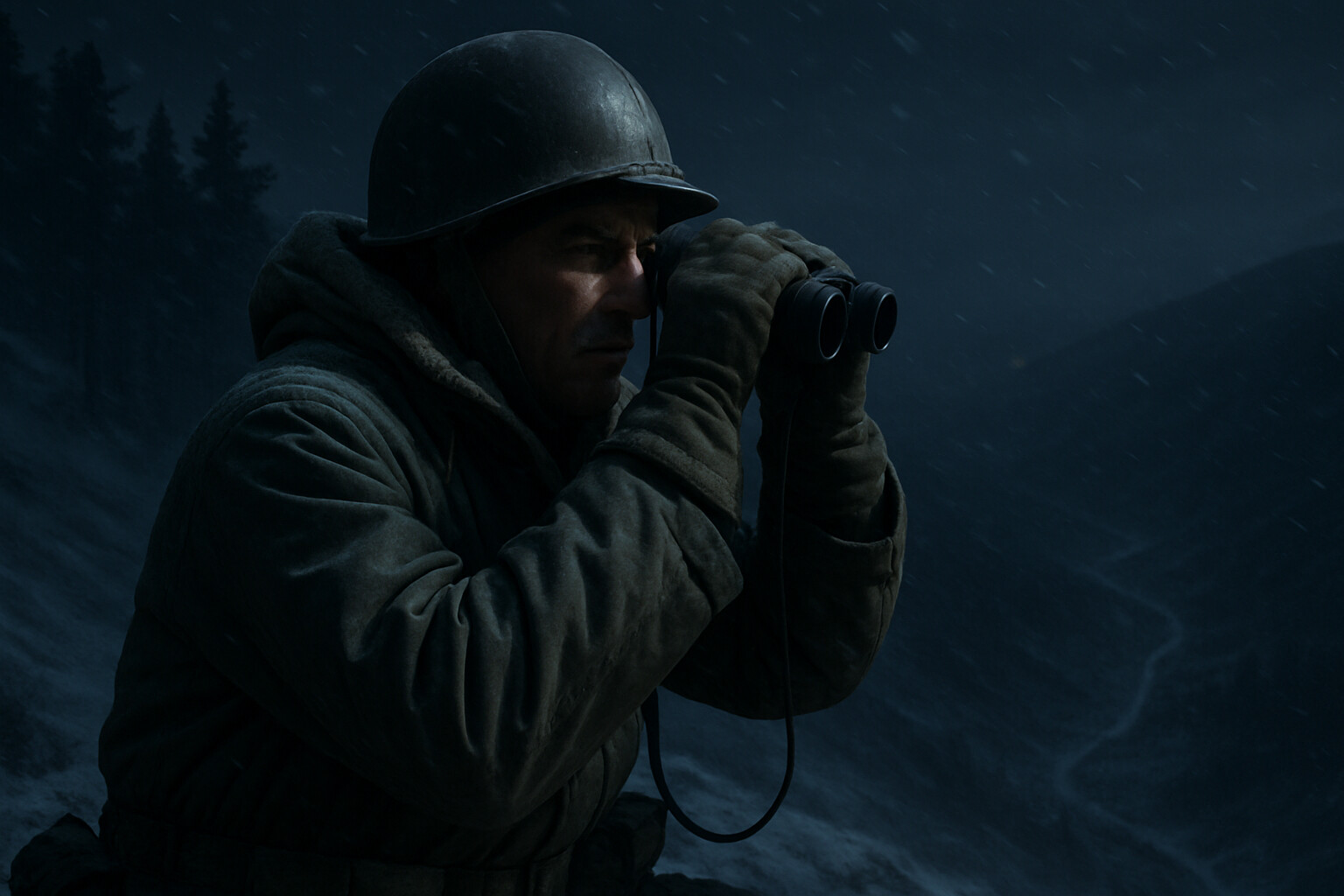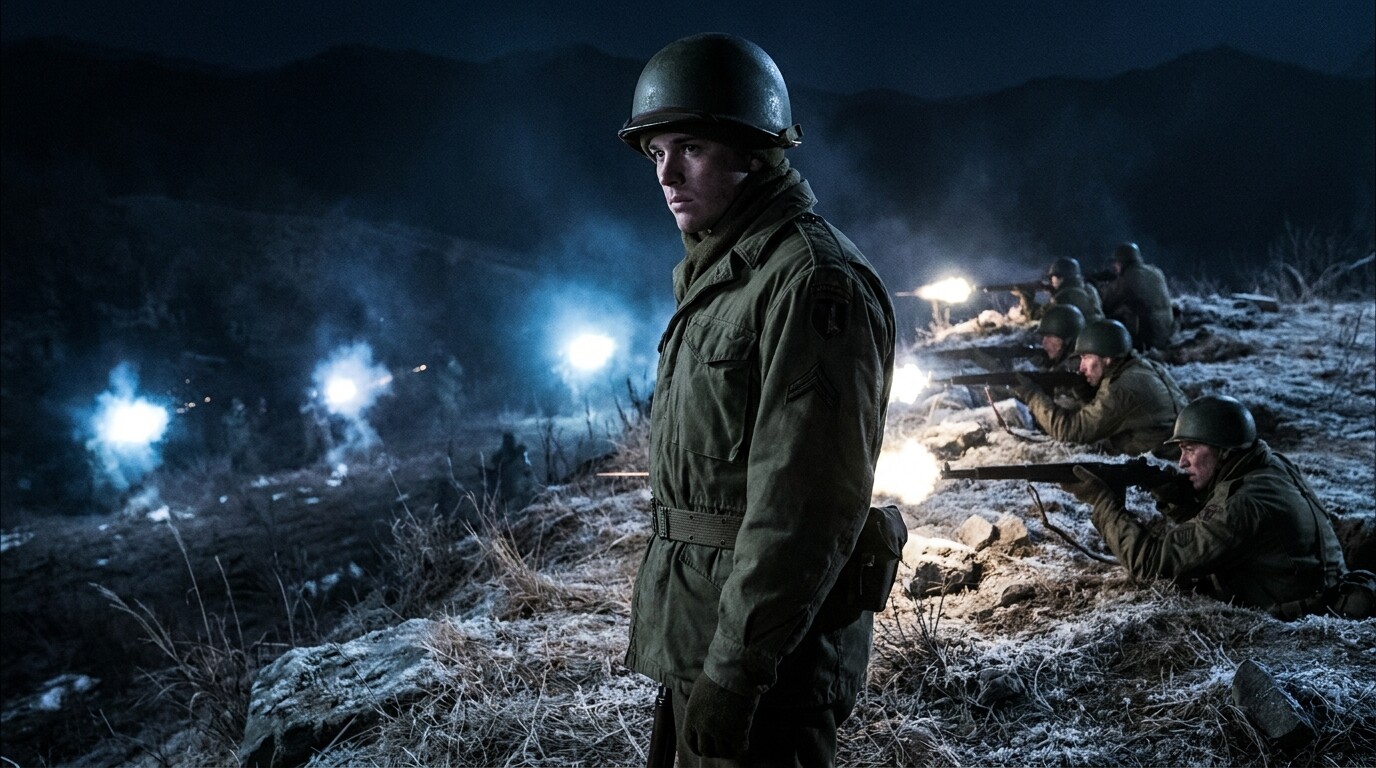
The last light over the Korean hills was the color of a fading bruise.
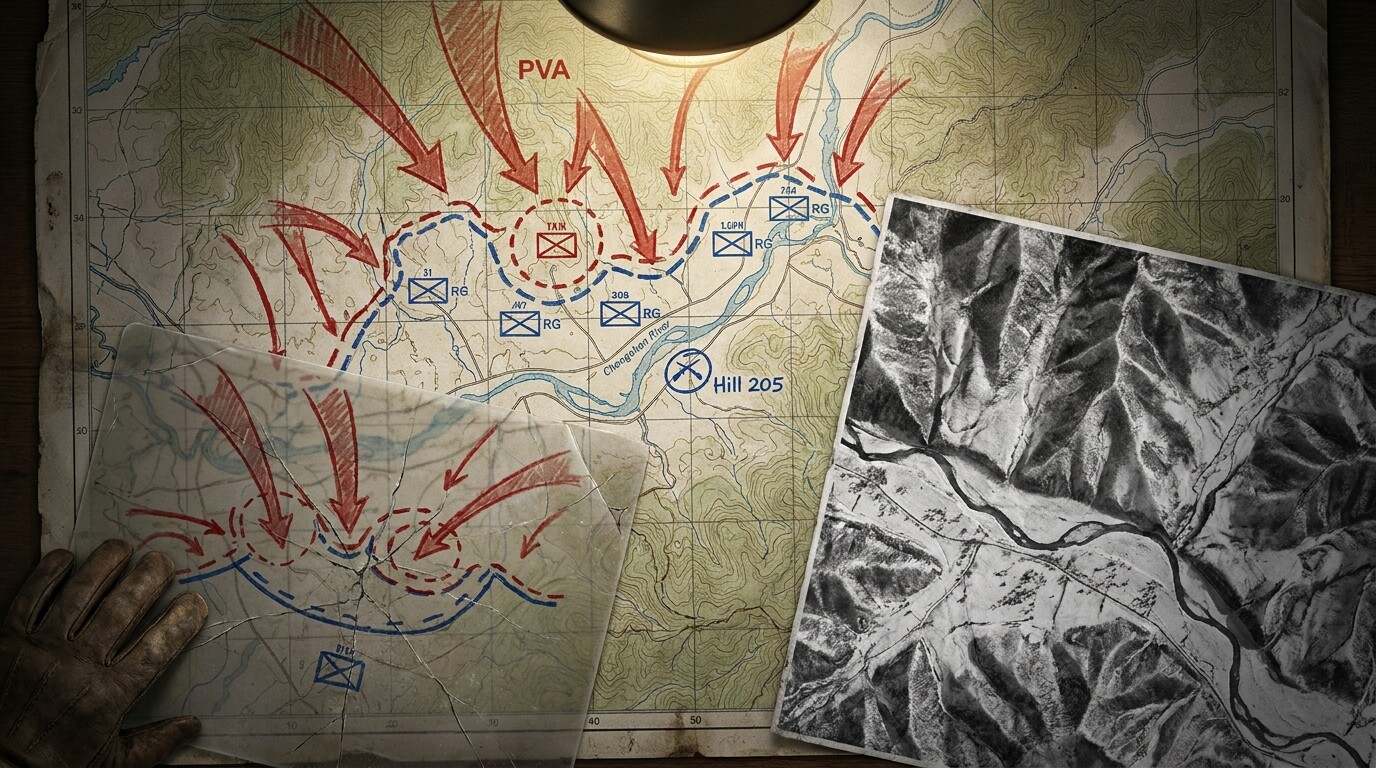
On the afternoon of November 25, 1950, First Lieutenant Ralph Puckett stood near the base of Hill 205 and looked up. The hill was not dramatic by Korean standards — not one of the great cliff-edged ridgelines that would define later fighting in this war. It was a rounded prominence, bare of cover, rising above the valley floor near the North Korean town of Unsan. Exact elevation data for Hill 205 has not been confirmed in sources available for this account, but the position commanded the surrounding ground: whoever held it could observe movement in the valley below, and whoever attacked from the valley would be exposed on every step of the approach.
Puckett had seventy-four Rangers — a figure referenced in connection with this action but not yet verified against unit rolls, and noted as a research gap in this account. His orders were to take the hill and hold it as part of a general advance. The 8th U.S. Army, under General Walton Walker, was pressing north in what its commanders hoped would be the final push of the Korean War. MacArthur's headquarters had publicly suggested the men might be home by Christmas.
Puckett took his Rangers up the hill.
What American intelligence had failed to establish was that more than 300,000 soldiers of the Chinese People's Volunteer Army were already massed in the Korean hills, waiting. That same night, in what Chinese commanders called their Second Phase Offensive, those forces struck the entire Eighth Army line. The Rangers on Hill 205, perched on an exposed knob near one of the main Chinese axes of attack, were directly in the path of it.
The night that followed was one of the most concentrated tests of small-unit endurance in the Korean War.
---
**The Man**
Ralph Puckett was twenty-four years old in November 1950, and he had been preparing for exactly this kind of command for most of his adult life.
Born on December 8, 1926, in Tifton, Georgia, Puckett entered the United States Military Academy at West Point and graduated in 1949, commissioned as a second lieutenant in the Infantry. He was part of the postwar Army — an institution that had demobilized rapidly after 1945, shedding millions of men, cutting training budgets, and reducing entire divisions to skeletal cadres. When North Korea crossed the 38th Parallel in June 1950 and the United States rushed forces to the peninsula, the consequences of that underinvestment became immediately and brutally apparent. Units arrived undertrained, underequipped, and in some cases were simply overrun.
Puckett had volunteered for the Rangers.
The 8th Army Ranger Company was not a holdover from World War II. Ranger units had been disbanded after 1945, and the concept was considered by some senior officers as a specialist indulgence the peacetime Army could not sustain. But the early months of Korea revealed a need for elite light infantry capable of raids, reconnaissance, and aggressive offensive action. In September 1950, the Army authorized the formation of Ranger companies — small, all-volunteer units attached to larger formations, each numbering roughly one hundred officers and enlisted men. They trained hard and fast.
Puckett took command of the 8th Army Ranger Company and invested himself in building it. By the accounts of men who served under him, he was an exacting leader who held himself to every standard he imposed on his Rangers. He ran when they ran. He trained when they trained. By November 1950, when the company moved north with the advancing Eighth Army, the unit had cohesion and confidence in its commander, even if it had not yet been tested in sustained combat.
That test was arriving faster than anyone on the line understood.
---
**The Strategic Disaster Assembling in the Hills**
To understand what happened on Hill 205, it is necessary to understand the catastrophe assembling around it.
By late October 1950, American and United Nations forces had crossed the 38th Parallel, taken Pyongyang, and were pushing toward the Yalu River — the border between North Korea and China. MacArthur's public optimism was nearly boundless. Some of his subordinate commanders were more cautious. Chinese forces had already intervened in limited engagements in late October, hitting several American and South Korean units before withdrawing into the hills. Then they went quiet for nearly three weeks.
That silence was not restraint. It was preparation.
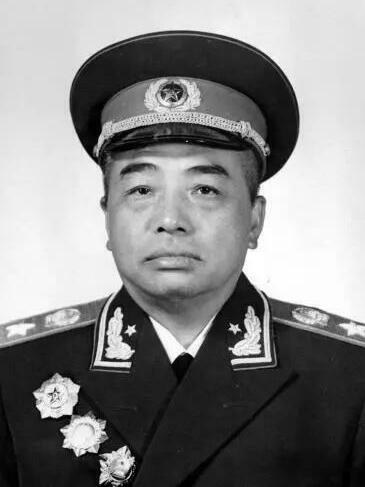
General Peng Dehuai, commanding the Chinese People's Volunteer Army, had concluded that a limited probe was insufficient. To drive the Americans away from the Yalu, protect the Chinese homeland, and demonstrate that Western military power could be broken, Peng ordered a mass second offensive. It would strike on the night of November 25, 1950, coordinated along the entire UN line. The western axis fell directly on the Eighth Army. The Chongchon River valley, where the Army's front ran, was the anvil. The Chinese would be the hammer.
The forces Peng committed were veterans. Many had fought in the Chinese Civil War. They were disciplined, experienced in night movement, and expert at using terrain to approach silently. Their tactics — multiple waves of infantry attacking in darkness, using bugles and whistles to coordinate assault phases and signal phase lines — were optimized to shock and overwhelm. They traveled light, carried minimal supplies, and attacked with a ferocity that repeatedly stunned American units conditioned to expect firepower-heavy conventional warfare.
American intelligence had produced almost none of this picture for the men on the line. When the attack came, it arrived as genuine tactical surprise along most of the front.
The Rangers on Hill 205 were about to experience that surprise with particular intensity.
---
**The Climb**
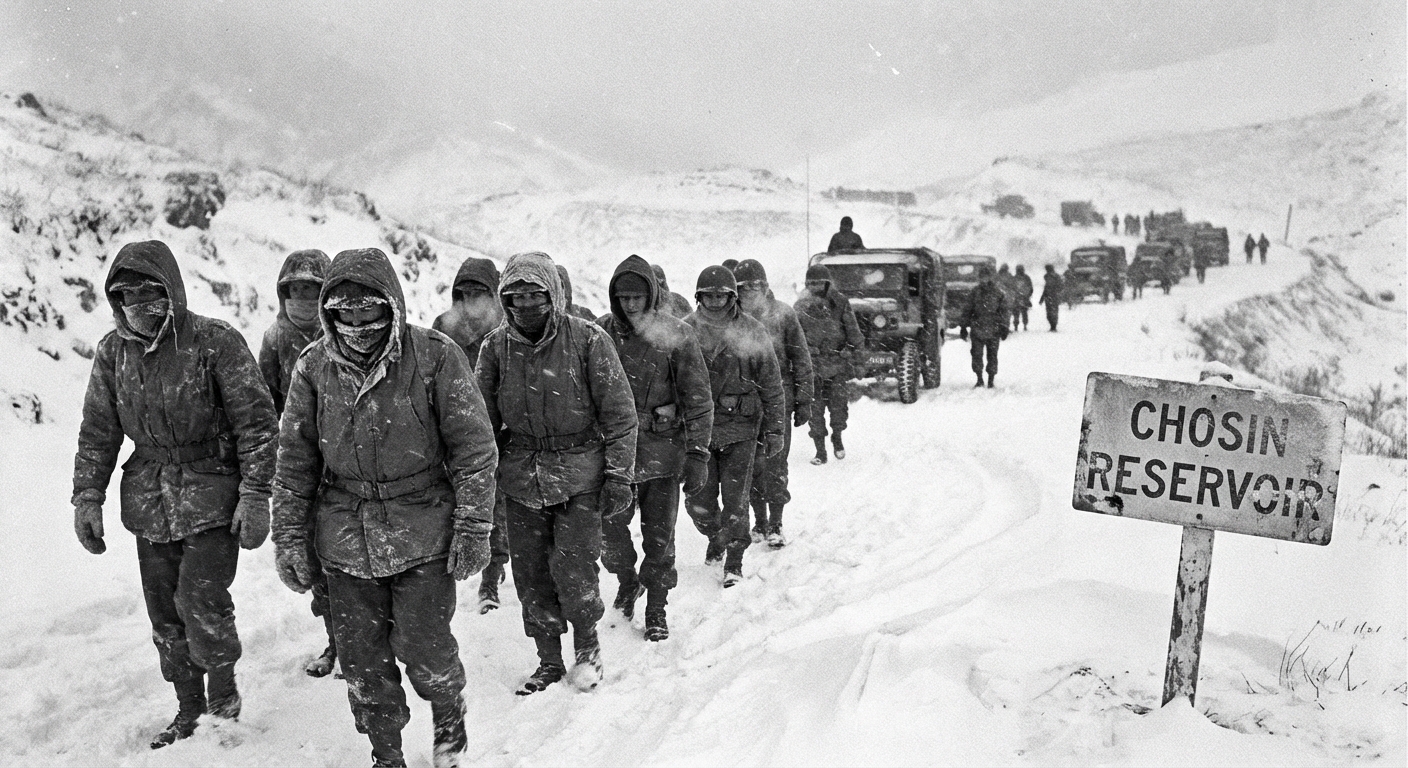
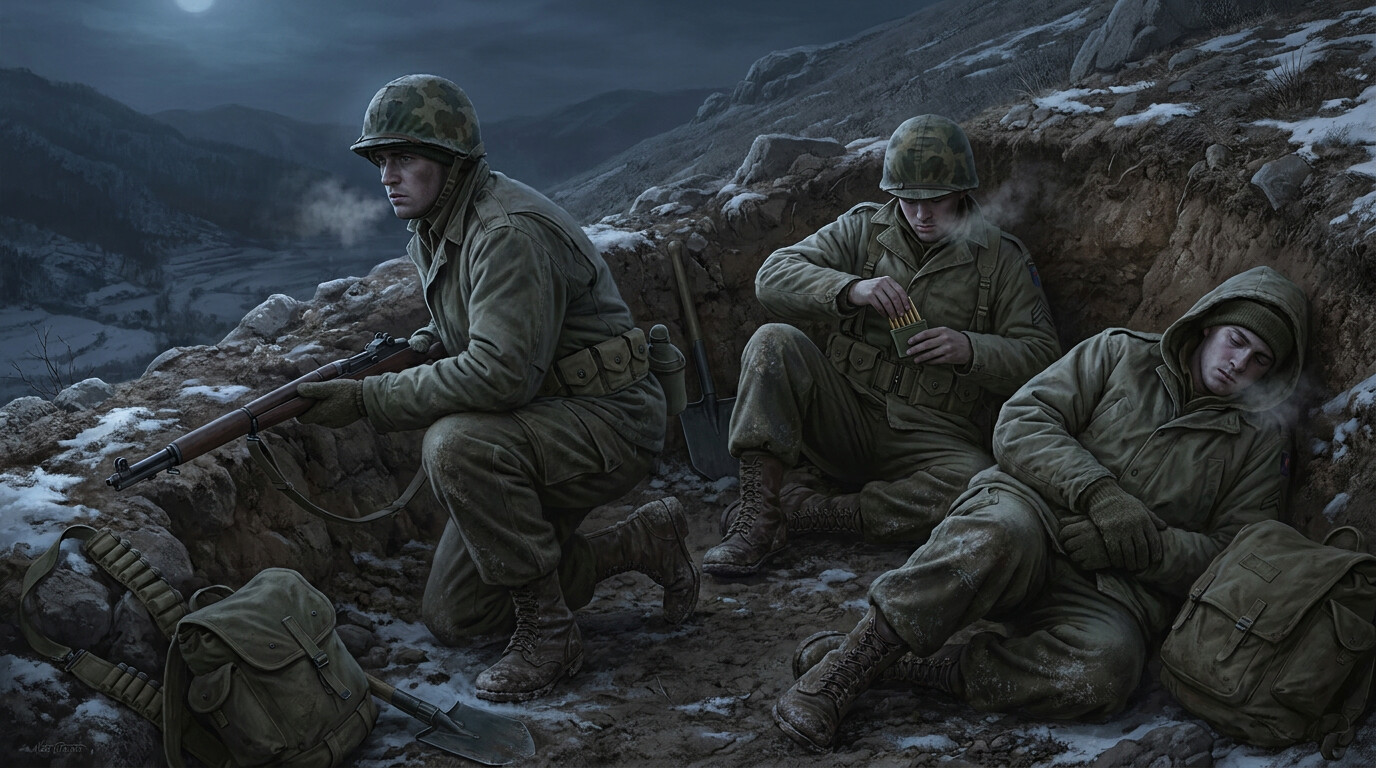
The approach to Hill 205 in the afternoon light was physically demanding. Korean hill terrain in November was hard ground — frozen, rocky, largely stripped of vegetation at this season except for scrub and the dead stalks of summer grass. The temperature was dropping as the afternoon wore on. In North Korea in late November, nighttime temperatures on exposed hilltops could fall well below zero Fahrenheit. The men wore winter gear, but the Army's cold-weather clothing issue in 1950 had significant gaps, and frostbite was already a routine tactical problem across the front.
Puckett led from the front. This was a deliberate choice, not simply a habit, and it shaped every decision he would make through the night. He moved with his men.
The climb met no serious resistance. The hill was not defended in strength when the Rangers arrived — consistent with the documented Chinese practice of withdrawing before the UN advance and allowing the Americans to settle into positions that could then be encircled. Whether this specific geometry was part of the Chinese plan for this sector, or simply the situation as it developed, is not established in the available record.
Puckett organized his perimeter on the hilltop. Seventy-four Rangers — if that figure holds to verification — were not a large force for the ground they were defending. The position was exposed on multiple sides. Defensive positions had to be established quickly, fields of fire cleared where possible, and communication maintained with supporting units in the valley below. Mortar positions were set. Ammunition was distributed. The Rangers settled in as the temperature continued to fall and the last light left the sky.
In the hills around them, in the darkness, the second phase of the Chinese offensive was beginning to move.
---
**The Night Opens**
The Chinese assault on the Eighth Army's line began in earnest on the night of November 25–26, 1950. The precise timing of first contact on Hill 205 is not established in sources available for this account, but the pattern of the night's fighting is documented through the record of Puckett's actions, which describe multiple distinct assault waves across the course of the night.
The first warning was likely sound before sight: movement in the darkness below the hill, and then the noise that became one of the defining sounds of the Korean War — Chinese bugles, and the calls and whistles Chinese forces used to direct attacks and signal phase lines. The function was partly tactical coordination and partly psychological: defenders could hear the enemy approaching but not yet see them.
For the Rangers on Hill 205, that meant every man on the perimeter was watching the darkness below his position, weapon up, waiting for movement to resolve into a target.
What Puckett understood — and what made his actions through the night both effective and extraordinarily costly — was the central problem facing a small defensive force at night against a larger attacking one. In darkness, on broken terrain, the attacking force carries one advantage: it knows where it is going, even if defenders cannot yet see it. The defending force's advantage is its prepared position and its ability to place accurate fire on the approaches — but only if defenders can acquire targets before the assault closes to hand-to-hand distance.
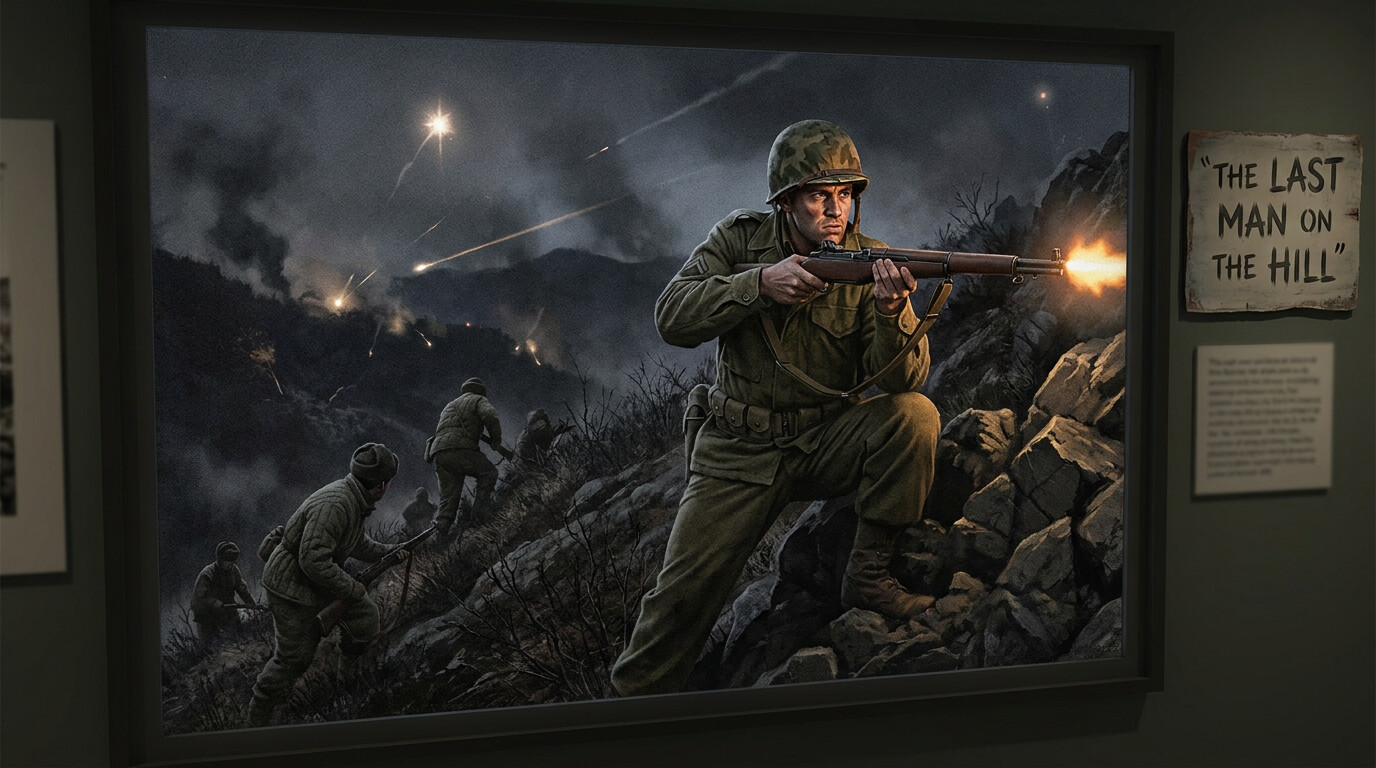
Puckett's solution, which he employed repeatedly through the night, was to expose himself at the forward edge of the perimeter to draw fire from advancing Chinese troops. When they shot at him, they revealed their positions. His Rangers, seeing muzzle flashes and tracer lines converging on their commander, could engage those sources with accurate fire. Puckett was using himself as a forward marker for enemy positions.
This is not a tactic in the field manuals. It is the improvisation of a man who identified the tactical problem precisely and was willing to pay the price of solving it.
---
**Wave After Wave**
The Chinese came in waves. This was documented tactical practice, not metaphor. Rather than committing all forces in a single assault, Chinese commanders structured attacks in multiple echelons, each following the last at short intervals. The intent was to keep constant pressure on defenders, prevent regrouping or ammunition redistribution, and eventually find the exhausted or depleted point in the line where the position would break.
Against a company-sized force on an exposed hilltop, this approach had additional logic: it would drain both ammunition and men. Every magazine emptied, every mortar round fired, every grenade thrown brought the defenders closer to the moment when the arithmetic of the assault would overwhelm the arithmetic of the defense.
Puckett moved along the perimeter throughout the night — repositioning men, directing fire, coordinating what supporting fire could be called from below. And repeatedly, when Chinese assault elements were closing and their positions were unclear in the darkness, he exposed himself to draw their fire.
He was wounded. The record establishes that Puckett sustained multiple wounds during the night's fighting — severe enough that by the end of the engagement he could not move under his own power. The exact sequence and nature of each wound, and the precise point in the night at which each occurred, is not fully established in sources available for this account, and the narrative does not reconstruct that sequence where it cannot be verified. What is documented is that Puckett continued to lead and fight after being wounded, refusing evacuation, and that his wounds ultimately became severe enough that his Rangers carried him from the hill.
Six times — as documented in the record supporting his Medal of Honor — the Chinese attacked Hill 205 that night. Six times the Rangers held.
On the sixth assault, the position became untenable. The Rangers had taken significant casualties. Ammunition was critically low. The Chinese had massed sufficient force and identified enough of the Ranger positions to press the final assault with a weight that could not be turned back. Puckett, by this point severely wounded, gave the order to withdraw.
His Rangers would not leave him. Despite his orders to pull back, the men of the 8th Army Ranger Company picked up their commander and carried him down the hill.
---
**The Weapons in the Darkness**
The Rangers of Hill 205 carried the standard American infantry weapons of the period. Understanding those weapons clarifies both what made the defense possible and what ultimately made it unsustainable.
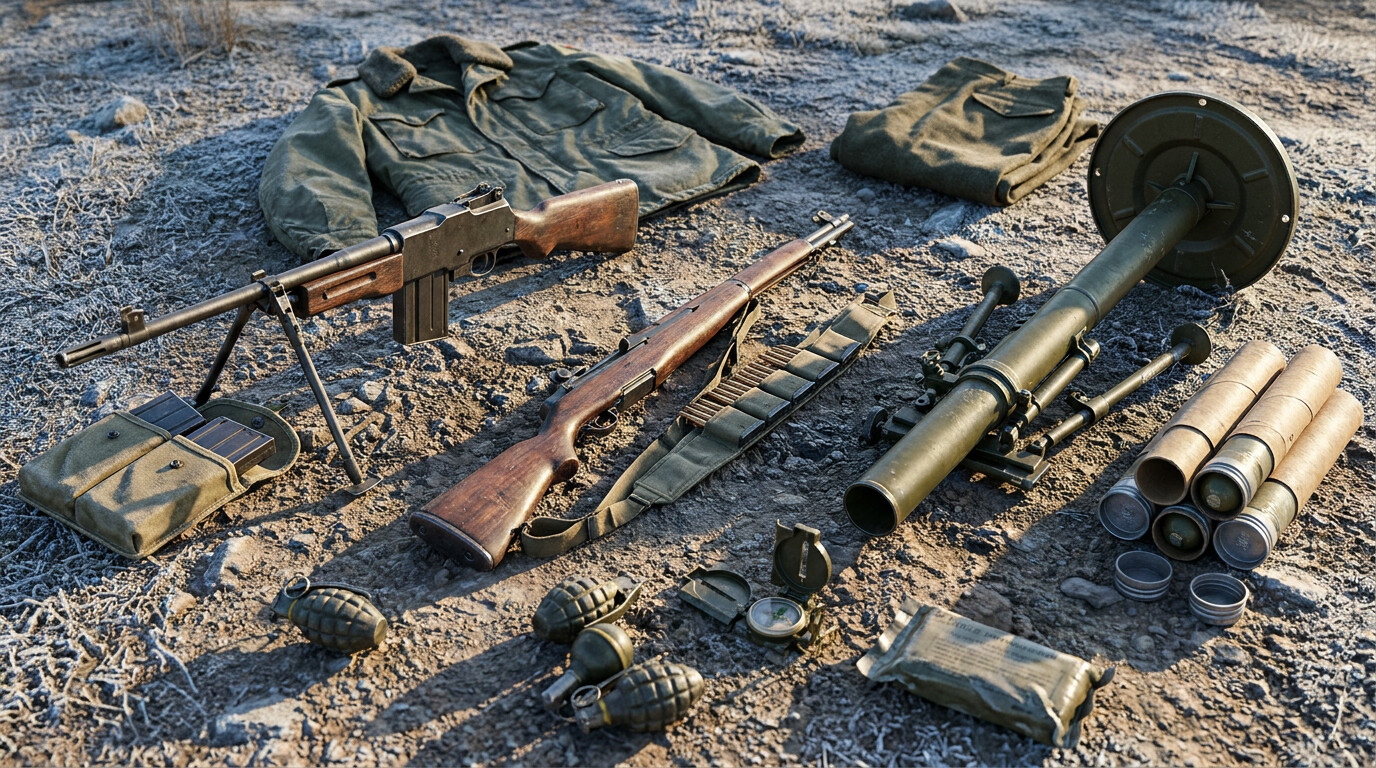
The primary individual weapon was the M1 Garand semi-automatic rifle — the backbone of American infantry since 1936, still the standard in 1950. The M1 fed from an eight-round en-bloc clip and fired the .30-06 Springfield cartridge. It was accurate, reliable, and proven in two conflicts. In the extreme cold of North Korea, lubricants could thicken and slow the bolt, a known problem across all American weapons in winter conditions. Experienced soldiers used minimal lubrication in cold weather operations.
Ranger units also carried the M1 Carbine — lighter than the Garand, firing a shorter pistol-caliber cartridge. Useful for officers and crew-served weapon teams who needed a lighter load, it was less effective at range and developed a documented reputation in Korea for unreliability in sub-zero temperatures, where the lighter cartridge sometimes failed to generate enough energy to cycle the action through thickened lubricants.
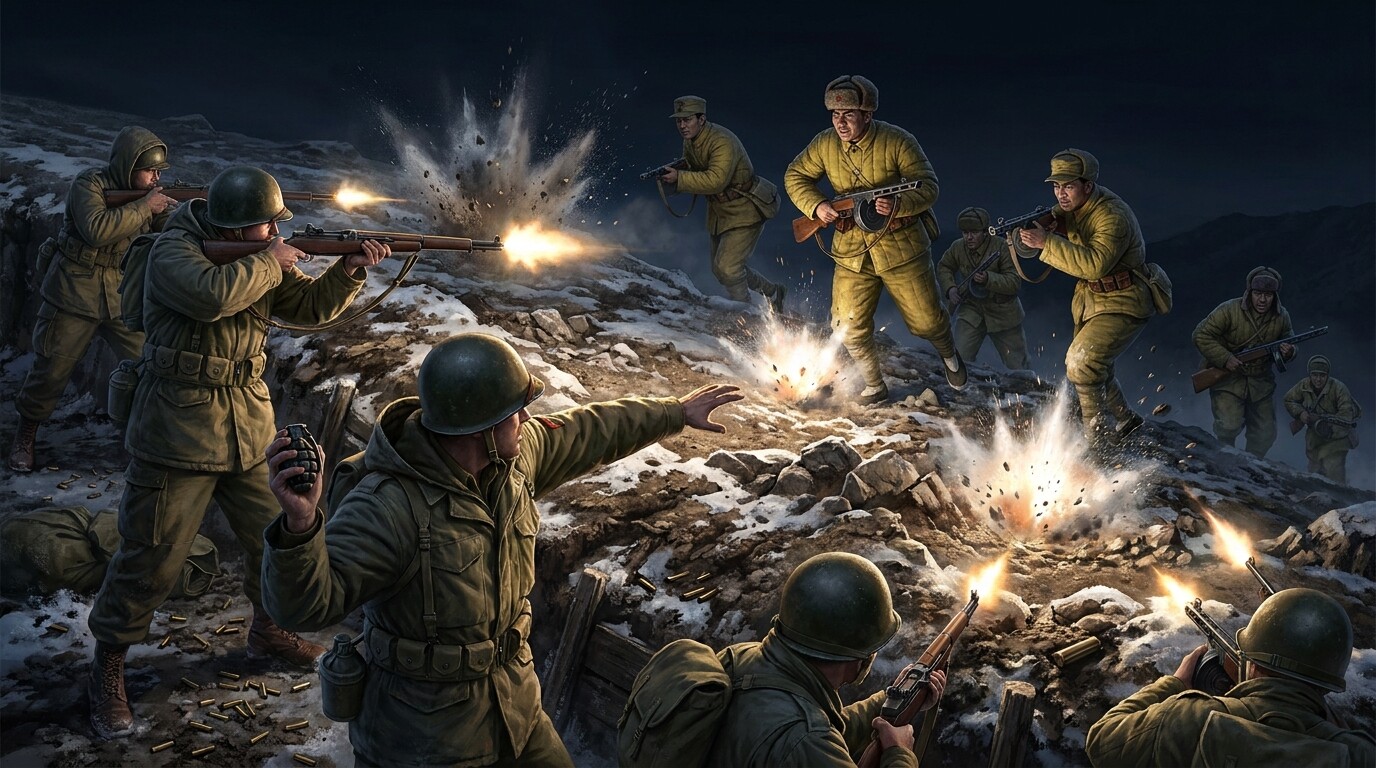
For automatic fire at the squad level, the Rangers had the Browning Automatic Rifle — the BAR — a magazine-fed automatic weapon firing the same .30-06 round as the Garand. Nearly twenty pounds loaded, the BAR was heavy for foot soldiers on difficult terrain, but in night defense it was essential: it could lay a stream of fire across a likely approach and suppress an advance in a way that semi-automatic rifles could not. Its twenty-round magazine was a constant constraint, requiring gunners to pace their fire carefully through repeated assaults.
For sustained machine gun coverage, the Rangers were equipped with the M1919A4 Browning light machine gun — belt-fed, air-cooled, firing .30-06. In defensive positions, M1919 guns were sited to create interlocking fields of fire that denied attackers cover from multiple directions. Keeping those weapons running through multiple assaults — managing ammunition, managing cold-weather lubrication, sustaining crews — was a central problem of the night.
Mortars provided the Rangers' only organic indirect fire capability. The M2 60mm mortar broke into three man-portable components and could reach targets up to roughly 1,800 meters with high-explosive, white phosphorus, or illumination rounds. Against massed infantry approaching a hilltop, the 60mm mortar could break up assault formations before they came within direct fire range — but only as long as ammunition lasted. Six assaults placed severe demands on the mortar crews' basic load.
The Chinese forces attacking the hill carried a mix of Soviet-supplied and captured Nationalist Chinese weapons. The PPSh-41 submachine gun — a Soviet design chambered for the 7.62mm Tokarev pistol cartridge, fed from a 71-round drum magazine, capable of a cyclic rate above 700 rounds per minute — was widely documented among Chinese assault infantry in this phase of the war, and whether it was employed specifically at Hill 205 is inferred from general PVA equipment records rather than engagement-specific documentation. Its effective range was approximately 150–200 yards in combat conditions. Chinese tactical doctrine in Korea was designed to close that gap: multiple-wave night assaults were structured to get assault troops to short range, where the PPSh-41's high volume of fire became the decisive factor against defenders whose rifles outranged it in the open. Puckett's method of drawing fire to expose positions was, in part, a direct tactical response to this problem — identifying attackers in darkness before they closed to submachine gun range.
The bugles and whistles that accompanied the Chinese assaults served real communication purposes in the noise and darkness of battle, where radio communication at small-unit level was unreliable and visual signals impossible. They also carried a documented psychological dimension: the persistent, unnatural sound in the darkness worked against defenders' ability to hold their composure under the pressure of an approach they could hear but not yet see.
---
**The Cold**
Any account of the fighting on Hill 205 that does not reckon seriously with the cold is incomplete.
November in North Korea, in the hills near Unsan, was not merely uncomfortable. It was a tactical condition. Temperatures on exposed hilltops at night could fall well below zero Fahrenheit — the specific temperatures on the night of November 25–26 are not available in sources for this account, but documented Korean War winter records for this region establish the severity of conditions in this period. Metal became difficult to handle without gloves. Lubricants thickened or froze. Wounds that in warmer weather would have been manageable became more serious immediately as blood loss combined with exposure.
The Army had struggled with cold-weather clothing throughout the fall of 1950. Some units had adequate winter gear; others did not. Frostbite was already evacuating soldiers from the line at rates that alarmed commanders. On Hill 205, the Rangers were exposed on open ground with no shelter, fighting through multiple hours of darkness in cold severe enough to threaten both equipment function and physical endurance regardless of enemy action.
For a man wounded multiple times — as Puckett was before the night was over — the cold was an additional threat. Blood loss and hypothermia compound each other: a wounded body loses the ability to generate heat as blood pressure drops, and cold accelerates the physiological deterioration. That Puckett continued to function and to lead under these conditions is documented in his actions rather than in any account of his internal state.
---
**The Cost**
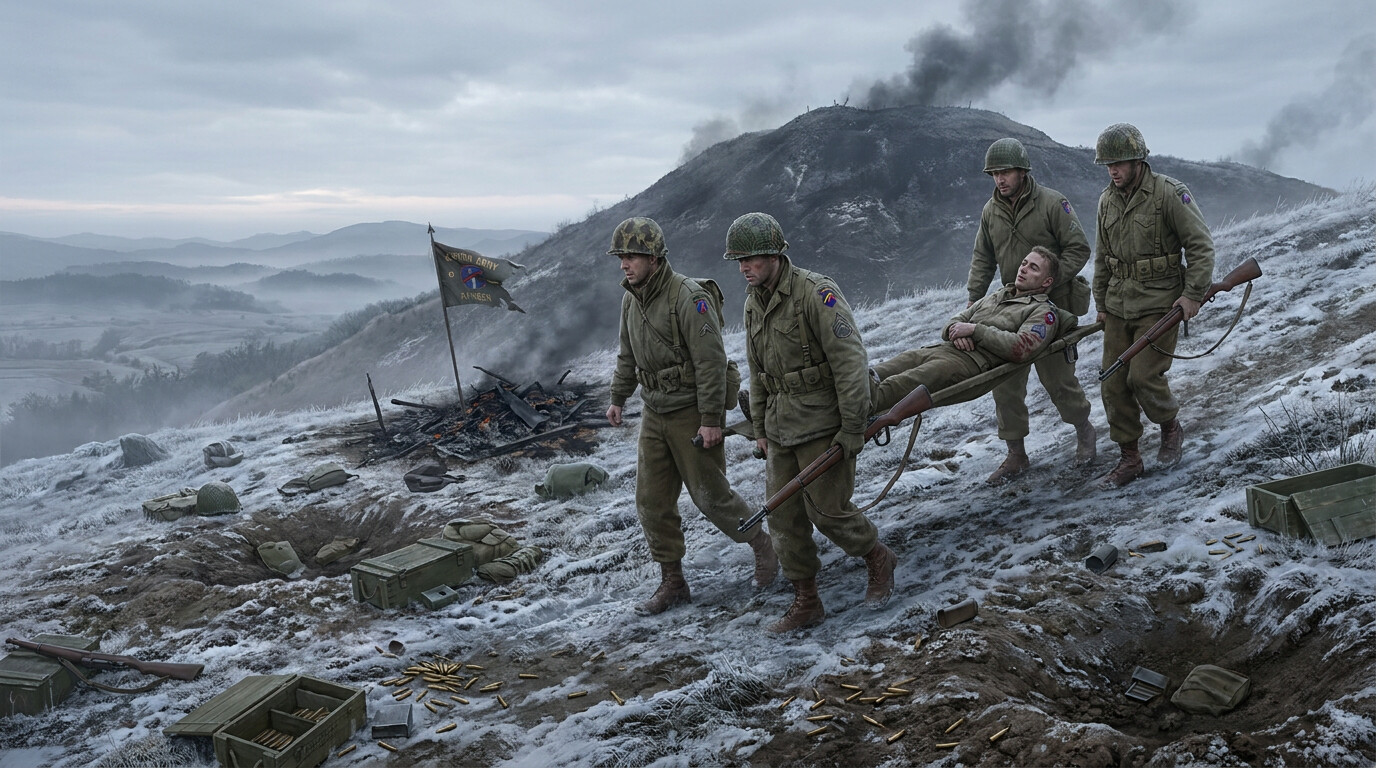
The Rangers suffered significant casualties on Hill 205. Precise figures for the 8th Army Ranger Company in this engagement have not been confirmed in sources available for this account, and the narrative does not state numbers it cannot verify. What is established is that the company sustained both killed and wounded, that Puckett was wounded multiple times, and that when the position was abandoned, his men carried him rather than leave him.
The broader cost of the night of November 25–26 across the Eighth Army front was catastrophic. The Chinese Second Phase Offensive shattered multiple American and South Korean divisions. The 2nd Infantry Division, fighting in the same general area, was effectively destroyed as a fighting formation in the days that followed, suffering thousands of casualties in a fighting withdrawal through Chinese encirclements. The Eighth Army was forced into a general retreat that within weeks carried it south of the 38th Parallel — a reversal so complete that it reframed the entire character of the war.
In that context, the Rangers' defense of Hill 205 was a small action inside a large catastrophe. But actions of concentrated resistance are not without meaning when the surrounding situation is collapsing. They represent the points at which individuals chose to hold rather than break, and that choice — even when the tactical outcome was ultimately a withdrawal — has its own place in the record.
The Rangers carried their lieutenant down the hill. That is in the record.
---
**Aftermath and Recovery**
Ralph Puckett survived his wounds. He was evacuated, treated, and recovered — a process that took considerable time given the severity of what he had sustained. He returned to Army service.
His military career continued for decades after Korea. He served in assignments connected to Ranger and airborne units in the Vietnam era and earned additional decorations, though the specific detail of his Vietnam-era service record has not been fully confirmed in sources available for this account and is not reconstructed here beyond that general note. He retired from the Army as a Colonel.
He became one of the most respected figures in the Ranger community — not as the monument to a single night's action but as a sustained example of the values that community held: physical courage, leading from the front, investment in the soldiers under command, and a standard of personal conduct that did not vary based on audience. In the Ranger world, he functioned as an elder who had done the thing, not merely spoken about it, and who devoted the later part of his career to helping younger soldiers understand what leadership under extreme pressure actually looked like.
The 8th Army Ranger Company itself was a brief formation. Ranger companies in the Korean War were attached to divisions, and the organizational experiment was ultimately judged successful — elite light infantry at the small-unit level performed well — but institutional resistance within the Army meant the Ranger structure would be reorganized and reconstituted multiple times in the following decades. The lineage of the modern 75th Ranger Regiment traces through the Korean War Ranger companies, among other formations, and the actions on Hill 205 are part of that institutional memory.
---
**The Award — Seven Decades Late**
The story of Ralph Puckett's Medal of Honor is itself a record of how military recognition can be delayed by the chaos of wartime documentation and the institutional pace of a large Army's review processes.
Puckett was originally awarded the Distinguished Service Cross for his actions on Hill 205 — the second-highest Army decoration for valor. That award confirmed the documented record of what he had done. But within the Ranger community and among military historians who had examined the record, the question of whether his actions met the criteria for the Medal of Honor had advocates over the years.
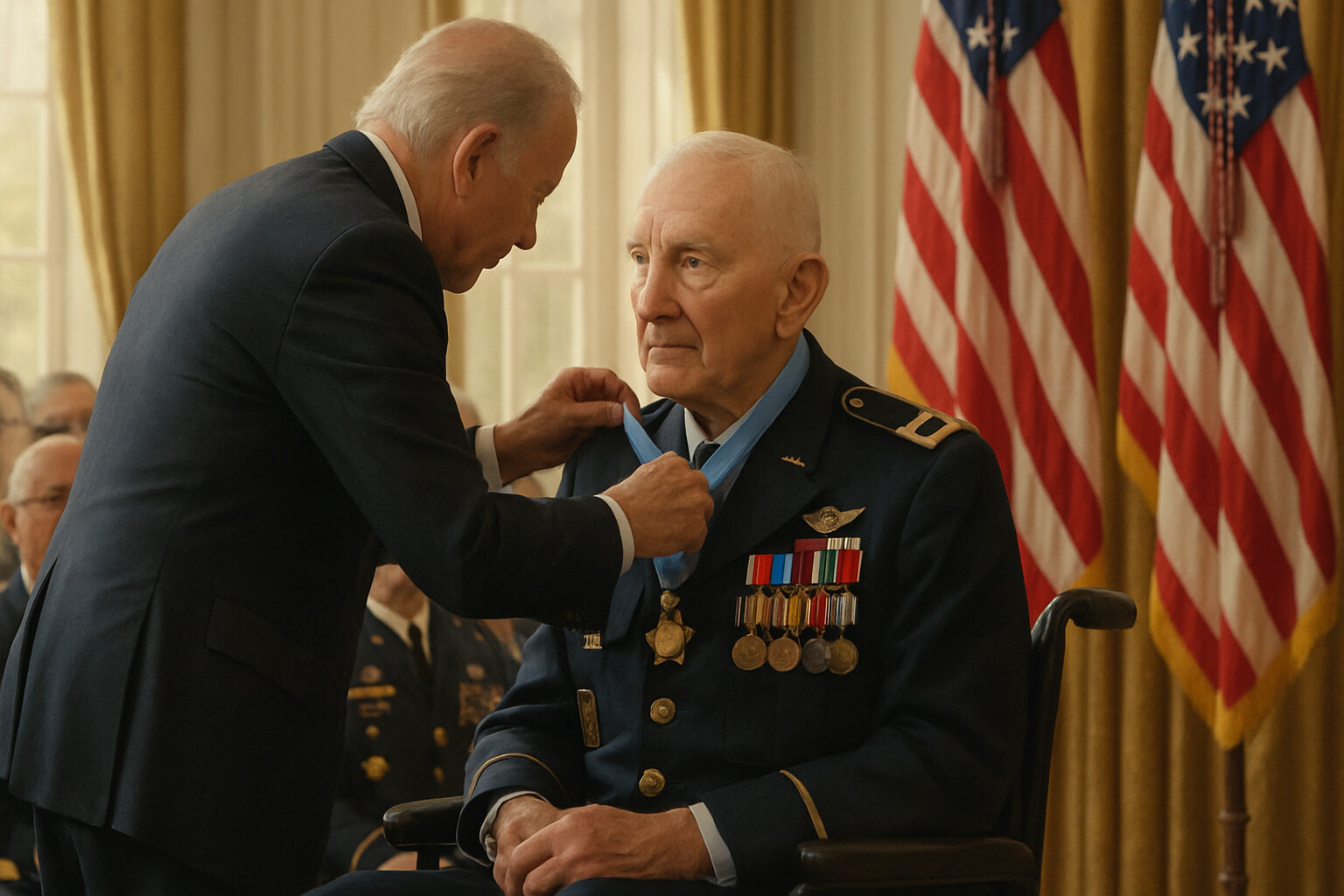
After a formal review process that included Congressional action — the specific authorization and timeline of that process are noted as a research gap in this account — President Biden presented Ralph Puckett with the Medal of Honor on May 21, 2021. Puckett was ninety-four years old. He received the award at the White House, in the company of soldiers who represented the Ranger community he had served and shaped across more than half a century.
The upgrade from Distinguished Service Cross to Medal of Honor involved formal review of the original citation, supporting documentation, and the record of surviving witnesses and institutional sources. The award was not based on new information about what happened on Hill 205 — the facts of that night had been established for decades. It was based on a formal reexamination of whether those facts met the highest standard.
They did.
---
**The Record and Its Limits**
This account is built on the documented record of Puckett's actions as established through the Medal of Honor recognition process, together with the broader historical record of the Chinese Second Phase Offensive in November 1950 and the role of Army Ranger units in the Korean War.
Some details of the night's fighting — the exact sequence of events, the precise locations of specific engagements on the hill, the timing of Puckett's wounds, the specific tactical dispositions of both sides — cannot be fully reconstructed from sources available for this account and have been noted as inferred or approximate where they appear. The narrative avoids constructing specific moments not in the record, and it contains no direct quotes that are not sourced.
The broader strategic context — the Chinese Second Phase Offensive, the Eighth Army's situation, the general order of battle — is well documented in multiple published histories of the Korean War and has been used here as the frame within which Puckett's specific action took place.
The Rangers who fought beside Puckett on Hill 205, and who were killed or wounded that night, are part of this story even where their individual names are not established in the sources available. A complete account of the 8th Army Ranger Company's action on Hill 205 would require access to unit records, after-action reports, and the testimony of surviving members — records that may exist in archives but have not been fully integrated into this account. That gap is noted explicitly as a research priority.
---
**Why It Matters**
The night of November 25–26, 1950, was one of the most consequential nights of the Korean War. The Chinese offensive that began that night changed the war's trajectory, ended the prospect of a quick UN victory, and locked the conflict into the grinding stalemate that defined the next three years and the armistice that finally followed.
In that great turning, a lieutenant and his Rangers held a small hill for as long as they could and then came down it together.
The tactical record of Hill 205 does not show a victory. The position was abandoned. The Rangers withdrew. The Chinese Second Phase Offensive achieved its strategic objectives. By any operational measurement, the Eighth Army suffered a major defeat in the days surrounding the fight on that hill.
But operational measurement is not the only frame for reading a military record. There is also the question of what individuals chose to do when the situation was worst — when the odds were clearest and when the easier choice would have been to do less. Puckett's repeated decision to expose himself to reveal enemy positions for his men — to use his own body as an instrument of reconnaissance, understanding what that would cost — is a documented fact in the record of that night.
His Rangers' choice to carry him rather than leave him is also in the record.
Something held between those men, under those conditions, that the cold and the darkness and the repeated assaults could not dissolve. That is what the Medal of Honor was marking when the President placed the ribbon around a ninety-four-year-old soldier's neck in the spring of 2021, seventy-one years after the night it was earned.
Some things take a long time to receive their proper accounting. The record, once it is complete, does not change what happened. It only confirms what was already true.