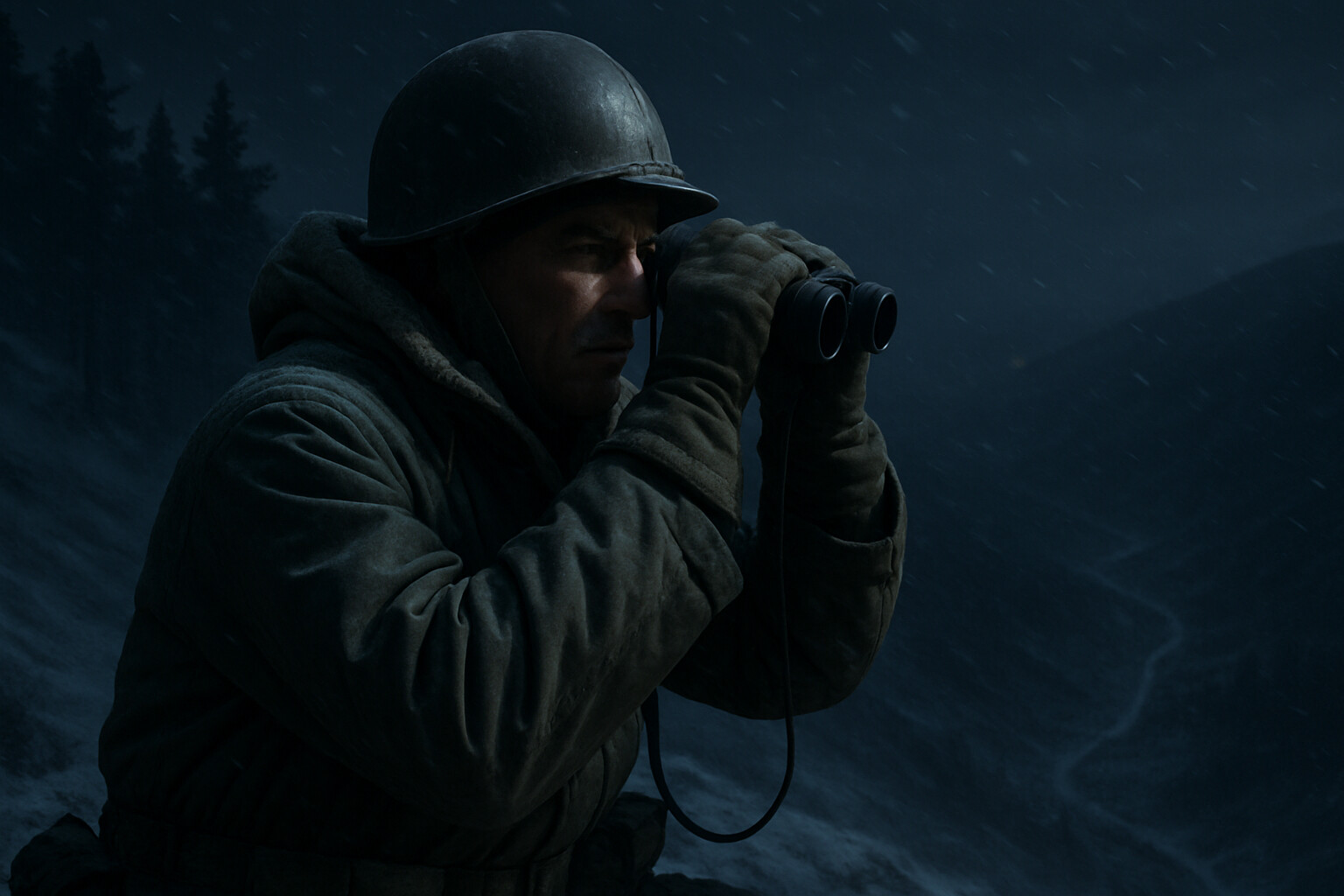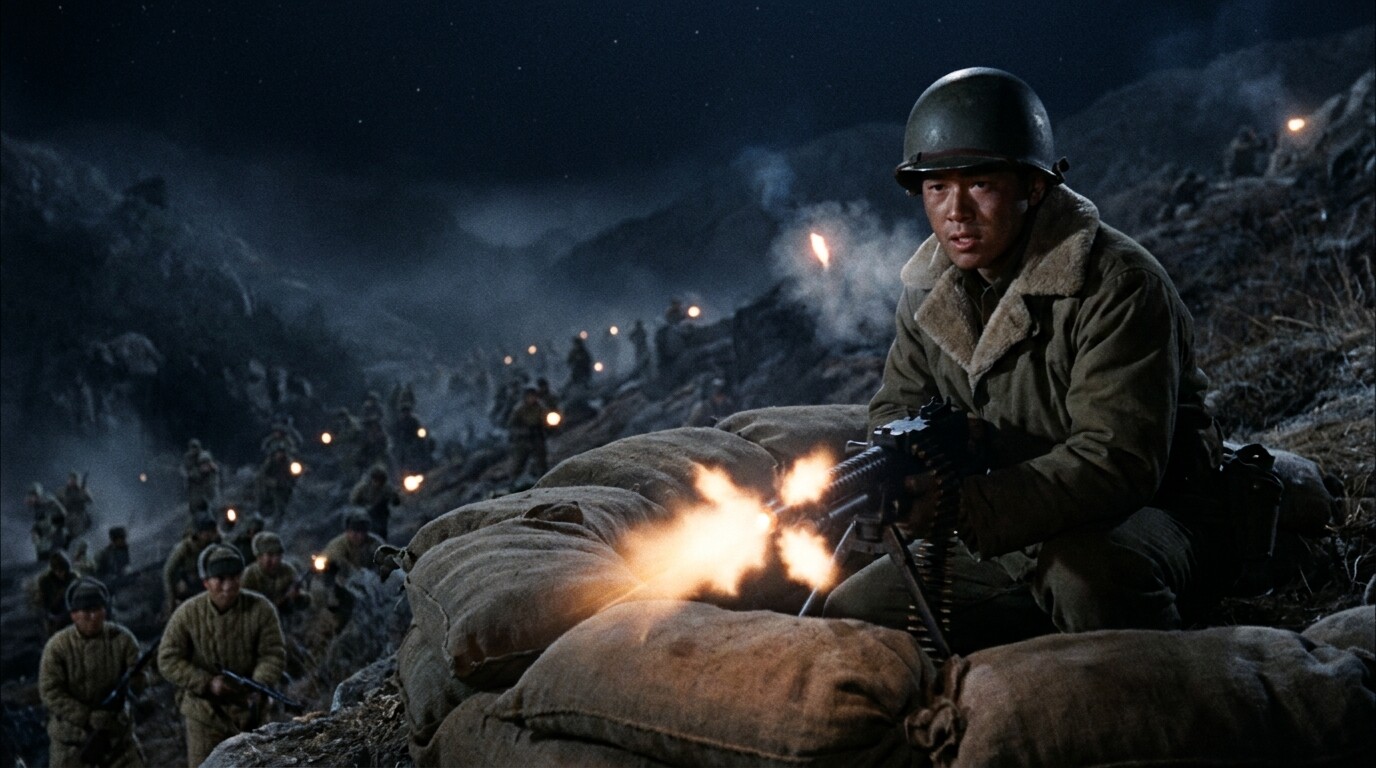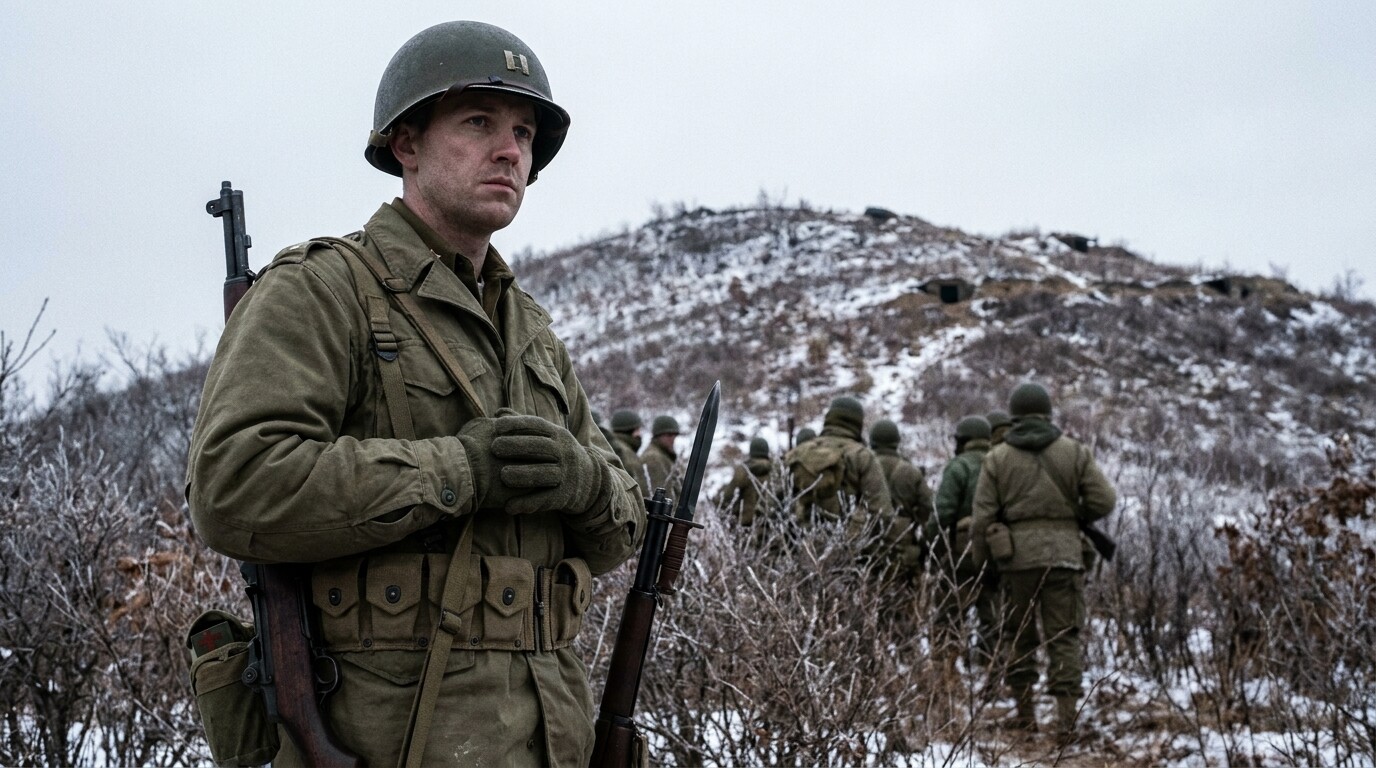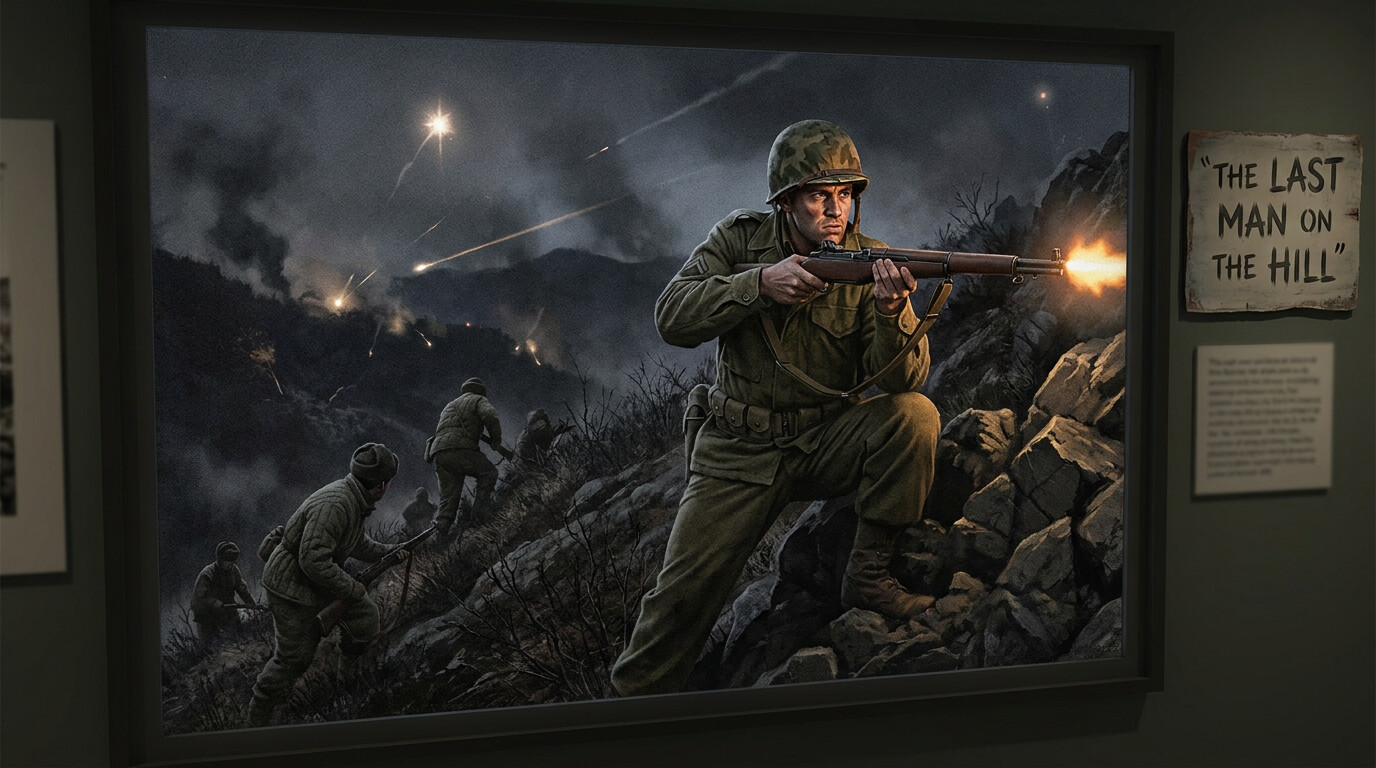
The hill had no name on any map that mattered to the men holding it. It was designated by its elevation in meters, which gave it the cold arithmetic logic of Korean terrain — a number that told you only how far you had to climb to die on it. By the late summer of 1950, the United States Army held a compressed arc of South Korean land called the Pusan Perimeter: a defensive boundary roughly fifty miles wide and a hundred miles deep, the last ground between the North Korean People's Army and total conquest of the peninsula. The 8th Cavalry Regiment, 1st Cavalry Division, had been fighting inside that arc since July. On a particular night in that late summer, a single American corporal was left to defend a hill position alone — to slow an enemy force that substantially outnumbered him, and to buy time for his unit to withdraw.
His name was Tibor Rubin. He was twenty-three years old. He had already survived things that would have ended most men before the first shot was fired.
---
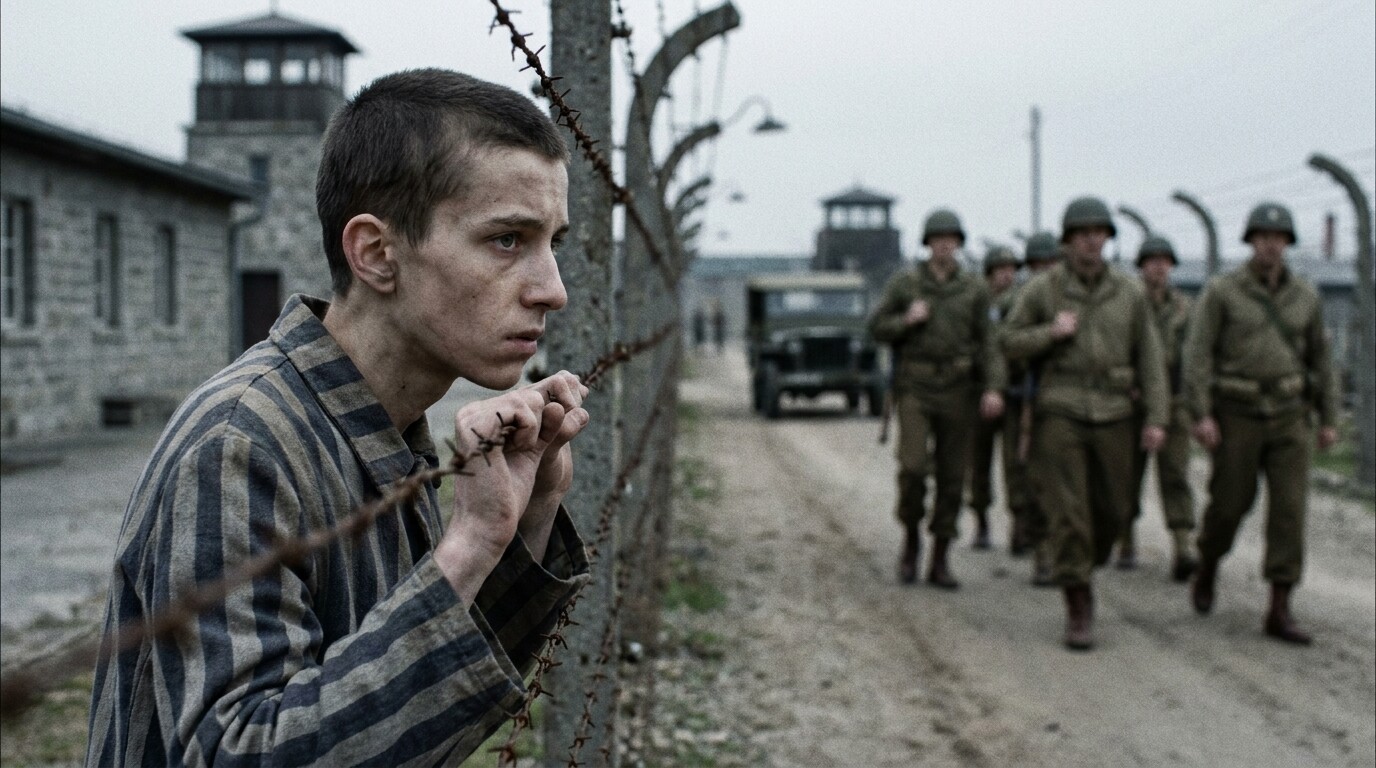
Tibor Rubin was born on June 18, 1929, in Pásztó, Hungary, a small market town in the country's northern uplands. He grew up in a Jewish family during an era when being Jewish in Central Europe was becoming a matter of survival. When the German occupation of Hungary intensified in 1944, the Rubin family was swept into the catastrophe that consumed Hungarian Jewry almost entirely in the space of months. Rubin was fourteen years old when he was deported to Mauthausen concentration camp in Austria — one of the most brutal facilities in the Nazi system, built around a granite quarry where prisoners were worked and starved to death. More than 100,000 people died at Mauthausen and its subcamps during the war. Rubin survived. He was fifteen when American soldiers liberated the camp in May 1945.
The liberation left a mark that went beyond relief. Across multiple accounts Rubin gave in later years — and in family tradition reported consistently across biographical sources — the sight of American soldiers arriving at the gate made a deep impression on the young survivor. He later expressed that he wanted to repay the United States for that act. This is a motivation reported through secondary sources and biographical accounts rather than a documented primary statement, but the consistency of the reporting across decades gives it weight as a likely expression of genuine feeling.
After the war, Rubin made his way to the American occupation zone and eventually immigrated to the United States, settling in New York. He sought to enlist in the U.S. Army almost immediately after arriving. Accounts indicate he failed the English-language entrance examination more than once but kept returning until he passed. He was inducted. This persistence is consistent with the pattern of behavior documented throughout his military service: a man who did not stop.
By the time the Korean War began with the North Korean invasion of South Korea on June 25, 1950, Rubin was in uniform and assigned to the 8th Cavalry Regiment, 1st Cavalry Division. He arrived in Korea when the situation for UN forces was desperate.
---
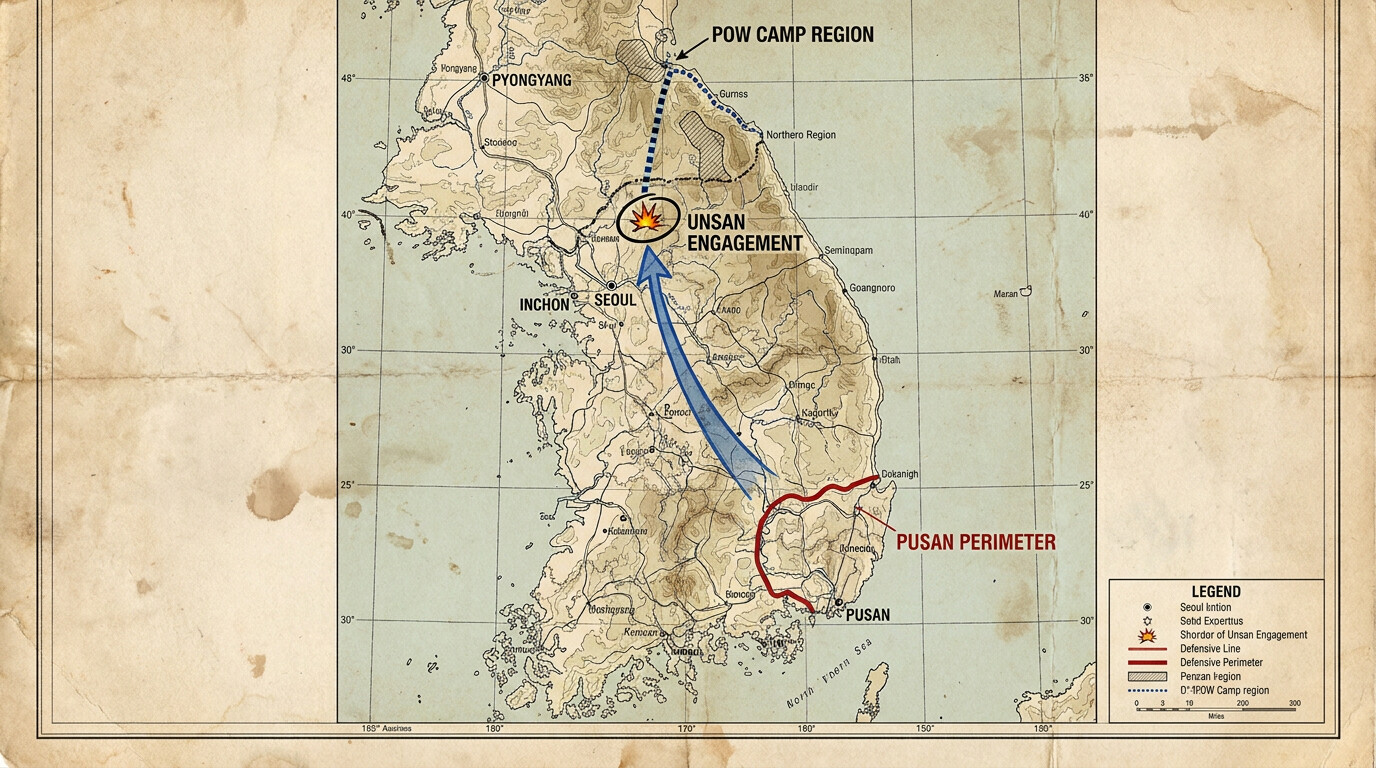
The strategic context of the Pusan Perimeter demands explanation, because it shapes every tactical decision Rubin faced. The North Korean People's Army crossed the 38th Parallel on June 25, 1950, with approximately ninety thousand soldiers organized into ten divisions, equipped with Soviet-manufactured T-34 tanks, artillery, and small arms. The Republic of Korea Army was overrun within days. Seoul fell on June 28. American forces committed under UN authority arrived in piecemeal fashion and were outgunned in the early engagements. Task Force Smith, the first American unit committed to battle, was badly mauled at Osan on July 5.
The 1st Cavalry Division landed at Pohang-dong on the east coast of Korea on July 18, 1950, and was immediately pressed into the defensive fight. The NKPA drove UN forces steadily southward through July and into August, compressing them into the Pusan Perimeter — a final defensive line anchored on the Naktong River to the west and mountains to the north, with the port city of Pusan at the southeastern corner as the critical logistics and reinforcement hub. If Pusan fell, the war was lost.
The fighting along the perimeter through August and September 1950 was ferocious and unrelenting. The NKPA launched repeated offensive operations to crack the line. American and South Korean units counterattacked, gave ground, counterattacked again. The terrain — steep ridgelines, narrow valleys, rice paddies, and dirt roads — made control of high ground tactically decisive. Units that held ridgelines could channel and observe enemy movement below. Units that lost ridgelines found their neighbors suddenly exposed.
The 8th Cavalry Regiment fought multiple engagements along the perimeter, including brutal fighting around Waegwan and the Naktong Bulge. It was during this period — the late summer of 1950, with no precise date confirmed in publicly available sources — that the events for which Tibor Rubin would eventually receive the Medal of Honor took place.
---
The action at the hill, as reconstructed from accounts of the engagement and from the summary of actions in Rubin's eventual Medal of Honor citation, unfolded in the following way.
Rubin's unit came under attack. His fellow soldiers were ordered to withdraw. Rubin remained — whether he volunteered or was ordered to stay varies across accounts, and the discrepancy is unresolved in publicly available sources — to defend the hill position and provide covering fire long enough for the withdrawal to succeed. The tactical logic was brutal and simple: someone had to hold the hill. If that someone was one man, he needed to make the enemy believe they were facing more than one man, and he needed to survive long enough to matter.
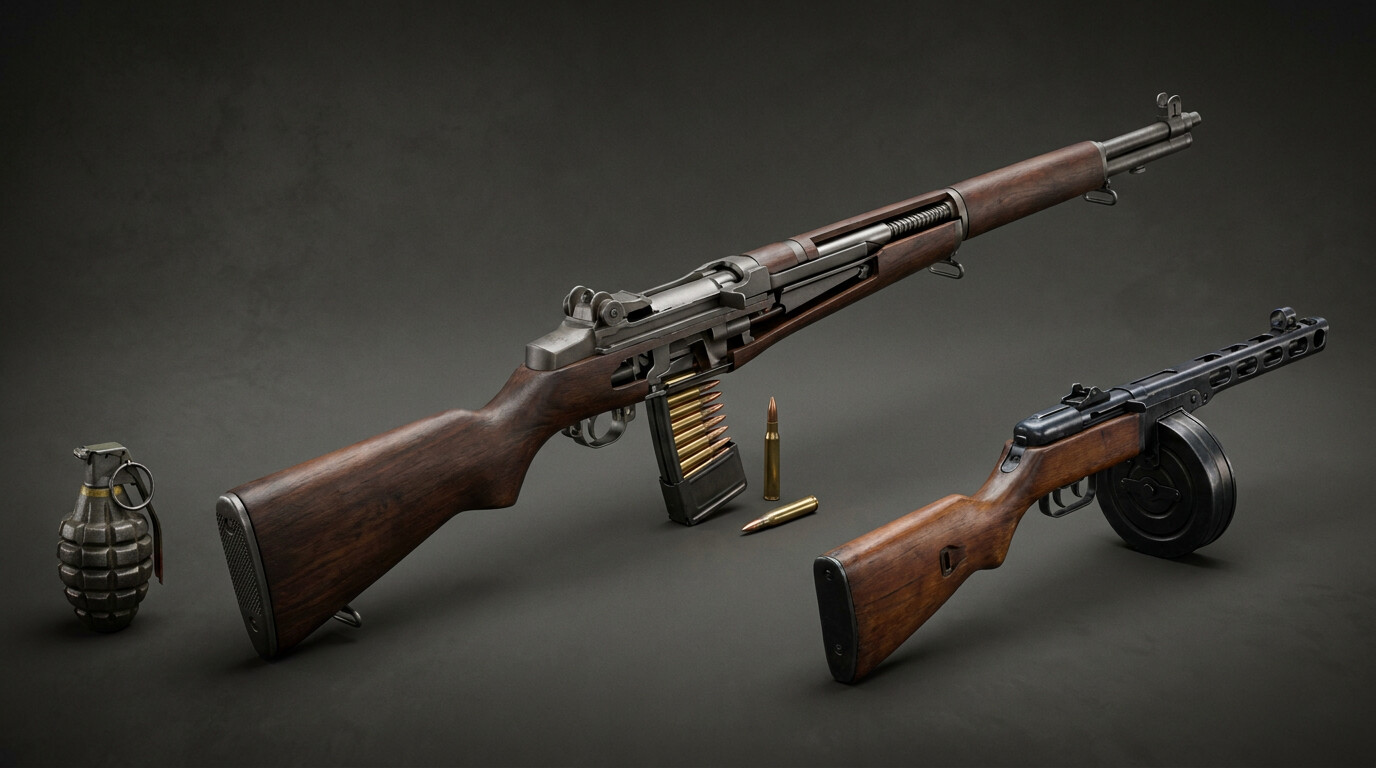
Rubin was armed with the weapons available to an American infantry corporal in Korea in 1950. His primary weapon was almost certainly an M1 Garand rifle — the standard American infantry rifle of the period, an eight-round semi-automatic weapon that fired a .30-06 Springfield cartridge with an effective aimed range of roughly 500 yards. A trained soldier with an M1 and adequate ammunition could generate enough fire, from enough positions, to suggest a more substantial defensive force than one man actually represented. He would also have carried M2 fragmentation grenades, essential for close defensive work on a hilltop — thrown over terrain features, used in darkness without exposing a muzzle flash, effective at ranges where aimed rifle fire becomes difficult.
Whether Rubin also had access to a Browning Automatic Rifle — the squad automatic weapon of the period, capable of sustained automatic fire from a 20-round magazine — is not confirmed in publicly available sources. A BAR would have significantly enhanced his ability to suppress approaching enemy troops and simulate a larger force. It is treated here as possible but unverified.
The NKPA soldiers assaulting the hill were equipped primarily with Soviet-supplied weapons: the Mosin-Nagant bolt-action rifle, the PPSh-41 submachine gun — a weapon capable of approximately 900 rounds per minute from a 71-round drum magazine, giving assault troops devastating close-range fire volume — and the Degtyaryov DP-28 light machine gun for suppressive fire. The asymmetry of the fight was not simply numbers. It was also the geometry of assault: Rubin held high ground and knew his terrain. His attackers had to come up exposed slopes, in the dark, against a position they could not fully see.
According to the citation summary and consistent accounts, Rubin defended the position through the night. He moved constantly, firing from multiple positions. He used grenades. He repelled multiple assaults. He held the hill. His unit withdrew successfully. He eventually rejoined friendly forces.
This is what the record says happened. The precise sequence of enemy approaches, the exact firing positions, the moment-by-moment detail of the night — these cannot be reconstructed from publicly available sources. What can be said is that the outcome speaks for itself: the withdrawal succeeded, and Rubin survived a solo night defense against a numerically superior attacking force.
---
The perimeter fighting ended not with a collapse but with a transformation. On September 15, 1950, the amphibious landing at Inchon — far up the Korean west coast, near Seoul — threatened the NKPA's logistical lifeline and strategic rear. The North Korean forces besieging the Pusan Perimeter suddenly faced encirclement. UN forces broke out and drove north. Seoul was recaptured on September 28. By early October, American and South Korean forces were crossing the 38th Parallel in pursuit.
The 8th Cavalry Regiment moved north with the advance. In late October 1950, it met catastrophe.
On the night of November 1–2, 1950, at Unsan in North Korea, the regiment was struck by Chinese People's Volunteer Army forces that had secretly entered Korea in massive numbers. The Battle of Unsan was a disaster. Three battalions were surrounded and shattered. Casualties were severe. Many soldiers were killed; many more were captured. Tibor Rubin was among those taken prisoner.
The exact circumstances of his capture are not established in publicly available sources. What is documented is that he entered the North Korean and Chinese prisoner of war system and spent the next thirty-three months in captivity — from late 1950 to the summer of 1953, when the Korean War Armistice was signed on July 27, 1953.
---
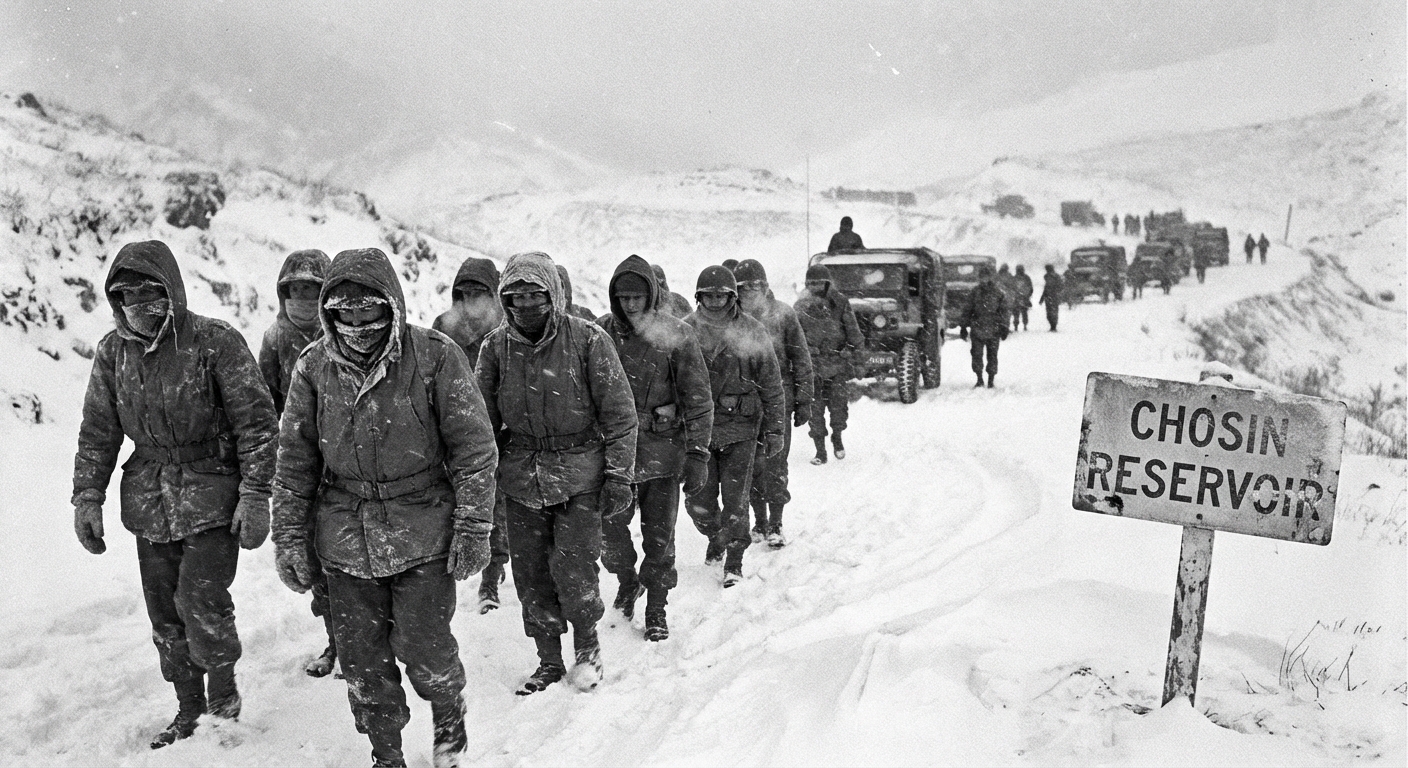
The prisoner of war camps of the Korean War were places of deliberate physical destruction. Chinese and North Korean authorities used starvation, exposure, forced labor, and ideological coercion as systematic tools. Mortality rates in the camps during the first winter of 1950–51 were catastrophic — American POW deaths in that period numbered in the thousands, driven by malnutrition, dysentery, pneumonia, and the effects of the brutal Korean winter on men captured in summer uniforms.
Rubin's experience in the camps, as described across multiple accounts and in the citation summary, followed a pattern he had practiced before — in Mauthausen. He knew what starvation looked like. He knew what happened to men who stopped moving, stopped eating, stopped resisting the slow gravity of physical collapse. He had watched it in the concentration camp when he was fourteen, and he had decided then that he was not going to be one of those men.
In the POW camp — the specific camp or camps where Rubin was held are not confirmed in publicly available sources; Camps 2 and 5 in North Korea near the Yalu River are associated with 1st Cavalry Division prisoners of this period, but this requires archival confirmation for Rubin specifically — he began doing at night what he had done on the hill: operating alone, under threat of death, to keep people alive.
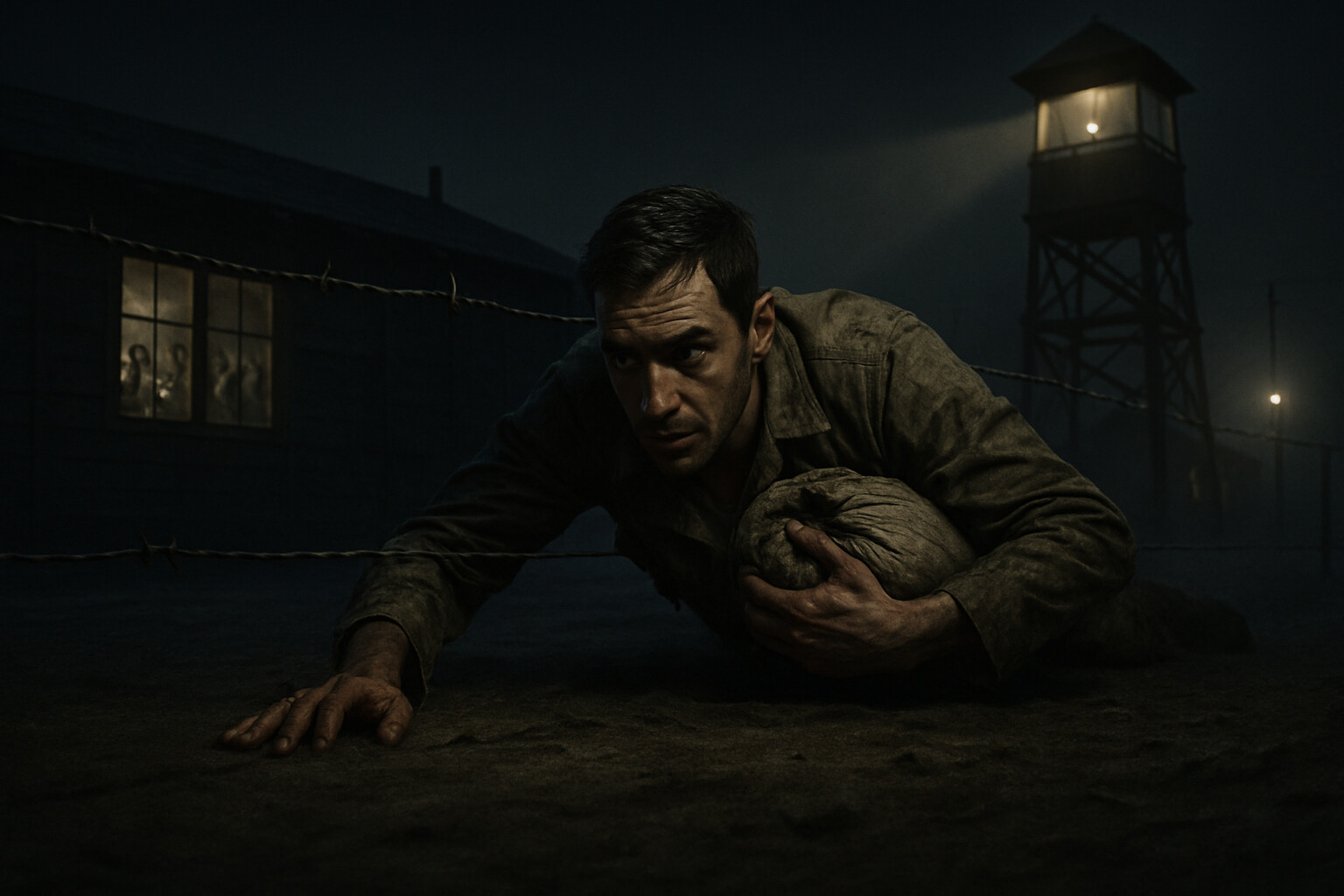
He went through or under the perimeter fencing. He located Chinese and North Korean food storage areas — grain stores, vegetable caches, supply depots. He stole what he could carry and brought it back to American prisoners. He did this repeatedly, over months that stretched into years. According to multiple accounts and the citation summary, the food he provided kept men alive who would otherwise have died. He also reportedly used improvised medical knowledge to treat sick and wounded fellow prisoners — this detail appears in multiple biographical sources but cannot be fully confirmed from primary records in publicly available sources.
The risk was total. Discovery during a night run meant execution, or severe punishment that could itself prove fatal. Guards were armed. Perimeter areas were watched. The terrain outside the wire, in the mountains of North Korea, offered limited cover. Rubin went anyway. The consistency of accounts across multiple independent sources — fellow survivors, later interviews, the Congressional investigation that preceded his medal — indicates a sustained pattern of behavior rather than a single incident.
Some accounts report that Rubin's captors offered him early release because of his Hungarian origin — Hungary being at that time a Soviet satellite state — and that he refused to leave his fellow American prisoners. This detail appears across multiple sources but cannot be confirmed from primary records available publicly. It should be treated as reported tradition rather than established fact. It is, however, consistent with every other documented aspect of his conduct.
---
There is a layer to Rubin's story that matters for understanding why his medal took fifty-five years to arrive.
Across multiple accounts, and in the Congressional record that accompanied the review of his case, a sergeant with whom Rubin had a hostile relationship is reported to have consistently suppressed Rubin's nominations for decoration. Fellow soldiers who witnessed both the hill defense and the camp activities reportedly submitted Medal of Honor recommendations at the time and afterward, but those nominations did not advance. The Congressional record documents both the pattern of suppression and the allegation that antisemitism was the motivating factor. The pattern of blocked nominations across multiple independent witnesses is documented. The internal motivation cannot be proven at the level of individual intent.
Rubin's case was reviewed as part of a broader late-1990s and early-2000s Army examination of potentially overlooked valor awards among Jewish American and minority veterans of World War II and Korea — a review that produced a number of Medal of Honor awards. The review concluded that Rubin met the criteria.
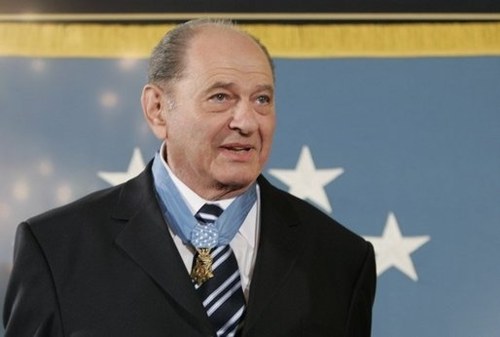
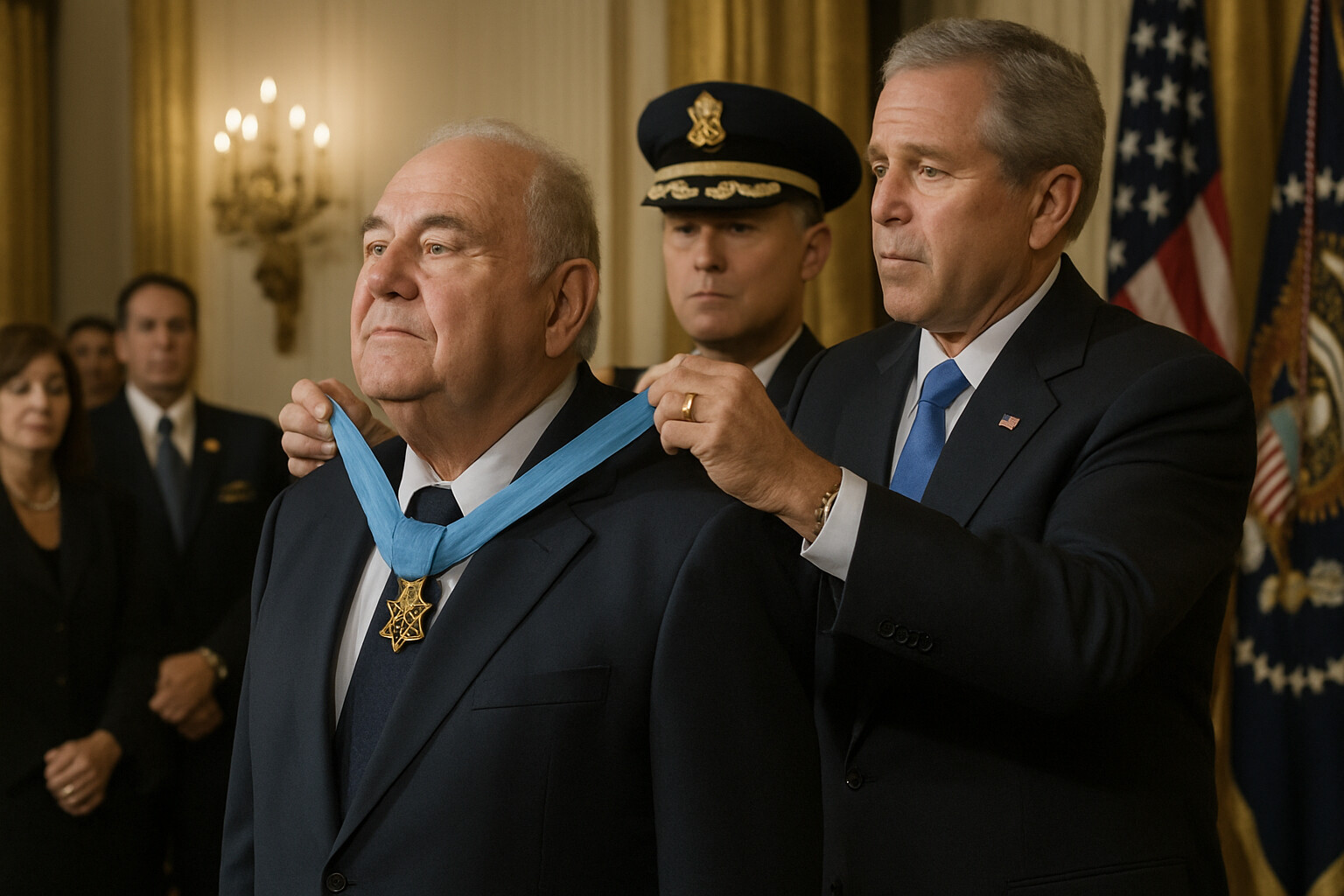
President George W. Bush awarded Corporal Tibor Rubin the Medal of Honor on June 23, 2005. Rubin was seventy-five years old. He had waited fifty-five years.
---
The citation authorized by the President and the Secretary of the Army, based on the Congressional and Army review, covers both the hill defense and the POW camp actions. According to multiple published sources and the Congressional record, the citation credits Corporal Rubin with extraordinary heroism during a period running from approximately July 23, 1950, through April 20, 1953: the solo hilltop defense that enabled his unit's withdrawal, and the repeated theft of food and provision of aid to fellow prisoners at the constant risk of his life. Researchers requiring the verbatim official citation text should consult the Congressional Medal of Honor Society records or the U.S. Army Center of Military History directly.
The Medal of Honor is the United States' highest military decoration, awarded in the name of Congress to members of the armed forces who have distinguished themselves by acts of valor above and beyond the call of duty while engaged in action against an enemy. The criteria specifically require risk of life so extraordinary that it sets the recipient apart from comrades.
For the hill: holding a position alone through a night assault so that others can escape is exactly this.
For the camp: going through a guarded wire repeatedly over two years to steal food for dying men, when discovery meant execution, is exactly this.
Rubin performed both. In that order. In the same war. And had done something comparable before — in a different camp, in a different country, as a child.
---
Tibor Rubin was discharged from the Army and settled in Garden Grove, California, where he operated a business for many years. He spoke at schools, gave accounts of his experiences, and was active in veteran and Jewish community organizations. After his medal, he became a more publicly recognized figure in both the Korean War veteran community and in discussions of Holocaust memory and American immigration.
He died on December 5, 2015, in Garden Grove, California. He was eighty-six years old.
His obituaries noted the Medal of Honor. They also noted, with some consistency, a thread that runs through his entire story: he had survived Mauthausen, crossed an ocean, failed an entrance exam and refused to quit, held a hill alone at night, survived a catastrophic ambush, spent nearly three years in a prison camp stealing food for strangers, and then spent fifty-five more years waiting for an official acknowledgment of what the men who lived because of him already knew.
The wait is part of the story. The actions were the same on day one as they were when the citation was finally signed. The hill did not change. The wire did not change. The food he carried back through the dark did not change.
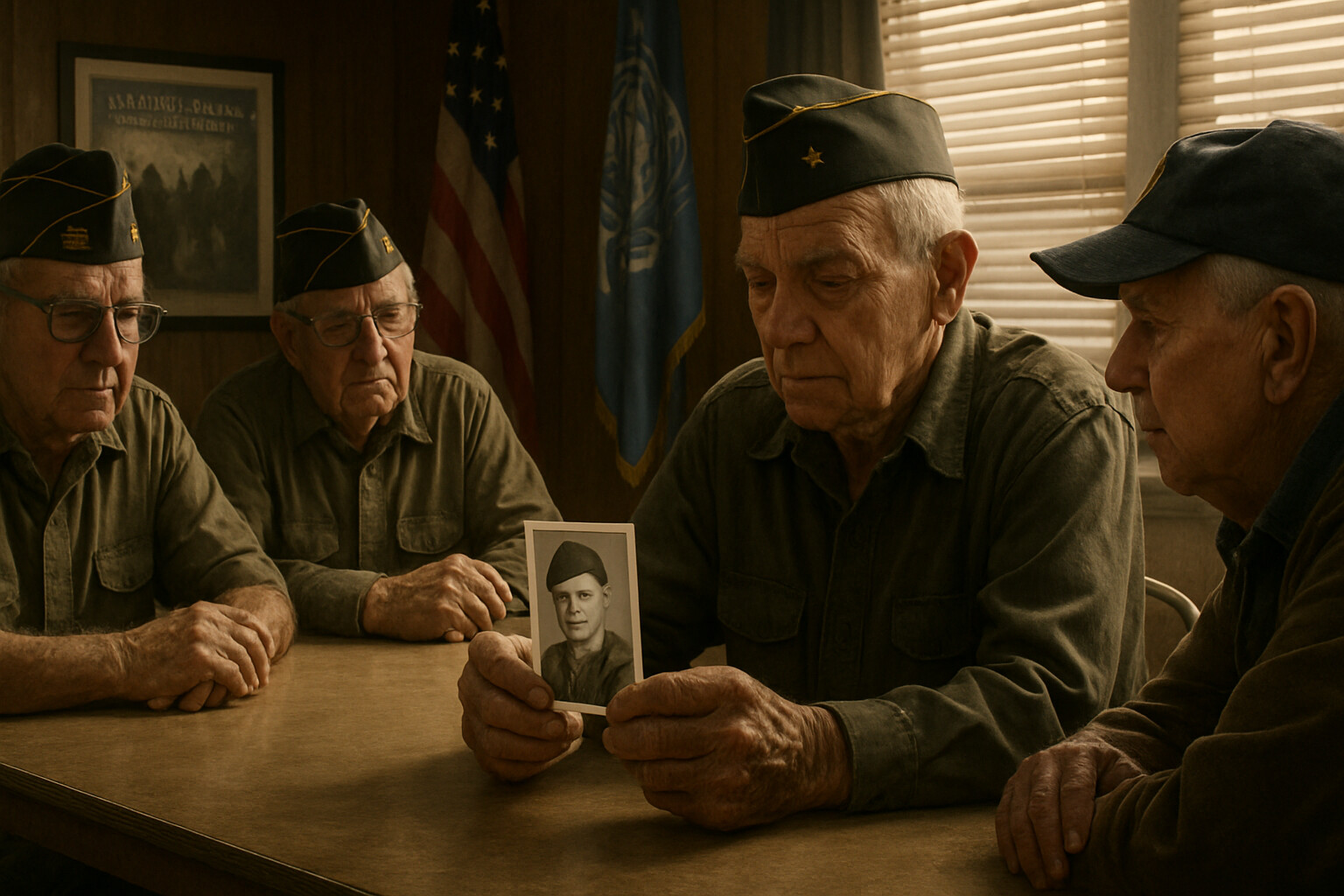
What changed was that enough people finally pressed hard enough that the record caught up with the man.
---
The 8th Cavalry Regiment has a history that precedes Korea by nearly a century — organized in 1866 as horse cavalry, serving in the Indian Wars, the Spanish-American War, and World War II before Korea. By 1950 it was a ground infantry regiment in fact as well as name, its cavalry designation a lineage marker rather than a tactical description. The regiment suffered severe losses at Unsan in November 1950, an event that entered divisional memory as one of the costliest single engagements for American arms since the Second World War. Rubin's capture at or near Unsan places him in the middle of one of the worst nights the regiment ever experienced.
His survival of that night, and of the thirty-three months that followed, and of the fourteen years before that, is a matter of the historical record. The record is incomplete in places — the precise date of the hill action, the exact location of the position, the specific weapons he carried, the names of the men whose survival he sustained — and those gaps are worth acknowledging rather than covering over with false precision.
What the record does establish, across multiple independent lines of testimony and the Army's own review process, is that Tibor Rubin did what the citation says he did. A man who had learned at Mauthausen what it meant to be the only thing standing between a prisoner and death went to Korea and, more than once, became exactly that.
In the accounts that survive, he did not frame himself in heroic terms. He described the men around him — the ones who died, the ones who almost died, the ones he managed to bring something to eat. That framing is consistent across the sources, and it suggests a man who understood, from deep personal experience, that survival is not a solo act. It requires someone to go through the wire.
Tibor Rubin went through the wire. He had been going through it, in one form or another, since he was fourteen years old.
That is what the record shows. That is enough.