The hill did not look like much from the road.
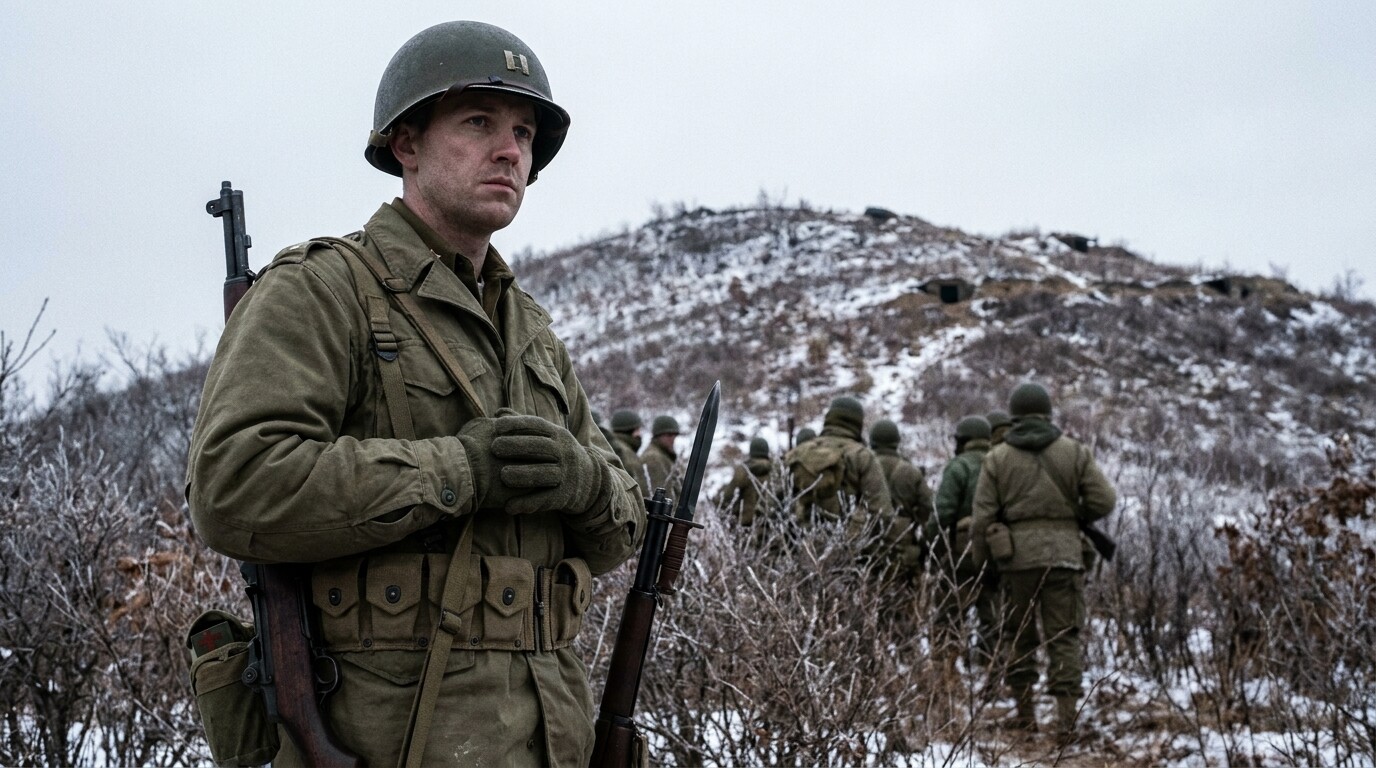
From the valley floor near Soam-Ni, Hill 180 was a brown and grey mass rising roughly 180 meters above the surrounding terrain, its ridgelines scarred by fighting, its slopes cut with Chinese entrenchments. In the first week of February 1951, the Korean winter still held the peninsula hard. The ground was frozen solid. Breath misted in the air. The landscape had the flat, exhausted look of a war that had been going badly for months.
Captain Lewis Lee Millett stood near his men and studied the problem in front of him.
---
**The Man Before the Hill**
Millett was thirty years old in February 1951, and he had already lived more lives than most soldiers twice his age. Born in Mechanic Falls, Maine, on December 15, 1920, he came of age in an era when military service was woven into the fabric of ordinary American life. When the United States edged toward involvement in the Second World War, Millett did not wait. In 1941, before Pearl Harbor, before the draft reached him, he enlisted in the Canadian Army and eventually made his way to British forces — an act of impatience with American neutrality that was technically a violation of federal law. After December 7, 1941, he transferred to the U.S. Army. A desertion charge arising from his original unauthorized departure was reportedly resolved administratively; the precise details of that resolution are drawn from published secondary sources and should be confirmed against primary records.
He served in North Africa and Europe during World War II, earning a reputation as an aggressive, front-leaning infantry officer. By the time he arrived in Korea with the 27th Infantry Regiment — the Wolfhounds — he was a seasoned captain commanding Easy Company, a rifle company in the 2nd Battalion. His men knew him as an officer who led from the front rather than directing from behind. That was not merely personality. It was tactical doctrine as Millett understood it: the company commander who stays back loses touch with the fight; the one who moves with his lead elements shapes it.
The 27th Infantry Regiment carried one of the proudest lineages in the U.S. Army. The regiment had earned its Wolfhounds nickname during its deployment to Siberia in 1918 — the precise origin of the name is a matter of regimental tradition, attributed to the way Russian villagers described the regiment's relentless pursuit of Bolshevik forces, though the account is not independently confirmed in the sources consulted here. The regiment had fought in the Pacific during World War II and arrived in Korea as part of the 25th Infantry Division in the opening weeks of the conflict. By early 1951, it had been tested repeatedly: at Sangju, at the Naktong River, in the desperate fighting that prevented the total collapse of the Pusan Perimeter. The Wolfhounds were a hard regiment, and Easy Company was part of that hardness.
---
**Korea in February 1951: The Strategic Situation**
To understand what Easy Company was doing at the base of Hill 180 on February 7, 1951, it helps to understand how violently the Korean War had reversed itself in the preceding months.
In June 1950, North Korean forces surged across the 38th Parallel and drove United Nations forces into a shrinking perimeter around the port of Pusan. By September, General Douglas MacArthur's amphibious landing at Inchon turned the war around: UN forces swept north, recaptured Seoul, crossed the 38th Parallel, and drove toward the Yalu River. For a brief period in late October 1950, unification of Korea seemed possible.
Then China entered the war.

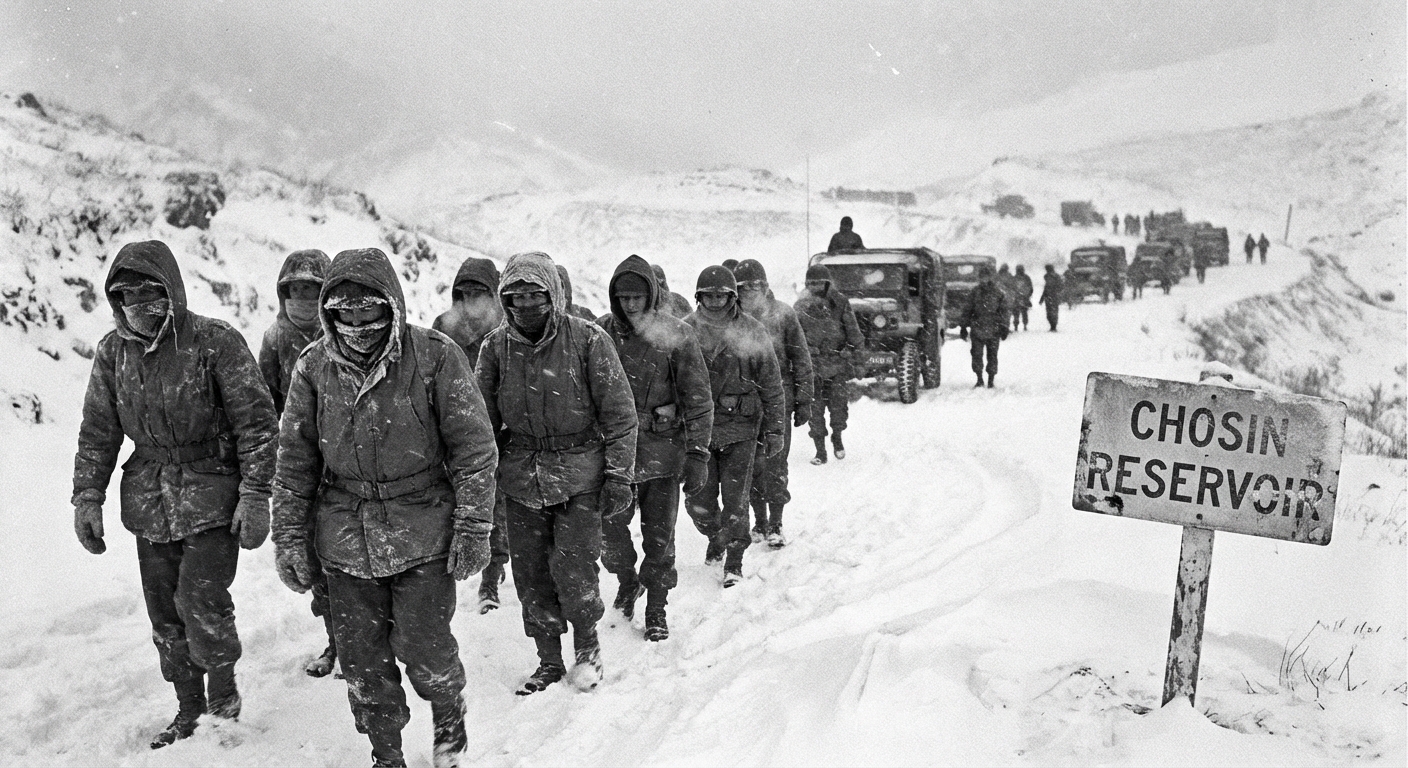
In late October and November 1950, hundreds of thousands of Chinese People's Volunteer Army troops crossed the Yalu and struck UN forces with devastating force. The collapse was rapid and in places catastrophic. The 1st Marine Division fought its way out of the Chosin Reservoir in one of the most grueling retreats in American military history. The 8th Army fell back south of the 38th Parallel. Seoul fell again in January 1951. By early February, UN forces were conducting counteroffensive operations to push Chinese and North Korean forces back north — probing, striking, attempting to regain the initiative.
Operation Punch was one such effort. Launched by the 25th Infantry Division, it was designed to destroy an estimated two Chinese battalions dug into a series of hills northwest of Suwon. The name was literal in intent: a short, hard blow to clear enemy forces from commanding terrain and push the front line northward. Hill 180 near Soam-Ni was one of the objectives. The Chinese troops holding it had been there long enough to improve their defenses, and they had every advantage that prepared ground gives a defender.
Easy Company had the assignment to take it.
---
**The Ground**
Hill 180 was not dramatic terrain. It was tactical ground: a rise that gave whoever held it observation and fields of fire over the valley approaches. The Chinese garrison had used their time well. The slopes were laced with fighting positions connected by trenches, with firing pits oriented toward the most likely avenues of approach. Based on the terrain and general Chinese defensive practice of the period, the position appears to have been a layered defense, with positions on the lower slopes covering approaches to stronger works higher up — though the precise layout of Chinese defenses on Hill 180 has not been confirmed from primary sources consulted for this account.
For an attacking infantry company, this presented a specific problem. Preparatory fires — artillery and mortars — could suppress defenders and destroy some positions, but they could not eliminate all of them. The Chinese had dug in carefully, and the frozen ground made their positions durable under all but direct hits. When the artillery lifted and infantry moved forward, whatever Chinese soldiers survived in their positions would be able to engage the attackers as they crossed open ground on the slopes.
This is the fundamental dilemma of infantry assault on prepared ground: the closer you get to the enemy position, the more dangerous it becomes for supporting fires to continue — and the more vulnerable your men are to direct fire from defenders who, if they have discipline and cover, can inflict serious casualties on an attacking force crossing open ground.
Millett's solution to this problem was direct and ancient.
---
**Preparation**
Before the assault, Easy Company was prepared and positioned. Mortar and artillery support was coordinated. Standard American infantry doctrine of the period called for fire and movement: one element suppressing the enemy while another closed with the objective, alternating roles as the assault element advanced.
But Millett had assessed the ground and arrived at a different conclusion — one that his superiors would later describe, in the reconstruction offered by subsequent histories, as tactically sound for the specific problem Hill 180 presented. The Chinese positions were layered and mutually supporting. A methodical fire-and-movement approach up the slope would take time, and time on an open slope under direct fire was time spent dying. Suppression close enough to protect advancing soldiers would, if maintained too long, become a danger to those soldiers as they neared the top.
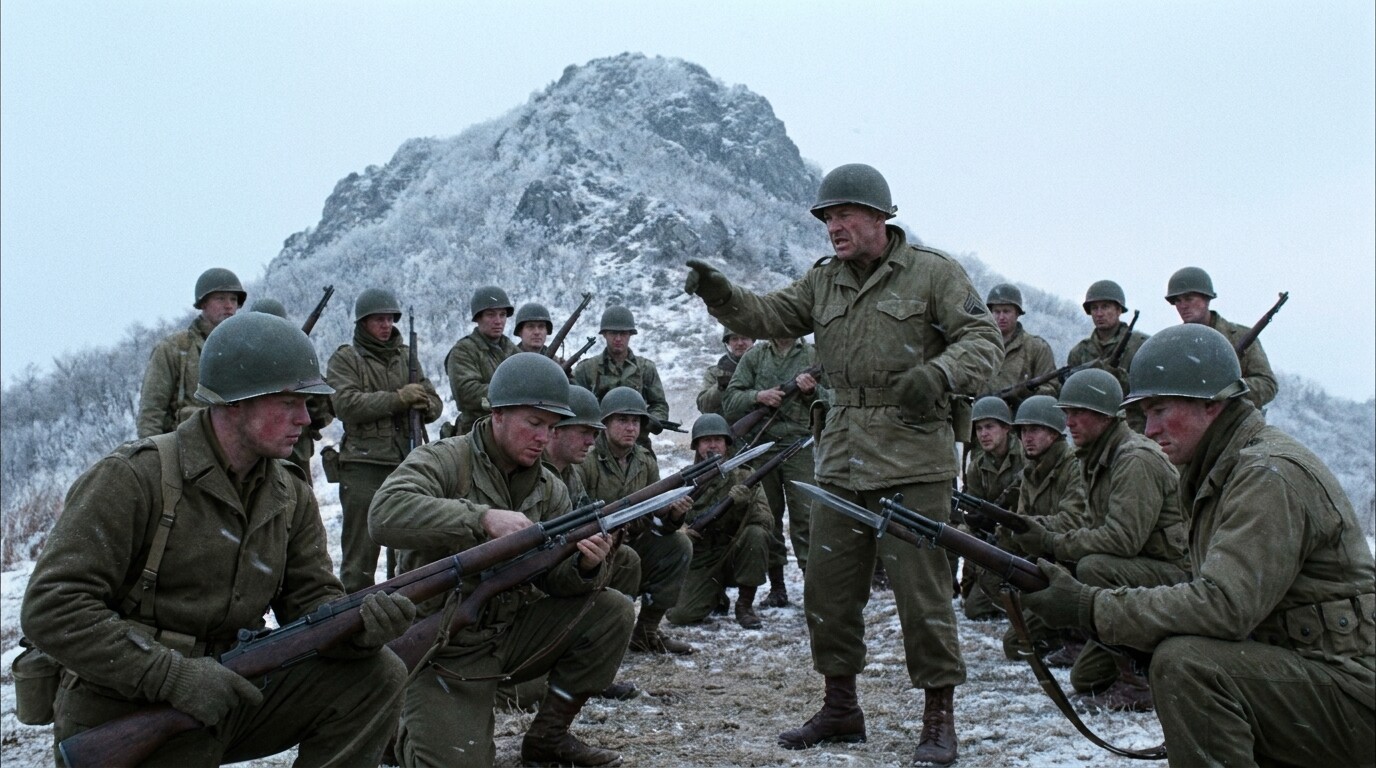
The answer, as Millett judged it, was speed. Not a cautious advance but a full assault, closing the distance fast enough to deny the defenders time to recover between the end of preparatory fire and the arrival of American soldiers in their positions.
He ordered bayonets fixed.
This was not a casual order, and the men of Easy Company understood it was not. The bayonet had been standard American infantry equipment through both World Wars and into Korea, but its practical use in assault had become increasingly rare as the range and volume of modern firearms made close-quarters fighting a last resort rather than a primary tactic. To fix bayonets before an assault in 1951 was to signal that the commander intended to close all the way — to enter the enemy position, not merely suppress it from the forward edge.
Millett fixed his own bayonet and went forward with his men.
---
**The Assault**
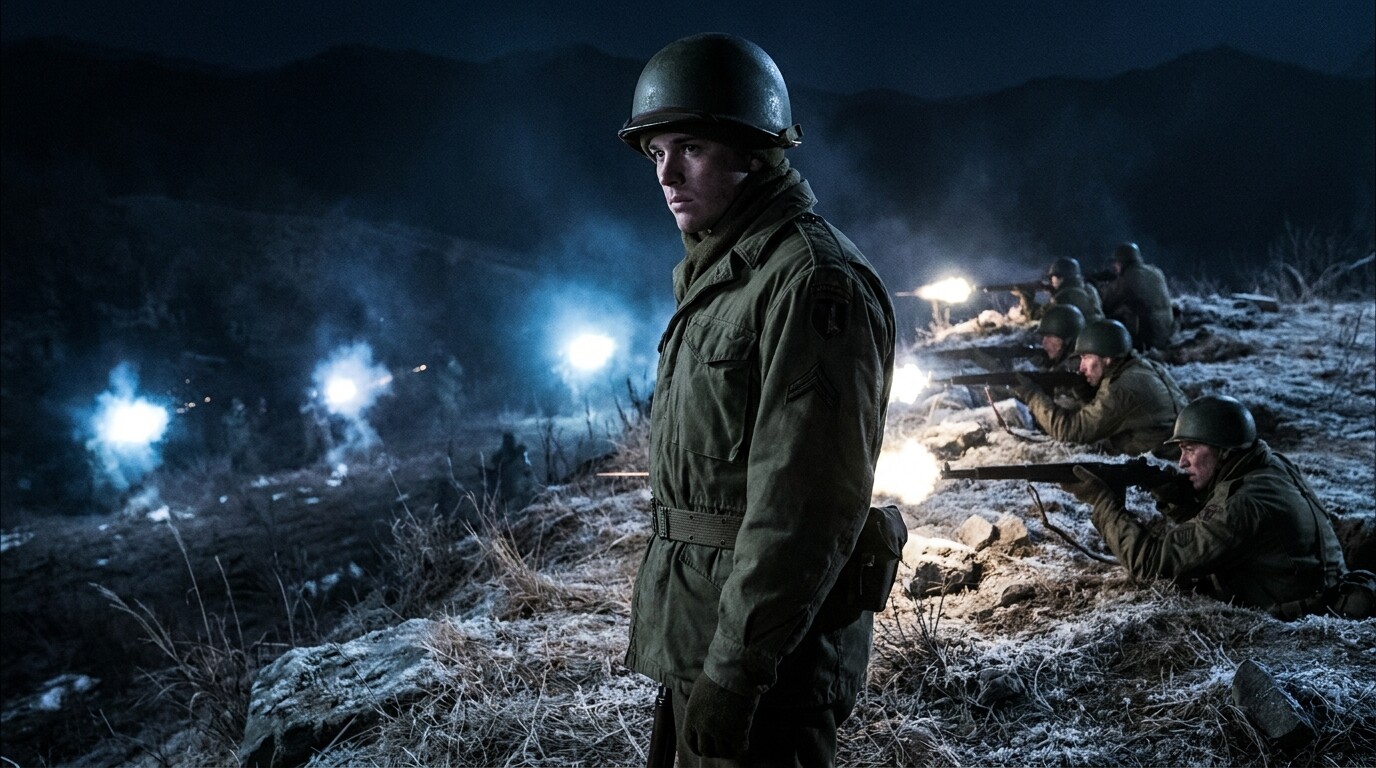
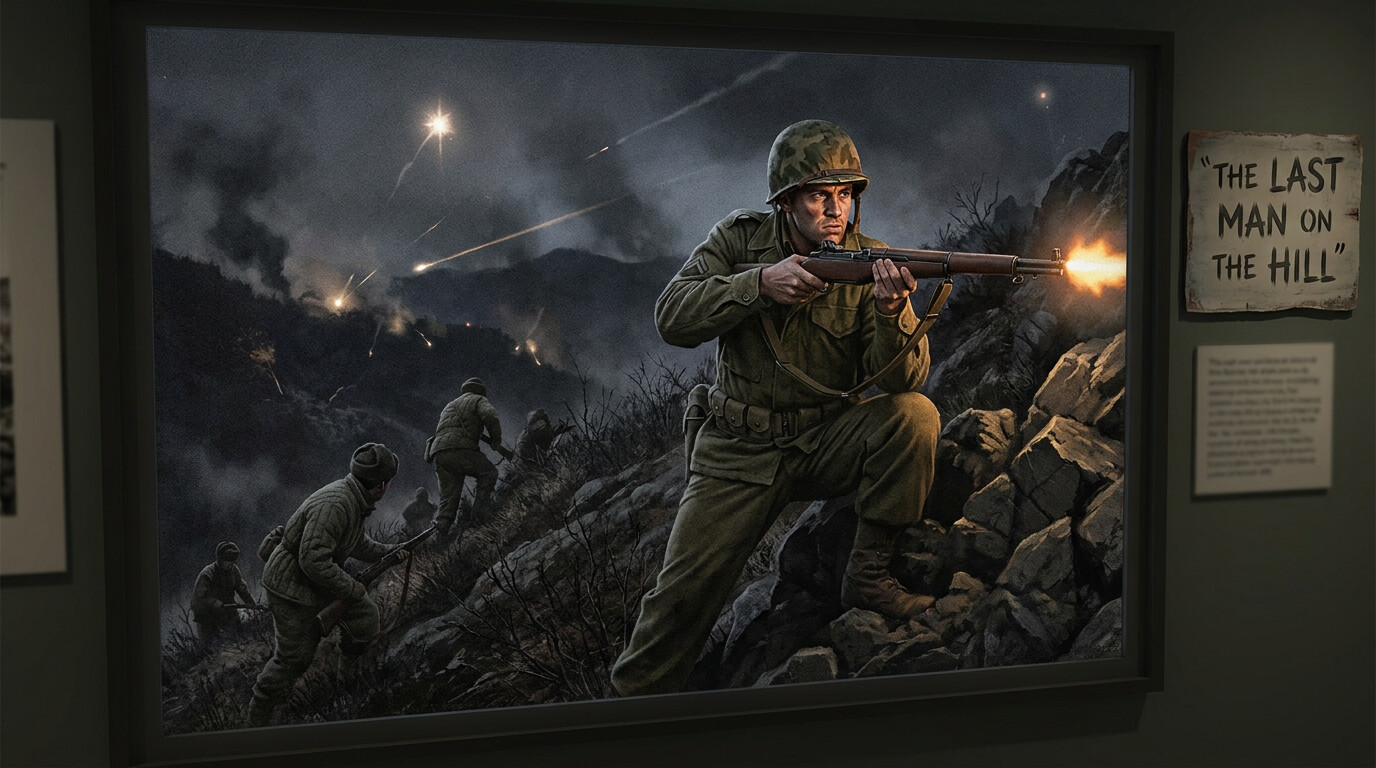
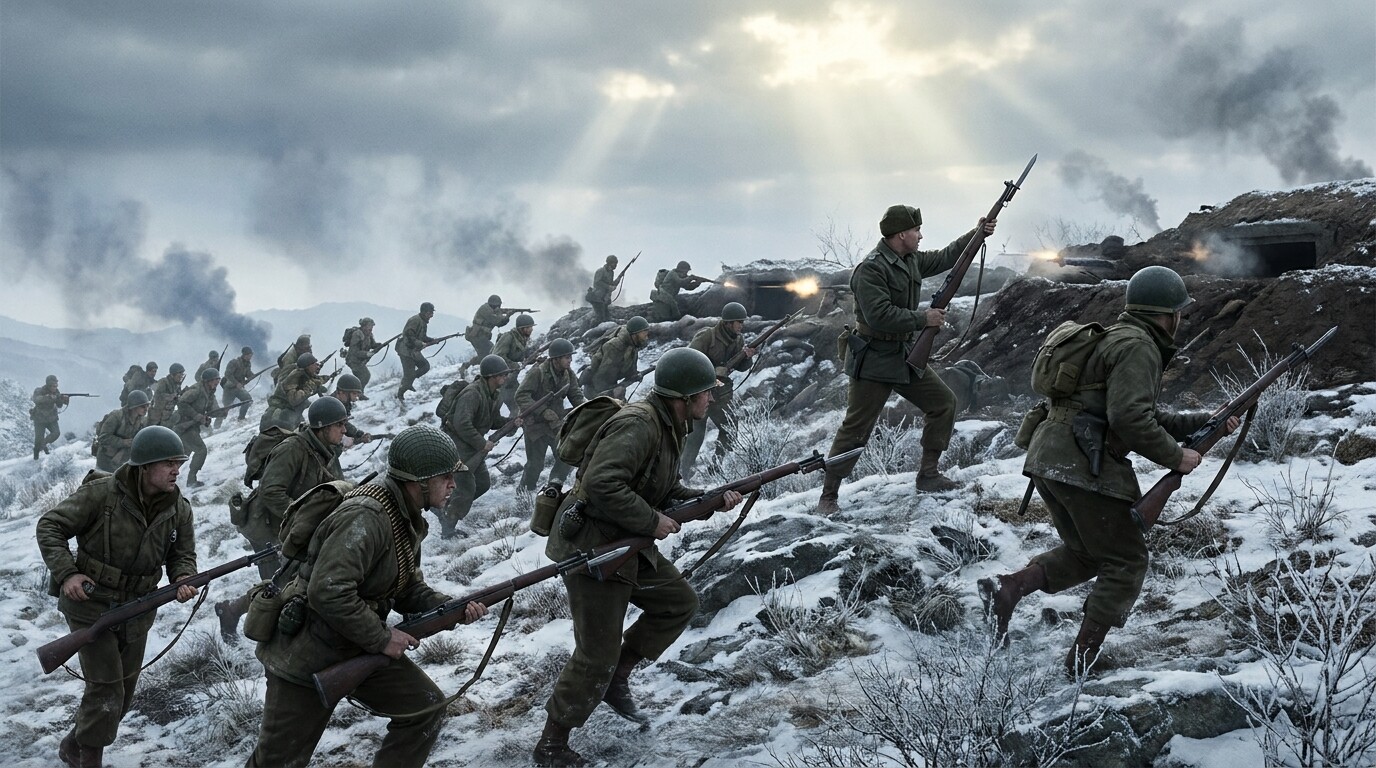
The attack stepped off under supporting fire. Mortars and artillery worked the Chinese positions on the upper slopes. Easy Company moved up the lower approaches in the cold February air, the ground hard underfoot, the hillside rising ahead.
As the company climbed and the supporting fire shifted and lifted, Chinese defenders in surviving positions opened up. Fire came from fighting positions dug into the slope and from positions higher on the hill. Men went down.
Millett did not slow the company. He drove it forward, closing the distance at the pace the assault demanded. The tactical logic was brutal and simple: at close range, the Chinese could not bring their full firepower to bear without risk to themselves; their prepared positions, oriented for engagement at distance, became less effective as the attackers closed to within grenade range and then closer still.
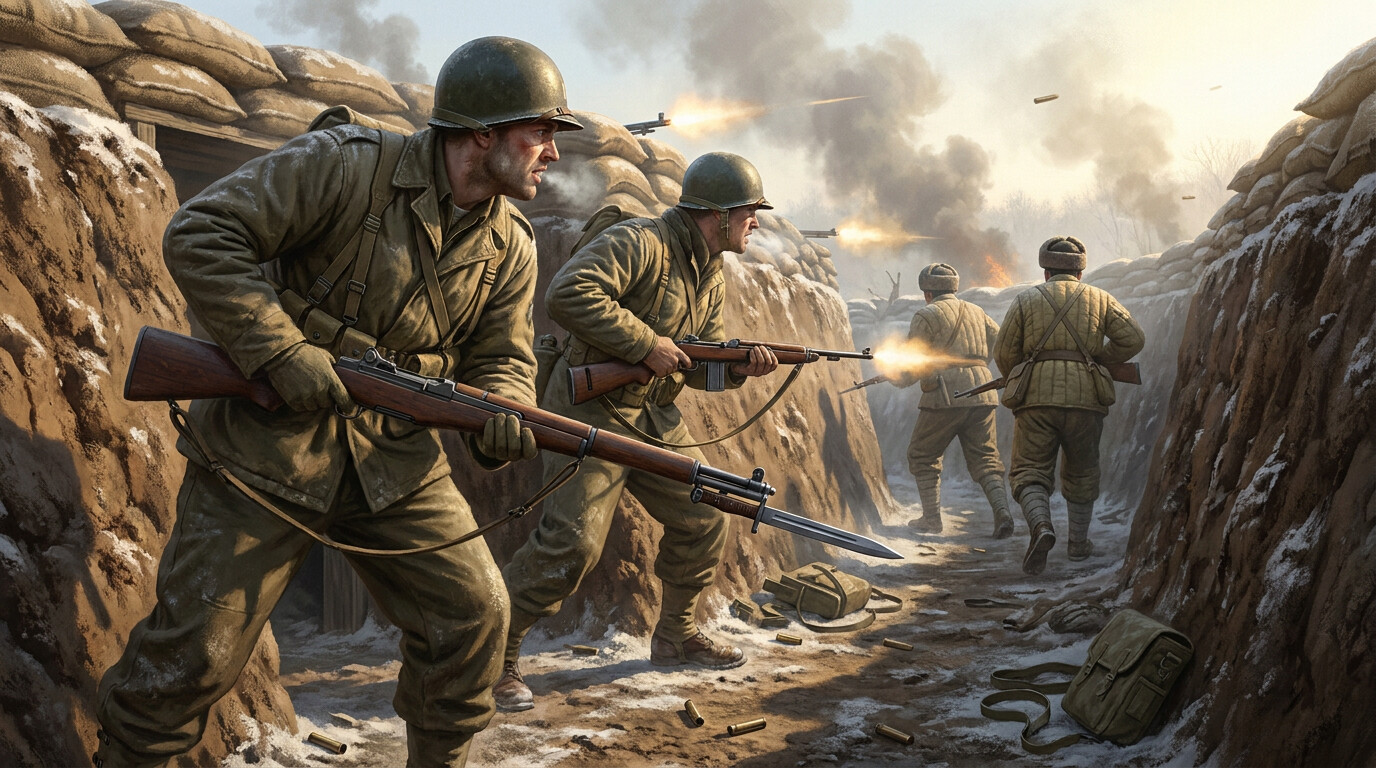
What followed on the slope of Hill 180 was close combat of a kind the U.S. Army had not conducted at scale since the trench raids of the First World War. Easy Company went into the Chinese positions with bayonets, grenades, and rifle fire at ranges measured in feet. Millett himself was in the middle of it, moving through the position and directing his men.
The fighting swept up the hill and through successive lines of Chinese entrenchments. The speed of the assault, the violence of the close-quarters fighting, and the inability of the Chinese garrison to recover between the end of the preparatory barrage and the arrival of American soldiers in their positions combined to fracture the defense. Chinese soldiers who were not killed or captured in their positions fell back from the crest.
Easy Company took Hill 180.
The assault lasted, by various accounts, a matter of minutes from the moment the company closed to bayonet range — though the precise duration has not been established in the sources consulted here. Those minutes were measured in a ferocity that left an impression on everyone who participated or observed. Millett sustained wounds during the assault — wounds documented in his Medal of Honor citation — that did not stop him from continuing to lead his men through the position until the objective was secured.
The number of Chinese casualties on the hill is not precisely established in available records. Easy Company suffered casualties as well. The assault was not without cost to the attackers.
---
**The Mechanics of Close Combat: Why Bayonets in 1951**
The question that arises naturally from this account is: why bayonets in 1951? The Korean War was a modern conflict with artillery, aircraft, and automatic weapons available in quantity. The bayonet seemed, to many observers then and since, like a medieval weapon dragged into the jet age.
The answer is both tactical and physical.
Tactically, as described above, the bayonet charge solved a specific problem: it collapsed the time between the end of supporting fires and the arrival of assault troops in the enemy position. A Chinese defender who has had thirty seconds to recover from suppression can bring a weapon to bear on a soldier crossing open ground. A Chinese defender who has had no time to recover because the attacker is already in his trench has a very different problem.
Physically, the bayonet was a supplement to, not a replacement for, rifle fire. The primary killing tools in the assault on Hill 180 were the M1 Garand rifle and the M2 carbine, fired at close range. The bayonet was the last resort when a round was not chambered, when a weapon was empty, or when the fighting closed to physical contact. Its significance in this action was less about the number of Chinese soldiers actually bayoneted and more about what the order communicated to Easy Company: we are going all the way in, at maximum speed, without stopping.
The psychological effect on the defenders of seeing an infantry company charging uphill with fixed bayonets is not quantifiable in after-action reports, but it was a factor that infantry officers of the period recognized and that Millett clearly understood.
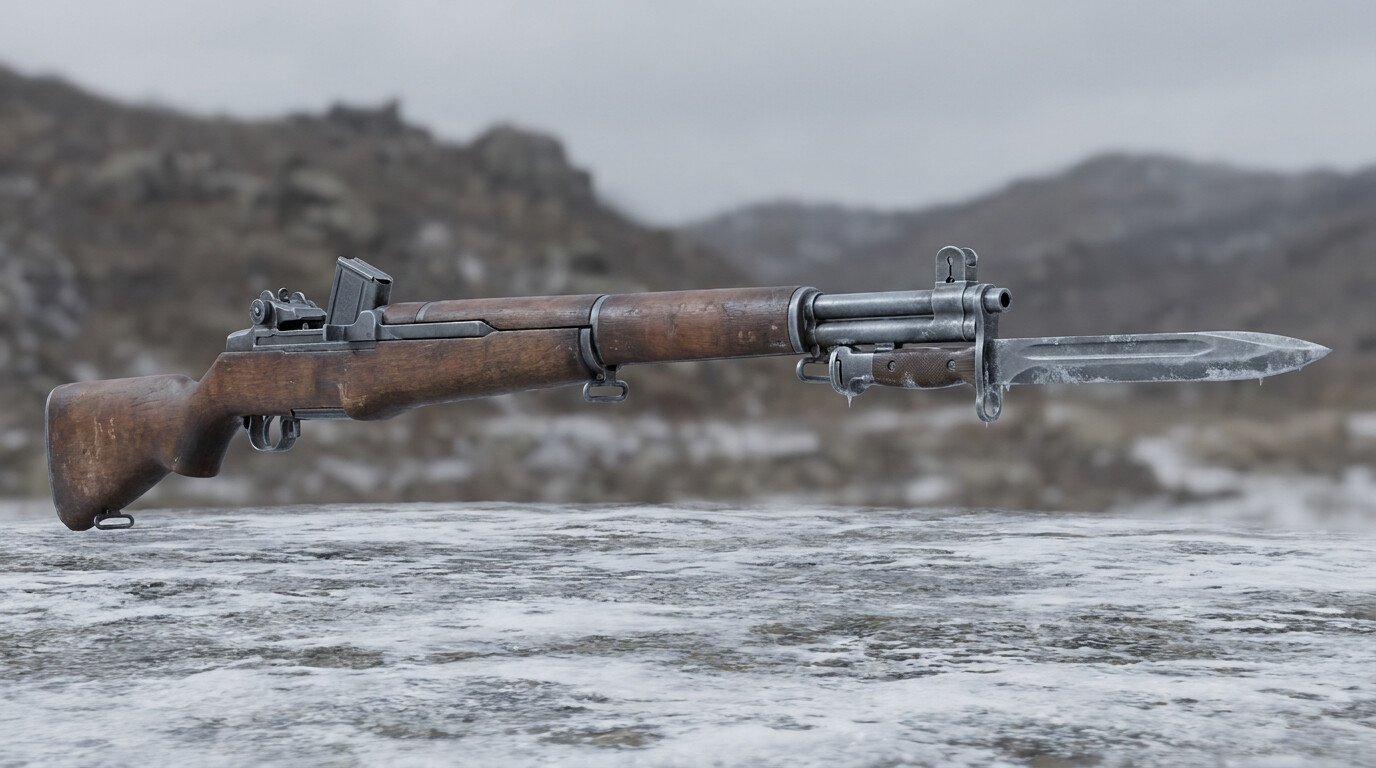
The M1 Garand, the primary weapon carried by Easy Company's riflemen, was chambered in .30-06 Springfield and was semi-automatic, feeding from an eight-round en-bloc clip. It was robust, accurate, and powerful enough to remain effective at the ranges of the Hill 180 assault. The M2 carbine, carried by some soldiers and NCOs, fired a lighter .30 Carbine round and was fully automatic in its M2 configuration, giving it a high rate of fire suited to the close confines of trench fighting. Both weapons accepted bayonets.
The M1 bayonet — the standard bayonet issued to soldiers carrying the Garand — was a ten-inch blade weapon with a seven-inch cutting edge. It locked to the front sight assembly of the Garand. When fixed and the rifle held at chest height, it extended the weapon's reach by approximately sixteen inches. In a trench, that geometry mattered.
---
**Millett's Wounds and Continued Command**
The Medal of Honor citation for Millett notes that he continued to lead his company despite wounds sustained during the assault. Their nature and severity are described in the citation and consistent with subsequent accounts: significant enough to be documented, not sufficient to remove him from command during the action. He remained on the objective and directed his company until the position was consolidated.
This detail matters beyond the obvious. The physical and psychological condition of a company commander at the moment his unit takes an objective has direct bearing on what happens next: pursuit of retreating defenders, consolidation of the captured position, preparation for counterattack, casualty collection, and reorganization for further operations. A commander who goes down or withdraws at the moment of success leaves his unit in a potentially dangerous transitional state. Millett's continuation in command through that transition was part of what made the action successful as a military operation, not merely as an act of individual courage.
---
**The Cost**
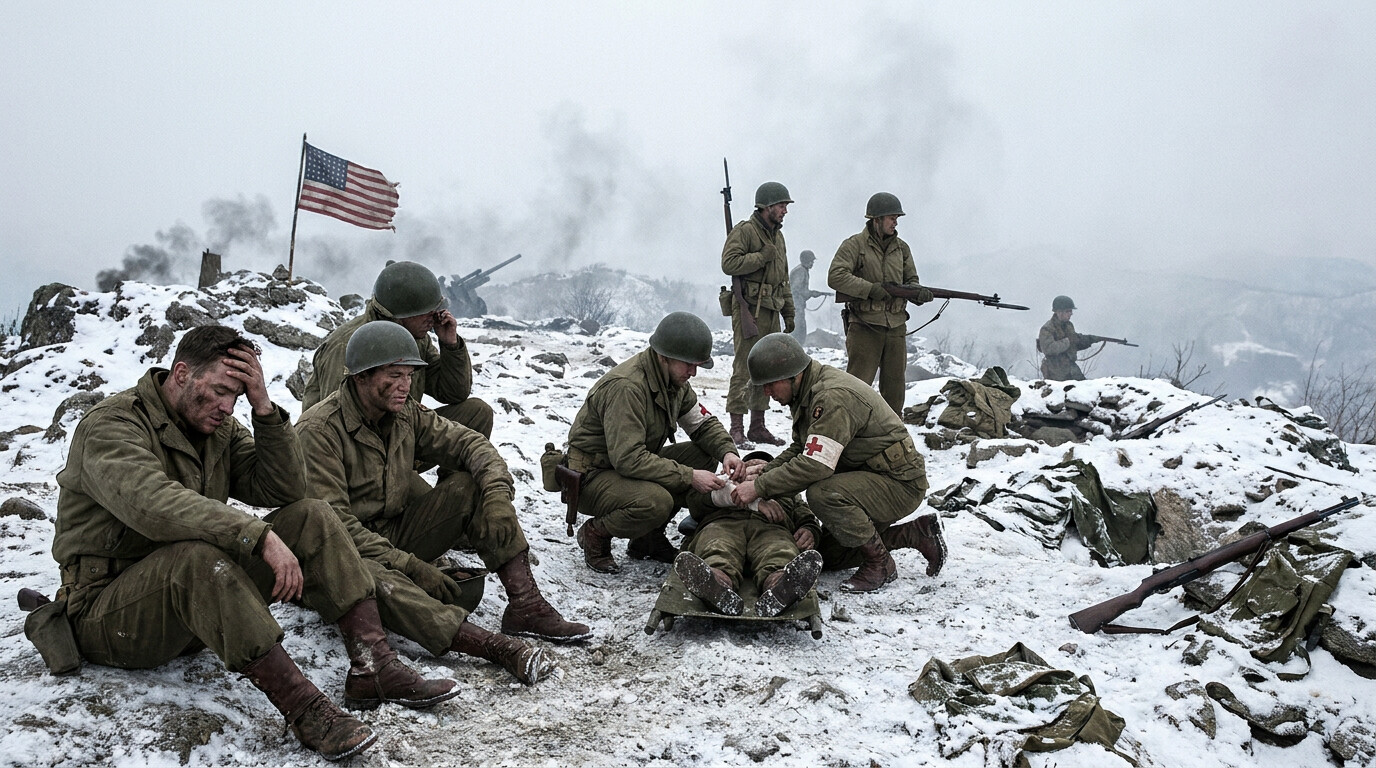
Easy Company's casualties on Hill 180 are not fully enumerated in sources currently available for this account. That gap is noted in the research record and represents a genuine historical debt. The names and numbers of the men of Easy Company who were killed and wounded on February 7, 1951 deserve as careful a record as the name of their company commander.
What the record establishes is that Easy Company paid a price. Infantry assault on prepared positions does not occur without cost, regardless of how well it is executed. The men who fixed bayonets and went up the hill that morning were not certain of success, and some of them did not come back down under their own power.
The collective act of those men — not just Millett, but every soldier in Easy Company who advanced up Hill 180 under fire with a bayonet on his rifle — was the substance of what the Medal of Honor recognized. The citation focuses on Millett, because that is the nature of individual valor awards, but the charge itself was a company action. It required every man in the element to keep moving when the reasonable instinct was to go to ground.
---
**Operation Punch: The Broader Result**
Operation Punch achieved its immediate objectives. The 25th Infantry Division's attack in the Soam-Ni area in early February 1951 pushed Chinese forces back and secured terrain that contributed to the broader UN counteroffensive being organized by General Matthew Ridgway, who had taken command of the 8th Army in December 1950 following General Walton Walker's death in a vehicle accident.
Ridgway had arrived in Korea convinced that the 8th Army had lost its offensive edge. His approach was methodical and aggressive: push north, maintain contact with the enemy, destroy Chinese and North Korean forces through attrition. Operations like Punch were part of that design — short, violent, tactically focused attacks intended to inflict casualties and reclaim ground without overextending the UN supply lines that had contributed to the disasters of November and December 1950.
The Chinese forces that had swept into Korea in October and November were not invincible, as Ridgway understood. They had limited logistics, no air cover, and had outrun their supply lines in the drive south. The task for the 8th Army was to find a method of fighting that negated Chinese numerical superiority while exploiting American advantages in firepower and logistics. By February, the 8th Army was beginning to find that method. Hill 180 was one piece of a larger puzzle.
---
**The Record: Medal of Honor**
Captain Lewis Millett was awarded the Medal of Honor for his actions on Hill 180 on February 7, 1951. The award is verified through official U.S. Army records and the Congressional Medal of Honor Society. The citation describes Millett personally leading the charge up the slope, engaging the enemy at close quarters, continuing to lead and fight despite being wounded, and securing the fortified position. It identifies the action as an exceptional display of leadership and courage against a well-defended objective.
The Medal of Honor is the United States' highest military decoration for valor in combat, awarded by the President in the name of Congress to members of the Armed Forces who distinguish themselves through conspicuous gallantry and intrepidity at the risk of life above and beyond the call of duty while engaged in armed conflict. The criteria are demanding and the decoration is rare: fewer than 3,500 Medals of Honor have been awarded since the decoration was established during the Civil War, and Korean War recipients numbered approximately 145.
Millett's citation places the Hill 180 action squarely in the category the medal exists to recognize: not merely effective leadership or tactical skill, but the willingness to personally lead men into lethal danger at a moment when the outcome was in doubt and the cost was real.
---
**The Historical Context: The Last Major Bayonet Charge**
The description of the Hill 180 action as the last major American bayonet charge in history carries genuine historical weight, though it requires careful qualification.
American soldiers have fixed bayonets in combat after February 7, 1951. Bayonets remained standard issue through Vietnam, the Gulf War, Iraq, and Afghanistan, and there are documented instances of their use or presentation in those conflicts. What distinguishes the Hill 180 action is its scale and character: a company-sized assault, deliberately organized and ordered by its commander, in which the bayonet was the defining tactical instrument of the final assault phase. That combination — company scale, deliberate order, bayonet as primary close-assault method, objective achieved — is what the historical record does not appear to replicate in American operations after February 1951.
This characterization is consistent with how the U.S. Army itself has described the action in official histories. The phrase "last major American bayonet charge" appears in Army historical documentation in connection with Millett's action, though researchers should note that the precise wording varies across sources and the qualifier "major" carries significant definitional weight in the formulation.
The historical arc is real regardless of precise wording. The bayonet charge was a standard infantry tactic through the American Civil War and into World War I. The development of automatic weapons and artillery made massed bayonet charges increasingly costly and increasingly rare in World War II. By Korea, the tactic had become exceptional — something a commander might order in specific circumstances rather than a routine part of the assault sequence. After Korea, changes in infantry tactics, fire support capability, and the character of the conflicts in which the United States fought made company-scale bayonet assaults rarer still.
Millett's charge at Hill 180 stands at the end of a long tradition of American infantry close combat, a tradition running from Bunker Hill through Cold Harbor, the Argonne, and the hedgerows of Normandy to a frozen Korean hillside in February 1951. That tradition did not end because soldiers became less brave. It ended because warfare changed.
---
**After the Hill**
Millett continued to serve in Korea and subsequently had a long military career. He eventually retired from the Army and remained an active figure in veteran communities and military history circles, in part because of the specific, memorable character of his Medal of Honor action. Details of his post-Korea service, including reported involvement in training activities during later conflicts, vary across secondary sources and require primary source confirmation before they can be stated with precision.
He continued to maintain, by the account of those who knew him, that the action on Hill 180 was a company effort — a point that reflects both characteristic restraint and tactical accuracy. The charge worked because Easy Company executed it. The decision was Millett's; the willingness to follow it up the hill was the company's.
Millett passed away on November 14, 2009. He was buried with full military honors. The 27th Infantry Wolfhounds, with whom he served his most recognized action, have continued to serve in the United States Army.
---
**The 27th Infantry After Hill 180**
The Wolfhounds continued operations through the Korean War, participating in the grinding attritional fighting that characterized the conflict from mid-1951 onward as peace negotiations began at Panmunjom and the front stabilized near the 38th Parallel. The regiment maintained its standing as one of the 8th Army's most capable infantry units.
The 25th Infantry Division remained in Korea for much of the conflict, cycling through the difficult fighting along the static front. The division's actions are recorded in official Army histories and form part of the foundational institutional memory of American infantry operations in the Cold War era.
---
**Anchoring the Account**
The core facts of this account — the date, the unit, the location, the nature of the action, and the award — are drawn from official U.S. Army records, the Medal of Honor citation on file with the Congressional Medal of Honor Society, and published Army historical sources including unit histories of the 27th Infantry Regiment and accounts of Operation Punch in official Korean War histories.
Details of the specific tactical execution of the Hill 180 assault — the precise sequence of movement, the exact distribution of Chinese defensive positions, the specific weapons employed by individual soldiers, the exact duration of the fighting on the slope — are areas where the available record, in the sources consulted here, is less precise. Reconstruction of those details has been approached with care and marked as inference where appropriate. Researchers seeking the most granular tactical record should consult after-action reports from the 2nd Battalion, 27th Infantry, for February 7, 1951, which should exist in the Army records at the National Archives in College Park, Maryland, though their completeness and accessibility require direct archival research to confirm.
The biography of Millett before and after Korea is drawn from published accounts and official records. Some details of his pre-war service and the resolution of his desertion charge are drawn from published biographical sources and should be treated as reliable but subject to refinement by primary source research.
---
**Why It Matters**
The action on Hill 180 is not remembered because it decided the Korean War. It did not. The war went on for more than two years after February 7, 1951, grinding its way to an armistice that left the peninsula divided roughly where it had been when the fighting started. Hill 180 was one small piece of a very large and very costly conflict.
It is remembered because of what it reveals about infantry combat at its most fundamental level. All the technology of mid-twentieth century warfare — the jets overhead, the howitzers behind the ridge, the radios that could call fire from miles away — reduced at Hill 180 to a company of American soldiers with bayonets on their rifles climbing a frozen Korean hillside to settle a tactical problem in the oldest possible way.
Millett's decision to fix bayonets and charge was not primitive. It was precise. He read the terrain, assessed the enemy, weighed the likely effect of different courses of action, and concluded that speed and shock at close range offered a better probability of success than a methodical advance that would give surviving defenders time and opportunity. The fact that this calculation led to a tactic associated with Napoleon rather than with the jet age is incidental. The tactical logic was sound.
For the men of Easy Company who went up that hill in the February cold, the calculation was not theoretical. They fixed their bayonets and they went. That is a fact of record, and it is the kind of fact that, once known, is not easily forgotten.