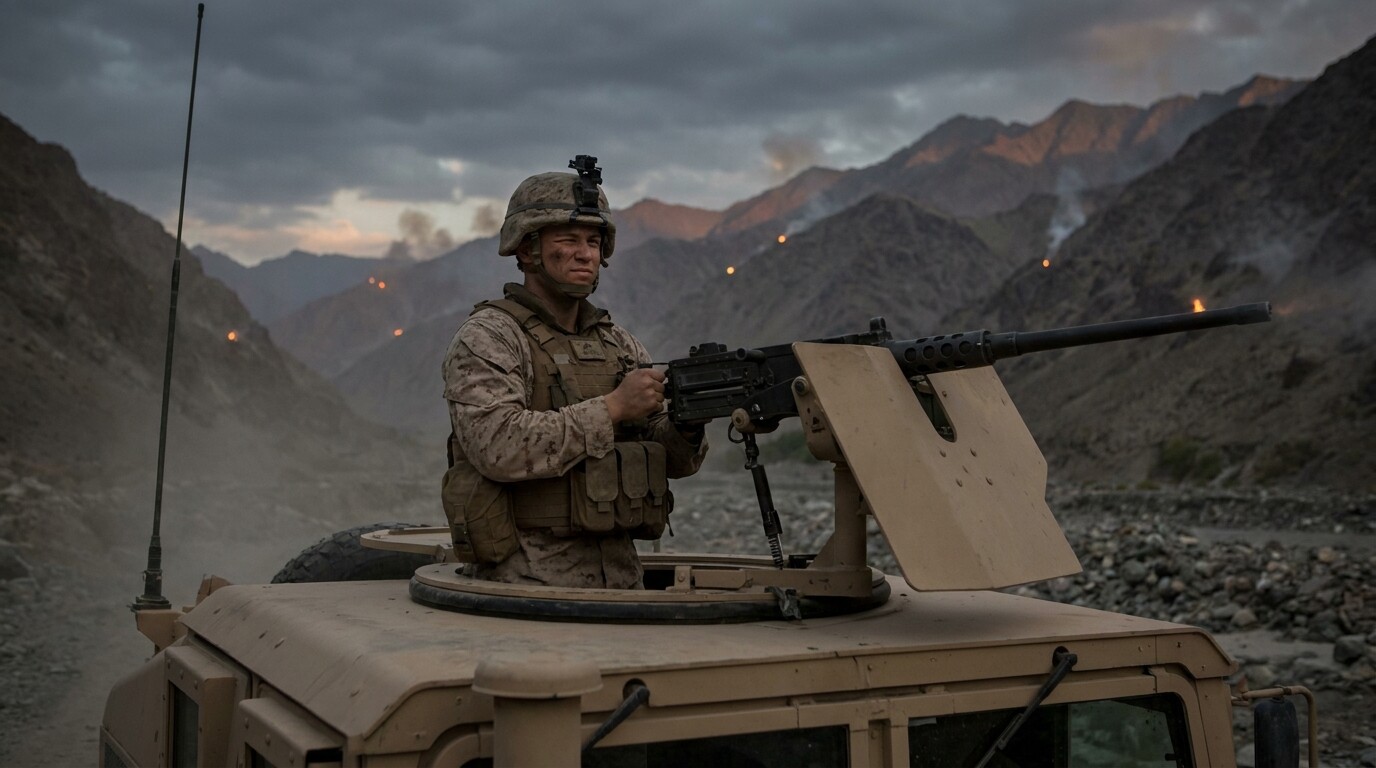
The call came before the sun was fully up.
Somewhere ahead, in the folds of a narrow valley in Kunar Province, Americans were dead or dying, and the men they had gone there to advise were being cut to pieces. The radio traffic from inside the kill zone was fractured—position reports, contact reports, the controlled urgency of men who understood exactly how bad it was. Corporal Dakota Meyer, twenty-one years old, a Marine scout sniper attached to Embedded Training Team 2-8, stood at the entry point to that valley and listened to his teammates calling for help he was not yet permitted to give.
He would go in anyway. Five times.
---
To understand what happened in Ganjgal on September 8, 2009, it helps to understand the particular kind of war the United States was fighting in Kunar Province that summer—and why a small team of Marines and soldiers had gone to a mountain village before dawn in the first place.
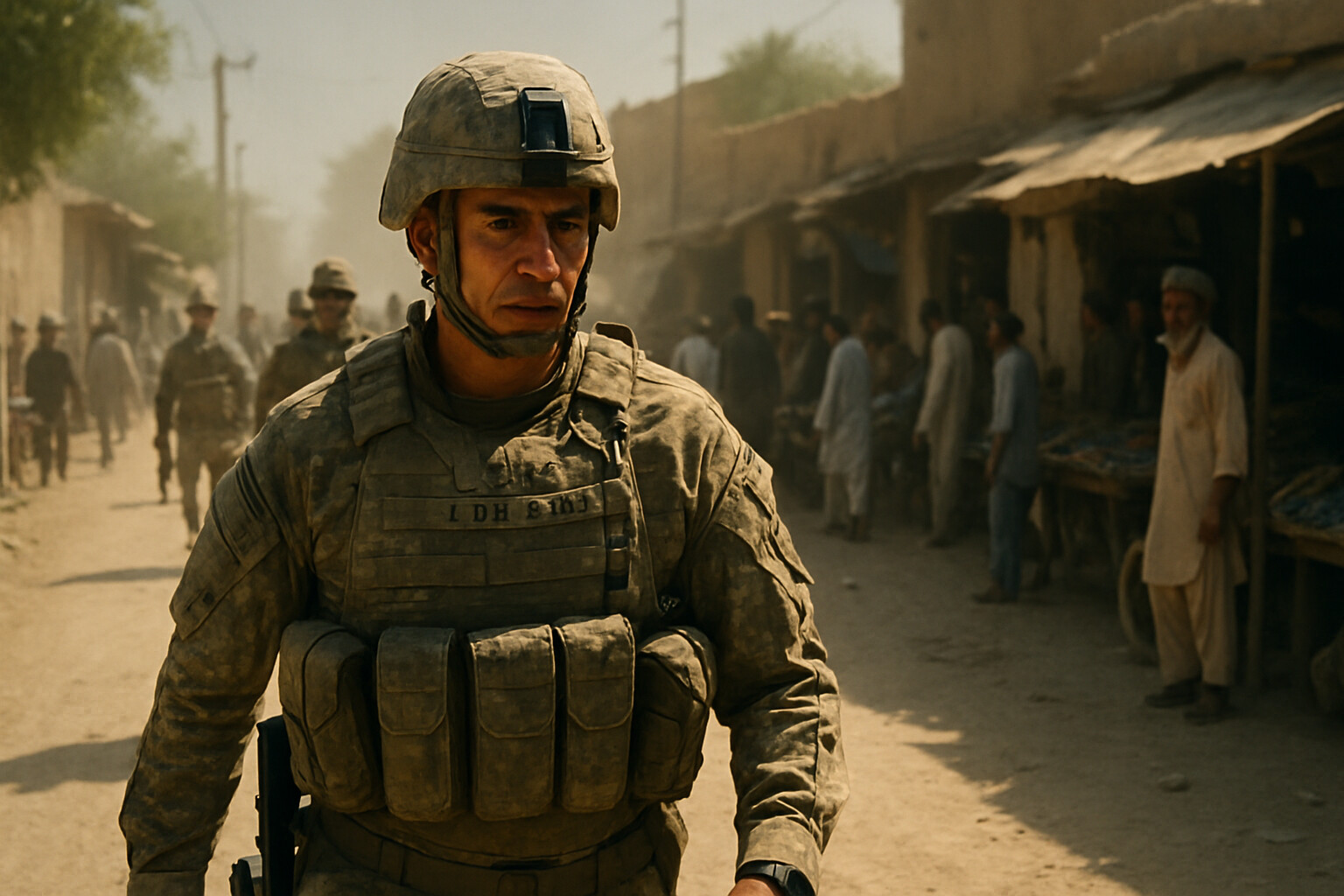
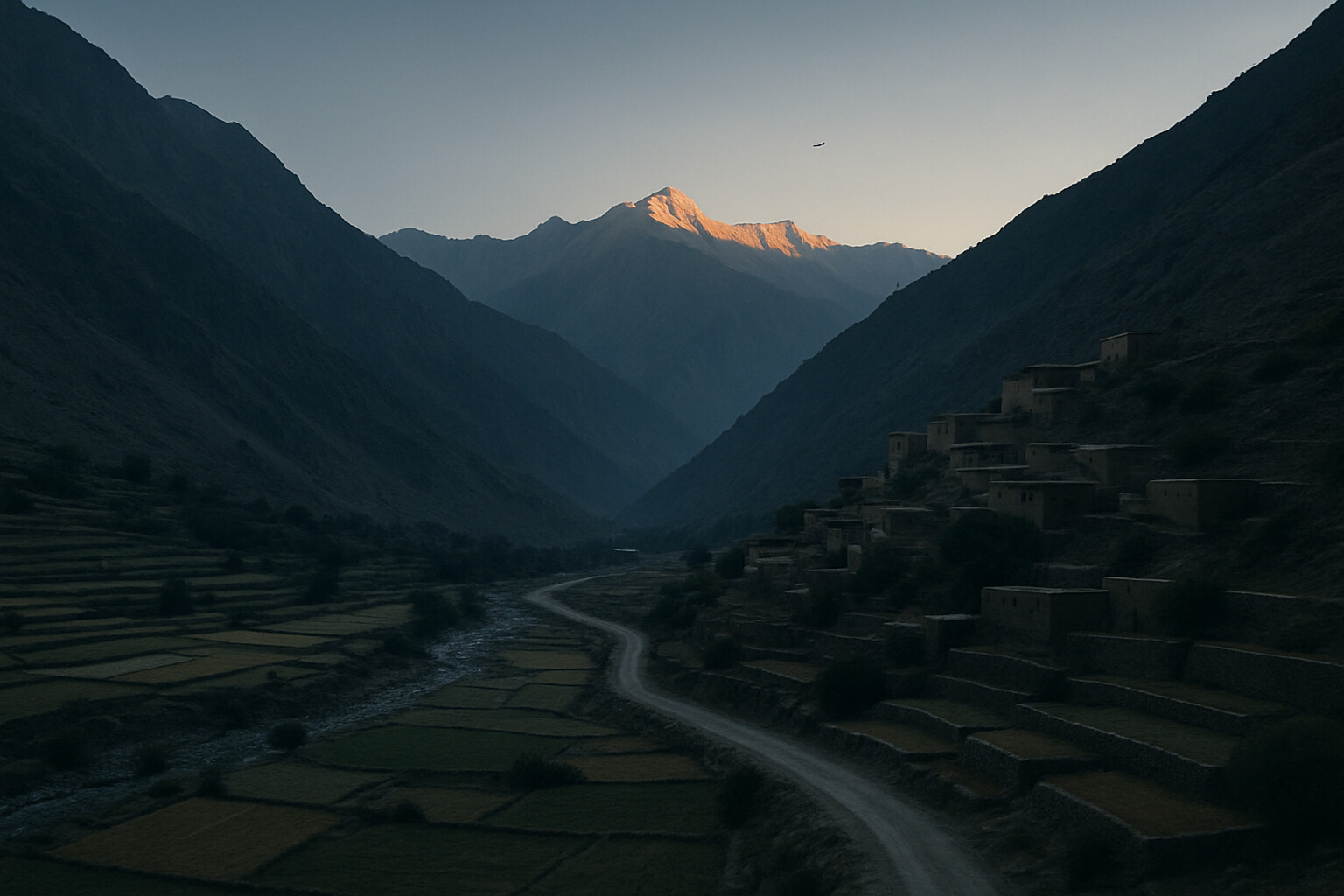
Kunar Province sits in the northeastern corner of Afghanistan, pressed against the Pakistani border by terrain that channels movement and rewards ambush. The province is a tangle of river valleys cutting deep through the Hindu Kush, with villages perched on ridgelines or tucked into terraced slopes where centuries of farming had carved steps into stone. The Pech River Valley, the Korengal, the Kunar River corridor: these names became known in American households during the Afghan war because American units fought bitterly in all of them, often against insurgent networks that moved men and weapons across the Pakistani border with relative ease.
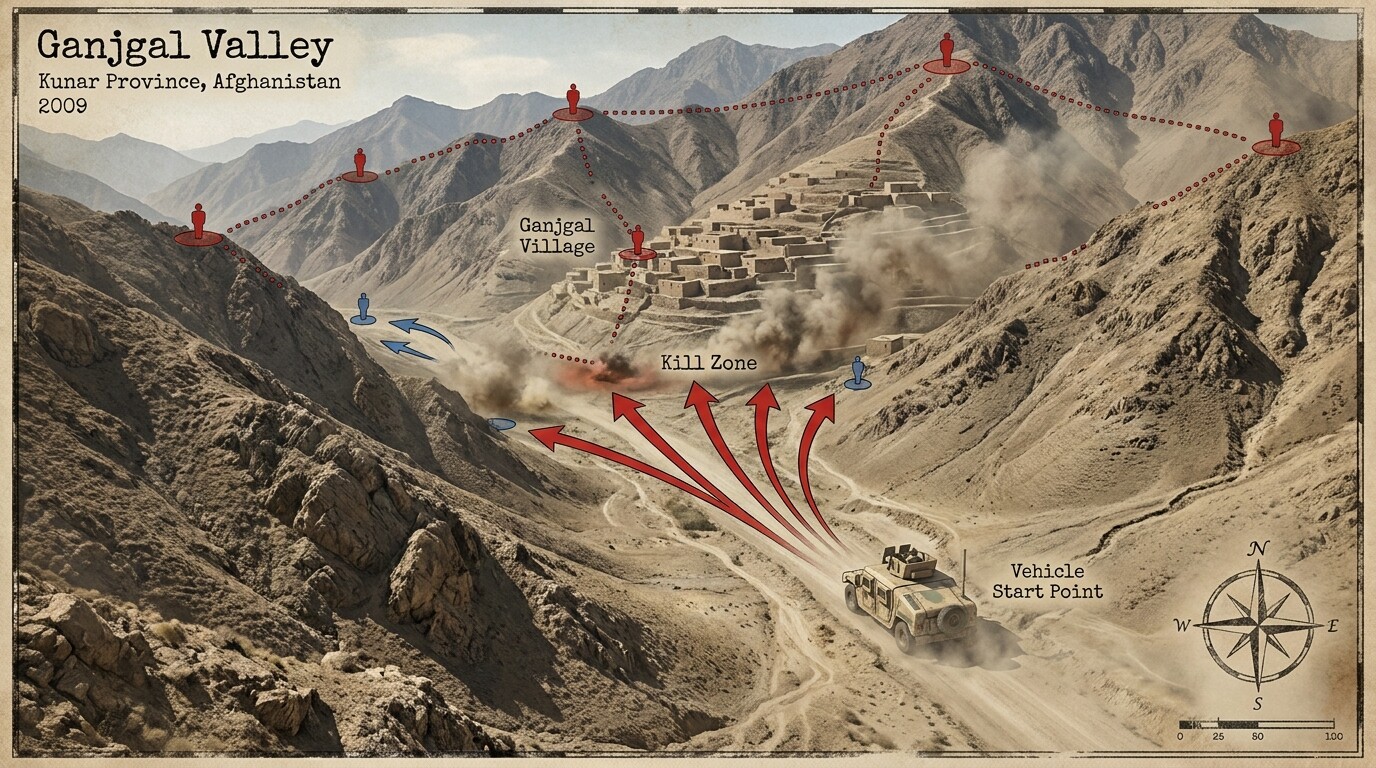
The Ganjgal Valley branched off the Kunar River corridor near Asadabad, the headquarters of Provincial Reconstruction Team Kunar and a significant American base. Ganjgal village sat at elevation, surrounded by terraced fields and commanding ridgelines. A single dirt track wound up through open ground before entering terrain where the valley walls closed in and any force on that road could be engaged from multiple directions simultaneously.
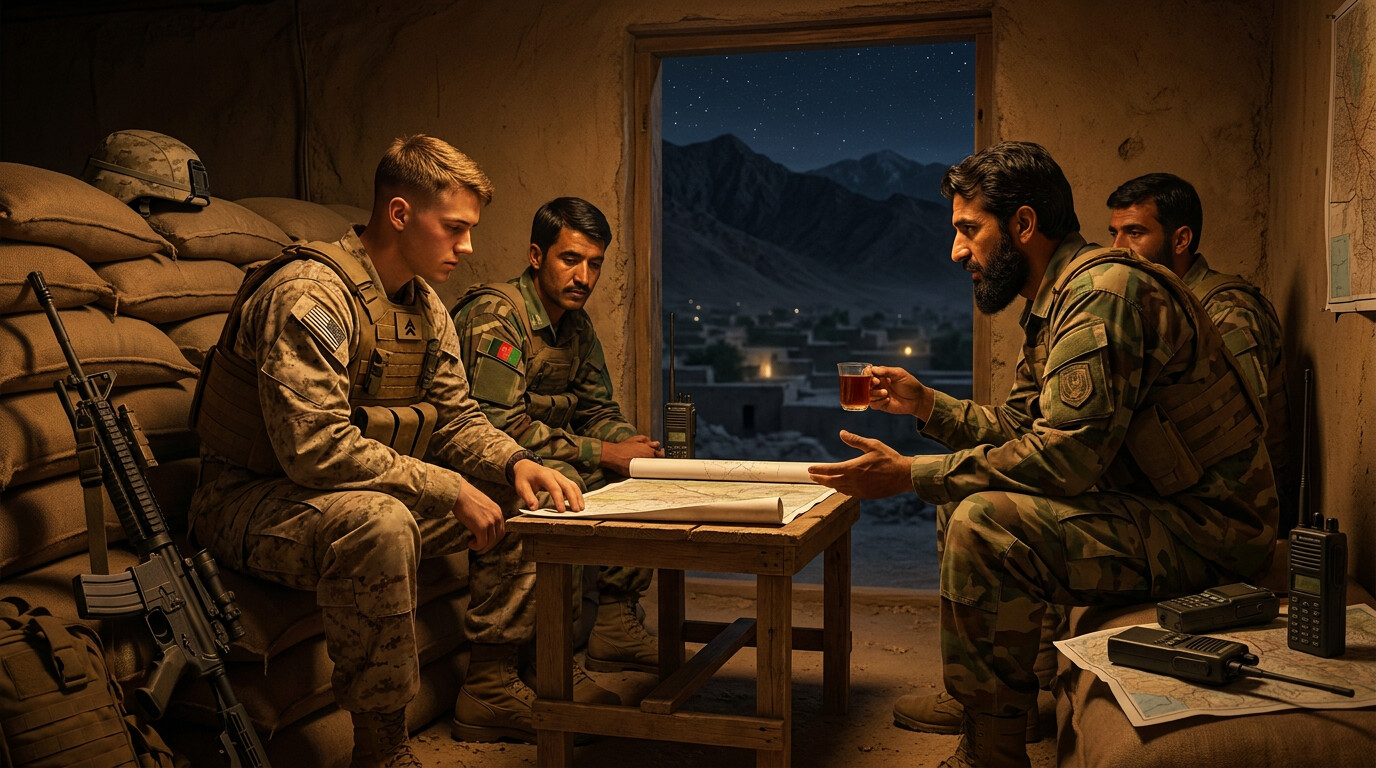
By 2009, embedded training teams—small advisory units living alongside Afghan National Army and Afghan National Police formations—were central to the American approach in Afghanistan. The concept was straightforward: rather than conducting every operation while Afghans watched, experienced American advisors would serve directly inside Afghan formations, plan alongside them, and go into the field with them. Over time, the theory held, Afghan forces would develop the capacity to handle their own security.
Marine Embedded Training Team 2-8 was one of these advisory elements, assigned to work with Afghan Army forces in Kunar Province. On the night of September 7 into September 8, 2009, the team joined a joint operation aimed at taking a combined American-Afghan force into Ganjgal village. The stated mission was to meet with village elders—a shura—and discuss security concerns, with an additional component of assessing Taliban influence in the area.
The patrol that assembled for this mission included Afghan National Army soldiers, Afghan Border Police, members of ETT 2-8, and personnel from a Civil Affairs team. The column moved toward Ganjgal before first light, placing them in the valley as dawn was beginning to gray the ridgelines.
They were expected. Later analysis and reporting by journalist and author Bing West, and findings from the official military investigation, indicated that the Taliban had advance knowledge of the patrol's route and timing and had positioned fighters on the ridgelines and inside the village to create a multi-directional ambush. The specific source of any intelligence compromise has not been confirmed in publicly available records.
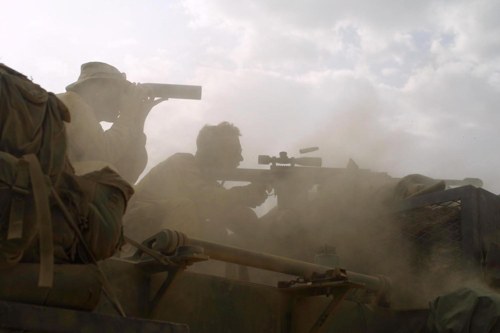
When the patrol entered the kill zone, the ambush opened from multiple directions almost simultaneously—fire from the ridgelines above, fire from fighting positions in and around the village, fire from positions that cut off the route of withdrawal. The volume and coordination of incoming fire made clear within the first minutes that this was a prepared, deliberate attack by a significant insurgent force using the terrain to devastating effect.
Four Americans were killed in the ambush: Lieutenant Michael Johnson, who led the patrol; Navy Corpsman James Layton; and Lance Corporals Juan Rodriguez-Chavez and Aaron Kenefick. Staff Sergeant Kenneth Westbrook was wounded and evacuated but died of his wounds on October 7, 2009, nearly a month after the battle. Approximately eight Afghan soldiers and police were also killed. Many others on both sides were wounded. Survivors in the kill zone found themselves pinned in terrain that offered almost no cover, taking fire from positions they could not effectively engage, unable to move without exposing themselves further.
Meyer and Staff Sergeant Juan Rodriguez-Chavez—an Army soldier, not the Marine Lance Corporal of the same name who was killed in the ambush—were at a vehicle staging area roughly a kilometer from the ambush site when it was initiated. Effectively cut off from their teammates by the same fire tearing the patrol apart, Meyer began immediately pushing for permission to drive into the kill zone. That permission was initially denied by higher headquarters, which was following established protocols about committing additional forces to an active ambush without adequate fire support or situational awareness.
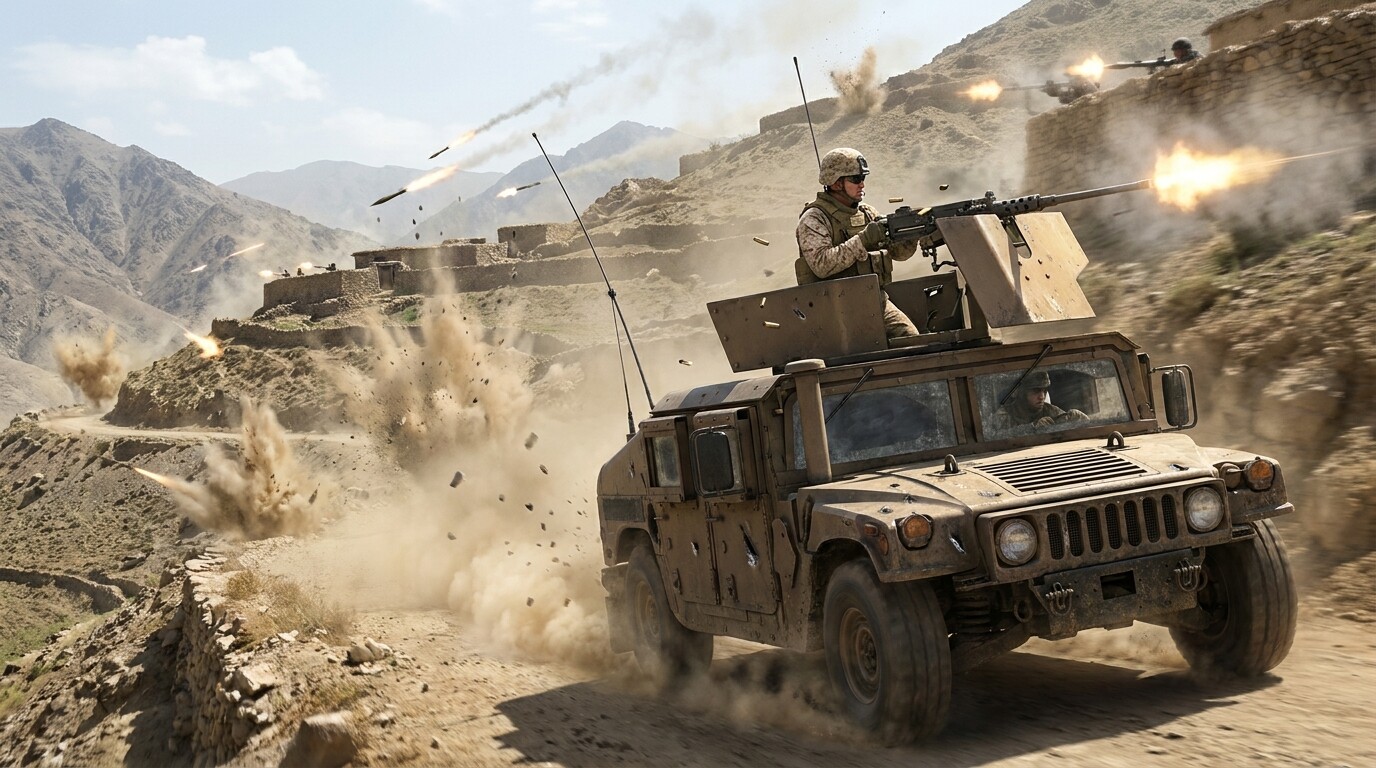
Meyer and Rodriguez-Chavez did not wait for final authorization. Meyer climbed into the turret of an armored gun truck—accounts vary on the specific vehicle model, with references ranging from an up-armored HMMWV variant to a Ford F-350 gun truck; the precise type cannot be confirmed from open sources—and Rodriguez-Chavez took the wheel.
They drove into the valley.
---
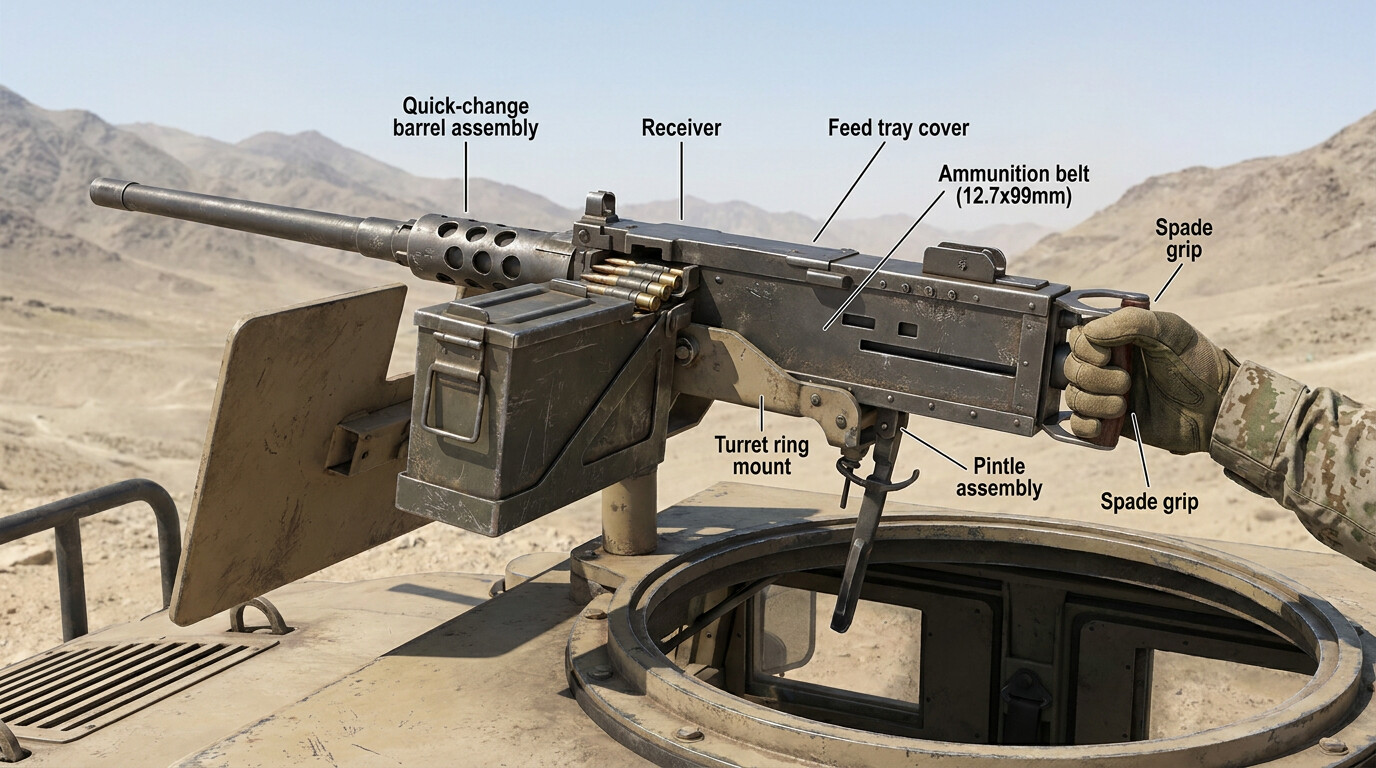
The gun truck was not a tank. Its armor was designed to provide protection against small arms fire and fragmentation, not to make the vehicle immune to the volume and variety of fire now coming from the Ganjgal Valley walls. The vehicle carried a mounted crew-served weapon—most likely an M2 .50-caliber heavy machine gun or an MK 19 40mm grenade launcher, though accounts differ on which weapon was aboard for each run, and this cannot be confirmed from available open sources. Meyer would fire that weapon throughout the morning.
The M2 Browning, known as the Ma Deuce, fires a .50 BMG cartridge capable of reaching targets at ranges well over a mile and penetrating light cover, vehicle armor, and improvised fighting positions that would stop smaller-caliber rounds entirely. At the ranges typical of a mountain valley ambush—hundreds of meters—the M2 is a devastating suppressive weapon. Each round leaves audible and visible impact marks on rock, wood, and mud-brick construction. In the context of the Ganjgal ambush, the vehicle-mounted weapon gave Meyer the ability to engage enemy fighting positions on ridgelines and in the village while the truck was moving, making it simultaneously a rescue platform and a mobile fire-support asset.
The MK 19 operates on a different principle: it fires 40mm explosive grenades at automatic rates of fire, capable of dropping rounds into covered positions behind walls and berms that flat-trajectory weapons cannot reach. Either weapon, in this terrain, provided significant suppressive capability. The uncertainty in the record about which was aboard on which run does not change the tactical picture—it changes only the technical detail.
Every run into the valley required Meyer to identify and engage enemy positions while Rodriguez-Chavez drove and while both men remained exposed to incoming fire. The truck's armor reduced their risk but did not eliminate it. The vehicle sustained hits during multiple runs.
First run: Meyer and Rodriguez-Chavez drove in, took fire from multiple directions, engaged enemy positions, and pulled out Afghan soldiers and other wounded personnel. The patrol was scattered across difficult terrain, and locating individuals in the chaos of a sustained firefight required both men to expose themselves repeatedly.
Second run: they drove back in. More wounded. The Taliban had not broken off—they were well positioned and apparently willing to sustain casualties to destroy the patrol. The ambush had been designed to last.
The middle runs follow the same basic pattern in the record, though the granular sequence of events for each individual run varies across published accounts and cannot be confirmed in precise detail from available open sources. The variables on each pass were where the fire was concentrated, who was still alive and reachable, and whether the vehicle could make it through. Each time they returned to the valley, the Taliban had additional time to shift positions and concentrate fire on the known approach route.
Meyer was operating under conditions that generate acute physiological stress in any human being. The noise alone—sustained machine gun fire, RPG detonations, rifle fire from multiple directions, the impact of rounds on the vehicle—is disorienting in ways that training prepares a person for but cannot fully replicate. He was firing a crew-served weapon from a moving vehicle at targets on elevated terrain while trying to maintain awareness of where his teammates were, where the enemy was, and whether the truck was still capable of another pass. He had no reliable information about whether fire support was coming or when.
During one of the runs—accounts differ on which number—Meyer dismounted from the vehicle entirely and moved on foot through the ambush site. What the official Medal of Honor citation and verified reporting describe is this: he moved through the kill zone, engaged Taliban fighters at close range, located casualties, and found the bodies of the four Americans who had been killed. He recovered those bodies. In the official record, this act—recovering the fallen under continuous incoming fire—is treated as among the most significant of the morning's actions, for both its tactical difficulty and its human weight.
By the fifth run, Meyer and Rodriguez-Chavez had been operating under fire for hours. The sun was fully up. The terrain that had been shadowed at dawn was now lit and open. They had extracted a significant number of Afghan and American survivors and recovered the American dead.
The battle wound down over the course of the morning as attack helicopters and close air support were eventually able to engage Taliban positions and force the ambushing force to break contact. The timeline of that fire support response became a central subject of official inquiry.
---
The aftermath was not clean.
Five Americans were dead—four killed in the ambush, one dying of wounds a month later. Approximately eight Afghan partners were also dead. Dozens were wounded. A patrol that had walked into a prepared ambush had taken devastating casualties before it could be effectively reinforced or supported.
The official investigation conducted by the Army and Marine Corps in the weeks following examined both the tactical conduct of the operation and the response of the fire support chain. Bing West's reporting and his subsequent book raised serious questions about why artillery and air support took as long as it did to reach the embattled patrol, given the volume of radio contact being made by men in the kill zone. Those findings prompted official responses from the military chain of command. The investigation identified deficiencies in planning and coordination but did not result in formal disciplinary action against senior officers—a fact that generated significant controversy in military and policy circles and remains disputed in the public record.
The broader context is necessary to understand why the fire support response was not faster. In 2009, American forces in Afghanistan were operating under rules of engagement that reflected real concern about civilian casualties, a central tension of counterinsurgency warfare. Ganjgal was a populated area. By positioning fighters in and around the village, the Taliban created a situation in which commanders calling for fire support had to weigh the risk of civilian casualties against the immediate need to support troops in contact. This was not a theoretical tension—it shaped every decision made on the radio that morning.
Meyer's response to that constraint was direct. He was not calling for fire support from a distance. He was driving into the valley with a single armed vehicle, doing by direct action what the supporting arms architecture was not providing. This is one reason his actions stand out even in a war that produced many documented acts of exceptional valor: he was not only performing under fire but substituting his vehicle and his person for system-level support that was not reaching the men who needed it.
The Medal of Honor recommendation moved through the military review process over roughly two years. On September 15, 2011, President Barack Obama presented the Medal of Honor to Dakota Meyer at the White House. Meyer was twenty-three years old. He was the first living Marine to receive the award since the Vietnam War—a distinction that reflected both the rarity of the decoration and the specific character of the action required to earn it.
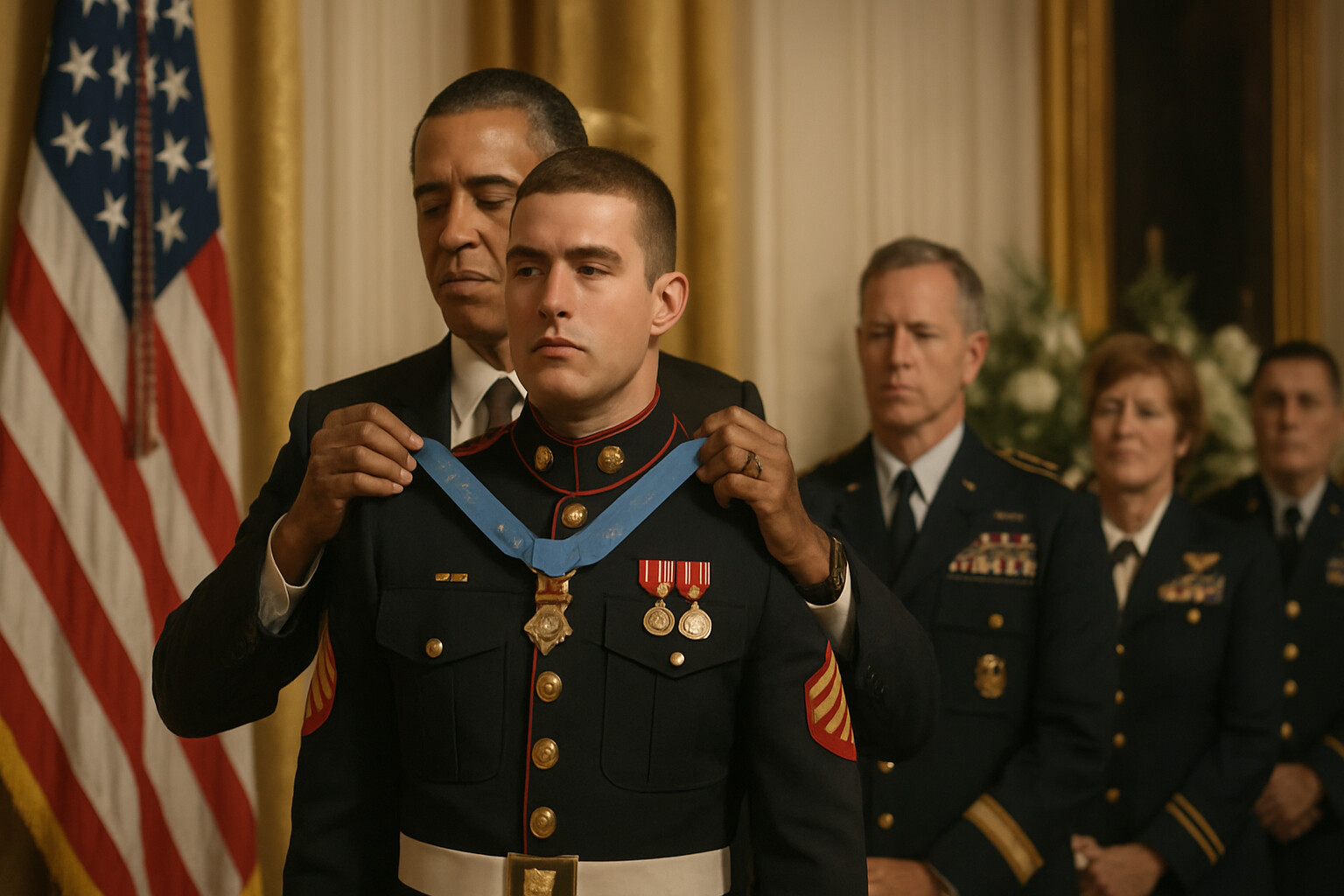
Meyer's citation—the official government document recording the specific actions for which the medal was awarded—describes the five runs into the kill zone, the extraction of wounded, the recovery of the bodies of his fallen teammates, and the sustained engagement of enemy forces under continuous incoming fire. The citation is verified through the White House ceremony record of September 15, 2011, and the official U.S. Army Medal of Honor database.
---
The Medal of Honor is the United States' highest military decoration for valor, established by acts of Congress in 1861 for Navy enlisted men and in 1862 for Army soldiers. Since World War Two, it has been awarded exclusively for actions demonstrating extraordinary valor at severe personal risk under enemy fire. Fewer than 3,500 Medals of Honor have been awarded across all conflicts; a significant portion of those were made posthumously. In the context of the Afghan and Iraq wars, which involved hundreds of thousands of American service members in combat operations, the number of living recipients was extremely small.
In interviews documented in published reporting after the ceremony, Meyer has spoken about the weight of being recognized for a day that cost his teammates their lives. The Medal of Honor, in his public accounting, is inseparable from those deaths: he survived to receive it, and they did not. This response is not unusual among recipients. The historical record shows a consistent pattern: those who perform the actions that qualify for the award are rarely describing themselves as heroes in the moment. They describe a situation that required something of them and a decision to provide it. Meyer's five runs fit that pattern exactly.
---
Ganjgal is studied in military professional education as an example of how tactical decisions, fire support procedures, and command authority interact in a counterinsurgency environment—and what happens when those systems fail troops in contact. The specific question of why available fire support was not more rapidly employed against Taliban positions while Americans were actively dying has been examined officially and publicly and has not produced fully satisfying answers. The investigation's findings and the question of accountability remain contested.
The four Americans killed in the ambush—Lieutenant Michael Johnson, Corpsman James Layton, Lance Corporals Juan Rodriguez-Chavez and Aaron Kenefick—are memorialized at military cemeteries and on honor rolls maintained by their services. Staff Sergeant Westbrook, who died of his wounds the following month, is counted with them.
Ganjgal village remained a point of instability in Kunar Province for years after the battle. The Taliban's ability to mass that level of force in a prepared ambush, sustain the engagement for hours, and inflict significant casualties on a combined American-Afghan force reflected the depth of their influence in the area. American forces conducted subsequent operations there, but the structural challenges—a porous border, rugged terrain, a population caught between government forces and insurgent networks—did not resolve quickly. American combat units withdrew from many remote outposts in Kunar and Nuristan Provinces in 2009 and 2010, a strategic adjustment that itself generated debate about whether the United States was ceding ground or concentrating force where it could have greater effect.
Meyer left the Marine Corps as a Corporal after the battle, having served his enlistment. He subsequently worked in private security and construction, co-authored a memoir—Into the Fire, written with Bing West and published in 2012—and has been a public advocate for veterans' issues. The memoir provides the most detailed first-person narrative of the battle available in published form, though it should be read as a participant account subject to the limits of memory and perspective.
---
What the record shows, stripped to its essential elements, is this:
On September 8, 2009, in the Ganjgal Valley of Kunar Province, Afghanistan, a combined American-Afghan patrol walked into a prepared ambush and suffered severe casualties in the opening minutes. A twenty-one-year-old Marine Corporal, denied initial permission to enter the kill zone, got into a gun truck with an Army staff sergeant and drove in anyway. He drove in five times. He fired the vehicle's crew-served weapon against Taliban fighting positions on every run. He dismounted and moved on foot through the ambush site. He pulled wounded men out of the kill zone. He recovered the bodies of his teammates. He did all of this under continuous incoming fire, in daylight, from multiple elevated positions, in terrain designed to maximize the vulnerability of anyone moving on the valley floor.
The five runs are not a metaphor. They are a documented operational sequence, verifiable through the official Medal of Honor citation, military investigation records, the reporting of journalists who examined the evidence, and the accounts of survivors. Each run required a decision: to go back. The terrain had not changed. The enemy was still there. The vehicle had been hit. And he went back.
That is what the record shows. The sound of the morning, the weight of altitude air, the way valley walls close in above a road—those belong to anyone who has studied the terrain and the accounts. The facts are sufficient.