The wind came off the Taebaek Mountains without mercy.
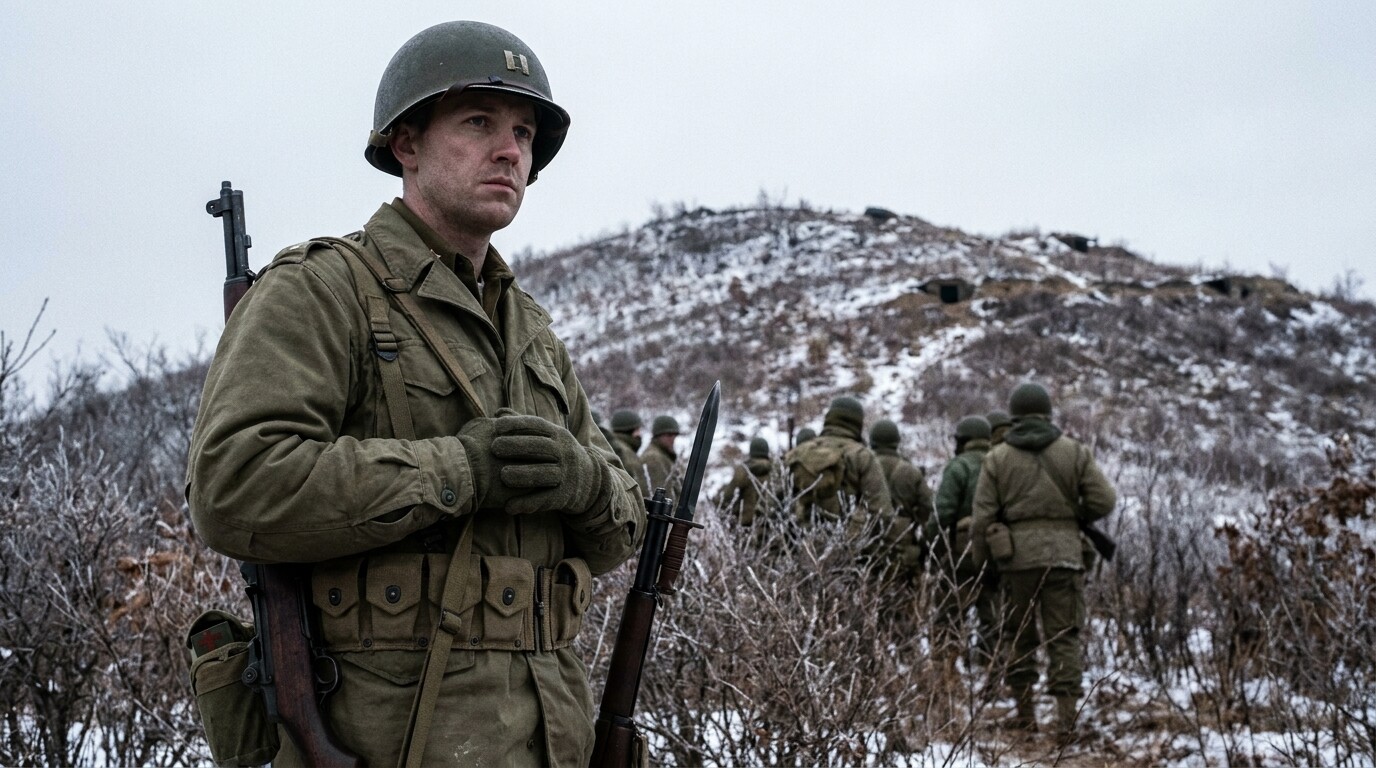
It rolled down the ridgelines at night and pooled in the low ground, where temperatures dropped to twenty and thirty degrees below zero Fahrenheit. Snow had fallen hard and frozen solid. The mountain air was so dry it cracked lips and skin, and every exhaled breath turned to vapor before it cleared a man's face. In late November 1950, the mountains above the Chosin Reservoir in northeastern Korea were among the coldest combat environments American forces had encountered in the twentieth century.
On the night of November 27–28, the Chinese People's Volunteer Army launched one of the largest coordinated offensive operations of the Korean War. Multiple divisions hit American and allied positions simultaneously across a front of many miles. The 1st Marine Division, extended along the single-lane supply road running south from Hagaru-ri through Koto-ri toward the port of Hungnam, found itself surrounded, its supply line threatened, its separate columns cut off from one another.
In the darkness near a road cut called Toktong Pass, a company of Marines had just finished digging in.
---
Captain William Earl Barber was thirty years old when the Chosin campaign began — he turned thirty-one on November 30, during the siege itself, though this precise detail should be confirmed against official records. He had entered the Marine Corps as an officer candidate out of Kentucky, been commissioned in 1943, and seen combat on Iwo Jima in 1945, where he was wounded. He was a compact, deliberate man with the kind of tactical instincts earned by studying ground carefully before committing men to it. He had commanded Fox Company, 2nd Battalion, 7th Marines for a relatively short time before the campaign began, but he had used that time to understand his officers, his NCOs, and the capabilities and limits of the 234 men under his command.
Fox Company was a standard rifle company of the era: three rifle platoons, a weapons platoon, a headquarters element, and a small attachment of Navy corpsmen. The men were armed with M1 Garand rifles and M1918A2 Browning Automatic Rifles, the two workhorses of the rifle squad. Machine gun sections carried the air-cooled .30-caliber M1919A4 and the heavier water-cooled M1917A1 — a weapon whose cooling jacket, in that cold, held no water at all. Mortarmen carried 60mm M2 mortars and 81mm M1 mortars. A few men had the M1 carbine. Officers and NCOs carried the .45-caliber M1911A1 pistol. Artillery support was available only at range and in limited quantity; once the Chinese isolation of the column was complete, Fox Company could not count on rapid or sustained fire support from outside its own perimeter.
The road they were sent to protect was not simply a line on a map. It was the only way out.
---
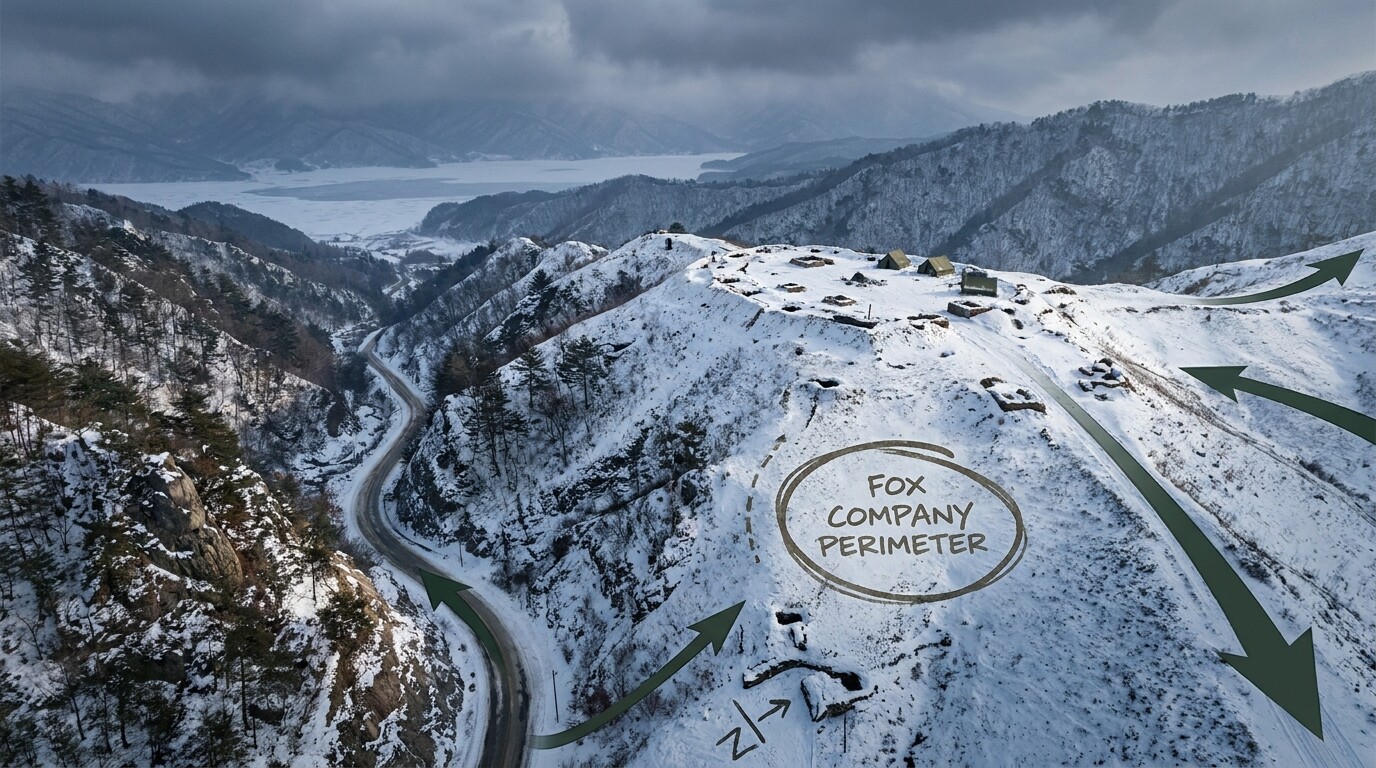
The geography of the Chosin Reservoir campaign is essential to understanding why a single company's position mattered so much. The reservoir sits in a mountain basin in North Korea's Hamgyong Province at an elevation of roughly 3,500 feet. The main supply route ran south from the town of Yudam-ni on the reservoir's western shore, down through Hagaru-ri at the southern tip, and then south again through narrow valleys and mountain passes to Koto-ri and eventually to the port of Hungnam on the coast. The road was single-lane through much of its length. It ran through chokepoints where a relatively small force with the right terrain advantage could interdict it completely. One of those chokepoints was Toktong Pass.
Toktong Pass sits approximately fourteen miles south of Yudam-ni and about ten miles north of Hagaru-ri. The road climbs through it between steep ridgelines. Anyone holding the high ground on either side of the pass could stop traffic on the road below. If the Chinese seized Toktong Pass and held it, the two Marine battalions fighting at Yudam-ni — roughly 3,000 men — would be cut off from Hagaru-ri with no route south. The Marines at Hagaru-ri, Koto-ri, and the fighting columns strung along the MSR would face compounding danger. The entire division's breakout depended on that road remaining passable.
Major General Oliver P. Smith, commanding the 1st Marine Division, and his subordinate commanders understood the vulnerability. When Fox Company was ordered to Toktong Pass on the afternoon of November 27, the mission was explicit: occupy and hold Hill 1653, the dominant terrain feature overlooking the pass, and keep the road open.
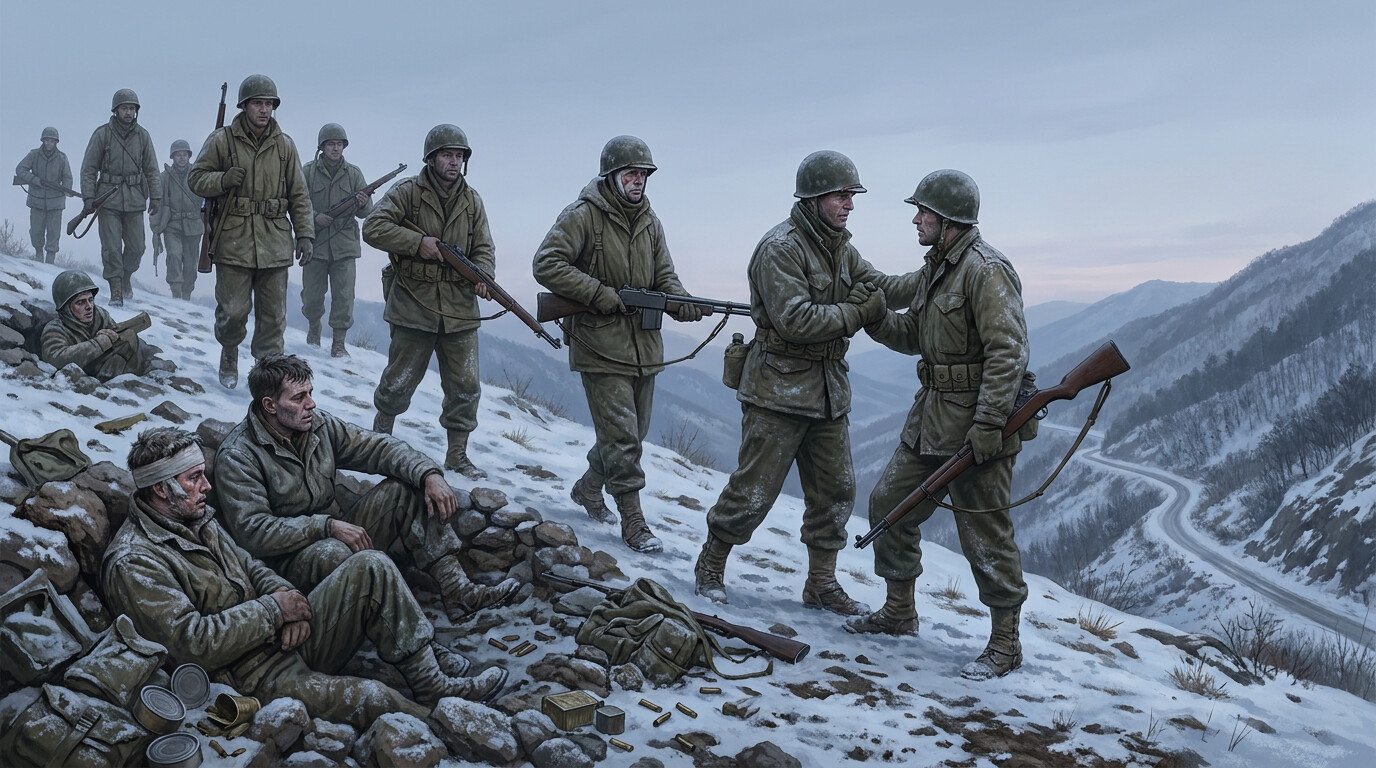
Barber led his company up the mountain in the late afternoon and established a defensive perimeter on the hillside. The position was a roughly oval ring of foxholes dug into frozen ground — a serious physical challenge by itself, the earth behaving like iron — with fields of fire oriented toward the most likely avenues of approach. Barber placed his machine guns to cover the draw below and the ridgeline above. He positioned his mortars to reach the most likely assault routes. He had his men dig in as deep as the frozen ground allowed, which was not as deep as anyone wanted.
By nightfall on November 27, Fox Company was in position. The temperature was falling fast.
They did not have to wait long.
---
The Chinese struck in the early morning hours of November 28, 1950.
The assault force is identified in secondary accounts as drawn from the 59th Division of the Chinese 20th Army, one of the formations dispatched to cut the MSR and prevent the Marines from breaking out. Primary source confirmation of this specific unit designation was not available at the time of writing and should be verified before publication. What is not in doubt is that the force assigned to take Toktong Pass was substantial. The Chinese had studied the road and understood its geometry. They knew the pass was a key terrain feature.
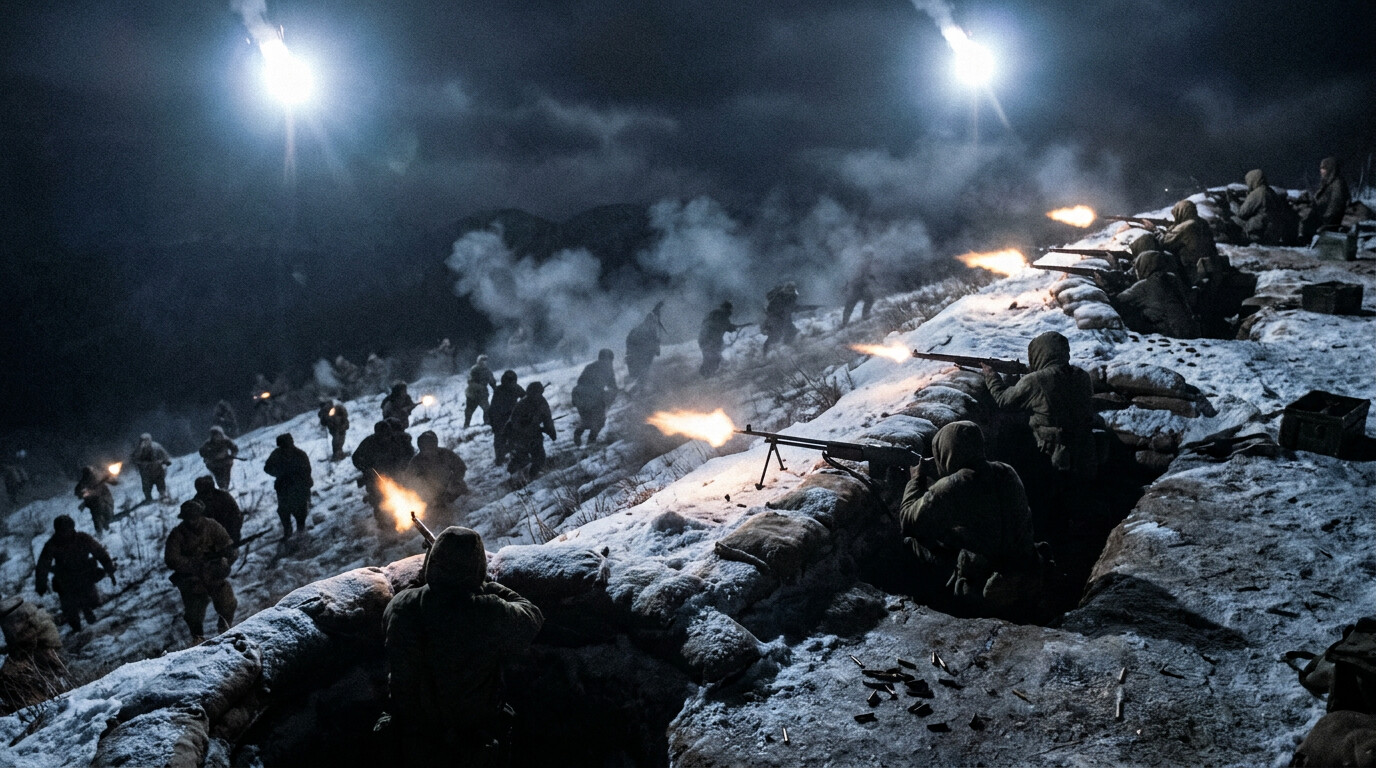
The attack came in the dark, in the cold, from multiple directions. Chinese infantry tactics of the period emphasized mass, surprise, night movement, and the exploitation of gaps between positions. They moved quietly in large numbers, closed to short range before firing, and used bugles and whistles to coordinate attacks across a broad front — a practice that served both as communication and as a psychological tool. The sound carried across the frozen hillside with eerie clarity.
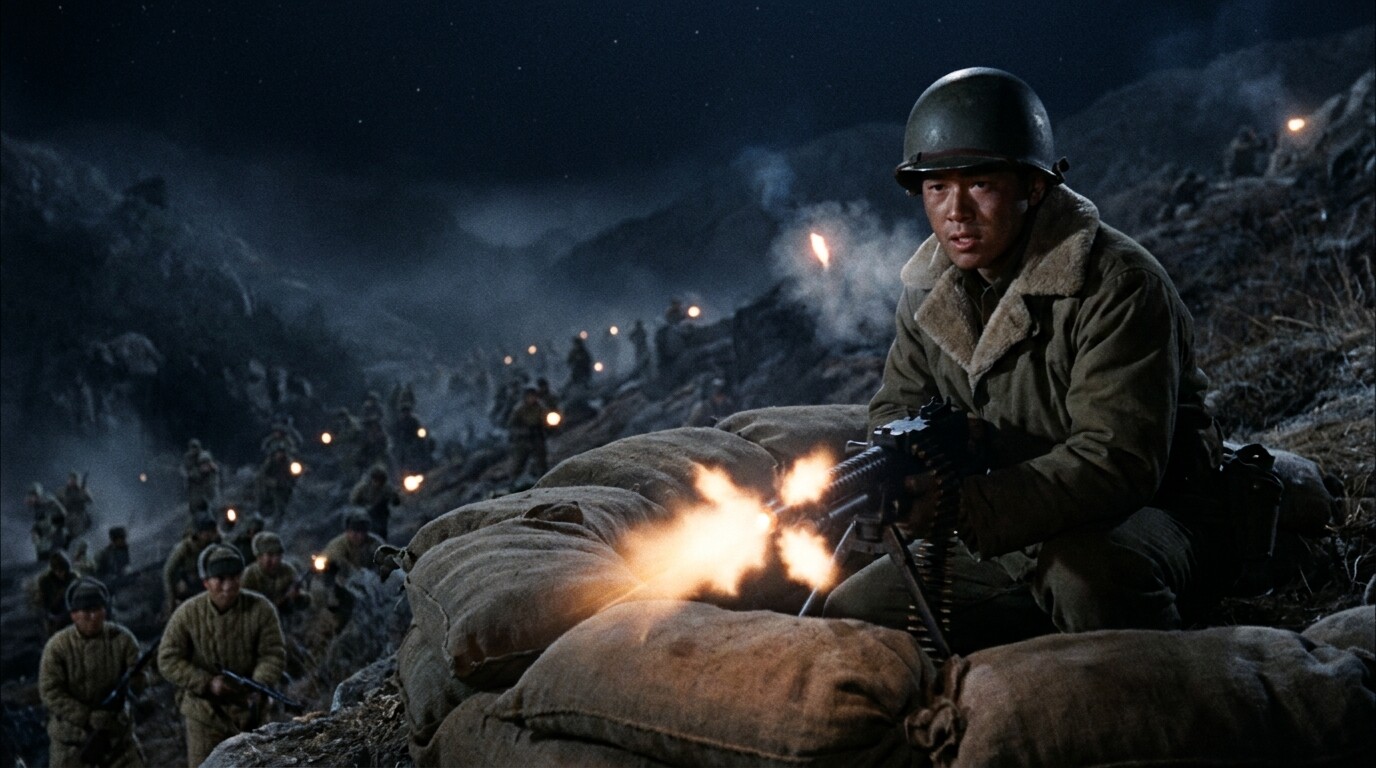
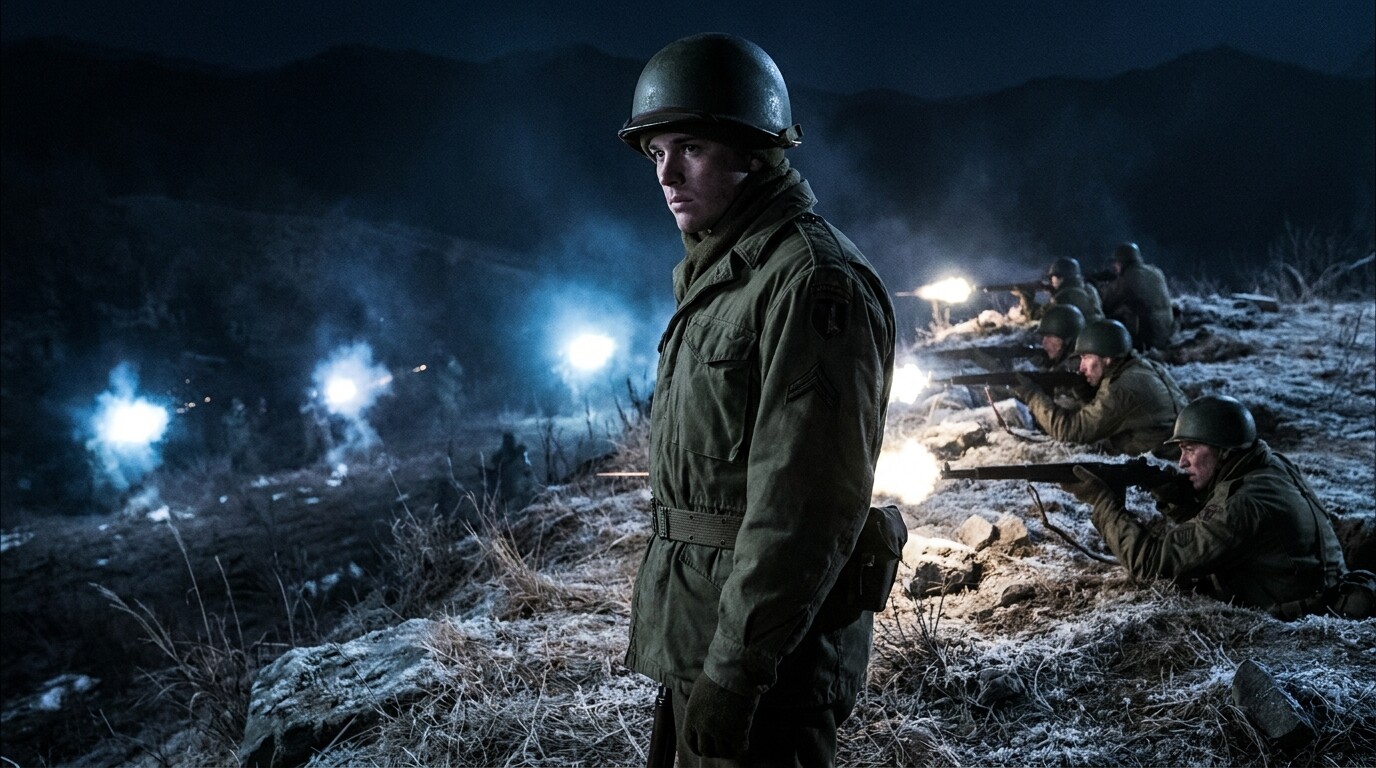
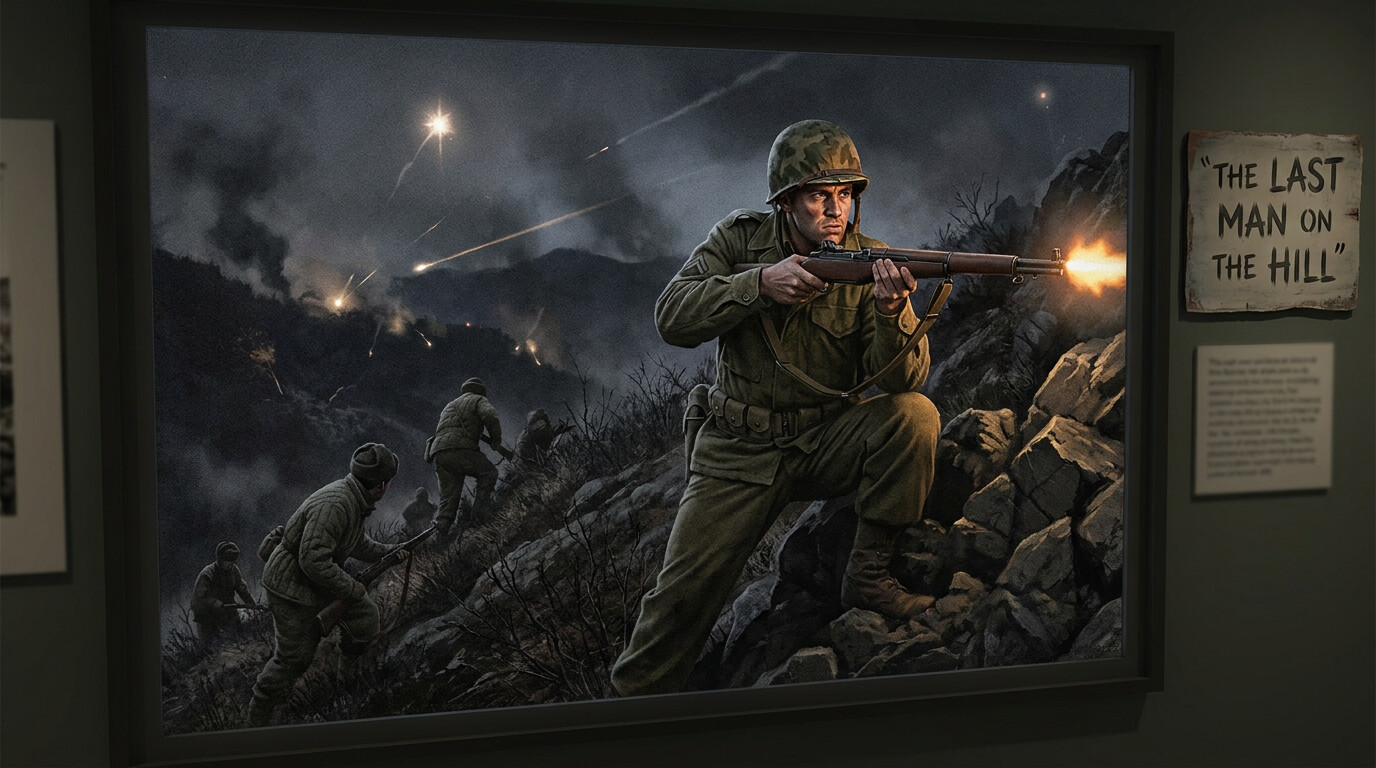
The first assault hit Fox Company's perimeter with force. Men on watch gave the alarm. Machine guns opened along the defensive line. Mortars fired illumination rounds to light the slopes. In the white glare of burning magnesium, attacking Chinese infantry were visible on the open ground below the foxhole line, advancing in waves. The Marines fired steadily and, where ammunition allowed, rapidly.
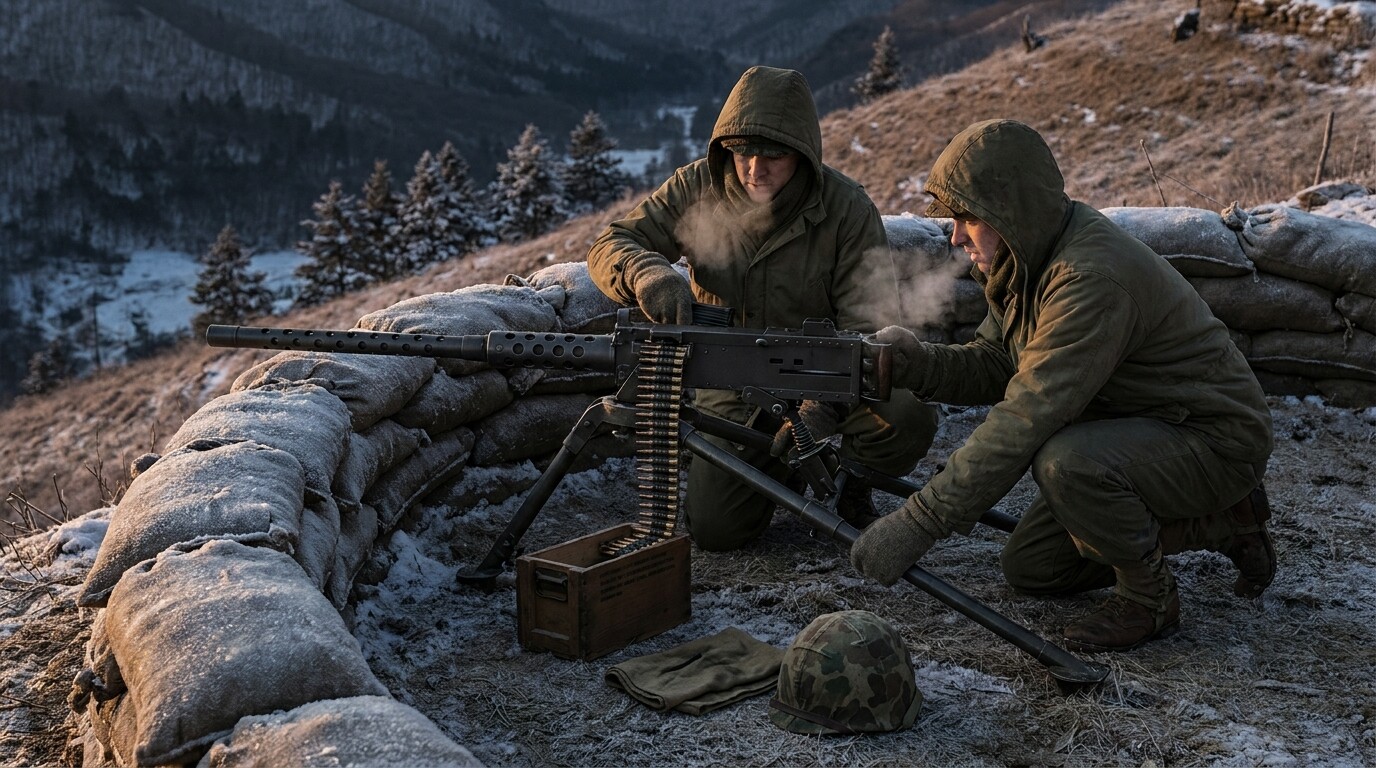
The fighting that first night was close. Chinese soldiers reached the perimeter wire in places. After-action accounts confirm hand-to-hand fighting at some positions. Marines fired at attackers within grenade range. The weapons platoon's mortars fired in close support of the perimeter. Machine gun crews kept their weapons running despite the extreme cold, which caused lubricants to congeal and operating parts to sluggish. Crew-served weapon malfunctions in subzero temperatures were a documented problem across the entire Chosin campaign; Marine weapons specialists had developed improvised solutions, including stripping excess lubricant from bolts and switching to lighter oils, but the cold was merciless on mechanical systems.
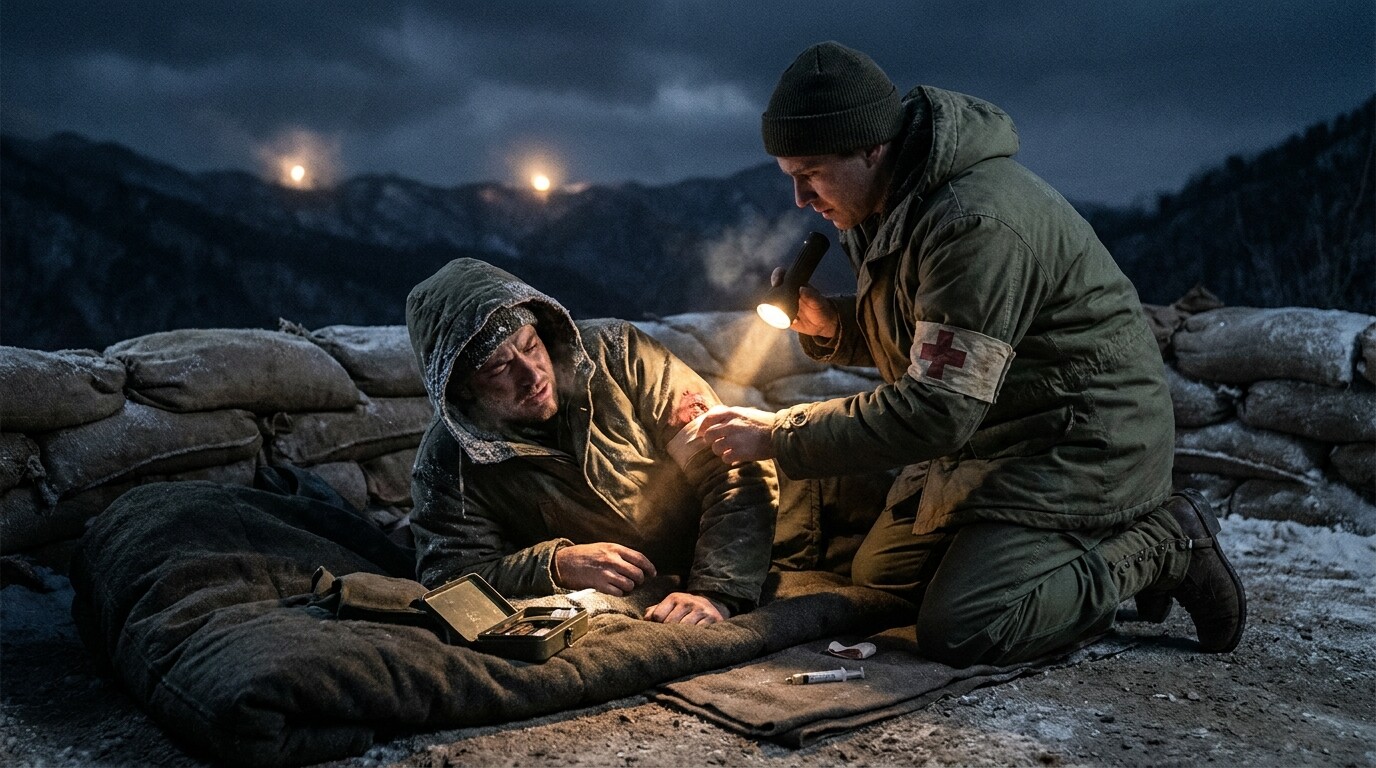
By dawn on November 28, the first assault had broken off. Fox Company held the perimeter. The cost was substantial: men killed and wounded in a single night. Barber organized medical care for the wounded with the company's Navy corpsmen, consolidated casualties, redistributed ammunition, and repaired the defensive line where it had been damaged.
He knew there would be more attacks.
---
The days between the night assaults were not rest. They were a race against attrition.
Wounded men needed warming. Men with frostbitten hands could not work bolts or change magazines. Water in canteens froze solid, requiring men to carry them inside their clothing against body heat. C-rations were nearly impossible to eat without heating, and heating required fires that drew attention. Sleep in the open at temperatures well below zero demanded constant vigilance against men dying of exposure rather than enemy action. Radio batteries lost power rapidly in extreme cold, reducing communications reliability and increasing the isolation of the position.
Barber worked his perimeter continuously. He moved from position to position, assessed the condition of his men, reorganized sectors, made decisions about where to concentrate his dwindling ammunition reserves, and maintained contact with higher command when conditions allowed. He used the daylight hours to improve fighting positions, rotate men from the worst-exposed spots, and prepare for the night ahead.
The relief question was present from the beginning. The Marines at Yudam-ni and Hagaru-ri were fighting their own desperate battles. General Smith's forces were trying to consolidate at Hagaru-ri before beginning the fighting withdrawal south, but the Chinese were pressing every position along the MSR. Reaching Fox Company required someone to move up the road — which Fox Company was holding. It was a closed loop.
Air support was available on days when weather permitted. Marine and Navy aircraft operating from carriers in the Sea of Japan and from fields to the south flew close air support missions along the MSR corridor. The Vought F4U Corsair was the principal Marine close air support platform of the campaign, capable of delivering bombs, rockets, and 20mm cannon fire with considerable accuracy when visibility allowed. On clear days, strikes disrupted Chinese assembly areas and approach routes around the pass. On overcast days, the men on the hill were on their own.
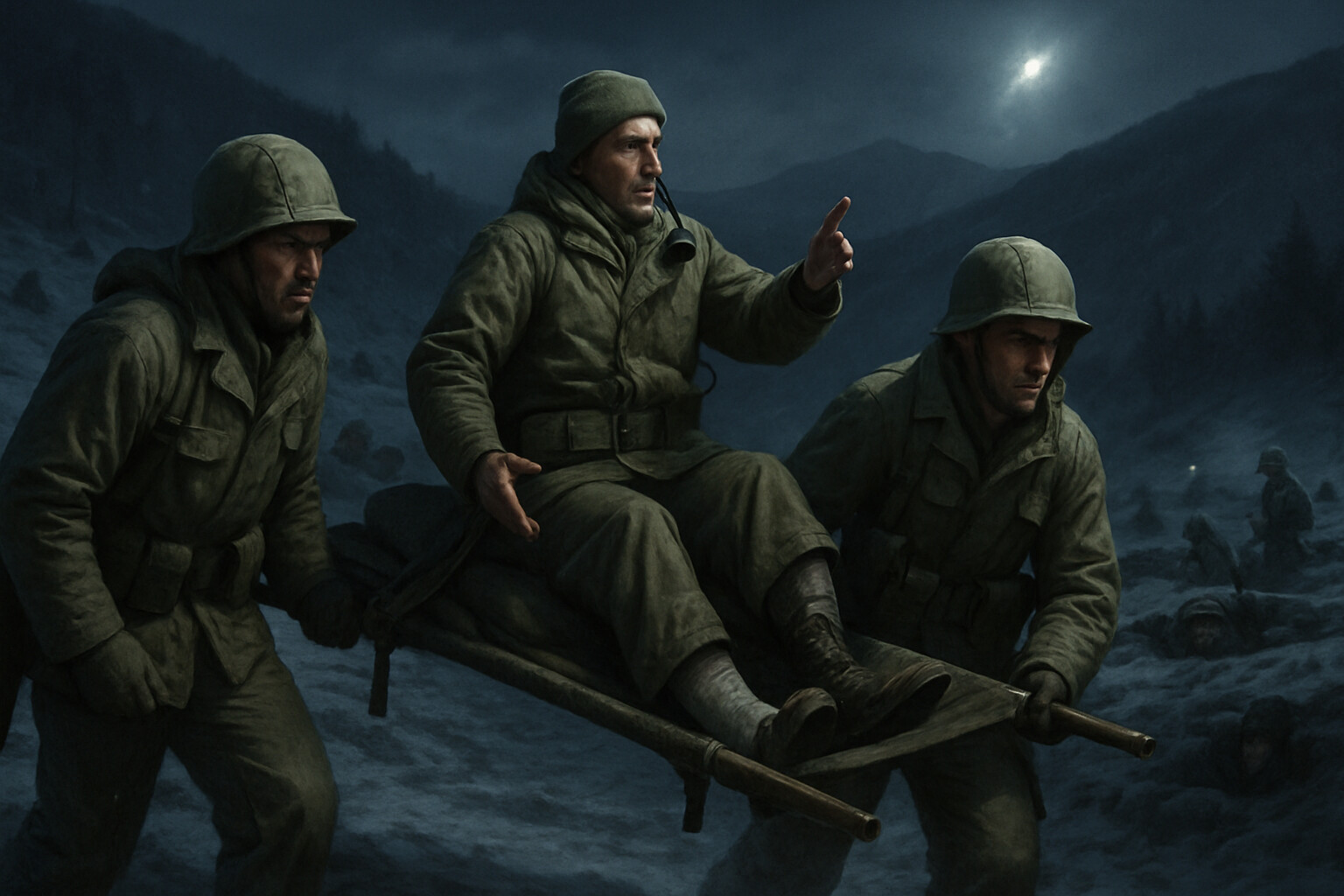
At some point during the siege, Barber was wounded — an injury to his leg confirmed in multiple secondary sources and reflected in the Medal of Honor citation. The precise moment is not established with certainty across all accounts and should be treated as an approximate reconstruction. What is consistently documented is that he continued to command despite the wound, moving by stretcher through the perimeter to direct the defense.
The Chinese attacked again on the night of November 28–29. The pattern was similar: night movement, close approach, multiple directions, bugle signals. Fox Company absorbed the attack, held the perimeter, and inflicted heavy casualties on the attackers. But Fox Company's own numbers were diminishing. Every man killed or seriously wounded was a permanent reduction in the defensive capability of a perimeter that was already stretched.
The nights of November 29–30 and November 30–December 1 brought more of the same. The Chinese did not give up on Toktong Pass. They had the numbers to absorb losses and continue pressing. What they could not do, night after night, was break through a defense where every rifleman, every machine gunner, and every mortarman understood the specific and irreplaceable importance of holding the line.
That understanding was not abstract for the men of Fox Company. Their officers had told them: the road below was the escape route for thousands of their fellow Marines. If the perimeter collapsed, the consequences would reach far beyond their own lives.
---
By the fourth night, Fox Company's strength was a fraction of what it had been on November 27.
The company had entered the position with 234 men. By late in the siege, a significant number were dead or wounded. The preponderance of secondary accounts indicates total casualties — killed, wounded, and cold-injury cases — substantially exceeding half the original strength, though precise figures vary across sources and should be treated as approximate until verified against original unit muster records. Wounded men who could still handle a weapon had been put back in the line. Men with frostbite injuries to hands and feet continued to fight from their positions. The perimeter had been adjusted and contracted in places it could no longer be adequately defended at its original extent.
Ammunition was being carefully rationed. The mortars had expended a large portion of their basic load. Machine gun barrels were worn. The men had not slept properly in days. In those conditions, in that cold, holding the line was a function not only of Barber's command decisions but of the discipline and training of every Marine in the position.
Barber continued to move by stretcher. He continued to communicate with his platoon commanders. He continued to make the tactical adjustments that kept the perimeter coherent: shifting a machine gun to cover a newly identified approach route, pulling a rifle squad from a quiet sector to reinforce a threatened one, directing the 81mm mortars to lay final protective fires when Chinese infantry attacked in the draws below the hill.
On December 1, the relief operation from Hagaru-ri began moving north. Elements of the 1st Battalion, 7th Marines were dispatched up the road to link up with Fox Company and secure the pass for the withdrawing columns from Yudam-ni. The Marines of the 5th and 7th Regiments — approximately 3,000 men who had fought fourteen miles of mountains and Chinese opposition — needed that pass to be open when they arrived.
---
On December 2, 1950, after five nights of continuous combat, the relief force reached Toktong Pass.
The men who came up the road from Hagaru-ri found Fox Company still in position, still holding the high ground above the pass. The perimeter had not been broken. The road had not been cut. The pass was open.
By the accounts of those present, the physical condition of the surviving members of Fox Company was severe. Men were frostbitten, exhausted, and many were wounded. But the company was still a functioning military unit, still organized, still under command.
The Marines from Yudam-ni passed through Toktong Pass and reached Hagaru-ri. Their passage was possible because the road had been kept open. The road had been kept open because Fox Company had held the hill.
Captain Barber was evacuated for medical treatment. Fox Company was consolidated with the main body of the 1st Marine Division, which then conducted its fighting withdrawal from Hagaru-ri through Koto-ri to Hungnam, reaching the coast and successfully evacuating by sea in mid-December 1950. Official histories document that withdrawal as one of the most effectively executed retrograde operations in American military history — a fighting movement against a surrounding enemy in conditions of extreme cold that required extraordinary unit cohesion at every echelon.
---
The weapons Fox Company carried tell part of the story by themselves.
The M1 Garand, the standard infantry rifle, was semi-automatic, reliable, and hard-hitting. In extreme cold it required careful maintenance, but it was more tolerant of freezing lubricants than the lighter M1 carbine — which Marines at Chosin found stopped heavily dressed Chinese soldiers less reliably, a function of both its smaller cartridge and its cold-weather mechanical vulnerabilities. The Garand's .30-06 cartridge offered greater stopping power and better penetration through padded winter clothing.
The Browning Automatic Rifle — the M1918A2, nearly twenty pounds loaded — was not a weapon a man carried lightly. In a fixed defensive perimeter it was a primary tool: placed to cover the most likely approach routes, it provided automatic fire the Garand could not match and fired the same .30-06 cartridge, a logistics advantage in a position running short on resupply.
The M1919A4 machine gun and the water-cooled M1917A1 gave Fox Company belt-fed automatic fire at range. Machine gun positions on a night defensive perimeter were targeted early by Chinese assault forces, because eliminating them opened gaps in the defensive fire plan. Keeping the guns running in minus-twenty-degree temperatures — managing congealed lubricants, warming mechanisms between engagements — was an ongoing maintenance challenge throughout the siege.
The mortars gave Barber organic indirect fire. The 60mm M2, light enough for one man to carry, could be set up and firing quickly in support of individual platoon sectors. The 81mm M1, heavier and more powerful, reached draws and defilades that direct-fire weapons could not cover, and its illumination rounds were critical: without flares, attacking infantry could close to grenade range invisibly. Managing the balance between illumination and high-explosive rounds as the mortar supply dwindled was a continuous tactical calculation throughout the five nights.
On the Chinese side, the attacking infantry were equipped primarily with Soviet-pattern weapons: the PPSh-41 submachine gun, widely distributed in Chinese formations and genuinely reliable in cold weather, firing close to 1,000 rounds per minute and producing the distinctive high-pitched burp American troops immediately recognized; the Mosin-Nagant bolt-action rifle; and light machine guns in some units. Chinese forces at Chosin also carried American weapons captured in earlier operations. They were lightly equipped for the conditions they encountered. Multiple accounts document significant Chinese casualties from cold exposure alongside those from combat, and some sources suggest portions of the attacking force were not adequately supplied with winter clothing for temperatures that reached thirty below zero Fahrenheit. Those details come from U.S. and secondary sources; Chinese-side records for this specific engagement have not been confirmed.
---
The Medal of Honor was awarded to Captain William E. Barber for his actions at Toktong Pass. The award is verified through official U.S. Marine Corps and Department of the Navy records and the Congressional Medal of Honor Society registry.
The official citation describes his leadership of Fox Company through the five-day siege, his personal fortitude in continuing to command while wounded, and the direct connection between Fox Company's stand and the successful passage of the Yudam-ni forces through Toktong Pass. The citation specifically credits his actions as instrumental in keeping the MSR open for the withdrawing Marine columns. For the verbatim citation text, readers should consult the Congressional Medal of Honor Society or the Naval History and Heritage Command.
Barber was not the only Fox Company Marine decorated for the Toktong Pass action. Gunnery Sergeant John Henry Lee and Staff Sergeant Robert Sidney Kennemore are cited in multiple secondary accounts as having received significant decorations for their actions during the siege — in Kennemore's case, accounts consistently describe an act of extraordinary valor during a night assault, reportedly covering a grenade to protect fellow Marines. Both men's specific citations and the precise decorations awarded require verification against official records before publication; the secondary-source attributions are consistent but have not been confirmed against primary documents for this account.
---
The Battle of Chosin Reservoir lasted from late November through mid-December 1950. It involved approximately 30,000 American and allied troops — primarily from the 1st Marine Division and elements of the U.S. Army's 7th Infantry Division — against a Chinese force estimated at ten to twelve divisions, roughly 60,000 to 120,000 troops depending on the source and accounting methodology. The Chinese had planned to destroy the 1st Marine Division. They did not succeed.
American casualties at Chosin were severe. Official figures list approximately 4,500 battle casualties for the 1st Marine Division during the campaign, plus thousands more non-battle casualties from frostbite and cold injury. Chinese casualties are harder to document; estimates range widely and remain the subject of ongoing historical analysis, but multiple credible sources indicate the attacking forces suffered catastrophic losses, including large numbers of dead from cold exposure.
The successful breakout to Hungnam, completed in mid-December 1950, was followed by a mass evacuation of U.N. forces and Korean civilians by sea. More than 100,000 U.S. and allied military personnel and approximately 91,000 Korean civilians were evacuated — one of the largest emergency sea evacuations in military history.
For Fox Company, the tally was stark. Of the 234 men who climbed the hill on November 27, a significant number were dead or seriously wounded by December 2. Precise casualty figures vary across secondary sources and should be understood as approximate; access to original unit muster rolls would be required to establish them with confidence.
---
William Barber returned to the Marine Corps after his recovery. He continued to serve and retired as a Colonel. He died on April 18, 2002, and is buried at Arlington National Cemetery.
The stand at Toktong Pass is covered in several major historical accounts of the Chosin Reservoir campaign, including works by historians who interviewed survivors and examined unit records. It holds a specific and recognized place in the operational history of the Korean War and in the institutional memory of the United States Marine Corps, where Fox Company's defense of the pass is studied as an example of how a small unit's occupation of key terrain can determine the outcome of a much larger engagement.
The pass itself — the frozen hillside above that single-lane Korean mountain road — carries no monument visible from below. The terrain is largely unchanged. Mountain pine and rock. In winter, the cold is still severe.
What happened on that hill, in five days and nights of fighting that ground a company of 234 Marines down to a fraction of its original strength without breaking its perimeter, determined whether thousands of men lived or died. The road stayed open. The columns got through.
That is the record.