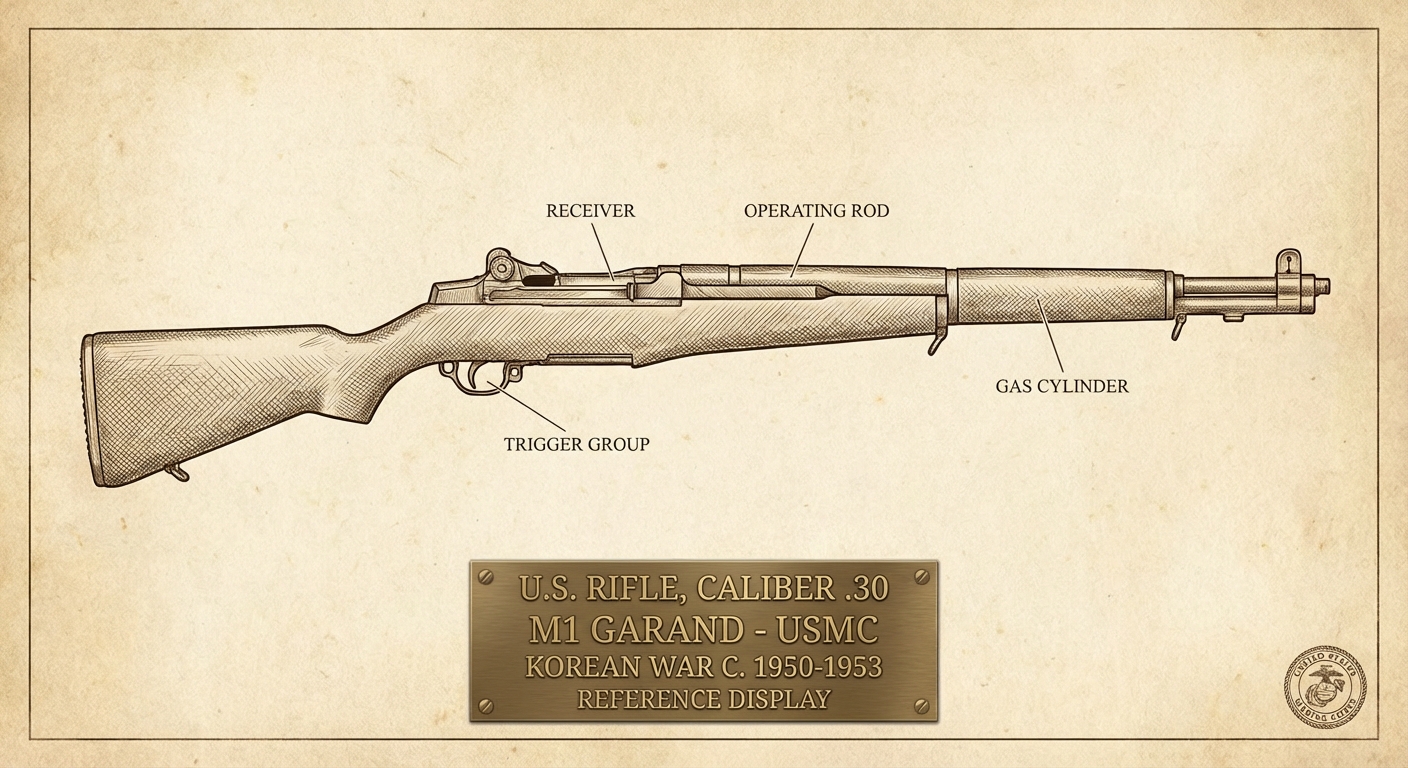
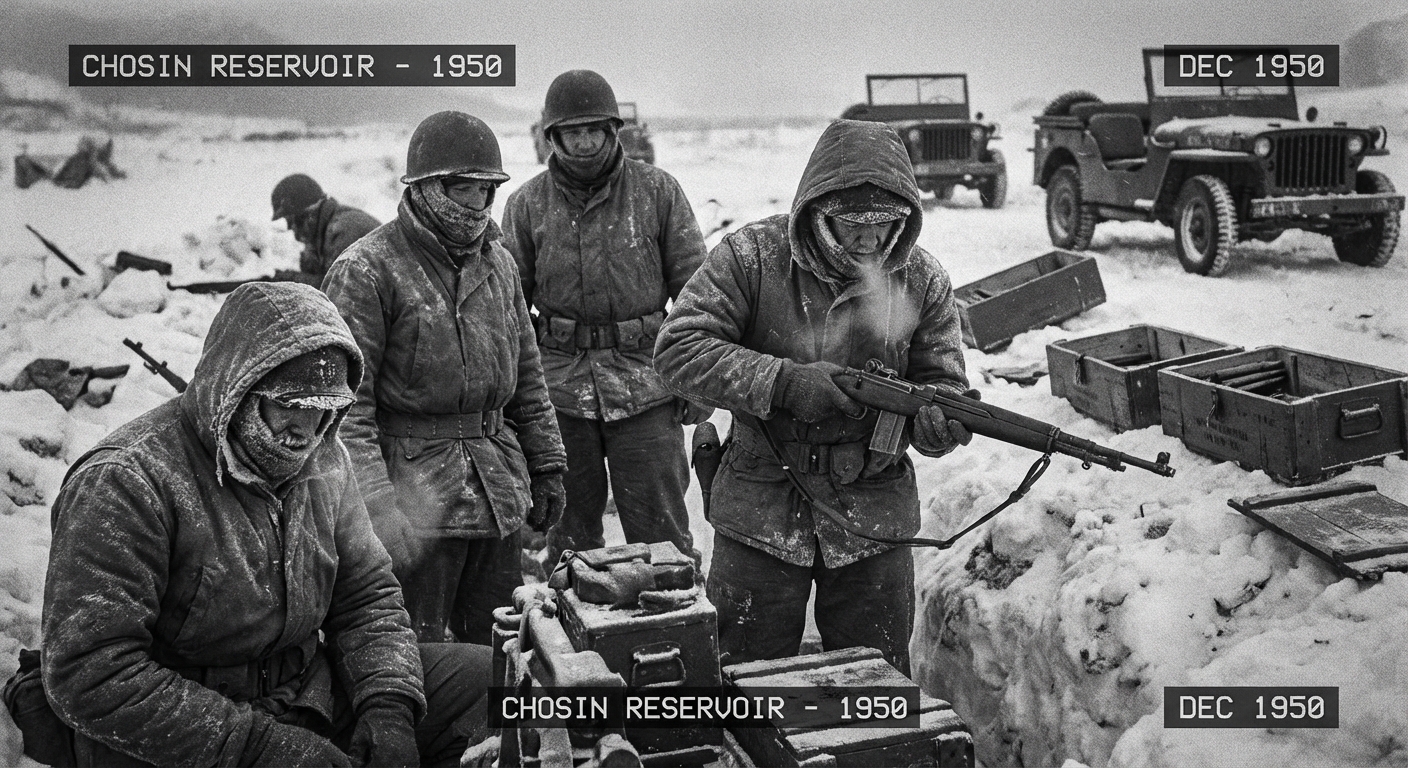
M1 Rifle
Standard infantry weapon carried through the frozen campaign.
In the mountains around the Chosin Reservoir, Marines and soldiers did not simply retreat from encirclement. They carved a road south through cold so savage it shattered steel, stopped blood transfusions, and killed almost as efficiently as bullets.
In the mountains around the Chosin Reservoir, Marines and soldiers did not simply retreat from encirclement. They carved a road south through cold so savage it shattered steel, stopped blood transfusions, and killed almost as efficiently as bullets.
This page follows the Front Line Stories longform layout: six visual panels, grounded narrative, a field kit, battle record, and source trail. It is written to read cleanly for adults while staying vivid enough for younger history fans.
Chosin Reservoir Breakout sits at the point where individual nerve met a much larger machine of war. The details matter, because the drama here came from real people, real places, and real consequences.
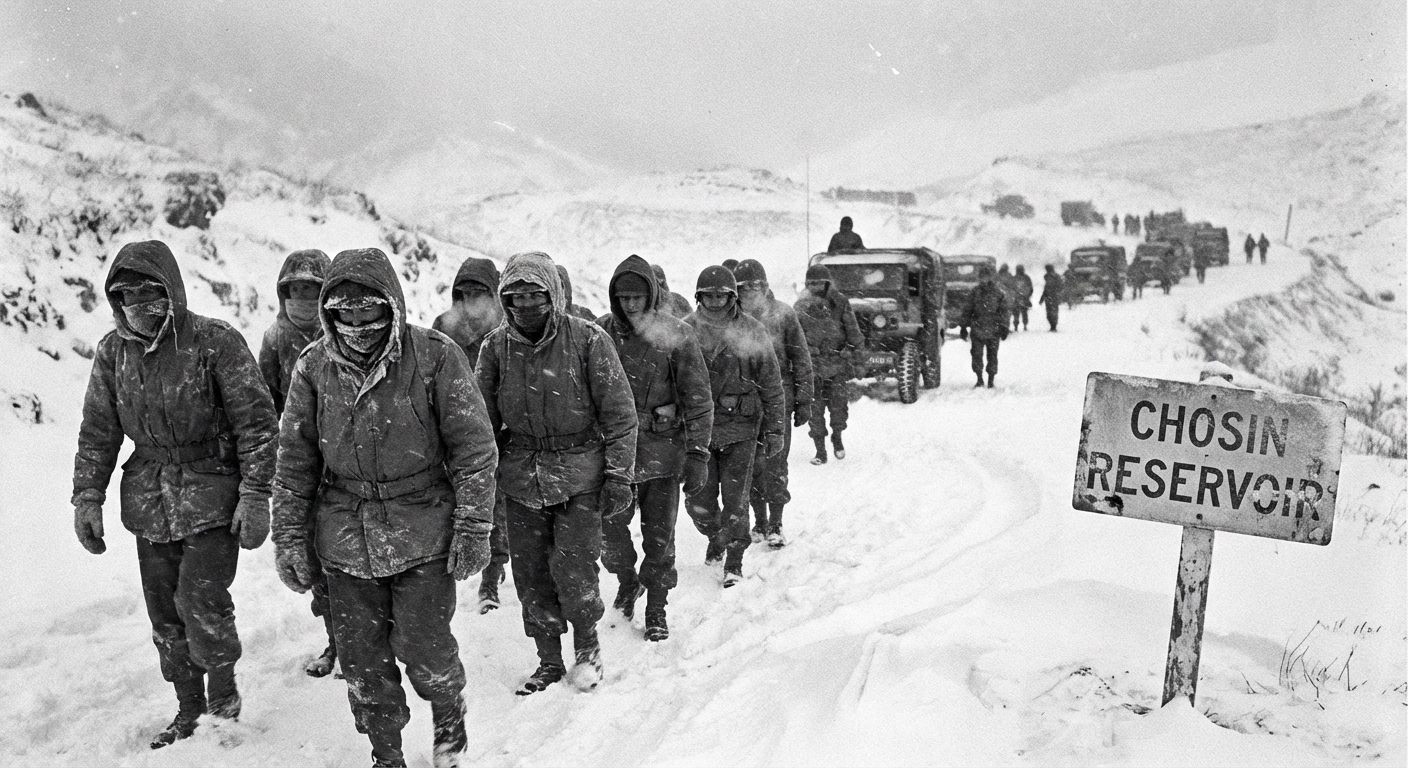
The campaign around the Chosin Reservoir began with overconfidence and ended in one of the most disciplined fighting withdrawals in American history. United Nations forces had pushed deep into North Korea when massive Chinese intervention fell upon scattered units in mountainous terrain. The 1st Marine Division, along with attached Army and British elements, suddenly faced encirclement, severed roads, and temperatures dropping to around thirty below zero Fahrenheit. Everything became harder in that cold, including breathing.
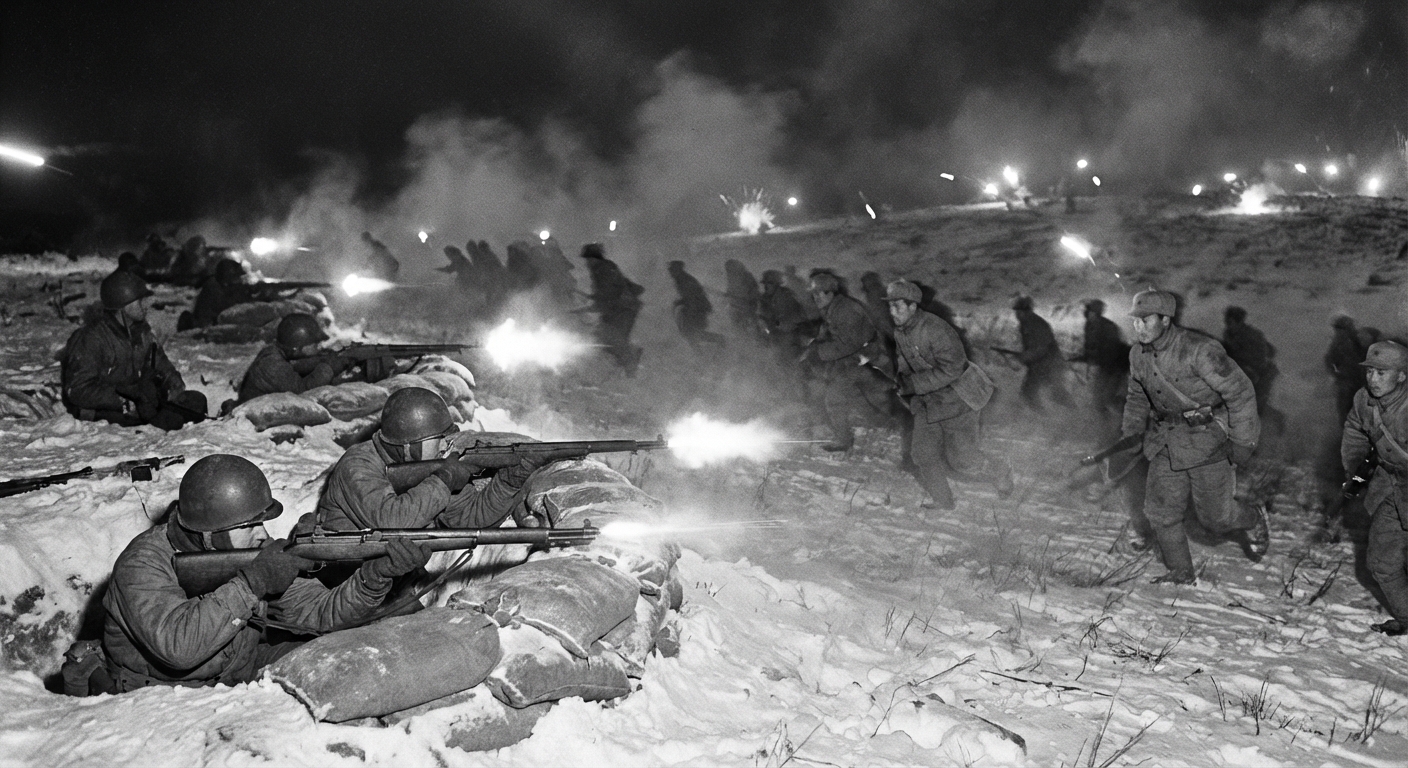
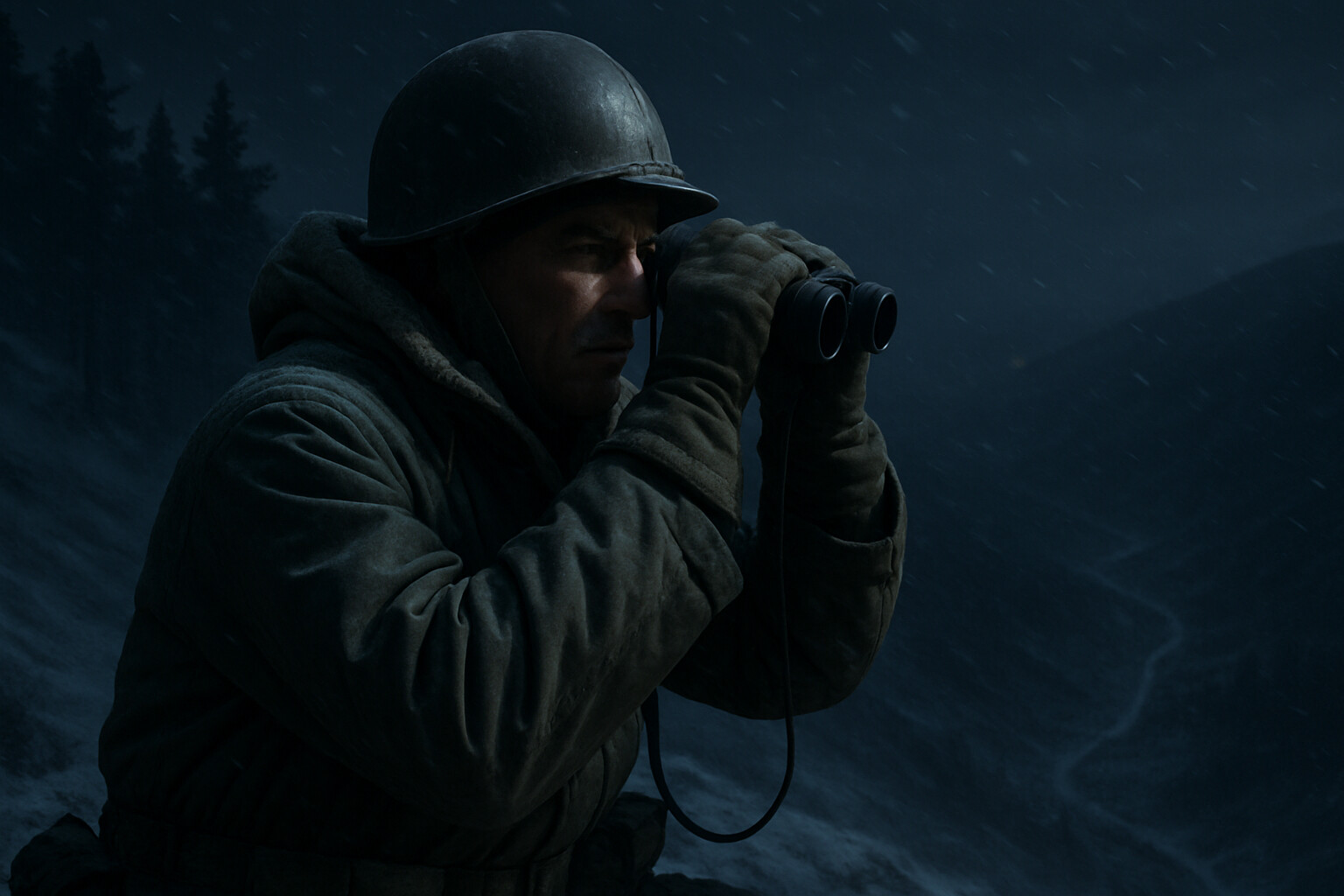
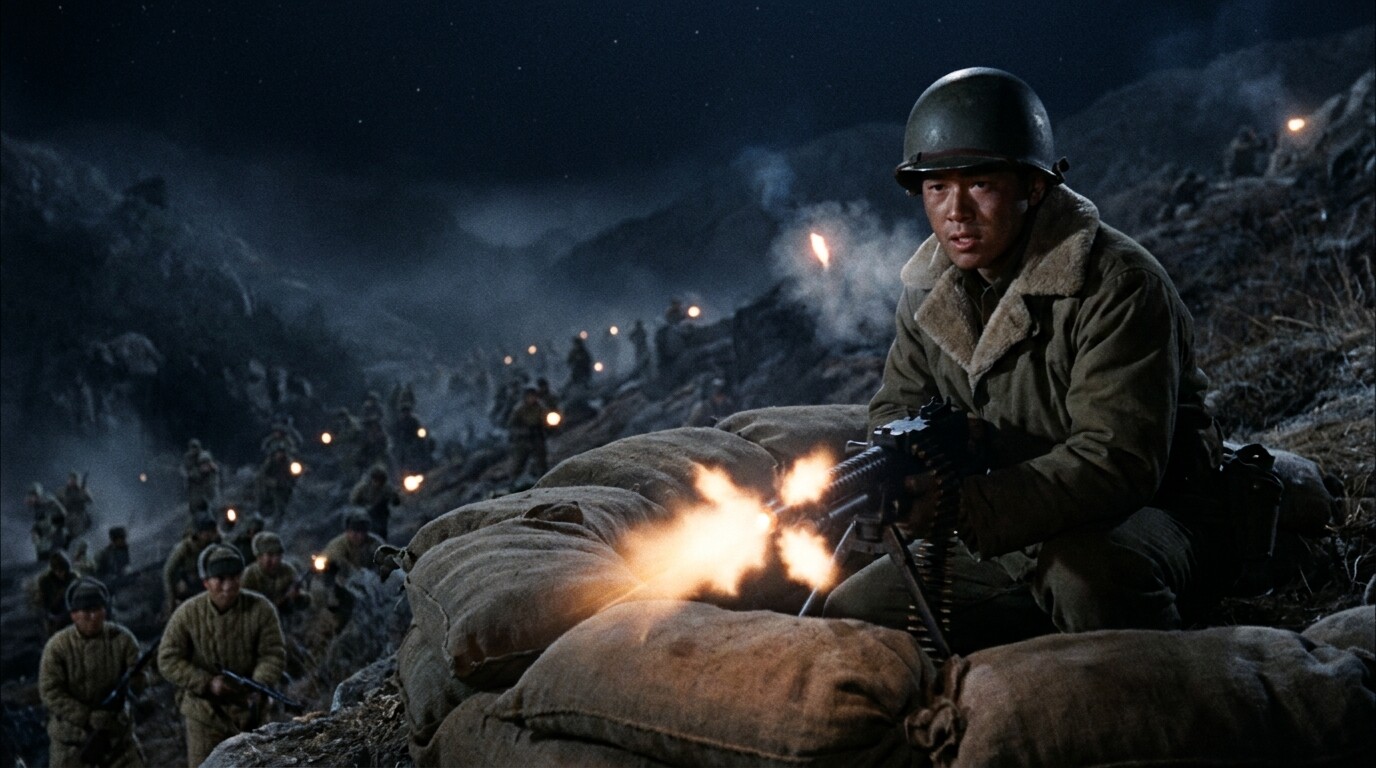
The enemy was not only numerous. It was close. Chinese troops attacked at night in waves, using bugles, whistles, infiltration, and the terrain itself. American units responded with disciplined fire, artillery, close air support, and stubborn perimeter defense. Weapons malfunctioned. Batteries died. Lubricants thickened. Men sleeping too deeply in the open could die where they lay. Frostbite casualties mounted beside combat casualties. Logistics became a contest against weather as much as against the enemy.
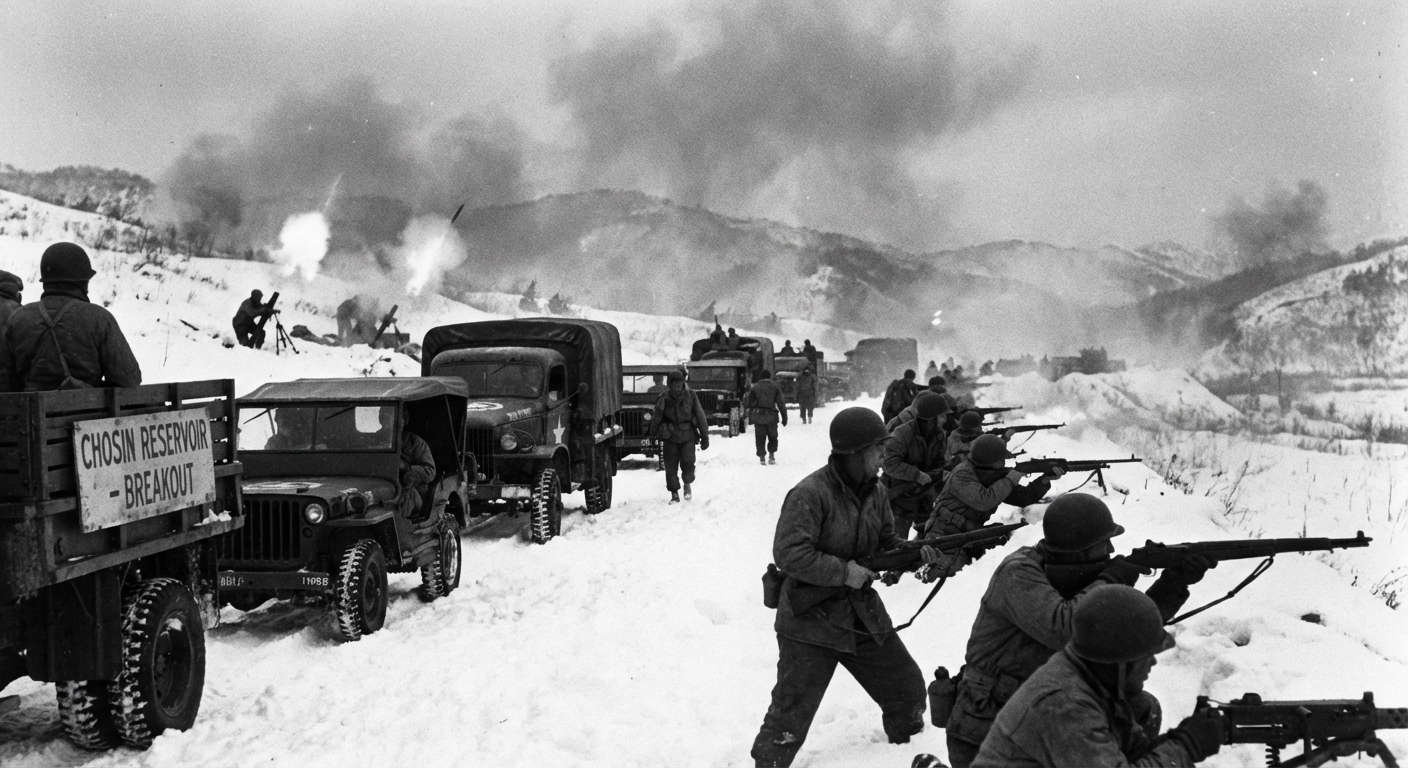
The key to survival was movement down the single road line from Yudam-ni and Hagaru-ri toward Koto-ri and Hungnam. Engineers repaired bridges under fire. Convoys crept past ambush points and blown spans. Marine, Army, and air units fought not for a clean battlefield victory but for each mile of road and each body that could still be brought out. Lieutenant General O. P. Smith called it not a retreat but an attack in a different direction. The phrase endured because it captured the mood exactly.
One of the campaign's defining episodes came at Funchilin Pass, where a destroyed bridge blocked the route south. Heavy bridge sections dropped by parachute were assembled under desperate conditions, allowing vehicles and men to continue the breakout. It was a mechanical miracle accomplished in freezing wind while the enemy pressed nearby. At Chosin, such practical acts of engineering were as heroic as any charge.
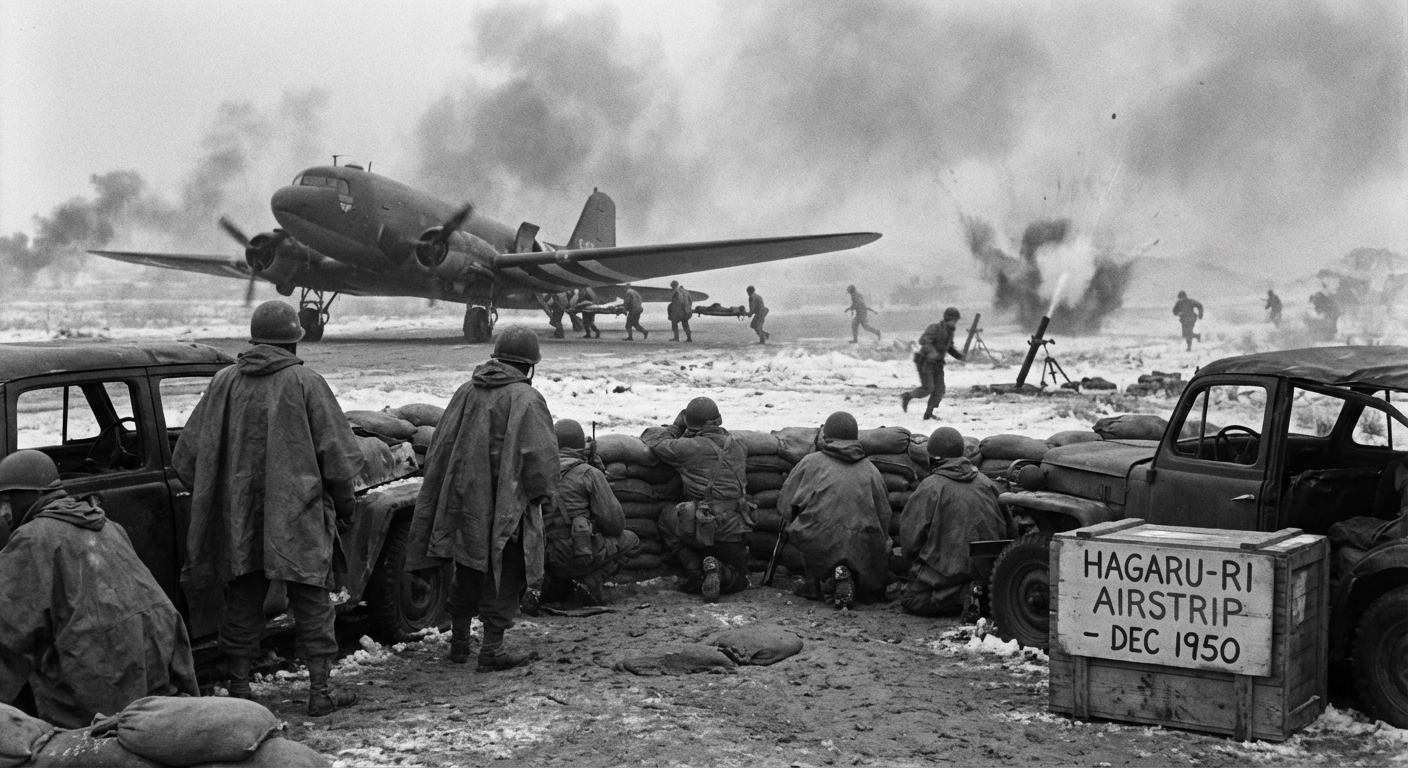
The breakout inflicted severe losses on Chinese forces, but it also cost the Americans dearly. Many of the dead were killed not by direct fire but by exposure. Units emerged battered, diminished, and permanently marked by the experience. Yet they emerged as units, carrying their wounded, their weapons, and much of their equipment. That mattered. An encircled force had not disintegrated. It had fought its way out.
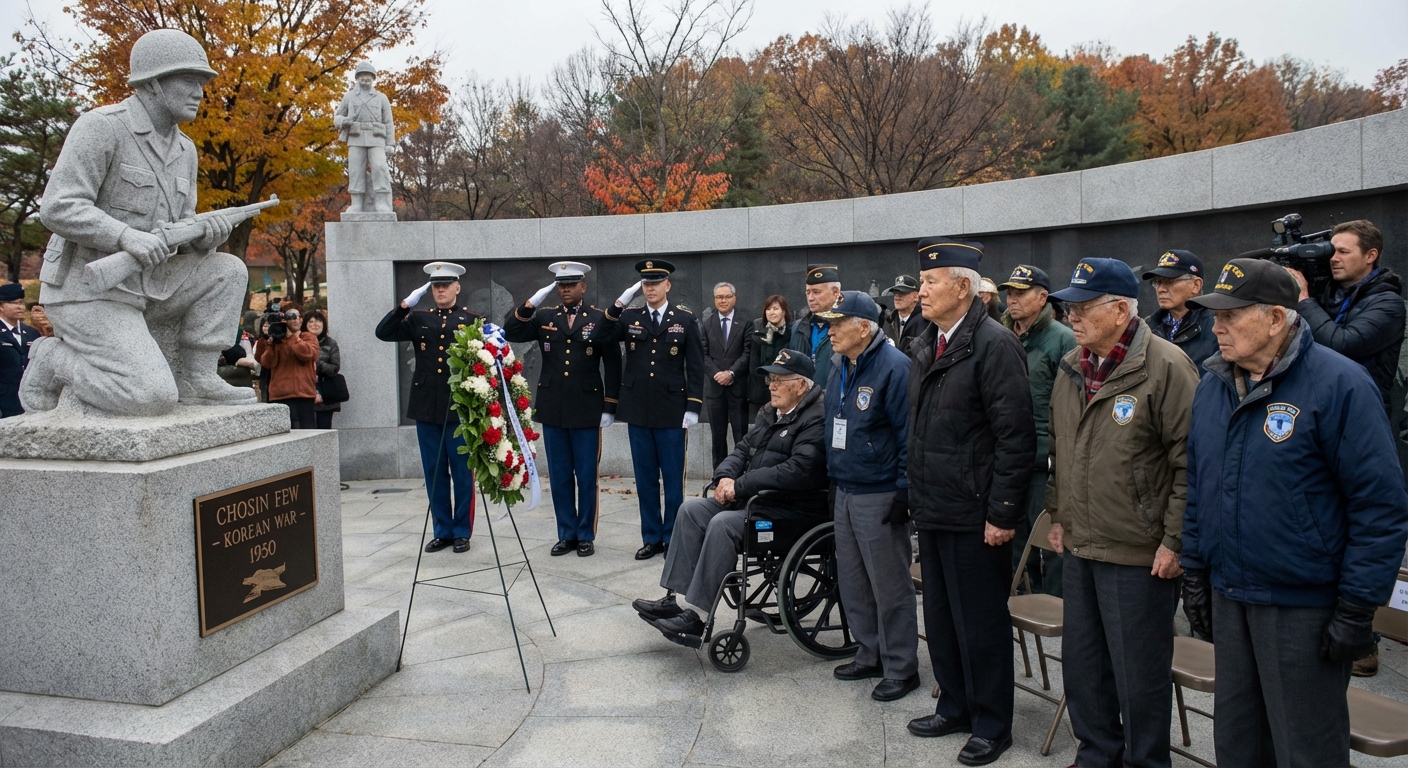
Chosin is remembered with awe because it combines tactical skill, discipline, suffering, and collective endurance at an almost unbearable level. It is the story of a road held open by men who were freezing, exhausted, and under attack, and who kept moving anyway.
Standard infantry weapon carried through the frozen campaign.
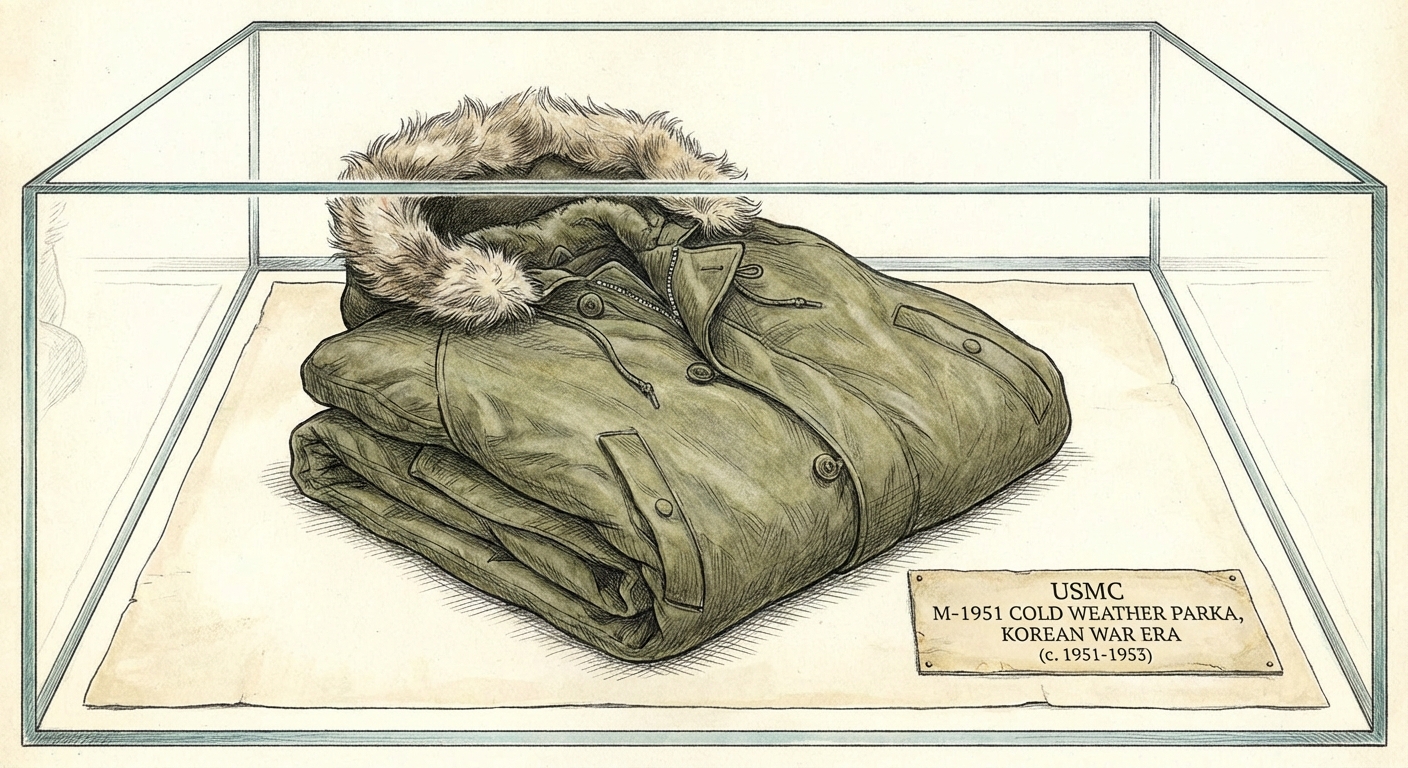
Vital protection in subzero temperatures around the reservoir.
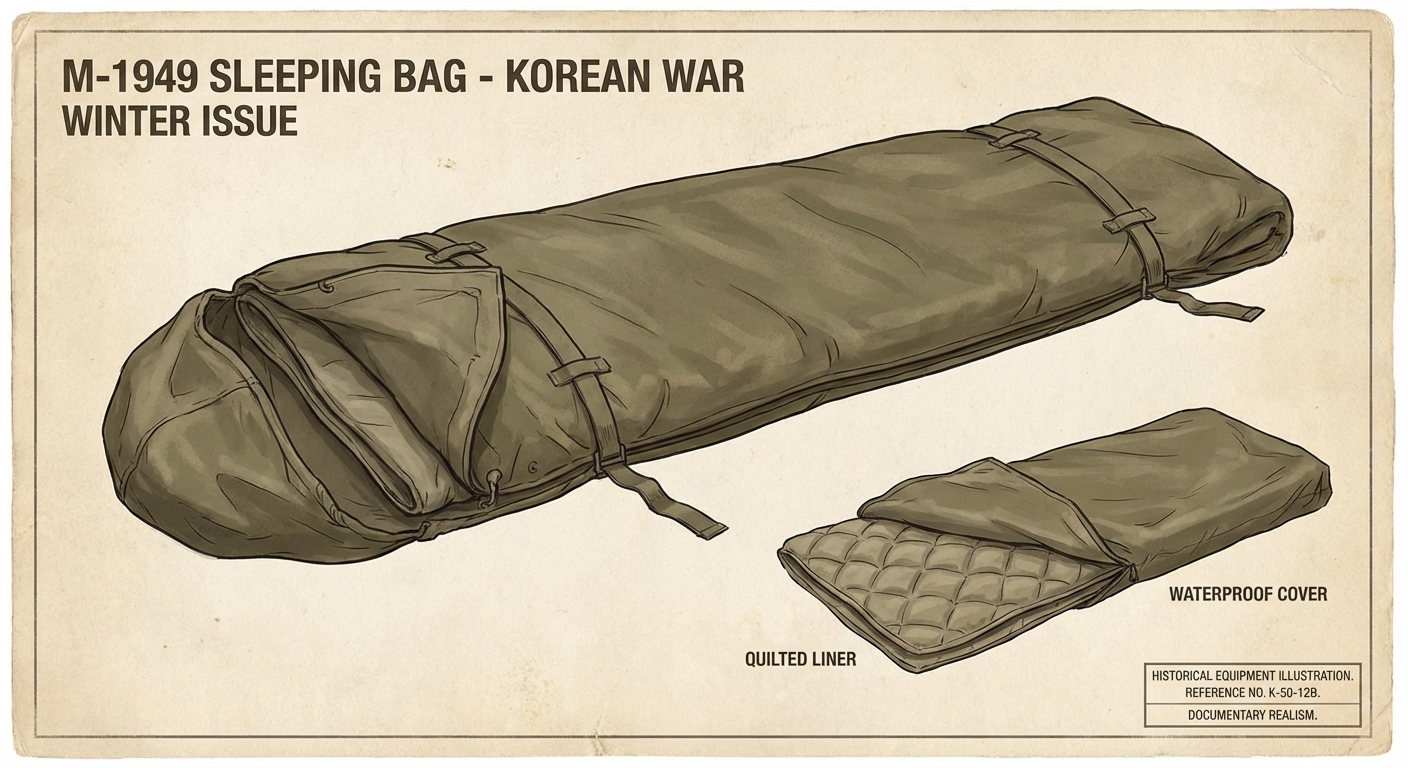
Used against strongpoints and close threats along the road.
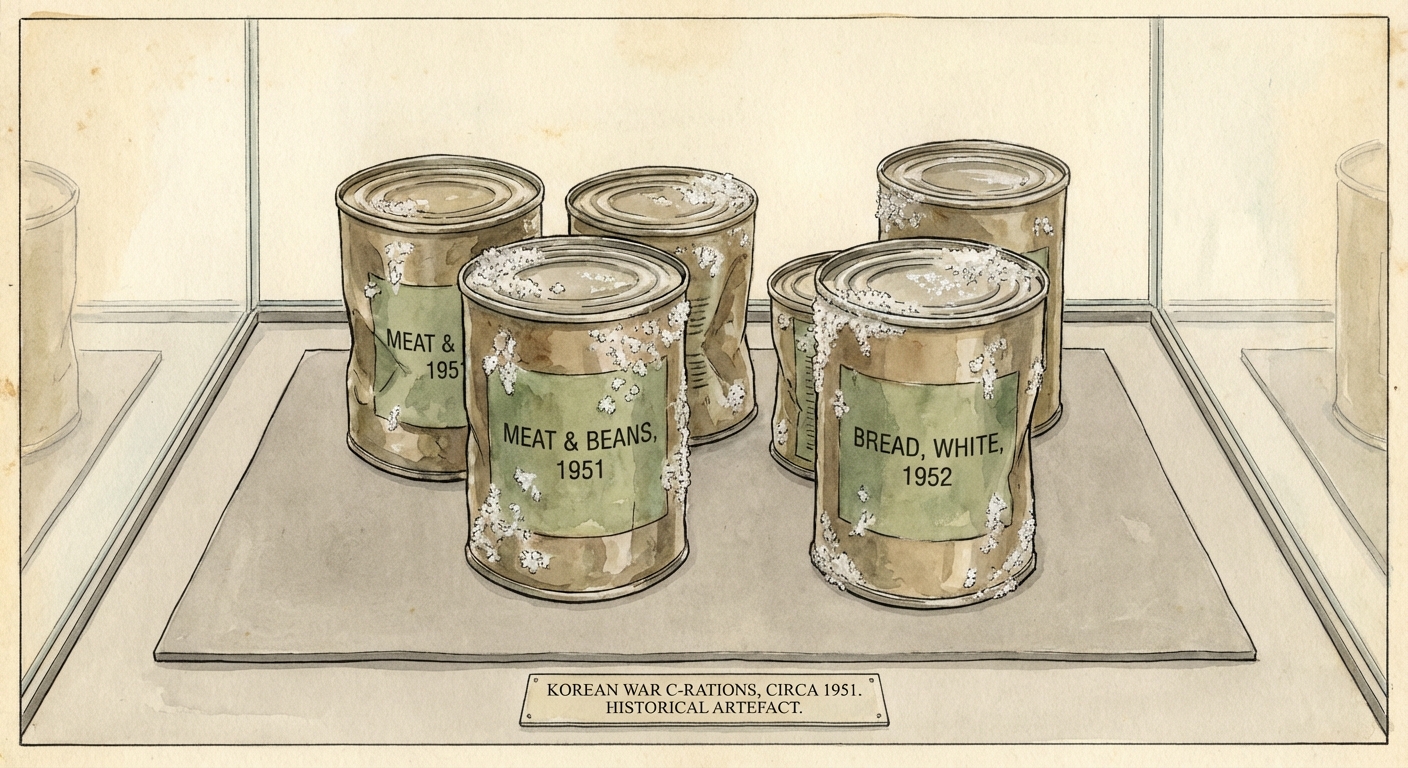
Symbol of the engineering feat that kept the breakout moving.
27 November to 13 December 1950
After Chinese intervention in Korea, UN forces around Chosin fought a running battle southward through encirclement and brutal cold. The withdrawal to Hungnam preserved much of the force while inflicting heavy losses on attacking Chinese units.