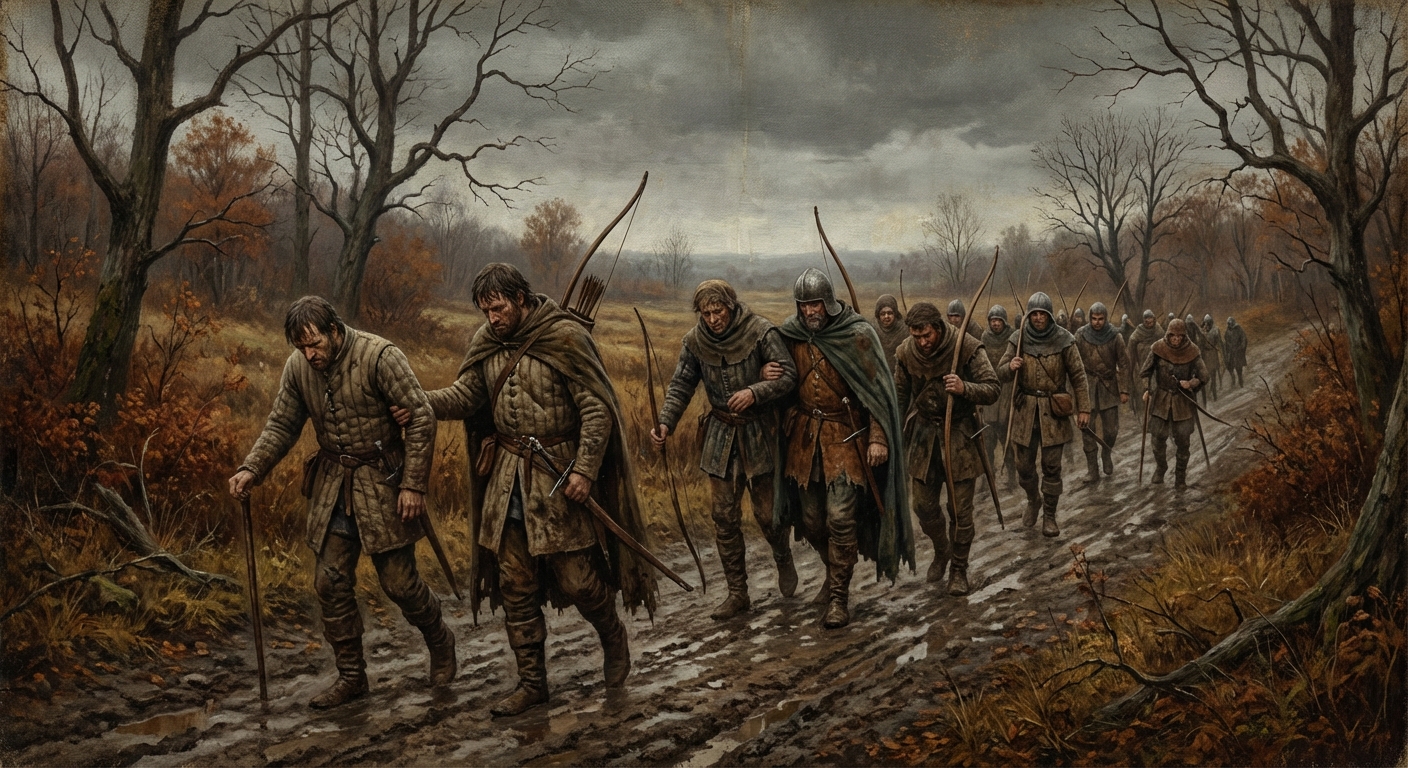
The marsh did not give way all at once.
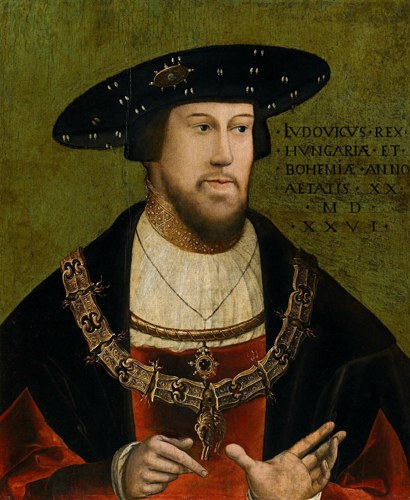
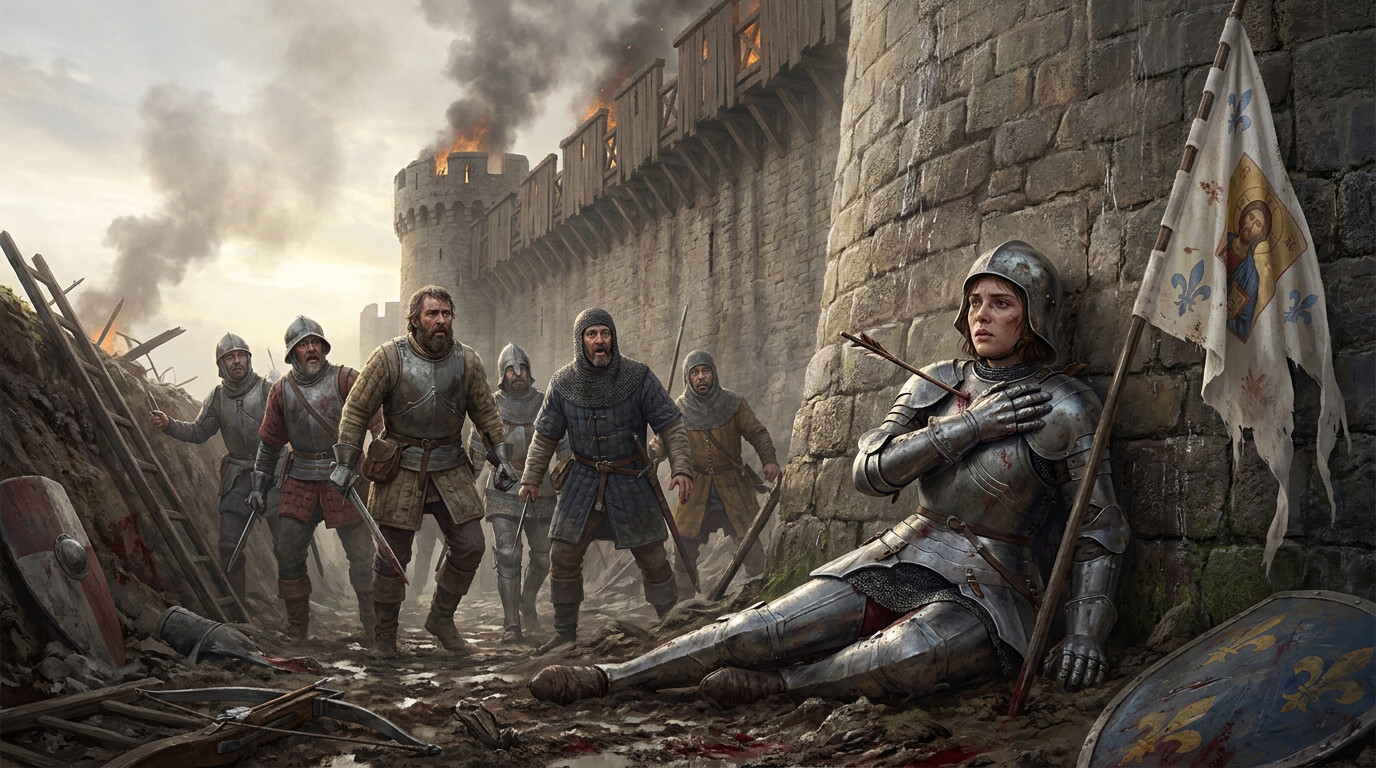
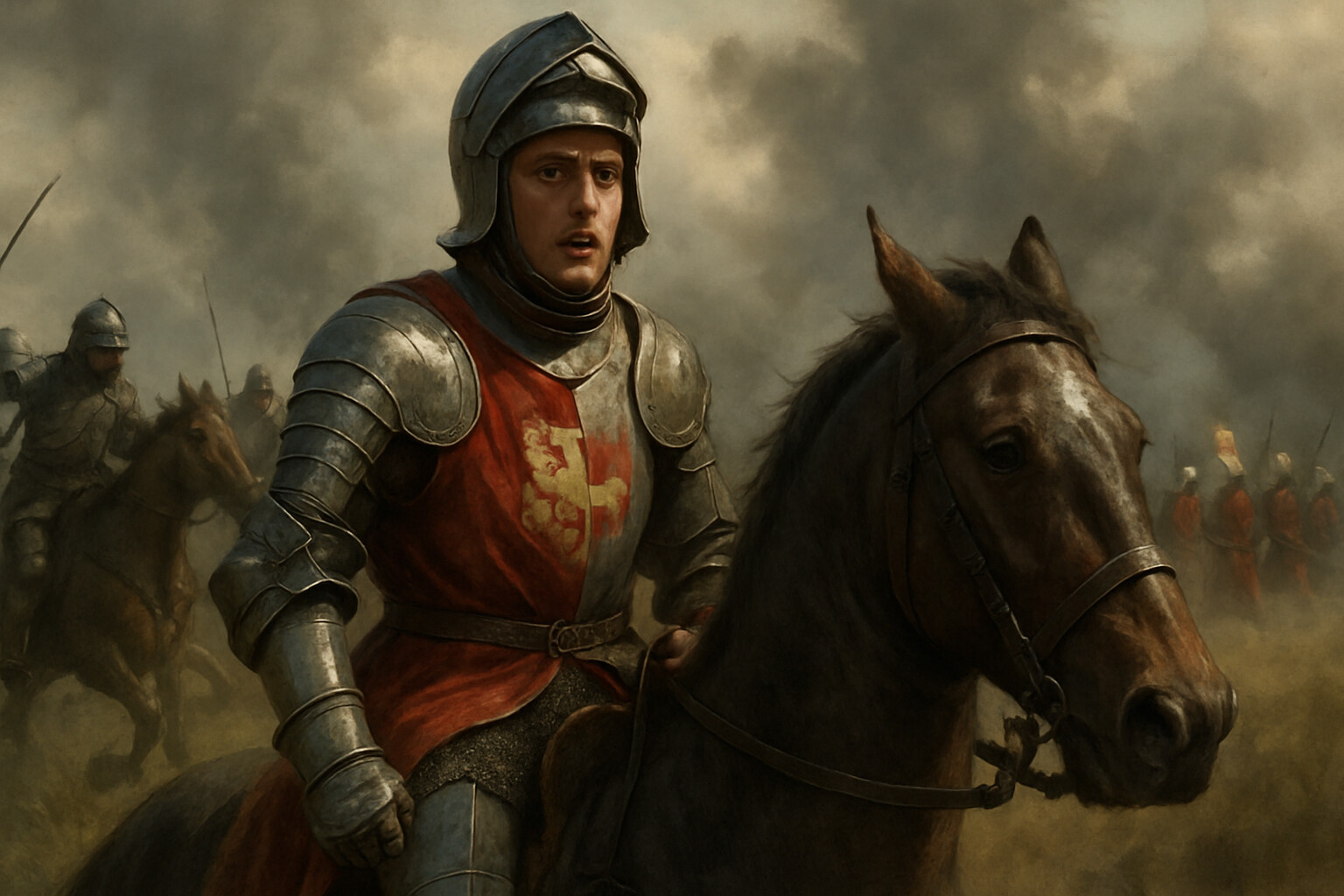
Louis II of Hungary was somewhere near the center of the melee when the Hungarian right wing broke. He was twenty years old, armored in plate, surrounded by the remnants of a royal bodyguard that had already taken hard fighting. The Ottoman Janissaries—disciplined, experienced, armed with arquebuses and long halberds—were pressing from the front. The Ottoman Sipahi cavalry were already sweeping around the flanks. The flat ground south of Mohács, which the Hungarian commanders had chosen because they believed it denied the enemy room to maneuver, was becoming a killing ground.
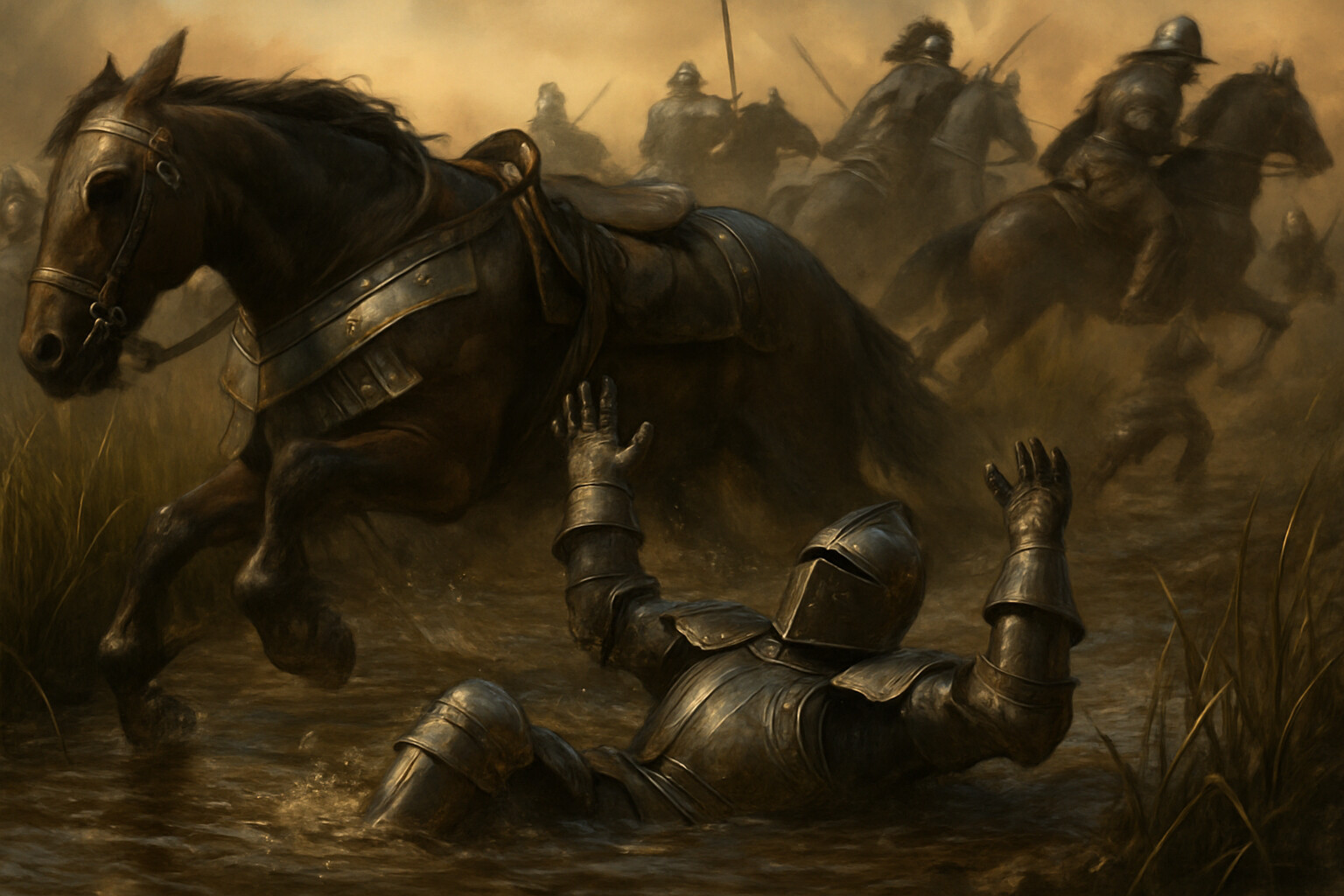
Exactly how Louis II died is not known with certainty. What is known is that his horse fell while he was attempting to escape northward through swampy ground near the Csele stream, and that the king—weighted by his armor—drowned or was crushed in the fall. His body was found weeks later. He was the last male ruler of the Jagiellonian dynasty in Hungary. His death did not end a single battle. It ended an era.
---
To understand what happened at Mohács on 29 August 1526, you have to understand what Hungary was, and what it was becoming.
For most of the fifteenth century, Hungary had been the primary military barrier between the Ottoman Empire and Latin Europe. Under John Hunyadi in the 1440s and 1450s, and under his son Matthias Corvinus from 1458 to 1490, the kingdom maintained professional armies, constructed an elaborate defensive network of fortifications along the Danube and Sava rivers, and won enough engagements against Ottoman incursions to preserve its territorial integrity. Matthias Corvinus in particular built what contemporaries called the Black Army—a large, well-paid mercenary force using the most current military methods available in Europe.
Matthias died in 1490 without a legitimate heir. The Hungarian nobility, who had resented the fiscal demands of his professional military and the constraints he placed on their autonomy, chose a weak Jagiellonian king, Vladislaus II of Bohemia, precisely because they wanted a monarch who would not challenge them. The Black Army was dissolved. The revenues that had paid for it were redirected or absorbed by the nobility. The defensive fortifications along the southern frontier began to deteriorate from neglect and underfunding.
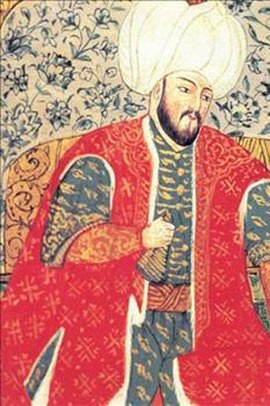
Over the thirty-six years between Matthias's death and the battle of Mohács, the result was the systematic hollowing out of Hungarian military capacity at exactly the moment the Ottoman threat was growing more acute. Suleiman I—known to later history as Suleiman the Magnificent—came to the throne in 1520 at approximately twenty-five years of age. He was energetic, ambitious, and in command of an empire that was by this point the most formidable military organization in the world. In 1521 he took Belgrade, a fortress Matthias Corvinus had held as the cornerstone of the Hungarian southern defense. In 1522 his forces took Rhodes from the Knights Hospitaller. Hungary, watching Belgrade fall, sent diplomatic appeals to the Pope, to Holy Roman Emperor Charles V, and to the kings of Western Europe. The response was sympathy and very little concrete help.
Louis II had inherited this deteriorating situation when he came to the Hungarian throne in 1516 at the age of ten. He was the son of Vladislaus II and Anne of Foix-Candale, crowned as a child under a regency council dominated by competing noble factions. By 1526 he was twenty years old, married to Mary of Habsburg, and nominally in command of a kingdom that was functionally bankrupt, politically fractured, and militarily unprepared for what was coming.
What was coming was enormous. In the spring of 1526, Suleiman mobilized an army at Constantinople and began marching northwest. Contemporary Ottoman sources—including the campaign diary attributed to Grand Vizier Ibrahim Pasha and the verse chronicle of Kemalpașazade—describe the expedition as a deliberate campaign of conquest, not merely a raid. The army crossed the Sava River, moved through Serbia, and advanced on the Hungarian frontier with the methodical pace of a force that intended to fight and win a major engagement.
The size of the Ottoman army at Mohács is one of the most debated questions in the historiography of the battle. Ottoman and later European accounts have produced wildly varying estimates, some reaching 300,000. Modern scholarly analysis, drawing on the work of historians including Géza Perjés and Pál Fodor, suggests a more credible total force—including non-combatant logistics and camp followers—of somewhere between 60,000 and 100,000 men, with a fighting strength probably in the range of 45,000 to 60,000. The core of this army was the Kapıkulu, the sultan's household troops: the Janissary infantry, the Kapıkulu cavalry, and the artillery corps. These figures should be treated as informed estimates rather than settled counts; the underlying administrative records have not been fully reconciled.
The Hungarian army was far smaller. Again, exact figures are contested. The most careful modern estimates, reviewed by historians including János Bak and Géza Perjés, put the Hungarian fighting force at somewhere between 24,000 and 28,000 men, though some assessments are lower. This included the royal household cavalry, contingents from the nobility, some mercenary infantry, Croatian and other allied forces, and an artillery train that was numerically not negligible—Hungarian sources suggest around 85 cannon, though this figure is not consistently traced to a single primary document and should be treated with caution—but which was inadequately trained, poorly positioned, and weakly integrated into the battle plan.
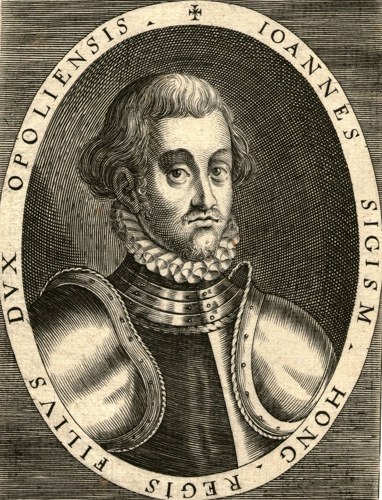
Critically, the army that assembled near Mohács in August 1526 was not the full strength the kingdom could theoretically have fielded. The army of Transylvania under John Zápolya, probably numbering in the tens of thousands, was marching to join Louis but had not arrived. A Croatian force under Christopher Frankopan was also delayed. The Bohemian and other Jagiellonian lands might have sent reinforcements, but the diplomatic and logistical machinery was too slow. The army that stood on the plain of Mohács on the morning of 29 August was what Louis had, and it was not enough.
---
The battlefield geography shaped everything that followed.
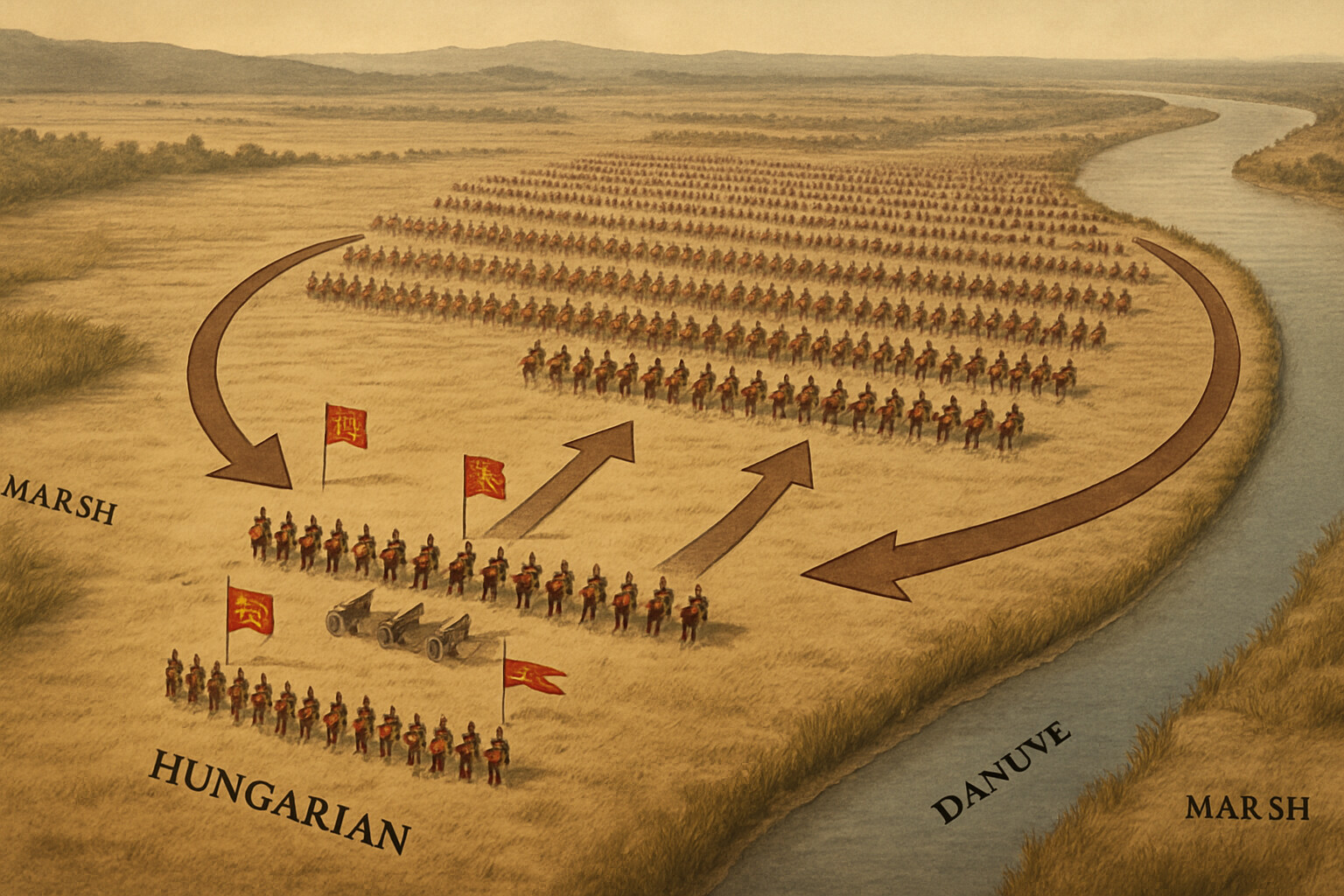
The plain of Mohács lies on the right bank of the Danube in southern Hungary, in an area of flat agricultural land broken by marshes, scattered stands of trees, and the low ridgelines edging the river valley. The Hungarian commanders—primarily Archbishop of Kalocsa Pál Tomori, who held effective military command, and György Szapolyai—chose to deploy on this plain for a reason that seemed tactically sound: the marshes and the river on either flank would constrain Ottoman cavalry from executing the wide encirclements that had destroyed European armies in earlier encounters.
The problem, as events would show, was that the same geography constraining Ottoman cavalry also constrained any Hungarian retreat or redeployment. And the constraint on the Ottomans was less complete than the Hungarian commanders assumed. The Sipahi cavalry had sufficient room, on the flanks and behind the initial shock, to find the edges of the Hungarian position and begin rolling it up.
The Hungarian deployment placed infantry and artillery forward, with the cavalry—the strongest arm and the one most capable of delivering shock—in a second line. The logic was to use initial artillery fire and infantry resistance to disrupt the Ottoman advance, then release the cavalry for a decisive blow. It was a reasonable concept, undermined by poor execution and the realities of fighting an army with far greater depth and firepower.
The Ottoman deployment placed the Janissaries at the center, with the artillery integrated into the line—a practice the Ottomans had developed over decades of campaign experience, including at Chaldiran in 1514 against the Safavids and at Marj Dabiq in 1516 against the Mamluks. Some accounts, including later European sources drawing on Brodarics, describe the Ottoman cannon being chained together to prevent cavalry from riding through the gaps between pieces—a technique reportedly used at other Ottoman engagements that transformed the artillery position into a physical barrier as well as a fire platform. Whether this practice was specifically employed at Mohács requires further source verification, and it should not be treated as confirmed. Sipahi cavalry deployed on both flanks, with reserve forces including the sultan's own guard cavalry held back.
Suleiman himself commanded from the rear, positioned on an elevation where he could observe the battle. Grand Vizier Ibrahim Pasha directed the center.
---
The battle began in the early afternoon of 29 August 1526. The precise hour is uncertain, but Ottoman sources suggest it was around the middle of the afternoon when the Hungarian army advanced.
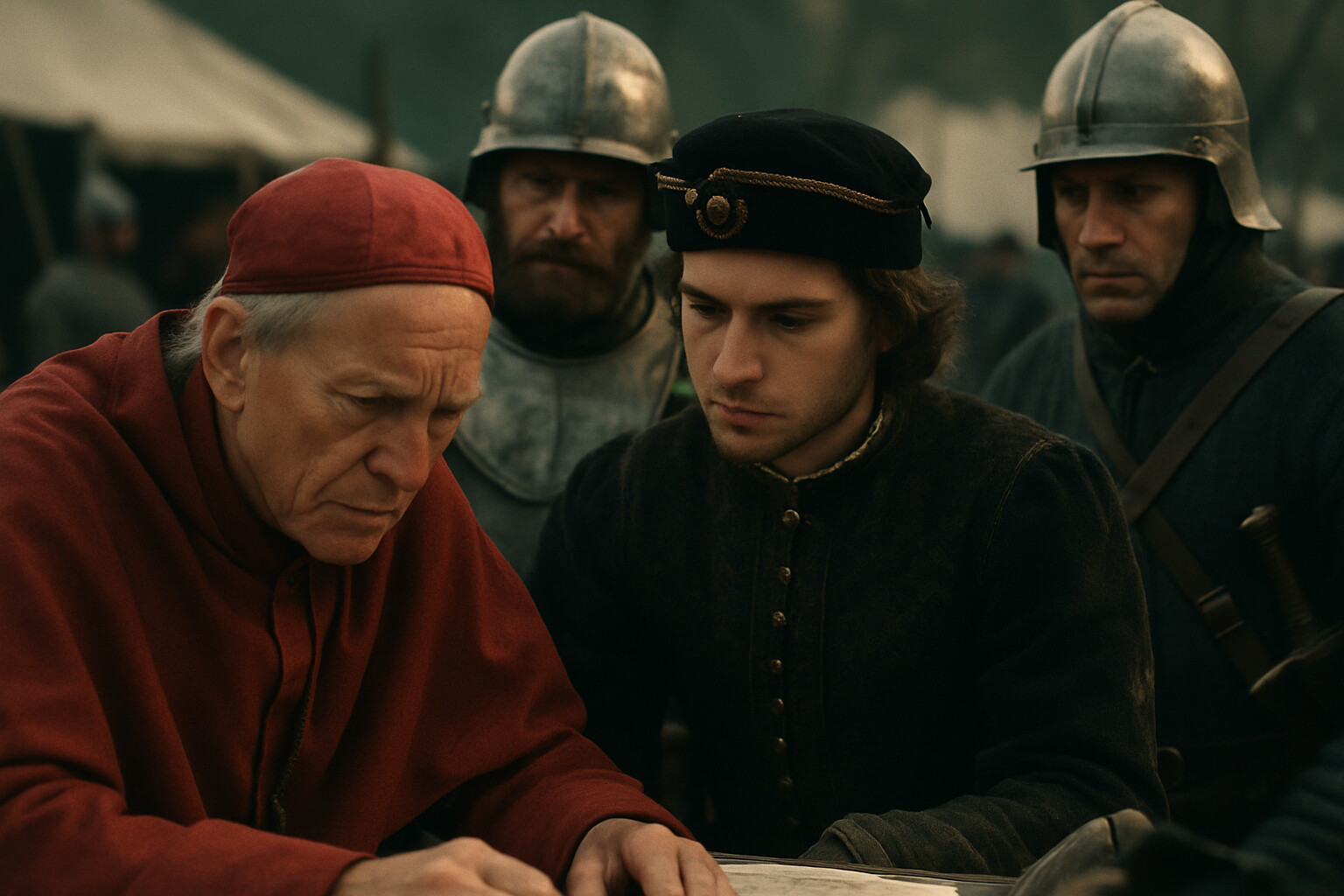
Archbishop Tomori, commanding from the front, appears to have decided to attack rather than wait. His actual deliberations are not recorded; the decision can only be inferred from what followed and from the military logic of the situation. Waiting gave the Ottomans time to fully deploy their artillery and reinforce their position; attacking before the full Ottoman army had consolidated offered a narrow window of potential advantage. It is also possible that what appeared to be a limited Ottoman advance guard created an impression that the moment was favorable—an impression that proved catastrophically wrong.
The Hungarian cavalry charged forward on the right wing. Brodarics's account—the most detailed contemporary European record, written by a survivor who was present in the command area—describes the Hungarian right wing cutting through the left of the Ottoman line and actually reaching the vicinity of Suleiman's own position before being contained. This is one of the most discussed episodes of the battle. Brodarics was not a soldier, and his account reflects both the perspective of an educated court observer and the humanist rhetorical conventions of his Latin prose; some historians have questioned whether the charge penetrated as deeply as he suggests, and Ottoman sources do not clearly corroborate it. If his account is substantially accurate, it suggests the first Hungarian charge achieved more than it is sometimes credited for—but also shows how insufficient that initial success was. The Ottoman center and reserves absorbed the blow, and Janissary firepower began its work.
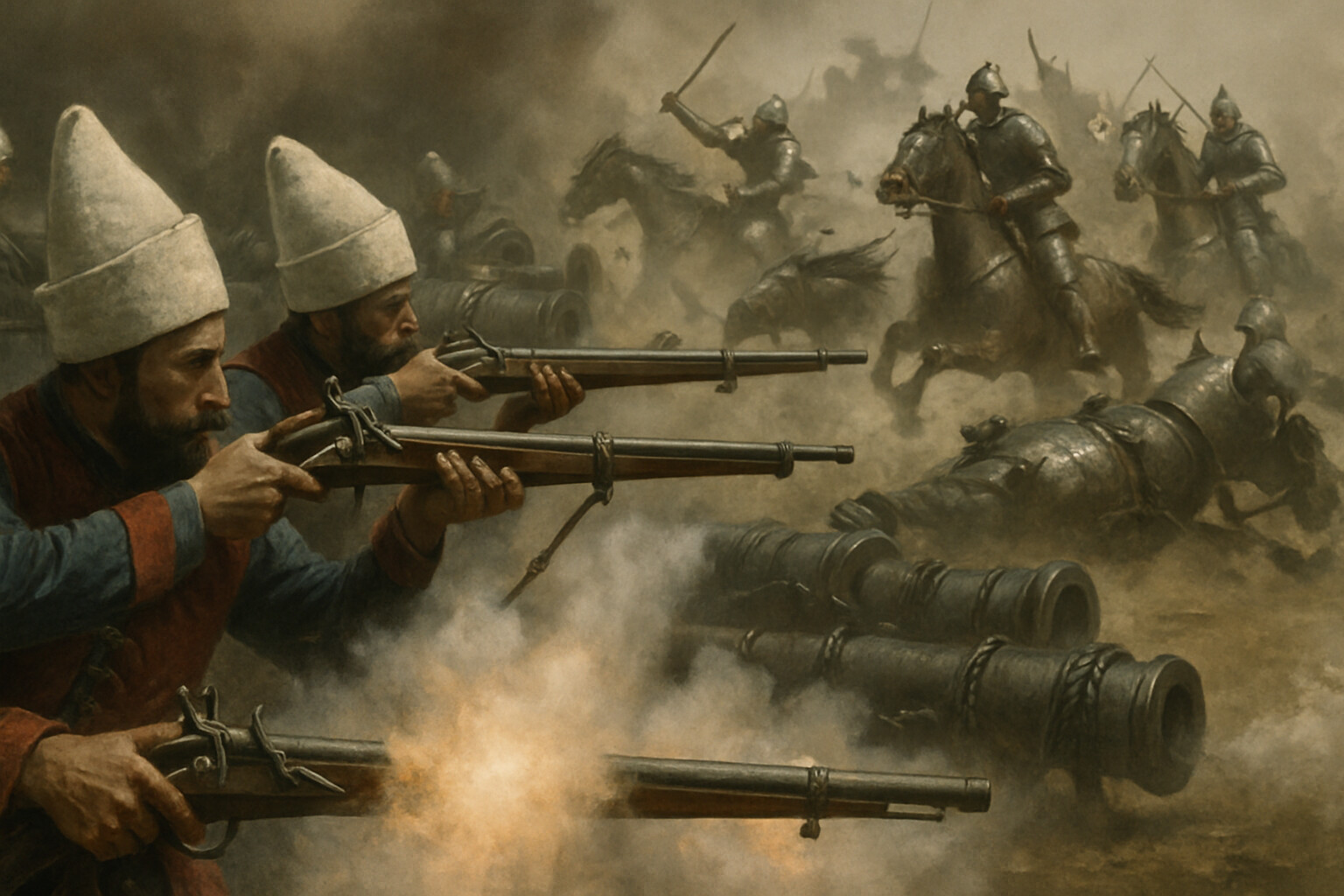
The Hungarian artillery, positioned forward, got off some fire but was unable to maintain effective suppression of the Ottoman guns. The Hungarian infantry, caught between Ottoman artillery from the front and developing Ottoman cavalry pressure on the flanks, began to collapse. Once the flanks gave way, the center—already under intense fire—had no choice but a fighting withdrawal that rapidly became a rout.
Archbishop Tomori was killed in the fighting, one of the first senior commanders to fall. Brodarics, who survived, later described the speed of the collapse with visible anguish: what had been an ordered battle line became a chaos of broken men and horses within what he estimated as no more than two hours from first engagement to the end of effective resistance.
The Hungarian losses were catastrophic. Modern historical consensus, drawing on Brodarics and later scholarship, holds that somewhere between 14,000 and 20,000 Hungarians were killed in the battle and the immediate pursuit—including a large proportion of the kingdom's senior nobility, clergy, and military leadership. Among the dead: two archbishops, five bishops, and a substantial portion of the royal council. The army was not merely defeated; it was effectively destroyed as an organized force.
---
Louis II did not die in the main battle. That much is established.
Brodarics and other sources indicate that the king survived the initial collapse and attempted to flee northward with a group of surviving cavalry. The route led them toward the village of Csele and the small Csele stream that feeds into the Danube. Here—in a marshy, difficult crossing—Louis's horse fell. The king, in full armor, went down into the water or the mud. He did not get up.
The exact circumstances are obscured by the chaos of pursuit and the absence of witnesses who recorded what they saw clearly. Some later accounts describe the horse stumbling on a bank and the king falling into the stream; others are vaguer. The body was reportedly found weeks later—secondary sources vary between October and November 1526, and the precise date should be confirmed against contemporaneous records before publication—when recovery efforts located him near the Csele stream. His body was identified and ultimately given a royal burial, though the details of the initial burial and any subsequent formal interment also require archival verification.
He was twenty years old. He had been king of Hungary for ten years, since the age of ten. He left no surviving children. His wife, Mary of Habsburg, survived.
---
The equipment carried into this battle on both sides reflected two very different military traditions at very different points in their development.
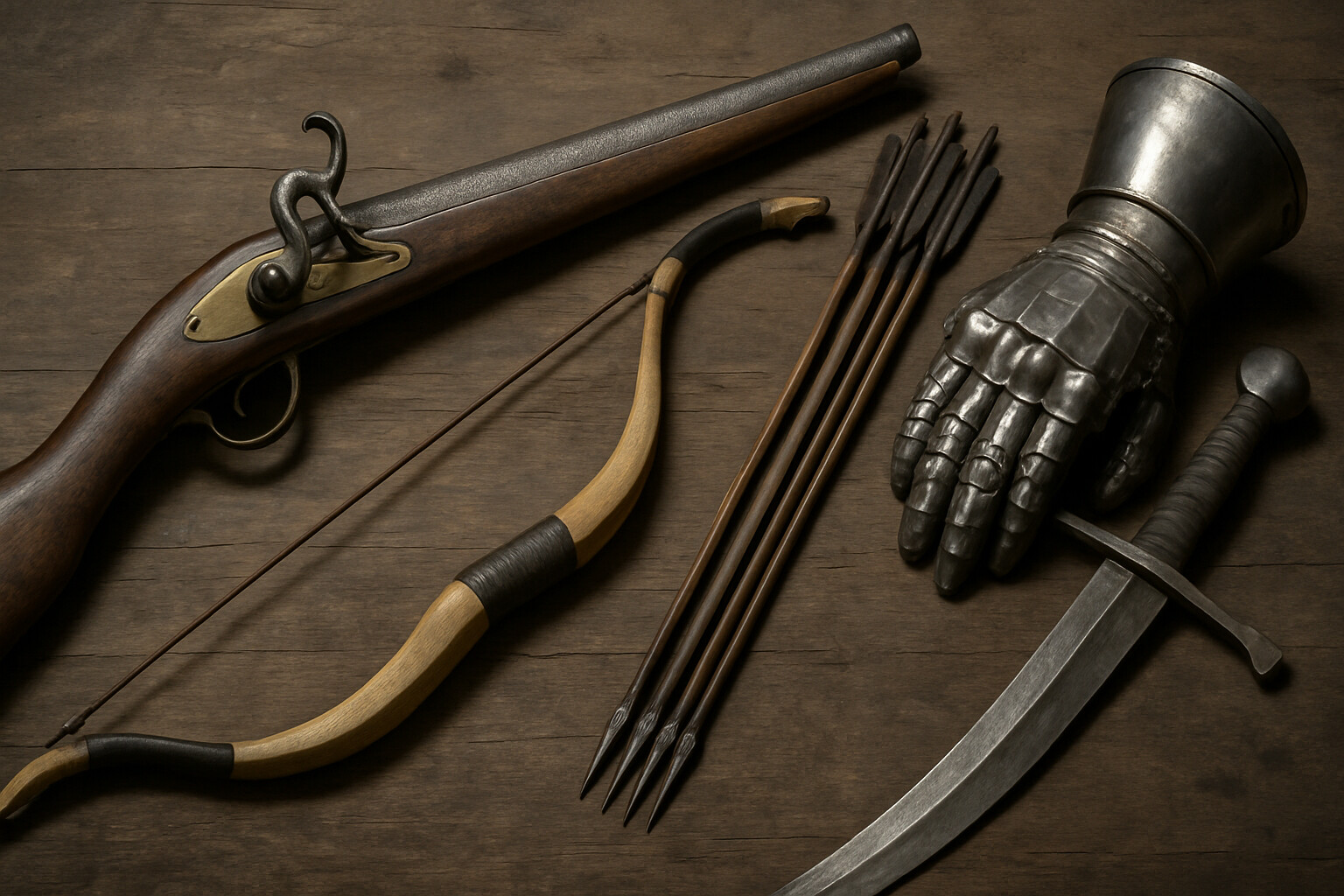
The Hungarian heavy cavalry—the armored knights and mounted nobility who formed the shock element of Louis's army—were equipped broadly in the late medieval Western European tradition. Their plate armor ranged from older harnesses of the Gothic style to more recent Maximilian-style fluted plate, products of workshops in Augsburg, Nuremberg, Innsbruck, and Milan that dominated European arms production in this period. A full harness of quality plate in the 1520s weighed between 15 and 25 kilograms depending on its extent and the quality of the metal; it was articulated at the joints to allow movement, and a mounted knight in well-fitted armor could ride, fight, and move on foot, though the last was exhausting. The horses carrying these men were large, trained animals bred specifically for battle, and themselves required substantial management. These equipment descriptions reflect general Central European military practice in the 1520s rather than specific Hungarian royal inventories, which do not survive in sufficient detail.
For weapons, the Hungarian cavalry carried lances for the initial charge, supplemented by swords, maces, and war hammers for close combat. The lance charge in the early sixteenth century was still the primary shock tactic of heavy cavalry, though the increasing effectiveness of firearm-equipped infantry had been steadily eroding its dominance across Europe since at least the late fifteenth century.
The Hungarian infantry at Mohács was more mixed in its equipment. Professional mercenary elements—some organized along German Landsknecht lines—carried pole weapons including halberds and pikes, alongside swords. Some arquebusiers were present, though Hungarian firearm numbers were substantially lower than the Ottoman Janissaries'. The Hungarian artillery train, as noted, may have numbered approximately 85 pieces, but the pieces were of varying quality, the crews of uncertain training, and their tactical integration poor.
Against this stood the Ottoman military organization that Suleiman had refined over six years of continuous campaigning.
The Janissaries—the sultan's elite infantry corps—were the most consistently drilled, equipped, and experienced infantry force in either Europe or the Middle East at this time. By 1526 they were equipped primarily with the arquebus, a matchlock firearm that fired a lead ball of approximately 15 to 20mm caliber, propelled by a black powder charge ignited by a burning match cord held in the weapon's serpentine lock. The arquebus was not a precision weapon at range, but in disciplined volley fire at closer distances—and especially when deployed in conjunction with the psychological and physical effect of artillery—it was devastating against cavalry charges and infantry assaults alike. The Janissaries also carried scimitars and, in close combat, yataghans: single-edged curved blades suited to the confined melees of siege and open battle.
The Ottoman artillery at Mohács represented accumulated expertise from the corps that had breached the walls of Constantinople in 1453, helped win at Chaldiran in 1514, and supported operations across the Balkans for decades. The guns ranged from heavy siege pieces to lighter field cannon. The practice of chaining guns together—if it was specifically employed at Mohács, which the sources do not confirm beyond doubt—would have transformed the artillery line into a physical obstacle as well as a fire platform, forcing attacking cavalry to either stop in front of it or attempt to find gaps under fire.
The Ottoman Sipahi cavalry—the provincial cavalry that formed the bulk of the Ottoman mounted force—were equipped with bows, lances, and swords. The composite bow used by Ottoman cavalry was a formidable weapon: shorter than the English longbow, constructed from horn, sinew, and wood in a recurved design that gave it exceptional power relative to its size. A trained Sipahi could loose arrows at a high rate while mounted and moving—a capability that made Ottoman cavalry exceptionally dangerous in pursuit, and in the flanking and encircling movements that characterized their tactical approach.
The combination of Janissary firepower, artillery depth, and mobile cavalry flanking was the tactical formula that had made the Ottoman army nearly unbeatable in the open field throughout the early sixteenth century. At Mohács, it worked as designed.
---
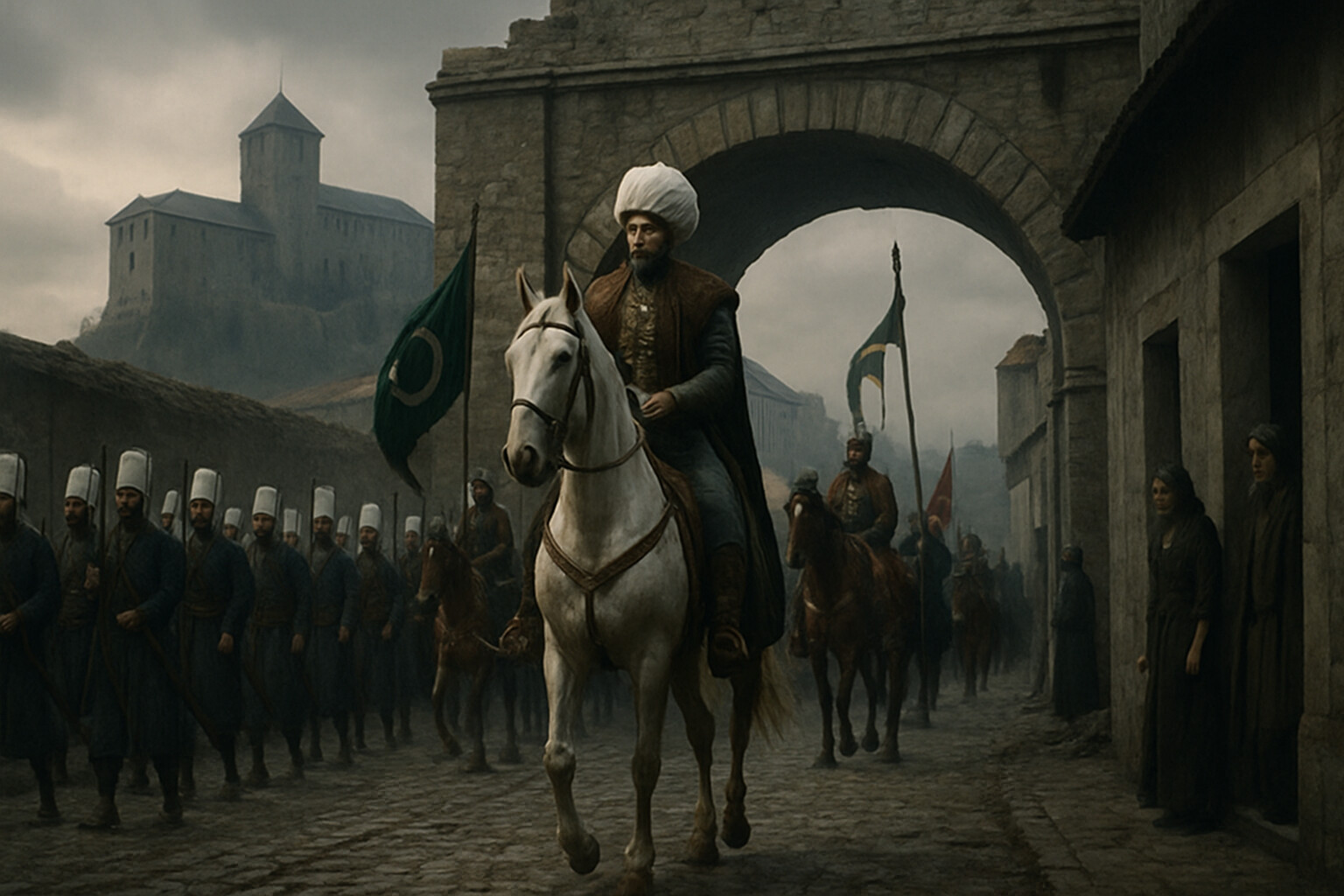
In the days following the battle, the Ottoman army advanced on Buda, the Hungarian capital. The city fell on approximately 10 September 1526 without significant resistance—there was no army left to defend it. Suleiman entered the palace of the Hungarian kings and spent some days there before beginning a withdrawal. He did not establish a permanent Ottoman garrison in Buda at this point; that came later.
The political consequences of Mohács unfolded over the following years and decades in ways that were complex, contested, and devastating.
Louis II's death without an heir activated a succession crisis that had been anticipated and legally prepared for through the Habsburg-Jagiellonian marriage alliance. Ferdinand of Habsburg, brother of Charles V and husband of Louis's sister Anne, claimed the Hungarian throne under earlier dynastic agreements. But John Zápolya—whose army had not arrived in time for Mohács—also claimed the throne with significant support among Hungarian nobility who preferred a native king to a Habsburg one. The reasons for Zápolya's late arrival are disputed among historians; some have suggested deliberate hesitation, others point to logistical and communication factors. Suleiman, recognizing an opportunity, supported Zápolya as a client king.
The result was a tripartite division of the former Hungarian kingdom that persisted for more than 150 years. The western and northern portions came under Habsburg control as Royal Hungary. Transylvania became a semi-autonomous principality under Zápolya and his successors, nominally tributary to the Ottomans. Central Hungary—including Buda, permanently occupied by the Ottomans after 1541—became directly administered Ottoman territory, organized as the Budin Eyalet.
This division was not inevitable from the moment of Mohács, but Mohács made it possible. The destruction of the Hungarian army and the death of the king removed the institutional capacity to resist the Ottoman advance and left the political field open to the competing claims that fragmented what remained.
For the Hungarian people who lived through these decades, the consequences were not primarily political but human. The Ottoman occupation of central Hungary brought the destruction of towns and villages, the depopulation of large areas through warfare, slaving raids, and flight, and the disruption of the agricultural and commercial life of one of the most fertile plains in Europe. Contemporaries and later generations of Hungarians understood Mohács as a national catastrophe—a wound in collective memory that shaped Hungarian identity for centuries.
---
The primary European account of the battle comes from István Brodarics, Bishop of Szerém and royal chancellor, who was present at Mohács and survived. His account, De conflictu Hungarorum cum Turcis ad Mohacs verissima historia, written in Latin and circulated in the months and years after the battle, is the most detailed eyewitness record from the Hungarian side. Brodarics was not a soldier; his account reflects the perspective of an educated cleric present in the command area rather than in the front line of combat. It is an invaluable source, but it must be read with awareness of his proximity to the court, his grief, and the rhetorical conventions of humanist Latin prose.
Ottoman sources provide the other major primary record. The campaign diary attributed to Grand Vizier Ibrahim Pasha and the verse chronicle of Kemalpașazade give the Ottoman perspective—including Suleiman's own reactions as recorded in his diary-chronicle, the Ruzname. These sources present the Ottoman victory in triumphalist terms, but they provide essential data on the Ottoman order of battle, the timeline of the campaign, and the immediate aftermath.
Modern scholarship has worked carefully through both sets of sources. The Hungarian historians Géza Perjés (Mohács, 1979) and Pál Fodor have done particularly important work on the military and political dimensions of the battle. János Bak and other scholars have contributed to understanding the political and constitutional context. The battle continues to attract scholarly attention because its consequences were so large and because the primary sources, while valuable, leave important questions unresolved—including the exact size of both armies, the precise sequence of tactical events, and the exact circumstances of Louis II's death.
The location of the battle has been the subject of archaeological work in recent decades. Hungarian archaeologists working in the region around Mohács—including the landscape archaeology and geophysical survey program led by Norbert Pap and colleagues—have located what are believed to be mass burial sites from the battle, and ongoing excavations have provided material evidence including weapons, armor fragments, and human remains. This work is continuing, and findings from it may refine or correct details in the written record.
---
What remains of Louis II is the image of a very young man caught between the inheritance of a weakened kingdom and an overwhelming threat—a figure whose personal agency in the catastrophe was real but bounded by forces that had been building for a generation before his birth.
He had no good options at Mohács. Not fighting meant yielding ground and probably the same result more slowly. Fighting as he did—with an incomplete army, against an Ottoman force with substantial advantages in firepower and numbers—was a gamble on a charge that nearly, but not quite, broke the Ottoman line. Waiting longer, hoping for Zápolya or Frankopan to arrive, meant either giving the Ottomans more time to consolidate their position or risking a winter campaign. Every path carried its own cost.
What is certain is that he chose to stand and fight, that he was present in the battle, and that when it collapsed he did not escape. The record does not support confident moral judgment about what that means. It records only what happened.
In Hungary, 29 August has been observed as a day of national mourning. The phrase "more was lost at Mohács" became a Hungarian proverb—used not only to describe military defeat but as a general expression for irreversible loss. The battle became a fixed point in Hungarian national memory, invoked across the centuries in literature, poetry, and political discourse as the moment when something was broken that could not be easily repaired. The proverb is well documented in Hungarian cultural tradition, though its exact origin date is not established.
The plain of Mohács today is agricultural land, quiet and flat under the Central European sky. A memorial park was established near the site of the battle in the twentieth century, with sculptures and markers commemorating the dead of 1526. The Danube runs nearby. The marsh where Louis II fell is long since drained and cultivated.
The armies of the sixteenth century have left almost nothing visible on the surface. What they left is in the ground, in the archives, and in the four hundred ninety-eight years of history that followed from two hours of fighting on a summer afternoon.