The plain was quiet before dawn.
The marshes at its southern edge breathed with insects. The Charadra and Vrana streams threaded south through the coastal flat, brackish and slow, and the sea lay as a pale sheet beyond the Persian anchorage. Somewhere across that open ground—a mile or more of scrub and the long grasses of the fennel fields the Greeks called Marathon—perhaps twenty thousand Persian soldiers were preparing to move.
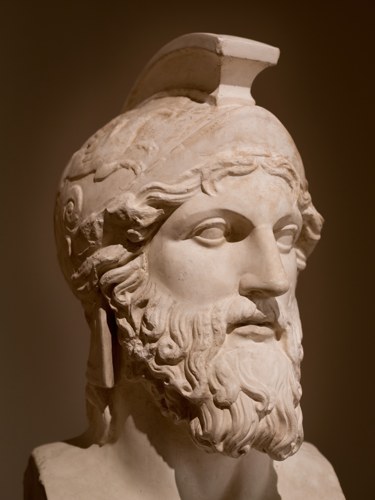
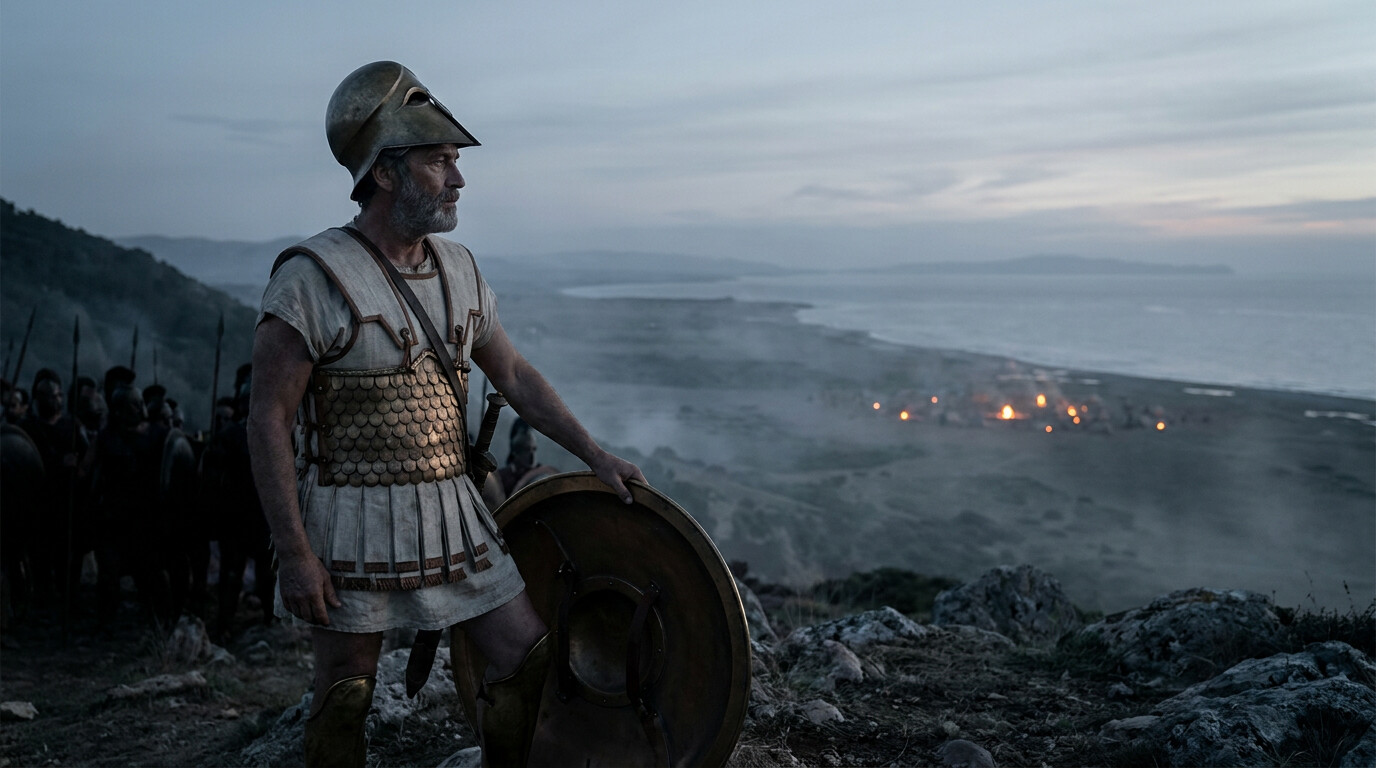
Miltiades had been watching that plain for at least a week, possibly longer. He knew the ground. He had governed a territory on the Hellespont for years, had fought alongside Persian forces, and had spent enough time in the imperial world to understand how it worked, what it valued, and how it could fail. Now he stood on the high ground at the south end of the valley, looking down at the only terrain in Attica where the Persians could maneuver their cavalry at scale—and where the Athenian phalanx either had to fight or concede the approach to Athens.
He had been the one arguing for the attack. The Athenian war council had been split. The vote had gone in his favor, but the margin tells us less than the debate itself: the opposition was real, the fear was rational, and the decision to charge a Persian army across open ground was not obvious to anyone who weighed it honestly. What Miltiades appears to have argued—and what his account, filtered through Herodotus, suggests he pressed explicitly—was that waiting would destroy Athenian morale faster than Persian javelins, that Marathon's marshy flanks and narrow front actually reduced Persian cavalry effectiveness, and that the moment the Persians re-embarked to sail around to the undefended harbor at Phalerum, the campaign was lost before a spear was thrown.
The decision to attack was the battle.
---
To understand what Miltiades was risking, it is necessary to understand what a Persian imperial expedition looked like in 490 BC and what Athens was in that same year.
The Achaemenid Persian Empire under Darius I was the largest political entity the ancient world had yet produced. It stretched from the Indus Valley to Thrace, encompassing dozens of subject peoples, languages, and military traditions. Persian imperial armies were not monolithic: they combined Median infantry, Lydian cavalry, Scythian archers, Phoenician sailors, and contingents drawn from across the empire under Persian command. The force sent to Greece in 490 BC was commanded by Datis, a Median general, and Artaphernes, nephew of Darius and son of the satrap of Sardis. It was a punitive expedition with a specific political objective: to punish Athens and Eretria for their support of the Ionian Revolt of 499–494 BC, to reimpose Persian authority over the Aegean, and—according to Herodotus—to return the exiled Athenian tyrant Hippias to power as a Persian client.
Eretria, on the island of Euboea, had already fallen. The Persians had besieged it, taken it, burned its temples, and deported its population to Susa. The fleet—perhaps six hundred ships by Herodotus's count, a figure modern scholars treat with caution—had then crossed the strait and landed at Marathon.
Marathon was chosen deliberately. Hippias, old and ailing but present with the Persian force as a guide and political asset, had recommended it. He knew Attica. The plain was long and flat, roughly five miles from north to south, bounded by mountains to the west and the sea to the east. It offered exactly what a Persian combined-arms force needed: room for cavalry, a secure beach for the fleet, and a clear road toward Athens if the Athenians failed to come out and fight.
Athens in 490 BC was a democracy barely fifteen years old. The reforms of Cleisthenes in 507 BC had reorganized Athenian civic life around ten new tribes, each providing a regiment of hoplites and electing a strategos—a general—to serve on a board of ten. The polemarch, a magistrate with military authority, held a theoretical casting vote on that board. This is the command structure Miltiades navigated when he argued for the attack: not a single commander with unilateral authority, but a collegial board where persuasion was the instrument of operational decision.
Athens mobilized somewhere between nine and ten thousand hoplites from its own citizen rolls and called on its one reliable ally, Plataea. The Plataeans sent their entire available force—modern estimates suggest approximately one thousand men, though no ancient source gives an exact figure. A runner, Pheidippides, had been sent to Sparta to request help. The Spartans expressed sympathy: they were observing a religious festival, the Carneia, and could not march until it ended, which would be several days away. They would come, and they would arrive after the battle was over.
The Athenians stood essentially alone, with one small allied contingent and no cavalry.
---
The Persian force at Marathon presented several specific tactical challenges.
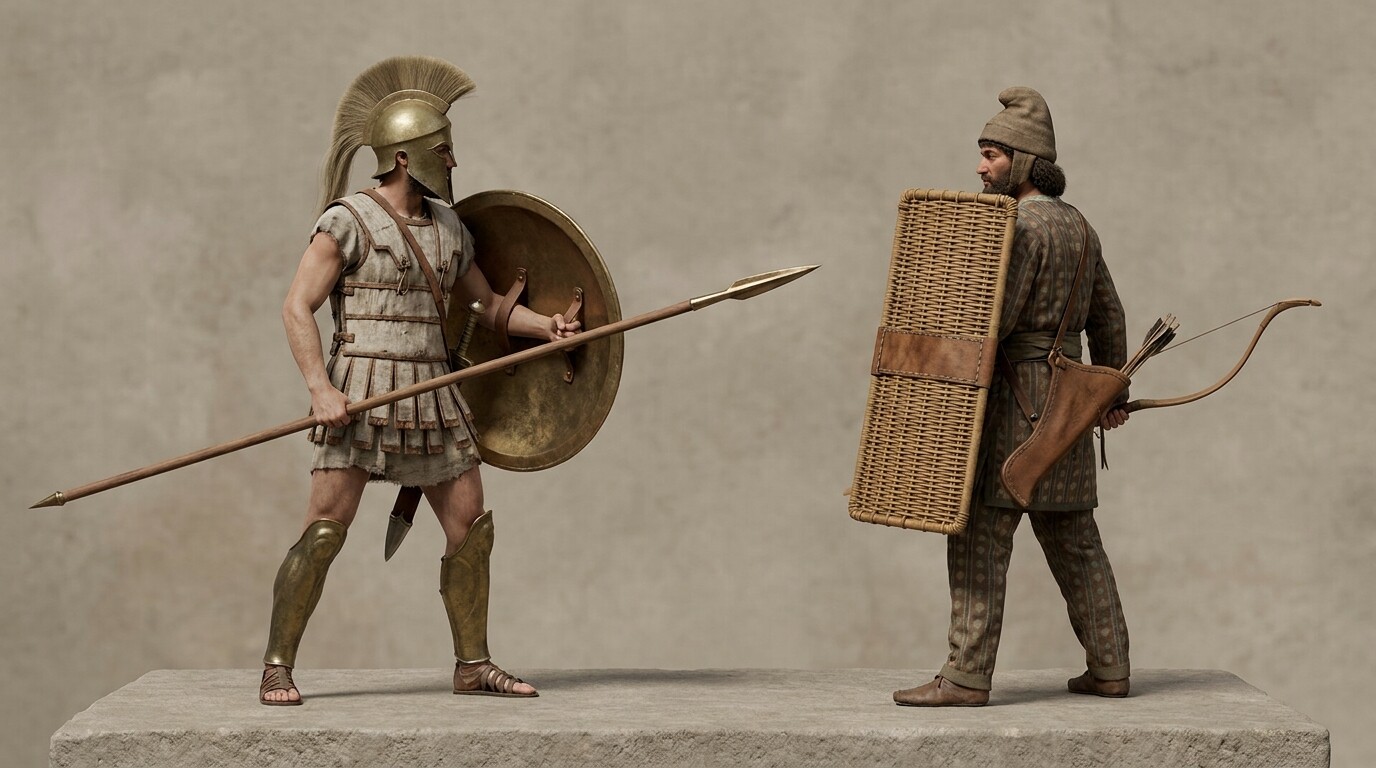
The most dangerous element was the cavalry. Persian horse archers and light cavalry had broken Greek formations in previous encounters, and the wide plain at Marathon seemed designed for exactly this arm. Persian composite bows—powerful recurved weapons capable of accurate fire at one hundred meters or more—could attrite a phalanx advancing at a walk across that kind of open ground. Persian infantry included both lightly armored sparabara formations, combining large wicker-and-hide shields with archers behind them, and more heavily armed infantry from the imperial heartland. The numbers are genuinely contested: Herodotus does not give a precise Persian strength, and ancient figures in the hundreds of thousands are transparent exaggerations. Modern scholarly consensus, drawing on logistical analysis and comparisons with other Achaemenid expeditions, suggests a Persian landing force in the range of twenty thousand to twenty-five thousand combatants, with perhaps one thousand to two thousand cavalry. These are estimates, not documented totals.
Against this, Miltiades's plan had to solve several problems at once.
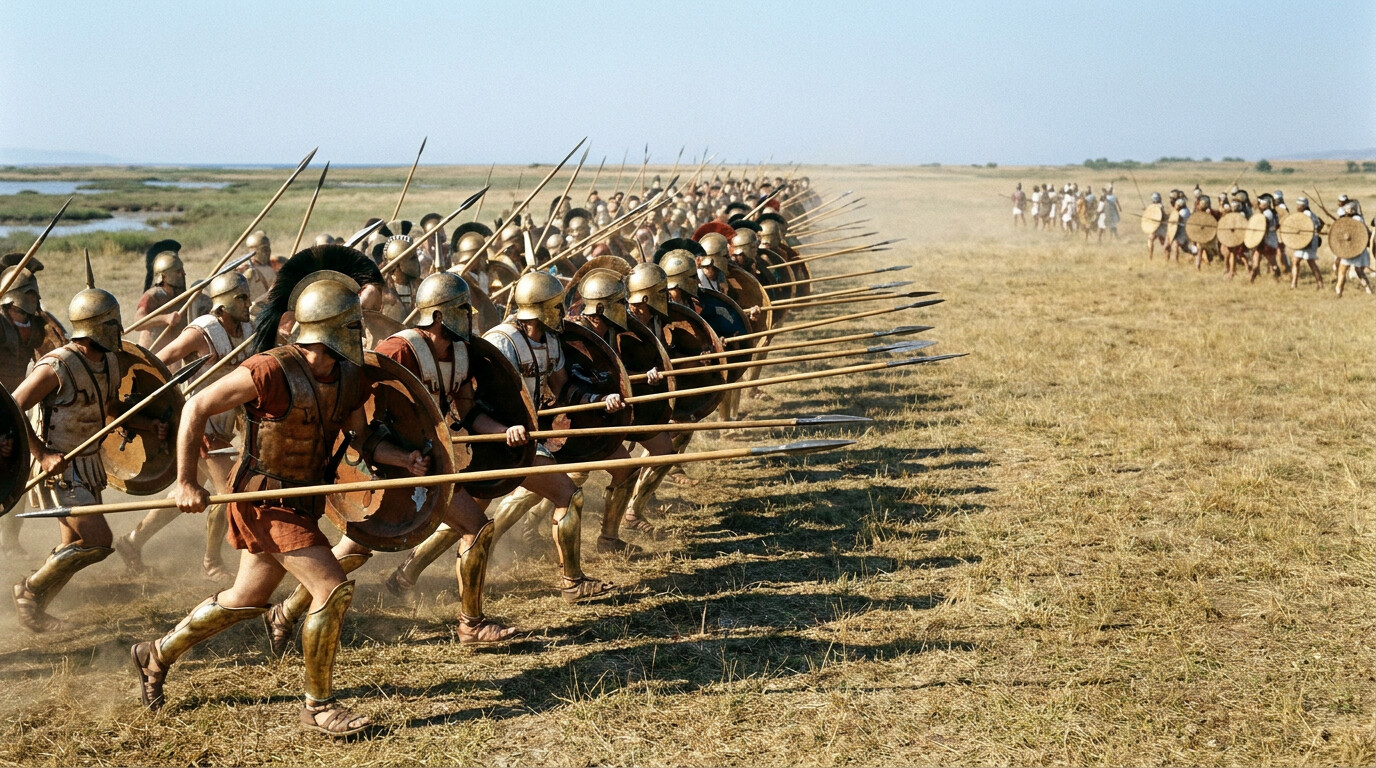
First, the approach. Any advance across open ground would expose the phalanx to Persian archery for as long as the Greeks were within range but not yet in contact. The effective killing zone of a Persian composite bow—the range at which it could penetrate bronze or linen armor—was roughly fifty to one hundred meters, depending on angle and armor type. A phalanx marching at standard pace would spend an agonizing interval in that zone. If the formation quickened to a run, it would reduce the time under fire. This is almost certainly the logic behind the famous charge. Herodotus says the Athenians advanced at a run—the Greek word he uses is dromos, a racing pace—making them, in his account, the first Greeks he knew of to attack at that speed. Whether this was a full sprint across the entire mile between the lines or a rapid advance beginning from a shorter distance is debated by scholars. A full sprint in panoply over a mile is physiologically implausible. A rapid advance building to a run through the final danger zone, perhaps from two hundred meters out, is consistent with both the text and human endurance.
Second, the cavalry problem. Herodotus mentions the cavalry in a tantalizing way: at some point during the battle, the Athenians appear to have received a signal or observed that the Persian cavalry was not engaged. A fragment of ancient evidence—preserved in a scholion, a marginal note on a later text, and therefore of uncertain reliability—suggests the Ionians on the Persian side passed word that the cavalry had been withdrawn, possibly to water or re-embark. If accurate, this may have been the trigger for the Athenian advance: the cavalry threat was momentarily reduced, and Miltiades moved before it could be restored. This detail is disputed and cannot be confirmed from Herodotus's primary text, but it remains the most plausible explanation available for why a rational commander chose that particular moment to charge across open ground. Readers should weigh it accordingly.
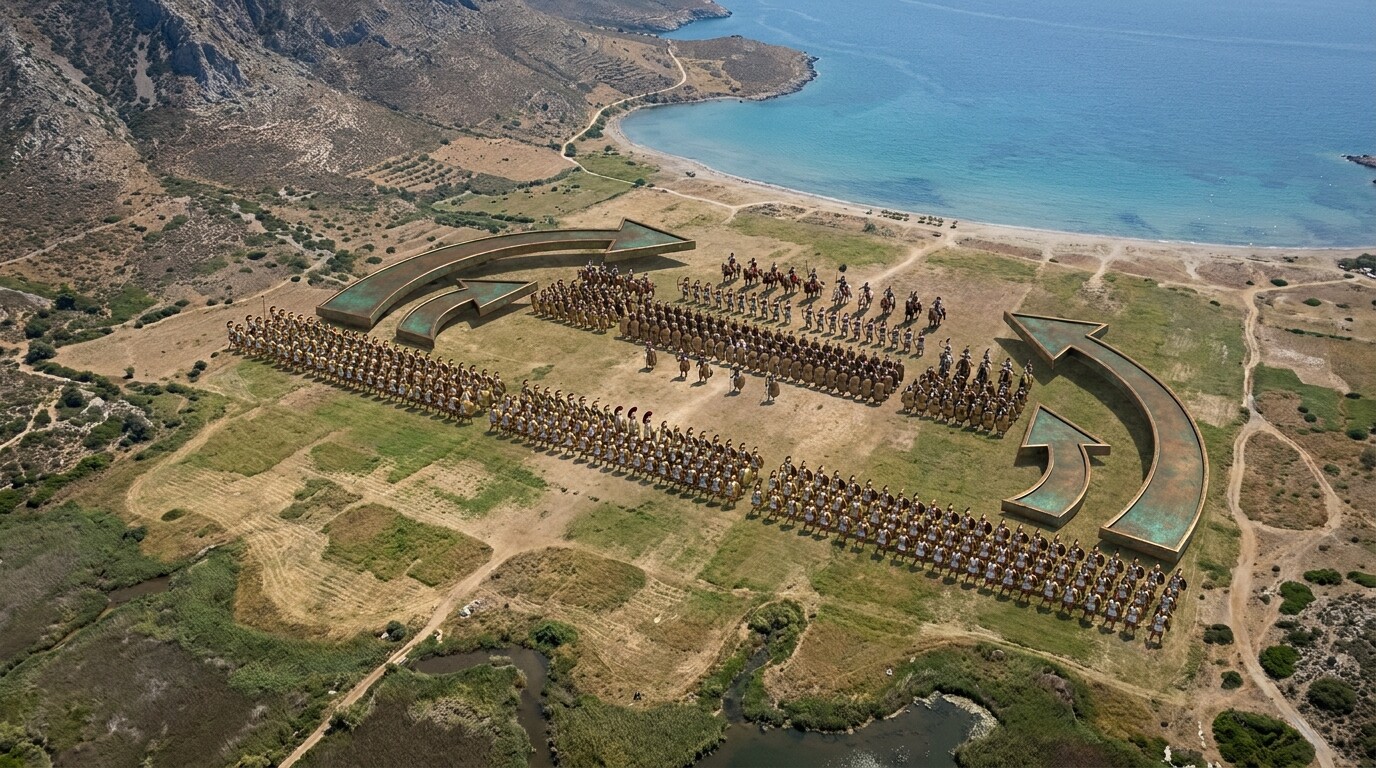
Third, the numbers. Miltiades extended his line to match the Persian front, which required thinning the Greek center. The flanks were left at full depth—perhaps eight shields deep. The center was reduced to perhaps three or four shields deep, possibly fewer, sacrificing shock power there in exchange for the ability to cover the Persian frontage. This thinning is inferred from the tactical result Herodotus describes, not from any explicit order recorded in the text. The center was assigned to the contingents from the tribes Leontis and Antiochis, commanded by the strategoi Themistocles and Aristides respectively—a detail that comes from sources later than Herodotus and should be treated as probable rather than confirmed.
Fourth, the ground. The streams and marshes on the southern flank, and the rough terrain to the north near the Soros mound, limited Persian ability to simply outflank the Greek line. This is why Marathon specifically—and not some other plain in Attica—was the location that made the Greek attack at least conceivable.
---
The charge itself.
At whatever moment the order came—a decision made by Miltiades as presiding strategos or in coordination with the board; the sources are not exact—the Greek line began to move forward.
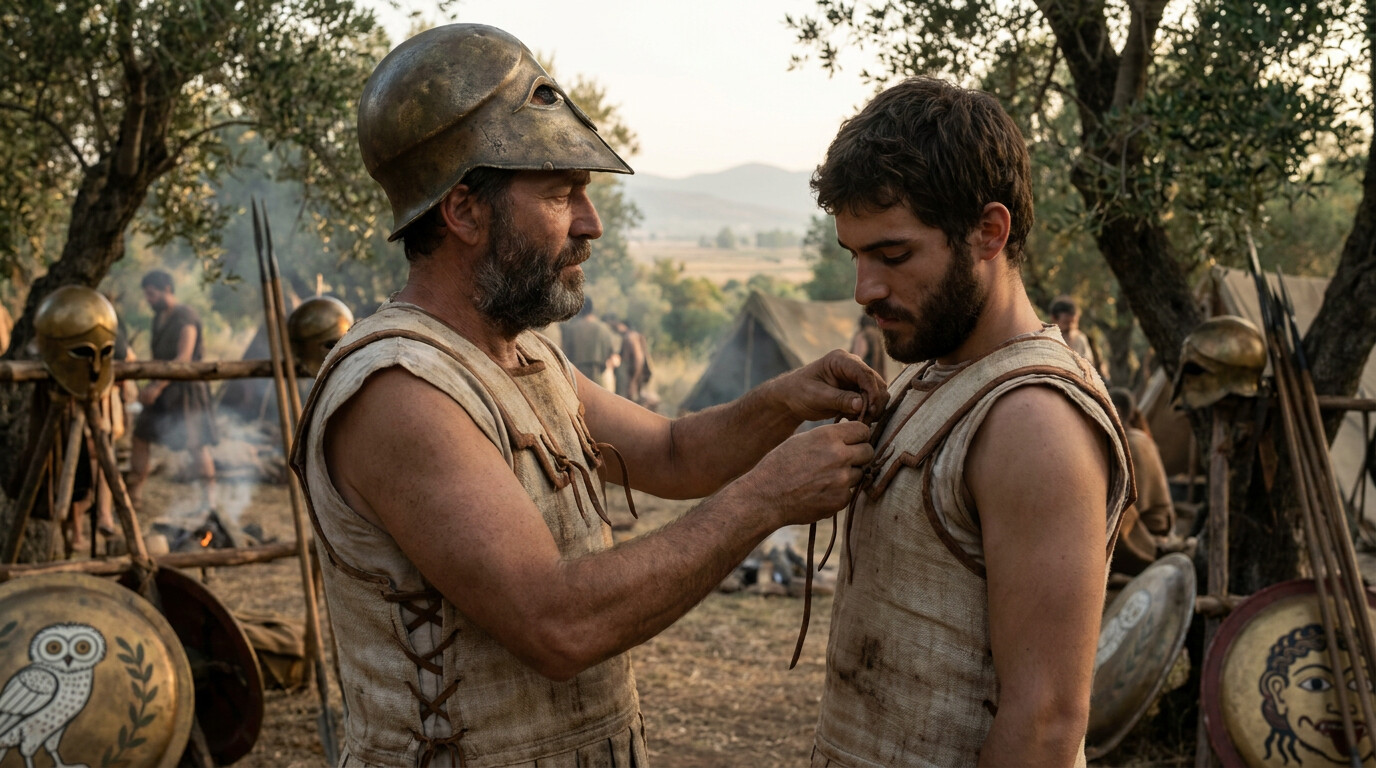
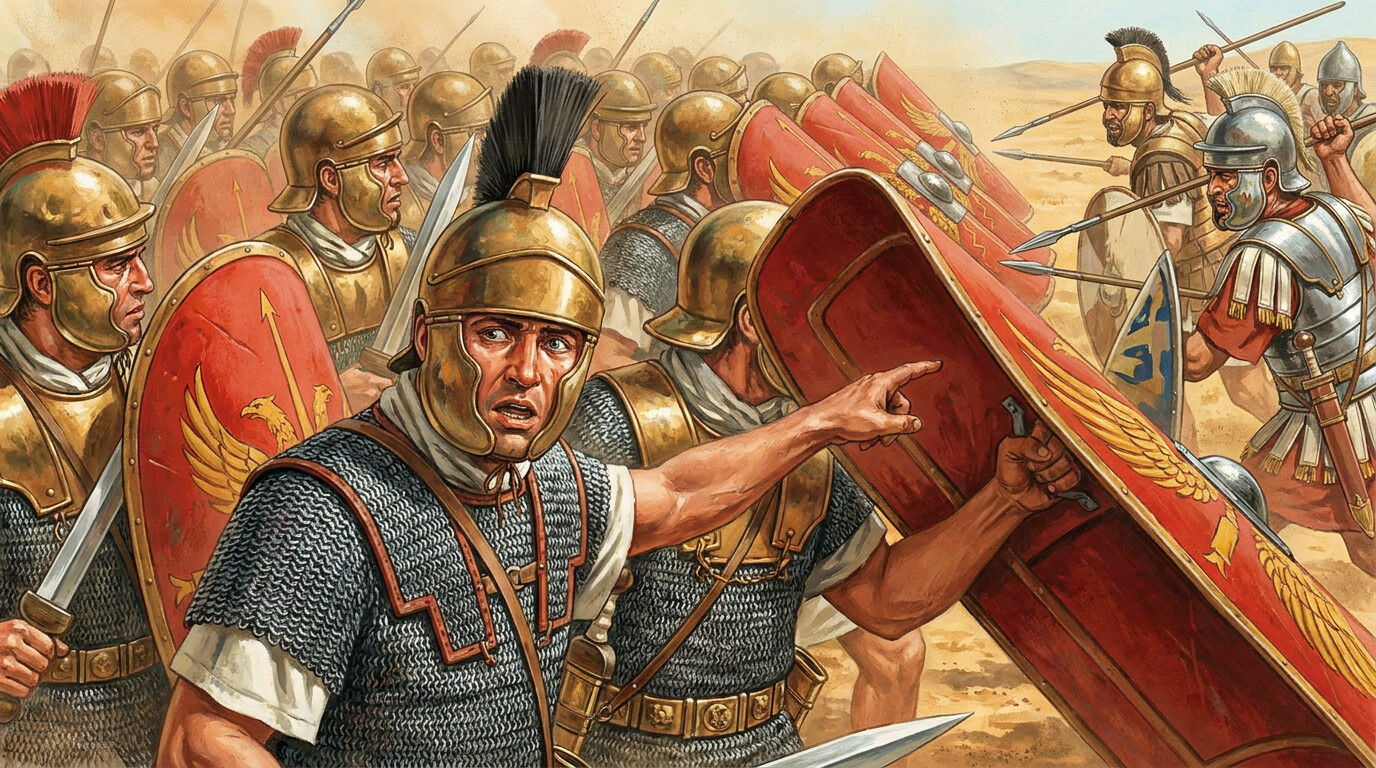
The physical reality of that movement can be reconstructed from what survives. Each man carried an aspis, the large round bronze-faced shield, roughly three feet in diameter and weighing perhaps fifteen to seventeen pounds. Over his torso he wore either a bronze cuirass or a laminated linen corselet—the linothorax—multiple layers of linen bonded under compression, stiff enough to turn a glancing arrow or sword slash. On his head, a bronze Corinthian helmet enclosing the face down to the nose and mouth, muffling hearing and narrowing vision to a forward slot. In his right hand, the doru: roughly seven to nine feet of cornel wood with a bronze leaf-shaped head and a bronze butt-spike, the sauroter, which could be driven into the ground to brace against a charge or used as a secondary weapon if the shaft broke. On his left hip, a short iron sword, the xiphos, for close work when the spear was spent.
A man in full panoply carried somewhere between fifty and seventy pounds of equipment. Running in that gear, even for a few hundred meters, was an act of severe physical effort. The formation had to hold together—gaps in the line meant death for the men on either side of the gap, because the shield system of the phalanx depended on each man's aspis covering the unshielded right side of the man to his left. Cohesion at a run was the hardest thing to maintain, and it is one reason ancient writers treated the Marathon charge as remarkable rather than routine.
The Persian line received the charge with archery. That is certain. How much damage it inflicted is not recorded specifically. Herodotus's account notes that casualties were taken in the advance, and the later record of specific Athenian dead—192, a number treated as sacred enough that each man was buried individually at the Soros mound—tells us the losses were real but not catastrophic.
When the lines crashed together, the battle divided into three actions almost simultaneously.
On the Greek right wing, the Athenians struck the Persian left and drove it back toward the shore. The Persian left—which may have included lighter-armed allied contingents rather than elite Persian infantry—gave ground and then broke. The Greek right pursued.
On the Greek left, held by the Plataeans, assigned the honorable left flank in recognition of their alliance, the same sequence played out: the Persian right was engaged, driven back, and began to collapse.
In the center, it was different. The thinned Greek line met the Persian center—which ancient sources suggest was composed of the best Persian infantry, the Persians and Sacae—and was pushed back. This was the crisis the plan had accepted. The center bent. Men died. But it held long enough for the flanks to win.
Then the Greek wings, instead of pursuing their fleeing opponents off the field, turned inward.
This is the maneuver that transforms Marathon from a hard-won engagement into one of the most studied battles of the ancient world. Whether Miltiades planned this double envelopment in advance or whether it emerged from the natural dynamics of a phalanx closing on a narrowing Persian center is genuinely debated. Herodotus does not explicitly credit Miltiades with ordering the wings to turn. What is recorded is the result: the Persian center, already pressing the weakened Greek middle, suddenly found Greek shields closing on both of its flanks. Pressed against the marshes and the shore behind, the Persian center disintegrated.
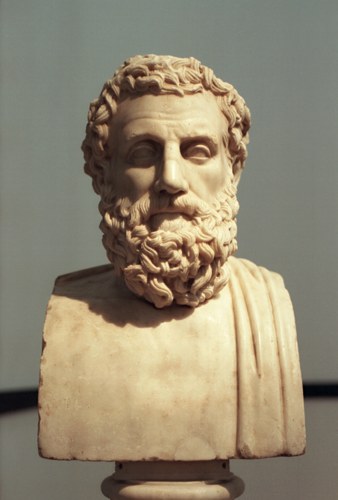
The route to the ships became a killing ground. Herodotus records that the Persians ran for the sea and the Greeks pursued, fighting them in the shallows and the marshy ground near the shore. Seven Persian ships were captured. Herodotus also records that the polemarch Callimachus, who had cast the deciding vote to fight, was killed during this phase—at the ships, fighting. So was a strategos named Stesilaos. Cynegirus, brother of the playwright Aeschylus, died attempting to hold a Persian ship by the stern as it pulled away; his arm was cut off with an axe. Aeschylus himself fought at Marathon and survived. When he died decades later, his epitaph—preserved in later ancient sources and widely accepted as authentic, though no original inscription survives—mentioned his service at Marathon but not his fame as a playwright. As the text has come down to us through Athenaeus and others, it reads in substance: that the grove of Marathon could speak to his valor, and that the long-haired Mede knew it well. It says nothing about plays. That epitaph is one of the most direct pieces of testimony we have about what Marathon meant to the men who were there.
---
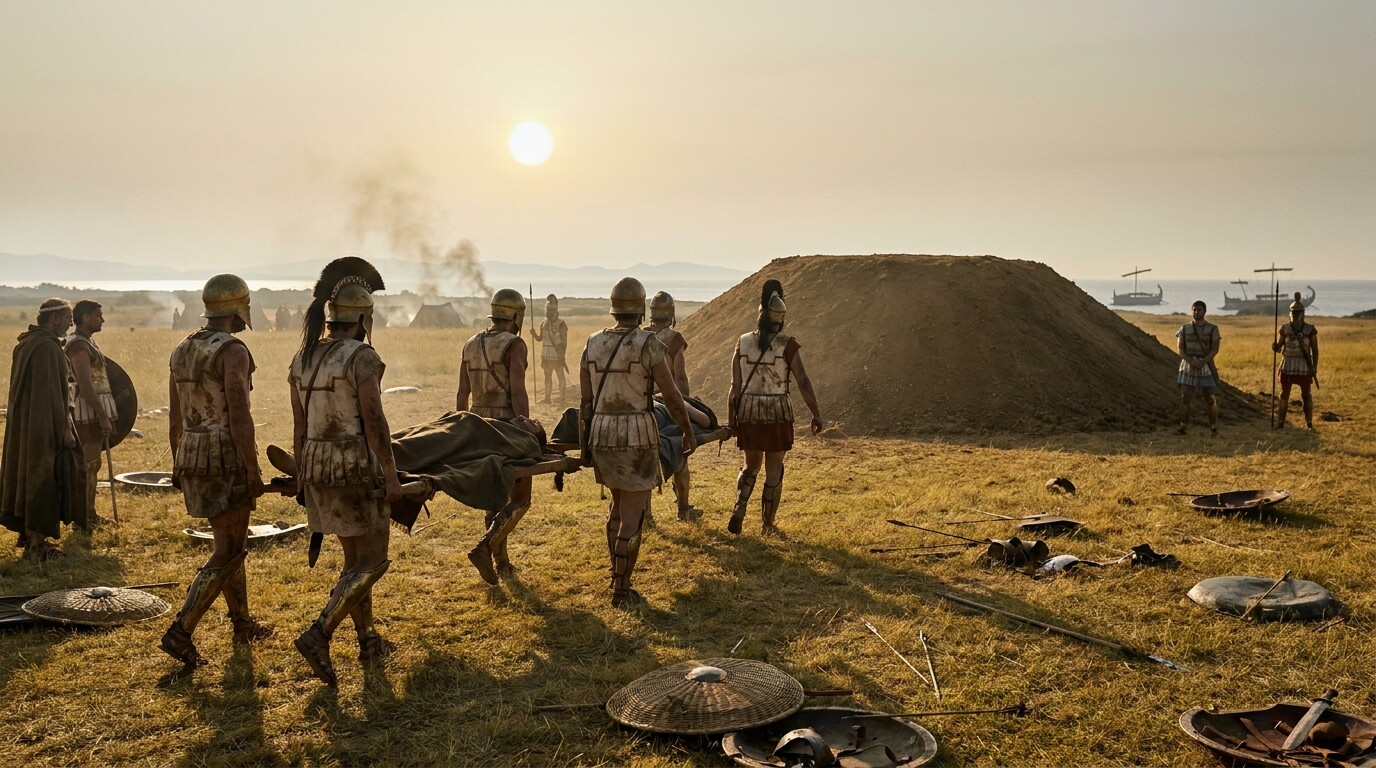
The Persian dead numbered approximately 6,400 by Herodotus's account. The Athenian dead numbered 192, with Plataean casualties not separately specified in the primary sources. The Athenian total has been partially corroborated by archaeology: a burial mound, the Soros, was excavated in the nineteenth century and found to contain cremated remains consistent with a group burial of the period. Exact numbers from skeletal evidence are not recoverable from what survives of that excavation.
What happened after the fighting at the shore illustrates something about the strategic situation that the modern emphasis on the charge sometimes obscures.
The Persian fleet did not leave. Datis regrouped his surviving forces, re-embarked, and sailed south, rounding Cape Sunium toward Athens. He was, in effect, attempting the original plan anyway: land somewhere near Athens while the Athenian army was still at Marathon, and take the city before it could be defended.
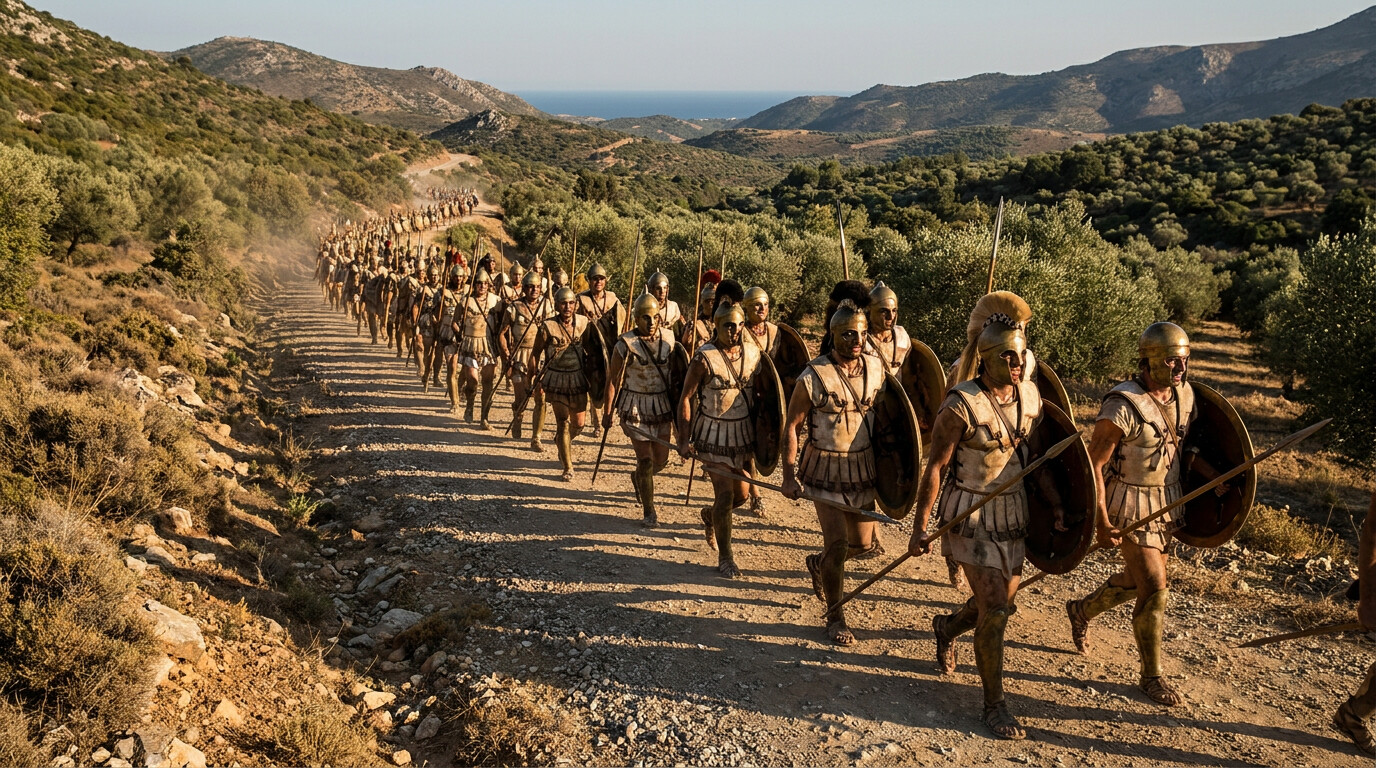
Miltiades understood this immediately. The Athenian army—still in formation, still in armor—marched at speed back to Athens, roughly twenty-five miles through mountain roads, and was in position on the high ground above the harbor at Phalerum before the Persian fleet arrived. Herodotus records that the Persians saw the Athenian army already in place, waited offshore, and then turned east and sailed back to Asia.
The forced march after the battle is not as famous as the charge before it, but tactically it may be the more demanding achievement. Men who had charged a Persian army in full armor, fought a brutal close-quarters engagement in summer heat, and then pursued fleeing enemies to the waterline turned around and covered twenty-five miles in time to deny the Persians a second landing.
A word on the marathon legend: the familiar story of a single runner collapsing after carrying news of the victory from Marathon to Athens—the origin of the modern race—is almost certainly a later conflation. Herodotus describes Pheidippides as the runner sent to Sparta before the battle to request help. He does not describe a single messenger dying after running from Marathon to Athens to announce the victory. That story appears first in Plutarch, writing roughly five centuries after the event, and in Lucian. It should be understood as tradition rather than documented history.
---
Miltiades himself did not rest long on the victory.
In 489 BC, he led an Athenian fleet against the island of Paros—a campaign he apparently sold to the Athenians on the promise of significant gain. The expedition failed. Miltiades was wounded, returned to Athens having accomplished nothing, and was prosecuted by his political enemies, led by Xanthippus. He was charged with deceiving the Athenian people. He could not defend himself in person because the wound had become infected—ancient sources say it turned gangrenous. He was convicted and sentenced to a fine of fifty talents, the cost of the fleet. Before it could be paid, he died of the wound.
The man who had led the charge at Marathon died in disgrace, in debt, in prison, the year after his greatest victory.
His son Cimon paid the fine and retrieved the body. Cimon would go on to become one of the most consequential Athenian commanders of the next generation, and the shadow of Marathon—both its glory and its political aftermath—shaped his life and career.
---
The sources for Marathon are ancient, layered, and partially contradictory, and any honest account requires acknowledging that.
Herodotus, writing approximately forty to fifty years after the battle, is the primary ancient source. He interviewed Athenians who had fought there or whose fathers had, and he had access to Athenian civic memory of the event at a time when it was still vivid and politically charged. His account in Book VI of the Histories is detailed by ancient standards, but it is not a modern operational record. He does not give Persian troop numbers with any precision. He does not describe the tactical plan in systematic terms. He notes the thinning of the center without explaining who ordered it or how it was communicated. Some of what he records is clearly shaped by Athenian pride and the political meaning Marathon had acquired in Athenian civic life by his time.
Thucydides references Marathon only obliquely. Plutarch, writing in the first and second centuries AD, provides additional detail in his lives of Aristides and Themistocles, but he is drawing on sources five centuries removed from the event, and his additions—including the dying runner—should be weighed accordingly.
Aeschylus fought at Marathon. His epitaph, if authentic, is the closest thing we have to contemporary testimony from a participant. It speaks to his service at Marathon and his courage there. It says nothing about plays.
Modern scholarship on Marathon is substantial. Peter Krentz's 2010 study, The Battle of Marathon, offers the most rigorous recent reconstruction of the tactical and logistical questions, including the cavalry problem, the running charge, and the numbers on both sides. N.G.L. Hammond's earlier work established much of the geographical and chronological framework. Hans van Wees and other scholars have challenged various received assumptions about hoplite warfare in ways that bear directly on Marathon.
What cannot be determined with confidence: the exact Persian troop strength; the precise moment and trigger for the Greek advance; whether the cavalry absence was signaled by Ionian defectors or simply observed; the exact depth of the Greek formations by tribe; and whether the envelopment of the Persian center was a planned tactical order or an emergent result of wing pursuit.
What can be said with confidence: the Athenians and Plataeans charged a larger Persian force on the plain of Marathon in September 490 BC; the Greek flanks won and turned inward; the Persian center was broken; the Persian fleet re-embarked and attempted to reach Athens; and the Athenian army marched to block them. The Persian expedition returned to Asia without accomplishing its political objectives.
---
Marathon's place in Western historical memory is disproportionate to its immediate military scale. Larger battles were fought before it and after it within a decade. Salamis in 480 BC was larger and arguably more decisive in strategic terms. Plataea in 479 BC was the engagement that finally destroyed the Persian land army in Greece.
But Marathon was first. And what it established—in Greek consciousness and, through Greek writing, in the subsequent tradition—was the idea that Persian imperial power was not irresistible on land, that a citizen militia fighting for its own city could break a professional expeditionary force, and that the political experiment of democratic Athens was worth defending.
The Athenians who fought at Marathon were known for the rest of their lives as Marathonomachoi—the men who fought at Marathon. The designation carried civic weight for generations. In Athenian law courts, speakers invoked it. In Athenian theater, it resonated. The battle became a reference point for Athenian identity in a way that no later victory, however larger, entirely displaced.
For Miltiades, the memory is complicated. He made the argument for the attack, and the attack succeeded. He understood the terrain, the timing, and the tactical logic better than anyone else in that war council. He also failed the following year, died under prosecution, and left his family in debt. Athenian democracy rewarded the victory and then punished the man. That tension—between what Athens owed Miltiades and what it chose to do to him—is itself historically revealing.
The 192 Athenians buried at the Soros were honored individually, in a common grave, on the ground where they fell. That was unusual. Greek practice normally required the dead to be carried home. The decision to bury them at Marathon was a statement: this ground was sacred to what happened here, and the men who died here had earned their place in it.
The mound is still there. It sits on the coastal plain, visible from the road that runs north out of Athens toward Chalcis, twenty-five miles from the city those men marched home to save.