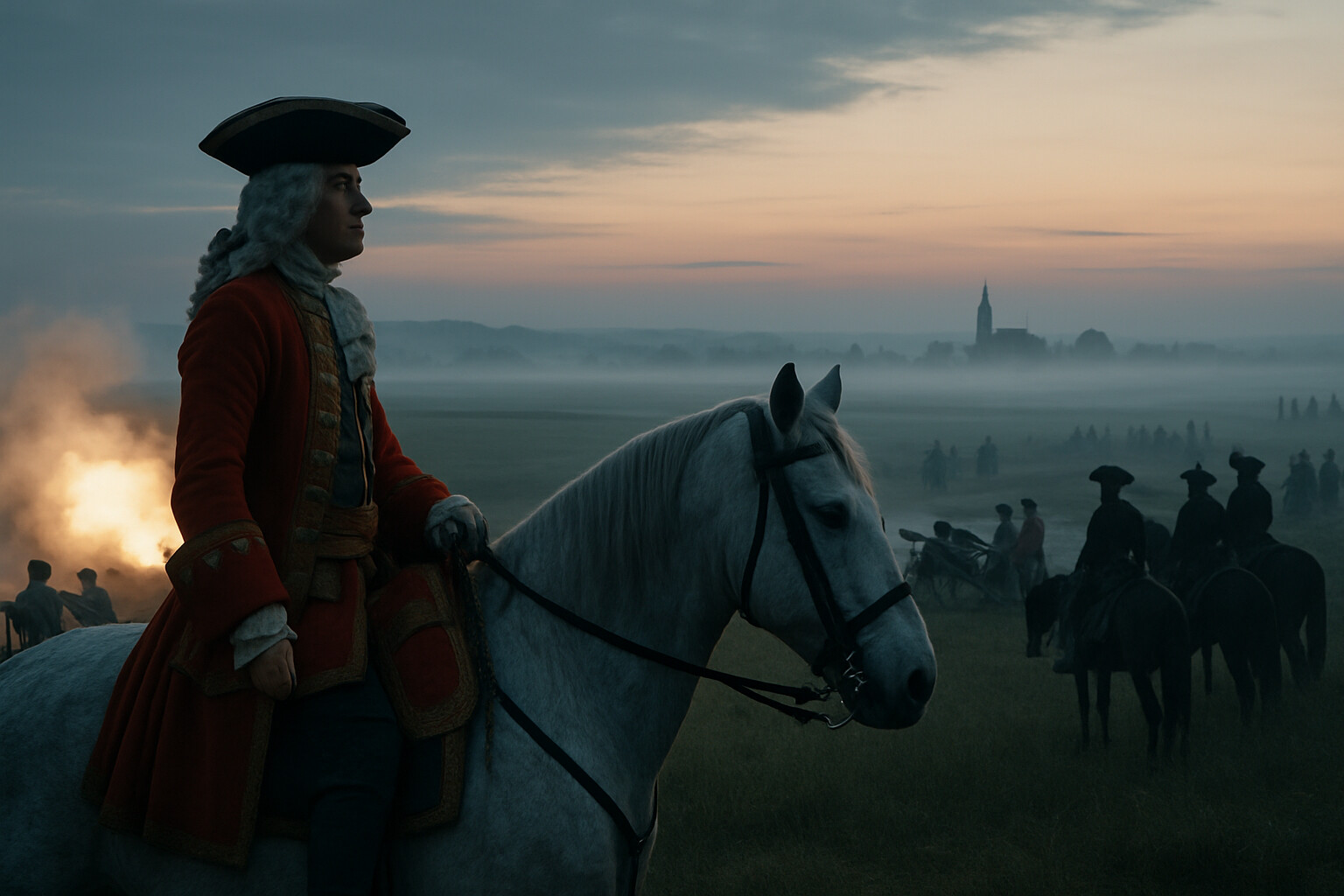
The sun had not yet fully cleared the Bavarian hills on the morning of August 13, 1704, when the first Allied cannon opened fire across the Nebel stream. In the fields outside the village of Blindheim—anglicized by English speakers into Blenheim—some fifty thousand French and Bavarian soldiers waited in formation. They had chosen this ground deliberately. Their flanks rested on the Danube to the south and on broken, wooded terrain to the north. The village of Blindheim itself had been packed with infantry: twenty-seven battalions of French foot, among the finest soldiers in Europe, locked behind garden walls, thatch, and timber as a fortress that no rational commander would assault with cavalry alone.
Marshal Camille de Tallard, commanding the French right wing, had reason for confidence. He knew the Allies were advancing, but an assault across the soft ground of the Nebel—a shallow, marshy stream that would disorder any formation attempting to cross it—looked to him either like a feint or the action of an army that had miscalculated. What he had not yet reckoned with was that the man across the stream had spent the previous eleven weeks executing one of the most audacious strategic marches of the era, and that the assault now developing had been designed to exploit precisely the positions Tallard had chosen.
---
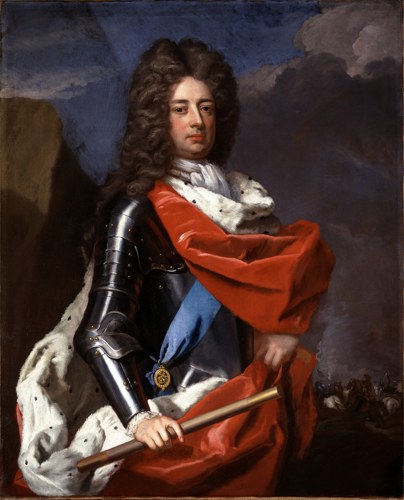
John Churchill, Duke of Marlborough, was fifty-three years old in 1704, and the shape of his life to that point was inseparable from the turbulent politics of a turbulent century. Born in 1650, he had risen from a modestly connected Royalist family through a combination of battlefield ability, political intelligence, and a personal authority that contemporaries consistently noted. His early career included service under Turenne in France, combat at the Siege of Maastricht in 1673, and a reputation in the later wars of Charles II's reign as an officer of unusual calm under fire. By the time William III brought England into the Grand Alliance against Louis XIV in the Nine Years' War, Churchill had already held senior command, though his relationship with William was complicated and sometimes openly adversarial.
When Queen Anne came to the throne in 1702, Churchill's position transformed. His wife Sarah was the queen's closest confidante. He was elevated to the dukedom of Marlborough and appointed Captain-General of British forces—and, with considerable diplomatic effort, to effective command of the Allied armies in the Low Countries. In 1702 and 1703 he had maneuvered and fought across the Meuse and Rhine with skill but limited decisive results; the Dutch field deputies attached to his army had repeatedly blocked aggressive action, unwilling to risk the field armies that were the Republic's ultimate guarantee of survival.
In 1704 the situation changed entirely, and not in the Allies' favor. Bavaria, under Elector Maximilian II Emanuel, had allied with France. A French army under Marshal Villars had crossed the Black Forest. Vienna was threatened. The Holy Roman Emperor Leopold I was in danger of being forced out of the war. If Austria fell, the Grand Alliance—England, the Dutch Republic, Austria, and their smaller partners—would fracture. The War of the Spanish Succession, fought to determine whether Louis XIV's grandson Philip V would rule Spain and its empire, would effectively be decided in France's favor by default.
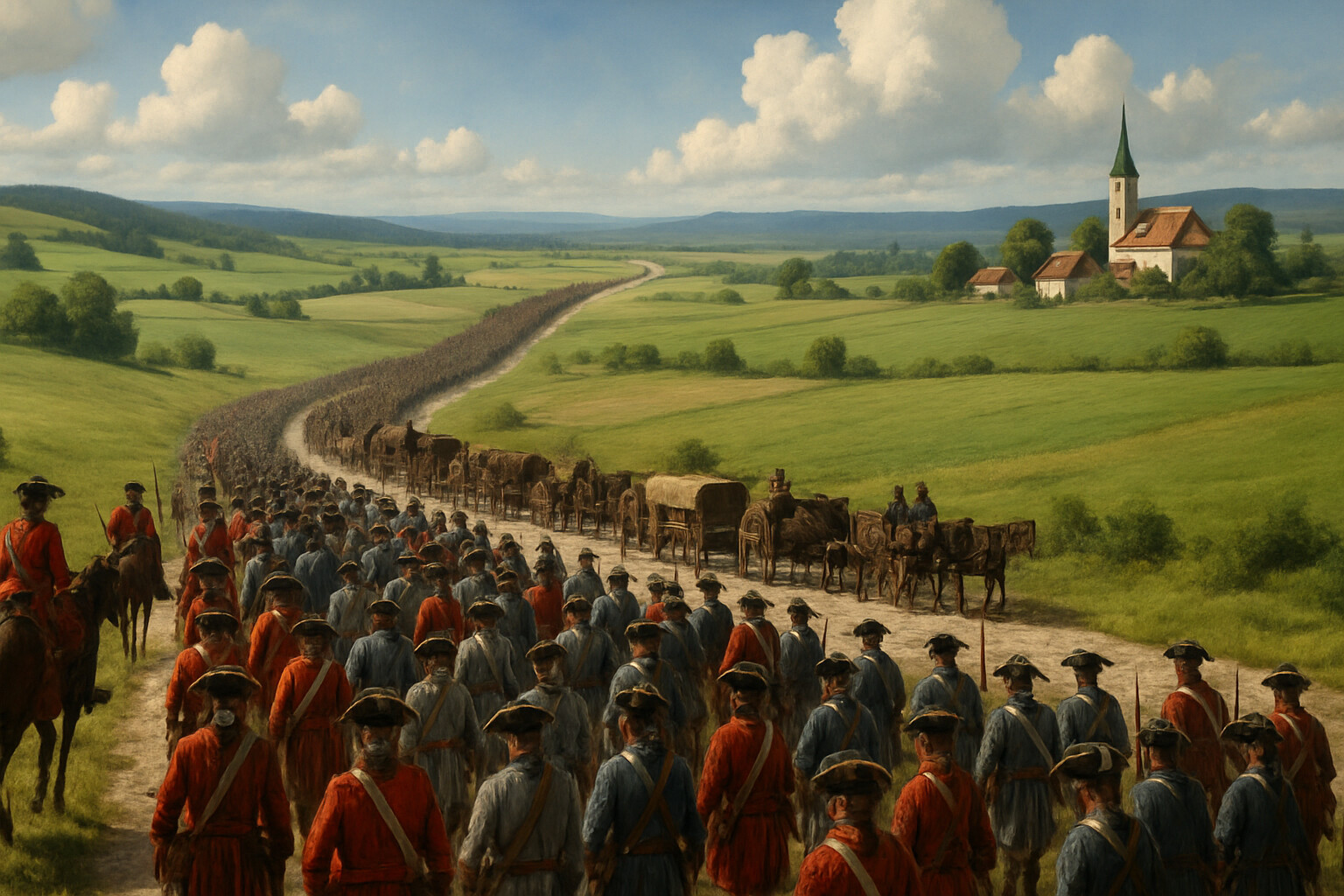
Marlborough saw the problem and arrived at a solution that almost no one else in the Alliance believed was feasible: the English and allied troops in the Low Countries would march south—not to a nearby theater, but all the way to the Danube, some 380 to 400 kilometers—to link with the Imperial forces of Prince Eugene of Savoy and defeat the Franco-Bavarian army before Vienna could fall. The political obstacles alone were formidable. The Dutch States-General guarded their armies jealously. The English Parliament had not authorized operations deep in the European interior. If the march failed—if Marlborough's force was intercepted in transit, arrived exhausted before a prepared enemy, or if the stripped Low Countries were struck by Louis in the interim—the consequences would be personally catastrophic and potentially fatal to the alliance itself.
He concealed his true intention for weeks, speaking of operations against the French on the Moselle. Even most of his senior officers did not know the final destination until the march was well underway. He moved his force with meticulous logistical preparation: bread, fodder, and replacement shoes were arranged at pre-positioned depots along the route. The army marched in the cool of the morning, rested through the heat of the afternoon, and was resupplied by a chain that functioned with unusual reliability for the period. Marlborough's surviving correspondence makes clear that he monitored his soldiers' physical condition closely; he understood that an army that arrived intact was an army that could fight.
The march began formally in mid-May 1704. By the time Louis XIV's intelligence services confirmed what was actually happening, Marlborough was already across the Rhine. He linked with Imperial forces—first with Ludwig Wilhelm, Margrave of Baden, then with Prince Eugene of Savoy—near Mundelsheim in late June. Tallard and the Elector of Bavaria, who had combined their forces in the Danube valley, now faced a unified Allied command of unusual capability.
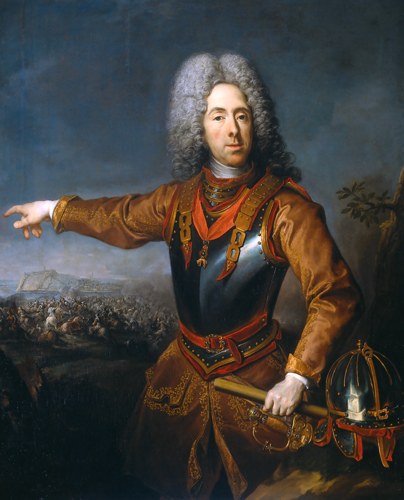
The command arrangement itself was remarkable. Marlborough and Eugene of Savoy, who led the Austrian and Imperial contingents, established a working relationship that military historians have consistently described as one of the most effective co-command partnerships of the early modern period. Eugene—born in Paris, Austrian by service, formidable by any measure—coordinated with Marlborough with a directness and mutual trust that the correspondence of both men documents. The Margrave of Baden, whose seniority might have complicated the command structure, was detached to besiege Ingolstadt, removing a potential source of friction.
In late July and early August, the Allies moved to pin the Franco-Bavarian army. A sharp engagement at the Schellenberg—a fortified hill above the town of Donauwörth—on July 2 gave the Allies a Danube crossing at significant cost. The assault was frontal, the defenders were determined, and Allied casualties were severe, running into the thousands killed and wounded. The Schellenberg was taken, but the price reminded every man in Marlborough's army that the French and Bavarians would not be undone without hard fighting.
In the weeks that followed, Marlborough ravaged Bavaria—a deliberate, cold-blooded strategy intended to compel the Elector to negotiate or fight. The Elector did not negotiate. Tallard, who had marched another French army through the Black Forest with considerable difficulty, arrived to reinforce him in early August. By August 12, the combined Franco-Bavarian force—scholarly estimates place their strength between approximately fifty-six thousand and sixty thousand men—had taken up a strong position between the village of Blindheim on the Danube and Lutzingen to the north, with the marshy Nebel stream covering their front.
---
The Allied force that faced them was smaller. Most scholarly assessments place Marlborough and Eugene's combined strength at approximately fifty-two thousand men. The army was multinational: English, Dutch, Danish, Hanoverian, Prussian, Austrian, and other German contingents, working under two generals who had spent weeks building the mutual confidence needed to coordinate an attack across a defended water obstacle.
The ground rewarded defenders. The Nebel was not a wide river, but its banks were soft and its crossings were limited. The village of Blindheim had been converted into a strongpoint—walls loopholed, streets barricaded, granaries and taverns turned into firing positions. The Franco-Bavarian line ran roughly four kilometers from Blindheim on the right to Lutzingen on the left, with the village of Oberglau roughly in the center. The French cavalry—some of the best horse in Europe—held the open plain between Blindheim and Oberglau, where firmer ground would allow a charge to develop properly. Tallard's working assumption was that any Allied assault on Blindheim would shatter against the village's defenses, and that his cavalry would then sweep the disordered attackers back into the Nebel.
The Allied plan proceeded from the opposite premise. Marlborough's key insight—worked out with Eugene in the days preceding the battle, and reflected in their surviving correspondence—was that the concentration of French infantry in Blindheim was not merely a defensive strength but a strategic liability. If twenty-seven battalions were committed to Blindheim as a garrison, they could not maneuver, could not reinforce the center, and could not respond to developments elsewhere on the field. The village would hold itself—but at the cost of immobilizing a substantial portion of Tallard's infantry. The Allied attack on Blindheim would therefore be a containing action: enough pressure to fix the garrison in place, but not a genuine storm. The main effort would go through the weakened center.
Eugene would press the Franco-Bavarian left under the Elector and Marshal Marsin near Lutzingen, fixing them in place. Marlborough's main body would cross the Nebel under fire, form coherent lines on the far bank while French cavalry threatened to catch them in the vulnerable moment of transition, and then drive into the gap between Blindheim and Oberglau with enough weight to break what remained there.
The execution asked a great deal of every soldier involved. On the morning of August 13, it was not at all clear that it would succeed.
---
The battle opened in the mid-morning. Accounts differ in precise timing, but the initial cannonade and first probing actions appear to have begun between eight and nine, with the main assault developing across the Nebel through the hours that followed. The delay from dawn to assault was partly logistical—the army had been moving since before first light, and Eugene's wing, covering rougher ground to the north, needed additional time to reach its position. Marlborough used the interval to bring his artillery forward and open a bombardment that disrupted the French formations. The French guns replied effectively. Allied troops waiting in the open took casualties before they ever reached the stream.
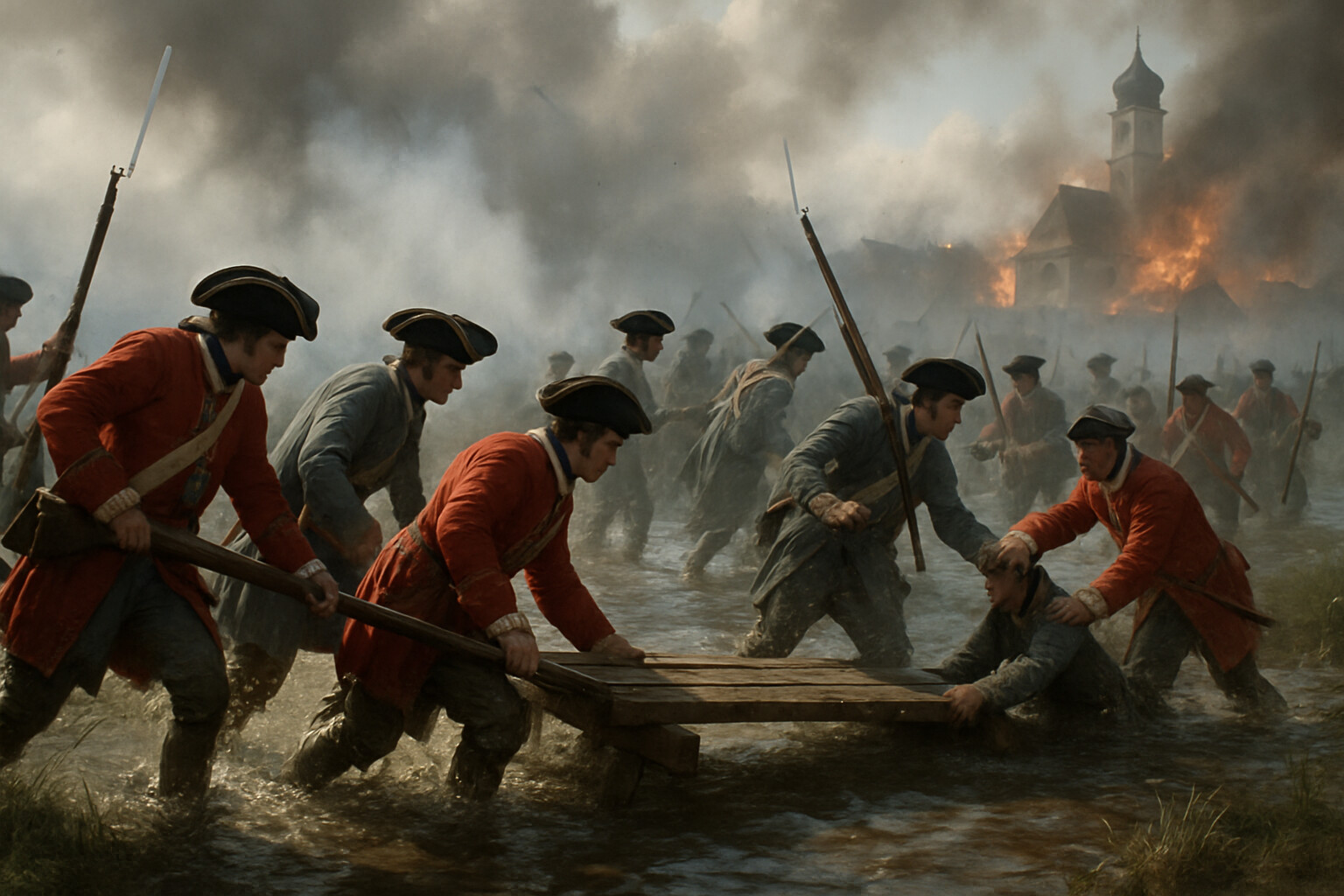
The attack on Blindheim fell to English and Allied infantry who crossed the Nebel under sustained fire and threw themselves against the village perimeter. Inside, the French garrison—those twenty-seven battalions—fought with the tenacity of men who believed the whole battle was aimed at them. The volume of fire from loopholed walls was murderous. The attackers did not break the village; they were not meant to. But they held the garrison's attention entirely fixed on the fight directly in front of them. French commanders inside, increasingly convinced that Blindheim was the decisive point, drew in more infantry from outside—further reducing Tallard's ability to respond to developments elsewhere on the field.
In the center the story was different in texture but equally brutal. Allied infantry bridged and crossed the Nebel in multiple places, coming under cavalry pressure from the French horse. Reconstructed from multiple accounts—no single contemporaneous document captures this phase with complete precision—there were moments when French cavalry threatened to drive the crossing parties back into the stream. Allied horsemen, English and German, fought across the boggy margins of the Nebel to protect the infantry forming up on the far bank. The fighting was close, disordered, and sustained.
Near Oberglau, Irish infantry in French service—Catholic Irish who had followed James II into exile and served in the French army with considerable distinction, part of the units later called the Wild Geese—broke out of the village and nearly collapsed the Allied center. These were experienced, motivated soldiers, and their sortie struck the junction between Marlborough's and Eugene's commands, precisely where a seam in Allied coordination was most exploitable. Marlborough responded by directing additional forces to seal the breach, including cavalry drawn from his reserve. Eugene was informed. The sortie was contained, the line restored, and the Allied center—battered and stretched—held.
By mid-afternoon the critical phase had arrived. Tallard's center—never reinforced, because Blindheim had consumed so much of his available infantry—was held by cavalry without adequate foot support. Marlborough assembled his cavalry and the Allied horse already on the far bank of the Nebel, organized them in a broad, deep line, and drove forward. The French cavalry fought. It was not a rout from first contact. But the Allied horse had numbers, momentum, and infantry support—battalions interleaved among the cavalry squadrons, a technique Marlborough applied deliberately to give his riders a steadying presence and to complicate the French counter-charge.
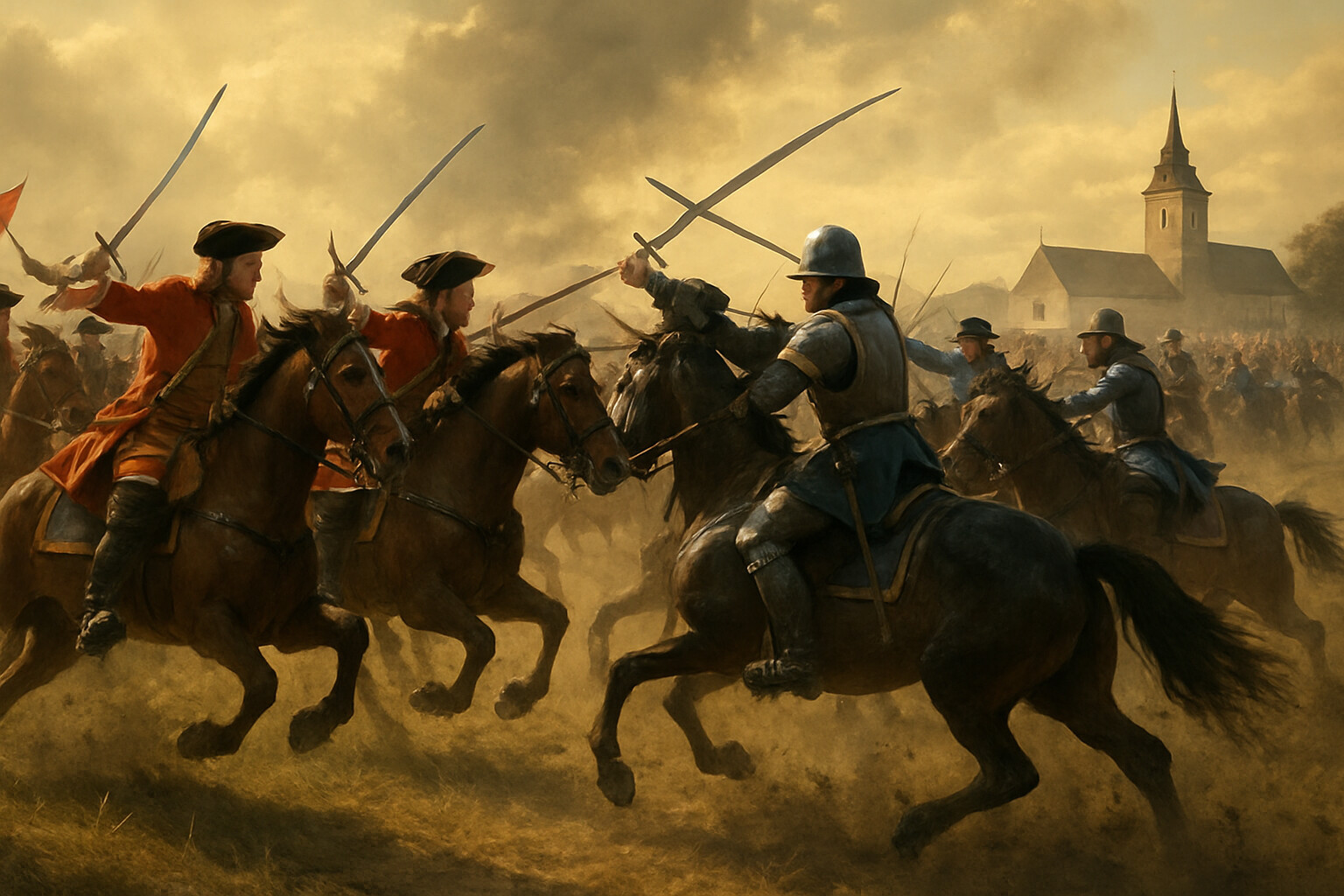
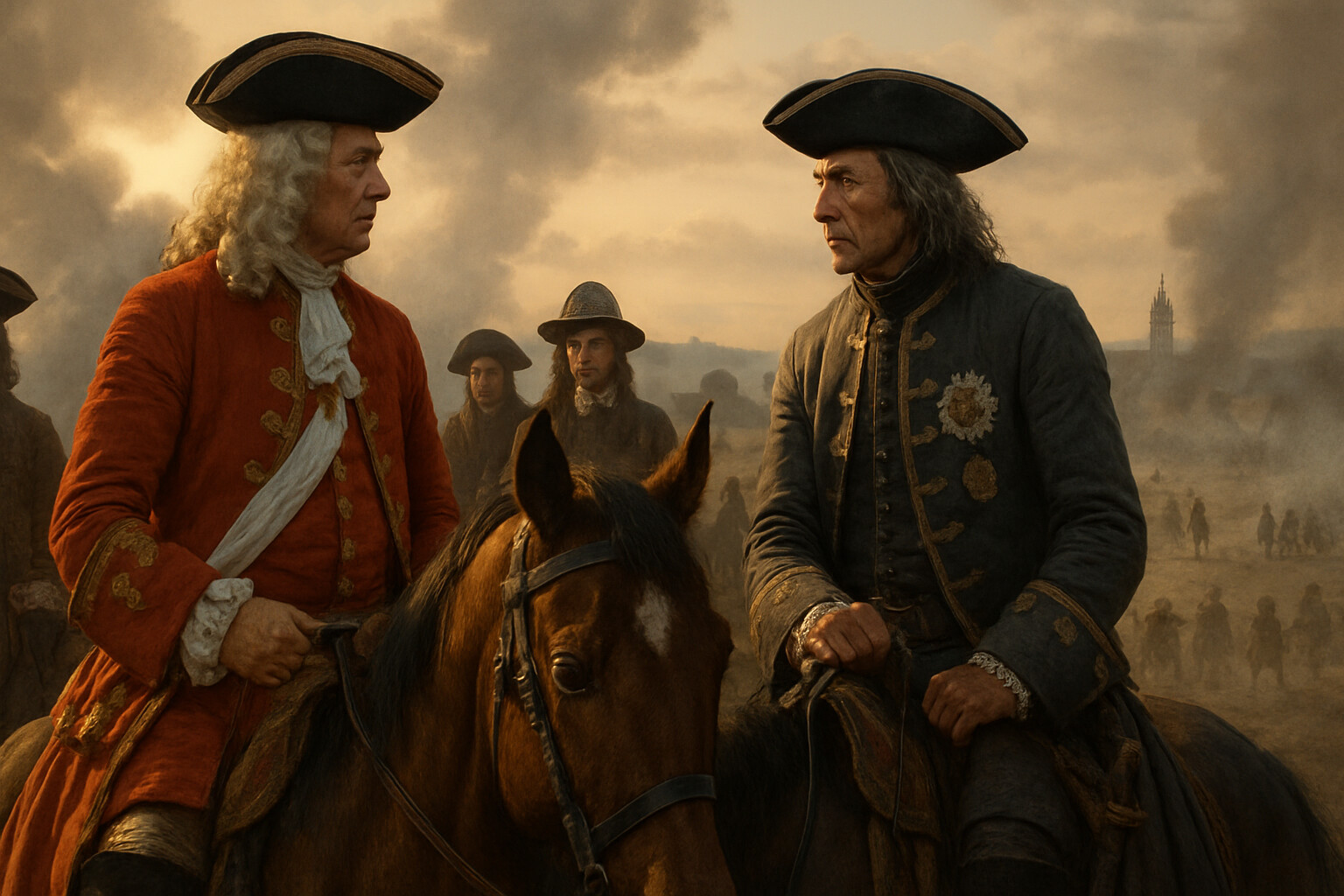
The French center broke. When it went, it went completely. The cavalry of France—the arm supposed to sweep the Allies back into the Nebel—dissolved into fugitives streaming toward the Danube. Tallard himself, caught up in the collapse, was taken prisoner by Hessian cavalry. The precise circumstances of his capture are documented in general terms across multiple sources, though specific details vary between accounts; his capture during the rout of his center is not in dispute. The Marshal of France, commanding the force Louis XIV had committed to hold southern Germany, was under Allied guard before the sun reached the horizon.
On the flanks, Eugene fought a harder battle. The Franco-Bavarian left under Marsin and the Elector held with considerably more coherence than Tallard's wing. Eugene's soldiers—Austrians and Imperial Germans attacking across broken ground against a prepared enemy—made repeated assaults that were repulsed before the collapse of the center finally relieved pressure and allowed the Elector to begin an orderly withdrawal. Accounts from the Austrian side make clear that the fighting on the Allied right was as desperate as anything elsewhere on the field, and the summary triumph of Marlborough's central breakthrough should not obscure what Eugene's men paid in those hours.
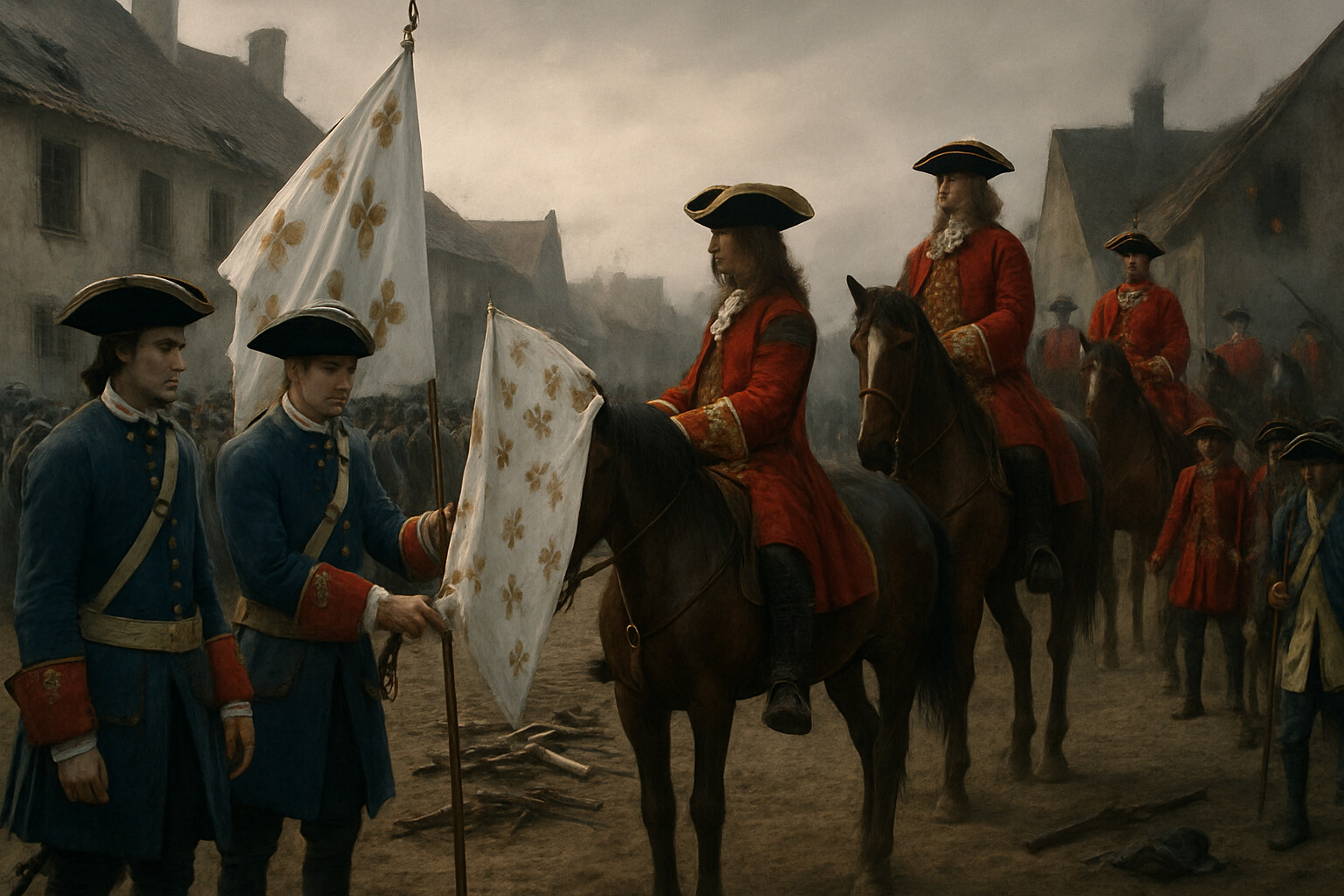
At Blindheim, the catastrophe for France became complete as darkness approached. The twenty-seven French battalions—by various estimates somewhere between nine thousand and twelve thousand of the finest infantry in Europe—remained inside the village. Their army commander was a prisoner. The force that was supposed to cover their retreat had ceased to exist as a coherent fighting unit. Allied cavalry and infantry surrounded Blindheim. There was no way out that did not require fighting through a victorious army. On the morning of August 14, the garrison surrendered. Thousands of French regulars marched out and laid down their arms.
---
The numbers in the aftermath are stark, though scholarly sources differ and precision should be applied with care. Allied casualties—killed and wounded—are generally estimated between twelve thousand and fourteen thousand, a heavy toll for a single day. Franco-Bavarian losses were far higher in total: killed and wounded likely exceeded fourteen thousand, and prisoners—including the Blindheim garrison—pushed total French and Bavarian losses well above twenty thousand by most estimates, with some figures running higher. Tallard was not the only senior officer taken; French generals and colonels were captured throughout the afternoon collapse.
Forty French standards and colors were taken. The French artillery fell to the Allies. Louis XIV's reaction when the news reached Versailles is described in secondary narrative tradition as one of stunned silence, but the sources for this are illustrative rather than directly documented; it should be treated as tradition rather than confirmed record. What is not in doubt is the scale of the defeat: France had not suffered a reverse of this magnitude in living memory. The myth of French military invincibility, built across four decades of Louis XIV's reign and embedded in European diplomatic calculation, was shattered in an afternoon on the Danube plain.
Vienna was saved. The Emperor Leopold sent formal thanks. The Elector of Bavaria, his army destroyed and his territory exposed, lost effective control of his domains. The strategic situation that had threatened to collapse the Grand Alliance was reversed in a single engagement.
In London the news arrived with the breathless quality of something almost unbelievable. Marlborough dispatched a formal report to Queen Anne that was characteristically restrained in official language but extraordinary in content. Parliament received the victory with celebrations that reflected genuine relief: the war had looked, only months before, as though it might be lost. A grant of the royal manor of Woodstock and the funds to build a palace there—Blenheim Palace—were voted as a national expression of gratitude. A note Marlborough reportedly sent to his wife Sarah on the day of the battle, sometimes described as written on a tavern bill or scrap of paper, is part of the historical record; however, its exact wording has been reproduced in varying forms across different accounts, and the original document's precise location and verified text should be confirmed through the Blenheim Palace Archives before any specific version is treated as definitive.
---
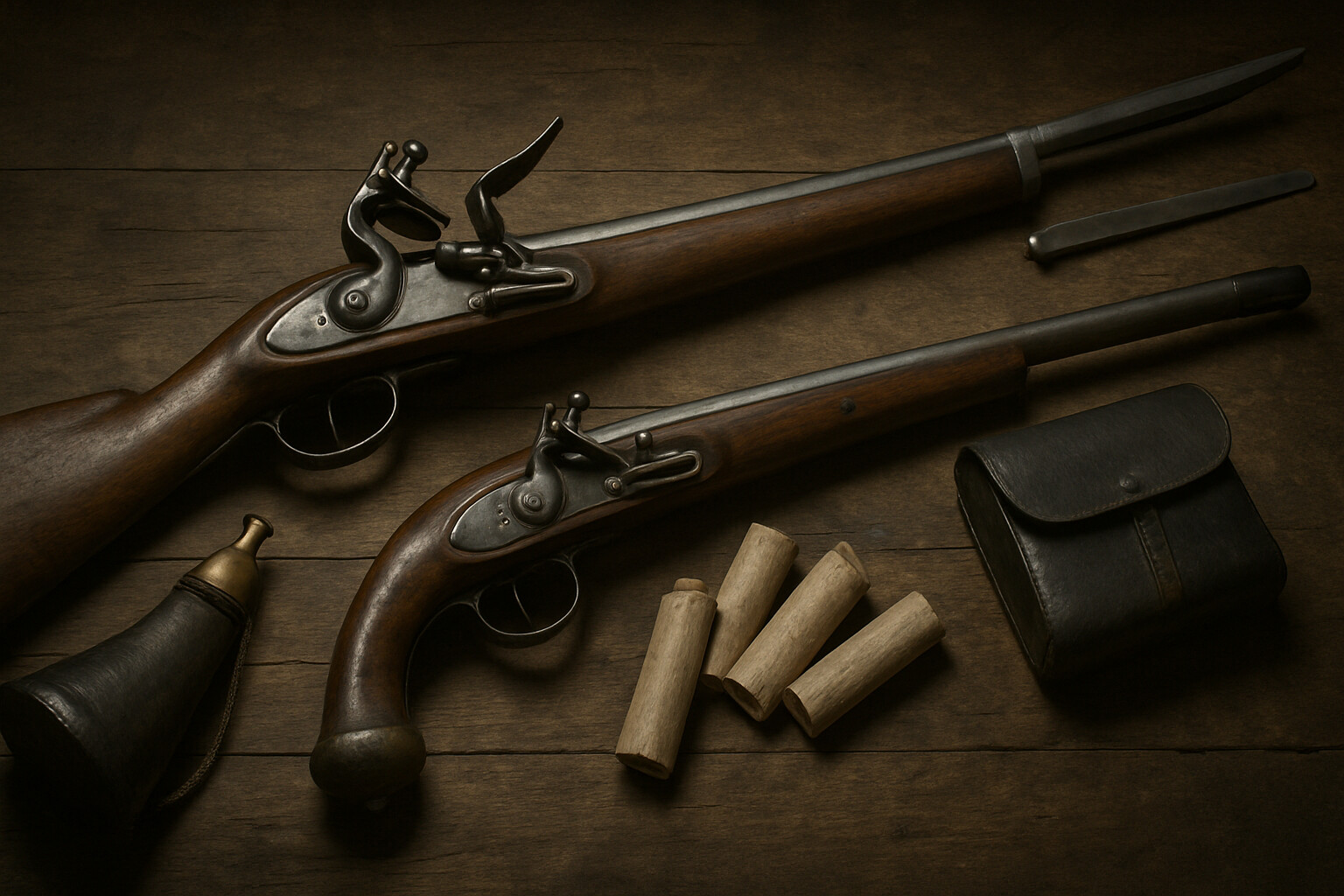
The weapons that shaped this battle were the weapons of the mature early modern period: flintlock muskets, socket bayonets, cavalry sabers and pistols, and field artillery ranging from light battalion guns to heavier pieces. The dominant infantry arm on both sides was the flintlock musket, which had largely replaced the matchlock and the pike in most European armies during the 1690s and 1700s. The British army's standard infantry musket of the period—sometimes described by later historians as an early ancestor of what would eventually be standardized as the Long Land Pattern, though that formal designation came later, around 1722, and the exact nomenclature for 1704 requires careful qualification—fired a ball of approximately .75 caliber. It was lethal at close range and, in practical combat terms, inaccurate beyond fifty to eighty meters. In the massed volley fire of infantry lines, accuracy mattered less than rate of fire; a trained soldier could load and discharge two to three rounds per minute under controlled conditions, fewer under the smoke and stress of real fighting.
The socket bayonet—which had replaced the plug bayonet in most European armies by the early 1700s—fitted over the muzzle rather than into it, allowing a unit to fire and then receive or mount a charge without the dangerous interval of rendering their muskets temporarily useless. The tactical consequence was significant: the pike, which had protected musketeers for the preceding century, was becoming unnecessary. At Blenheim, infantry could function both as a firearm formation and as a shock formation in a way that their grandfathers could not.
Artillery at Blenheim ranged from light battalion guns—small-caliber pieces that could be moved with a few men and kept close to infantry for immediate fire support—to heavier field pieces. The cannon of the period fired solid iron round shot as its primary anti-formation projectile, with canister shot—a tin canister filled with smaller balls that burst on firing and spread across a wide arc—used at close range against infantry. The bombardment that preceded the Allied assault, and the counter-battery fire both sides maintained throughout the day, shaped the battlefield in ways the infantry and cavalry experienced directly: guns were moved into exposed positions, gunners worked in the open, and men waiting for the order to advance watched round shot pass through their ranks.
The cavalry that proved decisive in Marlborough's central thrust carried sabers as their primary shock weapon and pistols or short carbines as their firearm. Heavy cavalry in many continental armies—cuirassiers wearing steel breastplates—represented a charging force intended to break infantry and pursue broken enemies. By 1704 the tactical fashion in many armies had moved away from the caracole—a wheeling approach in which cavalry fired pistols and peeled away—toward the shock charge at the gallop. Marlborough consistently applied this approach through his campaigns. The Allied horse at Blenheim drove home their charge rather than pulling up to fire, and the French cavalry in the center, without adequate infantry support after Tallard's battalions had been locked in Blindheim, could not withstand the momentum.
---
The sources for Blenheim are relatively rich by the standards of early eighteenth-century battles but carry the problems inherent to the period. Marlborough left official dispatches and extensive correspondence, much of it preserved and published. His letters to Sarah—a voluminous and historically valuable exchange—reveal thinking and anxieties that official documents do not. Captain Robert Parker, an officer who served in Marlborough's campaigns, wrote a narrative history that has been a primary source for many later accounts. Contemporary newsletters and the developing newspaper press in London provided immediate but not always accurate reports. French archives contain the reports and correspondence of Tallard, though his capture complicated the paper trail.
The best modern scholarly treatments—including Winston S. Churchill's biography of his ancestor (a work of substantial research whose advocacy for Marlborough must be weighed critically alongside other scholarship), David Chandler's authoritative study of Marlborough's campaigns, and John Lynn's work on the French army of Louis XIV—provide essential context and analysis. Chandler in particular brought a professional military historian's eye to tactical detail, and his reconstruction of the battle's phases is widely respected. Rory Muir's work on the Marlborough campaigns adds careful source analysis. The core facts of the march, the battle, and the victory are not seriously disputed; interpretation of specific decisions and moments continues to be refined by scholarship.
Casualty figures remain scholarly estimates rather than precise accounting. Unit strengths on both sides before the battle involve some uncertainty. The timing of specific phases—when exactly the center broke, when Tallard was taken, when the Elector's wing began its withdrawal—is reconstructed from multiple accounts that do not always agree. Readers should treat numerical precision in any account of Blenheim, including this one, with appropriate care.
---
The Battle of Blenheim's legacy operates on several levels worth separating. At the strategic level, it preserved Austria in the war, frustrated Louis XIV's plan to knock the Emperor out of the conflict, and bought the Grand Alliance time to continue fighting. The war itself dragged on for another decade, producing more battles and more campaigns before the Treaties of Utrecht in 1713 settled the succession question with exhausted compromises. Marlborough would win three more set-piece engagements—Ramillies in 1706, Oudenarde in 1708, and Malplaquet in 1709—each significant, but none with quite the same combination of dramatic strategic context and overwhelming tactical result.
At the operational level, the march to the Danube demonstrated something military professionals have studied ever since: the possibility of projecting an army across vast distances through careful logistics, deception, and political management, then delivering it intact at the decisive point. The logistical planning of the march—pre-positioned supplies, careful management of pace and rest, maintenance of equipment and soldiers' physical condition—was as consequential as any decision taken on the battlefield itself. An army that arrived at the Danube exhausted and short of shoes and bread would not have won what followed.
At the level of English and then British national memory, Blenheim became something close to a founding reference point for European military power. For a nation that had spent most of the previous century in civil conflict or in wars where its army's role was secondary to Dutch and German allies, the idea of an English captain-general leading a coalition army to the most decisive victory in Europe in a generation carried significance well beyond strategy. Blenheim Palace—the massive baroque structure built to mark the victory—became the physical embodiment of that memory. Winston Churchill was born there in 1874, and the name Blenheim passed into English as a word for overwhelming military decision in a way that the Bavarian village of Blindheim never did in any other language.
For the soldiers who fought it—English, Dutch, German, Austrian, Irish, French, and Bavarian—Blenheim was a day of terrible physical experience: August heat, the smoke of massed musketry, artillery noise, and cavalry pressing across ground that gave no cover. They crossed a marshy stream under fire, formed lines in the open, and fought for hours in ways that no tactical summary fully renders. The Allied dead—killed in the range of four to five thousand, with thousands more wounded, by most estimates—lay in the fields outside Blindheim and along the Nebel. The French and Bavarian dead were more numerous. The prisoners, thousands of them, were marched away in columns that stretched along the roads of Bavaria: the remnants of an army that had believed, that morning, that it held an unassailable position.
The commanders who made the decisions—Marlborough, Eugene, Tallard, the Elector—were products of a military culture simultaneously ruthless and formalized, capable of great tactical ingenuity and of enormous indifference to human cost. Marlborough did not invent the tools he used at Blenheim; flintlock muskets, socket bayonets, field artillery, and cavalry charges were the common grammar of European warfare in 1704. What he did was apply them in combination, at the right moment, at a place he had reached by a journey his opponents did not believe he could make. The combination—strategic surprise, tactical coordination between two capable commanders, the deliberate exploitation of the enemy's own defensive choices—produced a result that neither side had fully anticipated when the morning mist lay on the Nebel and the first guns opened fire.
That is what makes Blenheim worth returning to: not the scale of the destruction, which is grim enough, but the quality of the thinking that preceded it and the precision of the execution that delivered it. In a war fought across fifteen years by coalitions perpetually at risk of fracturing, one August day in Bavaria held the alliance together and demonstrated what was possible.