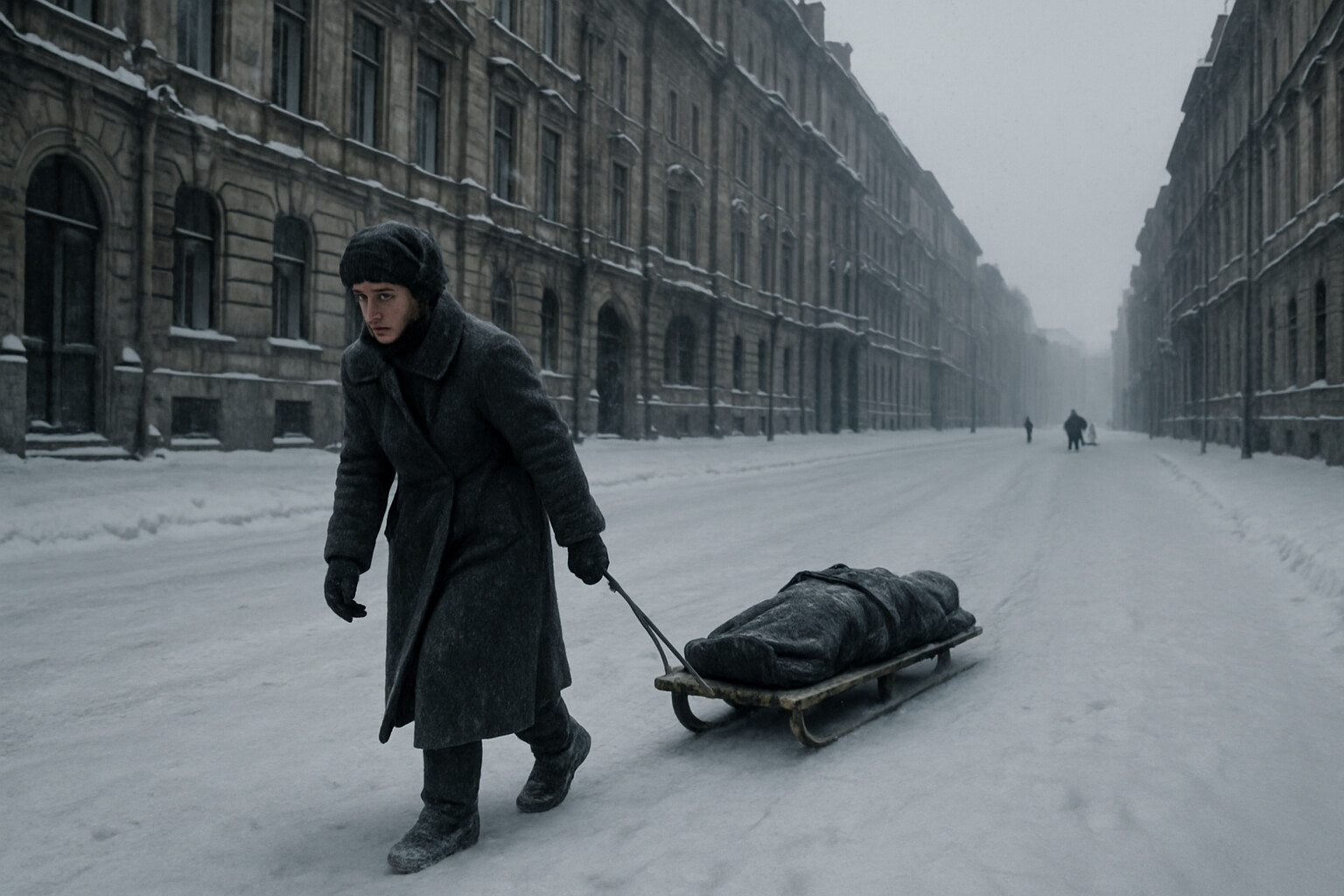
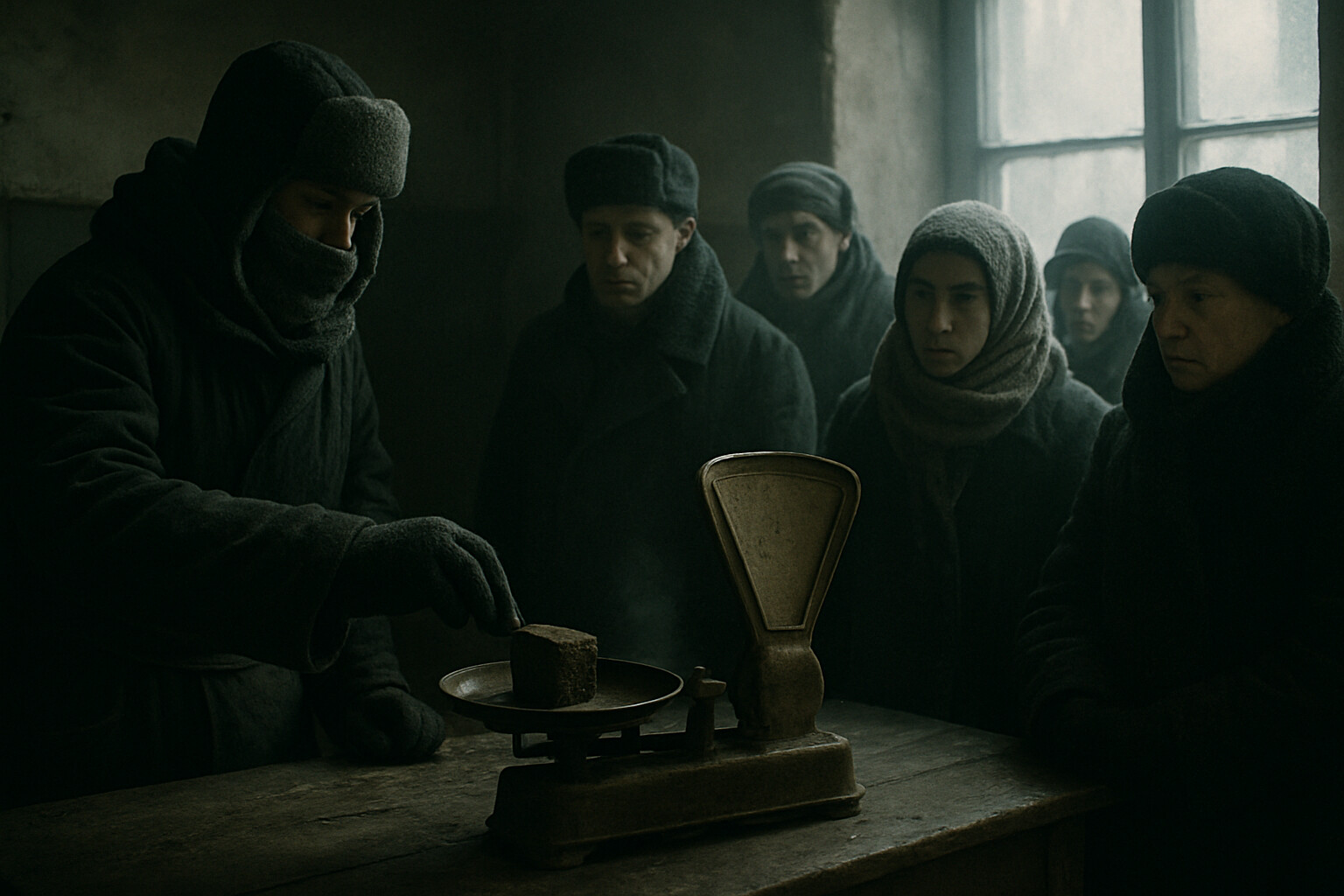
The bread ration fell to 125 grams on the worst days of the winter of 1941–42. A single slice, roughly the weight of a deck of cards, made of flour cut with cellulose, flax cake, malt, and whatever else the city's bakers were authorized to stretch it with. Leningrad had roughly three million people inside its boundaries when the German ring closed. By the time that ring cracked open nearly three years later, the city had lost somewhere between 800,000 and 1.1 million of them—most not to bullets, but to hunger, cold, and the slow collapse of the body when it is given nothing to burn.
That figure sits at the center of everything. Not the battles, as fierce as they were. Not the artillery, as constant as it became. The defining weapon of the Siege of Leningrad was the controlled destruction of a city's food supply. The people who survived did so through organizational will, individual endurance, and the thin lifeline of a supply road laid across a frozen lake.
To understand what happened here, you have to understand what Leningrad was, and what losing it would have meant.
---
Leningrad in 1941 was the second city of the Soviet Union—a center of industry, culture, and enormous symbolic weight. It had been Saint Petersburg, capital of the Romanov empire. It had been Petrograd, scene of the February Revolution. It had been renamed for Lenin in 1924, five days after his death. Losing it to the Germans would have been a political catastrophe beyond any military calculation. For Hitler, capturing it was an ideological prize. His directives to Army Group North made the intent clear: Leningrad was to be encircled, starved into submission, and then demolished. There was no plan to accept a surrender. The object was annihilation.
German Army Group North, under Field Marshal Wilhelm Ritter von Leeb, drove northeast through the Baltic states in the summer of 1941 at a pace that surprised even the Germans. Operation Barbarossa had begun on June 22, 1941. By early September, German and Finnish forces had completed the encirclement. The Finns held the northern approaches across the Karelian Isthmus. The Germans sealed the southern ring along a line running through Mga, cutting the last rail connection to the outside world on August 30, 1941. On September 8, German forces captured Shlisselburg on the southern shore of Lake Ladoga, completing the land encirclement. The siege had begun.
Note on German annihilation intent: Hitler's directives ordering the destruction rather than capture of Leningrad are documented in German military records, but the specific directive numbers are not reproduced in this narrative. Readers seeking primary documentation should consult the relevant OKW records cited in Glantz's operational histories.
The city's Soviet defenders at that moment were in crisis. The initial German offensive had shattered multiple Soviet armies. The Northwestern Front had been badly damaged. Commanders had been relieved and arrested. The defense was in danger of collapsing not just tactically, but organizationally.
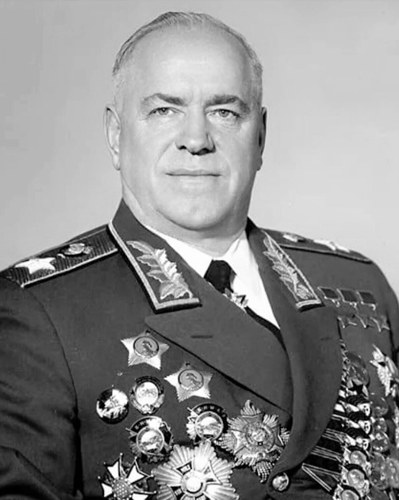
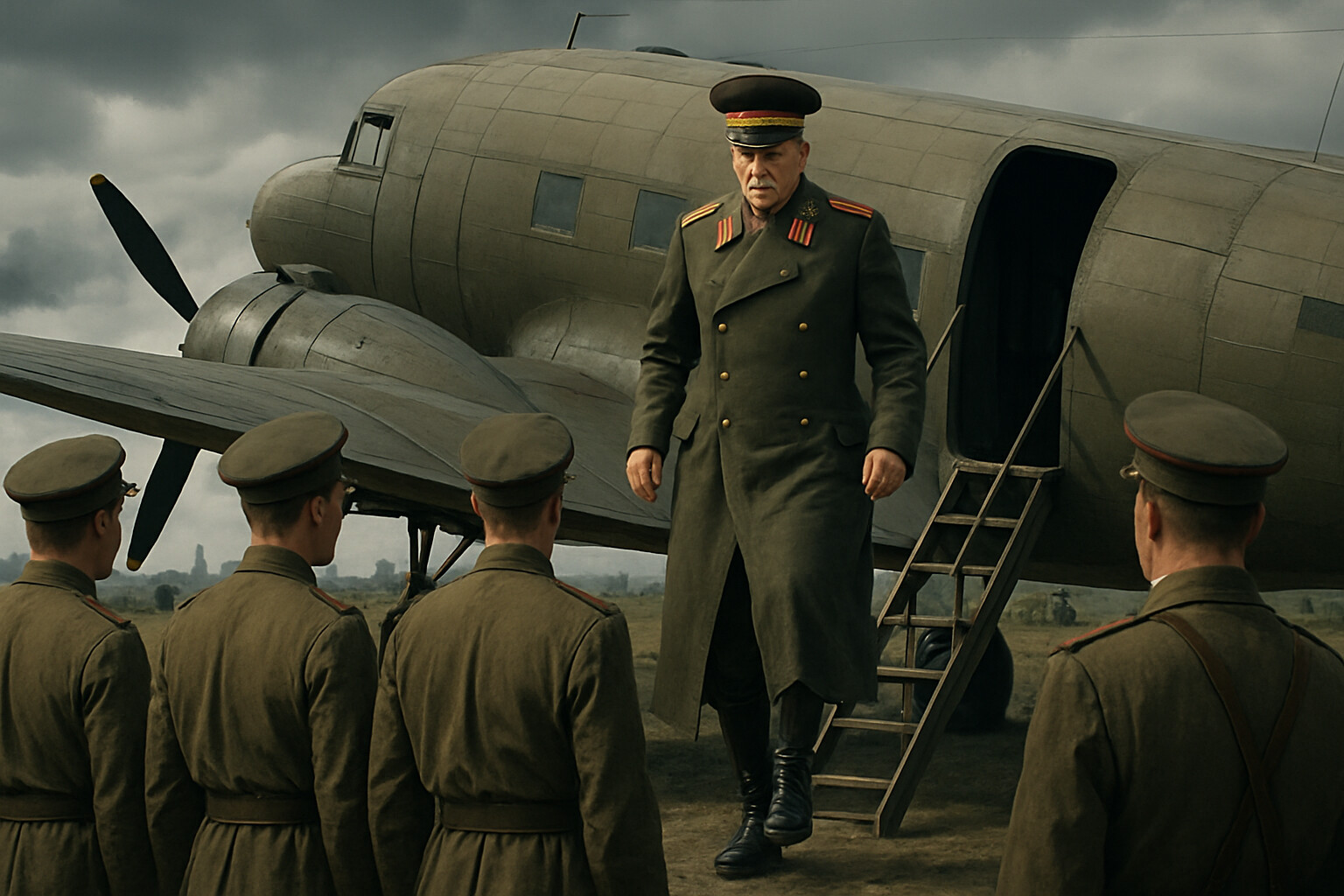
On September 9, 1941, Marshal Georgy Konstantinovich Zhukov arrived in Leningrad by aircraft to take command.
---
Zhukov was forty-four years old and already the most consequential Soviet general of the war. He had stopped the Japanese at Khalkhin Gol in 1939 with armored encirclement that the Red Army's doctrinal establishment had barely imagined. He had been Chief of the General Staff when Barbarossa struck. He had already been dispatched to the Southwestern Front crisis near Kyiv before being summoned north. Stalin sent him to the moments that could not be allowed to fail.
The situation Zhukov found at Leningrad was, by the accounts of multiple Soviet participants and later historical scholarship, near collapse. German forces had pushed to within a few kilometers of the city's southern suburbs. The Pulkovo Heights—a low ridge commanding the southern approaches—were under direct pressure. German artillery could already range the city's center from positions already seized. Soviet accounts, some written during and after the war, indicate Zhukov moved immediately: concentrating available reserves at points of greatest pressure, issuing orders that unauthorized retreats would be treated as criminal offenses, and overseeing the placement of anti-tank weapons at critical chokepoints.
The precise wording and full text of those orders are not reproduced in the English-language secondary sources available for this narrative. The broad outlines are documented; tactical specifics are inferred from Soviet operational records summarized in secondary scholarship, principally David Glantz's multivolume Leningrad series and John Erickson's Road to Stalingrad. Readers requiring primary source verification should consult the Central Archive of the Ministry of Defense holdings on the Leningrad Front, September 1941.
What is verified is the outcome. The German advance into the city's southern defenses stalled by mid-September 1941. The Wehrmacht did not break through. Whether this resulted primarily from Zhukov's intervention, German logistical overextension, Hitler's decision to transfer armor south for the Kyiv operation, or some combination of all three has been debated by historians including Glantz, Erickson, and Evan Mawdsley. The evidence supports all three factors. Attributing the defense to any single cause overstates what the record can carry.
Zhukov left Leningrad on October 7, 1941, recalled by Stalin to organize the defense of Moscow after Army Group Center's Operation Typhoon threatened the capital. He had been in the city approximately four weeks. The defense he helped stabilize handed the job back to the garrison and to the people of Leningrad.
And those people were about to face something no general could command his way through.
---
The first winter—1941 into 1942—is the period historians and survivors mark as the worst. The German encirclement had cut all rail and road access. Lake Ladoga, to the city's east, represented the only potential gap in the ring. In warmer months, Soviet vessels attempted to move supplies across the lake under German air attack. The quantities were insufficient. Food stockpiles, already strained at the start of the siege, fell toward empty as autumn deepened.
Food rationing began immediately after the encirclement. The system divided the population into categories: workers in essential industries received the most; dependents—children, elderly, non-working adults—received the least. At the lowest point, in late November and December 1941, the dependent ration fell to 125 grams of bread per day. Workers received 250 grams. Neither was a nutritionally adequate quantity even before accounting for adulteration. The city's bakers, under direction of city authorities, stretched flour supplies with industrial cellulose, flax cake, malt, and other substitutes. The bread that resulted was bitter, dense, and barely caloric.
People began dying of starvation in October 1941. By December, they were dying in thousands per day. City administrative records, preserved in Soviet archives and published by Russian historians including Nikita Lomagin, document the scale in detail that resists compression into a single number. The most conservative scholarly estimates place civilian deaths during the siege at approximately 800,000; other credible estimates run above 1.1 million. The great majority died during the first winter, from starvation and associated causes. The official Soviet figure, long suppressed in its full dimensions for political reasons, was not revealed more completely until after the Soviet Union's collapse. No single number should be treated as definitive; the range reflects genuine uncertainty in the underlying records, not evasion.
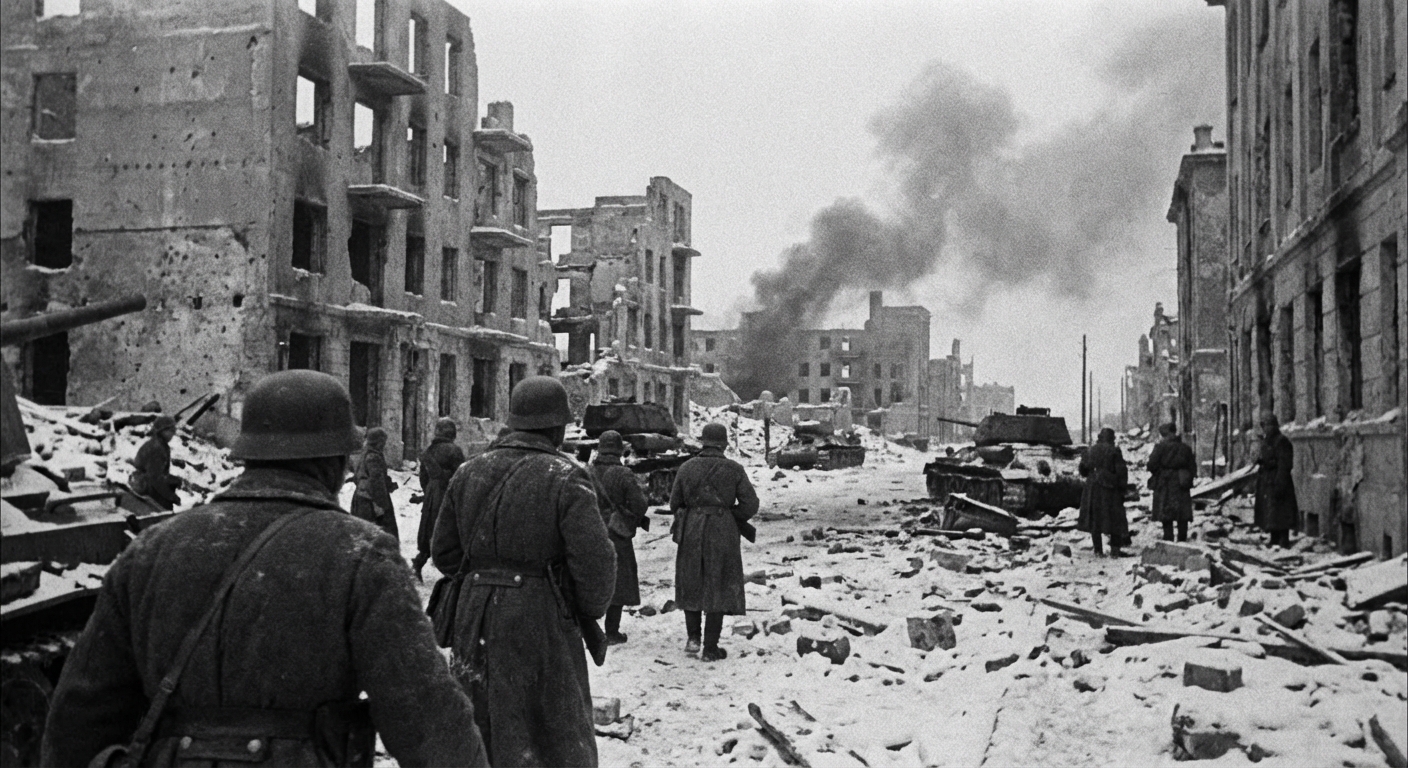
The cold compounded everything. Leningrad's winter temperatures regularly fell below minus twenty degrees Celsius. Central heating failed. Water pipes froze and burst. Residents burned furniture, books, and the wooden fittings of their apartments. The electricity grid collapsed repeatedly under fuel shortages, German bombing, and the demands of military production. People moved through the streets pulling hand-drawn sleds carrying water from the Neva, because the taps had stopped working. The same sleds were used to carry the dead to collection points, because families often lacked the strength to carry them.
This is what makes the Siege of Leningrad distinct in the history of the Second World War. Other cities were bombed. Other cities were fought over house by house. Leningrad was besieged in the medieval sense: cut off, starved, and shelled for nearly nine hundred days, and yet it continued to function as a city, a military garrison, and a symbol.
---
The Road of Life was the thread that kept the city alive.
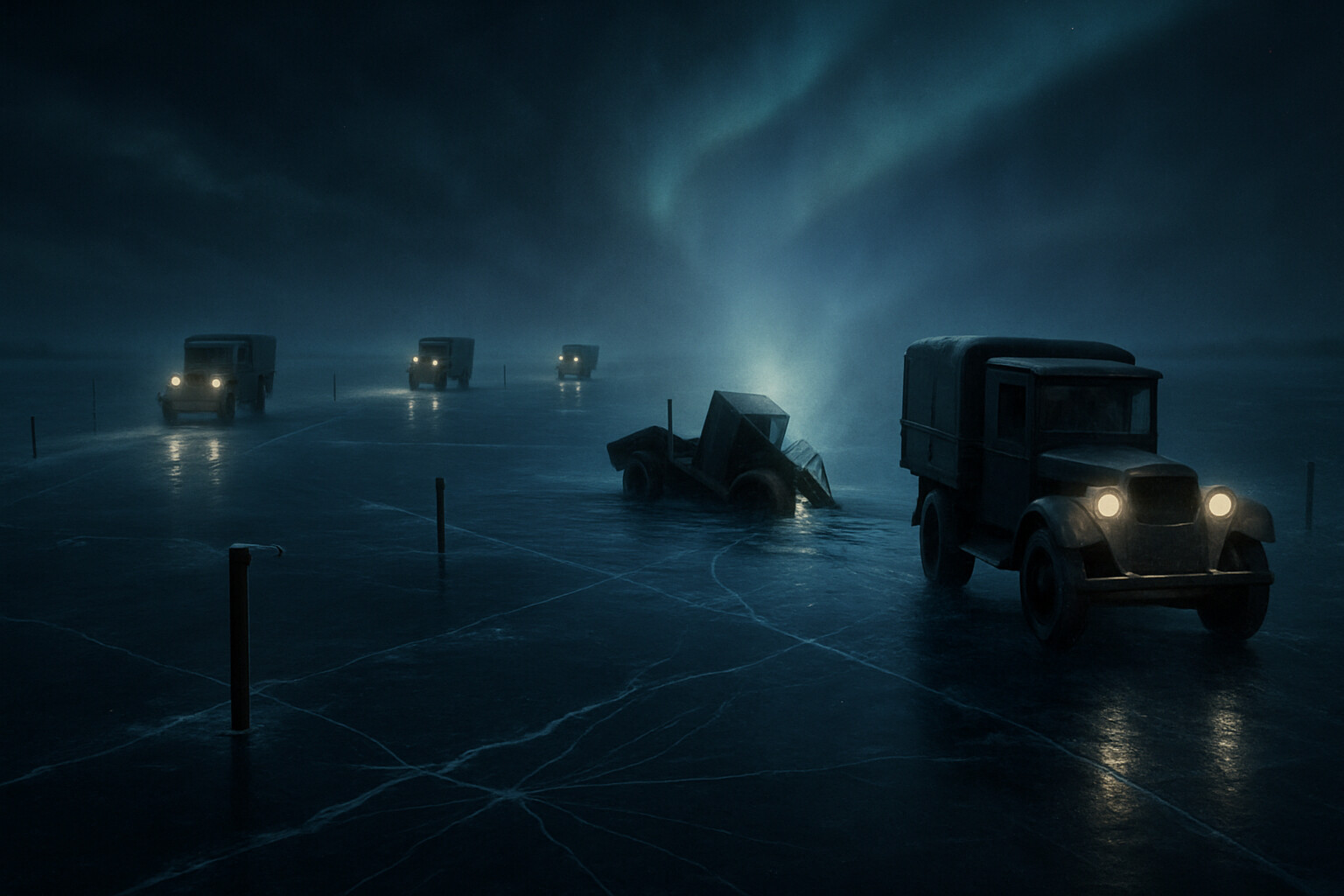
Lake Ladoga freezes in winter, and ice thick enough can bear the weight of vehicles. Soviet engineers, working under fire in extreme cold, began routing supply trucks across the frozen lake by late November 1941. The route—designated officially as Military Road No. 101, called by Leningraders the Road of Life, Doroga Zhizni—ran from the village of Kokkorevo on the western shore of the lake to Kobona on the eastern shore, roughly 30 kilometers across the ice.
The road was never safe. German aircraft attacked it. The ice shifted, cracked, and gave way beneath loaded trucks, swallowing vehicles and drivers without warning. Soviet engineers drilled test holes, planted route markers, and spread vehicle loads by routing trucks in wide formation rather than single file. The trucks moved at night to reduce visibility to German aircraft. Drivers were ordered to keep their cab doors open so that if the ice gave way, they had some chance of escape. Many did not escape.
Despite all of this, the road worked. From its opening in November 1941 through the spring thaw of 1942, Soviet trucks made hundreds of thousands of individual crossings. Historians including Michael Jones and David Glantz, drawing on Soviet administrative records, cite totals on the order of 360,000 tons of cargo moved across the lake during the first winter, with roughly half a million civilians—particularly children and the elderly—evacuated outward. These figures derive from Soviet military and civilian records regarded as broadly reliable by Western scholars, with the caveat that record-keeping under siege conditions was imperfect and specific figures vary between sources.
The road did not end the famine. Rations improved in early 1942 as supplies accumulated, but remained far below adequate levels. What the Road of Life prevented was the complete collapse of the garrison. Factories inside Leningrad manufactured artillery, ammunition, and equipment throughout the siege. The garrison defending the perimeter continued to fight. Without the ice road, neither would have been possible.
---
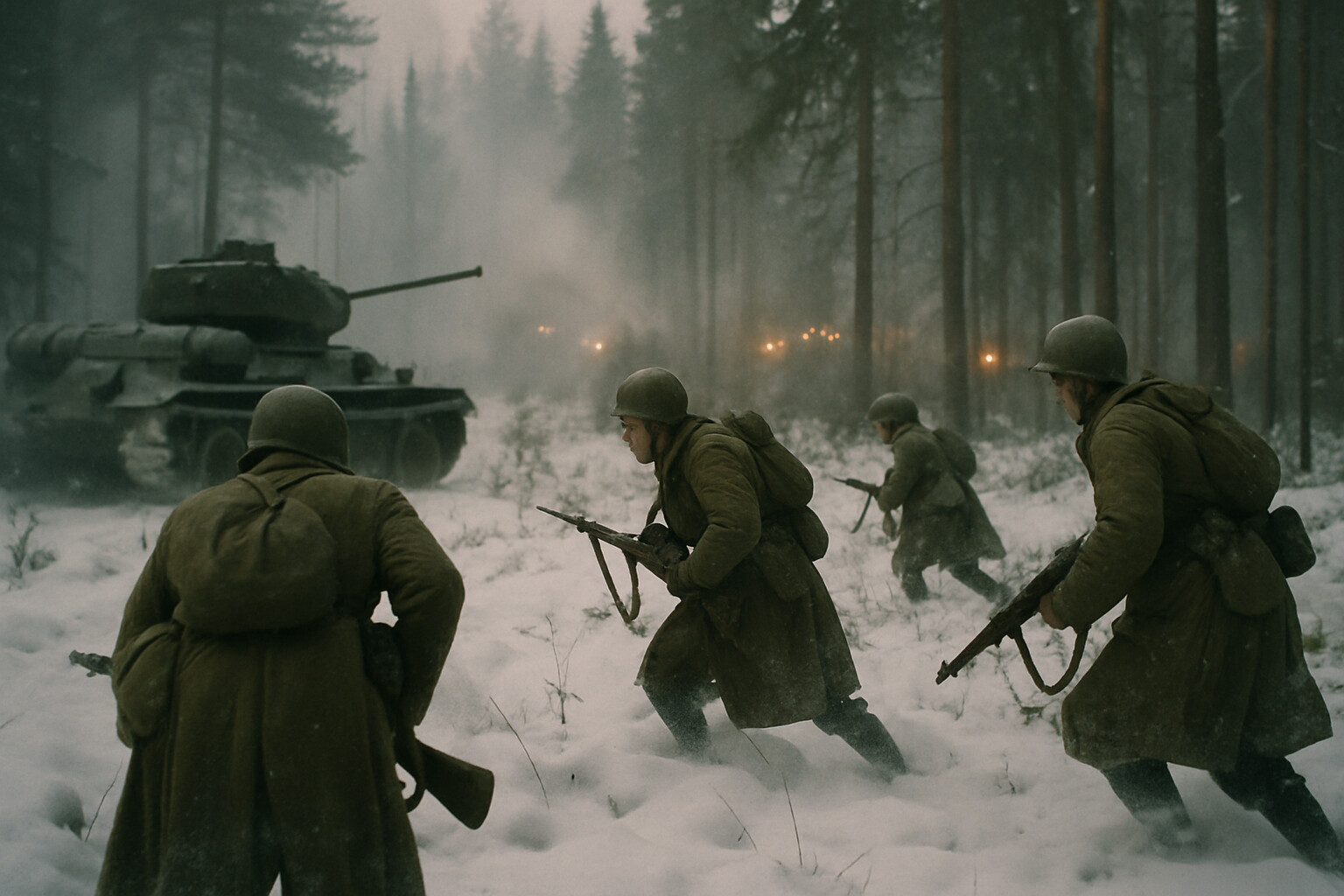
On the military perimeter, the fighting was constant. The Leningrad Front and, across the lake to the east, the Volkhov Front, fought a series of operations throughout 1942 and into 1943 to break through or weaken the German encirclement. Many of these operations were poorly resourced and costly, and they occupy a largely unsung portion of the Eastern Front's record.
Operation Spark—Operatsiya Iskra—was the breakthrough that changed the siege's geometry. Launched on January 12, 1943, it was a coordinated assault by forces of both the Leningrad Front and the Volkhov Front, attacking simultaneously from west and east toward each other through the narrow land corridor south of Lake Ladoga. That corridor—sometimes called the Shlisselburg or Mga corridor—was the geographic hinge of the German encirclement south of the lake.
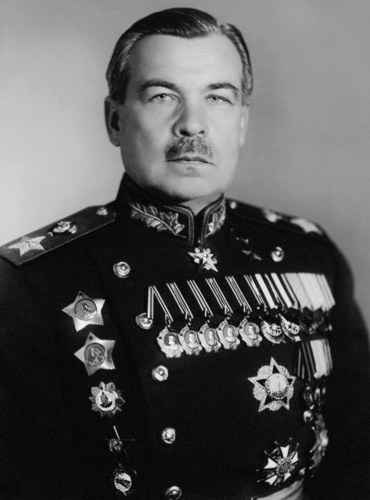
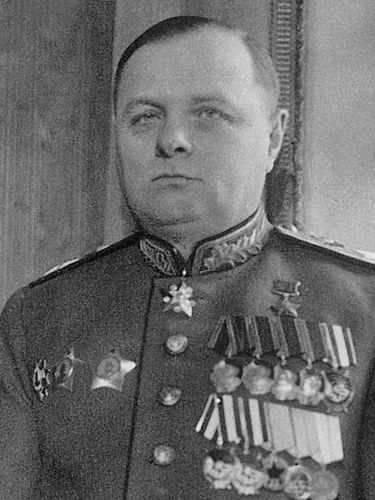
The operation was planned with Zhukov's coordination, by this point serving as Deputy Supreme Commander. Leningrad Front commander Leonid Govorov and Volkhov Front commander Kirill Meretskov led the assault forces. The fighting through the corridor lasted approximately a week. The terrain—swamps, dense forest, and the strongly fortified German positions at Shlisselburg and along the Neva's southern bank—made it some of the hardest fighting on the Eastern Front. By January 18, 1943, the two Soviet forces had linked up, and a corridor approximately eight to ten kilometers wide had been punched through the German lines.
The corridor was not enough to lift the siege. It was enough to allow a rail line to be built across it. Soviet engineers completed the connection by February 1943. The rail link dramatically increased the volume of supplies reaching the city. Civilian rations improved. The worst of the famine was over, though Leningrad remained encircled and under bombardment.
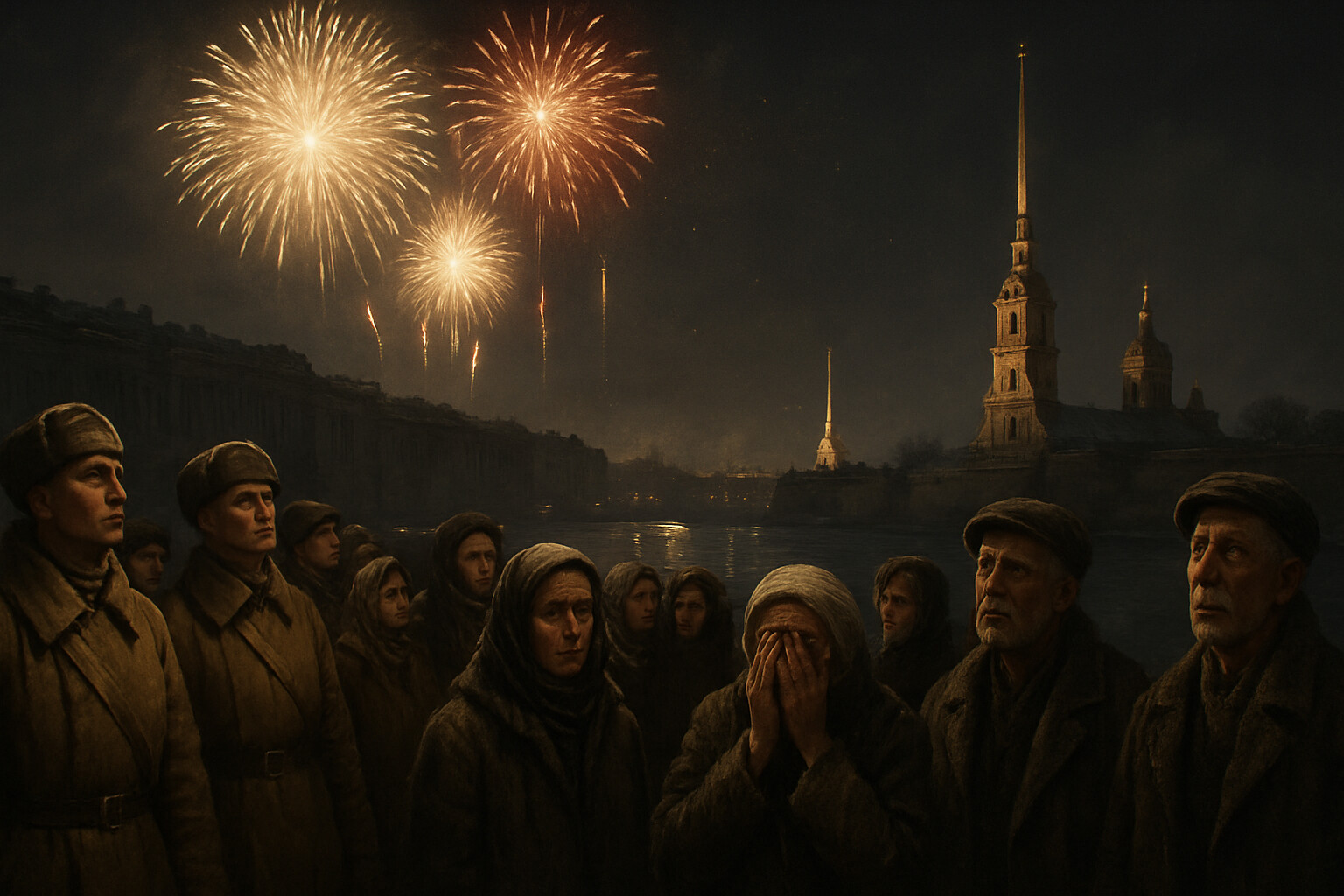
The siege was not formally broken until January 1944. The coordinated Leningrad–Novgorod Offensive, launched on January 14, 1944, drove German forces back from the city's southern approaches with sufficient force to end the artillery threat. On January 27, 1944, city authorities announced the formal end of the blockade. A fireworks display was held over the Neva that night—the first since before the siege. Survivors described the moment in terms that suggest ordinary language was not equal to it.
The siege had lasted eight hundred and seventy-two days.
---
The human accounting of those eight hundred and seventy-two days is almost beyond tabulation, but historians have tried.
The civilian death toll is one of the most debated demographic questions of the Second World War—not because the deaths are disputed, but because chaotic siege conditions, incomplete wartime record-keeping, and the Soviet government's subsequent political management of the numbers make precision impossible. The post-Soviet scholarly consensus, informed by archives opened after 1991, places civilian deaths at somewhere between 800,000 and 1.1 million, with the majority dying in the first winter. Glantz, whose multivolume Leningrad work draws heavily on Soviet military archives, and Lomagin, who has worked extensively in the Leningrad party archives, both support estimates within this range. The figure used at the Nuremberg Trials—approximately 670,000—is now considered an undercount.
Military casualties were equally severe. Scholarly estimates for Soviet forces defending and fighting to relieve Leningrad run in the range of one to two million killed, wounded, captured, or missing across the full course of the siege. German losses, though substantial, were significantly lower.
The physical destruction of the city was extensive but not total. German artillery struck hospitals, schools, and residential neighborhoods throughout the siege, killing civilians in their apartments, in bread lines, and in the streets. Yet many of the city's major architectural monuments survived, partly through active preservation efforts. Museum staff and city workers sandbagged sculptures, removed movable art to safer locations, and documented what they could not protect. The Hermitage's curators evacuated much of its collection by rail before the encirclement closed; what remained was stored in the museum's basements.
That act of preservation—the decision to protect Rembrandt paintings and Egyptian antiquities while people starved outside—is one of the siege's most morally weighted details, attracting both admiration and critical scrutiny. It speaks to what the city's inhabitants believed they were defending, and what they believed mattered enough to save.
---
Zhukov's role in the Siege of Leningrad is real and documented, but it requires careful framing. He was not the sustained defender of the city. He arrived in a crisis, spent approximately four weeks reorganizing the defense, and left. The defense over the following two and a half years was carried out by the men and women of the Leningrad Front, by the garrison troops, by the sailors of the Baltic Fleet whose guns provided critical fire support throughout the siege, by the engineers who built and maintained the Road of Life, and above all by the civilians who endured what the city endured.
Zhukov returned to the Leningrad story in January 1943 as coordinator of Operation Spark. His role in planning the breakthrough is documented in Soviet military records and confirmed by multiple historians. The success of that operation—ending the complete encirclement and allowing construction of the supply rail line—stands as one of the verified military achievements of his career.
His broader record extends far beyond Leningrad. He would organize the defense of Moscow in late 1941, play a central role in the Stalingrad counteroffensive in late 1942, coordinate Soviet operations at Kursk in 1943, and command the final assault on Berlin in 1945. Most serious historians of the Eastern Front regard him as the most significant Soviet military commander of the war. But the four weeks in Leningrad—a city days from being overrun, a general arriving by aircraft with orders to make it hold, a line that somehow did not break—remain among the most compressed and consequential episodes of his life.
---
The legacy of the Siege of Leningrad is layered in ways that continue to generate historical and political debate.
In the Soviet Union, the siege was treated as a supreme example of socialist heroism, and the city was awarded the title Hero City in 1945. The official narrative emphasized collective endurance and party leadership while suppressing certain details: the full extent of civilian deaths, the existence of black markets and theft during the famine months, the cases of cannibalism documented in NKVD reports from 1941–42, and the political purge of Leningrad's wartime leadership that came in 1949. In what became known as the Leningrad Affair, Stalin had many of the city's wartime officials arrested and executed. The men who had led the city through the siege were, in some cases, destroyed by the state they had preserved.
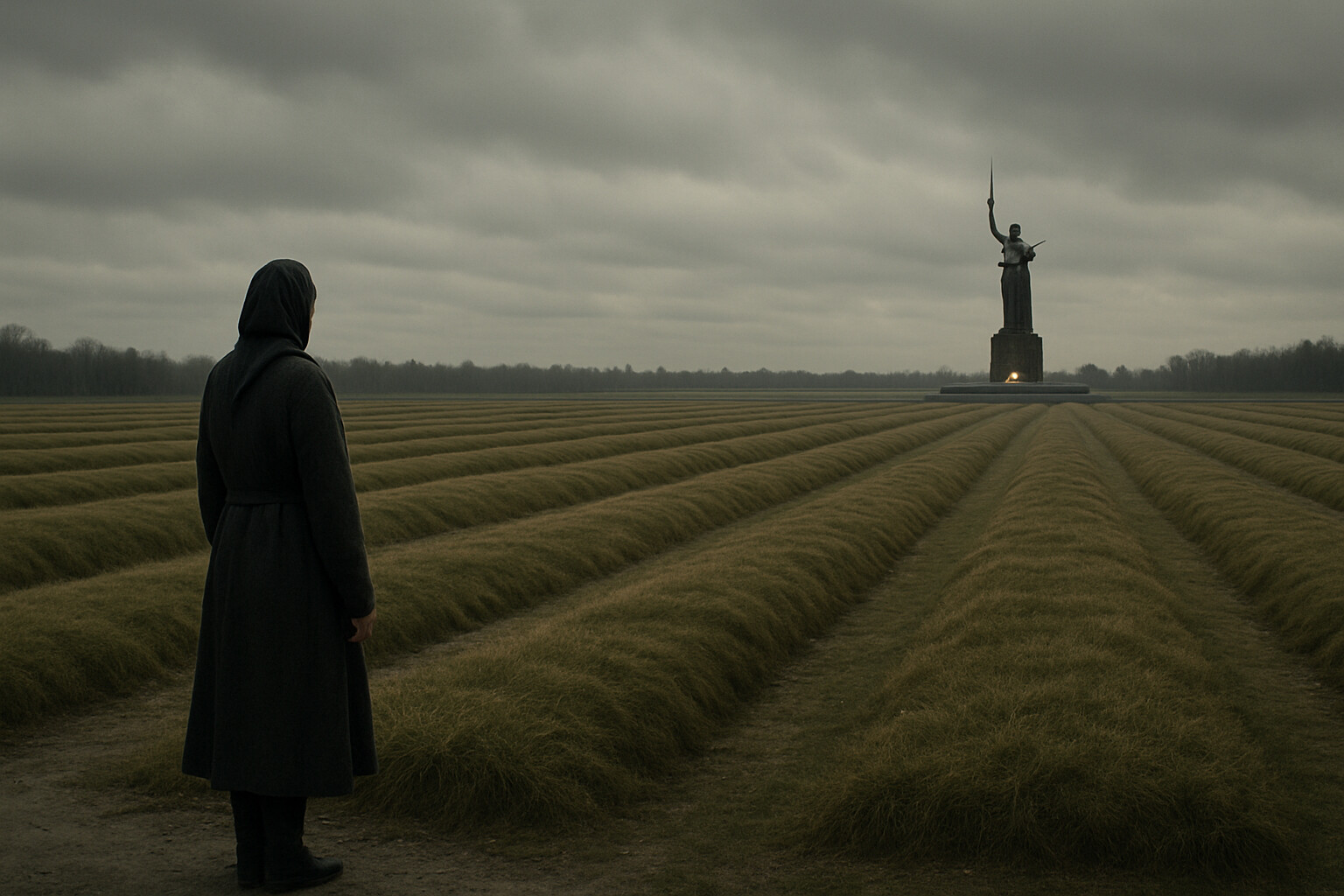
In post-Soviet Russia, the siege has become a foundational national memory, commemorated at the Piskaryovskoye Memorial Cemetery in Saint Petersburg, where more than 400,000 victims lie in mass graves. Visiting the cemetery—its long, flat mounds stretching across an enormous field—is an experience visitors consistently describe as unlike any other war memorial. There is no dramatic monument in the conventional sense. There is simply scale.
For Western historians, the siege has attracted growing attention since Soviet archives became more accessible after 1991. The scholarship of Glantz, Erickson, and Jones, alongside Russian historians including Lomagin and the documentary account compiled by Ales Adamovich and Daniil Granin—The Blockade Book, drawn from interviews with survivors and considered one of the most important primary-source compilations of siege experience—has substantially deepened the field. The siege now occupies a recognized place in the history of the Second World War not as a footnote to Stalingrad or Kursk, but as a distinct, sustained human catastrophe and military achievement in its own right.
The question of what the Siege of Leningrad means—as an event, as a precedent, as a memory—has no settled answer. It was a military success in the sense that the city did not fall. It was a humanitarian catastrophe in the sense that close to a million people died, most of them civilians. It was an act of collective endurance without obvious parallel in modern urban warfare. And it was shaped by a political system that, even as it organized the city's defense, suppressed the full truth of what the defense had cost.
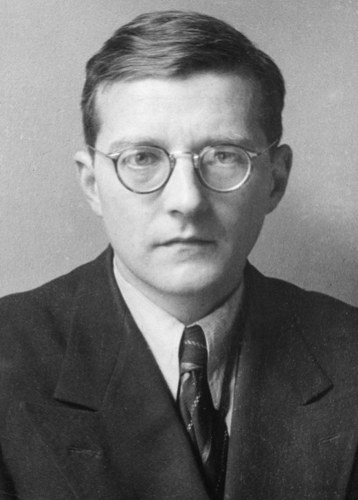
What cannot be taken from it is this: the city held. The factories ran. The garrison fought. On August 9, 1942—a date that popular histories widely associate with Hitler's expectation of celebrating in the city, though the specific German primary source for this claim has not been definitively identified and should be treated with caution—the surviving musicians of the Leningrad Radio Orchestra performed Shostakovich's Seventh Symphony inside the besieged city. Conductor Karl Eliasberg led the performance. Some of the players recruited from the front were so weakened by starvation that they could barely hold their instruments in early rehearsals. The performance was broadcast over loudspeakers and across radio. It was not a military action. It was, by almost any measure, an act of defiance.
The symphony was broadcast. The city was still there.
Eight hundred and seventy-two days later, it still was.