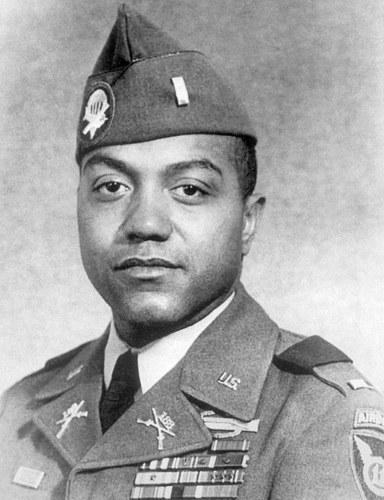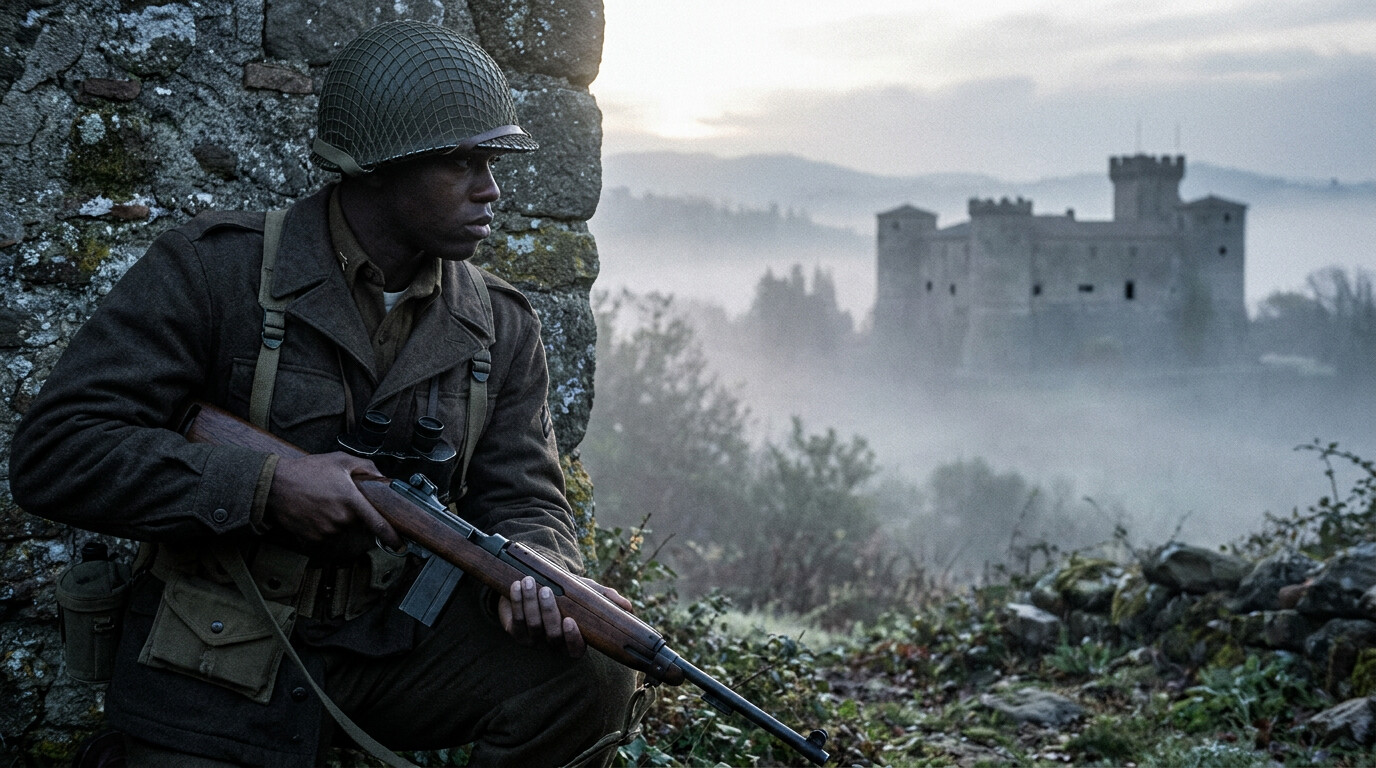
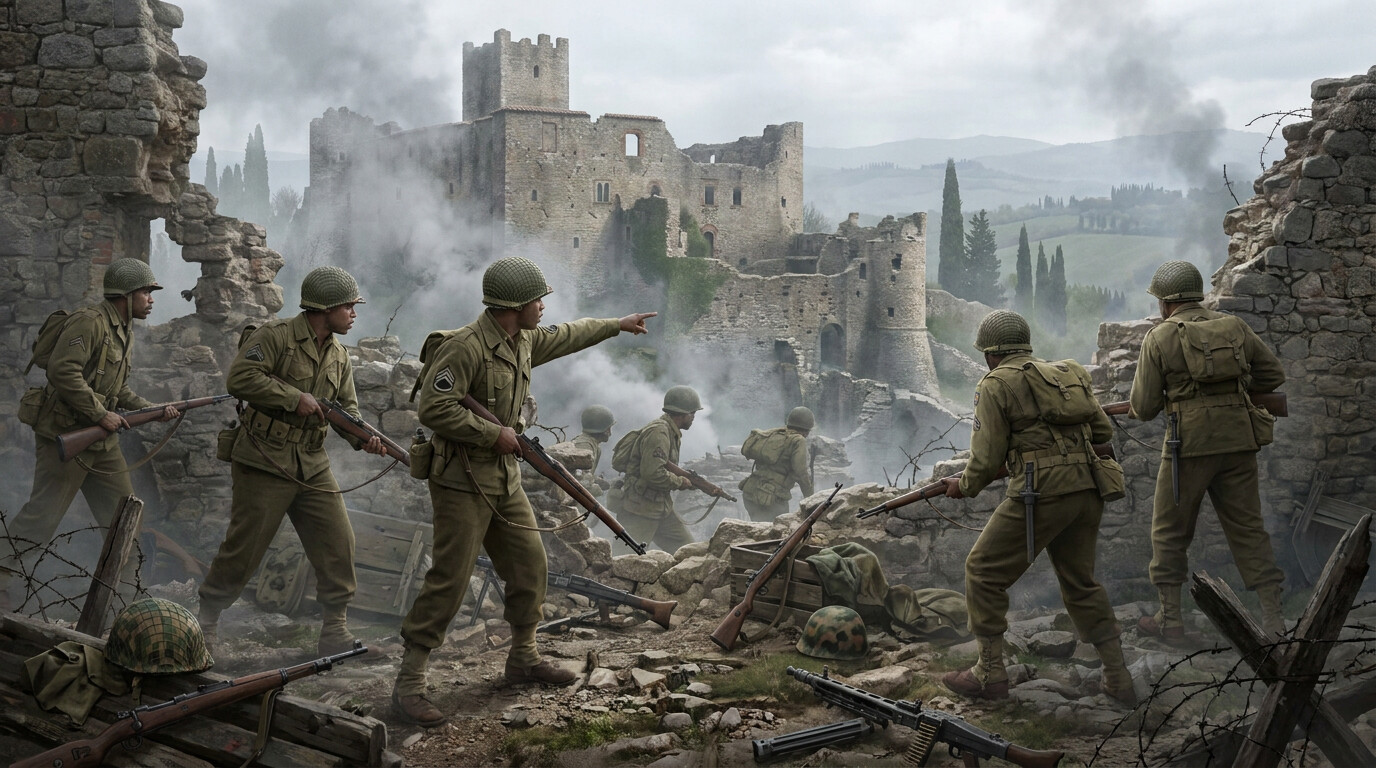
The morning mist clung to the Tuscan hills like smoke from a dying fire. Second Lieutenant Vernon Baker crouched behind a stone wall, watching the German machine gun nest that had pinned down his platoon for the better part of an hour. The MG42's distinctive buzz-saw chatter echoed off the medieval stones of Castle Aghinolfi, each burst claiming more yards of ground his men couldn't cross. April 5, 1945. The war in Europe had weeks left to run, but on this hillside near Viareggio, Italy, dying remained as easy as ever.
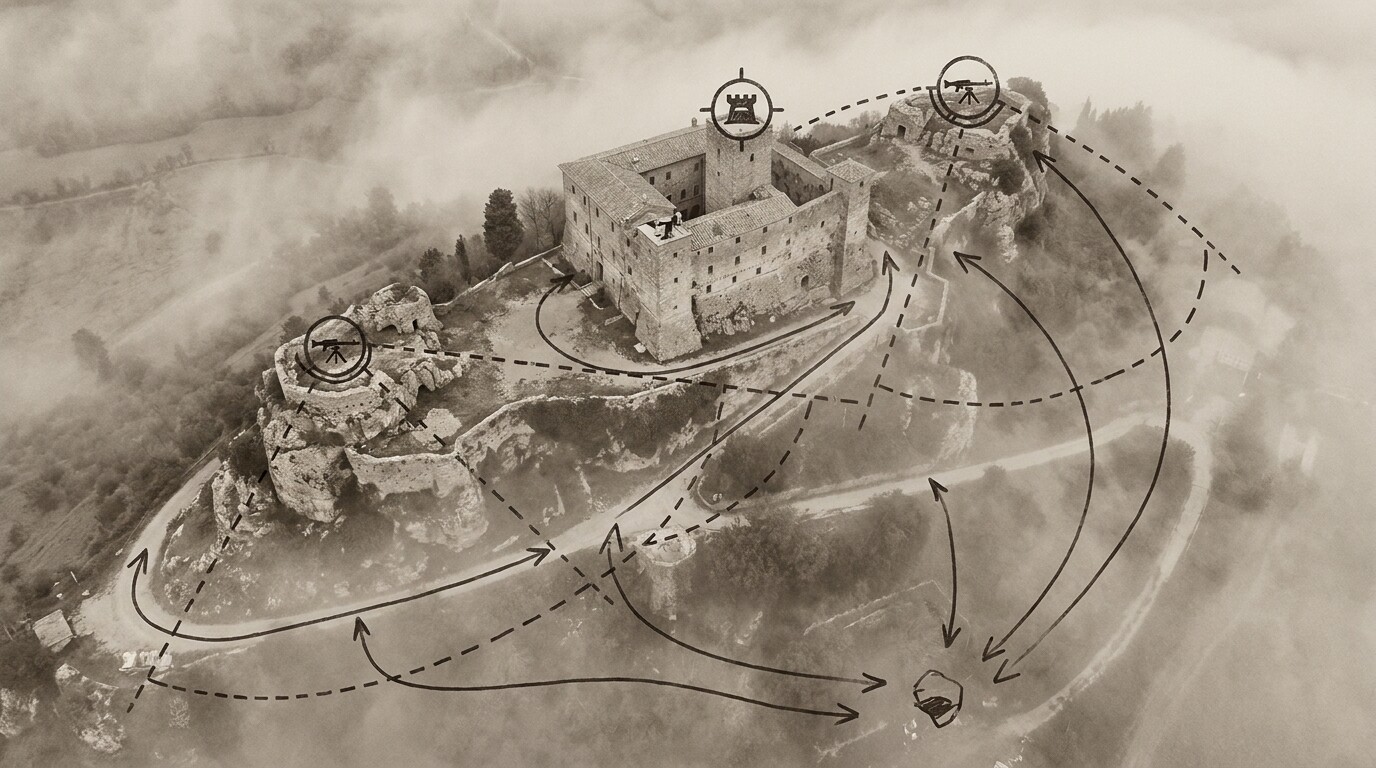
Baker pressed his M1 carbine against his shoulder and studied the killing ground ahead. Three separate German positions commanded the approach to the castle—two machine gun nests and an observation post that had been directing mortar fire with surgical precision. His platoon, part of Company C of the 370th Infantry Regiment, had been tasked with taking these positions as part of the broader offensive to crack the German Gothic Line. But the attack had stalled before it began.
The 370th Infantry Regiment belonged to the 92nd Infantry Division, one of only two Black combat divisions in the European Theater. Since arriving in Italy in 1944, the "Buffalo Soldiers" had faced not only German bullets but also the skepticism of white commanders who questioned their fighting ability. Some units had performed poorly under inadequate leadership and training, feeding racist assumptions about Black combat effectiveness. But Baker's company had proven themselves repeatedly in the mountains of northern Italy, and today would demand proof once more.
Vernon Baker had grown up in Wyoming and Iowa, one of few Black children in predominantly white communities. At 25, he carried himself with the quiet confidence of a man who had learned early to prove his worth through actions rather than words. Commissioned as a second lieutenant after Officer Candidate School, he had been leading men in combat for months, earning their respect through competence under fire. His soldiers—mostly Black enlisted men from across America—had followed him into danger before. Today, danger wore the gray stones of a thirteenth-century castle.
The Gothic Line represented Germany's last major defensive position in Italy, a chain of fortifications stretching across the peninsula's narrowest point. Built into mountains and medieval strongpoints like Castle Aghinolfi, these positions had held Allied forces at bay for months. The spring offensive of 1945 aimed to shatter this line once and for all, but success depended on taking countless individual positions like the one Baker now faced.
Baker's M1 carbine felt light in his hands—a .30-caliber semi-automatic weapon lighter than the standard Garand rifle but with less stopping power. Originally designed for support troops, the carbine had found favor among officers and paratroopers who needed mobility over raw firepower. Its 15-round magazine and compact design made it ideal for the close-quarters fighting that characterized Italian mountain warfare. Baker also carried a .45-caliber pistol and several hand grenades, standard equipment for an infantry officer leading from the front.
The German positions ahead bristled with more formidable weaponry. The MG42 machine guns—"Hitler's Buzzsaw" to Allied troops—could fire 1,200 rounds per minute, twice the rate of comparable American weapons. Fed by 50-round belts, these weapons could sweep an area clean of advancing infantry in seconds. The Germans had positioned them with interlocking fields of fire, meaning any approach would face multiple weapons simultaneously. The observation post likely contained a radio operator directing 81mm mortar fire, standard German practice for defensive positions.
Baker counted his options and found them few. A frontal assault across open ground would be suicide. Calling for artillery support would take time his pinned-down men didn't have—German mortar rounds were already walking closer to their position. Air support remained unlikely; the weather had grounded most tactical aircraft that morning. This left infiltration and individual action, the most dangerous option of all.
The terrain offered some hope. Medieval builders had constructed Castle Aghinolfi on a commanding height, but centuries of weathering had created gullies and dead spaces that didn't exist when the walls were new. Baker spotted a fold in the ground that might—might—allow approach to the first machine gun nest without being seen from the others. It meant leaving his men behind and advancing alone, but sometimes leadership demanded the ultimate personal risk.
Baker briefed his sergeant on the plan: maintain suppressive fire to keep German heads down while he attempted to flank the positions. If he failed, the sergeant would assume command and attempt to withdraw the platoon to safer ground. Simple plans worked best under fire, and this plan was as simple as they came.
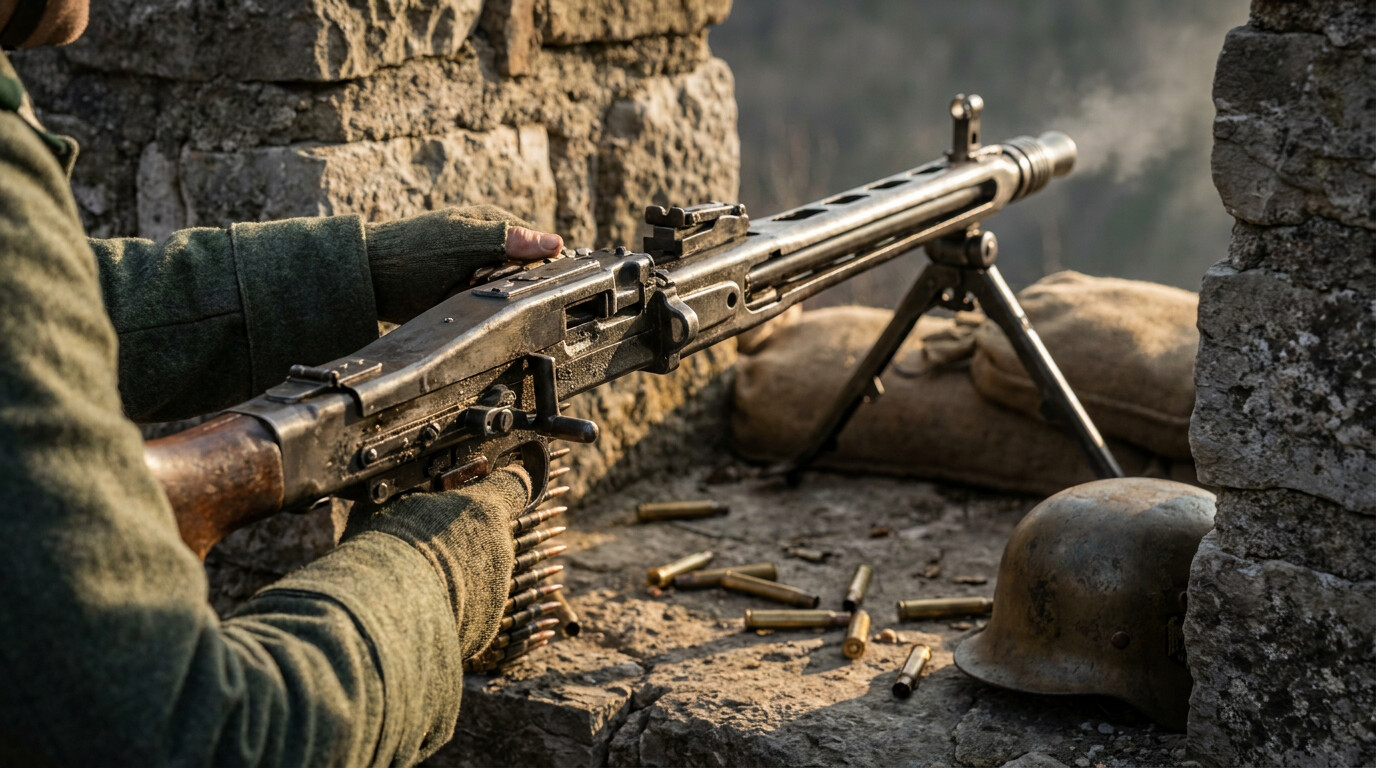
The approach began with a sprint across thirty yards of exposed ground to reach the gully Baker had identified. German bullets cracked overhead, but the suppressive fire from his men kept enemy fire inaccurate. Baker reached the depression and began working forward, using every fold in the ground to mask his movement. The carbine's compact size proved invaluable in the cramped conditions, allowing him to crawl through spaces that would have caught a full-length rifle.
The first machine gun nest lay fifty yards ahead, built into a natural rock formation and reinforced with sandbags. Baker could see two German soldiers—one manning the MG42, another feeding ammunition belts. Standard German doctrine called for machine gun crews of three or four men, meaning at least one more enemy soldier remained out of sight. Baker worked to within grenade range, pulled the pin on a fragmentation grenade, and made his throw count.
The explosion silenced the machine gun permanently. Baker rushed the position before any survivors could recover, finding one German soldier wounded and another dead. He quickly disabled the MG42 by removing its bolt, rendering the weapon useless even if German reinforcements reached the position. One down, two to go.
The second machine gun nest had heard the explosion and was now alert to Baker's presence. Located in a different section of the castle's outer works, this position commanded a clear field of fire across the approach Baker's platoon needed to use. The crew had repositioned their weapon to cover likely infiltration routes, making Baker's next advance far more dangerous.
Baker studied the position from concealment, noting details that would determine his survival. This nest had been better constructed than the first, with overhead cover protecting the crew from grenades thrown from most angles. The MG42 was positioned behind a stone parapet with a narrow firing slit, giving the crew excellent protection while maintaining clear fields of fire. A frontal assault would be impossible; Baker needed to find the position's weak point.

The answer came from studying medieval architecture rather than modern tactics. Castle Aghinolfi had been built for siege warfare, with sally ports—small doors allowing defenders to sortie against attackers—built into the walls. One such opening lay near the second machine gun nest, blocked by rubble but still passable for a determined man. Baker worked his way to this opening, squeezed through the ancient stonework, and found himself inside the castle's outer ward.
Moving through the ruined medieval chambers, Baker flanked the second machine gun position from an angle its crew never expected. The element of surprise proved decisive; a well-placed grenade eliminated the position before the Germans could bring their weapon to bear. Baker again disabled the machine gun and began working toward his final objective—the observation post directing mortar fire against his platoon.
The observation post occupied the castle's highest accessible point, a tower that had watched over the Tuscan coast for seven centuries. German engineers had adapted the medieval structure perfectly for modern warfare, installing radio equipment and establishing clear lines of sight to coordinate artillery fire. Taking this position would require climbing exposed stone steps under potential fire from multiple directions.
Baker approached the tower from the blind side, using rubble and fallen masonry for concealment. The observation post contained at least three German soldiers—a radio operator, a spotter with binoculars, and an officer directing fire missions. These men represented the eyes and voice of German defensive fire, and eliminating them would lift the artillery threat from Baker's entire company.
The assault on the observation post demanded every skill Baker had learned in months of mountain warfare. He used the tower's medieval architecture against its modern occupants, climbing external stonework that German defenders hadn't considered vulnerable. A final grenade eliminated the radio equipment and its operators, silencing German artillery direction for this sector of the line.
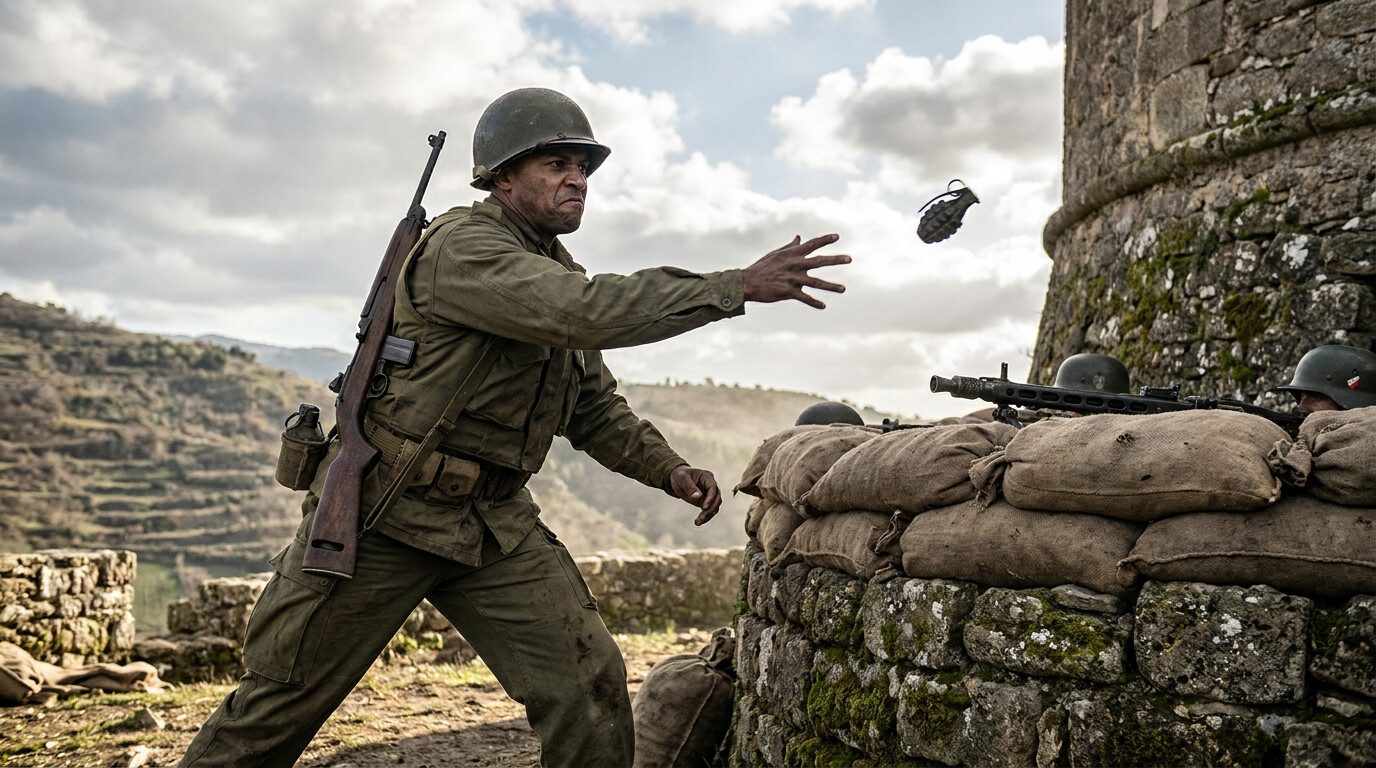
With the three key positions destroyed, Baker's platoon could advance. The machine guns that had pinned them down lay silent, their crews dead or wounded. The observation post that had directed deadly accurate mortar fire would call down no more strikes. Baker had single-handedly eliminated the German positions that blocked his unit's advance, but the cost in personal risk had been enormous.
Returning to his platoon, Baker found his men ready to exploit the breakthrough he had created. The advance continued, with Company C moving forward to secure the castle and surrounding high ground. The broader offensive—part of the final Allied push to end the war in Italy—gained momentum as other units achieved similar successes across the Gothic Line.
Baker's actions on April 5, 1945, represented more than individual heroism; they demonstrated the combat effectiveness of Black troops when properly led and equipped. The 92nd Infantry Division's service in Italy had been complicated by inadequate training, prejudiced leadership, and systemic racism that undermined unit cohesion. But soldiers like Baker proved repeatedly that courage and competence knew no color boundaries.
The immediate tactical impact of Baker's assault was clear—his platoon advanced, Castle Aghinolfi fell, and the German defensive line cracked at this point. The broader strategic impact contributed to the collapse of German resistance in northern Italy, hastening the war's end. But the personal recognition Baker deserved would be delayed by decades.
Vernon Baker received the Distinguished Service Cross for his actions at Castle Aghinolfi, second only to the Medal of Honor among American decorations for valor. For many soldiers, this would have represented the culmination of military recognition. But evidence suggested that racial prejudice had prevented Black soldiers from receiving the nation's highest decoration, despite actions that clearly merited such recognition.
The historical record reveals systematic bias in the awards process during World War II. No Black soldier received the Medal of Honor for service in that conflict, despite clear documentation of actions that met or exceeded the standard applied to white soldiers. This disparity reflected broader patterns of discrimination that affected every aspect of military service, from training and leadership assignments to recognition and promotion.
In the 1990s, the U.S. Army commissioned a comprehensive study to review the awards process during World War II, specifically examining whether racial bias had denied deserving Black soldiers appropriate recognition. The study, conducted by Shaw University, reviewed records of Black soldiers who had received the Distinguished Service Cross and other high decorations to determine whether their actions met Medal of Honor criteria.
Vernon Baker's case became central to this review. The documentation of his actions at Castle Aghinolfi—contemporary reports, witness statements, and unit records—clearly established the extraordinary nature of his conduct. His single-handed elimination of three German positions under direct fire, while leading from the front and enabling his unit's advance, met every criterion for the Medal of Honor.
On January 13, 1997, President Bill Clinton awarded the Medal of Honor to seven Black World War II veterans, including Vernon Baker. The ceremony at the White House corrected a historical injustice while recognizing courage that had gone too long without proper acknowledgment. Six of the recipients had died by 1997; Baker was the only living recipient, making him temporarily the sole surviving Black Medal of Honor recipient from World War II.
Baker's official citation reads: "For extraordinary heroism in action on 5 and 6 April 1945, near Viareggio, Italy. Then Second Lieutenant Baker demonstrated outstanding courage and leadership in destroying enemy installations, personnel, and equipment during his company's attack against a strongly entrenched enemy in mountainous terrain. When his company was stopped by the crossfire of three machine guns, he crawled to within grenade range of the nearest position and destroyed it, killing three of the enemy and wounding another. Advancing to another machine gun position, he silenced the gun with hand grenades and killed its two-man crew. His actions enabled his platoon to eliminate the remaining machine gun emplacement. Later that day, Lieutenant Baker crawled 250 yards up a sheer slope, alternately throwing hand grenades and firing his weapon to kill an enemy soldier in a stone emplacement overlooking his company's position. He then climbed the remaining distance and destroyed a second position, killing two more of the enemy. His extraordinary heroism resulted in the capture of Castle Aghinolfi, a strategic strong point that had been the subject of previous unsuccessful assaults."
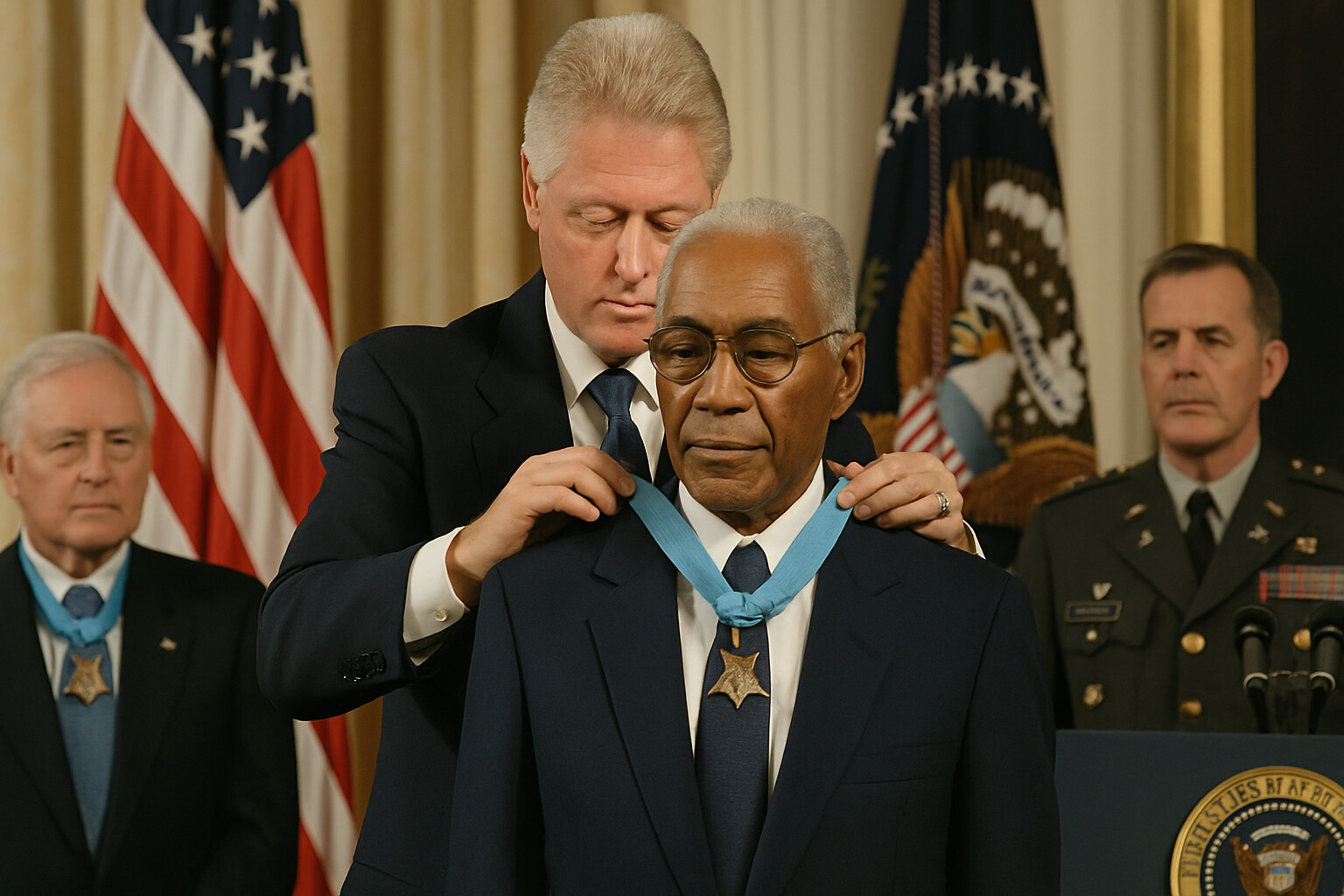
The recognition came more than fifty years after the action, but its significance extended beyond personal vindication. Baker's Medal of Honor represented acknowledgment of the service and sacrifice of all Black World War II veterans who had faced enemy fire abroad and discrimination at home. His story became a bridge between the segregated military of World War II and the integrated forces that followed.
After the war, Baker remained in the Army, serving through the Korean conflict and beyond. He retired as a first lieutenant in 1968, having served his country for more than two decades despite the barriers placed in his path. His post-war service included assignments that would have been impossible for a Black officer in 1945, reflecting the gradual integration of the American military.
Baker's later years were marked by quiet dignity and occasional public appearances to discuss his wartime service. He spoke candidly about the discrimination he had faced while emphasizing the professionalism and courage of his fellow Black soldiers. His message remained consistent: individual actions mattered less than collective service, and recognition came secondary to duty performed.
The tactical lessons from Baker's assault at Castle Aghinolfi remain relevant to military professionals studying small-unit leadership and individual initiative in combat. His use of terrain, exploitation of enemy blind spots, and decisive action under fire exemplify principles taught in military schools today. The weapons and technology have evolved, but the fundamental requirements of courage, tactical thinking, and leadership remain unchanged.
Baker's story also illustrates the complex relationship between individual heroism and systemic problems. His extraordinary actions could not overcome the institutional racism that limited opportunities for Black officers and soldiers, but they provided undeniable evidence of capability and courage that eventually contributed to broader change. Progress came slowly and incompletely, but it came.
Vernon Baker died on July 13, 2010, at age 90, having lived to see an African American elected President of the United States—a development unimaginable in 1945. His death marked the passing of the last surviving Black Medal of Honor recipient from World War II, closing a chapter in American military history while opening questions about recognition, service, and the ongoing struggle for equality.
The weapons Baker carried into combat at Castle Aghinolfi—the M1 carbine, .45 pistol, and fragmentation grenades—were standard issue items that demanded skill and courage to use effectively. The German weapons he faced—MG42 machine guns and 81mm mortars—represented the finest military technology of their era, operated by experienced soldiers fighting from prepared positions. Baker's success came not from superior equipment but from superior tactics, courage, and determination.
The medieval setting of the battle added layers of historical irony to the action. Castle Aghinolfi had been built to withstand siege warfare with swords and catapults; German defenders adapted it for modern weapons and tactics; Baker used both ancient architecture and contemporary combat techniques to achieve victory. Past and present intersected on that Tuscan hillside, with courage remaining the common thread across centuries.
Today, Vernon Baker's Medal of Honor stands as testament to valor recognized, injustice acknowledged, and service honored despite the passage of decades. His story reminds us that heroism comes in all colors, that recognition matters even when delayed, and that individual actions can indeed change the course of battles, careers, and history itself. The young lieutenant who climbed those stone steps in 1945 could not have imagined receiving the nation's highest decoration in the White House more than fifty years later, but he would have understood that some duties transcend personal recognition.
The last Black World War II Medal of Honor recipient carried his honor quietly, spoke his truth simply, and left a legacy that extends far beyond one April morning in Italy. His assault on Castle Aghinolfi lasted hours; its impact continues today.