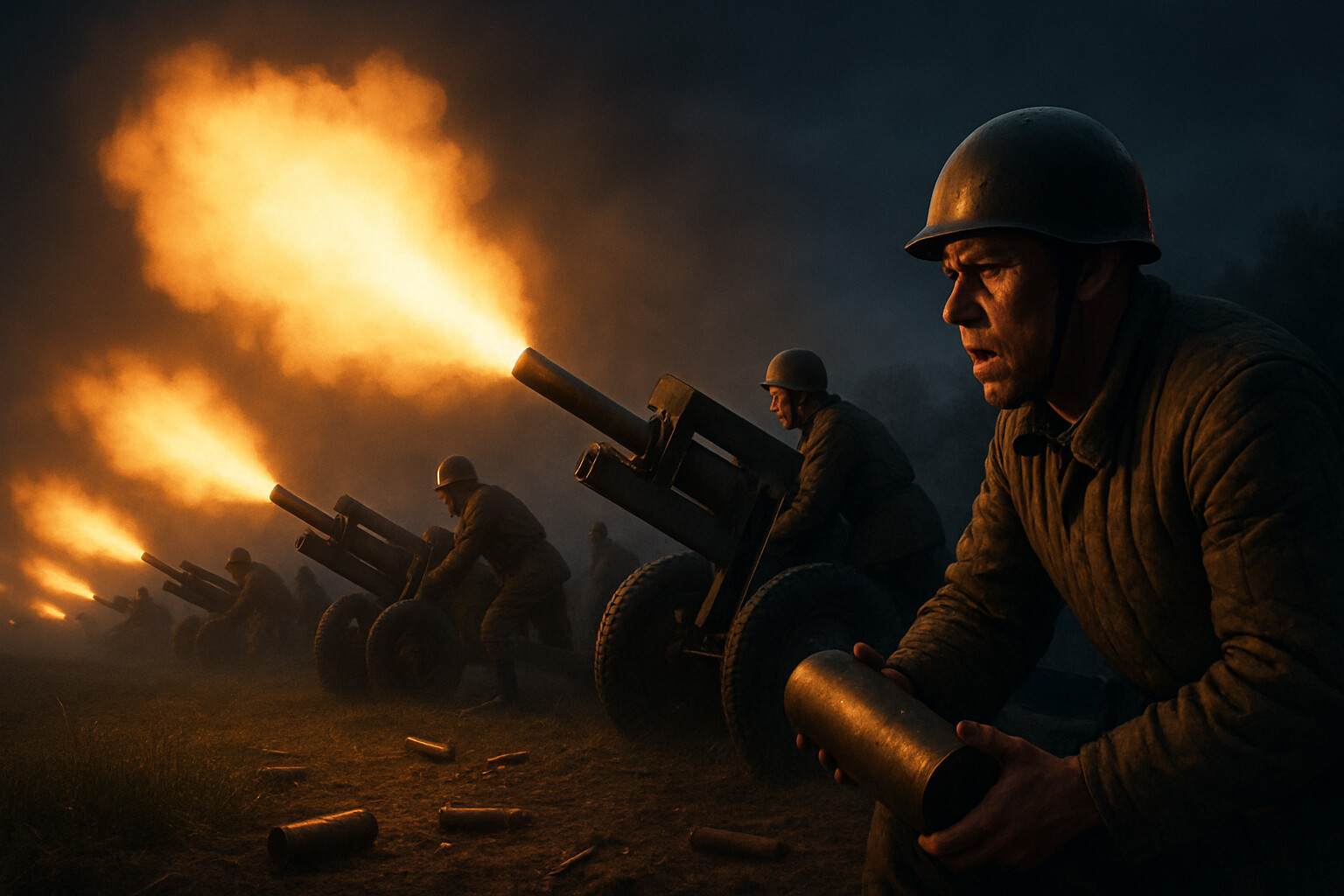
The earth shook before the German tanks arrived.
In the pre-dawn darkness of July 5, 1943, Soviet artillery batteries east of Kursk opened fire first. It was not a response to a German attack. It was a preemptive strike — ordered because Soviet intelligence had identified the approximate hour the Wehrmacht planned to launch Operation Citadel. Shells fell on German assembly areas along the northern and southern faces of the salient before their engines had fully warmed. The timetable slipped. The offensive Adolf Hitler had promised would restore German prestige on the Eastern Front was off-balance before a single Panzer crossed the start line.
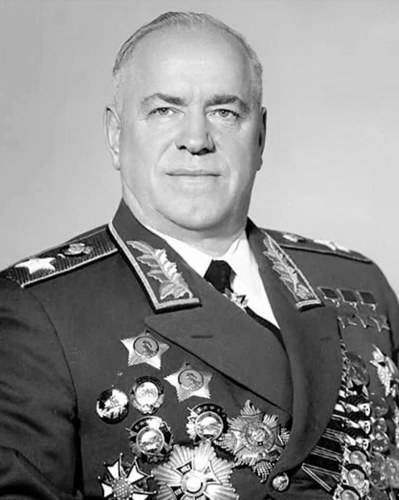
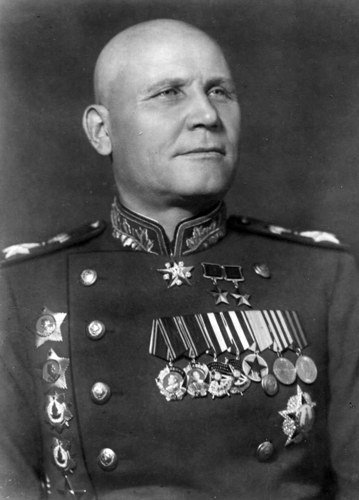
That preemptive strike was not an accident or a lucky guess. It was the product of months of preparation overseen in large part by Marshal Georgy Konstantinovich Zhukov — arguably the most consequential operational commander the Soviet Union produced in the Second World War. Zhukov had read the German plan, helped shape the Soviet response, and staked his professional standing on the idea that the Red Army could absorb the most powerful armored offensive Germany could mount, bleed it down inside layer after layer of prepared defenses, and then drive forward with its own counteroffensives. By the time the dust settled in August 1943, that judgment had been borne out in a way that permanently altered the balance of the war.
---
To understand what happened at Kursk, it is necessary to understand the situation Germany and the Soviet Union both found themselves in by the spring of 1943.
The catastrophe at Stalingrad had concluded in February of that year. Field Marshal Friedrich Paulus and the remnants of the German Sixth Army had surrendered inside a frozen pocket, and the shock inside Germany — a nation accustomed to military success — was profound. Hitler understood, at some level, that the army he had in 1943 was not the army he had launched into the Soviet Union in June 1941. Replacements were harder to find. Experienced non-commissioned officers and junior officers had been consumed by two years of relentless fighting. The Luftwaffe, which had provided decisive close air support in earlier campaigns, was spread thin across multiple theaters.
Yet Germany was not finished. Field Marshal Erich von Manstein's operational riposte in February and March of 1943 — the Third Battle of Kharkov — had recaptured that city and stabilized the southern sector of the Eastern Front. One consequence of those counterattacks was the creation of a large westward-bulging Soviet salient centered on the city of Kursk, roughly 150 kilometers across and extending approximately 150 kilometers into German-held territory. To German planners looking at the map, the salient was an obvious target. Cut it off at its base with armored pincer attacks from north and south, destroy the forces inside, and the Wehrmacht would eliminate perhaps several hundred thousand Soviet troops and substantial armor in a single operation. The plan was designated Operation Citadel.
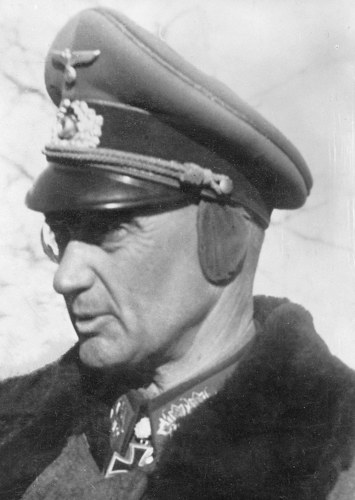
The debate inside the German high command over whether and when to launch Citadel was protracted and, in retrospect, costly. Generals including Heinz Guderian and Walter Model argued against it, warning that Soviet defenses would be ready and that Germany could not absorb another large-scale armored loss. Hitler delayed the offensive multiple times, partly to await deliveries of new tanks — the Panther and the Ferdinand tank destroyer — which he believed would provide a decisive qualitative edge. Every week Germany waited, the Soviets dug deeper.
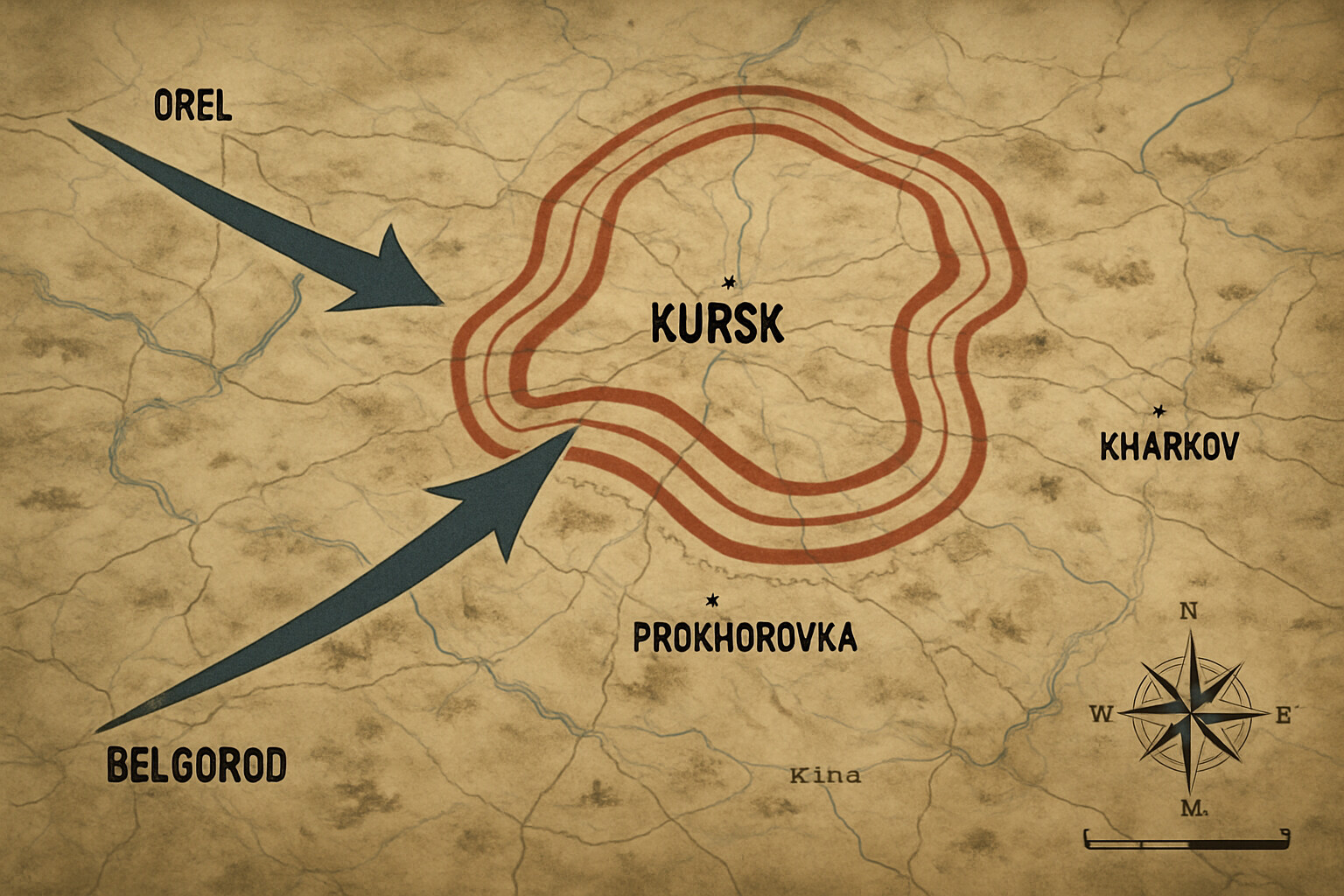
On the Soviet side, the intelligence picture was assembling in considerable detail. Information reached Moscow through multiple channels: signals intelligence, aerial reconnaissance, and — according to historical accounts, though the precise nature and reliability of these sources remains debated — material connected to the Lucy spy ring operating in Switzerland. The Soviets understood that a major German offensive aimed at the Kursk salient was coming. The question before the Soviet high command — the Stavka — was how to respond.
The debate within Stavka in some respects mirrored the German one. Marshal Aleksandr Vasilevsky and others weighed the option of a pre-emptive Soviet offensive. Zhukov argued the opposite: let the Germans attack first. Absorb the blow. Wear down their armored strength against prepared defenses. Then counterattack. The idea required considerable nerve, because it meant deliberately accepting a German offensive rather than trying to forestall it. Zhukov's assessment, delivered to Stalin in a written report on April 8, 1943 — documented in Soviet archives and cited across multiple scholarly histories — was direct: the Soviets should not attempt to preempt the German attack but should instead construct a defense in depth powerful enough that any assault would exhaust itself before reaching its objectives.
Stalin, characteristically resistant to advice that required absorbing punishment before striking back, was not immediately persuaded. Zhukov and Vasilevsky pressed their case. Stalin accepted the defensive-first approach. The preparation that followed was unlike anything the Red Army had previously attempted.
---
The Kursk salient was turned into a fortress.
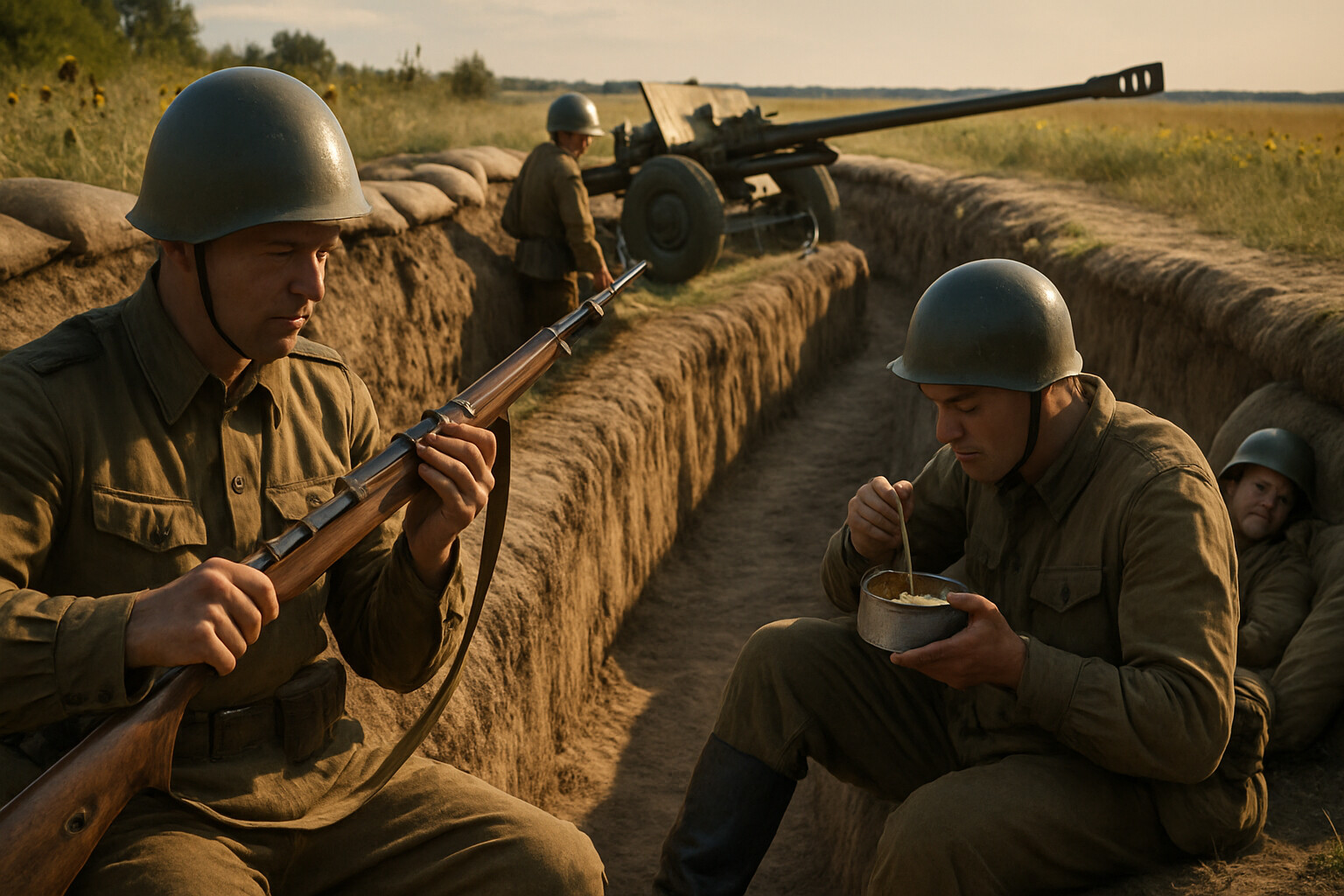
In the weeks and months before the German offensive, Soviet engineers, soldiers, and civilian laborers constructed successive defensive belts extending more than 300 kilometers in depth from the front line. The scale was staggering. Drawing on Soviet records, historians have calculated that approximately 3,000 kilometers of trenches were dug, along with thousands of kilometers of anti-tank ditches. More than 500,000 mines were laid across the northern and southern approaches — both anti-tank and anti-personnel — creating dense fields that would channel German armor into kill zones covered by massed anti-tank guns. These figures vary across sources and should be understood as scholarly approximations rather than precisely verified totals.
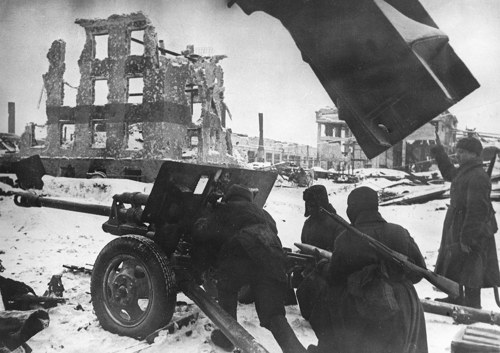
The Soviet anti-tank defense was organized around the pakfront concept: concentrated gun positions sited to engage enemy armor simultaneously from multiple angles. The Red Army deployed large numbers of 76mm anti-tank guns alongside heavier 85mm weapons capable of engaging German armor at combat range. Artillery regiments were integrated into the defensive belts specifically to conduct direct fire against tanks. The intent was that German armor would not simply push through or bypass strongpoints; it would run into interlocking fires from multiple directions.
Behind those defenses, Stavka assembled a strategic reserve — the Steppe Front, commanded by General Ivan Konev — that was withheld from the initial defensive battle. This reserve would be available for the counteroffensive once the German offensive had been halted. The concept was methodical and patient in a way that Soviet operations in 1941 and early 1942 had not been, a reflection of how significantly Red Army planning and command had matured.
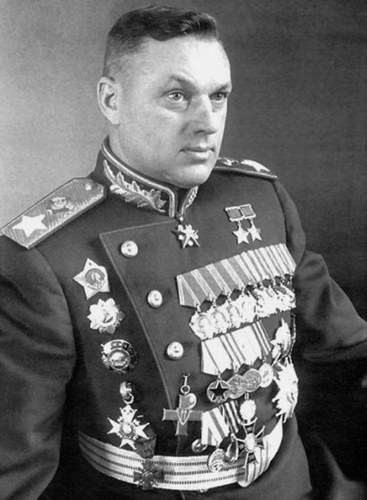
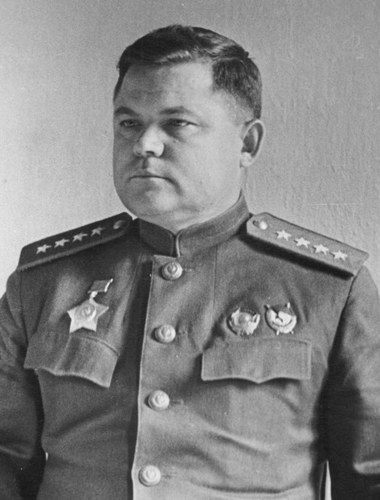
Zhukov traveled to the Kursk area multiple times before the battle to inspect preparations and coordinate with front commanders. His role was that of a Stavka representative — a position of supreme operational authority permitting him to coordinate multiple fronts simultaneously. The two fronts holding the salient were the Central Front, commanded by General Konstantin Rokossovsky in the north, and the Voronezh Front, commanded by General Nikolai Vatutin in the south. Zhukov worked across both, ensuring that defensive preparations met Stavka's standards.
The men doing the physical work were not abstractions on a staff map. They were soldiers and civilians moving earth with shovels and picks through the spring thaw and into early summer heat, stringing wire, hauling ammunition, positioning guns. The operational planning was sophisticated, but its execution required an enormous physical effort by hundreds of thousands of people. What they were building was a trap — and when the Germans came, they would be inside it.
---
The German assault began in the early hours of July 5, 1943, disrupted but not stopped by the Soviet preemptive strike.
In the north, the German Ninth Army under Colonel-General Walter Model attacked southward with roughly 335,000 men and approximately 590 tanks and assault guns. In the south, Army Group South's Fourth Panzer Army under Colonel-General Hermann Hoth, together with Army Detachment Kempf, pressed northward with considerably greater armored strength — approximately 1,500 tanks and assault guns. Soviet forces holding the salient numbered in the hundreds of thousands, supported by thousands of artillery pieces, anti-tank guns, and aircraft.
In the north, Model's offensive ran almost immediately into the depth and density of Rokossovsky's defenses. The German assault here relied heavily on the new Ferdinand tank destroyers — heavy vehicles mounting a long 88mm gun capable of destroying Soviet armor at extended range — but the Ferdinands proved vulnerable to Soviet infantry and mines because they carried no secondary armament. An approaching Soviet soldier with an incendiary device or a mine under the tracks could not be engaged by the main gun at close range. German progress in the north was measured in kilometers per day rather than the operational distances that panzer doctrine promised. By July 12, the northern offensive had effectively stalled, having penetrated approximately 12 kilometers into the Soviet defensive belts at its deepest point.
The southern sector was more dangerous. Hoth's Fourth Panzer Army, built around the elite II SS Panzer Corps — comprising the Leibstandarte SS Adolf Hitler, Das Reich, and Totenkopf divisions — made substantially greater progress. These were among the best-equipped formations in the German military, and they drove northward with force and tactical skill. By July 11, they had penetrated significantly into the Soviet defensive lines and were approaching the rail junction at Prokhorovka, a position whose loss would threaten to unravel the southern defensive sector.
Stavka moved the 5th Guards Tank Army, commanded by Lieutenant General Pavel Rotmistrov, toward Prokhorovka to block the advance.
---
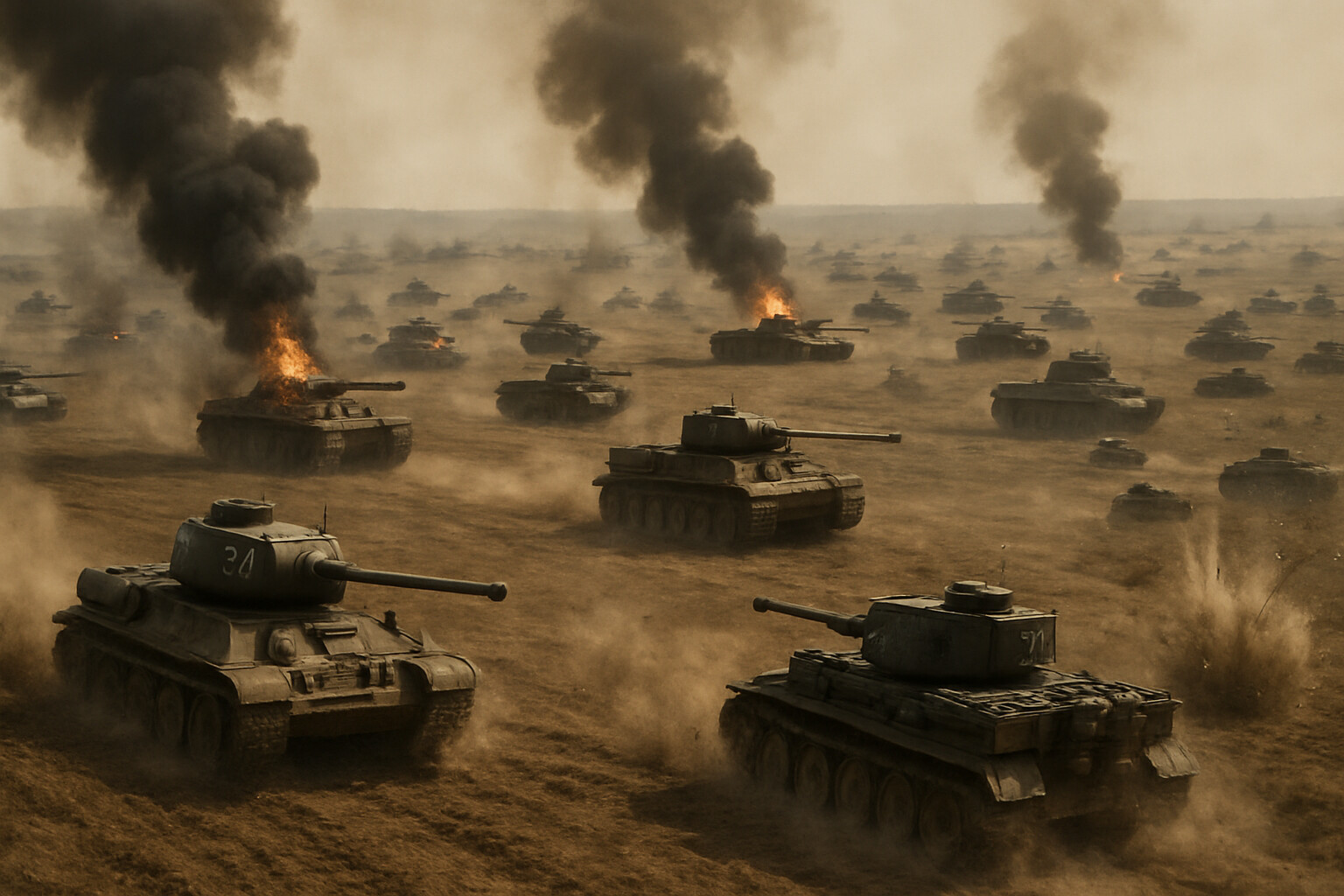
July 12, 1943. The rolling farmland southwest of Prokhorovka.
What happened on that day remains one of the most studied and contested engagements in the history of armored warfare. For decades after the war, Soviet accounts described the battle of Prokhorovka as a decisive Soviet victory in which hundreds of German tanks were destroyed by a massive armored charge. More recent scholarship — particularly work by historians Valeriy Zamulin and David Glantz, drawing on previously restricted Soviet and German records — has substantially revised that account.
The engagement on July 12 involved Rotmistrov's 5th Guards Tank Army attacking into the path of the II SS Panzer Corps. The Soviet force committed approximately 600 to 800 tanks, though figures vary by source and counting method, and the attack was driven by urgency: the SS armor had to be stopped. Soviet T-34s, advancing in large numbers, ran into the guns of the SS divisions at relatively close range in terrain that offered limited cover. German tanks — particularly the Mark IV and the few Panthers that were mechanically operational — had been engaging Soviet armor at distances of 1,000 to 1,500 meters, where their guns held an advantage and Soviet return fire was less effective. When T-34 crews closed to short range to reduce that gap, the fighting became brutal and disorganized.
German records suggest that II SS Panzer Corps lost only a small number of tanks permanently destroyed on July 12, with more damaged but recoverable. Soviet losses were considerably heavier: the 5th Guards Tank Army lost hundreds of armored vehicles in the fighting around Prokhorovka across several days, though a significant proportion were damaged rather than total write-offs. The picture of a clean Soviet armored victory at Prokhorovka does not hold under archival scrutiny. What the battle did accomplish was to halt the German advance. The II SS Panzer Corps did not break through to Kursk. Whether that outcome resulted primarily from the July 12 engagement or from the broader strategic deterioration facing Germany across the entire front is a question historians continue to examine.
On July 12 — the same day as the Prokhorovka engagement — Soviet forces launched Operation Kutuzov against the German Second Panzer Army in the Orel salient to the north, threatening the flank and rear of the forces conducting the northern arm of Citadel. Hitler, already alarmed by the Allied landings in Sicily that had begun on July 10, ordered elements of the SS Panzer corps transferred to Italy. On July 13, he summoned his commanders and suspended Operation Citadel. The German offensive, already stalled in the north and checked in the south, was officially over.
Zhukov and Vasilevsky had been right. German armored strength had been worn down against defenses too deep and too dense to penetrate. The cost on the Soviet side was also severe — the Red Army suffered very heavy losses in men and equipment during the defensive battles — but the Soviets held the ground and, critically, retained the strategic initiative.
---
The counteroffensives that followed defined the rest of 1943.
Operation Kutuzov, launched July 12, steadily pushed back the Orel salient and liberated the city of Orel on August 5. Almost simultaneously, Operation Rumyantsev — launched August 3 and coordinated by Zhukov and Vasilevsky — drove into German forces south of Kursk, liberating Belgorod on August 5 and Kharkov on August 23. These were not minor adjustments to the line. They were major operational advances that consumed German reserves and drove the front steadily westward.
Stalin ordered artillery salutes fired in Moscow on August 5 to mark the liberation of Orel and Belgorod — the first such victory salutes of the war, establishing a tradition that would continue until 1945. For Soviet citizens enduring an extraordinarily costly war, the salutes carried a clear signal.
Zhukov's standing in Soviet military history was further consolidated by Kursk. He had advocated the correct strategic approach, overseen an unprecedented defensive preparation, and coordinated the counteroffensives that followed. He would go on to coordinate the operations that contributed to lifting the siege of Leningrad, lead the Soviet advance through Poland and into Germany, and personally accept the German military surrender at Karlshorst on May 8, 1945. His post-war career was complicated — Stalin distrusted his public popularity and sidelined him in the late 1940s — but his operational record in the war is secure in the historical literature.
---
The weapons at Kursk deserve their own accounting, because the battle was in large measure a contest between competing technologies and the doctrines built around them.
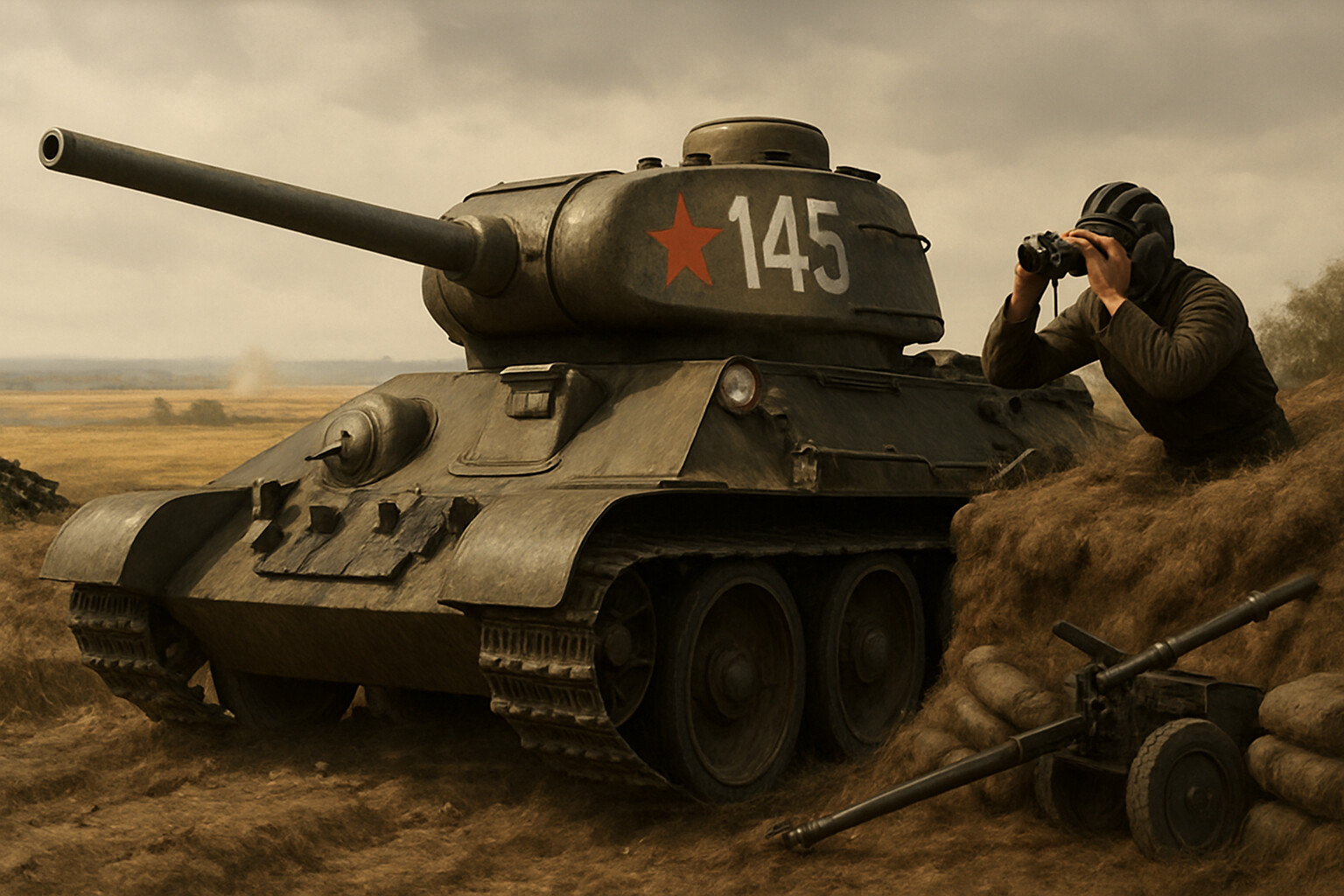
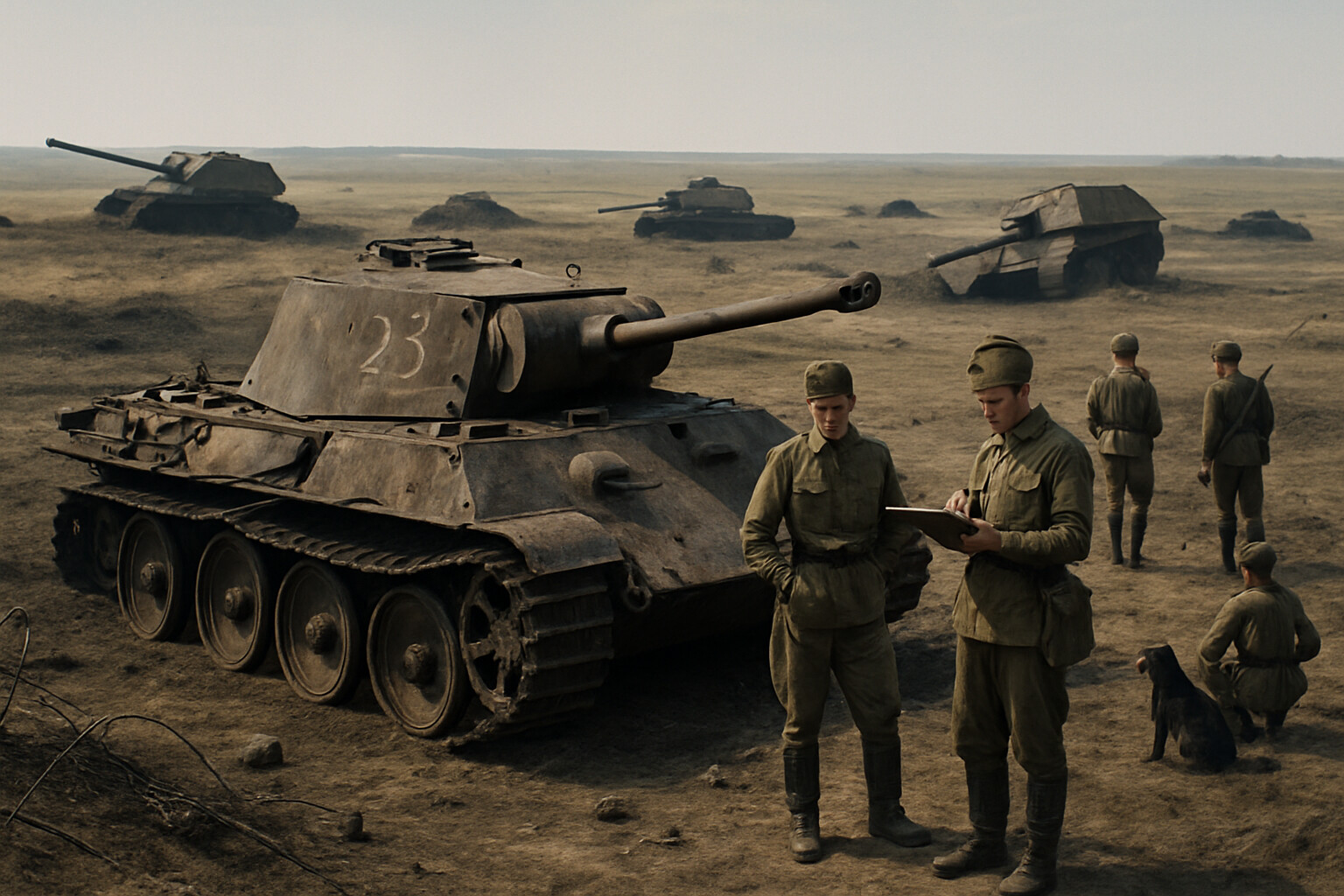
The Soviet T-34 was the backbone of Red Army armor at Kursk. In 1943, the standard version carried a 76.2mm gun adequate against most German armor at combat range, though it struggled against the frontal protection of the newer German vehicles. The tank's sloped armor, reliable diesel engine, and relatively simple mechanical design had already made it one of the most important armored vehicles of the war. Its difficulty at Prokhorovka was not primarily technical but tactical: the circumstances of the engagement forced Soviet crews to fight in ways that reduced their advantages.
The German Panther, making something close to its operational debut at Kursk, was a powerful vehicle — its long 75mm gun could reach Soviet armor at considerable range — but it was mechanically immature in the summer of 1943 and suffered a high rate of breakdowns that significantly reduced the number in combat at any given moment. Approximately 200 Panthers were committed to Citadel; a substantial portion became non-operational through mechanical failure rather than enemy action. Hitler and German planners had expected the Panther to compensate for numerical inferiority; its unreliability prevented this. The Tiger I, mounting the 88mm gun, was a formidable opponent at any range but was available only in limited numbers and was heavy enough that terrain and fuel consumption constrained where it could operate.
The artillery on both sides was devastating. Soviet artillery at Kursk — including 76mm divisional guns, 122mm howitzers, 152mm pieces, and the truck-mounted multiple rocket launchers known as Katyushas — was present in densities not seen earlier in the war. The Red Army had learned, at enormous cost, that infantry and armor alone could not hold against German methods. Its defense at Kursk was built around firepower: massed guns, carefully registered, positioned to engage armor and infantry at every stage of a German advance.
Overhead, the battle was contested by Luftwaffe aircraft including the Focke-Wulf 190 and the Junkers Ju 87 in its tank-busting variant — fitted with a 37mm cannon pod under each wing for anti-armor work — against Soviet Ilyushin Il-2 ground attack aircraft. The Il-2, the Shturmovik, was heavily armored and designed for low-level attack. At Kursk, Il-2 units introduced the PTAB: a small shaped-charge bomblet dispensed in large numbers from a single aircraft. Dropped over a tank column, the PTAB could penetrate the thin top armor that even the heaviest German vehicles carried, because rooftop protection could not be made as thick as frontal plate without prohibitive weight. German after-action reports from Kursk recorded tank losses attributed to this weapon. Soviet and German air assets fought for control of the airspace above the tank formations throughout the battle; Soviet air forces had grown substantially in capability and numbers by mid-1943, and the German air superiority that had been nearly total in 1941 was no longer achievable.
---
The human cost of the Battle of Kursk defies easy summary, in part because Soviet and German records from this period present challenges of completeness and accuracy, and in part because the battle was not a single discrete engagement but an overlapping series of operations spread across weeks and a vast geographic area.
German losses in Operation Citadel alone — the offensive phase, roughly July 5 to 13 — included tens of thousands of men killed, wounded, or missing, and hundreds of armored vehicles lost or damaged. The precise figures remain subjects of debate among historians working both sides of the archival record.
Soviet losses were far larger in absolute numbers, as they were in virtually every major engagement on the Eastern Front. The Central and Voronezh Fronts suffered hundreds of thousands of casualties during the defensive phase, with additional losses during the counteroffensives. The 5th Guards Tank Army's losses at and around Prokhorovka were severe.
These numbers reflect something about the Eastern Front that operational summaries can obscure: the scale of human suffering involved was almost incomprehensible by any measure short of comparison with other major Eastern Front engagements. The villages in and around the salient were destroyed. Civilian populations endured the battle and its aftermath under conditions of extreme privation.
The soldiers in the T-34s, in the anti-tank gun positions, in the trenches of the defensive belts, were young men from across the Soviet Union — Russians, Ukrainians, Kazakhs, Uzbeks, men from dozens of nationalities — doing an extraordinarily hard thing in service of a state that controlled their lives completely and would not permit open discussion of what it cost. Their experience was one of noise, heat, fear, mechanical failure, confusion, the deaths of people they knew, and the grinding physical demands of armored and infantry combat at industrial scale. The historical record preserves unit designations, equipment inventories, casualty figures, and operational reports. It preserves the experience of those men only in fragments.
---
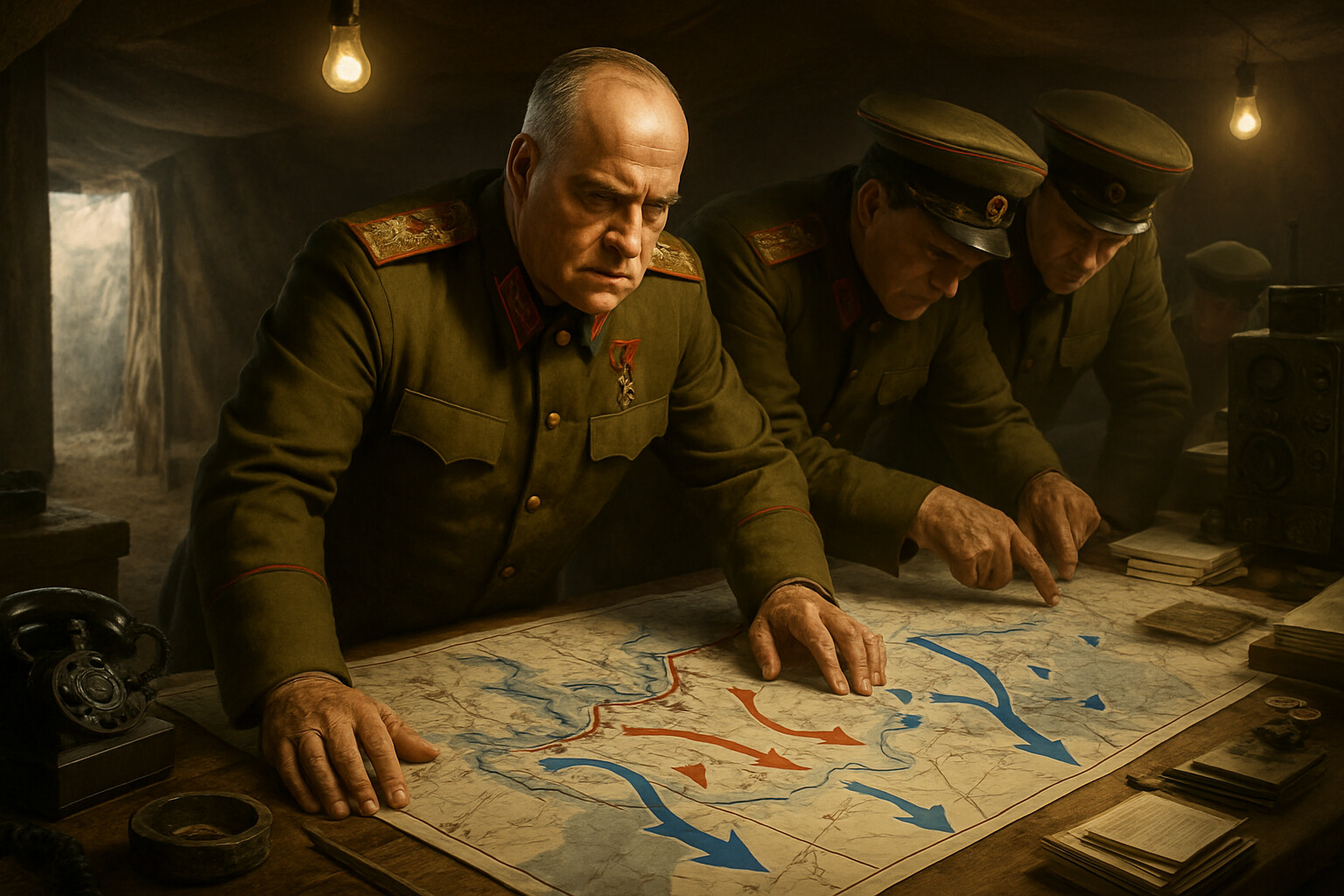
Zhukov was not a figure who left a sentimental record. The accounts available to historians describe a commander who was demanding, frequently harsh with subordinates, and focused on operational results. He expected results and did not accept excuses. His relationship with Stalin was complex — he was among the few figures willing to argue operational questions with Stalin directly, and Stalin, recognizing his ability, tolerated this in a way he did not tolerate it from most. The dynamic was never comfortable and was never equal.
After the war, Zhukov published memoirs — in Soviet editions subject to censorship and revision — that provide his account of major decisions including Kursk. Historians who have compared those memoirs against archival evidence have found places where they smooth over difficulties, internal conflicts, and failures. This is not unusual in memoir literature, but it means Zhukov's written account of his decisions must be read alongside other sources rather than taken at face value.
What the archival record does support, across the work of historians including David Glantz, John Erickson, and Geoffrey Roberts, is that Zhukov's operational judgment at Kursk was essentially correct: the defensive-first approach worked, the counteroffensives succeeded, and German offensive capacity on the Eastern Front was permanently degraded. Whether Zhukov deserves more credit than Vasilevsky, Rokossovsky, or Vatutin for those outcomes is a question the record does not resolve cleanly. He was one decisive figure among several. His influence on the overall strategic conception was substantial and is well documented. His role was not the whole story.
---
The Battle of Kursk is assessed by military historians as the last large-scale German strategic offensive on the Eastern Front. After July 1943, the Wehrmacht in the East was managing retreats, conducting fighting withdrawals, and trying to hold lines rather than seize strategic objectives. The operational initiative that Germany had held for most of the first two years of the war was gone.
The reasons for that shift were not solely about Kursk. Soviet industrial production, substantially supported by American and British Lend-Lease materials — trucks, locomotives, telephone wire, aluminum, food — had rebuilt and then exceeded German production in most major categories of military equipment. The Soviet command system, catastrophically dysfunctional in 1941, had developed competent staff work, better communications, and a larger pool of experienced officers. German manpower was under severe strain across multiple theaters as the Allied campaign in Italy opened a new front in July 1943.
But Kursk was the moment when those underlying realities became operationally visible. Germany could not achieve its objectives even with the best armor it could field, even against a salient whose shape invited attack, even after months of preparation. The Red Army's defense held. The counteroffensives succeeded. The line moved west, and it would continue moving west until Soviet forces reached Berlin in the spring of 1945.
For Georgy Zhukov, Kursk was neither his first major operational success — he had been instrumental at Moscow in December 1941 — nor his last. But it was the battle where the strategic question of the Eastern Front was answered. The man who had argued in writing, in April 1943, that the Red Army should absorb the German blow and then drive forward had been proved right in the most consequential theater of the largest war in human history.
The earth around Kursk still gives up evidence of that summer. Metal detectors find shell fragments, vehicle parts, and personal effects in fields that were once minefields and anti-tank ditches. Museums in Prokhorovka preserve tanks and guns. Memorials stand where formations bled into the soil. The scale of what happened there in July and August of 1943 is not something that can be fully rendered in operational summaries or casualty tables. It can only be approached — carefully, honestly, with attention to what the record actually shows — and acknowledged for what it was: a turning point built on the labor of hundreds of thousands of people and paid for at a cost in human life that still has no adequate parallel in modern experience.