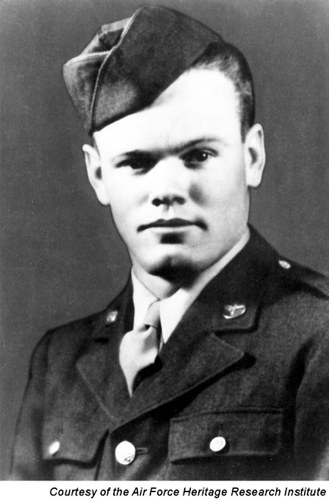
The B-29 Superfortress *City of Los Angeles* droned through the morning sky over Japan at 18,000 feet, her four Wright R-3350 engines singing their mechanical hymn. In the radio operator's compartment behind the bomb bay, Staff Sergeant Henry Eugene Erwin Sr. hunched over his equipment, red hair barely visible beneath his flight helmet. The crew called him 'Red,' and at twenty-three, the Alabama farm boy had already flown eleven combat missions over the Japanese mainland.
It was April 12, 1945, and the 52nd Bombardment Squadron was heading for the industrial city of Koriyama, carrying a belly full of incendiary bombs meant to reduce another Japanese manufacturing center to ash. The strategic bombing campaign was reaching its crescendo, with Curtis LeMay's 20th Air Force systematically destroying Japan's ability to wage war.
As radio operator, Erwin's job included deploying phosphorus smoke bombs to mark targets for the formation. The drill was routine: pull the pin, drop the canister down the chute, and let it fall away from the aircraft to create a smoke marker for the bombardier. He'd done it dozens of times.
At exactly 0947 hours, everything went wrong.

Inside the B-29 radio compartment as the phosphorus bomb explodes in Erwin's face, showing the initial moment of the accident
Erwin pulled the pin on the white phosphorus bomb and dropped it into the launch chute. Instead of falling clear of the aircraft, the canister struck something in the tube and bounced back up through the opening, exploding directly in front of his face. The searing white-hot phosphorus erupted at 1,100 degrees Fahrenheit, instantly igniting his flight suit and burning through skin and muscle.
Jesus Christ!" someone screamed over the intercom as acrid white smoke began filling the fuselage.
The burning chemical ate into Erwin's face and chest like liquid fire. His clothing melted and fused to his skin. The intense heat and smoke blinded him completely, leaving him groping in a world of unimaginable agony. Phosphorus doesn't just burn—it continues burning as long as it has oxygen, consuming everything it touches.
In those first seconds of hell, Erwin understood the mathematics of death. The burning canister lay at his feet, pumping out toxic smoke that would soon fill the entire aircraft. The B-29's pressurized cabin would become a gas chamber, killing all twelve men aboard. The aircraft would spiral into the Japanese countryside, another casualty of the air war.

Erwin, now fully engulfed in flames and blinded, kneeling to pick up the burning canister with his bare hands
But Red Erwin was Alabama stubborn.
Blinded and burning, he dropped to his knees and felt for the white-hot canister. His bare hands closed around the metal cylinder, the phosphorus searing through his palms and fingers. The pain was beyond description—imagine holding molten steel while it burns through your bones. But he held on.
Cradling the burning bomb against his chest, Erwin struggled to his feet. The narrow fuselage of the B-29 stretched ahead of him like a tunnel, filled with choking smoke. He couldn't see the bulkheads, couldn't see the radio equipment, couldn't see anything but the orange glow of the fire consuming his body.
Step by agonizing step, he staggered forward through the navigator's compartment. His flight suit hung in burning tatters. The smell of burning flesh filled the aircraft. Behind him, crew members watched in horror as their radioman transformed into a human torch.

Erwin staggering through the narrow B-29 fuselage, carrying the burning canister against his chest while blind and on fire
Red! Red! Drop it!" someone shouted, but Erwin kept moving.
He bumped into the navigator's table, felt his way around it, and continued toward the cockpit. Every breath was fire in his lungs. Every step sent waves of agony through his burned body. But he kept the canister pressed against his chest, preventing the deadly smoke from spreading further.
The cockpit seemed impossibly far away. In reality, it was only about twenty feet from his radio position, but injured and blind, it became an epic journey. He stumbled over equipment, bounced off bulkheads, and somehow kept moving forward.
Pilot Captain George Simeral saw the burning figure emerge from the smoke. "My God," he whispered, as Erwin lurched toward the right side of the cockpit where co-pilot Robert Hope sat.

Erwin reaching the cockpit where the pilot and co-pilot watch in horror as he approaches the open window
Window," Erwin gasped, his voice barely recognizable through burned lips. "Got to get it out."
Hope quickly slid the co-pilot's window open. Wind howled into the cockpit at 200 miles per hour. Without hesitation, Erwin hurled the burning canister out into the slip-stream, where it tumbled away toward the Japanese countryside below.
Then he collapsed.
The crew immediately turned toward Iwo Jima, the nearest Allied airfield. Erwin lay unconscious, his body burned over more than 70 percent of its surface. The flight surgeon who met them at Iwo Jima took one look and shook his head. "He won't make it through the night," he said quietly.

Erwin throwing the burning canister out the co-pilot's window into the slipstream while collapsing from his injuries
But Red Erwin was tougher than anyone imagined. As word of his heroism spread through the Pacific command, something unprecedented happened. General Curtis LeMay himself ordered that Erwin's Medal of Honor recommendation be processed immediately. Normally, such awards took months or even years to approve. Erwin's was approved, signed, and delivered to his bedside at a military hospital in three weeks—the fastest Medal of Honor processing in history.
General LeMay personally pinned the medal on Erwin's hospital gown, telling the still-recovering airman, "You saved your crew, son. Every one of them."
Erwin survived his terrible injuries, enduring dozens of surgeries and years of rehabilitation. He returned to Alabama, married, raised children, and lived a quiet life until 2002. The Air Force later established the Henry E. Erwin Outstanding Enlisted Aircrew Member Award in his honor.
On that April morning over Koriyama, facing certain death in a burning aircraft, Red Erwin made a choice that defined heroism itself: he picked up hell with his bare hands and carried it away from his friends.