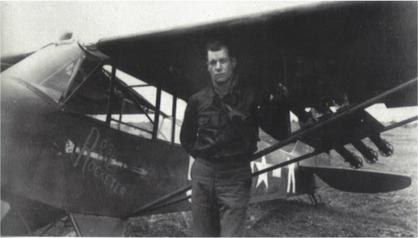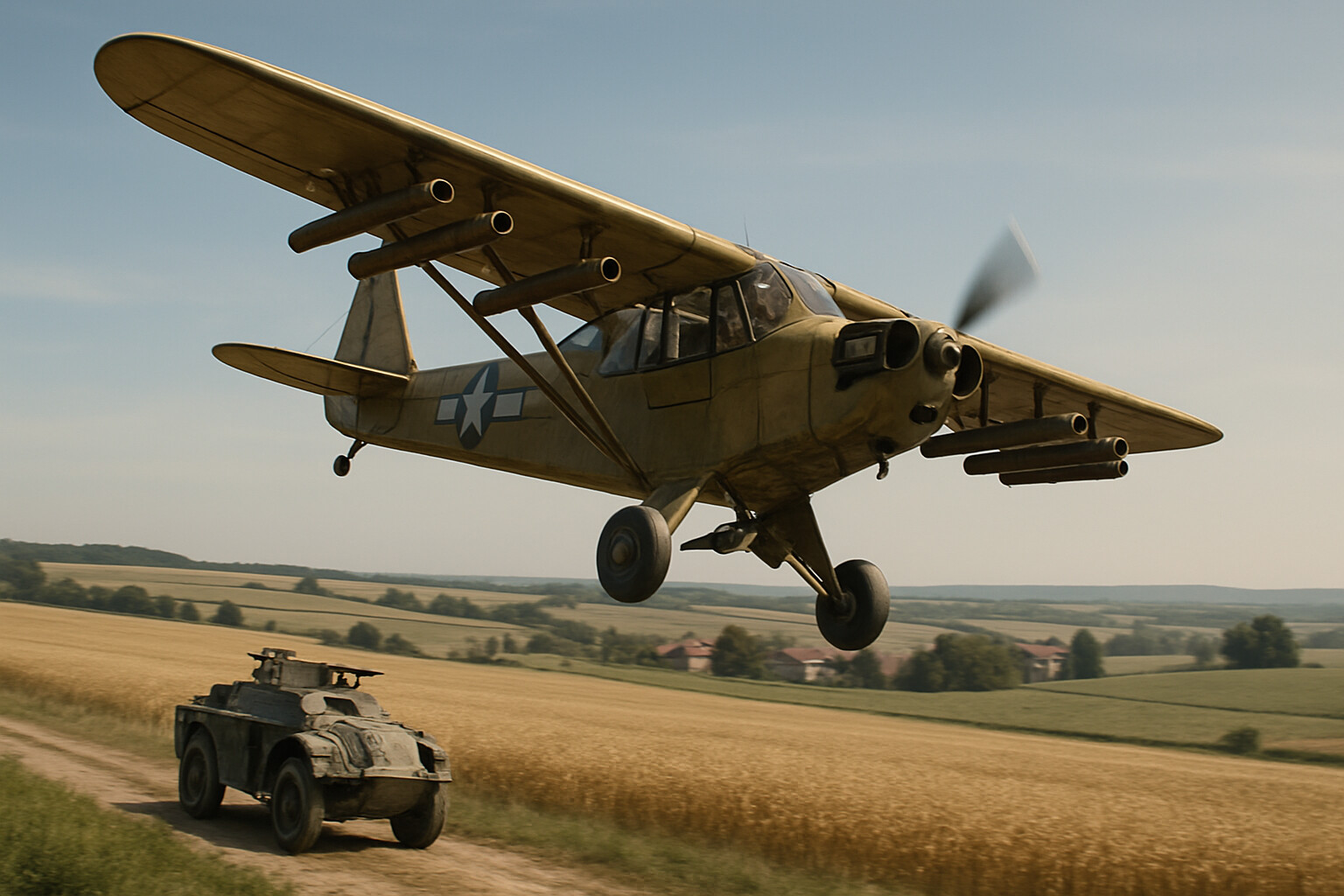
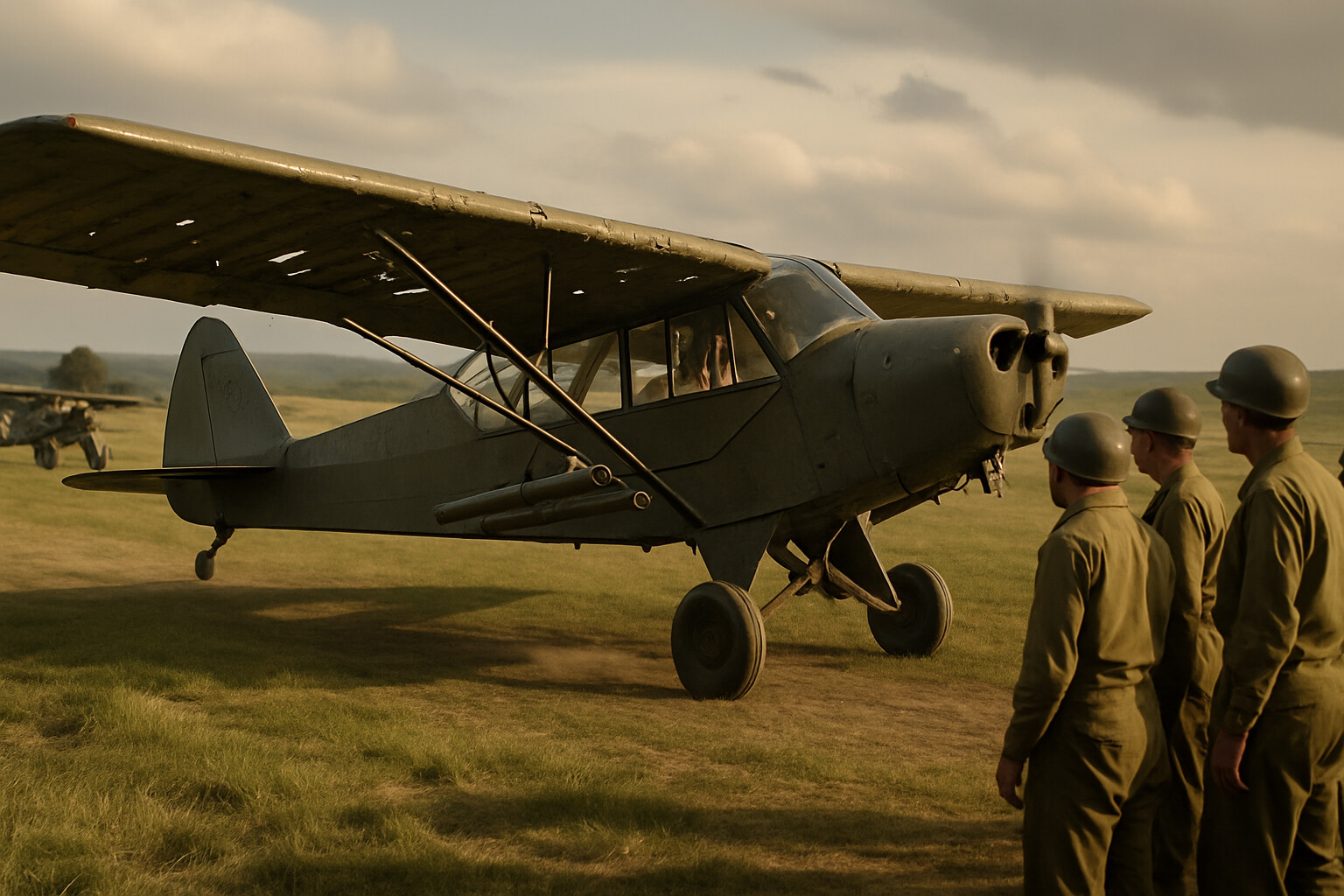
The Piper L-4 Grasshopper banked low over the wheat fields east of Arracourt, its fabric-covered wings trembling in the September morning air. Strapped beneath each wing were six M9A1 rocket launchers—bazookas jury-rigged to an observation plane never meant for combat. Major Charles Carpenter lined up his makeshift fighter on the German armored car below, squeezed the electrical firing switch, and watched rockets streak toward the enemy vehicle.
It was September 20, 1944, and the most unlikely tank hunter in the European Theater was about to make history.
Charles Carpenter had arrived in Normandy two months after D-Day as an artillery liaison pilot with the 4th Armored Division. The thirty-eight-year-old major from Illinois flew the slow, unarmed Piper Cubs that spotted targets for American artillery batteries. His job was observation, not combat—circling at low altitude to direct fire missions while German infantry took potshots at his vulnerable aircraft.
But the Battle of Arracourt changed everything. General George Patton's Third Army had advanced so rapidly across France that it outran its supply lines by early September. German commanders saw an opportunity. As American fuel stocks dwindled near the Lorraine town of Arracourt, Panzer units prepared a massive counterattack to drive Patton's spearheads back across the Moselle River.
The terrain around Arracourt favored armor. Rolling farmland stretched between scattered villages, offering clear fields of fire for German tanks and tank destroyers. The 4th Armored Division, despite its name, was primarily composed of medium Sherman tanks that struggled against the frontal armor of German Panthers and the thick steel of Panzer IVs. American tank crews needed every advantage they could get—including eyes in the sky to spot enemy movement before German armor could mass for attack.
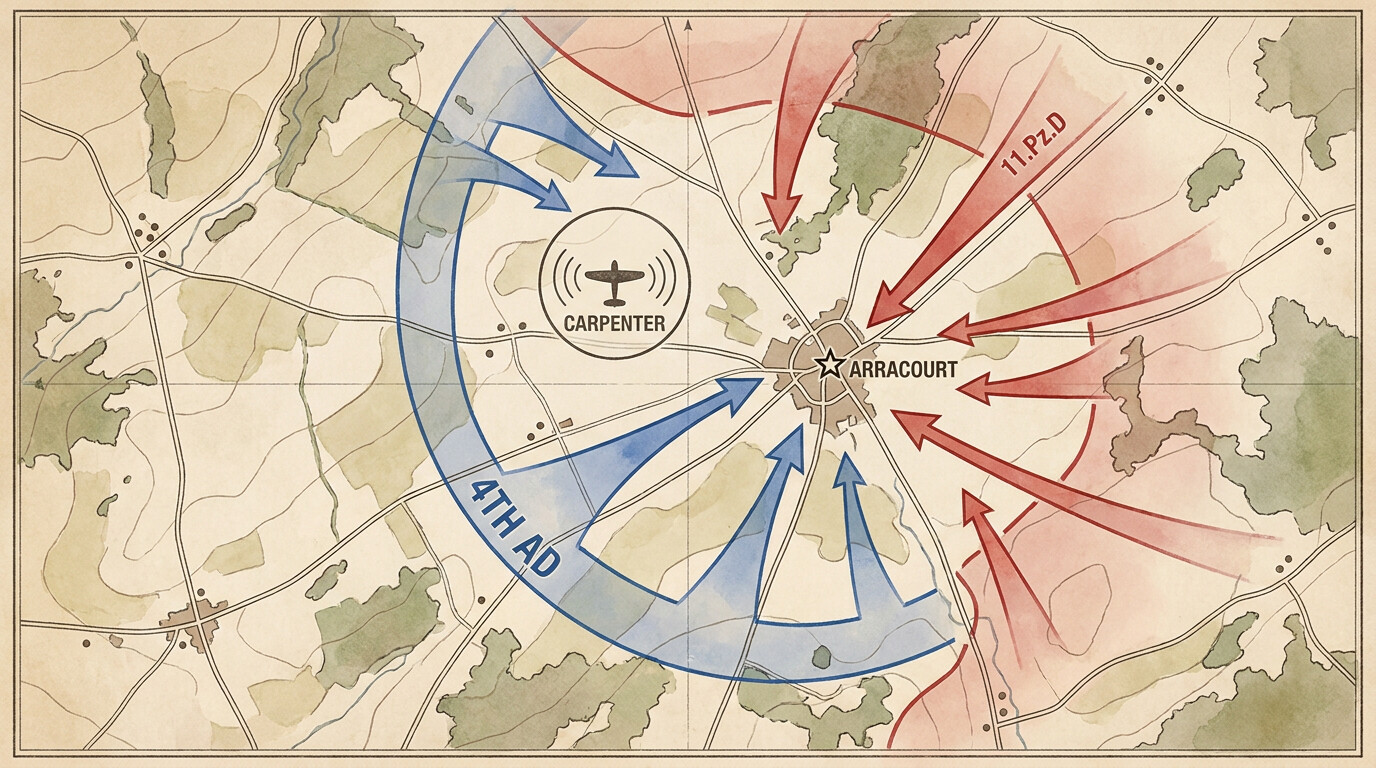
Carpenter had been flying artillery spotting missions for weeks, watching German convoys move through the countryside beyond American lines. The slow-moving Piper Cub made an easy target for ground fire, but its low speed and excellent visibility made it perfect for reconnaissance. German anti-aircraft guns could track the little plane, but small arms fire remained the primary threat—and at treetop level, even rifle rounds could bring down the fabric-covered aircraft.
Sometime in mid-September, according to division records, Carpenter approached the division's ordnance officer with an unusual request. He wanted to mount rocket launchers on his observation plane. The idea wasn't entirely unprecedented—Soviet pilots had experimented with similar modifications—but no American pilot had tried to turn a liaison aircraft into a tank destroyer.
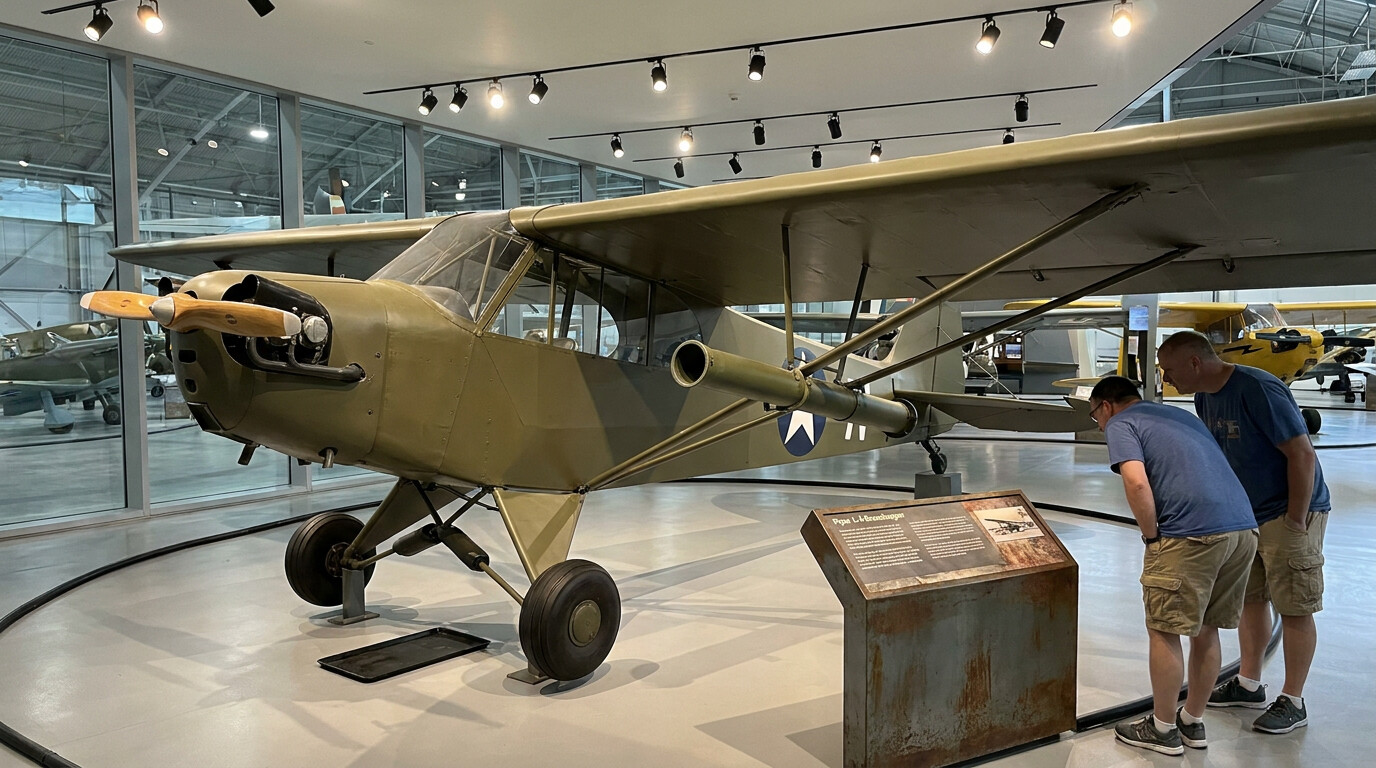
The technical challenges were significant. The Piper L-4 generated only 65 horsepower from its Continental O-170 engine. Adding the weight of six M9A1 bazooka tubes and twelve rockets would strain the aircraft's performance envelope. The rocket launchers had to be mounted far enough from the propeller to avoid blast damage, positioned to maintain the aircraft's balance, and wired to an electrical firing system Carpenter could operate from the cockpit.
Division mechanics worked through the practical problems, though specific details of the modification process remain unclear in available records. They welded mounting brackets beneath each wing, positioning three bazooka tubes per side. The 2.36-inch rockets weighed three and a half pounds each, adding forty-two pounds of ordnance to an aircraft that typically carried only fuel, pilot, and observer. Electrical wiring ran from a cockpit-mounted firing switch to each launcher, allowing Carpenter to fire individual rockets or salvos.
The M9A1 "super bazooka" had been designed as an infantry anti-tank weapon. Its shaped-charge warhead could penetrate four inches of armor plate—sufficient to damage or destroy most German armored vehicles from the side or rear. Maximum effective range against stationary targets reached 150 yards, but from a moving aircraft, Carpenter would have to close much nearer to ensure accuracy.
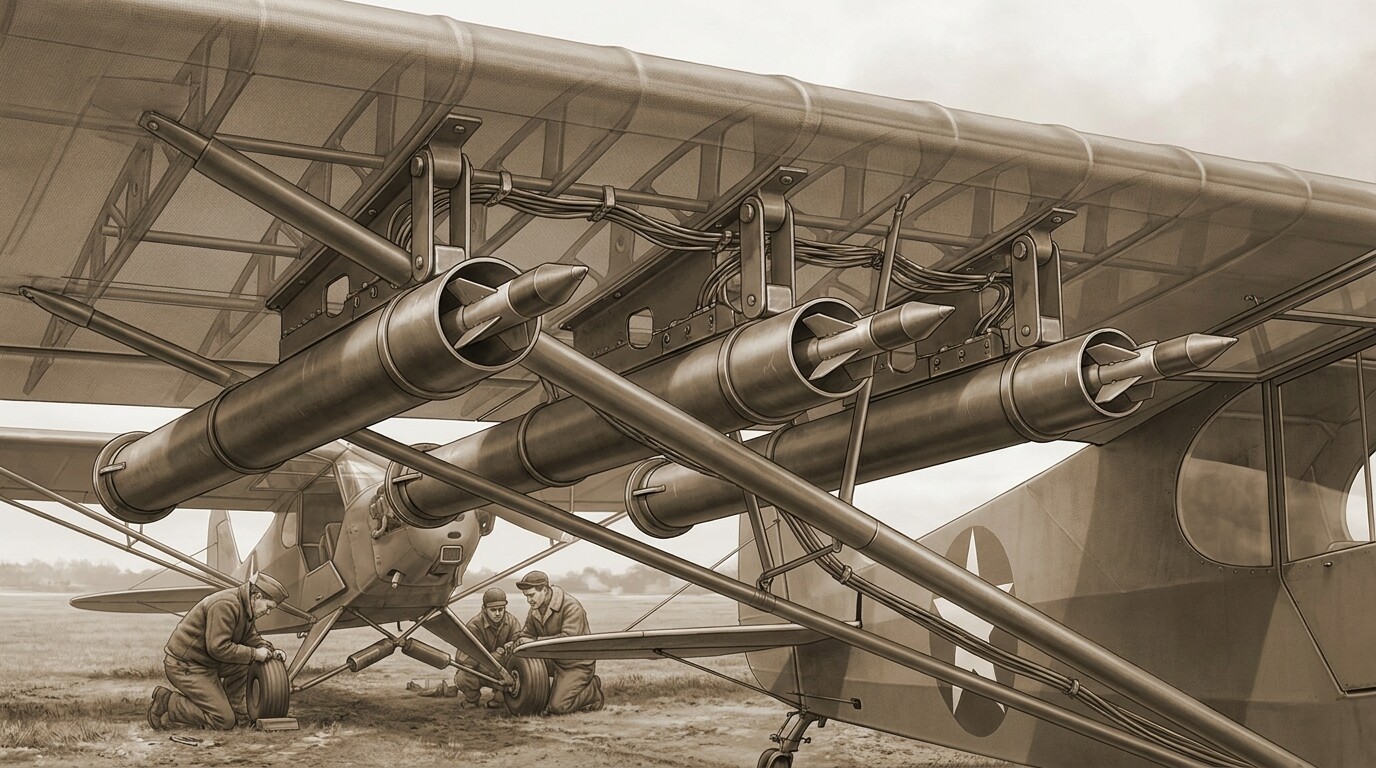
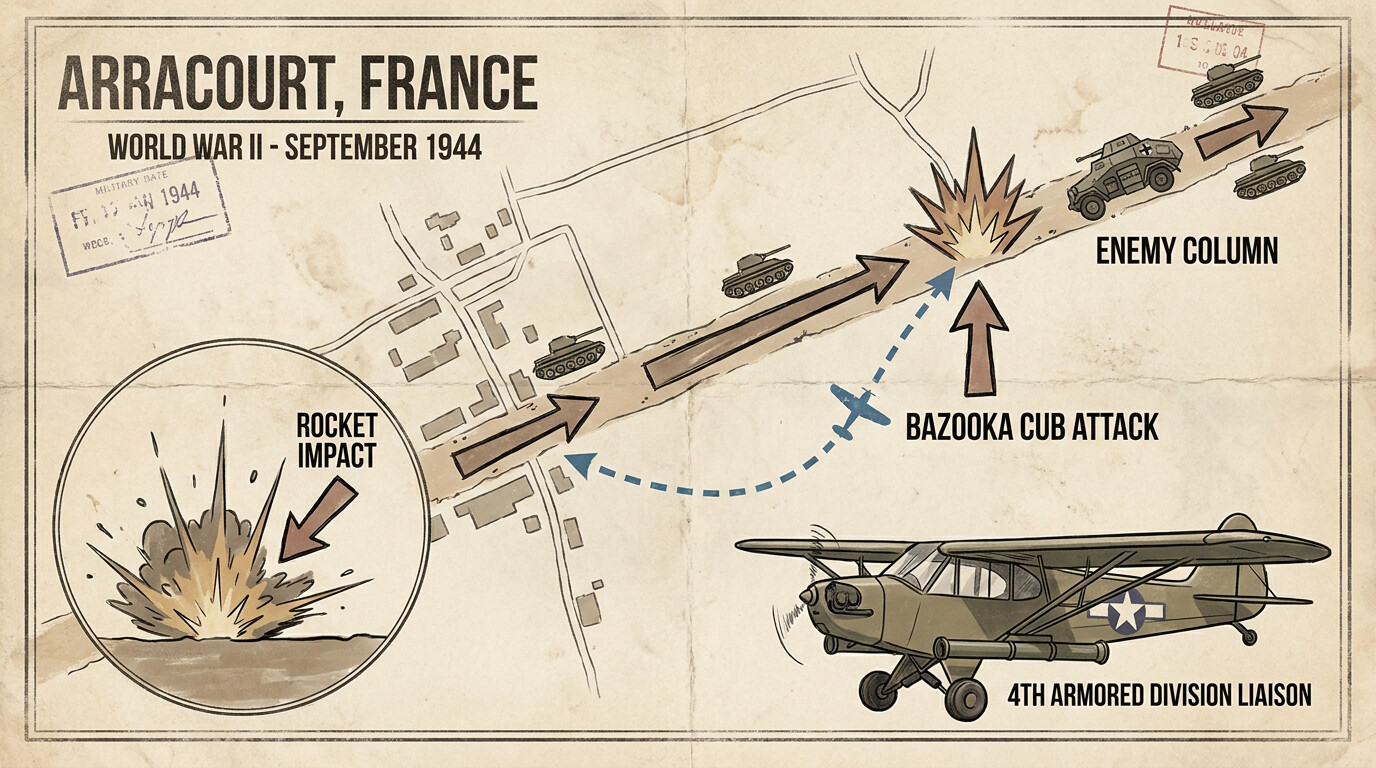
On September 20, 1944, Carpenter launched his first combat mission in the modified aircraft. German armor was moving near Arracourt in preparation for the counteroffensive. American ground forces needed immediate intelligence on enemy positions and strength.
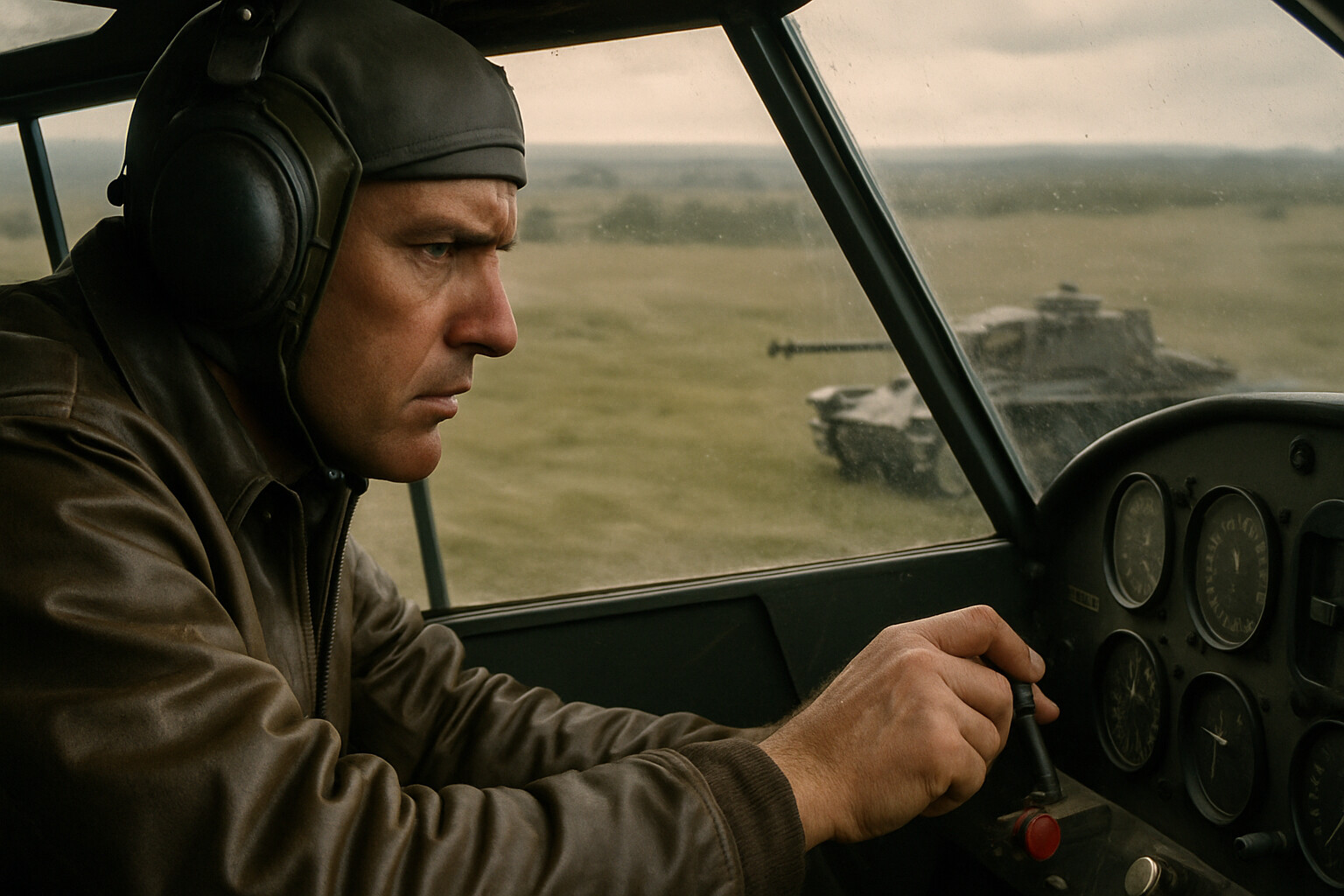
Flying at less than 500 feet altitude, Carpenter spotted a German armored car moving between farm buildings east of town. The vehicle appeared to be a four-wheeled reconnaissance type, possibly a Sd.Kfz. 234 Puma armed with a 50mm gun. Such vehicles typically operated ahead of larger formations, probing for weak points in American defenses.
Carpenter rolled into a shallow dive, lining up the armored car in his improvised gunsight. The Piper Cub's maximum speed barely exceeded 85 miles per hour, giving German crews plenty of time to spot the approaching aircraft and return fire. At 100 yards range, Carpenter triggered his first rocket.
The bazooka round streaked ahead of the slow-moving plane, its smoke trail marking the trajectory. Unit records describe rocket impacts near German vehicles, though exact damage assessment from the air proved difficult. What mattered was psychological impact—German crews suddenly faced air attack from an aircraft they had previously ignored as harmless.
Over the following days, as German forces massed for their September counteroffensive, Carpenter refined his tactics. He discovered that diving attacks from different angles prevented enemy gunners from tracking his approach. The Piper Cub's slow speed, normally a disadvantage, allowed precise targeting at close range. German crews trained to engage fast-moving fighters struggled to lead the sluggish observation plane.
The Battle of Arracourt proper began on September 19 when German forces launched coordinated attacks against American positions. The 5th Panzer Army committed over 200 tanks and assault guns in an effort to recapture the town and push American forces back across the Moselle. For six days, armored units clashed across the countryside east and south of Arracourt.
Carpenter flew multiple sorties daily during the battle, combining his original spotting duties with tank hunting missions. His unusual aircraft drew curious stares from American ground crews, but results spoke for themselves. Unit reports credit him with damaging or destroying several German armored vehicles, though exact numbers remain uncertain in postwar accounts.
The tactical value of Carpenter's improvised weapon system extended beyond actual kills. German commanders had to account for air attack from previously harmless observation aircraft. Tank crews became more cautious about movement during daylight hours. Radio intercepts suggested German units were confused about the nature of the attacks—some reports described "fighter-bomber" strikes from aircraft that looked like unarmed spotters.
Weather conditions during late September favored visual flying. Clear skies allowed Carpenter to operate from dawn to dusk, providing continuous reconnaissance of German positions. The 4th Armored Division's artillery batteries relied on his spotting reports to engage targets beyond direct observation. His dual role as spotter and tank hunter maximized the utility of each flight.
German ground fire intensified as enemy crews learned to fear the modified Piper Cub. Small arms fire punctured the fabric covering on multiple occasions. One mission ended with bullet holes through both wings and the fuselage, though the sturdy Continental engine continued running. Carpenter's survival depended on flying unpredictable patterns and never approaching the same target area twice from the same direction.
By September 25, the German counteroffensive had stalled. American armor, supported by effective artillery fire and continuous air reconnaissance, had held all major positions around Arracourt. German tank losses exceeded 200 vehicles, while the 4th Armored Division retained control of the battlefield. The failure at Arracourt effectively ended German hopes of stopping Patton's advance toward the Rhine.
Carpenter continued flying combat missions through October, mounting various combinations of rockets and machine guns on different aircraft. Division mechanics experimented with .50 caliber machine guns and additional rocket launchers, but the basic configuration of six bazooka tubes remained most effective. The slow-firing rockets required precise aim, making the Piper Cub's stability and visibility crucial advantages.
Postwar accounts credit Carpenter with damaging or destroying multiple German armored vehicles, though exact tallies remain uncertain. German records from the period are incomplete, and damage assessment from low-flying aircraft often proved inaccurate. What seems certain is that his improvised weapon system represented genuine tactical innovation under combat conditions.
The modified L-4 also served as a psychological weapon. German soldiers learned to fear aircraft they had previously ignored. Radio intercepts and prisoner interrogations revealed confusion about American air capabilities. Some German units reportedly described attacks by "new type fighter aircraft" that appeared to be observation planes.
Technical evaluation of Carpenter's modification revealed both advantages and limitations. The bazooka rockets provided significant firepower against lightly armored targets, but accuracy remained limited by the aircraft's slow speed and the unguided nature of the weapons. Effective range rarely exceeded 100 yards, requiring dangerous low-level approaches over defended positions.
The electrical firing system proved reliable under combat conditions, though moisture and vibration occasionally caused misfires. Mounting brackets held securely despite repeated stress from rocket launches and rough-field landings. The additional weight reduced the aircraft's climb rate and shortened its service ceiling, but operational impact remained minimal given the low-altitude nature of liaison missions.
By late October 1944, American forces had resumed their advance toward Germany. The rapid pace of operations reduced opportunities for the specialized tank-hunting missions that had made Carpenter's modification most valuable. Standard fighter-bombers and medium bombers provided more effective close air support as supply lines caught up with advancing ground forces.
Carpenter's innovation influenced other pilots in the European Theater. Several artillery liaison pilots experimented with similar modifications, mounting rockets and machine guns on L-4 and L-5 aircraft. None achieved the same level of success, but the concept demonstrated the adaptability of American aircrews under combat conditions.
The historical record of Carpenter's achievements rests on military reports, unit histories, and postwar interviews. Contemporary documentation includes mission reports filed with the 4th Armored Division and supporting testimony from ground observers. However, specific claims about individual kills or damage assessments often lack detailed verification, as was common with rapid-moving battlefield conditions.
Arracourt itself marked a significant victory for American armor doctrine. The battle demonstrated that well-coordinated combined arms tactics could defeat German panzer formations even when enemy forces held numerical advantages in heavy tanks. Artillery support, directed by observers like Carpenter, proved crucial to American success.
The 4th Armored Division's performance at Arracourt validated its aggressive leadership and flexible tactics. Division commanders encouraged innovation at all levels, creating an environment where individual initiatives like Carpenter's could flourish. The battle also highlighted the importance of air-ground cooperation in modern warfare.
Carpenter's story reflects broader themes of American military adaptation during World War II. Faced with operational challenges, individual soldiers and units improvised solutions using available resources. The transformation of an observation aircraft into a tank hunter exemplified the kind of tactical creativity that characterized successful American units throughout the European campaign.
Postwar evaluation of liaison aircraft modifications led to formal development programs for armed observation planes. The success of improvised weapons systems like Carpenter's influenced design requirements for postwar military aircraft. Close air support doctrine incorporated lessons learned from the innovative use of light aircraft in combat roles.
The Battle of Arracourt demonstrated the vulnerability of German armored formations to coordinated American combined arms tactics. Effective use of artillery, armor, and improvised air support created tactical advantages that offset German superiority in individual tank designs. The battle marked a turning point in the European campaign, proving that German panzer units could be decisively defeated by well-coordinated American forces.
Charles Carpenter's "Bazooka Cub" remains one of World War II's most unusual weapons systems—a testament to individual innovation and the adaptability of American forces under combat conditions. His transformation of a harmless observation plane into a tank hunter captured the spirit of improvisation that helped win the war in Europe.
The legacy of Arracourt extends beyond individual heroics to demonstrate the decisive importance of combined arms warfare. Artillery observers like Carpenter provided the eyes and increasingly the firepower that made American armor effective against German panzer formations. The battle proved that tactical innovation, aggressive leadership, and effective coordination could overcome enemy advantages in equipment and experience.
Today, the fields around Arracourt remain quiet farmland, with few visible traces of the armor battle that raged there in September 1944. But the tactical lessons learned during those six days influenced military doctrine for decades to come, while the story of one major's improvised tank hunter continues to exemplify the ingenuity of American forces under fire.