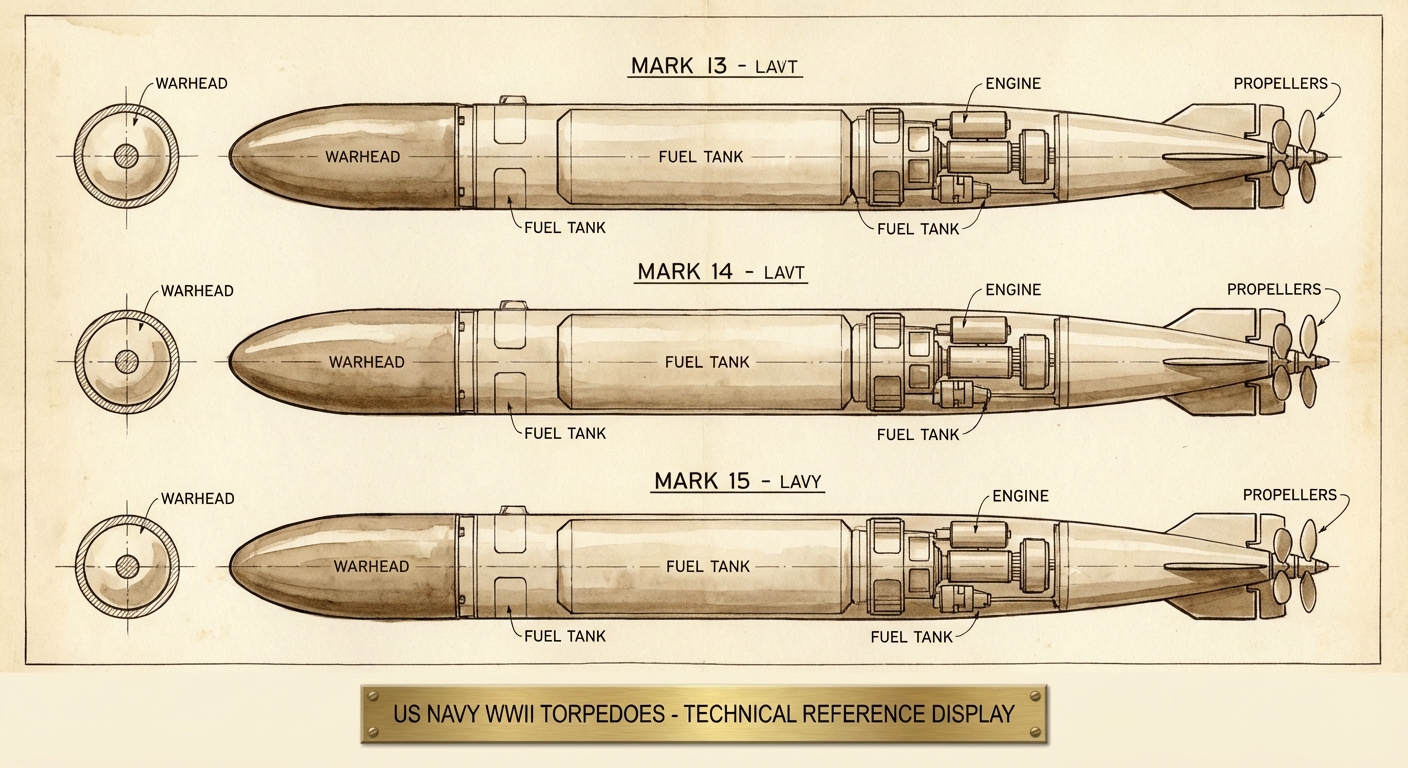
Mark 15 Torpedo
Main striking weapon of American destroyer torpedo attacks.
At dawn off Samar, thin-skinned escort carriers and destroyers found themselves in front of the most powerful Japanese surface force many American sailors had ever imagined. Instead of fleeing cleanly, they turned and fought.
At dawn off Samar, thin-skinned escort carriers and destroyers found themselves in front of the most powerful Japanese surface force many American sailors had ever imagined. Instead of fleeing cleanly, they turned and fought.
This page follows the Front Line Stories longform layout: six visual panels, grounded narrative, a field kit, battle record, and source trail. It is written to read cleanly for adults while staying vivid enough for younger history fans.
Battle Off Samar sits at the point where individual nerve met a much larger machine of war. The details matter, because the drama here came from real people, real places, and real consequences.
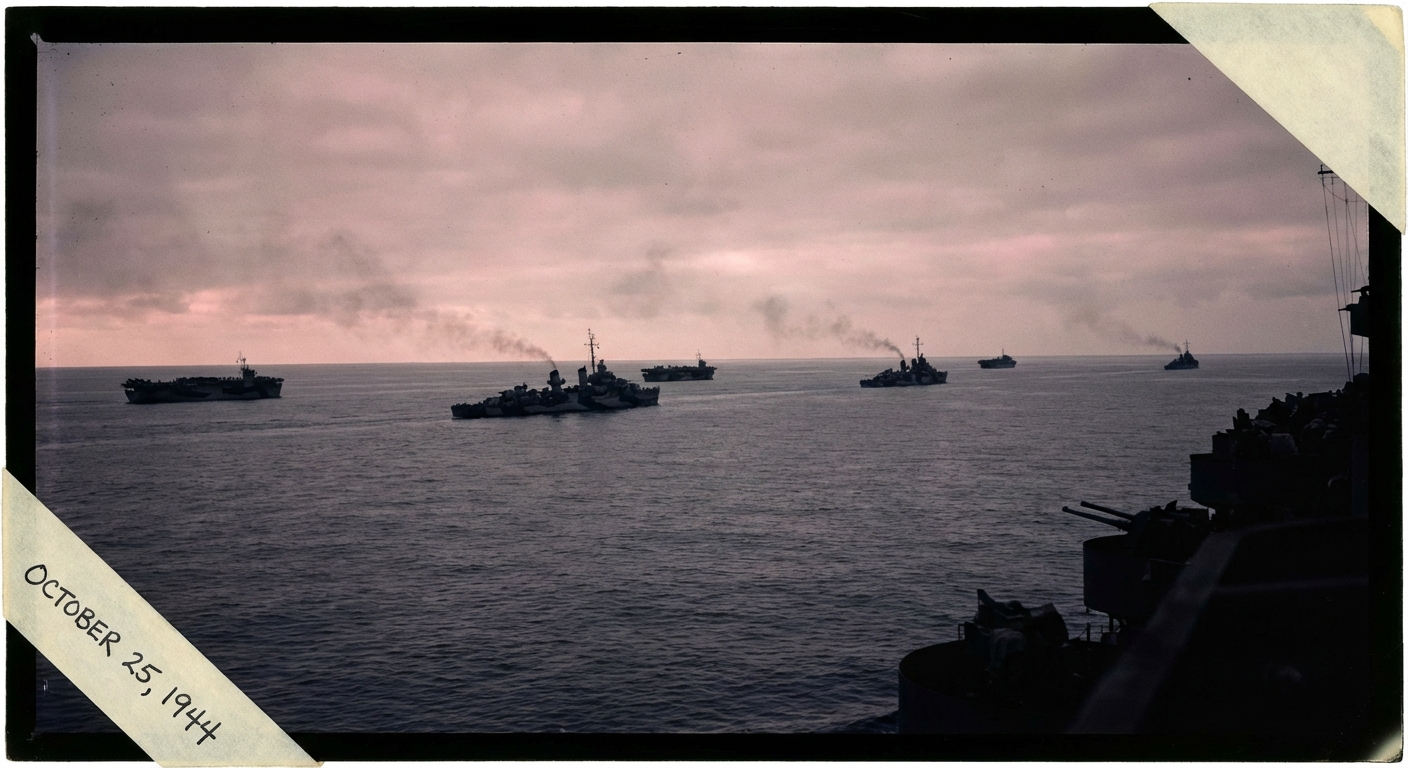
The Battle of Leyte Gulf was already immense when the ships of Taffy 3 met disaster at sunrise on 25 October 1944. Rear Admiral Clifton Sprague's unit was built to support troops ashore, not duel battleships. Its escort carriers carried aircraft for close support and antisubmarine work. Its screen of destroyers and destroyer escorts was brave but lightly armed. Then Vice Admiral Takeo Kurita's Center Force appeared out of morning squalls, led by battleships including Yamato, plus cruisers and destroyers, all charging toward the vulnerable Americans.
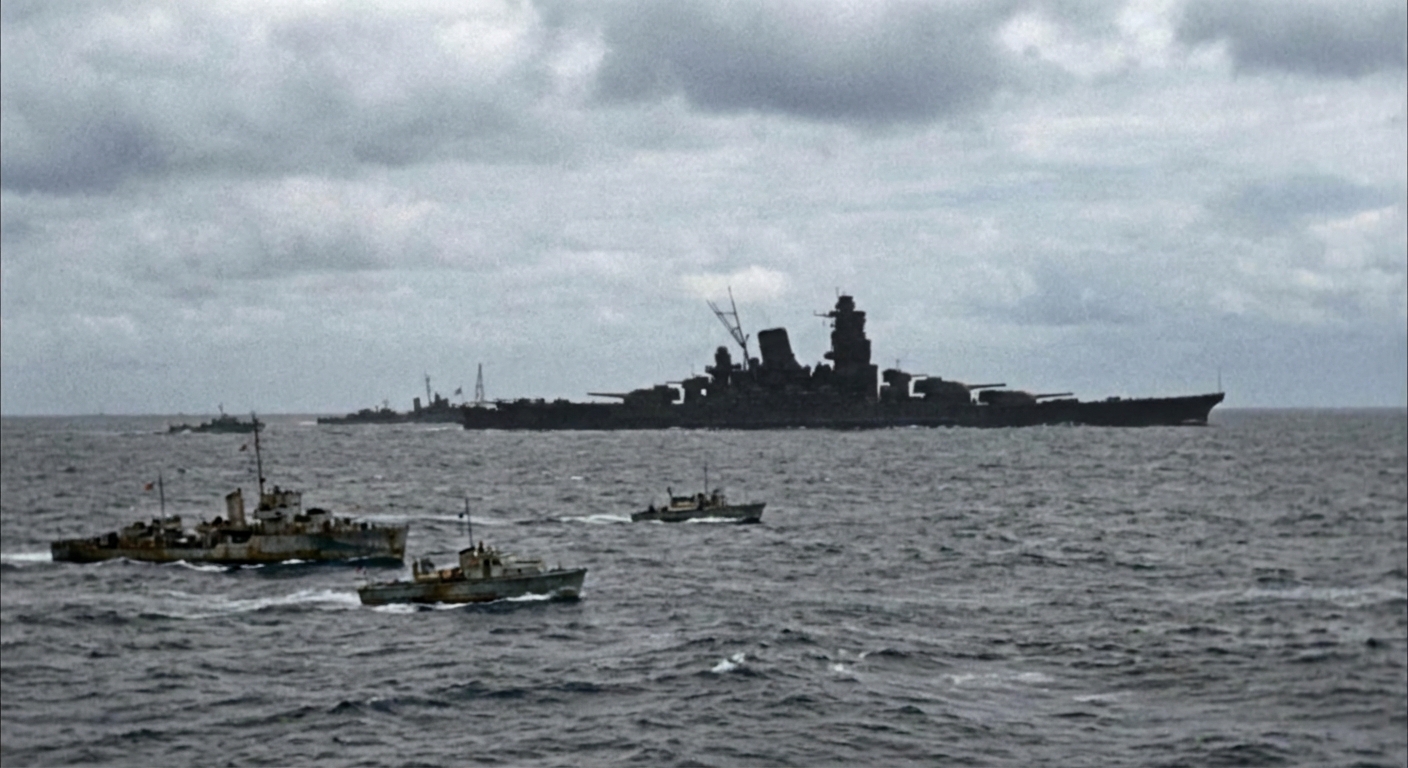
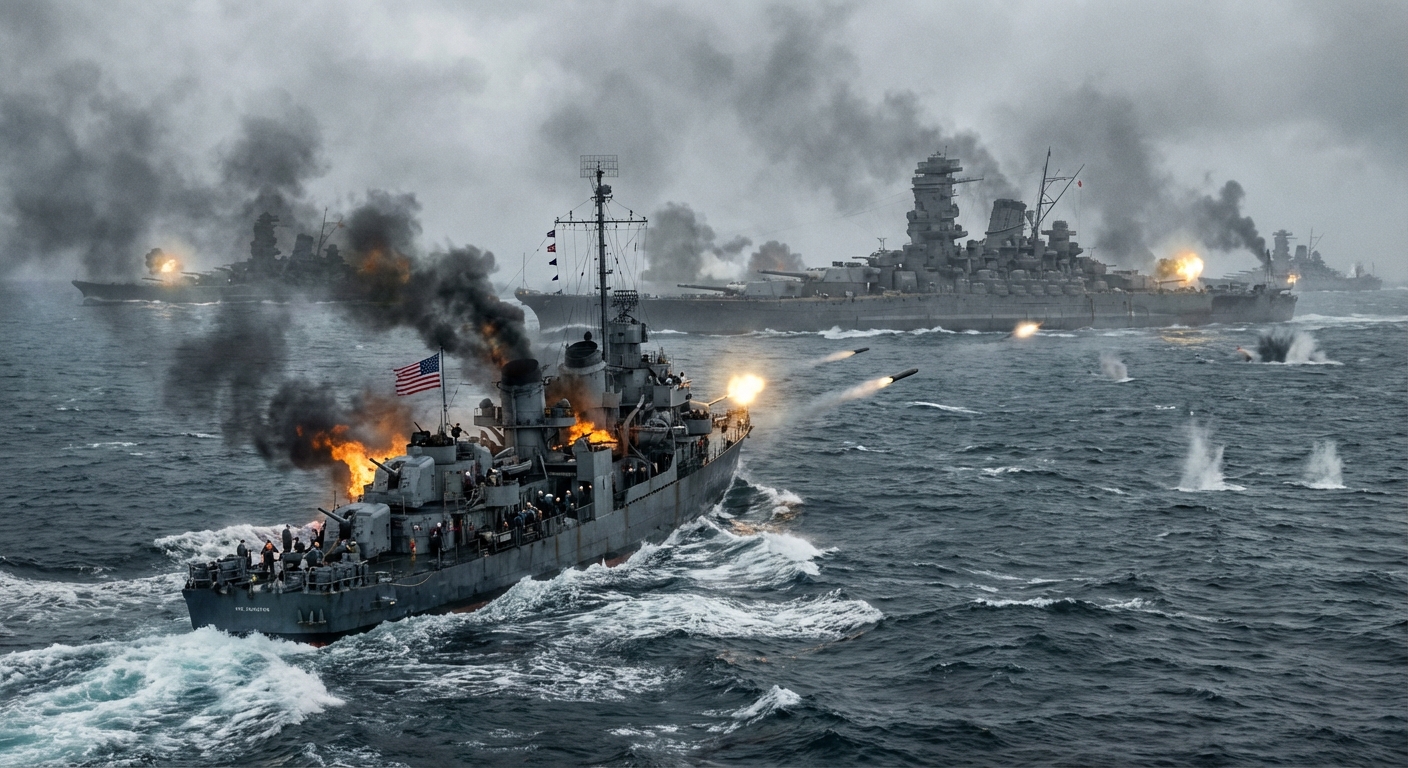
The correct tactical answer might have been annihilation by withdrawal. Instead the destroyers attacked. Commander Ernest E. Evans aboard USS Johnston turned straight toward the enemy and opened fire. USS Hoel and USS Heermann followed. Destroyer escorts joined as they could. These ships threw smoke, charged battleships, fired torpedoes, and used five-inch guns against opponents that outweighed them absurdly. The point was not elegance. It was interruption, confusion, and time.
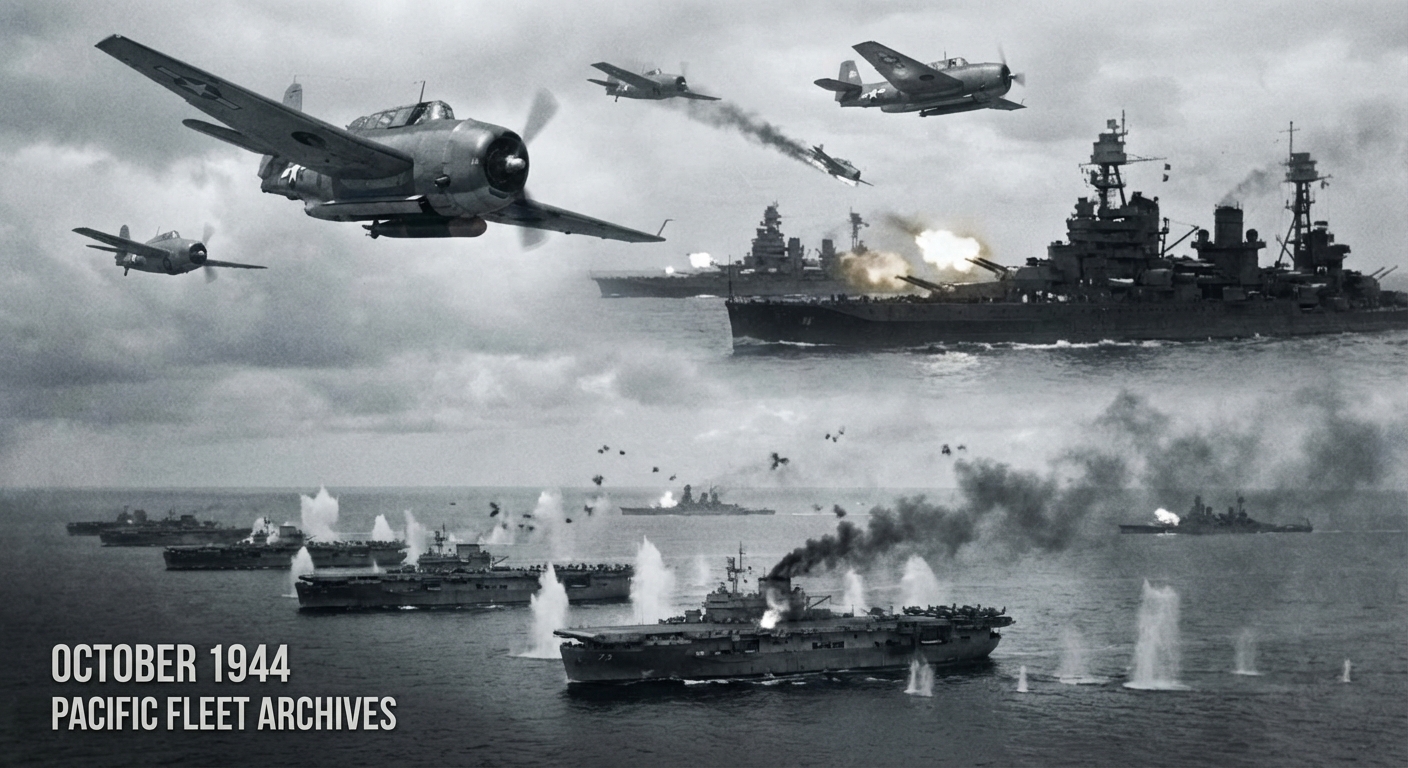
Above them, Taffy 3's aviators launched with whatever was on deck. Some carried armor-piercing bombs useless against maneuvering warships, some depth charges, some almost nothing at all. They attacked anyway, strafing bridges, making repeated dummy runs, and forcing Japanese gunners to keep looking up. Carrier airmen who had expected routine support sorties found themselves in a desperate fleet action with no neat script.
The Americans paid terribly. USS Gambier Bay was pounded and sank. Johnston, Hoel, and Samuel B. Roberts were lost after astonishing fights against overwhelming firepower. Men burned, drowned, and clung to wreckage in shark-infested waters. Yet the defense worked in the one way that mattered. Kurita's force became uncertain, fragmented, and overcautious. Torpedo attacks, smoke, air harassment, and the sheer aggression of the defense made the Americans seem stronger than they were.
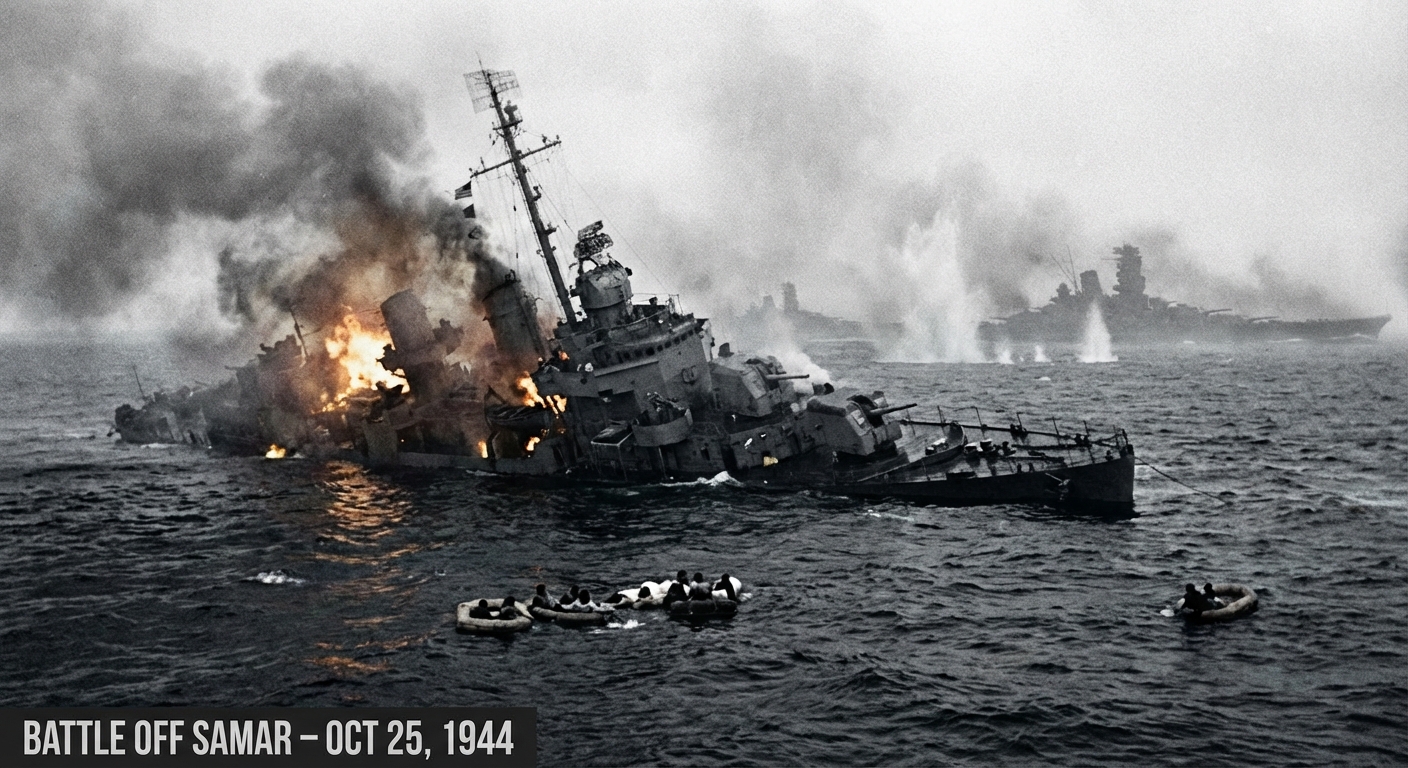
Kurita ultimately withdrew. It remains one of the most extraordinary reversals of the naval war. A force that should have smashed escort carriers and fallen onto the transport area instead recoiled from improvised courage and tactical confusion. The battle did not look victorious from the waterline. It looked like ruin. Only later did the scale of what had been prevented become fully clear.
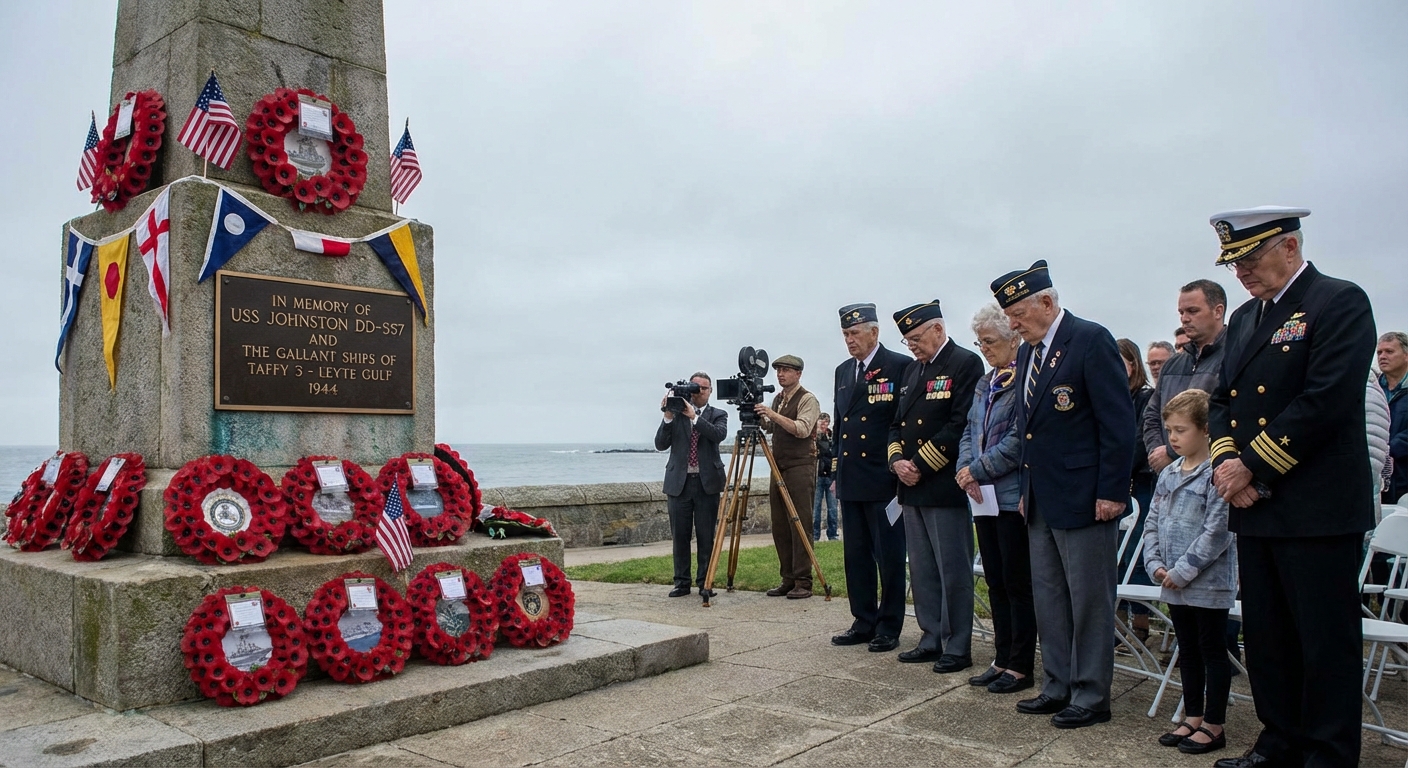
Samar endures because it stripped heroism down to its bones. No polished fleet exercise, no tidy line of battle, just destroyermen and aviators throwing themselves at a superior enemy because somebody had to. The phrase Tin Can Sailors sounds almost affectionate. Off Samar it meant something harder: thin steel, deliberate courage, and refusal.
Main striking weapon of American destroyer torpedo attacks.
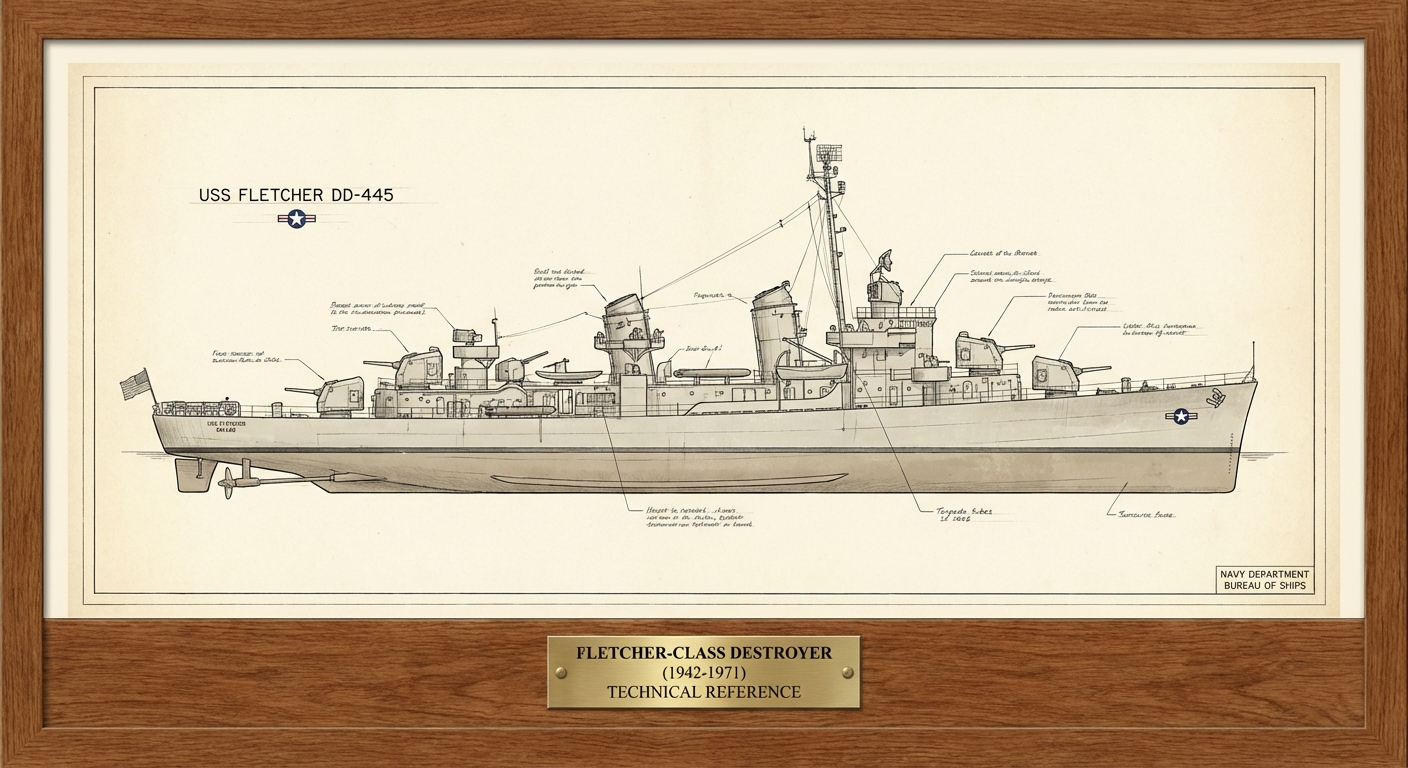
Used to shield escort carriers from Japanese gunnery.
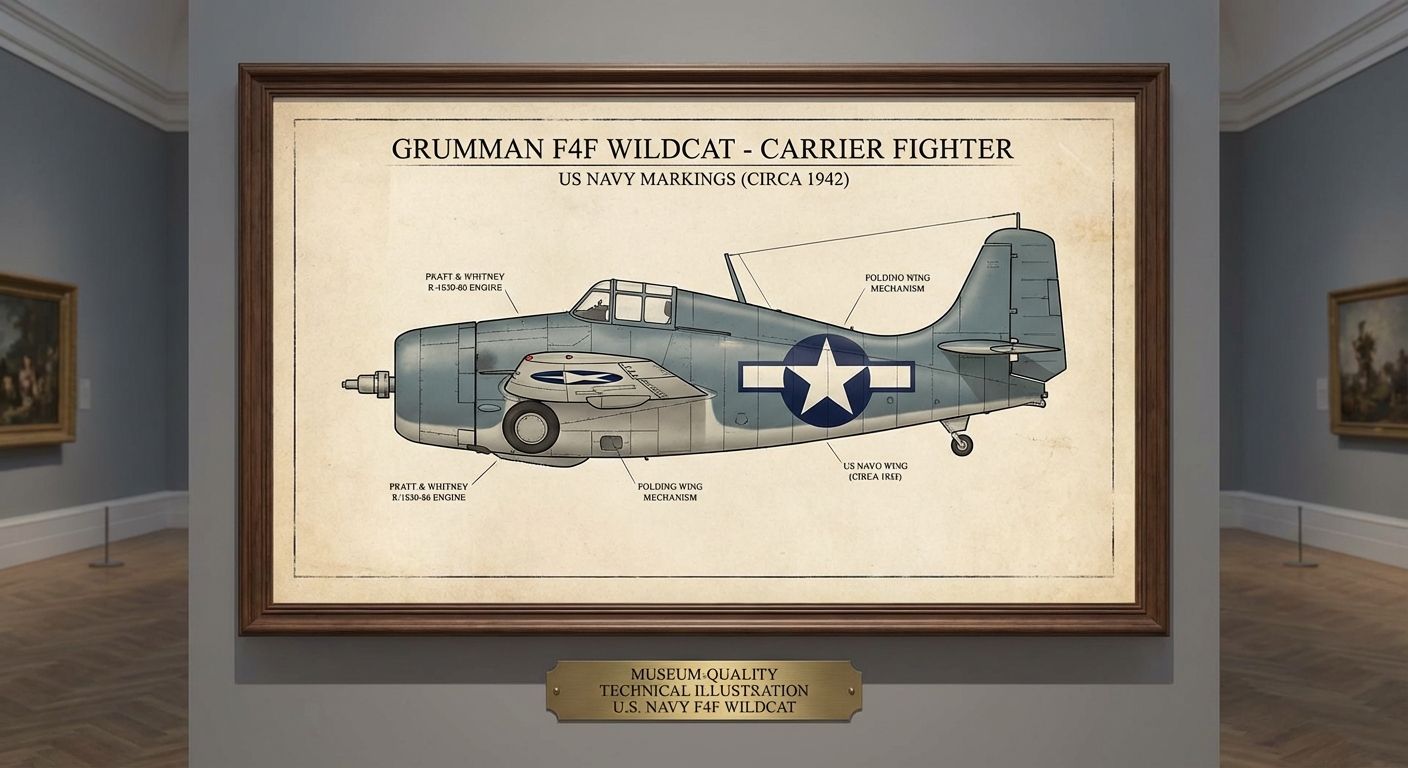
Escort-carrier fighter used for strafing and harassment attacks.
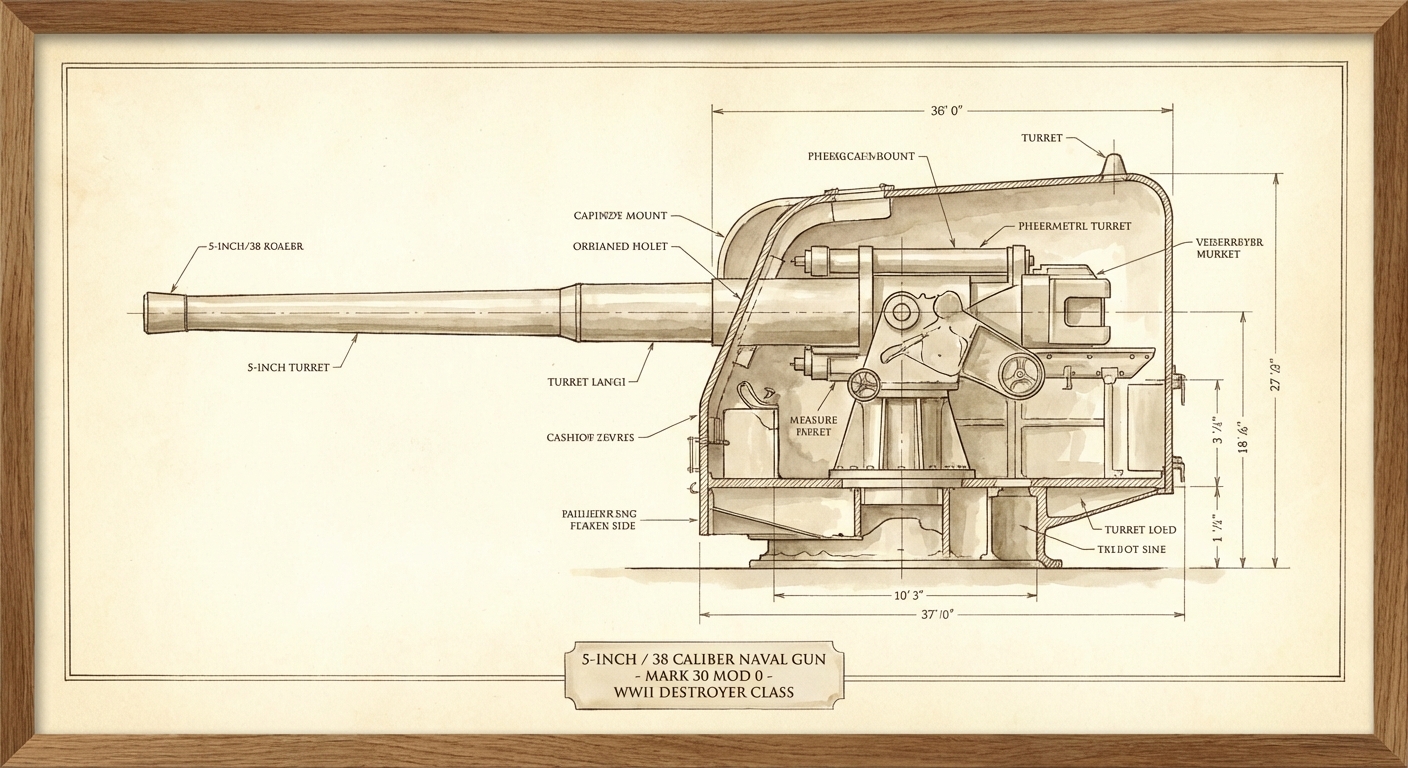
Dual-purpose gun that destroyers fought with against cruisers and battleships.
25 October 1944
One of the climactic actions of Leyte Gulf, Samar pitted the escort carriers and screen of Taffy 3 against Kurita's Center Force. Despite severe losses, the American defense helped turn back a much heavier Japanese surface formation.