The machine gun nest above Ernest Childers spoke in sharp bursts that echoed off the limestone cliffs. Each muzzle flash illuminated the rocky slope where the young Creek officer pressed himself against cold Italian stone, studying the enemy position through the morning mountain haze. September 22, 1943. The German MG 42 crew had claimed the high ground near Oliveto and commanded clear fields of fire down the mountainside. Every time his men attempted to advance, that gun sent them scrambling for whatever cover the barren slope offered.
Childers shifted his weight carefully and felt grinding pain shoot up from his left foot. Three days earlier, German mortar fragments had shattered his instep during another assault on another hill. The battalion surgeon had ordered him to the aid station for proper treatment and likely evacuation to a field hospital. Childers refused. His platoon needed leadership, and the mission demanded completion.
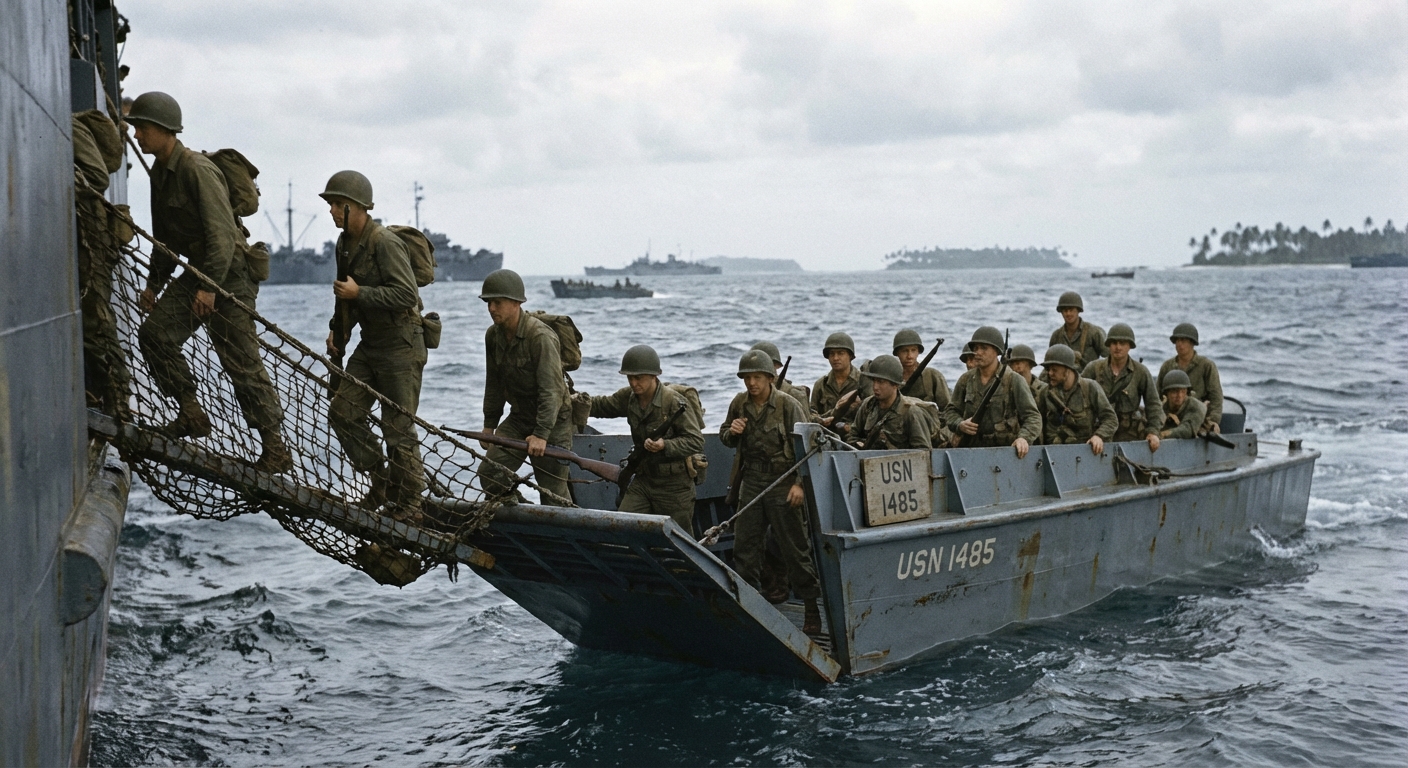
The 45th Infantry Division—the "Thunderbirds"—had been clawing its way up the Italian Peninsula for over a month since the bloody landings at Salerno Bay. This division carried more Native American soldiers than any other formation in the European Theater of Operations, drawing heavily from Oklahoma, New Mexico, Arizona, and Colorado. Men from dozens of tribes served in its ranks, including Childers, a member of the Muscogee Creek Nation from Broken Arrow, Oklahoma, who had enlisted before Pearl Harbor and earned his commission through Officer Candidate School.
The Italian Campaign had proven every bit as brutal as Allied planners feared. After the costly September 9 amphibious assault at Salerno—where German counterattacks nearly drove the invaders back into the sea—American and British forces faced a grinding advance against prepared positions. The German Tenth Army under General Heinrich von Vietinghoff had established defensive lines across the peninsula's mountainous spine, using Italy's natural fortress terrain to maximum advantage. Every ridge became a killing field.
Childers commanded a platoon in Company C, 180th Infantry Regiment, part of the battalion led by Colonel Felix Sparks, a tough National Guard officer who would later command the entire division. The 180th Infantry had drawn the mission of clearing German positions along the approaches to Oliveto, a small mountain village controlling critical road junctions that Allied forces needed to reach the formidable Winter Line positions being prepared to the north.
The terrain around Oliveto embodied everything that made the Italian Campaign a nightmare for attacking infantry. Steep ridges covered with scrub oak and ancient olive groves provided excellent concealment for defenders while exposing attackers to observed fire from multiple directions. The Apennine Mountains' limestone composition fractured into countless ravines and cliff faces that channeled movement into predictable approaches—approaches the Germans had mapped, registered with their artillery, and prepared to defend with interlocking fields of automatic weapons fire.
Childers' platoon had been pinned down since first light by the machine gun position 200 yards upslope. The German crew had positioned their MG 42 in a natural rock formation that provided both overhead protection and an excellent field of fire covering the most likely American approach routes. Two previous attempts to flank the position had failed when other enemy strongpoints revealed themselves with devastating effect, cutting down the flanking forces with accurate rifle and machine gun fire.

The MG 42 represented German small-unit firepower at its most lethal. Nicknamed "Hitler's Buzzsaw" by Allied troops, this weapon fired 7.92mm Mauser rounds at a cyclic rate of 1,200 rounds per minute—twice as fast as any comparable Allied weapon. Its distinctive rapid-fire sound, resembling an industrial buzz saw cutting through metal, had become synonymous with German defensive superiority. A well-positioned MG 42 could sweep an entire hillside in seconds, and the psychological effect often proved as devastating as the physical casualties.
From his position behind a limestone boulder, Childers methodically assessed his tactical situation with the cold calculation that had kept him alive through the Sicily Campaign and the early weeks of fighting on the Italian mainland. His platoon carried standard American infantry weapons: M1 Garand rifles with their eight-round clips, several Browning Automatic Rifles for squad-level suppressive fire, Thompson submachine guns for close combat, and M1 carbines for officers and specialists. The BARs could provide covering fire, but their effective range of 600 yards and 20-round magazine capacity meant sustained suppression of the elevated German position would prove difficult.
Time was becoming critical for reasons extending beyond Childers' immediate tactical problem. The regiment's attack schedule called for Company C to secure the high ground around Oliveto by noon, allowing follow-on battalions to pass through and maintain offensive momentum toward the next German defensive line. Every minute that machine gun held up the advance gave enemy forces more time to reinforce their positions, register additional artillery targets, and coordinate counterattacks that could shatter the entire American offensive.
Moreover, German doctrine emphasized immediate counterattack against any penetration of their defensive positions. Wehrmacht tactical manuals called for rapid concentration of reserves to eliminate Allied footholds before they could be consolidated and reinforced. Childers understood that once his company seized the Oliveto heights, they would face determined German efforts to retake the position. Delay now meant facing stronger enemy forces later.
The ground between Childers' position and the German machine gun offered minimal concealment across 200 yards of exposed slope. Scattered limestone boulders provided the only substantial cover, supplemented by a few stunted olive trees twisted into grotesque shapes by mountain winds. Mediterranean scrub vegetation offered visual concealment but no protection from small arms fire. The approach would require him to bound from position to position while managing the additional burden of his injured foot, which sent stabbing pain up his leg with every step.
Childers made his decision with the pragmatic clarity that characterized successful small-unit leaders throughout the Italian Campaign. If his platoon couldn't advance as a cohesive unit due to enemy fire, he would eliminate the machine gun position through individual action. He conducted a final equipment check: M1 Garand rifle with full eight-round clip, additional ammunition readily accessible, grenades positioned for quick use, and his field compass oriented to maintain direction during the assault.
Before beginning his approach, Childers coordinated supporting fires with his squad leaders. The BAR teams would engage the known German machine gun position on his signal, while riflemen targeted any other enemy positions that revealed themselves during the assault. The suppressive fire wouldn't eliminate the German position—the range and elevation made that impossible—but it might force the machine gunners to keep their heads down during critical moments of his advance.

Childers began his assault shortly after 10:00 AM, when the morning sun had burned off enough mountain mist to provide clear observation of his route. He signaled his BAR gunners to commence covering fire, then left his protected position as 30-06 rounds sparked off rocks around the German emplacement. The suppressive fire achieved its immediate purpose—the MG 42 temporarily ceased firing as the crew sought cover from the incoming rounds.
Bounding to the first substantial cover, a limestone boulder approximately 50 yards from his starting point, Childers felt the familiar rhythm of fire and movement that had carried him through countless similar situations. However, his injured foot significantly complicated the standard sprint-and-dive technique that normally characterized these movements. Instead of the quick, low rushes that minimized exposure time, he was forced to move more deliberately, timing his bounds to coincide with maximum suppressive fire from his supporting weapons.
The German machine gun crew, recognizing the threat posed by his advance, modified their firing pattern to concentrate on his probable route rather than dispersing fire across the entire American position. This tactical adjustment demonstrated the crew's combat experience and professionalism—they understood that neutralizing the individual threat took priority over general suppressive fire against the pinned-down platoon.
Approximately halfway to his objective, Childers encountered the assault's most dangerous phase: a stretch of completely open ground extending nearly 75 yards without any available cover. The German machine gun had perfect observation and fields of fire across this killing zone, designed by nature and improved by German defensive preparation. Any movement across this area would expose him to sustained automatic weapons fire at increasingly close range.
Childers solved this tactical problem through careful coordination with his supporting fires and personal courage that bordered on calculated recklessness. He signaled for maximum suppressive fire from all available weapons in his platoon—BARs, M1 rifles, and whatever other weapons could bear on the target. Then he launched himself across the open ground in a series of rapid bounds that prioritized speed over concealment, accepting that his survival depended on the volume and accuracy of his soldiers' covering fire.
The suppressive fire achieved its intended effect by forcing the German machine gun crew to seek cover rather than maintain aimed fire against the advancing American. However, other German positions on the hillside began engaging Childers as he crossed the open area, creating a gauntlet of rifle and automatic weapons fire that filled the air with the crack of passing bullets and the whine of ricochets off stone surfaces.
By the time Childers reached a position within 50 yards of the machine gun nest, the tactical situation had fundamentally shifted. His individual assault had drawn the attention of the entire German defensive position, allowing his pinned-down platoon to begin their own advance up the slope. However, Childers now found himself isolated and under direct fire from multiple enemy positions, including the primary MG 42 that had resumed firing once his covering fire lifted.

The machine gun position itself was more complex than it had appeared from a distance. Intelligence reports and tactical doctrine suggested that German MG 42 positions were typically defended by a crew of three to four soldiers and supported by riflemen positioned to protect the flanks and provide overlapping fields of fire. Childers would face not only the machine gun but also Mauser 98k rifles and possibly an MP 40 submachine gun operated by the position's defenders.
The final assault on the machine gun position required Childers to close the remaining distance while engaging multiple targets with his M1 Garand rifle. Rather than attempting a direct frontal assault against the MG 42's primary field of fire, he maneuvered to approach from an oblique angle that limited the crew's ability to traverse their weapon effectively while still maintaining their fires against his advancing platoon below.
This tactical approach reflected both Childers' combat experience and his understanding of German defensive doctrine. Wehrmacht machine gun positions were typically oriented to cover the most likely avenues of approach, with secondary positions covering dead spaces and flanks. By approaching from an unexpected direction, Childers forced the defenders to reorient their primary weapon or rely on individual weapons for defense.
The actual engagement at the machine gun position lasted only seconds but required precise marksmanship under extreme stress. Childers engaged the German crew with aimed semi-automatic fire from his Garand at ranges under 50 yards—close enough to ensure accuracy despite the adrenaline and physical stress of his assault. The M1's eight-round capacity and semi-automatic action provided sufficient firepower to neutralize multiple targets before the enemy could react effectively to his sudden appearance.
With the primary machine gun position eliminated, Childers immediately assessed his tactical situation for additional threats. German doctrine called for mutually supporting positions, and the successful assault on one strongpoint typically revealed others that had remained concealed during the initial engagement. However, his neutralization of the key defensive position had achieved its primary purpose: his platoon could now advance and consolidate their gains on the objective.
The elimination of the machine gun position near Oliveto represented more than individual heroism—it demonstrated tactical principles that would eventually enable Allied forces to break German resistance throughout the Italian Peninsula. Small-unit leaders willing to accept personal risks to overcome enemy strongpoints, supported by accurate suppressive fire and followed up by aggressive unit advancement, proved capable of defeating even well-prepared defensive positions when employed with tactical competence.
Childers' injury significantly complicated his continued participation in combat operations, but also highlighted his leadership priorities. The broken instep, aggravated by his assault across rocky terrain, required immediate medical attention that could no longer be deferred. However, his refusal to accept evacuation until his tactical mission was complete exemplified the leadership philosophy that sustained American forces throughout the grueling Italian Campaign.

The successful seizure of the high ground around Oliveto allowed Company C to establish observation posts crucial for directing artillery fires against German positions deeper in the mountains. These observation capabilities often proved more valuable than the immediate elimination of enemy defenders, as they enabled American forces to coordinate supporting fires that made subsequent advances less costly.
The 180th Infantry Regiment's after-action report for September 22, 1943, documented the successful completion of assigned missions around Oliveto and noted the destruction of German observation posts that had been directing accurate artillery fires against American assembly areas. The report specifically mentioned outstanding leadership displayed by junior officers in overcoming determined enemy resistance, though it did not initially identify specific individuals for decoration.
Childers' actions came to official attention through detailed reports submitted by his surviving soldiers and direct observations by his company commander. The initial recommendation for decoration emphasized not only his personal courage under fire but also his tactical competence in planning and executing a complex individual assault that achieved significant tactical results. The recommendation process required multiple witness statements and verification of the tactical situation to support claims of extraordinary heroism.
Medal of Honor citations require extensive documentation and verification, particularly for actions involving individual assaults against enemy positions. The recommendation had to demonstrate that Childers' actions went "above and beyond the call of duty" rather than simply representing the courage expected of combat infantry officers. The successful single-handed elimination of a machine gun position that was holding up an entire company's advance clearly met this standard.
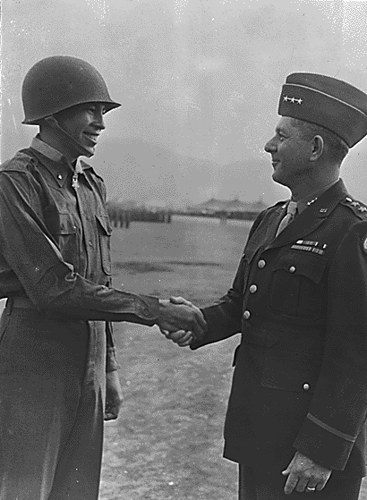
The official citation, published in War Department General Orders No. 30 on April 11, 1944, recognized Childers' "conspicuous gallantry and intrepidity at the risk of his life above and beyond the call of duty." The citation specifically noted his advance "over hazardous terrain under intense enemy fire" and his individual elimination of the machine gun position that had prevented his company's advance. The nearly seven-month delay between the action and official recognition reflected the deliberate verification process required for America's highest military decoration.
Childers' Medal of Honor made him the first Native American to receive the decoration during World War II, though several others would follow before the war's end. The 45th Infantry Division's significant Native American contingent ultimately produced multiple Medal of Honor recipients, including Van Barfoot and Jack Montgomery, whose service challenged contemporary stereotypes about indigenous Americans while demonstrating their substantial contribution to the American war effort.
The tactical lessons from Childers' assault reflected broader patterns throughout the Italian Campaign. German defensive tactics relied heavily on automatic weapons positioned to dominate likely approaches, supported by artillery and mortar fires directed from elevated observation posts. Breaking these positions required small-unit leaders willing to accept extraordinary personal risk, supported by accurate suppressive fire and followed by aggressive unit advancement to consolidate gains.

However, the human cost of such tactics accumulated throughout the campaign. The 45th Infantry Division suffered severe casualties during its advance through Italy, with rifle companies frequently operating at half strength due to combat losses and medical evacuations. Officer casualties were particularly heavy, as leadership responsibilities in combat required constant exposure to enemy fire. Turnover in platoon and company leadership positions reached critical levels during the autumn of 1943.
The terrain around Oliveto represented challenges that Allied forces would face repeatedly during their advance toward Rome. German forces had learned to maximize the defensive advantages offered by Italy's mountainous geography, establishing strongpoints on dominating terrain features that controlled movement corridors and provided excellent observation for directing supporting fires. Each position had to be reduced through direct assault, often requiring individual acts of heroism similar to Childers' action.
German defensive doctrine in Italy emphasized trading space for time while inflicting maximum casualties on Allied forces. Rather than attempting to hold extended frontages that could be outflanked or overwhelmed, Wehrmacht forces concentrated on dominating key terrain features that controlled Allied movement. This approach maximized the effectiveness of limited German resources while taking advantage of terrain that heavily favored defensive operations.
The weapons carried by American infantry during the Italian Campaign reflected both strengths and limitations of U.S. military doctrine in 1943. The M1 Garand provided individual soldiers with significant firepower advantages over German bolt-action rifles, but the mountainous terrain often negated range advantages while emphasizing the importance of automatic weapons like the BAR and German MG 42. American forces frequently found themselves outgunned at the squad and platoon level despite superior individual weapons.
Childers' successful assault required him to overcome not only immediate tactical challenges but also the psychological pressure of conducting a solo attack against prepared positions. Individual assaults against defended positions had historically low success rates unless supported by overwhelming suppressive fire or conducted by soldiers with exceptional tactical competence and personal courage. The combination of his military training, combat experience, and personal determination proved sufficient to overcome these odds.
The immediate aftermath of the Oliveto action illustrated both tactical consequences and strategic implications for the broader Italian Campaign. Company C's seizure of the high ground allowed the 180th Infantry Regiment to continue its advance toward Winter Line positions, maintaining Allied offensive momentum despite determined German resistance. However, such operations accumulated costs throughout the campaign that would eventually limit Allied capabilities during the winter months.
German forces defending the Oliveto area represented typical Wehrmacht quality during this phase of the Italian Campaign. Though not elite formations, they demonstrated tactical competence, effective use of terrain, and determined resistance that characterized German defensive operations throughout the Mediterranean theater. Their eventual withdrawal reflected tactical necessity rather than lack of fighting capability, as they preserved their forces for subsequent defensive lines.

The Medal of Honor recommendation process for Childers' action demonstrated both the careful verification required for such decorations and the bureaucratic challenges of recognizing individual heroism during active combat operations. Initial reports focused on unit accomplishments rather than individual actions, requiring subsequent interviews with surviving witnesses to document specific details of Childers' assault and its tactical significance.
Capture of the observation posts around Oliveto provided American forces with crucial intelligence advantages for subsequent operations. The ability to observe German positions and direct accurate artillery fires often proved more valuable than the immediate tactical gains from seizing specific terrain features. This intelligence capability helped Allied forces identify and target German defensive positions before launching costly infantry assaults.
The action at Oliveto occurred during a critical phase when Allied forces were attempting to maintain offensive momentum despite increasing German resistance, deteriorating weather conditions, and mounting casualties. Successful completion of tactical objectives like the seizure of Oliveto heights helped prevent German forces from establishing coherent defensive lines south of their prepared Winter Line positions, though it could not prevent the eventual winter stalemate.
Childers' individual courage reflected broader patterns in American military culture that emphasized personal initiative and aggressive leadership at the small-unit level. However, these tactical virtues came at significant cost throughout the Italian Campaign, as junior officers and non-commissioned officers who led from the front suffered disproportionate casualties. The replacement and training of new leaders became critical limiting factors for American combat effectiveness.
The official recognition of Childers' heroism through the Medal of Honor served purposes beyond individual recognition. His decoration highlighted Native American contributions to the American war effort during a period when indigenous Americans faced ongoing discrimination and questions about their citizenship status. The visible heroism of soldiers like Childers helped challenge stereotypes while demonstrating the loyalty and military effectiveness of Native American service members.
The tactical principles demonstrated during the assault at Oliveto—individual initiative, tactical competence under pressure, willingness to accept personal risk for unit success—remained central to American small-unit doctrine throughout the war and beyond. Military historians continue to study the engagement as an example of effective small-unit leadership under difficult conditions against a determined, well-equipped enemy.
Childers survived the war and returned to Oklahoma, where he lived until his death in 2005 at age 87. His long post-war life allowed him to witness significant changes in American attitudes toward Native American military service and civil rights, including the eventual recognition of tribal sovereignty and Native American contributions to American military history. His Medal of Honor citation continues to inspire current service members facing similar challenges in contemporary conflicts, demonstrating that individual courage and tactical competence remain essential elements of military success regardless of technological advancement or strategic complexity.