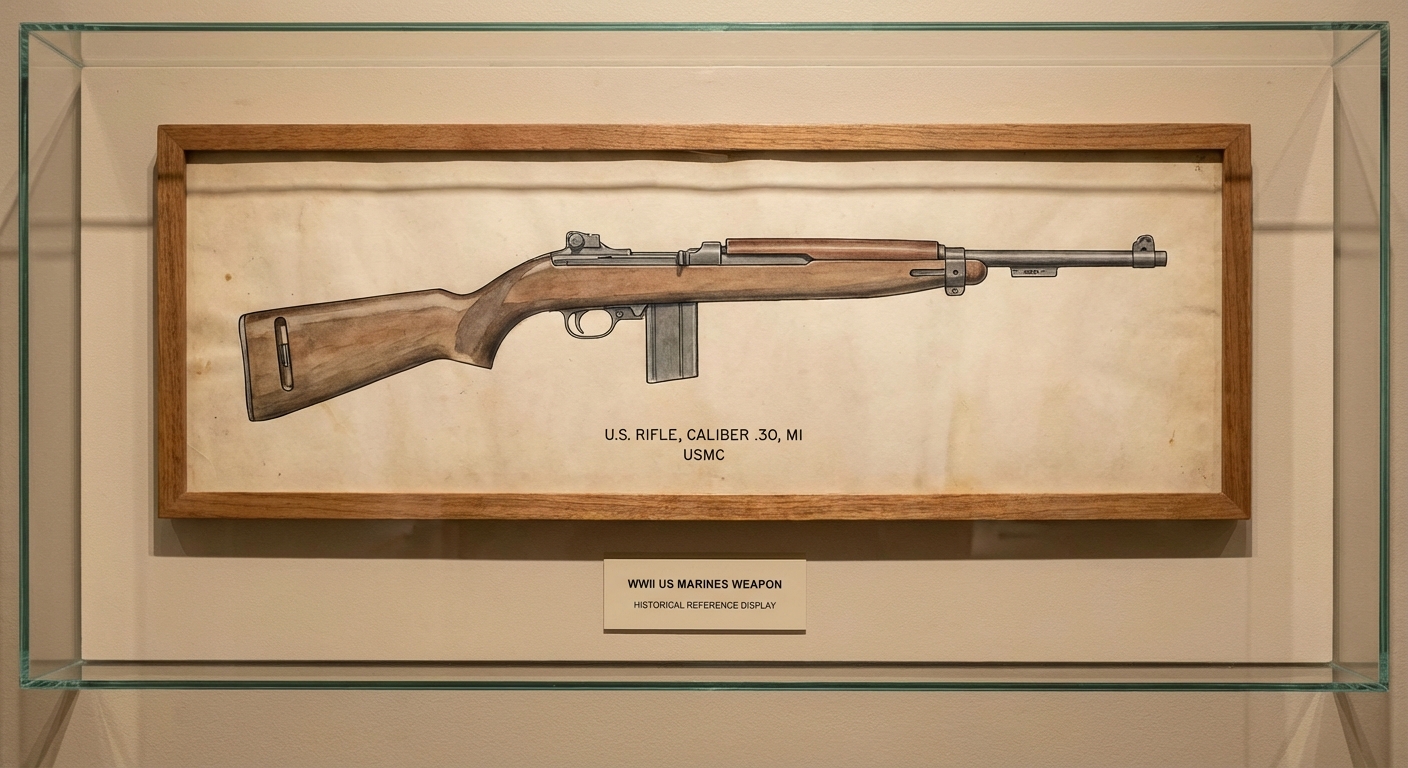
M1 Garand
Standard Marine rifle in the assault across Peleliu.
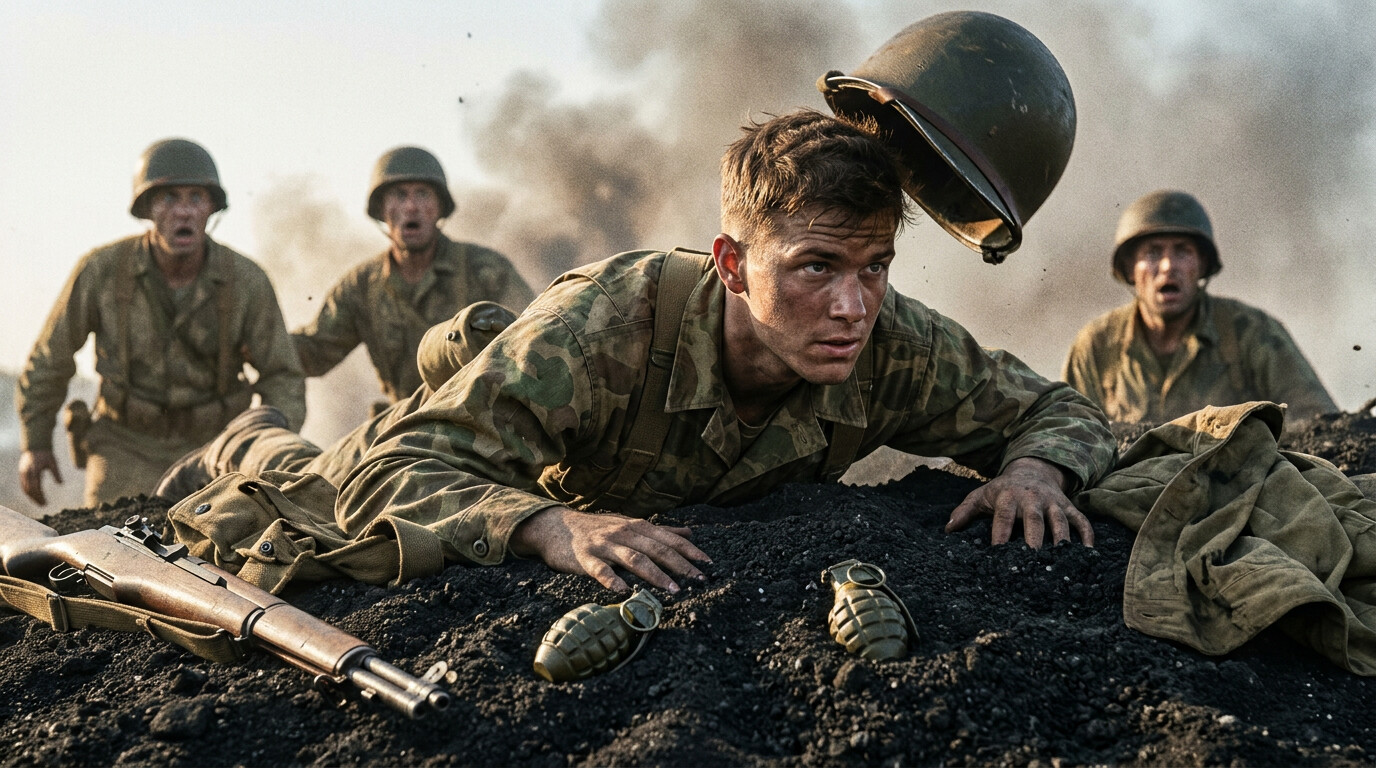
Peleliu was supposed to take a few days. Instead it became a furnace of coral dust, machine-gun fire, and heat where Marines like Eugene Sledge learned how long human beings could endure fear and keep moving anyway.
Peleliu was supposed to take a few days. Instead it became a furnace of coral dust, machine-gun fire, and heat where Marines like Eugene Sledge learned how long human beings could endure fear and keep moving anyway.
This page follows the Front Line Stories longform layout: six visual panels, grounded narrative, a field kit, battle record, and source trail. It is written to read cleanly for adults while staying vivid enough for younger history fans.
Eugene Sledge at Peleliu sits at the point where individual nerve met a much larger machine of war. The details matter, because the drama here came from real people, real places, and real consequences.
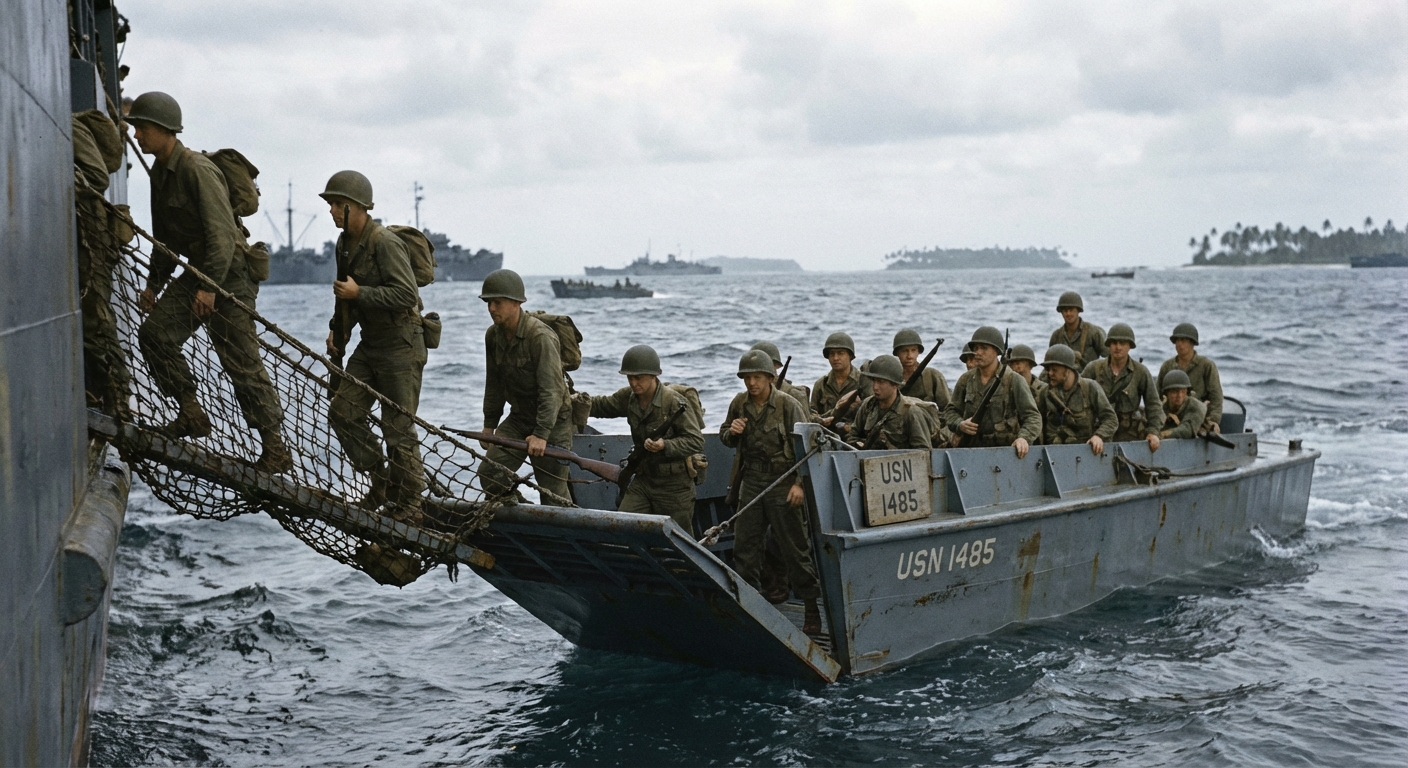
The assault on Peleliu began on 15 September 1944 under a punishing tropical sky. American planners expected a relatively quick seizure of the airfield. Japanese defenders under Colonel Kunio Nakagawa had chosen a different style of defense, trading beach sacrifice for a deep system of caves, ridges, interlocking fires, and reverse-slope positions centered on the Umurbrogol massif. The result was not a dash inland but a slow grind through terrain that seemed built to wound.
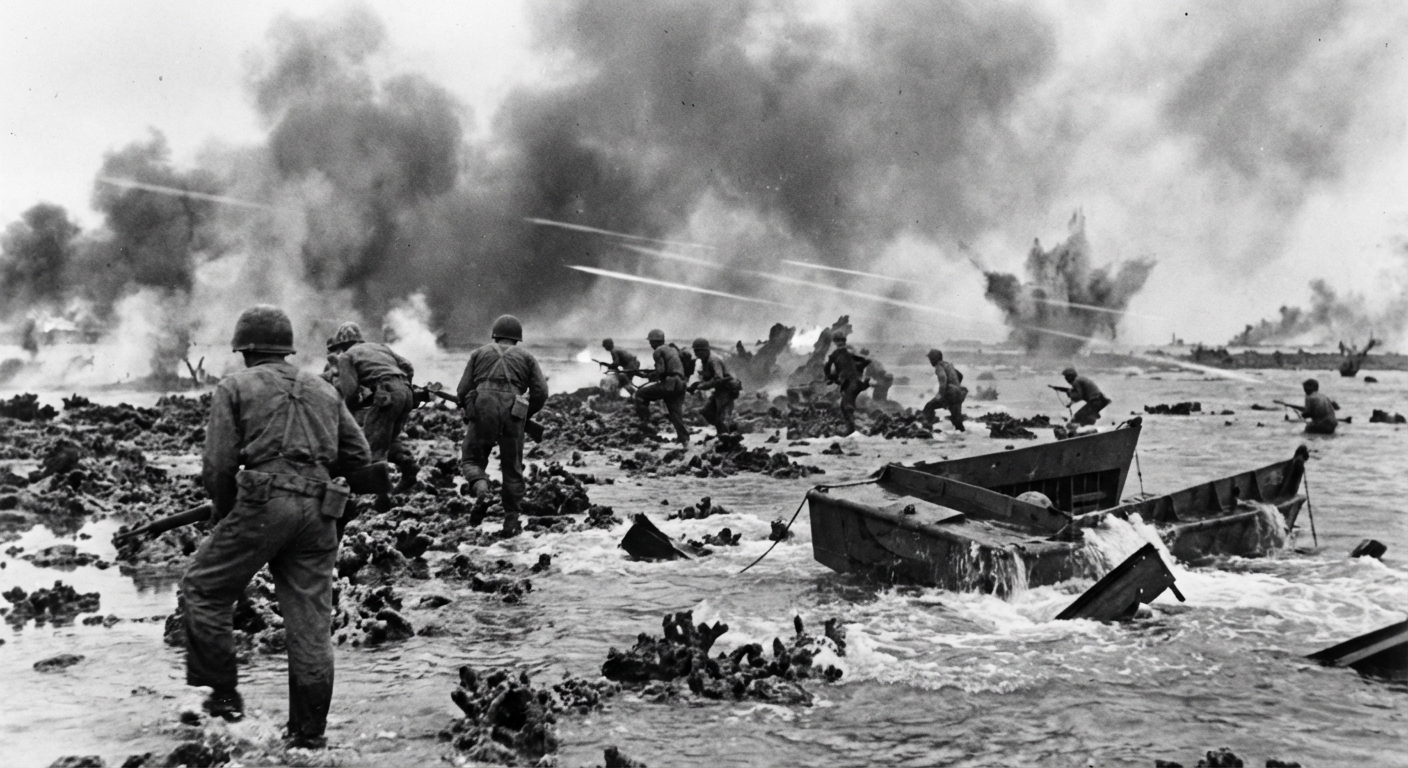
Private Eugene B. Sledge joined the 5th Marines after earlier health problems had delayed his path into combat. On Peleliu he served as a mortarman in Company K. His later memoir, With the Old Breed, remains one of the clearest and least sentimental books ever written by an American infantryman. He did not write war as pageantry. He wrote heat, thirst, fear, filth, and the way ordinary men changed inside battle.
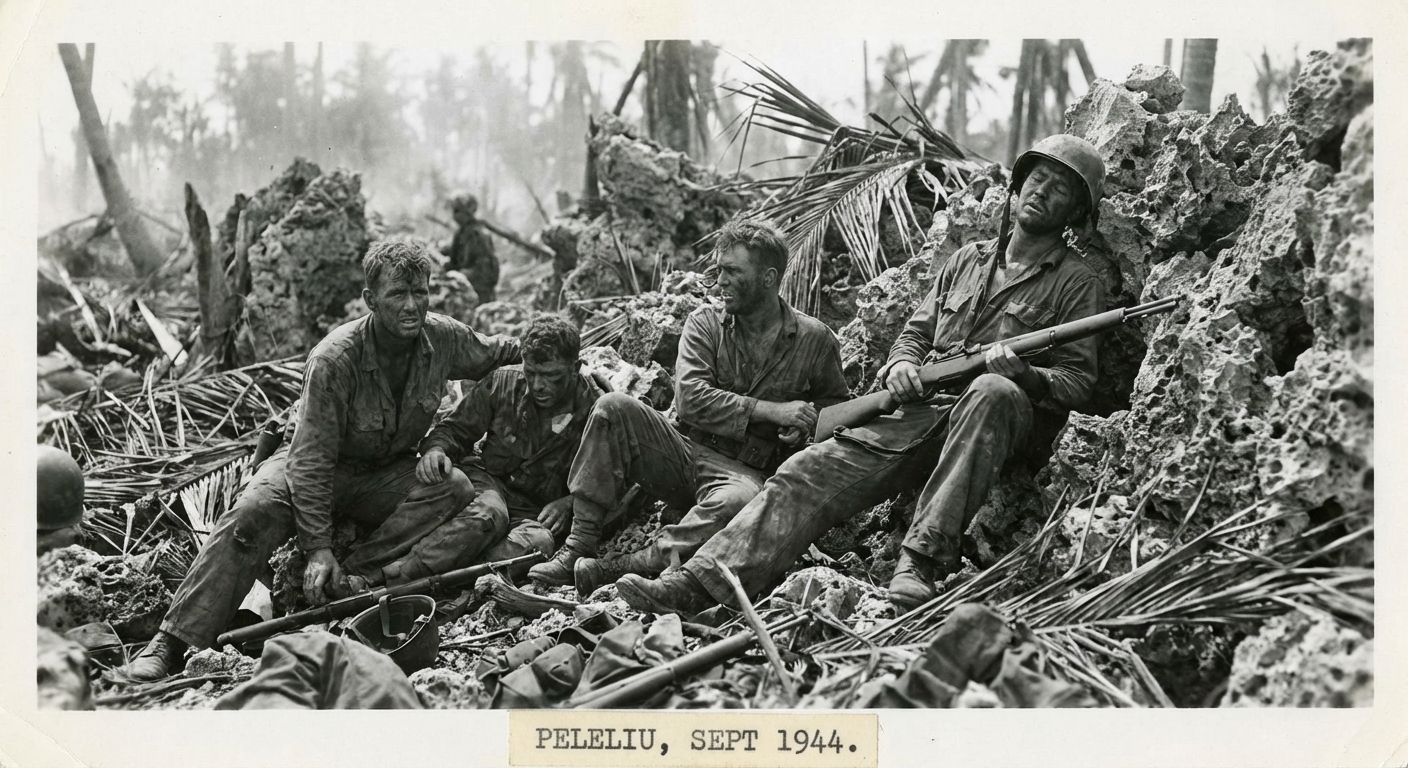
The island's coral was everywhere. It cut hands, shredded uniforms, reflected heat upward, and turned explosions into splinters of stone. Water ran short. The dead lay where they fell because recovery under fire could be impossible. Japanese positions had to be reduced one by one with rifles, grenades, mortars, demolitions, and flamethrowers. At places like Bloody Nose Ridge, attackers climbed into converging fire that seemed to come from the rock itself.
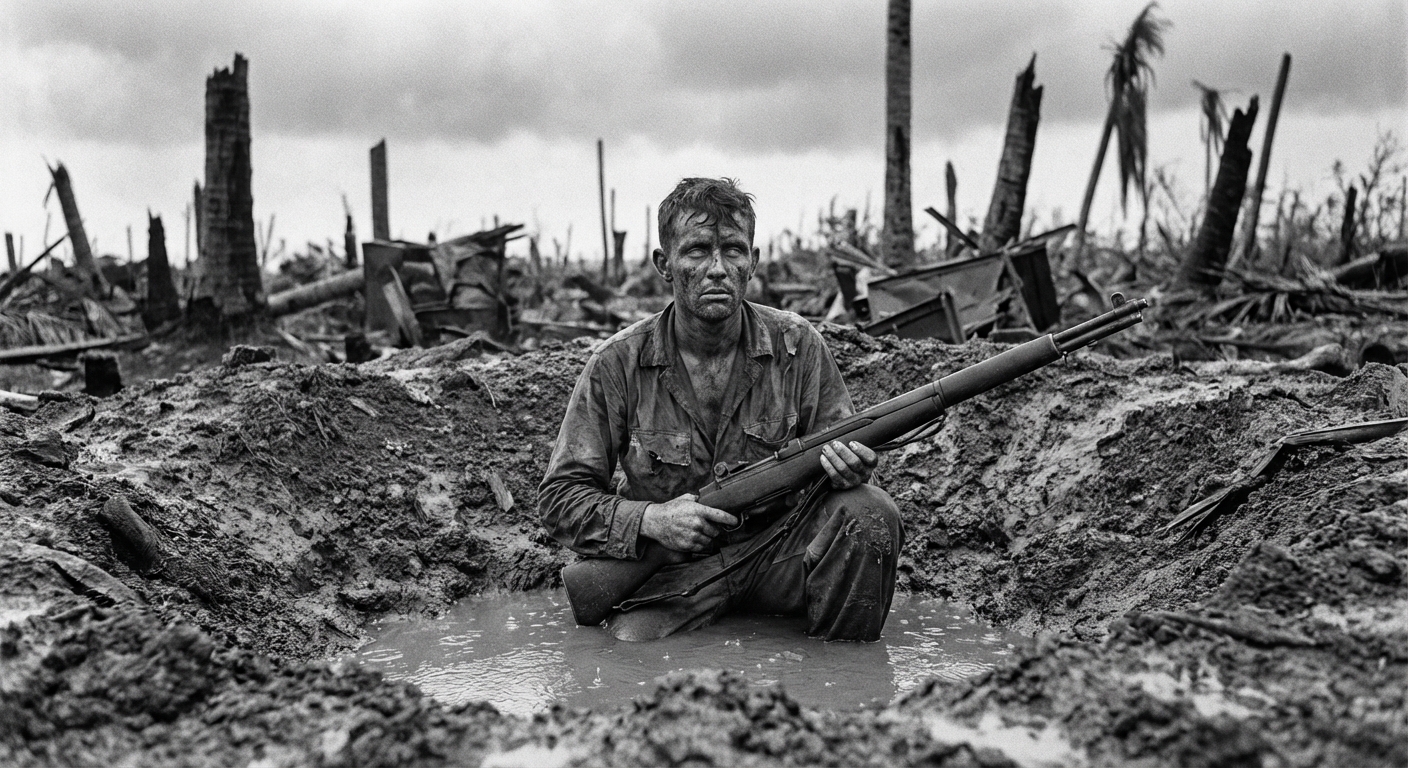
For Sledge and the Marines around him, courage meant continuing in a place where heroics were usually small, ugly, and immediate. Carry ammunition forward. Help a wounded man. Stay in line during shelling. Go up the ridge one more time. Peleliu has sometimes been debated in larger strategic terms, but at squad level there was nothing abstract about it. Survival depended on men doing their part under conditions that stripped away nearly every comfort and illusion.
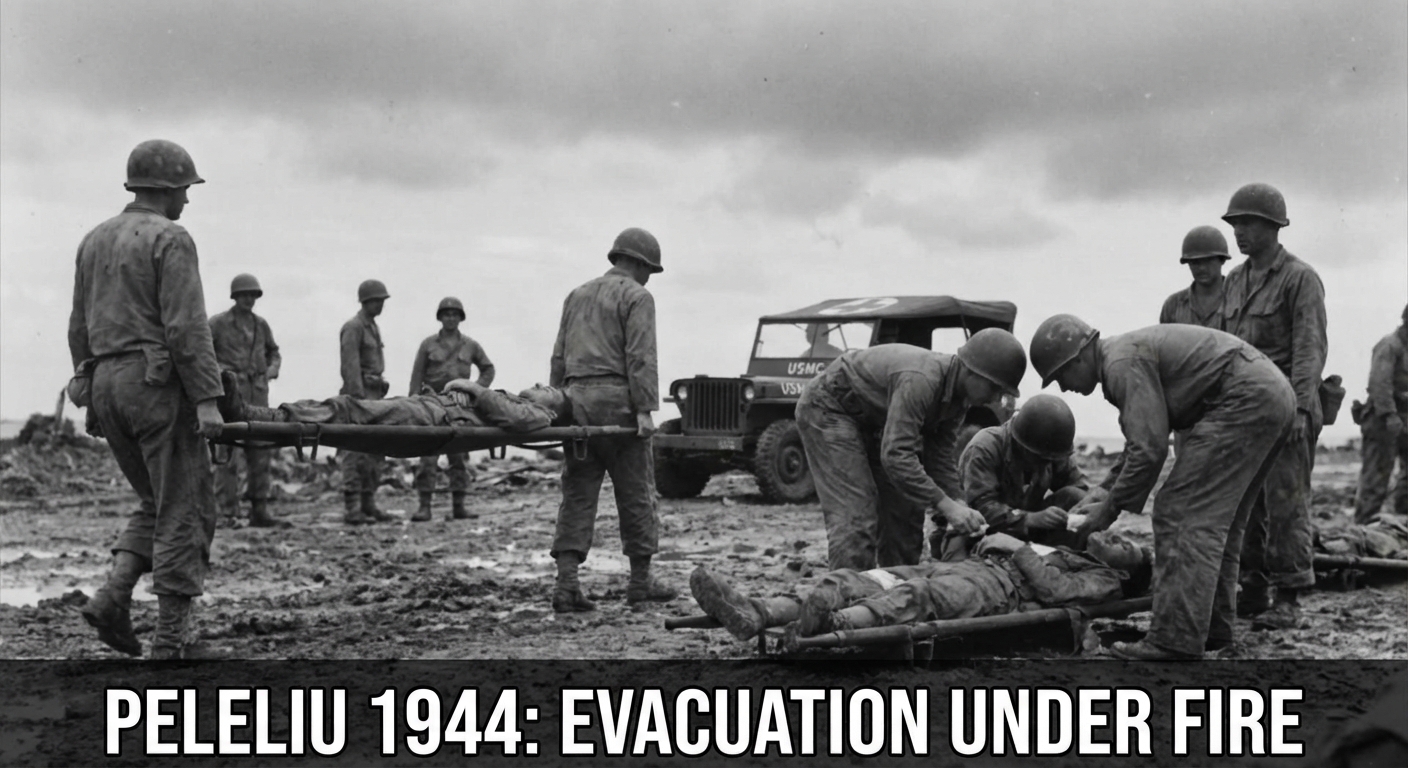
By the time organized resistance ended, the Americans had taken heavy casualties and most of the Japanese garrison had been killed. Sledge survived to fight again on Okinawa, but Peleliu stayed with him. His memory of the island is not cinematic victory. It is a moral and sensory record of what prolonged close combat does to the body, the mind, and the idea of civilization itself.
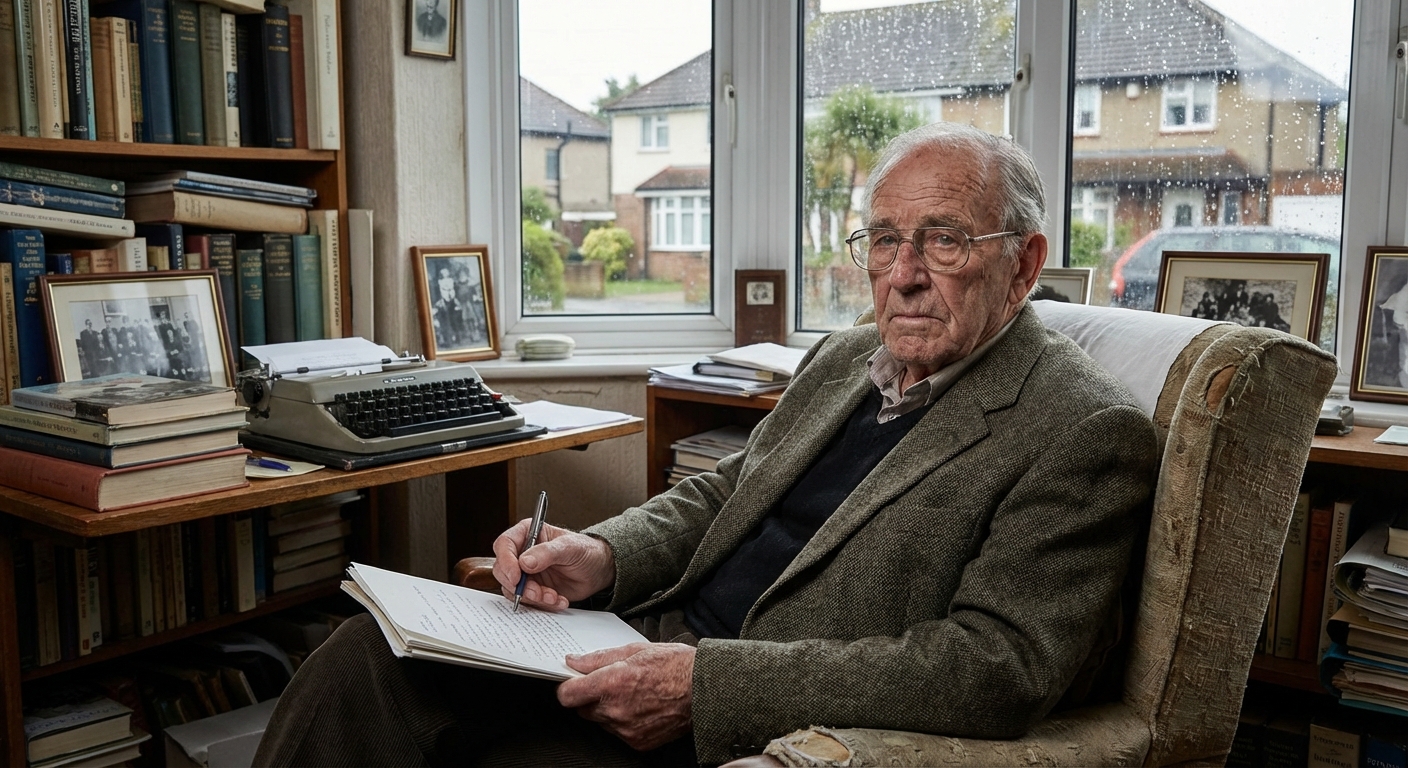
That is why Eugene Sledge matters. Not because he was the only brave Marine there, but because he became one of the great witnesses. Through him, Peleliu stops being a map arrow and becomes what it was for the men on the ground: a white-hot trial of endurance with no easy language for glory.
Standard Marine rifle in the assault across Peleliu.
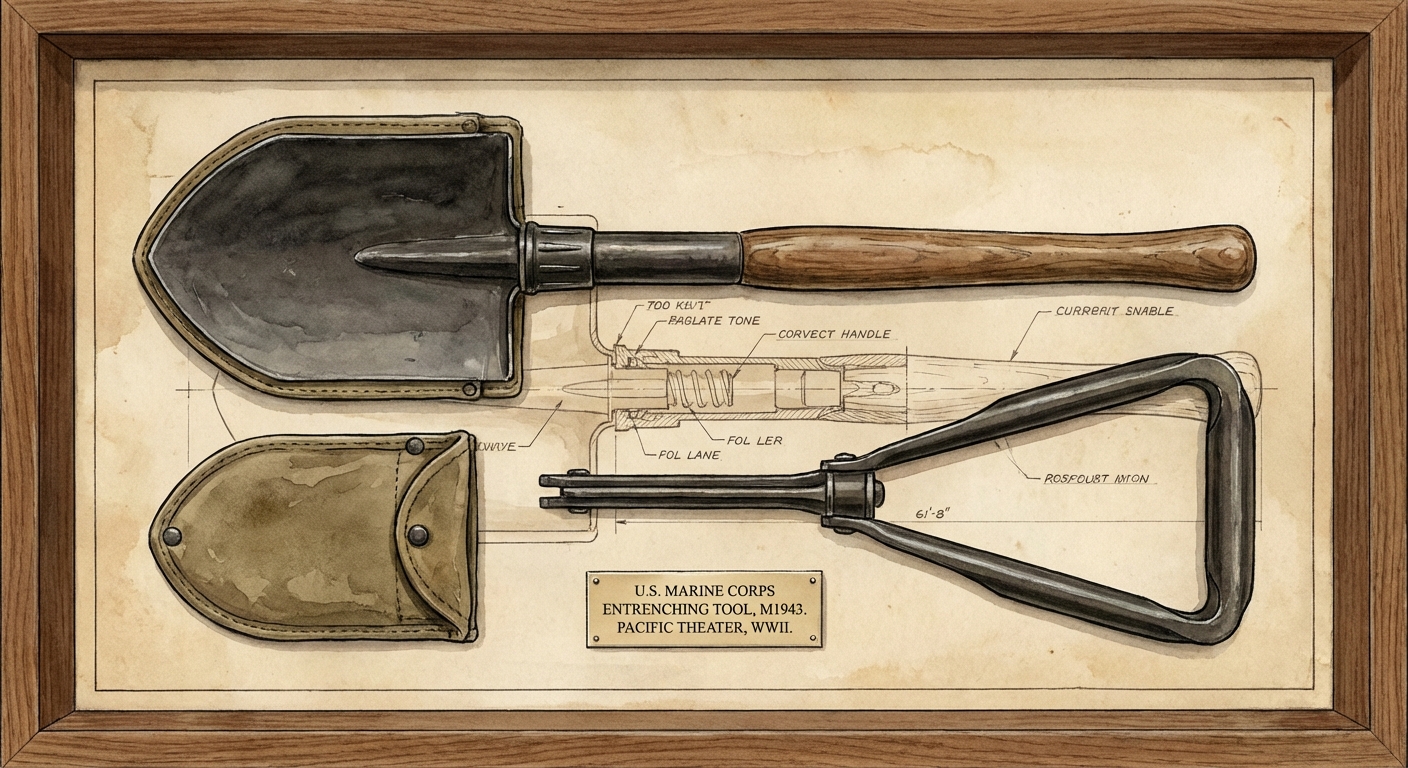
Sledge served in a mortar section supporting Company K.
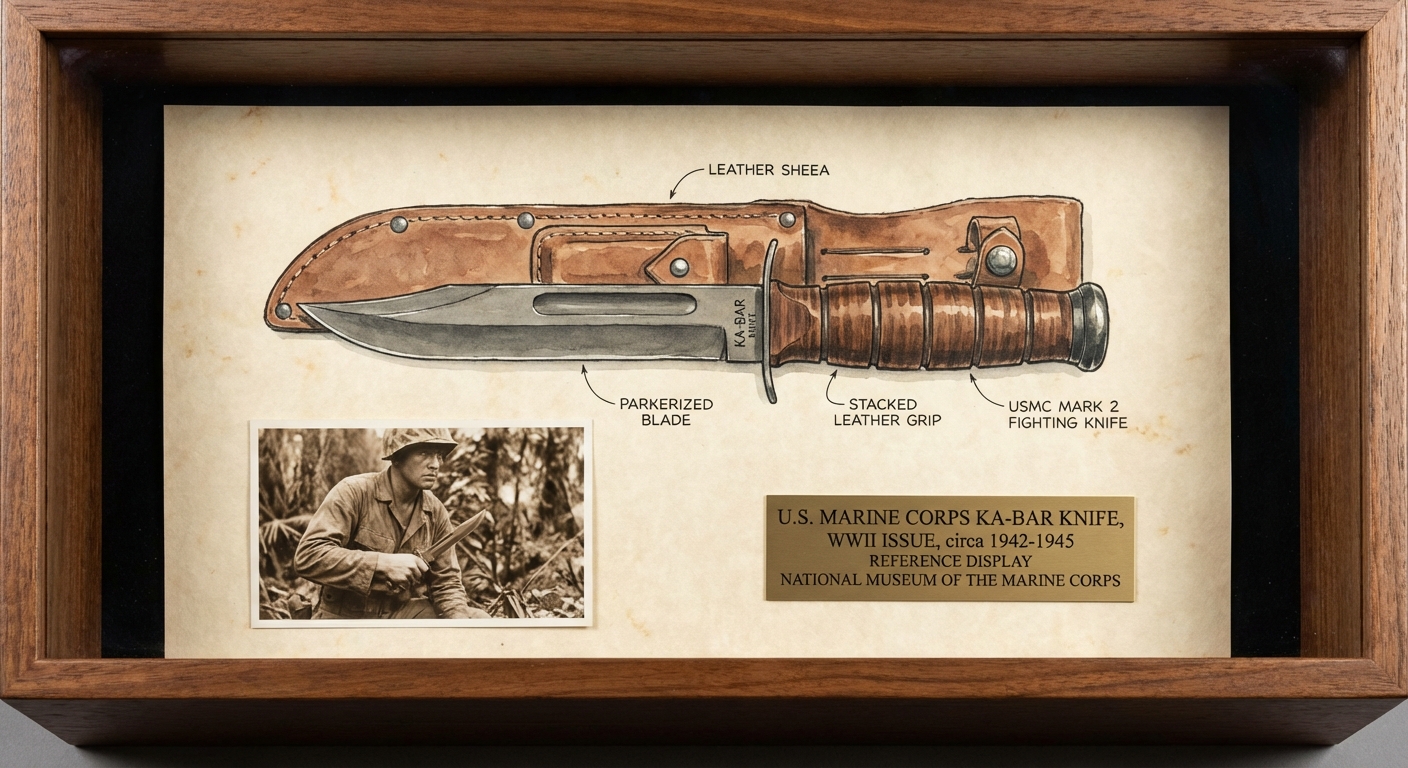
Common field tool and weapon carried by Marines.
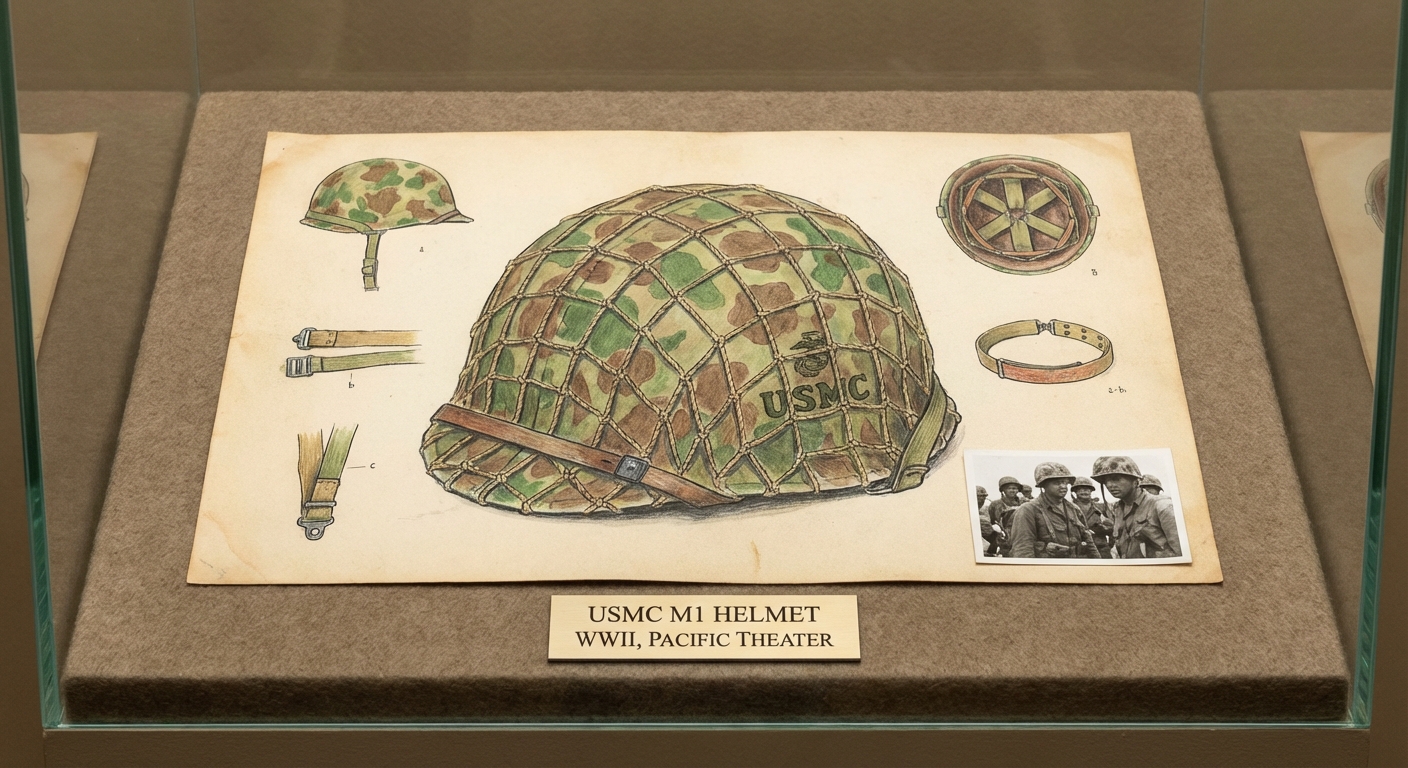
Water was life on Peleliu's heat-blasted coral terrain.
15 September to 27 November 1944
American forces fought to seize Peleliu in the Palau Islands. Japanese defenders used caves and ridges to impose a lengthy attritional battle that became one of the most bitter Marine Corps fights of the Pacific war.