The sun was still high over the Armenian plateau when the Byzantine rearguard commander turned his men around and marched them off the field.
There had been no order to withdraw. There had been no signal from the front. The emperor was still fighting — still pressing forward against an enemy that pulled back and re-formed, still trying to force a decisive battle that the Seljuks refused to give him. And then, from behind, Romanos IV Diogenes watched a substantial portion of his own army walk away.
That was the moment the Battle of Manzikert was lost. Not to superior numbers. Not to impenetrable armor or unbreakable cavalry. Lost to the oldest military catastrophe of all: an army fighting on two fronts, one of them its own.
---
**The Empire at a Crossroads**
To understand what happened at Manzikert on August 26, 1071, it is necessary to understand how profoundly the Byzantine Empire had changed in the century before that date — and how much was at stake in the Armenian highlands that summer.
The Byzantines of the eleventh century were the direct heirs of Rome, governing from Constantinople a state that still called itself the Roman Empire and meant it. At its height under emperors like Basil II — called the Bulgar-Slayer, who died in 1025 — Byzantine power stretched from the Danube to the Euphrates, from southern Italy to the Caucasus. Basil's military system relied on professional, well-paid tagmata regiments stationed near Constantinople and a network of provincial armies called themata that drew soldiers from military landowning families in exchange for service obligations.
Then Basil died, and the machinery began to wind down.
The decades after 1025 brought a long succession of short-lived civilian emperors drawn from the bureaucratic aristocracy of Constantinople — men who preferred reducing military expenditure to maintaining the army Basil had built. The themata system deteriorated. Military estates were broken up. The cavalry levies that had once anchored Byzantine provincial defense grew thinner and less reliable. Foreign mercenaries — Normans, Varangians, Pechenegs, Franks, and Armenians — filled the gaps, skilled but expensive, loyal to coin rather than emperor.
Into this structural fragility came the Seljuk Turks.
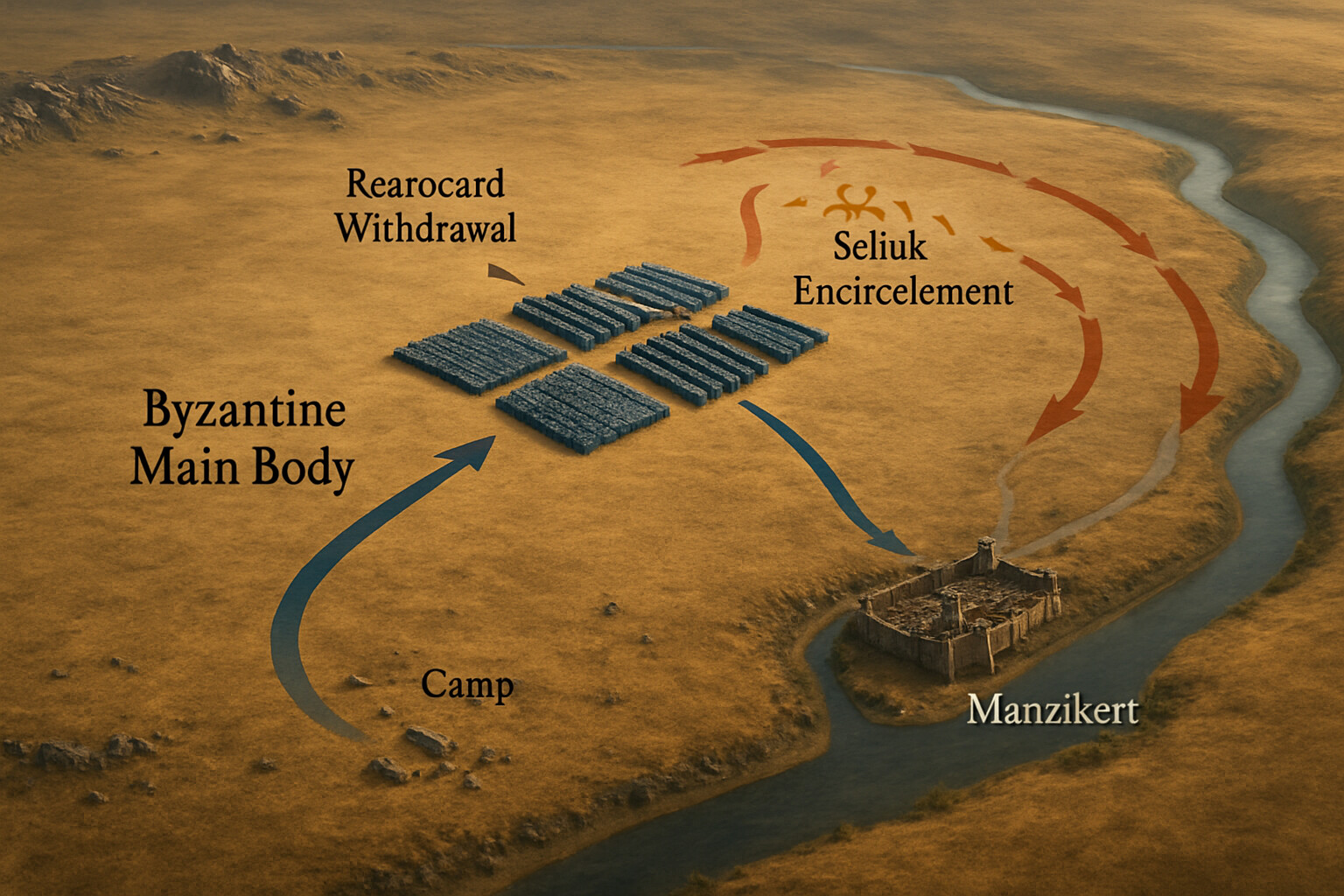
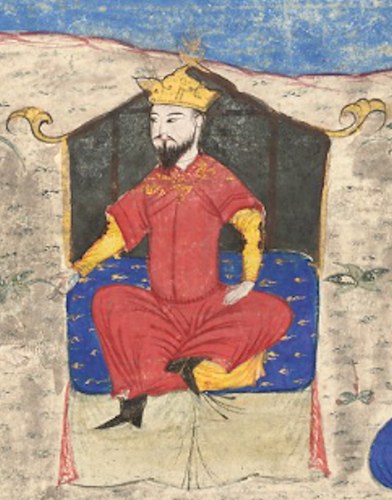
The Seljuks were a Turkic dynasty that had consolidated power across Persia and Mesopotamia with remarkable speed in the 1040s and 1050s. Their great sultan, Tughril Beg, had taken Baghdad in 1055, making himself protector of the Abbasid Caliph and master of much of the Islamic world east of Syria. Seljuk raiding parties began probing into Byzantine Anatolia in the 1040s, striking deep into Cappadocia and Armenia, burning towns, taking slaves, and testing the empire's capacity to respond. The battle of Kapetrou in 1048 was an early confrontation; Byzantine forces under Katakalon Kekaumenos had some success, but the raids continued and intensified.
By the time Romanos IV Diogenes seized the imperial throne in January 1068, the eastern frontier was in serious trouble. He came to power through marriage to the empress dowager Eudokia Makrembolitissa following the death of the previous emperor Constantine X Doukas. Romanos was a soldier by background and temperament, a capable military commander from a provincial military family — exactly the kind of man the Constantinopolitan bureaucratic aristocracy distrusted most. The Doukas family, which had dominated the previous reign and retained enormous influence at court, regarded him as a usurper in all but name.
Romanos spent 1068, 1069, and 1070 on campaign, attempting to stabilize the eastern frontier with mixed results. He recovered ground, rebuilt confidence in some units, and demonstrated personal courage in the field. But he also made enemies at court with every absence from Constantinople, and the political opposition centered on the Doukas faction grew steadily more dangerous.
For 1071, Romanos planned the largest eastern expedition of his reign — a direct strike into Armenia to confront the Seljuks under their new sultan, Alp Arslan, and force a decisive engagement that would restore the frontier. The army he assembled was formidable by Byzantine standards of the era. Estimates from primary sources and modern historians vary considerably, with figures commonly ranging from 40,000 to 70,000 men, and scholars including John Haldon counsel significant caution about all such numbers, noting that Byzantine armies of this period typically included a large tail of non-combat personnel alongside the fighting core. That core included professional tagmata cavalry, Norman and Frankish mercenaries, Armenian contingents, Pecheneg and Cuman light cavalry auxiliaries, Varangian infantry, and Turkish mercenary units under their own commanders. It was a multinational force with significant capability — and significant internal tensions.
Alp Arslan, for his part, was occupied with a campaign against the Fatimid Caliphate in Egypt and Syria when Byzantine intelligence placed him in that direction. Romanos's strategic plan assumed the main Seljuk army would not be available for a major engagement in Armenia. That assumption proved badly wrong.
---
**The Plateau and the Fortress**
Manzikert — known today as Malazgirt, in eastern Turkey near Lake Van — sits on the edge of a wide, relatively flat plateau at an elevation of roughly 1,700 meters. The terrain in August is dry and open, the grass turned gold, the sight lines long. It is cavalry country in every sense: ground where mounted archers can operate freely and where a heavy cavalry force without adequate screening can be harassed to exhaustion before it ever closes with the enemy.
The fortress of Manzikert itself was a secondary Seljuk-held position. Romanos's forces besieged and captured it in the days before the main battle, demonstrating the Byzantine army's capability but also consuming time and drawing the emperor's attention away from the larger operational picture. While the siege was ongoing, reports arrived of Seljuk forces in the area — but the picture of Alp Arslan's actual position remained unclear.
Alp Arslan had in fact reversed his march when he learned of the Byzantine advance. The primary accounts — Byzantine chroniclers including Michael Attaleiates, who was present on the campaign, and the later Nikephoros Bryennios and Anna Komnene, as well as the Armenian historian Matthew of Edessa — agree that Alp Arslan arrived in the region with a substantial army, though estimates of his force vary as widely as those for Romanos's own. Modern historians including Haldon and John Julius Norwich counsel skepticism about the very large numbers found in medieval sources for both sides.
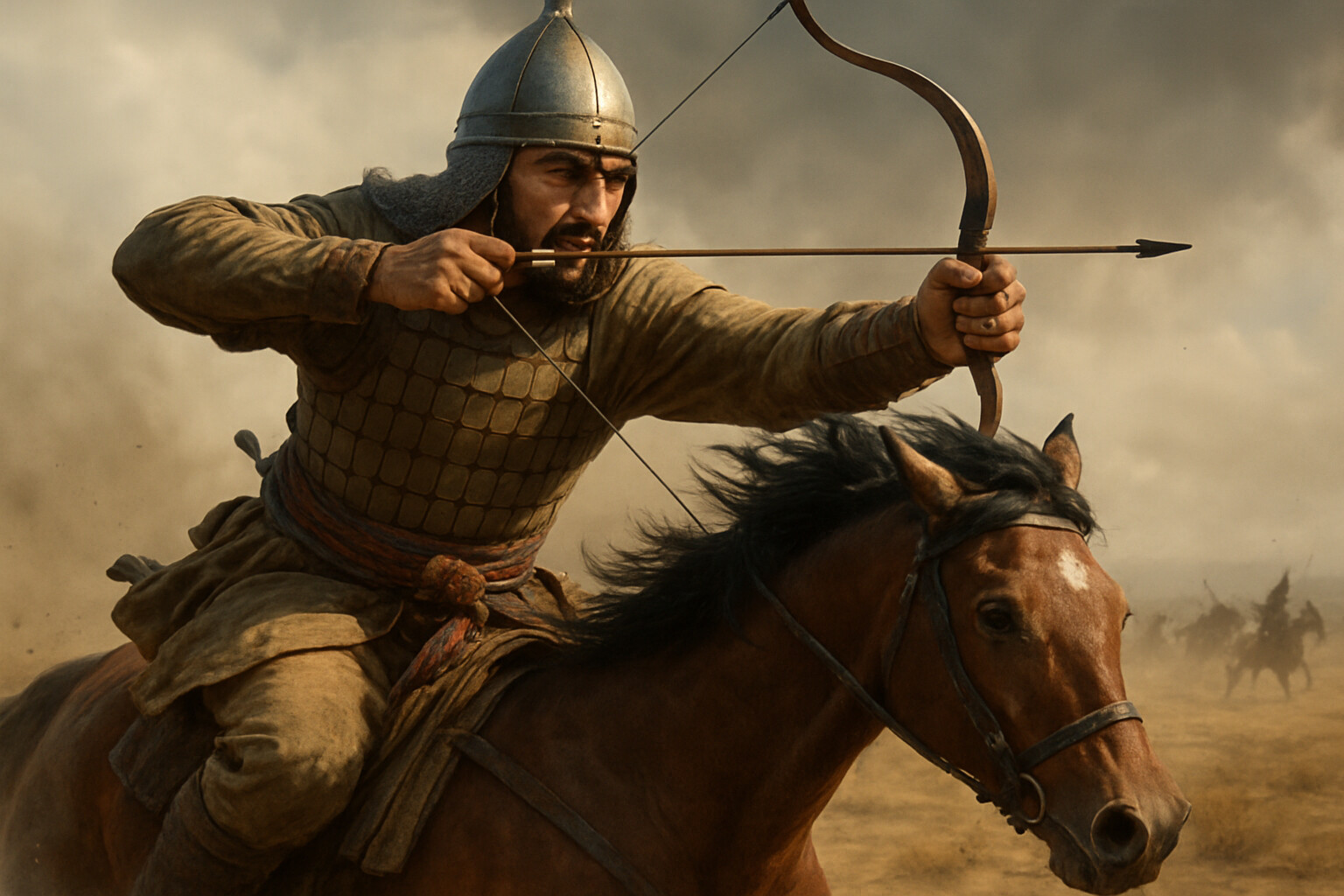
What is not in dispute: Alp Arslan's force was predominantly cavalry. The Seljuk military system was built around horse archers — mounted warriors trained from childhood to shoot composite recurve bows from the saddle at speed, employing the classic steppe tactic of feigned retreat and encirclement. Seljuk armies could cover ground quickly, sustain pressure without closing to hand-to-hand combat, and exploit gaps and flanks with a speed that armored Byzantine cavalry could not match.
The composite recurve bow that armed Seljuk cavalry was a weapon of sophisticated construction: a laminate of wood, horn, and sinew that stored enormous energy in a compact form. A trained horse archer could loose several arrows per minute from a moving horse at useful combat ranges, with penetrating power sufficient to wound or kill through light armor at closer distances. Against an army advancing in formation across open ground, sustained archery from multiple directions was not simply harassing fire — it was a system for degrading cohesion, killing horses, and forcing commanders into reactive decisions. Estimated draw weights for Turkic composite bows of this type vary across the comparative record; specific Manzikert-era artifact data does not survive, so precise figures should be treated with caution.
Romanos's heavy cavalry — the Byzantine kataphraktoi and their mercenary equivalents — were formidable in shock combat, armored in mail and lamellar plate, armed with lance and sword, capable of breaking infantry formations. But they needed to close the distance. And the Seljuks had no intention of letting them.
---
**The Day the Army Broke**
The precise sequence of events on August 26, 1071 is reconstructed from several sources that do not entirely agree, and historians have debated the timeline and troop dispositions for centuries. What follows reflects the scholarly consensus as best established by the primary accounts of Attaleiates, Bryennios, and Skylitzes Continuatus, cross-referenced with modern analysis by scholars including Speros Vryonis, John Haldon, and Carole Hillenbrand.
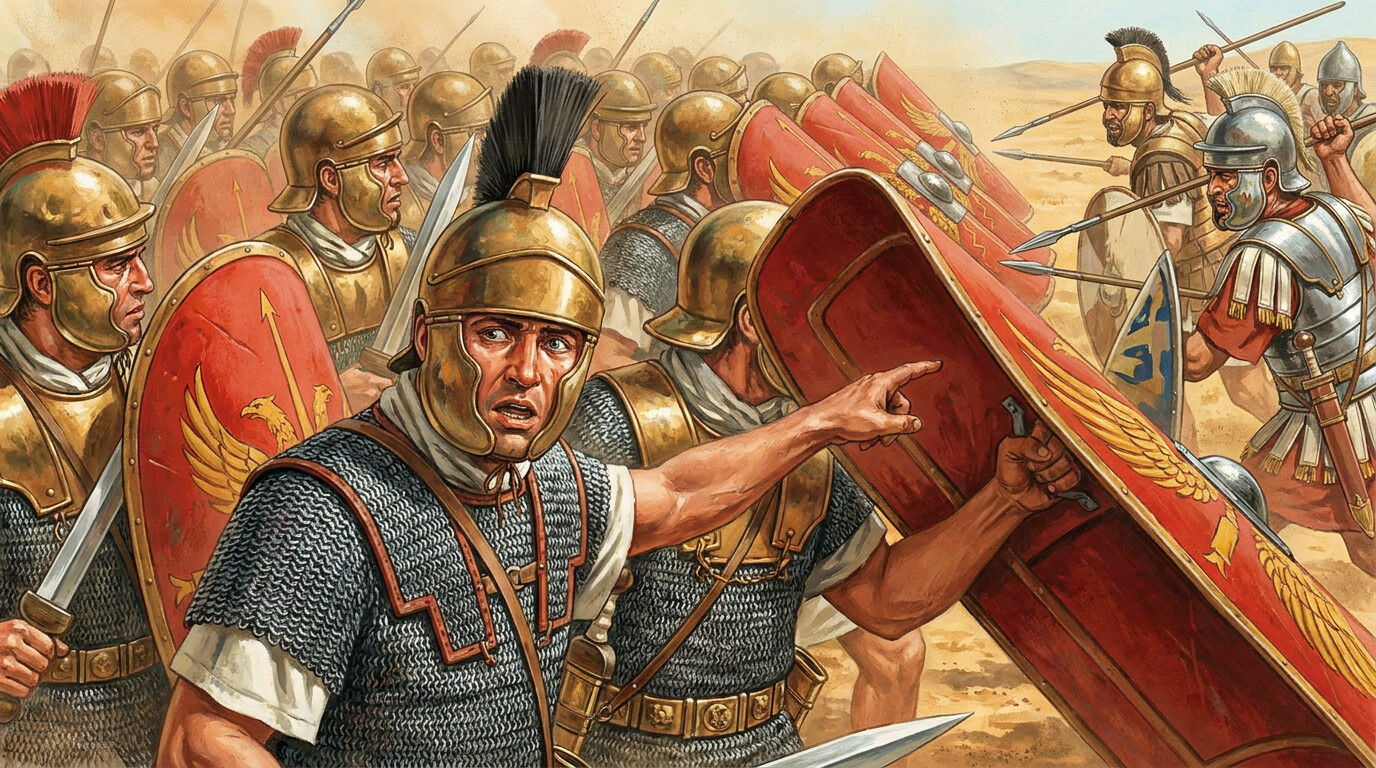
Romanos drew his army up in the standard Byzantine formation for a major engagement: a center of heavy infantry and cavalry, two wings, and a rearguard. The right wing was commanded by Nikephoros Melissenos. The rearguard — critically — was placed under Andronikos Doukas, the son of Caesar John Doukas and a senior representative of the family most opposed to Romanos's rule.
The emperor advanced across the plain toward the Seljuk positions. Alp Arslan's forces did not meet him in a set-piece engagement. They fell back. They harassed the flanks with arrow fire. They drew the Byzantine line forward across the open plateau, wearing at the edges, probing for weakness, refusing the decisive clash that Byzantine commanders depended on.
As the afternoon wore on, Romanos appears to have recognized that he was not going to force a decisive engagement before dark. The accounts suggest he ordered a general withdrawal to the camp — the standard Byzantine procedure, to re-form and try again the following day. The order to turn the army around on an open plain, under pressure from an enemy that had been circling all day, was inherently dangerous. It required precise coordination. Every unit needed to understand that other units were covering its withdrawal.
Andronikos Doukas, commanding the rearguard, either misunderstood the order or chose not to obey it. The sources differ on intent, and the question of deliberate treachery versus catastrophic misunderstanding has never been settled definitively. What the sources agree on — Attaleiates most vividly, having been on the campaign himself — is that the rearguard turned and marched away, back toward the camp, leaving the emperor's main body exposed. That Attaleiates was openly sympathetic to Romanos and hostile to the Doukas faction is a material fact for any reader weighing his account.
The Seljuks saw the movement immediately. Alp Arslan's cavalry surged forward. The encircling tactics that had been building all day snapped shut. The Byzantine wings began to collapse under pressure from forces now pressing hard on multiple sides. Units that had been holding cohesion began to break. Some mercenary contingents — the sources suggest this but do not document it precisely — appear to have withdrawn or become separated from the main body.
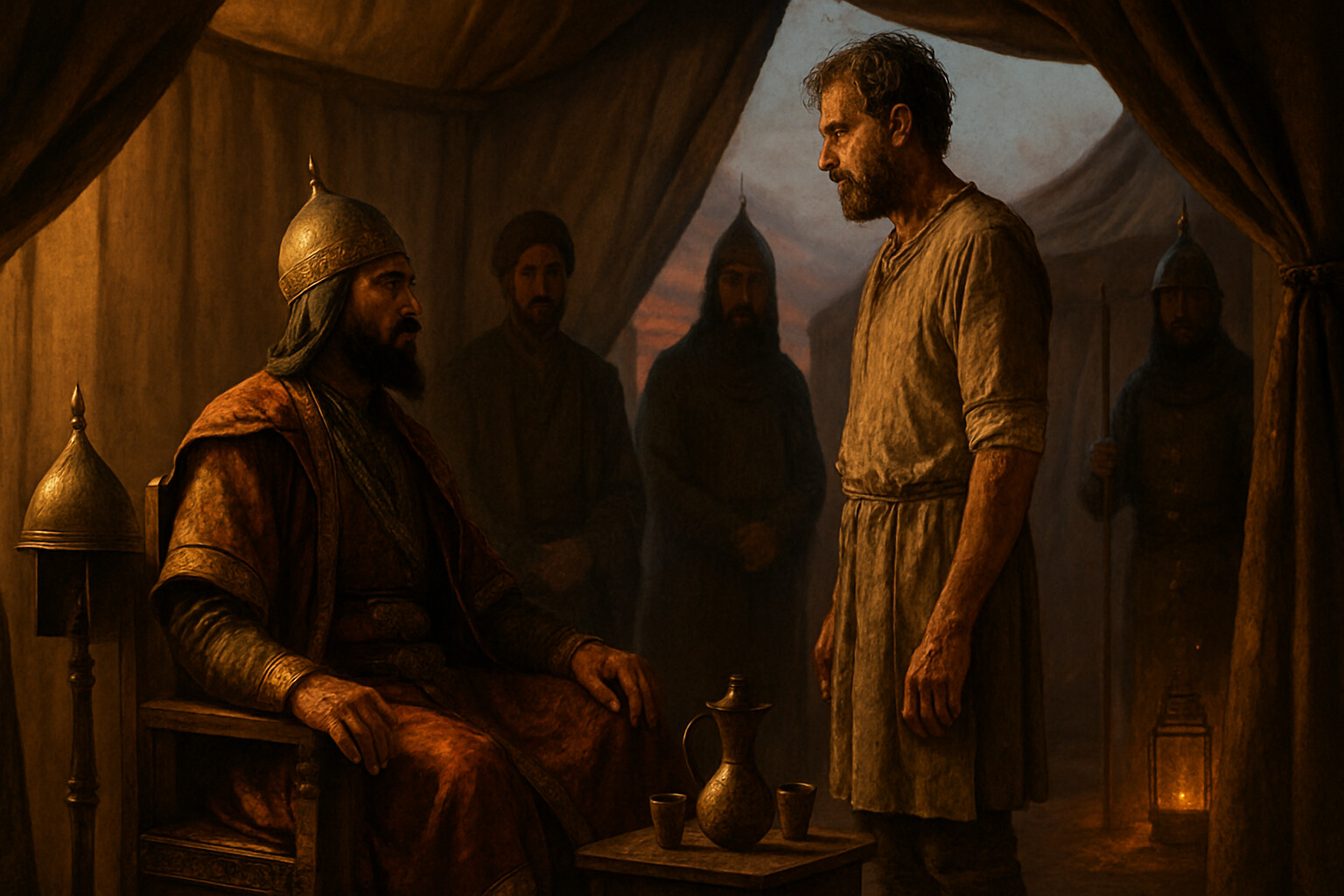
Romanos fought. The sources are consistent on this point. He did not flee. He continued to fight as his army dissolved around him, leading what remained of the center in a desperate effort to hold position or break out. The accounts report that he was wounded and his horse killed. He was captured — taken alive on the battlefield, still in his imperial armor.
The scale of the defeat was catastrophic. The casualty figures in the sources vary enormously and cannot be trusted as precise numbers, but the destruction of Byzantine military capacity in the east was evident in everything that followed. Large numbers of soldiers were killed, captured, or scattered. The senior military talent Romanos had spent years cultivating was gone or dispersed.
---
**Prisoner of the Sultan**
What happened next is one of the more remarkable episodes in medieval diplomatic history, though its effects proved tragically temporary.
Alp Arslan treated the captured emperor with formal courtesy. The accounts of their meeting — filtered through later chroniclers and likely shaped by the literary conventions of each tradition — suggest that Alp Arslan, who had not sought this battle and had reportedly offered peace negotiations that Romanos declined before the engagement (a claim attested in multiple sources but with details that vary), was in a position of unexpected advantage. A ransom agreement was reached. The terms recorded in sources including Attaleiates and Matthew of Edessa involved a substantial cash payment, annual tribute, and the release of Muslim prisoners, though the specific figures differ across accounts and no authoritative text of the agreement survives. Romanos was released.
He returned to find his empire already moving on without him.
The Doukas faction in Constantinople had wasted no time. Empress Eudokia was removed from power. A young Michael Doukas was elevated as emperor. When Romanos attempted to return to his throne, he was defeated in two engagements against forces loyal to the new regime. He surrendered under promises of safe conduct and was subjected to a blinding — brutal even by the violent standards of Byzantine succession politics. The sources report that it was performed with particular severity, and that he died from his wounds or their treatment within weeks. The date usually given is August 4, 1072, less than a year after Manzikert. Whether the blinding was intended as merely disabling — the traditional Byzantine method of removing rivals without execution — or was carried out with lethal intent or recklessness is described inconsistently across sources and cannot be resolved.
The ransom terms were repudiated by the new government. Alp Arslan had no reason to honor an agreement with a regime that had overthrown the man who made it.
---
**The Flood Through the Gates**
The long-term consequences of Manzikert did not arrive in a single wave. The collapse was not immediate — it unfolded over years and decades. But the battle had shattered the field army that defended Anatolia, removed the one emperor committed to maintaining eastern defenses, and discredited the military aristocracy's capacity to protect the frontier.
More concretely, the political chaos of the 1070s meant that no stable Byzantine government existed to mount a coherent response to Seljuk penetration into Anatolia. Rival claimants to the imperial throne hired Seljuk and Turkic mercenary contingents to fight each other, which brought those fighters deep into Anatolian territory and gave them detailed knowledge of routes, towns, and defensive weaknesses. Seljuk ghazi warriors — frontier fighters motivated by both religious and material incentives — began pressing into Anatolia not as raiding parties but as settlers. Towns that had been Roman for centuries fell to Turkish control not through a single decisive conquest but through a steady erosion of Byzantine presence and authority.
By the 1080s, much of central Anatolia was under effective Seljuk control. The Sultanate of Rum — the Seljuks of Anatolia — established its capital at Nicaea, within sight of Constantinople, before being pushed east by the First Crusade in 1097. The Anatolian heartland, which had fed Constantinople, supplied its armies, and formed the demographic core of the Byzantine state for centuries, was lost. The empire contracted toward the coasts and the capital.
This was the strategic consequence of Manzikert: not the battle itself, but the cascade of political and military failures it triggered. Modern historians debate how inevitable the Turkification of Anatolia actually was — whether a Byzantine army that won at Manzikert could have permanently reversed the Seljuk tide, or whether demographic and political trends made some form of Turkish penetration likely regardless. Speros Vryonis argued in his landmark 1971 study that the processes of Turkification were long and complex, not reducible to a single battle. Haldon and others have emphasized the structural weaknesses in the Byzantine military system that preceded Manzikert and would have caused serious problems even without it.
But it is also true that Manzikert removed the army, removed the emperor, and removed the political stability that might have managed those structural problems. The gate was not just opened. It was taken off its hinges.
---
**The Equipment of Catastrophe**
The weapons and equipment that met on the plateau at Manzikert are worth examining not as curiosities but as the physical expression of two different theories of war.
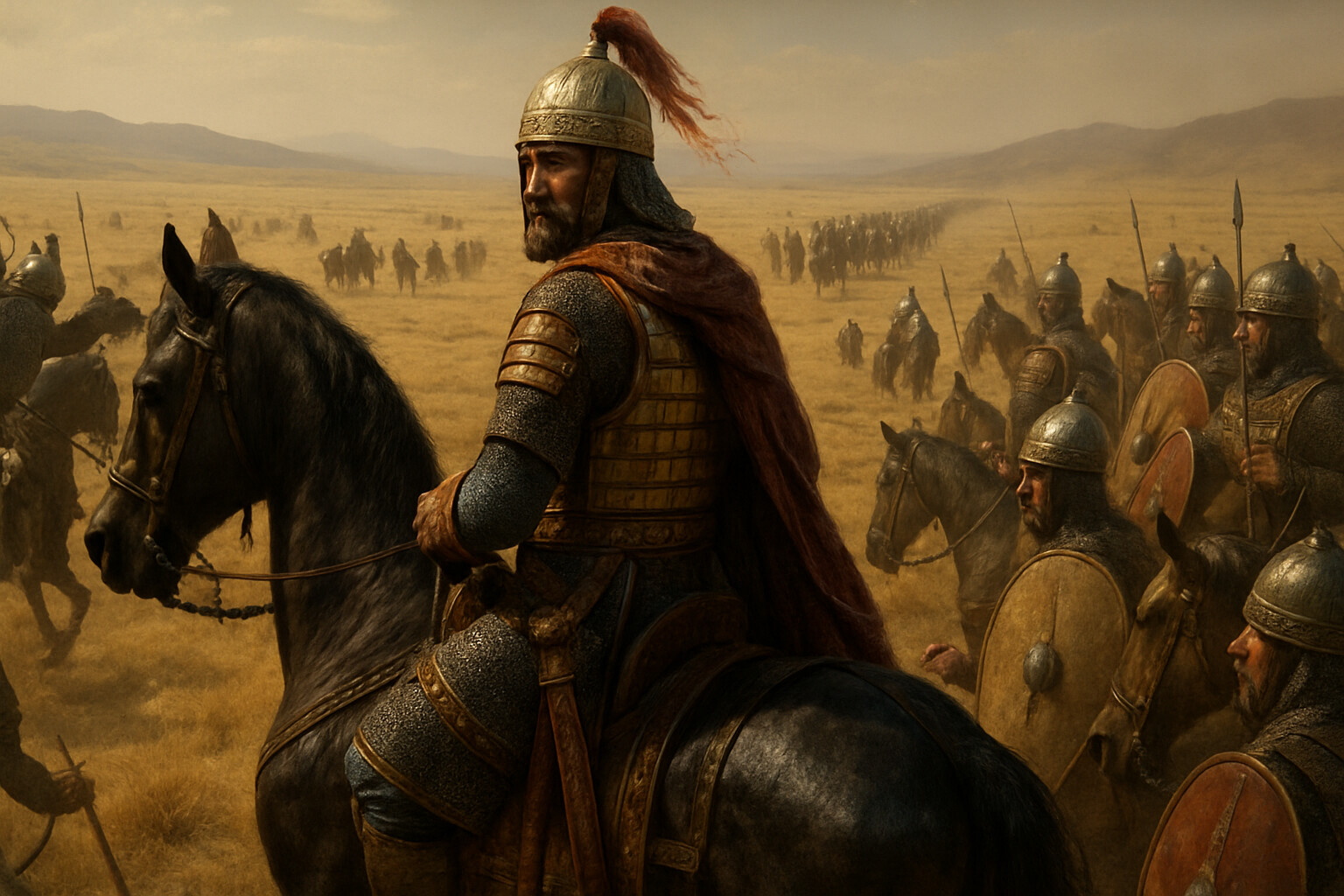
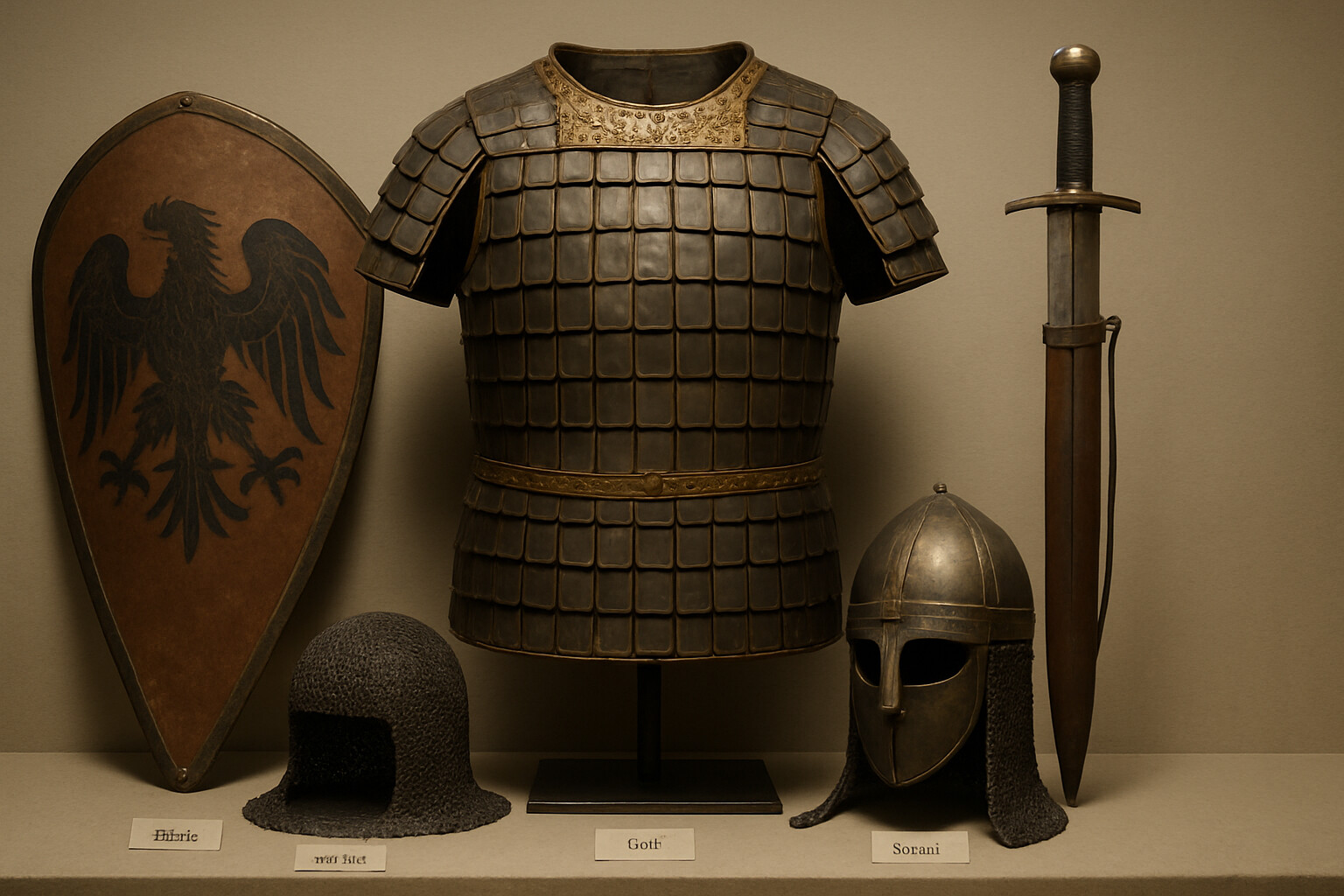
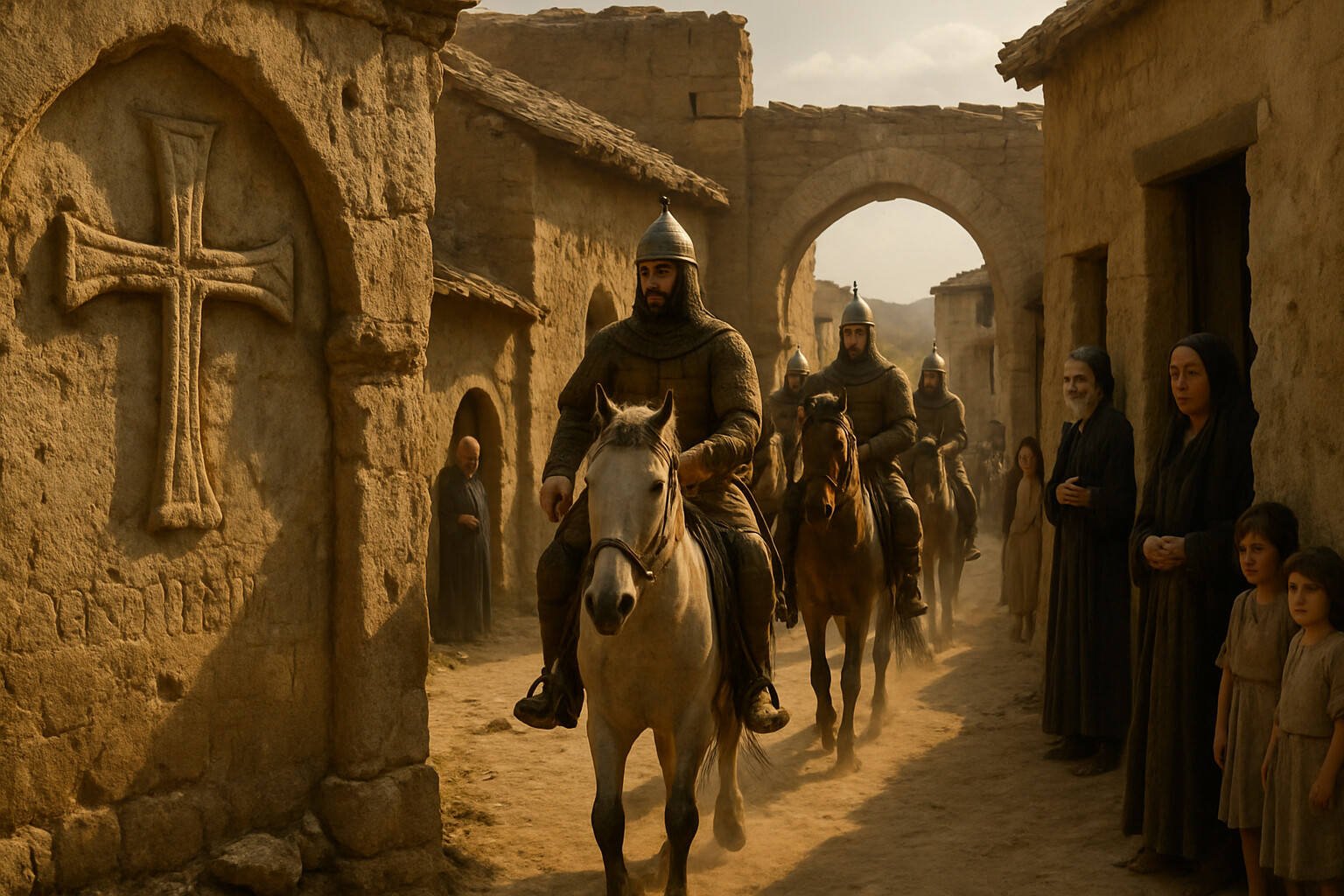
Byzantine heavy cavalry of the era — the kataphraktoi and the related klibanophoroi — were among the most heavily armored mounted soldiers in the world. Horse and rider were both protected: the rider in lamellar armor over mail, with a kite shield, armed with a long cavalry lance called a kontarion, a straight or single-edged sword, and sometimes a mace. Byzantine military manuals of the period, including the Praecepta Militaria attributed to Nikephoros Phokas and the Strategikon attributed to Maurice, describe in detail how this force was supposed to operate: shock cavalry that broke enemy formations after being screened and supported by lighter horse.
The problem at Manzikert was the screening and the support. The Byzantine light cavalry screen — drawn partly from Pecheneg and Cuman auxiliaries — was not adequate to suppress or drive off Seljuk horse archers operating in large numbers across wide frontage on open ground. Without that screen, the heavy cavalry was exposed to sustained archery at ranges where it could not effectively respond.
A war bow of the type Seljuk horse archers carried could kill or disable horses at considerable distances, and at close range could drive an arrow through mail. A kataphraktos without his horse was an armored man on foot in the middle of an open field, surrounded by mounted archers. The bow's decisive contribution at Manzikert was not a single volley but an entire day's work: every hour of advance under arrow fire was an hour of horses being wounded, men being hit, formation discipline eroding, and cohesion fraying. By the time the withdrawal order came and the rearguard walked away, the Byzantine force had already been ground down by hours of harassment it could not effectively counter.
The Seljuk cavalry also carried sabers for close combat, and some units carried lances. But the bow structured the battlefield from the first advance to the final collapse.
The Varangian Guard — the elite infantry regiment drawn largely from Norse, Anglo-Saxon, and other northern European warriors, armed with the long Danish axe and protected by substantial armor — was a formidable force in close combat. At Manzikert, Varangian units appear to have fought hard and suffered heavily. But infantry armed with hand weapons had no mechanism for engaging horse archers who refused to close, and the broad, open terrain offered none of the defensive ground that could have made Varangian formation fighting decisive.
---
**Sources and What They Tell Us**
The primary sources for Manzikert are valuable but require careful handling.
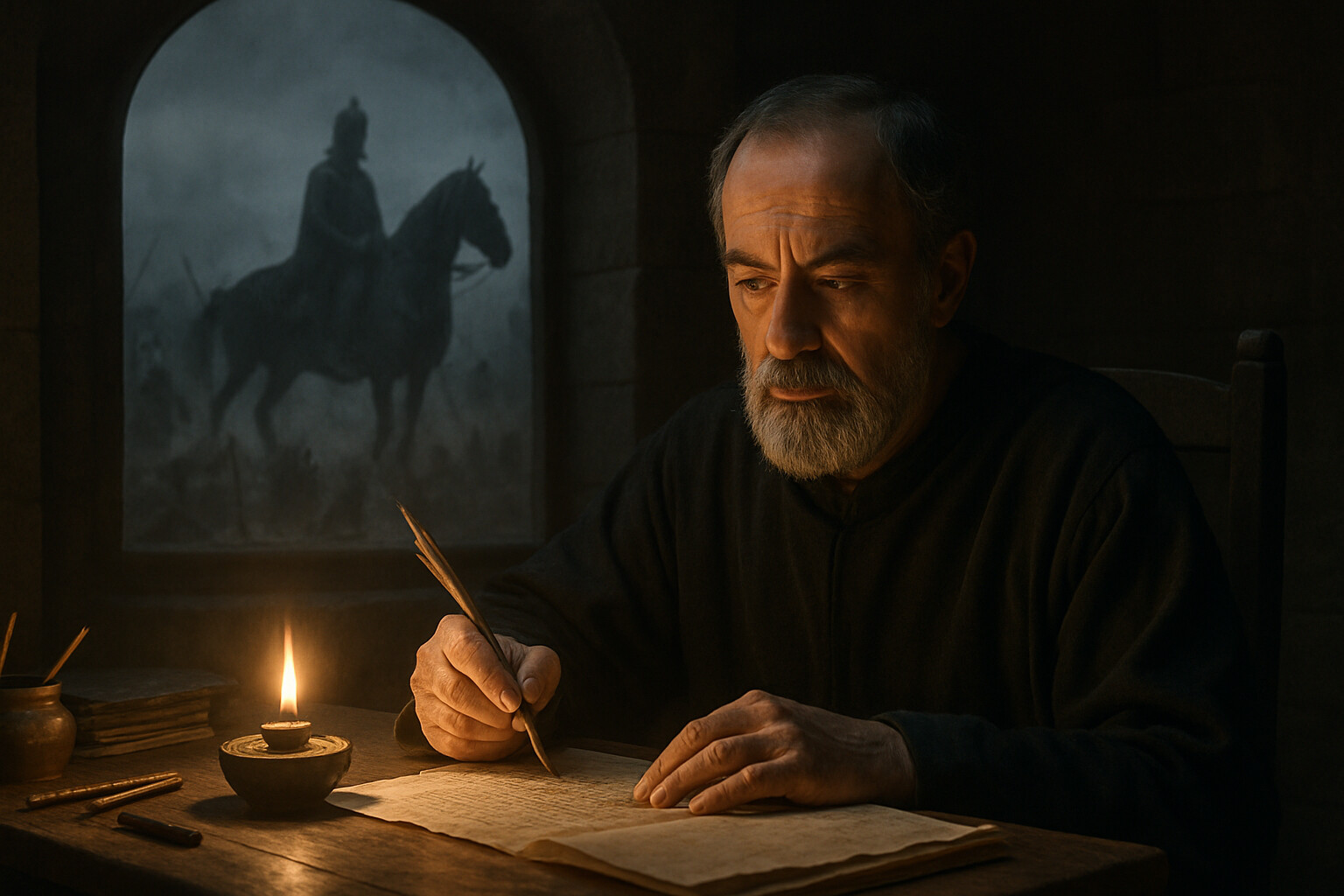
Michael Attaleiates is the closest thing to an eyewitness account available. A jurist and historian who accompanied the campaign, his Historia is the fullest near-contemporary Byzantine narrative of the battle. He wrote with evident sympathy for Romanos and evident hostility toward the Doukas faction, which colors his account of Andronikos Doukas's behavior — but his basic factual framework has held up reasonably well under scholarly scrutiny.
Nikephoros Bryennios wrote his history roughly a generation later and was himself a military man, later the husband of the historian Anna Komnene. His account is useful for context and for information about subsequent events but more distant from the battle itself.
Anna Komnene's Alexiad, written in the twelfth century, discusses Manzikert's consequences at length in the context of her father Alexios I's efforts to rebuild the empire, but she was not born until after the battle and relies on earlier sources.
Matthew of Edessa provides an Armenian perspective valuable for the regional and diplomatic context, though he wrote at some remove from events and some of his figures and characterizations are treated skeptically by modern historians.
Seljuk and Arabic sources exist — including the chronicle tradition associated with Ibn al-Athir — though their accounts are briefer and focused on the Seljuk side of events.
Modern scholarship has substantially advanced understanding of Manzikert. Vryonis's The Decline of Medieval Hellenism in Asia Minor (1971) remains essential for the long-term demographic and cultural consequences. Haldon's work on Byzantine military organization provides the structural context for understanding why the army performed as it did. Carole Hillenbrand's Turkish Myth and Muslim Symbol: The Battle of Manzikert offers important analysis of how the battle was remembered and mythologized in Turkish historical tradition. Norwich's three-volume history of Byzantium, while written for general audiences, synthesizes the primary accounts accessibly and responsibly.
The numbers — army sizes, casualties, ransom amounts — in the primary sources should be treated with significant caution. Medieval chroniclers routinely inflated figures, and even sympathetic eyewitness accounts like Attaleiates' reflect the limitations of pre-modern battlefield record-keeping. What can be said with confidence is that the Byzantine field army was effectively destroyed as a fighting force, that Romanos was captured and subsequently blinded and killed after his return, and that the political and military consequences were severe and lasting.
The question of whether Andronikos Doukas deliberately betrayed Romanos or made a catastrophic error of judgment is genuinely unresolved. Attaleiates and the tradition sympathetic to Romanos treat it as treachery. The Doukas family's own historical tradition offered different explanations. A careful reader of the sources cannot go beyond saying that the behavior of the rearguard was the proximate cause of the final collapse — the intent behind that behavior remains contested.
---
**Why Manzikert Still Matters**
Manzikert is sometimes called the battle that killed the Byzantine Empire. That is too simple. The empire survived for nearly four more centuries, produced remarkable rulers like Alexios I Komnenos who stabilized and partially recovered its position, and did not finally fall until the Ottoman conquest of Constantinople in 1453. The line from 1071 to 1453 runs through too many other crises — the Fourth Crusade of 1204, which actually sacked Constantinople — to make Manzikert the single cause of Byzantine extinction.
But Manzikert matters for what it demonstrates about how empires actually fail. Not through a single dramatic defeat, but through the interaction of structural weakness, political dysfunction, and military disaster in a sequence that becomes self-reinforcing. The Byzantine military system had been declining for decades before 1071. The political rivalries that put Andronikos Doukas in command of Romanos's rearguard were years in the making. The Seljuk pressure on the eastern frontier had been building since the 1040s.
What Manzikert did was collapse several slow-moving processes into a single catastrophic event and accelerate everything that followed. It removed the army that protected Anatolia. It removed the emperor committed to maintaining that protection. It demonstrated to Turkic warriors across the region that Anatolia was penetrable. And it plunged Byzantium into a decade of civil war at precisely the moment when coherent military response was most needed.
Romanos IV Diogenes does not fit neatly into the categories of victor or failure. He was an able soldier who understood the empire's military problem more clearly than most of his contemporaries. He fought at Manzikert when others fled. He negotiated with Alp Arslan in captivity and returned to find his enemies had already dismantled everything he had built. He died within a year of the battle, blinded and broken by the political system he had tried to reform.
The sources that survive were largely written by people connected to the faction that destroyed him. Reading them carefully, the outline of a competent and determined commander destroyed by political enemies as much as by Seljuk cavalry begins to emerge — though the record is too incomplete and too partisan to render a final verdict.
What is clear is this: on August 26, 1071, on a dry plateau in the Armenian highlands, the Byzantine Empire lost not just a battle but the field army, the emperor, and the political will that had held Anatolia for centuries. The Seljuks did not take Anatolia that day. But Manzikert made certain that no one would effectively stop them when they did.