The smoke arrived before the fire did.
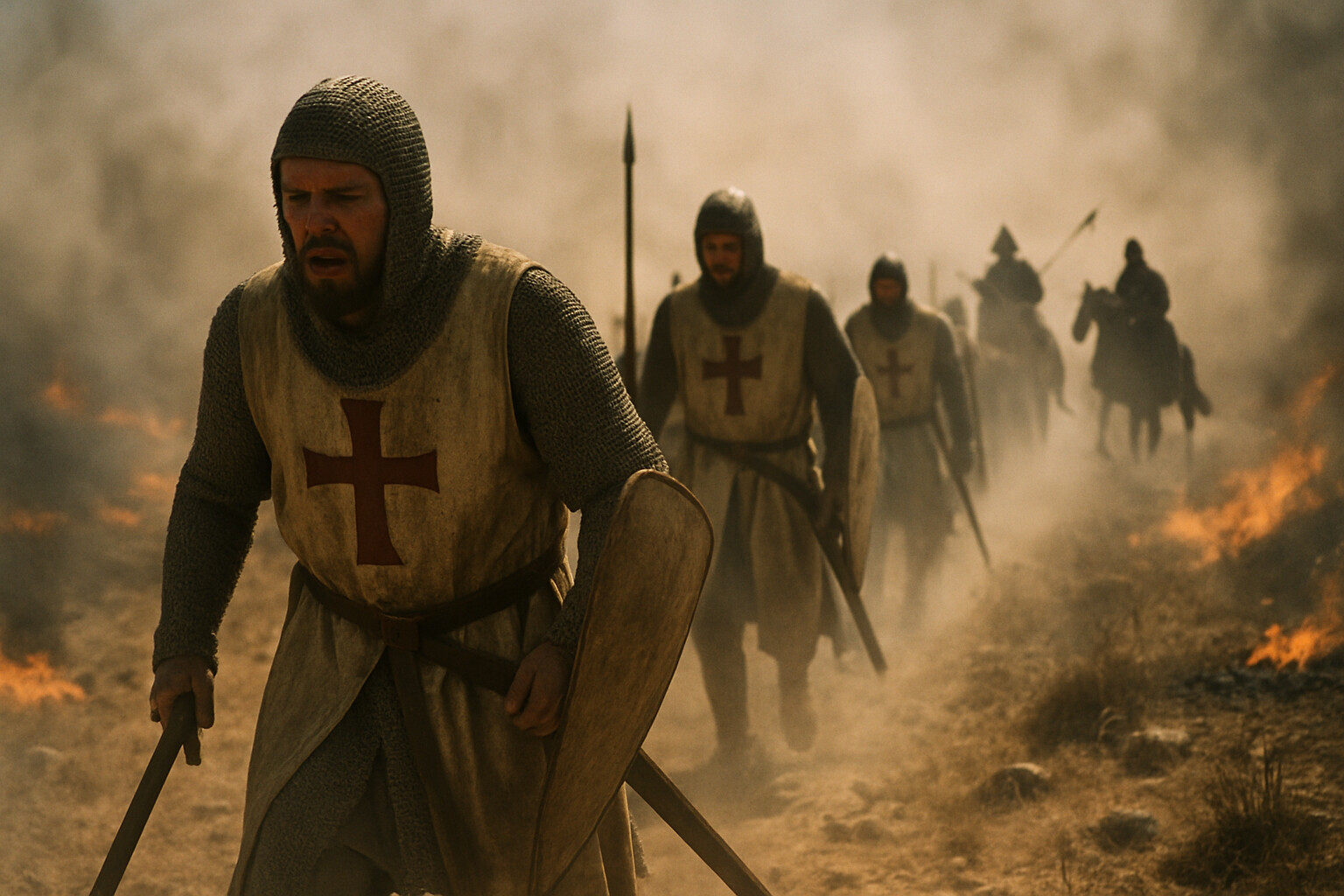
On the morning of July 4, 1187, the knights and foot soldiers of the Crusader Kingdom of Jerusalem could see the grass burning along the ridgeline ahead of them. Saladin's men had set it. Thick, choking waves rolled back across the column, mixing with the dust raised by thousands of boots and hooves. The army had marched under the Palestinian summer sun since before dawn. There was no water. The nearest spring was at Hattin, still miles ahead, and the column was already fracturing at the edges.
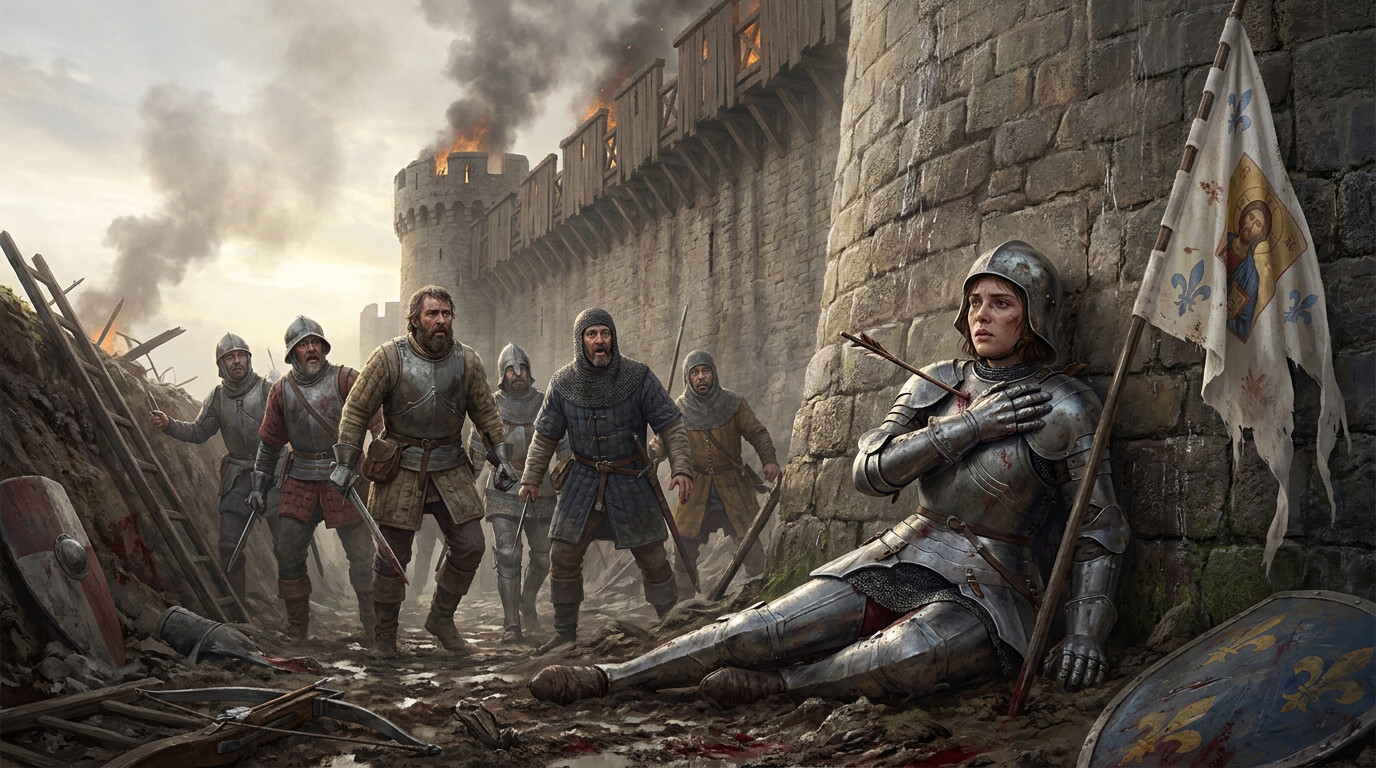
The men of the rearguard — mostly infantry — were failing. Arrows fell on them continuously from mounted Ayyubid archers circling just beyond effective response range. The cavalry horses were maddened by thirst. Several infantrymen had already broken formation; whether they were walking toward the enemy to surrender, or because the heat had overwhelmed their capacity to reason, no chronicle makes entirely clear. The army of the kingdom — the largest force the Crusader states had ever assembled — was dissolving.
Saladin had been working toward this moment for a decade.
---
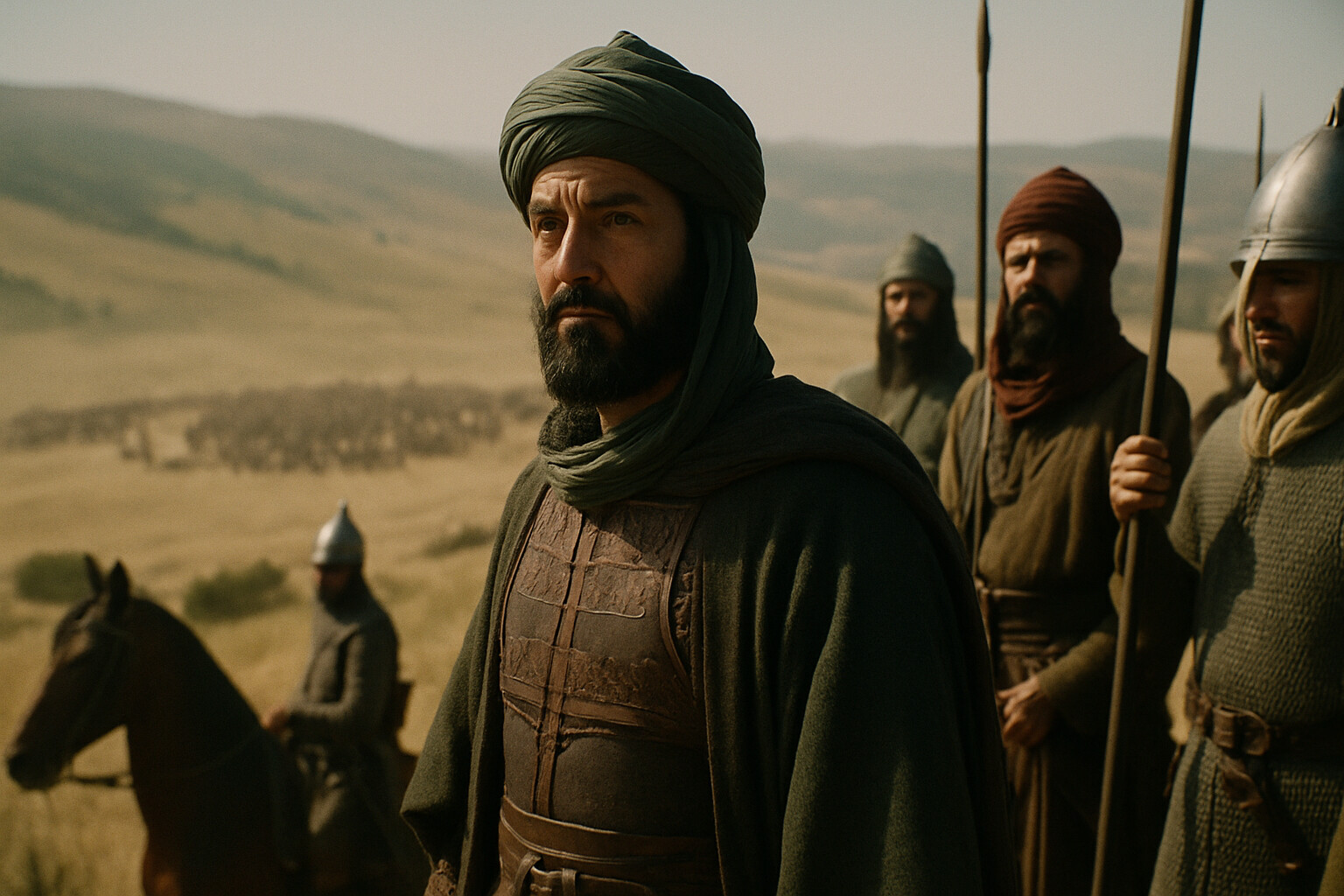
Yusuf ibn Ayyub, known to history as Saladin, was born around 1137 in Tikrit, in present-day Iraq, into a Kurdish family of military administrators serving under the Zengid dynasty. His father, Ayyub ibn Shadhi, was a capable commander and governor, and the family's fortunes rose with the Zengid expansion. Saladin spent his formative years not in the desert but in the cultivated courts of Damascus and Aleppo, receiving an education in Islamic jurisprudence, literature, and the practical arts of governance. Both his admirers and his adversaries recorded him as genuinely learned.
His military career began under his uncle Shirkuh, a Zengid general dispatched to Egypt in the 1160s to contest that country against the rival Fatimid caliphate and against Crusader interference. Egypt was the richest province of the region, and whoever controlled it held an enormous strategic advantage over the Crusader states of the Levantine coast. In 1169 Shirkuh died suddenly, and Saladin — then in his early thirties and not the obvious candidate — was appointed vizier of Egypt by the Fatimid caliph. Within two years he had dismantled the Fatimid caliphate itself, realigning Egypt under Sunni orthodoxy and the nominal authority of the Abbasid caliph in Baghdad. He was now the independent master of Egypt.
From there the consolidation was methodical. Over the following years Saladin brought Syria, northern Iraq, Yemen, and eventually Aleppo under his control — sometimes through warfare, more often through negotiation, political maneuvering, and the strategic use of marriages and appointments. By 1186, the Crusader Kingdom of Jerusalem was encircled. Saladin controlled Egypt to the south and Syria and Mesopotamia to the north and east. The kingdom was an elongated coastal strip, dependent on the sea for supplies and reinforcement from Europe, and on a fragile internal coalition for its military strength.
That coalition was already fractured.
The kingdom in 1186 was governed by Guy of Lusignan, who had come to the throne through his marriage to Sibylla, sister of the leper king Baldwin IV. Guy was a capable enough battlefield commander but a politically divisive figure. The nobility was split between factions supporting Guy and those loyal to Raymond III of Tripoli, one of the most experienced and strategically clear-eyed leaders in the Latin East. Raymond had negotiated a separate truce with Saladin and had permitted Ayyubid cavalry to conduct a reconnaissance in force through his territory of Galilee — a decision that infuriated his opponents and supplied them with the charge of treachery.
The tensions carried practical military consequences. Decision-making was contested. The chain of command was uncertain. And the most aggressive voices in the military council — led by Reginald of Châtillon, lord of the formidable castle of Kerak, a man who had made a habit of provoking Saladin with raids on Muslim caravans and a reported attempted strike toward Mecca itself — were pushing for confrontation. [Note: the attempted Mecca raid is attested in multiple sources but the precise scope is presented variably; treat as established in outline, disputed in detail.]
Saladin understood all of this. He had assembled intelligence that gave him detailed information about conditions inside the kingdom, including its factional disputes and the personal animosities that paralyzed Crusader decision-making. The specific mechanisms of that intelligence work are not fully documented in surviving sources, but the precision of his maneuvering in 1187 reflects an evident and thorough awareness of his enemy's vulnerabilities. He was patient. He probed. He waited for the moment when the kingdom's internal contradictions would force it into a position he had prepared.
That moment came in the spring and summer of 1187.
---
The immediate trigger for the campaign was Reginald of Châtillon's attack on a Muslim caravan — the sources place it in late 1186 or early 1187, with some inconsistency on the precise date — in violation of an existing truce. The caravan reportedly included members of Saladin's household or retinue, and Reginald refused to release them or compensate for the losses despite Saladin's demands. This gave Saladin the juridical pretext he needed to launch a major campaign. Whether it also accelerated his timeline or simply confirmed a decision already made cannot be established from the surviving record; the strategic preparation had clearly been underway for months.
In early July 1187 Saladin moved a large army across the Jordan River into Galilee. Contemporary Muslim sources, including the accounts of Saladin's secretary Imad ad-Din al-Isfahani and the judge Baha ad-Din ibn Shaddad, place his forces somewhere between twelve thousand and thirty thousand men; modern scholarship generally favors estimates in the range of twelve thousand effective cavalry supported by infantry, though precision is not possible from the sources available. The Crusaders had mustered what contemporary accounts describe as the largest army the kingdom had ever fielded: roughly twelve hundred to fourteen hundred knights, supported by perhaps four to five thousand mounted sergeants and turcopoles, and an infantry force estimated between ten thousand and twenty thousand men. These figures carry the wide uncertainty typical of medieval sources and represent scholarly judgment rather than precision. The True Cross — the relic believed by the Crusaders to be a fragment of the cross of the Crucifixion — traveled with the army, carried as a battle standard and symbol of divine sanction.
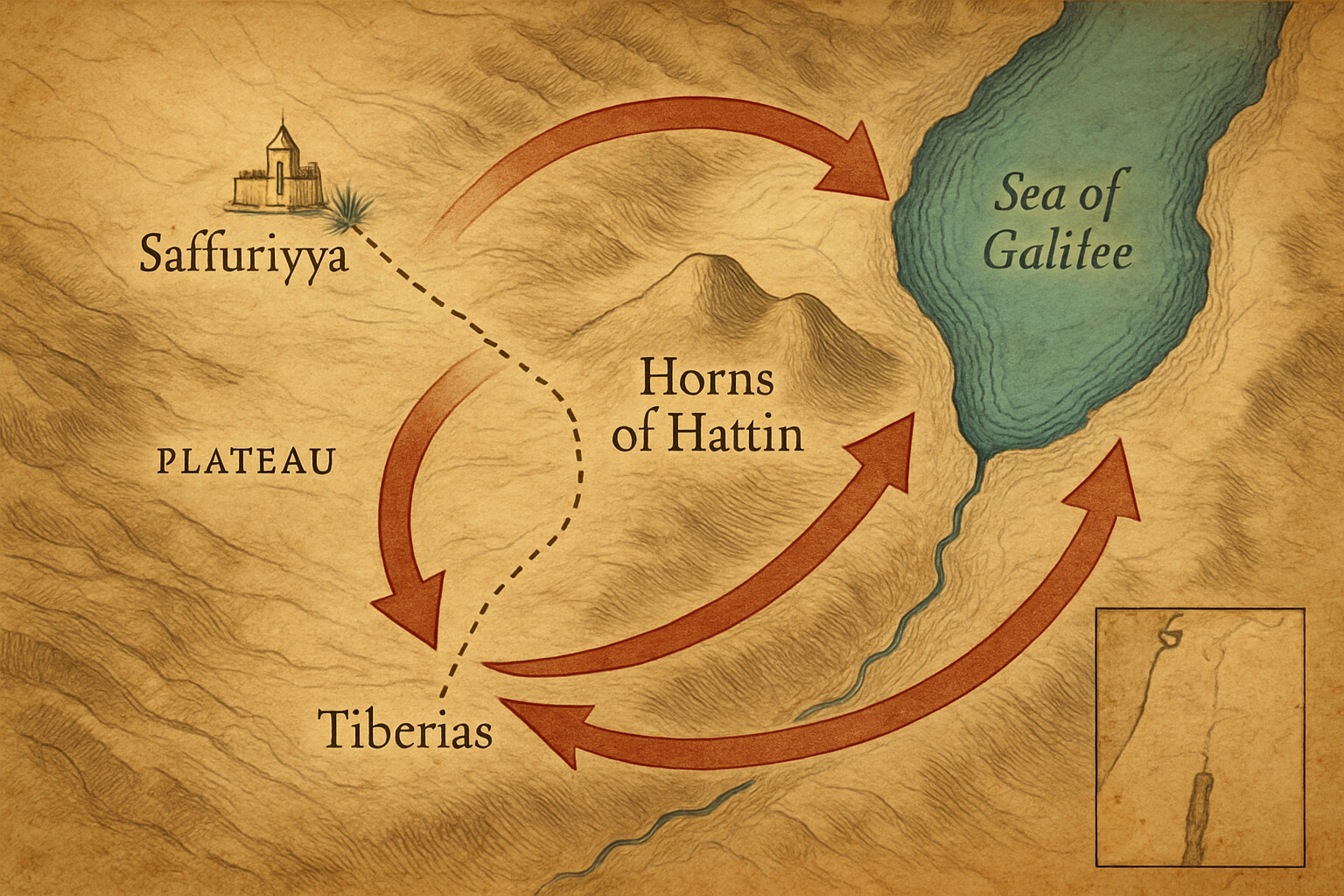
Saladin's opening move was a feint. He sent a force under his son al-Afdal and his lieutenant Muzaffar ad-Din Gökböri to threaten Tiberias, the capital of Raymond of Tripoli's county on the western shore of the Sea of Galilee. On July 2 that force stormed Tiberias and captured most of the town. Raymond's wife, the Countess Eschiva, held out in the citadel and sent word to the main Crusader army, encamped at Saffuriyya approximately twenty-five kilometers to the west.
Saffuriyya was one of the best defensive positions in Galilee. It had water — a large spring capable of supplying the entire Crusader army indefinitely. Raymond of Tripoli, who knew the terrain better than almost any man in the kingdom, gave the advice that most modern historians have judged sound: hold at Saffuriyya. Let Saladin attack across difficult ground toward a well-supplied army in a strong position. The kingdom could afford to wait. Saladin, with a large army to supply across contested territory in summer, could not sustain a prolonged siege.
The military council debated through the night. Reginald of Châtillon argued for advancing to relieve Tiberias. Gerard of Ridefort, the Grand Master of the Knights Templar — whose judgment had already cost the order severely at the Springs of Cresson two months earlier, where a Templar-led force had been nearly annihilated by Ayyubid cavalry — supported the advance. The emotional weight of the argument was considerable: the True Cross was present, a Crusader county capital was burning, a Crusader noblewoman was besieged. The honor code of the kingdom pushed hard toward action.
Guy of Lusignan, after initially agreeing with Raymond's counsel to hold, reversed his decision. The army would advance.
This reversal is one of the most debated decisions in the history of the Crusades. The sources record its broad outlines; the private deliberations that produced it cannot be recovered. What is clear is that when the Crusader army broke camp at Saffuriyya on the morning of July 3 and began the march toward Tiberias, it entered the strategic trap Saladin had prepared.
---
The march from Saffuriyya to Tiberias crosses roughly twenty-five kilometers of increasingly difficult terrain. The plateau in the area of the Horns of Hattin — a distinctive double-peaked extinct volcano visible for miles — is waterless in summer. Both Muslim and Christian sources are unanimous that the heat of July 1187 was severe even by local standards, though the precise temperatures cannot be quantified from the available record. The Crusader army was a large, slow-moving column: cavalry, infantry, baggage, clergy carrying the True Cross. It could not move fast, and it needed water constantly.
Saladin had prepared the ground. His cavalry shadowed the column from its first step, maintaining contact without committing to a pitched engagement. They harassed the flanks and, critically, the rearguard. The infantry of the rearguard — less mobile and more vulnerable than the cavalry — began taking casualties almost immediately. The harassment was not designed to destroy the rearguard outright; it was designed to slow the column, exhaust the soldiers, force the cavalry into repeated counter-charges, and above all to prevent the army from reaching water.
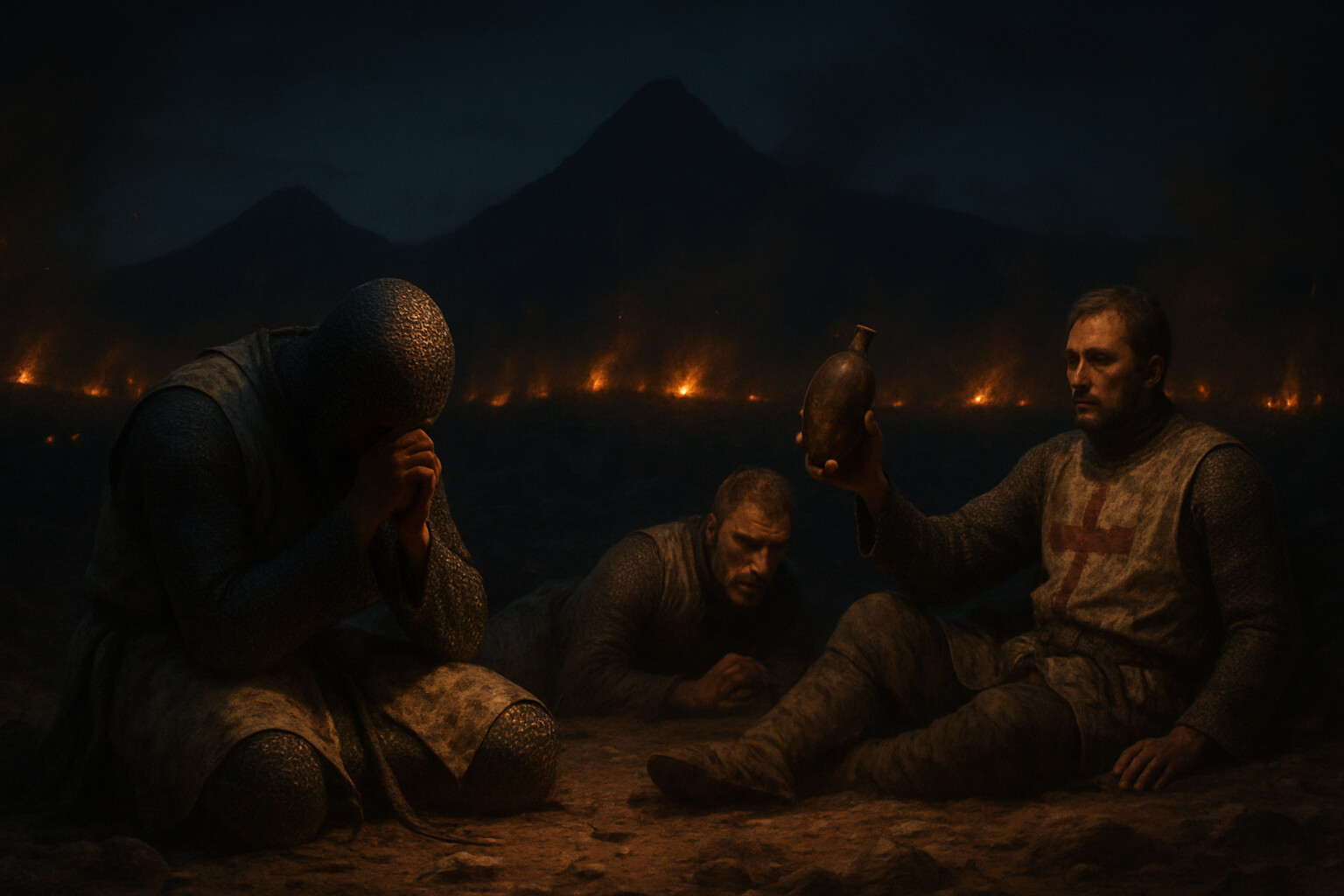
By midday on July 3 the army had covered roughly half the distance to Tiberias and was already in serious difficulty. A decision was made to divert the column northward toward the village of Marescalcia and a spring there. The spring, when the lead elements arrived, was either dry or inadequate — the sources are not fully consistent on this point, but all agree that the army did not obtain the water it needed. They encamped that night on the plateau, ringed by fires Saladin's men had lit in the dry scrub, smoke drifting through the camp throughout the night.
The thirst was now acute. The horses were suffering. The infantry, the sources indicate, were approaching the boundary of effective military function.
At dawn on July 4 the Crusader army resumed the march toward the springs at Hattin. It was already too late.
Saladin's forces closed in on all sides. The cavalry tried to protect the column, but the infantry of the rearguard broke under the combination of sustained attack and thirst and pushed toward the twin peaks of the Horns — a defensible high point, but one with no water and no tactical future. The column was splitting. The battle was becoming a rout.
Guy of Lusignan managed to establish a fighting camp on the slopes of the Horns, and several times the Crusader cavalry charged in an attempt to break through the encircling Ayyubid forces. Muslim and Christian sources alike record these charges as desperate and individually courageous. Imad ad-Din's account describes the cavalry breaking through the Ayyubid lines on at least one occasion, only to find themselves isolated, unable to bring the infantry and baggage with them, and forced back. Raymond of Tripoli, with his cavalry, broke through the encircling force on the northern side and withdrew. Whether this was achieved by force, by tactical skill, or because Saladin deliberately left the gap open to further disorganize the Crusader response is disputed in the scholarship and has not been resolved.
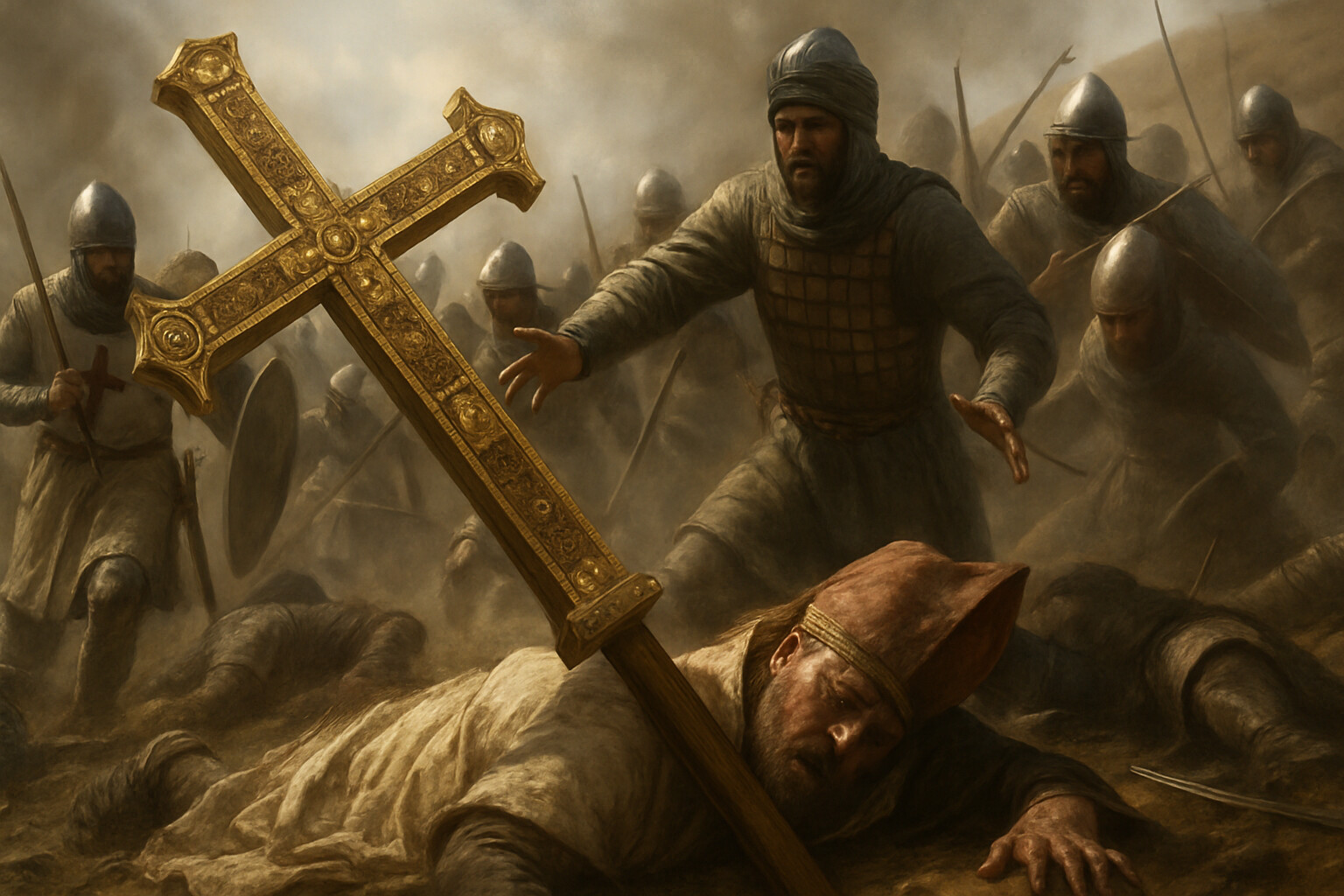
The charges exhausted the horses and gained nothing. The True Cross fell. Then Guy's own tent, pitched on the slopes, collapsed — a moment the Muslim sources record as marking the psychological end of Crusader resistance. The army surrendered.
---
The aftermath was immediate and catastrophic for the Crusader Kingdom.
Saladin treated captured knights and common soldiers differently. The ordinary soldiers and much of the cavalry were taken prisoner and would eventually be ransomed or enslaved. The military orders — the Templars and Hospitallers — were singled out: Saladin offered the choice of conversion or death, and the majority chose death. Contemporary accounts describe large-scale executions at Saladin's camp in the hours after the battle. The precise numbers vary significantly across sources and cannot be established with certainty, but the military orders were effectively destroyed as fighting forces in a single afternoon.
Reginald of Châtillon was brought before Saladin directly. Saladin executed him — personally or at direct order, with the two versions appearing across the sources — citing Reginald's repeated violations of truce and his attacks on Muslim travelers. This event is recorded in multiple Muslim and Christian sources and is among the better-attested individual acts of the entire campaign.
Guy of Lusignan was taken prisoner and treated according to the conventions of honorable captivity. Multiple sources record an exchange in which Saladin offered Guy water and, when Guy passed the cup to Reginald, Saladin made clear that he himself had not extended hospitality to Reginald — a distinction carrying legal and moral weight in contemporary understandings of the obligations created by offering food or drink to a captive. The exchange is attested across several sources but with some variation in its reported details; the substance is consistent even where the wording differs, and it should not be cited as a verbatim account.
The True Cross was taken to Damascus and never recovered. Its loss carried as much psychological and symbolic weight as the military defeat. For the Crusader population of the Levant, the relic had been understood as a guarantee of divine protection. Its capture shattered that assurance. The True Cross disappears from reliable historical record by the early thirteenth century; its ultimate fate is unknown.
With the field army gone, the cities and castles of the kingdom were stripped of their garrisons. In the weeks and months following Hattin, Saladin moved systematically through the kingdom, accepting the surrender of town after town. Acre fell without serious resistance on July 10. Ascalon fell in September. Jaffa surrendered. The coastal cities collapsed in rapid succession.
Jerusalem fell on October 2, 1187. Saladin's conduct of the surrender negotiation is recorded in considerable detail by both Muslim and Christian chroniclers. He negotiated a ransom for the population's freedom, accepted that many could not pay, and ultimately released a substantial number who could not meet the ransom. He did not order a general massacre — a pointed contrast with the behavior of the Crusaders who had taken Jerusalem in 1099. Contemporaries on both sides noted the comparison, and it has remained central to every subsequent discussion of Saladin's conduct and character.
The news of Jerusalem's fall produced the Third Crusade, bringing Richard I of England, Philip II of France, and other monarchs to the Holy Land. Saladin spent the remaining years of his life managing that response — winning some engagements, conceding others, and eventually negotiating the Treaty of Jaffa with Richard in 1192, which granted Christian pilgrims access to Jerusalem while leaving the city itself under Muslim control.
He died in Damascus on March 4, 1193. Baha ad-Din ibn Shaddad, who was present at the end, recorded that Saladin's personal estate was so depleted that it could not cover the cost of his burial — the treasury had gone to the campaign and to charitable distributions. Baha ad-Din's account of those final days is among the most carefully observed deathbed records of the medieval period.
---
The weapons at Hattin tell part of the story of why the Crusaders lost.
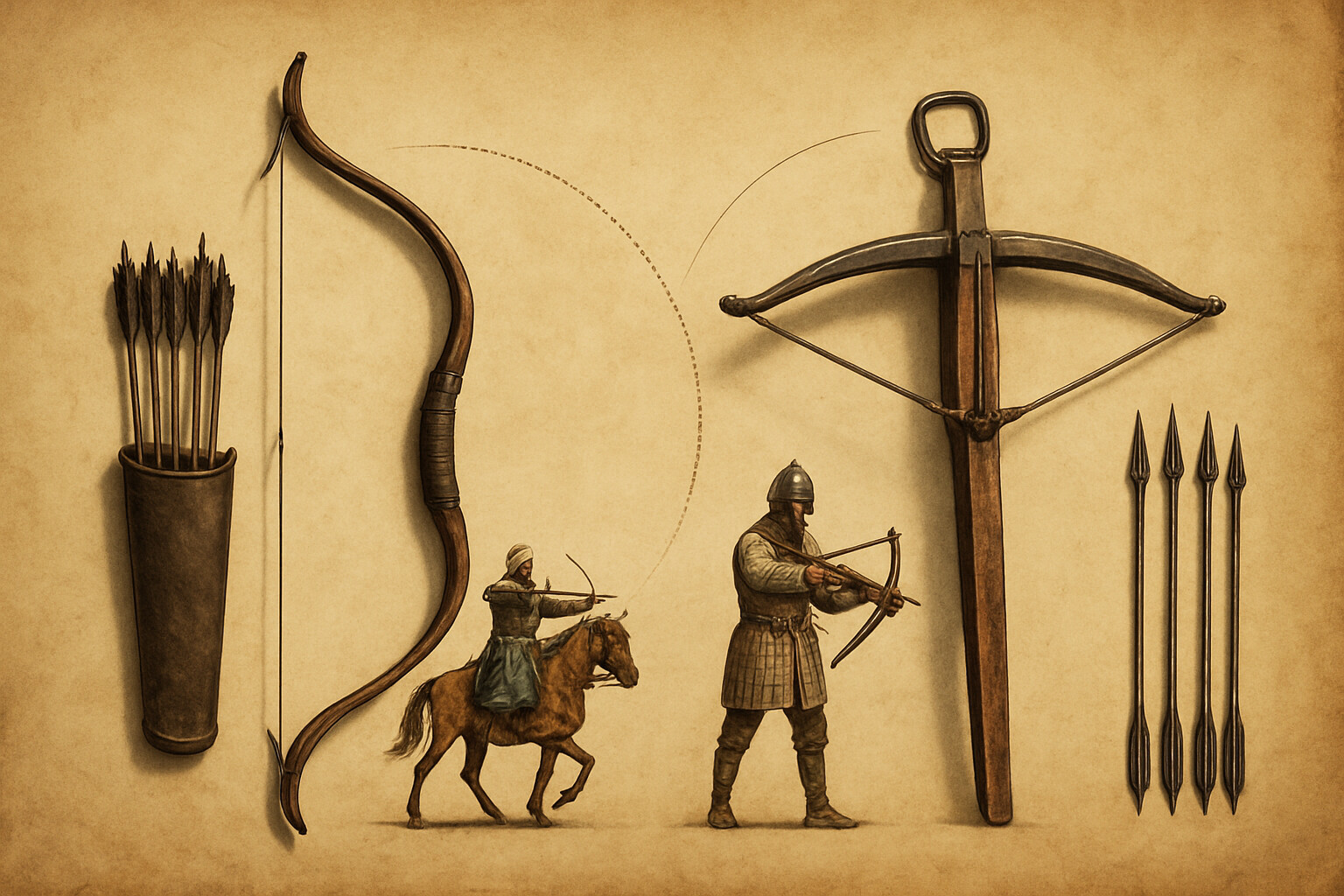
The Ayyubid army fought primarily with composite recurve bows, the dominant cavalry weapon of the Islamic world in this period. A well-made composite bow — assembled from layers of wood, horn, and sinew laminated under tension and then shaped into a recurved profile — stored far more energy per unit of draw weight than a simple wooden bow of comparable length. It was shorter and more maneuverable on horseback, and in the hands of trained mounted archers it delivered a rate of fire and an effective range that the Crusader cavalry's equipment could not easily counter. The massed archery of the Ayyubid cavalry was not primarily aimed at killing knights — their mail could deflect most arrows — but at killing their horses and destroying the supporting infantry.
The Crusader cavalry was built around the heavy armored charge: knights in mail hauberks and increasingly reinforced armor, mounted on large warhorses bred and trained for the shock of a lance impact. At full speed and in sufficient mass, a Crusader cavalry charge was among the most devastating tactical instruments available in the medieval world. The problem at Hattin was that every condition necessary for that charge to function — well-rested horses with water, intact formation, room to build speed, an enemy that would stand and receive the impact — had been systematically removed before the decisive engagement was joined. The charges the Crusaders launched on July 4 were made by exhausted animals, in broken formation, against cavalry that gave ground and closed again behind them. They could not be sustained.
The Crusader infantry carried crossbows capable of punching through mail at medium range, and spears, swords, and axes for close-quarters fighting. Their primary role in Crusader doctrine was to provide a protected formation within which the cavalry could rest, reform, and charge — a system that worked well when the infantry could hold cohesion. At Hattin, the infantry lost that cohesion from thirst and sustained harassment before the decisive engagement was joined. The crossbow itself was a weapon with structural limitations under these conditions: its mechanical spanning process — necessary to draw the bowstring against the bow's substantial tension — took between thirty seconds and several minutes depending on draw weight and method, leaving the crossbowman exposed during reloading. Against the continuous archery of circling mounted archers, crossbowmen without formation cover were at a persistent disadvantage. Their bolt supply was also finite; resupply under fire was not possible, while Saladin's logistical preparation — attested by Baha ad-Din — had ensured his archers could be resupplied throughout the engagement.
The True Cross, carried into battle, was not a weapon in any material sense. It was the most important command and morale instrument the Crusader army possessed. The bishop who carried it and the guard assigned to protect it held among the most honored assignments in the army. When the relic fell, it was not simply a religious catastrophe; it was the visible signal to both sides that the battle was over.
---
The scholarship on Hattin rests on a range of sources, none of them straightforward.
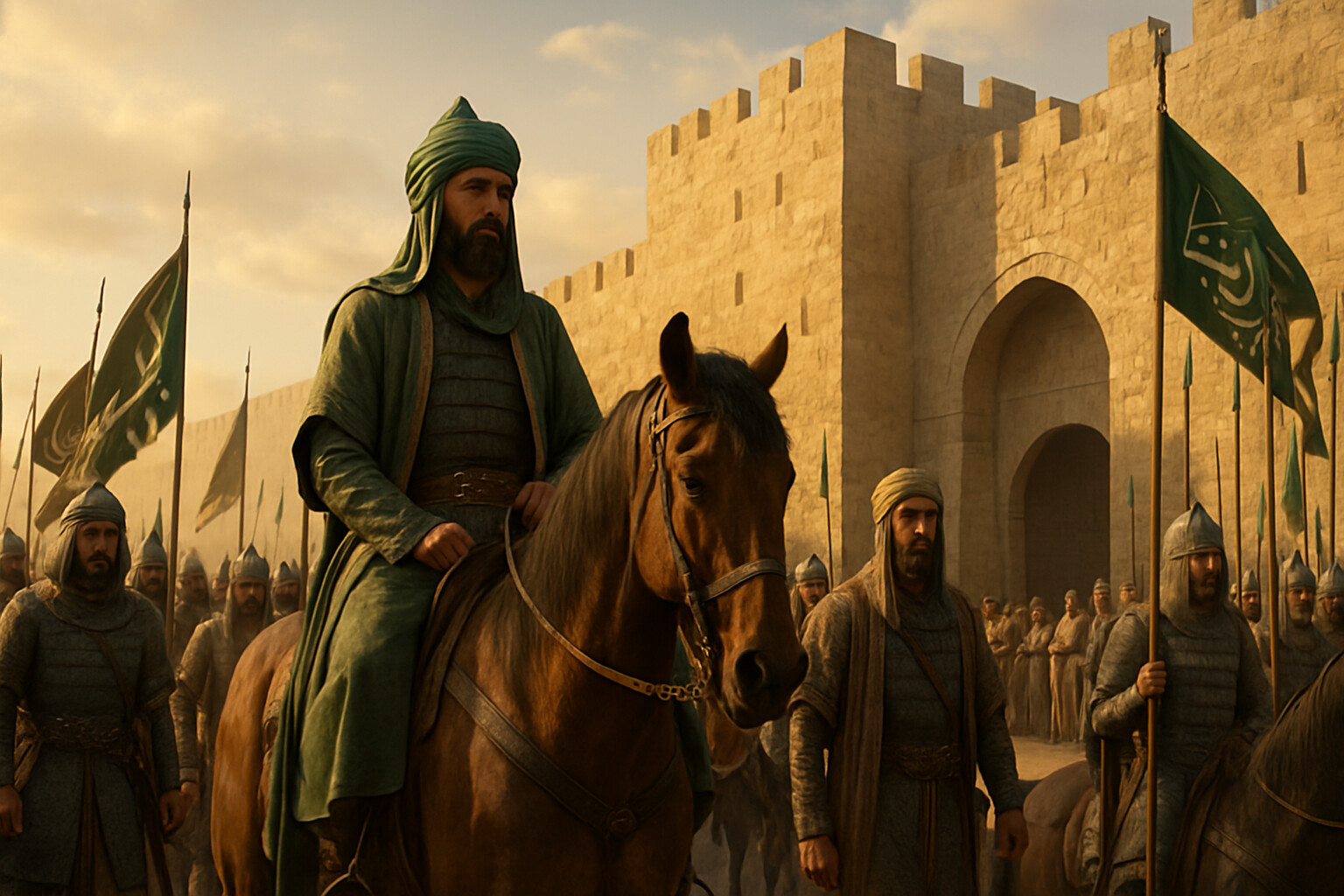
The Muslim sources are richer and more immediate for this campaign than the Christian ones. Imad ad-Din al-Isfahani, Saladin's secretary, was present during the campaign and wrote detailed accounts; his work has the characteristic of court literary production — stylized, rhetorically elaborate, shaped to honor his patron — and requires careful critical use. Baha ad-Din ibn Shaddad, the judge who became one of Saladin's closest companions and his principal biographer, wrote a life of Saladin that is among the most careful and humane biographical accounts of the medieval period, though composed after Saladin's death with full knowledge of how the story ended.
On the Crusader side, the primary narrative sources are later and less detailed about the tactical events at Hattin. The Old French Continuation of William of Tyre provides important material, and the Ernoul-Bernard Chronicle has been valuable to historians, though its relationship to the original eyewitness tradition is debated. The letter sent by the Patriarch of Jerusalem to Pope Gregory VIII in the immediate aftermath of the defeat survives and provides a contemporary Christian perspective of raw urgency.
Modern historians have worked through this material with considerable rigor. John France's work on Crusader warfare provides essential context for the tactical analysis. Malcolm Barber's scholarship on the military orders clarifies the fate of the Templars and Hospitallers at Hattin. Andrew Ehrenkreutz's biography of Saladin, Carole Hillenbrand's comprehensive analysis of the Crusades from the Islamic perspective, and Anne-Marie Eddé's exhaustive biography of Saladin have collectively established the scholarly framework within which Hattin is now understood. Jonathan Phillips's recent examination of Saladin's life and later reputation adds important perspective on how the historical figure was refracted through subsequent centuries.
Genuine uncertainties remain. Army sizes on both sides are reported with the wide variation typical of medieval sources, and modern estimates represent informed scholarly judgment rather than recoverable precision. The exact sequence of events on the night of July 3 — what was said in the Crusader camp, why Guy reversed the decision to hold, what intelligence Saladin had about Crusader intentions — cannot be fully recovered from the surviving record. The role of Raymond of Tripoli in the battle, including whether his escape involved any prior arrangement with Saladin or was purely tactical, has been debated for centuries and is unresolved.
What is not seriously disputed: Saladin chose the battlefield, prepared the terrain, denied the water, and destroyed the army. The victory was a product of intelligence, patience, geographic mastery, and the exploitation of his enemy's internal divisions. The kingdom did not recover. Jerusalem fell. The map of the Crusader states was permanently altered.
---
Saladin's reputation has traveled a complicated path through the centuries since his death.
In the medieval Islamic world he was celebrated as the restorer of Jerusalem to Muslim rule, the champion of Sunni orthodoxy, and the exemplar of just and generous conduct. Baha ad-Din's biography was influential in establishing this image, reinforced by the poetry and chronicles of the generations immediately after his death.
In the medieval Christian world his reputation was more complicated and more interesting. He was the enemy, the destroyer of the kingdom, the man who had taken Jerusalem. And yet even in sources produced within a generation of Hattin, he appears as a figure of unusual courtesy, generosity, and restraint — the man who had not massacred Jerusalem's population, who had treated his prisoners according to his own code of conduct, who was reportedly learned and devout. Legends that grew up around him in Europe, some within fifty years of his death, portrayed him as nearly an honorary knight, a mirror image of the ideal Christian warrior. These traditions tell more about European self-understanding and the categories through which medieval Christians processed admirable adversaries than they do about the historical Saladin himself, but their existence is historically significant in its own right.
The modern rediscovery of Saladin as a political symbol — by Arab nationalist movements in the twentieth century, by various political actors in the contemporary Middle East — has layered additional meaning onto the historical figure that has nothing to do with 1187 but cannot be entirely separated from any current discussion of his legacy.
The historian's task is to see through those layers to the actual events at the Horns of Hattin: the burning grass, the failed charges, the collapse of the infantry, the fall of the True Cross. An army — the largest Crusader field force ever assembled — destroyed not by a sudden stroke but by the patient, systematic denial of water and the exploitation of everything its leaders had done wrong in the weeks and years before.
The road to Jerusalem was open.
Saladin rode south.