The ground was still dark when the Ottoman sappers went to work beneath the walls of Vienna for what their commanders believed would be the last time.
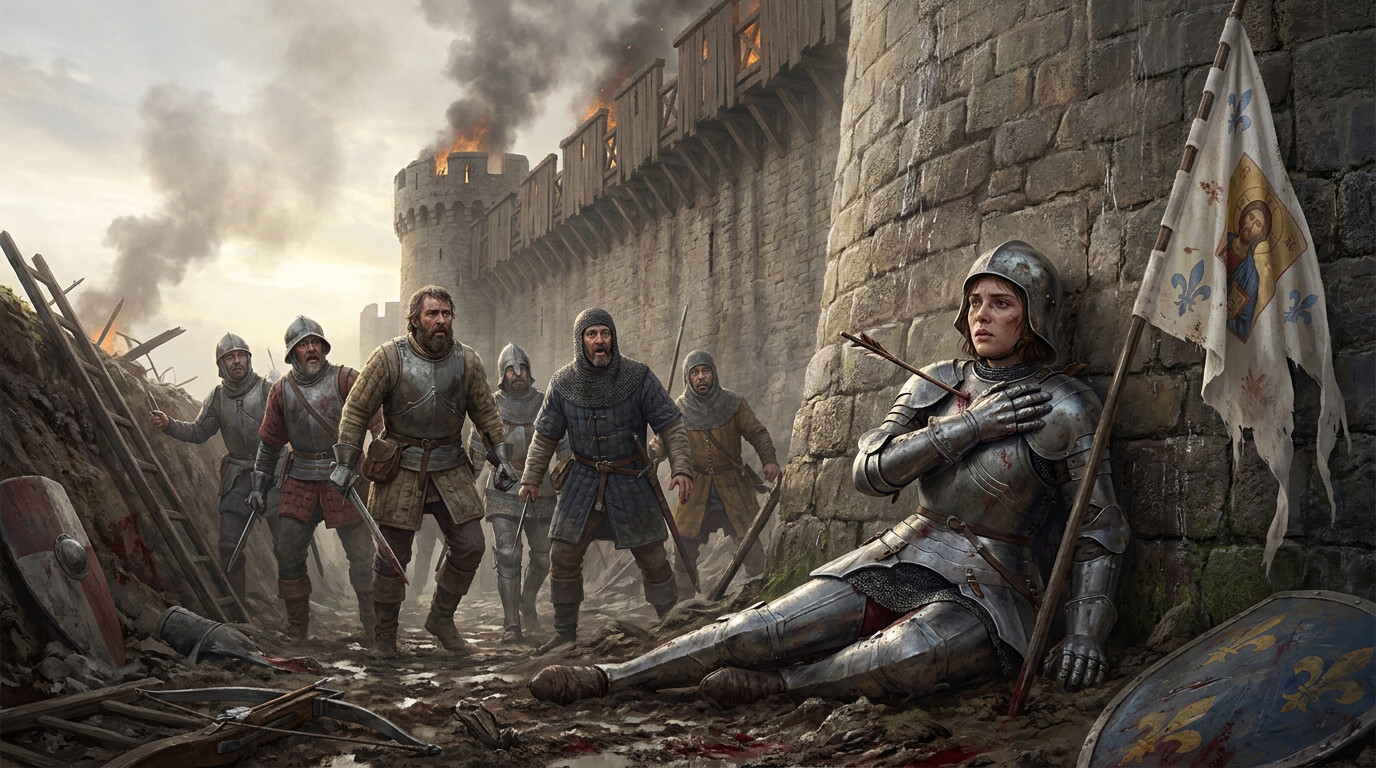
For sixty days the city had held. The garrison was hollowed out by dysentery, reduced in strength to perhaps eleven thousand defenders from an original force barely adequate to man the walls. The great earthen bastions had been struck again and again by Ottoman artillery. Parallel trenches crept forward daily, engineers countermining against each new sap. By the evening of September 11, 1683, the defenders had identified at least one Ottoman mine gallery running beneath the Löbel bastion, a critical section of the southeastern wall. The powder was laid. If the explosion went according to plan, it would open a breach wide enough to swallow the Ottoman assault columns before any relief force could descend from the hills visible to the northwest. The garrison commander, Ernst Rüdiger von Starhemberg, had been awake for most of the previous two weeks. His dispatches to the relief army above the Kahlenberg ridge had grown increasingly direct: come now, or accept that the city is lost.
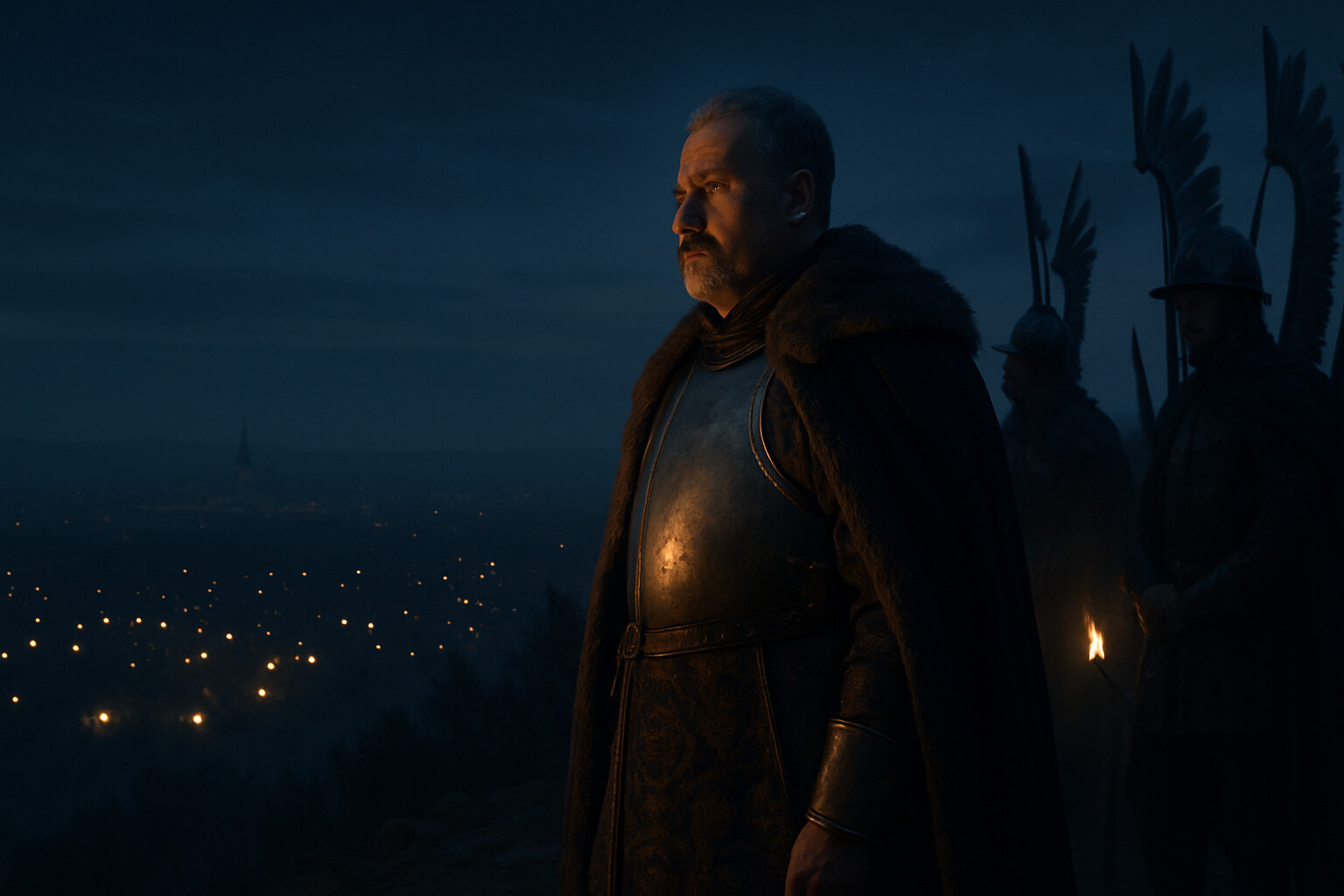
On the ridge above, in the early hours of September 12, Jan III Sobieski was examining the ground he intended to cross.
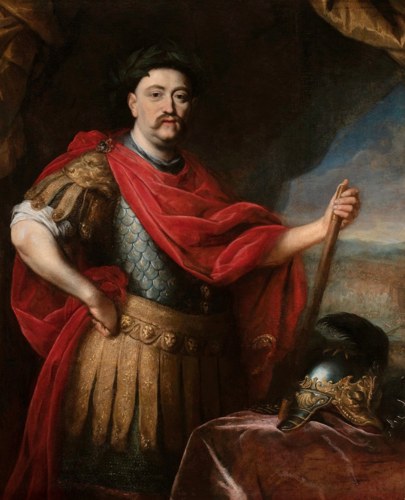
He was fifty-three years old, heavyset, and experienced in a way that came from decades of actual fighting rather than palace planning. He had held the Polish throne since 1674, elected by the fractious Polish nobility after distinguishing himself militarily against the Cossacks, Tatars, and Ottomans for the better part of his adult career. He was not a theorist. He was a commander who had ridden in charges himself and who had spent the last six weeks negotiating, marching, and coordinating one of the most complicated multi-national military operations the century had yet attempted. From the Kahlenberg heights, in the pre-dawn dark, he could look down the slope toward the Ottoman siege lines and the tent city of the besieging army spreading across the plain in an arc. Contemporary estimates of the Ottoman force ranged between 90,000 and 150,000 men — a range that reflects how difficult it was then, and remains now, to count an army on the move and in position.
The city visible below had fewer than 20,000 people alive inside its walls, civilian and soldier combined.
To understand what September 12 meant, it is necessary to understand what the weeks before had already cost.
The Ottoman Empire in 1683 was the most powerful single state in the known world by territory, and its ambitions under Grand Vizier Kara Mustafa Pasha had not diminished with size. Vienna had been probed before: the Ottomans had come to the walls of the Habsburg capital in 1529 under Suleiman I and been turned back, more by logistics and weather than by fighting power. The failure had not been forgotten in Istanbul. Vienna sat at the eastern gate of the German-speaking lands, at a point where the Danube carved through terrain separating the Ottoman-held Hungarian plain from the heart of Europe. Taking it would fracture the Habsburg Empire, open the German states to serious military pressure, and establish Ottoman power in a zone that had remained contested for 150 years.
Kara Mustafa had assembled a force that contemporaries and later historians alike found formidable in its composition. The core was the Ottoman field army, including elite Janissary infantry, timariot cavalry, and artillery. Augmented by Crimean Tatar irregular cavalry under Khan Murad Giray, vassal troops from Wallachia, Moldavia, and Transylvania, and a siege train of substantial weight, the Ottoman force crossed into Habsburg territory in the early summer of 1683 and reached the approaches to Vienna by mid-July. The garrison, caught before the city had been fully provisioned for a long siege, watched Emperor Leopold I evacuate westward to Linz with his court and much of the nobility. The citizens who remained had no such option.
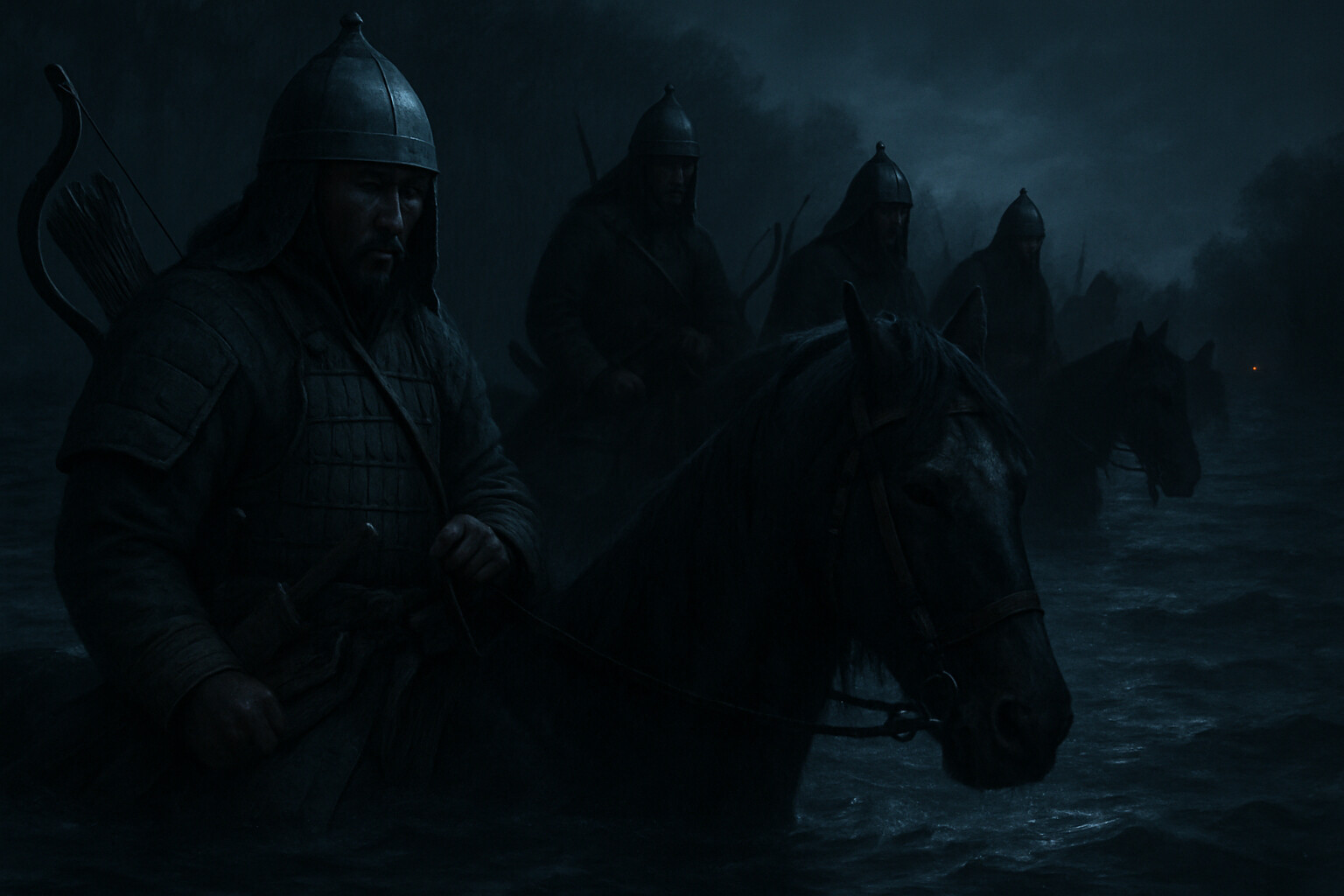
The defense of Vienna from July 14 to September 12 is its own story, and one that deserves its own account. What matters here is what Starhemberg's garrison accomplished: sixty days of continuous resistance against an Ottoman army that held superiority in nearly every measurable category, using mines, counterattacks, artillery, and a willingness to take casualties that a smaller force could not easily absorb. The garrison received periodic supply and communication through couriers who swam the Danube at night. They knew relief was coming — first as hope, then as a credible operational plan, and finally as a reality visible from the walls when signal fires were lit on the Kahlenberg ridge the night of September 11.
The relief army had its own complications. Sobieski had entered the conflict through the Treaty of Warsaw, signed in March 1683, in which Poland committed to support the Habsburg defense against the Ottoman advance. The alliance was not without tension. Poland and the Habsburg Empire had competing interests in Hungary and Silesia, and the Polish nobility was not universally enthusiastic about spending blood and treasure on Vienna's behalf. Sobieski had navigated these pressures through a combination of strategic argument and personal authority, assembling a Polish force that ultimately numbered roughly 27,000 men, including the formations of winged hussars that gave the Polish army its most recognizable military character.
The Holy League that assembled on the Kahlenberg was a coalition in the most practical and sometimes uncomfortable sense. The German imperial forces under Duke Charles V of Lorraine numbered approximately 21,000. The forces of the German princes — Saxony under Elector John George III, Bavaria, Franconia, Swabia, and others — contributed roughly 25,000 more. Total relief army strength is most commonly estimated at between 65,000 and 80,000 men, a figure that varies by source and by how one counts contingents at different stages of arrival. Pope Innocent XI, through his envoy Marco d'Aviano and through substantial financial subsidies, had been a critical enabler of the coalition without being present on the field. Command arrangements placed Sobieski as supreme commander — an appointment that reflected both his military reputation and the political reality that without Polish infantry and cavalry the coalition lacked its most experienced strike force.
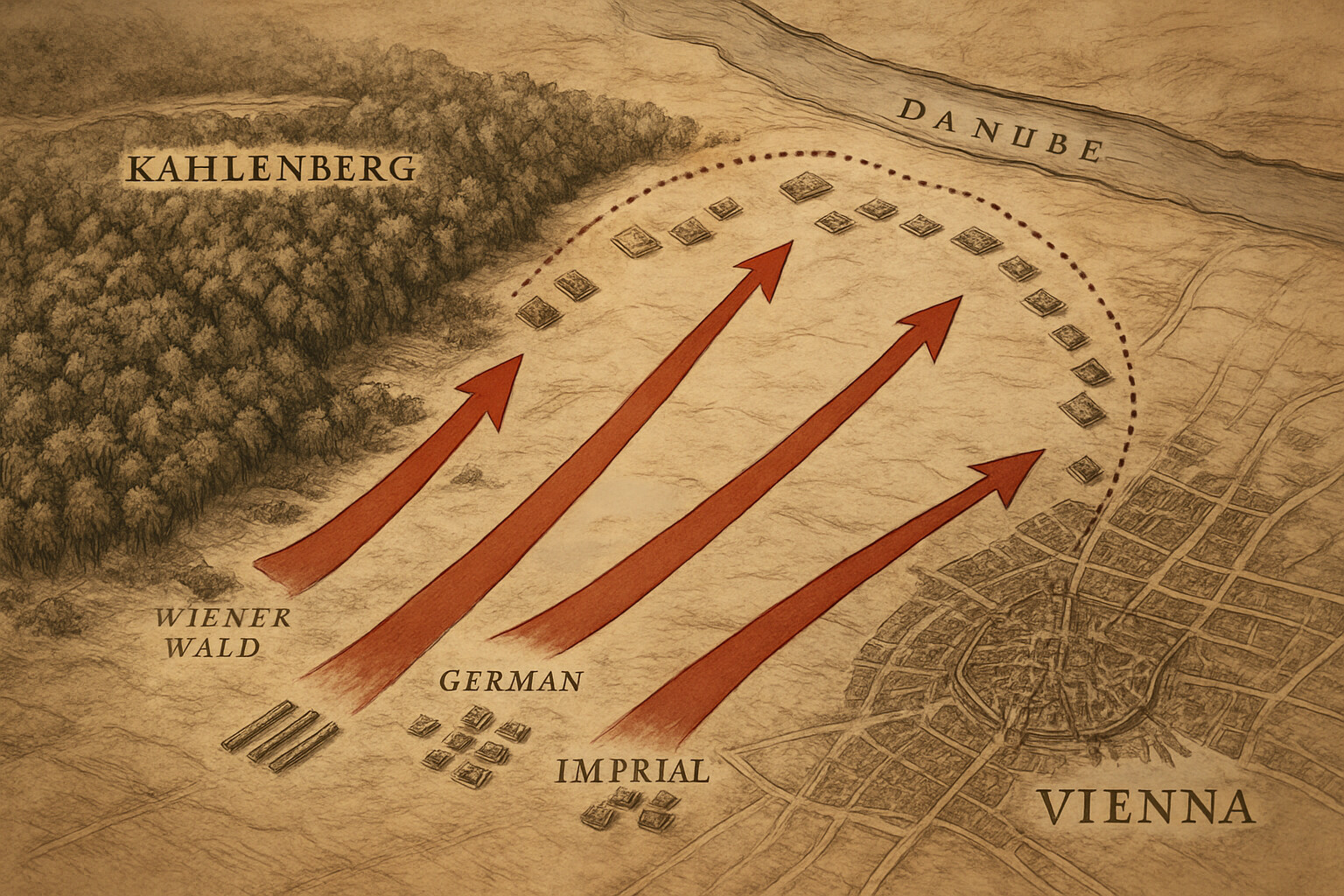
The terrain between the Kahlenberg ridge and the Ottoman siege lines was not a parade ground. The Wienerwald, the Vienna Woods, covered the hills with dense forest cut by ravines and narrow tracks. Moving artillery and cavalry down through this terrain required engineering work that the relief army had been conducting for several days before the battle. The right wing of the allied line, held by the German imperial forces under Lorraine, had the shortest and most open approach toward the Danube flood plain but also faced the most direct Ottoman response as the Ottoman commanders recognized the threat. The left and center, including significant portions of the German princes' contingents, moved through more difficult country. The Polish forces, assigned the left flank in earlier operational planning but ultimately concentrated on the right during the final approach, had the task of descending the steepest portions of the ridge and forming for action under potential fire.
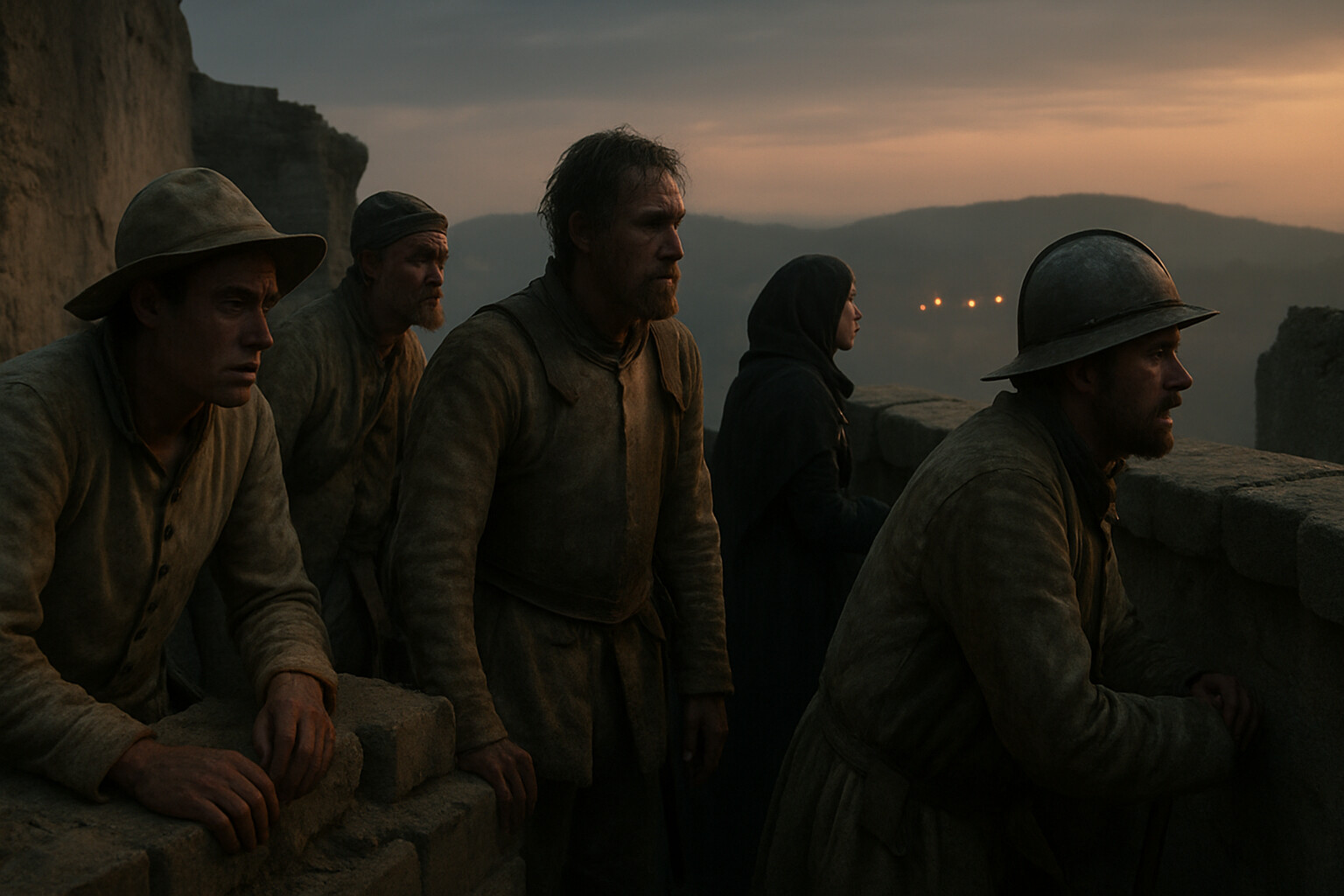
The morning of September 12 began with fighting along the entire front. The German and Austrian imperial cavalry moved first into the flatter ground near the Danube, engaging Ottoman forces and drawing attention and response. German contingents in the center worked through the tree line under intermittent fire and formed their lines with the methodical efficiency that decades of incessant warfare had drilled into them. The fighting was real and costly at multiple points along the line. This was not a walkover. The Ottoman commanders were not passive. Kara Mustafa understood what was descending from the ridge, and he attempted to balance his forces between pressing the assault on Vienna's walls — where his miners were still at work — and turning to meet the relief army.
The balance he attempted was not achieved.
The Ottoman mine beneath the Löbel bastion was detonated during the morning hours. The explosion was significant, but the breach it created was not immediately exploited with the strength the plan required, partly because Ottoman attention was already dividing between the assault and the relief force descending from the ridge. The garrison counterattacked the breach with the resources they had, and the moment of maximum danger passed without the wall being taken. Inside the city, the signal fires on the Kahlenberg had been seen the night before, and what remained of the garrison's morale was braced by the knowledge that the morning might bring relief rather than final collapse.
Through the afternoon, the allied infantry and cavalry pressed down the ridge and across the plain in a line stretching several kilometers. The fighting was continuous and it was not bloodless. The Janissaries — the Ottoman Empire's professional infantry, the formation that had fought its way from Anatolia to the walls of Hungary — defended the approach with the competence that had made them feared for two centuries. The allied line advanced, was pressed back in places, and advanced again. Command coordination across a multi-national force without rapid communication depended on pre-arranged signals, dispatch riders, and the judgment of individual commanders who could see only their immediate sector.
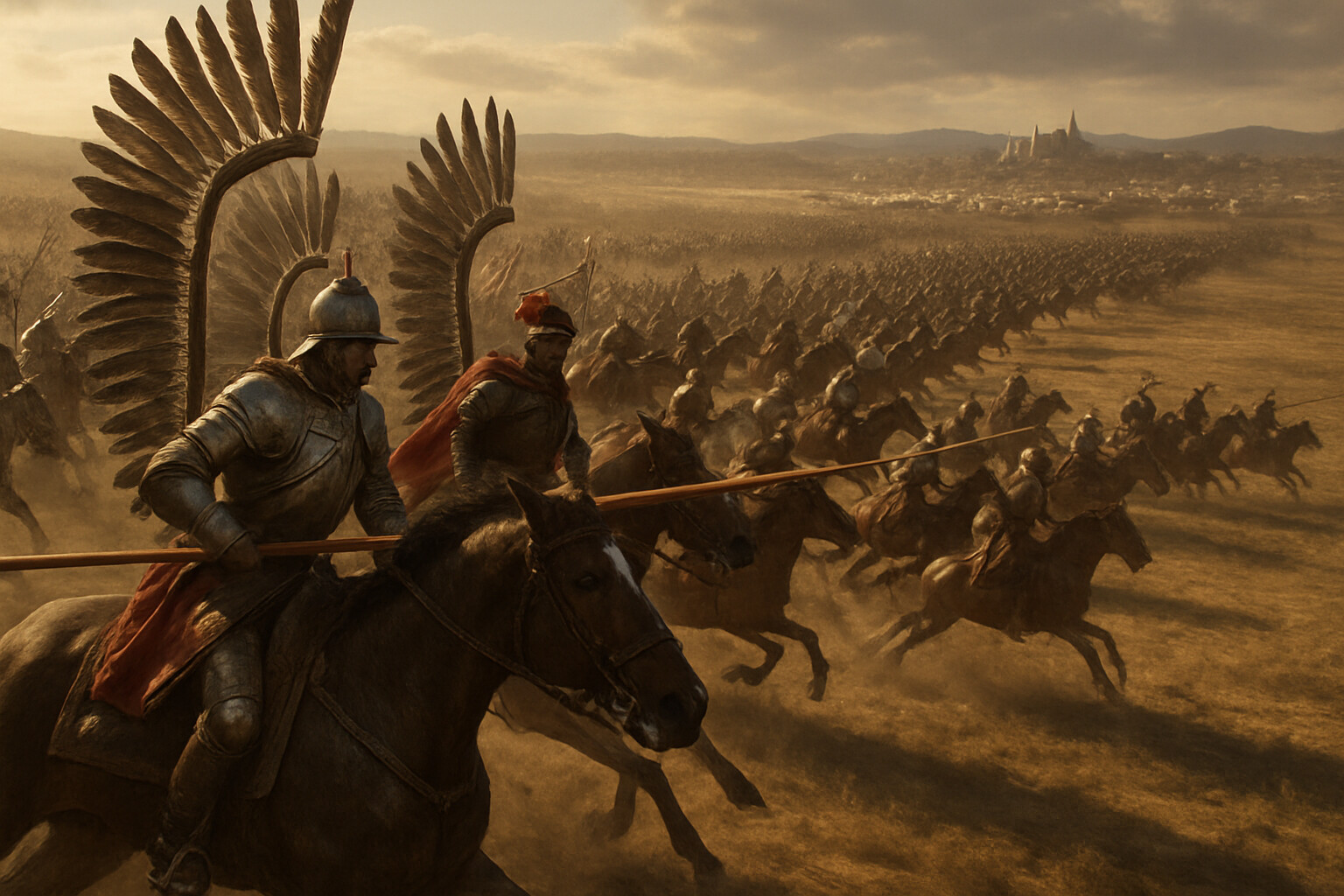
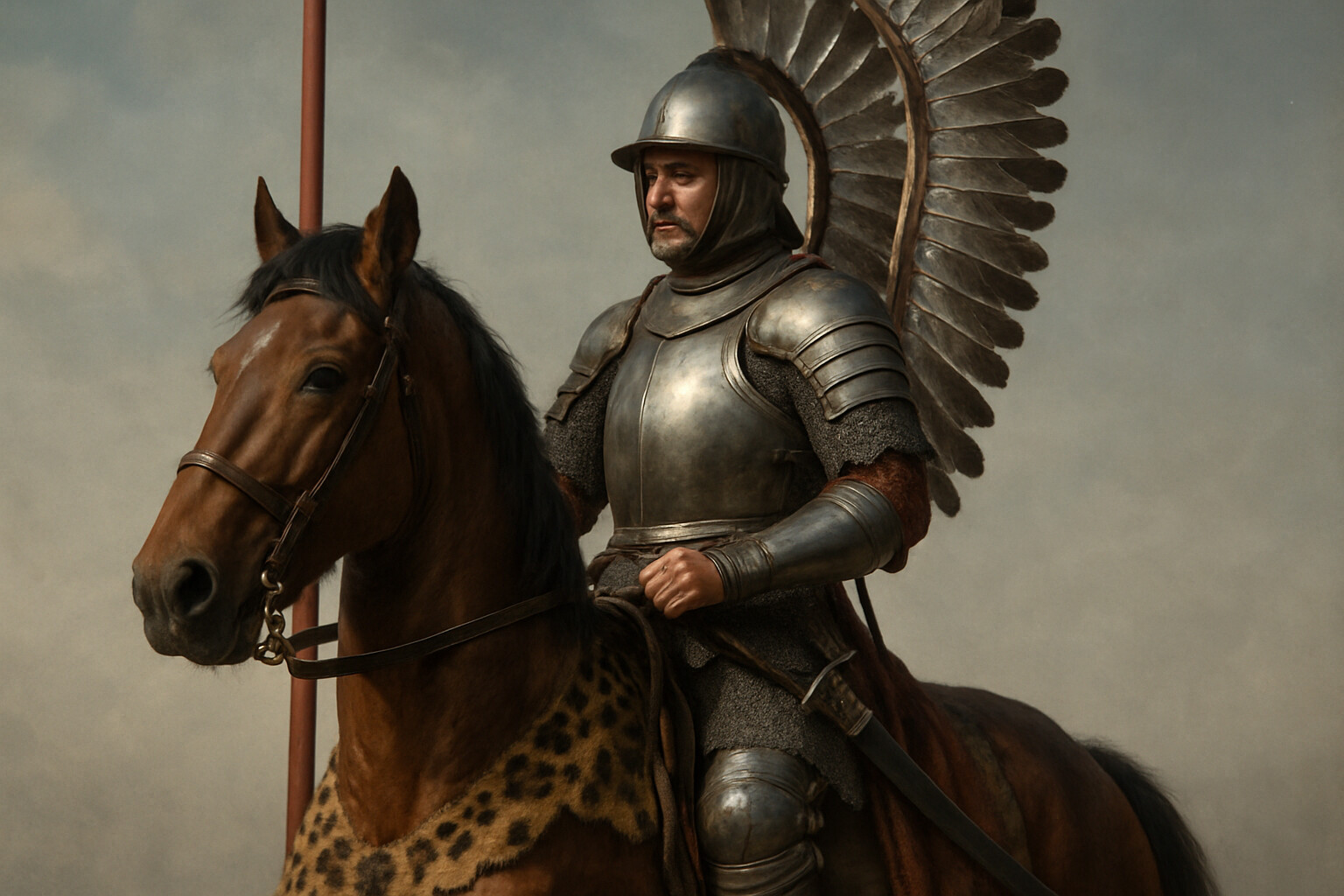
Sobieski managed the battle from the Polish sector while monitoring the whole through dispatches and observation. The Polish formation he commanded was built around the winged hussars, a type of heavy cavalry unique to the Polish-Lithuanian Commonwealth and without precise equivalent elsewhere in the European military world of 1683. The hussars wore plate armor on the chest and back, carried an extraordinarily long lance — the kopia — as their primary shock weapon, and were mounted on large horses bred specifically for the combination of weight and speed the tactical concept required. The wings themselves — constructions of wooden frames carrying eagle, ostrich, or other large-bird feathers rising above the rider's back and shoulders — are among the most visually striking features in early modern military history. Their battlefield purpose has been discussed and debated: theories include that they created noise in the charge to unsettle enemy horses, that they disrupted the reach of lasso or rope weapons used by Tatar cavalry, or that they served identification and morale functions. No single explanation commands consensus among historians. What the wings did not do was provide protection; they were not armor. What the hussars carrying them did was charge at speed into formed infantry and cavalry and break them.
The kopia lance was approximately five to six meters long, made from hollowed wood to keep the weight manageable while extending reach well beyond what a solid wooden shaft could achieve. At full charge, the striking power of a hussar formation concentrated in the lance points of the first rank, delivering momentum built up over a significant approach distance. After the lance broke or was spent — which happened in the first moments of contact — the hussars transitioned to sabers, war hammers, and pistols. The tactical logic was the shock of the charge itself: formations that stood to receive it often broke before the distance closed, which is why accounts of hussar engagements frequently describe opposing forces dispersing rather than being destroyed in close combat, though both occurred.
The hussars were supported by other Polish cavalry types, including the lightly armed pancerni and Wallachian-style cavalry, as well as Polish infantry and artillery that had made the difficult march from Poland. The combined Polish force of approximately 27,000 represented a significant fraction of the total allied strength and had been assembled through extraordinary logistical effort over the weeks preceding the battle.
At some point in the mid-to-late afternoon of September 12 — the precise timing varies across contemporary accounts, with most estimates placing it between three and six in the afternoon — Sobieski ordered the mounted attack.
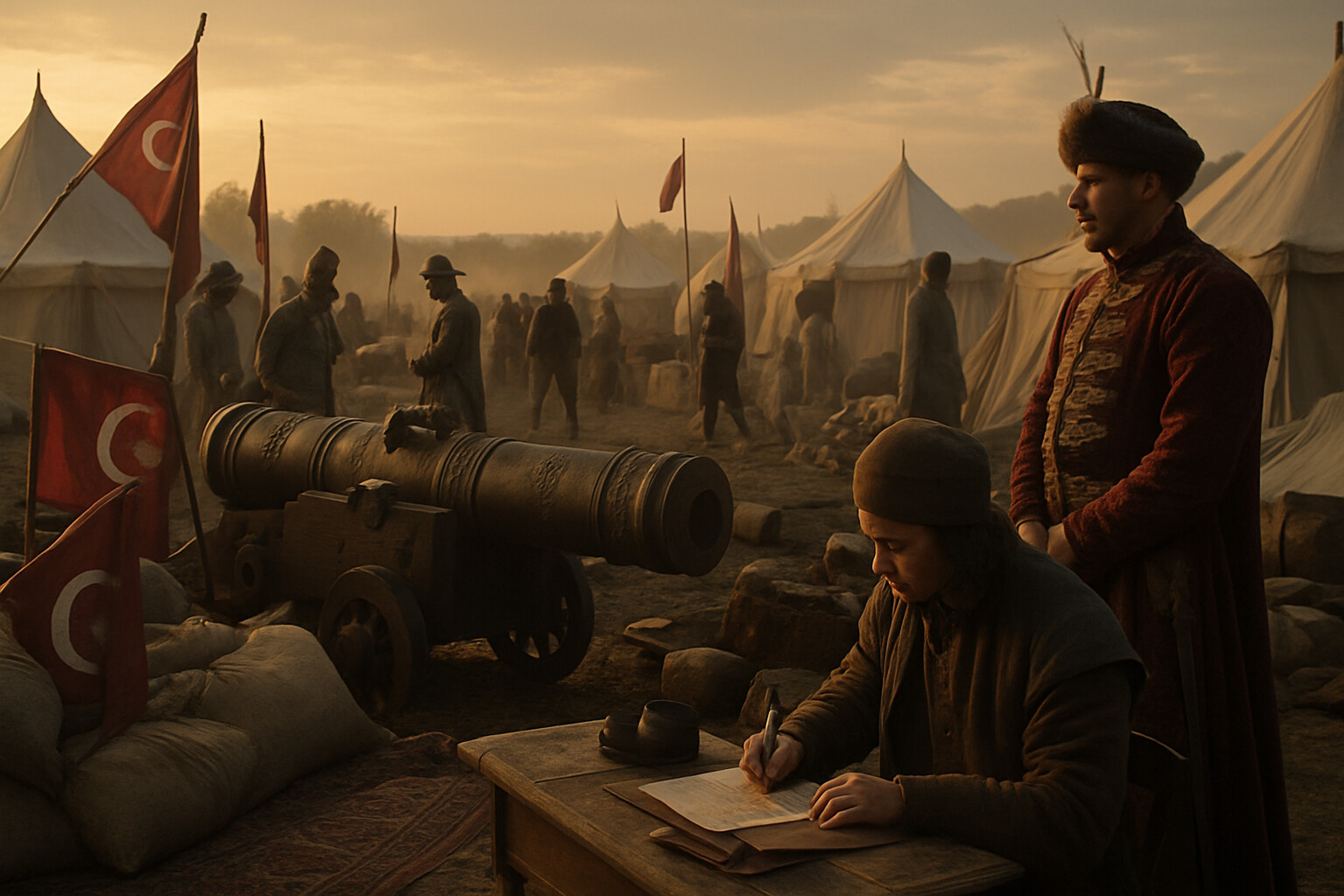
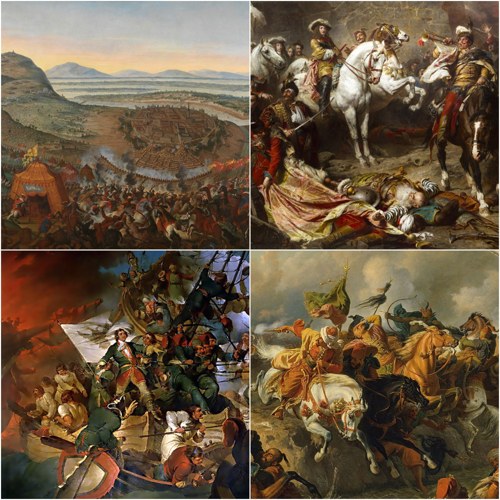
What followed was the largest cavalry charge of the era, and by the estimates used in serious military histories, one of the largest in documented European history. Approximately 18,000 horsemen from across the allied right and center swept down the final slopes and across the plain in a formation covering a front of several kilometers. The Polish winged hussars, positioned on the far right of the allied cavalry line and given the longest charge distance, struck the Ottoman flank and rear at the moment of maximum pressure. The Ottoman forces facing this assault had been under strain for hours. Their command structure was not intact. Kara Mustafa, according to multiple contemporary accounts — which historians treat as interpretive rather than precisely documented — was managing the crisis from well back of the fighting line. The arrival of heavy cavalry in mass, after a day of attritional infantry fighting that had already pushed the Ottoman line back from the ridge, produced the collapse the relief army needed.
The Ottoman army did not simply dissolve. There was fighting during the rout: rearguards, individual stands, and the disordered violence that characterized retreats of the period. Ottoman artillery was abandoned in place, its crews unable to withdraw or serve the guns while cavalry was among them. The vast tent city of the siege camp — described by those who entered it as extending for miles, packed with military stores, horses, camels, ammunition, and the elaborate apparatus of a two-month siege operation — was overrun and looted in the hours after the Ottoman line broke. Fighting continued into the evening. Individual engagements followed the next day as the Ottoman army retreated toward Hungary.
Vienna had been in Ottoman hands since July 14. The siege was broken in a single afternoon.
Sobieski entered Vienna on September 13 and was received by the city's population in a manner that contemporary accounts describe with consistent emphasis on the intensity of the reception. Starhemberg's garrison — what remained of it — had been holding the walls for sixty days on steadily diminishing resources. Estimates drawn from multiple secondary sources place the garrison at approximately 4,000 effective defenders on the morning of September 12, down from perhaps 11,000 at the start of the siege. Disease, wounds, and exhaustion had accomplished most of what Ottoman assault columns had not quite finished.
The costs on the relief side were real but asymmetric with the stakes. Polish losses are estimated in various sources at around 1,500 killed and wounded; allied total losses for September 12 vary considerably, with figures ranging from roughly 2,000 to 4,500 killed and wounded across the coalition. These figures are approximations drawn from secondary histories and should be treated as such. Ottoman losses were severe: estimates of dead on the battlefield and during the rout range from 8,000 to 15,000, with the total impact compounded by the loss of the entire siege train, supplies, and camp infrastructure. Kara Mustafa himself escaped the battlefield and reached Belgrade, where he was strangled by order of Sultan Mehmed IV in December 1683 — the established Ottoman practice for removing high officials who had failed catastrophically — a detail recorded in Ottoman chronicles and confirmed by multiple independent sources.
The Capuchin friar Marco d'Aviano, the Pope's envoy, was present with the relief army and offered Mass on the Kahlenberg before the battle on the morning of September 12. His role in maintaining the spiritual and political cohesion of the multi-denominational Catholic alliance — Austrians, Poles, and Germans of various loyalties — had been significant in the months leading to the battle, and Pope Innocent XI's financial backing had underwritten critical elements of the campaign's logistics. D'Aviano's correspondence, preserved in part in Vatican archives, provides one thread of contemporary documentation for the events of that morning.
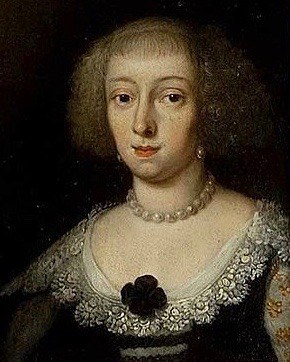
Sobieski's own letter to his wife, Queen Marie Casimire, written shortly after the battle, is one of the most frequently cited primary sources for his personal account of the day. In it, he described the scale of the Ottoman camp and the completeness of the victory in terms that convey genuine astonishment at what the retreat left behind. Historians use this letter with appropriate caution — it is a personal communication with natural tendencies toward self-presentation — but its factual details have generally proved consistent with other contemporary accounts. The letter is held in Polish archives and has been cited in multiple scholarly works on the battle.
The strategic consequences of September 12 extended well beyond the immediate relief of the city. The battle marked the end of sustained Ottoman offensive expansion into Central Europe. The Holy League, encouraged by the victory and sustained by continuing papal and Habsburg commitment, prosecuted the Great Turkish War for the following sixteen years, ultimately resulting in the Treaty of Karlowitz in 1699, which confirmed Habsburg control over Hungary and Transylvania and pushed the Ottoman frontier significantly southward and eastward. The military capacity that had made the Ottoman Empire a direct threat to Vienna's survival did not recover within the lifetime of anyone who fought on the Kahlenberg.
For Sobieski himself, the victory brought immediate prestige and the gratitude of the Pope, the Emperor, and the German princes, though the practical political benefits for Poland were more complicated. Habsburg-Polish relations remained tense over contested territories, and the resources Poland had spent on the campaign were not easily replaced by a Commonwealth already strained by decades of warfare on multiple frontiers. Sobieski continued to campaign against the Ottomans in subsequent years but did not repeat the strategic success of 1683. He died on June 17, 1696, three years before the Treaty of Karlowitz formalized the strategic outcome his charge had made possible.
The winged hussars as a formation declined over the decades that followed. The military revolution of the late seventeenth and early eighteenth centuries — driven by the increasing dominance of linear musket infantry, growing artillery sophistication, and drill standards that allowed large armies to deliver coordinated volley fire — progressively reduced the battlefield space in which shock cavalry of the hussar type could operate effectively. The charge of September 12, 1683, was among the last occasions on which this particular form of mounted shock action was decisive at the operational level. Later Polish cavalry retained the hussar name and some of the tradition, but the winged armor, the kopia lance, and the specific tactical logic of the charge were artifacts of a military world that was already closing as Sobieski watched the Ottoman camp burn.
The Kahlenberg ridge above Vienna is easily visited today. The Church of St. Joseph, rebuilt in the eighteenth century on the site of the chapel where Marco d'Aviano said Mass on the morning of September 12, still stands at the summit. The plain below, now covered by the western suburbs of the city, gives a reduced but still legible sense of the distance the cavalry crossed and the visibility from the high ground. The Vienna Military History Museum holds significant collections related to the battle, including captured Ottoman standards, equipment, and a concentration of contemporary portraits and artifacts. Scholarship on the battle is substantial and multi-national: Polish, Austrian, German, and Turkish historians have examined it from different perspectives, producing a body of work that is sometimes in tension over emphasis but consistent on the major documented facts.
What happened on September 12, 1683, was a coalition military operation of genuine complexity, held together by a commander experienced enough to manage diverse forces under pressure, disciplined enough to wait until the infantry had created the conditions for the cavalry to act, and confident enough in the striking power of his winged hussars to commit them at the moment when the Ottoman formation was most vulnerable. The charge worked because the conditions for it had been prepared over hours of fighting that is less visually striking than the moment of the charge itself but without which the charge would have hit a cohesive defense rather than a breaking one.
Sobieski did not save Vienna alone. Duke Charles of Lorraine's management of the imperial cavalry on the right flank near the Danube, the German infantry commanders who pushed through the Wienerwald under fire, the garrison that held the walls for sixty days — all were components of the outcome. What Sobieski provided was command authority, the decisive striking arm, and the tactical judgment to use it at the right moment.
The city that survived was one of the great cities of European civilization. What its fall would have meant for Central Europe in the 1680s is a question historians approach with appropriate caution about counterfactuals. What its survival meant is documented in three centuries of subsequent history.