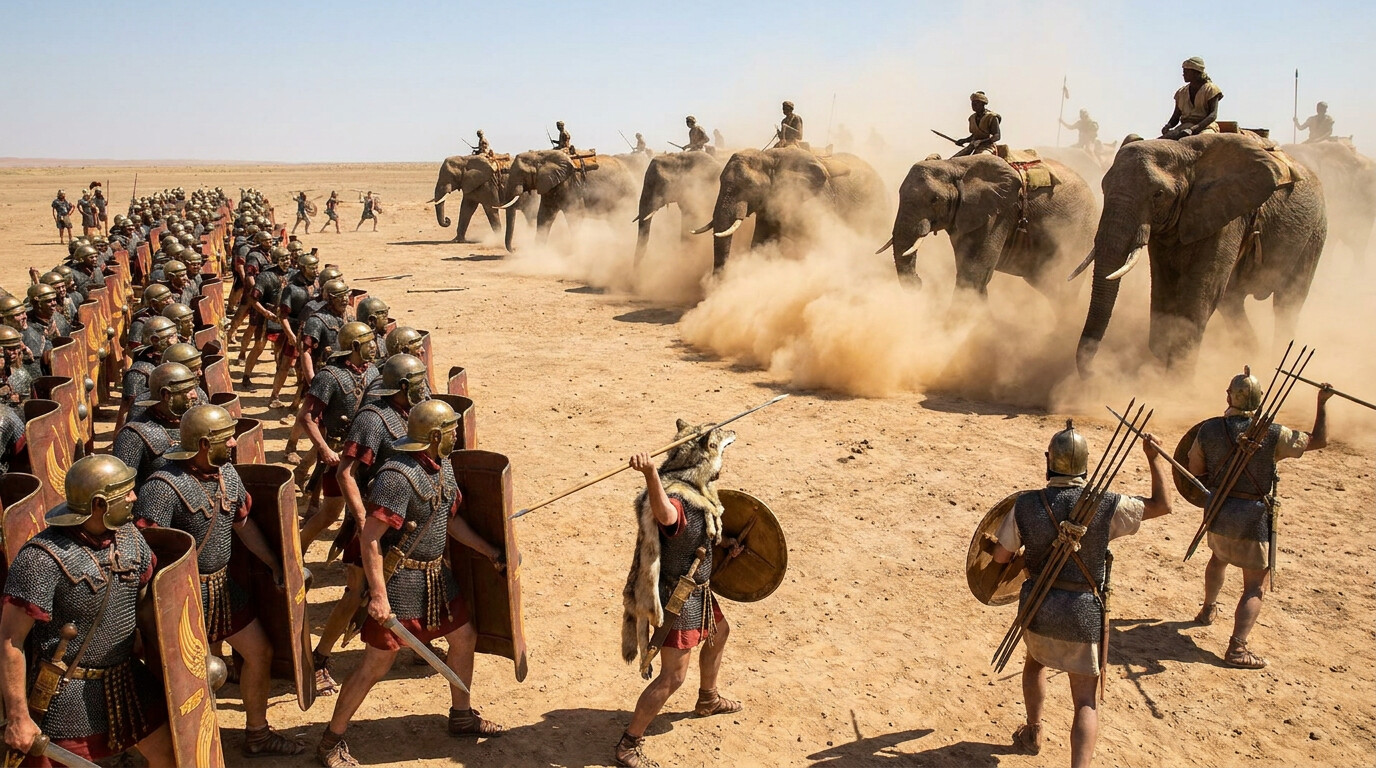
The elephants came first.
Eighty of them, by the account of both Polybius and Livy — heavy, driven by mahouts screaming commands as the beasts lumbered forward across the dry North African plain. Behind them, rank upon rank of Carthaginian infantry, and behind those, the veterans: Hannibal's own soldiers, men who had crossed the Alps, who had destroyed Roman armies at the Trebia, at Lake Trasimene, at Cannae. Men who had never lost under this general.
Across the field, a Roman consul watched them come.
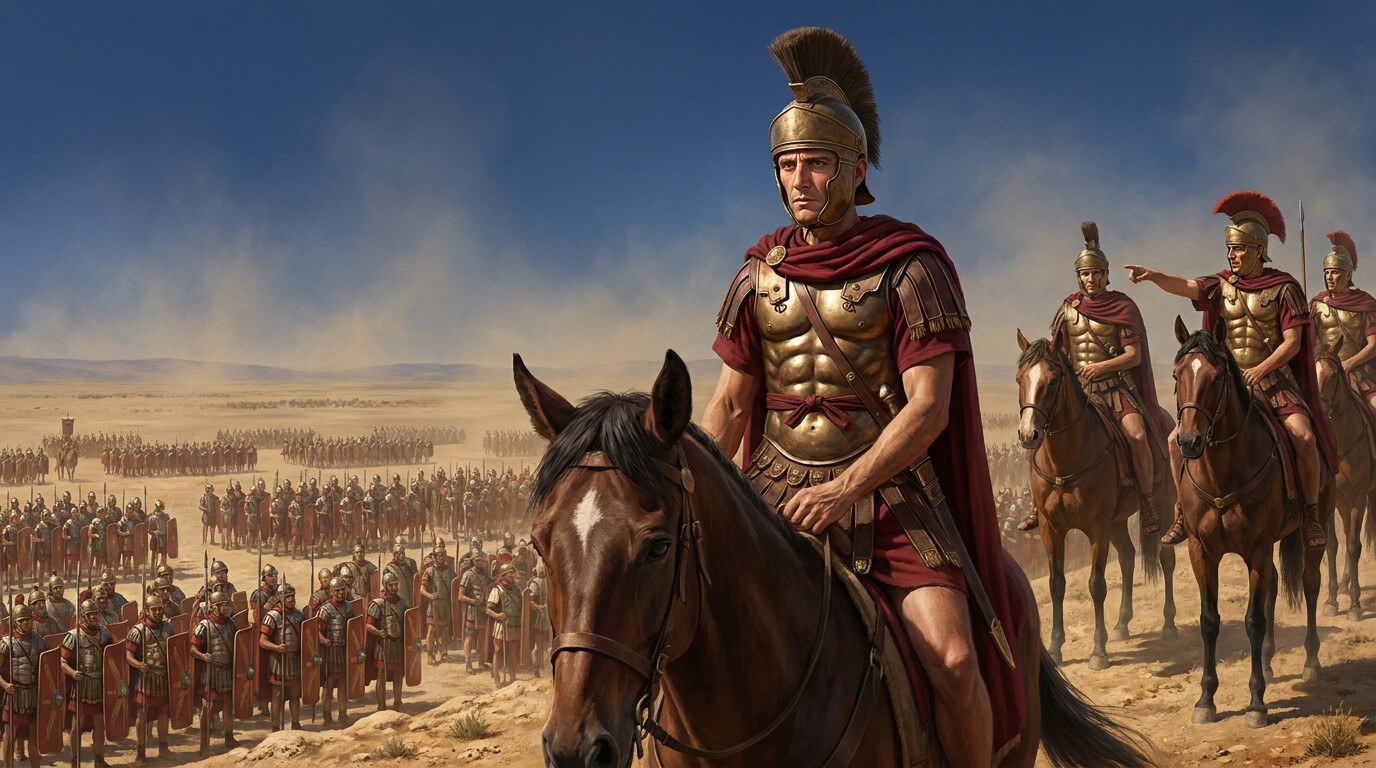
Publius Cornelius Scipio was approximately thirty-four years old. No Roman commander had ever beaten Hannibal Barca in open battle. No tactical manual existed for what he was about to attempt. What he had instead was something rarer: a methodical understanding of how his enemy thought — an understanding built over years of hard campaigns, careful observation, and a willingness to discard Roman orthodoxy when the situation demanded it.
He had prepared the ground. He had arranged his legions in a way that broke with established Roman practice. And now, as the elephants closed the distance and the ground shook under tons of charging animal, Scipio gave the signal.
The trumpets screamed.
And the Romans moved aside.
---
**The Weight of Sixteen Years**
To understand what happened at Zama, it is necessary to understand the war that preceded it — and the man who had made that war so costly.
Hannibal Barca had invaded Italy in 218 BC with an army that crossed the Alps in autumn, a feat so audacious that the Romans initially refused to believe it was happening. In the years that followed, he delivered Rome a sequence of defeats that stunned the ancient world. At the Trebia River in 218 BC, he destroyed a Roman consular army. At Lake Trasimene in 217 BC, he ambushed another in a fog-shrouded valley, killing perhaps 15,000 men including the consul Gaius Flaminius. And then came Cannae, in 216 BC — a battle so complete in its execution that military theorists would still be studying it more than two thousand years later.
At Cannae, Hannibal faced a Roman army of roughly 80,000 men — possibly the largest force Rome had ever fielded to that point — with perhaps 50,000 of his own. He allowed his center to bend backward under Roman pressure, drawing the Roman infantry deep into a contracting pocket. Then his flanks closed. The Romans, packed so tightly they could barely raise their weapons, were methodically killed in place. Ancient sources — primarily Polybius and Livy — estimate Roman dead at anywhere from 47,000 to 70,000, though modern historians treat the higher figures with caution. The consul Lucius Aemilius Paullus died on the field. The carnage was of a scale Rome had never experienced.
And yet Rome did not sue for peace. It reorganized, recruited, and ground forward. But for years it could not bring Hannibal to decisive defeat. The strategy that eventually slowed him — the so-called Fabian strategy, named for the dictator Quintus Fabius Maximus, who advocated harassment and attrition over pitched battle — kept Rome alive but could not end the war. For over a decade, Hannibal occupied southern Italy while Rome bled.
Into this strategic stalemate stepped Scipio.
---
**The Education of a General**
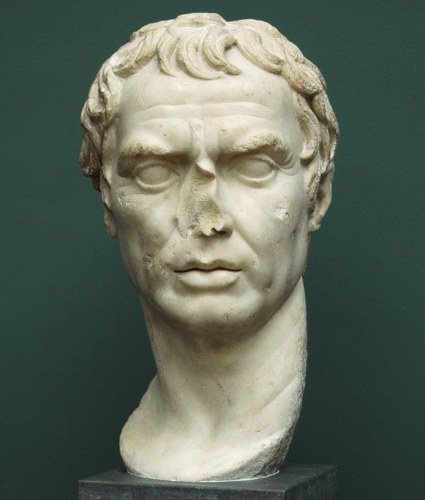
Publius Cornelius Scipio was born around 236 BC into one of Rome's most prominent patrician families. His father, also named Publius Cornelius Scipio, was a consul who died fighting Carthaginian forces in Spain in 211 BC. His uncle Gnaeus died the same year in the same campaign. The war was personal before it was strategic.
Scipio was present at Cannae. He survived. Livy credits him with rallying panicked Roman officers in the aftermath, reportedly forcing them to swear they would not abandon the Republic. Whether this specific scene is historical or later embellishment is a matter historians debate, and it should be treated as tradition rather than confirmed fact — but the outline of a young officer holding himself together after catastrophe fits the record of what came next.
In 210 BC, Scipio was given command of Roman forces in Spain at approximately twenty-five or twenty-six years of age. It was a position of enormous responsibility for a man so young, and the Roman Senate gave it to him in part because no one with experience wanted a command that had already killed two Scipios. He was, by Roman standards, an irregular choice.
What he did with it was methodical and consequential. In 209 BC, he seized Carthago Nova — modern Cartagena — the principal Carthaginian base on the Iberian Peninsula, in a combined amphibious and land assault. The city held the bulk of Carthaginian supplies and hostages from Iberian tribes. Its capture shifted the material balance of the Spanish campaign dramatically. At Baecula in 208 BC and Ilipa in 206 BC, Scipio continued developing tactics that departed from Roman convention — extending his flanks, varying the arrangement of his maniples, using his cavalry aggressively. At Ilipa, he deliberately reversed the standard Roman battle order, placing his weakest troops at center and his best on the flanks, launching his flanking forces before the center engaged and catching the Carthaginian army in a partial encirclement. It was, in modified form, a counter-Cannae — using Hannibal's own methods against his lieutenants.
By 204 BC, with Spain secured, Scipio persuaded the Roman Senate to authorize a direct invasion of North Africa. The strategy was controversial. Fabius Maximus argued against it, believing Hannibal should be defeated in Italy first. Scipio's position was that threatening Carthage itself would force Hannibal out of Italy by making his home city the target. He was granted permission, largely on the strength of his record, and crossed to Africa with roughly 25,000–35,000 men — the figures vary across ancient sources and should be treated as approximate.
In Africa, Scipio won engagements at Utica and at the Great Plains in 203 BC, destroying Carthaginian and Numidian forces and burning their camps in a night attack of notable effectiveness. The Carthaginian government, with Scipio's forces threatening the city itself, sought terms. A settlement was nearly reached. Then Hannibal was recalled from Italy.
The negotiations collapsed. The war resumed. And the two generals moved toward each other.
---
**The Field Before the Battle**
The exact location of the Battle of Zama has been disputed by scholars for generations. Ancient sources, primarily Polybius and Livy, use the name 'Zama' for the engagement, but the town itself is not precisely located on the modern map. The battle likely took place on a plain in what is today northwestern Tunisia, somewhere south and southwest of Carthage, though the precise site remains a matter of scholarly debate. Most modern analyses place it in the general vicinity of the modern Siliana region, though no physical site has been confirmed through archaeology. For this account, the location is treated as approximately identified: open, relatively flat terrain suitable for cavalry and elephants, without the constricting geography that had favored Hannibal at Trasimene.
That geographic openness mattered. Hannibal's greatest victories had often involved terrain manipulation — drawing enemies into tight spaces, using rivers and lakes as anchors, exploiting fog or surprise. The plain near Zama offered none of that. Both armies would fight in the open, where formation, training, and tactical decision-making would be the decisive variables.
Hannibal's army, as reconstructed from ancient accounts, likely numbered between 35,000 and 50,000 infantry and perhaps 3,000–4,000 cavalry. He arranged his forces in three distinct lines. The first line consisted of his war elephants — eighty by the accounts of both Polybius and Livy, though modern historians note that ancient figures for elephant numbers and troop strengths are sometimes rounded or exaggerated. Behind the elephants came his first infantry line: mercenaries, Gauls, Ligurians, Balearic slingers, and Moors. Behind them a second line of Libyan and Carthaginian citizen infantry. And in the rear, separated by a deliberate gap, Hannibal's most experienced soldiers — the veterans of the Italian campaign, men who had spent years fighting in the peninsula. The separation of the veteran line was unusual. It may have reflected concern about the reliability of his mercenaries, or a deliberate plan to preserve his best troops for a final push after the Roman formation had been worn down by the forward lines. Ancient sources describe the arrangement; the reasoning behind it is inferred from the tactical logic.
Scipio's army numbered perhaps 29,000–34,000 infantry by most estimates, and his cavalry advantage was significant. He had been joined by Masinissa, the Numidian king, who brought a force of Numidian cavalry and infantry. Polybius credits Masinissa with roughly 4,000 cavalry and 6,000 infantry. Scipio also had Italian cavalry under Gaius Laelius, his trusted subordinate and veteran of the Spanish campaigns. Against Carthage's roughly 3,000–4,000 cavalry, the Romans and their allies held a decisive numeric edge on the flanks.
Scipio designed his formation to exploit that edge — but first he had to solve the elephant problem.
---
**The Lanes of Zama**
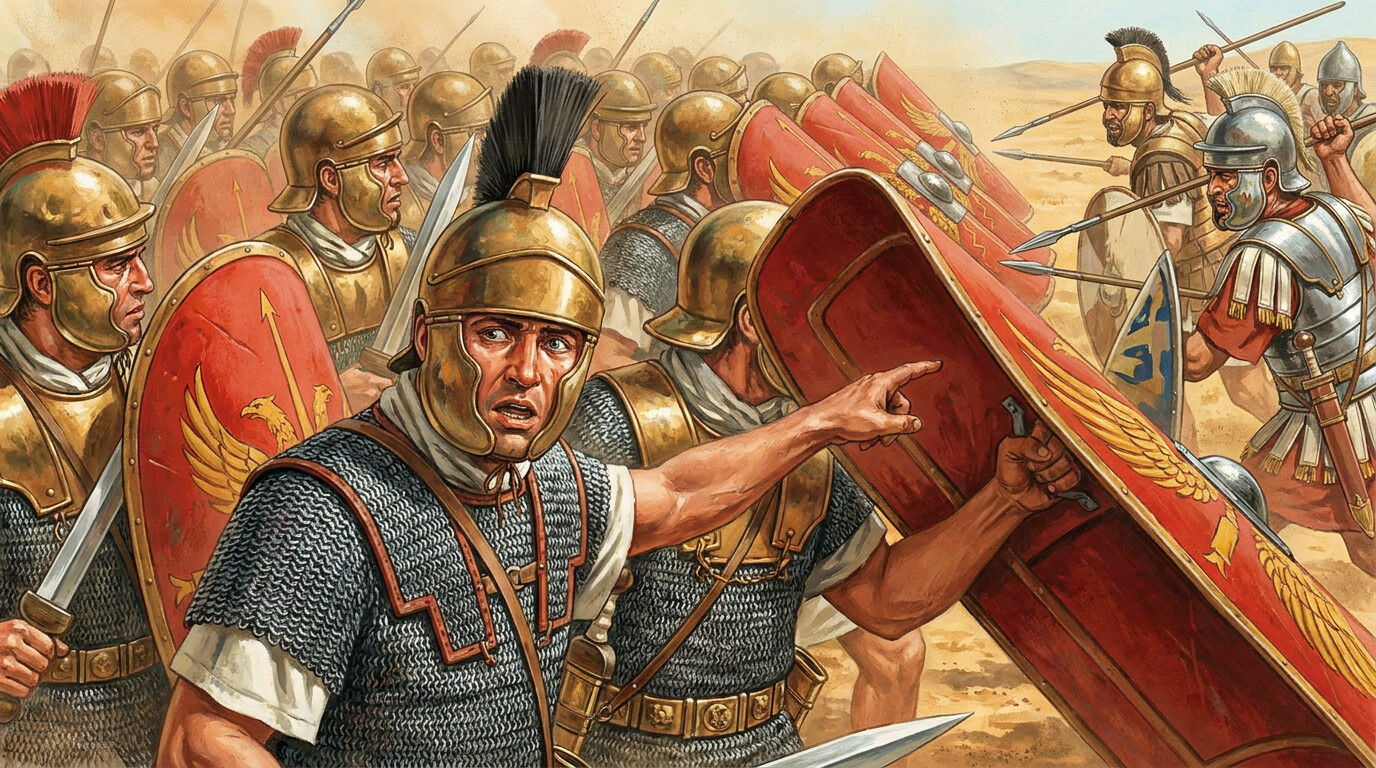
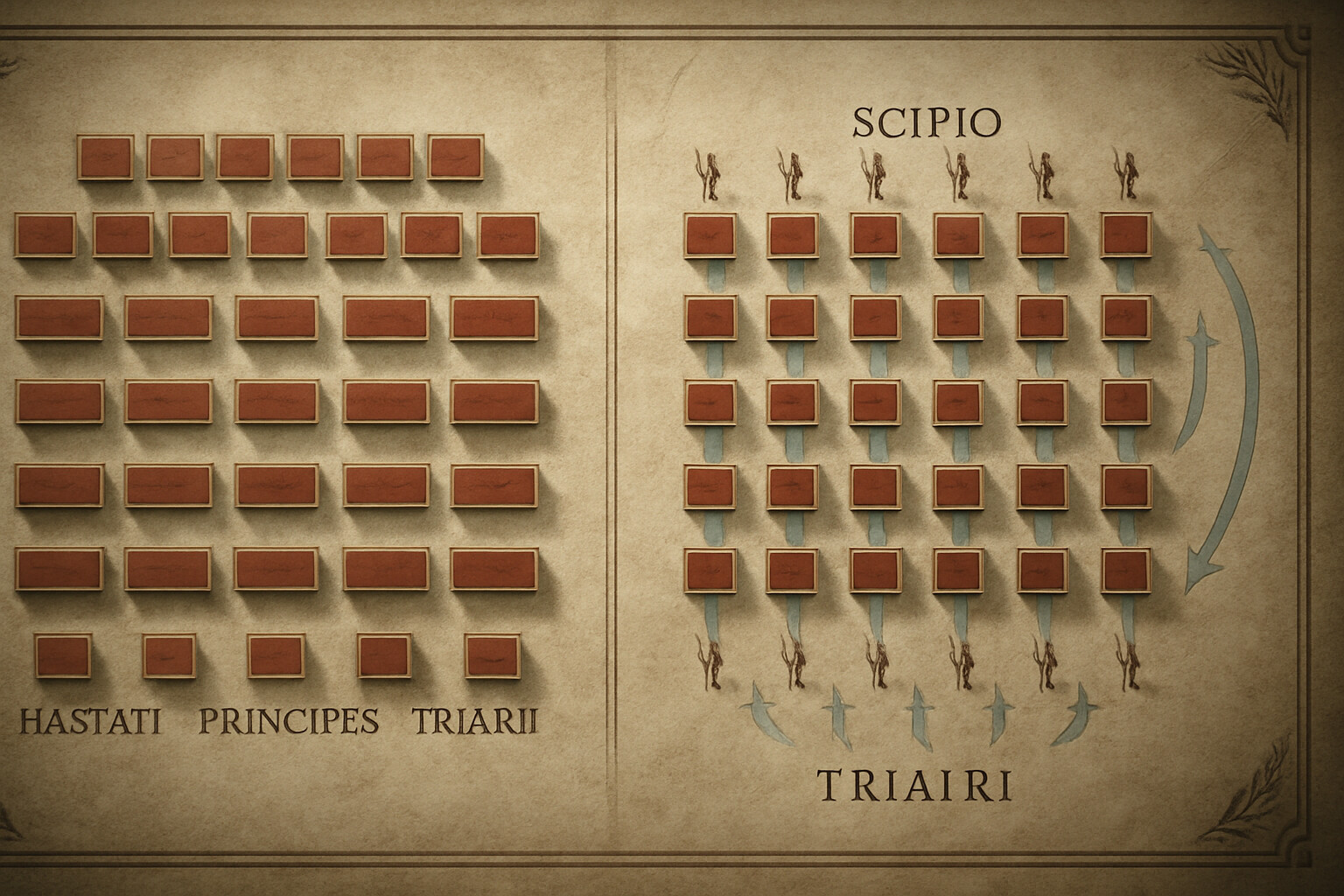
Roman legions of the Second Punic War period fought in the manipular system: three lines of infantry — hastati at front, principes behind them, triarii at rear — arranged in a checkerboard pattern of maniples with gaps between units to allow for tactical flexibility. The gaps were normally covered by the maniples of the line behind them, creating a staggered but continuous fighting front once action was joined.
The problem with war elephants was precisely those gaps. An elephant in a disordered or wounded state was as dangerous as a controlled one — perhaps more so. Panicked elephants had turned on their own sides before. Roman commanders had experimented with various counters: fire, noise, velites armed with javelins targeting the animals' unarmored flanks and legs, and terrain-based obstacles.
Scipio's solution at Zama was structural. He arranged his maniples not in the standard checkerboard offset but in direct alignment behind each other — lane by lane — creating clear corridors running from the Roman front to the rear. His velites, the light infantry skirmishers, were positioned forward. The plan: when the elephants charged, the velites would harass them with javelins, attempting to wound and redirect them. The lanes would allow maddened or uncontrolled elephants to pass through the Roman formation without driving into the closely packed infantry. Noise and concentrated missile fire would encourage the elephants to run through rather than into the Roman ranks.
It was a solution that required discipline. Holding a formation open — keeping men in their lanes while large animals bore down on them — demanded a quality of steadiness that most ancient armies could not reliably produce. That Rome's legions held is a measure of their training and their trust in their commander's preparation.
Polybius, writing roughly fifty years after the battle and drawing on accounts from participants — he was personally acquainted with Scipio Aemilianus, the adopted grandson of Scipio Africanus, and likely had access to Scipio family materials and the writings of Laelius — describes the elephants charging the Roman line and largely passing through, with many being funneled to the flanks where they disrupted Hannibal's own Numidian cavalry more than the Roman center. Some elephants, wounded by velite javelins, turned back into their own lines. The disruption to Hannibal's left flank cavalry — already facing Masinissa's Numidians — was significant. Laelius on the Roman right drove off the Carthaginian cavalry on that flank as well.
Within the opening phase of the battle, Hannibal's cavalry, such as it was, had been broken from the field. His flanks were exposed. His elephants had largely failed their intended purpose.
But the infantry fight remained. And Hannibal's veteran third line had not yet moved.
---
**The Infantry Grind**
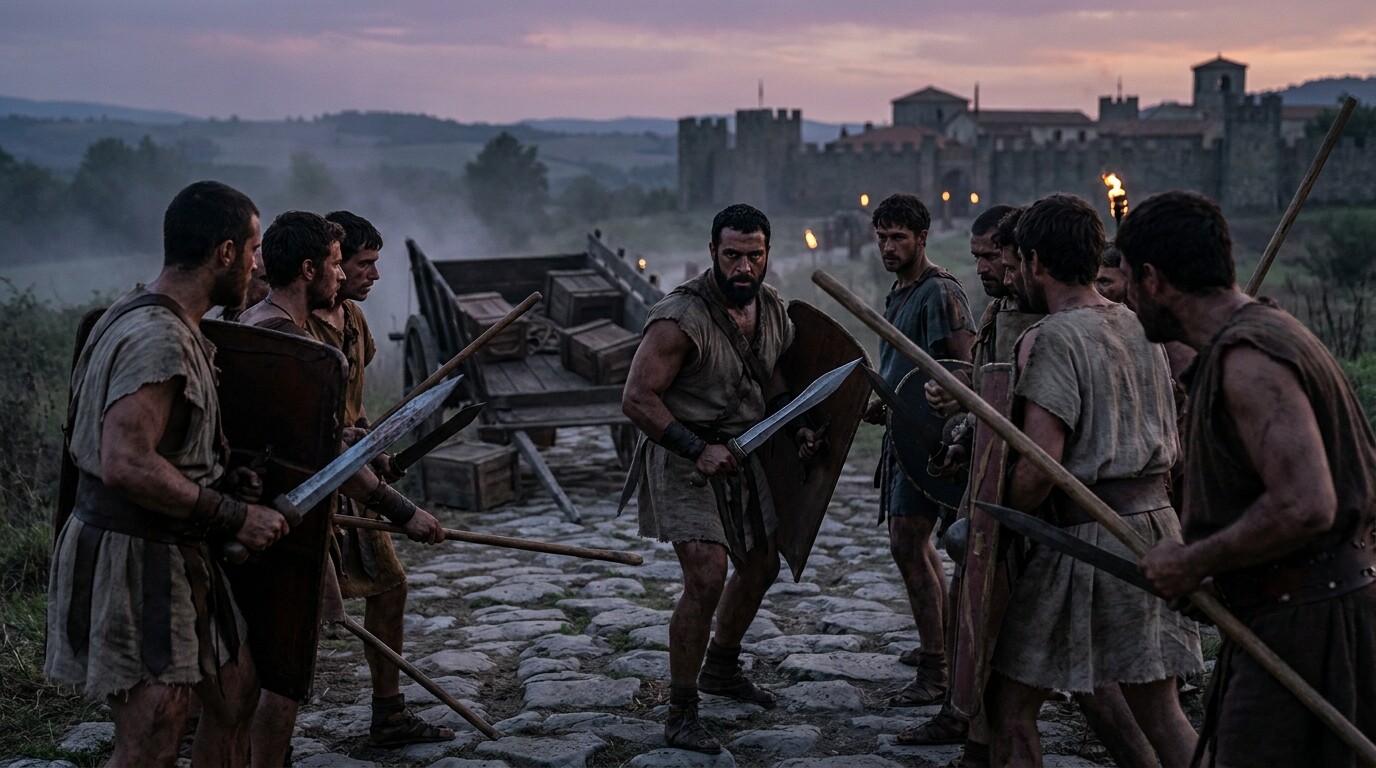
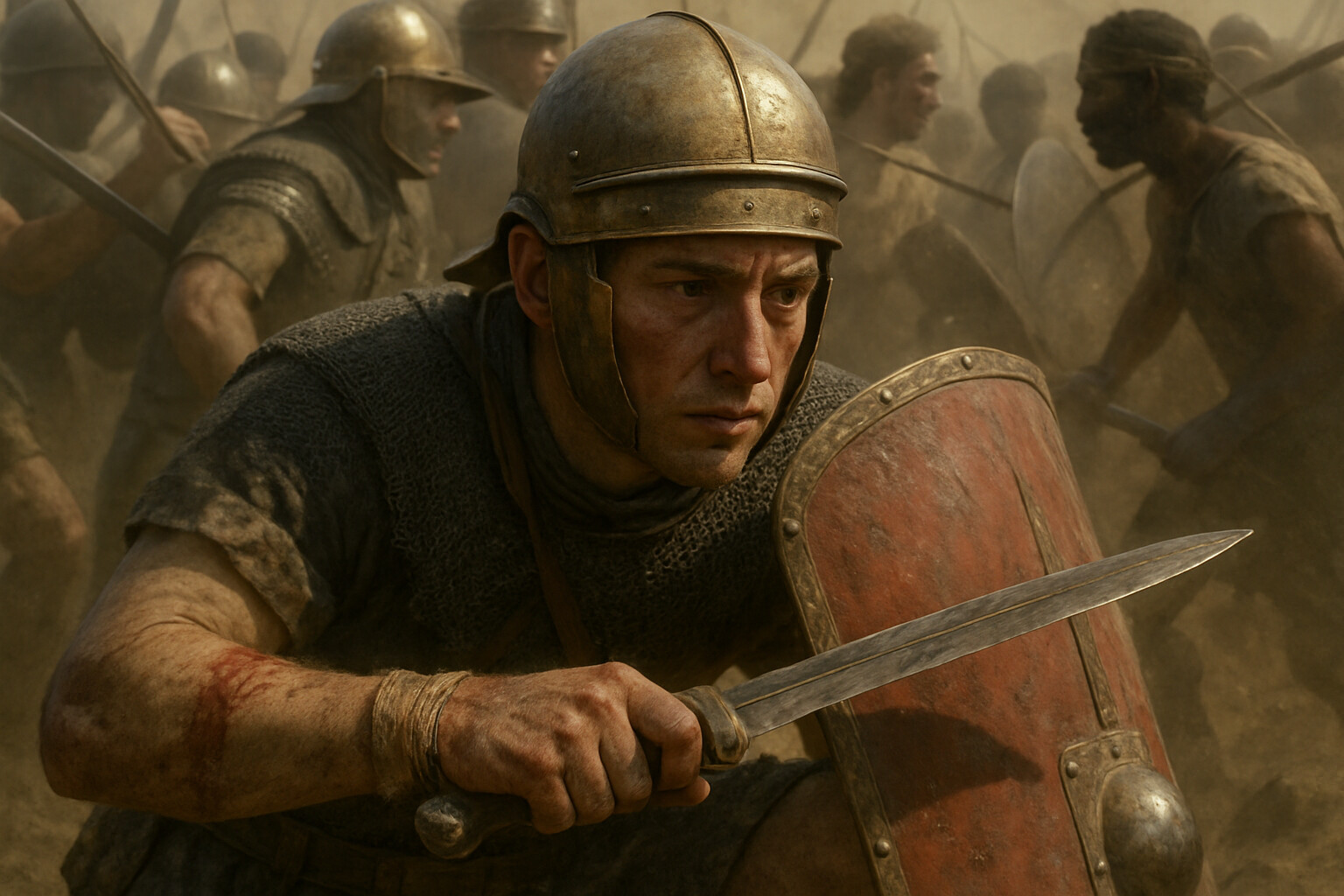
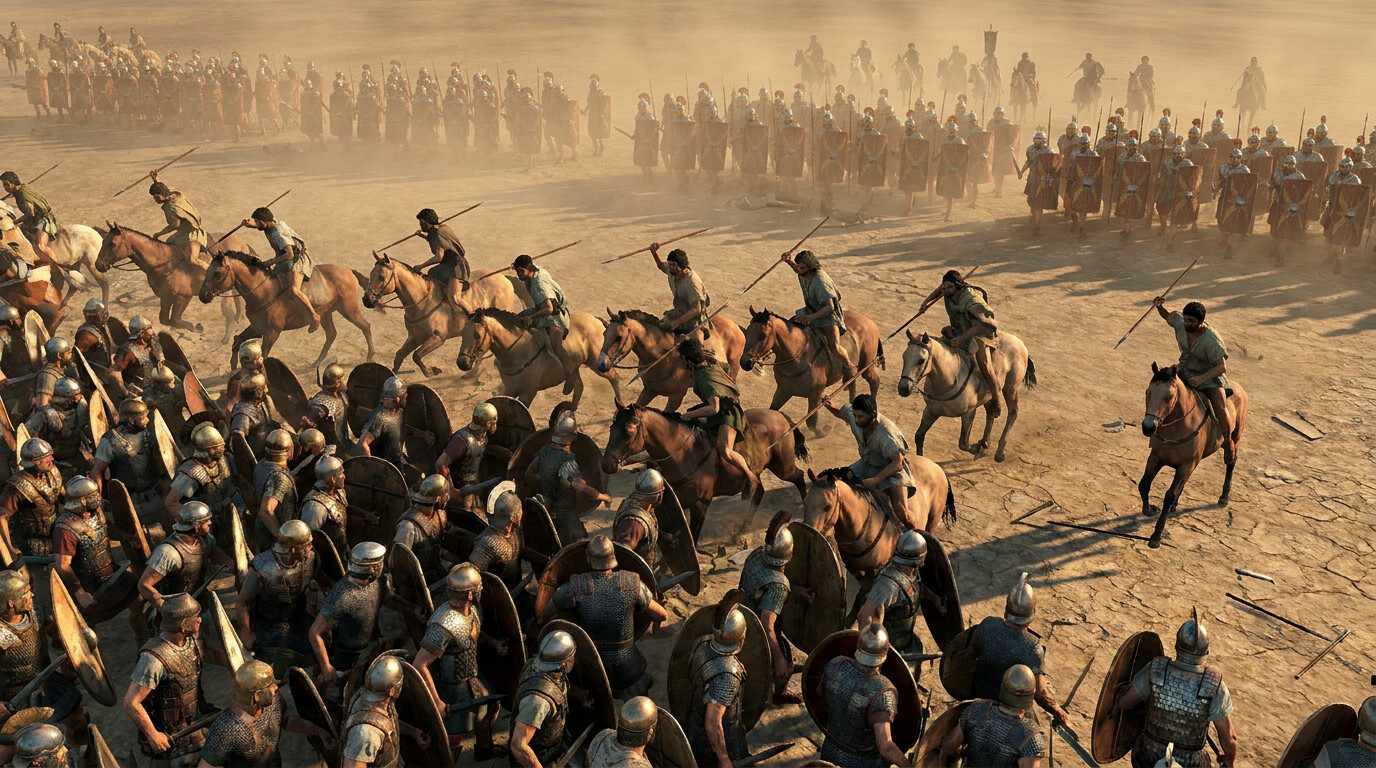
The engagement of the Roman hastati with Hannibal's first-line mercenaries was fierce by any account. The Roman front line drove into the Gauls, Ligurians, and Balearic troops, fighting at close quarters with the gladius — the short, double-edged stabbing sword — after volleys of the pilum, the heavy javelin thrown at close range to disrupt enemy formation before contact. The pilum was designed with a long, relatively soft iron shank: it bent on impact, preventing the enemy from throwing it back, and its weight meant that a shield struck by one became nearly useless as the dragging shaft pulled it down and out of a defender's grip.
The mercenaries fought hard. They were experienced soldiers with personal stakes in the outcome. But the quality gap between Hannibal's first line and his veteran third was significant. The first Carthaginian line began to crack and was pushed back into the second — an event that Polybius describes as producing confusion and, in some cases, fighting between the retreating first line and the stationary Libyan second line. This kind of breakdown between retreating and stationary units was a familiar hazard in ancient warfare, where mutual trust between formations was as important as individual courage.
The Roman hastati pressed through both forward Carthaginian lines, taking casualties, accumulating exhaustion. When they reached the gap before Hannibal's veterans, they stopped.
Scipio called a halt.
This was a tactically critical moment. The Roman hastati were fatigued and their formation was disordered from fighting through two lines. Ahead stood Hannibal's best men — fresh, formed up, veterans of fifteen years of undefeated campaigning in Italy. To throw a disordered, tired line against them was to risk the kind of collapse that Hannibal had produced at Cannae.
Instead, Scipio halted the advance, ordered the hastati to extend their line to cover the flanks, pulled the principes and triarii forward and to the sides to widen the Roman front, and dressed the formation. He was deliberately extending the line — matching the width of Hannibal's veteran formation so that the coming clash would be front-to-front, without opportunity for the veterans to wrap around the Roman flanks as Hannibal had done at Cannae.
Polybius records this with evident admiration, noting the difficulty of executing such a maneuver under the pressure of an intact enemy line nearby. The sources do not claim it was instantaneous or perfectly smooth. But it was done.
---
**Masinissa Returns**
What came next was the decisive event of the battle, and it was the product of something Scipio had planned but could not entirely control: the return of his cavalry.
Masinissa and Laelius had pursued the broken Carthaginian cavalry off the field — a standard result when cavalry broke, and normally a frustrating one for any commander, because horsemen who chased a fleeing enemy often disappeared from the battle entirely. At Cannae, Roman cavalry had done exactly that: they rode off in pursuit and never returned in time to affect the outcome. Hannibal had exploited that predictability. He had used the tendency of victorious cavalry to lose itself in pursuit to engineer a situation where the Romans were left without mounted support at the crucial moment.
Scipio — or Laelius acting on his own initiative, the sources are not entirely clear — had drilled into his commanders the importance of returning. When the Numidian and Italian cavalry rode back onto the field and struck Hannibal's veteran line from the rear, the battle's outcome was decided.
Hannibal's veterans, already engaged frontally with Scipio's reformed and widened infantry line, were now struck from behind. Even the best infantry cannot sustain a two-front assault without the numbers and formation depth to absorb it. The Carthaginian veteran line broke. Men who had never run from a Roman army began to run. Those who could not run were killed where they stood.
Ancient sources give widely varying casualty figures: Polybius estimates around 20,000 Carthaginian dead and a similar number captured; Livy's figures are higher and less reliable. Modern historians treat ancient battle casualty figures with significant caution, as they were often rounded, estimated, or shaped by the demands of narrative. Roman losses are reported more variably — Polybius says around 1,500 dead among the Romans and allies, which seems low but may reflect the relative brevity of the final phase of the battle. All these figures should be treated as approximate.
Hannibal escaped the field. He had witnessed his army destroyed but was not captured. Ancient sources indicate he rode away with a small escort. He would later negotiate the peace terms on Carthage's behalf.
---
**The Meeting Before the Battle**
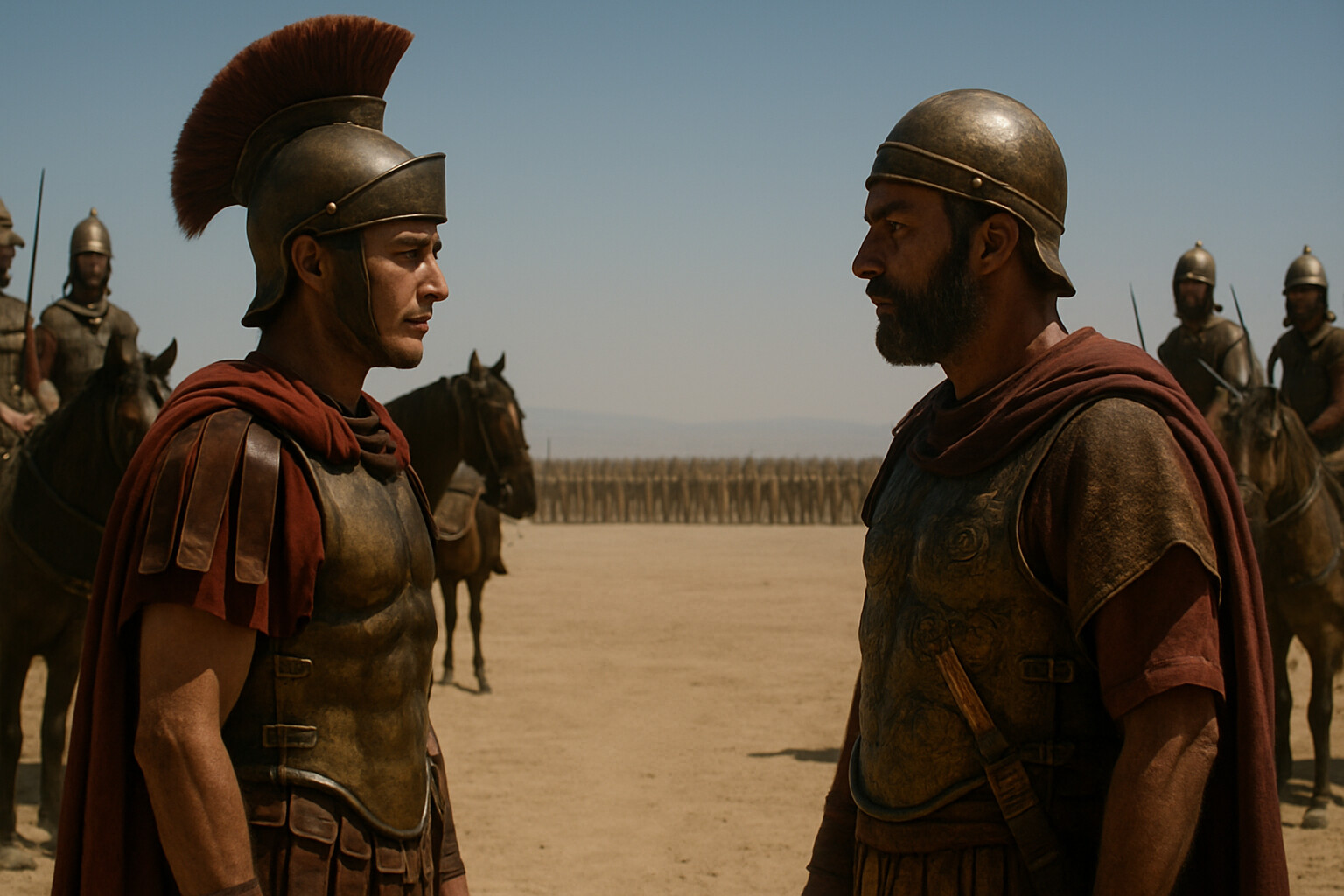
Ancient accounts — most fully developed in Livy — describe a pre-battle meeting between Scipio and Hannibal in which the two generals met between the lines to discuss terms. Hannibal reportedly acknowledged Roman successes and offered significant territorial and material concessions, but was rebuffed by Scipio, who is described as demanding unconditional surrender or battle.
This meeting is accepted by most historians as likely having taken place in some form, though the specific words as recorded by Livy are understood to be rhetorical reconstructions rather than verbatim accounts. Ancient historians regularly composed speeches for their subjects — it was a recognized literary convention for conveying what the author believed the speaker would or should have said, not a claim to exact transcript. The substance of the encounter — that negotiated terms were offered and refused — is generally treated as credible. The specific speeches attributed to Hannibal and Scipio in Livy should be understood as literary composition.
What is historically significant about the meeting, if it occurred, is the symmetry it suggests: two commanders, each fully aware of the other's methods and record, facing the recognition that one of them was about to be proven wrong about the war they had spent their adult lives fighting.
---
**The Man and His Tools**
The Roman soldier at Zama was equipped in a manner that had evolved substantially over the preceding two centuries. He carried the gladius hispaniensis — the Spanish short sword, likely adopted from Iberian warriors — approximately 64 to 69 centimeters in overall length, double-edged, designed for thrusting at close quarters in the press of hand-to-hand combat. The pilum was the Roman heavy javelin, approximately two meters in length, with an iron shank of roughly half a meter attached to a wooden shaft. A legionary in the manipular period typically carried two pila, throwing both before drawing the gladius and closing.
Defensive equipment for a legionary of this period included the scutum — the large, curved rectangular shield of laminated wood and leather, edged in iron, weighing approximately ten kilograms — a mail shirt or bronze chest plate depending on rank and period, a bronze helmet, and greaves. The velites, the light infantry skirmishers who played a central role in disrupting the Carthaginian elephants, carried javelins and a small round shield. They were lighter and faster, used for skirmishing rather than the main line of battle.
Hannibal's army at Zama was considerably more mixed in its equipment. His mercenaries — Gauls, Ligurians, Balearic slingers, Moors — fought with their native weapons. The Gauls used long slashing swords and oval shields. The Balearic slingers were skilled with lead and stone projectiles. His Carthaginian infantry used spear and shield. The one consistency across his force was experience: even his mercenaries had been fighting in professional armies for years.
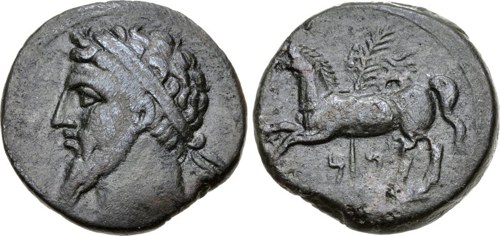
The war elephants deserve some attention, because they were central to the drama of the battle's opening. Hannibal's elephants were almost certainly African forest elephants — smaller than the African savanna elephants of modern popular imagination, standing roughly two to two and a half meters at the shoulder, and formidable military animals nonetheless. They were used primarily as shock weapons: to break enemy formations by the momentum and terror of their charge, and to cause cavalry horses to panic and bolt. They were not reliably controllable under all circumstances, which is why generals who relied on them accepted a significant risk: a wounded or panicked elephant could turn through its own side. The specific subspecies of the elephants used in the Punic wars remains a subject of ongoing zoological and archaeological debate.
---
**The Cost**
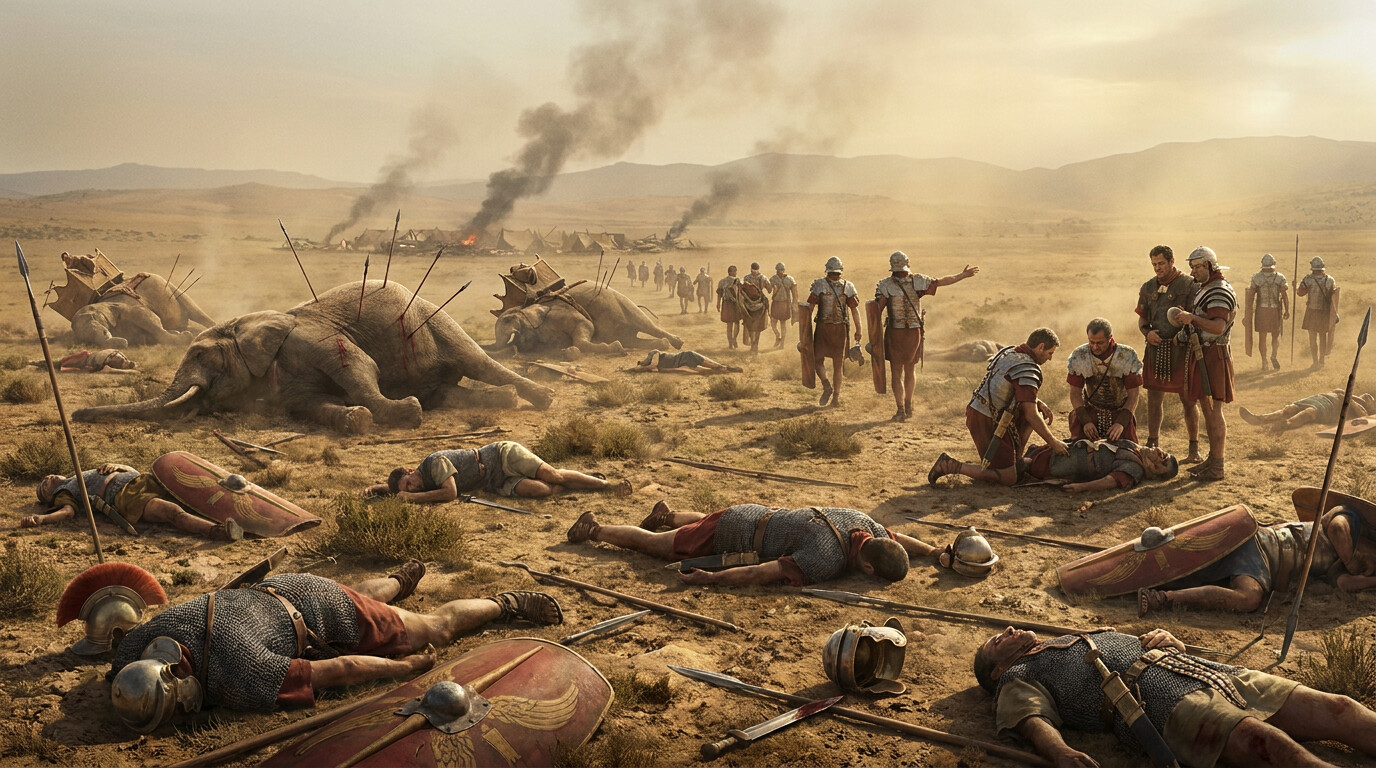
The aftermath of Zama was swift. Carthage, with Hannibal returning to negotiate, accepted peace terms that stripped the city of its war fleet, imposed an indemnity of 10,000 talents of silver payable over fifty years, eliminated Carthaginian territory outside Africa, forbade Carthage from making war without Roman permission, and required the surrender of war elephants and their trainers. Carthage retained its existence as a city and a trading power, but it would never again threaten Roman dominance of the Mediterranean.
Hannibal returned to Carthage and, according to ancient sources, served as suffete — a senior magistrate — attempting to reform the city's finances to meet the indemnity. Under Roman pressure he was eventually forced into exile, spending the remainder of his life as a guest of various eastern powers. He died around 183 BC, by his own hand according to tradition, preferring death to capture by Roman envoys. This account is recorded by multiple ancient sources but cannot be independently confirmed. If the traditional chronology is accepted, Scipio Africanus died the same year or very close to it — though some modern historians regard this near-simultaneity as a coincidence that ancient writers may have shaped into a neater symmetry than the record strictly supports.
For Rome, Zama ended a generation of existential threat. For over fifteen years, Roman commanders had lost armies at a scale that would have ended most states. The Senate had melted down temple ornaments for bronze. The city had crucified allied commanders to maintain discipline in the provinces. It had been a war unlike any Rome had faced, and it left permanent marks on Roman military thinking.
Scipio returned to Rome and was awarded the cognomen 'Africanus' — a title derived from the theater of his greatest victory, and one of the first instances of a Roman commander receiving a territorial cognomen, a practice that would become more common in the generations that followed. The triumph that preceded the honor was, by ancient accounts, among the largest celebrated to that point.
---
**The Record and Its Limits**
The primary ancient sources for the Battle of Zama are Polybius, writing in Greek in the mid-second century BC, and Livy, writing in Latin in the late first century BC and early first century AD. Both drew on earlier accounts now lost. Polybius is generally regarded by modern historians as more reliable where he is specific — he had personal connections to Roman aristocratic circles, had traveled in North Africa, and approached history with a critical methodology unusual for his era. Livy is more literary, more willing to embellish, and more given to the conventions of patriotic history; he is treated with greater caution where his details differ from Polybius or from general plausibility.
Neither man was present at Zama. Both were writing decades after the event. The troop numbers, casualty figures, and tactical details they give were drawn from earlier written records, oral tradition, the accounts of participants no longer living, and the institutional memories of the Roman ruling class. They should be treated as good-faith efforts to reconstruct events from imperfect evidence — broadly credible in outline, uncertain in specifics, and occasionally shaped by literary or political purposes not always visible to the modern reader.
The speeches attributed to Hannibal and Scipio before the battle — extensively dramatized by Livy — should be understood as rhetorical set pieces in the classical tradition. The broad strategic picture they imply is plausible. The specific words are literary compositions.
No contemporary Roman documentary source for Zama survives. No military dispatch or field report from this period exists in the record. What we have is the tradition, filtered through two brilliant but imperfect historians, and the material evidence of Carthaginian military technology and Roman manipular organization as understood through archaeology, numismatics, and the comparison of multiple ancient sources.
---
**Why Zama Matters**
Some historians have called Zama the most consequential battle of the ancient world. The label is unavoidably subjective, but it captures something real about the moment's stakes. Had Hannibal won, the question of what happened to Rome becomes genuinely open. A defeated Roman Republic might not have remained the dominant power of the western Mediterranean. What followed — Roman law, the Latin language, the administrative structures on which later institutions were built — would have taken a different shape.
But military history is not well served by counterfactuals substituting for careful analysis. What Zama demonstrates, concretely, is a set of ideas about tactical adaptation that have remained relevant to military theory for more than two millennia. Scipio did not beat Hannibal by having better soldiers or more of them. His legions were Roman citizens and Italian allies — trained professionals, not superhuman. He beat Hannibal by studying the methods that had made Hannibal dangerous, identifying the conditions those methods required, and then deliberately denying those conditions while exploiting his own advantages in cavalry with disciplined, pre-planned precision.
The lane system for the elephants was not improvised. It was prepared. The return of the cavalry was not accidental. It was anticipated — and Scipio had chosen and drilled subordinates capable of executing that return rather than riding indefinitely in pursuit.
The pre-battle meeting, if it happened, adds a dimension that purely tactical analysis cannot capture: two commanders who had spent their adult lives trying to destroy each other's countries, standing in the same dust, each aware that everything was about to be settled. One of them had won every pitched battle he had ever fought. The other had prepared specifically to defeat him.
When the elephants charged and the Roman lanes held open and the Carthaginian cavalry shattered on the flanks, the weight of sixteen years began to tip.
The trumpets had already told the story. The legions simply had to finish it.