A Regiment Built Out of Urgency
In 1941 the Soviet Union was fighting for its life. The Luftwaffe tore into Soviet airfields, German armies lunged deep into Soviet territory, and every institution that could move, mend, or fight was being forced into wartime shape at brutal speed. Marina Raskova, the celebrated aviator who had become a national figure before the war, pressed Moscow to create all-female flying units. The request was extraordinary. The answer, born of desperation and conviction together, was yes.
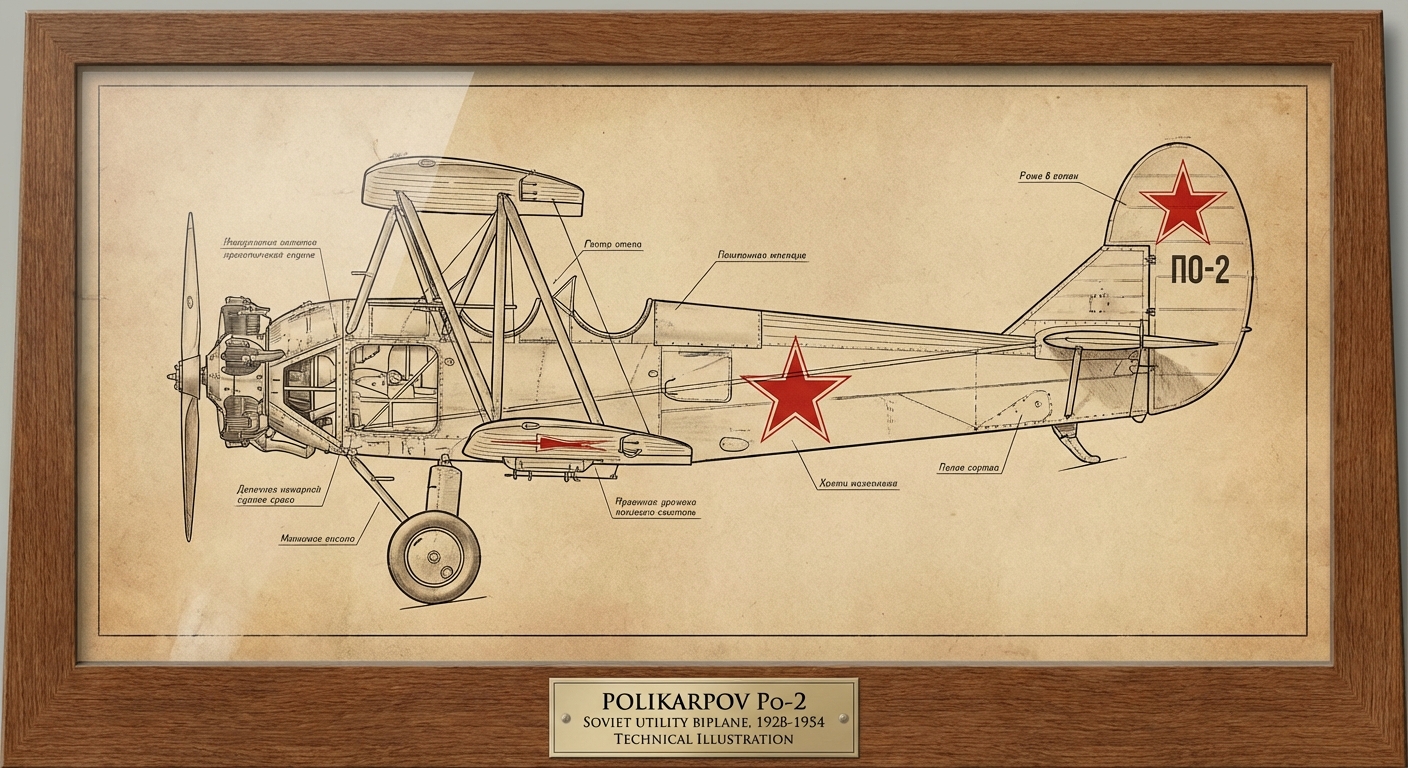
From that decision came the 588th Night Bomber Regiment, later redesignated the 46th Guards Night Bomber Regiment. Its crews were young, often barely out of school, and handed aircraft that looked almost insulting beside modern fighters: Polikarpov Po-2 biplanes, wood and canvas trainers with open cockpits and just enough engine to stay in the sky. But war has a habit of turning second-rate equipment into first-rate tools when the people using it understand exactly what it can do.
The women of the regiment learned to fly, navigate, maintain, and arm under conditions that left no space for vanity. They wore oversized uniforms at first because men’s gear was what existed. They improvised. They cut cloth, adjusted boots, worked by lantern light, and made themselves into combat aircrews because there was no one else to do it for them.
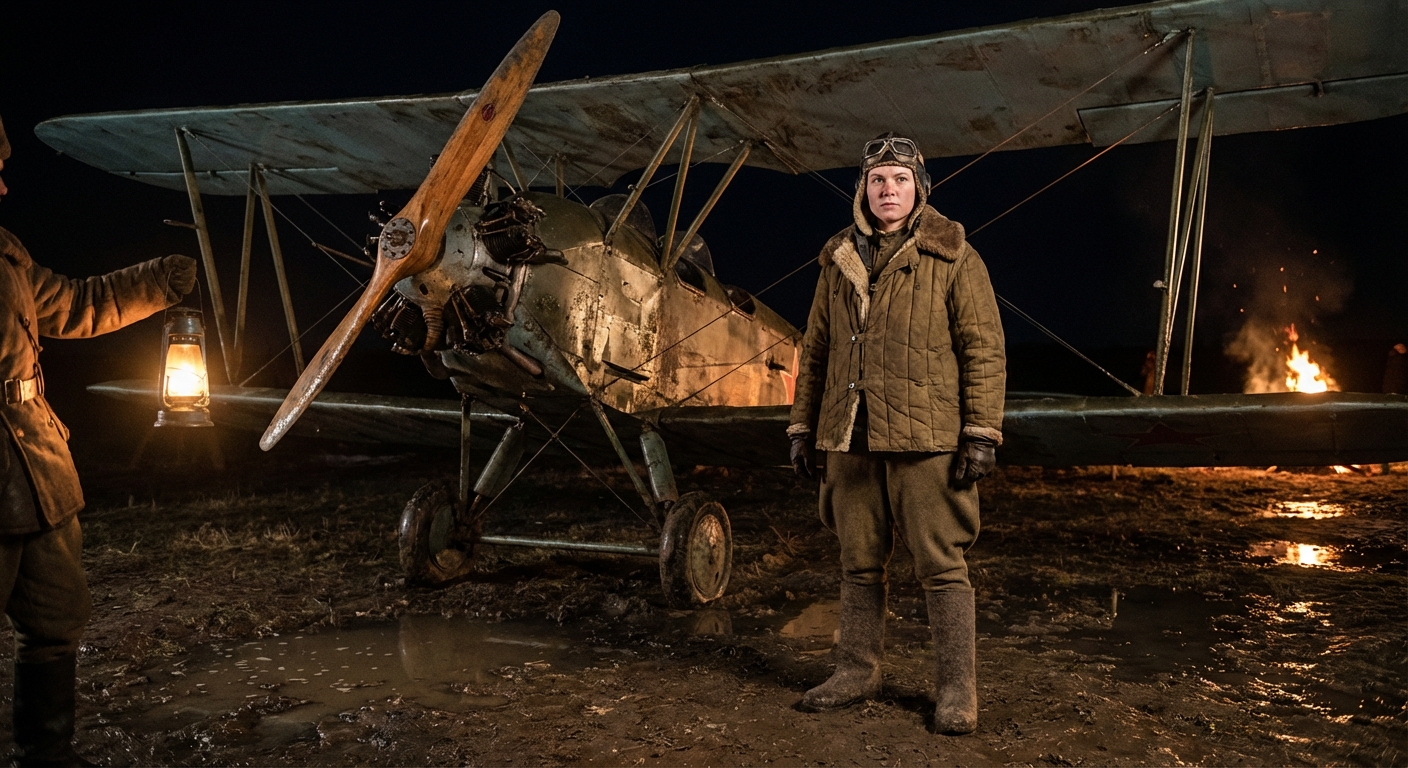
A rough Soviet airstrip, a frail biplane, and crews young enough that enemy disbelief was sometimes their first weapon.
Why the Po-2 Worked
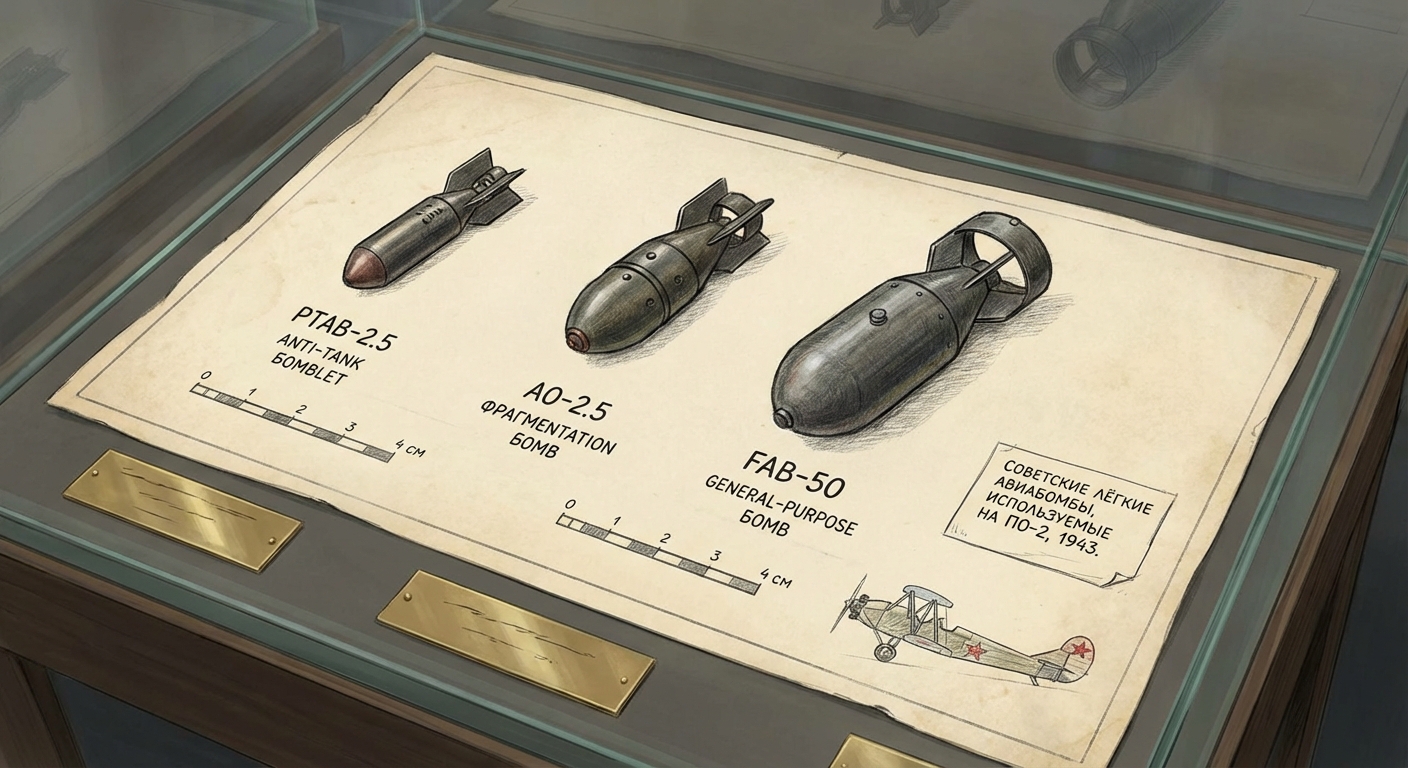
The Po-2 was so slow that German fighters could stall trying to line up on it. It carried a tiny bomb load, had almost no armor, and offered crews little protection from weather or bullets. On paper it was absurd. In darkness it became sly. It could take off from crude forward strips, slip along rivers and hedgerows, and fly low enough that larger, faster aircraft would have hated the job. Its shortcomings narrowed into a very specific strength.
Night after night the regiment launched in pairs or small elements. One crew might come in visible enough to provoke searchlights and anti-aircraft guns. Another would approach from a slightly different line, cut the engine, and glide. That engine-cut glide created the sound German troops remembered: not a roar, but a whisper, the faint brush of air through struts and wires. Then came the bomb release, the scramble for cover, the shaken nerves, the realization that sleep was not returning soon.
This was harassment bombing in the most literal sense. The point was not a single cataclysmic strike. It was pressure, repetition, and fatigue. The regiment attacked camps, crossings, ammunition points, bivouacs, depots, and gun positions, often making repeated sorties in one night until the front behind the front felt permanently unsettled.
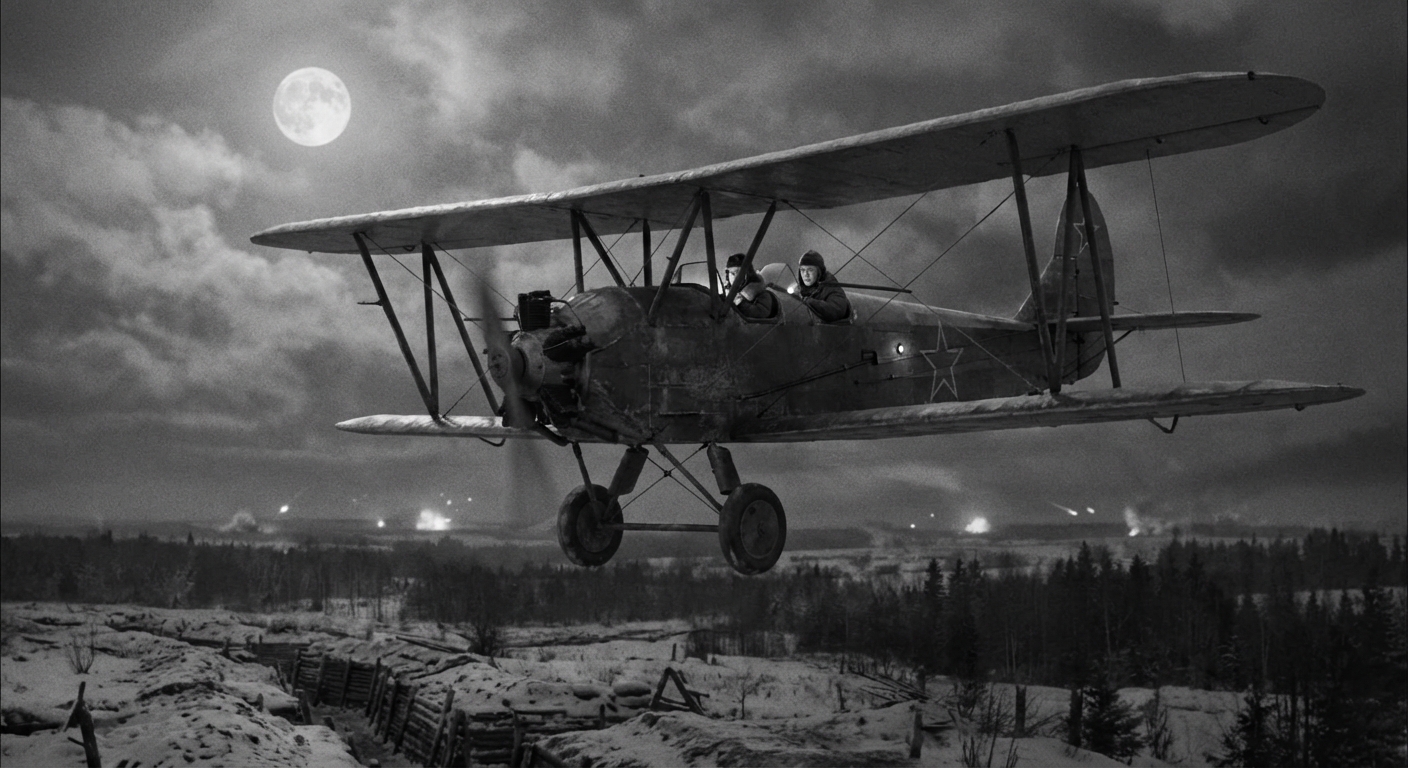
Small bomb loads, many sorties. Their war was cumulative, a thousand interruptions sharpened into fear.
Flying in the Black
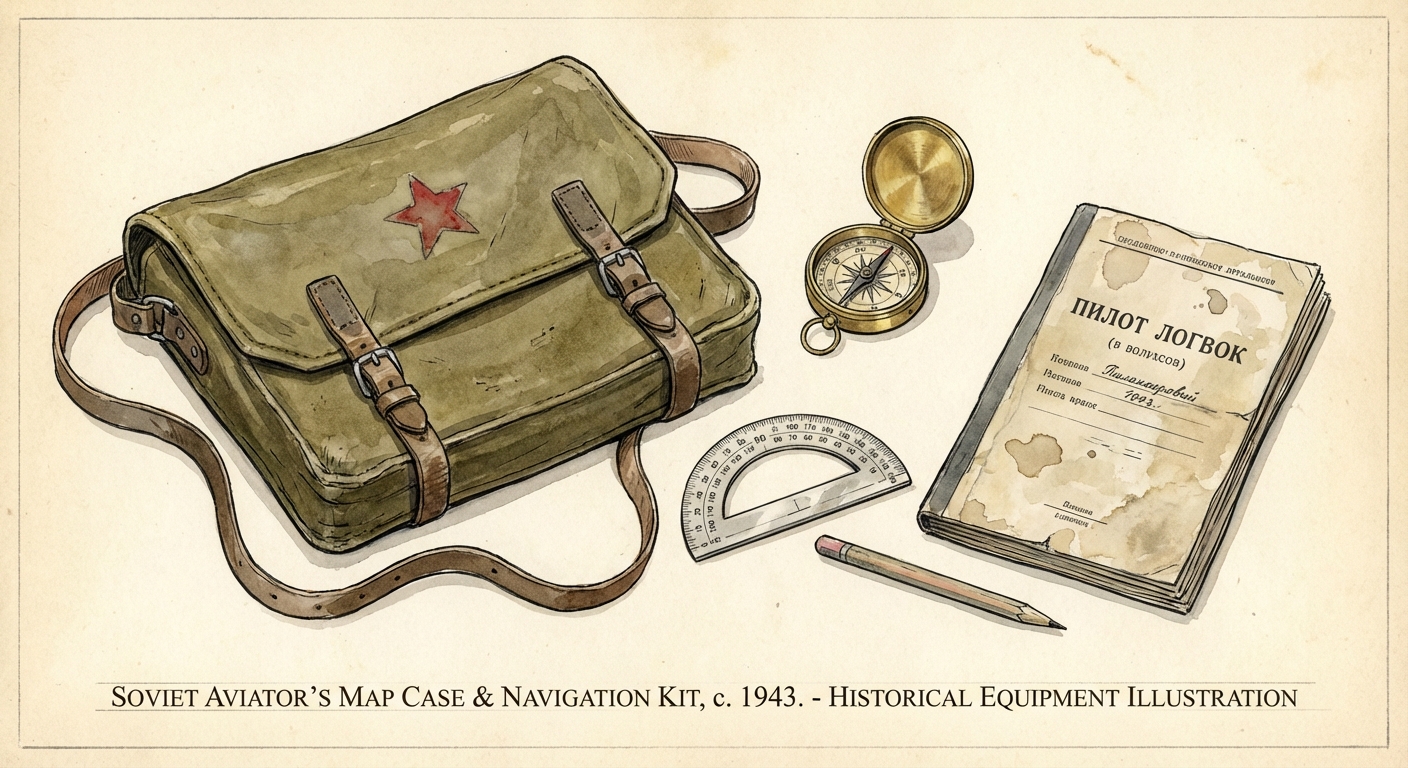
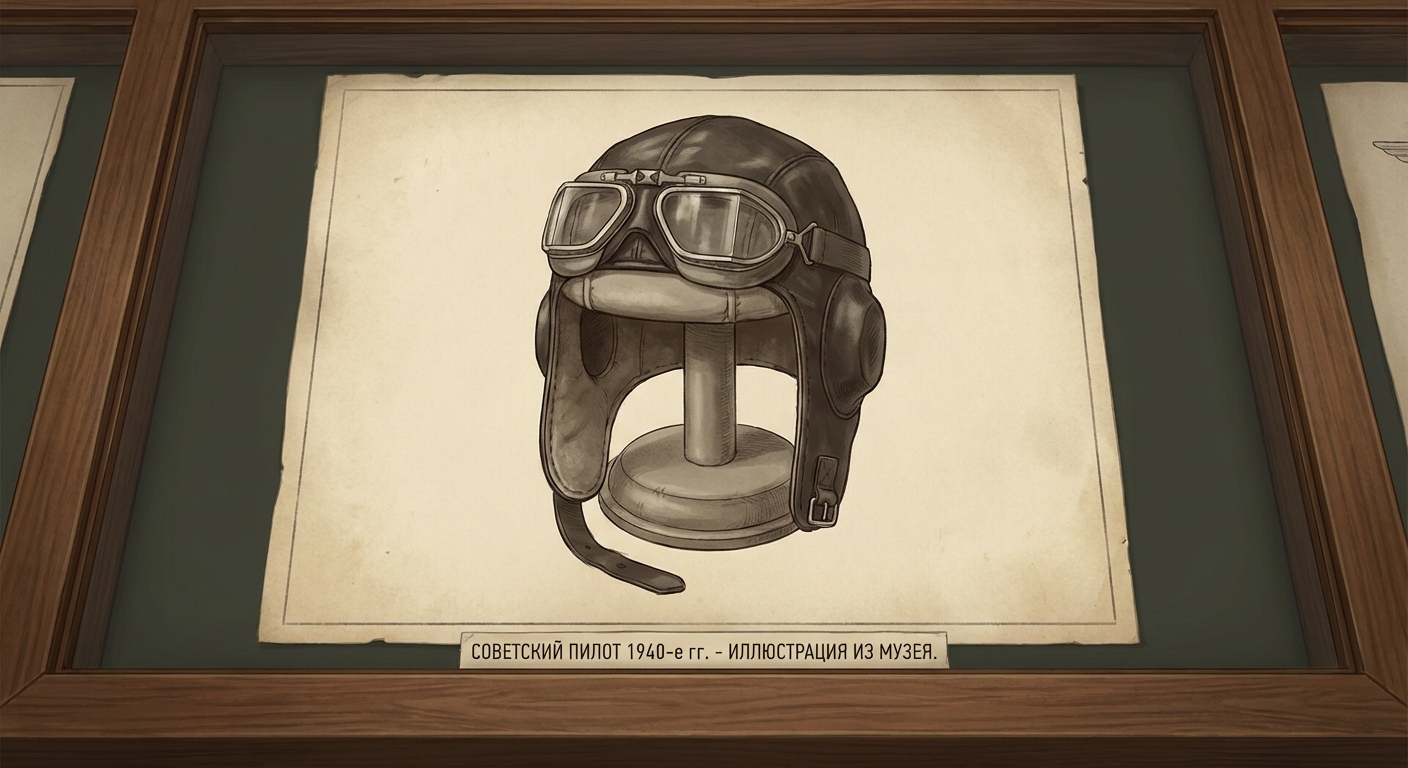
To romanticize night flying in the East would be dishonest. The work was cold, crude, and lethal. Navigators followed rivers, rail lines, tree belts, moonlight, and memory. Cockpits were open to winter air. Frost bit faces and hands. Radios were often absent or unreliable. Engines had to be trusted because there was rarely a second chance if one failed over enemy lines. A missed landmark could send a crew far off course into darkness that looked the same in every direction.
The crews developed a professional toughness that feels all the more impressive because it was so unsentimental. They loaded bombs by hand. They landed, rearmed, took off again, and did it until dawn. Nadezhda Popova flew hundreds of sorties. Irina Sebrova flew more than a thousand. Yevdokiya Bershanskaya commanded with a steadiness that kept the regiment coherent through years of attrition. Their record was not built on one cinematic night but on relentless return.
The German nickname, Nachthexen, was meant to reduce them to something uncanny, almost folkloric. It instead became proof that the regiment had gotten inside enemy nerves. If the men below heard witches in the dark, that was because the women above had taught them to.
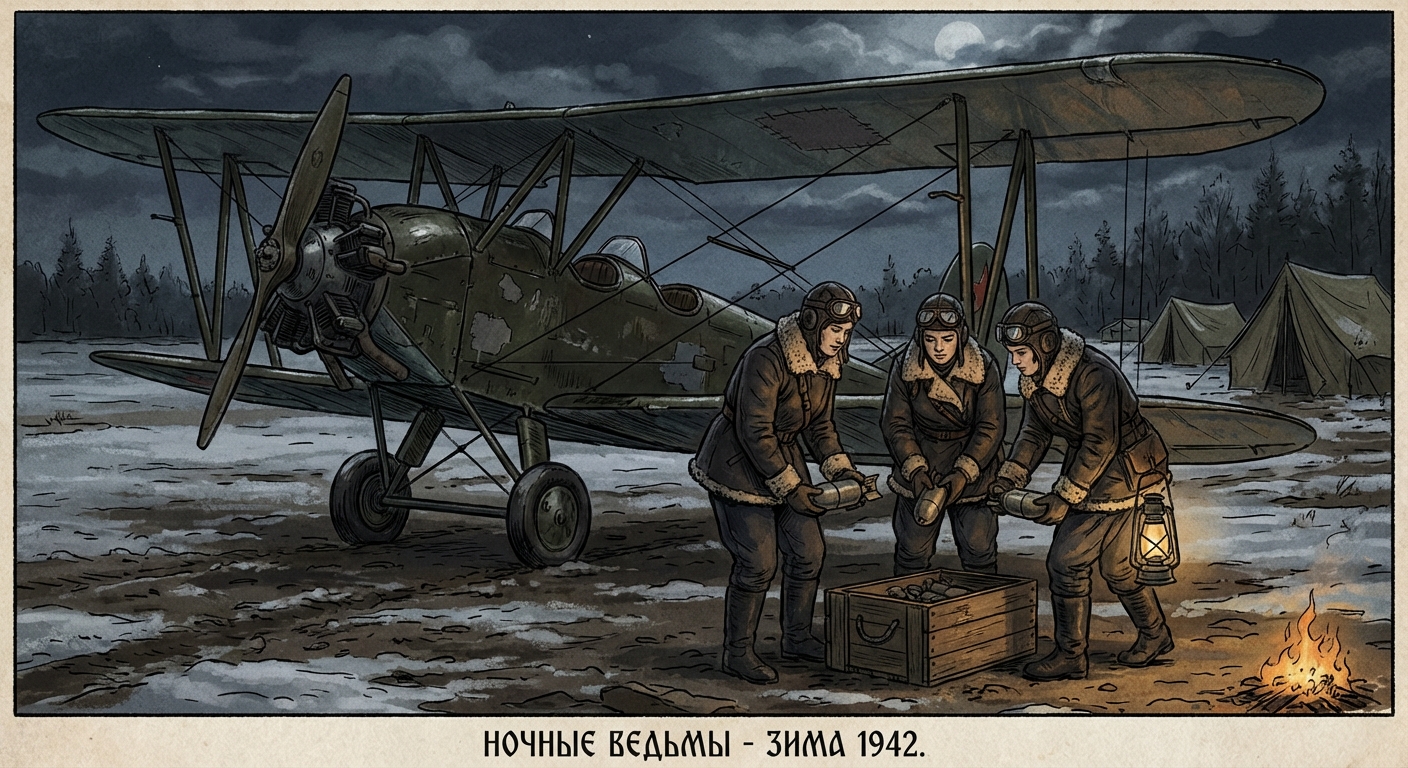
Cut the engine, ride the dark, release, turn, climb, and go home to load again. Simple in theory, murderous in practice.
Endurance as a Form of Attack
The Night Witches mattered tactically because they denied rest. They mattered symbolically because they denied assumption. In one of the harshest theaters of the war, they proved that women could operate as frontline military aviators not in propaganda isolation, but in sustained combat against a capable enemy. That truth was paid for in fatigue, crashes, wounds, and death.
They supported operations from the Caucasus to Kuban, Crimea, Belarus, Poland, and finally toward Germany. The regiment accumulated battle honors and Guards status, the Soviet mark of an elite unit. Twenty-three of its members ultimately received the Hero of the Soviet Union or equivalent later distinctions. Those decorations reflected courage, but also discipline. A regiment does not survive and excel on romance alone.
By 1945 the Po-2 still looked fragile, and the women climbing into them still looked, from a distance, like improbable agents of war. Up close there was nothing improbable about them at all. They were professionals doing a dangerous job expertly, and they had forced history to make room for that fact.
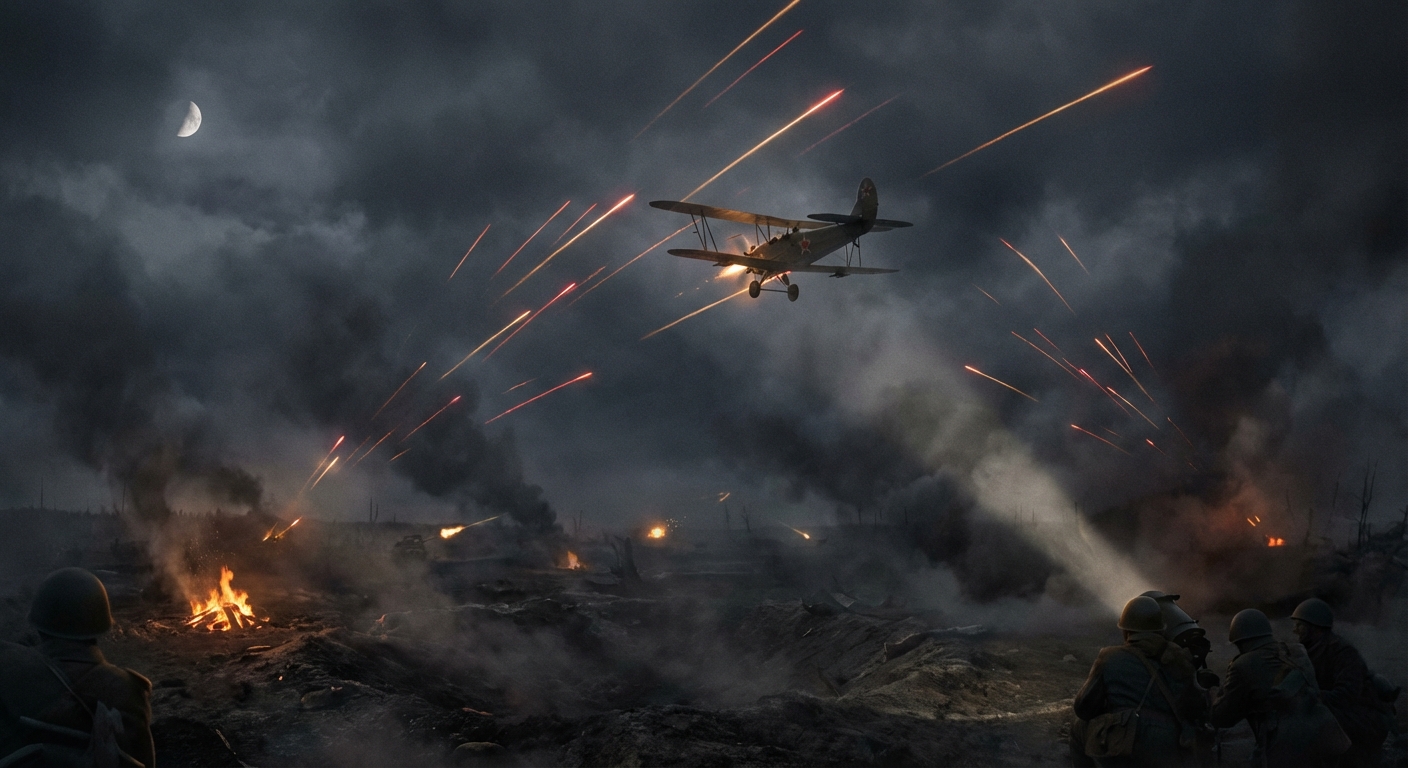
No radar screens, no warm cockpit, no margin. Just map work, memory, nerve, and a sky full of tracers.
The Sound German Soldiers Remembered
Some wartime legends grow because they are exaggerated. This one lasted because the physical experience was so immediate. Imagine being a German soldier on the Eastern Front, already underslept and chilled, hearing engines somewhere in the dark and then hearing them stop. Searchlights cut across the sky. Guns open. Then a shape you can barely see slides overhead with no warning sound except wind. Bombs fall. Maybe the blast is small. Maybe it is not. Either way, your night is gone.
That is why the regiment’s contribution cannot be measured only in tonnage. It was measured in nerves frayed, positions exposed, and men who learned to fear a machine they had once dismissed. Harassment warfare sounds secondary until you are the one being harassed. Then it becomes intimate and immediate and impossible to ignore.
The Night Witches were not glamorous in the way fighter aces were glamorous. They were more haunting than glamorous. Their victory lay partly in making the enemy understand that nowhere behind the line was fully safe, not while the little biplanes kept coming.
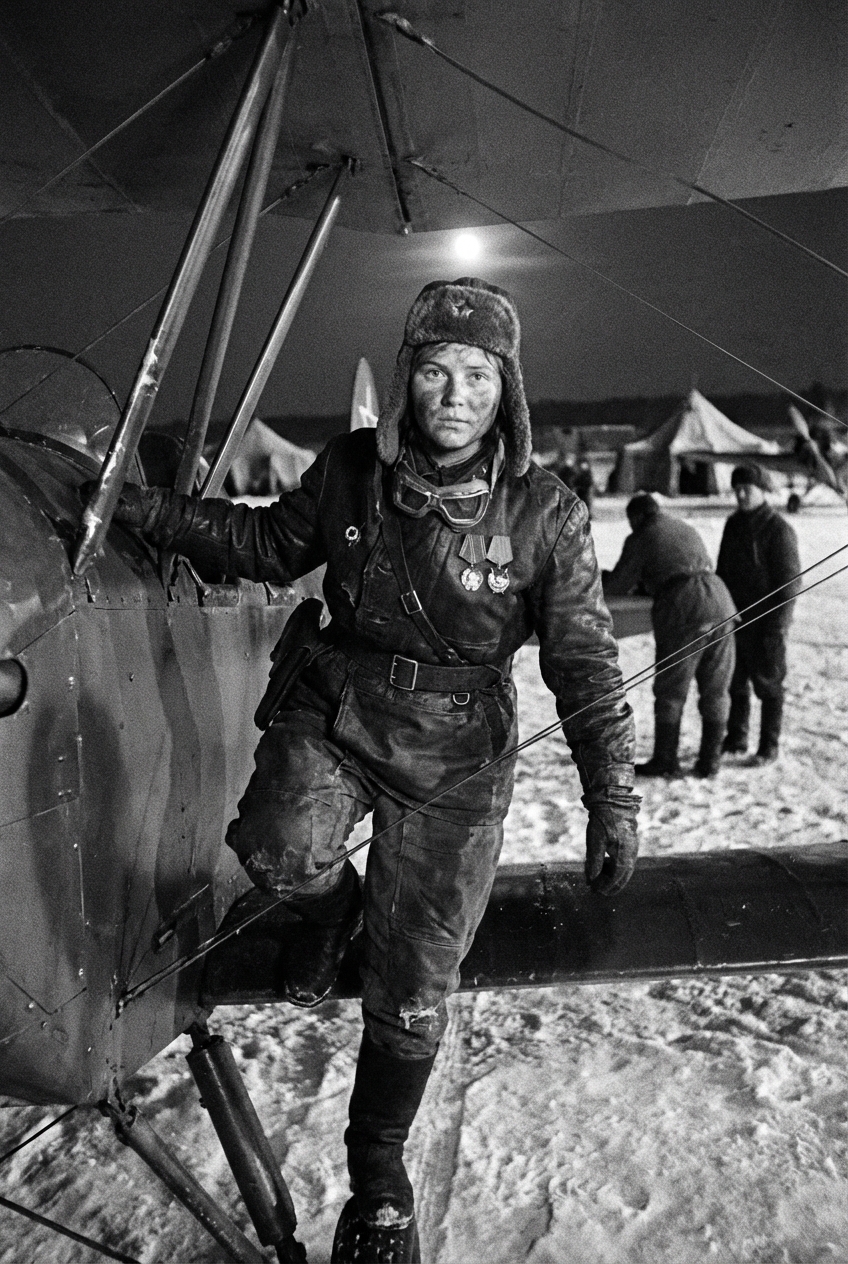
They landed hard, reloaded fast, and went back up before the cold had time to leave their gloves.
A Legend Earned the Hard Way
After the war the Night Witches became one of the most famous women’s combat formations in history, but the legend can flatten them if it is handled lazily. They were not mascots, novelties, or magical figures floating above the usual arithmetic of war. They were a combat regiment. They endured operational tempo, danger, aircraft loss, and the terrible randomness that always shadows air war.
What remains striking is how cleanly their story cuts through excuses. They were given little, asked much, and delivered anyway. They turned obsolete aircraft into strategic irritation, fear, and prestige. They proved that under the pressure of total war, competence has a way of exposing every assumption built against it.
In the end the nickname stayed because it fit, though not in the way the Germans intended. The Night Witches belonged to the dark, yes, but they also belonged to that rarer category of military story where courage and craft are impossible to separate. The whispering wings were real. So was the damage they did.
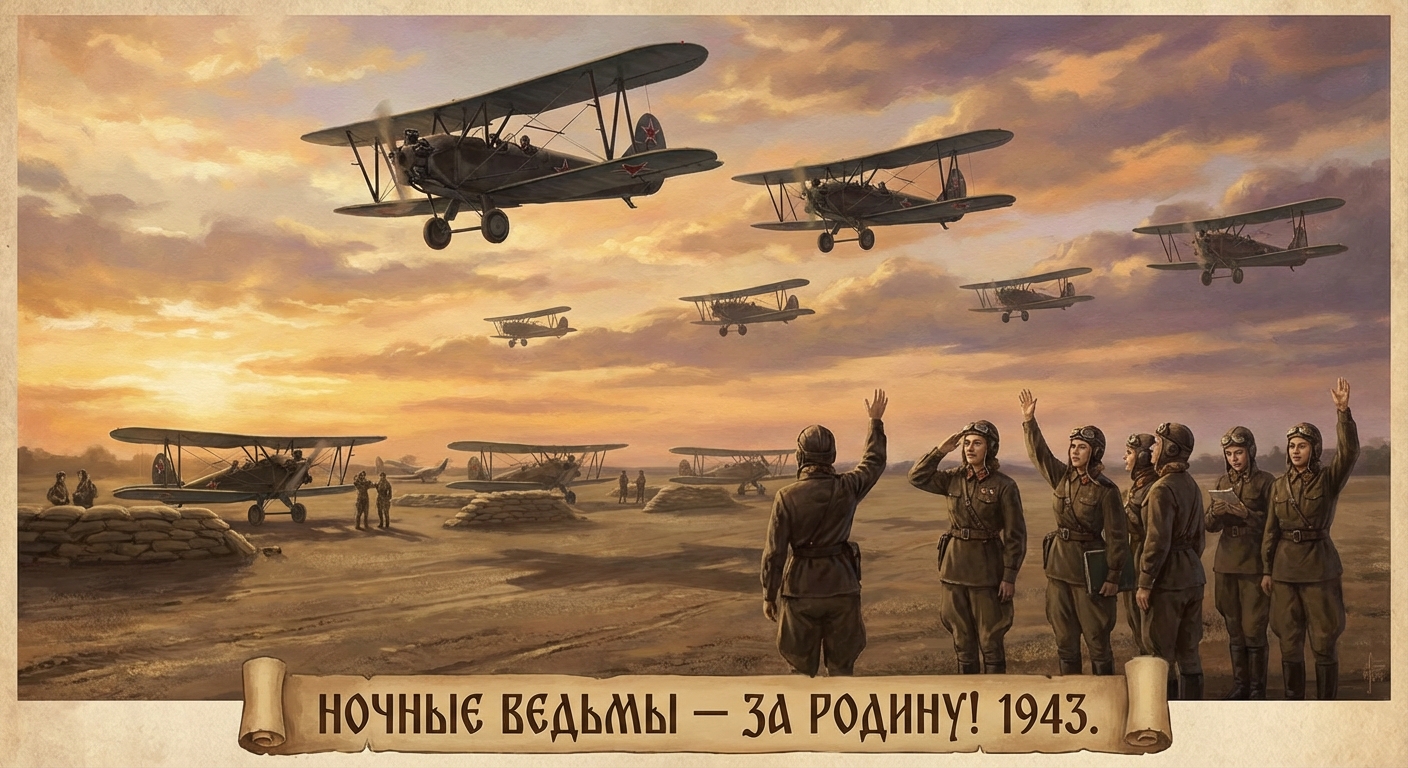
Dawn after another night’s work. The sky brightens, the little biplane comes home, and history quietly changes shape.