The ridge was quiet for perhaps thirty seconds.
Then the Lakota came over it.
They came in numbers that no one in the 7th Cavalry had seen on a battlefield—warriors on horseback pouring across the broken hills north of the Little Bighorn River in a wave that witnesses would later struggle to quantify. Some survivors estimated hundreds in a single surge. The dust rose in columns. The sound, by the accounts of those who lived long enough to describe it, was overwhelming: hoofbeats, rifle fire, and the high, rhythmic war cries of men who had been preparing for this moment for months.
For the five companies riding with Lieutenant Colonel George Armstrong Custer on the afternoon of June 25, 1876, there would be no withdrawal, no reinforcement, and no survivors.
---
To understand what happened on the bluffs above the Little Bighorn, it is necessary to understand what Custer believed he was riding into—and why that belief was catastrophically wrong.
The Great Sioux War of 1876 had its roots in the discovery of gold in the Black Hills, land guaranteed to the Lakota Sioux by the Fort Laramie Treaty of 1868. When a geological expedition led by Custer himself in 1874 confirmed the presence of gold, the United States government moved to purchase or seize the territory. The Lakota refused to sell. By the winter of 1875–76, the Grant administration had effectively issued an ultimatum: Lakota and Cheyenne bands camped off reservation were ordered to report to their agencies by January 31, 1876, or be considered hostile. Most could not comply in the dead of a Great Plains winter even if they had wanted to. The Army was ordered to move against those who remained off-reservation.
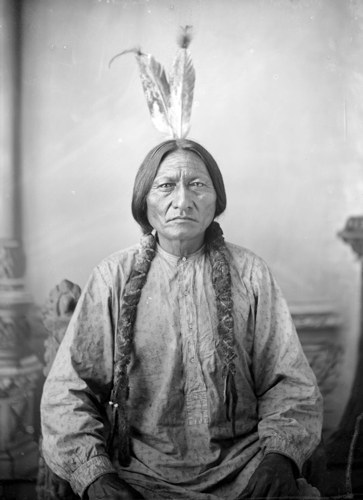
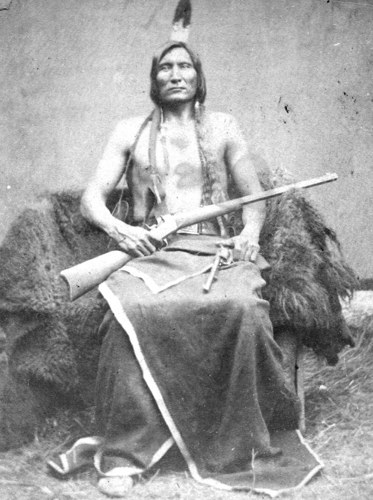
The campaign that followed was a three-pronged convergence. Brigadier General Alfred Terry commanded the Dakota Column from the east, with the 7th Cavalry as its striking arm. Colonel John Gibbon moved from the west with the Montana Column. Brigadier General George Crook advanced from the south with the Wyoming Column. The plan was to drive Lakota and Cheyenne bands—led by the Hunkpapa holy man Sitting Bull and the Oglala war leader Crazy Horse, among others—into a shrinking box and force their return to the reservations.
What the Army did not yet know, and could not easily have learned, was the scale of what it was walking toward.
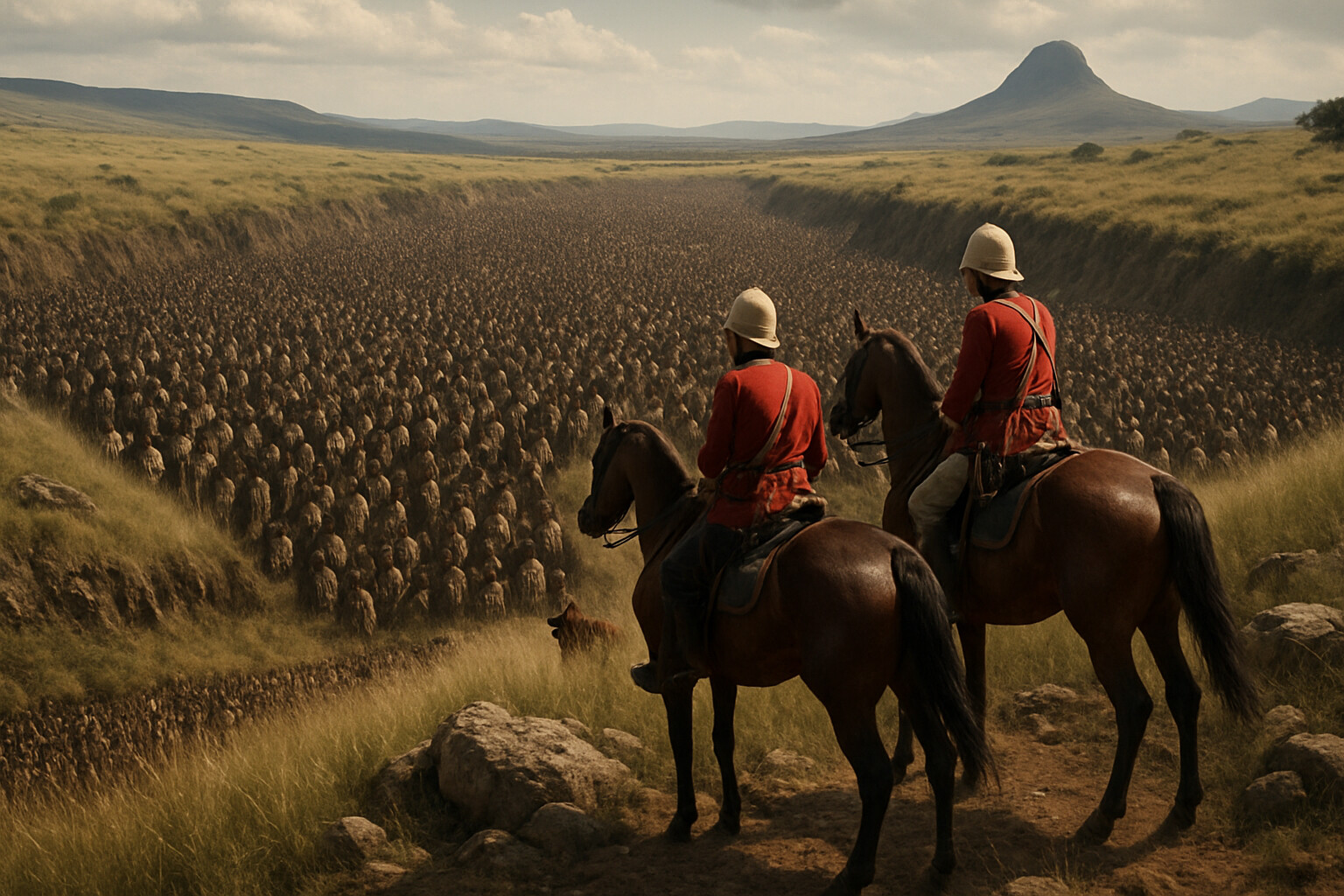
Sitting Bull had spent the winter and spring of 1876 consolidating an unprecedented gathering. Through a sun dance held in June—during which Sitting Bull reportedly received a vision of soldiers falling into the Lakota camp—thousands of warriors had converged on the unceded territory along the Rosebud and Little Bighorn rivers. Contemporary Army estimates, based on the number of lodges observed, placed the encampment at anywhere from 1,500 to 1,800 warriors. Post-battle analysis and later scholarship suggest the fighting force may have numbered between 1,500 and 2,500, with some estimates reaching higher. The village itself was one of the largest ever assembled on the Northern Plains—possibly the largest in the memory of its participants—stretching for roughly three miles along the west bank of the Little Bighorn, organized by tribal grouping: Hunkpapa, Oglala, Miniconjou, Sans Arc, Blackfoot Lakota, and Northern Cheyenne.
Crook had already discovered a portion of this reality. On June 17, 1876—eight days before the Little Bighorn—his column was struck by Crazy Horse's warriors at the Battle of the Rosebud. Crook's force was effectively fought to a standstill and withdrew, but his couriers did not reach Terry in time to inform the strategy. Terry's column pressed on without knowing that the southern arm of the convergence had been neutralized.
---
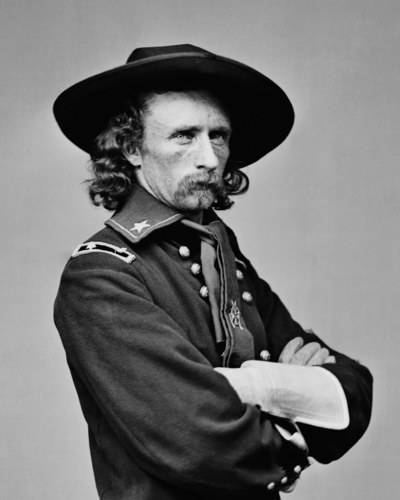
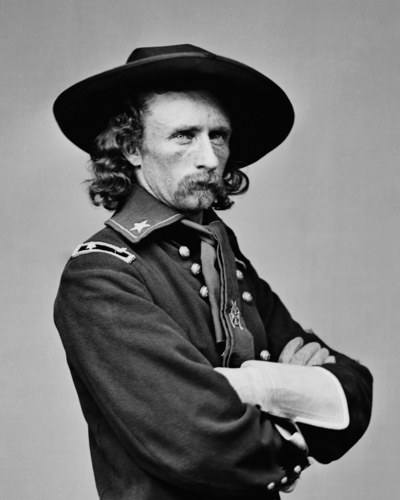
George Armstrong Custer, thirty-six years old in June 1876, was a man of genuine courage and genuine recklessness, and it has never been entirely possible to separate the two.
He had graduated last in his West Point class of 1861—a detail that has been both overemphasized and unfairly used to dismiss him. What followed his graduation was a Civil War record of real distinction. He served on the staff of General George McClellan, rode at First Bull Run, and developed a reputation for aggressive leadership that caught the attention of General Alfred Pleasonton. At twenty-three, Custer was promoted to Brigadier General of Volunteers, becoming one of the youngest general officers in Union history. He led his Michigan Cavalry Brigade—the "Wolverines"—with a theatrical flair that was partly personal style and partly effective command. At Gettysburg, his brigade helped blunt J.E.B. Stuart's attempt to strike the Union rear. At Appomattox, elements under his command received the Confederate flag of truce.
He was promoted to Major General of Volunteers by the war's end. When the volunteer army dissolved, he reverted to his Regular Army rank—Lieutenant Colonel of the newly formed 7th U.S. Cavalry. The brevet rank of Major General clung to him in common usage, and Custer cultivated that identity carefully. His buckskin jacket, his long auburn hair, his self-styled image as the "Boy General" were tools of a public persona he actively maintained through correspondence with journalists and publishers.
His record in the Indian Wars was mixed. He had won a tactical victory at the Battle of the Washita in 1868, striking Black Kettle's Cheyenne village on the Washita River in present-day Oklahoma. Critics then and since have noted that Black Kettle was a peace chief, that women and children died in the attack, and that Custer left the field without accounting for a detachment under Major Joel Elliott that had been cut off and killed. The action earned him the praise of General Philip Sheridan and the lasting skepticism of some of his own officers.
In 1876, Custer was under political shadow. He had testified before Congress about corruption in the War Department's management of Indian trading posts, implicating associates of President Grant. Grant, furious, had initially moved to remove Custer from command of the Little Bighorn expedition entirely. Only the intercession of Terry and Sheridan kept Custer in his saddle. He rode out from Fort Abraham Lincoln on May 17, 1876, with something to prove.
---
The 7th Cavalry that rode with him was a regiment of roughly 600 officers and enlisted men, reinforced by Arikara and Crow scouts whose knowledge of the terrain would prove far more accurate than Custer's own assessments.
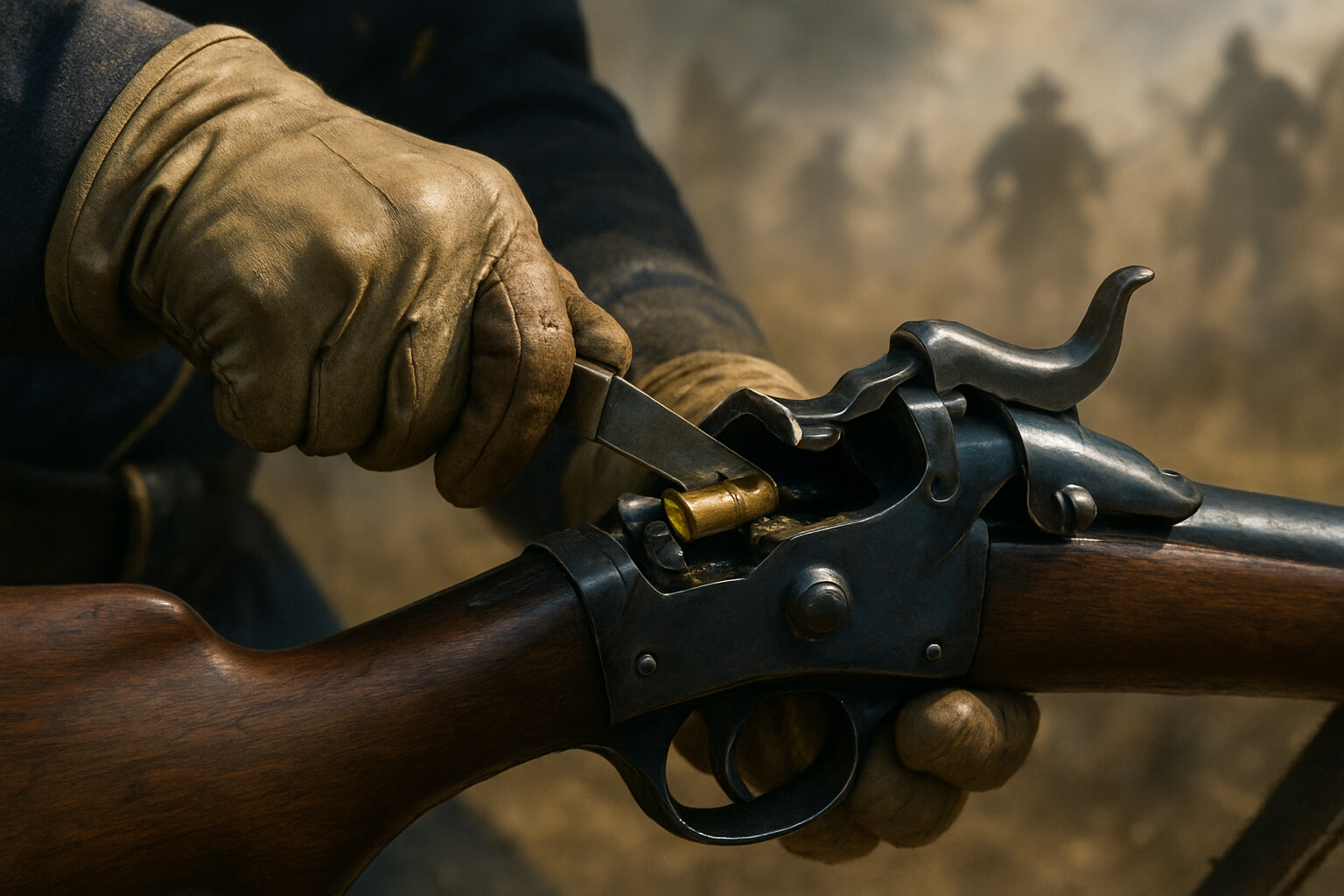
The regiment's primary arm was the Springfield Model 1873 carbine, a single-shot, trapdoor-action rifle chambered in .45-70 Government. Each trooper carried one. The weapon was accurate and reasonably powerful at range, but its trapdoor mechanism had a documented tendency to jam when the chamber grew hot from sustained fire—the extractor could tear through a spent brass case rather than pulling it free, leaving a cartridge stuck in the breech. Clearing it required a knife or cleaning rod. In a close-quarters firefight against a mobile enemy, that malfunction could be fatal.
Troopers also carried the Colt Single Action Army revolver, the Model 1873, chambered in .45 Colt. This was a six-shot, single-action sidearm—accurate and reliable at close range, but limited to six rounds before reloading by hand. Some officers and scouts carried privately purchased weapons, including Winchester repeating rifles, which were significantly faster to cycle than the Springfield.
Here lay a tactical asymmetry that is often understated. Many of the Lakota and Cheyenne warriors at the Little Bighorn were armed with lever-action repeating rifles—Winchesters and Henrys—acquired through trade, gift, and capture. Not all warriors had them; many fought with bows, which had their own advantages in terms of rate of fire and silence. But the combination of repeating arms and overwhelming numbers meant that the Lakota and Cheyenne could pour sustained fire into the troopers in a way that the single-shot Springfield could not match. The argument that Native warriors were universally better armed than the 7th Cavalry is an overstatement; the argument that they had a significant rate-of-fire advantage in close terrain is well-supported.
---
On June 24, Custer's Crow scouts found the trail of the great encampment. It was immense—a broad swath of churned earth and camp debris pointing west toward the Little Bighorn valley. Custer's chief of scouts, Lieutenant Charles Varnum, and Crow scouts including Half Yellow Face and White Man Runs Him climbed to a vantage point called the Crow's Nest before dawn on June 25 and could see—or believed they could see—the enormous dust cloud and pony herd of the village to the west.
Custer rode to the Crow's Nest himself but reportedly could not discern what his scouts described in the pre-dawn light. The scouts, by their later accounts, were emphatic: the village was immense, and they were being watched. Signs indicated the column had been spotted. Custer, concerned that delay would allow the village to scatter, decided not to wait for Gibbon's converging column. He would attack on June 25, a day earlier than the original plan.
This decision has been debated for nearly 150 years. Custer's defenders argue that he had reason to fear the village would disperse—a persistent failure mode in previous Plains campaigns. His critics argue that he discounted the scouts' warnings about the village's size, and that a coordinated attack with Gibbon on June 26 would have produced a very different result. The record establishes that the scouts warned him. What Custer weighed against those warnings, and why, cannot be fully known.
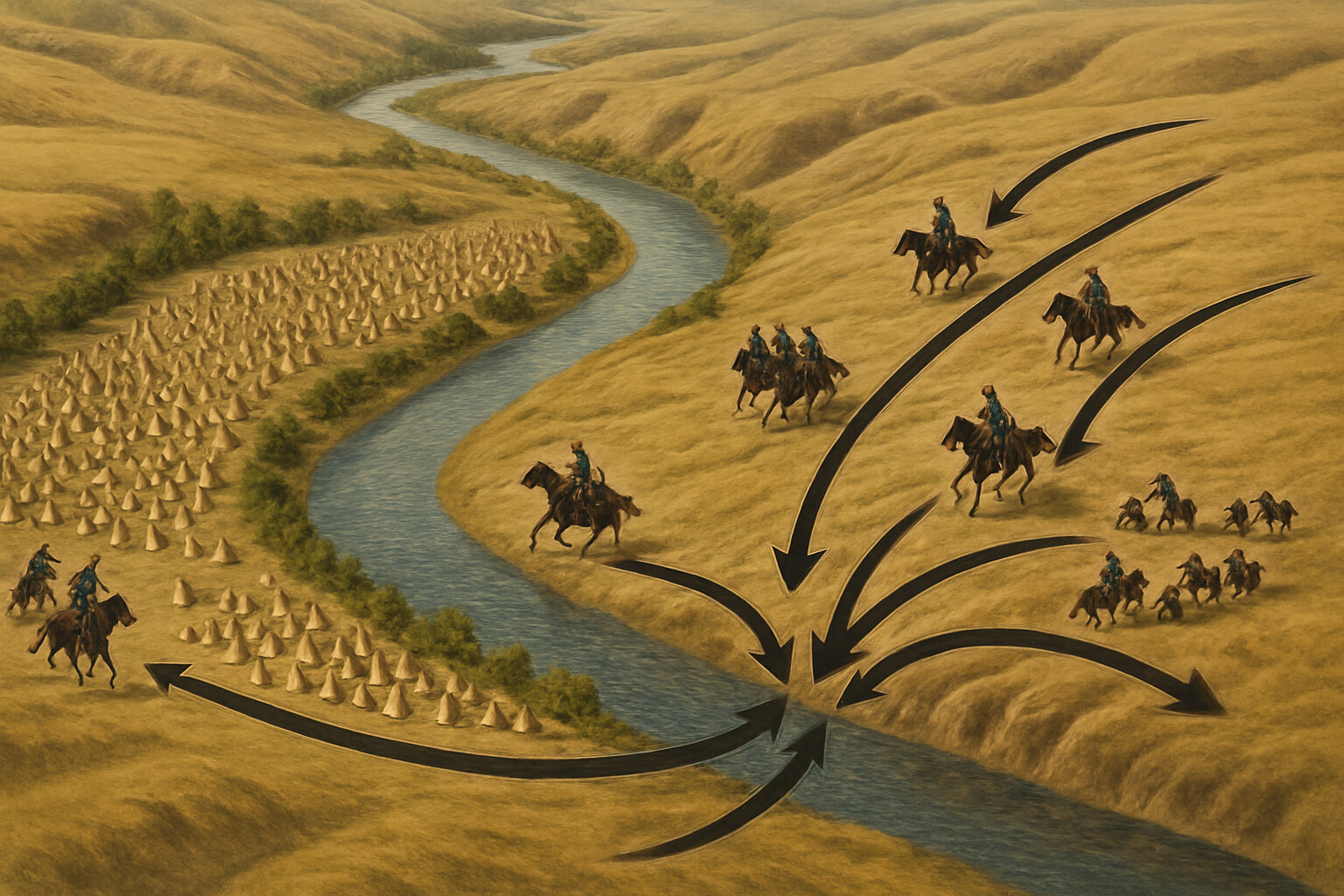
At the divide between the Rosebud and Little Bighorn drainages, Custer divided his regiment. He sent Captain Frederick Benteen with three companies (D, H, and K—approximately 125 men) on a scout to the south and left, to block any escape in that direction. He sent Major Marcus Reno with three companies (A, G, and M—approximately 140 men) to cross the Little Bighorn and attack the southern end of the village. He retained five companies for himself (C, E, F, I, and L—approximately 210 men) and moved north along the eastern bluffs, apparently intending to strike the northern end of the village in a coordinated pincer with Reno's assault.
The regiment's remaining company (B) was assigned as a pack train escort. The regiment was now in four separate pieces, moving in terrain that prevented direct coordination or visual contact.
---
Reno attacked first.
Around 3:00 p.m. on June 25—exact timing is disputed among sources—Reno's three companies crossed the Little Bighorn and charged south along the western bank toward the Hunkpapa circle at the village's southern end. The charge covered perhaps a mile and a half before Reno halted his command short of the village and dismounted to fight on foot in a timber-and-brush skirmish line. What he faced was staggering: the village was not the small or medium-sized encampment that the regiment had been conditioned to expect. Warriors were coming out in numbers that far exceeded Reno's force.
Within forty-five minutes to an hour, Reno's position in the timber was untenable. He ordered a withdrawal—accounts from his own officers disagree about whether this was an ordered retreat or a rout—back across the river to the bluffs on the eastern bank. The crossing was chaotic. Warriors pressed the retreating troopers hard. Several men were killed in the river or on the far bank. Scout Bloody Knife, a trusted aide who had ridden with Custer in the Black Hills, was shot through the head while sitting next to Reno—an event that reportedly shook Reno severely. Reno's command lost approximately 40 killed and 13 wounded in this phase of the battle; the survivors established a defensive perimeter on the bluffs now called Reno Hill.
Benteen, returning from his scouts to the south, reached Reno Hill around the same time. He had found nothing in the valley to the south. He brought his three companies into the perimeter and shortly afterward the pack train arrived. Reno and Benteen together had roughly 350 men, adequate ammunition, and a defensible position. They were pinned there for the remainder of the 25th and through most of June 26 by sustained Lakota and Cheyenne pressure, but they held.
They heard the firing to the north. Some of Reno's officers and men later testified that they could hear an extended, heavy firefight in the direction Custer had gone. No relief was sent. The reasons for this—whether the command was too heavily engaged, whether the officers believed Custer could handle his own fight, or whether other factors were at work—have been the subject of court inquiry, congressional interest, and historical argument ever since. Reno was later court-martialed on a separate matter and his conduct at the Little Bighorn was reviewed but no formal finding of dereliction was entered at that time.
---
What was happening to Custer during this time can only be reconstructed from physical evidence, the accounts of Native participants, and the battlefield archaeology that followed.
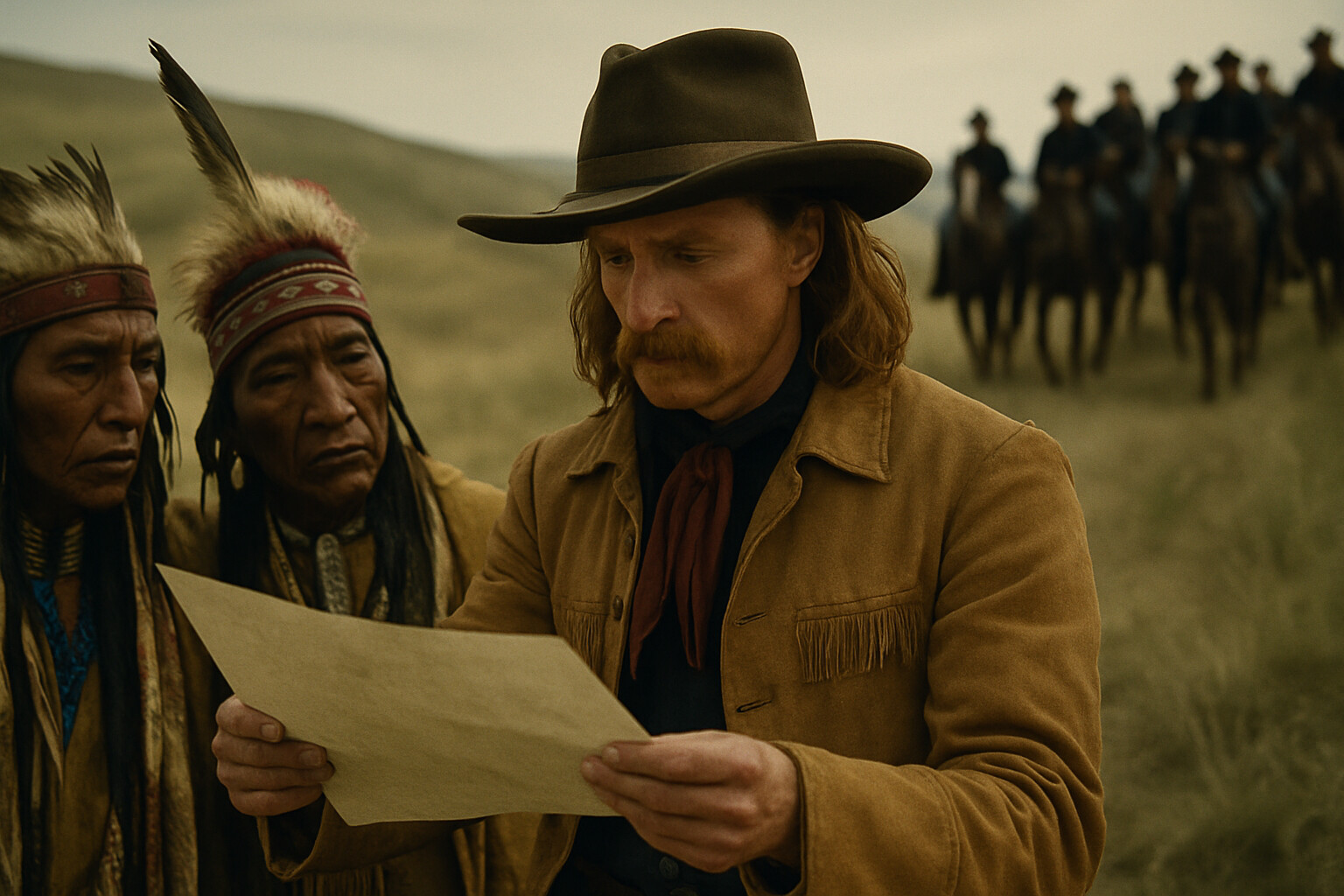
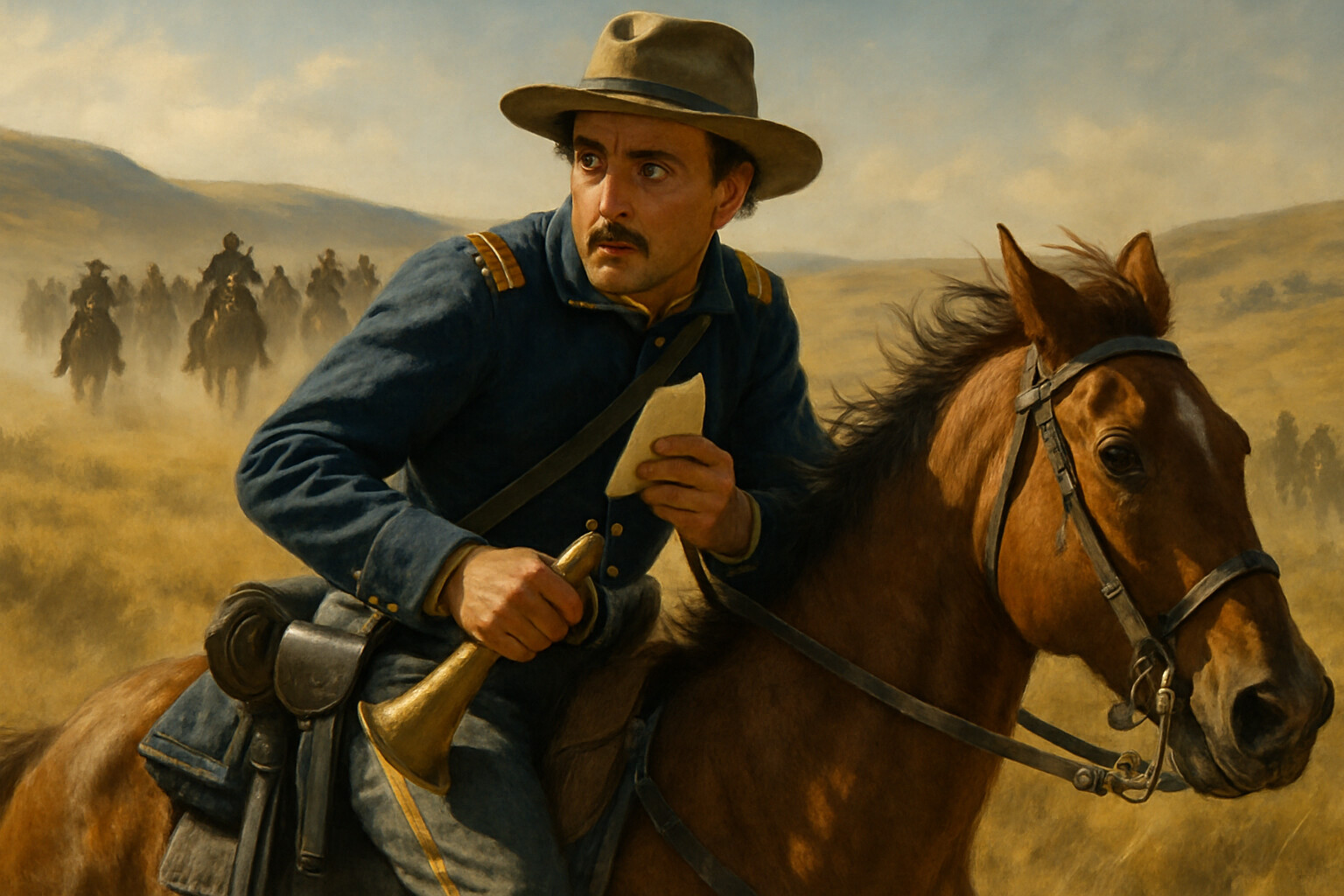
Custer's column moved north along the eastern bluffs, apparently looking for a ford to cross into the northern end of the village. He sent Captain Thomas Weir's company (D—later released from Benteen's command) in that direction and was in communication with his rear by messenger; the last known message from Custer, carried by Trumpeter John Martin, asked Benteen to "Come on. Big village. Be quick. Bring packs." The message—the handwriting later attributed to Adjutant William Cooke—is one of the few documentary artifacts of Custer's final hours.
Custer apparently found or attempted a ford somewhere near what is now called Medicine Tail Coulee. Whether his lead companies actually crossed or were driven back before crossing is disputed. What the physical and oral evidence suggests is that the attack into the northern end of the village did not succeed—that warriors, including large numbers who had just broken off from fighting Reno, swarmed across the river and drove the troopers back onto the high ground.
Crazy Horse, the Oglala war leader whose tactical reputation in the Lakota Wars was already substantial after the Fetterman Fight of 1866 and the Battle of the Rosebud, is credited by Lakota oral tradition and multiple warrior accounts with leading a flanking movement that swung around the northern end of Custer's position, cutting off any retreat toward Reno and completing the encirclement. The precision of this movement—whether it was a deliberate planned flanking or the organic result of converging warriors seizing ground—is impossible to establish from existing records, but its effect was decisive.
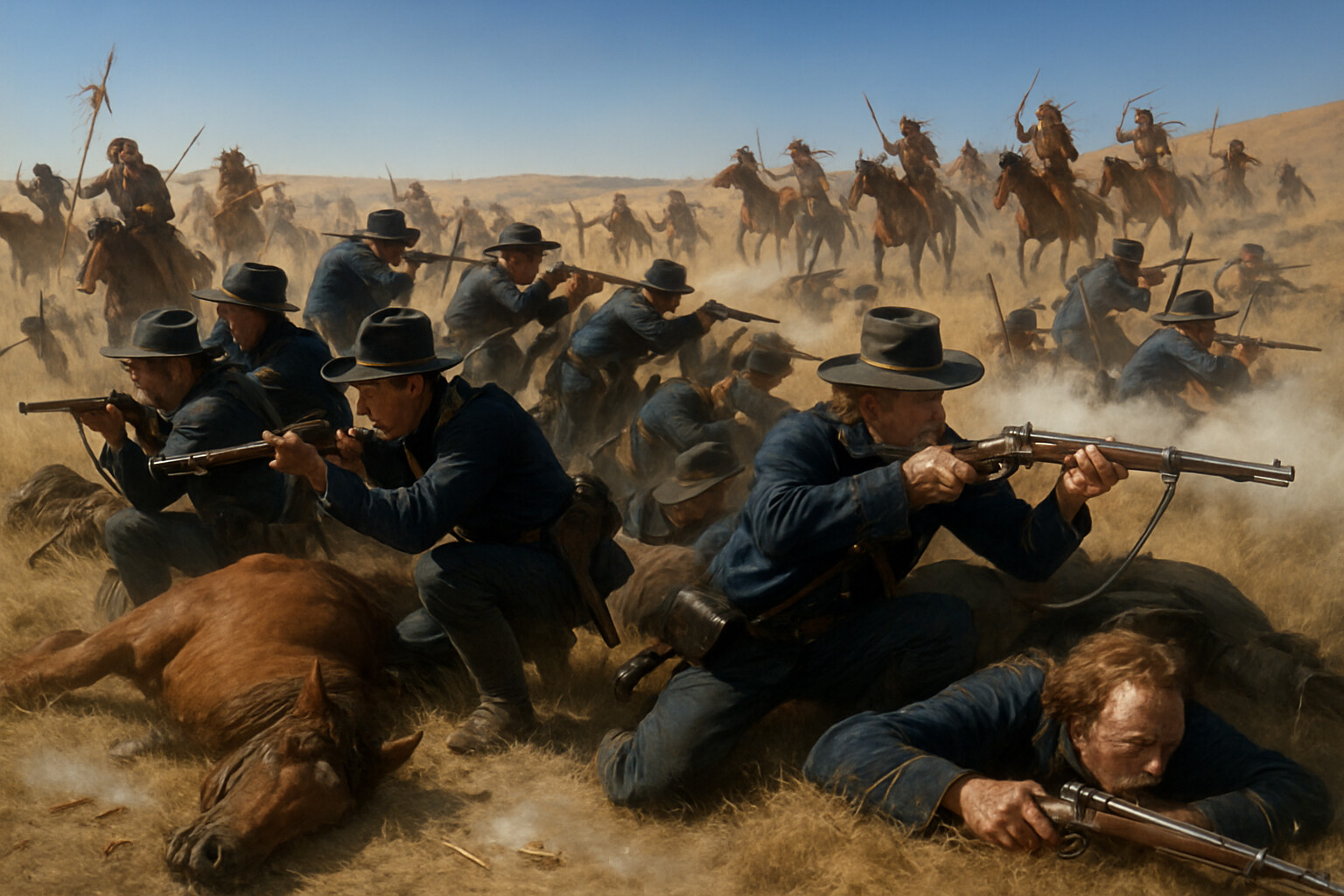
On the ridge now called Custer Hill—Last Stand Hill in the common telling—the five companies of Custer's immediate command were systematically destroyed. The fight was not long. Estimates based on the expenditure of ammunition found on the field and the accounts of Native participants suggest it lasted perhaps thirty to sixty minutes, possibly less in its final phases. Some troopers attempted to fight from behind their horses, which they shot to create cover. The tactic bought minutes, not escape. The ground was broken, the warriors numerous, and the single-shot Springfields fired too slowly to hold back the assault.
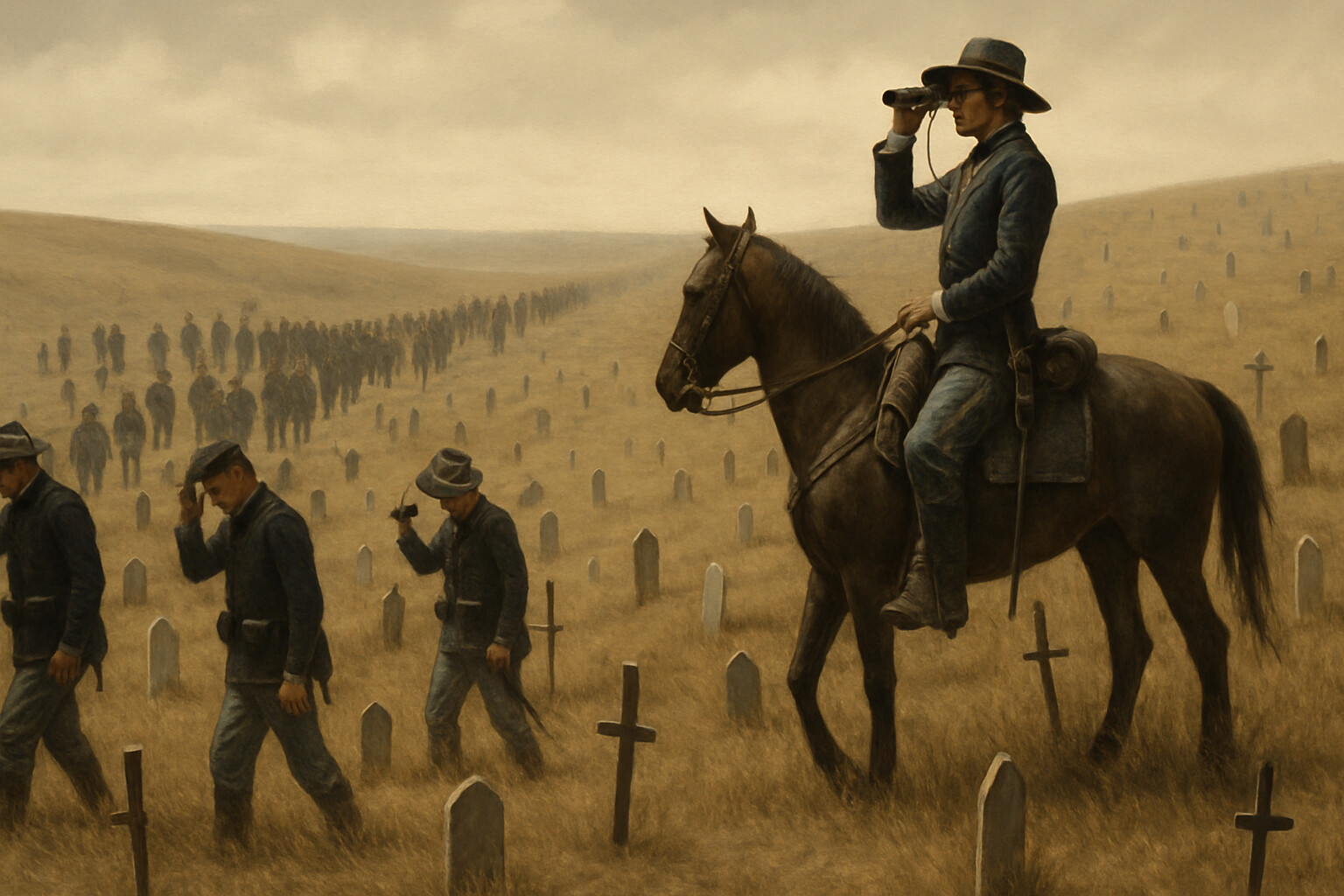
Every man in Custer's five companies was killed. The count, established by burial details in the days following, was 210 officers and enlisted men. George Armstrong Custer was found near the top of the hill, shot twice—once through the left temple and once through the left breast. Whether either wound was self-inflicted has been debated; neither can be established from the available evidence. He was found in a relatively composed position compared to many of his men, and showed no signs of the mutilation inflicted on some others—a fact that some Native accounts later attributed to his identity not being recognized, or to a deliberate choice by some warriors.
Among the dead were Custer's brothers Captain Thomas Custer and civilian Boston Custer, his brother-in-law Lieutenant James Calhoun, and his nephew Henry Armstrong Reed, who had come along as a civilian observer. The regimental adjutant, Lieutenant William Cooke, was dead. Captain Myles Keogh, commanding Company I, was dead, his horse Comanche wounded and left on the field—the horse survived, was recovered, and became a minor legend of its own.
In total, the battle of June 25–26, 1876 cost the 7th Cavalry 268 killed and 55 wounded out of roughly 700 engaged. It was the worst defeat suffered by the United States Army in the campaigns against Plains nations.
---
Brigadier General Terry's column arrived on June 27 to find the valley silent and the great encampment gone. The Lakota and Cheyenne had moved, the village dismantled and the people dispersed across the plains. What remained on the eastern bluffs were the wounded survivors of Reno and Benteen's commands and, to the north, the bloating dead of Custer's five companies spread across roughly three miles of ridgeline.
The burial was hasty and inadequate. Men were interred where they fell, in shallow graves. By the following year, a more formal reburial effort found that erosion and animals had disturbed many of the graves. The bodies of Custer and several officers were eventually reinterred at West Point.
The physical evidence left on the battlefield has never stopped speaking. Archaeological surveys conducted in 1983–1985, following a grass fire that cleared the ground, used metal detector surveys to map cartridge cases, bullets, and artifacts across the field. The distribution of .45-70 Springfield casings, Winchester and Henry repeating rifle casings, and arrowheads allowed researchers to reconstruct, in broad outline, the positions of individual firing points, the directions of fire, and the progressive collapse of Custer's defensive line. The forensic picture that emerged confirmed what Native accounts had described for a century: the battle was not a single last stand on one hill but a running series of collapses across several ridges and gullies, with small groups of men fighting from successive positions as each became untenable.
---
The news reached the East on July 5, 1876—two days after the national centennial celebration in Philadelphia. The effect was immediate and electric. Custer was already a public figure, a correspondent for newspapers, a man who had written his own memoir of the Plains campaigns. His death, and the deaths of his brothers and nephew, transformed the story into something personal for a vast readership that had followed his career.
The political and military consequences were significant. Congress authorized additional cavalry and infantry forces for the plains. The Great Sioux War continued through 1876 and into 1877, with the Army, now reinforced and no longer divided over strategy, progressively destroying or pressuring the bands that had fought at the Little Bighorn. Crazy Horse surrendered in May 1877 and was killed in custody at Fort Robinson in September of that year under circumstances that remain disputed. Sitting Bull fled to Canada with several thousand followers and did not surrender until 1881.
The Black Hills were seized. The Great Sioux Reservation was effectively broken apart through a series of agreements in the following years, culminating in the Dawes Act of 1887, which divided reservation lands into individual allotments—a policy that resulted in the loss of approximately 90 million acres of Native land across the country.
The battle at the Little Bighorn did not reverse the trajectory of American expansion. But it demonstrated, at devastating cost, what the Army and the government's planners had persistently refused to fully credit: that the Lakota and Cheyenne nations possessed experienced leaders, effective tactics, and the will and capacity to destroy a professional military force in the field.
---
The figure of Custer himself has resisted stable interpretation for nearly a century and a half.
In the immediate aftermath, he was widely mourned as a fallen hero. The image of the golden-haired general making a last stand on a hilltop became one of the most reproduced paintings in American history—Cassilly Adams's original version, subsequently rendered in lithographic prints distributed by the Anheuser-Busch brewing company and hung in thousands of saloons across the country. The image had almost nothing to do with what the archaeological and historical evidence suggests actually occurred, but it shaped public memory for generations.
Subsequent decades brought a more critical reading. His handling of the Elliott detachment at the Washita, his decision to divide his regiment, his dismissal of his scouts' warnings, his willingness to attack without waiting for coordination—all have been examined and re-examined. The debate has sometimes produced more heat than clarity, collapsing into arguments between those who want to indict Custer for every failing of the era's Indian policy and those who want to restore him as the victim of circumstances or the treachery of subordinates.
What the historical record supports is narrower and more specific. Custer was an experienced cavalry commander who made a series of tactical decisions—dividing his regiment, attacking without full reconnaissance, dismissing his scouts' counsel about the village's size—that proved fatal. Some of those decisions reflected genuine uncertainty; some reflected a pattern of aggressive confidence that had produced victories before and now produced destruction. Whether different decisions on June 25 would have produced a different outcome is a question the record cannot fully answer, because the scale of the encampment was so far beyond what any of the three converging columns had anticipated.
What is not in dispute is this: 210 soldiers of the 7th U.S. Cavalry died on those ridges. Sitting Bull's vision of soldiers falling into camp proved accurate. Crazy Horse's warriors fought with discipline, aggression, and tactical effectiveness against a professional military force. And the women and children and elders in the valley below—who had their own fears, their own reasons to fight, and their own account of why those warriors rode out to meet the soldiers—are part of this story in ways that the hagiographic tradition of Custer mythology almost entirely excluded.
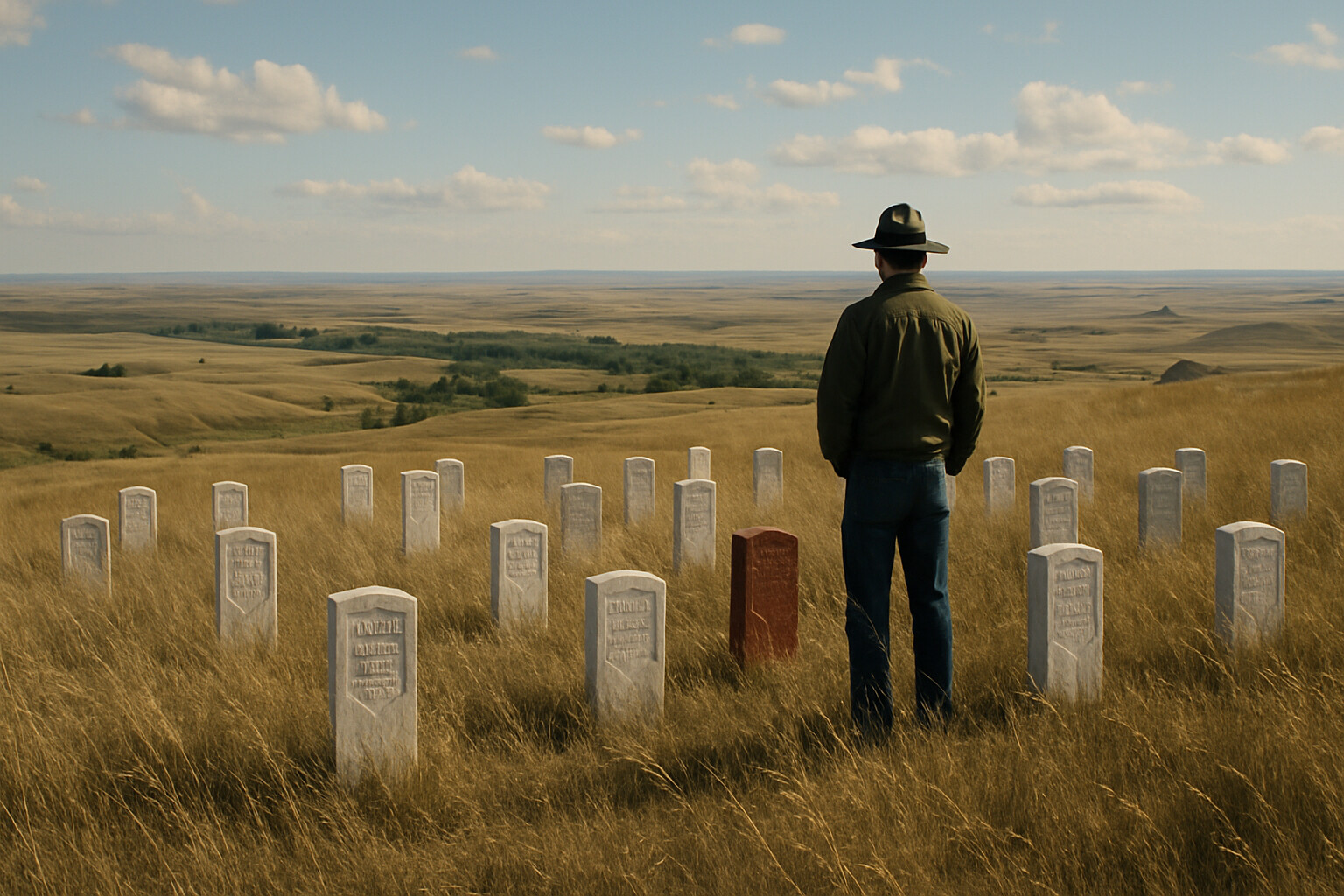
The Little Bighorn Battlefield National Monument, redesignated in 1991 from the Custer Battlefield National Monument, now maintains a memorial to the Lakota and Cheyenne warriors who fought there alongside the markers for the 7th Cavalry dead. The ridge is quieter now. The grass has grown back over the shallow places where men were buried and reburied. The river runs on below.
It is one of the most thoroughly studied small battlefields in American history, and there are still things we do not know with certainty. The last thirty minutes of Custer's command—what orders he gave, what he saw, whether he understood what was happening to his regiment—passed without a surviving witness on the Army side. Those thirty minutes remain a silence at the center of a very loud story.
We know the ridge. We know the dead. We know that the Lakota and Cheyenne won a complete and overwhelming victory on June 25, 1876, in defense of their land and their people. We know that the Army came back, in greater numbers, and that the outcome of the war was not changed by the battle. And we know that almost a century and a half later, the argument about what it means is not finished.