The ridge smelled of wet earth and burnt powder before the first gun fired.
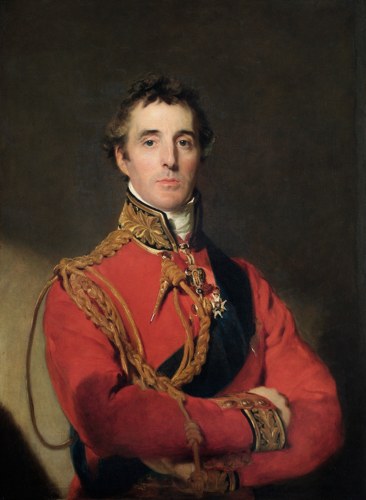
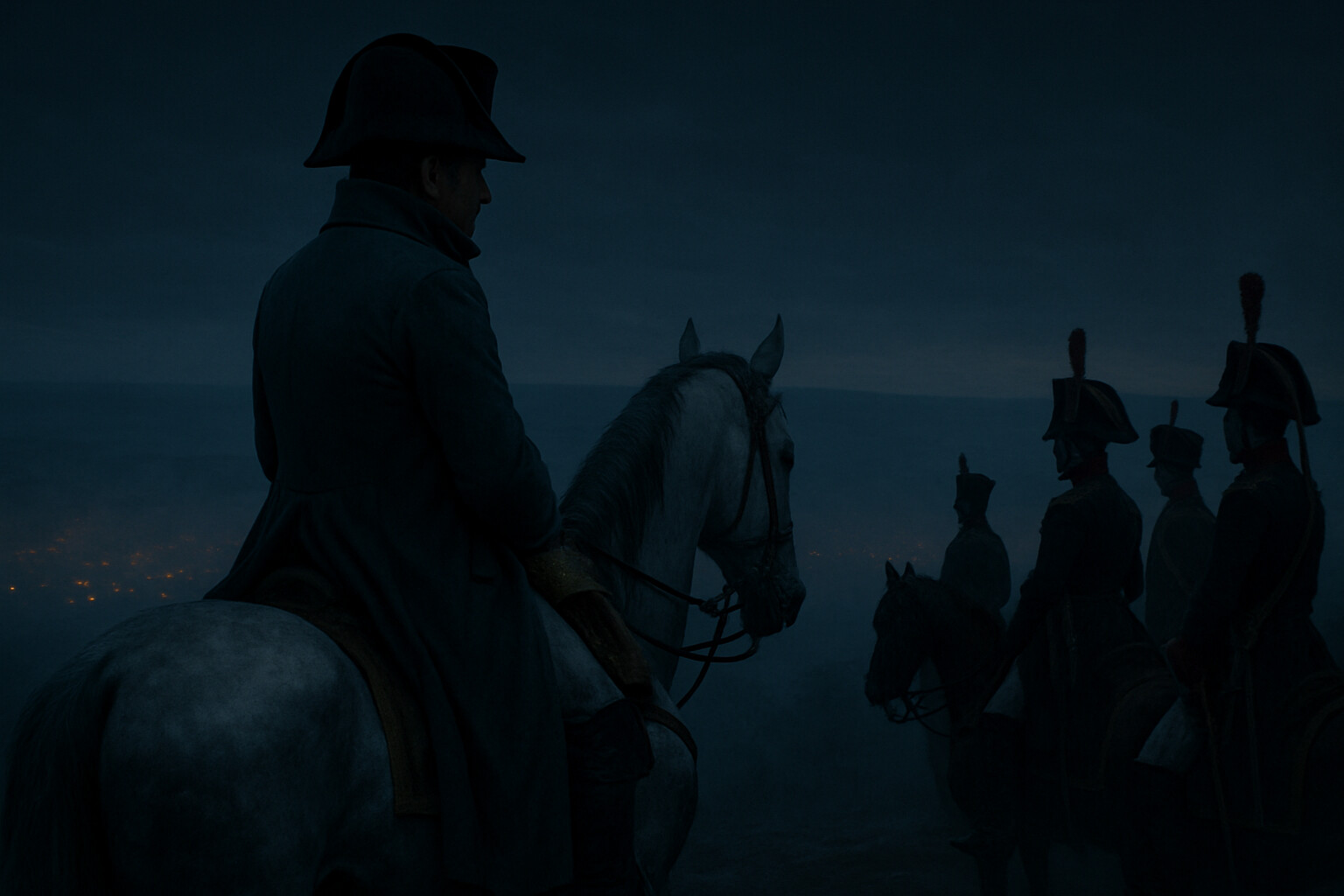
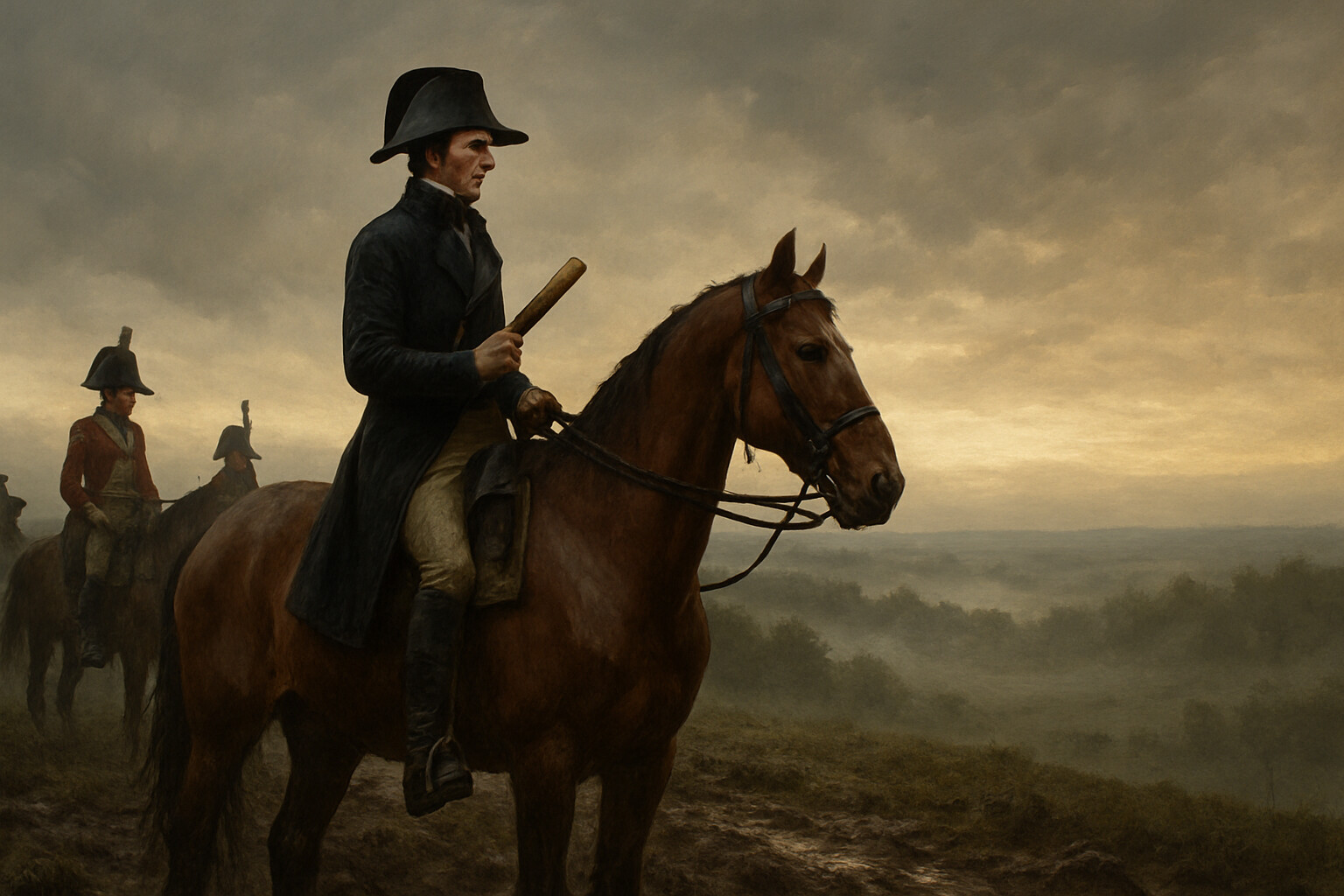
It was still early morning on 18 June 1815 when Arthur Wellesley, the Duke of Wellington, rode along the crest of the Mont-Saint-Jean escarpment. He had chosen this ground carefully—the previous evening he had ridden it at a walk and judged it suitable. The reverse slope would shelter his infantry from direct observation and from the worst of Napoleon's artillery. The road to Brussels ran north through his center. Hougoumont manor lay ahead on his right; La Haye Sainte farmhouse sat directly in front of the main line. Both would become names that outlasted the day.
Wellington had been fighting Napoleon Bonaparte's armies, or the armies of Napoleon's France, since 1808. He had driven French forces out of Portugal and Spain in a grinding seven-year campaign. He was forty-six years old in June of 1815—lean, sharp-featured, famously composed. His soldiers called him 'Old Nosey,' a reference to his prominent aquiline profile that he reportedly did not find flattering. What he was, above all else, was a tactician who knew his own army's strengths and limits with the precision of a craftsman who had spent years at his bench.
His army on that ridge was not the Peninsula force he had honed over years of hard campaigning. It was a coalition—British regulars, King's German Legion veterans, Hanoverian landwehr, Dutch-Belgian troops of varying reliability, Brunswick contingents still in mourning black after the death of their duke the day before at Quatre Bras. Of roughly 68,000 men and 156 guns, fewer than a quarter were the British veterans he trusted most. The rest were untested or, in some cases, openly unreliable. The Dutch-Belgian cavalry had already broken at Quatre Bras two days earlier. Before the campaign began, Wellington had described his force privately as an infamous army—a candid assessment of its composite nature rather than a judgment on individual soldiers' courage. The challenge of Waterloo was partly tactical and partly human: he had to hold a position with soldiers who ranged from superb to doubtful, against the best army Napoleon had been able to reconstitute in fewer than eighty days since returning from Elba.
Napoleon's Armée du Nord numbered approximately 72,000 men and 246 guns. It was not the Grande Armée of 1805, but it contained the Old Guard, the Middle Guard, and a core of veterans who had been fighting since Marengo. Napoleon himself was fifty-five, and historians have debated whether illness—proposals have included hemorrhoids, a bladder infection, and fatigue—affected his decision-making that day. The question remains open; no consensus has emerged. What is not in dispute is that he had beaten every European coalition put against him for fifteen years and expected to do so again.
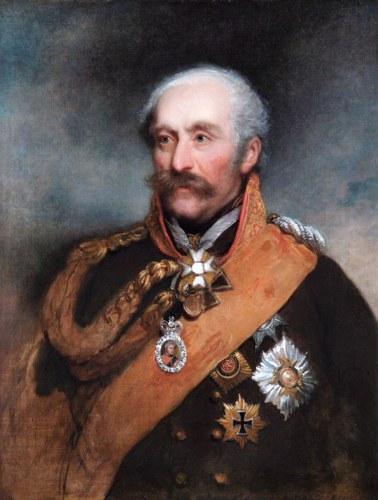
One crucial element of Napoleon's plan depended on speed. He needed to destroy Wellington's army before Field Marshal Gebhard Leberecht von Blücher's Prussian army—battered at Ligny two days before—could recover and march to Wellington's aid. The night before, Wellington had written to Blücher at Wavre: he would fight at Waterloo if Blücher could bring even one corps. Blücher promised two. That promise became the hinge on which the entire day would turn.
Napoleon delayed his main attack until late morning—approximately 11:30 a.m.—partly to allow the saturated ground to firm after the previous night's heavy rain. The mud coating every boot and wheel rim on the ridge would slow his artillery's movement and his cavalry's advance. It would also slow the Prussian approach—though neither commander could measure that in the morning light. Time was the hidden currency of Waterloo. Both sides were spending it without knowing the precise exchange rate.
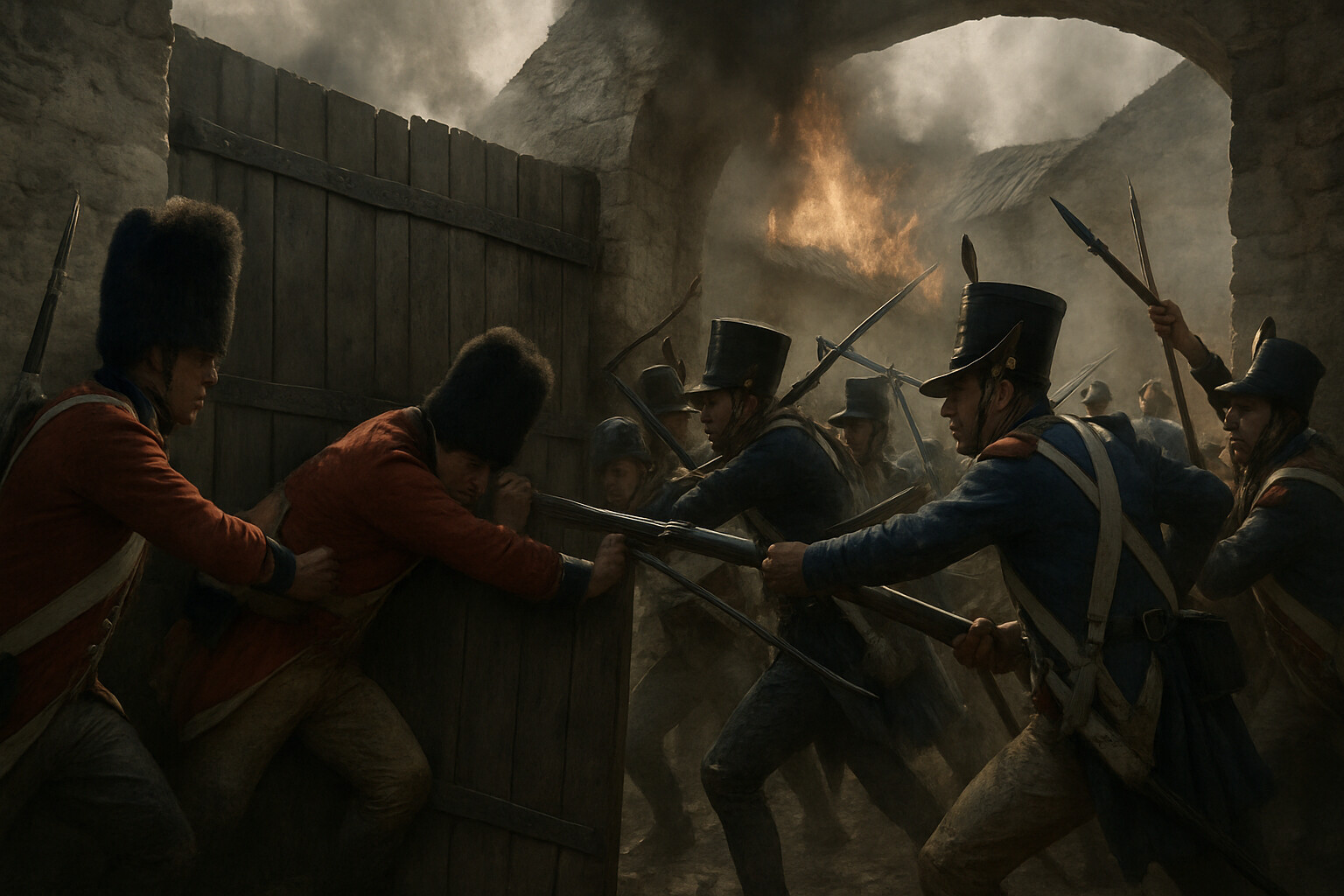
The battle began in earnest with a French assault on Hougoumont château on the Allied right. Hougoumont was a substantial fortified compound—a manor house, outbuildings, a walled garden, an orchard, and a wood. Wellington had garrisoned it with light companies of the British Guards and Nassau troops. In Napoleon's original design, Hougoumont was meant to be a feint—a demonstration to draw Wellington's reserves to the right before the real blow fell elsewhere. Instead it became something else entirely: the costliest sideshow of the Napoleonic Wars.
The French assault on Hougoumont was launched by forces under Prince Jérôme Bonaparte and reinforced repeatedly throughout the day. The garrison—never more than a few thousand men at its strongest—held the walls and buildings against French attacks that eventually committed a full division and more. The critical moment came at Hougoumont's north gate, where French soldiers under Lieutenant Legros—known as 'L'Enforceur'—broke through with an axe, only to be driven back in close-quarters fighting, the gate forced shut and barricaded again by Corporal James Graham and others. Wellington later assessed, in accounts recorded across multiple nineteenth-century sources, that the outcome of the battle turned on the closing of those gates—though the exact wording of that assessment varies in the historical record, and it should be understood as his retrospective judgment rather than a remark made in the moment.
While Hougoumont burned and bled through the morning, Napoleon prepared his main blow. Shortly after 1:00 p.m., the Grand Battery—approximately 80 French guns concentrated on a front facing the Allied center-left—opened fire on Wellington's line. The effect was severe. The British and Allied infantry had been pulled back behind the ridge's crest wherever possible, but the battery's weight of fire was immense. Round shot ploughed through files of men. Shells burst overhead. Units took casualties without being able to return fire—a particular kind of strain on soldiers trained to act rather than endure.
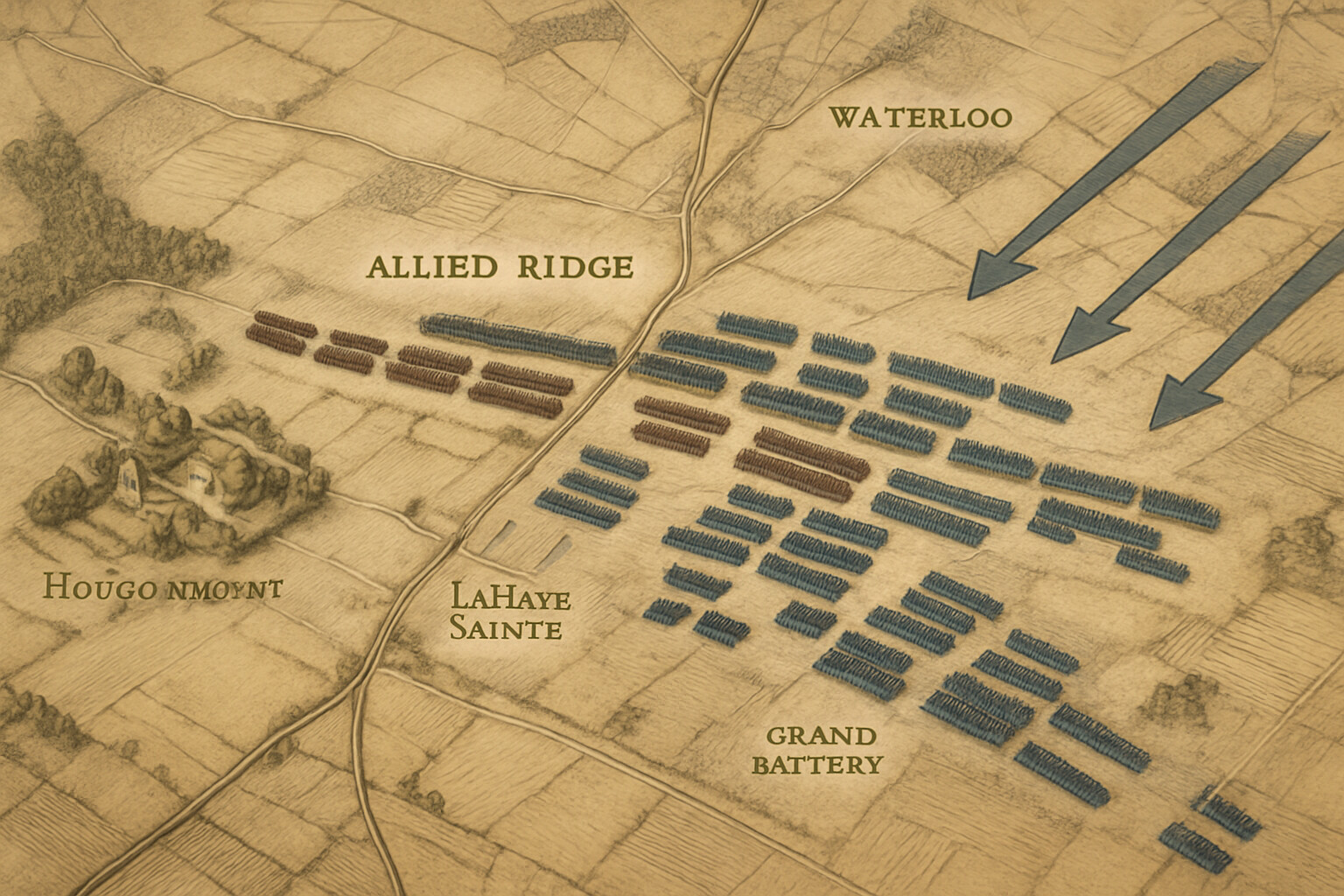
At approximately 1:30 p.m., Marshal Ney launched d'Erlon's I Corps—four divisions, roughly 16,000 infantry in a formation that mixed column and line—against the Allied center-left. It was the largest single infantry assault of the battle. The Dutch-Belgian division under Bylandt, positioned on the forward slope, broke and fell back. The British divisions under Picton advanced.
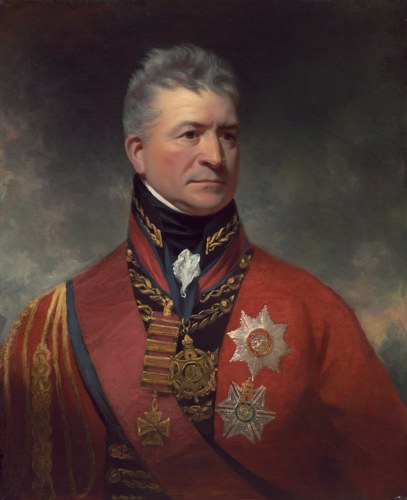
Lieutenant-General Sir Thomas Picton, commanding the 5th Division, was killed at this moment—shot through the temple. He had been secretly wounded at Quatre Bras two days earlier, a cracked rib from a musket ball, and had told no one. He was wearing a civilian top hat because his baggage had not arrived from Brussels. His division held and advanced regardless.
At the critical moment, the British heavy cavalry—the Union Brigade under Major-General Sir William Ponsonby and the Household Brigade under Lord Edward Somerset—charged down the ridge into d'Erlon's columns. The charge shattered the French attack. The Inniskillings, the Scots Greys, and the Royal Dragoons rode through French infantry already disrupted by the slope and their own formation. The Scots Greys' charge became one of the most illustrated cavalry actions in British military memory.
But the heavy cavalry did not stop. They rode on past their assigned objectives and into the French gun line, cutting down artillery crews and disabling pieces. Then French lancers and cuirassiers counter-charged them while they milled about, blown and disorganized, well beyond supporting distance. The price was severe. Ponsonby was killed—run through by French lancers while on a slowed horse. The Union Brigade lost more than a third of its strength. The charge had prevented d'Erlon's attack from succeeding; it had also consumed cavalry Wellington could not replace.
The tempo of the battle now shifted. Through the early afternoon, Ney became convinced—incorrectly—that Wellington's line was beginning to crack. Movement visible behind the Allied ridge was the removal of wounded and the repositioning of units, not a retreat. Ney began committing the French cavalry in mass.
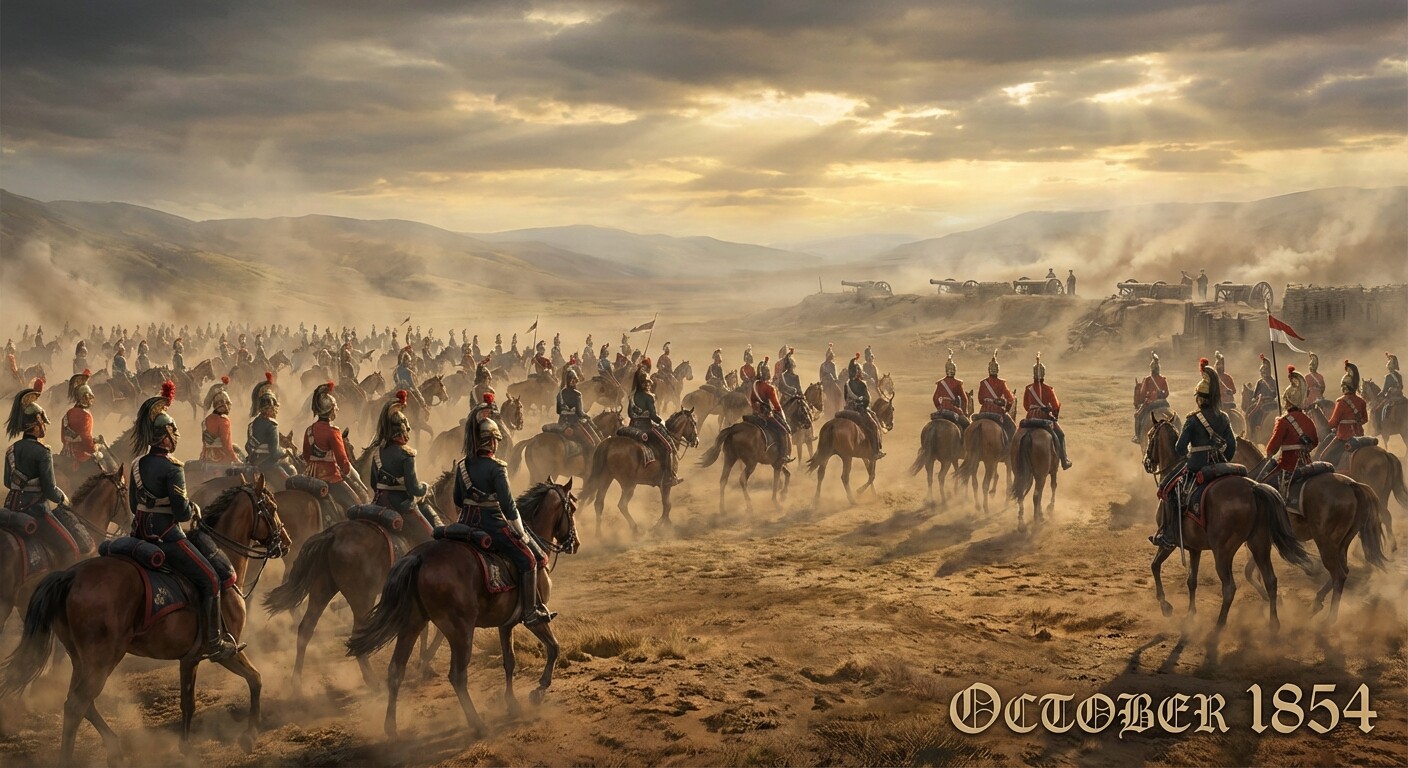
What followed, from approximately 4:00 p.m. to 6:00 p.m., was the most sustained phase of the battle: wave after wave of French heavy cavalry—cuirassiers, lancers, carabiniers, and horse grenadiers of the Guard—charging against the Allied infantry squares. These timings represent a scholarly synthesis; sources vary by thirty minutes or more at either end.
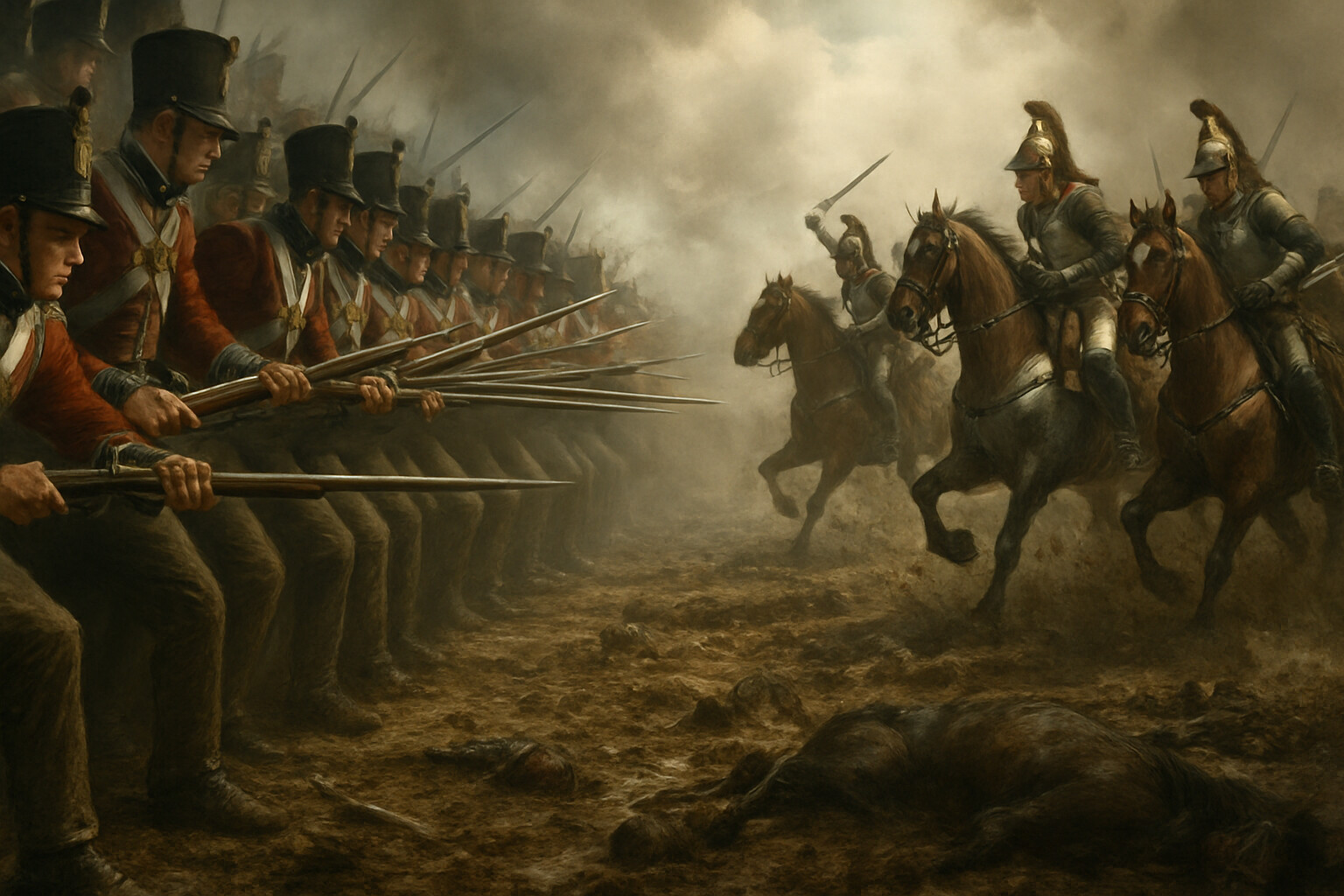
The square was the standard defensive formation against cavalry. Infantry formed a hollow rectangle, four ranks deep on each face, bayonets leveled outward. A horse will not charge home into a wall of leveled steel; cavalry could ride around a square, threaten it, fire pistols or carbines into it—but could not break it if the infantry held their nerve and their formation. The key word was held. A square was nearly impervious to cavalry. It was also nearly helpless against artillery. And it presented a dense, stationary target.
Napoleon's cavalry came in columns of squadrons, thousands of horses at a time, surging up the muddy slope of Mont-Saint-Jean. The ground between the Allied squares became a killing ground where French horsemen milled, unable to break through and unable to withdraw safely under musket fire from multiple directions. Allied horse artillery batteries—the Royal Horse Artillery 9-pounders—galloped out between the charges, unlimbered in the intervals between infantry formations, fired canister into the approaching cavalry, then limbered up and retired behind the squares before contact. The gunners ran this drill repeatedly. Too slow, and the gun was taken; too early, and the canister wasted. The timing demanded precise judgment under pressure, and the batteries ran it again and again through the afternoon.
Wellington rode among the squares throughout these hours. He moved from position to position, calm in bearing, visible to his men. His personal courage during this phase is attested in multiple eyewitness accounts. At least once he took shelter inside a square when French cavalry passed within yards of him. His presence was not theater; it was a command instrument. In an army where communication moved at the speed of a horse, a commander's physical appearance conveyed information, steadied nerves, and signaled that the situation remained in hand.
The squares held. They held through successive waves of cavalry across the better part of two hours. Individual units suffered terribly. The 27th (Inniskilling) Regiment of Foot, positioned at the critical junction near La Haye Sainte, was reduced to a fraction of its strength—casualties approaching two-thirds of those engaged, consistent with regimental records, though precise final figures vary slightly across sources. After the battle the regiment would be found lying in square almost exactly as it had stood, the dead marking the formation's outline in the mud.
La Haye Sainte, the farmhouse at Wellington's center, fell to French assault in the early evening—most scholarly accounts place the time between approximately 5:30 and 6:30 p.m., with 6:00 p.m. representing a reasonable synthesis that the reader should understand as approximate. The King's German Legion troops who had defended it for hours ran out of ammunition for their Baker rifles and were overrun. The fall of La Haye Sainte was the crisis point of the battle. It gave French infantry and artillery a position at the junction of Wellington's line. For perhaps thirty to forty minutes, the Allied center was in genuine danger of rupture. Wellington called for reinforcements he did not have. Some Dutch-Belgian units on his left gave way. He moved men to plug the gap. At this moment, the arrival of Prussian forces on Napoleon's right flank ceased to be a strategic convenience and became a tactical necessity.
Blücher had kept his promise. Bülow's IV Corps, leading the Prussian approach from Wavre, had been pressing Napoleon's right flank throughout the afternoon, forcing the commitment of Lobau's corps and then elements of the Young Guard to contain them—eventually more than 14,000 men diverted from the main effort. By the time La Haye Sainte fell, Prussian pressure was already drawing French strength away from the point where Wellington needed it absorbed. Zieten's I Corps was approaching Wellington's left flank in the early evening.
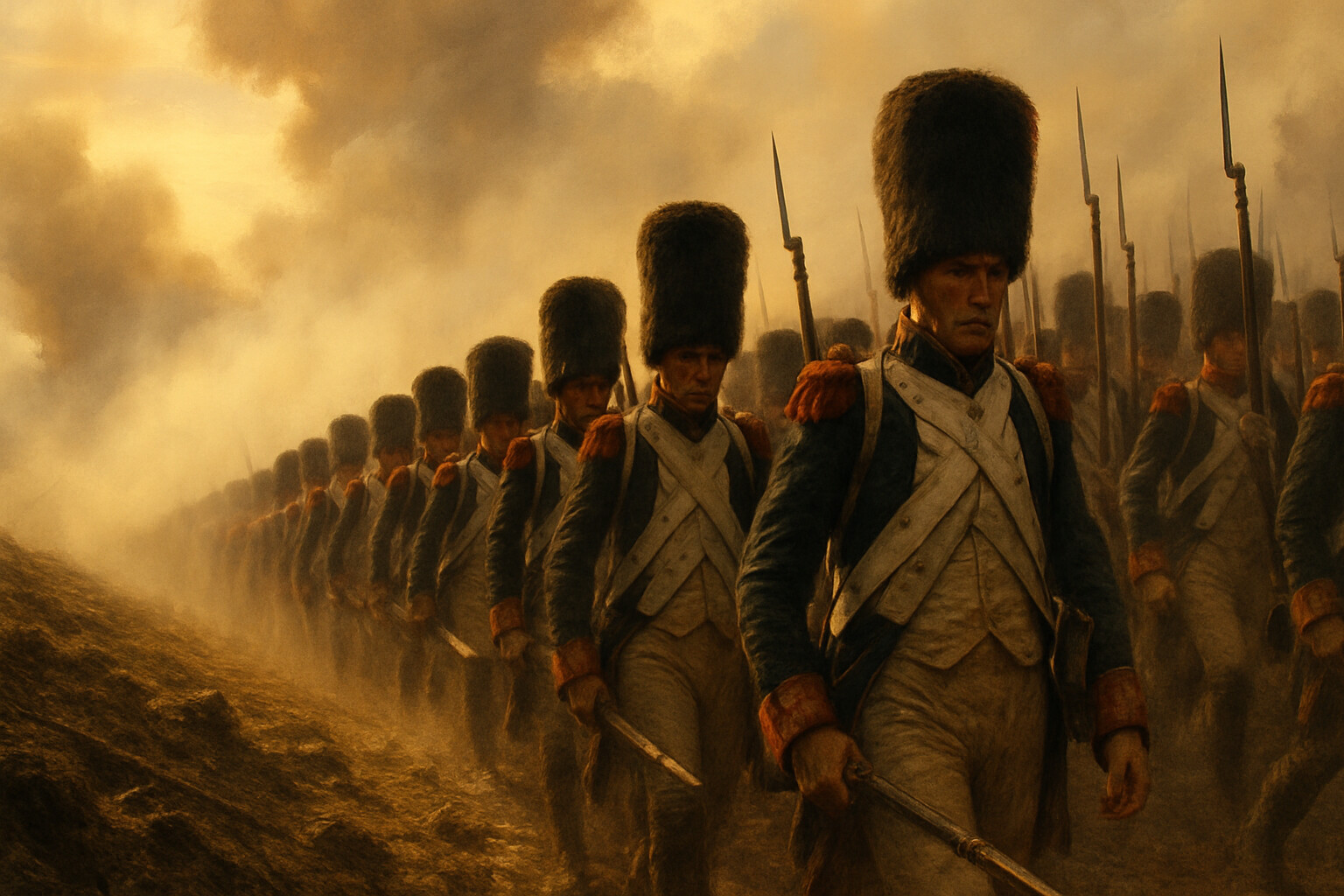
Napoleon committed the Middle Guard in the evening—the timing is placed in most accounts at approximately 7:00 to 7:30 p.m., though sources vary by up to an hour in either direction. The Middle Guard formed the fighting core of the Imperial Guard infantry. It had never been broken in battle. Its reputation carried as much psychological weight as its muskets. Napoleon sent it forward in two main attack columns against Wellington's right-center, behind a preparatory artillery barrage.
Wellington had positioned British infantry—Maitland's Guards Brigade and Adam's brigade containing the 52nd Light Infantry—in concealed positions on the reverse slope. As the Imperial Guard crested the ridge, Maitland's brigade rose and delivered a volley at close range. The moment of the Guards' rising has entered British military memory in various forms; a command to stand up is attributed in multiple accounts variously to Wellington or to Maitland himself, and neither the exact wording nor the attribution can be confirmed with certainty from the surviving record.
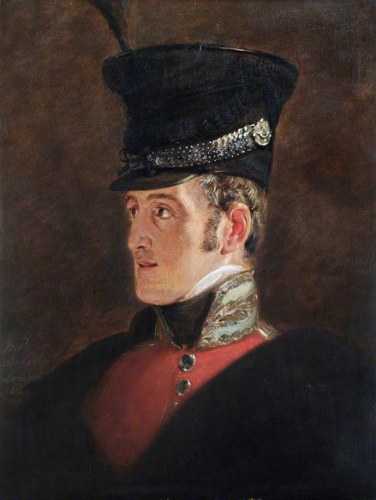
The Imperial Guard's advance faltered. Then Colonel Sir John Colborne, commanding the 52nd Light Infantry, executed a wheeling maneuver—swinging the regiment's flank to take one of the Guard columns in enfilade with concentrated musket fire. Whether this action was ordered by a superior, taken on Colborne's own initiative, or arose from a split-second reading of the situation is discussed in the historical literature without definitive resolution. What is broadly accepted by historians, based on Colborne's own subsequent accounts and multiple regimental histories, is that the maneuver contributed decisively to breaking the Guard's attack.
The Guard broke. The tactical consequences spread immediately into something larger. When word moved through the French army that the Guard was retreating—'La Garde recule'—the collective will of the army collapsed. Units that had fought hard all day began to dissolve. Officers tried to rally men who had ceased to believe the battle was recoverable. The collapse of morale after the Guard's repulse is documented in the accounts of surviving French officers; the precise mechanism by which the information spread cannot be reconstructed in detail, but the effect was visible and rapid.
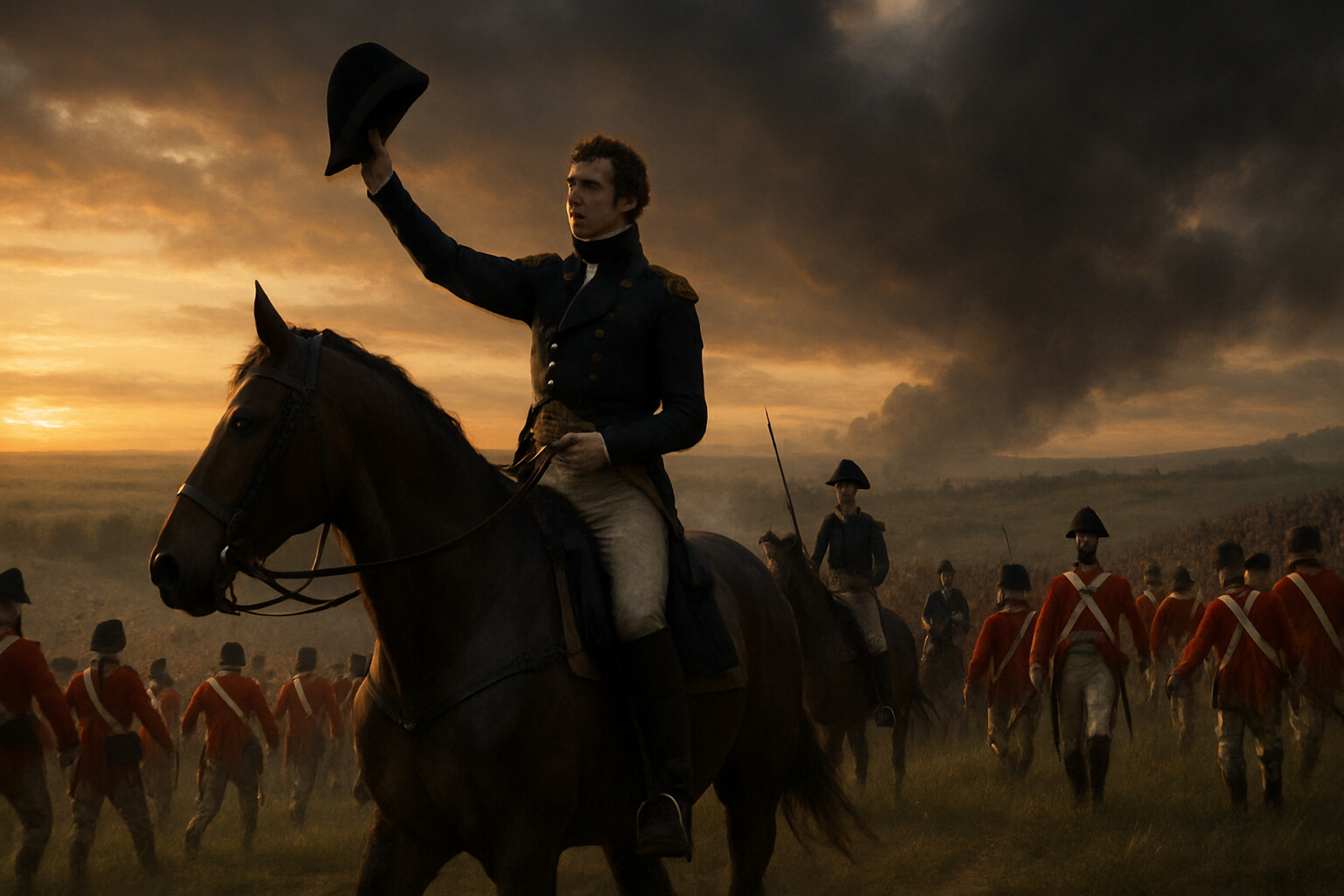
Wellington rode to the center of his line, raised his hat, and swept it forward—the signal for a general advance. The whole Allied line moved. What had been a disciplined French fighting force an hour before became a rout. The pursuit fell to Prussian cavalry, who had the fresh horses for it. The roads south toward France filled with fleeing men.
Napoleon's position collapsed with his army. His carriage was abandoned on the road, papers and personal effects scattered. He reached Paris four days later, abdicated on 22 June, and surrendered to the British on 15 July. He was exiled to Saint Helena in the South Atlantic, where he died on 5 May 1821.
The cost of Waterloo was severe on all sides. Wellington's Anglo-Allied army suffered approximately 17,000 casualties killed and wounded. The Prussians lost approximately 7,000. French casualties are estimated at roughly 25,000 killed and wounded, with an additional 8,000 or more captured as the army dissolved. These figures carry the inherent uncertainty of nineteenth-century battlefield accounting, but the order of magnitude is well-established across the scholarly literature.
Wellington, in correspondence with Lady Wedderburn-Webster in the days after the battle—the letters are referenced in multiple biographies, though readers seeking verbatim text should consult the Wellington Papers at the University of Southampton—described it as the most desperate business he had ever been in and expressed that he had not thought it so close. The essential meaning, consistent across accounts, is clear: he considered Waterloo the hardest-fought action of his career.
In his dispatch to London, dated 19 June 1815, Wellington named units and commanders with characteristic thoroughness. He was criticized, then and later, for what he omitted as much as for what he included. The dispatch is a primary document of the battle and reveals as much about Wellington's command philosophy as any tactical analysis can.
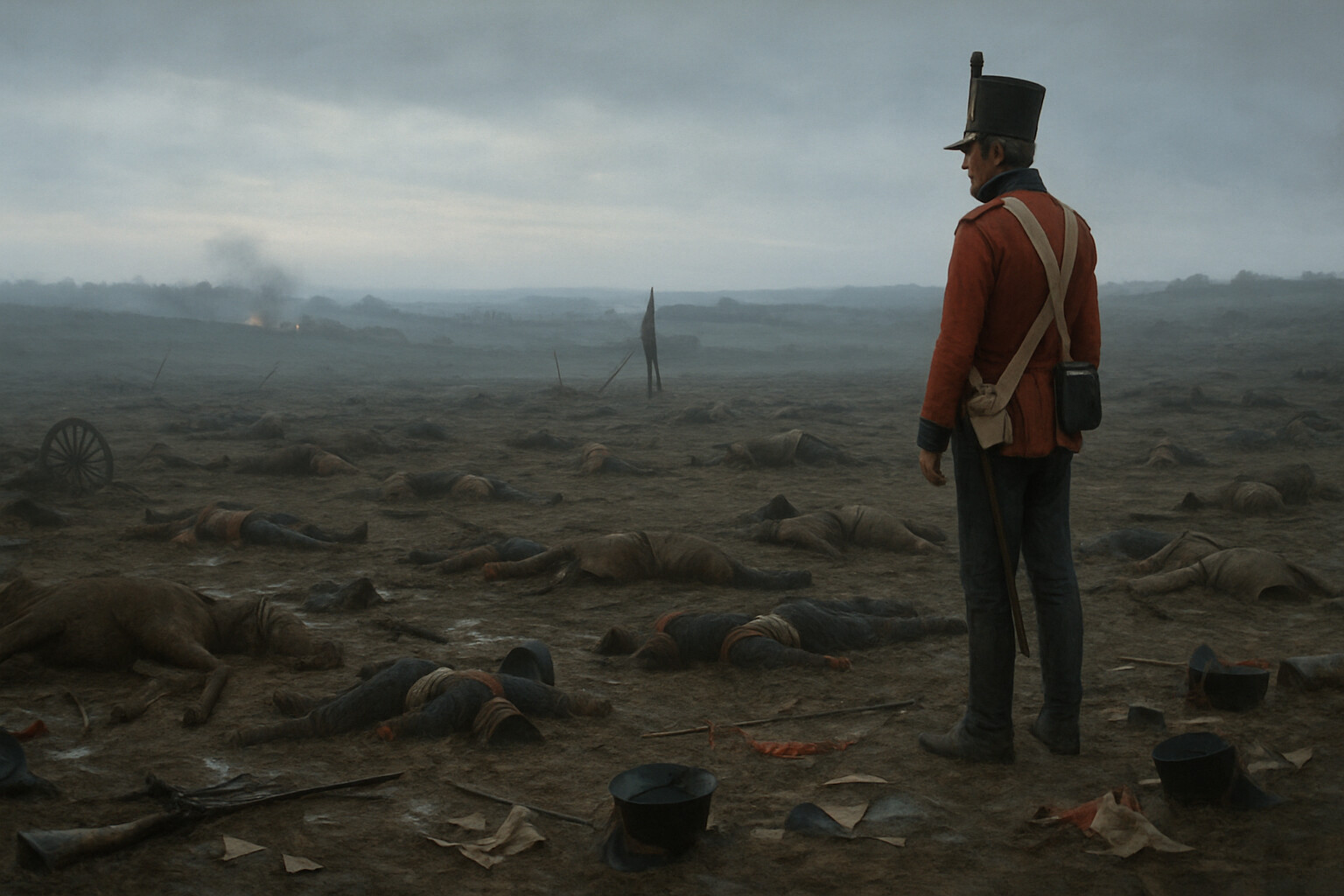
For the army on the ridge, the day after Waterloo was a kind of stunned silence. Men moved among the dead and wounded across a landscape that stretched several square miles. Medical care by the standards of 1815 was limited. Surgeons amputated out of necessity; infection killed many of those the battle had spared. The farm buildings of Hougoumont, Mont-Saint-Jean, and La Haye Sainte became improvised hospitals. The suffering extended weeks beyond the last gunshot.
Waterloo did not end the Napoleonic Wars in isolation—they had formally resumed with Napoleon's return from Elba in March 1815 and the coalition that opposed him. What Waterloo ended was Napoleon's capacity to continue. Within weeks, allied armies converged on Paris. Louis XVIII was restored to the French throne. The Congress of Vienna, already in progress when Napoleon left Elba, completed its work and redrew the map of Europe in a settlement that shaped the continent for decades.
Wellington's reputation after Waterloo was immense. He became, in British public consciousness, the defining military figure of his generation. He entered politics, served as Prime Minister from 1828 to 1830, and remained a public figure until his death on 14 September 1852. He was buried with a state funeral at St Paul's Cathedral. His relationship with Waterloo was, by various biographical accounts, complex—he is reported to have been reluctant in later years to speak of it, and visits to the site were described as affecting him deeply. These details come from biographical tradition rather than documented record, and should be understood accordingly.
What the record shows clearly is a commander who chose ground wisely, managed a coalition army of uneven quality through ten hours of sustained combat, made critical decisions under fire—most notably the decision to hold rather than withdraw during the La Haye Sainte crisis—and had arranged the night before, by promising Blücher he would fight, the strategic condition that made the Prussian arrival possible. The squares that held on the ridge of Mont-Saint-Jean held because infantrymen stood in them under artillery fire and cavalry pressure and did not break, and because their commander moved among them through the worst of it, visible and outwardly steady.
The lion mound that rises above the battlefield today was constructed by the Netherlands in 1826, built from earth taken from the ridge itself—a fact that drew Wellington's open irritation, as he noted it had destroyed the ground as he had known it. The alteration is both memorial and, in its way, an accidental symbol: the place was changed by what happened there, and those who came later to mark the event could not quite restore it to what it had been.
The battle was fought on a Sunday. By Monday, the armies were gone south. The fields were still.