World War II / Alaska Air Route
The War Route Over Alaska
The war in Alaska could kill a man without firing a shot.
It had mountains that disappeared into weather, rivers locked under ice, distances that made rescue a guess, and winter temperatures that turned small mistakes into fatal ones. Aircraft could be modern. Radios could be installed. Crews could be trained. None of that changed the geography below them.
In late 1943, Lt. Leon Crane was part of the Army Air Forces world that used Alaska as a military highway. Aircraft, crews, supplies, and strategic pressure moved through the north because the war was global, and because the United States and its allies needed routes that reached toward the Soviet Union and the Pacific. The map made sense at headquarters. In the cockpit, in winter, it was a different thing.
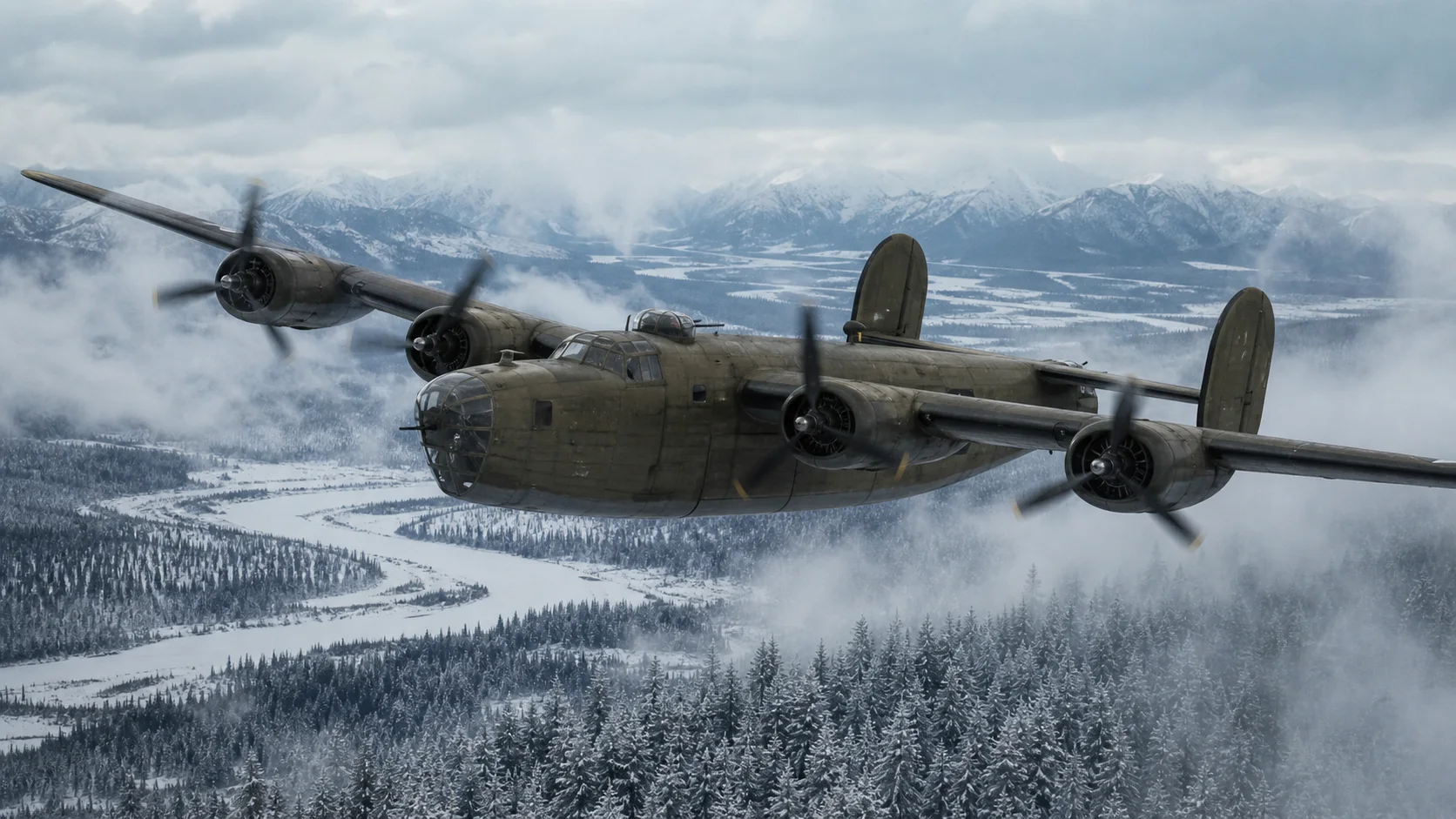
The aircraft was a B-24 Liberator, one of the great heavy bombers of the war. On paper it was a long-range machine: four engines, high wing, slab-sided fuselage, and enough endurance to cross hard distances. But a bomber that loses the fight against weather and terrain becomes just another object falling into the wilderness.
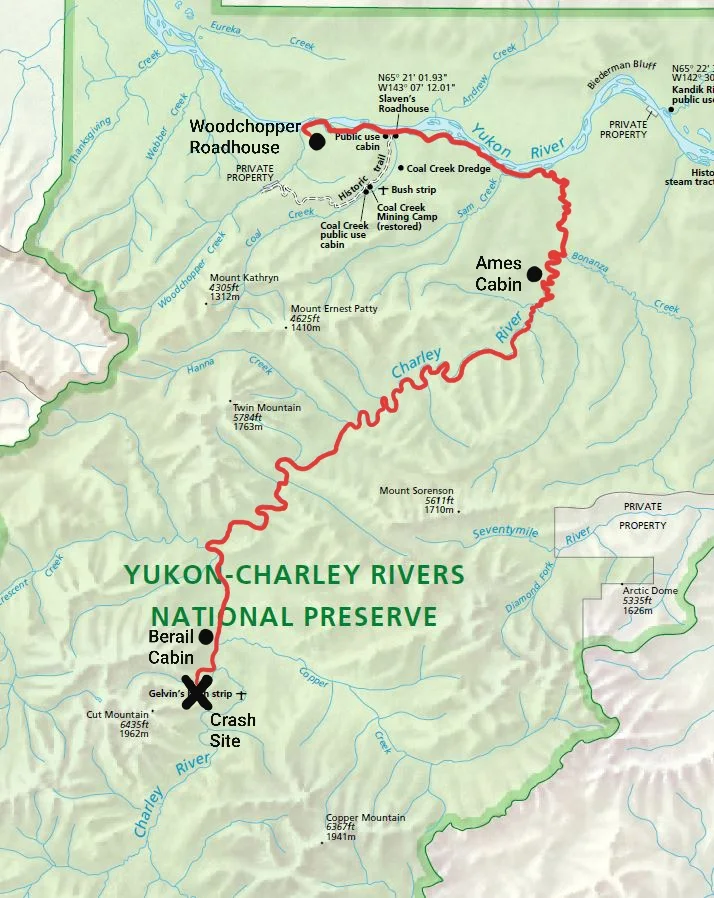
On December 21, 1943, Crane's B-24 went down in what is now the Yukon-Charley Rivers National Preserve region. The crash killed the rest of the crew. Crane survived because he got out. That sentence is the hinge of the whole story: he bailed out, came down alone, and found himself not on a battlefield but in a white, silent, indifferent country that could erase him more completely than enemy fire.
National Park Service material is not perfectly uniform on the exact count. One NPS profile and the later book title use 81 days; the NPS long-form survival account says 84 days. This page avoids turning that discrepancy into false precision. The defensible public wording is simpler: Crane survived nearly three months below zero after the crash.
Known fact / Careful reconstruction
One Man After the Parachute
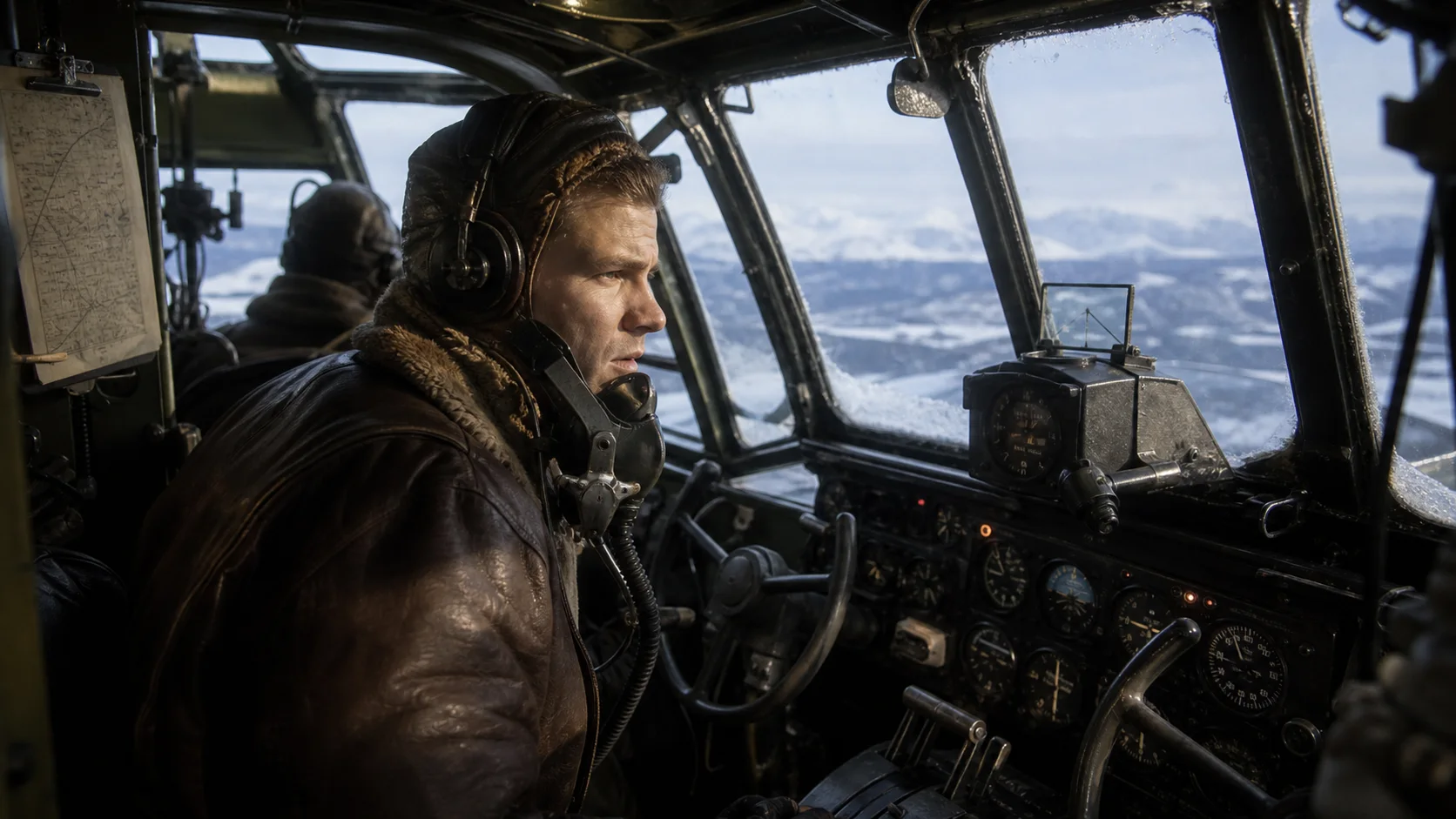
After the parachute descent, Crane's war changed shape. There was no formation. No medic. No command post. No enemy line to push through. The immediate problem was colder and more basic: stay alive long enough to move.
A man who survives a crash into the Alaska winter does not begin with heroism. He begins with inventory. What is on his body? What did the parachute give him? What can be carried? What direction makes sense? What sign of human life exists in a country big enough to hide whole aircraft for decades?
Crane had to solve heat first. Cold is not just discomfort; it is a clock. It slows fingers, ruins judgment, stiffens clothing, and turns exposed skin into injury. A fire means warmth, but it also means fuel, shelter from wind, dry tinder, and the strength to keep working when the body wants to stop. Every task costs calories. Every mistake spends time.
Food was the second enemy. A soldier or airman in the field can sometimes count on ration lines, field kitchens, or emergency drops. Crane had none of that in any dependable sense. He had to live on what he could find, preserve, improvise, or stretch. Hunger changes decision-making. It makes a route longer. It makes sleep harder. It makes the next hill look like a wall.
The third enemy was direction. In survival stories, "walking out" sounds straightforward from the comfort of a map. On the ground it is a daily argument with terrain. Rivers can guide, but they can also trap. Valleys can lead toward settlements or pull a man deeper into empty country. Snow can hide tracks, ice, brush, and danger. In low light or blowing weather, the world can flatten into sameness.
Crane's advantage was not that he knew the wilderness perfectly. The record does not support turning him into a mountain-man caricature. His advantage was that he kept making practical decisions. He used what he had. He moved when movement made sense. He sheltered when shelter mattered more. He treated survival as a chain of small jobs instead of one grand act.
That is the style of courage in this story. Not a charge. Not a last stand. A man alone, cold, hungry, frightened, and still doing the next necessary thing.
The survival hinge
The Cabin and the Long Walk Out
At some point in the ordeal, Crane found shelter. In the survival tradition of the story, that shelter becomes one of the most important turning points: a cabin, supplies, or signs of human presence in a landscape that had offered almost none.
This is where a bad retelling would make the cabin feel like rescue. It was not rescue. Shelter can save a man from immediate exposure, but it does not automatically solve starvation, distance, loneliness, or the problem of getting back to people who do not know exactly where he is. The cabin changed Crane's odds. It did not end the story.
He still had to endure. He still had to choose when to stay and when to move. He still had to manage food and strength. He still had to judge weather. Above all, he had to keep believing that action mattered. Isolation is not passive. It works on a person. It tells him no one is coming, or that no one can find him, or that the next attempt will be worse than the last.
Crane's eventual emergence from the wilderness was not a cinematic rescue at the crash site. It was the end of a slow survival route. He had gone from falling aircraft to snow, from snow to improvised shelter, from shelter to movement, and from movement back into human contact.
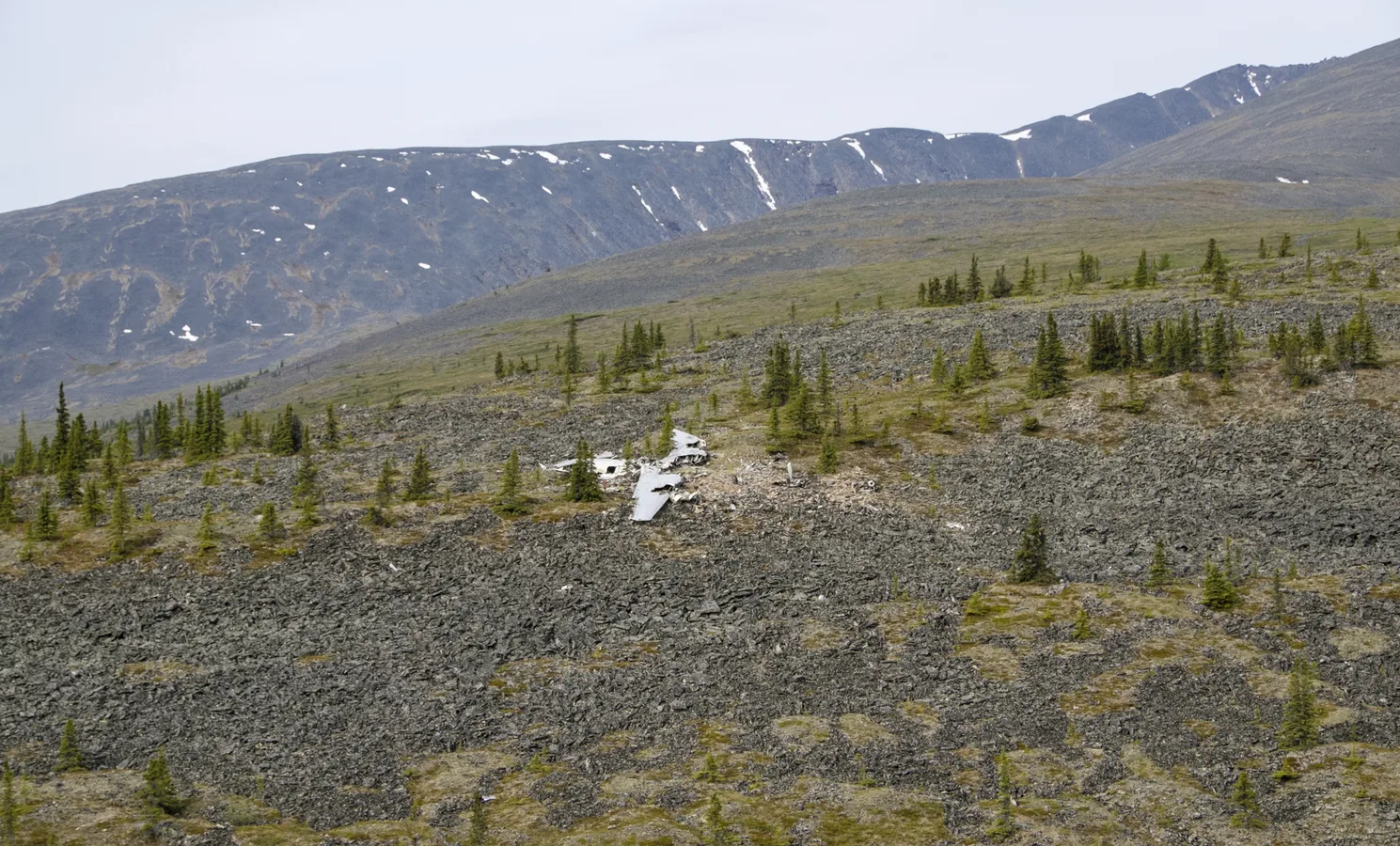
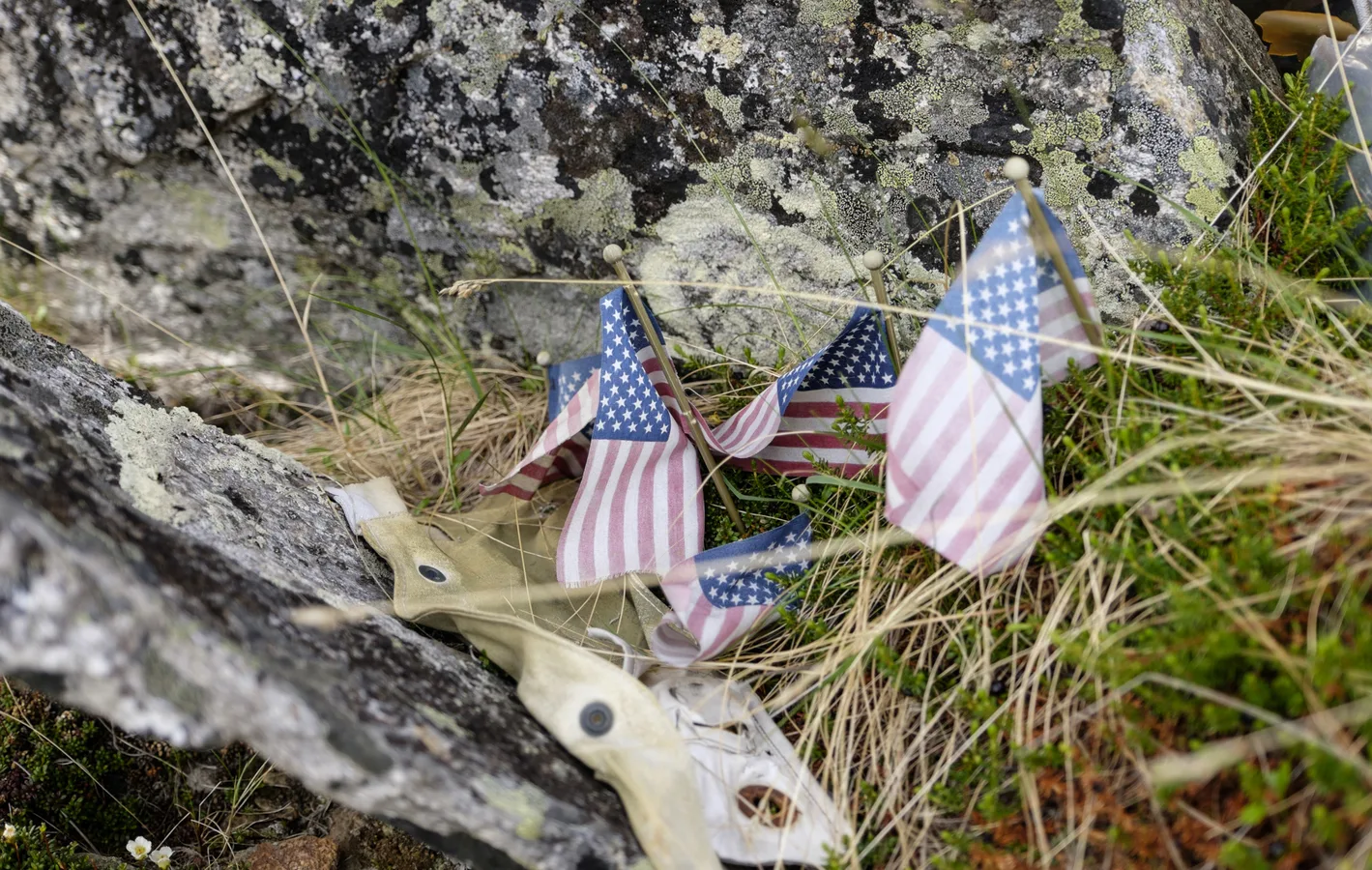
The National Park Service later documented the wreckage and the survival story as part of Yukon-Charley Rivers National Preserve history. The physical crash site, photographed decades later, gives the story its hard edge. This happened in a real place. Metal still lay in the country. The landscape that nearly killed Crane did not need to be imagined.
Aftermath / Why it matters
Not Every Front Line Has an Enemy
Leon Crane's story belongs on Front Line Stories because the frontline was not always a trench, beach, bridge, or ridge. Sometimes it was the edge between a man and the environment his war had dropped him into.
The Alaska air routes were part of the war's infrastructure. They were not glamorous in the way bomber raids over Europe became glamorous. They were logistical, geographic, and brutally practical. Men flew through them because aircraft had to move, because allies had to be supplied, and because global war made remote places strategically important.
That is why Crane's survival is more than an adventure story. It exposes a category of wartime danger that sits behind the famous battles. Training accidents, ferry routes, weather crashes, lost aircraft, and survival ordeals killed men whose stories rarely fit the clean combat narrative. They were still part of the cost.
Crane survived because he solved problems long after the crash had ended. He survived the first shock, then the first night, then the first hunger, then the first failed expectation that rescue might be close. He survived by making a long series of small, correct-enough decisions in a place that punished wrong ones.
When the site is scaled up, this is the kind of story the new pipeline is meant to find: not only the famous names, but the strange, hard, source-backed accounts hiding in archives, park records, official records, local histories, and wartime documents.
Release label: This page is the first pilot for the new system: conflict-first placement, series tag, tier label, source caution, and image plan. Older stories can remain as Archive Stories while the stronger new pages become Front Line Features.
Sources