The ropes went up before dawn could help them.
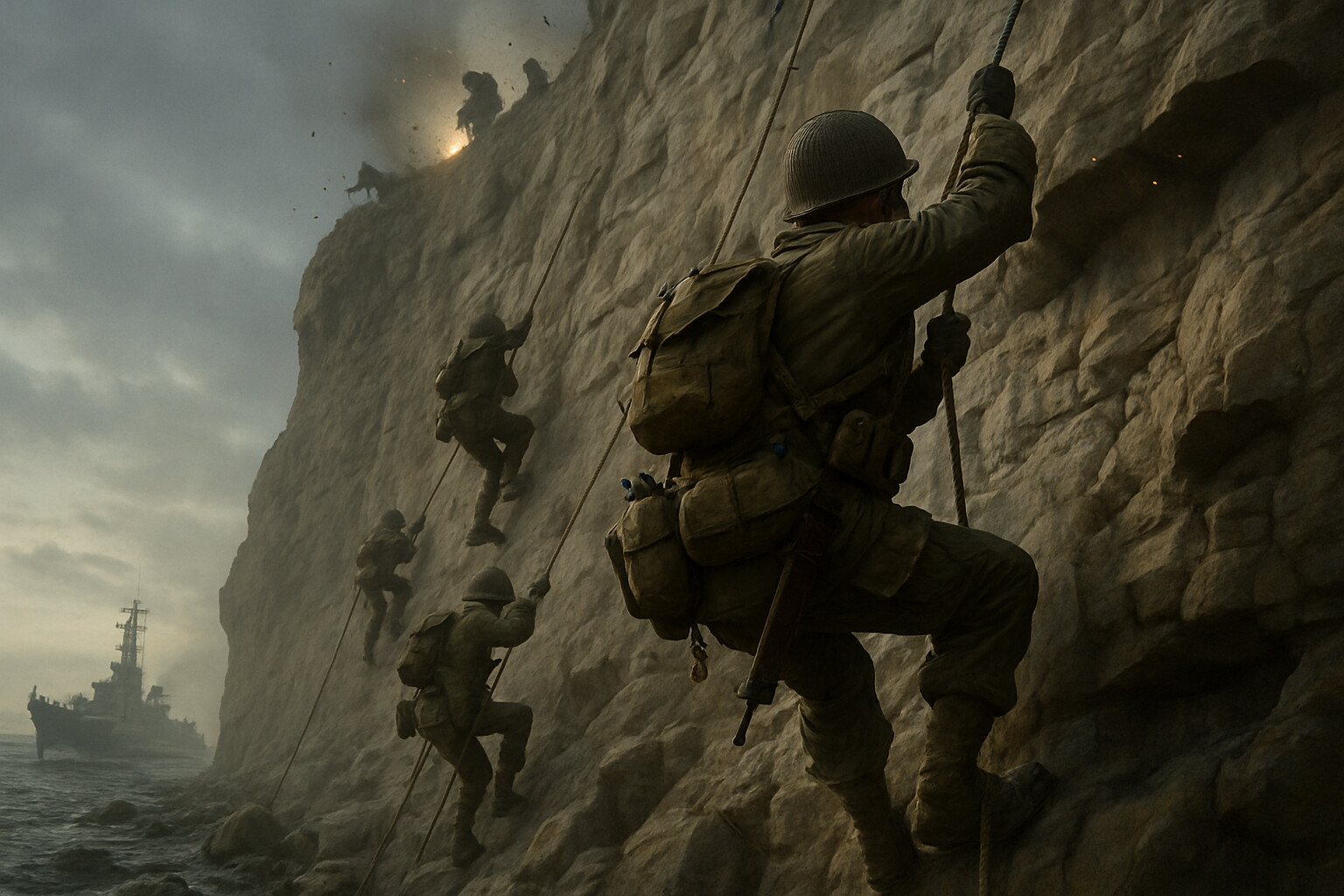
In the grey half-light of June 6, 1944, three landing craft ground through heavy Channel swells toward a headland that jutted from the Normandy coast like the prow of a stone ship. Pointe du Hoc—a hundred-foot promontory of limestone and clay, sheared at the top into a cratered plateau and edged at its base by fractured boulders—was not a place a reasonable man would choose to climb on his best day. The Rangers climbing toward it were doing so under fire.
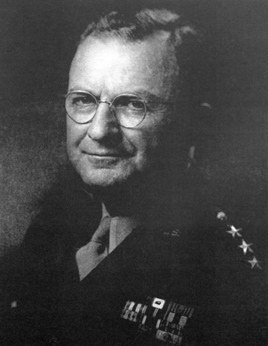
Lieutenant Colonel James Earl Rudder stood in the bow of one of those craft and watched the cliffs come closer. He had fought to lead this mission personally, over the objections of his superiors, who argued that a battalion commander was too valuable to spend in the first wave of a cliff assault. Rudder had overruled them with the kind of quiet insistence that defines men who understand that some tasks cannot be delegated. What his Rangers were being asked to do—scale exposed rock faces, neutralize German gun emplacements, and hold a position cut off from reinforcement—was the kind of mission that required a commander standing in it alongside his men, not watching from a ship.
He was thirty-four years old.
---
**THE MAN AND HIS BATTALION**
James Earl Rudder was born on May 6, 1910, in Eden, Texas. He grew up in the rhythms of small-town Texas life, attended John Tarleton Agricultural College and later Texas A&M University, and was commissioned as a reserve officer through ROTC. Before the war he worked as a high school football coach and athletic director—a background that had taught him a great deal about organization, physical conditioning, and the management of young men under competitive pressure.
When the United States entered the war, Rudder was called to active duty and eventually assigned to the Rangers—the Army's newly formed light infantry assault units, modeled in part on the British Commandos who had been raiding the European coastline since 1940. The 2nd Ranger Battalion had been activated in April 1943 at Camp Forrest, Tennessee. Its men underwent intensive physical and tactical training, including cliff-climbing instruction in Scotland at Achnacarry House, the Commando depot, under British direction. The training was brutal by design. The missions Rangers were expected to carry out required men who could move fast over difficult terrain, fight with any weapon available, and function effectively in small groups after their chain of command had been disrupted.
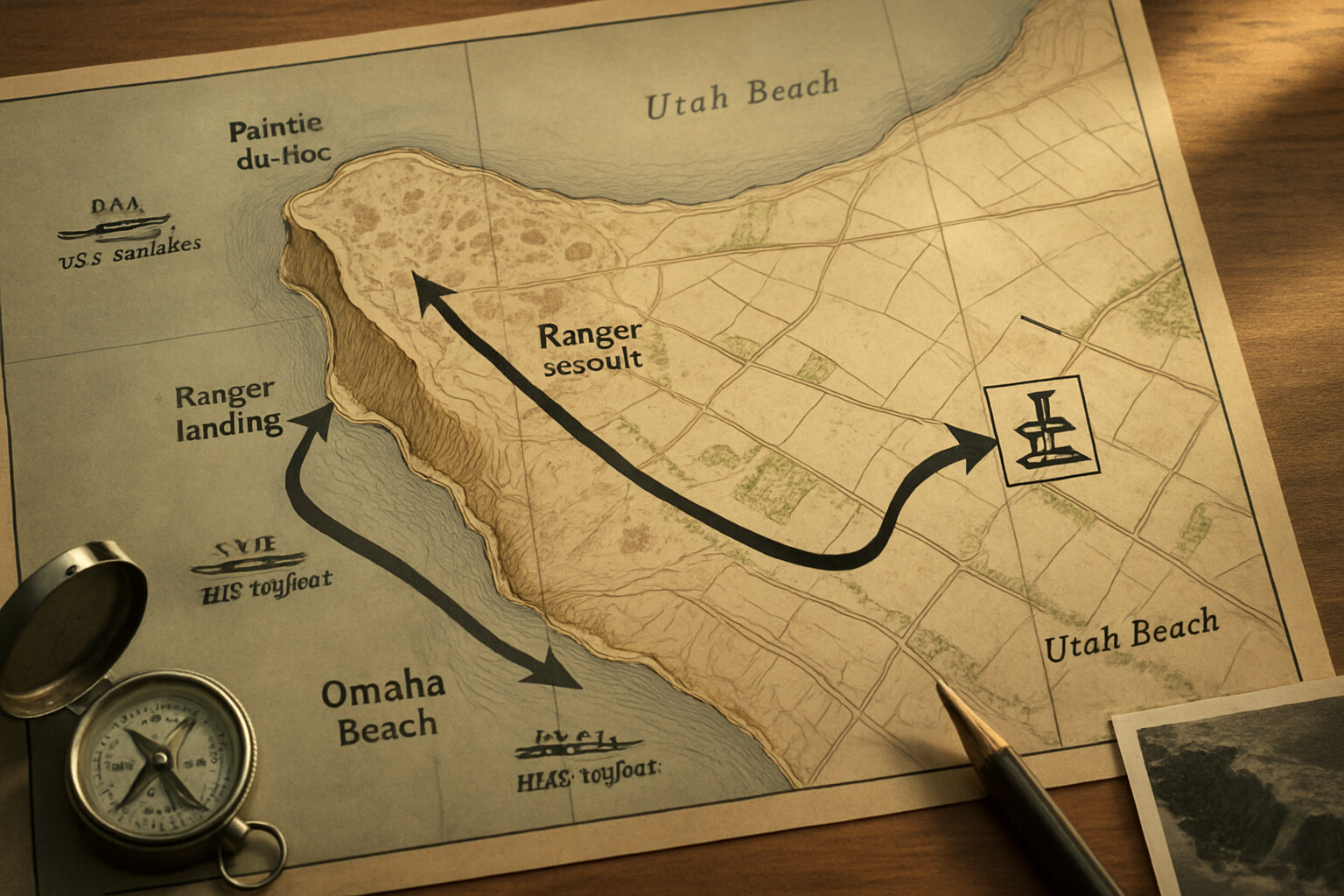
Pointe du Hoc had been identified by Allied intelligence as the site of a German coastal artillery battery—six 155mm guns of French manufacture, now in German hands, capable of ranging both Omaha Beach to the east and Utah Beach to the west. The beaches where tens of thousands of Allied soldiers would be landing on June 6. If those guns were operational and their crews intact when the landing craft hit the shore, the resulting fire could be catastrophic. Allied naval planners could not accept that risk. The guns had to be silenced before the main landings.
The mission was assigned to three companies of the 2nd Ranger Battalion: D, E, and F Companies, roughly 225 men under Rudder's direct command. They would land at the base of the cliffs, fire grappling hooks and extension ladders to the top, and climb. Once up, they would destroy the guns and hold the point against German counterattack until relieved—the plan called for relief within two hours if the assault succeeded on schedule.
The plan also carried a contingency. If confirmation that the Rangers had reached the cliff top was not received by a specific time, the rest of the battalion—A, B, and C Companies, plus the 5th Ranger Battalion—would bypass Pointe du Hoc entirely and land at Omaha Beach, attacking overland. That contingency would activate.
---
**THE POINT ITSELF**
Pointe du Hoc is not simply a cliff. It is a headland, a projecting angle of the Norman coast roughly midway between the two American landing beaches, elevated a hundred feet above sea level and edged on three sides by water and rock. The cliff face is composed of limestone and clay that had been fractured by Allied bombing runs in the weeks before D-Day—bombing intended to destroy the gun emplacements above but which had instead created a broken surface that would, in theory, offer the Rangers more handholds on the way up.
At the top, the Germans had constructed a fortified position: concrete casemates and open emplacements for artillery pieces, observation posts, bunkers for troops and ammunition, connecting trenches, and fields of fire. The garrison included soldiers from the 716th Infantry Division's coastal defense forces and German artillery elements, though the precise sub-unit composition requires verification against German divisional records. They had wire, machine guns, grenades, and the considerable advantage of height.
Allied bombers and naval guns had struck Pointe du Hoc repeatedly in the days and hours before the assault. The cratered landscape above testified to the intensity of that bombardment. What it could not guarantee was that the guns had been destroyed—or, critically, that they were even still there. Intelligence assessments in the weeks before D-Day had already suggested the original 155mm guns had been moved from their open emplacements due to the bombing threat. Aerial photography showed what appeared to be telephone poles where gun barrels should have been. Whether those were decoys, incomplete casemates, or indicators that the guns had been repositioned inland remained uncertain.
The Rangers were going up the cliffs regardless.
---
**JUNE 6, 1944: THE APPROACH**
The landing craft carrying D, E, and F Companies had left their transport ships in the early morning darkness. The Channel was running with a moderate swell—not violent, but enough to make the small craft work hard and to drench every man aboard. Based on accounts of the approach and general documentation of Channel conditions that morning, the sea state was demanding without being catastrophic. The men were loaded with equipment: rifles, submachine guns, ammunition, explosives for destroying the guns, climbing gear—ropes, toggle ropes, grappling hooks, rocket-fired lines, extension ladders borrowed and modified from the London Fire Brigade—and rations for two days, because the plan assumed they might be cut off.
The approach did not go smoothly.
The lead craft, a DUKW amphibious vehicle carrying an extension ladder intended to allow Rangers to climb faster, struggled in the heavy seas. Navigation in the pre-dawn darkness, under combat conditions, with smoke from the naval bombardment obscuring landmarks, produced a significant error: the flotilla initially made for Pointe de la Percée, a headland to the east. Rudder identified the mistake and corrected course, but the detour cost them approximately thirty-five minutes. They were already late when they turned for the correct point.
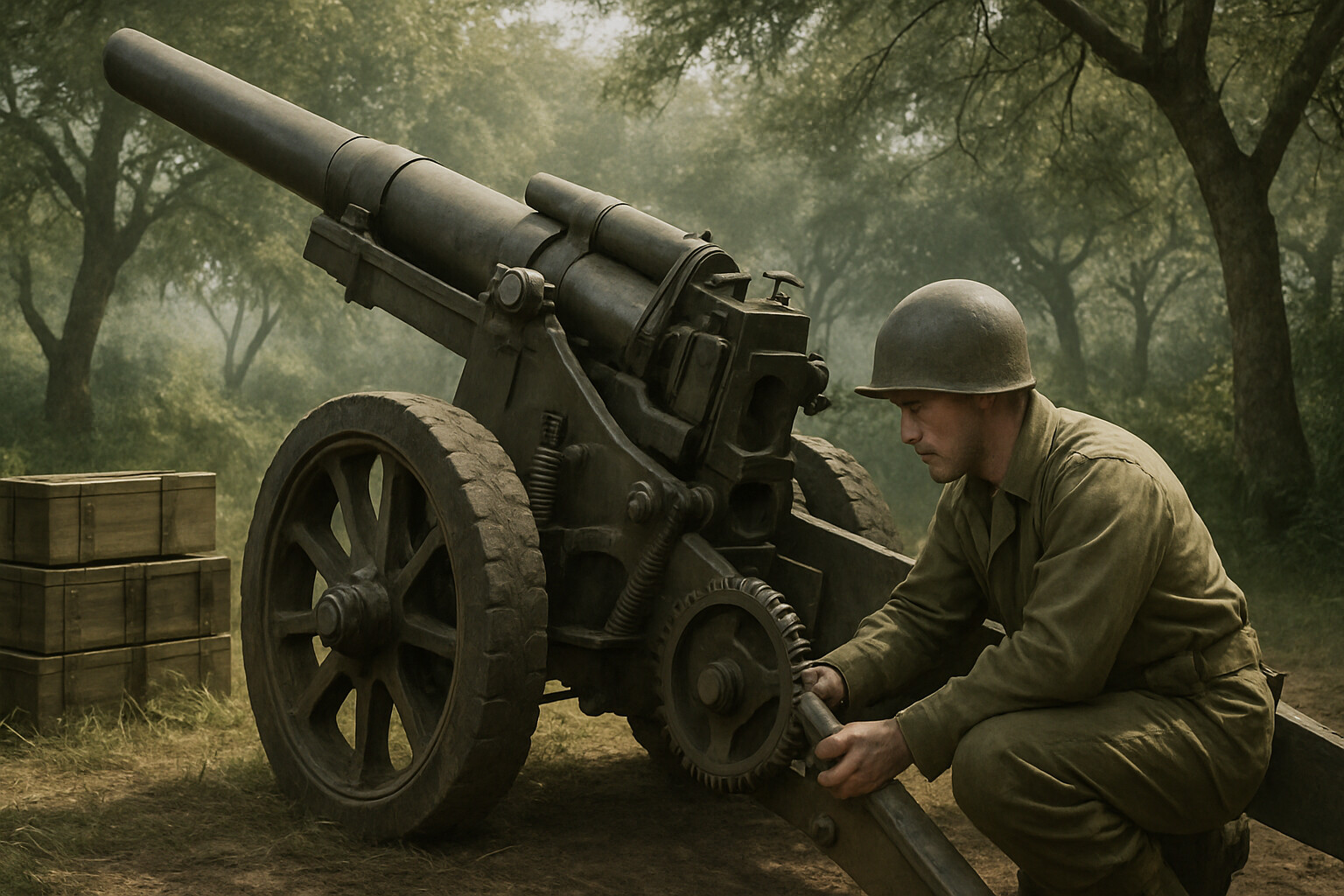
The late arrival had consequences. The backup plan's countdown had already begun. And the delay meant the men in the landing craft were exposed in growing daylight for the final run to the shore.
German defenders on the cliffs above had time to see them coming.
As the craft approached the boulder-strewn shore at the base of the cliffs, German fire began. Not the concentrated artillery that Allied planners had most feared—the naval bombardment had suppressed much of the heavy fire temporarily—but rifle fire, machine gun fire, and grenades rolling down the cliff face toward the Rangers fighting to get their boats aground on a beach that was barely a beach at all: a narrow strip of broken rock and sand exposed by the tide.
The Rangers came out of the boats.
---
**THE CLIMB**
The grappling hook systems the Rangers carried had been designed and tested for exactly this purpose, but testing in controlled conditions and live use under fire are different problems. Some of the ropes were wet and heavier than expected. Some of the rocket-fired grappling hooks fell short, failed to seat on the cliff edge, or were cut by German defenders who had reached the edge and were throwing grenades and firing down at the men below.
Others caught.
Rangers went up the ropes hand over hand, using toggle ropes—short lengths with a loop at one end and a wooden toggle at the other, designed to be linked together and used as individual climbing aids—and in some cases the extension ladders. The cliff surface, fractured by bombing, offered better footing than a smooth face would have, but it also crumbled in places, and men who paused to rest or reached for a hold sometimes found the rock giving way.
The Germans above were aware of the assault. They moved to the cliff edge to fire and throw grenades. Two Allied warships—USS Satterlee and HMS Talybont—had moved to close range to provide fire support directly onto the cliff top, and their gunfire forced the defenders back from the edge repeatedly, buying the Rangers below critical seconds on the ropes. The coordination between the ships and the men on the cliff, conducted without reliable radio communication and under chaotic conditions, was imprecise but effective enough to prevent the German defenders from simply lining the cliff edge and shooting down at every climber.
According to after-action accounts, the first Rangers reached the top in approximately ten minutes.
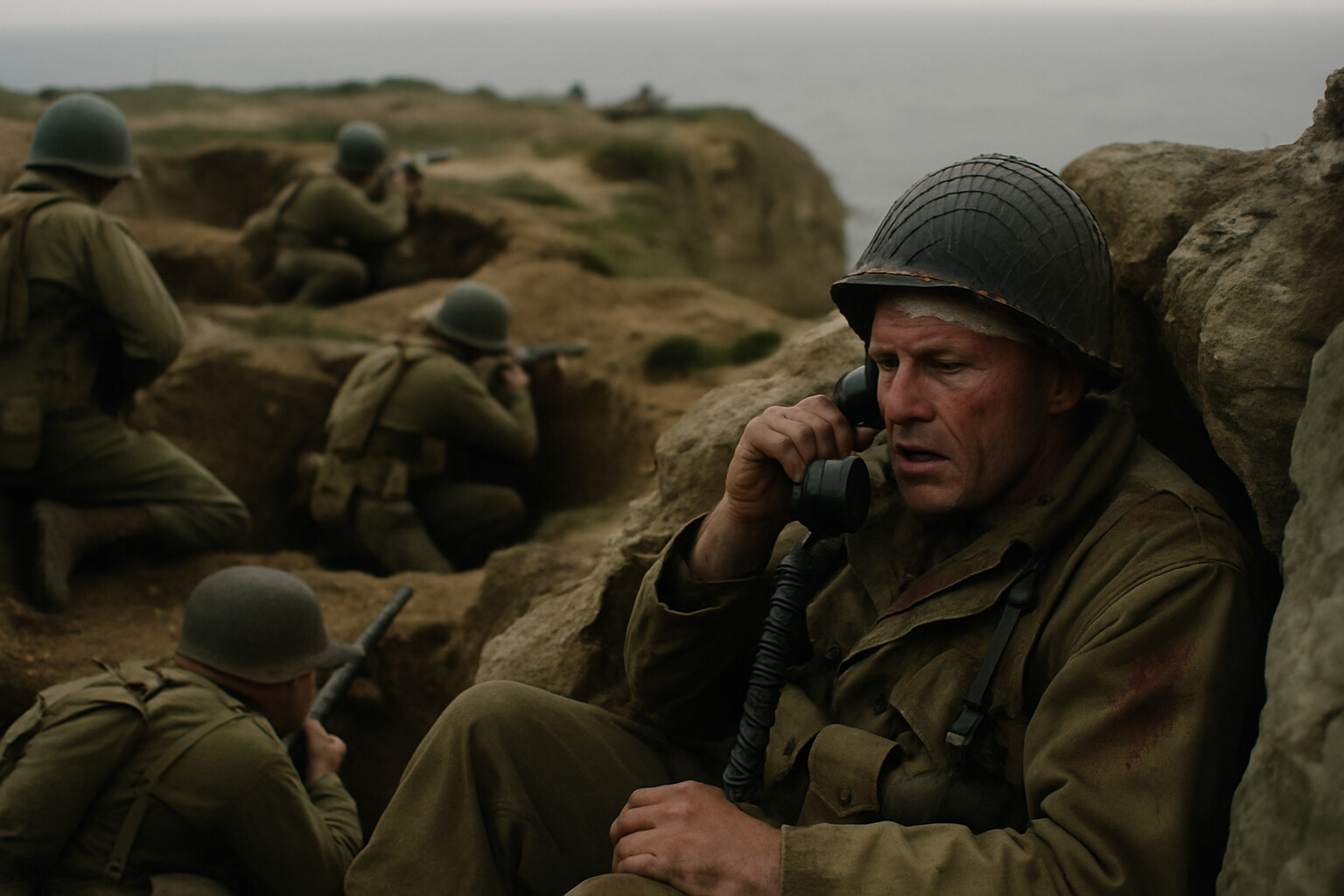
Ten minutes on a wet rope, under fire, up a hundred-foot cliff face, with men being shot and falling and other men climbing over or around them. The time is documented. It is a number that is easy to read and very hard to imagine.
Rudder was among those who climbed. He established a command post at the top of the cliff in a crevice near the edge—exposed, subject to German fire, but positioned where he could observe his companies as they spread across the cratered plateau. Sources confirm he was wounded during the fighting at Pointe du Hoc, though accounts of a two-day engagement under those conditions do not always separate the precise moment of each injury; his wounds are documented across the engagement rather than pinned to a single event.
The Rangers who reached the top spread out immediately. Small teams moved toward the gun emplacements in coordinated rushes, using the bomb craters as cover. The craters were everywhere—the landscape of the point had been churned into raw earth and shattered concrete. They also provided the Germans with cover.
---
**THE GUNS WERE NOT THERE**
When the Rangers reached the emplacements identified in aerial photography and on their operational maps, they found exactly what the most pessimistic intelligence assessments had suggested: the 155mm guns had been removed. The emplacements were present. The concrete was real. Telephone poles stood in the gun positions as dummy installations. The guns themselves were gone.
This was not the end of the mission. It was a recalibration of it.
Small Ranger patrols pushed inland from the cliff edge, searching for the guns while simultaneously clearing German defensive positions—trenches, bunkers, individual fighting points—that required direct action under fire. The fighting on the plateau in the first hours was fragmented and violent: small-group engagements in craters and trenches, men separated from their units in the smoke and confusion of bombed terrain.
Approximately two hours after landing, a patrol from D Company—identified in unit histories and in postwar accounts by the participants themselves as Sergeant Leonard Lomell and Staff Sergeant Jack Kuhn—moved south along a farm lane leading inland from the point. Roughly a mile from the cliff edge, in a camouflaged position in what accounts describe as an orchard or open field, they found the guns: five of the 155mm pieces, positioned and apparently ready for use, with ammunition nearby, but no crew present at that moment. Why the crew was absent when Lomell and Kuhn arrived is not established in the available record—the men may have been sheltering from naval fire, awaiting orders, or dispersed nearby. No source has definitively resolved the question.
Lomell and Kuhn acted immediately. Using thermite grenades they had carried for exactly this purpose, they destroyed the traversing mechanisms of two of the guns, rendering them unable to rotate and aim, and wrecked the sighting equipment. They returned to the Ranger perimeter, obtained more thermite grenades, went back, and destroyed the remaining pieces. This account derives from the participants' own postwar testimony and is incorporated into the published operational history of the action. The essential fact—that the guns were found inland and destroyed by Rangers on June 6, 1944—is not seriously disputed in the historical literature, though researchers should weigh the evidentiary basis: it rests substantially on participant recollection rather than contemporaneous written records.
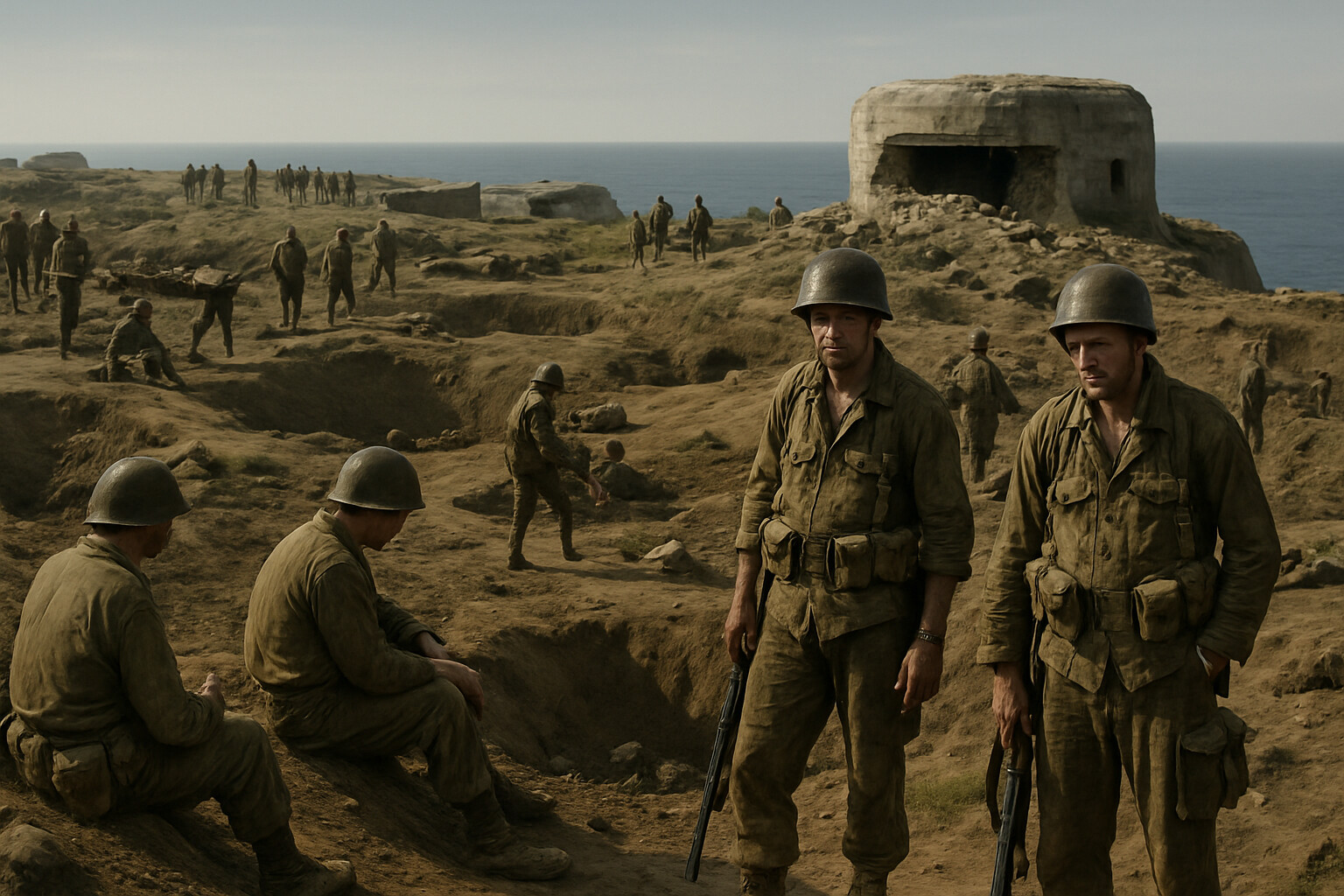
The mission's primary objective had been accomplished. But the Rangers were now holding the tip of a headland, cut off from reinforcement, with the bulk of the German defensive response still to come.
---
**TWO DAYS ON THE POINT**
The expected relief had not arrived. Whether the signal confirming that Rangers had reached the cliff top was never transmitted, failed to get through, or arrived too late and too ambiguously to halt the contingency plan is a point on which the sources do not fully agree. The outcome was the same: the follow-on companies of the battalion, along with the 5th Ranger Battalion, had been redirected to Omaha Beach as the backup plan specified.
At Omaha, they were fighting their own battle through the surf and the bluffs. Relief of Pointe du Hoc was not going to happen in two hours.
Rudder's force, already reduced by casualties from the climb and the initial fighting, had to hold. German forces in the area—attempting to restore the coastal defensive line—counterattacked throughout June 6 and into June 7. The Rangers, at the tip of the point, established a perimeter and fought with what they had: rifles, submachine guns, captured German weapons when their own ammunition ran short, and the naval gunfire of the destroyers offshore, which continued to provide critical support when called.
Radio communication with the fleet was essential and intermittent. The Rangers used their SCR-300 backpack radios to call fire missions onto German positions, and the destroyers responded. The working relationship between the Rangers on the point and the naval vessels offshore was one of the operationally significant features of the defense, and it depended entirely on the radios remaining functional and the ships' crews identifying targets accurately enough to fire without hitting the Rangers' own positions. How precisely that coordination functioned on each individual fire mission is not fully documented; its overall effectiveness is inferred from the Rangers' survival of sustained counterattacks and from the naval logs of the period.
The perimeter shrank under pressure. Rangers were killed and wounded in ongoing firefights. Medical resources were minimal—the battalion's medical personnel did what they could, but they were holding a besieged position, not working in anything resembling a surgical environment. Ammunition was consumed at rates that outpaced resupply. Men who had been awake since the previous day, who had crossed the Channel and climbed cliffs and fought across a bombed plateau and then held a perimeter through a night of counterattacks, kept fighting.
Rudder remained in command throughout. His command post, in a crevice near the top of the cliff, placed him as close to the action as a battalion commander could be while still maintaining the capacity to coordinate the defense.
By the morning of June 8, when relief arrived in the form of forces pushing out from the Omaha Beach direction, the Rangers at Pointe du Hoc had been reduced severely. Of the approximately 225 men who had landed at the base of the cliffs on June 6, fewer than 90 were reported as still effective fighting strength. The others were dead, seriously wounded, or captured. Casualty figures vary somewhat between sources—the chaotic conditions of the fighting and the Rangers' isolation complicate precise accounting—but the proportion is consistent across accounts: roughly half to two-thirds of the assault force was out of action. Researchers seeking the most authoritative figures should consult the 2nd Ranger Battalion morning reports and casualty returns at the National Archives.
---
**THE COST, COUNTED**
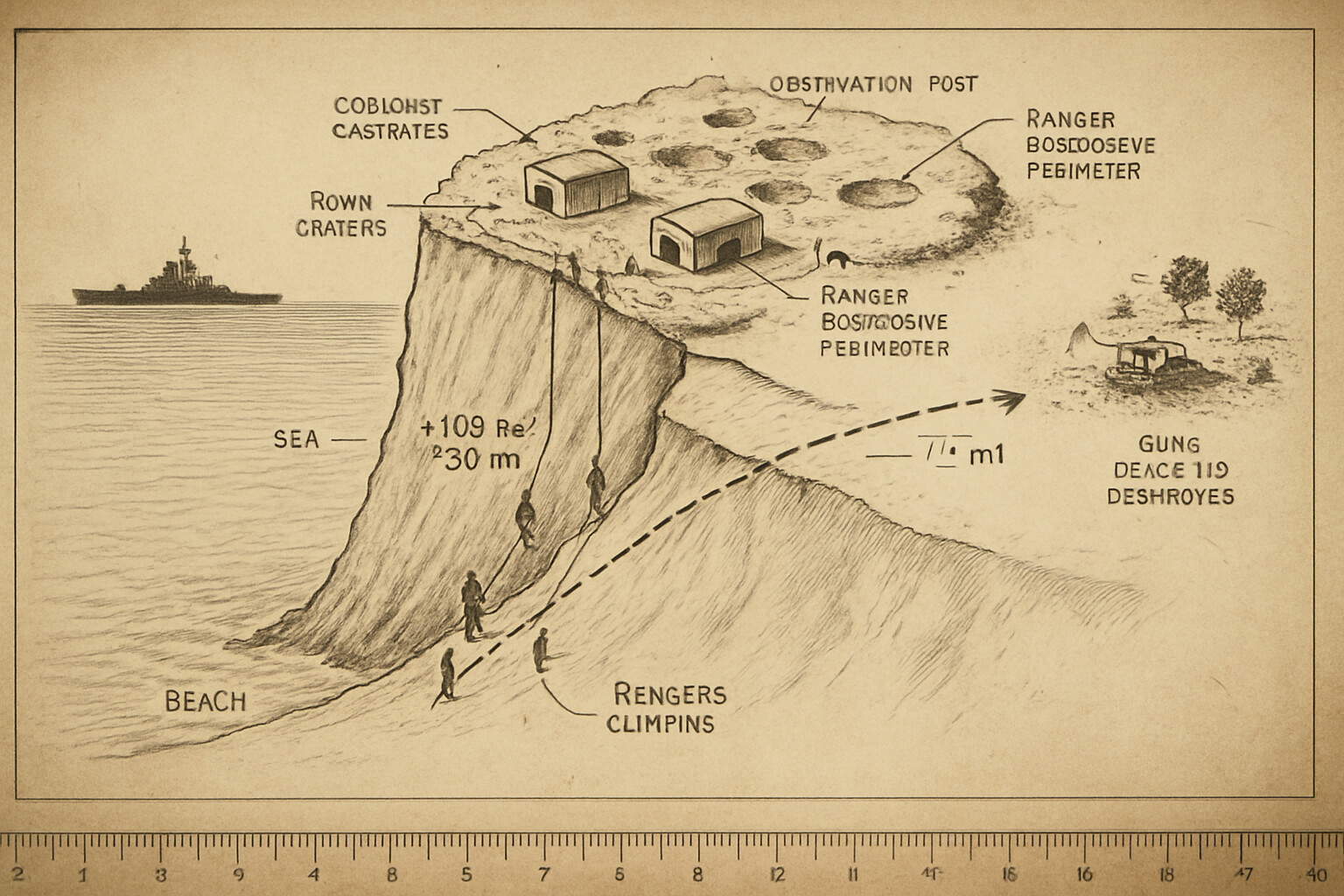
The casualty figures at Pointe du Hoc are among the most stark of any small-unit action on D-Day, a day that produced staggering losses across multiple beaches and multiple nationalities. The range cited across secondary sources—approximately 135 to 150 Rangers killed, wounded, or captured across the three days of the operation—reflects the difficulty of accounting under combat isolation. The specific figures should be confirmed against primary unit records before publication.
The mission had succeeded in its primary objective. The guns were destroyed. They did not fire on the landing beaches on June 6. Whether they would have been operational in time to influence the critical early hours of the landings is a question that cannot be answered with certainty, but Allied planners had made their assessment of the risk, and the Rangers had eliminated it.
Beyond the guns, the Ranger force at the tip of the headland represented a penetration of the German coastal defense line—a position the Germans were compelled to address. The resources committed to containing and attacking the Ranger perimeter were resources not available for counterattacking the main landing beaches. Some operational histories note this secondary contribution, though it remains secondary to the destruction of the guns.
---
**ANCHORING THE ACCOUNT**
The assault on Pointe du Hoc is one of the better-documented small-unit actions of World War II, a product of both its operational drama and the intensive historical research focused on D-Day over eight decades. The core facts—the unit, the commander, the date, the cliff height, the navigation error, the delayed landing, the climb under fire, the guns absent from their emplacements, the inland discovery and destruction of those guns, the two-day defensive fight, and the casualty levels—are established in multiple independent sources, including official Army histories, Joseph Balkoski's operational histories of the Omaha Beach sector, Ronald Lane's battalion history, and records held at the National Archives and the Eisenhower Presidential Library.
Some details resist clean documentation. The exact moment Rudder was first wounded is not always precisely stated across sources. The communications that did or did not trigger the contingency plan involve ambiguity in the record. The precise German sub-unit composition defending the point requires verification against German divisional records. And the accounts of Lomell and Kuhn's discovery and destruction of the guns, while consistent and widely cited, come substantially from postwar participant testimony rather than contemporaneous records. None of these uncertainties undermine the core narrative. They are the normal texture of combat history: the difficulty of reconstructing events that unfolded in chaos, smoke, and exhaustion, documented afterward by men who had been through a great deal.
Rudder's leadership at Pointe du Hoc was recognized after the battle. He received the Distinguished Service Cross—the Army's second-highest decoration for valor—for his actions on D-Day, and the Purple Heart for wounds sustained in the engagement. His full decoration record beyond these two awards should be confirmed against official sources for completeness. He ended the war as a Brigadier General.
After the war, Rudder returned to Texas, served as mayor of Brady, and became president of Texas A&M University, a position he held from 1959 until his death on March 23, 1970. The Distinguished Service Cross citation specifically acknowledges his personal leadership in the assault and his conduct during the defensive fighting that followed. Researchers seeking the verbatim text of the citation should consult the National Archives records for the 2nd Ranger Battalion.
---
**THE RECORD AND ITS KEEPERS**
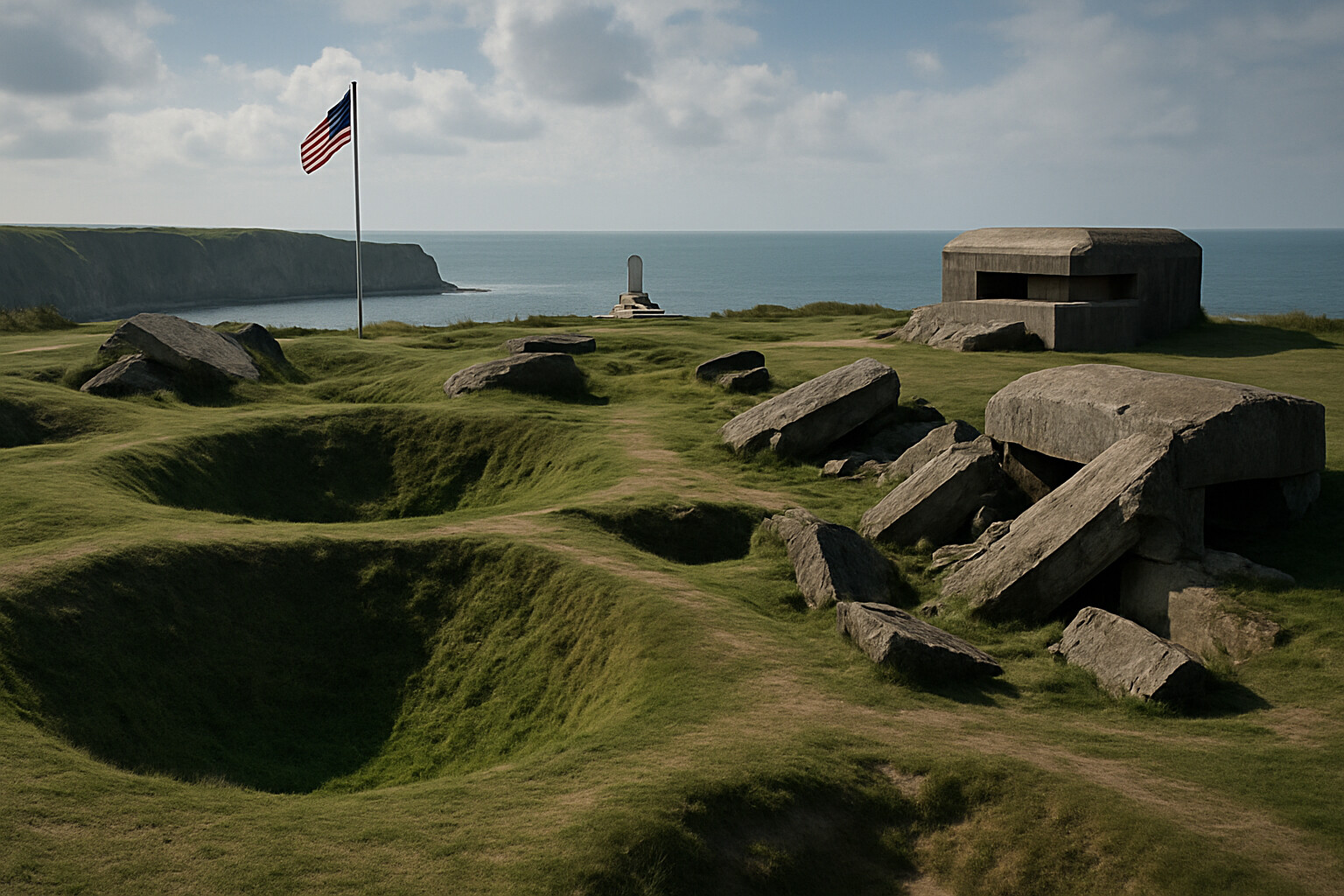
Pointe du Hoc is today one of the most visited sites on the D-Day coastline. The American Battle Monuments Commission maintains it, and the bomb craters and broken concrete that the Rangers crossed in 1944 are still visible—deliberately preserved as historical evidence rather than cleared. The observation post bunker that Rudder used as his command post still stands near the cliff edge. The cliff itself is unchanged. The handholds are the same limestone and clay.
In June 1984, on the fortieth anniversary of D-Day, President Ronald Reagan spoke at Pointe du Hoc to an audience that included aging survivors of the assault. His address described the Rangers and the cliffs they had taken, and it has become one of the more frequently quoted pieces of commemorative oratory from that era. The speech captured the emotional character of the action accurately. Historians have noted, reasonably, that commemorative oratory by its nature simplifies operational complexity—but the simplification in this case does not distort the essential truth of what happened here.
The surviving Rangers who attended that ceremony had, by 1984, spent forty years carrying the knowledge of what they had done and what it had cost. Some had spoken about it extensively. Others had not. The variation in how veterans process and transmit combat experience is itself part of the historical record.
---
**WHY IT MATTERS**
The assault on Pointe du Hoc matters for several reasons that are worth separating clearly.
Operationally, it matters because the guns were destroyed before they could fire on the beaches, and the destruction was confirmed by men who were there. Allied planning had identified a genuine threat, assigned a capable force to eliminate it, and that force had done so despite conditions significantly harder than planned. The navigation error, the late arrival, the guns absent from their expected positions—each was a problem that required adaptation under fire, and the Rangers adapted.
Tactically, it matters as a study in small-unit cohesion. The Rangers at Pointe du Hoc were isolated, undersupplied, and facing superior German numbers in the later phases of the defense. They held their position for two days until relief arrived—not through any single dramatic act by any single man, but through collective training, mutual reliance, and the unit cohesion that intensive preparation had built.
Historically, it matters as a documented example of a high-risk direct action achieving its objective at severe cost. The roughly 225 men who landed at Pointe du Hoc on June 6 suffered among the highest proportional casualty rates of any American unit on D-Day. The mission succeeded. Those two facts exist together and must be understood together.
And it matters as a human story—not a simplified one, not a story without ambiguity or loss, but a story of men who were asked to do something extraordinarily difficult and who did it. Rudder, who fought to lead the mission personally, who climbed the cliff alongside his Rangers, who ran a command post while wounded and under fire for two days—and who then went home to Texas and ran a university—was not performing for an audience. The record shows a man doing his job at a level that his job rarely required of anyone.
The cliffs are still there. The craters are still there. The concrete is still there. They are a more accurate record of what happened than any speech, and they say enough.