‹ All Stories

Blackett Strait - August 2-8, 1943

PT-109

A Japanese destroyer cut the patrol boat in half in the dark. Two men died. The rest survived because Lt. John F. Kennedy kept them moving through fire, oil, current, reef, and hunger until help could find them.

PT-109An 80-foot Elco motor torpedo boat operating in the Solomon Islands campaign.
AmagiriThe Japanese destroyer that rammed PT-109 in Blackett Strait on August 2, 1943.
2 KilledAndrew Kirksey and Harold Marney were lost in the collision and fire.
Coconut MessageIsland scouts carried Kennedy's carved message through the rescue chain.

PT-109: 80-Foot Elco Motor Torpedo Boat

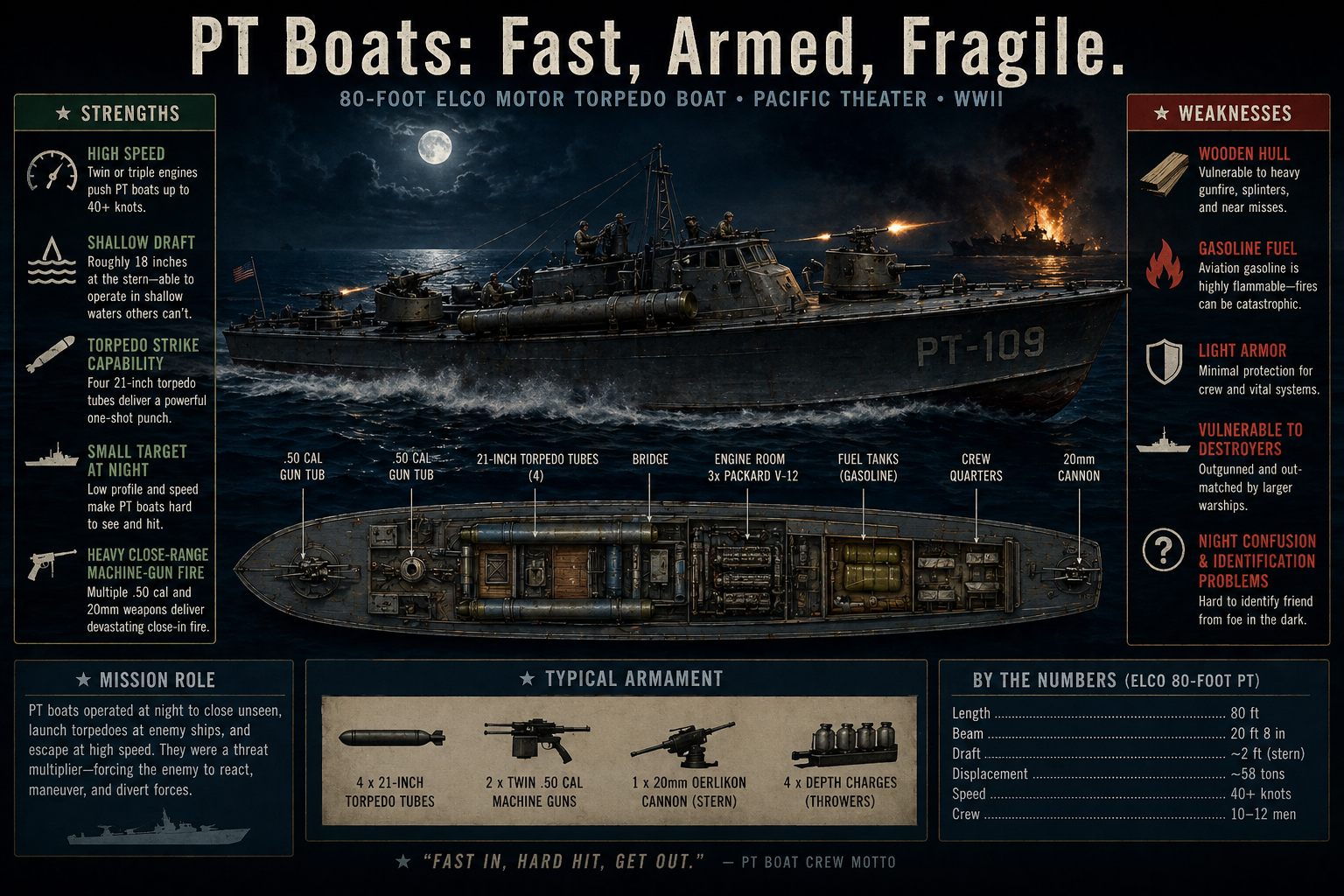
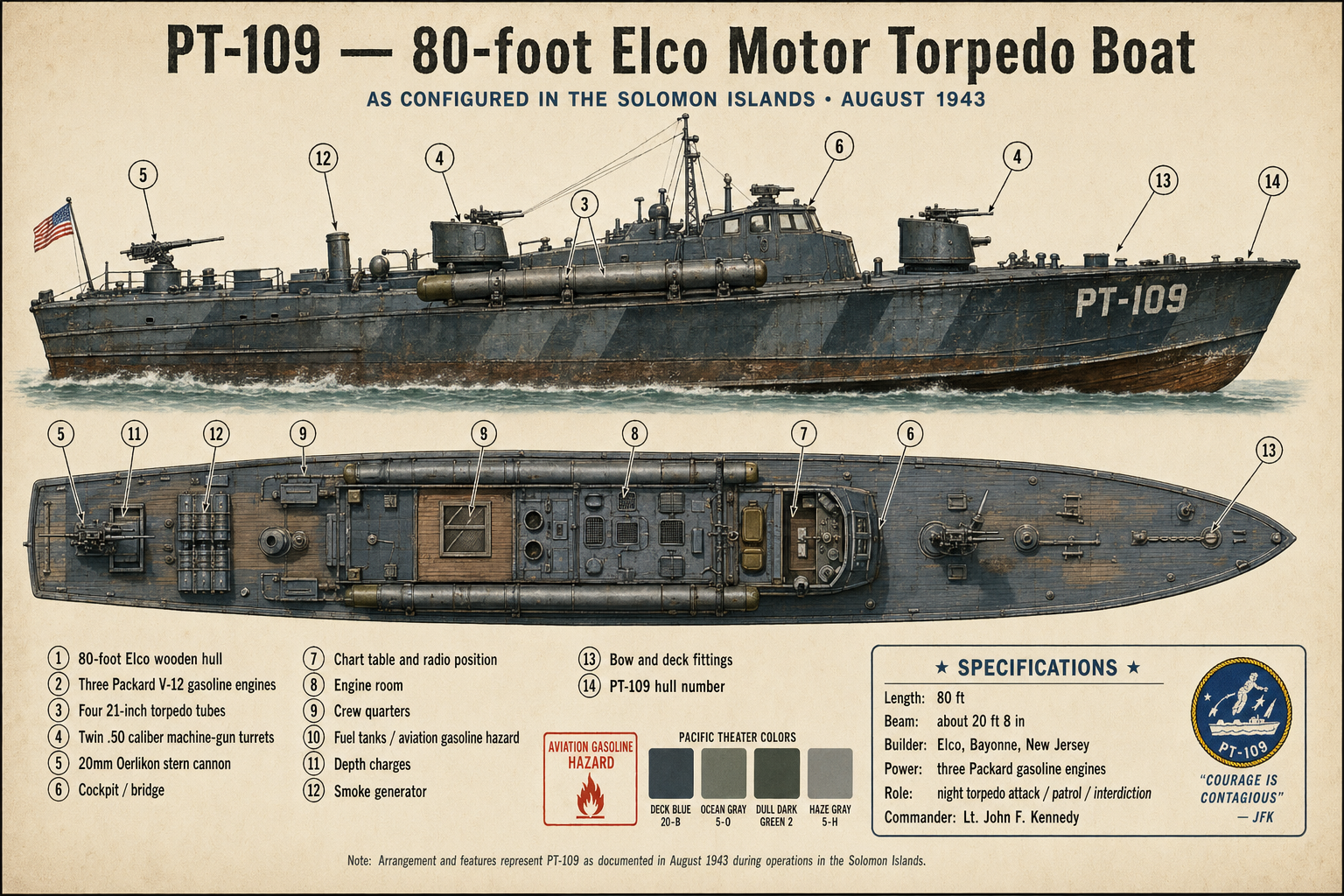
PT-109 was not a miniature destroyer. It was a fast wooden attack boat built to strike at night, fire torpedoes at larger ships, and disappear before enemy guns could settle on it. That made the boat dangerous, but it also made the crew vulnerable: gasoline engines, light protection, and a hull that could not survive a destroyer collision.

PT-109 Elco motor torpedo boat technical diagram
PT-109 as an 80-foot Elco boat: torpedo tubes, twin .50-caliber gun tubs, 20mm stern cannon, Packard gasoline engines, crew spaces, radio/chart position, smoke generator, depth charges, and fuel hazards.

Split Open In The Dark

PT boats were fast, wooden, lightly armored weapons built for night work. They hunted larger ships with torpedoes and survived by speed, darkness, and surprise. In the Solomon Islands, those advantages could vanish in seconds.

On the night of August 1-2, 1943, PT-109 was operating in Blackett Strait under Lt. John F. Kennedy. The Japanese destroyer Amagiri appeared out of the darkness and rammed the boat, cutting through the hull. Fuel burned on the water. The bow drifted. The stern disappeared. Two crewmen were killed.

The survivors clung to wreckage in enemy waters. Kennedy, injured and exhausted, helped gather the men and later towed badly burned crewman Patrick McMahon by gripping the strap of McMahon's life jacket in his teeth while swimming toward land.

The crew reached a small island, then shifted again as hunger, thirst, and exposure set in. Kennedy swam into the dark searching for help. The rescue finally came through local island scouts and coastwatcher networks. Biuku Gasa and Eroni Kumana carried Kennedy's message carved into a coconut shell toward Allied forces.

On August 8, PT-157 brought the surviving crewmen out. Kennedy received the Navy and Marine Corps Medal and the Purple Heart. The later political mythology is famous, but the wartime story stands on its own: a small boat destroyed at night, a wounded commander, and a crew kept alive one swim at a time.
Blackett Strait To Rescue

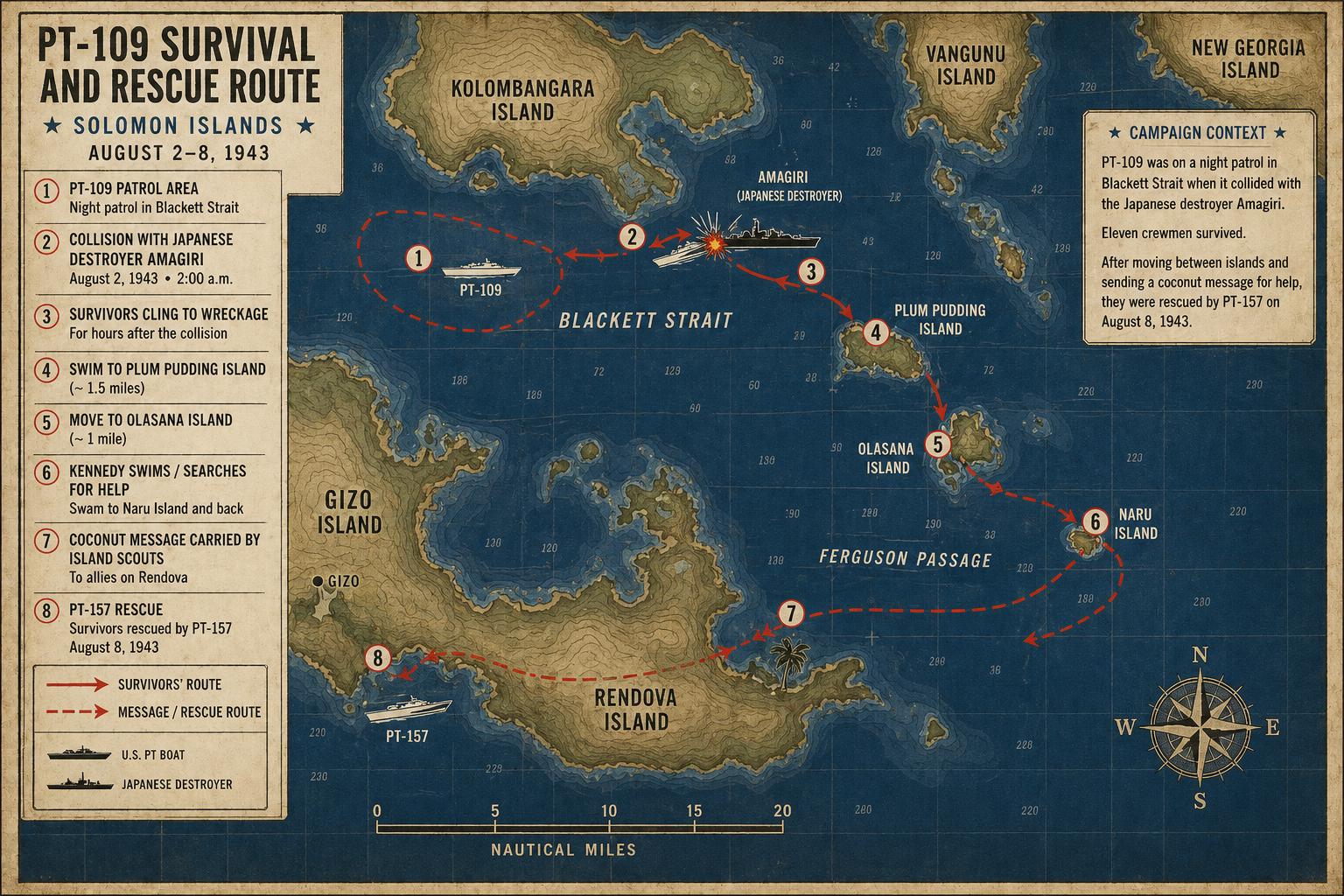
The story is easier to understand as geography. The collision happened in Blackett Strait. The survivors first reached Plum Pudding Island, then moved to Olasana. Kennedy swam into the darkness searching for help, and the message route finally connected island scouts, coastwatchers, and PT-157.

PT-109 survival and rescue route map in the Solomon Islands
The PT-109 survival route: patrol area, collision with Amagiri, drift and wreckage, swim to Plum Pudding Island, movement to Olasana, Kennedy's search toward Naru, coconut message path, and PT-157 rescue.

From Collision To Rescue

1. PatrolPT-109 operates at night in Blackett Strait during the Solomons campaign.
2. CollisionAmagiri rams the boat, killing two men and leaving survivors in burning water.
3. SwimKennedy and the crew reach a small island, then shift position while searching for water and contact.
4. MessageA carved coconut message enters the coastwatcher rescue chain.
5. RescuePT-157 extracts the surviving crewmen on August 8, 1943.

Keeping The Crew Alive

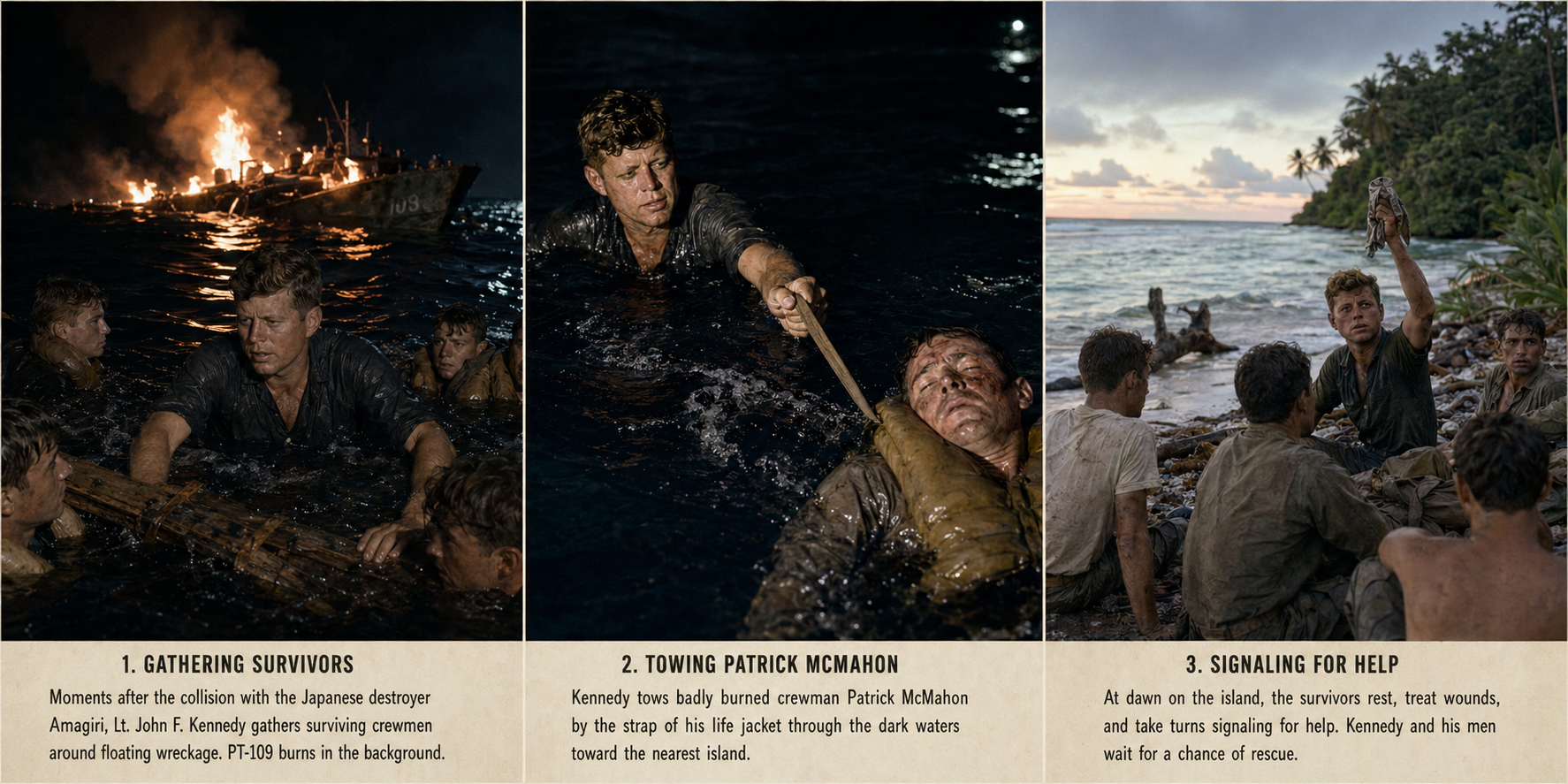
Kennedy's part of the story was not a single heroic pose. It was a chain of practical decisions under bad conditions: gather the survivors, move away from burning wreckage, tow the injured, find land, keep searching, and get a message into the rescue network.

Three-panel PT-109 survival sequence showing Kennedy gathering survivors, towing Patrick McMahon, and signaling for help
Three survival beats: gathering the crew after the collision, towing injured crewman Patrick McMahon through dark water, and signaling from the islands while waiting for rescue.

Why PT Boats Were Dangerous Work

PT boats were aggressive but fragile. They could strike above their weight with torpedoes, but wood construction, gasoline fuel, and night engagements made them vulnerable. A destroyer did not need a perfect gun solution. In Blackett Strait, mass and steel settled the fight before PT-109 could use its speed.

That is what makes the story work beyond biography. PT-109 is a naval survival story first: small craft, black water, fire, injury, local scouts, and a rescue chain that depended on courage from men whose names were less famous than Kennedy's.

PT boats fast armed fragile tactical breakdown
PT boats were built around speed and surprise. Their strengths were real, but so were their weaknesses: wooden hull, gasoline fuel, light armor, night confusion, and vulnerability to larger warships.

Reference checks used the John F. Kennedy Presidential Library, Naval History and Heritage Command, and National Archives material on PT-109 and Kennedy's wartime service.

JFK Library - John F. Kennedy and PT-109Naval History and Heritage Command - PT-109National Archives - PT-109