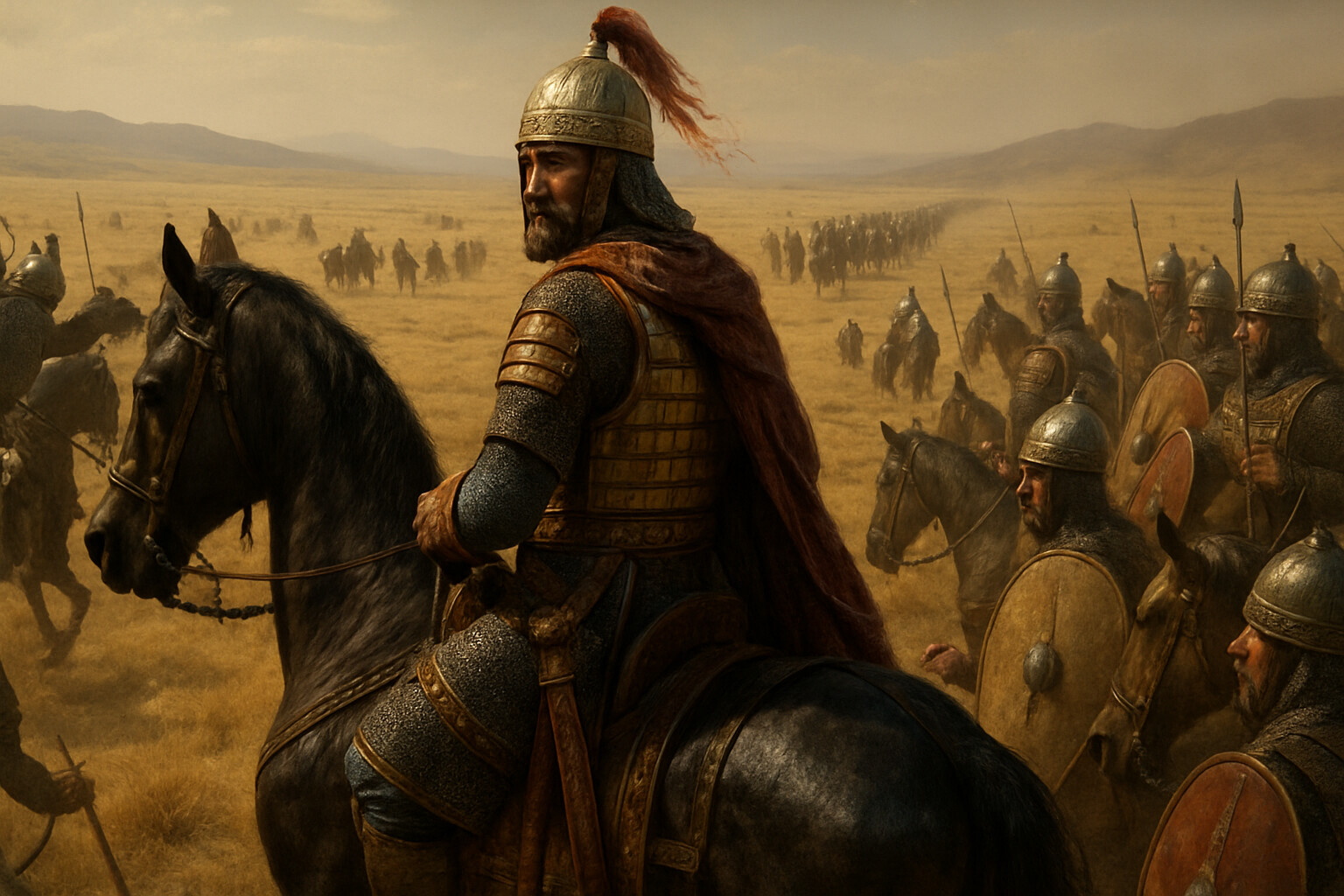
The smoke was already rising from the countryside south of Augsburg when the riders reached Otto's camp.
It was early August 955. The Magyars—the mounted warriors the Franks and Germans called Hungari, the people history would call Hungarians—had crossed the Lech River and were besieging the city. They had done this before. For nearly a hundred years they had appeared without warning from the eastern steppe, burning monasteries and villages, driving off livestock, taking captives, and vanishing before any army could be assembled against them. The plains of Bavaria, Saxony, Burgundy, northern Italy, and what would become France had all felt their arrows. The terror was so routine that church litanies in some regions had added a new line alongside the prayers against plague and famine: a furore Normannorum et Ungarorum libera nos Domine—from the fury of the Norsemen and the Hungarians deliver us, O Lord.
But in the summer of 955, something had changed. Otto had an army. And the Magyars had given him a battlefield.
---
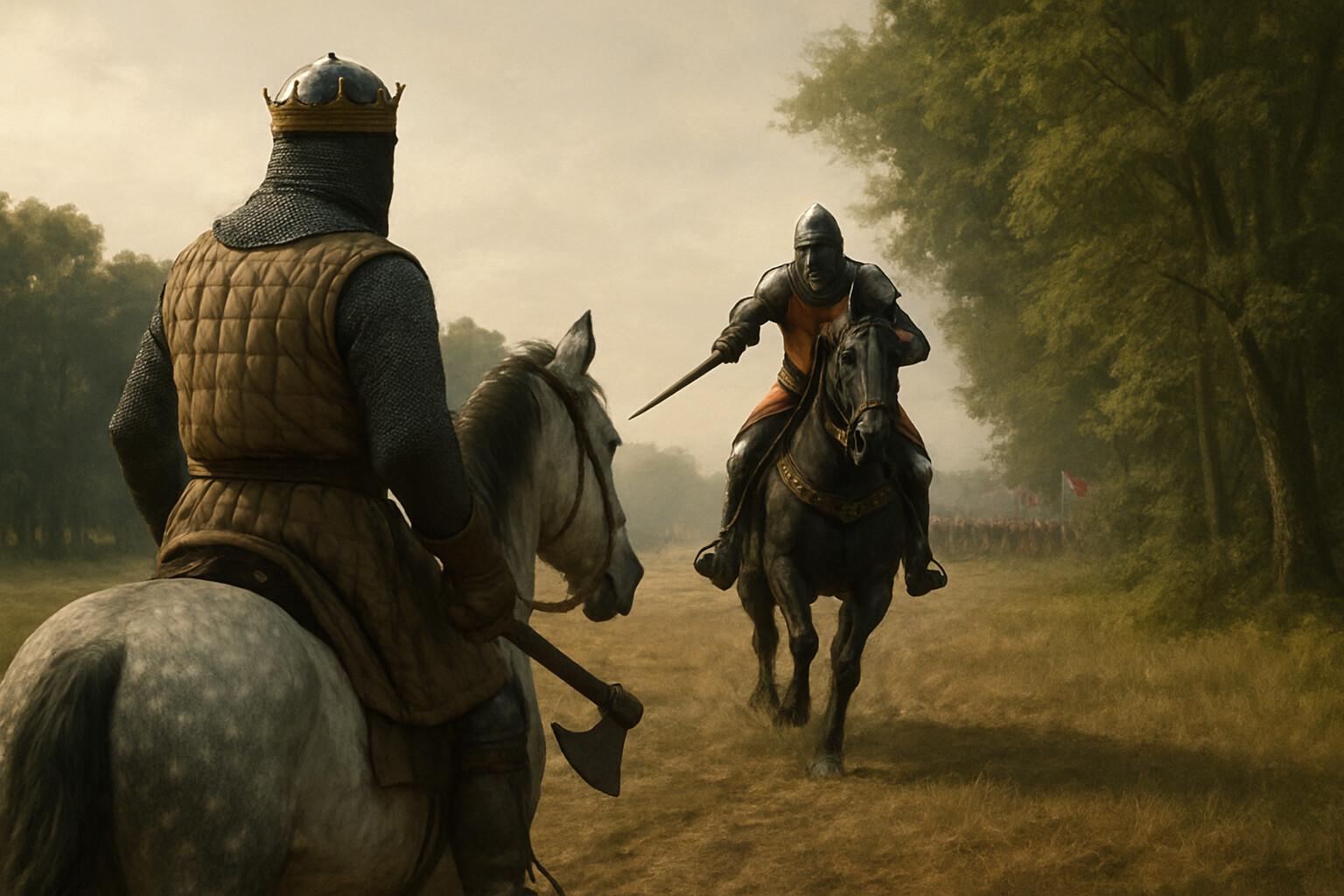
Otto, called the Great even in his own lifetime, was forty-two years old in 955 and had been King of the Germans since 936, when his father Henry the Fowler died and the Saxon nobles elected him at Aachen in a ceremony heavy with Carolingian symbolism. He was a man formed by the specific violence of tenth-century politics: dynastic rebellion by his own brothers, constant warfare on the Slavic frontier, the grinding administrative labor of holding together a kingdom composed of deeply independent dukes who obeyed the king when it suited them and rebelled when it did not. The sources available to us do not portray a man given to theatrical gestures. He was methodical, politically shrewd, and—when the moment required it—genuinely aggressive in the field.
His father Henry had already confronted the Magyar problem and made partial progress against it. Henry had negotiated a truce around 926, paying tribute in exchange for a nine-year pause in raids. During that pause he built fortified towns at key points across Saxony, trained a cavalry force capable of meeting the Magyar horse archers in open country, and then in 933 at Riade—somewhere in Thuringia, though the location remains uncertain—defeated a Magyar raiding force decisively enough that Saxony was largely spared for the next two decades. The scale of that victory is debated, but the pattern Henry established—fortification, trained heavy cavalry, aggressive interception—was the template Otto would refine.
Otto's own record against the Magyars before 955 was not uniformly successful. The chronicles record Magyar raids into Bavaria in 943, 947, and 954. The raid of 954 was particularly damaging: the Magyars pushed deep into the Frankish heartland, reaching as far as Burgundy and the Rhineland, and on their return were not effectively intercepted. The failure was partly political. Otto was managing a rebellion by his son Liudolf and his son-in-law Conrad the Red, Duke of Lorraine, and military resources were fragmented. The internal crisis resolved by 954, but it may have signaled to the Magyar leadership that the German kingdom was weakened and ready for a larger blow.
In the summer of 955 the Magyars came not as a raiding party but as a force of something closer to conquest. They besieged Augsburg—a defended city, an ecclesiastical center, a real military objective—and they came in numbers the contemporary sources describe as overwhelming. Precise figures are impossible to recover: Widukind of Corvey, the primary narrative source for the battle, writes in terms that emphasize a vast Magyar force, and later tradition inflates the numbers further. Modern historians treat all precise headcounts from tenth-century sources with caution. What the evidence supports is that the Magyar force was large enough to surround and invest Augsburg, that it represented a serious strategic threat rather than a simple raid, and that defeating it required a concentrated effort by Otto and his allied dukes.
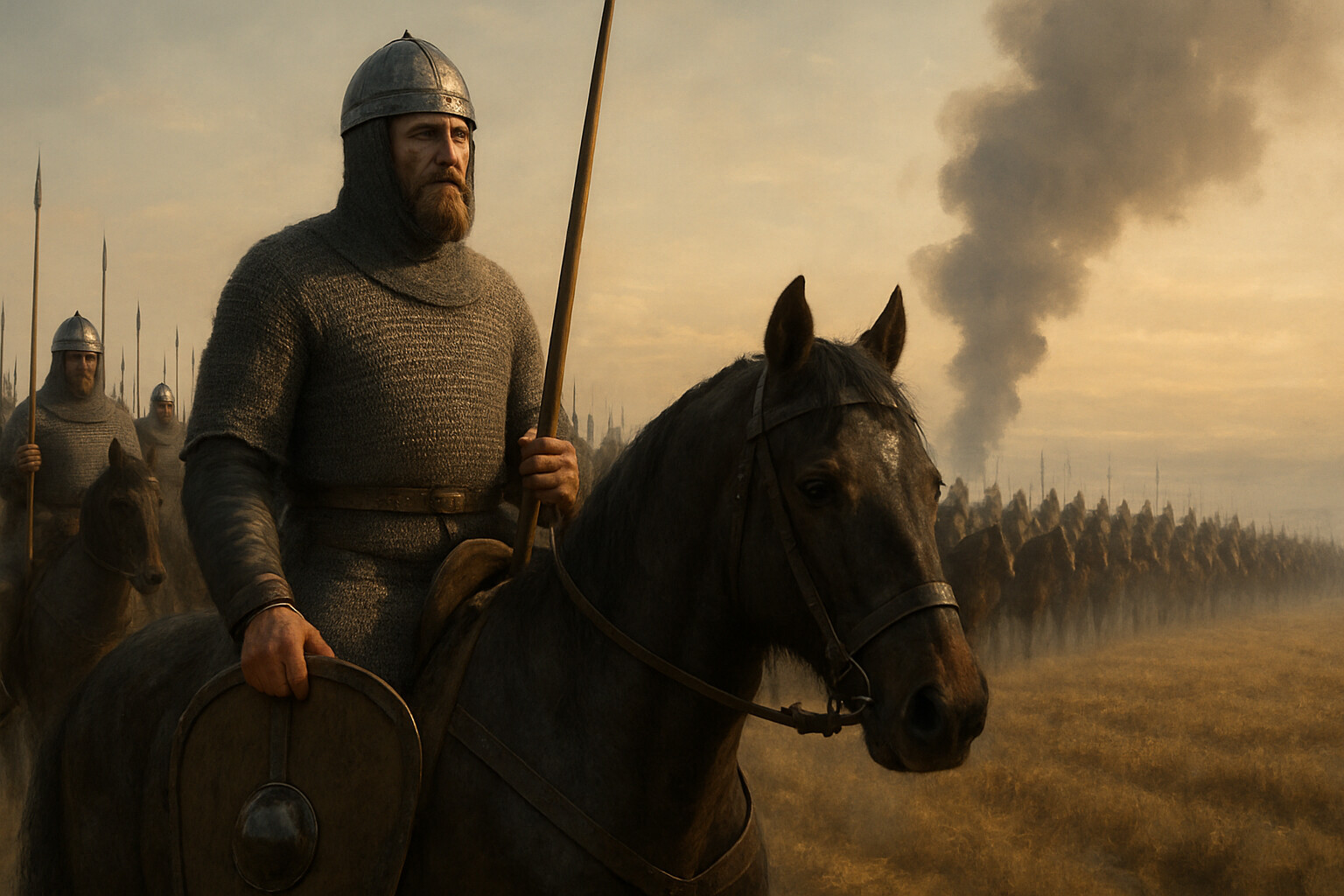
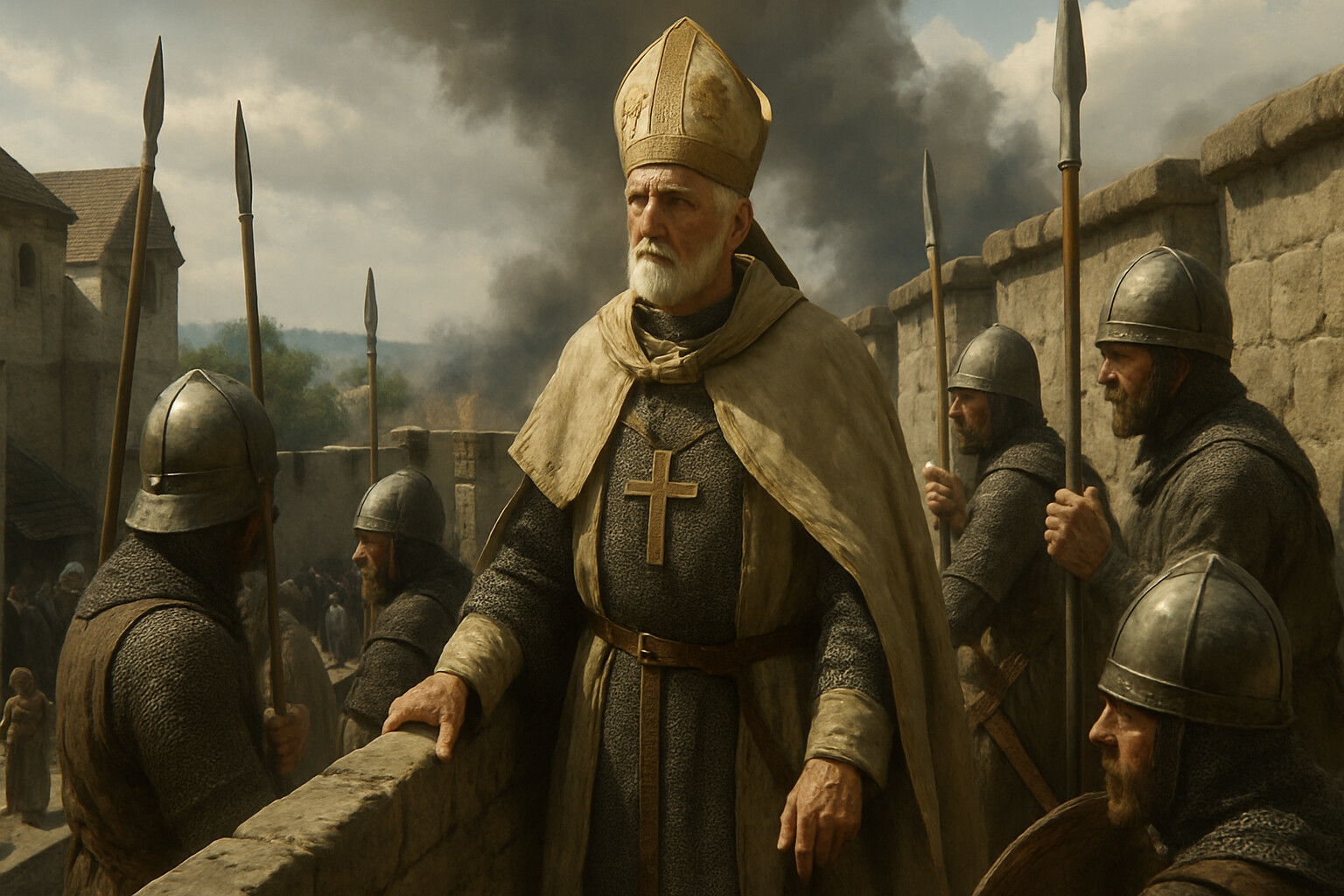
Augsburg was defended by its bishop, Ulrich—known in later centuries as Saint Ulrich—who organized the city's defense and, according to his early biography, led the garrison in active sorties while awaiting relief. The city held long enough for word to reach Otto in Saxony. He summoned his forces, assembled contingents from the major German duchies, and marched south with what the sources indicate was a force built around heavy cavalry: armored knights on trained warhorses, the military technology that had been slowly evolving in the Frankish and German world since the Carolingians.
---
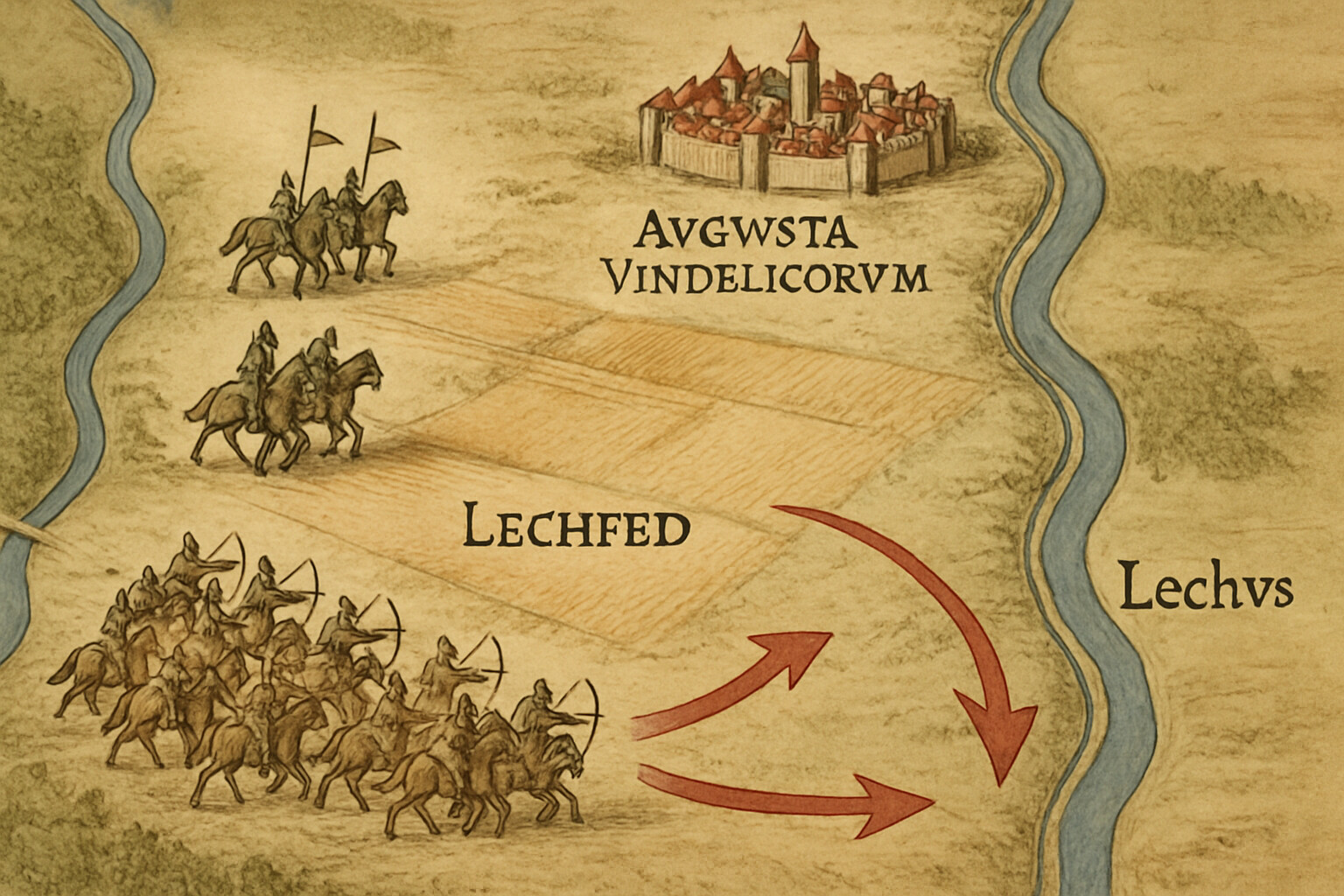
The Lechfeld—the Lech plain—lies south of Augsburg, a broad flat agricultural lowland between the Lech River to the east and the Schmutter to the west, with the Alps visible on clear days in the distance. In August it would have been dry, the harvest fields stubbled and open, the ground firm. It offered visibility and room to maneuver—conditions more favorable to heavy cavalry than to horse archers, who depended on broken terrain, feigned retreat, and encirclement to neutralize heavier opponents.
Otto arrived, assembled his full force, and organized it into what Widukind of Corvey describes as eight battle groups: contingents from the Bavarians, Franconians, Swabians, Czechs under Duke Boleslav, and Otto's own Saxons, with Otto commanding from the center or rear. Modern historians estimate the total force at somewhere between three thousand and eight thousand cavalry; the lower end of that range may be more realistic given what is known about tenth-century army assembly, though the figure remains uncertain. Whether the Magyars held a numerical advantage cannot be stated with confidence from the surviving evidence.
The German tactical challenge was the same one every heavy cavalry force faced against steppe nomads. The Magyar composite bow was formidable at ranges that kept its users outside effective striking distance of armored horsemen. Magyar tactics typically involved approach, volleys of arrows, feigned withdrawal to lure pursuit, and encirclement of disordered pursuers. At Riade in 933 Henry the Fowler's forces had apparently succeeded by closing the range aggressively before the horse archers could disorder them. At Lechfeld, Otto appears to have done something similar—attacking before the Magyars could complete their encircling maneuver.
The battle turned, according to Widukind's account, on a crisis in Otto's rear. While the German advance pushed the Magyar center, a portion of the Magyar force swung around the German left and struck the baggage train and rearguard—the Bohemian and Swabian contingents. There was a moment of chaos in which the rearguard was driven back and scattered. This was precisely the tactical development that had unraveled German advances against the Magyars in earlier engagements: disorder in the rear spreading forward into general collapse.
It did not produce a collapse on 10 August 955.
Otto reformed. His veteran Saxon and Franconian cavalry pressed through. Widukind's account, written within a generation of the battle and drawing in part on the testimony of participants, gives the impression of a force that absorbed the shock and held its momentum—that the disciplined center kept pushing until the initiative shifted. The precise sequence of events within the main engagement cannot be recovered with confidence, and historians caution that Widukind wrote with a pro-Ottonian purpose and a tendency toward dramatic framing. But the broad outcome is not in dispute: the Magyar force broke. It did not conduct a successful fighting withdrawal. It fled.
What happened next was decisive in a way the battle itself might not have been alone.
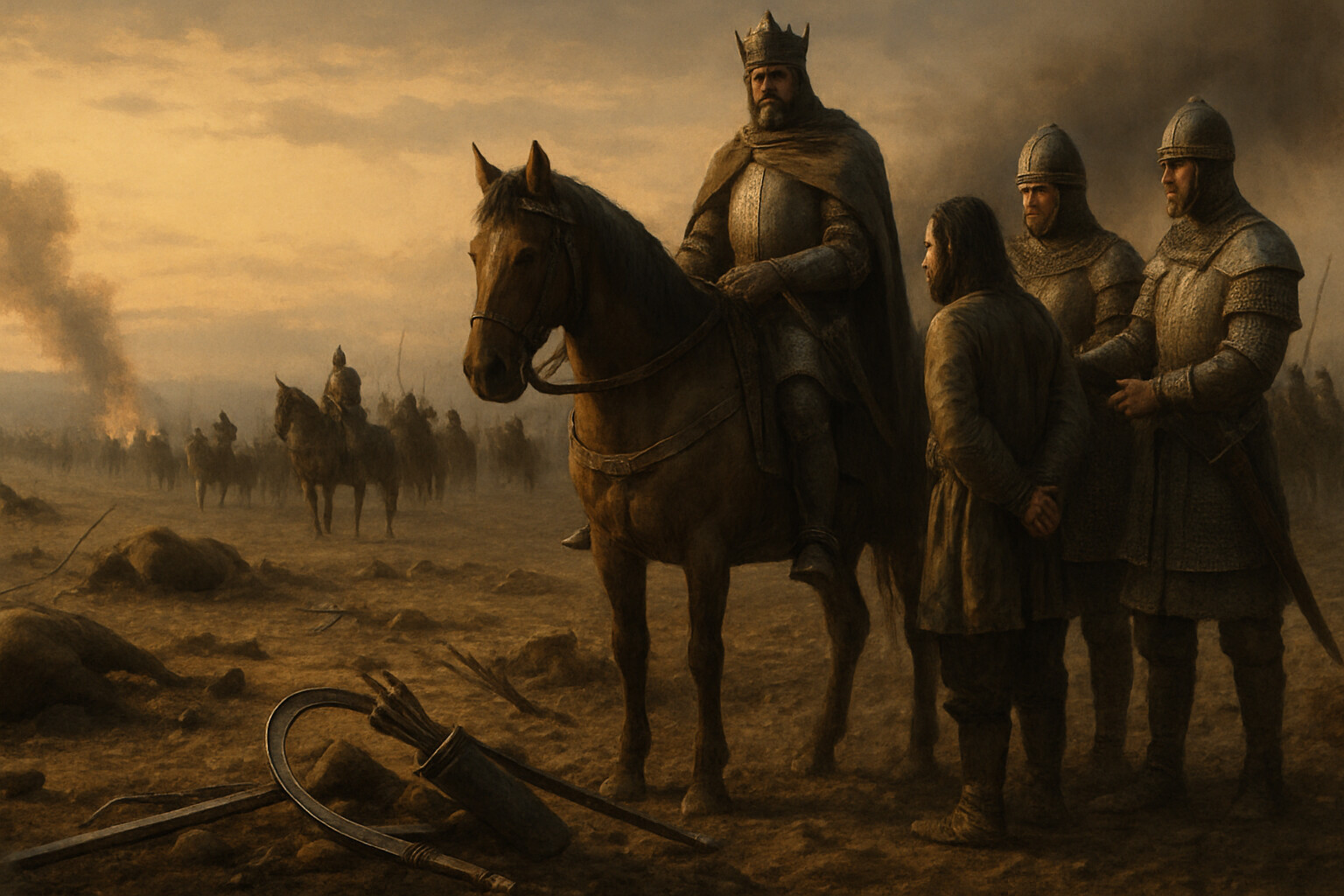
The Magyar force had crossed a major river to reach the Lechfeld and now had to recross it in flight with a cavalry pursuit behind them. Many did not make it. The chronicles record mass casualties at river crossings. Magyar leaders—the sources name several, identifying them as commanders or princes—were captured during or after the pursuit. According to contemporary accounts, at least three Magyar chieftains were taken alive and subsequently hanged, an execution that was both a punishment and a public statement about the changed relationship of forces. The names of these individuals appear in some sources but have not been cross-verified against Hungarian tradition and should not be treated as confirmed.
The pursuit was relentless. German cavalry, fresh from a tactical victory with high morale, ran down an army in disordered retreat across open terrain. What the battle may not have finished alone, the pursuit completed. The Magyar force that had besieged Augsburg was destroyed as a coherent fighting body.
---
The equipment that decided Lechfeld deserves examination, because it illustrates why the battle was not simply a matter of courage or numbers but of military technology and the organizational capacity to field it.
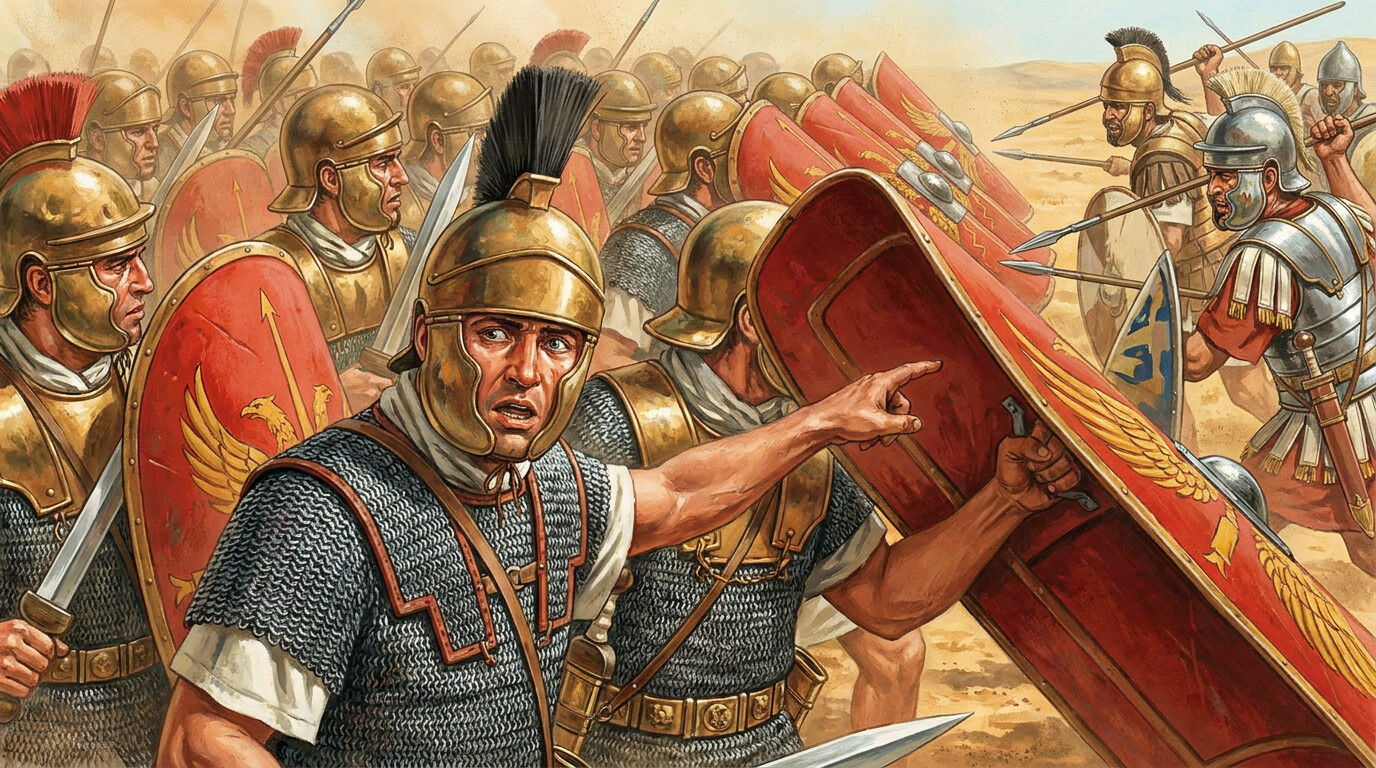
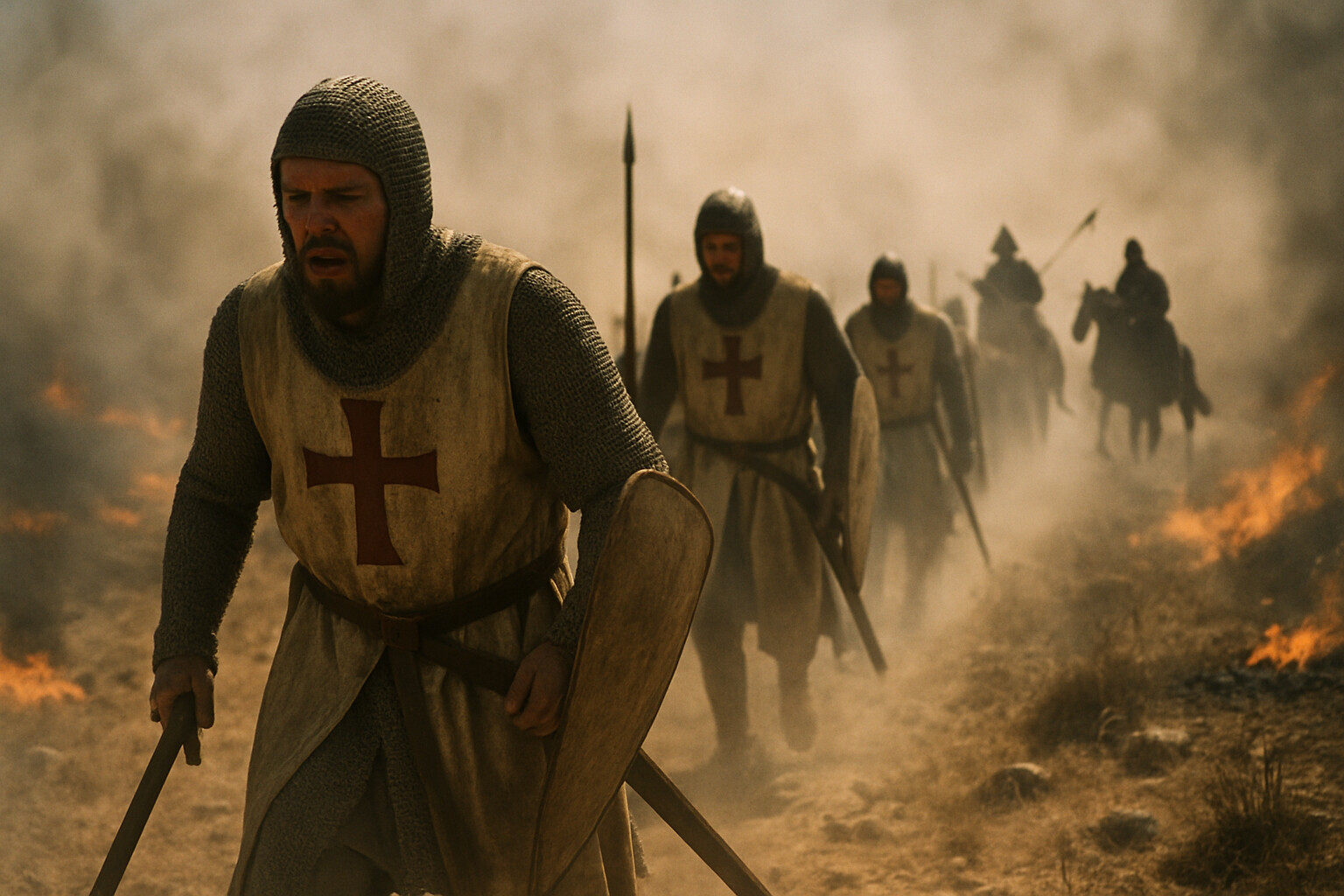
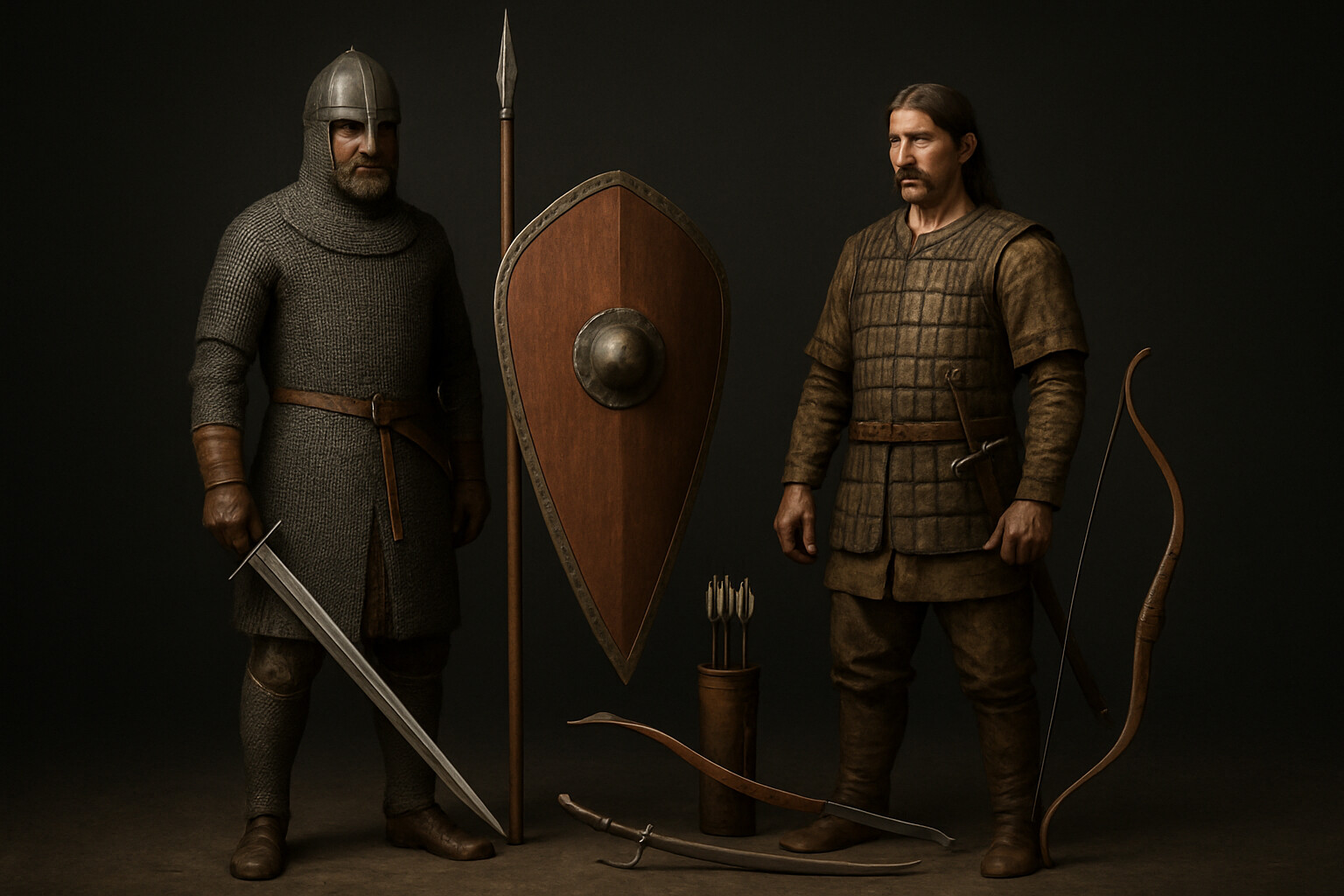
The German heavy cavalryman of 955 wore a coat of mail—a hauberk—of riveted iron rings covering the torso, sometimes extending to mid-thigh or including sleeves to the elbow or wrist. He wore this over a padded undergarment that absorbed the impact energy the mail itself did not stop. His helmet was typically spangenhelm construction: segmented iron panels riveted to a frame, often with a nasal bar protecting the face and sometimes a mail coif or aventail for the neck. A heavy wooden shield, typically kite-shaped or round with an iron boss, covered his left side. The primary weapon in the charge was the lance: an ash-wood shaft roughly seven to nine feet long tipped with an iron head designed to penetrate mail or leather at the moment of impact. Swords were carried as secondary weapons—straight, double-edged iron blades of thirty inches or more, designed for cutting and thrusting in the close fight that followed a charge.
The warhorse was itself a military asset of enormous value. Large, trained animals capable of carrying an armored rider at speed, and—critically—trained not to shy from noise, blood, and the physical chaos of close engagement. Breeding and conditioning such horses required years and significant resources. The capacity to field several thousand of them in a single battle was a measure of the organizational depth of the Ottonian kingdom, not simply of individual wealth or martial culture.
Against this armored mass, the Magyar composite bow was effective at range but much less so once the distance closed. The Magyar bow—a recurved composite weapon of horn, sinew, and wood, with distinctive bone stiffeners at the limb tips well-documented in Carpathian Basin burial archaeology—could drive an arrow through mail at moderate range, and Magyar archers were skilled enough to shoot accurately from horseback at a canter. But the bow required distance and time to work. If the gap closed to lance range before the archers could disorder the charge, the armored knight held an overwhelming advantage in the impact and close-quarters phases. Otto's cavalry, by advancing aggressively and holding formation under fire, denied the Magyars the space they needed.
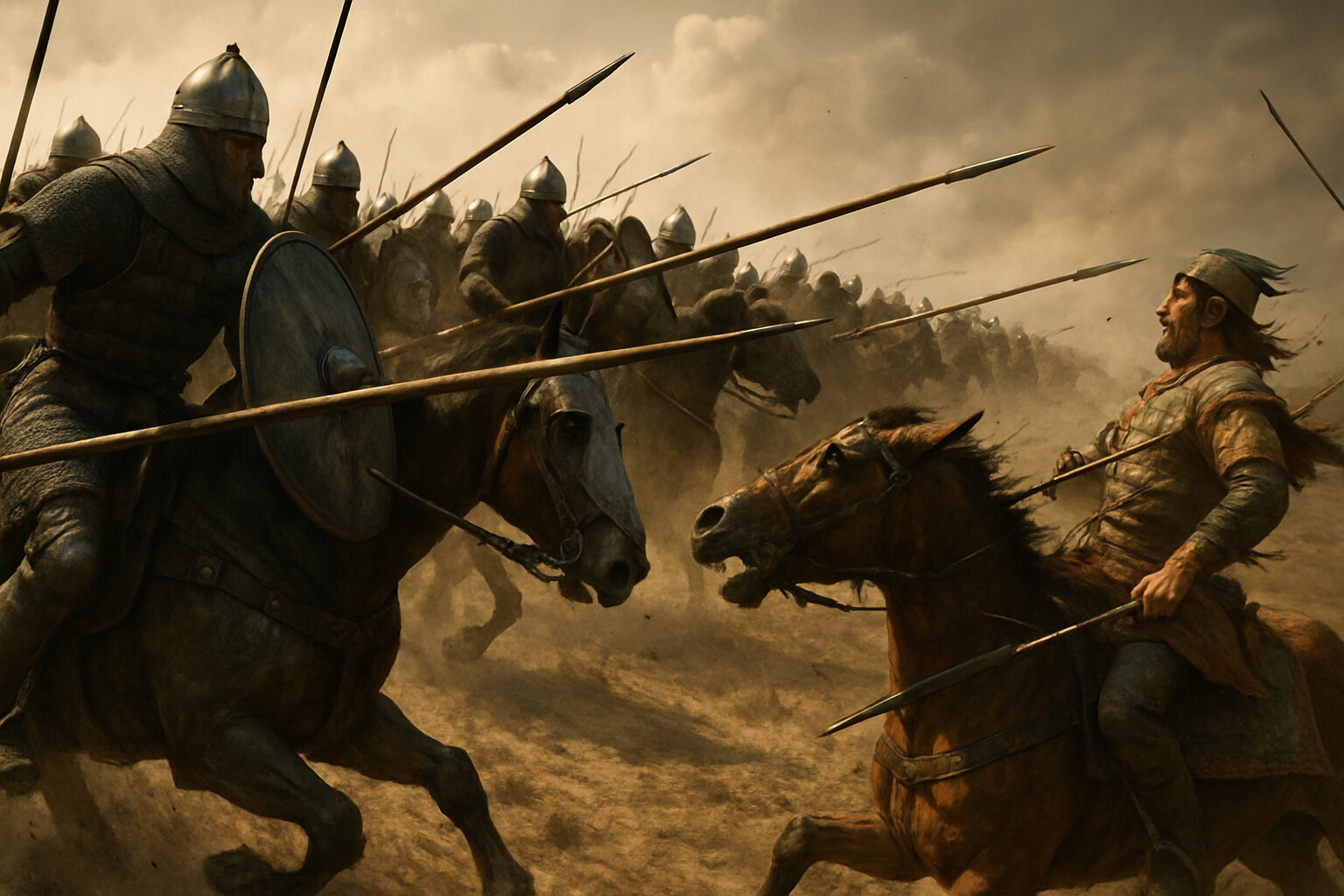
The Magyar warrior's equipment was lighter by design: lighter armor, smaller horses optimized for speed and endurance over long distances, the composite bow as the primary weapon, and a saber or light lance for close combat when unavoidable. This equipment was ideal for the strategic role the Magyars had played for decades—rapid deep raids, avoidance of pitched battle with prepared opponents, dispersal and reassembly across vast distances. At Lechfeld, on open ground against a concentrated force that refused to be drawn into a disorganized pursuit, the mobility advantage could not compensate for the close-quarters disadvantage.
---
Why the Magyars accepted battle under these conditions remains genuinely uncertain. The siege of Augsburg had been ongoing, and a relief force's arrival likely forced a decision: fight or withdraw. Withdrawal across the Lech with a pursuing force behind may have seemed more dangerous than accepting battle before the crossing. The sources do not record what the Magyar commanders believed. They record only what happened.
For Otto, the battle's significance extended well beyond the military result. He had assembled dukes and princes who owed him loyalty but had not always demonstrated it. The summons to Lechfeld was a test of the Ottonian system of royal lordship: could the king assemble a combined force from his major vassals, march it quickly, and commit it to a decisive engagement before the enemy dispersed? On 10 August 955, the answer was yes. The political meaning of that answer was not lost on contemporaries.
Widukind of Corvey records that after the victory, Otto's soldiers acclaimed him as imperator on the battlefield—the Roman term for a great general and conqueror, not yet the formal title he would receive from the Pope in 962, but a marker of what the victory meant to the men who had fought it. Whether this acclamation occurred as Widukind describes it, or whether his Roman literary models shaped the telling, cannot be determined from the surviving evidence. It reflects, at minimum, the political weight contemporaries attached to the battle.
---
Bishop Ulrich of Augsburg deserves specific attention. The defense of the city before Otto's arrival was conducted by the bishop and the garrison over several days—possibly two to three days of active assault, though the precise duration is uncertain. Ulrich's role in organizing that defense is documented in his early biography, the Vita Uodalrici, written by Gerhard of Augsburg probably in the late tenth century. Gerhard had personal knowledge of Ulrich and access to accounts from those who had been present. The Vita is treated as historical by modern scholars, with the standard caveat that hagiographical sources carry devotional purposes that may shape their presentation. Ulrich was canonized by Pope John XV at the Synod of Rome on 31 January 993—the first recorded formal papal canonization in church history—and the defense of Augsburg was among the acts cited in his sanctification. The story of the city's resistance and the battle's outcome were thus joined in both political and religious memory within a generation of the events.
The aftermath of the battle was brutal in the specific way tenth-century warfare was brutal. Captured Magyar leaders were publicly executed. The pursuit killed an unknown but substantial number of warriors who had survived the main engagement. No general prisoner exchange or negotiated outcome took place. The hanging of captured leaders—a degrading execution for warriors—was a deliberate statement of dominance.
The strategic result proved permanent in a way no previous German victory over the Magyars had been. Magyar large-scale incursions into Western and Central Europe ended at Lechfeld. The reasons were partly military—the destruction of a major force and the loss of experienced commanders—and partly internal to the Magyar world: the tribal confederation was entering a period of transformation toward the settled Christian kingdom under the Árpád dynasty that would become Hungary. Duke Géza, who consolidated Magyar power after 955, pursued accommodation with the German world. His son Vajk, baptized as Stephen, received a crown from Pope Sylvester II in the year 1000 and became Saint Stephen of Hungary, founder of the Christian Hungarian state.
The connection between Lechfeld and this transformation is real but should not be overstated. The Christianization and settlement of the Magyars was a complex process with its own internal drivers. The military defeat of 955 removed large-scale raiding as a viable strategic option and created conditions in which accommodation became more attractive than continued confrontation. How much weight to assign each factor is a question the Hungarian historiography continues to debate.
---
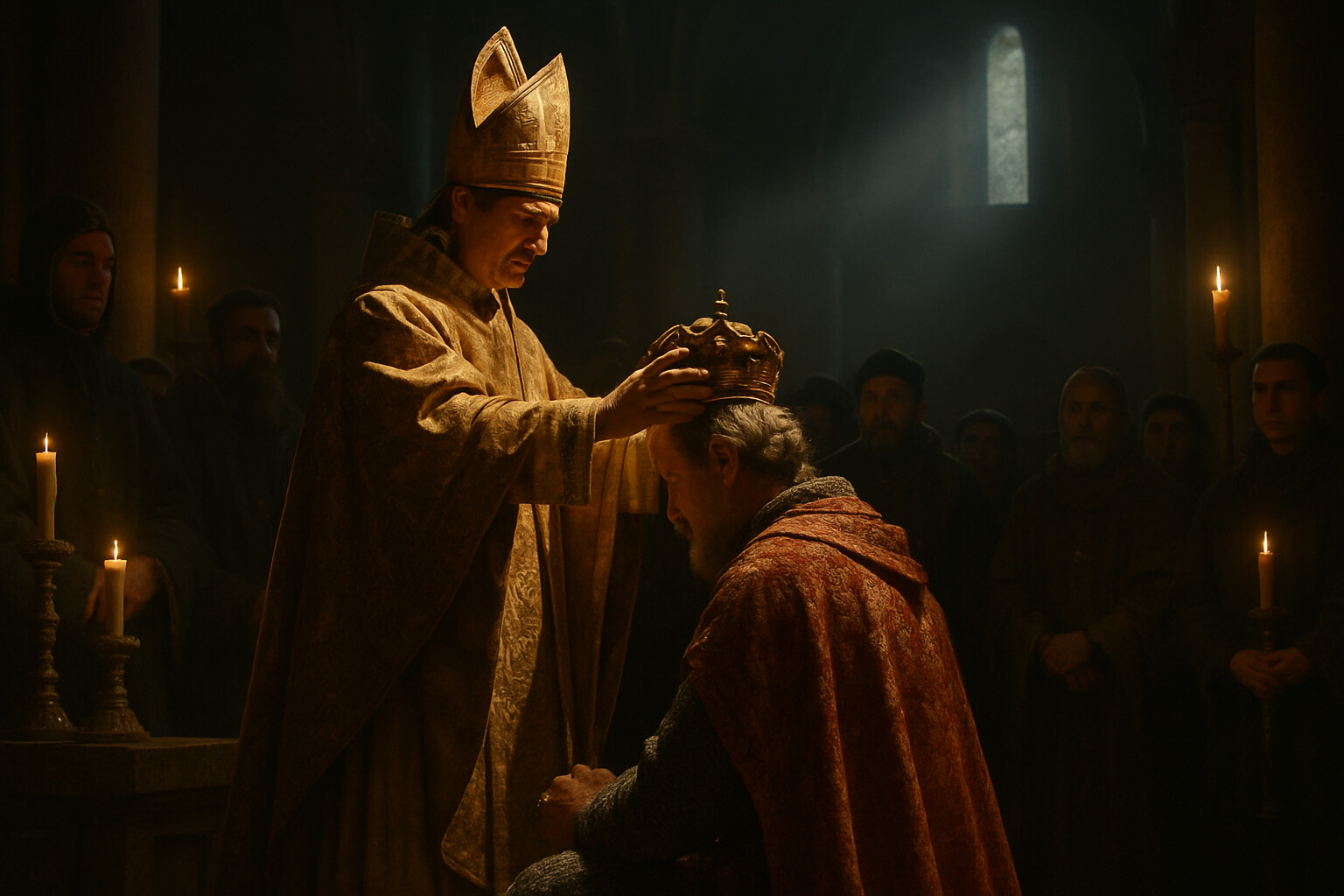
For Otto personally, Lechfeld was the foundation for everything that followed. In 962 he marched to Rome and received the imperial crown from Pope John XII, becoming the first emperor of what later tradition called the Holy Roman Empire. The political logic was partly theological—the German king as defender of Christendom—and partly practical: Otto had demonstrated at Lechfeld that he could defend the West against its most persistent external threat. The papacy, embroiled in its own crises, needed a protector with that credential. Otto needed the legitimacy of the imperial title to consolidate his dynastic position and manage his own magnates. The coronation of 962 was, in a real sense, a consequence of the victory of 955.
The Ottonian dynasty—Otto I, his son Otto II, his grandson Otto III—dominated European politics for the rest of the tenth century and into the eleventh. The institutional structures Otto built: the combination of royal power with ecclesiastical administration, the Reichskirchensystem in which bishops served also as royal officials, the extension of German influence into Italy—these became the framework for what historians call the Ottonian Renaissance, a period of genuine cultural and intellectual renewal in the German world.
None of this was settled on the morning of 10 August 955. Battles are not destined to have particular outcomes. The Magyar rearguard attack on the German baggage train nearly worked. Had it produced the disintegration it had produced in previous engagements—had the panic spread from the rearguard into the center—the battle's result, and the history of the following century, could have turned differently.
That it did not was the result of trained and disciplined troops, experienced commanders, the specific equipment advantages of heavy cavalry in close engagement on open ground, and the accumulated experience of a kingdom that had been learning, at the cost of burned villages and dead farmers and ransomed priests, how to fight a mobile steppe enemy for nearly a century.
The field south of Augsburg on that August day was not the beginning of anything. It was the end of something: roughly a hundred years of fear that had shaped the prayers, the architecture, the political arrangements, and the military culture of half a continent. What replaced the fear was not peace—the tenth century offered no peace—but a different strategic landscape, and a German kingdom that had earned, at Lechfeld, the right to face a different set of problems.
---
The sources for Lechfeld are genuine but limited in the way all tenth-century military sources are limited. Widukind of Corvey's Res gestae Saxonicae, written approximately 967 to 973, is the primary narrative account and the most detailed. Widukind wrote within living memory of the battle and had access to participants or their close accounts. He wrote with an explicit pro-Ottonian, pro-Saxon perspective and with clear awareness of Roman historical models, particularly Sallust; his account should be read as a serious primary source shaped by those constraints, not as neutral military reportage. The Vita Uodalrici provides important context for the defense of Augsburg. Annalistic sources—the annals of various German monasteries and the Continuatio Reginonis—provide corroborating evidence for the date, general outcome, and the executions of captured Magyar leaders. No Magyar written sources survive from this period; Magyar oral tradition was not committed to writing until later centuries.
Modern scholarly treatments by Timothy Reuter, Karl Leyser, Gerd Althoff, and—most directly—Charles R. Bowlus, whose 2006 monograph The Battle of Lechfeld and Its Aftermath is the most focused scholarly study of the engagement, have worked extensively with these sources to reconstruct the political and military context. Their assessments inform the reconstruction offered here, and readers seeking fuller engagement with the sources and historiography should consult their work directly.
The precise troop numbers, the exact sequence of tactical events, and the details of the pursuit cannot be reconstructed with confidence from the surviving evidence. What can be stated with confidence: the battle took place on or about 10 August 955 on the Lechfeld south of Augsburg; Otto commanded a combined force of German and allied cavalry; the Magyar besieging force was defeated and driven back with heavy losses; captured Magyar leaders were executed; and Magyar large-scale raiding into the German lands ceased after this engagement. On those points, the sources are consistent and the scholarly consensus is clear.
The rest—the texture of the fighting, the moment of crisis, the weight of the equipment, the condition of the horses and men at the end of a summer march before the battle began—is careful reconstruction: inference from what is known about the terrain, the weapons, the tactics, and the people involved. It is offered not as invention but as an honest attempt to make a documented history legible to people who were not there.