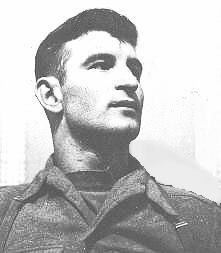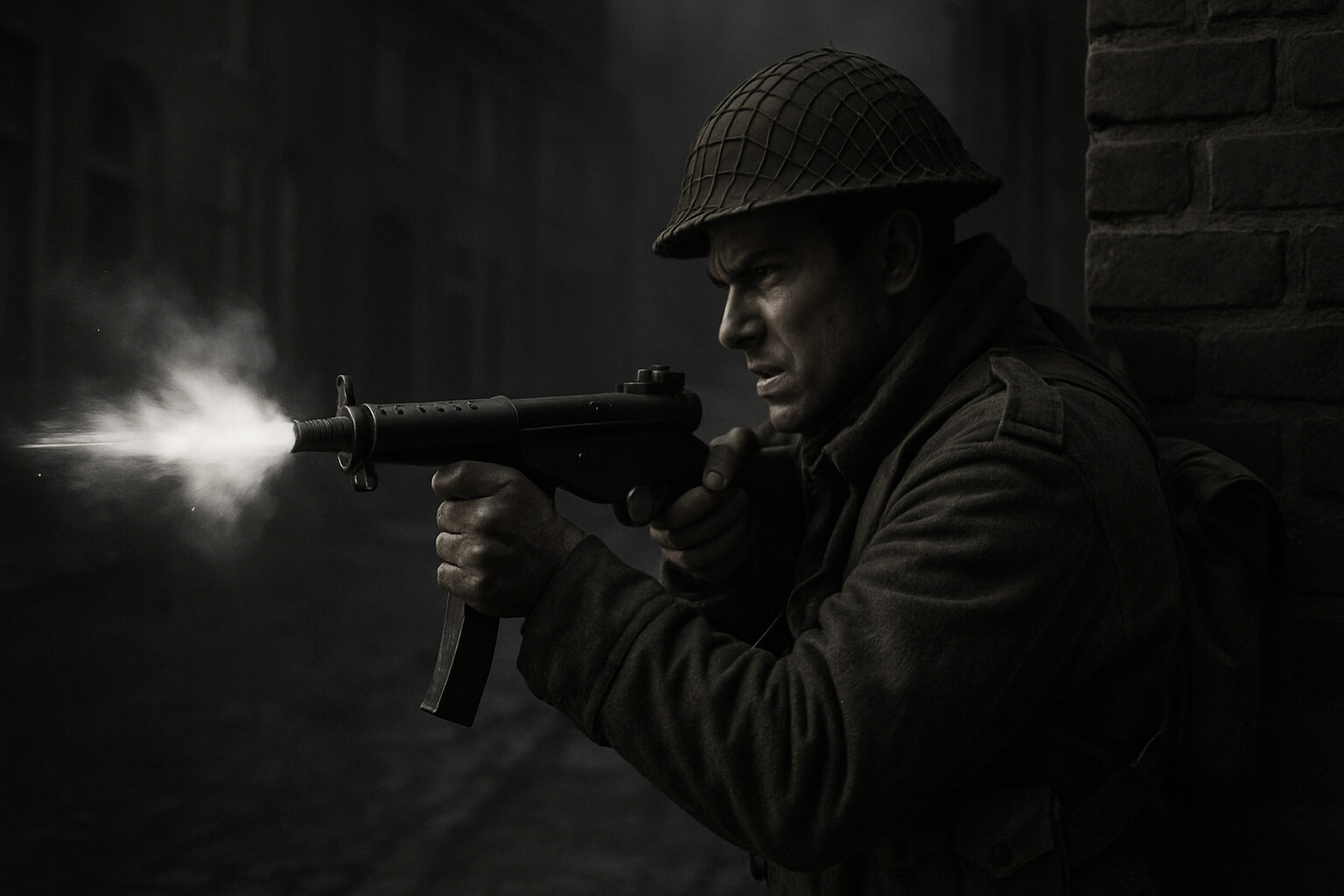
The Sten gun bucked against Leo Major's shoulder as another burst echoed through Zwolle's empty streets. The one-eyed Canadian private pressed himself against a brick wall, listening to German voices shouting in the darkness three blocks away. It was past midnight on April 13, 1945, and somewhere in this Dutch city, enemy soldiers were trying to figure out how many Canadians had infiltrated their positions. Major intended to keep them guessing.
Twelve hours earlier, Major had been just another reconnaissance scout with the Regiment de la Chaudiere, preparing for what everyone expected would be a costly assault on the German-held city of Zwolle in the eastern Netherlands. The 22-year-old private from New Bedford, Quebec, had already earned a reputation for aggressive patrolling during the long campaign to liberate the Low Countries. He had lost his left eye to a phosphorous grenade in Normandy but refused evacuation, claiming he needed only one eye to sight his rifle. Now, as the Canadian 2nd Infantry Division prepared to attack Zwolle, Major and his partner Corporal Willy Arsenault had been ordered to conduct a night reconnaissance to locate German defensive positions.
The strategic situation across the Netherlands in April 1945 had reached a desperate crescendo. The German occupation had imposed a brutal blockade on food shipments to the western provinces, creating the "Hunger Winter" of 1944-45 that was killing an estimated 20,000 Dutch civilians. Every day the Wehrmacht held territory meant more Dutch deaths from malnutrition and exposure. For Field Marshal Bernard Montgomery's 21st Army Group, speed in the final offensive mattered as much as tactical success. The Canadian First Army, spearheading the northern drive toward Germany, faced the twin pressures of military necessity and humanitarian crisis.
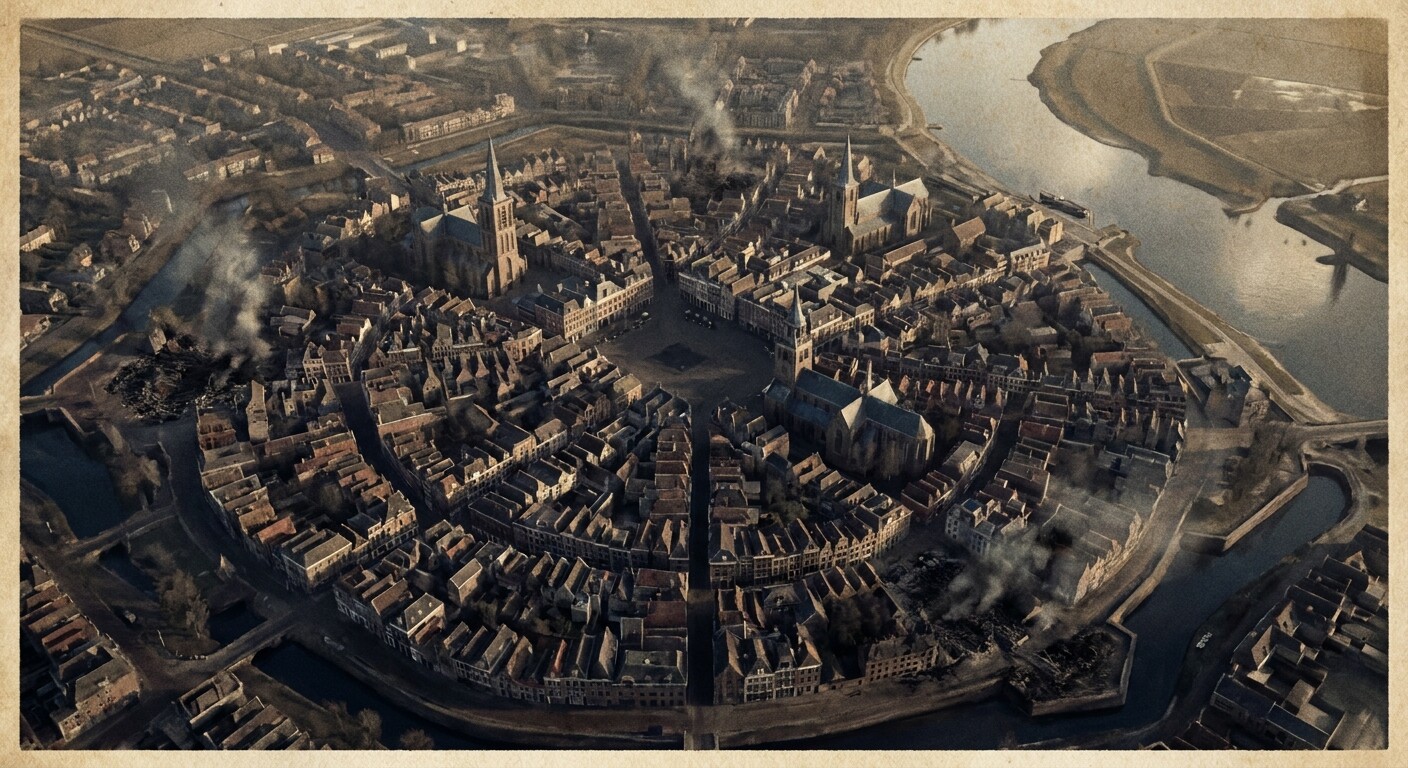
Zwolle sat astride the IJssel River in the province of Overijssel, a strategic crossroads that had been occupied by German forces since May 1940. The city's medieval layout, with narrow streets radiating from the central Grote Markt like spokes on a wheel, created natural defensive advantages that German engineers had spent months improving. Stone buildings provided excellent cover and concealment, while the ancient city walls and gates channeled attacking forces into predictable kill zones. The IJssel River formed a natural barrier to the east, with limited crossing points that German defenders could easily target with artillery and machine gun fire.
By April 1945, Wehrmacht Army Group H under General Johannes Blaskowitz was conducting a fighting withdrawal across the Netherlands, using cities like Zwolle as strongpoints to delay the Allied advance. Canadian intelligence estimated that a reinforced company of German troops, possibly from the 346th Infantry Division or local fortress units, occupied defensive positions throughout the city center and along the river approaches. These forces included regular Wehrmacht infantry, supplemented by Volkssturm militia and possibly SS remnants from units shattered in earlier fighting.
The German defenders in Zwolle represented the Wehrmacht's declining but still dangerous capabilities in the war's final weeks. Many were experienced veterans from the Eastern Front, transferred west after the collapse of German defenses in Poland and East Prussia. Others were older reservists and teenagers from the latest conscription levies, pressed into service as the Reich's manpower reserves reached bottom. What they lacked in morale and equipment, they made up for in familiarity with defensive warfare and the desperation of men with nowhere left to retreat.
Canadian forces approaching Zwolle in April 1945 bore little resemblance to the poorly trained and equipped units that had suffered catastrophic losses at Dieppe in 1942. The Regiment de la Chaudiere, recruited primarily from Quebec's Beauce region, had evolved into a seasoned infantry formation through campaigns in Sicily, Italy, and Northwest Europe. Three years of continuous combat had created a unit skilled in urban warfare, night operations, and the complex coordination required for modern combined arms tactics.
Major and Arsenault crossed into Zwolle's outskirts around 10 PM on April 13, moving through the industrial district south of the city center. Their mission parameters were straightforward: locate German positions, count troops and weapons, identify command posts and communications centers, then return with intelligence for the morning attack. Both men carried the standard kit of Canadian reconnaissance troops: Sten submachine guns with 120 rounds of 9mm ammunition, four Mills Bomb hand grenades each, field glasses, maps, and compass. Major also carried his personal Lee-Enfield rifle, which he had used throughout the Northwest Europe campaign.
The weather that night was typical for the Netherlands in April—cool and damp with intermittent drizzle that muffled sound but made movement treacherous on wet cobblestones. Cloud cover blocked most starlight, creating near-perfect conditions for infiltration but making navigation challenging in unfamiliar urban terrain. The two scouts moved cautiously through empty streets, noting abandoned German positions and evidence of recent troop movements. Zwolle's pre-war population of 35,000 had largely evacuated or gone into hiding, leaving empty shops and houses that provided excellent concealment for the advancing Canadians.
Initial observations revealed a German defensive scheme focused on the city center and key approach routes. The scouts identified machine gun positions in upper-story windows overlooking main streets, anti-tank obstacles blocking vehicle approaches, and what appeared to be a command post in the Grote Kerk, the massive Gothic church dominating the city center. Wire communications connected defensive positions, while patrol routes followed predictable patterns that suggested limited manpower and over-extension of the garrison.
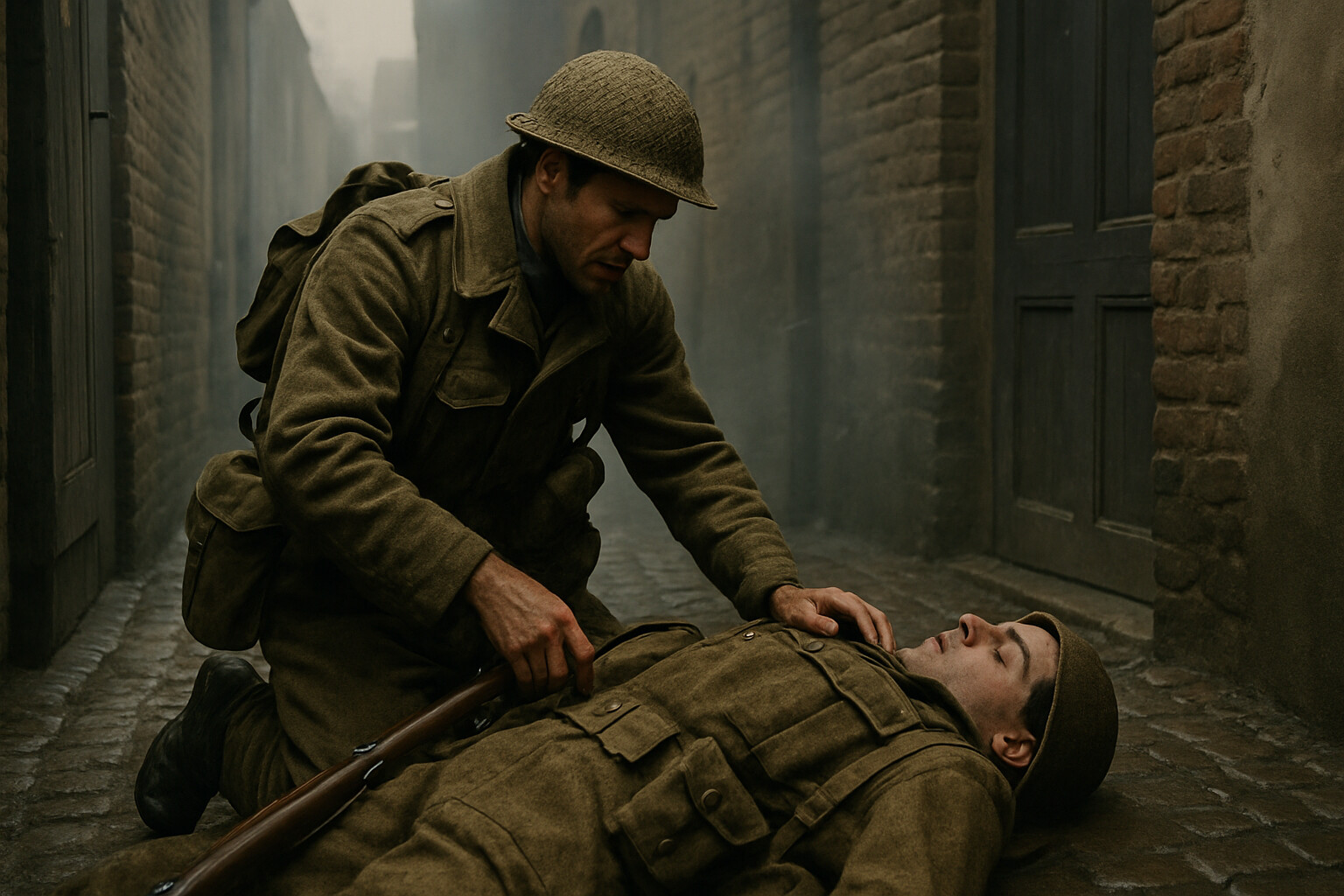
Around midnight, their reconnaissance mission changed forever. Moving through a residential district near the Sassenpoort, one of Zwolle's ancient city gates, the two Canadians encountered a German patrol. According to Major's later account, the enemy soldiers appeared suddenly from a side street, catching both scouts in the open. In the brief firefight that followed, Arsenault was killed by enemy fire. The German patrol withdrew after the exchange, leaving Major alone in hostile territory with his partner dead and his mission compromised.
The tactical situation had fundamentally shifted. Standard military doctrine called for immediate withdrawal when a reconnaissance mission was compromised by enemy contact. A single scout, no matter how experienced, could not complete a two-man reconnaissance mission in enemy-held urban terrain. The German patrol would certainly report Canadian infiltration, putting the entire garrison on alert and negating any element of surprise for the planned morning attack.
Major made a calculation that defied military logic but reflected the battlefield instincts developed through three years of combat. Rather than withdraw and report the mission's failure, he decided to continue alone—but with a significant modification in scope and method. Instead of passive reconnaissance, he would conduct what amounted to a one-man psychological warfare campaign against the German garrison, using movement, firepower, and deception to create the impression of a larger Canadian infiltration.
The decision violated every principle of reconnaissance doctrine, which emphasized stealth, observation, and survival over engagement. But Major understood something that military manuals rarely addressed: the psychological fragility of garrison forces facing inevitable defeat. German morale in April 1945 was brittle, sustained more by discipline and fear of retreat than by belief in victory. A skillfully executed deception might shatter that brittle confidence and achieve tactical effects far beyond what conventional reconnaissance could accomplish.
What followed was a methodical campaign of violence and misdirection that would last until dawn. Major began moving systematically through Zwolle's districts, engaging German positions with short bursts of automatic fire before relocating to create new firing positions several blocks away. The Sten gun's distinctive sound—a rapid, metallic chattering unlike the slower cyclic rate of German MP40s—would announce Canadian presence before Major disappeared into the maze of streets and alleys.
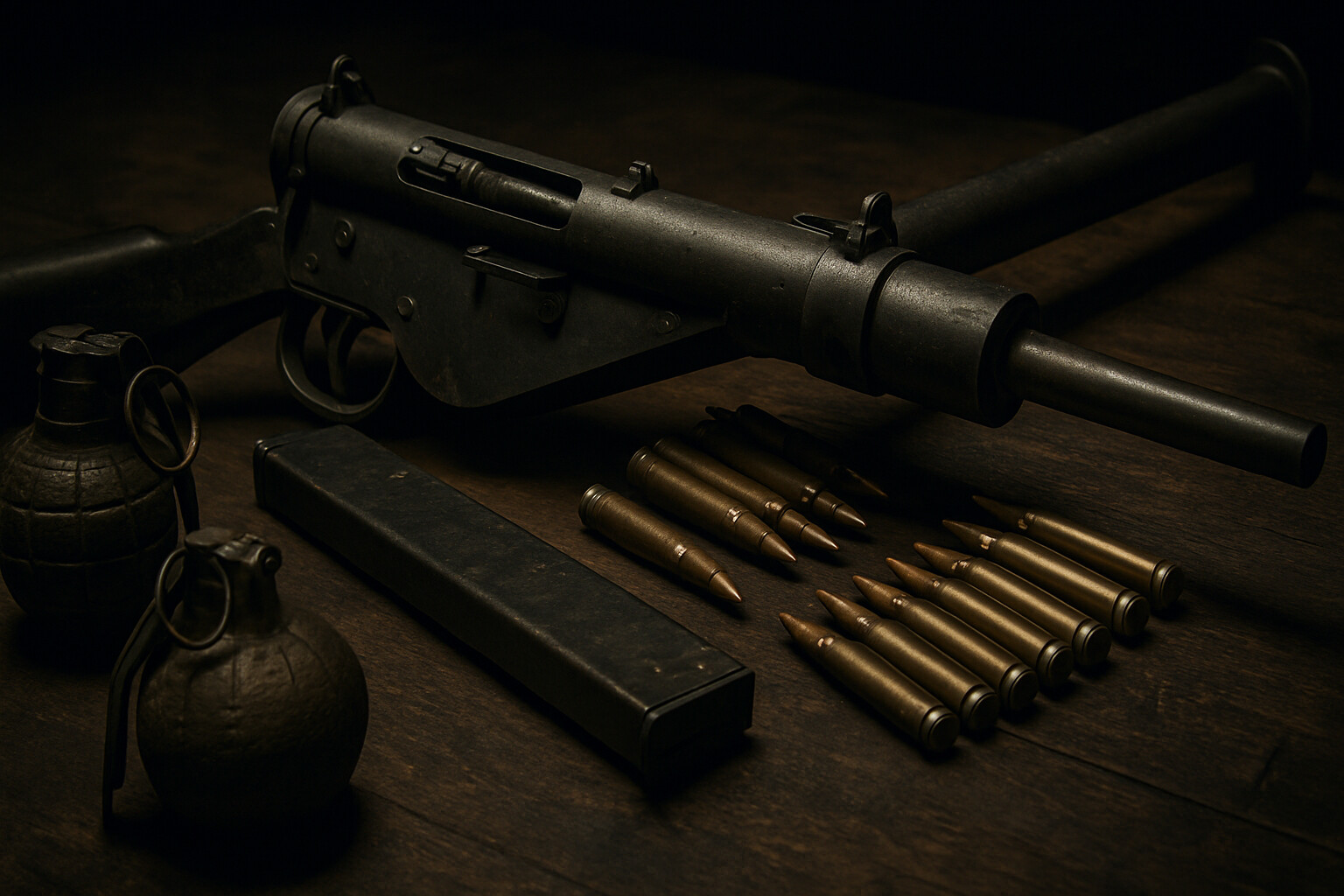
The Sten Mark II submachine gun that Major carried was perfectly suited for this type of urban warfare. Weighing just 6.5 pounds and firing 9mm Parabellum ammunition at 550 rounds per minute, the Sten could deliver devastating firepower in close quarters while remaining light enough for rapid movement. Its simple blowback design functioned reliably in the dirt and debris of urban combat, though its notorious inaccuracy beyond 100 yards mattered little in street fighting where engagement ranges rarely exceeded 50 meters. The weapon's crude appearance belied its effectiveness—over 4 million Stens were produced during the war, arming British, Canadian, and resistance forces throughout occupied Europe.
Major's tactics exploited the German garrison's fundamental weakness: uncertainty about the size and location of the Canadian force. Operating alone, he could move faster and more unpredictably than any organized unit. He would fire from one position, then sprint several blocks to engage from an entirely different direction. The Germans, trained to expect coordinated attacks by organized formations, struggled to respond to what appeared to be simultaneous threats from multiple locations across the city.
The psychological effect on German defenders was amplified by their deteriorating strategic situation. These soldiers understood that Germany's defeat was inevitable—Soviet forces were fighting in the suburbs of Berlin while Allied armies approached the Reich's heartland from west and south. The prospect of dying in a doomed defensive action in a Dutch city, weeks or days before the war's end, offered little motivation for heroic resistance. Major's campaign played directly into these fears, suggesting that Canadian forces were already infiltrating the city in strength.
As Major continued his solitary campaign through the night, German response became increasingly disorganized. Radio communications, monitored by Canadian signals intelligence units, suggested that German commanders reported a Canadian infiltration in company strength, possibly supported by paratroopers or special forces. The garrison began pulling back from outer defensive positions, concentrating forces around the city center in preparation for what they believed would be a major assault at dawn.
This German withdrawal created exactly the intelligence Major had been sent to gather, though by methods no reconnaissance manual had ever contemplated. As enemy forces consolidated, they revealed their actual strength, defensive positions, and command structure. Major noted the locations of machine gun nests, the placement of anti-tank weapons, and the routes German troops used to move between positions. His mental map of German defenses grew more detailed with each engagement, providing tactical intelligence worth far more than any passive observation mission.
Around 2 AM, Major's campaign entered a new phase when he discovered a German ammunition storage site in a warehouse near the Thorbeckegracht canal. Rather than simply noting its location for later destruction, he decided to eliminate it immediately. Using grenades and small arms fire, he destroyed stored ammunition and disabled several MG42 machine guns that would have threatened the Canadian assault. The explosions and secondary detonations from the ammunition created a spectacular fireworks display visible across the city, convincing German observers that Canadian engineers were conducting systematic demolitions throughout Zwolle.
The warehouse destruction represented a tactical escalation that moved Major's mission from reconnaissance to sabotage. The secondary explosions from German ammunition stores created chaos throughout the defensive perimeter as commanders tried to determine which positions were under attack and how many Canadian infiltrators they faced. Fire from burning ammunition lit up the night sky, creating the visual impression of coordinated assaults across multiple sectors.
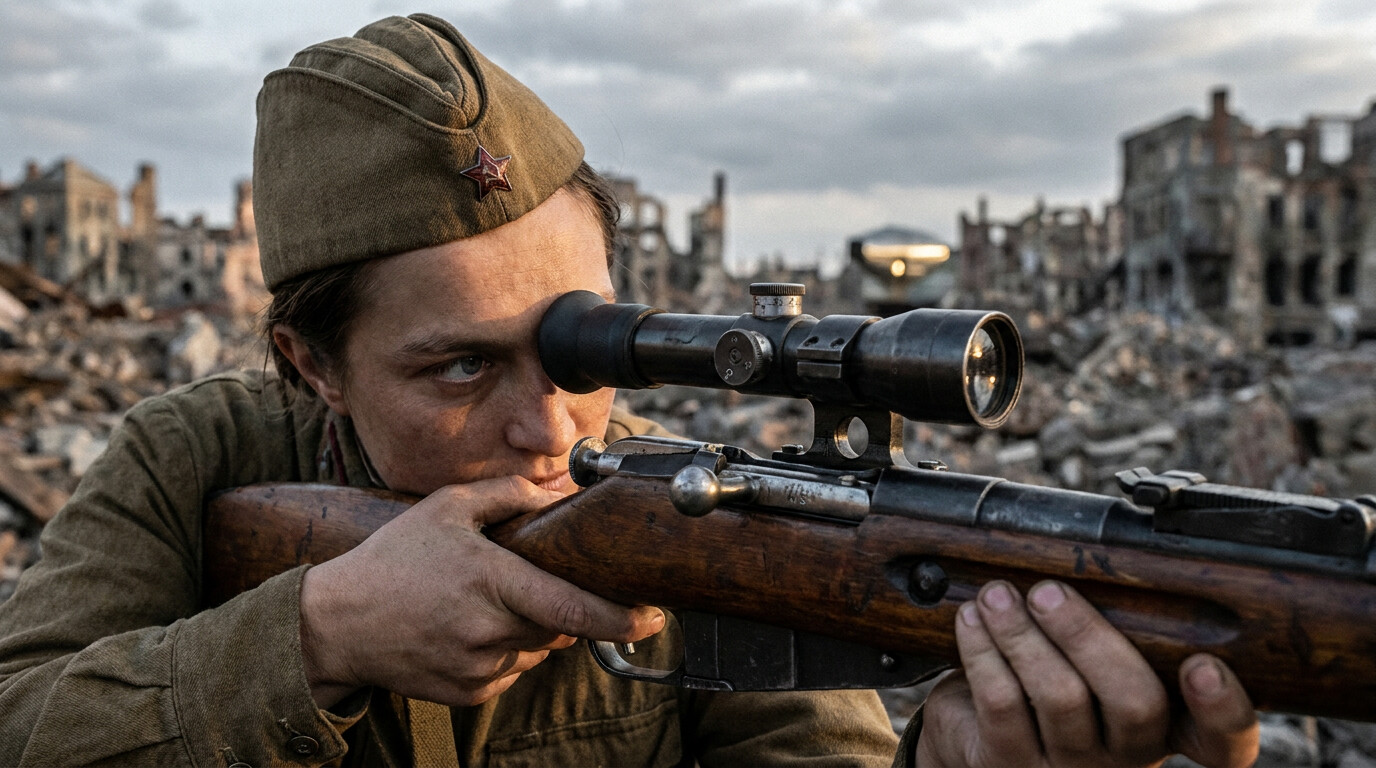
By 3 AM, Major had engaged German positions in at least six different districts of Zwolle, creating the impression of coordinated attacks across the entire urban area. His movements followed the city's medieval street pattern, using narrow alleys and covered passages to approach German positions from unexpected directions. The Lee-Enfield rifle provided precision firepower for longer-range engagements, while the Sten gun delivered suppressive fire that forced German defenders to take cover and call for reinforcements.
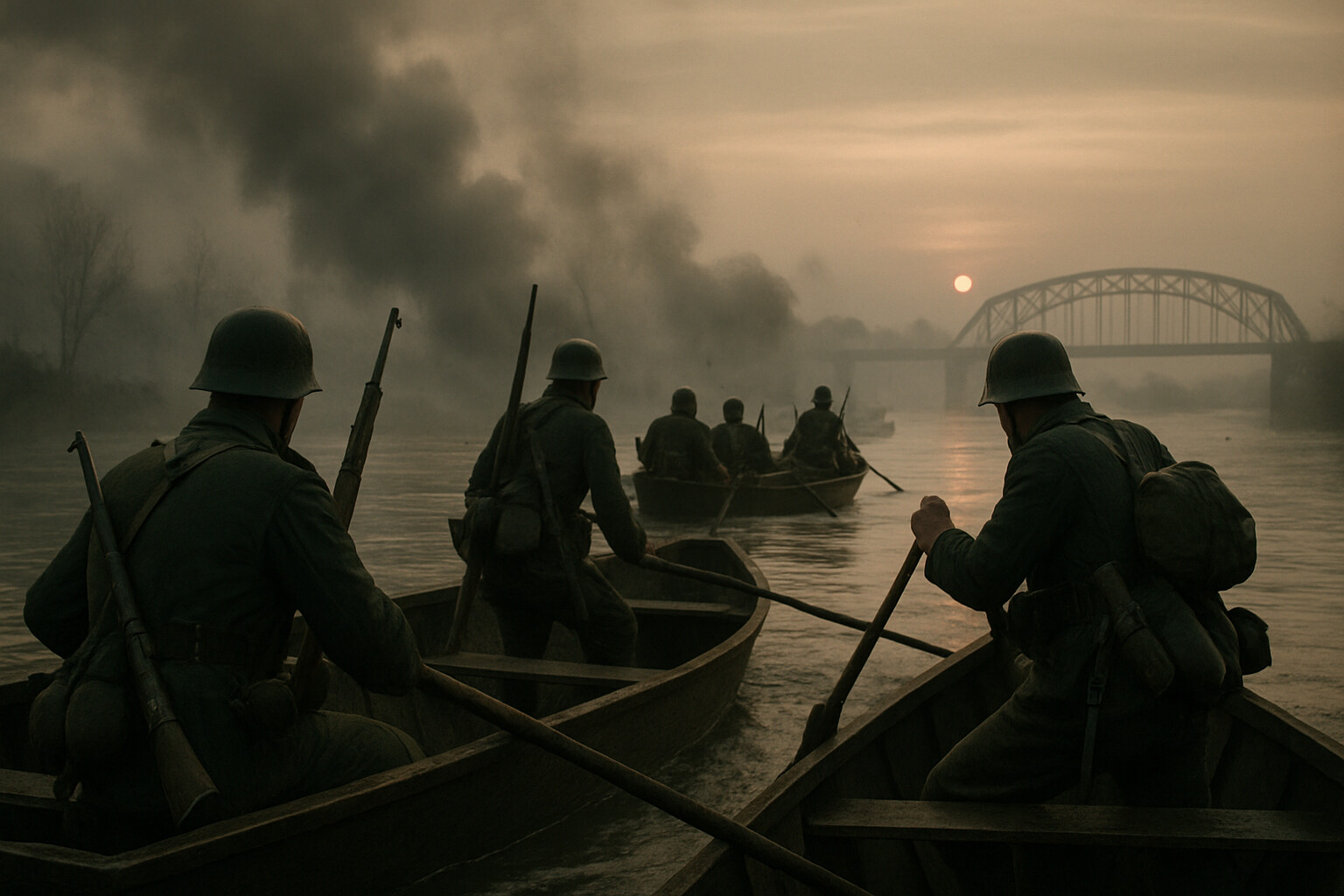
German forces continued withdrawing toward the city center, abandoning prepared positions that had taken weeks to construct. Some units began retreating across the IJssel River, effectively abandoning Zwolle without the major battle German commanders had expected to fight. The psychological pressure of facing what appeared to be multiple simultaneous penetrations of their defensive perimeter proved more effective than conventional artillery bombardment in breaking German resolve.
As dawn approached, Major faced a critical decision that would determine whether his night's work achieved lasting tactical value. He had accomplished far more than his original reconnaissance mission, but he remained deep in enemy territory with diminishing ammunition and the certainty that daylight would expose his true numbers to German observation. The smart tactical choice would have been to withdraw under cover of the remaining darkness and report his intelligence to Canadian headquarters.
Instead, Major decided to continue his psychological campaign into the daylight hours, maintaining the deception that had worked so effectively in darkness. This decision required exceptional fieldcraft and tactical skill, as a single soldier operating in daylight against alerted defenders faced overwhelming odds of detection and destruction. Success would depend on continued movement, careful route selection, and the hope that German morale had deteriorated enough to prevent organized counteraction.
Moving to positions that offered good observation of German-held areas, Major maintained intermittent fire to sustain the impression of ongoing Canadian operations. His choice of firing positions demonstrated sophisticated understanding of urban warfare—each location provided multiple escape routes while offering fields of fire that suggested larger forces operating in coordination. The timing of his engagements varied unpredictably, preventing German forces from developing effective countermeasures.
Around 6 AM, Major observed a significant German withdrawal from the city center that validated his entire night's effort. Multiple trucks and horse-drawn vehicles were moving northeast toward the IJssel River bridges, carrying troops and equipment away from Zwolle. The garrison appeared to be conducting a general retreat, abandoning the city to avoid what they believed would be a devastating Canadian assault supported by forces that had already infiltrated their defensive perimeter.
Major shadowed this withdrawal, maintaining fire on the retreating Germans to accelerate their departure and prevent any organized rearguard action. His presence denied German commanders the time needed to establish new defensive positions or destroy critical infrastructure that would be valuable to advancing Canadian forces. The psychological pressure he had created throughout the night reached its culmination as German units fled across the IJssel River in disorder.
By 8 AM, the last German vehicles had crossed the IJssel River, effectively ending the occupation of Zwolle. What should have been a costly urban battle requiring house-to-house fighting had become a German retreat triggered by a single Canadian soldier's campaign of deception and psychological warfare. The tactical implications were extraordinary, but the strategic impact was equally significant for Canadian operations throughout the region.
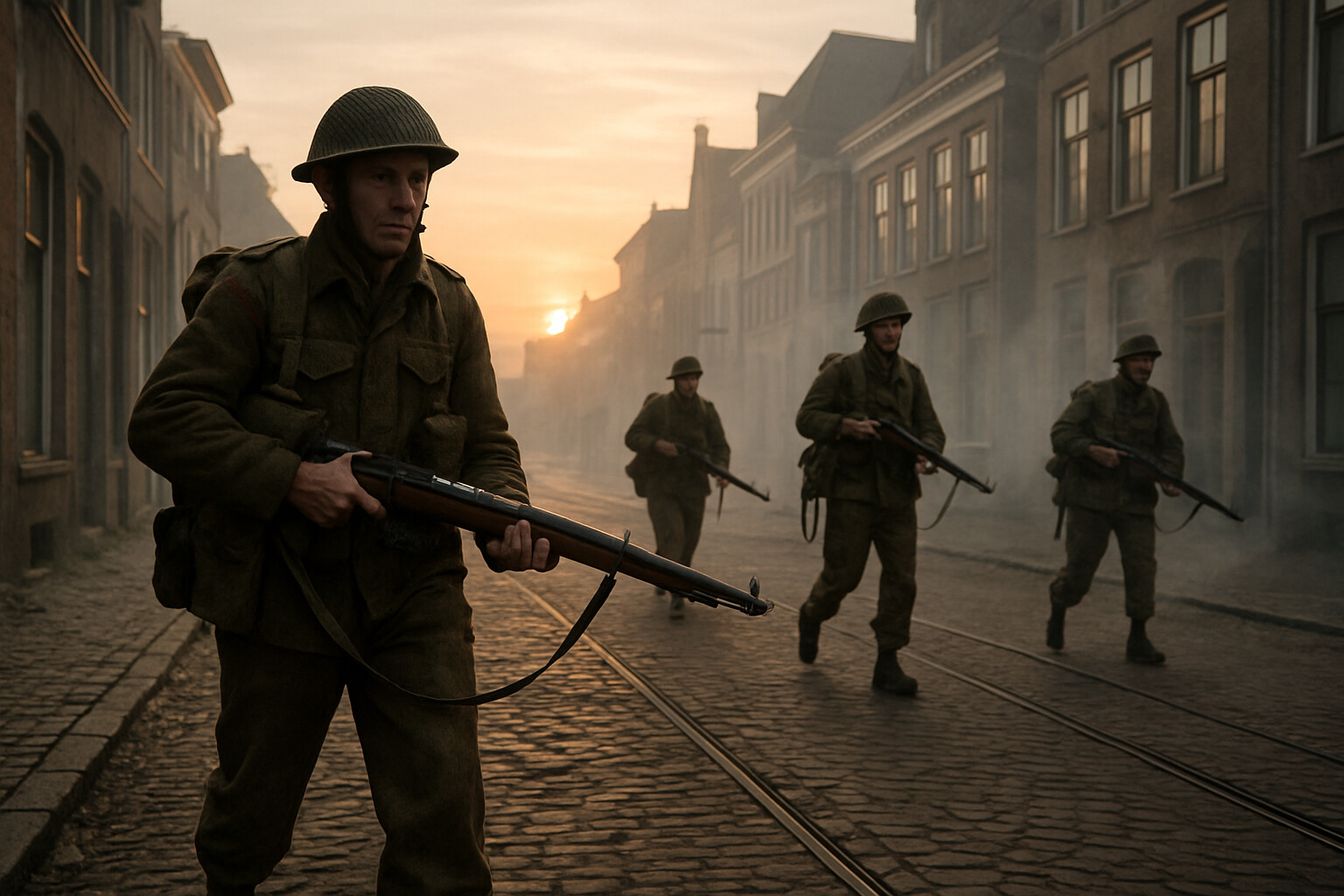
When the main Canadian force advanced into Zwolle at dawn, expecting to fight house-to-house battles against determined defenders, they found instead a largely abandoned city. German resistance was minimal and disorganized, consisting primarily of isolated strongpoints that had not received withdrawal orders or small units that had become separated during the retreat. The Regiment de la Chaudiere occupied the city center by mid-morning with casualties far lighter than anticipated.
The human cost of Major's night in Zwolle remained sobering despite the tactical success. Corporal Willy Arsenault, his reconnaissance partner, had died in the initial contact that began the entire action. Major had completed a mission that cost his friend's life, achieving tactical success that came at irreplaceable human cost. The celebration of Zwolle's liberation was tempered by the reminder that every victory in war required individual sacrifices that could never be fully compensated.
Canadian military records document Major's actions in Zwolle through after-action reports, intelligence summaries, and witness statements from other Regiment de la Chaudiere personnel. The basic facts of his solitary infiltration and the resulting German withdrawal are well-established in official histories of the Northwest Europe campaign. However, many tactical details of the night's events come from Major's own later accounts, which may reflect the natural evolution of memory or the storytelling traditions common in veteran communities.
The Regiment de la Chaudiere's war diary entry for April 14, 1945, records the capture of Zwolle with minimal casualties and notes unusual German defensive behavior that suggested enemy confusion about Canadian force strength and intentions. Intelligence reports from the period document the recovery of abandoned German positions and equipment throughout the city, consistent with a hasty withdrawal rather than an organized fighting retreat. These official records corroborate Major's claim that his actions influenced German tactical decisions, though the specific details of his night-long campaign remain difficult to verify independently.
Brigadier J.A. Roberts, commanding the 6th Canadian Infantry Brigade, noted in his post-action report that Zwolle's rapid fall exceeded all tactical expectations and credited exceptional reconnaissance work with providing intelligence that made the victory possible. However, the full extent of Major's individual contribution only emerged gradually through debriefings and discussions among regiment personnel. The Canadian Army's recommendation system for decorations was methodical but often slow, particularly in the final weeks of the war when administrative priorities focused on demobilization rather than awards processing.
The broader context of Major's actions reflects the unique character of warfare in Northwestern Europe during April 1945. German resistance was increasingly sporadic and demoralized, creating opportunities for unconventional tactics that would have been suicidal earlier in the conflict. Major's success depended not only on his personal courage and skill but also on the deteriorating morale and cohesion of German forces facing inevitable defeat. The psychological factors that made his deception effective were products of the war's final phase, when even veteran German soldiers understood that their cause was hopeless.
Zwolle's liberation also demonstrated the evolution of Canadian military effectiveness since the early disasters of the war. The Canadian forces that fought in the Netherlands possessed equipment, training, and leadership that reflected three years of combat experience and institutional learning. Professional development programs had created skilled reconnaissance specialists like Major, while improved doctrine emphasized individual initiative and tactical flexibility over rigid adherence to predetermined plans.
The tactical innovations that Major employed—using movement and deception to multiply apparent force strength—would later influence military doctrine for special operations and reconnaissance units. His actions demonstrated that individual initiative and tactical creativity could achieve strategic effects when applied at the right time and place. Military historians have studied Major's night in Zwolle as an example of how exceptional soldiers can transcend conventional tactical limitations through audacity and skill, though they also emphasize that such successes depend on unique circumstances that are rarely replicable.
For the Dutch civilians of Zwolle, Major's actions meant liberation weeks or months earlier than might otherwise have occurred. The city's early capture preserved crucial infrastructure, including bridges, utilities, and transportation networks that would be vital for post-war reconstruction. More importantly, it reduced the civilian casualties that typically accompanied urban warfare, sparing Zwolle's population from the artillery bombardments and house-to-house fighting that had devastated other Dutch cities.
The humanitarian significance of Zwolle's liberation extended beyond the immediate tactical victory. In the context of the "Hunger Winter" that was killing thousands of Dutch civilians daily, every day of early liberation represented lives saved and suffering reduced. Canadian forces brought not only military victory but also emergency food supplies and medical assistance that began addressing the humanitarian crisis immediately. Major's individual actions contributed directly to this larger effort to save Dutch civilian lives.
The psychological warfare aspects of Major's campaign influenced contemporary and later military doctrine for urban operations and special forces activities. His use of deception, misdirection, and carefully timed engagements to create the impression of larger forces became a case study for military educators studying the intersection of individual action and strategic effect. However, military theorists also emphasized that Major's success required exceptional personal qualities and favorable circumstances that could not be systematically replicated.
As the war in Europe entered its final days following Zwolle's liberation, Major continued serving with the Regiment de la Chaudiere until Germany's surrender on May 8, 1945. His actions in the Netherlands were part of a broader Canadian contribution to Allied victory that included major battles from Normandy to the Scheldt Estuary, operations that established Canada's military reputation and created lasting bonds with the Dutch people. Annual commemorations continue today, with ceremonies in Zwolle recognizing the Canadian soldiers who died for Dutch freedom.
The documentation challenges surrounding Major's actions reflect the chaotic nature of the final weeks of war, when record-keeping often took second priority to immediate operational demands. German records from the period are fragmentary, as many units destroyed their documents during the retreat or lost them in the confusion of surrender. Some aspects of Major's account, particularly specific tactical details and casualty figures, remain uncertain due to these documentary limitations and the natural evolution of memory over time.
What remains clear from all available sources is that Private Leo Major accomplished something extraordinary in Zwolle on the night of April 13-14, 1945. Whether through exceptional courage, tactical brilliance, or determined improvisation, he transformed a failed reconnaissance mission into a psychological warfare campaign that achieved strategic effects far beyond anything his commanders had envisioned. His actions demonstrated that in warfare, as in life, individual determination can sometimes overcome seemingly impossible odds.
The legacy of Leo Major's night in Zwolle extends beyond its immediate military significance to represent something fundamental about the nature of courage and initiative in extreme circumstances. His decision to continue fighting alone after losing his partner violated standard military doctrine but achieved results that conventional tactics might never have accomplished. The tension between following orders and exercising battlefield initiative remains one of the central challenges of military leadership at every level, and Major's example continues to influence military education and doctrine development.
Modern special forces and reconnaissance units study Major's actions not as a template for standard operations but as an example of how exceptional circumstances may require exceptional responses. The principles he demonstrated—using mobility, deception, and psychological pressure to multiply individual effectiveness—remain relevant in contemporary military operations, though technological changes have transformed the specific methods available to modern soldiers.
The human dimension of Major's story—the loss of his partner, the isolation of operating alone behind enemy lines, the weight of making life-and-death decisions without supervision—resonates beyond military circles as an example of individual courage under extreme stress. His actions remind us that historical events, however strategic their implications, ultimately depend on individual human choices made by people facing impossible circumstances with imperfect information and limited resources.