Dawn came gray and cold over the Kolocha River on September 7, 1812. Fog lay low across fields of rye stubble and cut wheat, threading through gullies and pooling in the hollows west of the village of Borodino. On the heights above the river, roughly sixty thousand Russian soldiers waited behind earthworks they had spent five days throwing up from the clay soil of Mozhaisk district. Many had been awake since before midnight. Some had made confession. Others ate what rations they had in silence.
The fog lifted just before six in the morning.
One hundred and sixty thousand men were now visible to one another across roughly two miles of broken ground. The French army emerging from the western treeline was the largest fighting force Europe had assembled on a single field in living memory. The Russian army watching from elevated ground behind field fortifications was the last intact force standing between Napoleon Bonaparte and Moscow—seventy miles to the east. Before darkness came, more than seventy thousand of the men on that field would be dead, dying, or wounded. It was, and remains, the bloodiest single day of the Napoleonic Wars.
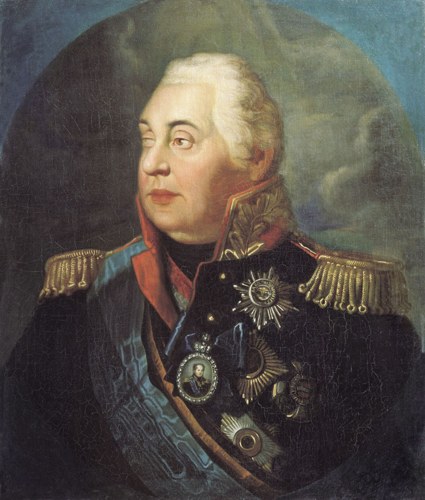
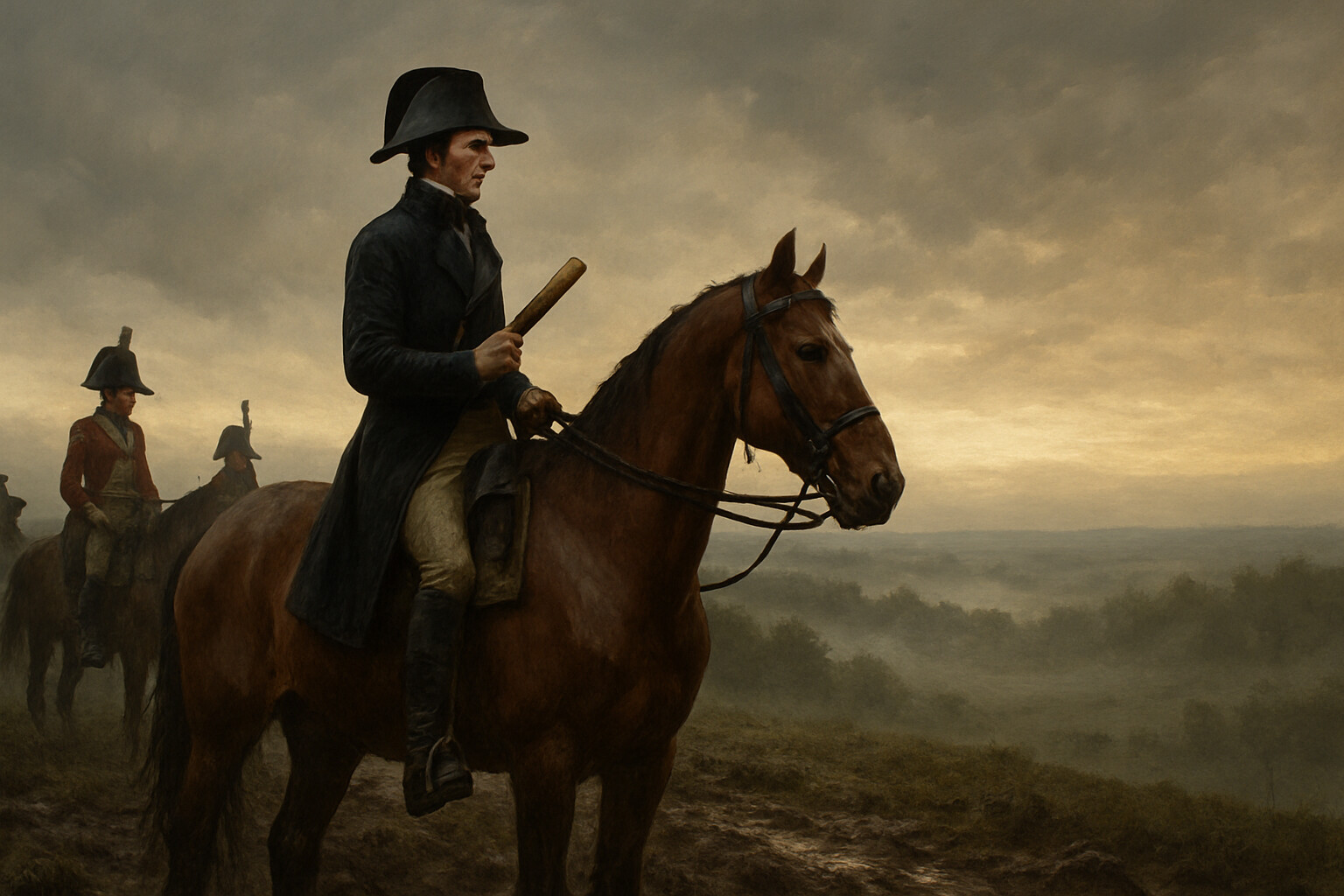
The man responsible for the Russian army's presence at Borodino—and for every decision that followed—was a one-eyed, heavyset, sixty-seven-year-old field marshal named Mikhail Illarionovich Kutuzov. He did not charge. He did not lead cavalry. On the morning of September 7th he sat in a camp chair behind his lines and received reports. Those who served under him described his face in moments of crisis as characteristically unreadable. The battle he was about to fight would define his reputation, split his contemporaries sharply, and be debated by military historians ever since. Was Borodino a Russian victory? A defeat? A strategic masterstroke, or a near-catastrophe preserved from complete disaster only by French hesitation? The argument has never been settled. What is not disputed is the outcome: the Grande Armée entered Moscow two weeks later and found it burning. It never came home.
---
To understand what Kutuzov was doing at Borodino, it is necessary to understand what he had refused to do in the weeks before it.
Napoleon crossed into Russian territory on June 24, 1812, with an invasion force that historians estimate variously at between 450,000 and 685,000 men in total—the range reflects genuine scholarly disagreement over which contingents are counted. The main column pressing toward Moscow numbered roughly 250,000 to 280,000 combat troops. It was the largest army assembled for a single campaign in European history to that point, and it moved fast.
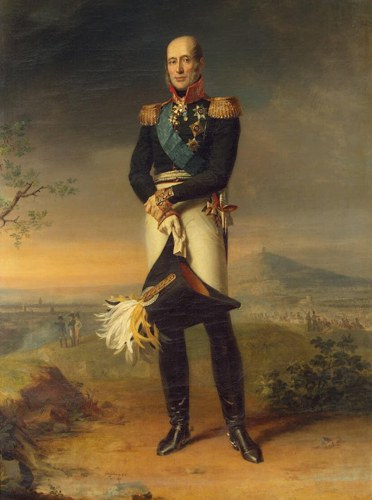
The Russian armies facing it—Barclay de Tolly in the north, Bagration in the south—were individually inferior in number. They retreated. They retreated again. They burned supplies. They refused to offer the decisive engagement Napoleon needed. Russian society, the nobility, the press, and Tsar Alexander I himself were incensed. Yielding Russian territory without a major battle was condemned as cowardice, even treason. Barclay de Tolly, the architect of the strategic withdrawal, was widely despised for it. When the two Russian armies finally merged at Smolensk in early August, the pressure to stand and fight was immense.
Smolensk fell after fierce fighting on August 17–18. The Russians held it long enough to cover a further withdrawal, then burned the city rather than leave its stores intact. The retreat continued. Moscow—sacred to Russians in a way that exceeded politics, the ancient seat of the tsars, home to holy relics and the Kremlin—was now roughly three hundred miles behind the fighting front and drawing closer to danger with every day.
On August 20, Alexander replaced Barclay de Tolly as commander in chief. The new commander was Kutuzov.
Mikhail Illarionovich Kutuzov had spent fifty years in the Russian army. He had fought the Ottomans under Suvorov. He had lost his right eye to a musket ball near Alushta in 1774—a wound so severe that surgeons expected him to die. He survived with damage to the eye and, by most accounts, limited peripheral vision on that side, though sources describe the residual impairment inconsistently. He had commanded at Austerlitz in 1805, where the Russo-Austrian army was shattered by Napoleon in what many historians regard as the French emperor's tactical masterpiece. That defeat shadowed Kutuzov's reputation even as he continued to rise in Russian service. Many of Alexander's younger officers regarded him as too old, too fat, too slow. What those critics underestimated was that his caution was deliberate. He had watched Napoleon operate. He understood something about the French emperor's method that more aggressive officers had not yet absorbed: Napoleon needed a decisive engagement. He needed to destroy armies cleanly and quickly, in ways that produced political capitulation. The longer a Russian army survived intact, the more Napoleon's strategic position deteriorated. Russia was vast. Supply lines stretching back to France were already thinning. Summer was ending.
Kutuzov came to command an army demoralized by retreat, hungry for battle, and now approaching one of the most defensible pieces of ground west of Moscow. His first and most important task was to find a place to fight the battle that his army, his tsar, and Russian public opinion demanded—and to fight it on terms that would cost Napoleon the most while preserving enough of the Russian force to continue the campaign.
Borodino was chosen.
---
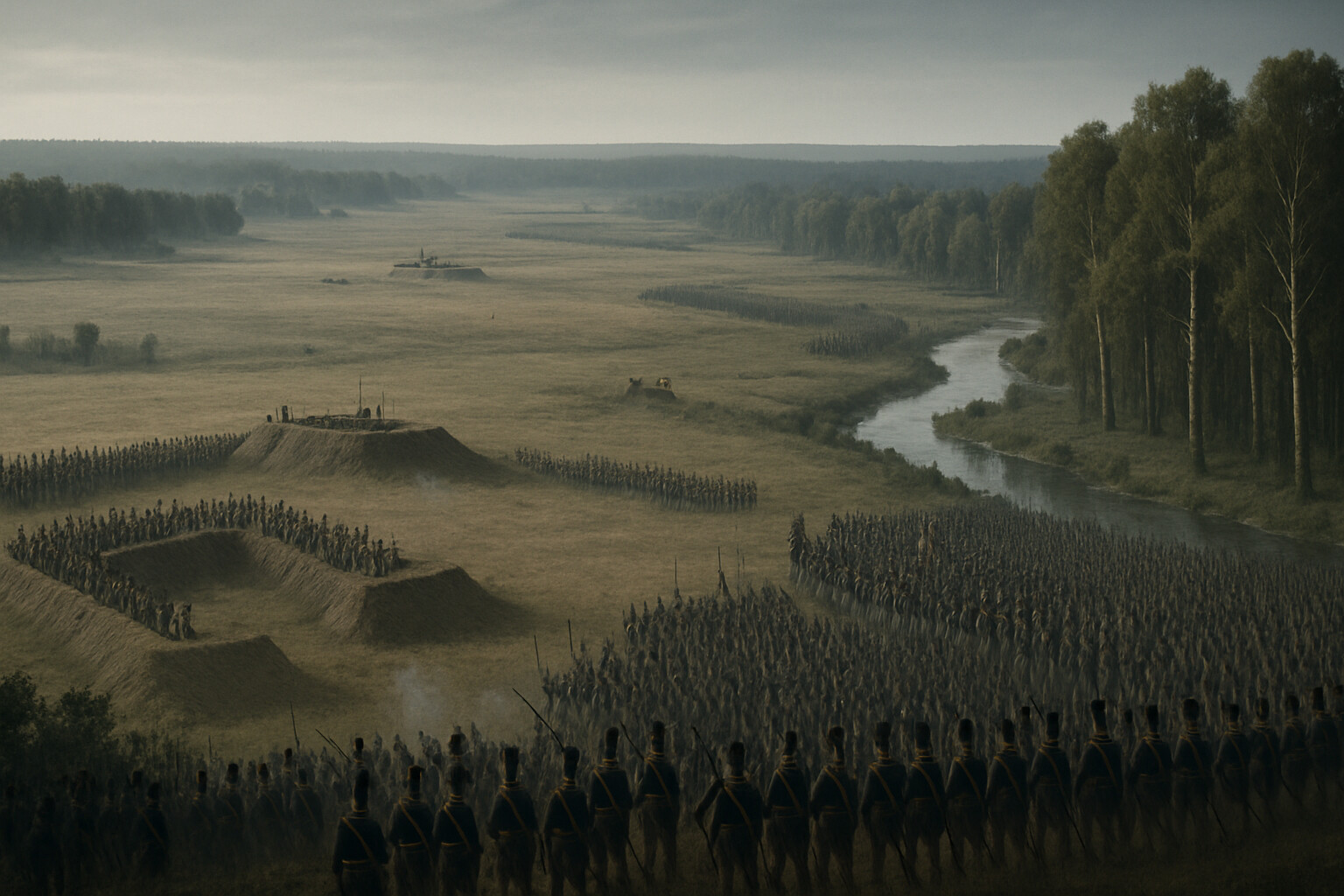
The terrain at Borodino served the defender. The Kolocha River ran roughly southwest to northeast across the northern flank of the Russian position, its banks steep enough to complicate a direct assault. The Moscow road—Napoleon's main axis of advance—ran through the village of Borodino and across a bridge over the Kolocha before continuing east. South of the road, the ground opened into rolling fields, ravines, and patches of woodland that formed the center and southern portions of the Russian line.
Kutuzov deployed his main force along a line roughly five miles long. Barclay de Tolly commanded the northern wing, anchored on the Kolocha. Bagration commanded the southern wing, which extended across the open ground south of the main road. The center was anchored by a fortified position on Raevsky Hill—a slight elevation the French would call the Grand Battery or Great Redoubt—packed with cannon and positioned to sweep the approaches from the west.
From September 3rd onward, Russian engineers worked continuously to construct three interlocking earthwork positions. The most important were the Bagration fleches—a series of arrow-shaped earthworks on Bagration's southern wing (the Russian word translates roughly as arrow or chevron)—and the Raevsky Redoubt, a pentagonal earthwork on the central heights mounting between eighteen and twenty-four guns, depending on the phase of battle. These were not permanent fortifications. They were field works: ditches, thrown-up earth, log revetments, and abatis. They could be built in days and taken by storm if the attacker was willing to pay the price. Napoleon's army had always been willing to pay the price.
Scholars estimate the Russian order of battle at approximately 120,000 to 154,000 men, including regular infantry, cavalry, Cossacks, and militia, with roughly 640 guns. The wide range reflects genuine uncertainty; the higher figures include large numbers of opolcheniye—militia who were armed but not trained soldiers. The Grande Armée brought approximately 130,000 to 135,000 troops to the actual field with roughly 587 guns. Both sides thus fielded comparable numbers of trained combat troops, though Napoleon's veterans had accumulated more sustained offensive experience. The Russian gunners had more cannon pointed downhill at them.
---
Napoleon's plan was not subtle. It rarely needed to be. Eugène de Beauharnais's Army of Italy would pin the Russian northern wing and conduct a feint to draw attention and force northward. The main effort—Davout's and Ney's corps driving east—would hammer Bagration's southern wing and unhinge the Russian line from below. If it worked, the Russian army would be rolled north against the Kolocha and destroyed. If it worked, the campaign ended at Borodino.
His marshals had suggested a more ambitious approach the night before. Davout proposed a wide turning movement through the forests south of the Russian position that would have fallen on Bagration's exposed flank. Napoleon declined. He was not well on September 7th—contemporary accounts and subsequent analysis note a severe cold and possible urinary problems, and his usual operational restlessness appeared muted to those around him. This observation is made widely by historians of the campaign; how much it actually shaped his decisions on the day remains debated. He reviewed troops in the pre-dawn hours and delivered a brief address, but the personal energy his marshals had come to depend on at critical moments seemed diminished.
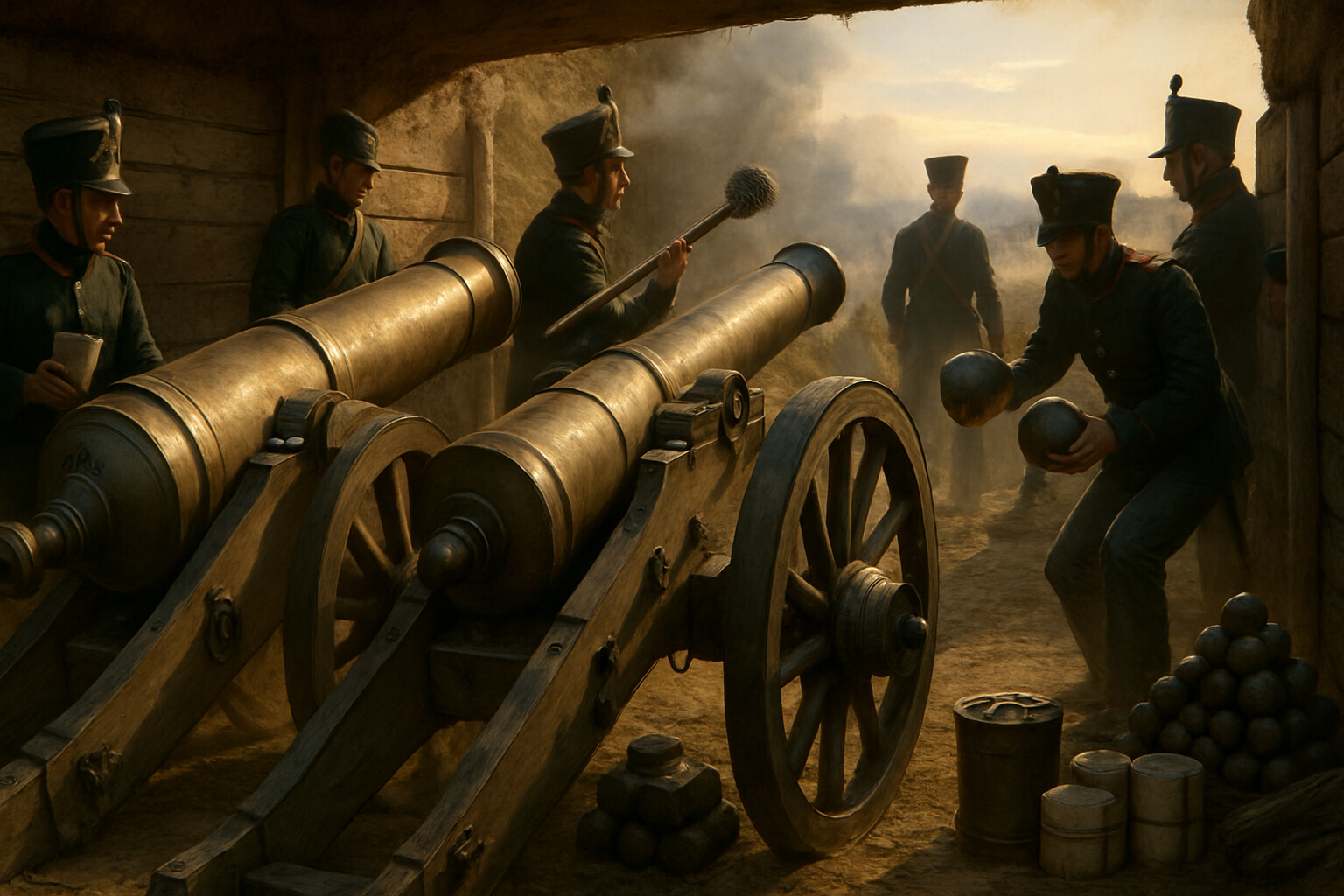
The battle opened at approximately 6:00 a.m. with a massive French artillery bombardment. The Grande Armée's artillery concentrated perhaps 102 guns—the figure drawn from secondary sources and subject to variation—against the Bagration fleches in the opening phase. Russian guns on Raevsky Hill and along the line answered. The noise, by the accounts of survivors who had served at Eylau, Wagram, and Friedland, was unlike anything they had previously heard. Men who had lived through the loudest battles of the previous decade said Borodino was louder.
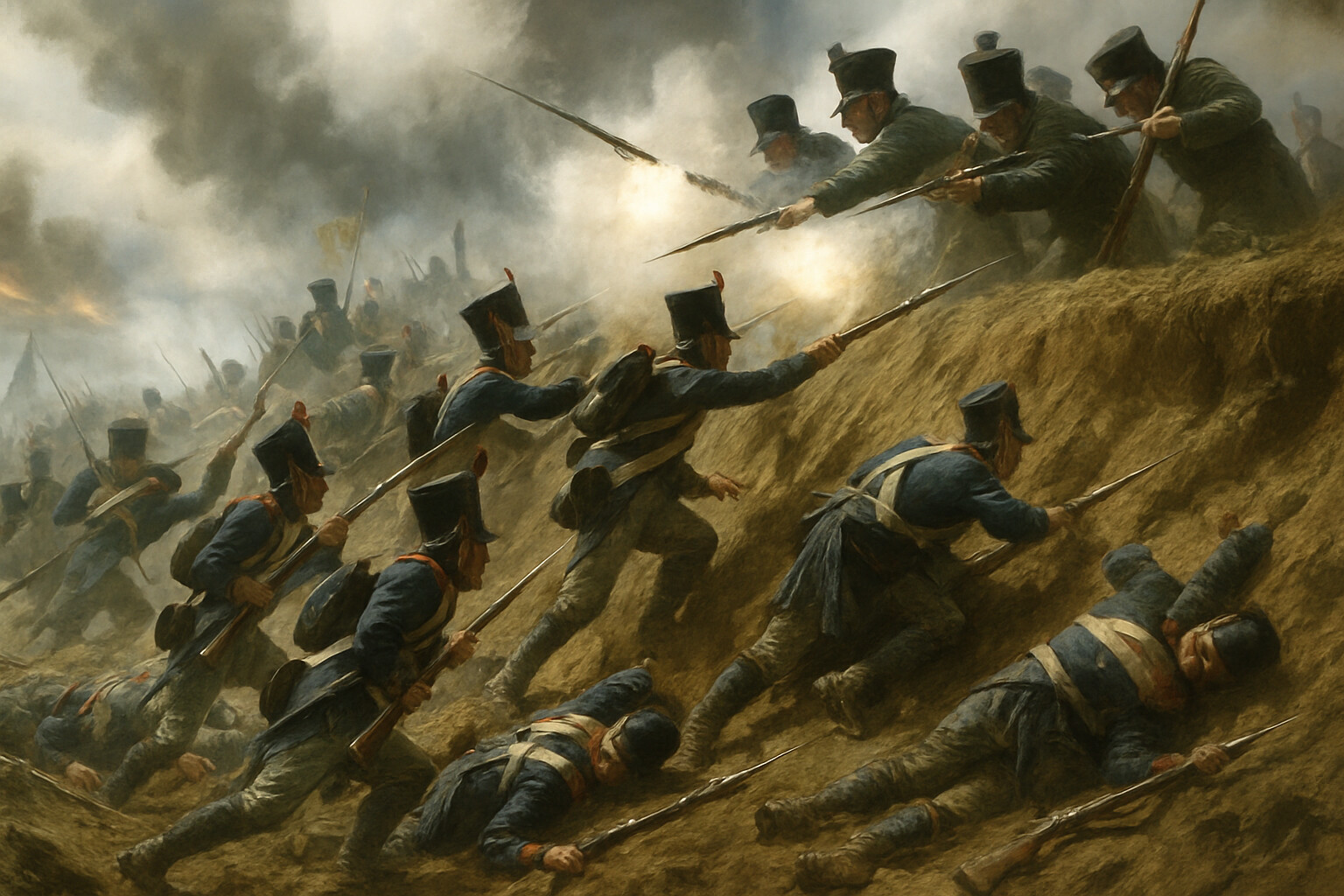
The first French assault went in against the southernmost fleche within the opening hour. Compans's division of Davout's corps pushed through the forest south of the position, emerged under murderous canister fire, and took the fleche by storm. Russian counterattacks drove them out. French infantry went back in. The fleches changed hands multiple times in the first three hours. The fighting in the ravines and woods south of the fortifications was close, sustained, and relentless. Men who had marched two thousand miles from France were now fighting hand to hand with Russian musketeers and grenadiers in earthwork ditches barely wide enough for a platoon.
The guns were the central fact of Borodino.
---
Both armies used smoothbore muzzle-loading cannon in 1812. Russian batteries fielded 6-pounder and 12-pounder field guns alongside the licorne—a distinctly Russian howitzer design that could fire both conventional round shot and explosive shells from the same tube, giving Russian battery commanders flexibility unavailable to many opponents. French artillery was organized along the Gribeauval system, standardized decades earlier and among the most logistically efficient in Europe. The French 12-pounder could throw a solid iron ball of roughly twelve pounds with reliable accuracy out to around 800 yards; at ranges under 400 yards, guns loaded with canister—tin cylinders packed with iron balls that transformed a cannon into an enormous shotgun—were devastating against massed infantry.
Both sides understood that the Raevsky Redoubt and the Bagration fleches were the battle's hinges. Control the heights in the center and you controlled the field. This is why the artillery duel at Borodino was not a preliminary phase: it was continuous, sustained for over twelve hours, and produced casualty rates that stunned even veterans.
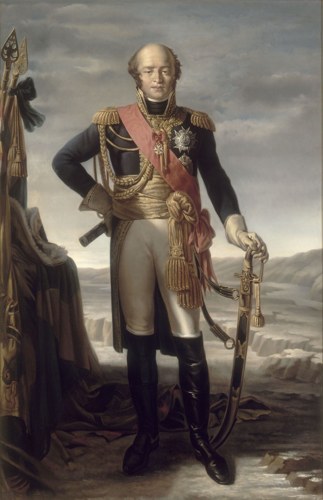
The Raevsky Redoubt was assaulted and taken by Eugène de Beauharnais's forces in the early afternoon, partly recovered, then subjected to a second and final combined-arms assault organized by Eugène at approximately three in the afternoon—cavalry, artillery, and infantry moving together. General Auguste de Caulaincourt led a cavalry charge directly through the embrasures of the redoubt. It was a brutal and costly act. Caulaincourt was killed inside the fortification. His brother Armand de Caulaincourt, who served as Napoleon's master of horse, left one of the most valuable French firsthand accounts of the 1812 campaign, and his description of his brother's death at the redoubt is one of the few scenes from Borodino recorded in a direct eyewitness account. The redoubt fell.
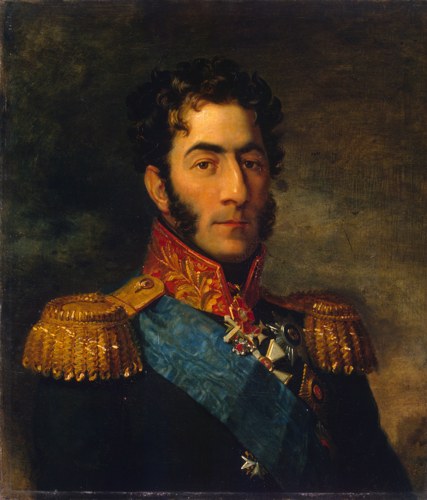
On the Russian southern wing, the fighting for the fleches had already cost the Russians their second-ranking general. Prince Pyotr Bagration was struck in the left leg by a fragment during the morning fighting—accounts vary on whether the wound came from a cannonball fragment, shrapnel, or grapeshot, and the precise timing is not definitively fixed in the sources. He was carried from the field. The wound proved fatal; he died on September 24, 1812. His removal from command that morning immediately disrupted cohesion on the Russian left wing. The fleches, after hours of repeated assault, were lost by midafternoon.
---
Throughout the entire engagement, Kutuzov remained at his command post behind the lines. He received streams of reports—many contradictory—sent orders, and managed reserves. Napoleon's Imperial Guard, roughly eighteen thousand to nineteen thousand elite troops held in reserve, never moved. This is perhaps the single most debated decision of the entire battle.
Multiple accounts record that Kutuzov's subordinates, most prominently Bennigsen, urged him during the afternoon crisis to commit fresh reserves from the Russian guard as well. Kutuzov refused to abandon depth. He held units back. When the Raevsky Redoubt fell and sections of his line appeared on the verge of collapse, he shifted forces laterally, plugged gaps, and held the army together through careful management of his operational reserve rather than by counterattack.
Napoleon, watching from a vantage near Shevardino, was repeatedly urged by his marshals to commit the Imperial Guard and break the battered Russian line. He refused each time. His reasons are not definitively recorded in any single authoritative source. Historians have offered several interpretations: he was far from France with no clear replacement for those troops; he may have been genuinely uncertain whether the Russian line, bending badly but not breaking, had exhausted its reserve capacity; he was not at his best physically. Ségur's memoirs record him saying that he would not risk his Guard eight hundred leagues from France—but Ségur wrote after the fall of the Empire, under the shadow of defeat, and his account must be read with that retrospective character in mind. No verified verbatim record of Napoleon's words at this moment exists.
The Guard stayed put. The Russian army—shattered, bled, and exhausted—held a shortened line as darkness came. Neither side had broken.
---
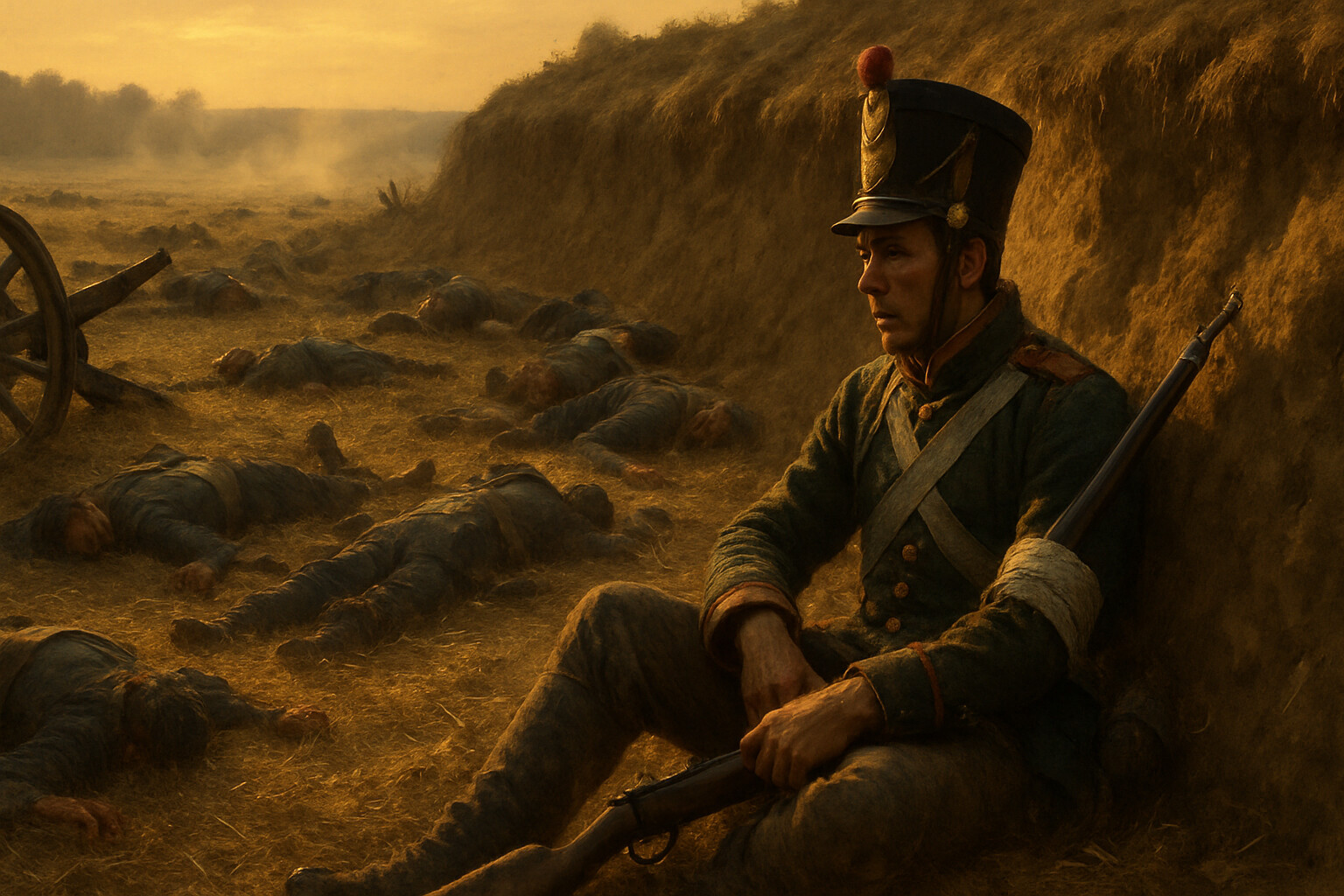
The cost of September 7th was catastrophic on both sides. Scholarly estimates of Russian casualties range from roughly 40,000 to 45,000 killed and wounded. French and allied casualties are estimated at between 28,000 and 35,000 killed and wounded, with some sources pushing higher depending on how subsequent deaths from wounds are counted. Both sets of figures carry uncertainty; the chaos of the battlefield, the breakdown of regimental record-keeping during the assault phases, and the difficulties of nineteenth-century casualty accounting mean that historians continue to argue over the precise numbers. What is agreed is that no Napoleonic battle in a comparable timeframe killed and wounded as many men. Some estimates place the combined rate above a thousand casualties per hour sustained across the entire day.
The Russian army lost at minimum twenty-three general officers killed or wounded. The French lost approximately fifty general officers killed or wounded. The ground around the Bagration fleches, the Raevsky Redoubt, and the village of Semenovskaya—a small settlement behind the fleches that became a point of violent contention through the afternoon—was covered with dead and wounded men, dead horses, broken gun carriages, and abandoned equipment. Surgeons on both sides operated without pause through the night. The conditions under which they worked—without antisepsis, without anesthesia beyond alcohol, with amputation as the primary treatment for compound limb fractures—meant that many men who survived the battle died in the days that followed.
---
That evening, Kutuzov composed a dispatch to Alexander reporting a Russian victory. The claim was not without basis: the Russian army still existed as an organized fighting force. It had not been broken. Napoleon had not achieved the decisive annihilation he needed. Kutuzov was subsequently promoted to Field Marshal—documented in Russian Imperial records—though what Alexander actually believed about the battle's outcome, when fuller reports arrived, is clear from his subsequent correspondence: he was deeply unsatisfied.
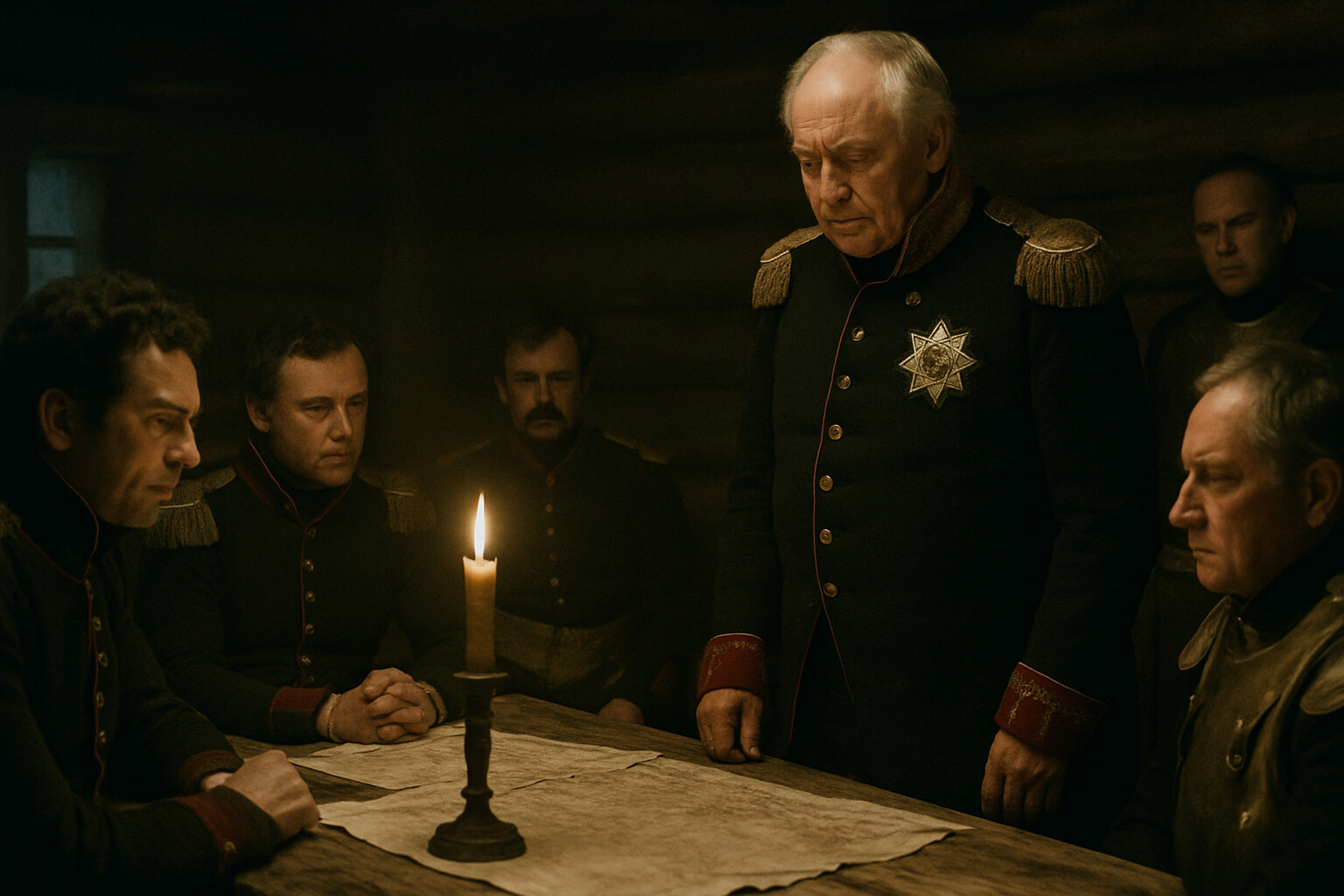
During the night of September 7th–8th, Kutuzov met with his senior commanders. The reports were grim. The Russian army had lost perhaps a third of its total strength in one day. Several key positions had been taken and not recovered. Ammunition and supplies were critically short. The army could not fight a second major engagement the following morning. At a council held at Mozhaisk, Kutuzov made the decision to continue the withdrawal east.
On September 13th, at the village of Fili, he convened a second and more consequential council. The question was stark: fight a defensive battle in front of Moscow to protect the city, or abandon Moscow and continue the withdrawal to preserve the army. The accounts of the Fili council are preserved in several sources, including a record attributed to the young officer Mitarevsky and later drawn on by Tolstoy in War and Peace—though Tolstoy's literary rendering must be distinguished from the historical record, and Kutuzov's exact words at Fili are not preserved in authenticated verbatim form. What the historical sources agree on is the decision: Moscow can be rebuilt; if the army is lost, both Moscow and Russia are lost. The army would withdraw.
Moscow was abandoned without a fight on September 14th. Napoleon entered the city to find it largely empty of inhabitants and, within hours, on fire. The fires burned for days. Whether they were set on orders from the governor, by accident, by criminal opportunists, or by some combination remains unresolved in the historical record. The French army now occupied a burning city with no food stores to speak of, no formal capitulation from Alexander, and no peace negotiation forthcoming. It began to starve. Napoleon waited five weeks for a peace offer that never came.
On October 19th, the Grande Armée left Moscow and began its retreat westward. The Russian winter was not the primary cause of the army's destruction—French forces were already critically weakened before the hard frost arrived—but the cold, the emptied countryside, the Cossack raiders who stripped stragglers and small detachments from the march, and the Russian army under Kutuzov pressing from the south combined to reduce the Grande Armée to a shadow. By the time the remnants crossed the Berezina River in late November, the force that had invaded Russia in June was effectively destroyed as a strategic instrument. Estimates of total French losses in the 1812 campaign—dead, wounded, captured, deserted—exceed 300,000 men, though precise figures remain disputed across scholarly sources.
Kutuzov's conduct of the pursuit has its own critics. Some historians have argued that he moved too slowly after Moscow, that he allowed Napoleon's army to escape at Maloyaroslavets in October and at the Berezina in November when more aggressive pressure might have produced complete French capitulation rather than a costly retreat. Kutuzov died in April 1813, at Bunzlau in Silesia, during the German campaign. He did not live to see the wars end.
---
The battle has generated an enormous body of scholarship, memoir, and controversy. Tolstoy's War and Peace, published in 1869, drew heavily on Borodino and on Kutuzov as a character—his portrait of an old commander operating from deep intuition rather than formal planning has shaped Western popular understanding of both the man and the campaign in ways that sometimes obscure the historical record. Kutuzov was not a mystic. He was a professional soldier of fifty years' experience who understood attrition, strategic depth, and the limits of operational brilliance when applied to a country of Russia's size.
Armand de Caulaincourt's memoir of the Russian campaign and Philippe de Ségur's later History of the Expedition both provide French perspectives that repay careful reading—with the awareness that both men were writing after the fall of the Empire and under the shadow of defeat. General Alexei Yermolov, who commanded the Russian center reserve at Borodino, left accounts that are among the most valuable Russian sources for the tactical detail of the engagement. The letters and dispatches of Barclay de Tolly offer a clearer window into Russian operational thinking than Kutuzov's own minimal written record.
The battlefield was surveyed and commemorated in the decades after the war. The main redoubt and the approximate positions of the fleches have been identified through both documentary sources and archaeology. The site today is a state museum preserve. Work in the twentieth and twenty-first centuries has recovered physical evidence of the battle—projectiles, equipment fragments, human remains—that continues to refine what the documents alone cannot settle.
---
What Kutuzov grasped that September, and what the battle demonstrated at a price almost beyond comprehension, was that the French way of war had a structural weakness. It required the enemy to cooperate—to be broken in a decisive engagement, to offer capitulation, to behave as Prussia had behaved in 1806 or Austria in 1809. A Russian commander willing to accept the loss of ground—even the loss of Moscow—while preserving the army and the will to continue, could outlast the logic of Napoleon's strategic position. Supply lines grew longer. Seasons changed. An army that could not be decisively beaten could not be decisively defeated.
Borodino did not win the war. It did not save Moscow. What it did was break the internal mathematics of the French invasion: it consumed irreplaceable veteran soldiers and officers at a rate the Grande Armée could not absorb, it demonstrated that the Russian army could stand and take a full-scale Napoleonic assault without shattering, and it bought time for the decision at Fili and the withdrawal that followed. Whether Kutuzov planned all of this deliberately, or whether he was managing a desperate situation with the tools available to him, is a question historians reasonably continue to debate.
The men who lay on the Borodino field through the night of September 7th—French grenadiers and Russian musketeers, Polish lancers and Russian Cossacks, all of them now horizontal in the same clay—knew none of this. They had fought one of the bloodiest days in the history of organized warfare. Some of them were still alive. The fog came back before morning.