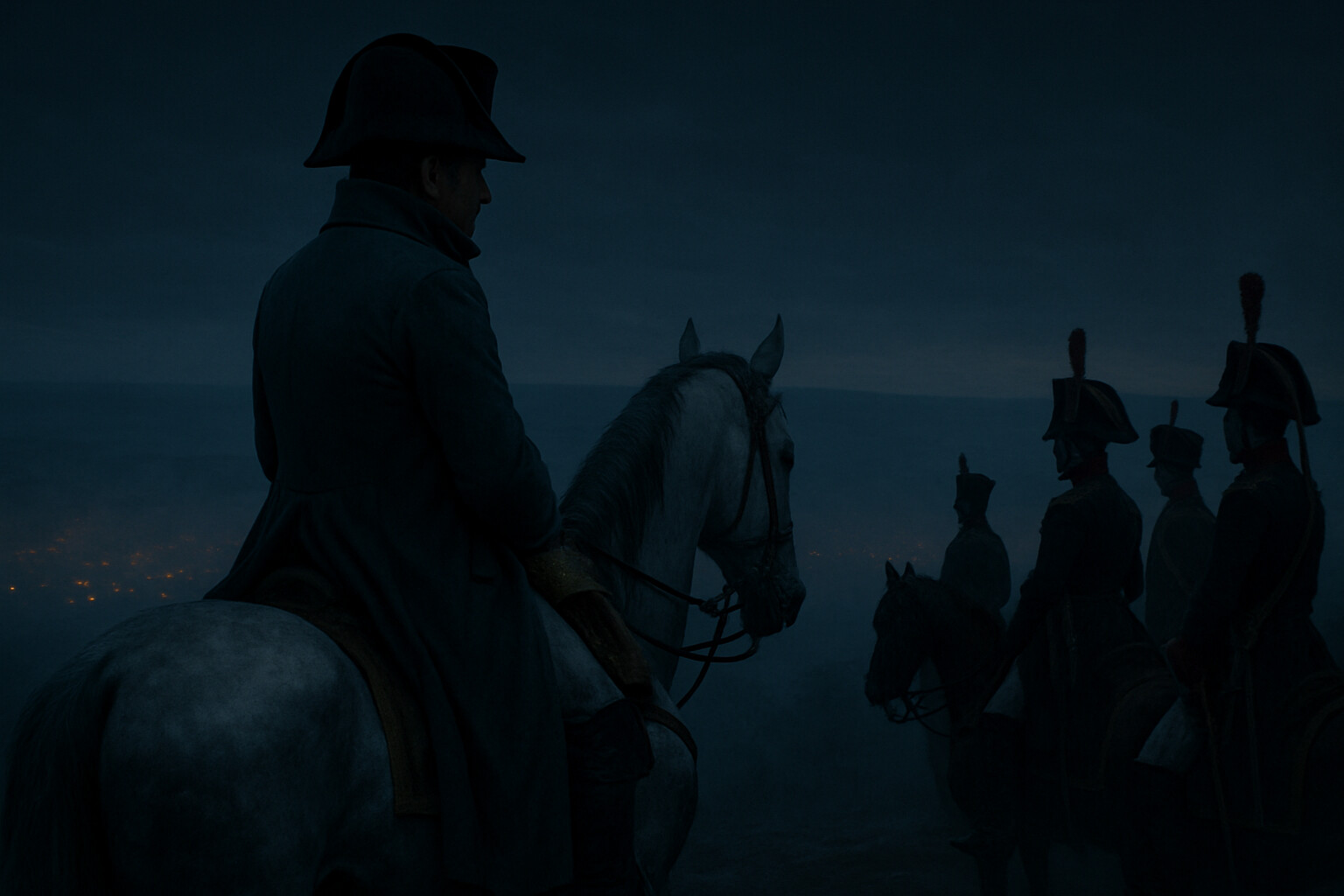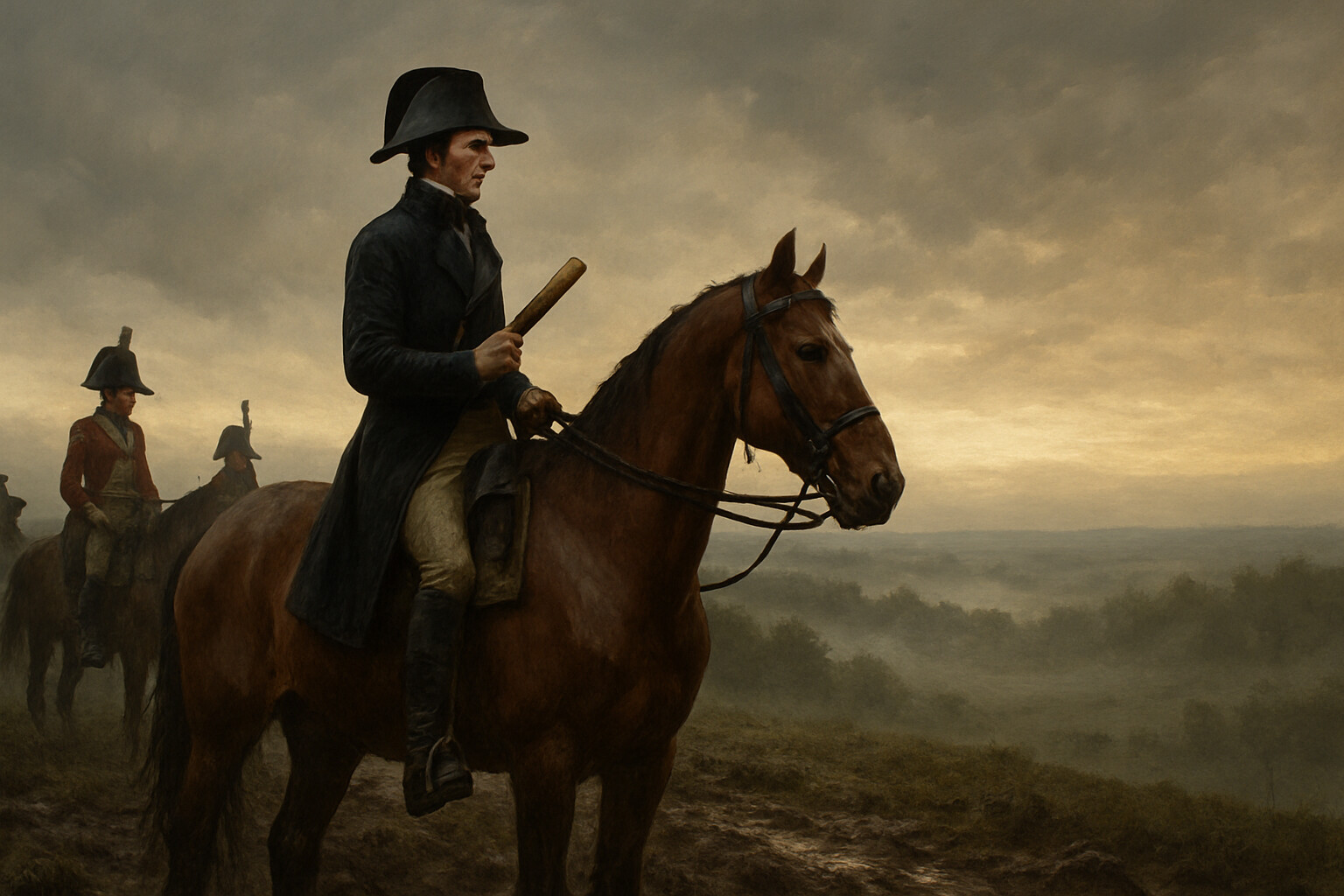
The cannon opened before full sunrise.
It was already hot on the steppe south of Poltava when the first Swedish infantry columns stepped out of the tree line and began crossing open ground toward the Russian redoubts. The date was 8 July 1709 by the Julian calendar then in use across most of Europe — 27 June by the older style observed in Sweden. By either reckoning, what was about to happen would take roughly four hours and alter the balance of European power for a century.
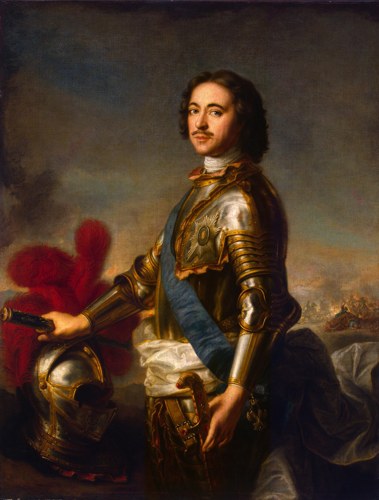
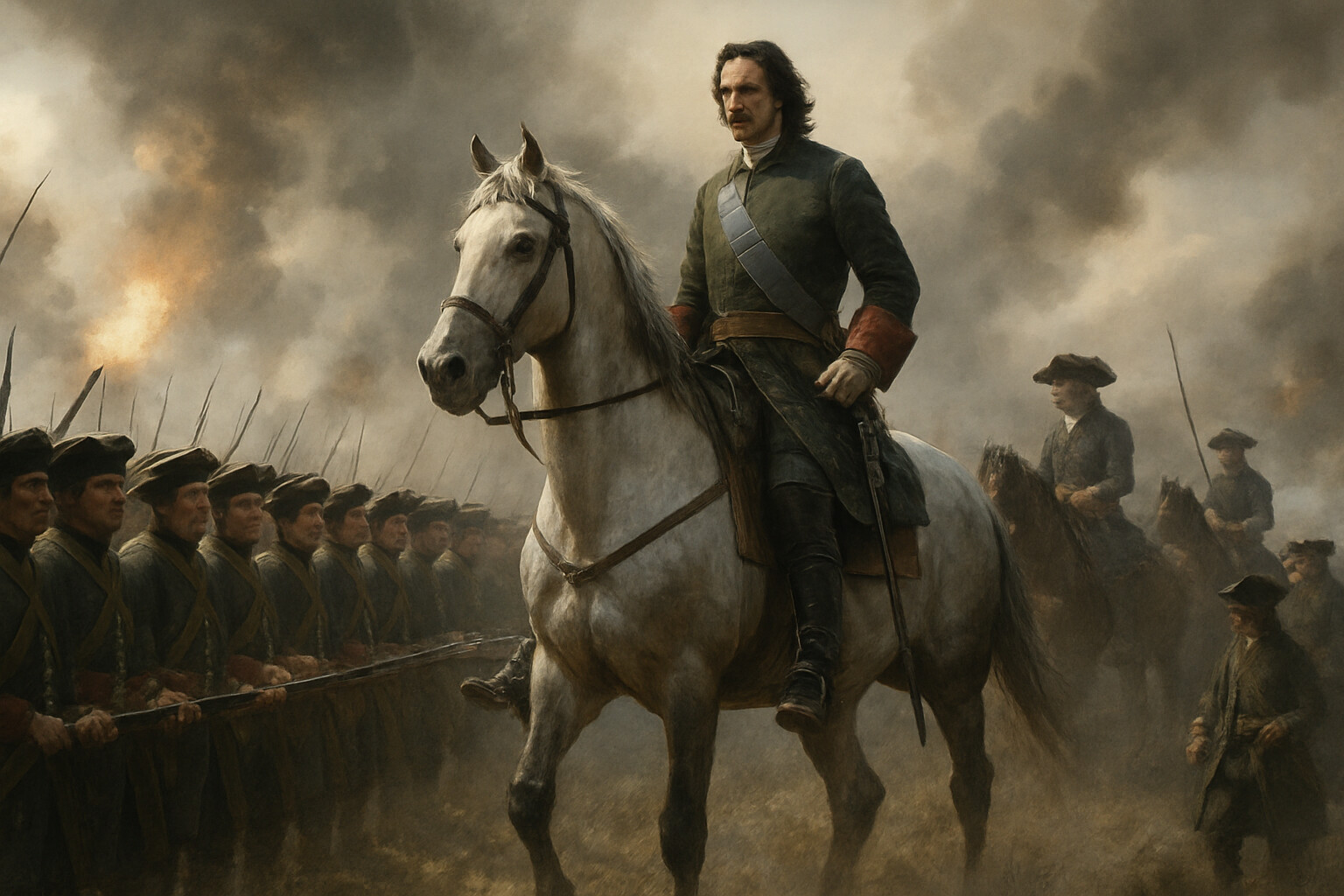
Peter Alexeyevich, Tsar of All Russia, was thirty-seven years old and had been at war with Sweden for nearly a decade. He was present on the field — a giant of a man by the standards of his age, well over six feet tall, physically imposing, and visibly in the line where the fighting was heaviest. Multiple Russian accounts record him riding to points of crisis along the line; at least one Swedish account notes his visibility in the fighting. Whether he sustained a wound on the day of the battle itself is not clearly established: sources differ, with some describing a ball striking his hat and others describing a closer call with his person. The inconsistency is noted in the record and should be read accordingly.
Charles XII of Sweden was also on the field, also wounded — but immovably so. A musket ball had shattered his foot during a skirmish along the Vorskla River approximately ten days before the battle, and he was traveling by litter, a stretcher carried between two horses. The two monarchs, who had never met and never would, directed the largest battle ever fought on Ukrainian soil from positions less than two miles apart.
---
To understand what Poltava meant, it is necessary to go back to where the war began.
In 1700 a coalition of Denmark-Norway, Saxony-Poland, and Russia had attacked Sweden simultaneously, expecting easy gains against what they judged a weakened power under a teenage king. They were badly mistaken. Charles XII, eighteen when the war began, proved one of the most aggressive and tactically gifted commanders of the age. He knocked Denmark out of the war in weeks. He then turned east and, at the Battle of Narva in November 1700, destroyed a Russian army four times the size of his own. Peter's troops broke and ran. The artillery was captured. The officer corps — largely foreign professionals — surrendered en masse. It was a catastrophe.
Peter did not give up. He did something harder: he rebuilt from the wreckage, and he learned.
The decade between Narva and Poltava was the decade in which Peter transformed Russia's military on a foundation of brutal, practical experience. He conscripted peasants by the tens of thousands. He reorganized regiments along Western European lines. He personally oversaw the creation of new ironworks to cast cannon, because the Swedes had taken most of his artillery at Narva and he needed guns. He brought in foreign advisors — Dutch, German, Scottish — and placed them beside Russian officers in a deliberate policy of institutional knowledge transfer. He built a navy from almost nothing. He taxed, conscripted, and drove his country toward military modernization with a relentlessness that cost enormous human suffering, and produced, by 1709, an army that bore almost no resemblance to the force that had broken at Narva.
The Russian infantry of 1709 carried smoothbore flintlock muskets and were organized into regiments trained in the volley-fire tactics standard across Europe. The artillery, reorganized under Jacob Bruce — a Scottish-born officer of Russian service — was both larger and more professionally managed than anything Peter had fielded in 1700. The officer corps still included foreigners, but Russian officers now led many regiments and understood their work. The Guards regiments — the Preobrazhensky and the Semyonovsky, which Peter had originally formed in the 1680s as drill-ground exercises — had grown into dependable infantry trusted with the most demanding assignments.
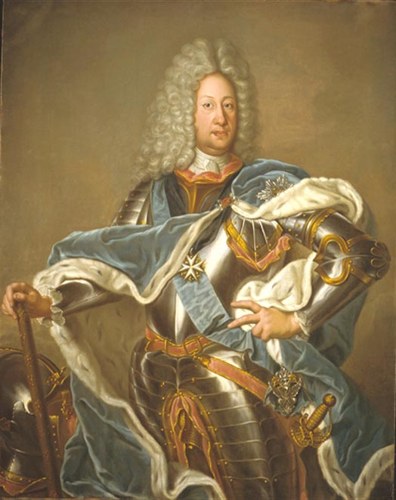
Charles XII, meanwhile, had spent the intervening years fighting brilliant campaigns across Poland and Saxony. He forced Augustus II of Saxony to renounce the Polish throne and installed a Swedish-backed candidate, Stanisław Leszczyński, in Warsaw. By 1707, he had every reason to believe he could now turn east and finish Russia.
The invasion he launched in 1708 started well and then fell apart.
---
The Swedish army that crossed into Russia in the summer of 1708 numbered roughly 40,000 men — veterans of a decade of successful warfare, deeply loyal to a king who led from the front and expected the same of everyone around him. Charles's plan was to drive deep, live off the land, and either force Peter to fight at a disadvantage or break the Russian state's will to continue.
Both assumptions proved wrong.
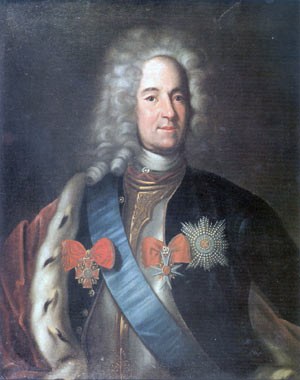
The Russian army refused the decisive engagement Charles needed. Peter's commanders — particularly Alexander Menshikov, the Tsar's closest and most capable operational subordinate — conducted a strategic withdrawal, burning supply stocks as they went. Swedish supply lines stretched impossibly thin. The expected reinforcement from a column under General Löwenhaupt, marching from the Baltic with a substantial supply train, was intercepted and broken at the Battle of Lesnaya in October 1708. Peter personally led the fast-moving force that caught Löwenhaupt in the open. Löwenhaupt survived with perhaps a third of his men and almost none of the supplies. The loss was irreplaceable.
Then came the winter of 1708–1709, which surviving records describe as one of the coldest in European memory. Swedish regimental records from the period document men dying of cold, food shortages, and disease in numbers that stripped entire units of their effectiveness. By spring 1709, Charles's army had contracted sharply — scholarly estimates range from roughly 20,000 to 26,000 men remaining, with significant uncertainty about how many of those were fit for battle. Powder and artillery ammunition had never been replenished after Lesnaya.
It was in this condition — weakened, undersupplied, and with no clear line of withdrawal — that Charles XII sat down to besiege Poltava.
Poltava was not a great strategic prize in itself. It was a town on the Vorskla River with a garrison of roughly 4,000 men and 28 guns, commanded by Colonel Aleksei Kelin. Kelin's garrison held out with tenacity through months of siege — making sorties, repairing breaches, and pinning a Swedish army that should have kept moving. Peter, recognizing the opportunity, marched south to relieve it.
By late June 1709, the Russian army — numbering in the range of 40,000 to 45,000 men with a substantial artillery park — had crossed the Vorskla and established a fortified camp on the western bank, directly between Charles and any practical line of resupply or retreat. The trap was not exactly deliberate in conception, but it was decisive in effect. The Swedes would either fight on terms that heavily favored their opponent, or retreat and face the army's slow destruction by attrition. Charles chose to attack.
---
The Russian position was formidable.
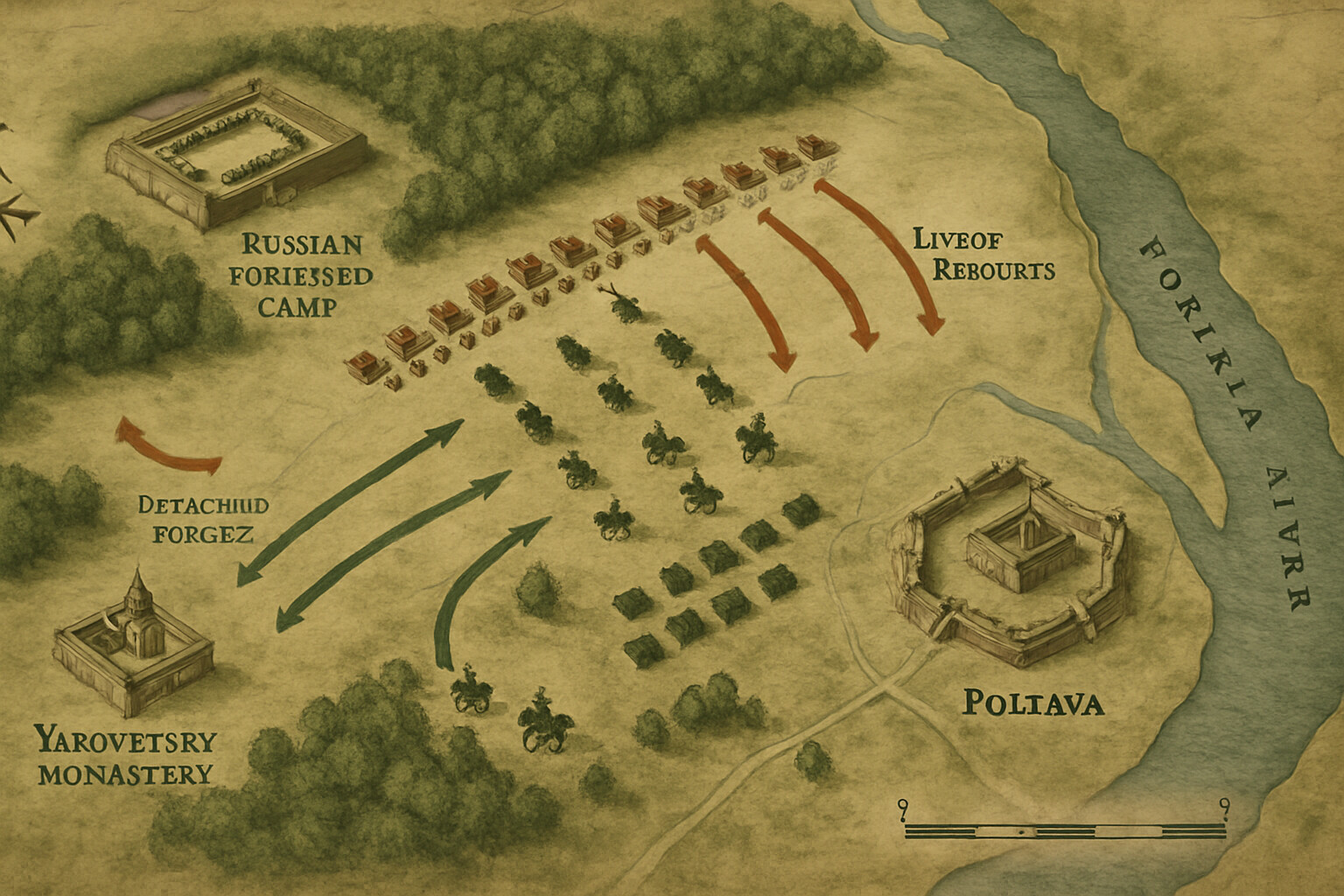
Peter and his senior commanders — Field Marshal Boris Sheremetev, who held nominal command of the army, and Menshikov, who operated as Peter's operational arm — had constructed a prepared defensive system in the days before the battle. The central feature was a fortified camp with earthwork walls and artillery positioned to cover the approaches. In front of the camp, running roughly perpendicular to the main Swedish axis of advance, a line of ten redoubts had been dug: earthwork strong points, each garrisoned with infantry and small-caliber guns, designed to break up any attacking formation before it reached the main Russian line.
The redoubt line reflected hard-won lessons from the previous decade. Frontal assault against prepared earthworks was brutally costly under the weapons of the period, and the Swedish army — trained in aggressive shock tactics that had carried it through Poland and Saxony — would be forced to either reduce the redoubts one by one, losing time and cohesion, or bypass them and fight with an unsuppressed threat on their flank.
Not all ten redoubts were complete when the Swedes came. Two at the northern end of the line were still under construction. The Swedes identified the gap, or found it quickly once they were moving. Those unfinished works would become the seam through which part of the Swedish force tried to press.
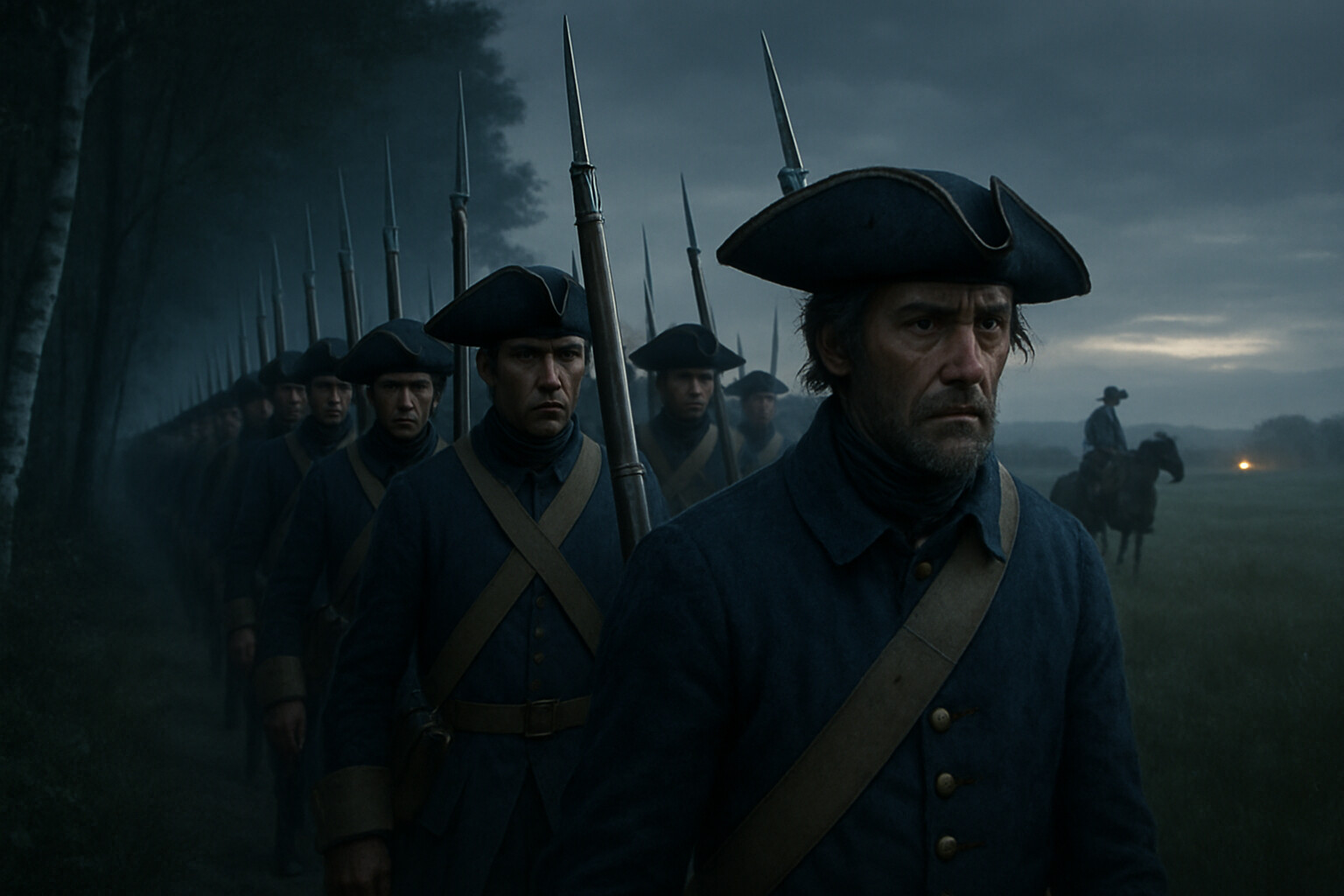
Charles's attack began in the dark, around four in the morning. The Swedish infantry advanced in columns, attempting to pass through the redoubt line before the Russians could fully man their positions. What followed was immediate and costly. The Swedish force — divided into several infantry columns — came under fire almost at once from the redoubt garrisons and from Russian cavalry positioned on the flanks.
Major General Carl Gustaf Roos, commanding a portion of the right-wing columns, became separated from the main Swedish body during the fighting around the redoubts. His command — approximately 2,500 men by most accounts, though figures vary slightly across sources — was cut off, surrounded, and forced to surrender in the woods near the Yakovetsky monastery, before the main battle had even reached its decisive phase. It was a severe subtraction from a force that had no margin to lose men.
The main Swedish body that pressed through and past the redoubts emerged into the open ground between the redoubt line and the Russian camp, realigned, and paused. The pause — perhaps an hour — was critical. It gave the Russian army time to deploy from the camp and form a proper battle line. When the Swedish columns finally advanced on what they expected to find as a partially formed defense, they found instead a fully deployed army with its artillery already unlimbered and waiting.
---
The weapons that dominated Poltava were artillery.
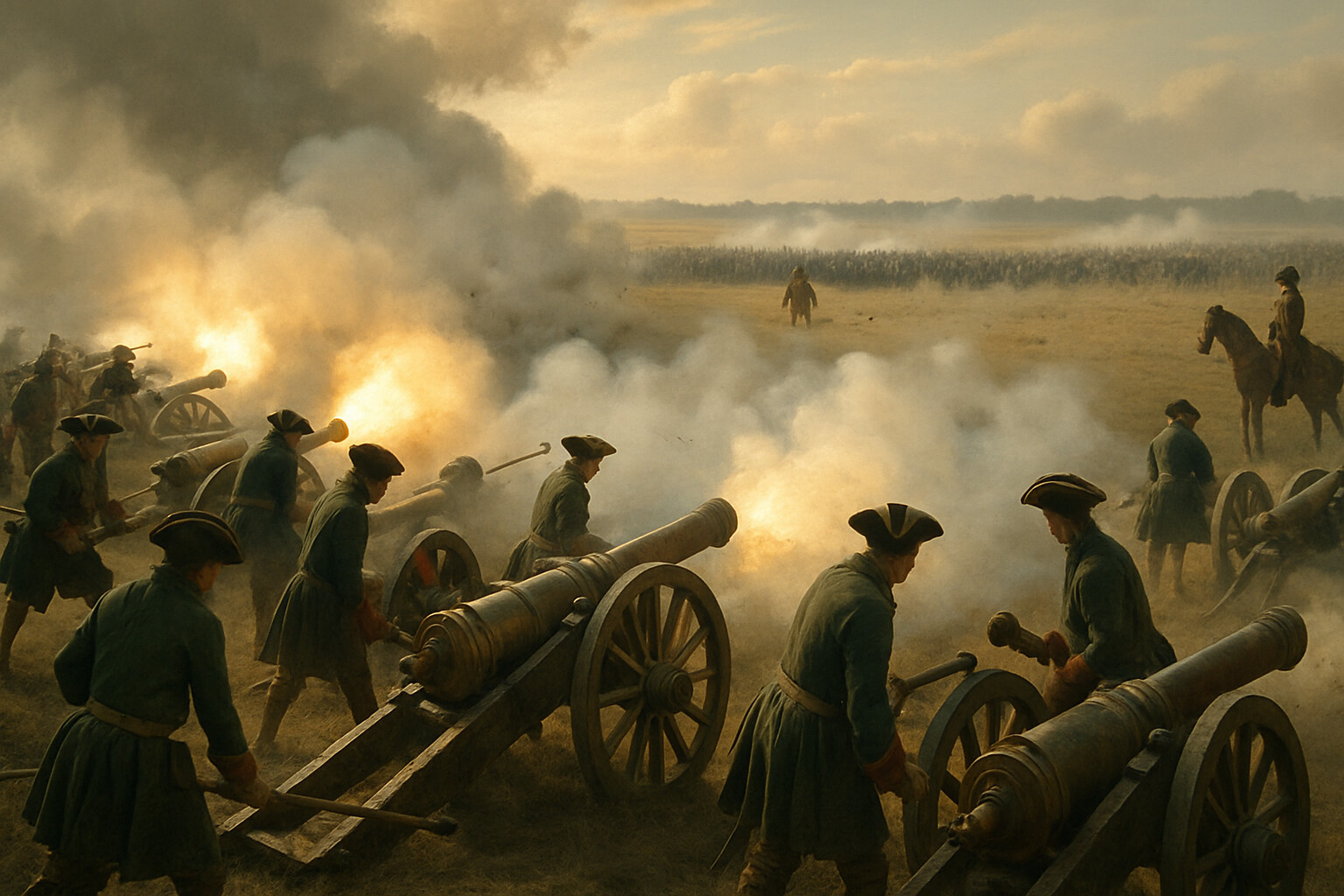
This was, in miniature, the central story of European warfare in the early eighteenth century: infantry and cavalry mattered enormously, but the side that could mass and sustain cannon fire held an advantage that musketry and cold steel could rarely overcome. At Poltava, the Russian army brought roughly 72 to 102 field guns to the engagement — sources vary on the exact number deployed in the main battle, and the figure should be treated as an estimate pending review of primary Russian artillery records. The Swedish army, critically short of powder after Lesnaya and the long siege, brought approximately four guns to the field. Some accounts say fewer.
Four guns against more than seventy. The disparity is not a rounding error. It was the central tactical fact of the morning.
Swedish infantry in this period were trained in the gå-på — literally "go at" — assault doctrine: rapid advance to close quarters, minimizing exposure to fire by moving fast, then shock with pike, sword, and musket butt. At its best, against an enemy whose formation could be rattled before the lines met, it was devastatingly effective. At Narva in 1700 it had destroyed Peter's army. But the gå-på depended on breaking the enemy's cohesion before firepower could be brought to bear at sustained range. Against a prepared, steady infantry line supported by dozens of cannon, rapid advance only meant arriving at the killing ground faster.
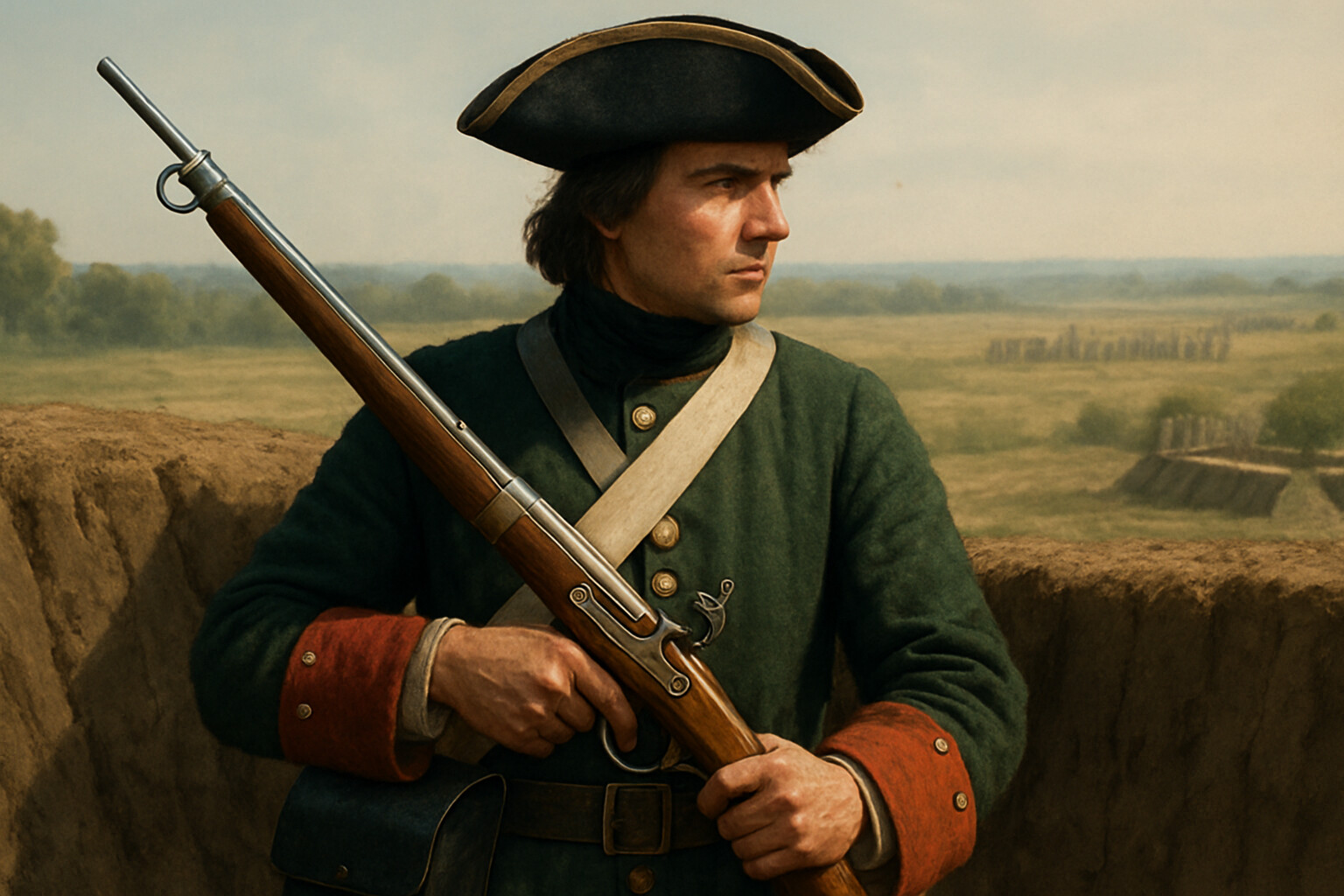
Russian infantry in 1709 carried smoothbore flintlock muskets — approximately .75 caliber, consistent with the European infantry standard of the period, with an effective range against formed troops of roughly 50 to 75 meters and a rate of fire of about two rounds per minute from a trained soldier. Bayonets had replaced pikes in the Russian infantry by this point, following the trend across European armies. The Russians were trained to hold volley fire until the enemy was close, then deliver it in organized, successive ranks — a discipline that required steadiness under pressure, and one that the Guards regiments had developed across a decade of demanding service.
On both sides, cavalry carried sabers and pistols; dragoon regiments were also equipped with muskets, making them capable of fighting mounted or on foot. Menshikov commanded the Russian cavalry on the left. His handling of that arm during the Swedish approach through the redoubts — aggressive, timely, and well-positioned — was instrumental in isolating Roos's command before the main engagement began.
---
When the main Swedish battle line — perhaps 8,000 to 10,000 men, badly reduced from the force that had crossed into Russia the year before — advanced toward the Russian position, the scale of the mismatch became immediately visible.
The Russian army had deployed in two lines of infantry, cavalry on both flanks, artillery unlimbered across the front. As the Swedes closed, the cannon opened at effective range — roughly 300 to 500 meters for the heavier pieces — and the effect on closely packed infantry columns crossing open ground was immediate and severe. Both Russian and Swedish accounts describe the Swedish ranks being torn apart by roundshot and canister as they pressed forward. Swedish officers attempting to maintain the cohesion the assault doctrine required were killed in quantity; Swedish accounts record the loss of most senior infantry commanders during or shortly after the main attack.
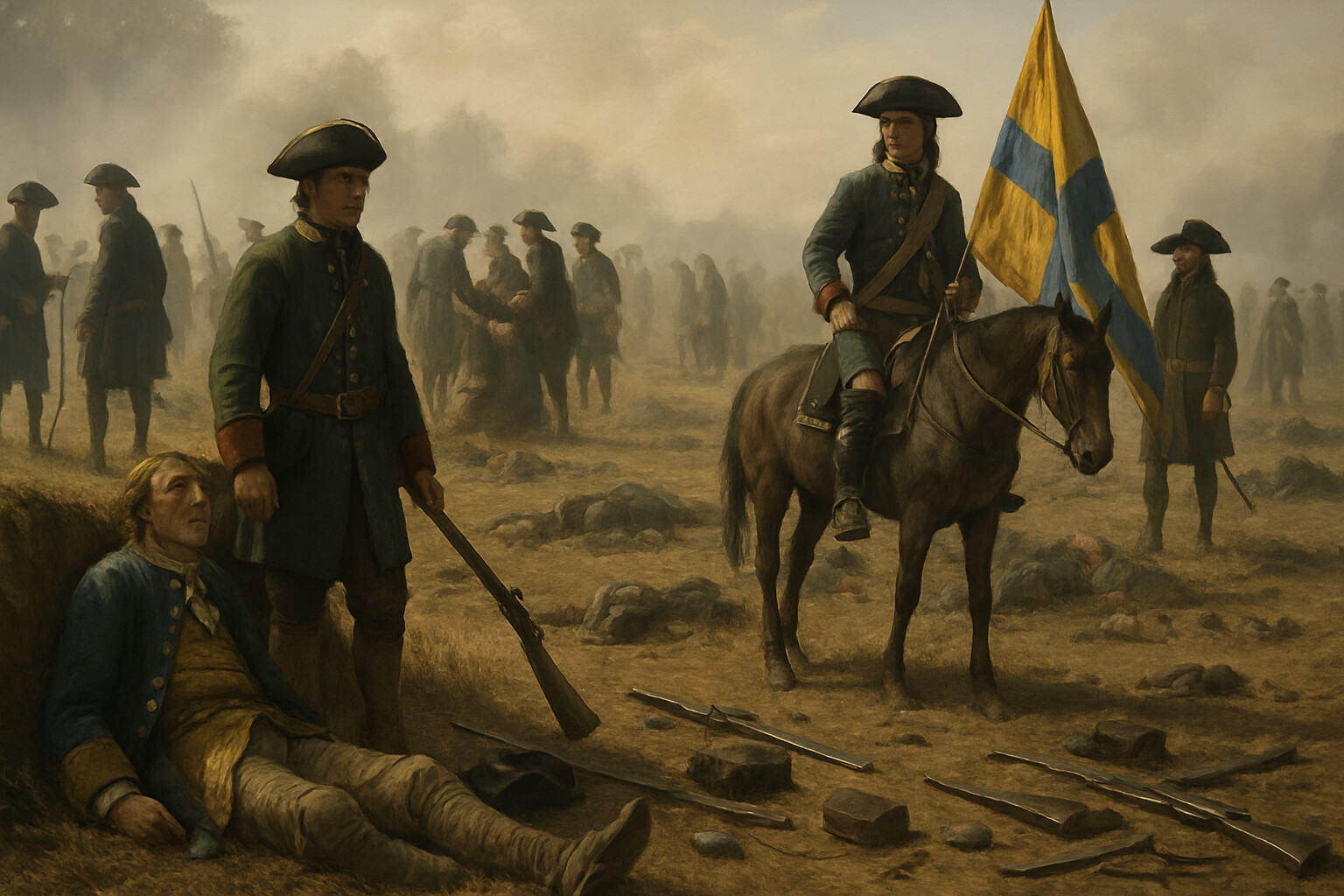
The Swedish infantry that reached the Russian line fought with the desperation of men who had no useful option to retreat. Contemporary accounts in both languages describe Swedish units pushing into the Russian formation, reaching close quarters, and fighting hand to hand before being thrown back and enveloped. But the numbers and the firepower were too unequal. Within roughly two hours of the main engagement — some accounts suggest less, and no source specifies exact times — the Swedish battle line had broken.
The pursuit that followed was Menshikov's work. As the Swedish infantry collapsed and moved toward the Vorskla River, Russian cavalry cut the route. A large portion of the survivors, including General Löwenhaupt, made for the Dnieper River crossing at Perevolochna. Charles XII, unable to command from horseback, was evacuated by his escort toward the Ottoman frontier — toward what is now southern Ukraine and eventually Turkish-controlled territory. He would spend years in Ottoman exile before returning to Sweden.
At Perevolochna, three days after the battle, Löwenhaupt surrendered approximately 14,000 to 16,000 men — the surviving remnant of the Swedish army — to Menshikov. It was the effective end of Swedish military power in the Great Northern War, though the war itself would continue for another decade.
---
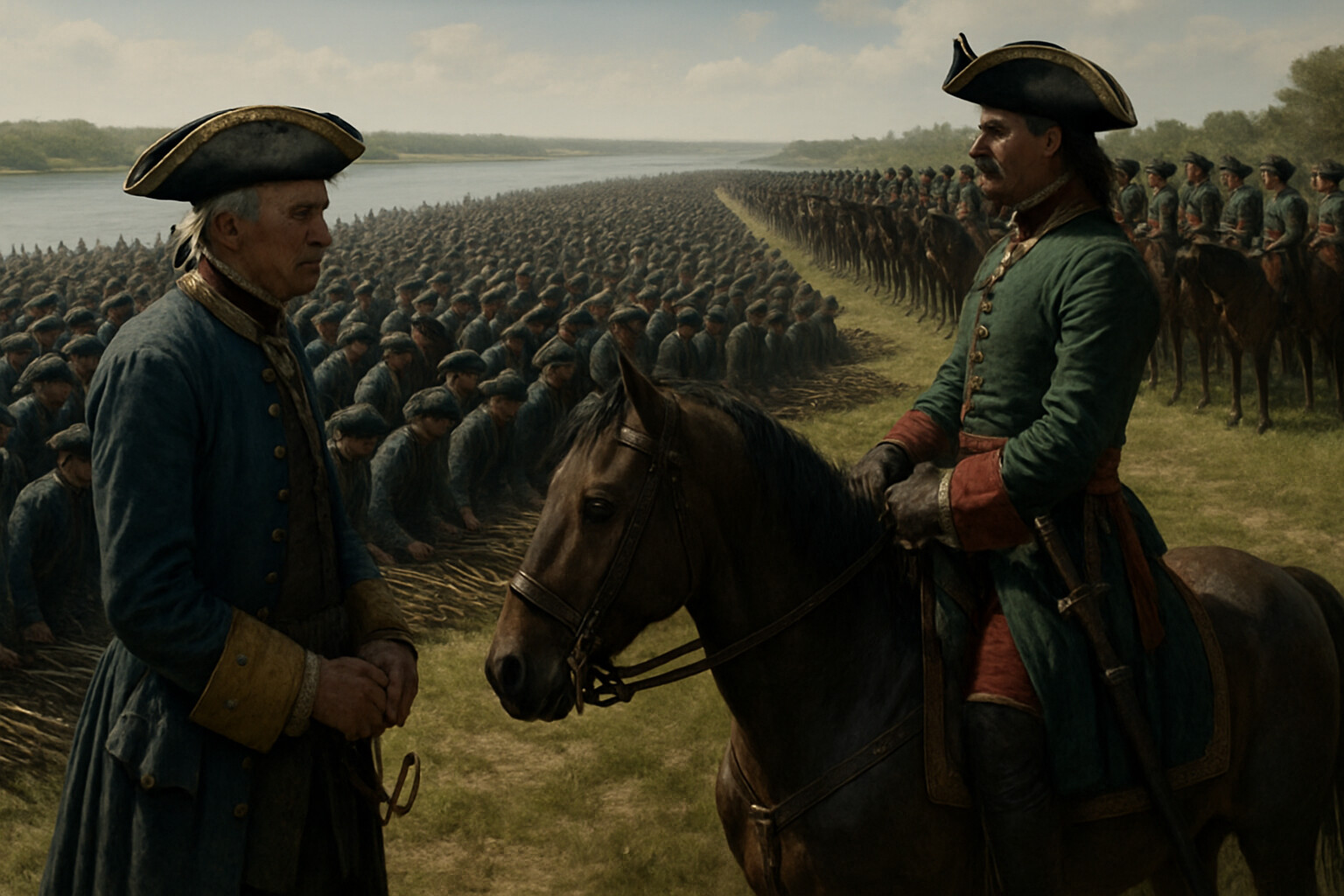
Russian chronicles of the period record that Peter toasted the Swedish officers captured after Poltava, reportedly calling them his teachers in the art of war. The sentiment is consistent with everything documented about Peter's relationship to the disaster at Narva — he absorbed the lesson, rebuilt, and came back. But the precise wording of the toast derives from Russian chronicle sources rather than a verbatim court record, and historians treat it as tradition rather than transcript.
The battle's human cost was severe on both sides, though dramatically asymmetric. Russian sources record roughly 1,345 killed and approximately 3,290 wounded in the main battle. Swedish losses are harder to establish precisely from surviving records; most historians estimate between 6,900 and 9,000 killed and wounded in the battle itself, with thousands more captured — and then the mass surrender at Perevolochna on top of that. The Swedish army as a fighting force had ceased to exist.
Charles XII survived Poltava in body but not in power. He reached Ottoman territory and spent approximately five years at Bender, in what is now Moldova, attempting to persuade the Ottoman Sultan to launch a major war against Russia that might allow Sweden to recover. The Ottomans did go to war briefly, and Peter suffered a significant reverse at the Pruth River in 1711, nearly becoming a prisoner himself. But the Pruth campaign could not reverse Poltava's verdict. Sweden could not reconstitute the army it had lost in Russia.
The Great Northern War ended with the Treaty of Nystad in 1721. Russia received Livonia, Estonia, Ingria, and part of Karelia — the eastern Baltic coastline that gave Peter the access to Western Europe his entire reign had sought. Sweden ceased to be a great power. Russia became one.
---
The battle of Poltava did not transform Russia overnight, and Peter's modernization program was neither complete in 1709 nor without enormous human cost. The serfdom that supplied the manpower for his armies would not be abolished for another century and a half. The administrative and institutional reforms he imposed were often chaotic in execution and culturally coercive in method. The state he built was capable of projecting military power across Europe, but it was also a state built on mass conscription, punishing taxation, and the labor of people who had no say in any of it.
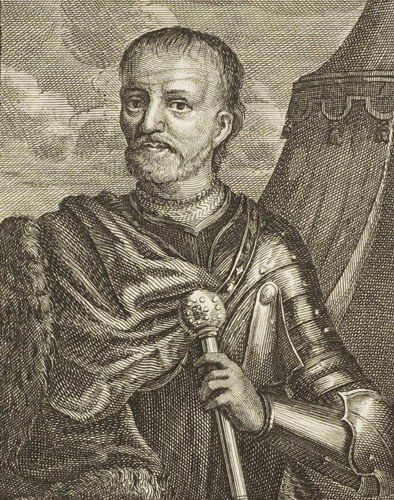
Historians including Lindsey Hughes, Robert Massie, and a range of Swedish and Ukrainian scholars have examined Poltava from different national perspectives, and their readings diverge where the evidence runs out. For Russia, the battle became a foundational national story — the moment of transformation from a semi-medieval state to a European power. For Sweden, it marked the end of the Stormaktstiden, the era of Baltic empire, and a trauma that shaped Swedish political culture for generations. For Ukraine, and for the Cossack Hetmanate under Ivan Mazepa — who had allied with Charles XII and whose gamble failed completely — Poltava meant the destruction of practical autonomy and the tighter incorporation of the Ukrainian Cossack lands into the Russian imperial structure.
Mazepa himself fled with Charles after the battle and died in Ottoman exile within months, in September 1709. His decision to ally with Sweden has been read variously across centuries: as treason against Russia, as pragmatic statecraft, as early Ukrainian nationalism, and as a desperate miscalculation by an aging politician who misjudged the military balance. None of those readings is complete on its own; most of them contain something real.
The Swedish prisoners taken at Poltava and Perevolochna — numbering in total somewhere between 16,000 and 20,000 men — became, in an irony Charles could not have anticipated, one of the instruments of Russian development. Held in captivity across the Russian interior, many of them skilled craftsmen, engineers, and officers, Swedish prisoners contributed to Russian construction projects, administrative work, and technical training during the years of their captivity. Some never returned to Sweden. The precise scale and nature of their contributions is documented only in general terms in English-language scholarship; Russian and Swedish archives likely contain substantially more detail.
The battlefield at Poltava lies today in central Ukraine, near the modern city of Poltava in Poltava Oblast. A museum and memorial complex on the site includes preserved earthworks, interpretive exhibits, and markers indicating the positions of the main units. Archaeological work has continued to yield material evidence of the battle — equipment, shot, skeletal remains — that gives physical substance to what the documents record.
Four hours of fighting on a July morning. An army destroyed. An empire ended. Another confirmed.
Peter rode off the field that day as something he had not quite been when he rode on: the ruler of a state that Europe would have to reckon with for the rest of its history. He had paid for that standing with the lives of tens of thousands of Russian soldiers over nine years, with the suffering of a population conscripted and taxed to the edge of survival, and with the destruction of a Swedish army that had, nine years earlier, shown him exactly what it would take.
He had learned it.