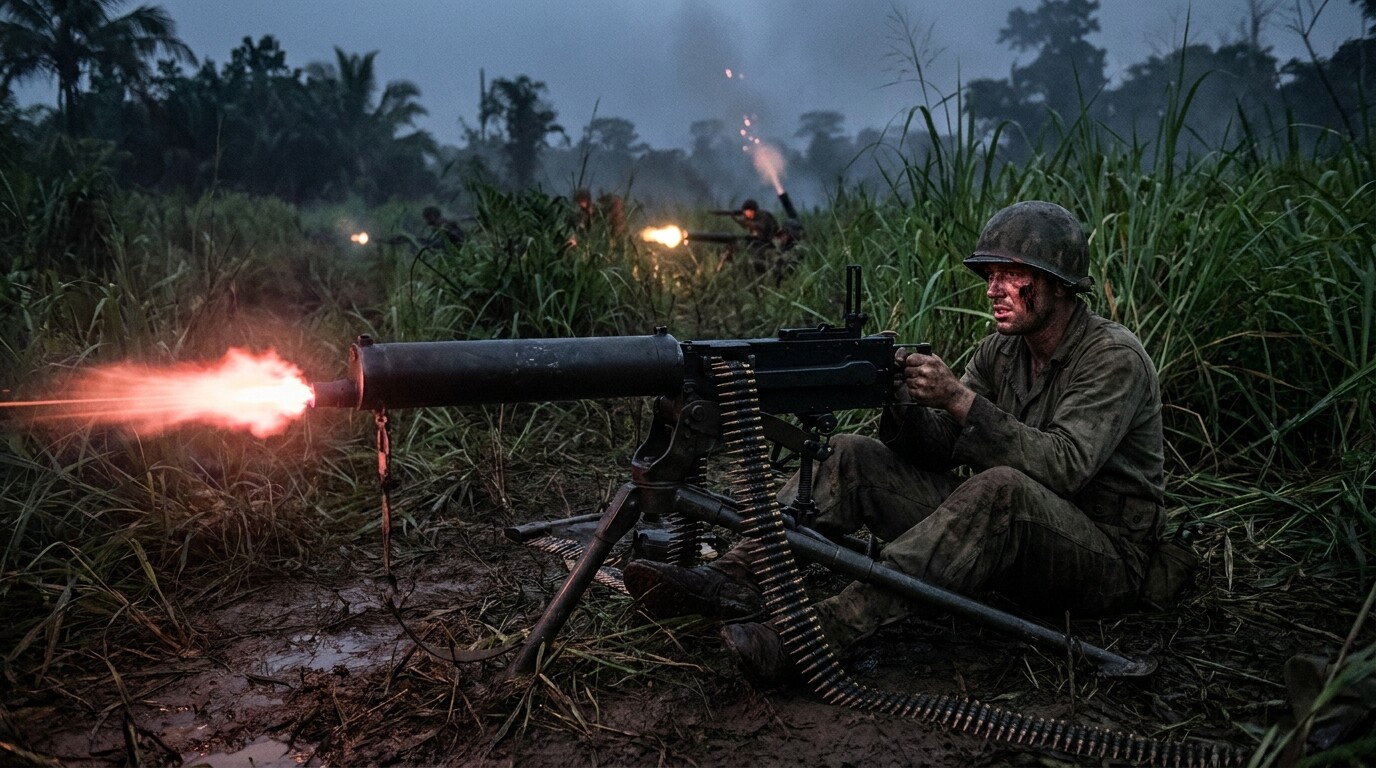
The machine gun chattered in short, controlled bursts as Japanese infantry rushed through the jungle darkness toward the ridge. Platoon Sergeant Mitchell Paige swung the Browning's barrel left, tracking movement in the undergrowth. Muzzle flashes winked like deadly fireflies across no-man's-land. His hands worked the weapon with practiced precision—traverse, depress, fire. Bodies tumbled in the elephant grass. More kept coming.
It was 0200 hours, October 26, 1942, on a nameless ridge overlooking Henderson Field. Paige's machine gun section held a critical piece of the Marine perimeter defending the airfield that had become the pivot point of the Pacific War. Behind him, Marine and Navy aircraft sat vulnerable on the runway. Ahead, the Japanese 2nd Division was throwing everything it had at the American lines in what would be the climactic assault of the Guadalcanal campaign.
Paige shifted to the second machine gun as enemy fire intensified. His original crew was gone—killed, wounded, or driven back by the overwhelming assault. He was alone on the ridge with four .30-caliber Browning machine guns, facing what sounded like the entire Imperial Japanese Army.
Mitchell Paige had been a professional Marine for eight years when the war came to the Pacific. Born in Pennsylvania coal country, he enlisted in 1936 and worked his way up through the ranks. The Marine Corps had taught him to strip, clean, and operate the Model 1917 Browning machine gun until he could do it blindfolded. That training would prove essential on a ridge line in the Solomon Islands.
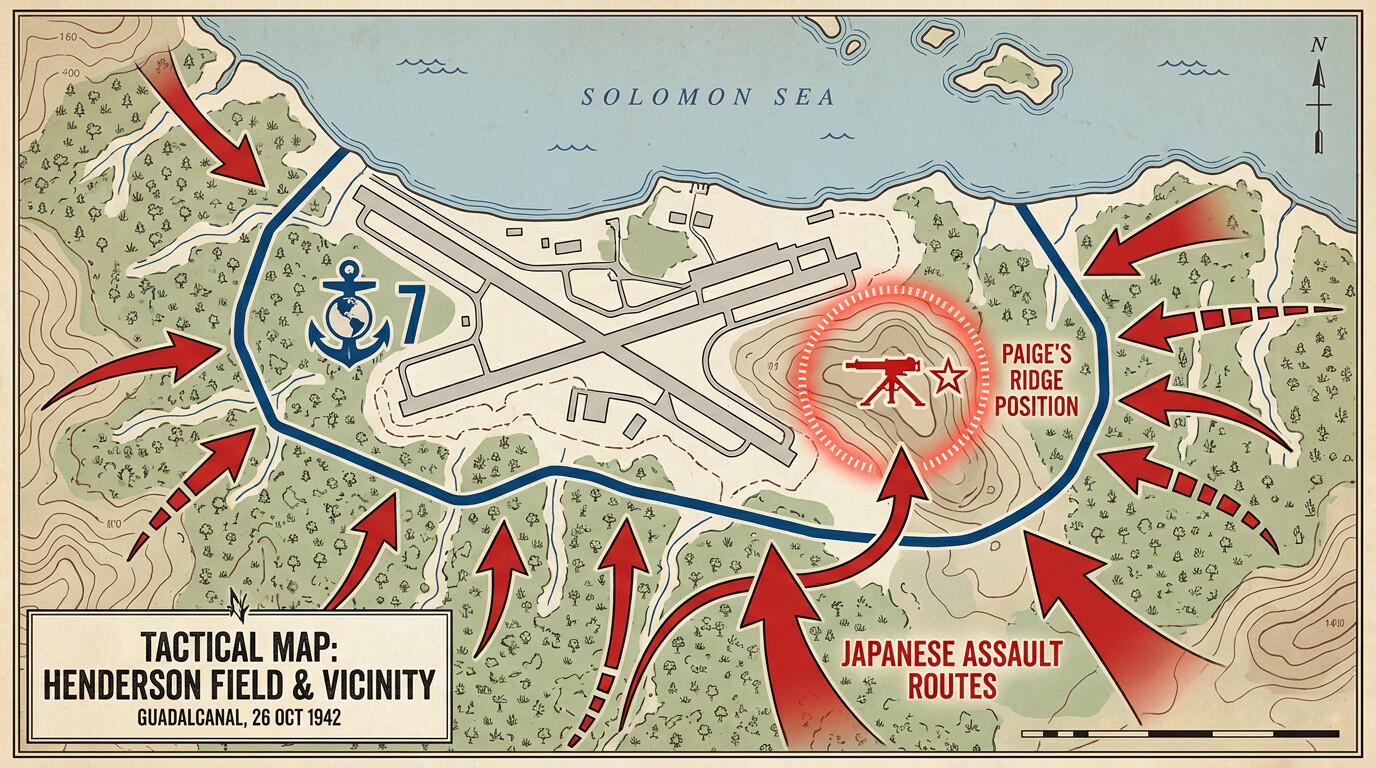
The 1st Marine Division had seized Henderson Field—originally a Japanese airbase—two months earlier in the first major Allied ground offensive of the Pacific War. The airfield gave American planes a forward base to interdict Japanese supply lines and contest control of the vital sea lanes around the Solomon Islands. For the Japanese, losing Henderson Field meant losing the campaign for Guadalcanal and potentially the war itself.
By October 1942, both sides understood the stakes. The Japanese had been reinforcing Guadalcanal nightly via the "Tokyo Express"—fast destroyer runs that delivered troops and supplies under cover of darkness. General Harukichi Hyakutake's 17th Army now numbered over 20,000 men, facing roughly 23,000 Americans holding a shrinking defensive perimeter around Henderson Field.
Paige's 2nd Battalion, 7th Marines held a section of the southern perimeter where the jungle pressed closest to the airfield. His machine gun section occupied Hill 120, a low ridge that offered commanding fields of fire across the approaches to Henderson Field. The position was critical—if the Japanese broke through here, they could roll up the entire Marine line and overrun the airfield.
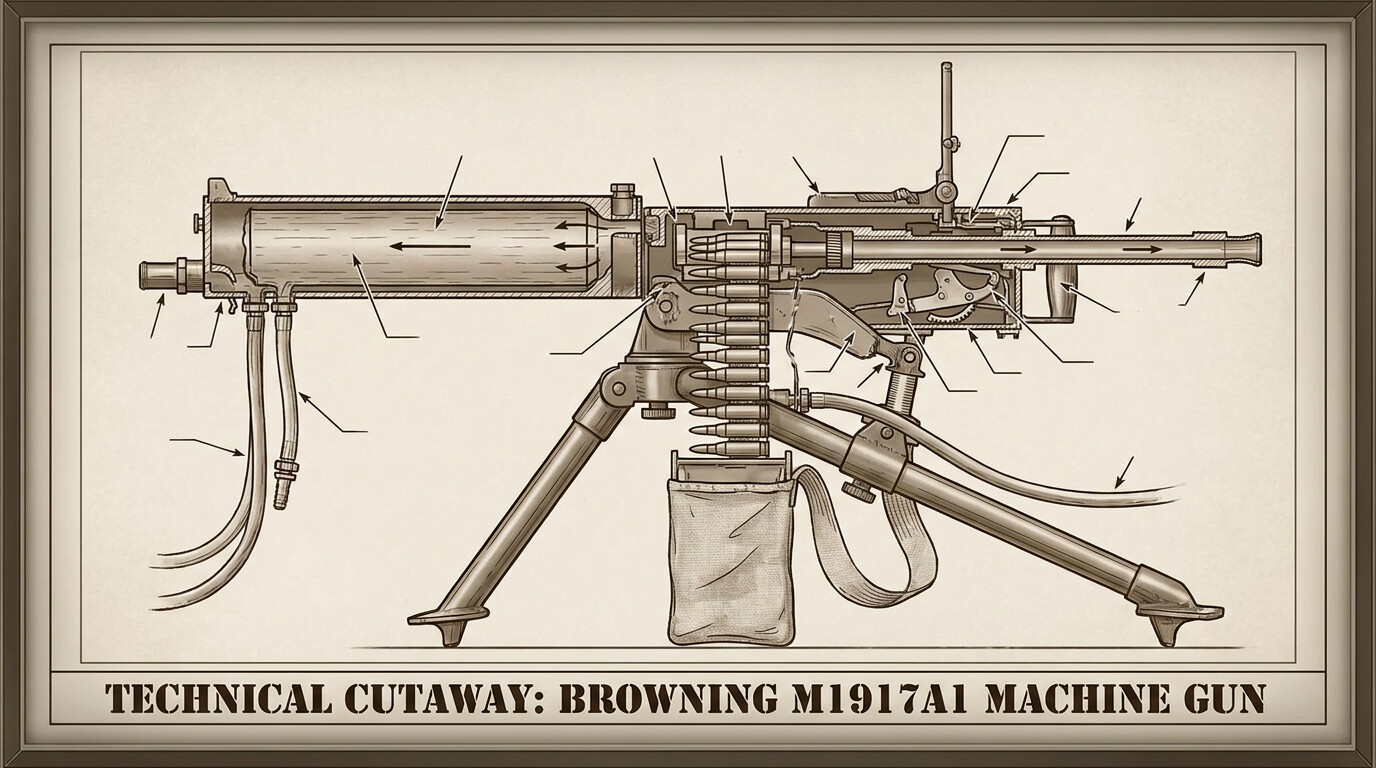
The Browning M1917A1 machine gun was the backbone of Marine defensive firepower. Water-cooled and belt-fed, it could sustain rates of fire that would melt an air-cooled weapon. Each gun weighed 103 pounds with its tripod and required a crew of at least four men—gunner, assistant gunner, ammunition carrier, and section leader. The weapon fired .30-06 Springfield ammunition at 450-600 rounds per minute with an effective range of 1,500 yards. In the right hands, a single Browning could dominate a battlefield.
Paige had positioned his four machine guns to create interlocking fields of fire across the likely Japanese approach routes. The weapons were sited for grazing fire—bullets traveling parallel to the ground at chest height, deadly to infantry advancing across open ground. Each gun had been carefully registered on key terrain features during daylight. Range cards marked distances to obvious targets. Ammunition was stacked in metal cans, belts already linked and ready.
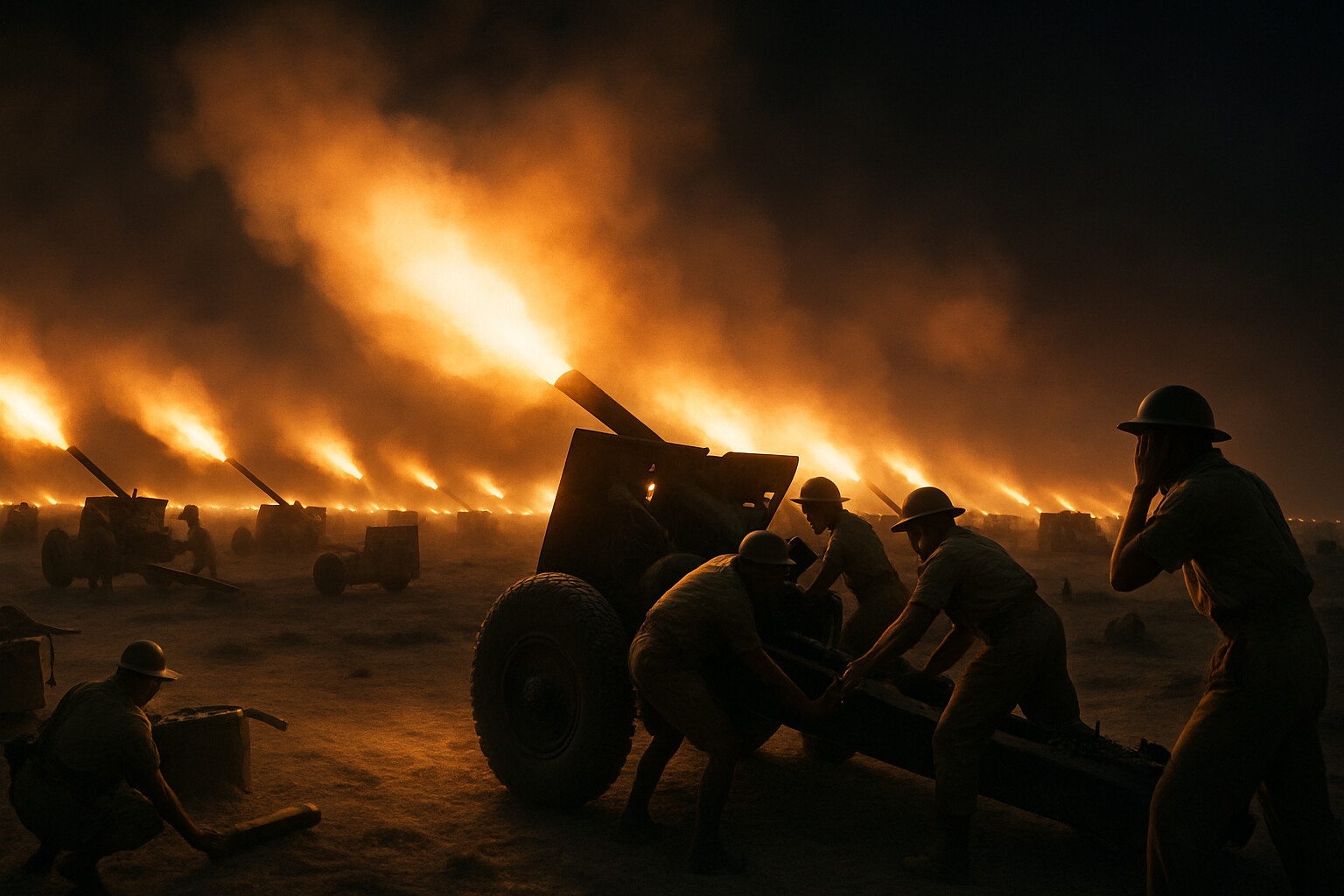
The Japanese attack began with a massive artillery barrage at midnight. Shells crashed into the Marine positions as enemy infantry moved through the jungle toward the American lines. The 2nd Division's assault plan called for coordinated attacks all around the Henderson Field perimeter, but the main effort would come from the south—directly at Paige's sector.
Colonel Masanobu Tsuji, the brilliant and ruthless Japanese staff officer who had planned the assault, believed American morale was cracking after months of fighting on Guadalcanal. Intelligence reports suggested the Marines were weakened by disease, short of ammunition, and demoralized by constant Japanese air and naval bombardment. One powerful night attack should collapse their defense and deliver Henderson Field to the Emperor.
Tsuji was wrong about American morale, but right about the violence of the assault. When the artillery lifted at 0200, waves of Japanese infantry surged toward the Marine lines. The attackers came in human waves as they charged through the darkness. Rifle fire crackled along the perimeter. Grenades exploded in brilliant flashes. Machine guns hammered at rushing shapes in the elephant grass.
Paige's section took the brunt of the initial assault. His four machine guns swept the approaches with disciplined fire, cutting down the first wave of attackers. The Japanese regrouped and came again, this time with better coordination. Mortar rounds walked across the ridge, forcing Marines to hug their foxholes. Enemy riflemen worked closer through the undergrowth, picking off machine gun crews with aimed fire.
One by one, Paige's guns fell silent. Crews were killed or wounded by enemy fire. Others were forced back by the intensity of the assault. By 0300, only Paige remained on the ridge with his four machine guns. The Japanese were massing for what appeared to be the final assault. Henderson Field lay exposed behind him.
This was the moment that would define the Pacific War. A single Marine NCO faced a choice: retreat to safety or hold the line alone. Paige chose to fight.
He moved to the leftmost machine gun and opened fire on the Japanese infantry advancing through the elephant grass. The Browning's heavy .30-06 bullets tore through the vegetation, dropping attackers at 100 yards. When enemy fire forced him away from that position, Paige low-crawled to the second gun and continued the fight. Then the third. Then the fourth.
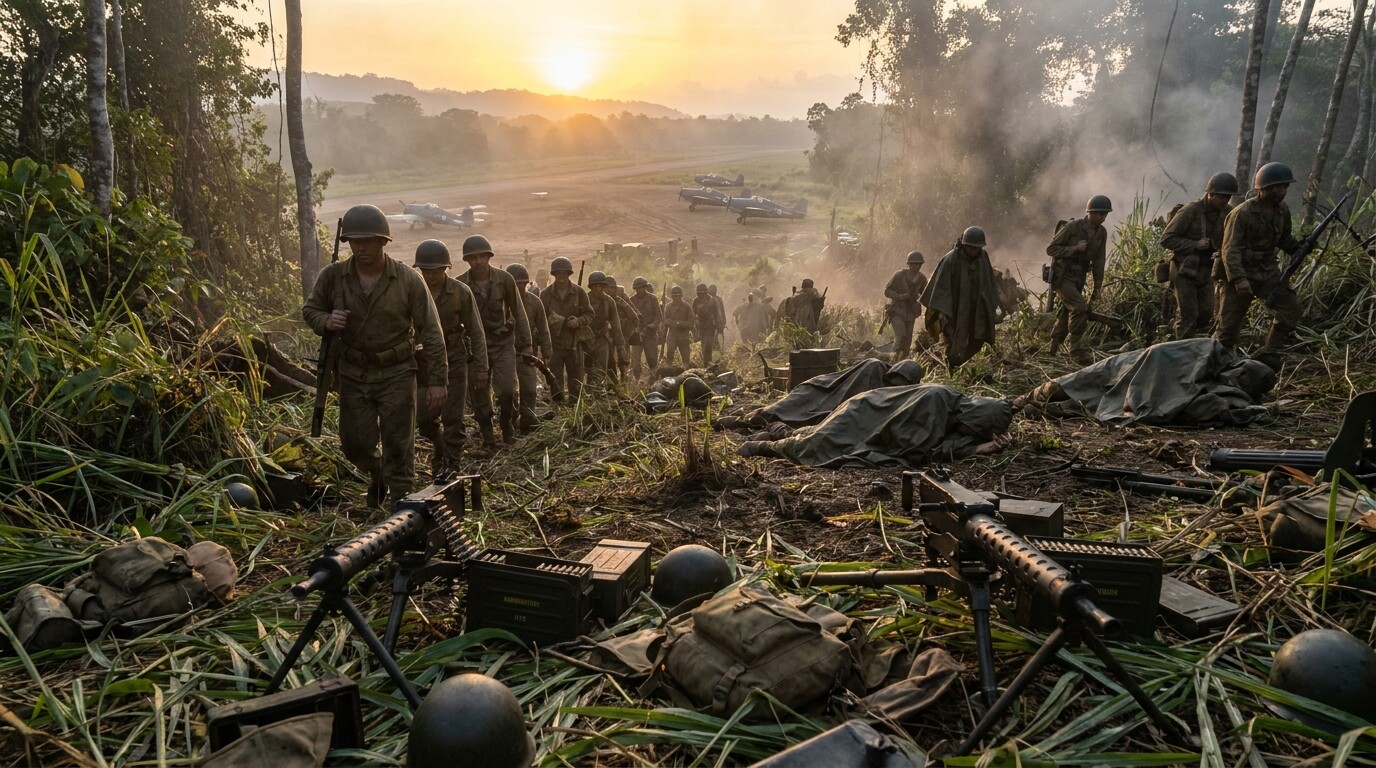
For the next three hours, Paige fought a running battle across the ridge line. He would fire from one position until Japanese riflemen zeroed in on his muzzle flashes, then move to another gun and resume the defense. The water-cooled Brownings allowed him to maintain sustained fire without overheating—a crucial advantage in the prolonged engagement.
The Japanese infantry, trained for rapid assault and close combat, found themselves pinned down by accurate machine gun fire from multiple positions. They could not mass for a coordinated attack because Paige's guns swept every approach route. When they tried to flank one position, fire from another gun caught them in the open. The effect was devastating—and exactly what the machine gun section was designed to achieve with a full crew of sixteen Marines.
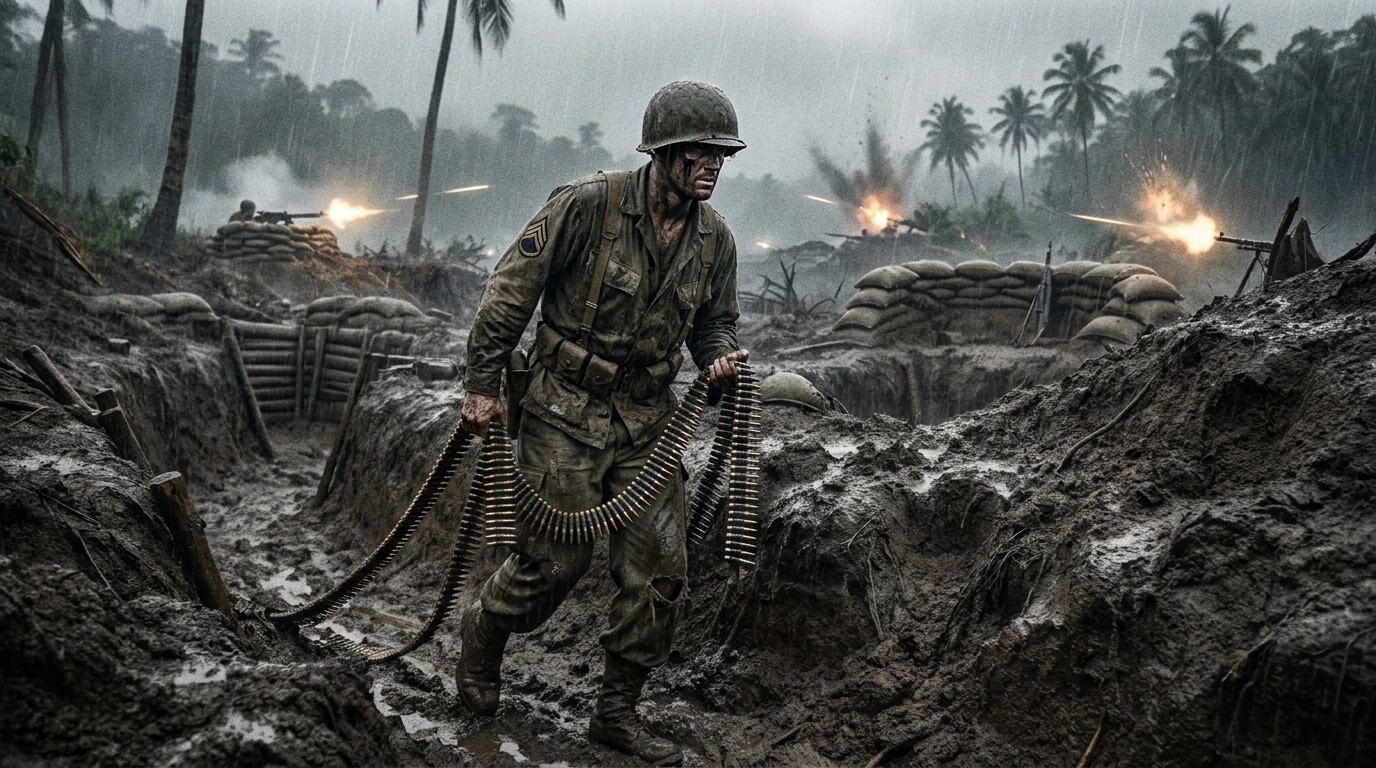
Paige's ammunition supply became critical as the night wore on. Each Browning consumed 250-round belts at an alarming rate during sustained fire. He had to carefully manage his remaining ammunition, firing in short bursts to conserve rounds while maintaining the volume of fire necessary to hold back the Japanese assault. Every belt fed into the guns brought him closer to running dry.
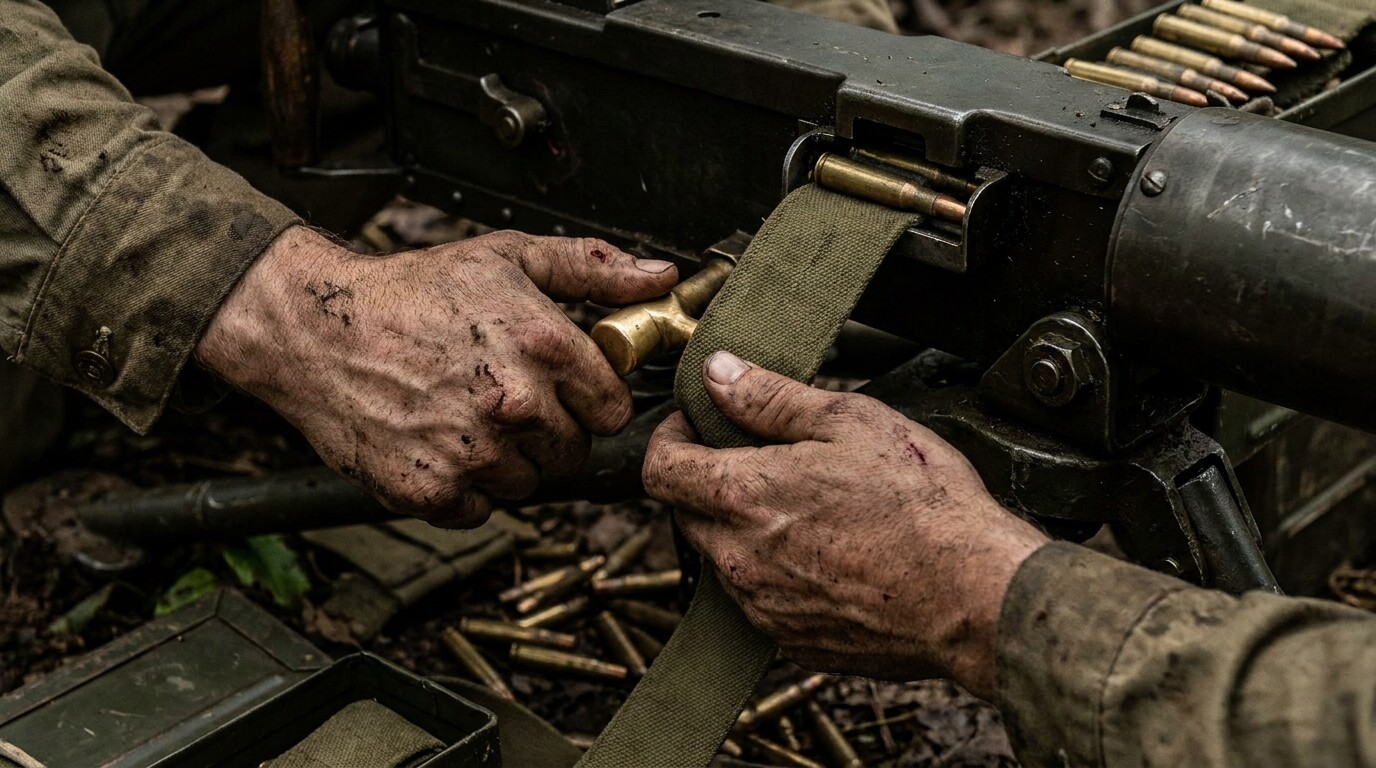
The physical demands were enormous. The Browning's operating handle required significant force to cycle the action, especially when the gun heated up during sustained fire. Paige had to manually traverse each weapon to engage new targets, adjust elevation for different ranges, and reload ammunition belts—all while under direct enemy fire. His hands were torn and bleeding from handling hot metal and rough ammunition belts in the darkness.
Weather added to the challenge. Guadalcanal's tropical climate meant high humidity that could cause ammunition to misfire and metal components to corrode rapidly. The island's frequent rain showers turned the ground to mud and reduced visibility to mere yards. Paige fought through intermittent downpours that obscured his targets and made footing treacherous on the muddy ridge.
The Japanese pressed their attacks with desperate intensity. Tsuji's plan depended on breaking through the Marine perimeter before dawn, when American air power would dominate the battlefield. Every hour that passed reduced the chances of Japanese success. Officers drove their men forward with swords and pistols. NCOs led by example, charging into the machine gun fire. Individual soldiers made suicidal rushes at the American positions.
Yet Paige held. His four machine guns maintained overlapping fields of fire that no Japanese unit could cross. Bodies piled up in the elephant grass as attack after attack broke against the concentrated firepower of the Browning guns. The ridge that had seemed so vulnerable with a single defender became an impregnable fortress through superior weapons employment and unshakeable determination.
As dawn approached, the Japanese attacks became more desperate and less coordinated. Unit cohesion broke down under the sustained machine gun fire. Officers were killed leading futile charges. Communications failed in the chaos of night combat. What had begun as a carefully planned assault devolved into isolated rushes by small groups of survivors.
Paige could hear friendly voices calling from behind his position as Marine reinforcements moved up to support the defense. Fresh ammunition carriers brought belts for the machine guns. Medics treated the wounded. Officers coordinated defensive fires. The ridge that had been held by one man for three hours was suddenly alive with Marine activity.
The Japanese 2nd Division's assault had failed. Daylight revealed hundreds of enemy dead scattered across the approaches to Henderson Field. The cost to Paige's machine gun section was severe—most of his original sixteen-man section were casualties—but the critical position had held. Henderson Field remained in American hands.
Paige's action was immediately recognized by his superiors. The official after-action reports credited his individual courage and tactical skill with preventing a breakthrough that could have cost the Marines Henderson Field. Witnesses described his movement between machine gun positions under fire and his sustained defense of the ridge throughout the critical hours before dawn.
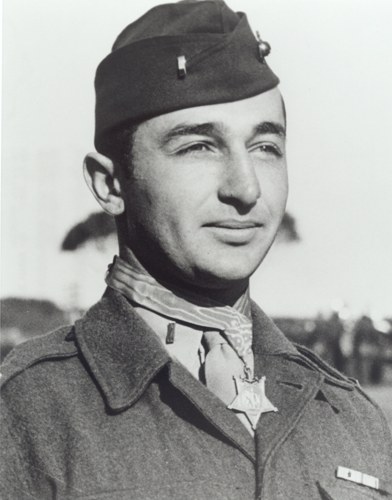
The Medal of Honor citation, approved by President Roosevelt in 1943, reads in part: "When the enemy broke through the line directly in front of his position, P/Sgt. Paige, commanding a machine gun section with fearless determination, continued to direct the fire of his gunners until all his men became casualties or were forced to withdraw. Alone, against the deadly hail of Japanese shells, he fought with his gun and when it was destroyed, took over another, moving from gun to gun, never ceasing his withering fire against the advancing hordes until reinforcements finally arrived."
The broader context of Paige's action extends far beyond individual courage. The Battle for Henderson Field on October 25-26, 1942, represented the climactic moment of the Guadalcanal campaign. Japanese failure to retake the airfield marked the beginning of their long retreat across the Pacific. Henderson Field became the launching point for subsequent Allied offensives up the Solomon Islands chain toward Japan itself.
Paige survived the war and remained in the Marine Corps until retirement. He rarely spoke publicly about his actions on Guadalcanal, consistent with the professional military ethic that extraordinary performance under fire was simply doing one's duty. His Medal of Honor was one of seven awarded to Marines during the Guadalcanal campaign, reflecting the sustained intensity of combat throughout the six-month battle for the island.
The machine gun tactics Paige employed—interlocking fields of fire, disciplined ammunition management, and movement between prepared positions—became standard doctrine for Marine units throughout the Pacific War. His demonstration that superior weapons employment could multiply combat effectiveness influenced Marine Corps training and tactical development for decades.
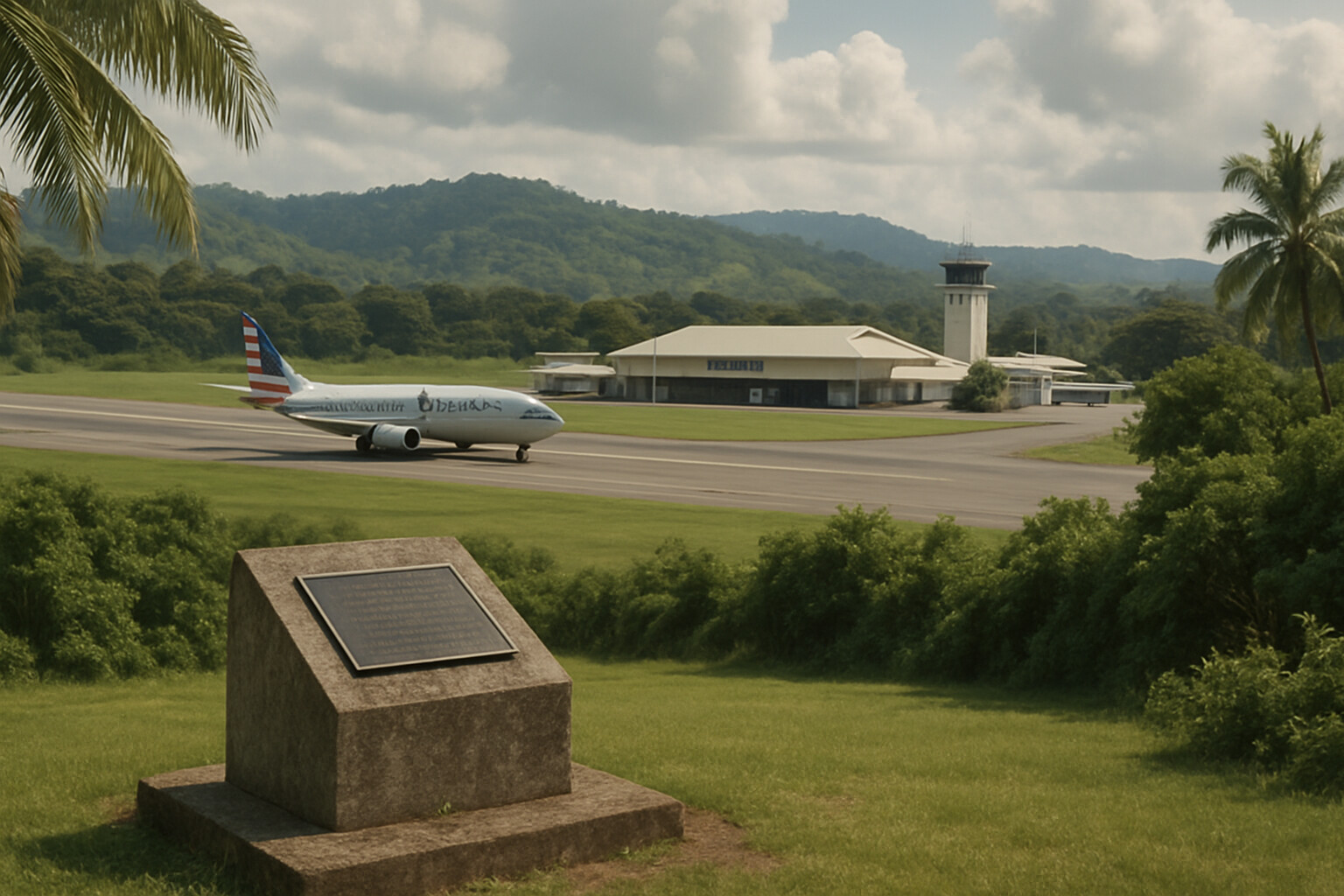
Today, Henderson Field serves as Honiara International Airport, the civilian terminal built over runways that Marine engineers carved from the jungle in 1942. The ridge where Paige made his stand has been reclaimed by tropical vegetation, but the tactical principles he demonstrated remain relevant to modern military forces. His action exemplifies the Marine Corps emphasis on individual initiative, technical proficiency, and absolute determination in the face of overwhelming odds.
The lesson of Mitchell Paige's stand extends beyond military history to the broader human capacity for courage under extreme pressure. When the choice came between personal safety and mission accomplishment, a career NCO with eight years of peacetime service chose to fight alone against impossible odds. His decision held a ridge, saved an airfield, and helped determine the outcome of the Pacific War.