Documents and naval plans in wartime shadow

Deception | Naval Intelligence | 1943

Operation Mincemeat

One of the war's most elegant deceptions began with a corpse in a uniform. British planners needed Germany to doubt Sicily, the obvious stepping stone for the Allied invasion of southern Europe. So they manufactured a human story so intimate, so cluttered, and so plausible that it could carry strategic lies into enemy hands.

Strategic problemMask the invasion of Sicily
Key playersNaval Intelligence, MI5, deception planners
Core methodPlanted documents on a false officer

Why it mattered

A tactical fiction with strategic consequences

By spring 1943 the Allies were preparing to invade Sicily, the natural gateway after North Africa. German commanders could see that as clearly as Allied planners could. The challenge was not to invent an absurd alternative, but to create enough uncertainty that Axis forces would hedge, misallocate, and hesitate. Operation Mincemeat aimed to reinforce the idea that the Allies were really focused on Greece and Sardinia.

Its significance lies in timing and scale. If Germany dispersed attention, moved commanders, and weighted defenses elsewhere, Sicily would become less expensive to seize. In deception work, success rarely means the enemy believes a fantasy absolutely. It means he adjusts real forces in response to a believable possibility. Mincemeat achieved exactly that.

Officer's briefcase and sealed letters

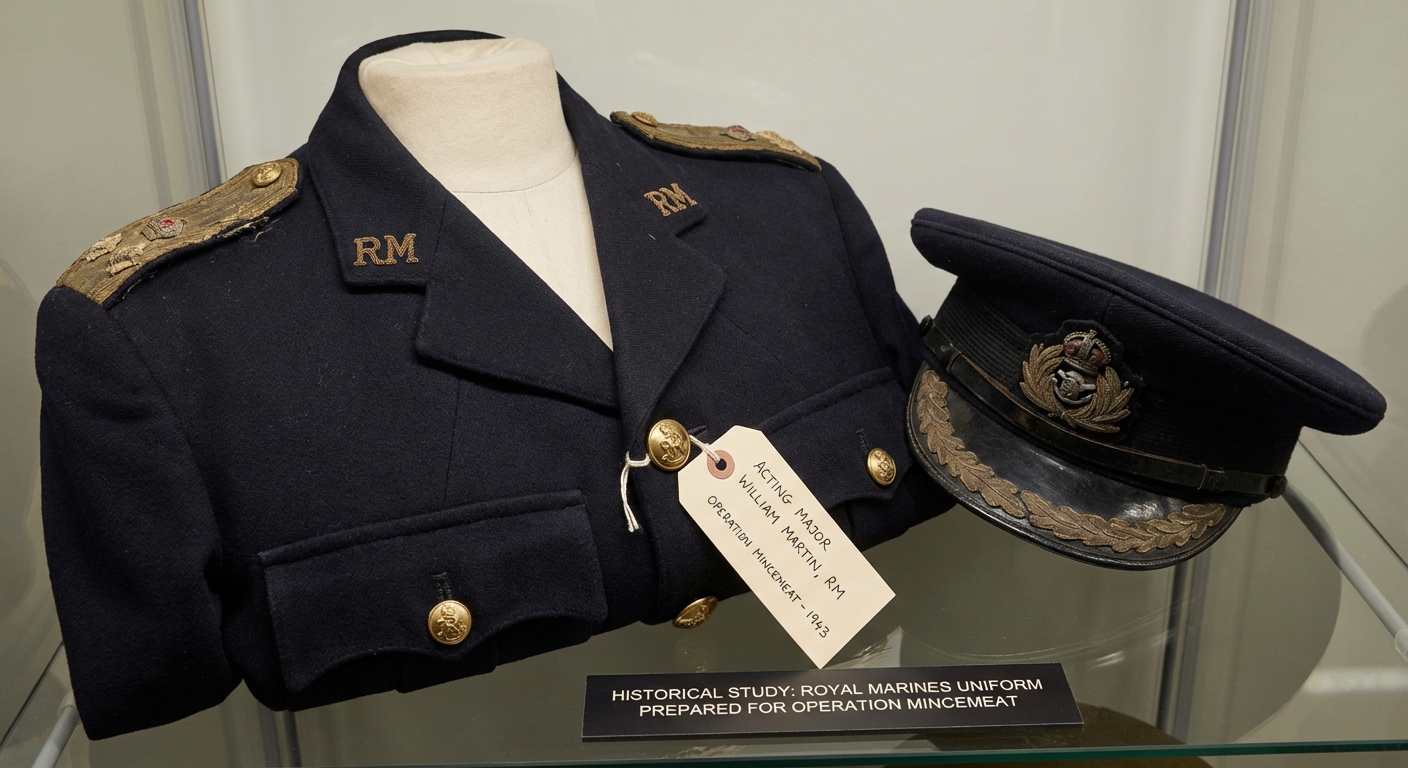
Building Major Martin

The dead man was given a new identity, Major William Martin, Royal Marines. His pockets carried the debris of life: tickets, receipts, personal letters, and proof of affection. The papers mattered, but the man had to feel real first.

Coastal waters near Spain

The Spain channel

The body was released off the coast of Spain, where officials were formally neutral but porous enough for German intelligence to inspect anything interesting. The planners counted on bureaucratic leakage, not cinematic theft.

Command maps of the Mediterranean

Why the Germans bought it

The letters hinted at Greece and Sardinia while treating Sicily as a diversion. Because Sicily was already obvious, the documents seemed to reveal the concealed truth behind the obvious truth. That inversion is classic good deception.

Tradecraft dossier

Anatomy of a believable lie

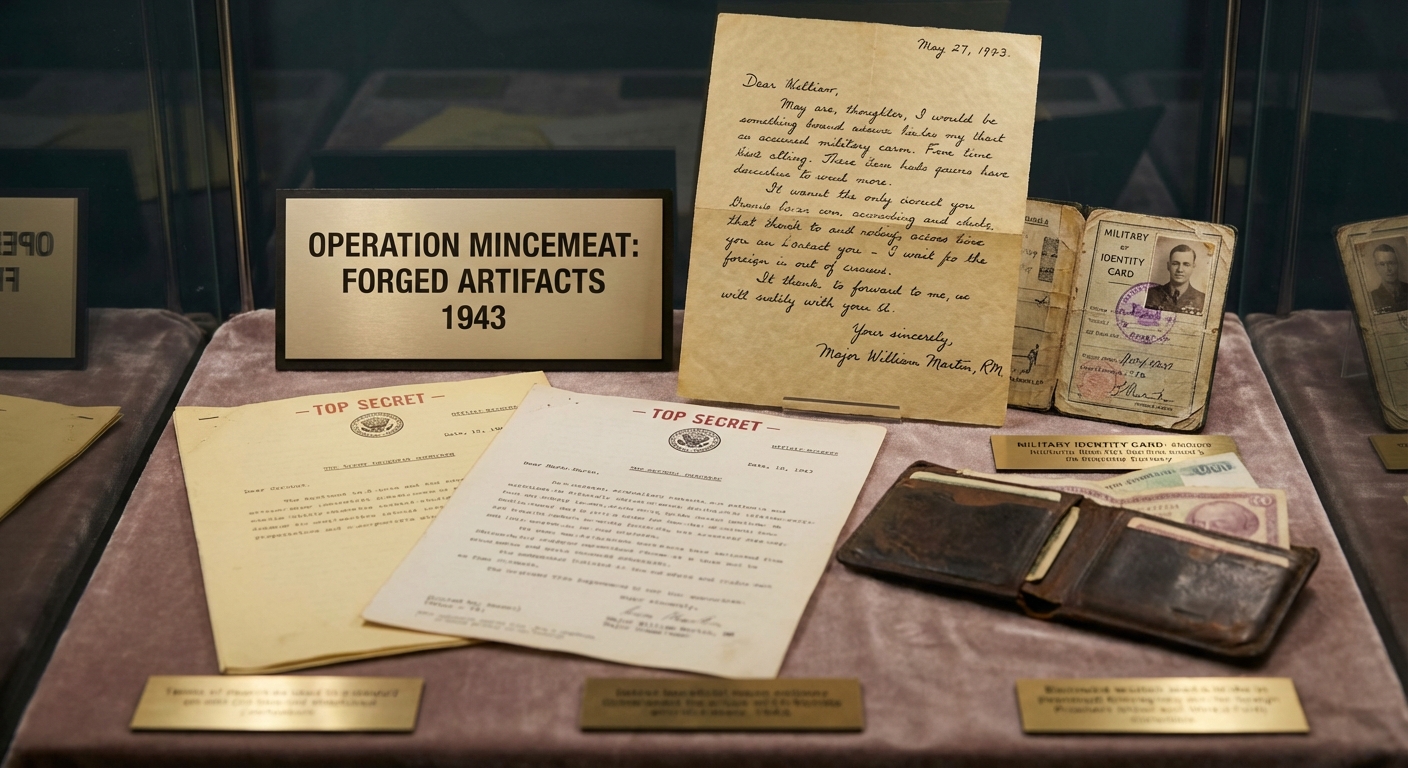
Forged letters and official papers

Official correspondence

The central letters carried the deception, but their tone was crucial. They needed enough specificity to be useful and enough casualness to feel unguarded, as if the reader had caught a private exchange never meant for hostile eyes.

Mediterranean planning map

Strategic framing

The success of Mincemeat depended on the broader Mediterranean context. Greece, Sardinia, and Sicily had to sit inside a pattern of feints and rival possibilities. Deception works best when it joins an argument already underway.

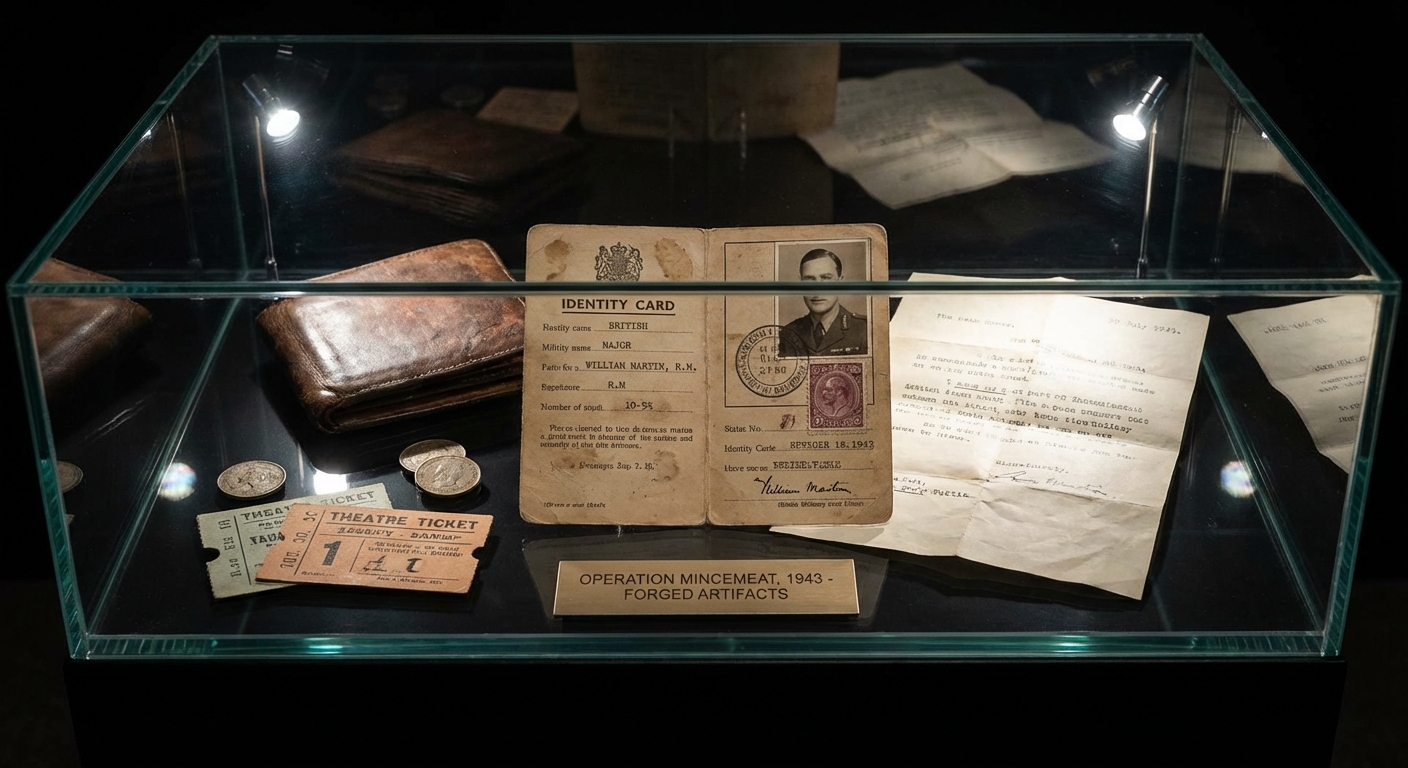
Personal effects on a dead officer

Pocket litter

Receipts, keys, theater stubs, overdue bills, and a photograph of a supposed fiancée made the body human. Intelligence officers know that convincing details are often untidy, not polished.

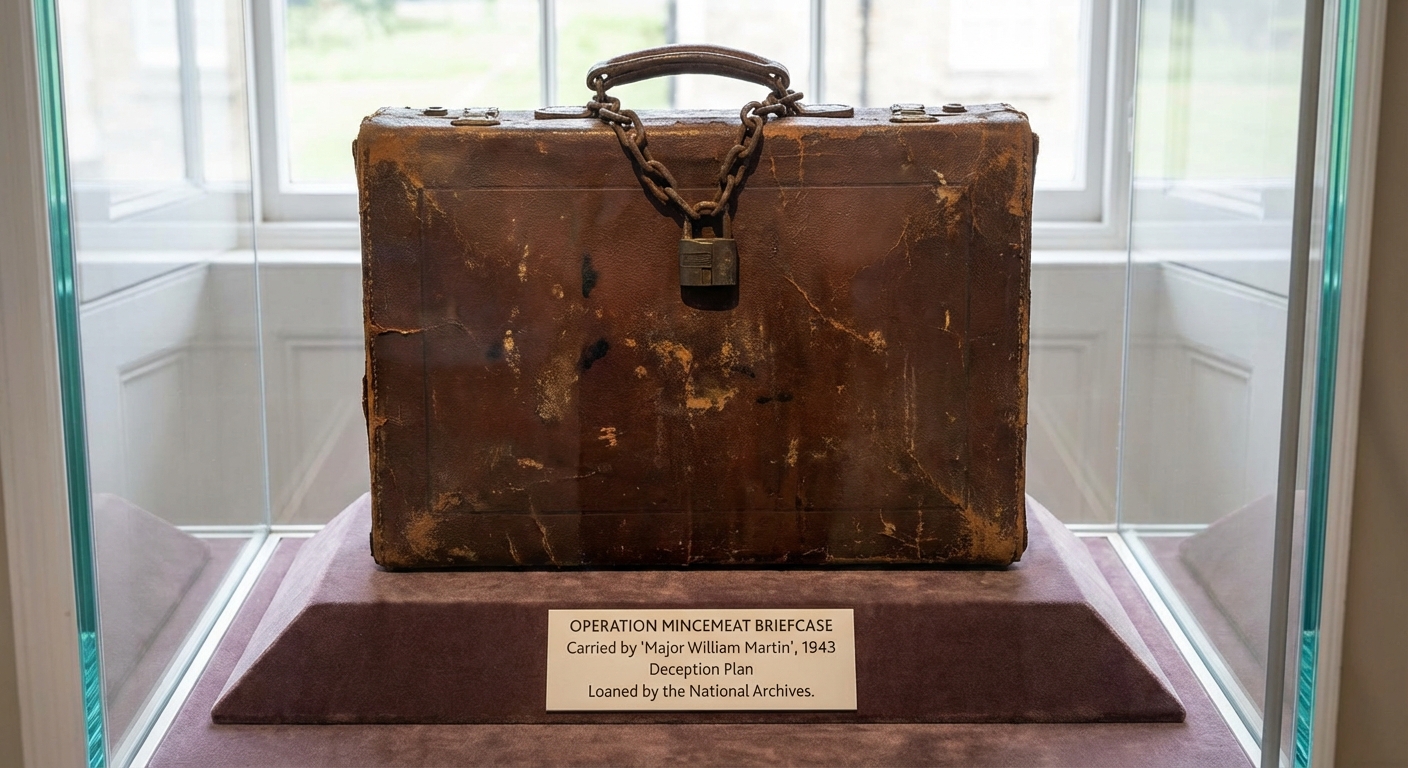
Chained briefcase used for deception

Controlled discoverability

The briefcase had to look recoverable, important, and vulnerable. The operation relied on adversaries doing what professionals do when they find something almost too valuable to ignore: they read it and quietly pass it upward.

Allied landing planning in the Mediterranean

Intelligence record

Effects on the Sicily campaign

  • Operational goal: Support Husky, the Allied invasion of Sicily, by pushing German attention toward alternate targets.
  • Enemy response: German leadership treated the documents seriously enough to reinforce and reconsider deployments in Greece and the broader eastern Mediterranean.
  • Why that mattered: Every unit, aircraft, and staff hour shifted away from Sicily reduced pressure on the actual landing zone.
  • Proof of success: The true measure was not a confession from Berlin, but observable movement and concern in response to the deception.

Operation Mincemeat did not win Sicily by itself. No single deception does. Its achievement was to make the obvious look incomplete, and that is often enough to bend an enemy's decisions at a critical hour.

Legacy

The gold standard of narrative deception

Mincemeat endures because it shows that intelligence is often literature with logistics attached. The operation succeeded not through flamboyance but through disciplined empathy. Its architects asked what enemy analysts would believe, what biases they already carried, and what tiny signs would make a fabricated life ring true.

There is also an ethical shadow to its legend. A real human body was used as an instrument of war, and modern retellings sometimes glide too quickly past that fact. The operation remains brilliant, but its brilliance is inseparable from the cold moral arithmetic of total war.