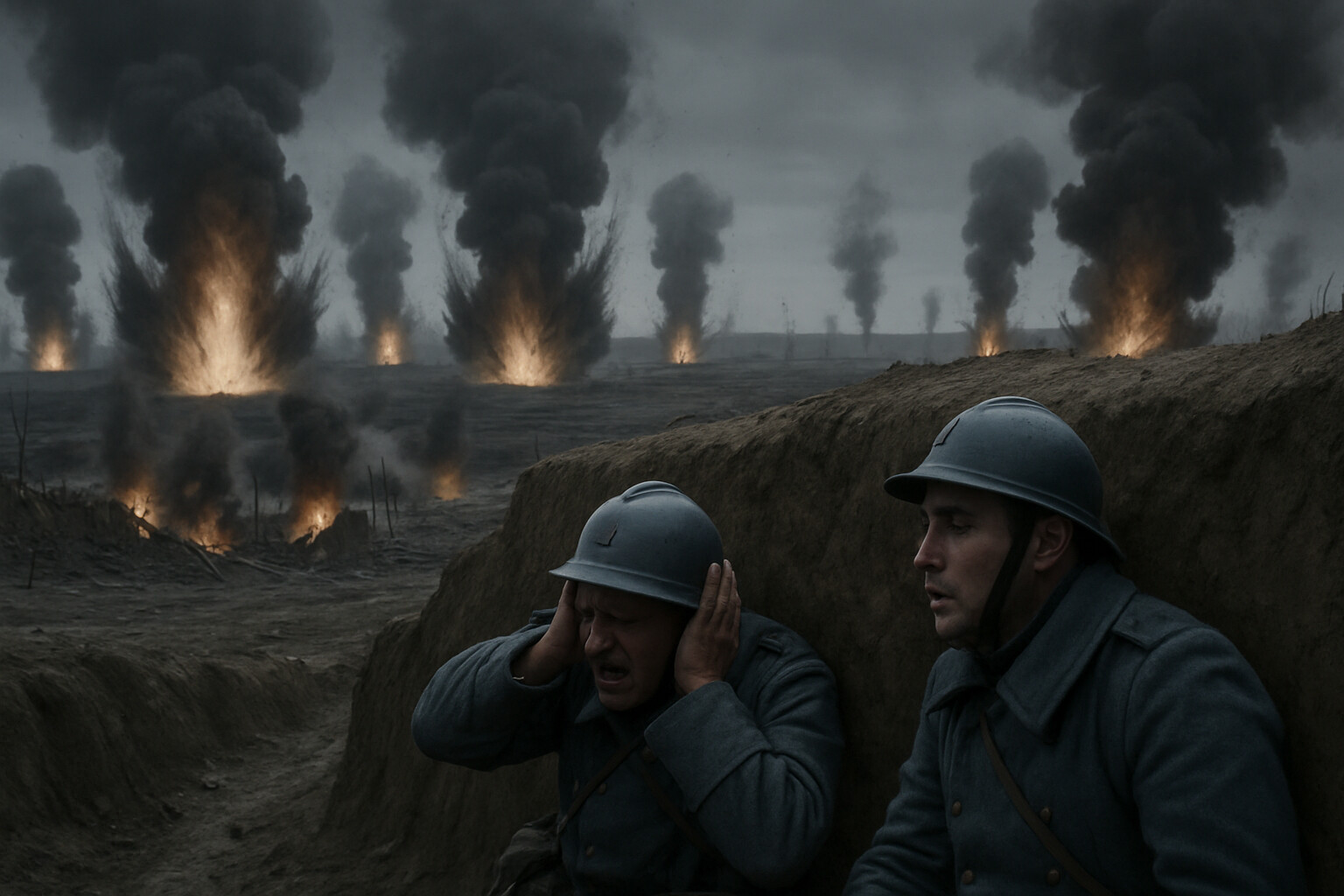
The shells had been falling since before dawn.
On the morning of February 21, 1916, German artillery opened fire along an eight-mile front northeast of Verdun. It was not merely a bombardment. It was an erasure. More than 1,200 guns — field pieces, howitzers, and siege mortars of every caliber the German army could concentrate — hammered a landscape already reduced by two years of war to grey mud and shattered timber. The barrage lasted nine hours. French officers in the forward trenches reported afterward that the ground shook continuously. By mid-afternoon, entire French infantry companies had ceased to exist as coherent units. The villages of Haumont, Herbebois, and Brabant were rubble. The first German infantry went forward through the smoke at four in the afternoon, cautiously, almost puzzled that any resistance could remain.
Some did.
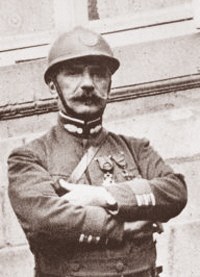
In the Bois des Caures, a patch of forest northeast of Verdun, Lieutenant Colonel Émile Driant led two battalions of Chasseurs — elite light infantry — against the advancing German tide. Driant, who was also a member of the French Chamber of Deputies and had spent months warning his superiors about the inadequate state of Verdun's defenses, was killed in the wood on February 22. His two battalions, roughly 1,200 men, delayed the German advance by two full days. Those two days would matter.
By the time Philippe Pétain arrived to take command of the Verdun sector on the night of February 25–26, the situation was close to catastrophic. Fort Douaumont — the largest and most heavily armored fortification in the Verdun ring — had fallen that same afternoon to a German raiding party of fewer than a dozen men who found it nearly unmanned. The front had collapsed inward. French troops were falling back toward the city. Pétain arrived at his new headquarters in Souilly in the early hours of February 26 and immediately set to work.
What followed over the next ten months was not a single dramatic battle. It was something more complex and, in its way, more demanding: a sustained act of military organization under conditions of extreme and unrelenting violence, conducted by a general whose greatest skill was not the brilliant offensive maneuver but the preservation of the fighting capacity of his men.
---
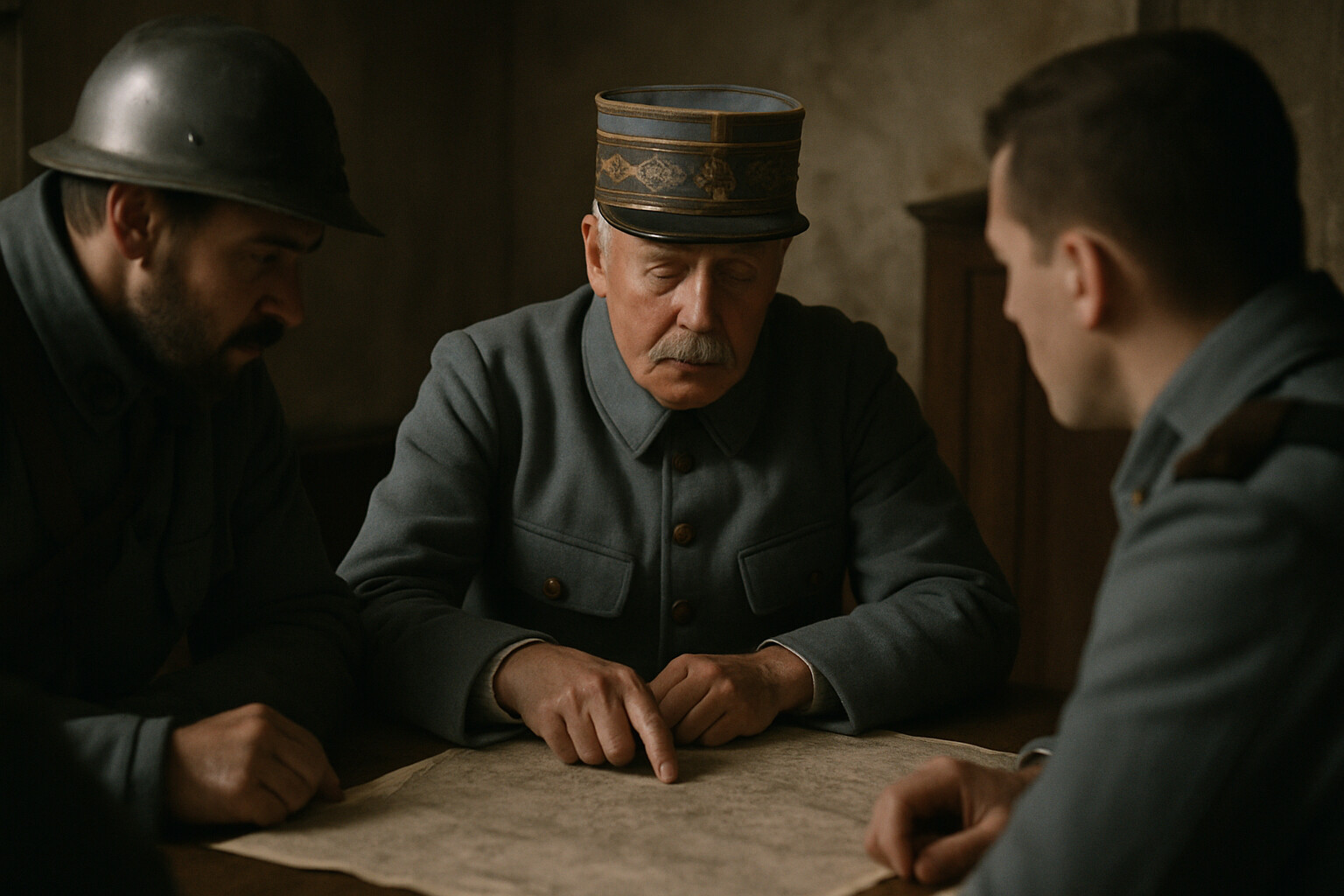
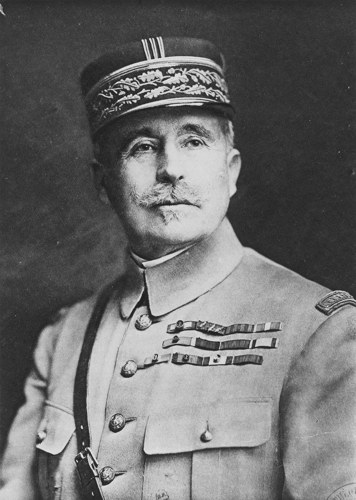
Philippe Pétain was sixty years old in February 1916, born in 1856 to a farming family in the Pas-de-Calais. He had spent nearly four decades in the French Army, rising steadily but without exceptional speed, serving in various infantry assignments and teaching at the École de Guerre. There he had developed views on infantry tactics that set him apart from the dominant doctrine of the time. Where most French military thinking before 1914 celebrated the offensive — the attack carried forward by élan, by spirit, by the aggressive will of the French soldier — Pétain insisted that firepower killed men in the open, that artillery preparation was decisive, and that infantry attacking without adequate fire support would die in large numbers for little gain. These views were controversial before the war. The opening campaigns of 1914 confirmed them at terrible cost.
By 1915 he had commanded at corps and army level, demonstrating at Artois and elsewhere that he could organize a deliberate attack with careful artillery coordination. He was not universally liked — he was famously precise, cold, and demanding — but he was trusted by his soldiers in a way that went beyond the ordinary relationship between French commanders and their men. He visited units in the line. He listened to what officers reported about conditions. He was seen.
Those qualities were exactly what the crisis at Verdun required.
The city of Verdun sits on the west bank of the Meuse River in the Lorraine region of northeastern France, roughly 260 kilometers east of Paris. It had been a fortified position since Roman times. After France's defeat in the Franco-Prussian War of 1870–71, Verdun became the anchor of a new defensive network, its ring of forts dominating the heights on both banks of the Meuse. The most formidable were Fort Douaumont and Fort Vaux on the east bank, commanding the high ground from which any attacker would need to be driven before the city itself could be threatened.
By 1916, however, these forts had been partially stripped of their garrisons and guns. The opening months of the war — in which Belgian forts at Liège and Namur had been destroyed by German siege howitzers within days — had led French planners to question the value of fixed fortifications. Guns and troops were transferred to more active sectors. The ring of concrete and steel remained, but it was hollowed out. It was this hollowed-out fortress system that the Germans chose as their target.
The German plan for the Battle of Verdun — Operation Gericht, roughly translated as "Place of Execution" or "Place of Judgment" — was the conception of General Erich von Falkenhayn, the German Chief of the General Staff. In his postwar memoirs, Falkenhayn described his strategy as not necessarily the capture of Verdun but the forcing of France to defend it. He calculated that Verdun held such symbolic weight in French national consciousness that France would commit her reserves regardless of cost, and that Germany, attacking with a prepared concentration of artillery, could inflict casualties at a ratio so favorable that France would approach strategic collapse. Whether Falkenhayn conceived the battle in precisely these terms from the outset, or whether this explanation was a retrospective justification for what became a costly stalemate, remains contested among historians — notably in Robert Foley's study of Falkenhayn's strategic planning. The effect, whatever the original intent, was a battle of attrition that consumed both sides.
The German attacking force was the Fifth Army, commanded by Crown Prince Wilhelm, son of Kaiser Wilhelm II. The attacking corps were among the best in the German order of battle, supported by the heaviest concentration of artillery yet assembled on the Western Front. The guns ranged from 77mm field pieces and 150mm field howitzers up through 210mm heavy howitzers and 420mm siege pieces of the type that had crushed Belgian forts in 1914. German artillery planning was meticulous: ammunition had been stockpiled over months, railway infrastructure was constructed specifically to sustain the bombardment, and the fire plan was organized to suppress French positions systematically before infantry advanced. France was not prepared for what hit it on February 21.

---
Pétain arrived at Souilly — a small town on the road south of Verdun that would serve as Second Army headquarters — late on the night of February 25. He had barely slept. Some accounts from the period describe him as feverish in those first days at Souilly, with pneumonia suggested as a cause, though the precise medical details are not well documented in available sources. What is documented is that he sat down with his staff and began work immediately.
His first priority was the road.
Verdun had only one line of communication not threatened by German artillery: a secondary road running from Bar-le-Duc in the south to Verdun, roughly 56 kilometers long. The railways into Verdun had been cut or were under fire. This road — soon to be called the Voie Sacrée, the Sacred Way, a name coined afterward by the journalist Maurice Barrès — was the only artery through which men, ammunition, food, and materiel could flow into the battle. In the first days it was a dirt road barely adequate for heavy military traffic.
Pétain organized its management with systematic precision. He established regular intervals between vehicles to prevent traffic jams. He set up repair teams at frequent intervals along the road to pull out broken vehicles immediately, keeping the flow uninterrupted. He organized rotating shifts of territorial troops — older soldiers used for rear-area duties — to spread crushed stone and gravel on the surface continuously, because the constant weight of laden trucks was destroying the road surface faster than conventional maintenance could address. French military records and subsequent scholarly histories document the scale of the operation: at its peak, a truck passed a given point on the Voie Sacrée every fourteen seconds, around the clock. Widely cited aggregate figures — approximately 190,000 men and 25,000 tons of supplies moved along the road in its first week of organized operation — appear in multiple secondary accounts, though these figures should be verified against original Second Army logistics records before being treated as precise daily tallies.
The second thing Pétain organized was the rotation of divisions.
Previous French and German practice was to hold divisions in a given sector until they were ground down, then relieve them. Pétain changed this at Verdun. He established a system — sometimes called the noria, the waterwheel — in which French divisions were rotated in and out of the sector on a much faster schedule, typically spending a limited number of days in the line before being pulled back to rest and refit. The effect was twofold. No single division was held in the forward zone until it disintegrated. And the experience of Verdun — the particular trauma and hardening of that battlefield — was spread deliberately across the French Army as a whole. By the end of the battle, approximately 70 percent of the French Army's divisions had served at Verdun. Pétain's intention, as described in various postwar accounts including his own memoir, was that the burden should be shared; the precise language differs between sources and his memoir carries the standard cautions of a self-authored account.
Sharing the burden was not the same as reducing it.
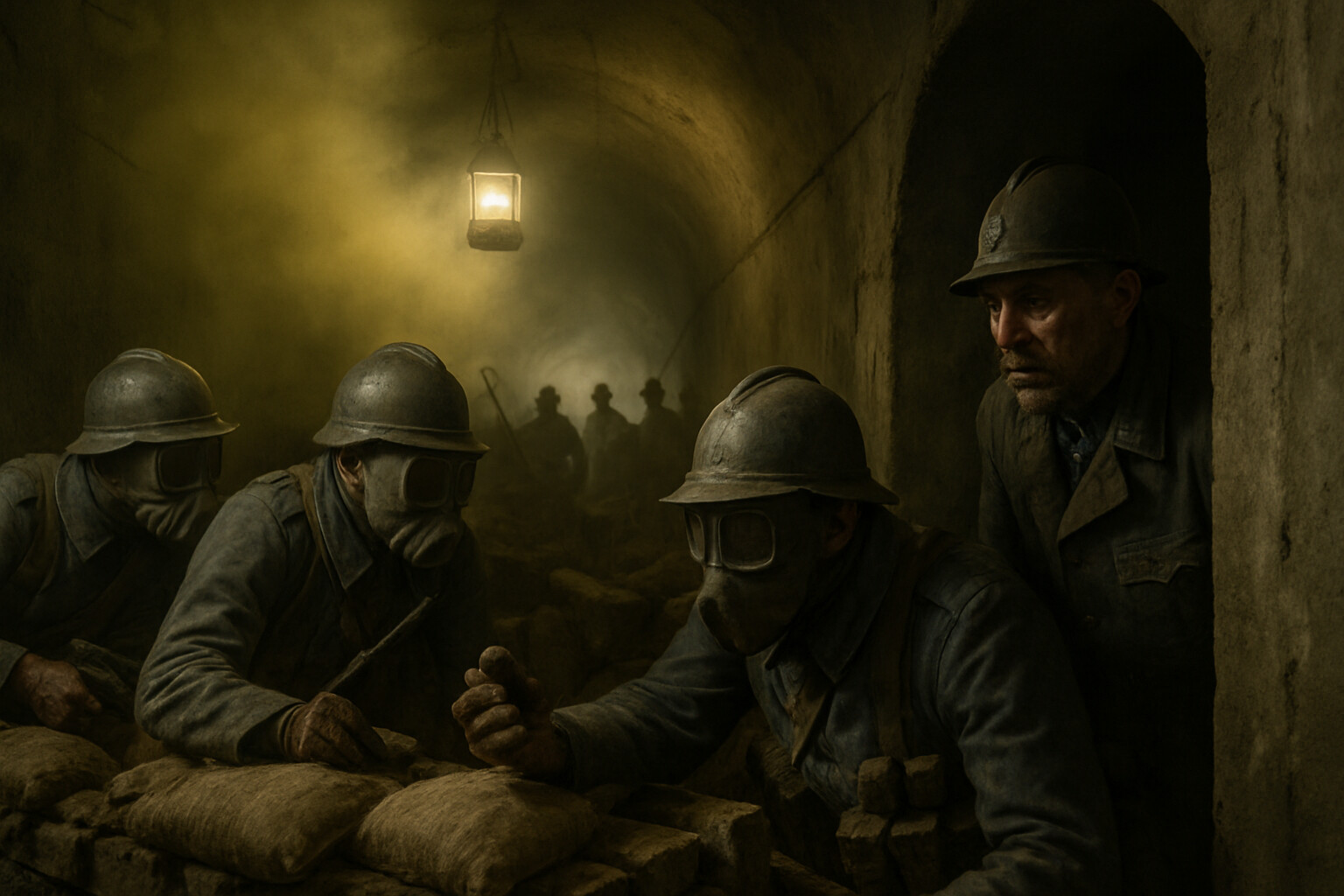
The conditions at Verdun through the spring and summer of 1916 were among the worst sustained by any army in the war. The bombardment never fully stopped. German artillery fired at observed targets and suspected positions continuously. The ground in the battle zone was cratered so densely that maps became unreliable. Water collected in the shell holes. The bodies of men killed in earlier fighting lay unburied, because burial parties could not work in the open under fire. Gas shells added a chemical dimension to conventional high-explosive and shrapnel rounds. Men moved between positions at night when they could, crawling where necessary, carrying their own ammunition and rations because pack animals could not survive in the forward zone. Across dozens of published survivor memoirs, in both French and German, these conditions appear in consistent terms — though individual details naturally vary.
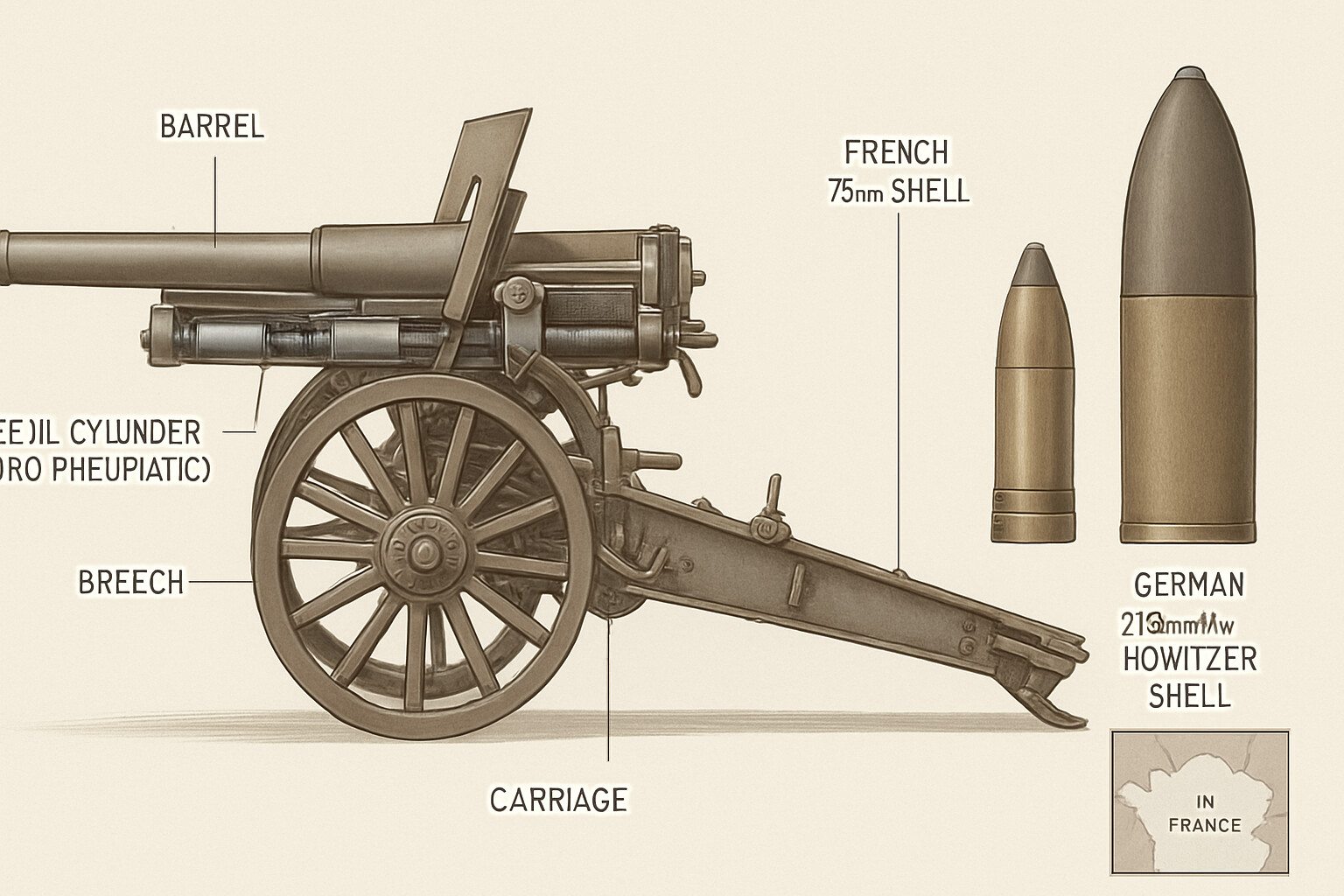
The weapons that shaped Verdun were primarily artillery. The German 210mm howitzer — a heavy siege weapon capable of reaching ranges beyond nine kilometers with shells weighing approximately 110 kilograms — was among the primary instruments of destruction, able to collapse field fortifications that could easily resist the lighter French 75mm field gun. The French 75 — the iconic soixante-quinze that had been the pride of the French Army since 1897 — was fast-firing and accurate at battlefield ranges, but its relatively light shell could not match German heavy artillery in the weight needed to destroy prepared positions. France rushed heavier pieces to Verdun as the battle developed, including 155mm howitzers and guns reclaimed from obsolete fortification roles, but the disparity in heavy artillery between the two forces was a constant operational constraint throughout the early months.
At the infantry level, the French soldier at Verdun carried the Lebel bolt-action rifle, in service since 1886 and by 1916 considered somewhat dated, though it remained serviceable. The Chauchat light machine gun — officially the Fusil Mitrailleur Modèle 1915 CSRG — was being issued in increasing numbers to French infantry sections, providing automatic fire at the squad level. Its reliability under the mud and debris conditions of the battle was problematic; field accounts describe frequent stoppages. The French Hotchkiss M1914 and the German MG 08 — both capable of sustained fire that could dominate open ground — defined the defensive character of the battlefield on both sides. Machine guns in prepared positions made any frontal assault across open ground a lethal proposition, and every French and German tactical plan at Verdun had to account for that reality.
German infantry in the assault used the Gewehr 98 bolt-action Mauser rifle as their standard arm. German assault tactics — small groups using grenades, flamethrowers, and initiative to infiltrate positions rather than advance in massed lines — were developing actively during this period and were employed in certain operations at Verdun. The Flammenwerfer, the portable flamethrower carried by German engineer teams, appeared in the opening assault of February 21 and is documented in multiple French survivor accounts of those first days. Its effect was partly physical — burning oil mixture, the blocking of entrances, the risk to wooden structures — and partly the disruption that fire in an enclosed space produces in defenders with limited options.
---
Through March, April, and May of 1916, the battle ground forward and backward across the heights north of Verdun. German forces captured Fort Vaux in June after a defense of extraordinary tenacity by the garrison under Commandant Sylvain-Eugène Raynal. His men held the fort for seven days after German forces breached the outer works and entered the superstructure, fighting in dark, gas-filled interior corridors until the garrison's water supply was entirely exhausted. Raynal sent carrier pigeons with reports of his situation; the last bird — which became part of French popular memory of the battle — died from gas exposure after delivering its message, though some details surrounding it in popular retellings are more embellished than the official record supports. The fort fell on June 7, 1916. Raynal surrendered and was taken prisoner. Postwar accounts, including Raynal's own published memoir, describe the German officer who accepted the surrender offering a formal acknowledgment of the defense; the precise words and gestures exchanged vary between sources, and the specific identity of the German commander in that moment has not been established to a consistent standard across available accounts.
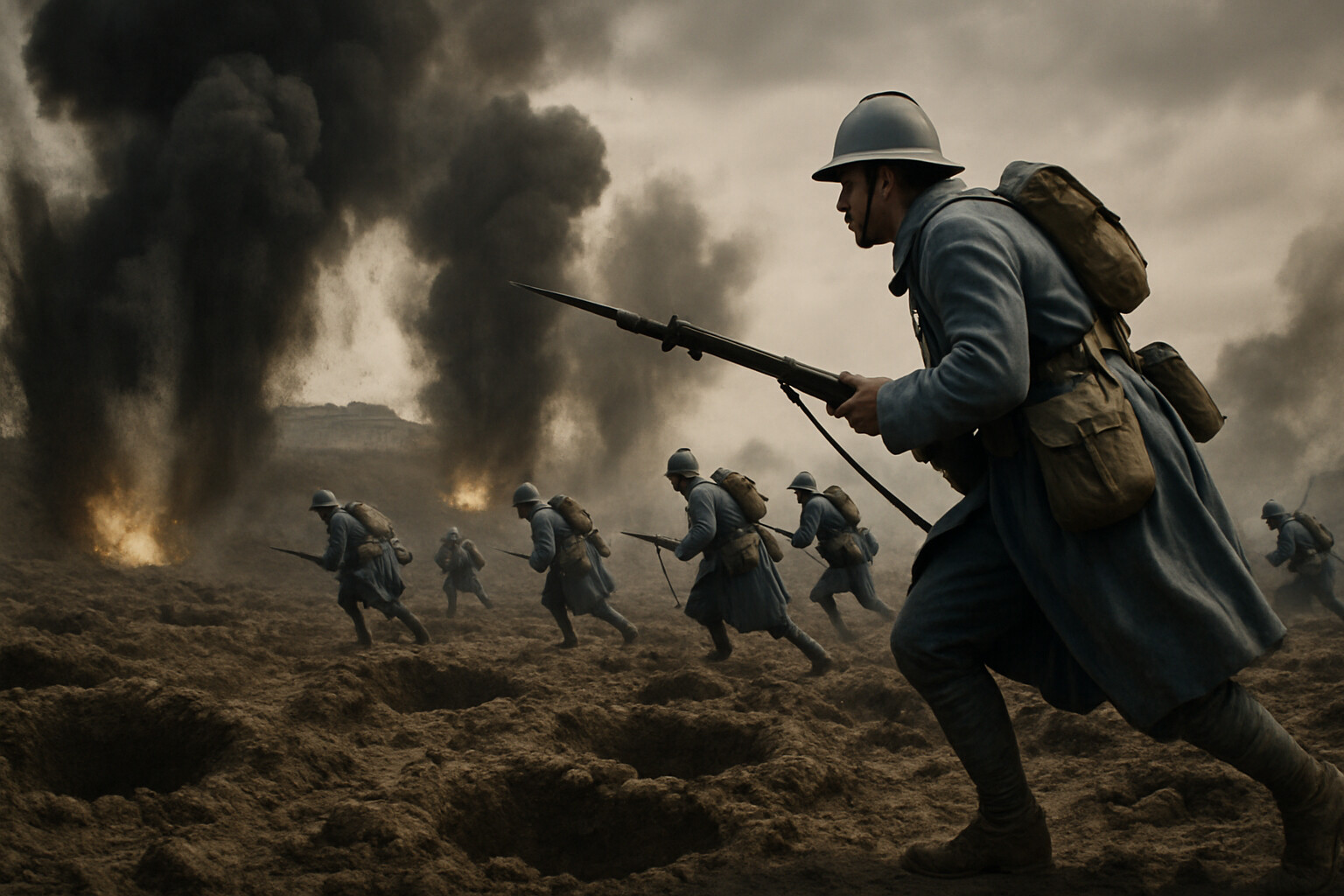
Pétain, by this point, had been promoted out of direct command. In late April 1916, General Robert Nivelle replaced him in command of the Verdun sector, and Pétain moved up to Army Group Centre, coordinating the broader defensive effort. The decision reflected both the recognition of Pétain's success in stabilizing the situation and a persistent concern among senior commanders that he was insufficiently aggressive — too focused on limiting casualties rather than seizing initiative. Nivelle was more willing to launch counterattacks, and the French high command under General Joffre wanted a more active posture at Verdun.
The transition did not remove Pétain from the Verdun story. He continued to supervise the rotation system, the supply operation, and the allocation of artillery ammunition from army group headquarters. The relationship between Pétain and Nivelle was professionally correct but not personally warm, and the direction of the Verdun defense under Nivelle had a different character — more frequent counterattacks, higher casualties in some periods, and the operations of late 1916 that would eventually recover much of the lost ground.
The summer of 1916 brought two developments that gradually eased the pressure at Verdun. On July 1, the British Army launched the Battle of the Somme, drawing German reserves and attention northward. The Somme was itself an attempt to relieve Verdun, and it came at enormous cost: approximately 57,000 British casualties on the first day alone — the bloodiest single day in the history of the British Army. On the Eastern Front, the Brusilov Offensive, launched by the Russian Army in early June, struck the Austro-Hungarian lines with devastating effect and forced Germany to shift forces east. These concurrent Allied operations, though not part of a tightly coordinated strategic plan by modern standards, collectively prevented Germany from concentrating its full weight on Verdun.
German pressure at Verdun gradually subsided through the summer. Fort Souville — the last major fortification between the German advance and Verdun itself — was attacked in July but held. By autumn, French forces had begun to prepare their counteroffensives. In October and December 1916, under Nivelle's direction, carefully prepared French attacks used a rolling barrage — artillery fire advancing in timed lifts just ahead of the infantry — to suppress German positions as the assault companies crossed the open ground. Fort Douaumont fell back to French forces on October 24. Fort Vaux was recaptured on November 2. The German armies at Verdun, exhausted and committed to other crises, could not hold what they had taken at such cost.
The Battle of Verdun ended, by most definitions, on December 18, 1916, when the front stabilized approximately where it had been before the German attack began in February. Ten months of fighting had produced no meaningful change in the strategic map.
---
The cost was staggering.
Estimating the casualties at Verdun with precision is complicated by the nature of the records, the duration of the battle, and the definitional choices involved in counting killed, wounded, and missing. Widely cited scholarly figures suggest French casualties of approximately 315,000 to 400,000 men, with German casualties in a similar range — sometimes cited at approximately 330,000 to 340,000 — though these numbers remain debated. Alistair Horne's 1962 history of the battle gives figures in this range with appropriate qualification. More recent scholarship, drawing on German regimental records, has produced somewhat different totals. These figures should be understood as estimates, not precise accountings. What is not in dispute is that both armies suffered catastrophic losses over an extended period, and that the battle destroyed the operational effectiveness of multiple divisions on both sides.
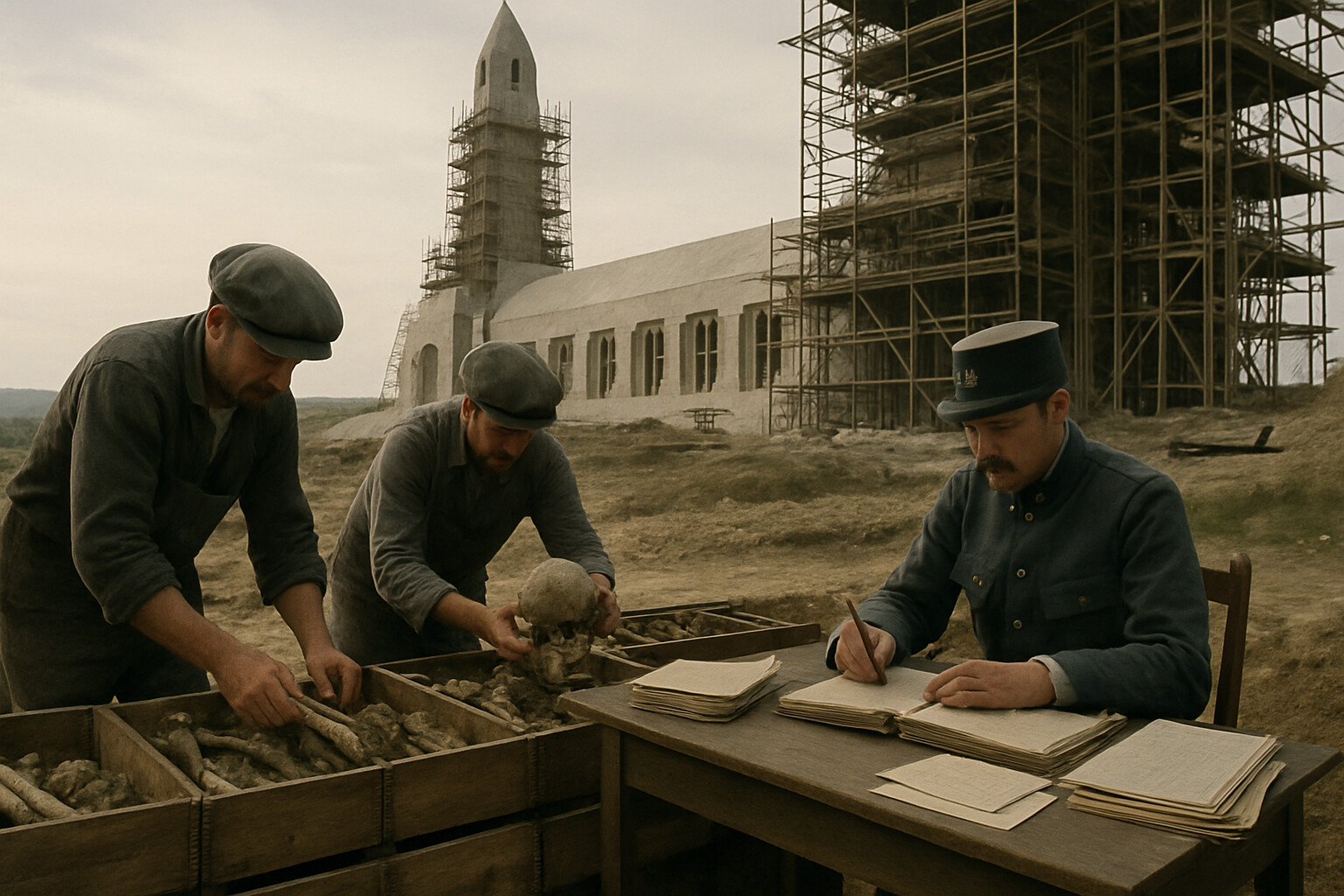
The physical landscape of the Verdun battlefield was so contaminated by unexploded ordnance, chemical agents, and human remains that large sections of it were declared uninhabitable after the war and have never been resettled. The Zone Rouge — the Red Zone — still exists in the former battle area, comprising thousands of hectares where agriculture is prohibited and where construction would disturb the remains of men who were never recovered. The Douaumont Ossuary, completed in 1932, contains the unidentified remains of an estimated 130,000 French and German soldiers. It is still there.
For France, Verdun entered national consciousness as a test of collective endurance — a demonstration that France had not broken even under conditions designed to break it. The phrase most closely associated with the battle — "Ils ne passeront pas," They shall not pass — became part of the national vocabulary, though its precise origins as a formal slogan are debated. It appears in various accounts attributed to various commanders during the battle itself. Its relationship to Pétain specifically is not clearly established in primary records, and attributing it definitively to a single speaker in a single moment requires more documentation than most sources provide.
For Pétain personally, Verdun completed his reputation. He was promoted to Marshal of France in November 1918. His standing after the war was immense — regarded by large parts of French society as the man who had saved Verdun, and by extension France. That standing shaped French politics through the 1920s and 1930s, creating both a genuine source of national pride and a set of expectations about Pétain's character and judgment that would produce one of the most painful episodes in modern French history.
In June 1940, as German armies overran France in six weeks, Pétain — now eighty-four years old — was brought into the government and concluded an armistice with Germany. He then led the collaborationist Vichy regime for four years. After liberation, he was tried for treason, convicted, and sentenced to death; the sentence was commuted to life imprisonment by Charles de Gaulle, who had served under Pétain at Verdun. Pétain died in prison on the Île d'Yeu on July 23, 1951, at the age of ninety-five.
The question of how to hold these two histories — the defender of Verdun and the leader of Vichy — in a single account is one that French society has not fully resolved. Monuments were renamed. Streets were relabeled. The ossuary at Douaumont, where Pétain wished to be buried, became the subject of political controversy that has continued for decades. Most historians who have written seriously about this question have concluded that the two histories cannot be reconciled into a single moral judgment — that both are real, and that the weight of both must be carried.
---
What remains at Verdun today — beyond the ossuary, beyond the rebuilt towns, beyond the forests that have slowly reclaimed the cratered ground — is the record.
The French military archives preserve the operational orders, the movement schedules for the Voie Sacrée, the rotation tables for divisions entering and leaving the Verdun sector, the artillery ammunition consumption returns, and the casualty reports. Pétain's orders from his period in command are recorded. Captured German records document the planning and operational conduct of the attack. Regimental histories from both sides describe the experience at the unit level. Memoirs written by soldiers — officers and enlisted men alike — were published in the years after the war, in French and German, and provide the texture of individual experience that official records do not capture.
The battle endures in historical literature partly because of its scale and duration. It was not the only battle of its kind — the Somme in 1916, Passchendaele in 1917, and other engagements produced comparable or greater casualty totals. But Verdun had a particular clarity of stated purpose, at least from the German side, and a particular constancy of location: the same hills, the same forts, ten months of fighting on ground that could be walked across in an afternoon. That concentration gave it a character different from the shifting campaigns elsewhere on the Western Front.
Pétain's role in that battle was primarily organizational. He did not lead a charge. He did not devise a tactical breakthrough. He sat in a house in Souilly and managed a supply road, rotated divisions, allocated artillery, read reports, and gave orders. He went forward to see conditions himself. He told his commanders what he required of them. He kept the French Army in the fight when the fight was at its most extreme.
That kind of generalship is less dramatic than the stories told about cavalry charges or individual heroism, and it is harder to render in a single image. But it was what the battle required, and it was what Pétain provided. The French Army at Verdun did not win in the sense of a decisive operational triumph. It endured. It held. It paid an extraordinary price for ground that, when the fighting ended in December 1916, it had largely recovered.
In the forests that have grown back over the old trenches, and in the museum that stands now on the ridge where the worst fighting took place, and in the ossuary where the remains of 130,000 unidentified men rest in vaults beneath the floor, the question is still present: what does it mean that this was held, and at what cost, and to what end?
The historical record does not answer that question. It documents the events, the orders, the movements, and the losses, and leaves the question to the living.
That is the record's nature. It is also, perhaps, its most honest quality.