Visual breakdown
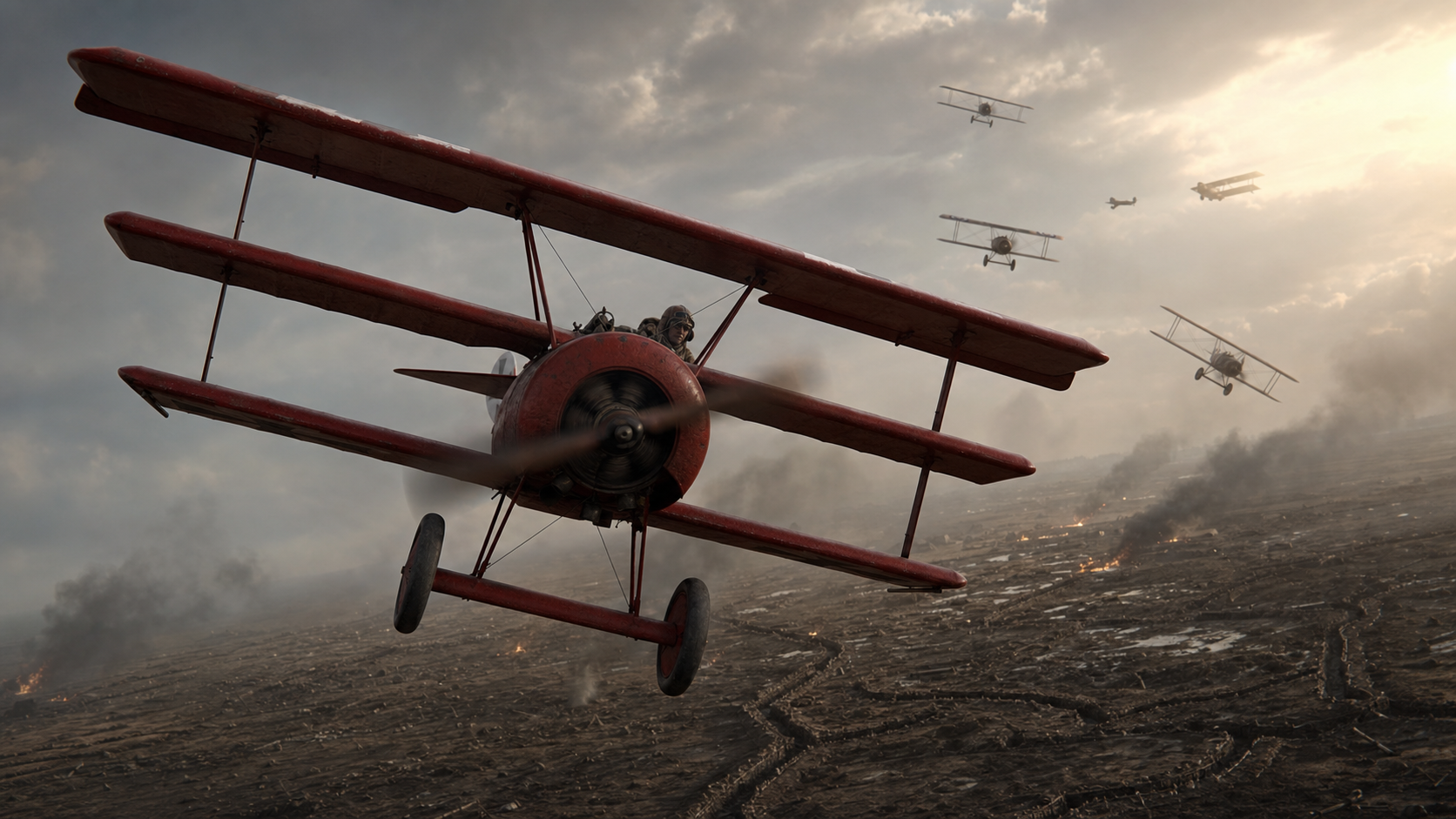
Fokker Dr.I, icon not superweapon
The triplane gave the legend its silhouette, but Richthofen's record came from tactics, discipline, and the larger machinery of air war.
World War I - Air War - 1914-1918
Myth, machinery, and the air war's most famous ace
Manfred von Richthofen, the Red Baron: from cavalry to aviation, 80 victories, Fokker Dr.I myth, and the final flight near Amiens.
Chapter 01
The red aircraft came low enough for men in the trenches to see it clearly. By 1918, that color had become a signal. Somewhere in the cockpit was Manfred von Richthofen, Germany's most famous airman and the most successful fighter pilot of the First World War.
The legend moved faster than the man: aristocratic hunter, chivalrous duel, red triplane above the mud. There is truth in pieces of it. But the legend can make the war look cleaner than it was.
Chapter 02
Richthofen began the war in cavalry, a branch made nearly obsolete by trenches, wire, and machine guns. Aviation offered motion. In the air service he learned under men building fighter tactics almost as they flew them.
He became less a reckless duelist than a professional predator: patient, observant, and economical with risk. His victories were not just sporting kills. Many targets were reconnaissance and two-seat aircraft doing work for armies on the ground. Stop the observer, blind the guns.
Visual breakdown
The triplane gave the legend its silhouette, but Richthofen's record came from tactics, discipline, and the larger machinery of air war.
Chapter 03
World War I aircraft began as fragile tools of observation. Once armies realized how much a camera or observer could reveal, they had to stop the other side from seeing. That necessity created the fighter war: synchronized guns, escorts, counter-escorts, balloon attacks, factories, schools, squadrons, fuel, and replacement pilots.
During Bloody April in 1917, British airmen suffered punishing losses around Arras. Richthofen's Jasta 11 was central to the German advantage. His victory count rose, and Germany gained a national hero.
Chapter 04
The triplane is inseparable from Richthofen in popular memory, but he scored most victories in other aircraft, especially Albatros fighters. The Dr.I became immortal because it looked unlike anything else: three wings stacked tight, compact fuselage, blunt nose, and a turning ability that rewarded an expert.
It was not a war-winning wonder. Only about 320 were built. It was maneuverable but slow and structurally troubled. Historically limited, visually immortal.
Chapter 05
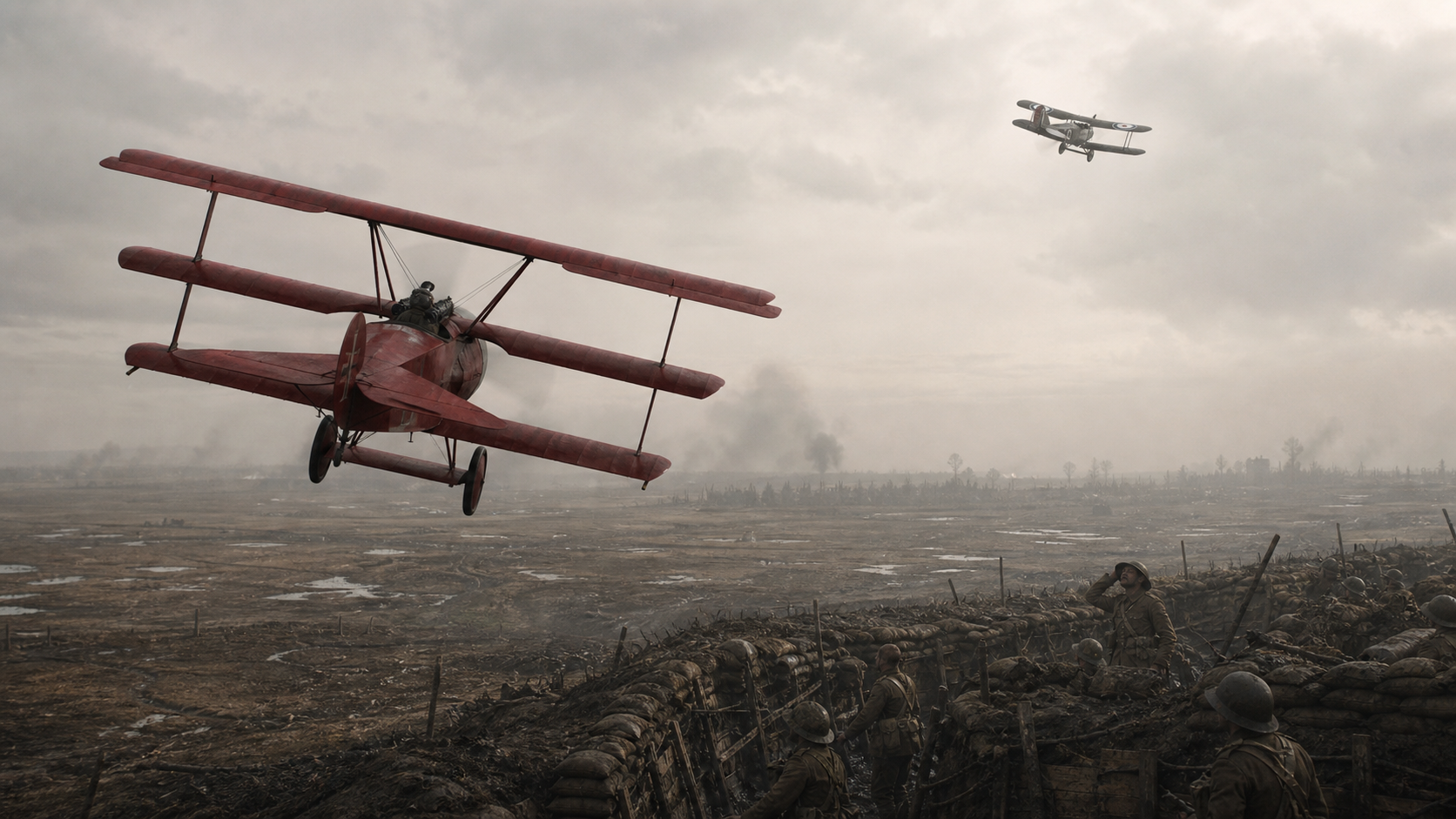
On April 21, 1918, near Amiens, Richthofen pursued a Sopwith Camel flown by Wilfrid May. May fled low over the lines. Richthofen followed, giving away altitude over enemy territory. Captain Arthur Roy Brown dived to attack and received official credit, while Australian ground fire has long been considered a likely source of the fatal shot.
The careful version is this: Richthofen was shot through the chest while flying very low near Allied lines. Brown was officially credited. Ground fire may well have killed him. The debate remains part of the story because the air war was never as clean as the myth.
Closer look
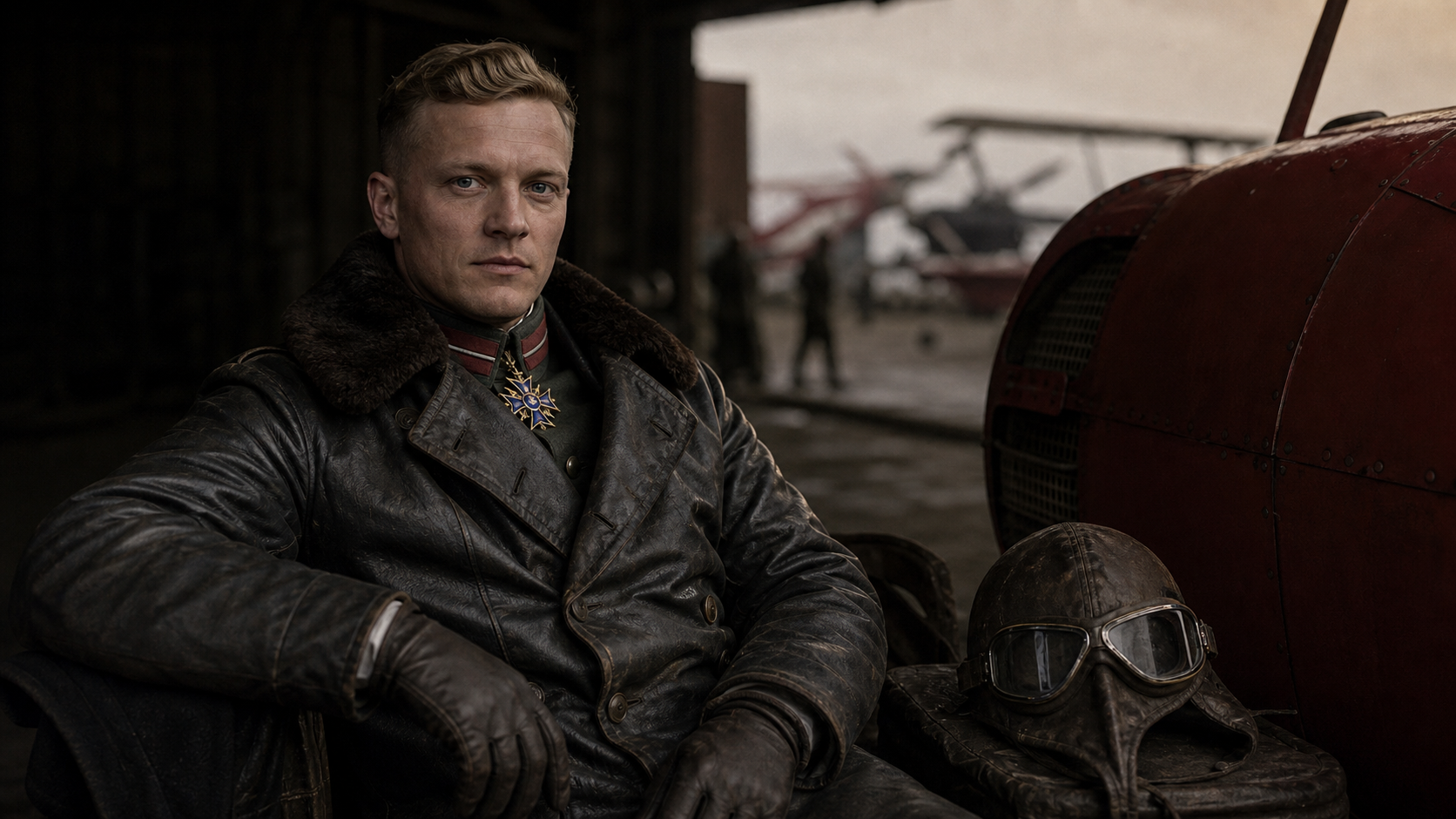
Richthofen's portrait matters because the war made him into a symbol while he was still young enough to be changed by wounds, exhaustion, and pressure. The Red Baron was a person, a propaganda figure, a squadron commander, and a target all at once.
The final flight matters because it breaks the clean duel mythology. Low altitude removed the protective advantage of air combat and dragged the triplane into the ground war's reach. Whether Brown's attack or Australian fire delivered the fatal shot, Richthofen died in the overlap between air combat and infantry fire below.
Timeline
Related WWI Stories
Source basis
Built from public-history and museum references, with cinematic narration kept tied to documented events and careful uncertainty where the record is contested.