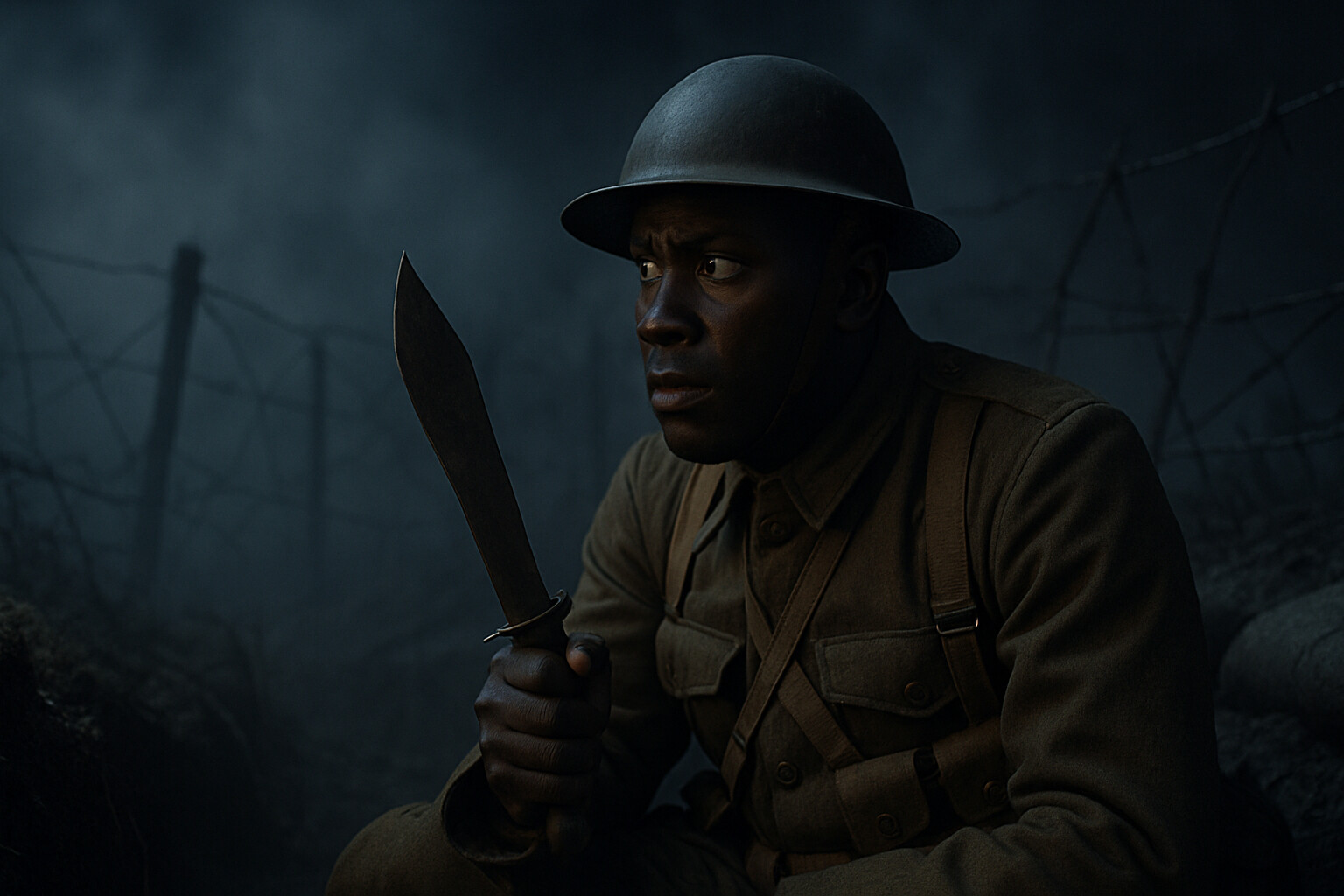
In the first winter of the Great War, soldiers who had been ordered to kill each other climbed out of their trenches, met between the wire, buried dead, traded small gifts, sang, and then returned to a war that would not forgive the gesture.
PlaceSeveral sectors of the Western Front, especially British-German lines in Flanders.
ScaleNot universal; local truces varied by unit, sector, and commander.
AftermathHigher commands discouraged repeats as the war hardened.
Opening scene
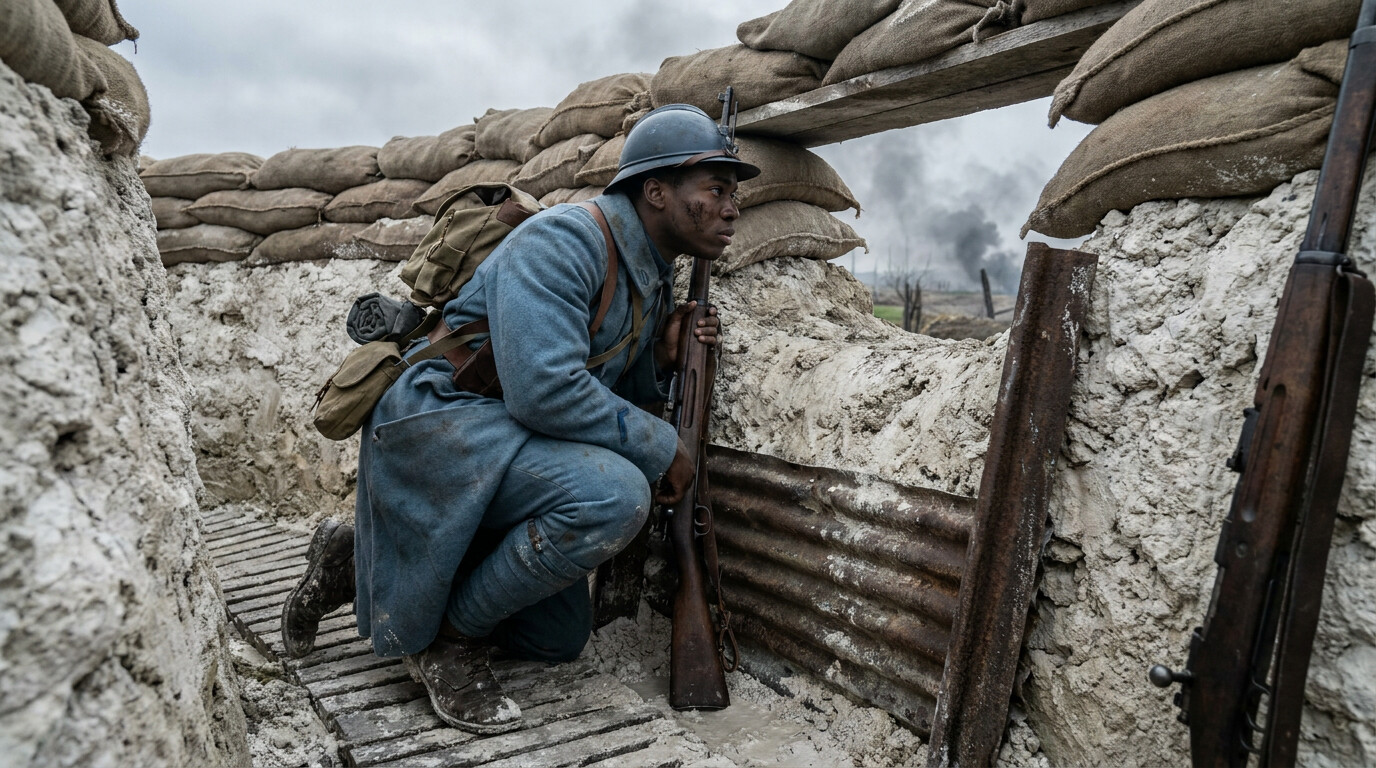
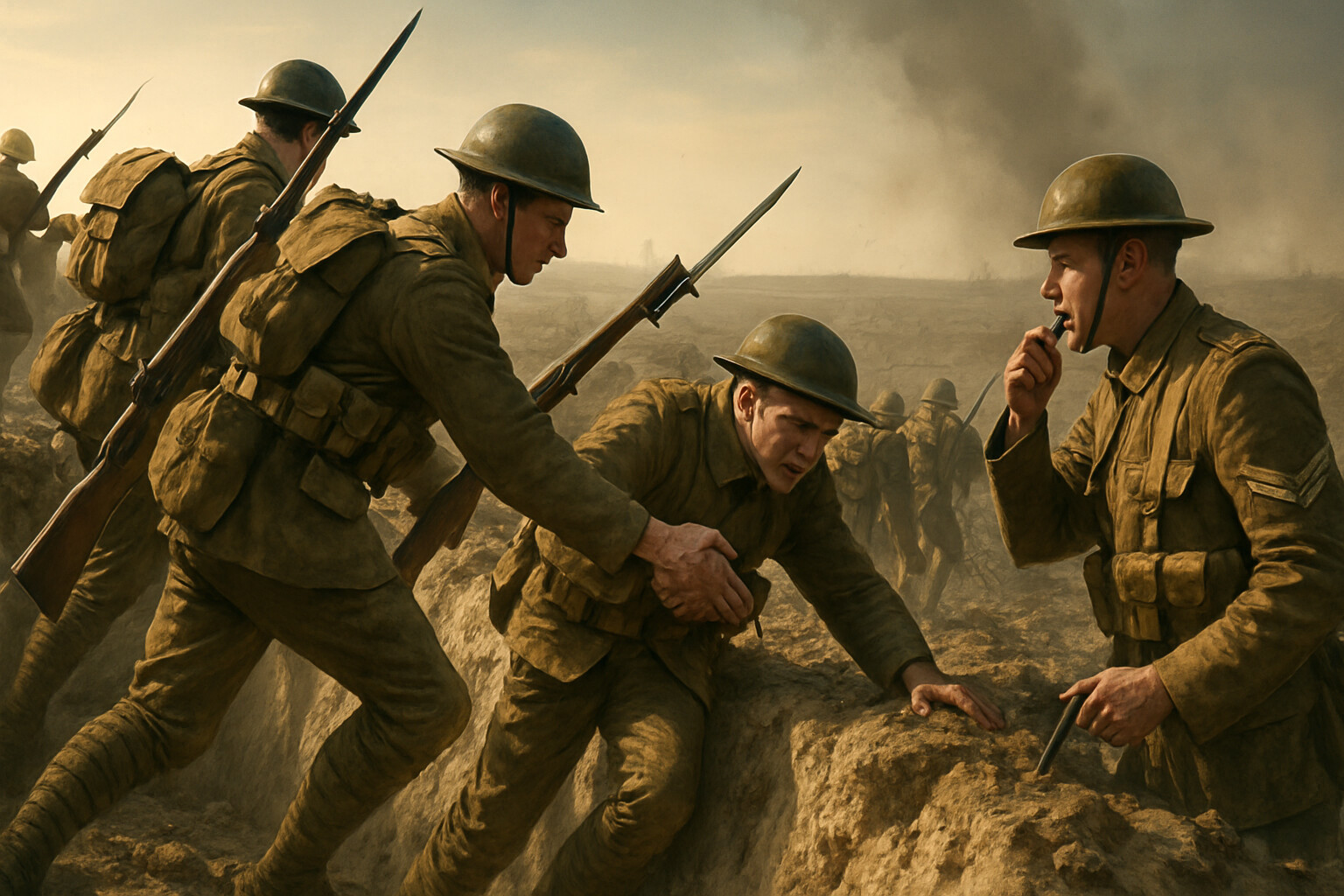
The Christmas Truce is powerful because it happened inside a war designed to make it impossible. The trenches were close enough for men to hear coughing, singing, digging, and sometimes insults. They were also close enough for rifles, machine guns, snipers, and artillery to make ordinary movement deadly.
Then, in places along the front in December 1914, the system loosened. German soldiers placed candles and small Christmas trees near the parapet. Songs crossed the dark. British soldiers listened, answered, and watched for a trick. Men who had spent weeks treating the opposite trench as a target began to recognize voices.
By Christmas Day, in some sectors, men were standing in no man's land. They shook hands, exchanged cigarettes, food, buttons, newspapers, and addresses. They buried dead who had been lying between the lines. Some kicked balls around. Others simply looked at the enemy up close and discovered a man who wanted to live.
Chapter 01
Christmas Eve: Candles on the Parapet
The first winter of the war arrived after months of movement had collapsed into trench lines. The war that many expected to end quickly had become mud, cold, boredom, fear, and routine danger. By December, men on both sides were living close enough to learn the rhythms of the opposite trench.
Christmas Eve did not magically erase the war. It changed the soundscape. In some sectors, German soldiers sang carols. British soldiers heard familiar melodies. Lanterns and candles appeared. Small Christmas trees, sent from Germany, gave the line a surreal domestic glow.
The first contacts were cautious. Nobody wanted to be the fool who stood up into a sniper's sight. Men shouted across. Some called for no firing. Heads appeared over parapets. The first soldiers who climbed out were testing whether the other side would honor the moment or exploit it.
That is the essential tension: every handshake required an act of trust inside a killing ground.
Truce mechanics
How No Man's Land Opened
Local, fragile, temporary. The truce happened in pockets: burial parties, handshake points, exchange routes, and then the return to opposing trenches.
Chapter 02
The War Paused Because Men Needed Practical Things
Part of the truce was sentimental, but part of it was grimly practical. Dead soldiers lay in no man's land. In normal conditions, recovering them could be fatal. A local ceasefire allowed burial parties to work. It allowed bodies to be identified and the ground between the lines to be crossed without immediate shooting.
That practicality helped make the truce possible. Men could justify temporary contact as burial work, repair, or exchange. Once they were out there, the human element widened: cigarettes, chocolate, tobacco, buttons, badges, newspapers, and conversation.
The truce was not the same everywhere. Some units fraternized openly. Some only stopped firing. Some commanders refused it or cut it short. Some sectors never joined. The famous version can make it sound like the whole front became a holiday field. The real version is more interesting: thousands of men in scattered places made local choices under enormous institutional pressure.
Chapter 03
Burials Between the Lines
The burial scenes are the hardest part of the truce, and maybe the most important. Men who had been killed in earlier fighting could finally be recovered. Chaplains and soldiers conducted services. Opposing soldiers stood near each other in a place that had recently been fatal.
That shared burial work did not mean the armies had reconciled. It meant the men could briefly agree that death deserved order. In a war that often reduced bodies to obstacles in mud, that mattered.
The truce is sometimes remembered as charming because of carols and football. But its center is darker: soldiers recognized the dead as dead men, not just enemy objects. The war would soon demand that they forget that recognition again.
The famous image
Football, Memory, and What We Can Say Carefully
Careful legend. There were reports of informal kickabouts and football moments, but the truce should not be reduced to one neat organized match.
Chapter 04
The Football Story Is True Enough to Matter, but Too Neat to Carry Everything
The image of British and German soldiers playing football in no man's land became the truce's most famous symbol. It makes sense: a ball is simpler to remember than command policy, burial details, and trench geography. Some accounts describe informal games or kickabouts. Others may have grown in retelling. The careful version is this: football-like play happened in some places, but the truce was not one grand match arranged across the front.
That actually makes the football story stronger. It was not a staged symbol. It was ordinary men improvising normal life in an abnormal place. A ball, a tin, or some substitute became a way to move, laugh, and test trust without needing much language.
The danger is letting the image become too sweet. These were armed soldiers standing in a battlefield. The wire, rifles, artillery, and orders were still there. The game existed because, for a few hours, men chose not to activate the machinery around them.
Chapter 05
Commanders Saw the Problem Immediately
To soldiers in the line, the truce could feel human, practical, or miraculous. To commanders, it was dangerous. Armies depend on discipline and emotional distance. If soldiers begin to see the men opposite as familiar, the willingness to raid, shell, and shoot becomes harder to maintain.
Higher command did not want Christmas 1914 to become a habit. In later years, artillery barrages, raids, orders, and tighter discipline reduced the chance of similar large-scale fraternization. The war itself also changed. Gas, longer casualty lists, deeper bitterness, and the hardening of trench routine made the emotional conditions different.
That is why the truce feels like a door briefly opening before being nailed shut. It belonged to the first winter, before the full weight of industrial war had settled into everyone.
Risk ledger
Why the Truce Still Hurts
TrustEvery man who climbed out gambled that the opposite trench would not fire.
BurialThe truce solved a grim practical problem between the lines.
MemoryThe story survives because it shows what the war was fighting against inside the men themselves.
LimitsIt was local and temporary, not a universal peace.
ReturnThe most painful fact is that the war resumed.
Timeline
From Movement War to Truce
Aug 1914World War I begins; armies expect movement and decision.
Fall 1914The Western Front hardens into trench systems after the failure of decisive maneuver.
Dec 24In some sectors, songs, candles, and shouted contacts begin on Christmas Eve.
Dec 25Local truces include meetings, burials, exchanges, and in some places informal games.
AfterwardCommand pressure and the hardening war make similar truces harder to repeat.
Careful history
What We Should Not Flatten
The Christmas Truce was real, but it was not universal. It varied by sector, unit, and command climate. The football story should be handled as a famous part of the memory with documented reports of informal play, not as one neat front-wide match. The strongest truth is more serious: in several places, soldiers created local ceasefires inside a war that officially continued.
Source basis
References Used
Built from public museum and encyclopedia references on the 1914 Christmas Truce, including the local character of the truces, burials, exchanges, songs, football accounts, and command reaction.