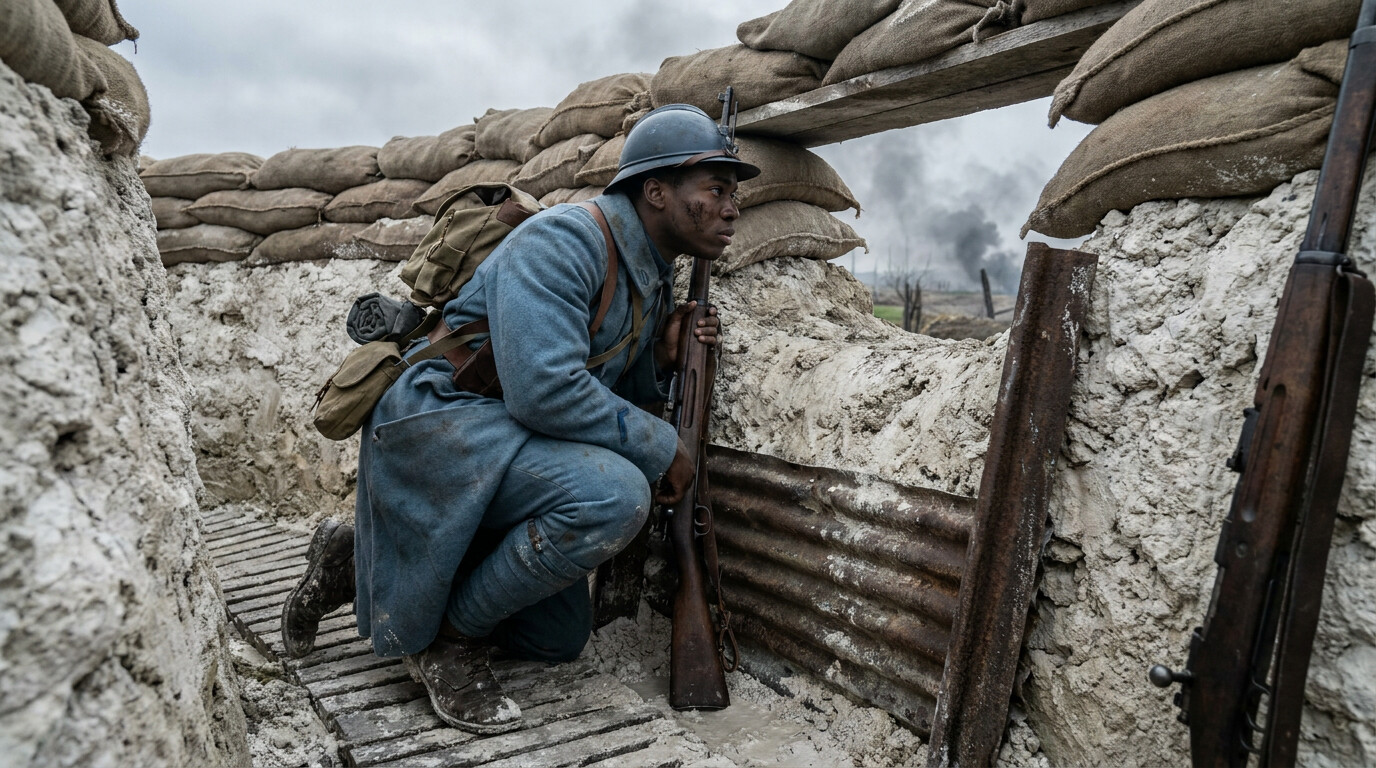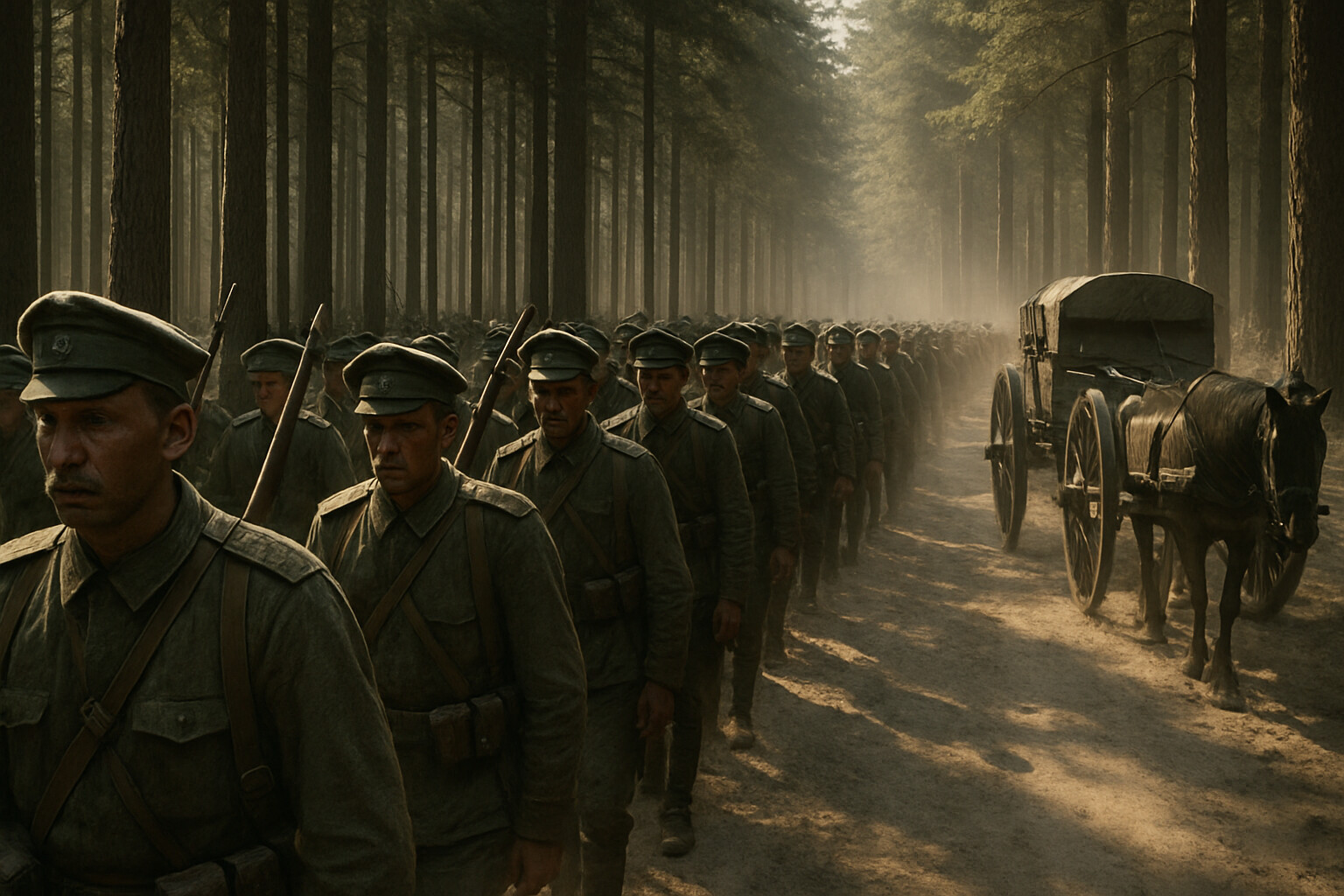
The forest held its breath.
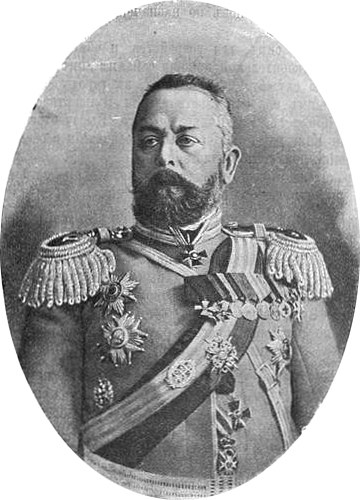
It was the last week of August 1914, and the pine woods of East Prussia smelled of smoke. Along the margins of the Masurian Lakes—a tangle of water, marsh, and ancient woodland that had swallowed armies before—columns of Russian soldiers moved west, confident and strung thin. General Alexander Samsonov believed he was advancing into a weakened enemy. The trap was already closing behind him.
Four hundred kilometers of railroad track. Two German corps moving by night. A headquarters reading Russian radio messages that arrived unencrypted, broadcast in the clear as though signal security cost more than an army. What followed in the last days of August 1914 was not simply a battle. It was a systematic annihilation—a double envelopment of the kind that exists more often in the plans of staff officers than on actual ground. When it was over, an entire Russian field army had ceased to exist. Somewhere between 78,000 and 92,000 prisoners taken, according to varying scholarly sources. Roughly 30,000 to 50,000 Russian soldiers killed or wounded. General Samsonov walked alone into the dark woods and did not come back.
The Germans called it Tannenberg—a name chosen deliberately to echo a medieval defeat and reclaim a historical debt. The record shows it was a logistical and intelligence coup, executed under enormous pressure by a command team that had been in place for less than forty-eight hours before the decisive moves began.
---
**The Eastern Front in August 1914: Stakes and Pressures**
The war was barely a month old when the crisis hit East Prussia.
Germany had built its entire war strategy—the Schlieffen Plan—around the assumption that France would collapse before Russia could fully mobilize. The plan treated the Eastern Front as a temporary economy of force, defended by a single army, the Eighth, while the bulk of German strength swept through Belgium and northern France. It was a gamble that required Russia to be slow. Russia, it turned out, was not slow enough.
Tsar Nicholas II faced enormous pressure from his French allies to attack immediately, before Russian mobilization was complete. France was reeling from the German advance in the west and desperately needed German divisions pulled east. The Russian response was to send two armies into East Prussia simultaneously: the First Army under General Paul von Rennenkampf advancing from the east, the Second Army under Samsonov swinging up from the south to cut off the German Eighth Army's retreat. The theory was sound. If both Russian armies moved in coordination, the Germans would be caught between them.
But the distances were enormous, the supply lines were poor, and the two army commanders had a personal animosity that—according to Russian staff officer accounts widely cited in the literature—dated to the Russo-Japanese War and made real coordination difficult. Whether that animosity was the decisive factor in their failure to cooperate, or whether structural and logistical problems would have produced the same result regardless, is a question historians continue to debate; the personal-feud explanation appears frequently in popular accounts and should be treated as a contributing tradition rather than a fully established cause. What is clear is that they communicated badly, moved at different speeds, and broadcast their intentions over radio in unencrypted text.
They were wrong to do so.
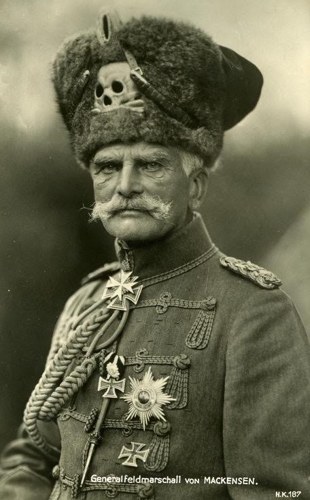
On August 17, Rennenkampf's First Army struck the German Eighth Army at Gumbinnen, northeast of Königsberg, and bloodied it badly. General Hermann von François's I Corps performed well on the German right, but in the center General August von Mackensen's XVII Corps broke and fell back in disorder. The German commander, General Maximilian von Prittwitz, briefly lost his nerve and telephoned Moltke's headquarters suggesting a withdrawal west of the Vistula—abandoning all of East Prussia. Moltke, stunned, relieved him of command.
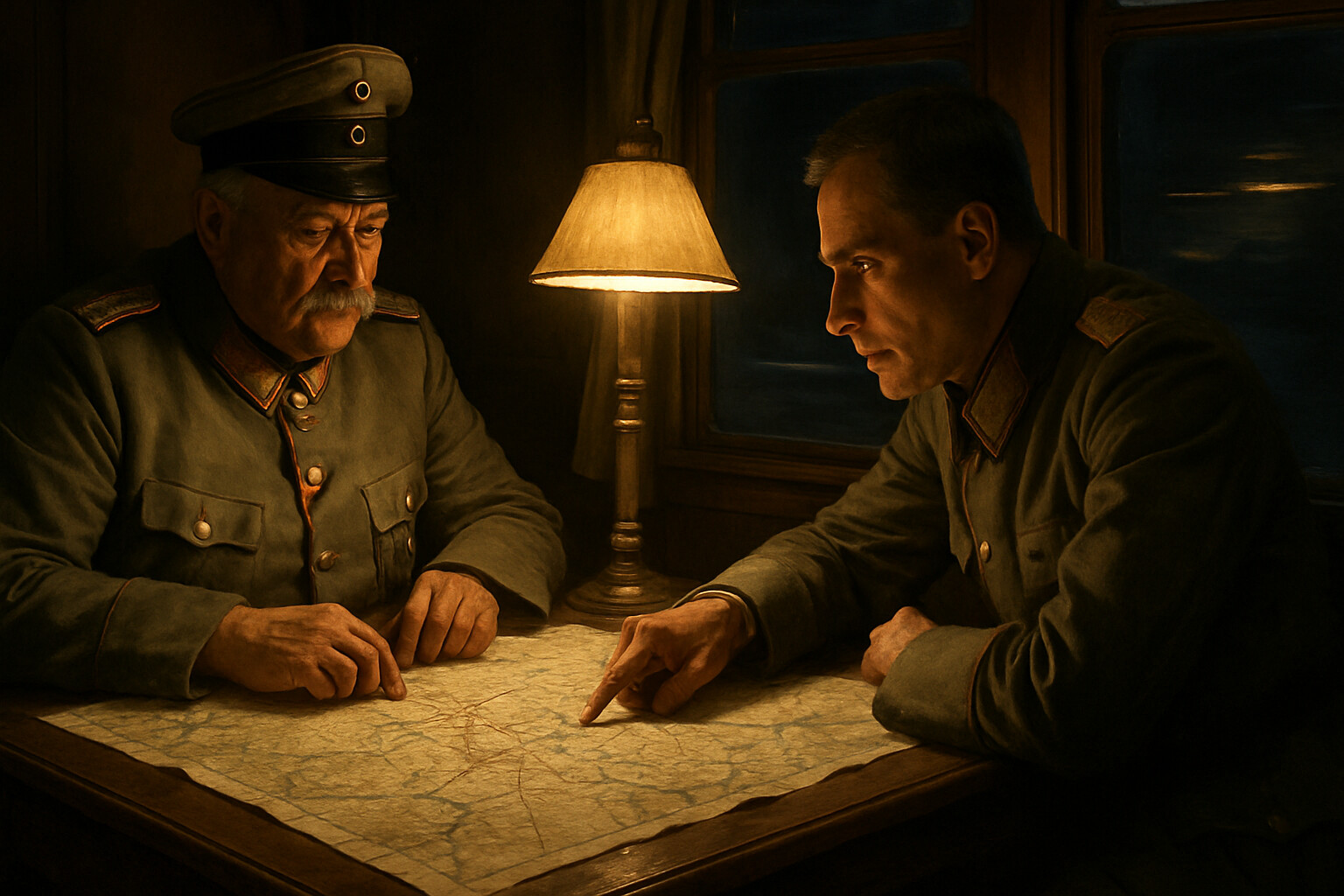
What Moltke needed was a general who could steady a shaken army, manage difficult subordinates, and execute a complex operational maneuver under pressure. He reached for Paul von Hindenburg.
---
**The General They Called Back**
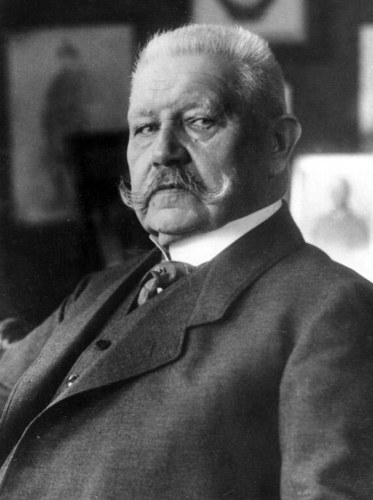
Paul Ludwig Hans Anton von Beneckendorff und von Hindenburg was sixty-six years old, retired, and living in Hanover when the telegram arrived. He had served in the Austro-Prussian War of 1866 and the Franco-Prussian War of 1870–71. He was the kind of officer who had spent decades absorbing the German General Staff's obsession with the operational lessons of history—Cannae, Sedan, the double envelopment. He had retired in 1911 after a long if undistinguished peacetime career. His answer to the telegram came promptly: he was ready to serve.
The chief of staff assigned to him was a different kind of man entirely.
Erich Ludendorff had distinguished himself just days earlier by personally demanding the surrender of the Liège citadel during the German advance in Belgium—an act of audacity that had made him briefly famous across Germany. He was driven, technically brilliant, and constitutionally ill-suited to the social ease that came naturally to Hindenburg. The pairing was, by the accounts of both men and the historians who have studied them, one of the war's more effective command partnerships precisely because of its contrasts. Hindenburg provided institutional weight, steadiness, and the authority to hold difficult subordinates in line. Ludendorff provided the operational drive.
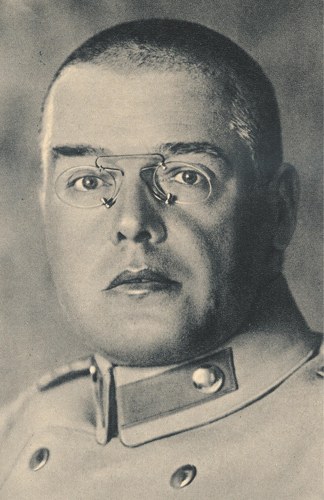
They met for the first time on the train to East Prussia on the night of August 22–23, 1914. By the time they arrived at Eighth Army headquarters at Marienburg, the operational plan they would execute was already partly in motion—developed by the Eighth Army's senior operations officer, Lieutenant Colonel Max Hoffmann, who had been working the problem for days before Hindenburg and Ludendorff arrived.
Historians have long debated the relative credit for Tannenberg's conception. Hoffmann, in his postwar memoirs, was pointed in advancing his own claims. Most careful assessments conclude that the strategic idea—using rail movement to shift German forces south against Samsonov while Rennenkampf remained stationary—predated Hindenburg's arrival, but that the command authority to execute it required someone of Hindenburg's rank and temperament to hold the plan together under the pressure that followed. The honest answer, supported by the record, is that Tannenberg was the product of a command system, not a single mind.
---
**The Intelligence Windfall**
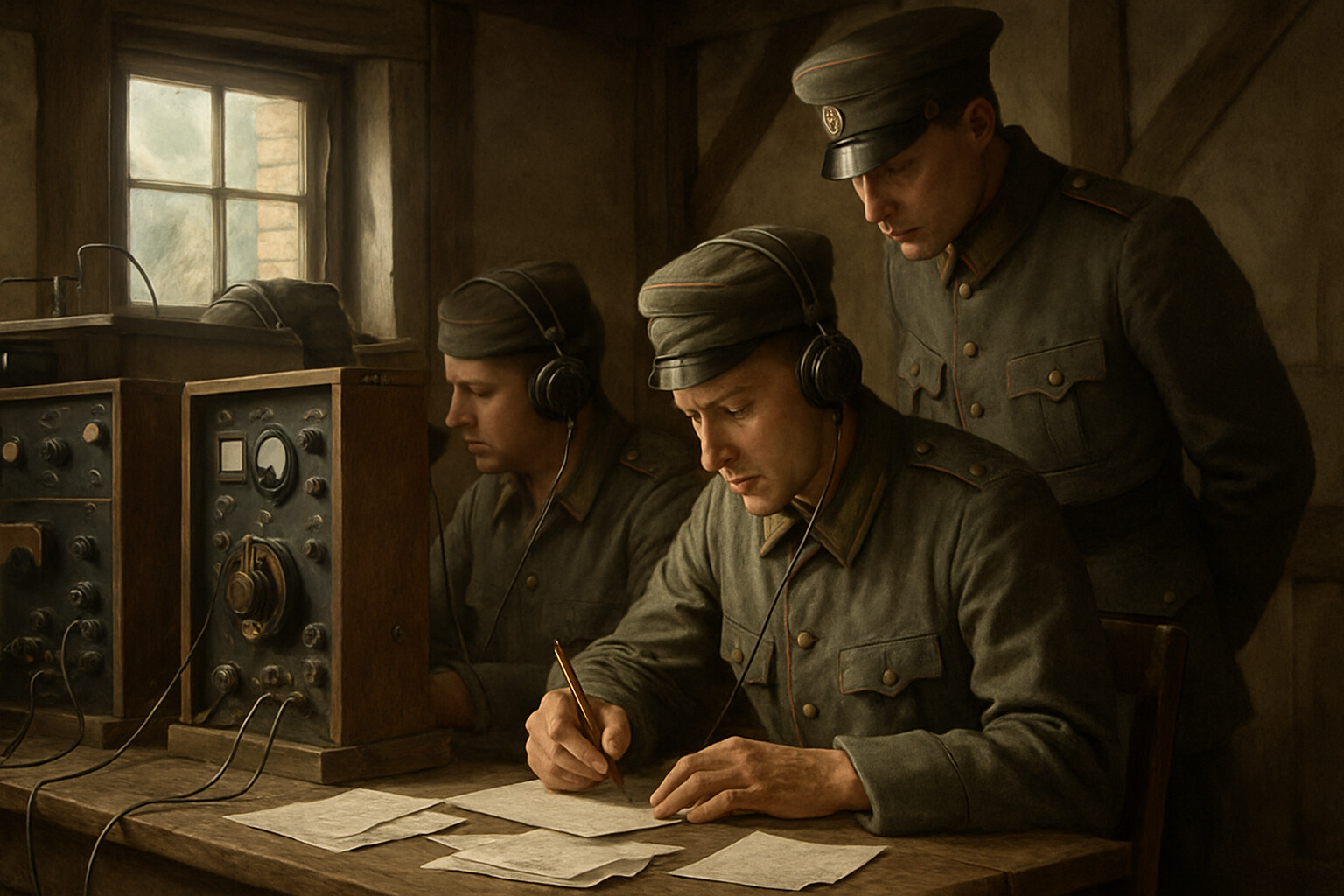
The operational basis of Tannenberg was not primarily tactical genius. It was intelligence.
German wireless intercept stations along the East Prussian frontier were picking up Russian radio traffic, and what they heard was extraordinary. Russian field commanders were transmitting operational orders, march routes, unit designations, and supply requests in unencrypted clear text. The reasons for this have been debated: some historians point to a shortage of trained cipher personnel; others note that codebooks had been distributed so inconsistently that field commanders sometimes broadcast in the clear rather than accept dangerous delays waiting for properly encoded messages. Whatever the cause, the effect was that German signals units were providing Ludendorff and Hoffmann with a near-complete picture of Samsonov's dispositions, march routes, and intentions.
Two intercepts proved especially decisive. One revealed that Rennenkampf's First Army, after the fighting at Gumbinnen, had halted and was not in aggressive pursuit—a pause whose precise reasons remain somewhat disputed in the historical record but whose operational effect was unambiguous. The German southern flank could be stripped without immediate danger. The other intercept detailed Samsonov's corps assignments and axes of advance, identifying where his flanks were exposed and where they would be on specific dates.
These were not fragments to be puzzled over. They were operational orders handed to the enemy. With them, the encirclement could be planned with a precision usually reserved for training exercises.
---
**The Terrain: Lakes, Forest, and the Space Between**
East Prussia in late August 1914 was not easy ground. The Masurian Lake District—a belt of interconnected lakes, marshes, and dense forest running roughly east-west across the southern part of the province—channeled movement and slowed any army trying to advance across it. The roads were poor. The farms were spread thin across sandy glacial soils. The late-summer heat had turned unpaved tracks to dust, and the forests between the lakes created blind corridors where column commanders could see no more than a few hundred meters in any direction.
For the Germans, this was familiar home ground—terrain the Eighth Army's officers had war-gamed and mapped for decades under the assumption that Russia was the standing threat. For Samsonov's Second Army, it was foreign territory where maps were inaccurate, local guides were absent or hostile, and the cavalry screens that should have been providing reconnaissance were chronically short of horses and fodder.
Samsonov's army of roughly 190,000 men was advancing in a broad arc, its corps separated by gaps that had opened as the march wore on. At the western end of his line, XIII Corps was pushing toward the town of Allenstein. In the center, XV Corps and portions of XXIII Corps were moving north toward Neidenburg and Hohenstein. At his flanks, I Corps on the left and VI Corps on the right were strung out and increasingly isolated. The supply situation was deteriorating. Some units were short of food. Horses were dying from exhaustion. The army's telephone and telegraph connections to its rear were fragile.
Samsonov was advancing into a landscape he did not control, against an enemy he could not see, with communications that were failing—broadcasting his plans in the clear to anyone who was listening.
---
**The Eighth Army Turns South**
The German plan, as Hindenburg and Ludendorff confirmed and authorized it, was a classic double envelopment. On the right, François's I Corps in the west would move south, then swing east around Samsonov's left flank. On the left, Mackensen's XVII Corps and Otto von Below's I Reserve Corps would press against Samsonov's right flank and rear. In the center, General Friedrich von Scholtz's XX Corps would hold Samsonov's attention frontally while the wings closed.
The mechanism that made this physically possible was the German rail network.
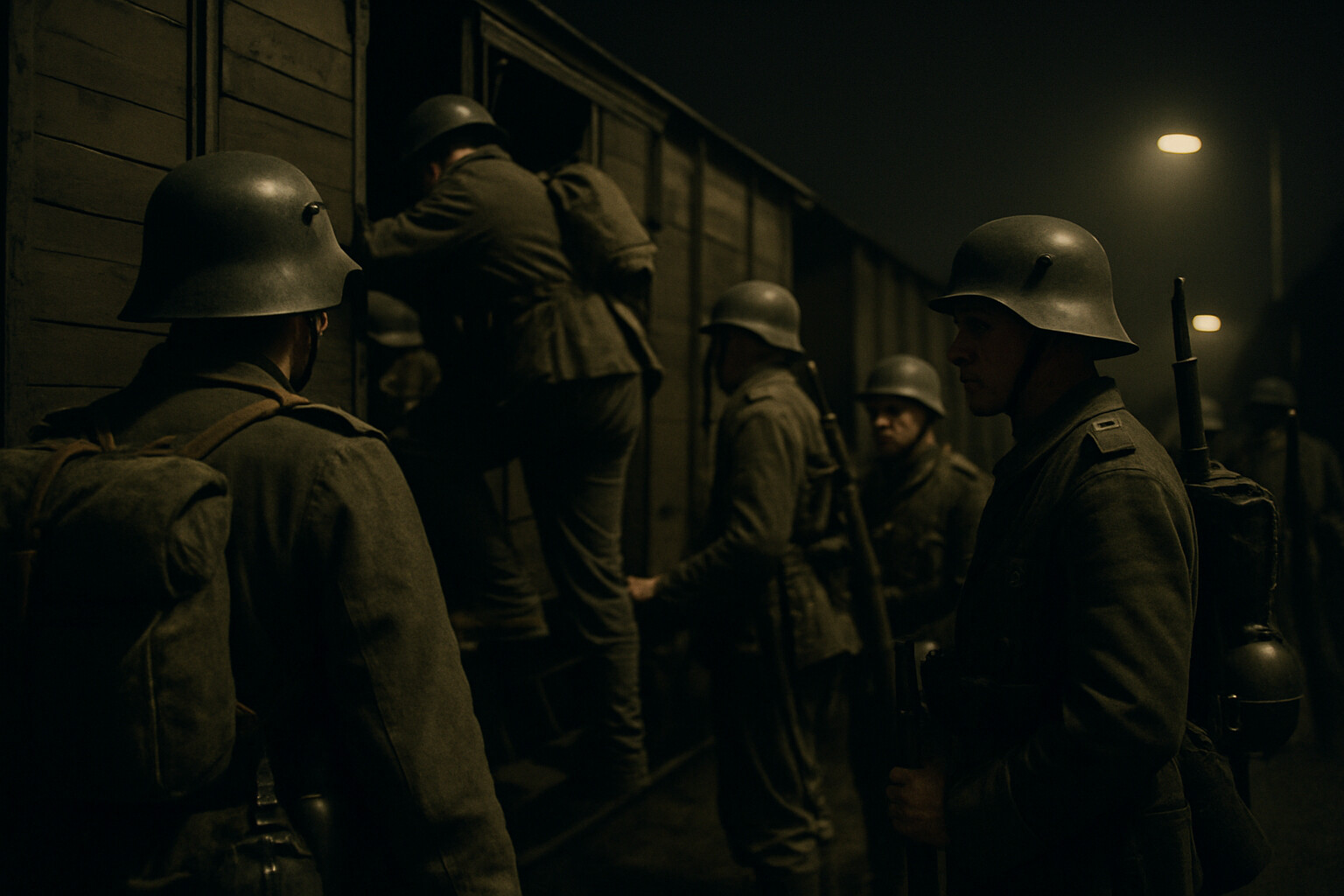
East Prussia's rail system had been deliberately developed with military operations in mind. Multiple lines ran east-west, connected by lateral lines that allowed corps to be shifted from one sector to another far faster than marching infantry could move on foot. A German infantry corps of roughly 30,000 men, properly loaded onto trains, could cover sixty to one hundred kilometers overnight. Rennenkampf's stationary First Army in the north—confirmed by intercept to be making no immediate aggressive move—freed the German command to strip its northern defenses to a thin cavalry screen and concentrate mass against Samsonov in the south.
The train movements took place largely at night, in conditions where Russian aerial observation—limited in 1914—could not effectively track them. Mackensen's XVII Corps and Below's I Reserve Corps began their southward rail shift on August 23–24. François's I Corps, already positioned in the west, received orders to advance aggressively against Samsonov's left flank and rear.
The timeline was tight. Samsonov's center corps were already engaged with Scholtz's XX Corps, pushing it back. The pressure on Scholtz was real—XX Corps was outnumbered and fighting hard in the terrain around Hohenstein and Usdau. If the encircling wings did not close fast enough, Samsonov might push through the center before the trap shut.
The tension at German headquarters during August 25–27 was acute. Ludendorff—by the testimony of those around him, including Hoffmann's postwar account—was under severe strain: repeatedly questioning whether the flanking corps were moving fast enough, whether Rennenkampf might suddenly advance and hit the stripped German northern flank, whether the entire design might collapse. Hindenburg's role during these hours, in the accounts of Hoffmann and others, was largely to hold the command steady and resist the temptation to abandon the operational concept when the pressure peaked. Those accounts carry personal interest and should be read with appropriate caution, but they are consistent in their portrait of the command dynamic.
---
**The Guns: Artillery and Infantry on Both Sides**
The fighting around Hohenstein, Neidenburg, and Usdau in the last days of August 1914 was not a clean exercise in operational geometry. It was brutal infantry and artillery combat in forests, villages, and across farmland baked hard by late summer.
The German Eighth Army's primary infantry weapon was the Gewehr 98 bolt-action rifle, chambered for the 7.92×57mm Mauser cartridge. Accurate and reliable in the dust and heat of the East Prussian summer, it was the individual soldier's tool in the holding action that bought time for the encirclement to close. German infantry tactics in 1914 emphasized disciplined aimed fire and well-positioned machine guns—skills developed against the expectation of facing exactly this kind of mass advance.
The Russian Second Army's infantry carried the Mosin-Nagant Model 1891, a robust bolt-action in 7.62×54mmR. Russian infantry in 1914 were capable in close assault, but the advance had outrun their supply system; by the time the encirclement began to close, some units were fighting with reduced ammunition reserves. The weapon was sound. The situation around it was not.
Artillery was, as in every major engagement of 1914, the dominant killer. German field artillery, built around the 7.7 cm FK 96 n.A. field gun and the 10.5 cm leFH 98/09 light field howitzer, provided the fire support that kept Scholtz's outnumbered corps in position. German heavy artillery—including 15 cm and 21 cm howitzers—proved critical in breaking Russian positions in the enclosed terrain around Hohenstein. Russian artillery was formidable on paper: the 76.2 mm M1902 field gun was a modern, capable weapon, and Russian gunners were well-trained. But in the encirclement's final phase, coordination between Russian infantry and artillery collapsed as units lost contact with each other and the command structure disintegrated. Guns that cannot communicate with the infantry they are meant to support cannot fire accurately.
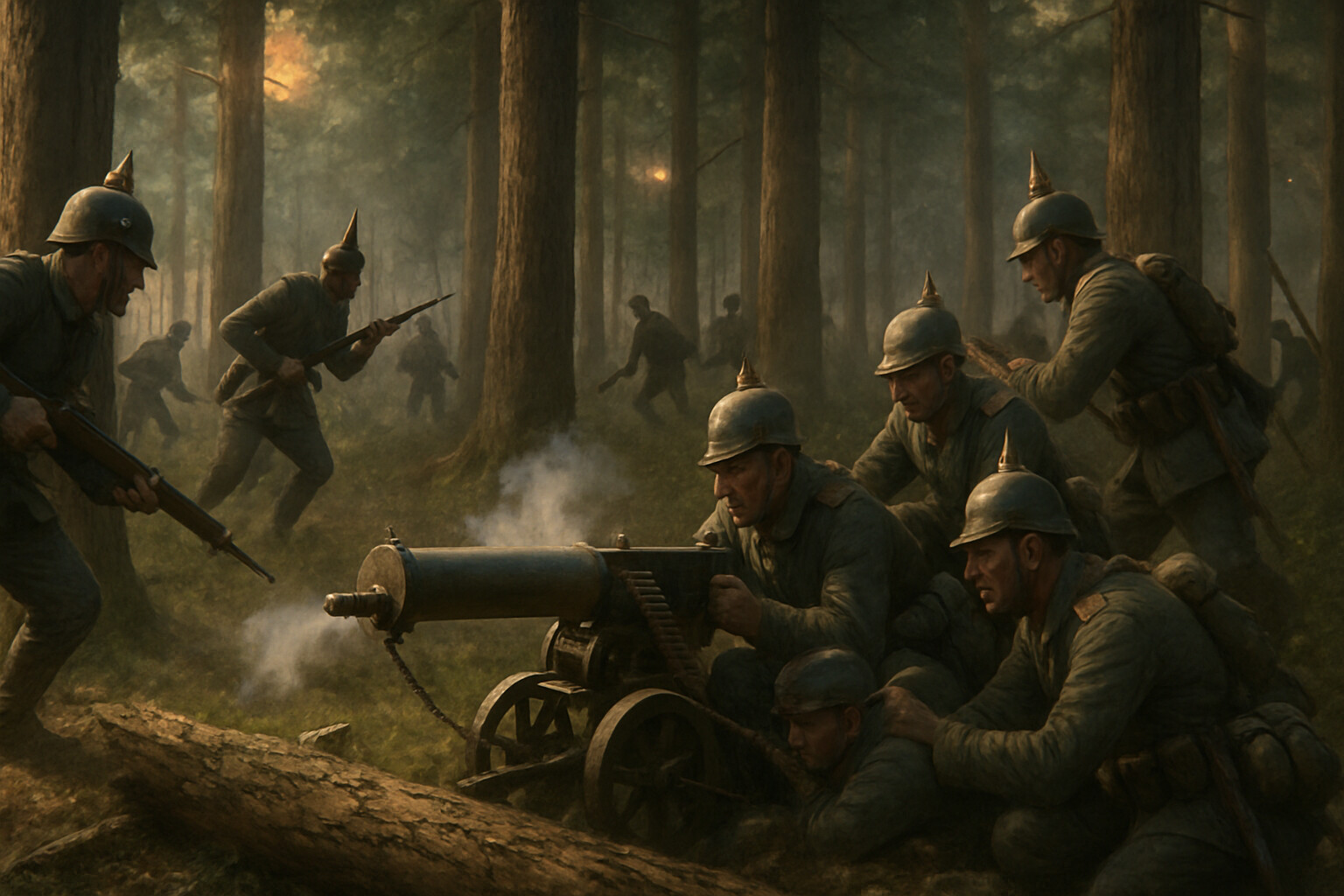
Machine guns on both sides—the German MG 08 and the Russian Maxim M1910, both derivatives of Hiram Maxim's recoil-operated, water-cooled design—dominated defensive positions and created killing grounds in the forest clearings and road junctions. The difference at Tannenberg was not the weapon but the supply line behind it. German machine gun crews, fighting in familiar terrain with intact logistics, could be resupplied and repositioned as the battle developed. Russian machine gun teams, by the battle's end, were often immobile: out of ammunition, cut off, or abandoned by retreating infantry who could no longer be organized.
---
**The Jaws Close**
The decisive moves came on August 27–29.
On the German right, François's I Corps reached the town of Neidenburg—deep in Samsonov's rear—on August 27 and seized it, cutting the main Russian line of retreat southward. Ludendorff had urged François to push directly northeast to complete the encirclement, but François—exercising the independent judgment that German Auftragstaktik doctrine permitted, if not always welcomed—continued southeast to Neidenburg first, securing the road junction through which Samsonov's army would have to escape. The historical record reflects genuine debate about whether this was tactical wisdom or insubordination that happened to work; François's own later account justified the decision, and the communications exchanges from that moment would require archival verification to reconstruct in full. What is documented is the effect: the pocket's southern exit was sealed before Samsonov's center corps understood they were surrounded.
On the German left, Mackensen and Below completed their rail shift and pressed hard against the Russian right flank, driving I Corps and VI Corps away from the main body. The Russian flanking corps, unable to communicate effectively with Samsonov's center and out of contact with each other, could not mount a coordinated response.
Samsonov, at his headquarters, was receiving fragmentary and contradictory reports. On August 28, he moved forward from his headquarters to take personal command of his center corps—a decision that severed his reliable communications at precisely the moment when the Russian Second Army most needed coordination. What the German intercept stations were reading in clear text, Samsonov could not piece together from the fragments reaching him.
By August 29–30, Samsonov's center—XIII Corps, XV Corps, and portions of XXIII Corps, numbering somewhere between 70,000 and 90,000 men by most scholarly estimates—was surrounded in the forests southeast of Hohenstein. German artillery and infantry were closing from multiple directions. Russian units fought through the forest, running short of food and ammunition, unable to determine which way safety lay.
Small groups broke through at various points; the encirclement was never perfectly sealed at every gap. But the organized combat power of the Russian Second Army was broken. Units dissolved. Officers lost control of their men. The forest filled with exhausted, hungry soldiers trying to find a way out through pine trees and marsh in the dark.
General Samsonov was among them.
---
**The Cost**
On the night of August 29–30, 1914, Alexander Samsonov walked away from his last remaining staff officers into the trees. A short time later, those who survived the encirclement reported hearing a single shot. His body was recovered by German forces. He was fifty-four years old. The circumstances of his death rest on the testimony of surviving staff officers; no German witness observed the act, and the accounts are consistent but cannot be independently corroborated from a contemporaneous source.
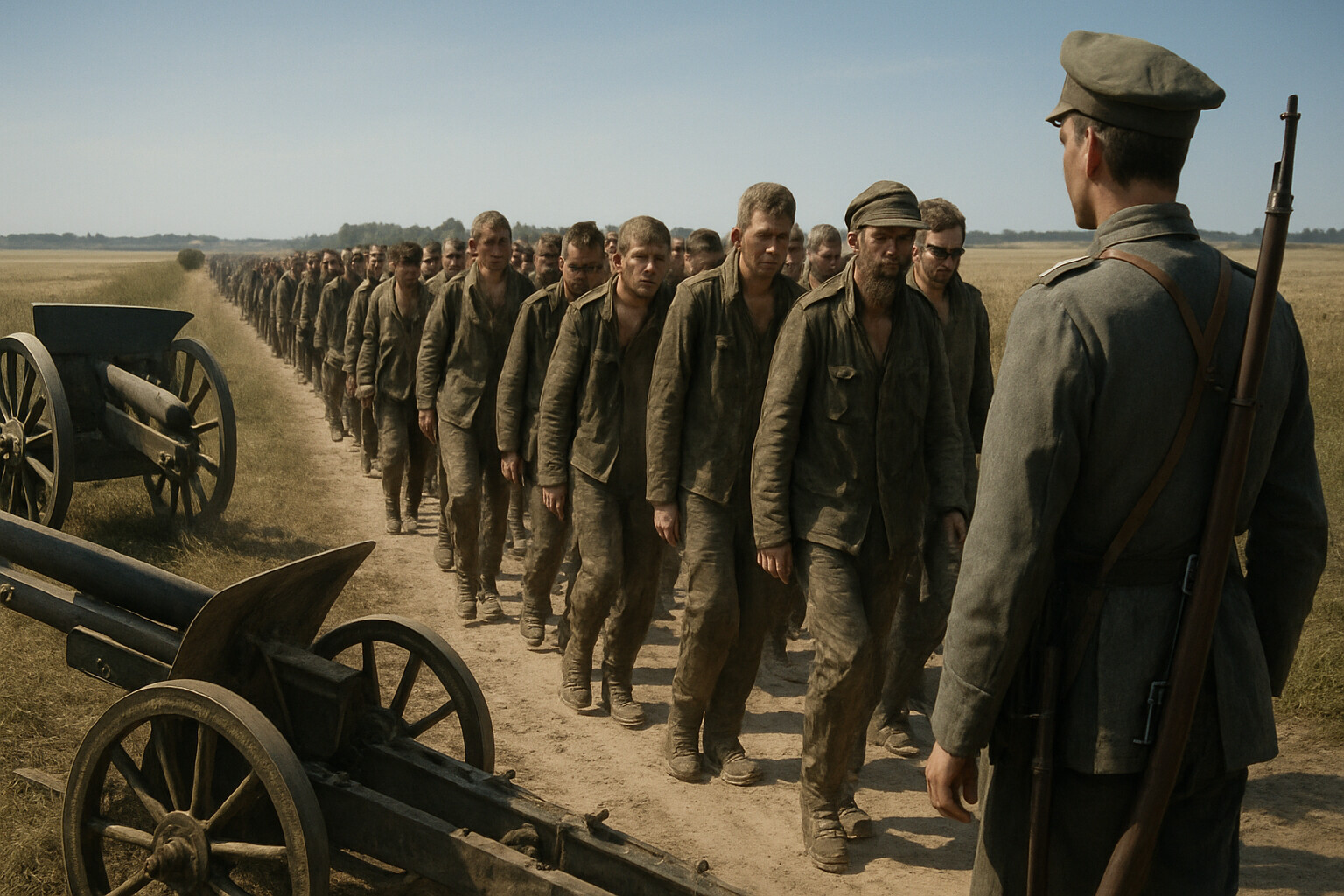
The full accounting of Tannenberg's human cost depends on which sources one uses, and historians have offered varying figures. The most commonly cited prisoner count is approximately 92,000, drawn from German official figures; some scholars offer estimates in the range of 78,000–92,000. Russian killed and wounded in the encirclement phase are estimated at approximately 30,000–50,000, though precision is difficult given the chaos of the battle's end and the incomplete Russian records that survived. German casualties across the battle period were substantial—estimates in the historical literature range from roughly 10,000 to 20,000 killed, wounded, and missing, reflecting the hard fighting Scholtz's XX Corps endured while holding the center—but were not operationally crippling. These figures come primarily from German official histories; some later historians have questioned their completeness, and Russian archival sources that might clarify the discrepancies have not been fully accessible in the scholarly literature reviewed for this account.
The Germans captured large quantities of artillery—German official accounts cite roughly 500 guns taken, a figure that should be treated as approximate pending comparison with Russian archival records—along with ammunition, transport, and supplies. The Second Army's order of battle as a functioning formation ceased to exist.
For Russia, Tannenberg was a catastrophe proportionate to any battle of the war to that point. It did not break Russian will—Russia continued fighting for three more years—but it removed a major offensive force from the board just as the Eastern Front was being shaped, inflicted irreplaceable losses in trained officers, and contributed to the accumulating pressure on Russian political leadership that would eventually become unsustainable.
For Germany, Tannenberg provided something it desperately needed in the late summer of 1914: a clear, unambiguous victory to set against the grinding uncertainty in the west, where the Schlieffen Plan was already failing to produce the quick decision it had promised.
---
**The Name and the Myth**
The choice to name the battle Tannenberg was deliberate—attributed to Ludendorff's suggestion, or possibly Hindenburg's; the sources differ on the point. In 1410, at a place called Tannenberg not far from where the 1914 battle was fought, the Teutonic Knights had suffered a crushing defeat at the hands of a Polish-Lithuanian force. The name carried five centuries of resonance in German historical memory. The 1914 victory, German headquarters announced, reversed that ancient humiliation.
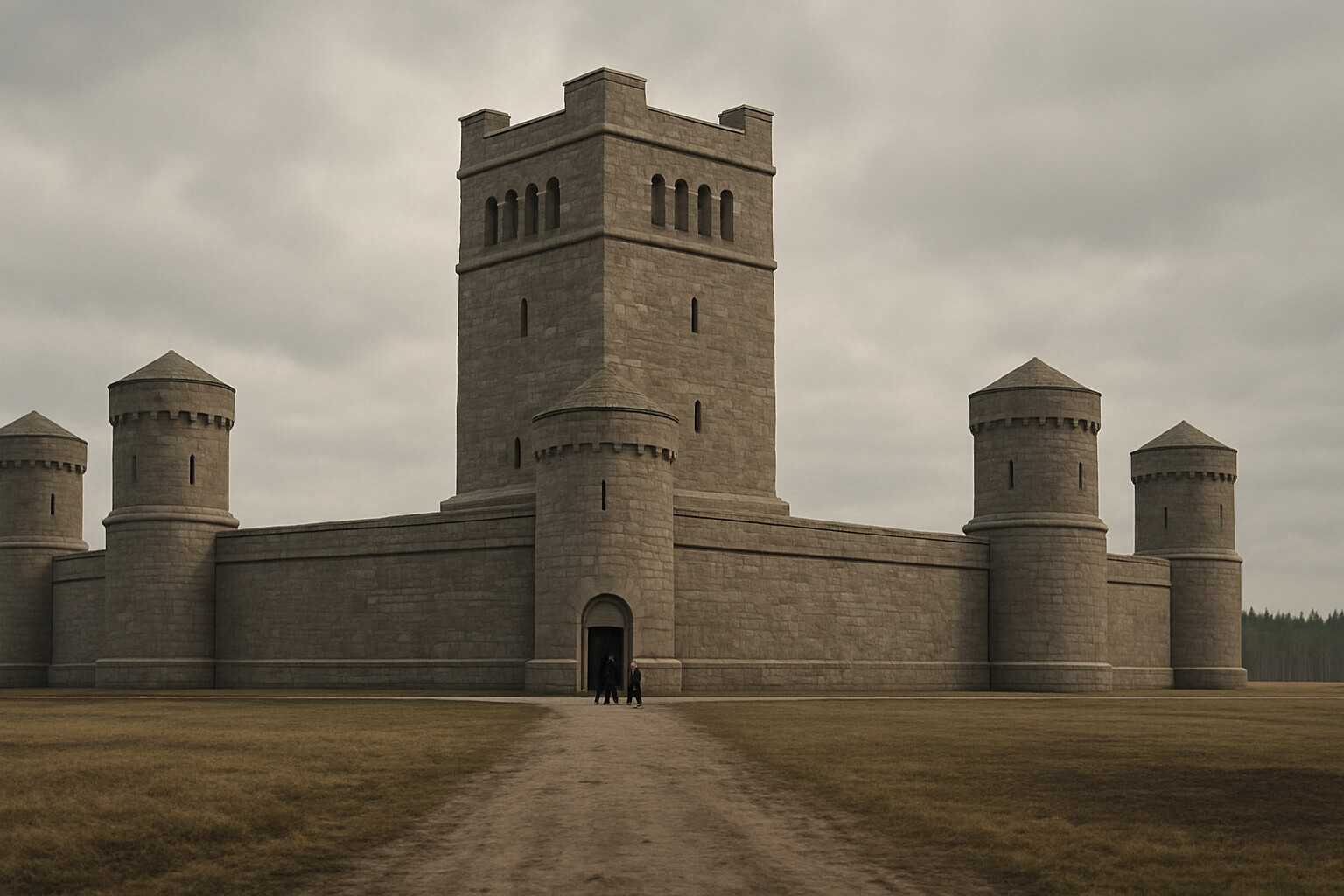
Historians of a later era have noted the degree to which the Tannenberg narrative—and it rapidly became a heavily constructed narrative—concentrated credit on Hindenburg at the expense of Ludendorff, Hoffmann, and the corps commanders whose decisions shaped the actual fighting. Hindenburg rose immediately to national prominence, becoming successively commander of Army Group East, Chief of the German General Staff, and by the war's end effectively the military overlord of Germany's war effort. The physical memorial at Tannenberg, begun in 1924 and completed in 1927, was built in a monumental style that expressed the scale of its political meanings. Hindenburg was eventually buried there—a site later appropriated by the Nazi regime for nationalist ceremony, its original commemorative purpose folded into a different and uglier project.
The complicated posthumous career of the Tannenberg legacy—from operational triumph to Weimar-era political symbol to instrument of nationalist myth—belongs to a longer history. What the battle itself was, stripped of its later uses, was a genuine operational achievement that combined intelligence exploitation, rail mobility, and calculated risk into one of the more complete encirclements in modern military history.
---
**What the Record Shows**
The documented foundations of Tannenberg stand on firm historical ground.
The interception and use of unencrypted Russian radio traffic is confirmed in German operational records, Hoffmann's memoirs, and subsequent scholarly analysis—most notably Dennis Showalter's comprehensive study and Norman Stone's examination of Russian military failures. The rail movements of Mackensen's and Below's corps are documented in German operational records. The broad outlines of casualties and prisoner counts come from German official histories, though the figures should be understood as estimates rather than precise totals, and some remain contested. The death of Samsonov is documented in the accounts of his surviving staff officers and in German records of the body's discovery.
The internal command dynamics—how much credit belongs to Hoffmann, to Ludendorff, to Hindenburg, and to the corps commanders, especially François—remain a subject of genuine historiographical debate. Hoffmann's memoirs are an important primary source but not a disinterested one. Ludendorff's account and Hindenburg's memoirs each tell the story somewhat differently. The fairest summary supported by current scholarship is that Tannenberg was the product of a command system, not a single genius, and that the German army's structural advantages—its staff culture, its rail network, its intercept capability—were as important as any individual's decisions.
The scale of the achievement does not require embellishment. An army of approximately 190,000 men was operationally destroyed in eight days. That is in the record.
---
**Legacy**
Tannenberg did not end the war in the east, and it did not save the Schlieffen Plan in the west—the Battle of the Marne, fought almost simultaneously in France, had already foreclosed that possibility. What it did was establish the Eastern Front's particular character: vast, logistically brutal, shaped by the interaction of space, rail, and communication in ways that the Western Front, compressed into its trench lines, would not experience.
The lessons that generals and staff officers took from Tannenberg—about the vulnerability of unencrypted communications, about the decisive potential of rail mobility, about the catastrophic risk of operating with uncoordinated flanks across large distances—echoed forward through military thinking for decades. The signal security failure that destroyed Samsonov's army was a preview of an intelligence vulnerability that would not become fully understood, let alone systematically addressed, until long after the war that first exposed it.
For the German army, Tannenberg became the touchstone of operational art on the Eastern Front—the battle that established the template for what a staff-planned encirclement could accomplish when intelligence, mobility, and nerve aligned. That it was achieved in eight days, against a numerically superior force, by a command team in place for less than forty-eight hours before the decisive phase began, made it the kind of result that gets studied in war colleges long after the generals who fought it are gone.
In the forests east of the Vistula, the late-summer silence returned. The prisoners marched west. The dead lay in the trees. And on the trains moving back toward the front, the officers of the German Eighth Army were already reading the intercepts from Rennenkampf's First Army, looking for the next opening.