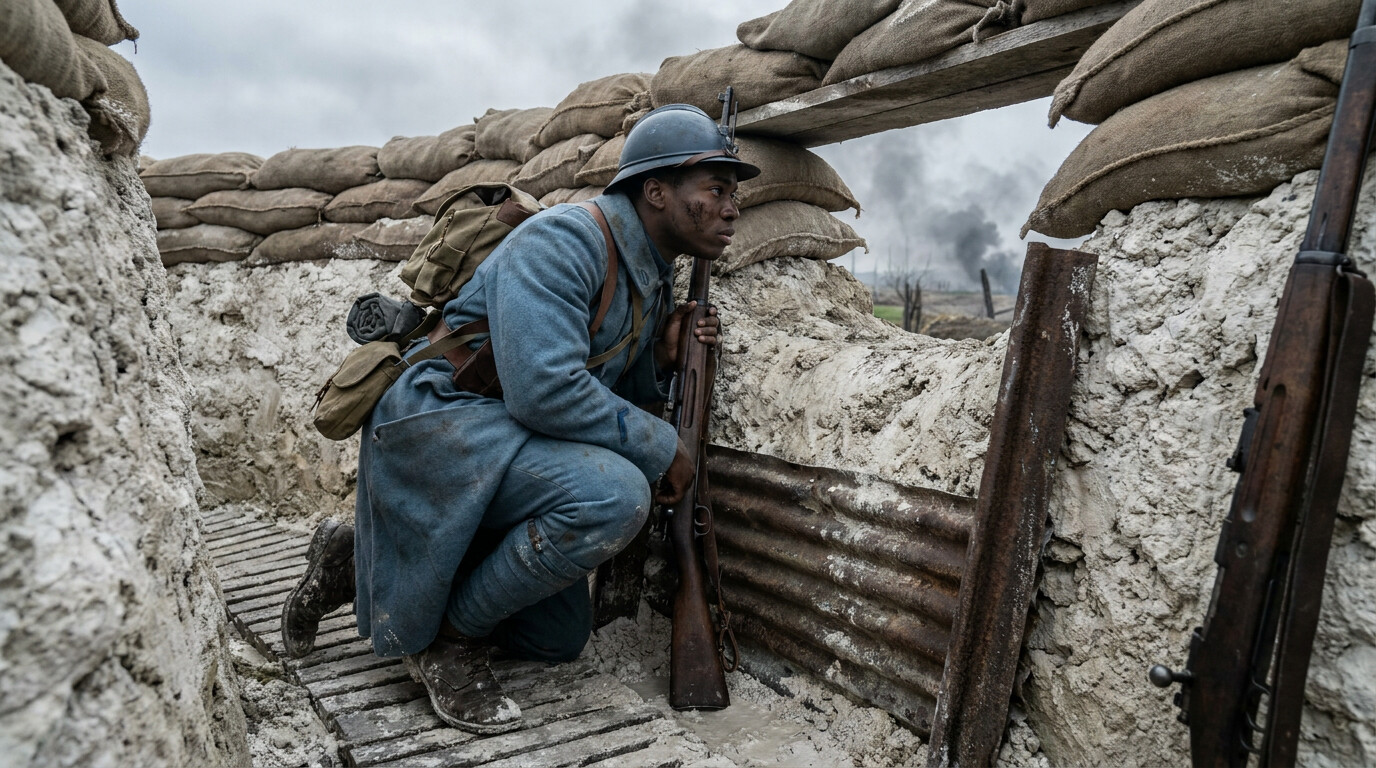
The German artillery shells screamed through the Argonne canopy like freight trains, splintering ancient oaks and showering Major Charles White Whittlesey's men with bark and metal fragments. October 4, 1918. The 308th Infantry Regiment had been cut off for three days.
Around him, soldiers pressed deeper into their shallow scrapes, clutching rifles with white knuckles as the bombardment walked closer to their position. Whittlesey crouched in his command post—a depression barely worthy of the name—studying his map with practiced calm. The shells fell with mechanical precision, part of a German barrage that had been grinding his isolated battalion since October 2nd. What made it worse was the growing certainty that some of those shells were American. Friendly artillery, firing blind into the forest, was killing his own men.
The tall, thin lawyer from Massachusetts had never planned on leading what newspapers would later call the "Lost Battalion." Charles White Whittlesey had joined the Army as a reluctant warrior, drafted into service and trained as an officer despite his mild manner and wire-rimmed glasses. But here in the Argonne Forest, surrounded by German forces and running low on ammunition, water, and hope, he commanded with the steady resolve of a man who understood that surrender was not an option.
Born in Florence, Wisconsin, in 1884, Whittlesey had built a quiet life as a Harvard-educated lawyer practicing in New York City. The war had pulled him from legal briefs into military leadership, where his organizational skills and unshakeable sense of duty would be tested beyond anything he could have imagined. Now, in a ravine that would become his battlefield tomb or his proving ground, every decision carried the weight of 550 lives.
The Meuse-Argonne Offensive had begun on September 26, 1918, as the largest American operation of the Great War. General John J. Pershing's First Army aimed to punch through the Hindenburg Line and drive toward the vital railway junction at Sedan. The Argonne Forest represented the western anchor of this massive assault—47 miles of dense woodland, ravines, and German defensive positions that had been fortified for four years.

Whittlesey's 1st Battalion, 308th Infantry Regiment, belonged to the 77th Division, a National Army unit composed largely of draftees from New York City. The division earned the nickname "Metropolitan Division" for its urban composition—clerks, immigrants, laborers, and college students thrown together in the democratic mixer of conscription. Many spoke English as a second language. Few had seen forests like the Argonne before shipping overseas.
The Argonne itself was a killing ground by design. German engineers had transformed the natural ravines and ridges into interlocking fields of fire. Machine gun nests commanded every approach. Barbed wire, some of it electrified, wove through the underbrush in deadly patterns. Artillery observers, hidden in concrete bunkers, could call down precise fires on any movement. The Germans had named their defensive line here the "Giselher Stellung," and they intended it to hold.
On October 1st, Whittlesey received orders to advance. His battalion would push north through the forest, beyond a hill designated "Hill 198," and establish contact with French forces advancing from the west. The mission seemed straightforward on paper—advance roughly 1,000 yards through thick forest and hold the line until supporting units could catch up.
What division headquarters didn't know was that the German 2nd Landwehr Division had withdrawn during the night, drawing the Americans into a carefully prepared trap. As Whittlesey's men pushed forward on the morning of October 2nd, they advanced faster than expected, moving through abandoned German positions without resistance. By late morning, they had reached their objective—a wooded ravine roughly 300 yards long and 60 yards wide, later dubbed the "Pocket."
The ravine seemed perfect for defense. Steep sides provided natural protection from small arms fire. Thick forest canopy offered concealment from aerial observation. A small stream provided water. Whittlesey established his command post at the southern end and deployed his companies along the ravine's length. He commanded roughly 550 men from his own 1st Battalion, plus elements from the 2nd Battalion and companies from the 306th Machine Gun Battalion.

But as afternoon faded to evening on October 2nd, the trap snapped shut. German forces, moving through familiar forest paths, infiltrated behind the American position. Machine gun teams established positions on the high ground overlooking the ravine. Mortar crews registered targets. By nightfall, Whittlesey's force was completely surrounded.
The first German attack came before dawn on October 3rd. Potato masher grenades exploded along the American perimeter as assault troops rushed the northern end of the position. The fighting was desperate and close. Private Abraham Krotoshinsky, a Jewish immigrant from the Lower East Side, fought with his Springfield rifle until the barrel grew too hot to touch. The Germans pulled back after an hour of close combat, leaving bodies tangled in the wire, but the message was clear—the Americans were trapped.
Whittlesey faced an immediate crisis of supply. His men carried three days of rations and one day's water. Ammunition was limited to what each soldier bore—180 rounds for the riflemen, 1,000 rounds per machine gun crew. Medical supplies consisted of individual first aid kits and whatever the battalion surgeon, Captain Nelson Holderman, could carry in his aid bag.
Worse, communication with division headquarters was sporadic at best. The battalion's radio had been damaged during the advance. Telephone lines, laid hastily through the forest, were cut by shell fire or German patrols. Whittlesey's only reliable link to the outside world was a small flock of carrier pigeons, transported in wicker baskets by the division's Signal Corps.
On October 4th, the American artillery began its own bombardment of the German positions around the Pocket. But without accurate coordinates for Whittlesey's position, the shells fell short. 155mm howitzer rounds, fired from positions miles behind the front lines by American gunners who could not see their target, crashed into the ravine itself. The friendly fire killed and wounded more Americans in minutes than the Germans had managed in two days of fighting.

Sergeant Omer Richards, formerly a clerk from the Bronx, watched in horror as a shell landed directly in his foxhole, killing three men instantly. The concussion threw him against the ravine wall, rupturing his eardrums and filling his vision with blood. Around him, other soldiers screamed for the barrage to stop, but there was no way to communicate with the gunners miles away.
Whittlesey made a desperate decision. He called for his last carrier pigeon, a bird the men had named "Cher Ami." With shaking hands, he scrawled a message on a slip of paper and attached it to the pigeon's leg: "We are along the road parallel to 276.4. Our own artillery is dropping directly on us. For heaven's sake, stop it." The pigeon took flight through the shell-torn canopy, disappearing into the smoke and chaos above.
Cher Ami reached American lines despite being wounded by German machine gun fire during its flight. The barrage stopped within an hour, but the damage was done. Whittlesey had lost nearly 30 men to friendly fire, adding to casualties that already exceeded 100.
Supply became the dominant concern. By October 5th, the men were eating grass, bark, and anything remotely edible they could find in the forest. Water came from the small stream, which was soon contaminated by bodies and waste. Medical supplies were exhausted. Captain Holderman worked with bare hands and torn cloth to treat wounds that required proper surgery.
The psychological pressure was as brutal as the physical privation. Every morning brought fresh German propaganda leaflets, dropped from aircraft or delivered by prisoners who had briefly been captured and released. The leaflets, printed in English, promised good treatment for those who surrendered. They described hot food, clean water, and medical care waiting in German camps just a few hundred yards away.

On October 7th, the pressure became official. A German officer approached under a white flag, carrying a formal surrender demand. The message, written in careful English, was addressed to "The Commanding Officer of the 2nd Bat. I. R. 308th of the 77th American Div." It read: "The suffering of your wounded men can be heard over here in the German lines, and we are appealing to your humane sentiments to stop. A white flag shown by one of your men will tell us that you agree with these conditions."
Whittlesey read the message twice, then handed it back to his runner without comment. There would be no white flag. No surrender. His orders were to hold the position, and he would hold it until relieved or until every man was dead.
The German response was swift and savage. Artillery fire increased in intensity and accuracy. Assault troops probed the perimeter constantly, looking for weak points. Sniper fire from the high ground picked off anyone who showed themselves for more than a few seconds. The pocket became a killing ground where movement meant death.
According to later survivor accounts, some soldiers kept makeshift diaries throughout the ordeal. One entry, typical of many such records, captured the growing desperation: "Oct 6 - No food today. Jerry shells us every hour. Corporal got it this morning. Oct 7 - Can't remember when I last ate. Water tastes like blood. Major says hold on."
By October 8th, Whittlesey's effective strength had fallen to fewer than 200 men. The wounded filled every available space in the ravine, their groans audible between shell bursts. Some soldiers, driven mad by hunger and constant bombardment, tried to surrender individually, only to be shot down by German machine gunners who had orders to prevent any intelligence from reaching American lines.

Whittlesey himself showed the strain. The lawyer who had entered the forest with neat uniform and polished boots now resembled a scarecrow—gaunt, filthy, his glasses cracked from a near miss by shell fragments. But his voice remained steady as he moved among his men, checking positions, redistributing ammunition, and maintaining the discipline that kept his force from disintegrating entirely.
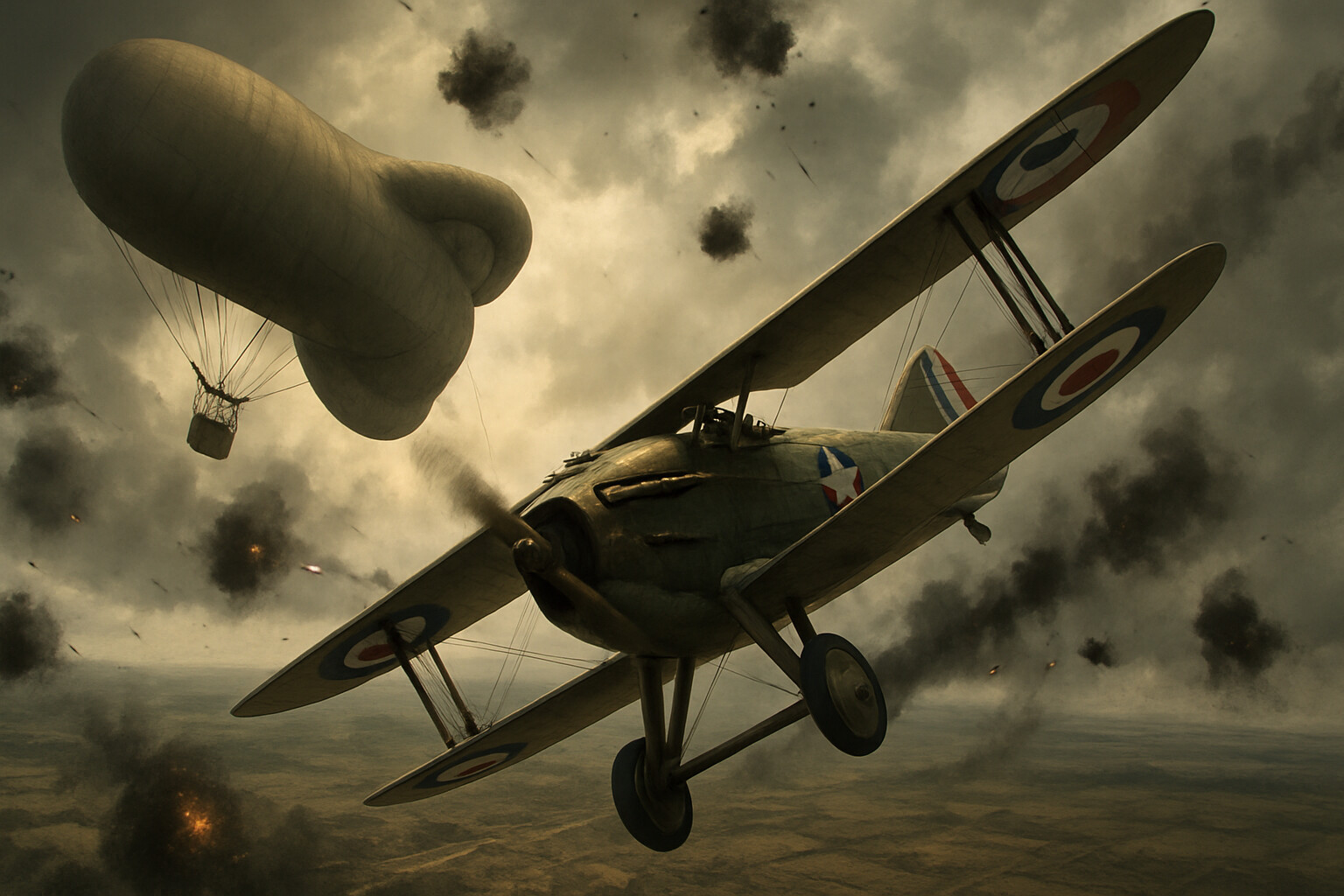
The relief came on October 8th, but not as expected. Instead of American infantry breaking through the German lines, the rescue came from above. American pilots, flying dangerous low-level missions through intense anti-aircraft fire, finally located the position and began dropping supplies. The first drops missed the narrow ravine entirely, landing in German hands. But gradually, the airmen found their mark.
Food, water, ammunition, and medical supplies floated down on small parachutes. It wasn't enough—could never be enough given the losses—but it was proof that the outside world knew where they were and was fighting to reach them.
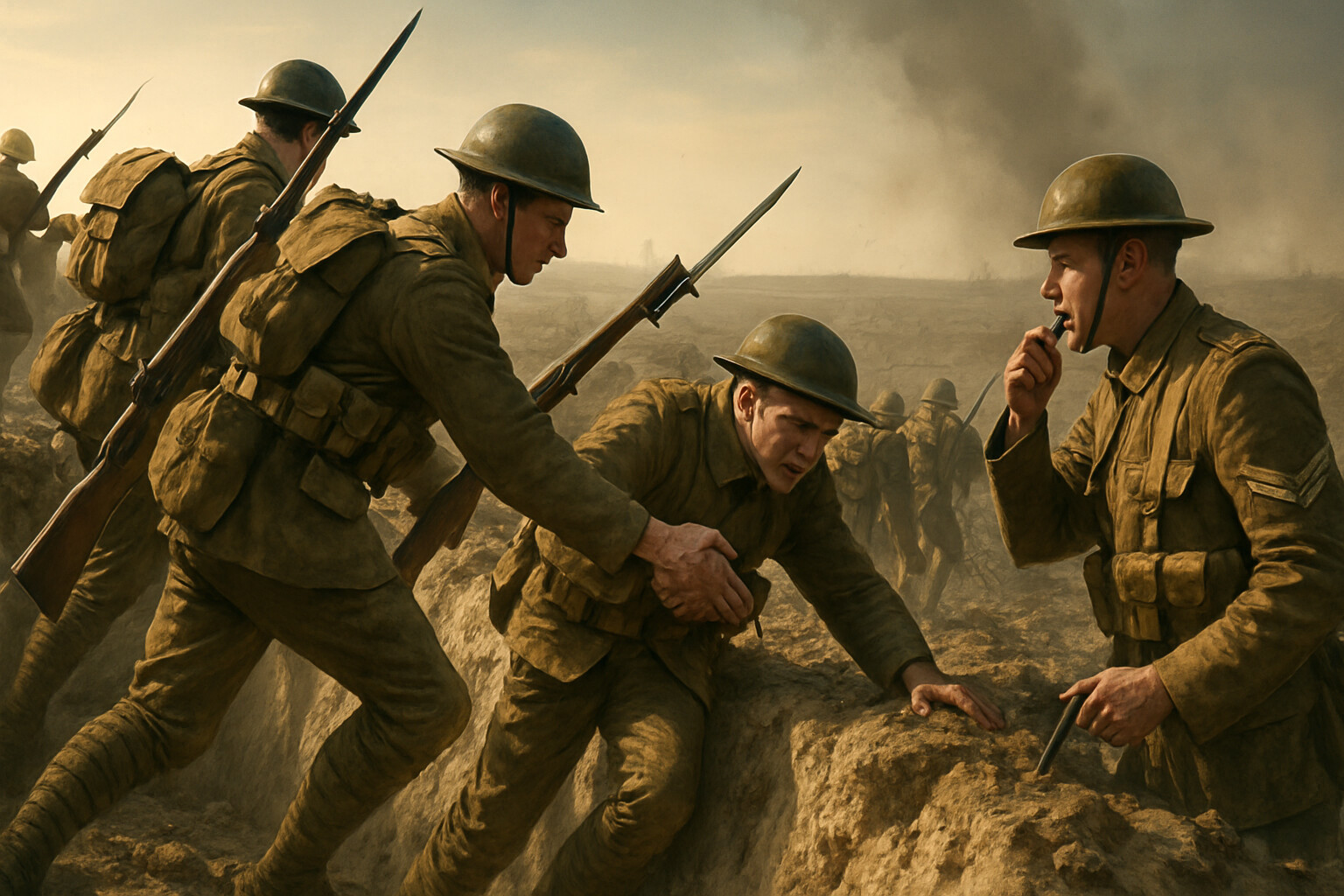
The final German assault came on the morning of October 8th. Three companies of assault troops, supported by flamethrowers and mortar fire, attacked from the north and east simultaneously. The fighting was desperate and close—bayonets, entrenching tools, and bare hands in some cases. Whittlesey, fighting with a .45 automatic pistol, helped repel an assault that reached within yards of his command post.
When American relief forces finally broke through late on October 8th, they found a scene that defied easy description. Of the 554 men who had entered the Pocket, only 194 could walk out under their own power. Another 150 were wounded, many seriously. The rest were dead, their bodies scattered throughout the ravine and along the perimeter they had defended with such determination.

Whittlesey himself could barely stand. Five days without adequate food or water, combined with the stress of constant combat command, had reduced him to a walking skeleton. His hands shook uncontrollably. His voice was barely a whisper. But he had held his position and brought his survivors home.
The "Lost Battalion" had never actually been lost—Whittlesey knew his position throughout the ordeal and had maintained intermittent communication with higher headquarters. But the name stuck, capturing something essential about the isolation and abandonment his men felt during those terrible five days.
The official records, compiled by the 77th Division's intelligence section, documented the tactical situation with military precision. The battalion had advanced approximately 1,100 yards beyond its supporting units, occupying a position that was tactically untenable but strategically valuable. German forces had deployed elements from three different regiments to contain and destroy the isolated Americans, demonstrating the threat Whittlesey's position posed to their defensive line.
Weapons recovery after the battle revealed the intensity of the fighting. American positions yielded thousands of spent cartridge cases—Springfield .30-06 rounds, .45 ACP pistol brass, and machine gun links scattered in defensive firing positions. German assault routes were marked by discarded "potato masher" grenades and the distinctive brass cases from Mauser rifles. The forest floor was churned by artillery impact, creating a moonscape of overlapping craters that would remain visible for decades.
Whittlesey received the Medal of Honor for his leadership during the action. The citation praised his "exceptional gallantry and coolness under fire" and his refusal to surrender despite hopeless circumstances. Captain Holderman also received the Medal of Honor for his dual role as medical officer and combat leader. Private Krotoshinsky earned the Distinguished Service Cross for his courage as a rifleman and messenger.
But the cost of the Pocket would haunt Whittlesey for the rest of his life. Post-war interviews with survivors revealed the full scope of his burden—not just the tactical decisions made under fire, but the weight of carrying 554 lives into a trap and bringing fewer than 200 home alive.
The tactical lessons from the Lost Battalion action influenced American infantry doctrine for decades afterward. The dangers of advancing beyond supporting distance, the critical importance of reliable communication, and the need for accurate artillery coordination all became standard elements of officer training. The 77th Division's experience in the Argonne demonstrated both the courage of American soldiers and the deadly consequences of poor intelligence and hasty planning.
Private Krotoshinsky, who survived the action, wrote years later about the quiet heroism he witnessed in the ravine. It wasn't the dramatic charges or desperate last stands that impressed him most, but the daily discipline of men who continued to clean their rifles, share their meager rations, and care for wounded comrades even when hope seemed gone.
Charles Whittlesey struggled with what would now be recognized as post-traumatic stress disorder in the years following the war. The quiet lawyer who had proven himself under the most extreme conditions found peacetime unbearable. In 1921, during a sea voyage, he disappeared overboard and was presumed to have taken his own life—another casualty of the Argonne Forest, claimed three years after the guns fell silent.
The Argonne Forest today shows few traces of the desperate fighting in October 1918. Trees have grown over the shell craters. The ravine where Whittlesey made his stand is marked by a simple monument, visited by few tourists. But military historians still study the action as a case study in small unit leadership under impossible conditions—a reminder that in war, the difference between heroism and tragedy often comes down to the decisions made by one exhausted officer with a broken pair of glasses and an unbreakable sense of duty.