The SPAD XIII fighter screamed down through a maze of tracer fire, its Hispano-Suiza engine howling at full throttle. Second Lieutenant Frank Luke Jr. lined up his guns on the massive German observation balloon floating two thousand feet above the Meuse Valley. Incendiary rounds from his twin Vickers machine guns found their mark. The hydrogen-filled Drachen burst into a fireball that could be seen for miles across the Western Front.
It was September 18, 1918, and Frank Luke had just destroyed his thirteenth enemy balloon in ten days of combat. Within hours, he would be dead, shot down during the most reckless and heroic mission of his brief but spectacular career.
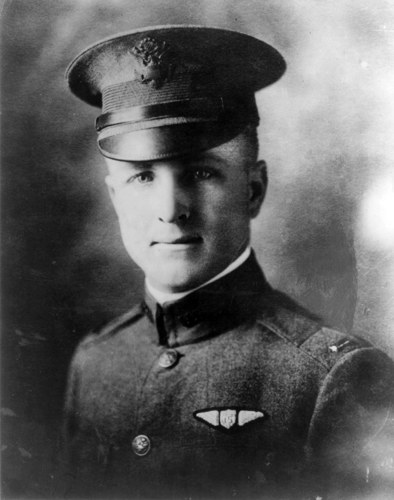
Frank Luke Jr. arrived in France in March 1918 as part of the American Expeditionary Forces' rapidly expanding air arm. Born in Phoenix, Arizona Territory, in 1897, Luke was the son of German immigrants who had built a successful ranch and real estate business in the desert Southwest. He was a natural pilot but a difficult subordinate—aggressive, independent, and contemptuous of military discipline. His squadron commander in the 27th Aero Squadron, Major Harold Hartney, would later describe Luke as both highly effective and deeply problematic as a military aviator.

The 27th Aero Squadron operated from airfields near Verdun and Saint-Mihiel, flying the nimble SPAD XIII fighter. The SPAD was a fast, sturdy aircraft powered by a 220-horsepower Hispano-Suiza engine that could push the fighter to 138 miles per hour in level flight. Armed with twin .303-caliber Vickers machine guns synchronized to fire through the propeller arc, it was one of the most effective fighters of the war. Luke quickly mastered the aircraft, but his real genius lay in understanding a particular type of target: the German observation balloon.
These balloons—called Drachen by the Germans and "sausages" by Allied pilots—were far more than mere reconnaissance platforms. They were the eyes of the German artillery system. Each balloon carried a two-man crew equipped with powerful telescopes, radios, and detailed maps. From their perch at three thousand feet, German observers could direct artillery fire with devastating accuracy, calling in precise corrections for batteries firing at targets miles away. A single balloon crew could orchestrate the destruction of an entire Allied attack.
The Germans protected their balloons with layered defenses that made them among the most dangerous targets on the Western Front. Each balloon was surrounded by anti-aircraft guns—the dreaded "flak" batteries that filled the sky with explosive shells and shrapnel. Fighter aircraft patrolled overhead in standing defensive formations. The balloons themselves were equipped with telephone lines to ground stations, allowing observers to call for immediate fighter support the moment Allied aircraft appeared. When under attack, balloon crews could leap from their baskets wearing primitive parachutes, while ground crews could winch the balloon down rapidly to safety.

Most Allied pilots avoided balloons entirely. The kill-to-loss ratio for balloon attacks was appalling—roughly one Allied fighter shot down for every balloon destroyed. Squadron commanders discouraged their pilots from attempting such missions. Frank Luke saw opportunity where others saw suicide.
Luke's first balloon kill came on September 12, 1918, during the opening phase of the Saint-Mihiel offensive. Flying alone—another breach of protocol that infuriated his superiors—Luke spotted a German Drachen near the village of Marieulles. He dove through concentrated anti-aircraft fire, set the balloon ablaze with incendiary rounds, and escaped despite damage to his SPAD. The balloon's destruction eliminated German observation over a critical sector of the American advance.
Two days later, Luke claimed two more balloons in a single mission, again flying without authorization and without wingmen. His tactics were unconventional and dangerous. Rather than the cautious, high-altitude approaches favored by other pilots, Luke would dive at full speed directly at his target, relying on speed and surprise to penetrate the defensive screen. He studied German balloon deployment patterns, memorizing the locations of anti-aircraft batteries and the timing of fighter patrols. His fellow pilots began calling him the "Arizona Balloon Buster."

The Germans noticed. Luke's aggressive balloon hunting was disrupting their artillery coordination across the entire sector. They reinforced their balloon defenses and assigned dedicated fighter squadrons to hunt down the troublesome American. Luke responded by becoming even more audacious. On September 15, he destroyed three balloons in rapid succession during a single evening mission, each attack carried out with German fighters converging on his position.
By September 18, Luke had destroyed thirteen balloons and four German aircraft in just ten days of intensive combat. His success rate was unprecedented, but so was the strain. He was flying multiple missions per day, often without adequate rest or maintenance time for his aircraft. Squadron records show that Luke's SPAD XIII was patched with fabric and wire from repeated encounters with German flak. His own logbook entries became increasingly terse and mechanical, recording only target locations and times.
Major Hartney and other squadron officers were caught between admiration for Luke's effectiveness and concern for his methods. Luke frequently ignored direct orders, flew unauthorized missions, and landed at other airfields without reporting his position. He had formed an effective partnership with Lieutenant Joe Wehner, another pilot from the 27th Aero Squadron, but Wehner was killed on September 18 while protecting Luke during a balloon attack near Etain.

Wehner's death appears to have pushed Luke toward a final, desperate mission. That evening, according to squadron records, he requested permission for another balloon attack. When his squadron commander refused, Luke announced his intention to proceed anyway. Witness accounts recorded in squadron files indicate Luke declared his determination to attack the balloons regardless of orders. He climbed into his SPAD XIII and took off without authorization, heading northeast toward German-held territory.
Luke's target was a concentration of three German balloons near the village of Murvaux, deep behind enemy lines. Intelligence reports indicated heavy fighter protection and reinforced anti-aircraft defenses. It was precisely the kind of mission that required careful planning, fighter escorts, and coordination with ground forces. Luke approached it as a lone-wolf attack.
German sources, compiled after the war, provide detailed accounts of Luke's final mission. Around 7:15 PM on September 29, 1918, German observers spotted a single SPAD XIII approaching from the southwest at high altitude. The aircraft dove toward the first balloon near Dun-sur-Meuse, ignoring concentrated anti-aircraft fire. Luke's incendiary rounds found their mark, and the balloon exploded in the characteristic hydrogen fireball. He immediately turned toward the second balloon, three miles to the northeast.

German fighter aircraft—likely from Jagdstaffel 15 based on unit records—converged on Luke's position. He destroyed the second balloon while under attack by multiple German fighters, then turned toward the third target near Murvaux village. By this point, Luke's SPAD showed visible battle damage from both flak and machine-gun fire. Fabric was streaming from the wings, and the aircraft was losing altitude.
Luke pressed his attack on the third balloon despite the damage to his aircraft and the increasing number of German fighters. He set the balloon ablaze, but his SPAD was now critically damaged and unable to maintain altitude. German ground forces reported seeing the American fighter make a forced landing in a field near Murvaux village around 8:00 PM.
What happened next is documented in German military reports, though some details remain disputed. Luke survived the crash landing and emerged from his aircraft. According to German accounts, he was armed and resisted capture by German infantry. The encounter resulted in Luke's death and at least one German casualty. His body was found beside his SPAD XIII.

Frank Luke's final score included fourteen German balloons destroyed and four enemy aircraft shot down in just seventeen days of combat operations. His balloon-hunting success rate was unmatched by any pilot on either side of the conflict. More importantly from a tactical standpoint, his attacks had severely disrupted German artillery observation in the Verdun sector during a critical phase of the American offensive.
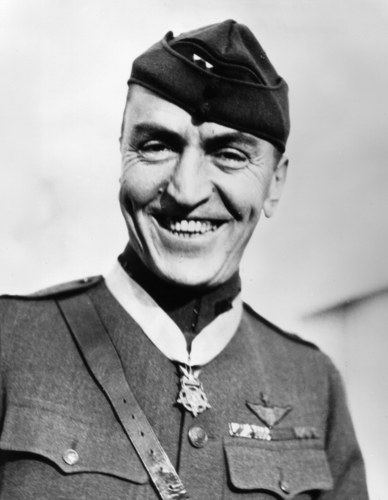
The Medal of Honor citation for Luke's actions was approved in 1919, based on witness accounts from both Allied and German sources. The citation specifically recognized his attacks on enemy balloons under extremely dangerous circumstances and his final resistance when surrounded after being shot down. Unlike many aerial combat awards from World War I, Luke's medal was supported by detailed German records that confirmed both the destruction of enemy equipment and the tactical impact of his missions.
Luke's death illustrated both the potential and the limitations of individual heroism in mechanized warfare. His technical skills and tactical innovations had real battlefield impact, disrupting German artillery coordination and contributing to Allied tactical success in the Saint-Mihiel sector. However, his refusal to work within military discipline and his rejection of coordinated tactics ultimately made his success unsustainable. No other pilot was able to replicate his balloon-hunting methods because those methods required not just exceptional skill, but also a willingness to accept near-certain death.
The balloons that Luke destroyed were quickly replaced, but the psychological impact on German crews was lasting. Post-war German aviation records note increased requests for transfer from balloon service and higher rates of premature evacuation from observation baskets following Luke's attacks. The presence of an aggressive balloon-hunting specialist had degraded the effectiveness of German artillery observation even beyond the physical destruction of equipment.
Frank Luke's war lasted just nineteen days of active combat flying. In that brief period, he demonstrated both the tactical importance of aggressive individual action and the institutional challenges of managing exceptional but undisciplined personnel in military operations. His Medal of Honor recognized genuine tactical achievement rather than simple heroic gesture—the destruction of strategic enemy equipment under extraordinarily dangerous conditions.
Luke was posthumously promoted to First Lieutenant and buried in the Meuse-Argonne American Cemetery in France. His hometown of Phoenix named its municipal airport Luke Air Force Base in his honor, and the base remains an active Air Force installation. Luke's grave in France is marked simply with his name, rank, and Medal of Honor designation.
The record of Luke's achievement rests on multiple sources: his own logbook entries, squadron operational records, German military archives captured after the war, and eyewitness accounts from both sides. The specific details of his final mission come primarily from German sources, since no Allied personnel witnessed his last combat. Some aspects of his personality and motivation remain matters of interpretation rather than documented fact, but the tactical impact of his balloon attacks is well-established in military records from both sides.
Frank Luke's brief career embodied the brutal mathematics of aerial warfare in 1918: exceptional individual skill could achieve significant tactical results, but survival required both talent and fortune that few possessed. His destruction of German observation balloons contributed measurably to Allied tactical success, but at a personal cost that made such tactics ultimately unsustainable as standard military practice.